Tag: Vladimir Putin

  • Markets dive as Putin attacks Ukraine

    Markets dive as Putin attacks Ukraine

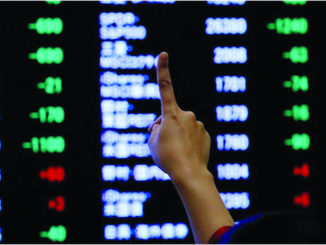
    New Delhi (TIP)-Investors bailed out of risky assets, sending stocks crashing after Russian President Vladimir Putin’s troops invaded Ukraine. On Thursday, the exodus from stocks wiped out Rs1.3 lakh crore in investor wealth on Indian stock markets. But the bad news for stocks was a boon for safer assets such as gold and government bonds. Crude oil surged past the $100 mark amid expectations of tighter supply. India’s benchmark indices Sensex and Nifty tumbled, ending 4.72% and 4.78% lower respectively, one of the sharpest daily declines in nearly two years. The declines put the indices in correction territory—defined as a drop of at least 10% from a recent peak. The Sensex hit a record high of 62,245.43 on October 19. A near-6% decline was recorded on 4 May 2020 after the government extended the nationwide lockdown and a flare-up in US-China tensions. The Russian invasion has triggered the worst security crisis in Europe since World War II. The attack on Ukraine heightens the pressure on the global economy already reeling from Covid and galloping inflation. Investors fear the unfolding crisis will further increase raw material and energy costs. Sanctions against Russia by Western powers are likely to isolate the erstwhile superpower, a major producer of oil and commodities.

    Global markets, too, saw deep corrections. Among Asian markets, the Hang Seng, Taiwan, Nikkei, Shanghai Composite, Jakarta Composite ended the day 1.48-3.21% lower. “The world can ill-afford further disruption in trade and commodities when Covid has already weakened sovereign balance sheets,” said Amar Ambani, head of institutional equities, Yes Securities.

    Brent crude hit $105 a barrel, a level not seen since August 2014, adding to the worries.

    S&P Global Platts Analytics said $100 oil aggravates pain as Asia’s top oil importers are dependent on imports for 70-100% of their needs. “High oil prices will dampen demand and undermine the fragile economic recovery,” said Lim Jit Yang, adviser for oil markets at S&P Global Platts Analytics.

    The concerns are likely to remain elevated. “Crude could stay over $100 a barrel in the medium term unless Opec hikes output,” said Hetal Gandhi, director, Crisil Research. Opec members have failed to meet targets over the past three months.

    Gold hit highest level in over a year. As Russia invaded Ukraine, gold prices skyrocketed to their highest level in more than a year.

    In India, the gold price  surged by Rs 1,400 , hitting the peak of Rs 51,750 per 10 gms in the early morning trade. This comes amid steep fall in the stock market with Sensex down by 1432.50 points and Nifty reporting a slump of 410.70 points at the time of opening. Several Asian stock markets also plunged in the aftermath of the Russian invasion.

    The bullion has witnessed a spike amid the increasing standoff between Russia and the West. Economic experts say gold is now being historically seen as a hedge against major economic and geopolitical ructions.

    Spot gold jumped as much as 2.1% to $1,949.03 an ounce, the highest level since January 2021, and traded at $1,939.55 at 1:08 p.m. in Singapore, news website Bloomberg reported.         Source: HT

  • Juneteenth is a National Holiday:  Biden signs the Bill into Law

    Juneteenth is a National Holiday:  Biden signs the Bill into Law

    WASHINGTON (TIP): A day after President Biden arrived from Geneva after his summit with Russian President Vladimir Putin, he signed on June17, into law a bill creating a federal holiday to commemorate Juneteenth, the day marking the end of slavery in Texas.

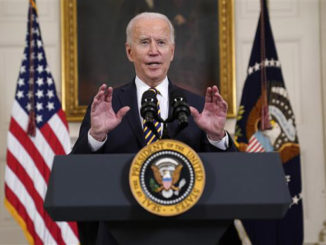
    “Great nations don’t ignore the most painful moments. They don’t ignore those moments in the past. They embrace them,” Biden said in remarks in the East Room before a crowd that included lawmakers and 94-year-old Opal Lee, who campaigned to make the day a national holiday. The president, who spoke of efforts in some states to restrict voting rights, said the date doesn’t just celebrate the past but is a call for action.

    The Juneteenth story

    The celebration started with the freed slaves of Galveston, Texas. Although the Emancipation Proclamation freed the slaves in the South in 1863, it could not be enforced in many places until after the end of the Civil War in 1865.

    Laura Smalley, freed from a plantation near Bellville, Texas, remembered in a 1941 interview that the man she referred to as “old master” had gone to fight in the Civil War and came home without telling the people he enslaved what had happened.

    “Old master didn’t tell, you know, they was free,” Smalley said at the time. “I think now they say they worked them, six months after that. Six months. And turn them loose on the 19th of June. That’s why, you know, we celebrate that day.”

    Union Maj. Gen. Gordon Granger and his troops arrived at Galveston on June 19, 1865, with news that the war had ended and that the enslaved were now free. That was more than two months after Confederate Gen. Robert E. Lee surrendered to Union Gen. Ulysses S. Grant in Virginia.

    Granger delivered General Order No. 3, which said: “The people of Texas are informed that, in accordance with a proclamation from the Executive of the United States, all slaves are free. This involves an absolute equality of personal rights and rights of property between former masters and slaves, and the connection heretofore existing between them becomes that between employer and hired labor.”

    The next year, the now-free people started celebrating Juneteenth in Galveston. Its observance has continued around the nation and the world since. Events include concerts, parades and readings of the Emancipation Proclamation.

    WHAT DOES ‘JUNETEENTH’ MEAN?

     The term Juneteenth is a blend of the words June and nineteenth. The holiday has also been called Juneteenth Independence Day or Freedom Day.

    Often celebrated at first with church picnics and speeches, the holiday spread across the nation and internationally as Black Texans moved elsewhere.

    The vast majority of states recognize Juneteenth as a holiday or a day of recognition, like Flag Day, and most states hold celebrations. Juneteenth is a paid holiday for state employees in Texas, New York, Virginia and Washington, and hundreds of companies give workers a day off for Juneteenth.

    WHY NOW?

    The national reckoning over race helped set the stage for Juneteenth to become the first new federal holiday since 1983, when Martin Luther King Jr. Day was created.

    The bill was sponsored by Sen. Edward Markey, D-Mass., and had 60 co-sponsors. Bipartisan support emerged as lawmakers struggle to overcome divisions that are still simmering following the police killing last year of George Floyd in Minnesota.

    Supporters of the holiday have worked to make sure Juneteenth celebrators don’t forget why the day exists.

    “In 1776 the country was freed from the British, but the people were not all free,” Dee Evans, national director of communications of the National Juneteenth Observance Foundation, said in 2019. “June 19, 1865, was actually when the people and the entire country was actually free.”

    There’s also sentiment to use the day to remember the sacrifices that were made for freedom in the United States — especially in these racially and politically charged days. Said Para LaNell Agboga, museum site coordinator at the George Washington Carver Museum, Cultural and Genealogy Center in Austin, Texas: “Our freedoms are fragile, and it doesn’t take much for things to go backward.”

    (With inputs from agencies)

  • Russia arrests over 1,700 at rallies for hunger-striking Navalny

    Russia arrests over 1,700 at rallies for hunger-striking Navalny

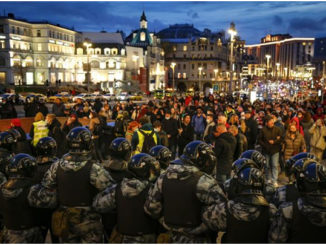
    Moscow (TIP): Police rounded up more than 1,700 protesters on Wednesday as Russians in dozens of cities took part in rallies organised by allies of hunger-striking Kremlin critic Alexei Navalny over his failing health in jail. His spokeswoman was jailed for 10 days, and another close ally detained, on the same day that President Vladimir Putin delivered a state-of-the-nation speech warning the West not to cross Russia’s “red lines” and pointedly made no mention of Navalny.

    “This is one of the last gasps of a free Russia, as many are saying. We came out for Alexei … against a war in Ukraine and the wild propaganda,” said Marina, a student at the Moscow protest.

    OVD-Info, a group that monitors protests and detentions, said 1,782 people had been arrested, including 804 in St. Petersburg and 119 in the Urals city of Ufa. Protesters in central Moscow chanted, “Freedom to Navalny!” and “Let the doctors in!”. Navalny’s wife Yulia joined the rally in the capital, where demonstrators chanted her name. The opposition had hoped the rallies would be the biggest in modern Russian history, and presented them as an attempt to save Navalny’s life by persuading the authorities to allow his own doctors to treat him. But turnout looked smaller than during protests earlier this year before Navalny was jailed for 2-1/2 years for parole violations related to what he said were politically motivated charges of embezzlement.

    Police said 6,000 people protested illegally in Moscow, while Navalny’s YouTube channel said turnout in the capital was up to 10 times higher. Alexey Venediktov, a veteran journalist and head of the Ekho Moskvy radio station, said 10,000-15,000 people had rallied in Moscow and 7,000-9,000 in St Petersburg.

    The 44-year-old Navalny, who last year survived a nerve agent attack that Russian authorities denied carrying out, is thin and weak after starving himself for three weeks, and his allies say he risks kidney failure or cardiac arrest. The United States has warned Russia it will face “consequences” if he dies.

    The state human rights commissioner, Tatyana Moskalkova, said four doctors from outside the federal prison agency had visited Navalny on Tuesday and found no serious health problems.

    Russia says he has been treated as would any other prisoner.

    The confrontation over Navalny’s fate is a flashpoint in Moscow’s dire relations with the West, already aggravated by economic sanctions, diplomatic expulsions and a Russian military buildup near Ukraine.

    U.N. human rights experts urged Moscow to let Navalny be medically evaluated abroad. They said they believed his life was in danger as he was being held in “conditions that could amount to torture”.

    CALL TO ‘FIGHT THIS DARKNESS’

    Navalny’s spokeswoman, Kira Yarmysh, and an ally, Lyubov Sobol, were detained near their Moscow homes hours before the rally in the capital. European Council President Charles Michel, who chairs European Union summits, called their arrests “deplorable”.

    Yarmysh was later jailed for 10 days at a hearing for inciting people to protest. Sobol was released ahead of a hearing on Thursday. Navalny aide Ruslan Shaveddinov tweeted: “This is repression. This cannot be accepted. We need to fight this darkness.”

    Dozens of police vans were deployed to the centre of Moscow. The square where activists had hoped to gather was cordoned off with metal barriers, as was Red Square.

    Up to about 300 people protested in Vladivostok, some toting banners saying “Freedom for political prisoners” and “No war, repressions and torture!” Reuters

  • U.S. will cut emissions by up to 52% by 2030, said Joe Biden at the ‘Leaders Summit on Climate’

    U.S. will cut emissions by up to 52% by 2030, said Joe Biden at the ‘Leaders Summit on Climate’

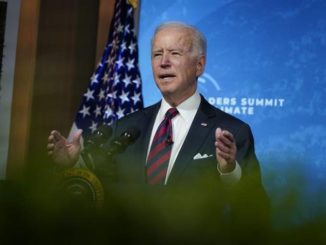
    NEW YORK (TIP): U.S. President Joe Biden announced that the U.S. would cut its greenhouse gas emissions by 50%-52% by 2030 relative to 2005 levels, in a clean break with the Trump administration policies on climate action. Mr. Biden also announced that the U.S. would double, by 2024, its annual financing commitments to developing countries, including a tripling of its adaptation finance by 2024. The President made the new target announcements at a ‘Leaders Summit on Climate’, which he is hosting on Thursday and Friday, April 22 and 23 — a summit to which 40 heads of state and government are invited — including Prime Minister Narendra Modi of India, President Xi Jinping of China, and President Vladimir Putin of Russia.

    The emissions targets — part of the Paris Agreement on climate — are non-binding and the details of how they will be achieved are not available. However, in announcing the targets, the Biden administration is hoping to encourage other countries to increase their commitments. It is also seeking to bring America back into a leadership role on climate action after Mr. Trump had withdrawn the country from the Paris Agreement.

    Mr. Biden’s financing announcements are part of a $100 billion a year commitment from developed countries to developing countries for the period 2020-25, “an investment that is going to pay significant dividends for all of us”, Mr. Biden said.

    The withdrawal of the U.S. from the Paris Agreement means it has not yet met its financing commitments either. The Obama administration had promised $3 billion to the Green Climate Fund (to help developing countries), only $1 billion has been paid.

    In selling climate action to the American public, which until recently was governed by an administration skeptical of the climate crisis, President Biden and his administration have linked climate action and clean technology to jobs and economic growth. On Thursday, Mr. Biden extended this message to other countries.

    “And meeting this moment is about more than preserving our planet. It’s also about providing a better future for all of us. That’s why, when people talk about climate, I think jobs. Within our climate response lies an extraordinary engine of job creation and economic opportunity ready to be fired up,” he said.

    “By maintaining those investments and putting these people to work, the United States sets out on the road to cut greenhouse gases in half — in half — by the end of this decade,” Mr. Biden said.

    “The signs are unmistakable. The science is undeniable,” he said. The first guests to speak at the summit were UN Secretary-General Antonio Guterres, Mr. Xi, Mr. Modi, Prime Minister Boris Johnson of the U.K. and Prime Minister Yoshihide Suga of Japan.

    (Agencies)

  • U.S. imposes new sanctions on Russia

    U.S. imposes new sanctions on Russia

    Expels 10 Russian diplomats, restricts trading and blacklists 32 individuals over ‘election meddling, cyberattack’

    WASHINGTON(TIP): A reminder of the cold war period, the United States announced sanctions against Russia on Thursday, April 15, and the expulsion of 10 diplomats in retaliation for what Washington says is the Kremlin’s U.S. election interference, a massive cyberattack and other hostile activity. President Joe Biden ordered a widening of restrictions on U.S. banks trading in Russian government debt, expelled 10 diplomats who include alleged spies, and blacklists 32 individuals alleged to have tried to meddle in the 2020 presidential election, the White House said in a statement.

    Mr. Biden’s executive order “sends a signal that the United States will impose costs in a strategic and economically impactful manner on Russia if it continues or escalates its destabilizing international action,” the White House said.

    The U.S. barrage came the same week as Mr. Biden offered to meet President Vladimir Putin for their first face-to-face talks, suggesting that the summit could take place in a third country.

    After the White House unveiled its measures, the Russian Foreign Ministry said a response was “inevitable.”

    “The United States is not ready to come to terms with the objective reality that there is a multipolar world that excludes American hegemony,” spokeswoman Maria Zakharova said.

    The latest tension comes amid worries both in the U.S. and its European allies over Russia’s recent troop buildup on the border of Ukraine.

    The imprisonment of Alexei Navalny, who is effectively the last open political opponent to Mr. Putin, has further spiked concerns in the West.

    The White House statement listed in first place Moscow’s “efforts to undermine the conduct of free and fair democratic elections and democratic institutions in the U.S. and its allies and partners.”

    This referred to allegations that Russian intelligence agencies mounted disinformation and dirty tricks campaigns during the 2016 and 2020 presidential elections, in part to help Donald Trump’s candidacy.

    The White House said the sanctions likewise respond to “malicious cyber activities against the U.S. and its allies and partners,” referring to the massive so-called SolarWinds hack of U.S. government computer systems last year.

    The statement also called out Russia’s extraterritorial “targeting” of dissidents and journalists and undermining of security in countries important to U.S. national security.

    In addition, the Department of Treasury, together with the EU, Australia, Britain and Canada, sanctioned eight individuals and entities associated with Russia’s occupation of Crimea in Ukraine.

    In Brussels, the NATO military alliance said U.S. allies “support and stand in solidarity with the U.S., following its announcement of actions to respond to Russia’s destabilizing activities”.

    (With inputs from agencies)