Tag: West Bengal

  • West Bengal Panchayat Election: Several people killed as rural areas vote

    West Bengal Panchayat Election: Several people killed as rural areas vote

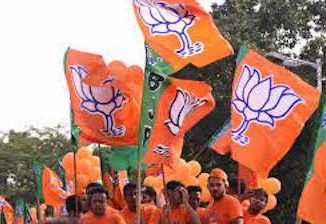
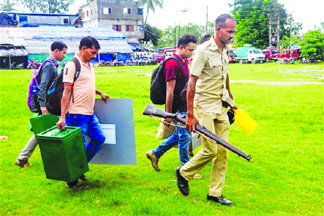
    Several people were killed in election-related violence in West Bengal as voting was underway on Saturday for the three-tier panchayat polls in the state, officials said. The polling started at 7 am in 73,887 seats in the rural areas of the state with 5.67 crore people deciding the fate of around 2.06 lakh candidates, they said.
    BJP polling agent Madhab Biswas was allegedly killed in Falimari gram panchayat in Coochbehar district, they said.
    The BJP alleged that when Biswas tried to enter the polling booth he was stopped by TMC supporters, and as the situation escalated, they killed him. The TMC denied the allegations.
    The supporter of an Independent candidate died in Kadambagachi area in North 24 Paraganas district after he was beaten up overnight, police said. The deceased was identified as 41-year-old Abdullah. He died while undergoing treatment at a local hospital in the morning, Superintendent of Police Bhaskar Mukherjee said.
    Protesting against the killing, locals blocked the Taki Road in the early hours but they were removed by the police.
    A TMC worker was killed in Murshidabad district’s Kapasdanga area overnight in poll-related violence. The deceased was identified as Babar Ali, officials said. The ruling TMC said that two of its workers were killed in Rejinagar and Khargram in Murshidabad district, and another person in Tufanganj in Coochbehar district.
    “The polling started peacefully, but Congress, BJP and CPI(M) are attacking TMC workers since last night. Three of our workers have died in Rejinagar, Tufanganj and Khargram. And, two of our workers were injured in Domkal. Where are the central forces?” TMC spokesperson Kunal Ghosh asked.
    The brother of a TMC leader was killed in a clash with Congress supporters in Malda district, police said.
    The incident happened in Jisharattola in Manikchak police station area. The deceased was identified as Malek Sheikh, they said.
    The TMC alleged that the husband of one of its candidates was shot at in Nadia district’s Narayanpur area by CPI(M) supporters, a charge denied by the opposition party. Source: PTI

  • India in history this Week-January 28, 2022, to February 3, 2022

    India in history this Week-January 28, 2022, to February 3, 2022

    28 JANUARY

    2009 Calcutta Medical College started in West Bengal.

    1928 Raja Ramanna, the leading physicist of the country, was born.

    1930 The classical singer Pandit Jasraj, who belonged to Mewati Gharana, was born.

    1999 Lamb was born from a protected embryo for the first time in India.

    2007 Famous musician OP Nayyar died.

    1961 The first factory of HMT watches was started in 1961 in Bangalore.

    1988 Death penalty given to  26 accused in the ‘Rajiv Gandhi murder case’.

    29 JANUARY

    1597 Maharana Pratap was born.

    1780 Publication of the country’s first newspaper Hikki Gazette or Bengal Gazette or Calcutta General Advertiser from Calcutta (now Kolkata) began.

    1994 Government of India repealed the Air Corporation Act 1953.

    30 JANUARY

    1948 Mahatma Gandhi, who had contributed significantly to India’s freedom struggle, was assassinated.

    1530 Rana Sangram Singh of Mewar passed away.

    31 JANUARY

    1561 Bairam Khan, who played an important role in making the Mughal emperor deserving of a throne, was killed.

    1963 The peacock was declared the national bird of India in 1963.

    2007 Indian steel company Tata became the fifth largest company in the world in 2007 after the acquisition of Anglo Dutch steel company Corus.

    1923 Birth of Somnath Sharma, the first Indian martyr to get ‘Paramveer Chakra’ in 1923.

    01 FEBRUARY

    1881 St. Stephen’s College, the oldest college in Delhi, was established.

    2003 Kalpana Chawla, the first Indian-American astronaut, died.

    1930 The Times published the cross word puzzle for the first time.

    1977 Indian Navy Coast Guard is formed.

    02 FEBRUARY

    1814 Calcutta (now Kolkata) Museum established.

    1915 Khushwant Singh, a well-known writer, poet and columnist of the country, was born.

    1952 India wins the first Test cricket in Madras.

    03 FEBRUARY

    1934 The process of sending Paracel by airplanes for the first time began. It was started by the company which is today known as Lufthansa.

    1963 Former Reserve Bank Governor Raghuram Rajan was born.

    1916 Banaras Hindu University started.

    1988 The first nuclear submarine (INS Chakra) joined the Indian Army.

    2008 There are indications that the stolen Nobel Prize of poet Guru Ravindra Nath Tagore was in Bangladesh.

  • Trumping majoritarianism in the Hindi heartland

    Trumping majoritarianism in the Hindi heartland

    By Zoya Hasan
    While regional parties will continue to be significant in various States of the Union, the principal challenge of overcoming majoritarianism lies in the Hindi heartland, especially in U.P. Oppositional electoral alliances, notably the formation of a federal front, are important strategies in this battle but it is no less important to challenge the ideological foundations of the majoritarian project through progressive and inclusive politics.

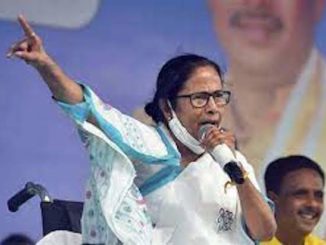
    The landslide victory of the All India Trinamool Congress in the West Bengal Assembly elections and the pushback of the Bharatiya Janata Party (BJP) in West Bengal, Tamil Nadu and Kerala have given rise to a pervasive belief that right-wing politics can be defeated by regional assertions. Undoubtedly, regional and cultural assertion in these States acted as an effective bulwark against the BJP’s expansionary plans in southern and eastern India. The regional-cultural tropes deployed by Mamata Banerjee, for example, worked so well that at one point, Home Minister and BJP leader Amit Shah was even forced to clarify that if the BJP is elected, someone from Bengal would be the Chief Minister. This underlines the effectiveness of regional culture and politics in trumping communal politics. However, this claim needs to be tempered by the realism that it cannot work in the Hindi heartland, which is dominated by caste and communal politics, and has so far not seen any serious ideological and political challenge to politics based on these identities.

    Encompassing nine States whose official language is Hindi, namely Bihar, Chhattisgarh, Haryana, Himachal Pradesh, Jharkhand, Madhya Pradesh, Rajasthan, Uttar Pradesh (U.P.) and Uttarakhand, this region retains a central position in the electoral strategies of the BJP and its larger political imagination. The party’s stunning show in these States propelled it to power in the 2014 and 2019 parliamentary elections. Its continued political dominance in the heartland will neutralize its losses now as well as in future in States where it has been bested by regional players. I will focus here on U.P. to illustrate the limits of the regional assertion.

    Dimensions in the heartland

    The Hindi heartland is clearly different. There are at least four important dimensions of this difference. First is the absence of regional identity in States such as U.P. This is evident from the debate on States reorganization and the reorganization of Uttar Pradesh in the 1950s. The compulsions of nation-oriented identity emerged very clearly from the discussions in the States Reorganization Commission on suggestions for the division of U.P. for administrative convenience. U.P. leaders argued for a large and powerful State in the Gangetic valley as a guarantee of India’s unity.

    In this sense, U.P. was considered the backbone of India and the centerpiece of political identity in modern India. Importantly, it was supposed to provide the chief bulwark against growing regionalization and fragmentation elsewhere. Instilling a sense of regional pride, an essential part of Congress strategy in southern and coastal India, was not followed in U.P. U.P. was seen as the political heartland in contrast to Punjab and Bengal for instance, which were splintered and incorporated into two different nation states. As is well known, the bases of this post-colonial identity varied from its location in the freedom struggle to staking claim as the cultural homeland of Hindi and Hinduism. In both cases, it was centered in the idiom of the nation-state and strong central authority.

    Second, although U.P.’s cultural homogeneity remains a matter of disagreement, the idea of the heartland had great resonance among the political elite who opposed the demand for U.P.’s reorganization. The long-standing traditions of composite cultural identity and shared plural cultures began to yield place to a singular homogenized identity. The Hindi-Urdu divide, which mirrored the communal cleavage of U.P. society, played a crucial role in this process. Urdu was excluded as it was seen to symbolize Muslim cultural identity in independent India, while Hindi was boosted to promote the development of a Hindi-Hindu heritage for this region. The project of homogenization of Indian/U.P. culture as Hindu culture was quickened in later decades. Even though it would be hard to assume a direct link between Hindi dominance and communal politics of subsequent decades, it is nevertheless a fact that all political parties in the State used it as an ingredient of social and cultural differentiation and a means to consolidate political dominance.

    Role of communal politics

    Third, it is clear that communal politics and communal movements have played a key role in U.P.’s modern history which in turn have diluted other identities.

    In some respects, this process gained momentum in the wake of Partition which cast its long shadow upon political institutions and culture in U.P. and to a great extent affected the perspectives of Hindus and Muslims alike. Hindu nationalism was marginalized within the Congress party but many of its ideas were accepted in framing party policies. The State leadership was instrumental in forging a conservative consensus in the State under Chief Minister G.B. Pant who steered the affairs of the state for eight years after Independence.

    The intensification of communal politics took a new turn with the mass mobilization for the construction of a Ram temple at Ayodhya which was deftly used by the Hindu right to establish a major presence in U.P. and to facilitate the political reconstruction of U.P. through the promotion of a collective Hindu identity. The crusade for the appropriation of disputed shrines is central to the communalization of politics and short circuiting the more complex process of political expansion for the BJP.

    Importantly, this has laid the groundwork for building permanent electoral majorities through the deployment of ascriptive symbols in U.P. which, given its huge size, helps it to establish a strong base in the Hindi heartland to offset the appeal of countervailing identities elsewhere in India.

    Caste politics too

    Finally, caste politics which was expected to counter Hindutva expansion has failed to do so; in fact, caste politics has become a building block for the BJP’s expansion. The party has reached out to Dalits, actively mobilizing them and other backward castes to assimilate them into the Hindutva meta-narrative. Instead of erasing caste from electoral politics, the BJP-Rastriya Swayamsevak Sangh has sought to court fragments of castes as a way of undermining broad-based political movements and opposition to it. It has used the wider appeal of Hindu nationalism to co-opt backward castes and Dalits who are keen to align themselves to the larger narrative of Hindu nationalism.

    A reset is needed

    While regional parties will continue to be significant in various States of the Union, the principal challenge of overcoming majoritarianism lies in the Hindi heartland, especially in U.P. Oppositional electoral alliances, notably the formation of a federal front, are important strategies in this battle but it is no less important to challenge the ideological foundations of the majoritarian project through progressive and inclusive politics. This requires a reset of the basic political mindset in U.P. which can only be done by reviving the splendid heritage of the national movement in which this region played a central role and in which Gandhiji and Nehru played a heroic part. Invoking the spirit of the Bhakti movement which was the first major challenge to the religious orthodoxy of Hinduism would also help in resetting the cultural clock. This must, however, combine with much greater concern for the fundamental social and economic issues of the State, and making the struggle between communal and secular forces the central issue through public campaigns that address the problems of religious traditionalism and the cultural underpinning that this provides to the push to make India a Hindu state.

    (Zoya Hasan is Professor Emerita, Jawaharlal Nehru University)

  • Election verdict a pushback for BJP policies

    Election verdict a pushback for BJP policies

    By Zoya Hasan

    “What the pandemic has done, unlike the disaster of demonetization, is bring to the fore the BJP’s incapacity for governance. It has shown the sheer incompetence of the majoritarian model of governance, which is just not suited for running a modern state. The administrative ineptitude is impossible to ignore even for those intoxicated by the right-wing’s electoral successes.”

    The BJP’s defeat in West Bengal, Kerala and Tamil Nadu shows the limits of Hindutva. It shows regional parties can overpower Hindutva at the state level and hence the BJP cannot assume a natural monopoly over state politics.

    The results of the just-concluded Assembly elections give us an indication of ground-level political changes in the key states of Assam, West Bengal, Kerala and Tamil Nadu. While it’s important to understand the results in terms of state-specific factors, the overall political outcome indicates a successful assertion of local/regional politics against the majoritarian-authoritarian politics of the BJP. The centrality of the local is visible from the Lokniti-CSDS survey which underlines the primacy of local factors and state leaders with a mass base in determining the choices of voters. The reasons for this vary from state to state but the limits of Hindutva’s expansionist politics and its agenda of polarization are apparent. This has decisively dashed the BJP’s avaricious plans of conquering new territories.

    These setbacks suggest that the polarizing rhetoric of Hindu nationalism doesn’t thrive everywhere in India, especially in regions with a distinct culture, a history of social movements, strong secular tradition, and where vernacular languages hold primacy instead of Hindi. It showed how stunningly out of touch the BJP is from the political reality in these states where it was holding Uttar Pradesh (UP) Chief Minister Yogi Adityanath’s road shows, chanting slogans of Jai Shri Ram, talking love jihad and trying to excite Hindus with anti-Muslim dog whistles. None of this seems to have worked. The BJP lost decisively in Kerala (not winning a single seat), its alliance lost in Tamil Nadu (BJP won only four seats), and it lost spectacularly in Bengal (winning 77 seats, way short of 200 it boasted). The central point of the election outcome is that the majority of Hindus voted against the BJP to keep it out of power in three important states.

    But this rebuff did not occur in the core areas of BJP’s support base in northern and north western India and these will be tested in the polls in 2022. The RSS has changed the political discourse in these states, especially in UP. But it would be a mistake to presume that issues of unemployment, jobs, farmers’ distress, regressive farm laws and the massive Covid mismanagement will not matter in India’s most significant state. In addition to Covid, the continuation of the farmers’ revolt, which began in November 2020, is likely to shift the balance of forces in many of these northern states, from Haryana to UP to Gujarat.

    The gross mismanagement of the public health crisis in UP makes it one of the worst hit states with high caseload and fatalities. UP has an archaic and creaky medical infrastructure which is collapsing as Covid rages unchecked through the state with people running from pillar to post in search of hospital beds, including in the big cities of Lucknow, Kanpur, Allahabad and Banaras. The situation in villages and small towns is much worse. The virus has now reached rural parts where people are struggling to breathe.

    However, the state government is claiming that it has the situation under control. This shows how completely unmindful it is of human suffering. Amid the surge of the virus, the Chief Minister has issued orders to set up help desks for the protection of cows in each district of the state and has directed that Covid-19 protocols are maintained at all cow shelters, including stocks of equipment like oximeters and thermal scanners “for cows and other animals as well”. The order comes while UP suffers from a crippling shortage of medical supplies and oxygen. Instead of tackling oxygen shortage, the government has slapped an FIR on a Lucknow city hospital, accusing it of spreading false rumors of shortage.

    While people in the state are desperate for oxygen, its Chief Minister denies there’s even a problem. The denialist rhetoric and the government’s indifference to the crisis will impact the BJP’s popularity in UP. A report in Mint pointed out that even hardcore BJP supporters and party workers are sharply criticizing the government’s maladministration in WhatsApp groups in UP. The growing anger against the BJP leadership’s handling of the Covid crisis has found resonance in the panchayat polls. Opposition parties have won close to 50 per cent of all seats contested and swept districts which are BJP strongholds. The BJP is losing ground in Ayodhya, Varanasi, Mathura and Gorakhpur which is an important development given how much political attention has been showered on these cities by the government.

    But let’s not forget that Modi and the BJP have the ability to turn things around. They did it after demonetization, sweeping UP in the 2017 Assembly elections even though everyone had predicted an adverse fallout for the party. However, the post-Covid situation is different. What the pandemic has done, unlike the disaster of demonetization, is bring to the fore the BJP’s incapacity for governance. It has shown the sheer incompetence of the majoritarian model of governance based on a politics of hate and obscurantism which is just not suited for running a modern state. It’s not simply a failure of the Indian State but a failure of the BJP model of the State. The administrative ineptitude and the government’s insensitivity are impossible to ignore even for those intoxicated by the right-wing’s electoral successes.

    The huge governance failure in UP, in contrast to Kerala, for example, reminds us during the worst crisis, that a governance model can make the difference between life and death, and the absolute criticality of a politics based on empathy, concern, planning and human development in comparison with one based on building religious places of worship and vanity projects such as the Central Vista in the Capital in midst of the calamitous second wave.

    The BJP’s defeat in West Bengal, Kerala and Tamil Nadu shows the limits of Hindutva. It shows regional parties can overpower Hindutva at the state level and hence the BJP cannot assume a natural monopoly over state politics. However, regional politics cannot counter the hold of Hindutva in UP which has been the BJP’s pathway to power in 2014 and 2019. The Hindutva project has built an enduring communal majority in the Hindi heartland. Its overwhelming size and support in this region give the BJP an overwhelming advantage over its rivals. Therefore, majoritarianism and the claim of the majority to dominate have to be challenged in these states. The most effective way of doing this, apart from building big-hearted alliances, is to claim greater equality of rights of every section of the people and region, and not simply the inclusion of minorities through the revival of pluralism.

    (The author is Professor Emerita, Jawaharlal Nehru University)

  • Bangladesh PM Sheikh Hasina rejects Mamata’s plan, wants only Teesta

    Bangladesh PM Sheikh Hasina rejects Mamata’s plan, wants only Teesta

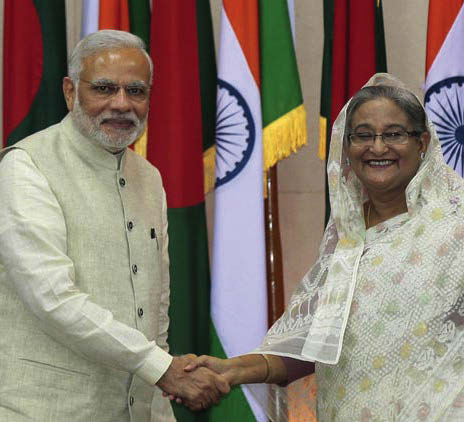
    NEW DELHI (TIP): Bangladesh PM Sheikh Hasina signed off her hugely successful India visit on Monday with a restructured strategic relationship with India, but rejected Mamata Banerjee’s proposal for sharing rivers other than the Teesta.

    Addressing a civic reception held for her by think tank India Foundation, Hasina spoke about the importance of water sharing between India and Bangladesh.

    “On Teesta issue, PM Modi once again reiterated his government’s strong resolve to conclude the water sharing treaty at the soonest. Once it happens, the face of Indo-Bangladesh relations would undergo another transformation.”

    Then, switching to Hindi, she said, “Lekin mujhe nahin pata didimoni kya karega (but I don’t know what Didi i.e. Mamata will do).”

    For the first time, giving a sense of the conversation between her and the West Bengal chief minister, Hasina revealed Mamata had put forward some alternative proposals. But she held PM Modi to his words that Teesta would be the one being negotiated.

    Mamata, she said, had offered to give her electricity. “Paani manga, bijli mila,” Hasina laughed. But PM Modi, she noted, said he would ensure a successful Teesta deal.

    But the ice has been broken, both between Mamata and the Centre and between Mamata and Bangladesh.

    The CM’s presence at the talks and the banquets, even her shift from an intransigent “no” to thinking of alternative water sharing pacts, offering electricity to Bangladesh, all signal a significant move forward, giving the Modi government something to work on with her.

    For India, the Hasina visit proved very productive.

    But more importantly, India has walked the extra mile to court the Bangladesh military, a very powerful institution, with stronger institutional ties to Pakistan than India.

    This will help to change the institutional hostility that the Bangladesh army continues to harbour against India, specially when, India reckons, they begin to look at India as a dependable defence supplier.

    On the economic front, India changed tack this time — a huge $5 billion shopping voucher could have meandered along in traditional Indian style, achieving little.

    But India is learning to play the Chinese game — in the past few months, Indian officials have combed Bangladesh government corridors to pick up visible and viable projects which this line of credit would build.

    Although India has far less cash to throw around (China promised Dhaka$24 billion in 2016), in the past six years India has given $8 billion to Bangladesh— $3 billion already utilised, all of it on much easier terms than China.

    With the “shommanona” ceremony, India and Bangladesh renewed an alliance forged during its liberation —the enemy remaining the same.

    But Hasina never wavered from her demand of a Teesta deal, and with relations ramped up, India will remain under pressure to deliver.

    Indian officials have said that Bangladesh officials have refused to negotiate sharing any of the other rivers — India and Bangladesh share 54 rivers — until Teesta is done.

    Sources said Mamata had offered to negotiate water sharing agreements for Torsa, Sankosh and Raidak rivers, all of which cross over into Bangladesh.

    Hasina said that the Indian Parliament’s unanimous approval of the land boundary agreement was reminiscent of India’s whole-hearted support during Bangladesh’s liberation war. Implicit was the message that India should come together to get the Teesta deal done. (PTI)