Tag: Whatapp

  • Covaxin to get WHO nod soon? Chief scientist says trial data ‘looks good’

    Covaxin to get WHO nod soon? Chief scientist says trial data ‘looks good’

    New Delhi (TIP): In what potentially comes as a piece of good news for Hyderabad-based vaccine manufacturer Bharat Biotech, the World Health Organization (WHO) has indicated that it might just provide its much-awaited approval to Covaxin, the company’s indigenous jab against the coronavirus disease (Covid-19). Soumya Swaminathan, the chief scientist at WHO, told a Mumbai-based news organisation that the final phase trial data for Covaxin “looks good” and meets the safety profile of the international public health agency so far. The pre-submission meeting between Bharat Biotech and WHO was held on June 23, Swaminathan told CNBC TV-18 in an interview, adding that the data packet is currently being assembled. She noted that although Covaxin’s efficacy against the Delta variant of Covid-19 is a bit low, it is still not bad, while the overall efficacy is “quite high.”

    Bharat Biotech finally made public its findings from the Phase-3 efficacy analysis of Covaxin last Saturday, where it claimed an overall efficacy of 77.8% against symptomatic Covid-19 patients. The pre-print data from “India’s largest efficacy trial” showed that Covaxin demonstrates 93.4% effectiveness against severe symptomatic Covid-19 cases. On the other hand, Covaxin provides 65.2% protection against the B.1.617.2 (Delta) strain, currently the most predominant Covid-19 variant in India, it said.

    The World Health Organization keeps a close watch on all the vaccines which are on the pipeline for emergency listing, Swaminathan said, adding that the agency is awaiting more data for a final say on the matter.

    Speaking on the Covid-19 situation in India, the WHO chief scientist said that the government should focus on primary immunisation of at least 60-70% of its population. The focus should not be on booster shots but on broadening the scope of primary vaccination, she said. Only after a sizeable population has been vaccinated can India draw inspiration from countries like the United Kingdom, which have moved on to focusing on booster doses.

    Most of the world, except some districts in the United States, has recently seen a spurt in Covid-19 cases while there has been no reduction in the death toll, Swaminathan noted.

                    Source: HT

  • How Yusuf Khan became Dilip Kumar

    How Yusuf Khan became Dilip Kumar

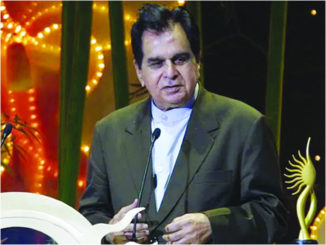
    Legend, thespian, tragedy king, god of acting… Dilip Kumar was given several monikers in his illustrious career but how he acquired his screen name is a story unto itself. He was born Mohammed Yusuf Khan but Devika Rani, who was head of the Bombay Talkies where he joined as an actor, wasn’t too happy with the name. Dilip Kumar, she thought, would be in tune with his “romantic image” which he was bound to acquire and would also have a “secular appeal”.

    And so Dilip Kumar it was. Kumar, who died  at the age of 98, narrates in detail how he went from being Yusuf Khan to Dilip Kumar in his autobiography “The Substance and the Shadow”. “One morning, as I entered the studio I was given the message that Devika Rani wanted to see me in her office. I wondered what it could be. I was certain it couldn’t be for expressing any displeasure because she was always courteous and pleasant whenever she met me and enquired how I was doing. So what could it be?” Kumar writes. When he walked into Rani’s office, she was seated at her desk, smiled warmly and asked him to sit down.

    Devika Rani began the conversation with the usual courtesy of asking him whether he would care for some tea made specially for her from leaves she had purchased from an English store in the city, he recounts in great detail.

    According to the autobiography, she soon came to the point and said quite matter-of-factly, “Yusuf, I was thinking about your launch soon as an actor and I felt it would not be a bad idea if you adopted a screen name”.

    “You know, a name you would be known by and which will be very appropriate for your audience to relate to and one that will be in tune with the romantic image you are bound to acquire through your screen presence. I thought Dilip Kumar was a nice name,” she is quoted as saying. She told him the name just “popped up” in her mind when she was thinking about a suitable name for him.“How does it sound to you?” she asked.

    “I was speechless for a moment, being totally unprepared for the new identity she was proposing to me. I said it sounded nice but asked her whether it was really necessary,” Kumar says in the book.

    “She gave her sweet smile and told me that it would be prudent to do so. She added that it was after considerable thought that she came to the conclusion of giving me a screen name.”

    Rani told Kumar that she foresaw a long and successful career for him in films and it made good sense to have a screen identity that would “stand up by itself and have a secular appeal”.

    Kumar was quick to appreciate her concern, but added that he needed to think about it a bit.

    She responded, “Fine… come back to me with your thoughts.

    “We are now ready to begin preparations for your debut. So we must hurry up.”

    The actor recalls spending the rest of the day, going about his routine, but with the name ‘Dilip Kumar’ ringing in his mind”s inner recesses.

    1. Mukherjee, who was effectively the second in command at Bombay Talkies after Devika Rani, noticed that the actor was rather contemplative that afternoon.

    After lunch, when work started on the shooting stage, Mukherjee asked him if there was something disturbing him and if he could share with him.

    “I told S. Mukherjee Sahab about the suggestion that had come from Devika Rani. He reflected for a second and, looking me straight in the eye, said: ”I think she has a point. It will be in your interest to take the name she has suggested for the screen. It is a very nice name, though I will always know you by the name Yusuf like all your brothers and sisters and your parents,” says Kumar in the autobiography.

    Kumar said he was touched by what Mukherjee said and it was a validation that cleared his thoughts then and there.

    The rest as they say is history. Dilip Kumar went on to debut with Jwar Bhata in 1944, becoming one of the biggest names in Indian cinema history.

  • Dilip Kumar, movie icon and acting institution, passes away at 98

    Dilip Kumar, movie icon and acting institution, passes away at 98

    Murtaza Ali Khan

    Cinema legend Dilip Kumar has passed away at the age of 98, following prolonged illness. He is survived by his wife, actor Saira Banu.

    Immediately after the news broke out on Wednesday , July 7, morning, heartfelt tributes from all across the globe started pouring in, as Maharashtra Chief Minister Uddhav Thackeray announced a state funeral for the Bollywood legend.

    Born Mohammed Yusuf Khan in 1922 in Peshawar, now in Pakistan, he became known to the world by the screen name of Dilip Kumar once he joined the Hindi film industry in the 1940s.The original king of tragedy who’s revered the world over for his iconic screen performances in films such as Devdas (1955), Naya Daur (1957), Mughal-e-Azam (1960), Ganga Jamuna (1961), Ram Aur Shayam (1967), Sagina Mahato (1970), Kranti (1981), Shakti (1982), Karma (1986), and Saudagar (1991) was laid to rest at the Juhu Qabrastan in Santacruz Mumbai. Dilip Sahab was draped in the tricolor, given a gun salute after which band of police personnel paid him their tribute. The funeral was completed with COVID restrictions in place as only family and close friends were allowed to attend it. Bollywood megastar Amitabh Bachchan was among the few B-town celebs who attended the funeral.

    There was a time when young people hailing from good families couldn’t dream of taking up acting as a profession. For, the profession was looked down upon. But, Dilip Sahab not only brought dignity to the profession but also inspired numerous young men and women to follow his footsteps and become legendary figures in their own right. He was a method actor long before the movie stars in the West even knew what it actually meant to be a method actor. In fact, he was so deeply involved into his roles that he had to consult a psychologist who advised him to avoid doing serious roles to keep his sanity intact. That’s precisely why he had to turn down Pyaasa (1957).

    But, he was able to soon turn the tide by successfully playing rather light hearted characters which allowed him to further diversify himself as a performer. He famously turned down David Lean’s offer to play Sherif Ali in Lawrence of Arabia (1962) in order to focus on his work in Hindi cinema. A truly consummate actor, Dilip Kumar took on Amitabh Bachchan at the height of his fame in ‘Shakti’ and yet again came out supreme, winning the Filmfare Award for Best Actor in 1983. He subsequently went on to play pivotal roles in films like Mashaal (1984), Karma (1986), and Saudagar (1991). The 1998 film Qila was his last film.

    As a performer, Dilip Sahab was always ahead of his time and never backed down from new challenges. In the 1954 film titled ‘Amar’, he played the central character of a lawyer named Amarnath who is known for his sense of justice. Now, as per his father’s wish Amarnath agrees to marry Anju (essayed by Madhubala) who is a Western educated girl and quite open minded. But on one rainy night he gets enticed by a milkwoman’s beauty and is unable to stop himself from raping her. Try and imagine Dilip Kumar, a heartthrob of the nation, in a newly independent India of the early 1950s, raping a girl on the silver screen. Of course, the act of rape isn’t shown but merely implied symbolically via the shattering of the window pane.

    Now, any other actor in his place would have refused to do the scene. It was really too much for the ’50s but Dilip Kumar seldom backed down from challenges. He went ahead with it once he was convinced that the story demanded it. Moreover, there would be repercussions for Amarnath which would ensure that the scene isn’t misinterpreted by the audiences. Clearly, even as early as the ’40s and ’50s, Dilip Sahab was a trailblazer who was constantly pushing the boundaries of acting and setting up new standards with each new performance. By the ’70s, he attained the stature of an acting institution that has continued to inspire generations of artists. His death truly marks the end of an era. For, there will never be another Dilip Kumar. To quote Amitabh Bachchan: “An epic era has drawn curtains… Never to happen again.”

                    (Murtaza Ali Khan is an Indian Film & TV Critic / Journalist who has been covering the world of entertainment for over 10 years. He tweets at @MurtazaCritic and can be mailed at: murtaza@apotpourriofvestiges.com. His video essays / commentaries can be watched on his YouTube Channel at: https://www.youtube.com/c/murtaza19alikhan).

    Dilip Kumar only Indian actor to receive highest Pak honor

    Dilip Kumar’s ancestral home, where he was born and spent his early days, recently made it to the news, for the Pakistani Government wished to buy it and turn it into a museum, along with Raj Kapoor’s ancestral property. The house, located in the Qissa Khawani Bazaar of Peshawar, Khyber Pakhtunkhwa, is more than 100 years old, and has been declared a national heritage of Pakistan. Raj Kapoor was not only Dilip Kumar’s contemporary. Their association goes back to living in neigbouring “havelis”, being schoolmates and studying in the same college (Khalsa College). And, evidently, it was Raj Kapoor who first told Dilip that he could be a star.

    When Dilip’s father, Lala Ghulam Sarwar Khan, came to know of his career switch from fruit trader to film actor, Raj, as a true friend, came to his rescue and made his father, Prithviraj Kapoor, reason with him.

    The only Indian actor to receive Pakistan’s highest civilian award, Nishan-e-Imtiaz in 1998, Dilip Kumar was later pressurised to return the honour during the 1999 Kargil war by then coalition government of Shiv Sena in Maharashtra.

    He had thought that the protests outside his house would die down soon, but when they didn’t, he met then Prime Minister Atal Bihari Vajpayee, who intervened.

    “There’s no doubt about Dilip’s patriotism and commitment to the nation. He has proved that time and again during his film career. He has received the award at an individual level. It’s his will to keep it or return it. No one can pressurise him,” Vajpayee had said.

    It was revealed later that in a letter that Dilip Kumar wrote to arrange a meeting with Vajpayee, he mentioned that if returning the award was in the best interests of the nation, he would gladly do so.

    Former Foreign Minister of Pakistan, Khurshid Mahmud Kasuri described Dilip as the “one who could bring India and Pakistan together” in his book titled “Neither a Hawk nor a Dove”.

    Dilip’s picture greeting Abdul Ghaffar Khan, the independence activist, advocate of Hindu-Muslim unity, who was against partition, on his visit to India at Meenambakkam Airport, Chennai, bears witness of him being the figure of peace throughout his life.         Source: TNS

  • Taapsee Pannu: Want to reaffirm audience trust in me for choosing quality films

    Taapsee Pannu: Want to reaffirm audience trust in me for choosing quality films

    Taapsee Pannu has been signed up for a Telugu film titled “Mishan Impossible”. The actress says she wants to reaffirm the trust the audience has in her for choosing quality.

    “In last seven years I have always been on a lookout to be part of the stories I want to see myself as an audience, movies that I will spend my time and money on. And ‘Mishan Impossible’ is one of them,” Taapsee said.

    She added: “I want to reaffirm the trust the audience has in me for choosing quality films and I’m doing exactly that by becoming a part of a movie like this.”

    Taapsee joined the team of the film today. Welcoming the actress on to the sets, the makers released a working still where the actress can be seen with a broken hand. She looks anxious, as she watches something on the laptop.

    Niranjan Reddy and Anvesh Reddy produce the film, while N M Pasha is the associate producer. The film has cinematography handled by Deepak Yeragara and music scored by Mark K. Robin. Ravi Teja Girijala is the editor.

    Source: IANS

  • Magisterial inquiry to be conducted into death of Father Stan Swamy

    Magisterial inquiry to be conducted into death of Father Stan Swamy

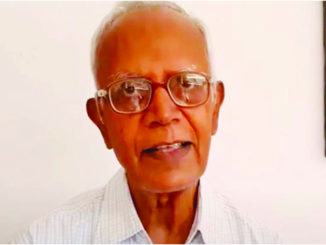
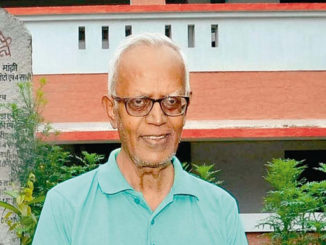
    Mumbai (TIP): A magisterial inquiry will be conducted into the death of Father Stan Swamy, who passed away at the Holy Family hospital in Mumbai’s Bandra on Monday, July 5, officials of the Maharashtra prison department said.

    The 83-year-old Jesuit priest and tribal rights activist, who was arrested by the National Investigation Agency (NIA) in connection with the Elgaar Parishad case on October 8, 2020, died in judicial custody while undergoing treatment at the hospital. He was lodged in Taloja Central Jail in Navi Mumbai before he was shifted to the private hospital as his health worsened on May 28.

    A prison department official sid that as per procedure, an accidental death report (ADR) will be registered by the police, following which the magisterial inquiry will begin. “According to mandated procedure for cases where a person dies in police or judicial custody, a magisterial inquiry is required to be conducted,” the official added.

    The official further said that as per Section 176 (1A) of the Code of Criminal Procedure, inquiry into all cases of custodial deaths, rapes and disappearances in custody have to be conducted by a judicial magistrate. The section was added in the statute in 2005. Prior to this, such probes were conducted by the executive magistrate.

    The official said that due to a National Human Rights Commission order in 2010 that stated that judicial inquiries were not mandatory in cases where there were no allegations, probes were not conducted into all such deaths for a decade. However, last year, NHRC defined the scope of inquiry to include cases of custodial deaths, including natural deaths and deaths caused by illness.

    “With this, Swamy’s death in judicial custody will fall under this particular section. Hence, though as per the hospital, he died of natural causes, a magisterial inquiry will be conducted,” the official said.

    The Bombay High Court, on May 28, had directed state prison authorities to shift Swamy from Taloja Central Jail to the private-run Holy Family Hospital for 15 days, while asking Swamy to bear the cost of his treatment. Swamy was shifted to the hospital ICU the same night and put on oxygen support. The HC continued his stay at the hospital from time to time.

    Seeking interim bail on grounds of the pandemic, Swamy had said that he suffered from Parkinson’s, among other health issues. He had also filed for bail on grounds that he was arrested for challenging indiscriminate arrests of thousands of young adivasis labeled as “naxals” without any proof of their involvement. The special court had, however, disallowed his pleas. Source: The Indian Express

  • Govt clears Rs 23K-cr Covid package to boost health infra

    Govt clears Rs 23K-cr Covid package to boost health infra

    New Delhi (TIP): The revamped Union Cabinet, in its first meeting on Thursday, July 8, approved Rs 23,123 crore Covid-19 emergency response package to boost health infrastructure and paediatric care across all 736 districts in the wake of a possible third wave.

    The package will be implemented by the Centre and states till March 2022, in a financial sharing pattern of Rs 15,000 crore and Rs 8,123 crore, respectively.

    The aim is to add 2.4 lakh medical beds and 20,000 ICU facilities with a special focus on paediatric care, add 8,800 ambulances, help states maintain a testing capacity of 21.5 lakh a day and install medical oxygen storage tanks with gas pipelines in every district. Health Minister Mansukh Mandaviya said the package would accelerate preparedness to improve Covid response. “The aim is early prevention, detection and management and infrastructure development, including for paediatric care,” he said.

    The plan will support central hospitals, including AIIMS, Delhi, and PGI, Chandigarh, for repurposing 6,688 beds for Covid management, boost genome sequencing capacity, support implementation of hospital management information system in all district hospitals and increase telemedicine capacity to 5 lakh consultations a day.

    Although sero surveys showed over 55% kids had already developed antibodies and may not be disproportionately vulnerable to a third wave, the government does not want to take any chances.

    The response package is an extension of the first part of the package worth Rs 15,000 crore announced in March 2020 to boost health infrastructure in the wake of the pandemic.

    Don’t be complacent, single mistake can derail fight against Covid: Modi

    Prime Minister Narendra Modi cautioned his council of ministers on Thursday, July 8,  that complacency could derail India’s fight against Covid-19, and a single mistake could have far-reaching impact and weaken the fight to defeat the virus, according to people aware of the developments.

    At the meeting of the expanded council of 77 members, Modi also asked the ministers to be punctual, learn from their predecessors, and focus on public service. The event came a day after Modi rebooted his council, dropping 12 ministers, inducting 36 new faces, and promoting seven.

    Modi said India’s fight against the pandemic was on track but expressed concern at the persistently high number of cases from Maharashtra and Kerala, said a person privy to the details of the meeting.

    According to the person quoted above, the PM said that over the past few days, pictures and videos of crowded places were being circulated and people were seen roaming without masks or social distancing. “This is not a pleasant sight and it should instil a sense of fear in us,” Modi was quoted as saying by the person quoted in the first instance.

    The PM said India’s fight against the pandemic was powered by frontline workers and was underway with full vigour. He also said that India was steadily vaccinating a substantial percentage of its population and testing was also consistently high.

    In the past, the PM has urged people to not let their guard down against the pandemic and adhere to Covid safety protocols. At the meeting too, the PM said that everyone must remember that the threat of Covid-19 was far from over and many nations were seeing surges in infections, said the person quoted above.

    He told the ministers that their aim should not be to instil fear but request people to keep taking all possible precautions so that India can move beyond the pandemic.

    A second person aware of developments said Modi asked ministers to reach office on time and channel their energies on ministerial work.

    He also said new ministers should not make unnecessary statements.

  • French court lets Britain’s Cairn Energy seize 20 Indian assets in Paris

    A French court has reportedly allowed Britain’s Cairn Energy to seize 20 Indian Government properties in Paris to recover an arbitration award of $1.7 billion (over Rs 12,600 crore) even as the Finance Ministry here said it had not received any notice in this regard and was trying to ascertain facts.

    The French court had agreed to an application by Cairn to seize the residential real estate owned by India in central Paris. The legal formalities were completed on Wednesday, said French media reports.

    The Finance Ministry suggested that a dialogue was on with the company’s representatives. “Constructive discussions have been held and the government remains open to an amicable solution to the dispute within the country’s legal framework,” said a ministry statement.

    The centrally located properties mostly comprise flats worth over 20 million Euros used to accommodate visiting VIPs in France, according to the French media. “Whenever such an order is received, appropriate legal remedies will be taken in consultation with our counsels,” said the statement.

    Cairn had received a notice from the Income Tax Department in January 2014, raising a preliminary assessment of Rs 10,247 crore tax liabilities for the group reorganisation it had done in 2006.

    In March 2015, the IT department contended that Cairn made a capital gain of Rs 24,503 crore. Cairn challenged the move before an arbitration tribunal in The Hague, which awarded it $1.2 billion plus costs and interest, which totals $1.7 billion.                 Source:  TNS

  • Cabinet reshuffle: Political reboot in Modi 2.0 delivered

    The much-awaited Union Cabinet expansion of Prime Minister Narendra Modi’s second term has finally taken place. In one of the biggest ministry expansions in India’s history, 36 new ministers have been inducted, seven promoted to Cabinet rank, while 12 sitting ministers have been shown the door. Modi in his second innings, at a time when India is at a critical crossroad during the COVID-19 pandemic, is building a fresh team which will lay the foundation of a new India, and, of course, will help the BJP in the 2024 general elections.

    Modi, running his Cabinet like a corporate chief executive officer, carried out a performance appraisal of various ministers over the past few weeks. The ministers were evaluated on various key performance indicators (KPIs) like vision, mission, objectives, targets versus action plan, impact, communication and outreach.

    Former Prime Minister Manmohan Singh had introduced a Results Framework Document (RFD) to evaluate the performance of his Cabinet colleagues, but had to shelve it after some ministers opposed such evaluation.

    Modi, however, adopted this people-centric performance approach, giving it his personal touch. He believes that transparency and accountability are the two cornerstones of any pro-people government and feedback from them improves public participation in decision-making.

    Twelve of the 53 ministers (which amounts to 22 percent) who were found lacking were asked to put in their papers. Seven of the 53 ministers (13 percent), who scored well in the evaluation, have been elevated.

    After the July 7 expansion, the Union ministry will now operate at 95 percent capacity, with just four positions vacant.

    Big names like Ravi Shankar Prasad and Prakash Javadekar, prominent spokespersons of the government, are among the 12 asked to leave. The mishandling of the COVID-19 second wave which has affected the government’s image and led to a dip in Modi’s popularity ratings, has probably cost Health Minister Harsh Vardhan his job.

    The Cabinet reshuffle clearly shows that Modi has taken feedback from all stakeholders and has responded to public opinion. Through this he has also given a message to the new inductees that they need to deliver.

    Modi has also not necessarily opted for domain expertise in the reshuffle to encourage new faces to bring in new ideas to provide solutions. The example being the preference of Kiren Rijiju over Bhupender Yadav for the law ministry.

    Apart from performance, the focus has been on youth, inclusiveness, broader representation to communities, and faces with administrative experience.

    MPs from 25 states and union territories are now ministers in the Union Cabinet. The new Cabinet includes seven former IAS officers, 11 women and 14 ministers below the age of 50.

    The BJP was earlier referred to as a party of the upper caste and ‘baniyas’. It has shed this image over the last few years. A majority of the OBC vote-bank nationally, which was earlier with the Congress and erstwhile Janata Dal, has moved to the BJP. The party won the maximum SC/ST reserved seats in the 2019 general elections.

    Today Other Backward Classes (OBCs), Scheduled Castes (SCs) and Scheduled Tribes (STs), apart from the upper caste, are its core support block.

    The expansion gives due weightage to people from these communities and bolsters the image of the party as the champion their cause.

    Currently, 27 ministers out of 77 are from the OBC community, 12 from the SC and eight from the ST community, representing around 60 percent of the ministry strength.

    This is expected to boost the BJP’s prospects in state elections due next year. Seven states, including the all-important Uttar Pradesh, go to the polls in 2022, with the BJP in power in six of them.

    This mid-term course correction is likely to bring transparency and accountability in governance and help the BJP win the ensuing state as well as general elections with its deft political messaging.

    Here is the complete list of ministers who were newly inducted into the Union Cabinet on Wednesday, July 7

    Narendra Modi: Prime Minister and also in-charge of: Ministry of Personnel, Public Grievances and Pensions; Department of Atomic Energy; Department of Space; All important policy issues; and All other portfolios not allocated to any Minister

    CABINET MINISTERS

    Raj Nath Singh: Minister of Defence

    Amit Shah: Minister of Home Affairs; and Minister of Cooperation

    Nitin Jairam Gadkari: Road Transport and Highways

    Nirmala Sitharaman: Finance and Corporate Affairs

    Narendra Singh Tomar: Agriculture and Farmers Welfare

    Dr Subrahmanyam Jaishankar: External Affairs

    Arjun Munda: Tribal Affairs

    Smriti Zubin Irani: Women and Child Development

    Piyush Goyal: Commerce and Industry, Consumer Affairs, Food and Public Distribution and Textiles

    Dharmendra Pradhan: Education and Skill Development and Entrepreneurship

    Pralhad Joshi: Parliamentary Affairs, Coal and Mines

    Narayan Tatu Rane: Micro, Small and Medium Enterprises

    Sarbananda Sonowal: Ports, Shipping and Waterways, and AYUSH

    Mukhtar Abbas Naqvi: Minority Affairs

    Dr Virendra Kumar: Social Justice and Empowerment

    Giriraj Singh: Rural Development and Panchayati Raj

    Jyotiraditya M. Scindia: Civil Aviation

    Ramchandra Prasad Singh: Steel

    Ashwini Vaishnaw: Railways; Communications; and Electronics and Information Technology

    Pashu Pati Kumar Paras: Food Processing Industries

    Gajendra Singh Shekhawat: Jal Shakti

    Kiren Rijiju: Law and Justice

    Raj Kumar Singh: Power and New and Renewable Energy

    Hardeep Singh Puri: Petroleum and Natural Gas; and Housing and Urban Affairs

    Mansukh Mandaviya: Health and Family Welfare; and Chemicals and Fertilizers

    Bhupender Yadav: Environment, Forest and Climate Change; and Minister of Labour and Employment

    Dr Mahendra Nath Pandey: Heavy Industries

    Parshottam Rupala: Fisheries, Animal Husbandry and Dairying

    G Kishan Reddy: Culture; Minister of Tourism; and Minister of Development of North Eastern Region

    Anurag Singh Thakur: Information and Broadcasting; and Youth Affairs and Sports

    MINISTERS OF STATE (INDEPENDENT CHARGE)

    Rao Inderjit Singh: Minister of State (Independent Charge) of the Ministry of Statistics and Programme Implementation; Minister of State (Independent Charge) of the Ministry of Planning; and Minister of State in the Ministry of Corporate Affairs

    Dr Jitendra Singh: Minister of State (Independent Charge) of the Ministry of Science and Technology; Minister of State (Independent Charge) of the Ministry of Earth Sciences; Minister of State in the Prime Minister’s Office; Minister of State in the Ministry of Personnel, Public Grievances and Pensions; Minister of State in the Department of Atomic Energy; and Minister of State in the Department of Space

    MINISTERS OF STATE

    Shripad Yesso Naik, Faggansingh Kulaste, Prahalad Singh Patel, Ashwini Kumar Choubey, Arjun Ram Meghwal, General (Retd) V K Singh, Krishan Pal, Danve Raosaheb Dadarao, Ramdas Athawale, Sadhvi Niranjan Jyoti, Dr Sanjeev Kumar Balyan, Nityanand Rai, Pankaj Chaowdhary, Anupriya Singh Patel, S P Singh Baghel, Rajeev Chandrasekhar, Shobha Karandlaje, Bhanu Pratap Singh Verma, Darshana Vikram Jardosh, V Muraleedharan, Meenakashi Lekhi, Som Parkash, Renuka Singh Saruta, Rameswar Teli, Kailash Choudhary, Annpurna Devi, A Narayanaswamy, Kaushal Kishore, Ajay Bhatt, B L Verma, Ajay Kumar, Devusinh Chauhan, Bhagwanth Khuba, Kapil Moreshwar Patil, Pratima Bhoumik, Dr Subhas Sarkar, Dr Bhagwat Kishanrao Karad, Dr Rajkumar Ranjan Singh, Dr Bharati Pravin Pawar, Bishweswar Tudu, Shantanu Thakur, Dr Munjapara Mahendrabhai, John Barla, Dr L Murugan, Nisith Pramanik


  • UK sees biggest surge in Covid cases since January

    Britain reported the highest daily number of new Covid cases since January 29 on Tuesday, and the greatest number of deaths within 28 days of a positive test since April 23. Recent  figures showed that there were 28,773 new cases, up from 27,334 on Monday, and 37 deaths. As of the end of Monday, 86.2% of British adults had received one dose of a vaccination against Covid and 64.3% had received two doses.

    Meanwhile, Covid deaths in Russia have hit another daily record, with the authorities reporting 737 more fatalities amid a rapid rise in infections. Russia’s Covid task force on Tuesday reported 23,378 new cases. The daily tally of confirmed infections has more than doubled in the past month.

  • Pak expects five lakh fresh Afghan refugees in case of civil war in Afghanistan: Report

    Pak expects five lakh fresh Afghan refugees in case of civil war in Afghanistan: Report

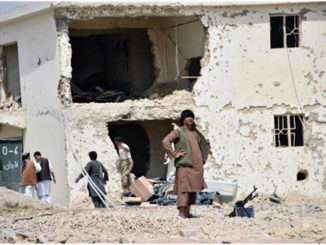
    Islamabad (TIP): Pakistan expects some five lakh fresh Afghan refugees in case of a civil war in neighbouring Afghanistan, according to a media report here on July 7, amidst the Taliban militants gaining rapid strides in the war-torn country.

    The Express Tribune reported that this time the Pakistani authorities insist refugees would be kept at special camps in the bordering areas instead of letting them in the settled parts of the country.

    Afghan refugees started coming to Pakistan following the invasion by the former Soviet Union.

    Pakistan has been pushing to send them back but it may face fresh waves of refugees if Afghanistan plunged into civil war.

    At a recent briefing given to a select group of parliamentarians, the military authorities in Pakistan painted grim prospects of any peace in Afghanistan.

    The members of parliament were told that Afghanistan was fast descending into civil war, something that did not bode well for Pakistan.

    The negative fallout of unrest in Afghanistan includes a rise in terrorism and a fresh influx of Afghan refugees, the report said.

    Pakistani officials, quoted by the newspaper, said although Taliban gains were quite rapid in recent weeks, the situation could change if the Afghan security forces show some resistance.

    In recent weeks, the insurgents have seized nearly a third of Afghanistan’s rural districts and besieged several provincial capitals.

    Hundreds of Afghan security force members have fled into neighbouring Tajikistan in the face of Taliban advances since the US vacated its main Afghan base as part of a plan to withdraw all foreign troops by September 11.

    “Therefore, it is too early to predict where things are heading in Afghanistan. The situation at best is volatile and unpredictable,” a Pakistani official said when asked about the chances of Afghanistan slipping into another phase of chaos. (PTI)

    After pressuring telecom firms, Myanmar’s junta bans executives from leaving

    Singapore (TIP): Senior foreign executives of major telecommunications firms in Myanmar have been told by the junta that they must not leave the country without permission, a person with direct knowledge of the matter said.

    A confidential order from Myanmar’s Posts and Telecommunications Department (PTD) in mid-June said senior executives, both foreigners and Myanmar nationals, must seek special authorisation to leave the country, the person said.

    A week later, telecom companies were sent a second letter telling them they had until Monday July 5 to fully implement intercept technology they had previously been asked to install to let authorities spy on calls, messages and web traffic and to track users by themselves, the source said. Reuters has not seen the orders.

    The directives follow pressure on the companies from the junta, which is facing daily protests from its opponents and a growing number of insurgencies to activate the spyware technology.

    A spokesman for the military did not answer multiple requests for comment. The junta has never commented on the electronic surveillance effort, but announced soon after seizing power its aim to pass a cybersecurity bill that would require telecoms providers to provide data when requested and remove or block any content deemed to be disrupting “unity, stabilisation, and peace”. It also amended privacy laws to free security forces to intercept communications.

    The travel ban comes after intensified pressure from military officials to finish the implementation of the surveillance equipment. The source, who spoke on condition of anonymity for fear of reprisals, said the ban was meant to pressure telecoms firms to finish activating the spyware technology, although the order itself does not specify a reason.

    Three other telecoms sources, also speaking on condition of anonymity, said the authorities had stepped up pressure on the companies to implement the intercept, but declined to elaborate further. Two sources said companies had been warned repeatedly by junta officials not to speak publicly or to the media on the intercept.

    Telenor declined to comment. There was no immediate response to requests for comment from Ooredoo, state-owned MPT and Mytel, a joint venture between Vietnam’s Viettel and a Myanmar military-owned conglomerate. (Reuters)

  • Taliban take districts in northern Afghanistan from fleeing troops

    Kabul (TIP): The Taliban’s march through northern Afghanistan gained momentum overnight with the capture of several districts from fleeing Afghan forces, several hundred of whom fled across the border into Tajikistan, officials said July 5.

    More than 300 Afghan military personnel crossed from Afghanistan’s Badakhshan province as Taliban fighters advanced toward the border, Tajikistan’s State Committee for National Security said in a statement. The Afghan troops crossed over at about 6:30 pm local time Saturday.

    “Guided by the principles of humanism and good neighborliness,” the Tajik authorities allowed the retreating Afghan National Defense and Security Forces to cross into Tajikistan, said the statement.

    Since mid-April, when US President Joe Biden announced the end to Afghanistan’s “forever war,” the Taliban have made strides throughout the country. But their most significant gains have been in the northern half of the country, a traditional stronghold of the US-allied warlords who helped defeat them in 2001.

    The Taliban now control roughly a third of all 421 districts and district centers in Afghanistan.

    (AP)

  • Myanmar forces kill 25 during raid

    Yangon (TIP): Myanmar security forces killed at least 25 persons on July 8 in a confrontation with opponents of the military junta at a town in the centre of the Southeast Asian nation, two residents and Myanmar media said on Sunday.

    A spokesman for the military did not respond to calls requesting comment on the violence at Depayin in the Sagaing region.

    The state-run Global New Light of Myanmar said “terrorists” ambushed security forces patrolling there, killing one of them and wounding six. It said the attackers retreated after retaliation by the security forces. — Reuters

    Nepal, India revise railway service pact

    Kathmandu (TIP): In a major boost to the Nepal-India bilateral ties, the two neighbouring countries revised the Railway Service Agreement on June 30, according to a media report.

    According to the revised text of the Letter of Exchange, all authorised private container train operators (Indian as well as Nepali) will be able to utilise the Indian railway network to carry freight containers for Nepal’s imports or exports, ending the monopoly of the Indian government-owned Container Corporation of India, the Kathmandu Post daily reported.

    The agreement was singed in 2004 and the two sides have tried to amend it several times in the past. As the countries are planning to expand and extend more cross-border railway service in both passengers and cargo facilities, the agreement was needed to be revises without any delay, a Nepali official said. —IANS

  • Hearings in Hong Kong subversion trial extended to September

    Hearings in Hong Kong subversion trial extended to September

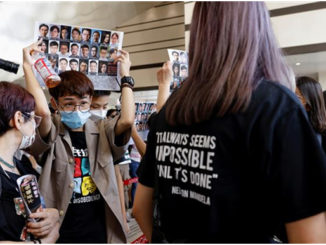
    Hong Kong (TIP): Hearings in the trial of 47 Hong Kong pro-democracy activists charged under a Beijing-imposed national security law have been extended to September. The activists, aged 23 to 64, appeared in court on July 8 in the government’s effort to convict them of conspiracy to commit subversion for their involvement in unofficial primary elections held last year by the pro-democracy camp to determine candidates to field in legislative elections which were later postponed.

    Authorities say the primaries were part of a plot to paralyse Hong Kong’s government and have cracked down heavily on dissent following months of anti-government protests in 2019.

    Defendants protested the move to extend the hearings and shouted that Hong Kong’s pro-democracy movement must “hang on”. The hearings will resume on September 23.

    In addition to the new national security law, authorities have changed the criteria for Hong Kong elections and the makeup of the legislature to ensure an overwhelming pro-Beijing majority. Most outspoken democracy advocates have been jailed, intimidated into silence or have sought asylum overseas, while demonstrations have been banned and the city’s most prominent pro-democracy newspaper, the Apple Daily, has closed after police arrested staff and froze its assets.

    Beijing has defended the moves as necessary to restore order in the Asian financial hub. Critics say they mark a betrayal of the central government’s promise to maintain Hong Kong’s civil liberties for 50 years after its handover from British colonial rule in 1997. AP

  • South Africa’s Zuma hands himself over to police to begin sentence

    South Africa’s Zuma hands himself over to police to begin sentence

    Nkandla (South Africa) (TIP): South African former President Jacob Zuma turned himself in to police on July 7 to begin 15 months in jail for contempt of court, the culmination of a long legal drama seen as a test of the post-apartheid state’s ability to enforce the rule of law.

    Police spokesperson Lirandzu Themba confirmed in a statement that Zuma was in police custody, in compliance with the Constitutional Court judgment.

    The Department of Correctional Services said in a separate statement that Zuma was admitted to Estcourt Correctional Centre, about 175 km (108 miles) from his rural homestead in Nkandla in eastern South Africa. Television aired live footage of his motorcade entering the facility.

    The court gave Zuma a 15-month jail term last week for defying an instruction earlier in February to give evidence at an inquiry into corruption during his nine years in power until 2018. The inquiry is led by Deputy Chief Justice Raymond Zondo.

    Police had been instructed to arrest Zuma by the end of Wednesday if he failed to appear at a police station. Hundreds of his supporters, some of them armed with guns, spears and shields, had gathered nearby at his homestead to try to prevent his arrest.

    But in the end, the 79-year-old Zuma decided to go quietly.

    “President Zuma has decided to comply with the incarceration order,” his foundation said, the first time Zuma’s camp had shown any willingness to cooperate with the court.

    It was a remarkable fall for a revered veteran of the African National Congress liberation movement, who was jailed by South Africa’s white minority rulers for his part in its struggle to make everyone equal before the law.

    Zuma denies there was widespread corruption under his leadership and he had struck a defiant note on Sunday, lashing out at the judges and launching legal challenges to his arrest.

    His lawyers asked the Constitutional Court on Wednesday to suspend its order to the police to arrest him by midnight pending the outcome of his challenge against a jail sentence.

    Zuma gave in to pressure to quit and yield to now-President Cyril Ramaphosa in 2018. He has since faced inquiries into allegations of corruption dating from his time as president and before.

    The Zondo Commission is examining allegations that he allowed three Indian-born businessmen, Atul, Ajay and Rajesh Gupta, to plunder state resources and traffic influence over government policy. He and the Gupta brothers, who fled to Dubai after Zuma was ousted, deny any wrongdoing.

    Zuma also faces a separate court case relating to a $2 billion arms deal in 1999 when he was deputy president. He denies the charges.

    The former president maintains that he is the victim of a political witch hunt and that Zondo is biased against him. Reuters

  • Haiti police battle gunmen who killed president, amid fears of chaos

    Haiti police battle gunmen who killed president, amid fears of chaos

    PORT-AU-PRINCE (TIP): Haiti’s security forces were locked in a fierce gun battle on July 7 with assailants who assassinated President Jovenel Moise at his home overnight, plunging the already impoverished, violence-wracked nation deeper into chaos.

    The police had killed four of the “mercenaries” and captured two more, Police General Director Leon Charles said in televised comments late on Wednesday, adding that security forces would not rest until they had all been dealt with. “We blocked them en route as they left the scene of the crime,” he said. “Since then, we have been battling with them.”

    “They will be killed or apprehended.”

    Moise, a 53-year-old former businessman who took office in 2017, was shot dead and his wife, Martine Moise, was seriously wounded when heavily armed assassins stormed the couple’s home in the hills above Port-au-Prince at around 1 a.m. local time (0500 GMT).

    Haiti’s ambassador to the United States, Bocchit Edmond, told Reuters in an interview the gunmen were masquerading as U.S. Drug Enforcement Administration (DEA) agents as they entered Moise’s guarded residence under cover of nightfall – a move that would likely have helped them gain entry.

    The brazen assassination, which drew condemnation from Washington and neighboring Latin American countries, came amid political unrest, a surge in gang violence, and a growing humanitarian in the poorest nation in the Americas.

    The government declared a two-week state of emergency to help it hunt down the assassins, whom Edmond described as a group of “foreign mercenaries” and well-trained killers.

    The gunmen spoke English and Spanish, said interim Prime Minister Claude Joseph, who assumed the leadership of the country, where the majority speak French or Haitian Creole.

    “I am calling for calm. Everything is under control,” Joseph said on television alongside Police General Director Charles. “This barbaric act will not remain unpunished”. The first lady had been airlifted to Florida for treatment where she was in a stable condition, Joseph said.

    Haiti, a country of about 11 million people, has struggled to achieve stability since the fall of the Duvalier dynastic dictatorship in 1986, and has grappled with a series of coups and foreign interventions.

    U.S. President Joe Biden denounced the killing as “heinous” and called the situation in Haiti – which lies some 700 miles (1,125 km) off the Florida coast – worrisome.

    “We stand ready to assist as we continue to work for a safe and secure Haiti,” he said.

    U.S. Secretary of State Antony Blinken, in a call with Joseph, expressed Washington’s commitment to work with Haiti’s government to support “democratic governance, peace, and security,” State Department spokesperson Ned Price said in a statement.

    Many people in Haiti had wanted Moise to leave office. Ever since he took over in 2017, he faced calls to resign and mass protests – first over corruption allegations and his management of the economy, then over his increasing grip on power.

    Lately, he presided over a worsening state of gang violence that rights activists say is linked to politics and business leaders using armed groups for their own ends.

    In recent months, many districts of the capital Port-au-Prince had become no-go zones and one of Haiti’s most powerful gang leaders warned he was launching a revolution against the country’s business and political elites https://www.reuters.com/world/americas/haiti-gang-leader-launches-revolution-violence-escalates-2021-06-24 – although rights activists said he was more linked to Moise than the opposition.

    Moise himself had talked of dark forces at play behind the unrest: fellow politicians and corrupt oligarchs unhappy with his attempts to clean up government contracts and to reform Haitian politics. He provided no proof of this.  (Reuters)

  • Iran hosts Afghan peace talks as fighting surges

    Tehran (TIP): Iran on July 7 hosted the first significant talks in months between Taliban and Afghan Government representatives, a surprise meeting that comes as the US completes its withdrawal from Afghanistan and districts fall to the Taliban across the country.

    The high-level peace talks between the warring sides follow months-old discussions in Qatar that have been stalled by a diplomatic stalemate and escalating violence. Even as officials faced each other across vast tables in Tehran and Iran’s top diplomat pledged to end the crisis, fighting surged in Afghanistan’s Badghis.

    The Taliban political committee, led by chief negotiator Sher Mohammad Abbas Stanikzai, flew from Doha to Iran’s capital to meet Afghan government officials, including former Vice-President Younus Qanooni and others from the High Council for National Reconciliation.

    Iranian Foreign Minister Mohammad Javad Zarif urged the delegates to “take difficult decisions for their country. — Agencies

  • China’s gene giant harvests data from millions of women

    Beijing (TIP):  A Chinese gene company selling prenatal tests around the world developed them in collaboration with the country’s military and is using them to collect genetic data from millions of women for sweeping research on the traits of populations, a Reuters review of scientific papers and company statements found. US government advisors warned in March that a vast bank of genomic data that the company, BGI Group, is amassing and analysing with artificial intelligence could give China a path to economic and military advantage. As science pinpoints new links between genes and human traits, access to the biggest, most diverse set of human genomes is a strategic edge. The technology could propel China to dominate global pharmaceuticals, and also potentially lead to genetically enhanced soldiers, or engineered pathogens to target the US population or food supply, the advisors said.

    Reuters has found that BGI’s prenatal test, one of the most popular in the world, is a source of genetic data for the company, which has worked with the Chinese military to improve “population quality” and on genetic research to combat hearing loss and altitude sickness in soldiers.

    BGI says it stores and re-analyses left-over blood samples and genetic data from the prenatal tests, sold in at least 52 countries to detect abnormalities such as Down’s syndrome in the foetus. The tests — branded NIFTY for “Non-Invasive Fetal TrisomY”—also capture genetic information about the mother, as well as personal details such as her country, height and weight, but not her name, BGI computer code viewed by Reuters shows.

    So far, more than 8 million women have taken BGI’s prenatal tests globally. BGI has not said how many of the women took the test abroad, and said it only stores location data on women in mainland China.

    The tests are a private procedure for the women who take them, a component in their routine prenatal care. But the studies show that they yield increasingly potent information for research.

    One BGI study, for instance, used a military supercomputer to re-analyse NIFTY data and map the prevalence of viruses in Chinese women, look for indicators of mental illness in them, and single out Tibetan and Uyghur minorities to find links between their genes and their characteristics.

    The scale of BGI’s accumulation of prenatal data, and its collaboration with the military in prenatal and neonatal research, have not been previously reported. The company has published at least a dozen joint studies on the tests with the People’s Liberation Army (PLA) since 2010, trialling and improving the tests or analysing the data they provided, the Reuters review found.

    DNA data collected from prenatal tests on women outside China has also been stored in China’s government-funded gene database, one of the world’s largest, the company confirmed. (Reuters)

  • Kidnappers demand food for children seized in Nigeria school raid

    Kaduna (TIP): Kidnappers who abducted more than 100 students from a boarding school in Nigeria’s Kaduna state warned that the children could starve unless parents supply them with food, parents and the head of the Kaduna Baptist conference said on July 7. The Baptist official said about 125 students are missing, while at least 28 were reunited with their families, after the overnight raid on the Bethel Baptist High School early this week, the 10th mass school kidnapping since December in northwest Nigeria. Parents of those missing told Reuters that the kidnappers promised the children would be safe if parents delivered rice, beans, palm oil, salt and stock cubes. They said abductors told them that a ransom demand would follow. “Search and rescue operations (are) ongoing and we strongly believe that these students will safely return to their parents soon,” Reverend I.A. Jangado said in a statement. (Reuters)

  • Indian-origin student dies in road accident in UAE

    Indian-origin student dies in road accident in UAE

    DUBAI (TIP) A 19-year-old Indian-origin student died after he crashed his car into a tree in the UAE, according to a media report on Thursday, July 8. Ibad Ajmal was driving the car when the accident occurred on Wednesday, July 7 on Abu Dhabi’s Yas Island, local news reported.

    Last month, he flew down to Abu Dhabi to spend time with his parents. The family hails from Kannur district of Kerala.

    “Ibad was alone in the car and must have dozed off while driving,” said a close family friend after the funeral held on Wednesday, July 7 evening.

    A former student of the Abu Dhabi Indian School, Ibad was pursuing aircraft engineering and maintenance systems at the University of South Wales Cardiff campus in the UK.


  • Indian Origin Sikhs in Singapore thrilled as Singapore PM wears turban, greets audience with ‘Sat Sri Akal’ while inaugurating gurdwara

    Indian Origin Sikhs in Singapore thrilled as Singapore PM wears turban, greets audience with ‘Sat Sri Akal’ while inaugurating gurdwara

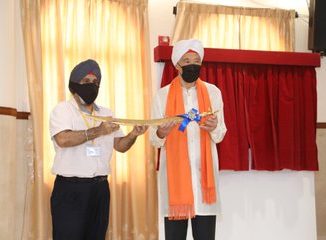
    SINGAPORE(TIP): Singapore Prime Minister Lee Hsien Loong wore a turban and greeted an audiencewith ‘Sat Sri Akaal’ while inaugurating a Gurdwara at Silat Road in Singapore.

    Parminder Singh, CXO-Mediacorp, shared a clip of the incident on Twitter saying: “Singapore Prime Minister, @leehsienloong inaugurated a newly renovated Gurudwara wearing an immaculate turban and greeting everyone with a perfect Sat Sri Akaal!”


  • Indian workers to be brought in Singapore on ‘small scale’ and in a ‘calibrated manner’

    Indian workers to be brought in Singapore on ‘small scale’ and in a ‘calibrated manner’

    Since the coronavirus outbreak, the CMP sectors have been severely affected by restrictions on the inflow of migrant workers

    SINGAPORE (TIP): Migrant workers from India will be brought into Singapore on a “small scale” and in a “calibrated manner” this month through a pilot programme led by the construction, marine and process (CMP) sectors, according to a media report here on Wednesday, July 7.

    If successful, this method will be used to facilitate a steady inflow of migrant workers in a safe and secure manner, The Straits Times reported, quoting a joint statement by the Singapore Contractors Association, Association of Singapore Marine Industries and Association of Process Industry.

    The move comes after zero incidences of Covid-19 in the first few batches of workers entering from Malaysia under the pilot project, according to the statement.

    “We will continue to carry this (the pilot) out on a small scale and in a calibrated manner to better manage the risks involved and validate the robustness of the tightened end-to-end process,” the trade bodies said.

    Since the coronavirus outbreak, the CMP sectors have been severely affected by restrictions on the inflow of migrant workers.

    Currently, those who have recent travel history to Bangladesh, Nepal, Pakistan, Sri Lanka and India are not allowed to enter Singapore under enhanced border restrictions.

    In May, the Ministry of Manpower stopped accepting new entry applications for work pass holders from higher-risk countries or regions due to Covid-19, except for workers needed in key strategic projects and infrastructural works.

    Work pass holders from these countries who were approved to enter Singapore before July 5 were no longer allowed to do so, with some exceptions, said the daily.

    Last month, Trade and Industry Minister Gan Kim Yong said more migrant workers and foreign domestic helpers will soon be allowed to enter Singapore to work, to ease the “immense pressures” faced by companies since the start of the pandemic.

    On Wednesday, the trade associations said the CMP sectors play an essential role in Singapore’s development.

    “Companies in the CMP sectors contribute to the development of public infrastructure and private properties, construction and maintenance of vessels and offshore energy infrastructures,” they said.

    These “support the ocean economy and plant engineering services to enable Singapore to be recognized globally as a leading maritime, energy and chemicals hub”, they said.

    Since the end-2019, the number of work permit holders in these sectors has declined by more than 15 per cent or 60,000.

    “This has resulted in project delays and significant labor cost increase, which in turn affect the viability of businesses,” they said.

    The coronavirus has so far killed 36 people along with 62,640 confirmed cases in Singapore, according to Johns Hopkins University.

    (Source: PTI)


  • Indian man wins top prize in govt-initiated competition for migrant workers

    Indian man wins top prize in govt-initiated competition for migrant workers

    He performed a sequence of Silambam – a traditional martial art form practiced in India since the 4th century BC

    SINGAPORE (TIP): An Indian man in Singapore has won the top prize in a government-initiated competition for migrant workers for choreographing and performing a sequence of Silambam – a traditional martial art form practiced in India since the 4th century BC.

    Ganesan Sandhirakasan, 33, who hails from Tamil Nadu, secured first place with the most number of likes and views for his video on the @sg4mw (SG 4 Migrant Workers) TikTok account, beating 19 other shortlisted individuals. He took home the prize money of SGD 1,000 (USD 743).

    The series was made for migrant workers in Singapore and the final episode was aired on Monday night. The competition is part of the Tamil variety series Chill Pannu Maappi!, commissioned by the Ministry of Communication and Information and produced by Cosmic Ultima Pictures for migrant workers.

    Migrant workers were invited to send in video submissions of their talents and the show received more than 600 entries, said executive producer of the show S.S. Vikneshwaran.

    Ganeansan started practicing martial arts at the age of 12 and won a silver medal for India at the first Silambam World Championship in 2010.

    “(I decided to take part) after seeing the advertisement (for the competition) on the website. My workplace was closed during the COVID period,” he said of the first talent competition held in Singapore. “I wanted to use the time on something. Therefore, I choreographed (a demonstration of) the Indian martial art Silambam,” the Channel New Asia quoted Ganesan as saying.

    Ganesan said he submitted his video with the intention of making the martial art form known to more people, and to encourage others to keep fit.

    “It takes concentration, fitness, and practice to perform a continuous sequence of Silambam. Learners benefit from both physical, health and mental health,” he added.

    Ganesan has been living in Singapore for the past seven years, and teaching Taekwondo here for the past five years.

    The second place in the competition went to Vignesh Sathish, whose video of him performing a traditional dance form known as the Karagattam in costume won him SGD 500 (USD 372).

    The winner of the third position – with prize money of SGD 300 (USD 223) – was Saran Raj, an assistant supervisor with a cleaning company who submitted a video of himself singing.

    Ganesan said he was “happy and excited” to win the first position. He plans to keep half of the prize money for his use and donate the other half to a foundation in his hometown in Mayiladuthurai in Tamil Nadu to provide at least 500 meals for the elderly.

    Ganesan said he hopes the money will help individuals who are facing “challenging times” due to the COVID-19 pandemic.

    The reception for the show and the competition segment has been “pretty good” so far, Vikneshwaran said, adding that both migrant workers and Singaporeans enjoy the series.

    “They seem to love the idea of being able to connect with familiar faces that they know from back home. They enjoy the dance, the songs, their favorite so far has been the stand-up comedy segment, which features some sensational comedians from Tamil Nadu,” he said.

    The competition saw submissions including those of singing, dancing, playing instruments, said Soffy Hariyanti, director of the Ministry’s campaigns and production department.

    There were also some unique entries featuring martial art forms and folk dances, she added.

    (Source: PTI)


  • Indian American Diaspora Saddened at death in detention of Stan Swamy

    Indian American Diaspora Saddened at death in detention of Stan Swamy

    WASHINGTON (TIP): Indian American diaspora on Tuesday, July 6, expressed grief over the death of Father Stan Swamy and described him as a social worker who dedicated his life to serving poor tribals in India. Eighty-four-year-old Swamy, who was arrested last year under the Unlawful Activities (Prevention) Act (UAPA) in connection with the Elgar Parishad case, died in detention on Monday, July 5. The Federation of Indian American Christian Organizations of NA (FIACONA), in a statement, said he was a brave man who tirelessly worked to protect and help tribals in India.

    “A simple and an unassuming man, Fr Swamy stood his ground against a system that is bent on exploiting the poor tribals and their sovereign rights to their resources,” FIACONA said.

    Swamy suffered from Parkinson’s disease and several other ailments. During his custody, Swamy had also tested positive for COVID-19.

    “It is a dark day for democracy in India, and the national leadership and members of the judiciary should hang their heads in shame,” said George Abraham, vice-chairman of the Indian Overseas Congress, in another statement.

    “Father Swamy’s detention and treatment in prison that led to his death is a blot on the consciousness of the nation and a travesty of justice,” said Abraham.

    The INOC said it is also time to remember many other human rights warriors who are still in prison.

    “We can only hope the passing of Father Stan Swamy may reopen the mindset of those in power to release those on bail while awaiting charges,” it added.

  • Indian American Neha Parikh appointed new CEO of crowd-sourced navigation app Waze

    Indian American Neha Parikh appointed new CEO of crowd-sourced navigation app Waze

    HOUSTON(TIP):Neha Parikh, the Indian American former president of the travel website Hotwire, has been appointed as the new CEO of Waze, a crowd-sourced navigation app and a subsidiary of tech giant Google. Neha, 41, a board member of the online used car retailer Carvana, replaced Noam Bardin, who stepped down in November as the CEO after leading the Israeli company for 12 years. Parikh, who joined Waze as the CEO in late June, is a veteran of online hospitality brand Expedia, and has served in a variety of positions at two of the corporation’s subsidiaries: Hotels.com and as Hotwire’s youngest and first female president.

    “As Neha leads Waze into the future, she will remain hyper-focused on our passionate community, beloved brand, and best-in-class products,” said a spokesperson of the company.

    Waze currently has over 140 million active monthly users in more than 185 countries that drive more than 24 billion miles (40 billion kilometers) every month.

    The app can give out directions in 56 different languages and employs over 500 people, a significant number of which are based out of Israel.

    “On my first visit to the Carvana offices, I took a picture of their prominently displayed values, one of which is ‘Your next customer may be your mom,’ which I love,” Parikh said in a statement.

    “Relentless customer focus has been central to my career, so I’m thrilled to align with a company that puts their customers first,” she said.

    Founded in Israel in 2008. Waze quickly emerged as a top choice between Uber and Lyft drivers. Google acquired the company in 2013 for a reported USD 1.1 billion (110 crore). It continued to flourish as Google refrained from absorbing it into its Maps division and allowed it to stay independent.


  • Indian American Astronaut Sirisha Bandla set to fly off into space on July 11

    Indian American Astronaut Sirisha Bandla set to fly off into space on July 11

    Third woman of Indian descent to fly into space will be a mission specialist on Virgin Galactic’s ‘Unity 22’ flight.

    WASHINGTON (TIP) July 5:  Indian American Sirisha Bandla is all set to fly off into space on July 11 as a mission specialist on Virgin Galactic’s next test flight of its SpaceShipTwo Unity with Company’s founder, Sir Richard Branson. The “Unity 22” mission, the twenty-second flight test for VSS Unity, will be the first to carry a full crew of two pilots and four mission specialists in the cabin, according to a company announcement.

    While boss Branson will be testing the private astronaut experience, Bandla, Vice President of Government Affairs and Research Operations at Virgin Galactic, will be evaluating the human-tended research experience.

    Andhra, India born Bandla will be using an experiment from the University of Florida that requires several handheld fixation tubes that will be activated at various points in the flight profile

    “I am so incredibly honored to be a part of the amazing crew of #Unity22, and to be a part of a company whose mission is to make space available to all,” she tweeted.

    Bandla will be the third Indian American woman to fly into space after Karnal, India, born Kalpana Chawla and Sunita Williams.

    Building on the success of the Company’s most recent spaceflight in May, Unity 22 will focus on cabin and customer experience objectives, including:

    – Evaluating the commercial customer cabin with a full crew, including the cabin environment, seat comfort, the weightless experience, and the views of Earth that the spaceship delivers — all to ensure every moment of the astronaut’s journey maximizes the wonder and awe created by space travel
    – Demonstrating the conditions for conducting human-tended research experiments
    – Confirming the training program at Spaceport America supports the spaceflight experience

    For the first time, Virgin Galactic will share a global livestream of the spaceflight. The livestream will be available to watch on Virgin Galactic.com and will be simulcast on the Virgin Galactic Twitter, YouTube, and Facebook channels. It is expected to begin at 7:00 am MDT / 9:00 am EDT on the day of the flight. Branson said: “I truly believe that space belongs to all of us. After more than 16 years of research, engineering, and testing, Virgin Galactic stands at the vanguard of a new commercial space industry, which is set to open space to humankind and change the world for good.” “It’s one thing to have a dream of making space more accessible to all; it’s another for an incredible team to collectively turn that dream into reality,” he said.

    “As part of a remarkable crew of mission specialists, I’m honored to help validate the journey our future astronauts will undertake and ensure we deliver the unique customer experience people expect from Virgin.”

    Previously, Bandla served as the Associate Director for the Commercial Spaceflight Federation, an industry association of commercial spaceflight companies.

    At CSF, Bandla works on various policies with the aim to promote the commercial space industry and make commercial spaceflight a reality. Before CSF, she worked as an aerospace engineer designing components for advanced aircraft at L-3 Communications in Greenville, Texas.

    She has a Bachelor of Science degree in aeronautical/astronautical engineering from Purdue and holds a Masters of Business Administration from George Washington University.

    Bandla currently serves on the Board of Directors for the American Astronautical Society, Future Space Leaders Foundation, and is a member of the Young Professional Advisory Council at Purdue University. Bandla also helps to coordinate the Matthew Isakowitz Fellowship Program.

    Meanwhile, Bandla’s grandparents back in Andhra Pradesh are flooded with phone calls and messages showering their blessings and wishing her the best, according to the Indian Express.

    Bandla Ragaiah, her paternal grandfather based in Guntur, says it was at the age of four years that Sirisha, who was always curious about flying and had her eyes set on the skies, took to her first adventure.

    “At the age of four, she travelled alone to the US where her parents and older sister lived,” the 83-year-old who worked as a principal scientist and professor at state-run Acharya NG Ranga Agriculture University told Indianexpress.com over the phone.

    “Though the person who accompanied her was known to us, he was a stranger to her. She was not scared to fly alone. She was excited,” he said.

    Ragaiah is happy and proud that his granddaughter is set to achieve her dreams. He recalls her as a child who was decisive in her thoughts and determined to achieve them.

    “We don’t know how she got interested in aircraft, stars and skies. It has been in her since childhood. Whatever she has achieved today is on her own accord and her parents gave her full freedom to pursue her dream. She has proved her excellence and rose to the occasion,”
    Ragaiah was quoted as saying.

    Her maternal grandfather, Venkat Narasiah, who retired as a Chemistry professor and lives at Tenali in Prakasam district of Andhra Pradesh, echoed similar views.

    He recalled that Bandla used to visit NASA during the family’s stay in Houston. “She was so interested in flying an aircraft that even after she could not make it to NASA due to a condition in her eyesight, she pursued higher education in the same field. For those like her, she has done videos on YouTube — ‘lessons from Bandla Sirisha’ on how to get into the Space industry,” Narasiah told Indianexpress.com.

    Both her grandparents agree that Sirisha was a fearless and active child. “When I used to come home late at night, I used to discourage her from stepping out. But she would always tell me not to worry and that she could take care of herself,” said Ragaiah.

    “Even during a power cut when other children of her age would be scared of the pitch darkness around, she was not one of them,” Narsiah added.