Tag: Whatapp

  • Opposition unity should transcend poll alliance

    Opposition unity should transcend poll alliance

    By Yogendra Yadav

    By Yogendra Yadav

    “What the Opposition needs to demonstrate at this stage is political cohesion. It needs to demonstrate a unity of purpose, a shared agenda (not just a hastily drawn up minimum programme) that inspires hope, an alternative approach to governance, a capacity to work together by subordinating their differences.”

    Opposition unity is among the most fantoosh but faltu preoccupations. At this juncture of Indian politics, it is at once a critical ask and a futile pursuit. This was the flavor of the month gone by and understandably so. The BJP’s defeat in West Bengal has opened the oppositional spaces and encouraged routine confabulations. It does not take much to see that any project to take on the BJP at the national level must gather in some way the 63 per cent voters who did not vote for the BJP or its allies in 2019. Hence, the temptation to return to some of the most over-rated moves of Opposition unity. All the tested and tired political faces coming together to oppose Prime Minister Narendra Modi is one of the laziest and disastrous political recipes of our time.

    It is pointless to discuss Opposition unity unless we are clear about three things: Who counts as Opposition? What kind of unity are we talking about? And, is Opposition unity all that we need to take on Modi’s BJP?

    The idea of a hold-all Opposition, coming together of anyone and everyone who happens to be opposed to Modi, or to the BJP or to its current ideology, is both impossible and counter-productive. It is humanly impossible to achieve a harmonious merger of egos, ambitions and designs of all those who fall under the broad rubric of the Opposition. Even if this miracle were to happen, the cost of stitching together such an alliance would clearly outweigh its possible gains. It would have to be a sub-optimal coalition in terms of its efficacy in defeating the BJP. Besides, it might help Modi play the lone warrior who is taking on an entire ‘gang’. This could also help the BJP’s booth workers go for successful counter-mobilization of the Hindus.

    To abandon the idea of a hold-all Opposition unity is to give up on the current quest for a coalition of the willing. The Opposition here must be a selectively crafted coalition of the deserving. Those who enter such a coalition would have to show what they bring to the table. Those who bring heft in terms of votes would be the most obvious candidates. It is impossible to think of any meaningful Opposition unity without the Congress and many of the key regional players who have taken on, and many times defeated, the BJP. The only filter here would be the willingness to subordinate individual or party ambitions to the collective project.

    The definition of Opposition must not be limited to political parties, that too electorally successful ones. We must not forget that the real opposition to the BJP hegemony has come from non-party peoples’ movements. Popular mobilization is as important as electoral success.

    The idea of ‘unity’ must be expanded beyond a one-time electoral alliance to a more enduring political union. The most common understanding of Opposition unity is that of the non-BJP parties forming a pre-election alliance for seat-sharing and vote-pooling.

    But we tend to forget that such a unity is not relevant for most states of the country. There are states such as Kerala, Punjab, Tamil Nadu and Andhra Pradesh, where the BJP is still not an electoral force that calls for a unity of the non-BJP forces. Then there are states such as West Bengal, Chhattisgarh and Odisha, where the dominant non-BJP party does not need an alliance partner. Then there are BJP-Congress contest states such as MP, HP, Uttarakhand, Gujarat and, arguably Rajasthan, where the problem is not the lack of Opposition unity but the lack of an Opposition itself. The Congress is unable to take on the BJP and does not have anyone else to align with.

    So, the formula of a pre-electoral alliance holds force in only a few states: Karnataka, Maharashtra, Bihar, Jharkhand and UP. With more than 200 Lok Sabha seats, these states carry a lot of weight, but they cannot set the template for Opposition unity in the rest of the country where the need is coordination rather than alliance.

    At this stage, we need political unity more than electoral unity of the Opposition. We could do without the premature and necessarily fractious negotiations of a nationwide electoral alliance. What the Opposition needs to demonstrate at this stage is political cohesion. The voters, especially those who may have recently got wary of the BJP, do not doubt that anti-Modi leaders will come together to unseat him. They doubt if these leaders would do so in a meaningful way. They doubt if the Opposition parties can deliver a better and stable government. They doubt if these leaders can hang together even for some time.

    So, the Opposition needs to demonstrate a unity of purpose, a shared agenda (not just a hastily drawn up minimum programme) that inspires hope, an alternative approach to governance, a capacity to work together by subordinating their differences.

    Above all, we must realize that while Opposition unity of some sorts is necessary, it is certainly not sufficient. At this stage, the country is not ready to anyhow throw the BJP out. There is disenchantment with this government and PM Modi, but it has not reached a point where the people would vote for a lamp post to throw the incumbent out. They are anxiously looking for an alternative that is at least as attractive as Modi was in 2014.

    As it stands today, the Opposition does not fit the description. It lacks credibility. It does not have a message of hope, a vision for the nation. It does not have messengers who inspire confidence, leaders who can be entrusted with the country’s future. This deficit cannot be made up by Opposition unity. Any Opposition unity that glosses over this lacuna is bound to magnify its own deficit and likely to fail in attracting new voters.

    The country needs not just a vipaksha, but a pratipaksha. Vipaksha is limited to offering opposition and criticism; pratipaksha offers constructive criticism and feasible alternatives. Vipaksha is aimed at power-capture, pratipaksha is guided by a national purpose. Vipaksha is episodic, mostly active for elections; pratipaksha is omnipresent. Vipaksha has to be united; pratipaksha is unified to begin with.

    The Opposition needs a glue to hold itself together and a glow to connect it to the people. That cannot happen through a mechanical stitching together of an alliance of the existing Opposition parties. The oppositional space needs a magnet to pull all the forces that seek to reclaim the republic. That magnet cannot be any one party or a leader. It has to be a coming together of citizens who enjoy credibility, movements that have demonstrated resilience and ideas that hold out hope.

    Once this is achieved, the coming together of the existing Opposition parties and leaders can and will follow.

    (The author is National President, Swaraj India)

  • Alarmingly warm: Record-smashing temperatures in US, Canada a wake-up call

    The dangers and after-effects of climate change are manifesting themselves with increasing frequency, more intensity and longer duration all over the world. As per a US study, the number of heat waves striking America in 2010 had climbed to six per year, from two per year around 50 years ago. The latest to feel the heat are northwest US and western Canada which are reeling under a heat wave. It is believed to have been caused by the heat dome that was formed due to the cocktail of high atmospheric pressure, climate change and drought. These factors are conducive for trapping the heat and keeping the air warm, like a lid on a cooking pot does.

    People in cities like Seattle, Portland, Vancouver and Surrey that normally enjoy pleasantly mild summer temperatures (ranging from 11 to 22°C) — with most homes not even requiring a fan — are scrambling for ACs as the mercury has soared to breach the sizzling 46-degree mark. The 49.6°C recorded in Lytton, British Columbia, was five degrees hotter than Canada’s earlier highest temperature of 84 years ago. The region has registered a sudden spike in deaths and it is being related to the roasting conditions and hyperthermia. The blazing heat has imperiled crops and some roads and other structures are cracking and crumbling as they are not resilient enough to withstand such excessive heat.

    The global warming-induced extreme weather events are a matter of concern and call for urgent remedial measures as they upend life and infrastructure with little warning. India is no stranger to the devastation wreaked by climate change. It has been suffering floods more frequently in the recent times due to the melting glaciers and receding coastlines. Unusually hot and longer summers are becoming the norm. The efforts to halt the warming of our planet — it has become dangerously warmer by more than 1°C since 1900 — are, unfortunately, not enough to lower the rate of carbon emissions. Concrete steps are needed to leave a livable planet endowed with enough essential resources for the generations to come.

    (Tribune India)

  • America Needs to Introspect

    246 years since 1776. I celebrate the journey of the greatest nation on the Earth. Proud of the vision and the farsightedness of the founding fathers who created institutions which have given strength to each individual and the nation. 4th of July is a day to celebrate the gifts. It is the day of independence from the British rule. It is a day of the birth of the United States of America. I rejoice. I am happy to be celebrating the 246th birthday of the nation of the free and the brave.

    America has achieved much to be proud of in the long haul of 246 years. Today, it is the only superpower of the world. Its military might is unchallengeable. The strongest nation of the world, it is in a position to dictate the world. A world leader in almost every sphere, it creates awe among nations and peoples. A protector of human rights, America has often taken up the cause of the oppressed , and waged relentless wars. A generous nation, America has rushed relief and aid to those in suffering and in need. Yes, there is no nation like America.

    However, it is not that America is perfect. They say there is always room for improvement. I will add there always is need for improvement. No doubt, our founding fathers created the best institutions to take care of the people and the nation, yet there always is scope to add strength to them.

    Take, for example, the idea of equality. Can one say there is no inequality? Discrimination. Can one say American society is free from the malaise of discrimination? Racial discrimination is the worst that America is suffering from. The North and the South are still lingering. America needs to “improve upon” the laws.

    The right to bear arms is a welcome right. But when guns become a danger to lives of innocent people, Americans must consider “improving upon” the laws.

    On this 4th of July, I appeal to all -Democrats and Republicans; Left and Right, to take a good look at the issues which are creating divisions and unhappiness of the American people, and in a spirit of brotherhood, tackle them for the sake of the American nation. We know from history how nations have been destroyed by fratricidal conflicts. We don’t want them. We don’t want it to happen to America. All we want is a strong America and happy Americans. On this 4th of July, let us recall the pledge our founding fathers took: “We Mutually Pledge To Each Other Our Lives, Our Fortunes, And Our Sacred Honor”,and live by it, as an expression of our gratitude to them, and as our commitment to America- “one nation under God, indivisible, with liberty and justice for all.”

  • NYC’s Democratic mayoral primary candidates demand manual recount

    NYC’s Democratic mayoral primary candidates demand manual recount

    A firstfor New York city in modern history

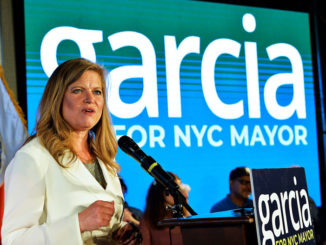
    NEW YORK (TIP): The top three Democratic mayoral contenders are demanding a manual recount of the June 22 primary election if the final vote count has narrow enough margins — a process that would be a first for the city in modern history.

    “It is without precedent in a New York City mayoral race or any citywide office,” said election lawyer Stanley Schlein, who represents former Sanitation Commissioner Kathryn Garcia in her lawsuit against the Board of Elections.

    Garcia, Brooklyn Borough President Eric Adams and lawyer Maya Wiley have all filed similar petitions in court to protect their rights to challenge the election results.

    A final vote count is expected on July 12. Adams currently leads Garcia by 14,755 votes with Wiley just 347 votes behind the former Sanitation Commissioner.

    The BOE has yet to tabulate some 125,000 absentee ballots and run all the votes through the city’s new ranked-choice system.

    Under state law a manual recount is triggered if the difference between candidate figures is under .5 percent of the total votes cast or about 4,500 votes with 935,000 ballots cast in the primary.

    In the event of a hand re-canvass, BOE officials would pour over individual ballots where voters made irregular markings like circling a candidate’s name instead of filling in the bubble. A judge would oversee the laborious process. Experts believe it would take “weeks and weeks” to do a manual recount. While there hasn’t been a manual recount in a local mayoral race in recent times, there was a hand re-canvass in a 1917 Republican primary.

    There was also hand recount in the 2019 Queens district attorney race that took about three weeks for 100,00 votes.

  • Uttarakhand CM Tirath Singh Rawat resigns

    Uttarakhand CM Tirath Singh Rawat resigns

    DEHRADUN (TIP): Uttarakhand Chief Minister Tirath Singh Rawat resigned late Friday, July 2 night even as the BJP Legislature Party meeting is expected to be held in Dehradun on Saturday, July 3 to choose his successor.

    BJP sources said that Cabinet Minister and senior BJP leader Narendra Singh Tomar will attend the meeting as the Central observer. The meeting is scheduled to be held at 3 pm on July 3 under the chairmanship of state president Madan Kaushik, said state’s media in-charge Manveer Singh Chauhan. Rawat said due to the Constitution limitations he has decided to submit his resignation.

    The names of Pushkar Dhami, Ritu Khanduri, Dhan Singh Rawat and Satpal Maharaj are doing the rounds to replace Tirath Singh.

    Earlier, Rawat, who was in Delhi where he had met BJP chief J.P. Nadda twice in three days, left for Dehra Dun. Rawat, who had met Nadda and Union Home Minister Amit Shah late on Wednesday night, is currently the MP from the Garhwal Lok Sabha seat, and as per the rules, needs to be sworn in as an elected MLA within six months of taking over as the Chief Minister.

    Earlier in the day, Rawat met the BJP chief again to discuss the political situation and the need of his election to the state Assembly before September 10 to remain in office.

    Before leaving for Uttarakhand capital, Rawat said that holding of by polls will be decided by the Election Commission and he will follow whatever the Central leadership of the party decides.

    BJP national General Secretary and Uttarakhand in-charge, Dushyant Gautam told IANS that there was no discussion of Uttarakhand by-polls held at the party level.

    A party leader explained that after the meeting with the Central leadership, the indications are that it will be difficult for the Chief Minister to continue in the office.

    Sources said that Nadda had explained to Rawat that Section 151 of Representation of the People Act, 1951 has created hindrance in his election to the Assembly.

    “In an hour-long meeting on Wednesday, June 28,  night at Home Minister Amit Shah’s residence, all the possibilities were discussed and Rawat was explained about exception provided under Section 151 of Act for not holding by-elections — if the remainder of the term in relation to the vacancy is less than a year or if the Election Commission, in consultation with the Centre, certifies that it is difficult to hold the by-election within the said period,” a party insider said.

    (With inputs from IANS)

  • Experts question if WHO should lead probe into Origins of Covid

    Experts question if WHO should lead probe into Origins of Covid

    NEW YORK (TIP): As the World Health Organization (WHO) draws up plans for the next phase of its probe of how the coronavirus pandemic started, an increasing number of scientists say the U.N. agency isn’t up to the task and shouldn’t be the one to investigate.

    Numerous experts, some with strong ties to WHO, say that political tensions between the U.S. and China make it impossible for an investigation by the agency to find credible answers.

    They say what’s needed is a broad, independent analysis closer to what happened in the aftermath of the 1986 Chernobyl nuclear disaster.

    The first part of a joint WHO-China study of how COVID-19 started concluded in March that the virus probably jumped to humans from animals and that a lab leak was “extremely unlikely.” The next phase might try to examine the first human cases in more detail or pinpoint the animals responsible – possibly bats, perhaps by way of some intermediate creature.

    But the idea that the pandemic somehow started in a laboratory – and perhaps involved an engineered virus – has gained traction recently, with President Joe Biden ordering a review of the U.S. intelligence within 90 days to assess the possibility.

    Earlier this month, WHO’s emergencies chief, Dr. Michael Ryan, said that the agency was working out the final details of the next phase of its probe and that because WHO works “by persuasion,” it lacks the power to compel China to cooperate.

    Some said that is precisely why a WHO-led examination is doomed to fail. “We will never find the origins relying on the World Health Organization,” said Lawrence Gostin, director of the WHO Collaborating Center on Public Health Law and Human Rights at Georgetown University.

    “For a year and a half, they have been stonewalled by China, and it’s very clear they won’t get to the bottom of it.” Mr. Gostin said the U.S. and other countries can either try to piece together what intelligence they have, revise international health laws to give WHO the powers it needs, or create some new entity to investigate.

    The first phase of WHO’s mission required getting China’s approval not only for the experts who travelled there but for their entire agenda and the report they ultimately produced.

    Richard Ebright, a molecular biologist at Rutgers University, called it a “farce” and said that determining whether the virus jumped from animals or escaped from a lab is more than a scientific question and has political dimensions beyond WHO’s expertise.

    The closest genetic relative to COVID-19 was previously discovered in a 2012 outbreak, after six miners fell sick with pneumonia after being exposed to infected bats in China’s Mojiang mine. In the past year, however, Chinese authorities sealed off the mine and confiscated samples from scientists while ordering locals not to talk to visiting journalists.

    Although China initially pushed hard to look for the coronavirus’s origins, it pulled back abruptly in early 2020 as the virus overtook the globe.

    An Associated Press investigation last December found Beijing imposed restrictions on the publication of COVID-19 research, including mandatory review by central government officials.

    Jamie Metzl, who sits on a WHO advisory group, has suggested along with colleagues the possibility of an alternative investigation set up by the Group of Seven industrialized nations.

    Jeffrey Sachs, a professor at Columbia University, said the U.S. must be willing to subject its own scientists to a rigorous examination and recognize that they might be just as culpable as China.

    “The U.S. was deeply involved in research at the laboratories in Wuhan,” Mr. Sachs said, referring to the U.S. funding of controversial experiments and the search for animal viruses capable of triggering outbreaks.

    “The idea that China was behaving badly is already the wrong premise for this investigation to start,” he said. “If lab work was somehow responsible (for the pandemic), the likelihood that it was both the U.S. and China working together on a scientific initiative is very high.”

    (Agencies)

  • U.S. issues moratorium on death penalty at federal level

    U.S. issues moratorium on death penalty at federal level

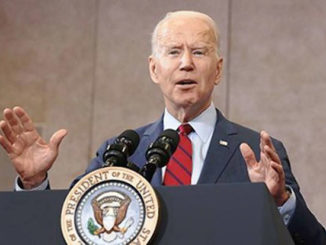
    WASHINGTON (TIP): The U.S. Department of Justice (DoJ) has issued a moratorium on federal executions while it reviews policies and procedures, the Department said in a statement. U.S. President Joe Biden had said on his campaign website that he would legislate the end of capital punishment at the federal level and incentivize states to follow suit.

    “The Department of Justice must ensure that everyone in the federal criminal justice system is not only afforded the rights guaranteed by the Constitution and laws of the United States but is also treated fairly and humanely. That obligation has special force in capital cases.” Attorney General Merrick Garland said in a statement released on Thursday, July 1.

    Apart from the moral case against the death penalty, the data show that in its application, it is biased against racial minorities especially African Americans.

    Under Donald Trump, the federal government carried out 13 executions. This is the highest number of executions under any presidency since the 19th Century, Reuters reported.

    The review ordered by Mr Garland will include an assessment of the “risk of pain and suffering” caused by pentobarbital – a lethal injection drug. The Trump administration’s DoJ, under Attorney General Bill Barr, had adopted a single drug, instead of a three drug protocol. The review will also look into a November 2020 expansion of federal execution methods beyond lethal injection and policy changes from last December and January to expedite executions.

    (Agencies)

  • Americans all set to celebrate 4th of July

    Americans all set to celebrate 4th of July

    The traditional Macy’s 4th of July Fireworks returns

    I.S. Saluja

    NEW YORK (TIP): America will celebrate its 246th birthday on 4th of July. It was on this day in 1776 that the founding fathers signed the Declaration   of Independence,

    Also read “Making of America” on pages 24-33.

    With the Pandemic fears receding, there is a perceptible evidence of enthusiasm among Americans to go all out to celebrate 4th of July. In many places, parades are back asare fireworks. BBQs and parties are being feverishly planned around the birthday of United States of America.

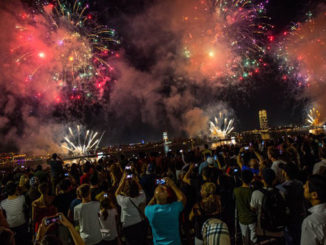
    This 4th of July marks the return of the traditional Macy’s grand spectacle of fireworks, with some 65,000 shells and aerial effects packed onto five barges and towed out onto the East River between 23rd and 42nd Streets.

    The show starts on Sunday at about 9:25 p.m. and lasts for 25 minutes. Macy’s promises it will be their biggest fireworks display ever, which means it will also definitely be the largest July 4th celebration anywhere in the country.

    Coney Island is also back at the blasting-explosives game with the triumphant return of the Steeplechase Spectacular Fourth of July Fireworks Show, which can be seen from anywhere along the boardwalk between West 10th to West 23rd Streets, which is basically from the Cyclone to the Childs Building. The Steeplechase Spectacular doesn’t launch until 10 p.m.—right after the Macy’s one ends— but like all big boardwalk parties out here at Coney, it promises to be a raucous affair.

    Jones Beach on Long Island is also ready for the traditional 4th of July fireworks.

    So, get set and ready to celebrate the Independence Day! Happy 4th of July.

  • Why Are My Colleagues in Congress Throwing Flames Instead of Doing Their Jobs?

    By Thomas Suozzi, U.S. Representative for New York’s 3rd district.

    Why does America feel so fractured with so much division? The rancor and misinformation proffered by some of my colleagues in the House of Representatives, the blood-boiling commentary on cable “news,” and the negative tone on social media, which is often amplified by our foreign adversaries, has made us “a house divided against itself.” Can we continue to “stand”?

    There has been much debate about censuring some of my colleagues, removing them from their committee assignments, or strongly calling them out for their sometimes mean-spirited, inaccurate, and inflammatory comments.

    We see this happening on both sides of the aisle: members who throw flames and then reap all of the attention. But to what end? It hinders the advancement of important legislation and blocks opportunities to solve problems. It’s seems to be just to get attention, for clickbait. What’s going on? Why are the most extreme members of Congress rewarded with the most small-dollar donations, the most Twitter likes and the most cable news attention, while members who practice civility or search for compromise are an afterthought?

    I would argue that because almost 90 percent of House seats are “safe.” Since district lines were drawn to heavily favor of one party over the other, over 90 percent of incumbents are reelected. The only way to beat a Congressmember in one of these “safe seats” is to primary them, but few people vote in primaries—less than 10 percent—and those who vote tend to be more extreme on the political spectrum. What this means is that the most right wing Republicans and the most left wing Democrats are the ones effectively calling the shots: Members often feel constrained to bend toward the direction of their “primary” voters and become less inclined to stand in the middle or compromise. Many believe that the more hyperbolic their positions and excessive their behavior, the more likely they are to win primaries, raise online contributions, and appear on news talk shows.

    And yet, in so doing, those members are representing the few, rather than the many. Most voters would rather see their representatives seek common ground to solve the many problems we face. All of this polarization has resulted in Americans becoming disenchanted and disengaged from their government, and social media has only heightened their discontent.

    But it’s coming at us from all sides. We have all seen the nasty posts that sometimes even outperform cat videos. Depending on the show and the target audience, cable news will hire talent and invite guests that will reinforce their narrative that “the other side is destroying our country.” Scariest of all, the Russians and Chinese are using these divides and platforms to further promote our civil unrest.

    Meanwhile, our cell phones and laptops have become a treasure trove of misinformation, fake news, and phony websites. Some say it’s become a dystopian wilderness where bots and trolls roam free. Our screens are stained by “disinformation,” the phrase aptly translated from the Russian word, dezinformatsiya, where it originated.

    And computer algorithms are deliberately programmed to feed us more and more of the same content we seem interested in. We are inundated with our own carbon-copy thinking. We build ourselves echo chambers to reinforce our views. Conspiracy buffs become conspiracy nuts. Those prone to hate become more hateful. “Violence begets violence.”

    For many years, political scientists were worried that the “uninformed” voter might sway close elections. We now face a more dangerous risk: “misinformed” elected officials and others peddling a false narrative.

    And it’s never-ending. We have been overcome by the phenomenon of the new 24-month campaign cycle. The Republican effort to take back Congress began even before last year’s election was called. Earlier this year, many opposition candidates announced their candidacy for late next year. Elected representatives find themselves automatically shifted into perpetual campaign mode, which is good for election season but lethal to the legislative session. It’s no wonder we can’t compromise to get things done.

    Almost three years ago, an American hero, John McCain, gave his farewell speech to the Senate. He spoke clearly of the necessity of compromise, and the need for humility and cooperation among his colleagues. No matter how much they disagreed, they had an “obligation to work collaboratively,” Senator McCain said.

    “Stop listening to the bombastic loudmouths on the radio and television and the internet,” Senator McCain said. “To hell with them. They don’t want anything done for the public good. Our incapacity is their livelihood.”

    Congress must turn away those who peddle fear and loathing, who seek out the worst in us, rather than the best. They mean us harm. They feed on our failures, grow stronger from our dissension. Worse they replicate, like a virus, ten-fold our own malice, mistrust, and malevolence.

    We must continue to condemn hate speech at all costs, in every corner of Congress, on both sides of the aisle, and throughout society, so we can take back the House from those who would divide it.

    (First published in Newsweek)

  • Happy 4th – India and America have a special bond

    By Mike Ghouse

    America is the greatest nation on the Earth. Indeed, India is a part of the American Heritage from the very beginning. Upon declaration of our Independence on July 4, 1776, one of the first three heads of State who recognized the sovereignty of the United States was Tipu Sultan from India.

    Morocco was the first country to recognize the Independence of the United States of America and signed the Moroccan-American Treaty of Friendship, the first of its kind. Friesland, one of the seven United Provinces of the Dutch Republic were the next to recognize, and Tipu Sultan, the King of Mysore State (India), was the third.

    Today, we celebrate our Independence and democracy. Indians and Americans have a shared heritage. America is the oldest democracy in the world, and India is the largest democracy.

    Both George Washington and Tipu Sultan fought our common enemy Lord Cornwallis – Washington chased him out of America, and Tipu Sultan defeated him in one of three wars but lost to him in the 4th war of Mysore. Cornwallis bribed Tipu’s confidant Mir Sadiq to get information about Tipu’s whereabouts and hit him from the back. Had Mir Sadiq not betrayed Tipu Sultan, India would have achieved her freedom in 1799, right behind America in 1776.

    Tipu Sultan, ruler of the kingdom of Mysore in India, was one of the first three heads of State who recognized the sovereignty of the United States

    Tipu Sultan also sent a congratulatory message to George Washington, which I believe is in the National Library of France. I am seeking a copy of the same as a record.

    Both George Washington and Tipu Sultan died in the same year, 1799, Washington on December 14, 1799, and Sultan on May 4, 1799.

    Dr. Chik Range Gowda, an authority on Tipu Sultan in Bangalore, whom I met several times, believes that Tipu Sultan funded George Washington’s Army. So, we have to find that document, and I welcome the reader to do the research.

     Dr. Gowda also presented me with a brass bust of Tipu Sultan made on the Bicentenary of Tipu’s death in 1999, and it is one of my cherished possessions. I had let go of many of my collections to choose to live a minimalist life, but I have kept Tipu’s bust. So, I may have to present this to the Smithsonian to preserve it. But unfortunately, my kids will have no value for it.

    The Mysorean Rocket was Tipu Sultan’s invention. He also invented the Torpedo, known as Bangalore Torpedo, which is considered the precursor for American rockets that went to the Moon.

    Thomas Jefferson wrote the immortal Declaration of our Independence on July 4, 1776. “We hold these truths to be self-evident, that all men are created equal, that they are endowed, by their Creator, with certain unalienable Rights, that among these are Life, Liberty, and the pursuit of Happiness.”

    Bhimrao Ramji Ambedkar also made an immortal declaration about India’s Preamble on January 22, 1947. “It was, indeed, a way of life, which recognizes liberty, equality, and fraternity as the principles of life, and which cannot be divorced from each other: Liberty cannot be divorced from equality; equality cannot be divorced from liberty. Nor can liberty and equality be divorced from fraternity. Without equality, liberty would produce the supremacy of the few over the many. Equality without liberty would kill individual initiative. Without fraternity, liberty and equality could not become a natural course of things.”

    Article 19(1)(a) of the Indian Constitution says that all citizens have the right to freedom of speech and expression. Freedom of Speech and expression means the right to express one’s own convictions and opinions freely by words of mouth, writing, printing, pictures, or any other mode.

    “Congress shall make no law respecting an establishment of religion, or prohibiting the free exercise thereof, or abridging the freedom of speech, or of the press; or the right of the people peaceably to assemble, and to petition the Government for a redress of grievances.” The first amendment of the Constitution of the United States

    Both India and America have identical Human Rights – the right to equality, right to freedom, rights against exploitation, right to freedom of religion, and constitutional remedies.

    Indeed, the objectives stated by the Preamble are to secure justice, liberty, equality for all citizens and promote fraternity to maintain unity and integrity of the nation.

    The above declarations resonate with Muslims as well. Prophet Muhamad (pbuh) made a similar announcement on March 6, 632 AD, Eleven hundred forty-four (1144) years before Jefferson’s declaration. “All mankind is from Adam and Eve; an Arab has no superiority over a non-Arab, nor a non-Arab has any superiority over an Arab; also, a white has no superiority over a black nor a black has any superiority over white except by piety and good action.”

    When Mahatma Gandhi was seeking Independence from the British, Churchill had said nasty things about Indians. He did not believe Indians can handle democracy, and they have proven him wrong repeatedly. Indians are inherently democratic in their views.

    Until 2014, India was a stable democracy and was on track to become a great nation as a non-aligned leader. However, India is going through a turbulent time now, and we pray for her recovery. Prime Minister Modi has failed the Indians on the economy, social cohesion, human rights, and democracy, and he will be voted out in the 2024 elections. Indians believe in freedom, and fascism is anathema to them. Indian democracy is resilient.

    India and the United States will continue to have a strong relationship to bring peace and security to the world.
    As Indian Americans, and Muslim Americans, we uphold, protect, defend, and celebrate the values enshrined in the U.S. constitution. We believe in the creed of “One Nation under God, with liberty and justice for all.” God bless America, India, and the humanity.

    Happy 4thhttps://www.youtube.com/watch?v=JXYK3hcm2kE

    (Dr. Mike Ghouse is the founder and president of the Center for Pluralism. He is a speaker, thinker, author, peacemaker, community consultant, pluralist, activist, newsmaker, and interfaith wedding officiant. Mike is deeply committed to Free speech, Human Rights, and Pluralism in Religion, Politics, Societies, and the workplace. He has dedicated his life to building cohesive societies and offers pluralistic solutions to the media and policymakers. He can be reached at mikeghouse@gmail.com

    More about him at www.TheGhousediary.com.)

  • TFF@20 AUDIENCE AWARD WINNERS ARE…

    TFF@20 AUDIENCE AWARD WINNERS ARE…

    By Mabel Pais

    PAN NALIN’S “LAST FILM SHOW” winsSECOND PLACE: BEST NARRATIVE FEATURE

    And the TFF 2021 Audience Award Winners Are…

    The 20th annual Tribeca Festival’s Audience Awards winners are for Best Narrative Feature, Best Documentary Feature and the first-ever Best Online Premiere. The first-place winners of Best Narrative Feature and Best Documentary Feature each receive a cash prize of $10,000.

    Audiences/viewers were able to vote in person and online for their favorite films from the Festival, which just wrapped its 20th edition featuring 250 in-person events inside and out, and close to 100,000 attendees in all five New York City boroughs and via the Tribeca at Home online viewing portal, as part of the virtual arm of Tribeca’s 20th-anniversary festival.

    AUDIENCE AWARDS

    The Audience Award for Best Narrative Feature went to “Catch the Fair One,” directed and written by Josef Kubota Wladyka, produced by Mollye Asher, Kimberly Parker, Josef Kubota Wladyka (United States) and executive produced by Darren Aronofsky. In this absorbing revenge thriller, a Native American boxer embarks on the fight of her life when she goes in search of her missing sister.

    The Award for Best Documentary Feature went to “Blind Ambition,” directed by Robert Coe and Warwick Ross, written by Warwick Ross, Robert Coe, Paul Murphy, Madeleine Ross and produced by Warwick Ross and Robert Coe (Australia) – World Premiere. The inspiring story of four Zimbabwean men who form their country’s first Wine Tasting Olympics team and the mission that drives them to compete. In English, Shona with English subtitles.

    “Ferguson Rises.” (Photo : TFF2021)

    The Award for Best Online Premiere went to “Ferguson Rises,” directed by Mobolaji Olambiwonnu, written by Mobolaji Olambiwonnu, Bradinn French, Jeff Strik-er, Kai Bowe, Daisy Moand produced by Mobolaji Olambiwonnu, Daisy Mo, Tanayi Seabrook, TJ Ode-bunmi, Lisa Smithline, David Oyelowo, Jessica Oyelowo, Nick Moon and Tamika Lamison (United States). Before George Floyd, before Breonna Taylor, before America knew about Black Lives Matter, there was Michael Brown, Jr. Six years after the fatal shooting of an unarmed Brown by a white police officer, and the subsequent days of protest, filmmaker Mobolaji Olamb-iwonnu brings a new portrait of the community of Ferguson, including Dorian Johnson, and a narrative from within the city of hope, love and renewal.

    Second Place for Best Narrative Feature went to “Last Film Show,” written and directed by Pan Nalin. Produced by Dheer Momaya. (India) – World Premiere. It tells the story of a 9-year-old boy Samay in a remote village in India who begins a lifelong love affair with cinema when he bribes his way into a rundown movie palace and spends a summer watching movies from the projection booth. With Bhavin Rabari, Vikas Bata, Richa Meena, Bhavesh Shrimali, Dipen Raval, Rahul Koli. In Gujarati with English subtitles. Opening Night Film Spotlight Section.

    Second Place for Best Documentary Feature went to “A-ha the Movie,” directed and written by Thomas Robsahm, co-directed by Aslaug Holm. Produced by Yngve Sæther. (Norway, Germany) – World Premiere. Featuring new interviews and behind-the-scenes footage, Thomas Robsahm’s portrait of the band behind “Take On Me” follows their creative adventures and challenges after reaching global superstardom—all set to their catchiest synth hooks. With Morten Harket, Magne Furuholmen, Pål Waaktaar-Savoy.  In English, Norwegian with English subtitles.

     Second Place for Best Online Premieres went to “Venus as a Boy,” directed and written by Ty Hodges.

    THE TRIBECA FESTIVAL

    The Tribeca Festival is curated by Festival Director and VP of Programming Cara Cusumano along with a team of associate programmers.

     The Festival was founded by Robert De Niro, Jane Rosenthal, and Craig Hatkoff in 2001 to spur the economic and cultural revitalization of lower Manhattan following the attacks on the World Trade Center. Tribeca celebrated its 20th year June 9 – 20, 2021.  To learn more, visit tribecafilm.com/festival

    THE 2021 TRIBECA FESTIVAL PARTNERS

    The 2021 Tribeca Festival is presented by AT&T and with the support of several corporate partners.

    ——————————————–

    ASIA

    TFF2020

    DIR: RUTHY PRIBAR l 2020 l Israel l Hebrew & Russian/w Eng Subs l

    Feature New York Premiere l 1h 25m

    TRIBECA FESTIVAL 2020 WINNER: BEST ACTRESS

                                           NORA EPHRON AWARD

                                           BEST CINEMATOGRAPHY

    “A hypnotizing performance by Shira Haas.” – Eric Kohn, IndieWire

    “Even when in the darkest part of your life, you can see beauty.”- Moment Magazine

    Shira Haas made an indelible impression (she was nominated for an Emmy and won an Independent Spirit Award) as the lead in the recent TV series “Unorthodox.” In “Asia” she stars as a Russian emigre (Vika) to Israel, navigating her teenage years with her single mother Asia (Alena Yiv), burdened by an illness that makes all of her decisions infinitely more poignant.

    Young single mother Asia (Alena Yiv) hides nothing about her work-hard, play-hard lifestyle, and expects the same openness and honesty from her teenage daughter Vika (Shira Haas). But when Vika’s health declines, her need for independence and romantic exploration become paramount, and Asia realizes she must change her ways to allow her daughter to live her own life.

    Release: Playing At Home and in Theaters nationwide.

    ———————————-

    THE PRICE OF FREEDOM

    DIR: JUDD EHRLICH l 1h 30m

    OFFICIAL SELECTION: TRIBECA FESTIVAL 2021

    TFF2021

    “The Price of Freedom” is an unflinching look at the gun violence epidemic in America and the role the National Rifle Association, with its outsized political and cultural influence, has played over time. The NRA believes the deaths of innocent Americans are a necessary price to pay for the freedom to own firearms without restrictions. By manipulating the narrative around guns and backing politicians who commit to upholding their agenda, the NRA has cost us far more than we realize. Featuring passionate pleas from President William J. Clinton, Representative Lucy McBath (D-GA) and Senator Chris Murphy (D-CT); NRA Board Member and former NRA President David Keene, and activists on all sides of the issue, The Price of Freedom presents a compelling case for those brave enough to take a stand against the NRA in defense of our communities and collective future.

    Website: thepriceoffreedommovie.com

    Socials – FB: @ThePriceOfFreedomDoc TW: @TPOFMovie IG: @thepriceoffreedommovie

    ——————————————

    The Neutral Ground

    DIR: CJ HUNT l 2021 l

    OFFICIAL SELECTION: TRIBECA FESTIVAL 2021

    On PBS-POV-ITVS Broadcasts: July 5, 2021

    “The Neutral Ground,” which debuted at the 2021 Tribeca Film Festival, documents the fight over monuments in New Orleans and America’s troubled romance with the Lost Cause. In 2015, director CJ Hunt begins filming the New Orleans City Council’s vote to remove four Confederate monuments. But when that removal is halted by death threats, Hunt sets out to understand why a losing army from 1865 still holds so much power in America. To learn more, visit neutralgroundfilm.com

    (Mabel Pais writes on The Arts and Entertainment, Social Issues, Spirituality, and Health & Wellness.)

  • Indian American Shalina D Kumar Nominated as Federal Judge 

    Indian American Shalina D Kumar Nominated as Federal Judge 

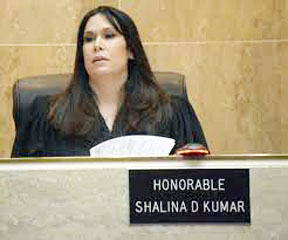
    WASHINGTON (TIP):  US President Joe Biden has nominated Indian American circuit court chief judge Shalina D Kumar as a federal judge for the Eastern District of Michigan, the White House announced on Wednesday, June 30.

    Nominated by Biden to the US District Court for the Eastern District of Michigan, Chief Judge Shalina D Kumar has served on the Oakland County Sixth Circuit Court since 2007. She was appointed Chief Judge of the Circuit Court by the Michigan Supreme Court in January of 2018, a media release said.

    Shalina D Kumar would be the first federal judge of South Asian descent in Michigan, the White House said.

    In addition to her chief judge duties, Judge Shalina D Kumar retains a full caseload covering both civil and criminal matters, the White House said.

    Throughout her years on the bench, Shalina D Kumar has served as a presiding judge of the Adult Treatment Court, the Chairperson of the Oakland County Criminal Assignment Committee, the bench liaison to the Oakland County Bar Association Circuit Court Committee, a member of the Michigan State Bar Professionalism Committee, and a member of the Executive Committee of the Michigan Judges’ Association.

    Prior to taking the bench, Shalina D Kumar was a civil litigator in private practice from 1997 to 2007, including as an associate with Weiner & Cox PLC from 2004 to 2007 and Sommers, Schwartz, Silver & Schwartz PC from 2000 to 2004.

    She graduated from the University of Michigan in 1993 and the University of Detroit-Mercy School of Law in 1996.

    She was appointed judge for the 6th Circuit Court in Oakland County, Michigan by former Governor Jennifer Granholm on August 20, 2007, to fill the vacancy created by the retirement of Judge Gene Schnelz. Shalina D Kumar was then elected to the court in 2008 and re-elected in 2014.


  • Indian American Senior Foreign Service Diplomat Atul Keshap posted to India as CDA

    Indian American Senior Foreign Service Diplomat Atul Keshap posted to India as CDA

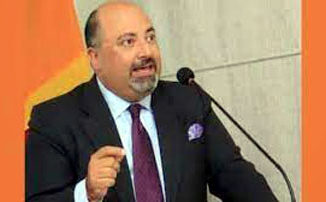
    WASHINGTON (TIP):   The Biden Administration has appointed Indian American diplomat Atul Keshap as Chargé d’Affaires, ad interim, in New Delhi to “reinforce the close US partnership with the Government and people of India.” A career member of the Senior Foreign Service, Keshap will be departing for India following the retirement of US Ambassador Daniel Smith, the State Department said announcing his appointment Tuesday, June 29.

    “Keshap’s appointment will reinforce the close US partnership with the Government and people of India, demonstrated by our collaboration to overcome global challenges like the Covid-19 pandemic,” the spokesperson’s office said in a media release.

    He “will bring a wealth of experience to the role, having served previously at US Embassy New Delhi and as Deputy Assistant Secretary of State for South Asia,” it added.

    Keshap most recently served as the Principal Deputy Assistant Secretary of State for the Bureau of East Asian and Pacific Affairs and as the US Ambassador to Sri Lanka and Maldives.

    Across his 27-year career as an American diplomat, Keshap has served at postings in India, Morocco, and Guinea, according to his official biography.

    He has served as Deputy Assistant Secretary of State for South Asia, as US Senior Official for Asia Pacific Economic Cooperation, and as an Office Director in the Bureau of South and Central Asian Affairs and in the Bureau of International Organization Affairs.

    Keshap has negotiated or advanced bilateral and multilateral initiatives at senior levels with counterparts from the European Union, United Nations, ASEAN, APEC, and governments across the Indo-Pacific, Middle East, Africa, and North and South America.

    Previously Keshap served at the Department of Defense as the National Defense University’s Vice Chancellor for the College of International Security Affairs.

    Earlier in his career, he served as Director for North Africa and Middle East regional affairs on the National Security Council staff in the Executive Office of the President of the United States.

    In 2018, Keshap received one of the State Department’s highest honors, the Distinguished Honor Award, in recognition of his leadership in advancing US interests in the Indian Ocean region.

    He is also the recipient of a 2019 Presidential Meritorious Rank Award, as well as numerous individual State Department Superior and Meritorious Honor Awards, and six senior executive performance pay awards.

  • Nine Indian Americans among 11 US Spelling Bee Finalists this Year 

    Nine Indian Americans among 11 US Spelling Bee Finalists this Year 

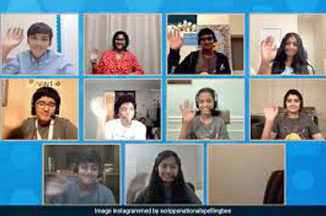
    WASHINGTON (TIP): Nine of the 11 finalists for this year’s US Spelling Bee contest are Indian Americans, reflecting the dominance young kids from the small ethnic community have had on this prestigious and high-pressure endurance test for more than a decade now. The 11 spellers, of which nine are Indian-Americans, will compete for the champion title during the 2021 Scripps National Spelling Bee Finals on July 8, a statement said on Monday, June 28. During the in-person finals, the Bee will have the option of activating a spell-off if needed. The spell-off would be activated in the closing minutes of the competition if a champion has not yet been declared in a traditional, one-person, one-word round, it said. “We are honored to introduce our 2021 Scripps National Spelling Bee Finalists. Round after round, this group of spellers proved their mettle, and we look forward to seeing them show off their knowledge and hard work as they square off against the dictionary on the national stage,” said Dr J Michael Durnil, executive director of the Bee.

    “Congratulations to all of this year’s 209 national qualifiers – they’ve persevered over a year that has been challenging in many ways, and our team is proud to have witnessed their journey,” he said.

    The National Bee is a high-profile, high-pressure endurance test as much as a nerd spelling match and spellers spend months preparing for it. The final rounds of this year’s contest will be hosted in person at ESPN Wide World of Sports Complex at Walt Disney World Resort near Orlando, Florida, and will be broadcast live in prime time on ESPN2.

    The 11 finalists are Roy Seligman, 12, from Nassau, The Bahamas; Bhavana Madini, 13, from New York; Sreethan Gajula, 14, from Charlotte, North Carolina; Ashrita Gandhari, 14, from Leesburg, Virginia; Avani Joshi, 13, from Illinois; Zaila Avant-garde, 14, from New Orleans; Vivinsha Veduru, 10, from Texas; Dhroov Bharatia, 12, from Dallas; Vihaan Sibal, 12, from Texas; Akshainie Kamma, 13, from Texas and Chaitra Thummala, 12, from San Francisco.

    Over the past 20 years, Indian Americans have been dominating the Spelling Bee contest even though they comprise only about 1 per cent of the US population.

    The Bee was cancelled in 2020 due to the coronavirus pandemic. But there were eight co-champions in 2019, seven of whom were Indian Americans, bringing the total number of Indian-American champions since 1999 to 26.

  • Indian American Family among 150 Missing after US State of Florida Building Collapse 

    Indian American Family among 150 Missing after US State of Florida Building Collapse 

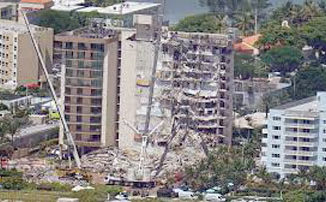
    HOUSTON (TIP): An Indian American couple and their one-year-old child are among more than 150 people who are still missing after the collapse of part of a 12-story residential building in the US state of Florida on Thursday, June 24, according to media reports on Monday, June 28.

    Search and rescue teams have been feverishly scouring the site since shortly after 55 of the building’s 136 units fell. Nine people have been confirmed killed, officials have said. Vishal Patel, 42, his wife Bhavna Patel, 38, and their one-year-old daughter Aishani Patel are believed to be among the missing, their niece Sarina Patel told media, adding that Bhavna Patel is four months pregnant. Sarina Patel said she last spoke to her family on Father’s Day.

    “I had actually called them to tell them I had just booked a flight to come visit because they’ve been asking me to come to see their home and to meet their daughter. I haven’t met her due to the pandemic,” she said on Friday.

    They were home at the time the collapse took place, she said. “We have tried calling them countless times and there’s just been no answers, text messages, nothing. They haven’t contacted anybody,” she said.

    Bhavna is a British and US citizen, the British media reported.

    Umma Kannayan, a family friend of the Patels, told the BBC that they were a “very loving” family who were closely involved in their religious community.

    “Aishani was like the little baby of the temple,” she said. “It feels like you’ve lost a part of yourself.”

    She said she was waiting with the Patel family’s relatives for news, but that “not much information has been shared” about the victims.

    “I think all of us, the family included, and the folks that are very closely associated with them [at temple] would want to know the list of survivors currently present,” she said. “Perhaps from there some hope either might be given or might be shattered, but some names out there would be very helpful for all.” Meanwhile, the painstaking search for survivors is continuing as families waiting for news are increasingly fearing the worst. Some prayed for a miracle. Others have already begun to speak about their loved ones in the past tense.

    As of Sunday, at least nine have been confirmed dead and more than 150 people are still unaccounted for, authorities said. (The number of the dead has gone up to 16 on June 30)

    On 24 June, a building at the Champion Towers South Condo, around seven miles away from Miami beach, partially collapsed leaving at least five dead and 156 missing. Emergency officials are asking people to contact them if they have relatives unaccounted for.

    A state of emergency has been declared by Florida Governor Ron DeSantis.

    The number of people unaccounted for is 159, Miami-Dade County Mayor Daniella Levine Cava told reporters Friday — up from the figure of 99 that officials gave Thursday afternoon, according to media reports.

    Those 159 people “have been identified as possibly being on the site. So those are people that maybe live there, but we don’t know whether they were there at the time,” the mayor said at a news conference on Friday afternoon in Surfside.

    Numerous search and rescue personnel have been scouring the rubble, including from the surface, with search dogs, sonar and cameras.

    Structural engineers also have been shoring up other places — such as areas near a parking garage underneath the rubble — to allow crews to tunnel underneath with light machinery.

    The building’s residents reflected South Florida’s international and cultural mix, with affluent families from Argentina, Paraguay and Colombia and a tight-knit Jewish community.

    President Joe Biden on Friday approved an emergency declaration for the state, making federal aid available to Florida.

    The cause of the partial collapse of the building is not known.

  • Indian-origin Michael Kuruvilla set to become police chief of Chicago suburb

    Indian-origin Michael Kuruvilla set to become police chief of Chicago suburb

    CHICAGO (TIP): Michael Kuruvilla is set to make history as the first Malayalee American police chief in the US when he becomes head of the police force in Brookfield, a Chicago, Illinois, suburb. Currently Deputy Chief, Kuruvilla, 37, the first Indian-American hired by Brookfield police in 2006, is expected to take over from Edward Petrak, who is stepping down as chief effective July 12. Recommending Kuruvilla as his successor to Village Manager Timothy Wiberg, Petrak said. “We just have a great, talented bench of people here and for years and years to come.”

    “I’m not ready to announce anything yet, but [Kuruvilla] would sure seem to be the logical way to go,” Wiberg told local Riverside-Brookfield Landmark. “I’ll be posting the job internally first and see what that results in.”

    Kuruvilla was presented with the “40 Under 40” Award by the  International Association of Chiefs of Police (IACP), the world’s largest and most influential professional association for police leaders, in September 2020.

    In nominating Kuruvilla for the award, Petrak wrote that his deputy was “an up-and-coming leader in our ever-changing field of law enforcement.

    “Over the last 14 years, I have watched Mike grow from an eager learner to a true leader in our police department. His positive and progressive attitude is infectious and makes him a strong, naturally suited leader.”

    Kuruvilla, joined the department in 2006 after obtaining a master’s degree in social work and then working as a police crisis worker in Brookfield.

    “Although I have shed the formal title of social worker, my job still requires mediating between and for people in crisis and discord almost daily,” Kuruvilla wrote in his application for the award.

    “Our profession has shifted immensely in recent years to increased mental health awareness, and I have proudly led the charge to model and teach my department members and those in neighboring communities how best to serve those in need.”

    In addition to his role as a deputy police chief, Kuruvilla and his wife volunteer with a nonprofit that serves the needs of at-risk women victimized by the adult entertainment industry and human/sex trafficking. Kuruvilla has been a member of the organization’s board for more than six years.

    “My ability and the opportunity to provide someone who may be suffering and in pain even just a moment of reprieve and peace is important and fulfilling to me,” Kuruvilla wrote.

    “Kuruvilla has risen through the ranks of the Village of Brookfield Police Department rapidly leading into his 15th year of service due to his balanced approach, gifted intelligence, and perseverance,” according to his official profile.

    In his command role, he oversees patrol and investigations and serves as the secondary lead for the entire department. He consistently exemplifies leadership, including stepping up to serve as acting chief during two major incidents while still a lieutenant.

    He has also procured a grant to secure bulletproof vests for officers, taken the lead in understanding the state’s new laws regarding cannabis, and served for six years as president of the police union before his promotion to lieutenant, it said.

    Kuruvilla has the distinction of being both the first Indian American hired at Brookfield and the first officer in the department to complete crisis intervention training.

    Kuruvilla is also a board member and law enforcement liaison for a nonprofit that serves the needs of women victimized by the human and sex trafficking.

    Finding motivation in helping those experiencing crises or chaos, Kuruvilla holds a deep sense of service and is proud to administer justice in his role as an officer, IACP noted.

    “My ability and the opportunity to provide someone who may be suffering and in pain even just a moment of reprieve and peace is important and fulfilling to me,” he was quoted as saying.

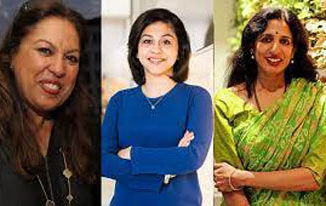
  • Meet the Top Three richest Indian-origin women in the US

    Meet the Top Three richest Indian-origin women in the US

    NEW YORK (TIP): Every time a power list comes out or an Indian American success story is mentioned, typically it is the name of some of the most famous men of Indian origin. However, alongside every big stalwart like Sundar Pichai or Satya Nadella is also the success story of some Indian American women, who are making more than a dent in the glass-ceiling. The American Bazaar lists the top 3 richest Indian origin women in America today who are not just inspiring a new generation of immigrant women, but are changing the power dynamics in boardrooms too.

    Jayshree Ullal, Net Worth: $1.43 billion
    The president and CEO of Arista Networks, Jayshree Ullal is the topmost name when it comes to richest and most successful Indian origin woman in business in America today.

    Ullal has the distinction of being the only Indian origin woman in the US to make it to the Forbes Billionaire Club. Ullal’s story is especially significant because her chart to success is totally self-made. Ullal’s success story, Arista Networks is a computer networking firm headquartered in Santa Clara. Ullal was appointed the CEO of Arista Networks in 2008. Before that she had worked in Cisco for 15 years.

    Ullal was also featured on Forbes 2018 list of billionaires for her net worth $1.43 billion.

    The London born and Delhi raised girl, Ullal came to the US at the age of 16 as a student. She graduated in electrical engineering from San Francisco State University and did her master’s in engineering management from Santa Clara University.

    Ullal got a big break in her career when Cisco Systems acquired Crescendo Communications and she was made senior vice president of Data Center & Switching.

    Ullal was also the first woman to receive the Entrepreneurial and Leadership award in Silicon Valley in 1999. Ullal owns about 5% of Arista’s stock. She lives in Saratoga, California.

    Neerja Sethi, Net Worth: $1 billion
    The next name on the big list is Neerja Sethi. Sethi’s success story began when she cofounded IT consulting and outsourcing firm Syntel with her husband Bharat Desai back in 1980.

    What began in the couples’ small apartment in Troy, Michigan turned into a global success story. In 2018 French IT firm Atos SE bought Syntel for $3.4 billion. Sethi got an estimated $510 million for her stake.

    Sethi, who has been working as an executive at Syntel since 1980, did not join Atos after the acquisition.

    Sethi and her husband worked for IT firm Tata Consulting Services and met at work. Together they tried to create a similar model. They began their venture by investing just $2,000 out of their pocket.

    Neha Narkhede, Net worth: $600 million
    Neha Narkhede is cofounder and chief technology officer of Confluent, a streaming data technology company currently valued at $4.5 billion.

    Narkhede’s first job was at Oracle, where she worked as a principal software engineer. She then joined LinkedIn as lead of streams infrastructure.

    In 2011, Narkhede along with her colleagues Jun Rao and Jay Kreps created the Platform Apache Kafka. In 2014 she co-founded Confluent, a Palo Alto based startup.

    She is also the co-author of the book “Kafka: The Definitive Guide.”

    She along with her team at Confluent raised $125 million in 2019, bringing its total funding to $206 million in 2019.

    And in April 2020, the company raised $250 million bringing its total funding to $456 million.

    Pune born Narkhede studied at the University of Pune where she got her BSc degree in engineering. She did her MSc in technology from Georgia Tech.