Tag: Women Health

  • Antibiotic use may increase risk of inflammatory bowel disease in people over 40s

    Antibiotic use may increase risk of inflammatory bowel disease in people over 40s

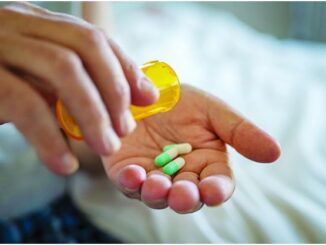
    Antibiotic use may increase the risk of inflammatory bowel illness (Crohn’s disease and ulcerative colitis) in people over 40, according to a study published online in the journal Gut. The risk seems to be cumulative and greatest 1-2 years after use and for those antibiotics targeting gut infections, the findings indicate.

    Mounting evidence suggests that environmental factors are likely implicated in the development of inflammatory bowel disease (IBD). Globally, close to 7 million people have the condition, with this number expected to rise over the next decade, say the researchers. One factor associated with IBD risk in younger people is the use of antibiotics, but it’s not clear if this association might also apply to older people. To explore this further, the researchers drew on national medical data from 2000 to 2018 for Danish citizens aged 10 upwards who hadn’t been diagnosed with IBD. They specifically wanted to know if the timing and dose of antibiotic might be important for the development of IBD, and whether this varied by IBD and antibiotic type.

    More than 6.1 million people were included in the study, just over half of whom were female. In total, 5.5 million (91%) were prescribed at least one course of antibiotics between 2000 and 2018. During this period, some 36,017 new cases of ulcerative colitis and 16,881 new cases of Crohn’s disease were diagnosed.

    Overall, compared with no antibiotic use, use of these drugs was associated with a higher risk of developing IBD, regardless of age. But older age was associated with the highest risk.

    Those aged 10-40 were 28% more likely to be diagnosed with IBD; 40-60 year olds were 48% more likely to do so, while the over 60s were 47% more likely to do so.

    The risks were slightly higher for Crohn’s disease than they were for ulcerative colitis: 40% among 10-40 year olds; 62% among 40-60 year olds; and 51% among the over 60s.

    The risk seemed to be cumulative, with each subsequent course adding an additional 11%, 15%, and 14% heightened risk, according to age band.

    The highest risk of all was observed among those prescribed 5 or more courses of antibiotics: 69% heightened risk for 10-40 year olds; a doubling in risk for 40-60 year olds; and a 95% heightened risk for the over 60s. Timing also seemed to be influential, with the highest risk for IBD occurring 1-2 years after antibiotic exposure, with each subsequent year thereafter associated with a lowering in risk.

    Specifically, among 10-40 year olds IBD risk was 40% higher 1-2 years after taking antibiotics compared with 13% 4-5 years later. The equivalent figures for 40-60 year olds were 66% vs 21% and for the over 60s 63% vs 22%.

    Source: ANI

  • Fast food consumption linked to liver disease

    Fast food consumption linked to liver disease

    A study published in Clinical Gastroenterology and Hepatology by Keck Medicine at USC provides more motivation for people to minimise their fast-food consumption.

    The study found that eating fast food is associated with nonalcoholic fatty liver disease, a potentially life-threatening condition in which fat builds up in the liver.

    Researchers discovered that people with obesity or diabetes who consume 20% or more of their daily calories from fast food have severely elevated levels of fat in their liver compared to those who consume less or no fast food. And the general population has moderate increases of liver fat when one-fifth or more of their diet is fast food.

    “Healthy livers contain a small amount of fat, usually less than 5%, and even a moderate increase in fat can lead to nonalcoholic fatty liver disease,” said Ani Kardashian, MD, a hepatologist with Keck Medicine and lead author of the study, adding, “The severe rise in liver fat in those with obesity or diabetes is especially striking, and probably due to the fact that these conditions cause a greater susceptibility for fat to build up in the liver.” While previous research has shown a link between fast food and obesity and diabetes, this is one of the first studies to demonstrate the negative impact of fast food on liver health, according to Kardashian.

    The findings also reveal that a relatively modest amount of fast food, which is high in carbohydrates and fat, can hurt the liver. “If people eat one meal a day at a fast-food restaurant, they may think they aren’t doing harm,” said Kardashian, adding, “However, if that one meal equals at least one-fifth of their daily calories, they are putting their livers at risk.” Nonalcoholic fatty liver disease, also known as liver steatosis, can lead to cirrhosis, or scarring of the liver, which can cause liver cancer or failure. Liver steatosis affects over 30% of the U.S. population.

    Kardashian and colleagues analyzed the most recent data from the nation’s largest annual nutritional survey, the 2017-2018 National Health and Nutrition Examination Survey, to determine the impact of fast-food consumption on liver steatosis.                 Source: ANI

  • Study finds neurodegenerative disease progression linked to proteins in brain

    Many neurodegenerative illnesses, including Alzheimer’s and Parkinson’s, are mostly caused by tau and tubulin proteins. The accumulation of these proteins in the brain is mostly responsible for the advancement of neurodegenerative diseases. Jiali Li, a professor of physics at the University of Arkansas, and her team developed a unique silicon nitride nanopore-based sensing device as a result of one of her doctorate students’ desire to investigate tau and tubulin proteins.

    In Journal of Applied Physics, from AIP Publishing, Acharjee et al. present the device, which is designed to provide volume information about tau and tubulin protein molecules and their aggregation states at the single-molecule level within their native environment. To create the sensor, the team explored how the proteins change the current and voltage flowing through a nanopore system.

    “Ohm’s Law is the basic physics that enables the nanopore device to sense protein molecules,” said Li. “A tiny hole—from 6 to 30 nanometers—is made in a thin silicon nitride membrane and supported by a silicon substrate. When that is placed into a solution with salt ions, applying an electric voltage drives the ions’ flow through the hole, or nanopore. This, in turn, generates an open pore ionic current.” When a charged protein molecule—often thousands of times larger than the ions—is near the nanopore, it also gets driven into the nanopore and blocks the flow of some ions. This causes the open pore current to drop.

    “The amount of current drop produced by a protein molecule is proportional to the protein’s volume or size and shape,” said Li. “This implies that if protein A binds to protein B, they will cause a current drop proportional to the volume of A+B, and an aggregated protein A will cause approximately multiple amounts of current drop.” This allows Li and her group to look at the protein binding and aggregation within a nanopore device. The amount of time a protein stays in a nanopore is inversely proportional to its charge, which also provides useful information about a protein molecule.    Source: ANI
