

TORONTO (TIP): Bonhomie generated by exchange of visits by top officials apart, an unsavory controversy has erupted in Canada over the comments of a senior federal official who briefed media on the eve of the departure of Mark Carney on his first official visit to India that “the Canadian government believes that Indian foreign interference in Canada was over”.
And much before Mark Carney and his strong entourage could land in India, the Canadian Minister of Public Safety Gary Anandasangaree just stopped just short of contradicting the senior federal official as he commented that “there’s still a lot of work to do on the India security file”. His comments within 24 hours of the senior government official’s briefing have generated an animated debate in political circles here.
“There are certainly issues around safety and security of Canadians that we continue to engage in,” Anandasangaree said after an event near Parliament Hill on Thursday, February 26 morning.
The official, who spoke on the condition of anonymity said repeatedly that it’s the government’s belief India has changed its ways. “I think we could say we’re confident that that activity is not continuing,” the official said. “If we believed that the government of India was actively interfering in the Canadian democratic process, we probably would not be taking this trip.”
Minister of Public Safety, whose portfolio includes both the RCMP and the Canadian Security Intelligence Service (CSIS), stopped just short of disagreeing with that characterization
“What I’m suggesting is that there’s still a lot more work to do, and we will do that work,” he said.
Gary Anandasangaree’s reaction to the official’s comments has left many questions unanswered. Many held that it was difficult to swallow the official’s comments as they marked a stark departure from Canada’s position from about a year-and-a-half ago when the Trudeau government expelled six Indian diplomats after the RCMP had deemed them “persons of interest.”
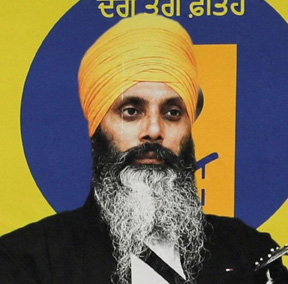
A look at the turn of events since the fall of 2024 when RCMP Commissioner Mike Duheme said the Mounties had strong evidence showing the “highest levels” of the Indian government were involved in orchestrating a campaign of violence and intimidation on Canadian soil. A year earlier, Prime Minister Justin Trudeau announced Canada had evidence linking Indian agents to the killing of Canadian Sikh separatist leader Hardeep Singh Nijjar. The Indian government, however, remained in a denial mode.
Since the political and diplomatic spats over Hardeep Singh Nijjer case, the National Security Advisers of both India and Canada, have met several times, including a recent (February 7 and 8) visit of the Indian NSA Ajit Doval to Canada.
And the January 20205 report from the foreign interference inquiry called India the “second-most active country engaging in electoral foreign interference in Canada” after China, raising skepticism that India’s foreign interference days were behind them.
“We have certainly had irritations over the number of years, and they will be addressed through our channels relating to security,” Anandasangaree said in his media interaction. “Matters that are before the courts will continue to be litigated through the courts and resolution will be addressed through the court and not through political means.” The federal public safety minister said there are two tracks for dealing with India. “One is to ensure that we have an economic engagement that the prime minister is leading. But we will also have, at times, difficult conversation around safety and security of Canadians,” he said.
Prime Minister Mark Carney, however, has been maintaining that while the law enforcement agencies and rule of the law will prevail to punish the guilty, the business and trade relations with India, one of the fastest growing economies, cannot be put on a hold.
Consequent to this change in approach towards India, he invited his Indian counterpart, Narendra Modi, to attend the G20 summit in Alberta last year. That was the beginning of softening of attitudes. Bitterness started paving way for cordiality as exchange of federal ministers, beginning with the Canadian Foreign Minister Anita Indira Anand visiting India in September last year. Her visit was followed by the Minister of International Trade Maninder Sidhu.
India’s foreign minister S. Jaishankar also attended the G7 foreign ministers conclave in Niagara. Since then, regular exchange of visits between top officials of two nations has been continuing. The climax has reached with Mark Carney taking a strong delegation of his ministers, including Anita Indira Anand, Maninder Sidhu, besides Defense Minister David McGuinty and Finance Minister Philippe Champagne.
Also part of the entourage are Saskatchewan’s Premier Thomas Water Scott and New Brunswick Premier Susan Holt. A group of journalists, including representatives of the ethnic media, are also accompanying Prime Minister Mark Carne.
Carney’s trip comes as his government works to normalize relations with Indian Prime Minister Narendra Modi, who leads one of the largest economies in the world.
(Prabhjot Singh is a senior Toronto-based, award-winning independent journalist, who worked with The Tribune, Reuters, and several media groups in a career spanning nearly five decades. He has written extensively about Diaspora, Politics, Business, Aviation, Health, Public and Private Sectors and Sports. He can be reached at prabhjot416@gmail.com)

Be the first to comment