Tag: World News

  • Israel allegedly drugs flour bags distributed as aid to Palestinians; at least 62 killed today in Gaza

    Israel allegedly drugs flour bags distributed as aid to Palestinians; at least 62 killed today in Gaza

    Gaza Strip (TIP): Gaza’s Government Media Office (GMO) on Friday confirmed reports regarding narcotic pills of the type “Oxycodone” being found in flour bags distributed as aid to starving Palestinians by the US-backed and Israeli military-operated Gaza Humanitarian Foundation (GHF). Expressing its “deep concern and condemnation” over the discovery of narcotic pills inside flour bags, the Media Office further raised fears regarding the possibility of such substances being ground into the flour, which the Palestinians have consumed.
    “We have so far documented four testimonies from citizens who found these pills inside flour bags. More serious is the possibility that some of these narcotic substances were deliberately ground or dissolved in the flour itself, which raises the scope of the crime and transforms it into a serious attack directly targeting public health,” said the statement published by the Media Office on Telegram.
    “We hold the Israeli occupation fully responsible for this heinous crime of spreading addiction and destroying the Palestinian social fabric from within, as part of a systematic policy that constitutes an extension of the genocide it is waging against our Palestinian people,” it added.
    “The Israeli occupation’s use of drugs as a soft weapon in a dirty war against civilians, and its exploitation of the blockade to smuggle these substances as ‘aid and assistance’, constitute a war crime and a grave violation of international humanitarian law,” the statement said.
    Meanwhile, at least 62 Palestinians were killed by Israel on Friday including at least 10 who were shot dead while waiting to receive aid at the distribution sites of the GHF in southern Gaza.
    The GHF started operations in May this year, after Israel announced it would partially lift a three-month-long blockade of humanitarian assistance and allow limited aid inside the war-ravaged territory, where the UN has flagged a famine-like situation.
    Rights groups and the UN have refused to cooperate with the GHF, slamming it as a “death trap” for Palestinians and accusing it of aiding Israel in its genocidal war on Gaza.
    According to Gaza’s health ministry, Israel has killed more than 549 Palestinians at aid distribution sites since the GHF began operations last month.
    The UN agency for Palestinian refugees, UNRWA, called the GHF an “abomination” that has put Palestinians’ lives at risk, while a spokesman for the UN human rights office, Thameen Al-Kheetan, condemned the “weaponisation of food” in the territory. (Agencies)

  • Chinese flight makes emergency landing at Nanjing airport following ‘aircraft malfunction’

    BEIJING (TIP): A Chinese domestic flight made an emergency landing on Friday after experiencing an ‘aircraft malfunction’, with passengers reporting loud noises and a foul smell in the plane. A Shandong Airlines flight from Qingdao to Shanghai experienced an aircraft malfunction and the crew diverted to an airport in Nanjing after handling the situation in accordance with procedures to ensure passenger safety, the airline said in a social media post.
    Flight SC4667 was forced to make an emergency landing in Nanjing, it said.
    “All affected passengers have been properly accommodated, and another aircraft has been dispatched to operate subsequent flights,” the post said. A user claiming to have been on board the flight said in a social media post that something appeared to have been sucked into the aircraft’s left engine while it was cruising, Hong Kong-based ‘South China Morning Post’ reported on Saturday.
    “Terrifying”,?the user wrote. There were a few loud bangs, then the plane started shaking side to side by about 10 degrees, with a burnt smell that lasted for five to 10 minutes.
    The captain then announced the emergency landing in Nanjing, and the entire process was ‘very smooth’, the user said, adding: Thumbs up to the Shandong Airlines pilots, the post said. (PTI)

  • 6.1-magnitude earthquake hits off southern Philippines

    MANILA (TIP): A magnitude-6.1 earthquake struck deep off the coast of the southern Philippines on Saturday, the United States Geological Survey said. There were no immediate reports of casualties or damage from the quake, which the USGS reported occurred at a depth of 101 kilometres (63 miles) about 70 kilometres from the nearest areas of Davao Occidental province.
    “The shake was not that strong, but the tables and computers here at the office shook for (about five seconds),” Marlawin Fuentes, a provincial rescuer from the tiny island of Sarangani, told AFP.
    No tsunami alert was triggered. Quakes are a near-daily occurrence in the Philippines, which is situated on the Pacific “Ring of Fire”, an arc of intense seismic activity that stretches from Japan through Southeast Asia and across the Pacific basin. Most are too weak to be felt by humans, but strong and destructive ones come at random with no technology available to predict when and where they might strike. (AFP)

  • Bespoke bash for a billionaire: Jeff Bezos weds Lauren Sánchez in lavish Venice ceremony

    VENICE (TIP): The sky itself is no limit for billionaire Jeff Bezos and fiancée Lauren Sánchez, who have traveled into space — and expectations were about as high ahead of their wedding in Venice on Friday.
    One of the world’s most enchanting cities as backdrop? Check.
    Star-studded guestlist and tabloid buzz? Of course. Local flavor? You bet.
    And then, time to tie the knot. The couple held their wedding ceremony Friday night, and Sánchez posted to Instagram a photo of herself beaming in a white gown as she stood alongside a tuxedo-clad Bezos, the world’s fourth-richest man.
    It was the second day of events spread across the Italian lagoon city, which added complexity to what would have been a massive logistical undertaking even on dry land.
    Dozens of private jets had flocked to Venice’s airport, and yachts pulled into the city’s famed waterways. Athletes, celebrities, influencers and business leaders converged to revel in extravagance that was as much a testament to the couple’s love as to their extraordinary wealth.
    The heady hoopla recalled the 2014 wedding in Venice of actor George Clooney to human rights lawyer Amal Alamuddin, when adoring crowds lined the canals and hundreds of well-wishers gathered outside City Hall.
    Not so for these nuptials, which became a lightning rod for small, colorful protests. But any desire to dampen the prevailing fever pitch hadn’t materialized as of Friday. Instead, the glitterati were partying, and the paparazzi jostling for glimpses of the gilded gala.
    And the bride wore a classic mermaid-line gown, featuring Dolce & Gabbana’s signature Italian lace. A traditional tulle-and-lace veil completed her look.
    “Not just a gown, a piece of poetry,” she wrote on Instagram, where her name now appears as Lauren Sánchez Bezos.
    Venice is famed for its network of canals, where gondoliers croon for lovestruck couples and even ambulances are aquatic. But water transport of everything from bouquets to guests makes Venice among the world’s most challenging cities for a party, according to Jack Ezon, CEO of Embark Beyond, a luxury travel advisory and destination event service.
    “It’s a very tight-knit community; everyone there knows everyone, and you need to work with the right people,” said Ezon, whose company has put on a dozen high-end events in Venice. “There’s very tight control, especially on movement there with boats.” (AP)

  • Swedish criminal who helped inspire ‘Stockholm syndrome’ theory dies: Report

    Swedish criminal who helped inspire ‘Stockholm syndrome’ theory dies: Report

    Stockholm (TIP): Clark Olofsson, who is one of the two criminals involved in the kidnapping and bank robbery during the year 1973 in Swedish capital, which gave rise to the expression “Stockholm syndrome,” has died at the age of 78 following a lengthy illness, the BBC reports quoting his family.
    During the six-day siege, Olofsson’s hostages not only began to sympathise with him and his accomplice, but defended their actions while growing hostile to the police outside. The incident lends its name to a theorised psychological condition whereby kidnap victims develop affections for their captor, BBC said.
    According to the report, the notorious bank siege was instigated by one Jan-Erik Olsson. After seizing three women and a man hostage, he demanded Olofsson, who he had previously befriended in prison, be brought to the bank from jail.
    Swedish authorities agreed to his demand, and Olofsson, a repeated offender who spent much of his life in prison, entered the bank, which was surrounded by police.
    Years later, in an interview with the Aftonbladet newspaper, he claimed he was asked to work as an inside man to keep the captives safe in exchange for a reduced sentence, but accused officials of not honouring the agreement.
    Olofsson persuaded one of the hostages, Kristin Enmark, to speak to the Swedish prime minister on the phone on behalf of the robbers.
    She begged to be allowed to leave the bank in a getaway car with the kidnappers, telling him: “I fully trust Clark and the robber… They haven’t done a thing to us.”
    She went on: “On the contrary, they have been very nice… Believe it or not but we’ve had a really nice time here.”
    Over the course of several phone calls, Enmark (23) said she feared her captors would be harmed by police and repeatedly defended their actions.
    The hostage situation ended after six days when police officers broke through the roof and used tear gas to subdue the pair.
    Speaking on the BBC’s Sideways podcast in 2021, Enmark rubbished the concept of Stockholm syndrome, saying: “It’s a way of blaming the victim. I did what I could to survive.”
    In 1977, Paul Martinsen directed a Docudrama Clark. And according to BBC, in 2022, actor Bill Skarsgård portrayed him in the Netflix drama series Clark. (Agencies)

  • Driven to starvation, Sudanese people eat weeds and plants to survive as war rages

    Driven to starvation, Sudanese people eat weeds and plants to survive as war rages

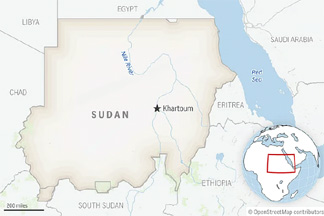
    CAIRO (tip): With Sudan in the grips of war and millions struggling to find enough to eat, many are turning to weeds and wild plants to quiet their pangs of hunger. They boil the plants in water with salt because, simply, there is nothing else. Grateful for the lifeline it offered, a 60-year-old retired school teacher penned a love poem about a plant called Khadija Koro. It was “a balm for us that spread through the spaces of fear,” he wrote, and kept him and many others from starving.
    A.H, who spoke on the condition his full name not be used, because he feared retribution from the warring parties for speaking to the press, is one of 24.6 million people in Sudan facing acute food insecurity —nearly half the population, according to the I ntegrated Food Security Phase Classification. Aid workers say the war spiked market prices, limited aid delivery, and shrunk agricultural lands in a country that was once a breadbasket of the world.
    Sudan plunged into war in April 2023 when simmering tensions between the Sudanese army and its rival paramilitary the Rapid Support Forces escalated to fighting in the capital Khartoum and spread across the country, killing over 20,000 people, displacing nearly 13 million people, and pushing many to the brink of famine in what aid workers deemed the world’s largest hunger crisis.
    Food insecurity is especially bad in areas in the Kordofan region, the Nuba Mountains, and Darfur, where El Fasher and Zamzam camp are inaccessible to the Norwegian Refugee Council, said Mathilde Vu, an aid worker with the group based in Port Sudan. Some people survive on just one meal a day, which is mainly millet porridge. In North Darfur, some people even sucked on coal to ease their hunger.
    On Friday, U.N. Secretary-General Antonio Guterres called the Sudanese military leader Gen. Abdel-Fattah Burhan and asked him for a week-long ceasefire in El Fasher to allow aid delivery. Burhan agreed to that request, according to an army statement, but it’s unknown whether the RSF would agree to that truce.
    A.H. said aid distribution often provided slight relief. His wife in children live in Obeid and also struggle to secure enough food due to high prices in the market.
    His poem continued: “You were a world that sends love into the barren time. You were a woman woven from threads of the sun. You were the sandalwood and the jasmine and a revelation of green, glowing and longing.”
    Fighting restricted travel, worsening food insecurity
    Sudanese agricultural minister Abu Bakr al-Bashari told Al-Hadath news channel in April that there are no indicators of famine in the country, but there is shortage of food supplies in areas controlled by the paramilitary forces, known as RSF. (AP)

  • Remembering the Victims of the 1985 bombing of Air India Flight 182

    Remembering the Victims of the 1985 bombing of Air India Flight 182

    By Prabhjot Singh

    With tears running dry and emotions flying high, relatives and friends of the victims of the Air India Flight 182 disaster assembled at various venues in Canada, Ireland, and India at commemoration ceremonies to mark the 40th anniversary of one of the worst terrorist attacks in modern history.

    On June 23, 1985, Air India flight AI 182, Air India, operating on the Montreal-London-Delhi route, was blown up by a bomb at an altitude of 9,400 meters and crashed into the Atlantic Ocean while in Irish airspace.

    A total of 329 people, including 268 Canadians, were killed in the bombing. Two more people were killed in a separate, but related, bombing at the Narita Airport in Japan.

    Picture of a tree being planted at Canada House in New Delhi to perpetuate the memory of the victims

    Relatives of the victims travelled to Ireland in the days following the bombing. The Irish Naval Service led a recovery operation to retrieve the remains of the victims and the wreckage of the flight. Many of the relatives stayed with the villagers of Ahakista, County Cork, during this time. A permanent memorial was erected by the village in 1986, and a commemoration is held there each year on the morning of 23 June.

    Canadian Prime Minister Mark Carney, in a message remembering the families and friends of the victims, said, “Forty years ago, innocent civilians, including over 250 Canadians, were killed in the bombing of Air India Flight 182. This terrorist attack remains the deadliest attack in our country’s history—one we must never forget.

    “As we mark the National Day of Remembrance for Victims of Terrorism, we remember the victims of the Air India bombing and all others who have lost their lives to terrorism.

    A Commemoration Ceremony

    Canada will continue to work with our allies and partners, at home and around the world, to better detect, prevent, and respond to the threat of terrorism and violent extremism. We are also increasing funding for national security, defense, and law enforcement, and enhancing intelligence sharing with our allies.

    “Canada’s new government unequivocally stands against terrorism, and we will deliver on our mandate of change to keep communities safe,” Mark Carney concluded.

    In New Delhi, the Charge d’affaires of Canada, Jennifer Daubeny, and the Irish Ambassador to India, Kevin Kelly, joined families of the victims, including the crew members of the ill-fated Air India Flight 182 disaster, at a commemoration ceremony at Canada House to mark the 40th anniversary of the terrorist attack.

    Senior officials from the Government of India and members of the diplomatic community attended the ceremony.

    Speaking on the occasion, Ms. Daubeny said, “Today is the National Day of Remembrance for Victims of Terrorism in Canada—a day that marks the anniversary of the bombing of Flight 182 and the lives lost. As we mark its 40th anniversary, we join with the families of the victims in paying homage to each one of the precious lives lost in this tragedy. This anniversary is a reminder that we need to work together to defeat the forces of terrorism and support the peace and safety of our citizens.”

    Another Commemoration Ceremony (Photos: courtesy Canadian High Commission in New Delhi)

    Ambassador Kelly said, “40 years on from the tragedy of Flight 182, we remember with sorrow the 329 innocent lives lost to an evil act of terror. It is with some solace that we recall how the people of Ahakista in County Cork came out to support the families of those who died. Today, here in India, in Ireland, and in Canada, we stand in solidarity with their families. May their memory live on and be a reminder of the fact that innocent civilians need to be safe from terror wherever they are in the world.”

    Guests signed a remembrance book on the occasion and planted a tree in memory of the victims. A minute’s silence was also held to remember those who died on Flight 182 and those who lost their lives in the very recent tragic air crash in Ahmedabad.

  • Lawrence Bishnoi hawks media headlines, this time in Canada

    Lawrence Bishnoi hawks media headlines, this time in Canada

    By Prabhjot Singh,

    TORONTO (TIP): When were discussing the restoration of diplomatic ties with the appointment of High Commissioners in each other’s countries, an unsavory controversy was waiting to unfold. NDP Premier of British Columbia, David Eby, called on the federal  Liberal government to classify India’s Bishnoi gang as a terrorist group. Conservative Mayor of Brampton, Patrick Brown, seconded his demand and three of his immediate deputies.


    Mayor Patrick Brown, who ran for the leadership of the Conservative Party but later withdrew his candidature, was joined by Deputy Mayor Harkirat Singh and Regional Councillors Gurpartap Singh Toor and Navjit Kaur Brar, in formally submitting a request to Prime Minister Mark Carney and Minister of Public Safety Gary Anandasangaree, urging the Government of Canada to designate the Bishnoi gang as a terrorist entity.

    Before Narendra Modi left the shores of Canada after attending to the G7 summit on June 16 and 17,  the demand for declaring Lawrence Bishnoi, currently lodged in Sabarmati Jail in Gujarat, started hawking media headlines as the constituents of two main Opposition parties – New Democrats and Conservatives – wanted the Liberal government led by Mark Carney to act.

    Though initial demand for action against Lawrence Bishnoi gang came from constituents of both the NDP and Conservatives, the call for action has grown louder countrywide demanding action against Lawrence Bishnoi, a transnational criminal network led from India, linked to a growing wave of violence, extortion, and intimidation targeting South Asian communities in  Surrey in British Columbia and Brampton in Ontario. The gang’s operations—allegedly involving hundreds of international operatives—have created a climate of fear and instability, particularly through the exploitation of vulnerable individuals, including international students.

    A day before David Eby made the initial demand, a meeting of victims of extortion and transnational crime was held in Surrey.

    Surrey and Brampton have the largest Sikh population in Canada.

    The demand to declare the Bishnoi gang as a terrorist entity has set a political storm in motion, holding that the gang was carrying out its activities in Canada at the behest of certain agencies and agents. Intriguingly, no police force has come out openly with any evidence linking Lawrence Bishnoi to threats, kidnappings, extortions and killings.

    Premier David Eby called on the federal government early this week to classify India’s Bishnoi gang as a terrorist group.

    Eby said he plans to write to the federal government this week to request the terrorist listing for the Bishnoi gang.

    “This is a serious step,” he said. “It gives police significant investigative tools. We don’t make this recommendation lightly, but this activity strikes at public confidence in the justice system, in our democracy and the safety of the community, and it erodes public confidence in the rule of law.”

    A terrorist listing means the federal government can freeze any property of that group in Canada. It also gives police more tools to prosecute terrorist offences, including those related to financing, travel and recruitment.

    Since  British Columbia in general and Surrey in particular have witnessed a steep hike in cases of extortion and threats, police have been generally reluctant to comment on a link between the extortion and the gang. It could be the reason that the Opposition in British Columbia was taken by surprise at the demand made by David Eby.

    Elenore Sturko, Opposition critic in British Columbia, while questioning David Eby’s demand,  said she was not aware that police had “definitively” linked the Bishnoi gang to any extortion cases. “The police have not come out and told my community that this gang is responsible for these incidents,” she told the media, calling the announcement “dramatic” and “headline-grabbing.”

    Former B.C. solicitor general Kash Heed accused Eby of “raising Bishnoi’s profile” by linking him to terrorism: “It’s a political response when what is needed is an operational response.” He said that while Bishnoi’s name has certainly been mentioned by extortionists in their threats, it is unclear if the gang is behind the extortion or if it is simply being invoked as an intimidation tactic.

    In Brampton, Mayor Patrick Brown said, “The safety of residents is our top priority. Designating the Bishnoi gang as a terrorist organisation would provide law enforcement with the tools they need to disrupt and dismantle this dangerous network. This is about protecting our communities from violence, intimidation, and criminal exploitation.”

    Mayor Brown and members of Brampton Council reaffirm their commitment to working with all levels of government to keep communities safe.

    The police organisations hold that once the Bishnoi gang was declared a non-entity, it would enhance their investigation powers.

    Essentially, an organized crime group in northern India, the Bishnoi gang had reportedly spread its tentacles to many parts of the world, including North America, which appears to have extended its influence to North America in recent years. Its main source of funding,  Indian media reports suggest, has been extortion.

    Though lodged in a Gujarat jail, the head of the gang, Lawrence Bishnoi, has been able to maintain communication with his associates. One of his confidants,  Goldy Brar, initially believed to be based in Canada,  had allegedly claimed responsibility for the killing of Punjabi singer Sidhu Moose Wala. Brar has been eluding arrest.

    Though both BC  police and Peel regional Police in Ontario have received dozens of extortion reports for the past couple of years, they have been reluctant to reveal any evidence against Larence Bishnoi or any other gang of Indian origin.  Even the victims have been reluctant to come out openly for police assistance, fearing the worst. There has been an uptick in the number of people receiving letters, phone calls and social-media messages demanding money under threat of violence.

    Several houses and businesses, both in British Columbia and Ontario, have also been targeted in recent weeks in cases linked to extortion.

    After British Columbia Premier David Eby’s revelation that the gang had been linked to some extortions and other crimes against South Asian community members in B.C., Alberta and Ontario, now the Brampton Mayor and his senior deputies, too, have come out openly against growing gang operations.

    Maninder Singh Dhaliwal, 35, is believed to be the leader of the criminal group responsible for the extortions. Police had previously said he was affiliated with the Brothers Keepers gang. Earlier this year, he was arrested on unrelated charges in the United Arab Emirates. Canada has applied to extradite him to face charges in the extortion scheme.

    The arrest of four Indian nationals in the murder of Surrey Sikh activist Hardeep Singh Nijjar in 2024 renewed interest in the Bishnoi gang’s links to Canada. All four — three Edmonton residents and a fourth arrested in Ontario — allegedly had some association with the group.

    Media quoted Brenda Winpenny of the anti-gang Combined Forces Special Enforcement Unit of British Columbia saying the “agency was aware of individuals operating under this name, Bishnoi, and we are working with our partners to share any kind of intelligence or information.”

    Balpreet Singh of the World Sikh Organisation of Canada said he supported Eby’s request, claiming the Indian government has been using the gang as a proxy to commit violent acts.

    Former Prime Minister Justin Trudeau had said in 2023  that  “Canadian security agencies have been actively pursuing credible allegations of a potential link between agents of the Government of India” and Nijjar’s killing.

    Here is the Letter from the Mayor and his team written to PM Mark Carney: 

    Dear Prime Minister Carney and Minister Anandasangaree,

    Subject: Request to Designate the Bishnoi Gang as a Terrorist Entity

    We, the undersigned, are writing to urgently request that the Government of Canada designate the Bishnoi gang as a terrorist entity. This criminal organization, led by Lawrence Bishnoi from within Sabarmati Central Jail in India, poses a significant threat to public safety in Canada, particularly in the Region of Peel, through its involvement in heinous crimes terrorizing our communities.

    The Bishnoi gang has been linked to several high-profile criminal activities in Canada, including murder and extortion, with a particular impact on the South Asian diaspora.

    In the Region of Peel, the Bishnoi gang’s activities extend beyond murder to include widespread extortion schemes  targeting South Asian business owners. These schemes involve threats of death or violence, creating an atmosphere of fear and undermining public confidence in law enforcement and our justice system. The gang exploits vulnerable individuals, including international students and those struggling with addiction, recruiting them as “shooters” to carry out these crimes. This predatory recruitment strategy destabilizes our communities and disproportionately harms marginalized groups. Peel Regional Police are also in support of this designation as a helpful investigative tool, enhancing their ability to combat this criminal network.

    The Bishnoi gang’s operations, reportedly involving over 700 operatives internationally, mirror the tactics of terrorist organizations by publicly claiming responsibility for high-profile murders to intimidate and assert influence over the Indian diaspora. Their actions threaten the safety and security of residents in Brampton and the broader Region of Peel, necessitating immediate federal action.

    Designating the Bishnoi gang as a terrorist entity would empower law enforcement with critical tools to investigate, disrupt, and dismantle their operations. This step would also send a clear message that Canada will not tolerate transnational criminal networks that endanger our citizens. We echo the call of British Columbia Premier David Eby and the World Sikh The organization is urging this designation to address the escalating crisis of violence and extortion in our country.

    Thank you for your attention to this pressing matter. We are available to discuss this request further and provide any additional information required.

    Sincerely,

    Patrick Brown

    Mayor, City of Brampton

    Harkirat Singh,

    Deputy Mayor, City of Brampton

    Gurpartap Singh Toor

    Regional Councillor, Wards 9 and 10

    Navjit Kaur Brar

    Regional Councillor, Wards 2 and 6

  • India, Canada look back with admiration for each other; To appoint new High Commissioners

    India, Canada look back with admiration for each other; To appoint new High Commissioners

    • G7 summit adopts seven comprehensive resolutions, including transnational crime, countering foreign interference 
    • No comprehensive joint communique  as Donald Trump cuts short his G7 summit attendance
    By Prabhjot Singh

    KANANASKIS (TIP):  The US President, Donald Trump, did it again. For the second time, he left the G7 summit mid-way, putting the Israel-Iran conflict an excuse for his action as the political leadership of the elite G7 nations assembled at Kananaskis in Alberta amid growing splits between the United States over foreign policy and trade, with host Canada striving to avoid clashes with President Donald Trump.

    The summit concluded on a mixed note. Mark Carney, Prime Minister of Canada, had every reason to feel pleased with the Canadian Presidency. “In Kananaskis, Canada’s Presidency showed that we’re ready to create new international partnerships, deepen alliances, and lead member nations into a new era of global co-operation. Canada has the resources the world wants and the values to which others aspire. Canada is meeting this moment with purpose and strength,” said Mark Carney.

    As Mark Carney and Narendra Modi had a one-to-one meeting after the Canadian Prime Minister addressed his G7 Presidency Press Conference, they agreed to appoint new High Commissioners in each other’s country, thus paving the way for the restoration of diplomatic relations that had virtually stood snapped since last year.

    Mark Carney and Narendra Modi reaffirmed the importance of Canada-India ties, based on mutual respect, the rule of law, and a commitment to the principles of sovereignty and territorial integrity. The leaders agreed to designate new high commissioners, with a view to returning to regular services to citizens and businesses in both countries.

    They discussed strong and historic ties between our peoples, partnerships in the Indo-Pacific, and significant commercial links between Canada and India, including partnerships in economic growth, supply chains, and the energy transformation. Prime Minister Carney raised priorities on the G7 agenda, including transnational crime and repression, security, and the rules-based order.

    The leaders also discussed opportunities to deepen engagement in areas such as technology, the digital transition, food security, and critical minerals.

    The last time Canada played host, in 2018, Trump left the summit before denouncing then Canadian Prime Minister Justin Trudeau as “very dishonest and weak” and instructing the U.S. delegation to withdraw its approval of the final communique. This time, when he left after dinner on the second night of the summit, he even sounded positive, saying in case a need arose, he might come back.

    In an increasingly dangerous and divided world, co-operation with reliable partners is more important than ever. With G7 partners, Canada will build a new era of collaboration – one rooted in mutual support and resilient partnerships. Canada is ready to lead.

    Under Canada’s Presidency, this G7 deepened co-operation with joint statements in the areas of securing critical minerals supply chains; adopting, powering, and sharing artificial intelligence; collaborating on quantum innovation; preventing, fighting, and recovering from wildfires; countering foreign interference, including transnational repression (this issue largely addressed the bone of contention between India and Canada in recent years); and fighting transnational crime, such as migrant smuggling.

    Prime Minister Carney also announced various measures in support of Ukraine, including sanction on individuals, entities, and vessels that continue to support Russia’s aggression in Ukraine (Incidentally, President Donald Trump suggested during the summit that Russia should be taken back to make it G8); an additional $2 billion in military assistance this year; disbursement of a $2.3 billion loan to Ukraine through the G7  Extraordinary Revenue Acceleration Loans mechanism; and allocation of $57.4 million in security-related assistance.

    Canada will also be taking action to build stronger economies and international systems.

    As the  Prime Minister Mark Carney started day 2 at the summit by calling on Donald Trump,  holding that his priorities were strengthening peace and security, building critical mineral supply chains and creating jobs, issues such as U.S. tariffs and the conflicts in the Middle East and Ukraine, issues related to global security, economy and foreign trade figured prominently during various sessions of the annual gathering of the big seven. Mark Carney also held a one-to-one meeting with the Indian Prime Minister, Narendra Modi, after addressing his G7 Presidency Press Conference at the end of the summit.

    The summit, which returned to Kananaskis for the second time since 2002, also had its highs and lows as late invitations to the Crown Prince of Saudi Arabia, Mohammed bin Salman and Indian Prime Minister  Narendra Modi,  as leaders of outreach nations, generated huge controversies.  While Narendra Modi attended, the Crown Prince of Saudi Arabia, however, did not show up at the elite gathering. 

    Indian touch to the G7 summit

    India-Canada reset relations.
    “Had an excellent meeting with Prime Minister Mark Carney. Complimented him and the Canadian Government for successfully hosting the G7 Summit. India and Canada are connected by a strong belief in democracy, freedom and rule of law. PM Carney and I look forward to working closely to add momentum to the India-Canada friendship. Areas like trade, energy, space, clean energy, critical minerals, fertilisers and more offer immense potential in this regard”: PM Modi. (Photo : X)

    When the invitees started arriving in Calgary, the capital of Alberta, Mayor of  Calgary, Jyoti Gondek, a UK-born woman of Indian origin,  Premier Danielle Smith and First Nations representatives greeted leaders from the G7 nations and invited non-member countries as they arrived.  Danielle Smith, who has been hawking media headlines for her statements, played host to the visiting leaders at an evening reception in Calgary and held bilateral meetings throughout the summit.

    Another member of the Indian Diaspora, invited to attend the summit, was Ajay Banga, President of the World Bank. One of the top officials entrusted with the security of the summit was Superintendent Joe Brar, also of Indian origin.

    The G7 members include Canada, USA, UK,  France, Germany, Italy, and  Japan

    Also attending at Carney’s invitation are Indian Prime Minister Narendra Modi and Ukrainian President Volodymyr Zelenskyy, along with Australian PM  Anthony Albanese, and the leaders of Brazil, Mexico, South Africa and South Korea.

    It also witnessed a series of protests as throngs of people chanted and waved signs at designated protest zones, many directing their anger at U.S. President Donald Trump and the Indian Prime Minister, Narendra Modi,  and other dignitaries attending the summit an hour away in Kananaskis. Hundreds of Khalistani supporters also held a procession in support of their demand.

    Several organizations held rallies outside Calgary City Hall, including demonstrations for Indigenous water rights, peace in Kashmir and an end to violence in Ethiopia’s Amhara region. Hundreds of pro-Palestine supporters also joined a procession that marched through downtown, blocking traffic on Macleod Trail and prompting additional road closures.

    For Prime Minister Mark Carney, who was elected leader of the Liberal Party and Prime Minister of Canada only in April this year, hosting the US President  Donald Trump and other world leaders like President of France, Prime Ministers of the United Kingdom and Australia bedsides leaders of the world’s biggest democracies for three days for talks at the Pomeroy Kananaskis Mountain Lodge, where the 2002 G8 gathering was held,  was a huge challenge.

    Hectic schedule for Mark Carney

    Prime Minister Mark Carney had a hectic and tight schedule throughout the three days of the summit. Starting with the official reception of the Prime Minister of the United Kingdom, Keir Starmer, on his arrival in Ottawa on June 15, he had a meeting with Keir Starmer,  and the Chief Executive Officer of Cohere, Aidan Gomez, before leaving for Calgary to attend the summit.

    On arriving in Kananaskis, he first met with the  Prime Minister of Australia, Anthony Albanese, followed by his meeting with the President of South Africa, Cyril Ramaphosa. Before the end of day 1, Mark Carney also met  with representatives of the Treaty 7 First Nations and the Chancellor of Germany, Friedrich Merz.

    He started his day 2 by calling on the President of the United States, Donald J. Trump, before he formally welcomed G7 leaders to Kananaskis, Alberta. He participated in the G7 Working Session I on the global economic outlook, before his meetings were held with the President of the European Council, António Costa, and the President of the European Commission, Ursula von der Leyen.

    After participating in the G7 working lunch on economic growth, security, and resilience, Mark Carney met the Prime Minister of Japan, Shigeru Ishiba , besides participated in the G7 Working Session III on making communities safe.

    In the afternoon on Day 2, he called on the President of France, Emmanuel Macron, and also met the Prime Minister of Italy, Giorgia Meloni.

    Then there was the G7 family photo before the working dinner on making the world secure.

    Mark Carney started his third and final day of the summit by welcoming and holding a meeting with the Secretary General of the North Atlantic Treaty Organization, Mark Rutte.

    He later welcomed and met the President of Ukraine, Volodymyr Zelenskyy, and participated in the G7 working breakfast on a strong and sovereign Ukraine with G7 leaders and guests.

    Carney closes summit with promises to forge ‘a new era of cooperation’.

    After participating in the G7 closing session, he welcomed outreach countries and international organizations and joined them in a G7 family photo with outreach countries, international organizations, and guests.

    Mark Carney met the Secretary-General of the United Nations, António Guterres,   President of Brazil, Luiz Inácio Lula da Silva, and attended the G7 working luncheon on energy security with outreach countries and international organizations.

    He addressed his G7 Presidency press conference before holding the much-awaited meeting with the Prime Minister of India, Narendra Modi.

    Mark Carney’s last two meetings of the G7 summit were with the President of the Republic of Korea, Lee Jae Myung, and the President of Mexico, Claudia Sheinbaum.

    Incidentally, seven comprehensive communiques about the deliberations during the three-day sessions were issued at the end of the summit.

    Since the German Chancellor, Friedrich Merz,  had stated before the start of the summit that Israel-Iran conflict  “would be very high on the agenda of the G7 summit”  holding that  his goals were for Iran to not develop or possess nuclear weapons, ensuring Israel’s right to defend itself, avoiding escalation of conflict and creating room for diplomacy,

    The participating G7 leaders issued a joint statement, saying 

    “We, the leaders of the G7, reiterate our commitment to peace and stability in the Middle East. In this context, we affirm that Israel has a right to defend itself. We reiterate our support for the security of Israel.

    “We also affirm the importance of the protection of civilians. Iran is the principal source of regional instability and terror.

    “We have been consistently clear that Iran can never have a nuclear weapon.

    “We urge that the resolution of the Iranian crisis leads to a broader de-escalation of hostilities in the Middle East, including a ceasefire in Gaza.

    “We will remain vigilant to the implications for international energy markets and stand ready to coordinate, including with like-minded partners, to safeguard market stability. A new global conflict, a fresh global summit and an expected spike in global oil prices were the issues on which the participating leaders focused during their deliberations. The leaders of the seven countries also talked about economic growth concerns, including energy security and critical minerals.

    Building energy security was one of the key themes Prime Minister Mark Carney, as G7 host, had set on the summit’s agenda, although it has been a perennial issue discussed by the group over five decades of annual meetings.

    The G7 leaders also talked about the role of critical minerals, which were needed for the energy transition and the development of storage battery technology.

    (Prabhjot Singh, is a Toronto-based award-winning independent journalist, He was celebrated by AIPS, the international body of sports journalists, for covering ten Olympics at its centennial celebrations held at UNESCO Centre in Paris during the 2024 Olympic Games. Besides, he has written extensively about business and the financial markets, the health industry, the public and private sectors, and aviation. He has worked as a political reporter besides covering Sikh and Punjab politics. He is particularly interested in Indian Diaspora,  and Sikh Diaspora in particular. His work has also appeared in various international and national newspapers, magazines and journals.)

  • Canada to retaliate against U.S. steel, aluminum tariffs if Carney, Trump can’t reach deal

    Canada to retaliate against U.S. steel, aluminum tariffs if Carney, Trump can’t reach deal

    When the negotiation period has ended, counter-tariffs will be adjusted ‘to levels consistent with progress made in the broader trading agreement with the U.S.,’ Carney said

    OTTAWA (TIP): The Canadian Steel Producers Association and United Steelworkers Union are panning Prime Minister Mark Carney’s response to U.S. President Donald Trump’s punishing tariffs. Their response came hours after Carney announced a tariff countermeasure plan Thursday that includes retaliation against Trump’s steel and aluminum tariffs a month from now — depending on how much progress the two world leaders make in their trade discussions.

    The two steel organizations issued a joint statement late Thursday saying Carney’s plan “falls short of what the industry needs at this most challenging time.”
    “We will continue to review the details of the measures and work constructively with the federal government to get a plan that works for Canadian steel producers and the thousands of workers that make up our sector,” Catherine Cobden of the steel industry association and Marty Warren, the union’s national director, said in the joint statement.

    Carney said that while he and Trump are pursuing a deal to end tariffs within the next 30 days, Canadian counter-tariffs will be adjusted on July 21 to “levels consistent with progress made in the broader trading agreement with the U.S.” “We must reinforce our strength at home and safeguard Canadian workers and businesses from the unjust U.S. tariffs,” Carney told a press conference on Parliament Hill following a federal cabinet meeting.

    The announcement came just a few hours before Canadian steel industry representatives were set to publicly call on the government to take immediate action in response to the U.S. tariffs. The steel producers instead held off and scrubbed their press conference.

    Jean Simard, head of the Aluminium Association of Canada, said in a media statement Thursday that the measures Ottawa announced “strike the right balance.”

    He said the government needs to carefully balance “sending a strong signal towards focused and accelerated negotiations and using a measured approach through adaptive counter-tariffs and reciprocal procurement policies.”

    “In this rapidly evolving situation, with potentially high financial impacts due to uncontrollable market reactions, we will need and seek agility and speed for government interventions should we reach the 30-day deadline without a positive resolve,” Simard added.

    Trump imposed his 25 per cent tariff on all steel and aluminum imports in March and Canada responded with 25 per cent counter-tariffs on U.S. steel and aluminum products in March.

    But Canada has not changed its tariffs yet since Trump increased U.S. tariffs on steel and aluminum to 50 per cent on June 3. The U.S. steel and aluminum tariffs apply to the entire world, not just Canada, which has led to concerns about dumping _ foreign companies flooding the market with products priced far below the prices domestic firms can charge.

    Trump’s escalating tariff war has slammed demand and prices for Canadian steel, prompting layoffs and leaving the industry worried about its future.

    Ottawa also plans to introduce rules on June 30 that will limit federal procurement to using steel and aluminum from Canada and “reliable trading partners.”

    The Carney government will also set new tariff rate quotas of 100 per cent of 2024 levels on imports of steel products from non-free trade agreement partners. NDP Leader Don Davies said in a media statement Thursday that the Liberal government is only taking baby steps to address the crisis. He called for an emergency response plan packed with supports for workers.

    “They’re taking one small step after another, which won’t make a meaningful difference and will ultimately cost many workers their jobs,” Davies said. Two weeks ago, when Trump increased the tariff rate, the Canadian Steel Producers Association — whose members include Algoma Steel, ArcelorMittal, Rio Tinto and Tenaris — immediately called on Carney to hit back with new tariffs and warned that Canada was being edged out of the U.S. market.

    They met with Industry Minister Melanie Joly, who said on June 4 the government “will take a decision but we need a bit more time right now — not too long.”

    Just before the cabinet meeting on Thursday, Joly acknowledged that the U.S. tariffs have left Canada’s steel and aluminum industries in a state of emergency.

    “We know that the Canadian steel and aluminum workers are very anxious and they want us to come up with a solution really, really quickly,” she said.

    The prime minister also announced Thursday the creation of two separate task forces for steel and aluminum that will meet to monitor the situation and advise the government.
    (Source: National Post)

  • Pak security forces kill 14 terrorists in northwest Pakistan

    Pak security forces kill 14 terrorists in northwest Pakistan

    PESHAWAR (TIP): Security forces mowed down 14 terrorists in an intelligence-based operation at a tribal district bordering Afghanistan in northwest Pakistan, military media wing said on Wednesday.
    According to a statement issued by the Inter-Services Public Relations, “On June 2-3, 2025, an intelligence-based operation was conducted by the security forces in general area of Datta Khel, North Waziristan district, on a reported presence of terrorists.” The troops raided a terrorist hideout in the area. “After an intense exchange of fire, 14 khwarij were sent to hell,” the statement said.
    “Sanitisation operations are being conducted to eliminate any other terrorists found in the area. The security forces of Pakistan are determined to wipe out the menace of sponsored terrorism from the country,” it added. (PTI)

  • French singer Nicole Croisille, of ‘A Man and a Woman’ fame, dies at 88

    PARIS (TIP): Nicole Croisille, a French singer who sang on the soundtrack of the hit 1966 film “A Man and a Woman”, has died, her agent told AFP on Wednesday. She was 88. Croisille died “following a long illness” in Paris during the night of Tuesday-Wednesday, Jacques Metges said.
    “Until the end, she fought with lots of force and courage,” he added. Croisille was best known internationally for her work on the film soundtrack of “A Man and a Woman”, including the solo “Today it’s You” and several duets.
    She was also beloved in France for other hits during the 1970s including “Telephone-moi” (Call me), “Parlez-moi de lui” (Tell me about him) and “Une femme avec toi” (A woman with you). “I have only sung love songs and I know what I have brought to people,” she said in an interview with Paris Match in 2017. In addition to singing, Croisille was also a dancer and an actress. (AFP)

  • Newly elected South Korea’s President Lee Jae-myung says he’ll bolster US-Japan ties and pursue talks with North

    Newly elected South Korea’s President Lee Jae-myung says he’ll bolster US-Japan ties and pursue talks with North

    SEOUL (TIP): South Korea’s new President Lee Jae-myung vowed Wednesday to restart dormant talks with North Korea and bolster a trilateral partnership with the U.S. and Japan, as he laid out key policy goals for his single, five-year term. Lee, who rose from childhood poverty to become South Korea’s leading liberal politician vowing to fight inequality and corruption, formally began his term earlier Wednesday, a day after winning a snap election that was triggered in April by the removal of then-President Yoon Suk Yeol over his ill-fated imposition of martial law late last year.
    In his inaugural address at the National Assembly, Lee said that his government will deal with potential North Korean aggressions with “strong deterrence” based on the solid South Korea-U.S. military alliance. But he said he would “open a communication channel with North Korea and establish peace on the Korean Peninsula through talks and cooperation.”
    He said he’ll pursue pragmatic diplomacy with neighboring countries and boost trilateral Seoul-Washington-Tokyo cooperation based on the robust South Korea-U.S. alliance.
    “Through pragmatic diplomacy based on national interests, we will turn the crisis posed by the major shift in global economic and security landscapes into an opportunity to maximize our national interests,” Lee said.
    It was unclear whether Lee’s election would cause any major, immediate shift in South Korea’s foreign policy. Lee, previously accused by critics of tilting toward China and North Korea and away from the U.S. and Japan, has recently repeatedly stressed South Korea’s alliance with the U.S. as the foundation of its foreign policy.
    The toughest external challenges awaiting Lee are U.S. President Donald Trump’s tariff policy and North Korea’s advancing nuclear program. But experts earlier said whoever becomes president can’t do much to secure major progress in South Korea’s favor on those issues.
    During his inauguration speech, Lee didn’t directly mention trade issues with the U.S.
    Lee said revitalizing a slowing domestic economy would be his top priority and that his government would immediately launch an emergency task force to wage a “head-on battle” against the threats of recession. He also promised more aggressive government spending to help spur economic activity.
    South Korea’s central bank cut its key interest rate and sharply lowered its growth outlook for 2025 to 0.8%, as it moved to counter U.S. President Donald Trump’s tariff hikes and weak domestic demand worsened by recent political turmoil.
    Lee’s term began immediately without the usual two-month transition period after the National Election Commission formally confirmed his election victory.
    In a telephone call with Joint Chiefs of Staff chairman Kim Myung-soo, Lee asked the military to closely monitor North Korean moves and maintain a solid readiness based on the combined South Korea-U.S. military alliance, according to local TV footage.
    Lee later visited the national cemetery in Seoul to pay respects to late Korean leaders, patriots and war dead who are buried there. (AP)

  • New Zealand MP Laura McClure displays deepfake AI nude image of herself in Parliament to urge legal reform

    New Zealand MP Laura McClure displays deepfake AI nude image of herself in Parliament to urge legal reform

    New Zealand (tip) : In a bold move to highlight the threat of deepfake technology, New Zealand Member of Parliament Laura McClure displayed an AI-generated nude image of herself during a parliamentary session. The image, the MP said was created in under five minutes using readily available online tools.
    “This image is a naked image of me, but it’s not real,” McClure said, adding that the ease with which such convincing fake images can be produced. She described the experience as “absolutely terrifying,” noting the psychological impact even when knowing the image was fabricated.
    McClure shared the image on her Instagram account, and said, “Today in Parliament, I showed an AI-generated nude deepfake of myself to show how real and easy these are to create. The problem isn’t the tech itself, but how it’s being misused to abuse people. Our laws need to catch up.”
    The MP is advocating for legislative amendments to include deepfakes under existing laws that prohibit the non-consensual sharing of intimate images. She said in Parliament that deepfakes can be as harmful, if not more so, than real images, as they can depict individuals in fabricated, often degrading scenarios.
    McClure’s actions have sparked a national debate on the ethical and legal challenges of deepfakes, highlighting the urgent need for updated laws to protect against digital abuse. (nie)

  • Russian strike kills five, including one-year old in Northern Ukraine, hours after Trump calls Putin

    Russian strike kills five, including one-year old in Northern Ukraine, hours after Trump calls Putin

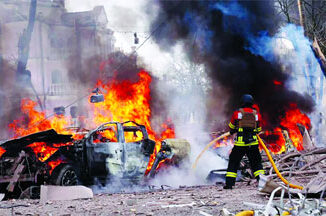
    KYIV (TIP): At least five people, including a one-year-old child, were killed in a Russian drone strike on the northern Ukrainian city of Pryluky overnight, regional governor Viacheslav Chaus said Thursday.
    The attack came just hours after Donald Trump spoke with Russian President Vladimir Putin. According to Trump, Putin “very strongly” said that Russia will retaliate for Ukraine’s weekend drone attacks on Russian military airfields.
    Six more people were wounded in the attack and have been hospitalized, Chaus said. According to him, six Shahed-type drones struck residential areas of Pryluky early Thursday morning, causing severe damage to residential buildings.
    Hours later, seventeen people were wounded in a Russian drone strike on the eastern Ukrainian city of Kharkiv early Thursday, including children, a pregnant woman, and a 93-year-old woman, regional head Oleh Syniehubov wrote on Telegram.
    At around 1:05 a.m., Shahed-type drones struck two apartment buildings in the city’s Slobidskyi district, causing fires and destroying several private vehicles.
    “By launching attacks while people sleep in their homes, the enemy once again confirms its tactic of insidious terror,” Syniehubov wrote on Telegram. (AP)

  • Israel says it has recovered the bodies of two Israeli-American hostages from the Gaza Strip

    Israel says it has recovered the bodies of two Israeli-American hostages from the Gaza Strip

    TEL AVIV (tip): Israel has recovered the bodies of two Israeli-American hostages taken in Hamas’ Oct. 7, 2023, attack that ignited the war in the Gaza Strip, officials said Thursday.
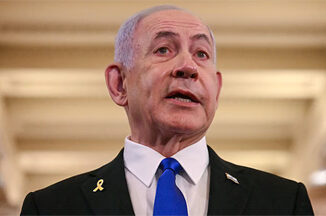
    Prime Minister Benjamin Netanyahu said the remains of Judih Weinstein and Gad Haggai were recovered and returned to Israel in a special operation by the army and the Shin Bet internal security agency.
    “Together with all the citizens of Israel, my wife and I extend our heartfelt condolences to the dear families. Our hearts ache for the most terrible loss. May their memory be blessed,” he said in a statement.
    Kibbutz Nir Oz announced the deaths of Weinstein, 70, and Haggai, 72, both of whom had Israeli and U.S. citizenship, in December 2023.
    The military said they were killed in the Oct. 7 attack and taken into Gaza by the Mujahideen Brigades, the small armed group that it said had also abducted and killed Shiri Bibas and her two small children. The army said it recovered the remains of Weinstein and Haggai overnight into Thursday from the southern Gaza city of Khan Younis.
    A teacher who helped children and a chef who played jazz
    The couple were taking an early morning walk near their home in Kibbutz Nir Oz on the morning of Oct. 7 when Hamas militants stormed across the border and rampaged through several army bases and farming communities.
    In the early hours of the morning, Weinstein was able to call emergency services and let them know that both she and her husband had been shot, and send a message to her family.
    Weinstein was born in New York and taught English to children with special needs at Kibbutz Nir Oz, a small community near the Gaza border. The kibbutz said she also taught meditation techniques to children and teenagers who suffered from anxiety as a result of rocket fire from Gaza. Haggai was a retired chef and jazz musician.
    “My beautiful parents have been freed. We have certainty,” their daughter, Iris Haggai Liniado, wrote in a Facebook post. She thanked the Israeli military, the FBI and the Israeli and U.S. governments and called for the release of all the remaining hostages.
    The couple were survived by two sons and two daughters and seven grandchildren, the kibbutz said.
    Hamas-led militants killed some 1,200 people, mostly civilians, in the Oct. 7 attack and abducted 251 hostages. They are still holding 56 hostages, around a third of them believed to be alive, after most of the rest were released in ceasefire agreements or other deals. Israeli forces have rescued eight living hostages from Gaza and recovered dozens of bodies.
    Israel’s military campaign has killed over 54,000 Palestinians, mostly women and children, according to the Gaza Health Ministry, which does not say how many of the dead were civilians or combatants. The offensive has destroyed large parts of Gaza and displaced around 90% of its population of roughly 2 million Palestinians.
    The United States, Egypt and Qatar have been trying to broker another ceasefire and hostage release after Israel ended an earlier truce in March and imposed a blockade that has raised fears of famine, despite being eased in recent weeks. But the talks appear to be deadlocked.
    Hamas says it will only release the remaining hostages in return for more Palestinian prisoners, a lasting ceasefire and an Israeli withdrawal from Gaza. It has offered to hand over power to a politically independent Palestinian committee.
    Netanyahu has rejected those terms, saying Israel will only agree to temporary ceasefires to facilitate the return of hostages. He has vowed to continue the war until all the hostages are returned and Hamas is defeated or disarmed and sent into exile.
    He has said Israel will maintain control over Gaza indefinitely and will facilitate what he refers to as the voluntary emigration of much of its population to other countries. The Palestinians and much of the international community have rejected such plans, viewing them as forcible expulsion that could violate international law. (AP)

  • South Korean lawmakers approve special investigations into martial law, Yoon’s wife

    SEOUL (TIP): South Korea’s liberal-led legislature overwhelmingly passed bills Thursday to launch special investigations into former President Yoon Suk Yeol’s short-lived imposition of martial law in December and criminal allegations against his wife, targeting the ousted conservative a day after his liberal successor took office. The National Assembly also passed a bill to initiate an independent investigation into the 2023 drowning death of a marine during a search-and-rescue operation for flood victims, an incident the Democratic Party, which holds majority, accuses Yoon’s government of covering up. The bills previously had been vetoed by Yoon during his term and by South Korea’s caretaker government after his Dec. 14 impeachment.
    President Lee Jae-myung, a Democrat who won Tuesday’s snap election triggered by Yoon’s removal from office, is expected to sign the bills.
    Many members of the conservative People Power Party refused to participate in the votes, which took place after one of the party’s lawmakers accused the liberals of being driven by vendetta.
    Kim Yong-min, a Democratic Party lawmaker, said the conservatives were effectively defending Yoon’s imposition of martial law by repeatedly opposing investigations into it.
    “That’s why they failed to win public support and were rejected by voters in the presidential election,” he said in a speech.
    Lee, who drove the legislative efforts to impeach Yoon, pinned his presidential campaign on unity, promising not to target conservatives and calling for an end to political polarization.
    Yet Lee has vowed a full investigation into Yoon’s martial law imposition and the allegations surrounding his wife, moves that could overshadow the new government and inflame tensions as Yoon faces a high-stakes rebellion trial carrying a possible death sentence.
    The Seoul Central District Prosecutors’ Office has indicted Yoon on charges accusing Yoon of masterminding a rebellion and enacting martial law as an illegal bid to seize the legislature and election offices and arrest political opponents.
    Liberals have insisted independent investigations into Yoon are essential, saying probes by prosecutors, police and an anti-corruption agency were inadequate and hampered by Yoon’s refusal to cooperate. (AP)

  • Minister Sidhu advances Canada’s trade priorities with G7 trade ministers

    Minister Sidhu advances Canada’s trade priorities with G7 trade ministers

    OTTAWA (TIP): This week, Maninder Sidhu, Canada’s Minister of International Trade, hosted a meeting with G7 trade ministers in Paris, France. Minister Sidhu led an important discussion on the G7’s role in contributing to a trade environment that supports our shared goals of driving economic growth, creating good-paying jobs, and building long-term prosperity. The G7 trade ministers engaged on pressing issues that are impacting the global economy.

    Minister Sidhu reaffirmed Canada’s commitment to the rules-based global trading system and the principles that underpin it. He highlighted the need for open, stable markets that ensure predictability amidst economic uncertainty, which is particularly important for small and medium-sized enterprises disproportionately affected by trade disruptions.

    The minister also emphasized the importance of addressing the impacts of non-market policies and practices on our workers, businesses and economies.

    “While the rules-based global trading system continues to face complex and evolving challenges, it is the foundation of economic security and prosperity. The G7 is a vital forum to address the challenges that affect not only its members’ economies, but also the global economy. I will continue to work closely with my G7 counterparts to support Canadian businesses of all sizes in finding trade opportunities in diverse markets and to build Canada as the strongest economy in the G7.” – Maninder Sidhu, Minister of International Trade

    The Group of Seven (G7) is an informal grouping of seven of the world’s most advanced economies, including Canada, France, Germany, Italy, Japan, the United Kingdom, and the United States, as well as the European Union.

    As the G7 President this year, Canada will host the G7 Leaders’ Summit in Kananaskis, Alberta from June 15 to 17, 2025.

  • MPs of Indian descent  miss a place in  the list of Parliamentary Secretaries named by Prime Minister Mark Carney

    MPs of Indian descent miss a place in the list of Parliamentary Secretaries named by Prime Minister Mark Carney

    By Prabhjot Singh

    OTTAWA (TIP): Disappointments were galore as none of the MPs of Indian descent could find a place in an exhaustive list of Parliamentary Secretaries announced by the Prime Minister, Mark Carney, for building Canada strong. Mark Carney named 39 Parliamentary Secretaries. He also announced that Élisabeth Brière will serve as Deputy Chief Government Whip, and Arielle Kayabaga will serve as Deputy Leader of the Government in the House of Commons.

    “Canada’s new parliamentary secretary team will deliver on the government’s mandate for change, working collaboratively with all parties in Parliament to build the strongest economy in the G7, advance a new security and economic partnership with the United States, and help Canadians get ahead,” Mark Carney said in a statement after making the appointments.

    Of the 14 Liberal MPs of Indian descent, four figure in the Council of Ministers of Mark Carney. They are Anita Indira Anand (Foreign Affairs), Maninder Sidhu (Minister of International Trade) and two Secretaries of State, Ruby Sahota (Combatting crime) and Randeep Serai (International Development).

    Some of the senior members of the Liberal caucus of Indian descent include Sukh Dhaliwal, Anju Dhillon, Sonia Sidhu and Bardish Chagger.

    While Maninder Sidhu, Minister of International Trade, is currently on a visit to France after touring several countries in South America, Anita Indira Anand will embark on a two-day visit to the United Kingdom and France from tomorrow.

    An official communiqué stated that Canadians elected this new government with a mandate to define a new economic and security relationship with the United States, to build a stronger economy, to reduce costs, and to keep our communities safe. Parliamentary secretaries will support their respective cabinet ministers and secretaries of state to deliver on this mandate.

    Members of the new parliamentary secretary team will be attached to Ministers of various departments. They are:

    Karim Bardeesy – Industry; Jaime Battiste – Crown-Indigenous Relations; Rachel Bendayan, Kody Blois – attached with Prime Minister; Sean Casey – Veterans Affairs and Associate Minister of National Defence; Sophie Chatel – Agriculture and Agri-Food; Madeleine Chenette – Canadian Identity, Official Languages and Sport; Maggie Chi – Health; Leslie Church – Labour, Seniors, Children and Youth, and Jobs and Families (Persons with Disabilities); Caroline Desrochers – Housing and Infrastructure; Ali Ehsassi – King’s Privy Council, Canada-U.S. Trade, Intergovernmental Affairs and One Canadian Economy (Canada-U.S. Trade); Mona Fortier- Foreign Affairs;

    Peter Fragiskatos – Immigration, Refugees and Citizenship; Vince Gasparro – Combatting Crime; Wade – Environment and Climate Change; Claude Guay – Energy and Natural Resources; Brendan Hanley – Northern and Arctic Affairs; Corey Horgan – Energy and Natural Resources; Anthony Housefather – Emergency Management and Community Resilience; Mike Kelloway – Transport and Internal Trade; Ernie Klassen – Fisheries; Annie Koutrakis – Jobs and Families; Kevin Lamoureux – Leader of the Government in the House of Commons; Patricia Lattanzio – Justice and Attorney General of Canada; Ginette Lavack – Indigenous Services; Carlos Leitao – Industry; Tim Louis – King’s Privy Council for Canada and Canada-U.S. Trade, Intergovernmental Affairs and One Canadian Economy (Intergovernmental Affairs and One Canadian Economy; Jennifer McKelvie – Housing and Infrastructure; Marie-Gabrielle Ménard – Women and Gender Equality and Small Business and Tourism; David Myles – Canadian Identity and Culture and Official Languages and Parliamentary Secretary to the Secretary of State (Nature); Yasir Naqvi becomes Parliamentary Secretary to the Minister of International Trade and International Development; Taleeb Noormohamed – Artificial Intelligence and Digital Innovation; Rob Oliphant – Foreign Affairs; Tom Osborne – Treasury Board; Jacques Ramsay – Public Safety; Pauline Rochefort – Rural Development); Sherry Romanado – National Defence; Jenna Sudds – Government Transformation, Public Works, Procurement and Defence Procurement); and Ryan Turnbull – Finance and National Revenue, Canada Revenue Agency and Financial Institutions.

    (Prabhjot Singh, is a Toronto-based award-winning independent journalist, He was celebrated by AIPS, the international body of sports journalists, for covering ten Olympics at its centennial celebrations held at UNESCO Centre in Paris during the 2024 Olympic Games. Besides, he has written extensively about business and the financial markets, the health industry, the public and private sectors, and aviation. He has worked as a political reporter besides covering Sikh and Punjab politics. He is particularly interested in Indian Diaspora and Sikh Diaspora in particular. His work has also appeared in various international and national newspapers, magazines and journals.)

  • Ceremonial touch enthuses Canadians to the throne speech by King Charles

    Ceremonial touch enthuses Canadians to the throne speech by King Charles

    By Prabhjot Singh

    OTTAWA (TIP): Blending royalty with solemnity, King Charles endorsed Prime Minister Mark Carney’s vow to protect Canadian sovereignty by reinforcing its defense line while redefining the relationship with its neighbor and big brother, the United States.

    It was only for the third time since 1957 that the Monarch read out the throne speech at a ceremony marked by gaiety, rich military traditions and rare ceremonies attached to royal visits to the sovereign.

    The speech from the throne not only laid out the government’s priorities for the new Parliament, the King also used the occasion to give a personal message to Canadians about his connection to Canada. “Every time I come to Canada, a little more of Canada seeps into my bloodstream and from there, straight to my heart,” he said.

    The speech mentioned Canadian sovereignty several times, and the King finished his address by saying, “As the anthem reminds us, the true North is indeed strong and free.”

    The throne speech also ratified that Canada would join the Rearm Europe plan — a major defense procurement project to ramp up arms production in Europe, indicating a reduction in Canada’s reliance on the U.S. as a source of military equipment. King Charles’ speech has come at a time after months of U.S. President Donald Trump calling for Canada’s annexation and deploying tariffs against U.S. allies.

    The King said Canada faces “unprecedented challenges” as the world changes and as relationships with key allies come under pressure. “The world is now a more dangerous and uncertain place than at any point since the Second World War,” he said, holding that while Canadians feel anxious about the future, the moment also brings an “opportunity for renewal.” The King is the first reigning British monarch to read the speech from the throne since his mother, Queen Elizabeth II, delivered the speech in 1977. Photo caption: Baljit Singh Chadha, President and Founder of Balcorp Limited
    (Photo of Chadha here)

    Montreal-based Indian businessman Baljit Singh Chadha could not have asked for more. He was one of the select leaders of the Indian community invited to attend the solemn ceremony. Sharing his experiences of attending the rarest of rare ceremony, Baljit Singh Chadha said: “Attending the Speech from the Throne delivered by His Majesty King Charles III in the Senate of Canada, marking the opening of the 45th Parliament, was one of the proudest and most meaningful moments of my life.

    “The speech was a defining moment for the future of our country. I urge all Canadians to set aside our differences and come together to continue building a stronger, more united Canada — a nation founded by the English, the French, and the Indigenous peoples.

    “It was a great honor for me when, as His Majesty exited the Senate and passed in front of me, I greeted him with ‘Sat Sri Akal,’ and he respectfully folded his hands in return.

    “Prime Minister Carney, walking just behind the King, also acknowledged me with a similar gesture,” said Baljit Singh Chadha, who was the first one to organize a meeting of leading captains of Canadian industry and business of Indian origin when Mark Carney launched his leadership campaign before he was elected the new leader of the Liberal Party in April this year.


    The Royalty started the second day of its Canadian visit on Tuesday by travelling in Canada’s state landau past crowds of admirers in front of Parliament Hill. King Charles was attired in a dark blue striped suit with the Order of Canada around his neck, with his customary medal array. Sitting next to him, the Queen was wearing a navy blue dress and hat.

    The Governor General, Mary Simon and her husband, Whit Fraser, joined the King and the Queen as the landau was escorted down Wellington Street in Ottawa by mounted RCMP officers.

    The King and Queen arrived shortly after 10 a.m. at the Senate building, where the King received full military honors and a 100-person honor guard from the 3rd Battalion of the Royal Canadian Regiment.

    The ceremony included an inspection of the guard and band and a 21-gun salute.

    Once the ceremonies and the speech were over, the King shook hands in gathered crowds alongside the Queen.

    The royal couple also visited the National War Memorial, where a trumpeter played the Last Post and a band played the national anthems of Canada and the United Kingdom.

    The King laid a wreath at the Tomb of the Unknown Soldier, while the Queen placed flowers atop. They again shook hands with dignitaries before entering a motorcade and making their way to the airport to leave Canada following the two-day visit.

    King Charles had earlier made 18 official visits to Canada as the Prince of Wales. This was his first trip to Canada since his coronation.

  • Trump dangles Golden Dome for Canada: Join US, enter  $175B defense plan for free

    Trump dangles Golden Dome for Canada: Join US, enter $175B defense plan for free

    WASHINGTON, D.C. (TIP): US President Donald Trump on Tuesday, May 27, invited Canada to join his proposed USD 175 billion ‘Golden Dome’ missile defense system for free — on the condition that it becomes the 51st state of the United States. “I told Canada, which very much wants to be part of our fabulous Golden Dome System, that it will cost $61 Billion Dollars if they remain a separate, but unequal, Nation, but will cost ZERO DOLLARS if they become our cherished 51st State,” Trump wrote on his Truth Social network.

    “They are considering the offer!” the president claimed in his post.

    Last week, President Donald Trump unveiled plans for the Golden Dome missile defense program — a USD 175 billion, multilayered system that will put US weapons in space for the first time. Speaking from the Oval Office, Trump said he expects the system to be fully operational by 2029 and capable of intercepting missiles “even if they are launched from space.”

    Canadian Prime Minister Mark Carney has acknowledged that his government is in talks with the US regarding participation in the Golden Dome program. “Is it a good idea for Canada? Yes, it is good to have protections in place for Canadians,” Carney said during a press conference last week. “We cooperate if necessary but not necessarily cooperate,” he added.

    However, Canada has yet to officially respond to the statehood claim. Earlier this month, Carney has made it clear in Trump’s presence that Canada’s sovereignty is “not for sale.” On May 6, Carney met Trump for the first time since being elected as Canada’s Prime Minister. Their meeting in the Oval Office quickly took an unexpected turn when Trump reiterated his proposal for Canada to join the US as its 51st state.

    “It would really be a wonderful marriage,” Trump said in the presence of reporters.

    In response, Carney promptly turned down Trump’s offer and said, “It’s not for sale, it won’t be for sale – ever.” “Never say never, never say never,” Trump responded.

    The Golden Dome missile defense system is designed to integrate ground- and space-based capabilities to counter missile threats at all four critical stages of an attack: preemptively neutralizing missiles before launch, intercepting them in their early flight phase, disrupting them midcourse, and blocking them in the final moments before impact.
    (Source: India Today)

  • Rockfall at Indonesian limestone quarry kills 13

    Rockfall at Indonesian limestone quarry kills 13

    CIREBON (TIP): At least thirteen people were killed and a dozen injured Friday in a rockfall at a limestone quarry on Indonesia’s Java island, disaster official said. The company overseeing the mine was operating legally but safety standards were lacking, according to West Java governor Dedi Mulyadi, who said he had ordered its closure following the accident.
    Workers and heavy equipment were buried when rocks suddenly crumbled at the mining site in the city of Cirebon in West Java province at around 09:30 am local time (0230 GMT). “Until now, 13 people have been found dead. Around five to six people might still be buried, and the figure might change,” the head of the local disaster agency, Deni Nurcahya told AFP. Rescuers decided to halt the evacuation and resume the operation Saturday morning for fear of another rockfall, he said.
    Previously, the local police chief, Sumarni, who like many Indonesians has one name told AFP that at least 12 people were injured and have been taken to hospitals.
    Friday’s incident was the second time the quarry collapsed. Parts of the mine collapsed in February but there were no casualties reported.
    “I decided to shut down the pit permanently, not just this pit but also other pits nearby,” Dedi told Metro TV.
    Mining accidents are common across the mineral-rich Southeast Asian archipelago, especially in unlicensed sites where safety protocols are often ignored.
    In 2023, eight workers died after being trapped in an illegal gold mine in Central Java.
    In July last year at least 23 people died and 35 others were missing when a landslide hit a remote village near an illegal gold mine on the central island of Sulawesi. (AFP)
    Argentine court declares mistrial in the case over death of Diego Maradona
    29 May 2025
    BUENOS AIRES (TIP): An Argentine court on Thursday declared a mistrial in the case of seven health professionals accused of negligence in the death of soccer legend Diego Maradona, the latest dramatic twist in a trial that has captivated the nation and the soccer world for more than two months.
    The whiplash decision comes after one of the three judges overseeing the trial stepped down over criticism surrounding her participation in a forthcoming documentary about the case.
    Her controversial withdrawal compelled the court to either appoint a new judge in her place or to retry the entire case from scratch.
    On Thursday, the judges decided the latter, effectively turning the clock back on all proceedings in the case that accuses Maradona’s medical team of failing to provide adequate care for the soccer star in his final days.
    The judges ruled there would be a new trial, without specifying when.
    Julieta Makintach said that she had “no choice” but to resign from the case on Tuesday after the prosecutor showed a teaser-trailer for a documentary, Divine Justice, which traces the aftermath of Maradona’s death at the age of 60 to the start of the trail, clearly featuring Makintach as a main protagonist.
    Maradona, who led Argentina to the World Cup title in 1986, died on Nov. 25, 2020 on the outskirts of Buenos Aires, days after undergoing surgery for a hematoma that formed between his skull and brain. (AP)

  • South Korean navy patrol plane crashes in country’s south, killing 4

    SEOUL (TIP): A South Korean navy plane crashed during a training flight on Thursday, killing all four crew members on board, the navy said. The P-3 patrol plane took off from its base in the southeastern city of Pohang at 1:43 p.m. and crashed due to unknown reasons, the navy said in a statement. It said it had identified the bodies of the four crew members and was in the process of recovering them.
    There were no immediate reports of civilian casualties on the ground. The navy set up a task force to investigate the crash and temporarily grounded its P-3s.
    An emergency office in Pohang said that rescuers and fire trucks were dispatched to the site after receiving reports from residents that an aircraft crashed on a hill near an apartment complex and caused a fire. (AP)

  • China to resume Japanese seafood imports it halted over Fukushima water discharge

    China to resume Japanese seafood imports it halted over Fukushima water discharge

    TOKYO (TIP): China will resume Japanese seafood imports that it banned in 2023 over worries about Japan’s discharge of wastewater from the damaged Fukushima Daiichi nuclear power plant into the sea, a Japanese official said Friday. The issue has been a significant political and diplomatic point of tension for the wary Asian powers.
    Agriculture Minister Shinjiro Koizumi said the two sides reached an agreement after Japanese and Chinese officials met in Beijing and the imports will resume once the necessary paperwork is done. China did not immediately comment. China blocked imports of Japanese seafood because it said the release would endanger the fishing industry and coastal communities in eastern China.
    Japanese officials have said the wastewater must be released to make room for the nuclear plant’s decommissioning and to prevent accidental leaks. They say the treatment and dilution will make the wastewater safer than international standards and its environmental impact will be negligible.
    Friday’s announcement is based on an agreement between the two nations that Beijing would take steps toward ending the ban by joining water sampling missions by the United Nations’ International Atomic Energy Agency.
    The March 2011 nuclear meltdowns followed an earthquake and tsunami. There were meltdowns in the plant’s three reactors, causing large amounts of radioactive water to accumulate. The water release has been a milestone for the plant’s battle with an ever-growing radioactive water stockpile that officials say has hampered the daunting task of removing fatally toxic melted debris from the reactors.
    The wastewater was treated and heavily diluted to reduce the radioactivity as much as possible before Japan began discharging the wastewater in August 2023.
    Last September, then-Prime Minster Fumio Kishida said the two sides reached “a certain level of mutual understanding” that China would start working toward easing the import ban and join the IAEA expanded monitoring of wastewater discharges.
    People inside and outside Japan protested the initial wastewater release. Japanese fishing groups said they feared it would further damage the reputation of their seafood. Groups in China and South Korea also raised concerns.
    Tokyo Electric Power Company Holdings has said the utility would compensate Japanese business owners appropriately for damages suffered by export bans. (AP)

  • Hamas says it is still reviewing a US proposal for a Gaza ceasefire

    Hamas says it is still reviewing a US proposal for a Gaza ceasefire

    DEIR AL-BALAH (tip): Hamas said Friday it was still reviewing a U.S. proposal for a temporary ceasefire in the Gaza Strip, where 27 people were killed in new Israeli airstrikes, according to hospital officials.
    The ceasefire plan, which has been approved by Israeli officials, won a cool initial reaction Thursday from the militant group.
    U.S. negotiators have not publicised the terms of the proposal. But a Hamas official and an Egyptian official, speaking on condition of anonymity to discuss the sensitive talks, said Thursday that it called for a 60-day pause in fighting, guarantees of serious negotiations leading to a long-term truce and assurances that Israel will not resume hostilities after the release of hostages, as it did in March.
    In a terse statement issued Friday, Hamas said it is holding consultations with Palestinian factions over the proposal it had received from U.S. envoy Steve Witkoff.
    While changes may have been made to the proposal, the version confirmed earlier called for Israeli forces to pull back to the positions they held before it ended the last ceasefire. Hamas would release 10 living hostages and a number of bodies during the 60-day pause in exchange for more than 1,100 Palestinians imprisoned by Israel, including 100 serving long sentences after being convicted of deadly attacks.
    Each day, hundreds of trucks carrying food and humanitarian aid would be allowed to enter Gaza, where experts say a nearly three-month Israeli blockade — slightly eased in recent days — has pushed the population to the brink of famine.
    “Negotiations are ongoing on the current proposal,” Qatar’s ambassador to the United Nations, Alya Ahmed Saif Al-Thani said Friday, referring to talks between her country, the United States and Egypt.
    On Thursday, a top Hamas official, Bassem Naim, said the U.S. proposal “does not respond to any of our people’s demands, foremost among which is stopping the war and famine.”
    The uncertainty over the new proposal came as hospital officials said that 27 people had been killed Friday in separate airstrikes. A strike that hit a tent in the southern city of Khan Younis killed 13, including eight children, hospital officials said. The Israeli military did not immediately comment.
    Meanwhile, the bodies of 12 people, including three women, were brought to Shifa Hospital on Friday from the nearby Jabaliya refugee camp. The Palestinian Red Crescent Society said the bodies of two others were brought to a hospital in Gaza City.
    Hospital officials also said Friday that at least 72 had been killed in Gaza during the previous day. That figure does not include some hospitals in the north, which are largely cut off due to the fighting.
    Since the war began, more than 54,000 Gaza residents, mostly women and children, have been killed according to the Gaza Health Ministry, which does not distinguish between civilians and combatants in its tally. The war began with Hamas’ Oct. 7, 2023, attack on Israel, which left around 1,200 dead.
    Some Gaza residents said their hope for a ceasefire is tempered by repeated disappointment over negotiations that failed to deliver a lasting deal.
    “This is the war of starvation, death, siege and long lines for food and toilets,” Mohammed Abed told The Associated Press in the central Gaza city of Deir al-Balah. (AP)