Tag: World News

  • German conservative, center-left parties reach deal to form new government after weeks of talks

    BERLIN (TIP): Conservative and center-left parties reached a deal to form a new German government on Wednesday after weeks of negotiations. The agreement paves the way for new leadership in Europe’s biggest economy after months of political drift.
    Friedrich Merz, the leader of the center-right Christian Democratic Union, is expected to become Germany’s next leader under the agreement, replacing outgoing Chancellor Olaf Scholz. The parties involved sent an invitation to a news conference on the coalition deal at 3 p.m. (1300 GMT).
    Merz’s two-party Union bloc emerged as the strongest force from Germany’s election on Feb. 23. Merz turned to the Social Democrats, Scholz’s center-left party, to put together a coalition with a parliamentary majority.
    It’s still going to be a little while before parliament can elect Merz as chancellor, perhaps in early May. Before that can happen, the coalition deal will need approval in a ballot of the Social Democrats’ membership and by a convention of Merz’s CDU.
    Details of the agreement weren’t immediately available.
    But already last month, the two sides pushed plans through parliament to enable higher defense spending by loosening strict rules on incurring debt and to set up a huge infrastructure fund that’s aimed at boosting the stagnant economy.
    That was an about-turn for Merz, whose party had spoken out against running up new debt before the election without entirely closing the door to future changes to Germany’s self-imposed “debt brake.”
    The election took place seven months earlier than planned after Scholz’s unpopular coalition collapsed in November, three years into a term that was increasingly marred by infighting and widespread discontent.
    The market turbulence caused by US President Donald Trump’s announcement of sweeping tariffs added to pressure for Merz’s Union and the Social Democrats to bring their coalition talks to a conclusion. (AP)

  • Israel releases Palestinian youth Ahmed Manasra, who developed schizophrenia in prison after being arrested at age of 13

    Israel releases Palestinian youth Ahmed Manasra, who developed schizophrenia in prison after being arrested at age of 13

    Jerusalem (TIP): Israel on Thursday released Palestinian youth Ahmad Manasra, who was arrested at the age of 13, under horrific circumstances and was allegedly subjected to brutal torture and denied medical care in custody, leading to the development of serious mental illnesses, including schizophrenia.
    Manasra was arrested at the age of 13, for being with his 15-year-old cousin Hassan Manasra, who allegedly stabbed two Israeli settlers near the illegal settlement of Pisgat Ze’ev in occupied East Jerusalem in 2015.
    Hassan was shot dead by an Israeli settler while Ahmad was run over by a car, beaten and taunted by Israeli passers-by. A video showing Ahmad lying in the street, bleeding from the head and pleading for help while Israelis taunted him, garnered widespread attention.
    Another video of Manasra undergoing harsh interrogation in Israeli custody also sparked outrage.
    He was later convicted of attempted murder and sentenced to nine and a half years in prison, despite not being directly involved in any crime. According to doctors, Manasara developed schizophrenia in solitary confinement and has repeatedly tried to harm himself.
    Palestinian activists has accused Israel of subjecting Ahmed to harsh incarceration that led to serious and potentially permanent mental illness. His lawyer, Khaled Zabarqa, said he was released after completing his nine-and-a-half-year sentence.
    Appeals to Israel’s Supreme Court for his early release were repeatedly denied. The courts ruled that he was ineligible, regardless of age or mental condition, because he was “convicted of terrorism.”
    Zarbarqa said he did not have immediate information about Manasra’s condition after his release, but said he was with his parents.
    “We know in jail he’s been very ill. We’re waiting to know his health situation now,” Zabarqa said.
    Authorities first moved Manasra to isolation in November 2021, following a scuffle with another inmate. In interviews the following year, his family and lawyers said he was locked in a small cell for 23 hours a day and suffered from paranoia and delusions that kept him from sleeping. His lawyer said Manasra had tried to slit his wrists.
    His family said he was transferred to the psychiatric wing of another prison every few months, where doctors gave him injections to stabilize him. A physician who was allowed to visit him when he was 18 diagnosed him with schizophrenia and attributed it to the toll of being in prison, warning that continued incarceration could lead to permanent disability.
    Rights groups say conditions inside Israeli prisons have become far more harsh since the beginning of Israel’s recent genocidal war on Gaza. Palestinian prisoners released during a recent ceasefire often appeared gaunt and ill, and many went straight to local hospitals for treatment.
    A teenager from the occupied West Bank who was held in an Israeli prison for six months without being charged died last month after collapsing in unclear circumstances, becoming the first Palestinian under 18 to die in Israeli detention.
    Several Palestinain detainees were released by Israel today, according to Al Jazeera. At least ten of them were in poor health and have been hospitalised at the Al-Aqsa Martyrs Hospital in the central city of Deir el-Balah.
    Meanwhile, Gaza’s health ministry on Thursday issued an urgent plea for medicine, stating Israel’s more than a month-long blockade of the Strip has left hospitals with ‘dangerous’ and ‘unprecedented’ low stocks.
    At least 35 Palestinains were killed on Wednesday, in Israel’s latest attack on the Shujayea district in northern Gaza City. At least 55 Palestinians were wounded in the attack while another 80 remain missing.
    Israel has so far killed at least 1,523 people and wounded another 3,834 after it broke a ceasefire with the Palestinian resistance group Hamas on March 18, 2025. (With inputs from AP)

  • Orban welcomes Netanyahu as Hungary moves to quit ICC, which issued warrant for Israeli PM

    Orban welcomes Netanyahu as Hungary moves to quit ICC, which issued warrant for Israeli PM

    BUDAPEST (TIP): Israeli Prime Minister Benjamin Netanyahu arrived in Hungary’s capital early Thursday to red carpet treatment despite a warrant for his arrest issued by the world’s top war crimes court. Hungary’s government, led by its populist prime minister and Netanyahu ally, Viktor Orbán, used the occasion of the Israeli leader’s visit to announce it will begin the procedure of withdrawing from the International Criminal Court.
    Just as Netanyahu met with Orbán for a welcome with full military honors in Budapest’s Castle District, Orbán’s chief of staff, Gergely Gulyás, wrote in a brief statement that “the government will initiate the withdrawal procedure on Thursday, in accordance with the constitutional and international legal framework.”
    At the welcoming ceremony kicking off Netanyahu’s visit, only his second foreign trip since the ICC issued the warrant against him in November, he stood alongside Orbán as a military band played and processions of soldiers on horseback and carrying swords and bayoneted rifles passed by.
    The two leaders were set to hold talks later on Thursday. Netanyahu will spend several days in Hungary before departing on Sunday.
    The ICC, based in The Hague, Netherlands, said when issuing its warrant there was reason to believe Netanyahu and former Israeli Defense Minister Yoav Gallant used “starvation as a method of warfare” by restricting humanitarian aid to the Gaza Strip, and intentionally targeted civilians in Israel’s campaign against Hamas — charges that Israeli officials deny.
    Member countries of the ICC, such as Hungary, are required to arrest suspects facing a warrant if they set foot on their soil, but the court has no way to enforce that and relies on states to comply.
    After the ICC issued the warrant in November, Orbán accused the world’s only permanent global tribunal for war crimes and genocide of “interfering in an ongoing conflict for political purposes,” saying the move undermined international law and escalated tensions.
    His invitation to Netanyahu was in open defiance of the court’s ruling. Hungary joined the court in 2001 during Orbán’s first term as prime minister.
    Reacting to Hungary’s decision to leave the court, Israeli Foreign Minister Gideon Saar thanked Orbán for the move, writing on X: “I commend Hungary’s important decision to withdraw from the ICC.”
    “The so-called ‘International Criminal Court’ lost its moral authority after trampling the fundamental principles of international law in its zest for harming Israel’s right to self-defense,” Saar wrote. “Thank you Hungary for your clear and strong moral stance alongside Israel and the principles of justice and sovereignty!”
    Netanyahu in February met US President Donald Trump in Washington, where Trump suggested that displaced Palestinians in Gaza be permanently resettled outside the war-torn territory and proposed the US take “ownership” in redeveloping the area into “the Riviera of the Middle East.”
    Neither the United States or Israel are signatories to the ICC. Trump in February issued sanctions against the court for its investigations into Israel’s conduct of the war in Gaza which has killed tens of thousands of Palestinians, many of them children.

    The ICC has criticized Hungary’s decision to defy its warrant for Netanyahu. The court’s spokesperson, Fadi El Abdallah, said it’s not for parties to the ICC “to unilaterally determine the soundness of the Court’s legal decisions.” (AP)

  • China concludes military drills around Taiwan

    China concludes military drills around Taiwan

    BEIJING (TIP): China concluded its two-day high-intensity military drills around Taiwan on Wednesday, saying that it completed all designated tasks of the joint exercises.
    The Strait Thunder-2025A drills in the central and southern Taiwan Strait focussed on blockade enforcement of the estranged island. China claims Taiwan as part of its mainland.
    The Chinese People’s Liberation Army (PLA) Eastern Theatre Command has successfully completed all designated tasks of the joint exercises carried out on Tuesday and Wednesday, a spokesperson for the theatre command, Senior.
    Colonel Shi Yi, was quoted as saying by the state-run Xinhua news agency. The drills tested the troops’ integrated joint operation capabilities, Shi said, adding that the troops of the theatre command remain on high alert at all times and will continue to strengthen combat readiness with intensive training to resolutely thwart all separatist activities seeking “Taiwan independence.
    ” The PLA said earlier that drills, which began on Tuesday, were aimed at showing Beijing’s anger against separatist statements by Taiwan President Lai Ching-te. The drills serve as a “stern warning and forceful deterrence” against those seeking the island’s independence.
    China has been angered by Lai’s move to prevent China’s infiltration and espionage activities in the self-ruled territory, categorising China as a “foreign hostile force” last month.
    The drills, the first during the second tenure of US President Donald Trump, were strongly criticised by the US, EU and Japan, who said they were opposed to unilateral changes to the status quo, including through force or coercion.
    They said there is no justification for China’s irresponsible threats and military pressure operations near Taiwan.
    Refuting the criticism against the drills, Chinese Foreign Ministry spokesman Guo Jiakun said the accusation of a handful of countries and organizations against China is a mischaracterisation of the facts and truth and an interference in China’s internal affairs.
    “China deplores and opposes this. The Taiwan question is purely China’s internal affairs that brook no external interference,” he said at a media briefing on Wednesday.
    “Taiwan independence separatist activities and external forces that abet and aid them are the ones that undermine peace and stability across the Taiwan Strait. (AFP)

  • Migrant boat sinking kills four in Greece: coast guard

    ATHENS (TIP): Four asylum seekers died Thursday in a migrant boat sinking near the Greek island of Lesbos, the coast guard said.
    The coast guard in a statement said a boat with around 30 people on board had capsized in mild weather conditions near Lesbos, a short distance from the coast of neighbouring Turkey.
    It said it had rescued 23 people and was looking for other survivors.
    According to the UN refugee agency, nearly 9,000 people have entered the country since the start of the year, most of them by sea.
    There were over 54,000 entries in 2024 according to the agency’s figures.
    Greece’s conservative government has hardened the country’s stance on migration.
    “If you want to enter Greece illegally and are not entitled to asylum, we will do whatever we can to send you back where you came from,” Prime Minister Kyriakos Mitsotakis said in parliament on Wednesday.
    “Smugglers and NGOs cooperating with them will not determine who enters our country,” he said. (AP)

  • Israeli strike on school in Gaza kills at least 27 people, Palestinian health officials say

    DIER EL BALAH (TIP): An Israeli airstrike on Thursday killed at least 27 Palestinians sheltering at a school in northern Gaza and wounded 70 more, said Health Ministry spokesman Zaher al-Wahidi, as Israeli forces have expanded their strikes and evacuation orders across the war-torn territory in recent days.
    The bodies of 14 children and five women were recovered from the school in the Tuffah neighbourhood of Gaza City, and the death toll could still rise because some of the wounded had critical injuries, al-Wahidi said.
    The Israeli military said it struck a Hamas command and control centre in the Gaza City area, and said it took steps to lessen harm to civilians. It was not immediately clear if the military statement was referring to the strike on the school. Israel gave the same reason — striking Hamas militants in a command and control centre — for attacking a United Nations building used as a shelter on Wednesday, killing at least 17 people. (AP)

  • More than a dozen migrants die as boats sink off Greece and Turkey

    More than a dozen migrants die as boats sink off Greece and Turkey

    ATHENS (TIP): Two boats carrying migrants sank in the early hours of Thursday in the narrow stretch of sea between Turkey and a nearby Greek island, leaving at least 16 people dead, one missing and more than 40 survivors, Greek and Turkish officials said. At least three children were among the dead.
    The two accidents reportedly occurred several hours apart in the narrow stretch of the Aegean Sea between the Greek island of Lesbos and the Turkish coast, with authorities on either side unaware of the other nation’s rescue efforts.
    On the Greek side, the country’s coast guard said that in the early hours of Thursday, one of its patrol boats came across a small dinghy of about five meters in length that was taking on water, with many of its passengers having already fallen into the sea. Twenty-three people – 11 minors, eight men and four women – were rescued, while survivors told authorities that 31 people had originally been in the dinghy.
    A sea and land search and rescue operation was launched, including helicopters, vessels from the coast guard and the FRONTEX European border agency, as well as vehicles and a diver. Authorities later recovered the bodies of seven people – three women, two boys, one girl and one man.
    The coast guard said the search and rescue operation was continuing into Thursday evening for a young girl who survivors had reported as missing.
    One of the survivors, identified only as a 20-year-old man, was arrested on suspicion of being a migrant smuggler after other passengers allegedly identified him as having piloted the dinghy, the coast guard said.
    Weather in the area was reported to have been good. The nationalities of those on board were not immediately known.
    Separately in Turkey, the Canakkale governor’s office said the Turkish coast guard received an emergency call for help from a migrant boat early Thursday morning and deployed three boats and a helicopter. The statement said that nine bodies had been recovered and the search for one missing person continued, while 25 people were rescued. Turkish media said the survivors were taken to a hospital in Turkey. Greece is one of the main entry points into the European Union for people fleeing conflict and poverty in the Middle East, Africa and Asia, with many making the short but often treacherous journey from the Turkish coast to nearby Greek islands in inflatable dinghies or other small boats. Many are unseaworthy, or set out in bad weather, and fatal accidents have been common. The Greek government has cracked down with increased patrols at sea, and many smuggling rings have shifted their operations south, using larger boats to transport people from the northern coast of Africa to southern Greece. Last year, more than 54,000 people used what has become known as the eastern Mediterranean route heading to Greece, and more than 7,700 crossed Greece’s small land border with Turkey, according to figures from the U.N. refugee agency. There were 125 people reported dead or missing.
    By March 30, the U.N. High Commissioner for Refugees said there had been just over 8,000 people arriving in Greece by sea and 755 by land since the start of 2025. (AP)

  • Italy’s biggest union joins prosecution of farm owner over death of Indian migrant worker

    ROME (TIP): Italy’s main trade union confederation on Tuesday said it was joining the prosecution of a farm owner charged with the murder of an Indian migrant worker who bled to death after his arm was cut off by a piece of equipment. Antonello Lovato, 39, has been accused of abandoning the injured and bleeding Satnam Singh, 31, and failing to call an ambulance following the incident in Latina, a largely agricultural province south of Rome, on June 17, 2024. Prosecutors originally considered charging Lovato with manslaughter, but raised it to murder with malice after the fact since he was aware the actions could cause death.
    At the opening of his murder trial on Tuesday, Lovato said that “he lost his head,” when he saw Singh, who was working in the country illegally, bleeding. “I wasn’t myself. I didn’t want him to die,” he was cited by the news agency ANSA as saying.
    Outside the court, dozens of union members, including Sikh workers wearing turbans, demonstrated against the system of exploitative, underpaid migrant labor in Italy’s agricultural sector, called, “caporalato.”
    “I believe that what happened was apparent to everyone,” Maurizio Landini, the secretary-general of the powerful CGIL trade union federation, told the crowd. “As is the logic of exploitation known as ‘ caporalato,’ which allows for people to be treated like merchandise, like parts of a machine that can be easily bought and sold for the lowest price. And I insist that it is this culture that needs to be changed.”
    The CGIL is joining the prosecution as civil complainants, Landini was cited by the LaPresse news agency as saying. Under Italian law, parties recognized by the court as injured in the commission of crime can join the prosecution, question witnesses and possibly win damage awards in the case of conviction.
    “We think it is important to seek justice, above all to put in motion everything necessary to change the way of doing business so episodes like this can never be repeated,” Landini said. “We don’t think this is an isolated case. It is a mistake to think this problem can be resolved with this trial. We are worried because the season is starting again.”
    The trial continues May 27. (AP)

  • Four Chinese nationals arrested for retrieving ‘documents’ from Bangkok building collapsed in quake

    Bangkok (TIP): Bangkok police have arrested four Chinese nationals for illegally entering the collapsed State Audit Office (SAO) building and removing official documents, despite the site being declared a restricted disaster zone. The arrests took place on March 29, 2025, after authorities received public reports about unauthorized individuals retrieving files from the area, Thai news outlet Nation Thailand reported.
    According to Police Major General Nopasin Poolswat, Deputy Commissioner of the Metropolitan Police Bureau, officers tracked down one of the suspects near the site. The man, who claimed to be a project manager for a construction firm, was found to have a valid work permit. He and his group were employed by a joint venture working with Italian-Thai Development Public Company Limited, the primary contractor for the collapsed structure, reported Nation Thailand.
    Following questioning, authorities located all four individuals and seized 32 documents they had removed. The men reportedly told police that the files were related to an insurance claim and had been stored in a container office at the construction site.
    On March 30 at 3 PM, a lawyer from the Chatuchak District Office formally filed a complaint against five Chinese nationals, including the four arrested individuals and their employer. They are accused of violating a public order prohibiting entry into the disaster zone.
    The suspects face charges of unauthorized entry into a restricted area, which carries a penalty of up to three months in prison, a fine of 6,000 baht (Rs 15000), or both. Their employer remains under investigation.
    Police are also scrutinizing the seized documents to determine if they have any connection to the building’s collapse. Investigators will continue questioning all relevant parties as part of the ongoing probe into the disaster.
    Officials confirmed 19 deaths due to the building collapse in the earthquake , with 32 injured and 83 still missing — most of them construction workers.
    According to reports, while Bangkok’s skyline is dotted with numerous high-rise buildings, none suffered similar damage during the earthquake, raising serious concerns about the structural integrity of the collapsed State Audit Office (SAO) building. (AP)

  • South Korea struggles contain massive wildfires as death toll rises to 26

    South Korea struggles contain massive wildfires as death toll rises to 26

    CHEONGSONG (TIP): Helicopters dumped water over a burning forest in South Korea on Thursday as authorities struggled to contain the country’s worst-ever wildfires, which have killed 26 people, forced at least 37,000 others to flee their homes and destroyed more than 300 structures.
    Multiple wildfires have been raging across South Korea’s southeastern regions since last Friday. The government has mobilized thousands of people, dozens of helicopters and other equipment to extinguish the blazes, but officials said strong winds are hampering their efforts.
    Korea Forest Service chief Lim Sang-seop said “a small amount” — less than 5 millimeters (0.2 inches) — of rain was expected in the area on Thursday, not enough to play a meaningful role in extinguishing the wildfires.
    The fatalities include a pilot whose helicopter crashed during efforts to contain a fire and four firefighters and other workers who died after being trapped by fast-moving flames driven by strong winds.
    Authorities haven’t disclosed details of the civilian dead, except that they are mostly in their 60s and 70s. They suspect human error caused several of the wildfires, including cases where people started fires while clearing overgrown grass from family tombs or with sparks during welding work.
    The wildfires have burned 36,010 hectares (88,980 acres) of land in the southeast, the government’s disaster response center said in a report Thursday. Observers say that’s the worst figure of its kind in South Korea.
    The report said the blazes have also injured 30 people, eight of them seriously, destroyed 325 buildings and structures and forced more than 37,180 people to evacuate.
    As of Thursday morning, the center said authorities were mobilizing more than 9,000 people and about 120 helicopters to battle the wildfires.
    In Cheongsong, one of the fire-hit areas, thick plumes of smoke were bellowing from Juwang Mountain. Helicopters repeatedly hovered over the mountain, dropping water. The amount of smoke later appeared to have diminished.
    At a Buddhist temple near the mountain, workers covered a stone pagoda and other structures with fire-resistant materials, while firefighters poured water on sites near the temple.
    “Damages are snowballing,” acting President Han Duck-soo said in a televised address on Wednesday. “There are concerns that we’ll have wildfire damages that we’ve never experienced, so we have to concentrate all our capabilities on putting out the wildfires this week.”
    The hardest-hit areas include Andong city and the neighboring counties of Uiseong and Sancheong, and the city of Ulsan.
    On Wednesday night, strong winds and smoke-filled skies forced authorities in the southeastern city of Andong to order evacuations in two villages, including Puncheon, home to the Hahoe folk village — a UNESCO World Heritage Site founded around the 14th-15th century. Hikers were advised to leave the scenic Jiri Mountain as another fire spread closer.
    Officials said earlier this week that firefighters had extinguished most of the flames from the largest wildfires in key areas, but wind and dry conditions allowed them to spread again.
    Destroyed in the blazes were houses, factories, vehicles and some historic structures. In Uiseong, about 20 of the 30 structures at the Gounsa temple complex, which was said to be originally built in the 7th century, have been burned. Among them were two state-designated “treasures” — a pavilion-shaped building erected overlooking a stream in 1668, and a Joseon dynasty structure built in 1904 to mark the longevity of a king. (AP)

  • Bosnian court seeks international arrest warrant for pro-Russian Serb president Dodik

    Bosnian court seeks international arrest warrant for pro-Russian Serb president Dodik

    SARAJEVO, Bosnia-Herzegovina (TIP): A Bosnian court said Thursday it was seeking an international arrest warrant for Bosnian Serb President Milorad Dodik, who is facing legal action for his separatist policies. The Court of Bosnia-Herzegovina said in a statement that it issued the demand on Wednesday and that the decision is now in the hands of Interpol. Pro-Russia Dodik, who leads the Serb-run half of Bosnia, has repeatedly called for the separation of the territory from the rest of Bosnia, fueling fears of instability.
    He has faced US and British sanctions for his separatism, but he has had the support of Moscow.
    Defying Bosnia’s court, Dodik has refused to appear for questioning on suspicion that he violated the country’s constitution. He traveled this week to neighboring Serbia, where he attended an gathering with populist President Aleksandar Vucic, before proceeding to Israel.
    Vucic has said Serbia would not arrest Dodik and has criticized legal proceedings against him.
    The Bosnia court statement also said it is seeking the arrest of Bosnian Serb parliament speaker Nenad Stevandic, who also briefly visited Serbia.
    There have been fears of clashes between the police loyal to Dodik and the Bosnian police forces, stoking tensions that have pushed Bosnia to the biggest crisis since more than 100,000 people were killed in an ethnic war from 1992 to 1995.
    The conflict in Bosnia ended in a US-brokered peace deal that created two administrations bound by central institutions.
    Bosnia’s Serbs took up arms after the breakup of the former Yugoslavia in the 1990s’ to create a state with an aim to join neighboring Serbia.
    Bosnia has been seeking European Union membership, but progress has been slow because of constant ethnic and political disputes. (AP)

  • Six dead, 38 rescued as tourist submarine carrying mainly Russians sinks off Egypt’s coast

    Six dead, 38 rescued as tourist submarine carrying mainly Russians sinks off Egypt’s coast

    CAIRO (TIP): A tourist submarine taking dozens of people, mainly Russians, to see the Red Sea’s coral reefs sank off the Egyptian resort town of Hurghada, leaving six people dead and others injured, two municipal officials said Thursday. Emergency crews were able to rescue at least 38 Russians, the Russian consul in Hurghada told the country’s state news agency RIA Novosti. The report said 14 of them were hospitalized and the rest returned to their hotel. Russian and Egyptian officials did not immediately say what caused the submarine to sink.
    Russia’s Tass news agency said five Russians were confirmed dead, including two children. The two Egyptian municipal officials said the total toll was six, but the nationality of the sixth was not immediately known. The officials spoke to the Associated Press on condition of anonymity because they were not authorized to brief the media.
    Russia’s consulate in Hurghada said in a statement that 45 Russians were on board the submarine, “Sindbad,” which operated from a hotel of the same name. It was not immediately known how many crew members or other tourists were on board, but the submarine has a capacity of 50 people.
    Hurghada is a major destination for divers, snorkelers and other tourists drawn by the extensive coral reefs in Red Sea. Several outlets offer tours in submarines with large windows in the bottom to allow groups to view the reefs and marine life, usually cruising at around 20 meters (60 feet) in depth.
    In November, a tourist yacht sank in the Red Sea after warnings of rough waters, Egyptian officials said. At least four people drowned, while 33 were rescued.
    Tourism is an important sector of Egypt’s economy but many tourist companies have stopped or limited traveling on the Red Sea due to the dangers from conflicts in the region. (AP)

  • PM Mark Carney say Canada’s traditional ties with US are over amid auto tariff threats

    PM Mark Carney say Canada’s traditional ties with US are over amid auto tariff threats

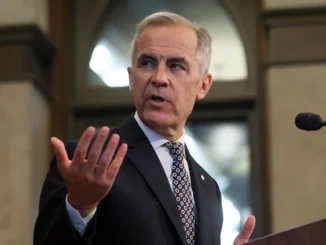
    OTTAWA (TIP): In a dramatic shift in Canada’s foreign policy, Prime Minister Mark Carney declared on Thursday that the long-standing economic and security relationship between Canada and the United States has come to an end. This statement followed US President Donald Trump’s announcement of new auto tariffs that could severely impact Canada’s economy, Politico reported.
    “The old relationship we had with the United States, based on deepening economic integration and tight security and military cooperation, is over,” Carney said on Parliament Hill after breaking from his federal campaign trail to respond to Trump’s latest threats.
    Trump announced on Wednesday that his administration would impose a 25% tariff on auto imports from Canada, the European Union, Japan, and South Korea. He also threatened to introduce additional tariffs targeting other major US trading partners.
    In response, Carney said he would speak with Trump in the coming days but emphasised that any discussions must respect Canada’s sovereignty. “We must fundamentally reimagine our economy. We need to ensure that Canada can succeed in a drastically different world,” he said.
    Carney convened his Cabinet’s committee on Canada-US relations upon returning to Ottawa. Canada has indicated it is prepared to retaliate, but the government has not revealed specific countermeasures. “We are facing a comprehensive and broad negotiation,” Carney said, adding that he would not disclose Canada’s response strategy prematurely.
    Flavio Volpe, president of the Automotive Parts Manufacturers Association of Canada, warned that if the tariffs go forward, both countries’ auto industries could be paralyzed within a week.
    “One day, two days, three days where you hope the president shows you mercy. You’re a publicly traded company whose share price is taking a beating, and you have a fiduciary obligation to shareholders,” Volpe told Politico.
    Ontario Premier Doug Ford spoke with US Commerce Secretary Howard Lutnick on Wednesday about the potential impact on his province.
    According to Ford, Lutnick explained that tariffs on vehicles from Canada and Mexico would be adjusted based on US content. For example, if a car built in Mexico contains 50% American parts, the tariff rate would be reduced to 12.5%, rather than the full 25%.
    “He’s reassuring us that there’ll be no plant closures. My response was Ronald Reagan’s response: Trust but verify,” Ford said. “If they’re opening or closing, it’s going to be up to the CEOs.”
    Ford also confirmed that he spoke with Carney and both agreed that Canada would fully retaliate if necessary. Ottawa has previously stated it could impose up to CAD 155 billion in counter-tariffs on US goods.
    Trump responded on Truth Social early Thursday, warning that if Canada and the EU coordinated against the tariffs, the US would introduce even harsher trade measures. “If the European Union works with Canada in order to do economic harm to the USA, large-scale tariffs, far larger than currently planned, will be placed on them both in order to protect the best friend that each of those two countries has ever had!” Trump wrote. (ANI)

  • Macron says Europe will deploy troops in Ukraine after peace, but some nations hesitate

    PARIS (TIP): France and Britain will continue to forge ahead with plans to deploy troops in Ukraine to secure an eventual peace deal with Russia but only some other nations want to take part, French President Emmanuel Macron said Thursday after a summit of countries that have been mulling the proposal.
    “These reassurance forces are a French-British proposal,” Macron said. “It is desired by Ukraine and noted by several member states that have expressed their willingness to join. It is not unanimous. That is known. Besides, we do not need unanimity to achieve it.”
    Macron said French and British military officials will work with Ukrainian counterparts to decide where the contingents could be deployed in Ukraine.
    “These exchanges between military officials will define the locations, the number of troops so it is credible,” he said. “There will be a reassurance force with several European nations that will deploy.”
    The summit hosting the leaders of nearly 30 countries plus NATO and European Union chiefs comes at a crucial juncture in the more than three-year war, with intensifying diplomatic efforts to broker ceasefires, driven by pressure from US President Donald Trump to end the fighting.
    But the conflict is raging on.
    Before the leaders met in the luxury of the French presidential palace, Russian drone attacks overnight wounded more than 20 people and heavy shelling Thursday afternoon killed one person and knocked out electricity in parts of Kherson, Ukrainian officials said.
    US-brokered agreements this week to safeguard shipping in the Black Sea and last week to halt long-range strikes on energy infrastructure were greeted as a first step toward peace. But Ukraine and Russia have disagreed over the details and accused each other of deal violations, foreshadowing a long and contentious process ahead.
    France and the United Kingdom are pushing a separate initiative to build a coalition of nations willing in one way or another to support the deployment of a European armed force in Ukraine, with the aim of securing any peace deal by dissuading Russia from attacking the country again.
    Some European countries are more comfortable with a potential deployment than others—not least because a big unknown is whether Trump would allow American forces and intelligence agencies to back up any European contingent with air and logistical support and other assistance.
    Building a force big enough to act as a credible deterrent—UK officials have talked about possibly 10,000 to 30,000 troops—would also be a considerable effort for nations that shrank their militaries after the Cold War but are now rearming. (AP)

  • A fire at a winter resort hotel in Turkey kills an Olympic skier and his father

    ISTANBUL (TIP): A fire at a closed ski resort hotel in northwest Turkey killed an Olympic skier and his father Thursday, two months after a blaze at another Turkish winter resort left 79 dead.
    The victims were named as Yahya Usta, president of the Turkish Ski and Snowboard Teachers Association, and his 25-year-old son Berkin, a skier who represented Turkey at the 2022 Beijing Winter Olympic Games. Yahya Usta, his son and wife were staying on the hotel’s fifth floor.
    The Kervansaray Hotel in Uludag, Bursa province, was empty of guests when the fire started at 5:30 a.m. but 12 staff were present, Bursa governor’s office said. Several people suffering smoke inhalation were hospitalized.
    The 30-year-old hotel was shut down in early January when its accommodation permit was cancelled, the governor’s office added.
    TV images showed flames quickly engulfing the six-story hotel, located on the slopes of one of Turkey’s most popular ski destinations, less than a three-hour drive from Istanbul.
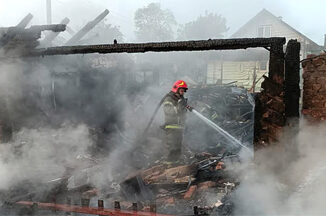
    Fire crews brought the blaze under control within two hours but not before the upper floors had been gutted.
    Bursa Mayor Mustafa Bozbey said the fire began in the cafeteria.
    “I learned with deep sorrow that our national athlete Berkin Usta and his father Yahya Usta lost their lives in the fire that broke out in the hotel in Uludag.” Sports Minister Osman Askin Bak said.
    Prosecutors have launched an investigation into the Bursa fire.
    In January a 12-story ski resort hotel in northwestern Turkey went up in flames during a school holiday, killing 79.
    That fire, at the Grand Kartal hotel in Kartalkaya, in Bolu province’s Koroglu mountains, also started in the hotel’s dining area.
    The state-run Anadolu news agency on Wednesday reported fresh arrests relating to the Bolu fire, taking the number of people in detention awaiting trial to 28. (AP)

  • Indian-origin woman attacked on crowded railway platform in Canada, video goes viral

    Indian-origin woman attacked on crowded railway platform in Canada, video goes viral

    CALGARY (TIP): A disturbing video of an Indian-origin woman being brutally attacked on a crowded railway platform in Calgary, Canada, has gone viral.

    The woman was standing on the south side of the Third Street S.E. CTrain station, located at 310C Seventh Ave. S.E., confirmed the Calgary Police in their X post.

    The footage shows the man grabbing the woman’s jacket and repeatedly shaking her. He then grabbed her water bottle, splashed water on her face, slammed her into the transit shelter walls and demander her to give him her phone.

    He fled the scene without the phone allowing the woman to call the police.

    “Thanks to the support of witnesses in the area & to the swift actions of our members, we were able to make an arrest within 25 minutes of this incident,” says Calgary Police Service District 1 Inspector Jason Bobrowich. The man has been identified as Braydon Joseph James French.

    The video has gone viral and sparked outrage and allegations of racism.

  • Canada intel agency says India, China intend to meddle in poll: ‘Hostile state actors will use AI’

    OTTAWA (TIP): China and India are likely to try to interfere in the Canadian general election on April 28, while Russia and Pakistan have the potential to do so, the country’s spy service said on Monday, March 24 The Canadian Security Intelligence Service made its comments at a time when Ottawa’s relations with both India and China are chilly. Beijing and New Delhi have denied previous allegations of interference.

    Canada was slow in responding to efforts by China and India to interfere in the 2019 and 2021 elections but their outcomes were unaffected by the meddling, an official probe concluded in a final report released in January.

    Vanessa Lloyd, deputy director of operations at CSIS, told a press conference that hostile state actors were increasingly leveraging artificial intelligence to meddle in elections.

    “The PRC (People’s Republic of China) is highly likely to use AI enabled tools to attempt to interfere with Canada’s democratic process in this current election,” she said.

    The Indian diplomatic mission in Ottawa was not immediately available for comment. Russia and Pakistan could potentially conduct foreign interference activities against Canada, Lloyd added.

    “It’s often very difficult to establish a direct link between foreign interference activities and election results …

    Nevertheless, threat activities can erode public trust in the integrity of Canada’s democratic processes and institutions,” she said.

    Meanwhile, quoting unnamed sources, The Globe and Mail alleged Tuesday, March 25, that agents of India and their proxies meddled in the 2022 election of Pierre Poilievre, a Conservative Party leader.

    Quoting a source with “top-secret clearance”, it said that the CSIS learned that Indian agents were involved in raising money and organizing within the South Asian community for Poilievre during the leadership race, which he won.

    The relations between India and Canada plummeted to a new low after former Canadian prime minister Justin Trudeau alleged in September 2023 that India was behind the killing of Khalistani leader Hardeep Singh Nijjar.

  • India takes center stage ahead of Canada’s federal elections on April 28

    India takes center stage ahead of Canada’s federal elections on April 28

    By Raveen Thukral

    TORONTO (TIP): With federal elections in Canada scheduled for April 28, the intersection of domestic politics and Indian influence is once again at the forefront. Recent controversies surrounding Chandra Arya, an Indian-origin MP from Nepean, and Conservative Party leader Pierre Poilievre highlight the complex dynamics of Canada’s relations with India, diaspora politics, and national security concerns.

    Chandra Arya’s political trajectory has been notably turbulent in 2025. After announcing his candidacy for the Liberal Party leadership following Justin Trudeau’s decision to step down, Arya faced rejection from the party’s election committee. Citing Section 4(c)iii of the Liberal Party’s national leadership rules, the committee deemed him “manifestly unfit for the office of Leader of the Party.” Though specific reasons were not disclosed, speculations pointed towards his outspoken stance against Khalistani extremism, and his perceived connections with India and Prime Minister Narendra Modi. Arya’s subsequent removal from candidacy for re-election in Nepean further fueled debates about the party’s internal policies and its handling of sensitive international affiliations.

    Arya, who has represented the Nepean riding in Ottawa since 2015, suffered another setback earlier this month when his nomination to re-run from the riding was revoked. He shared this information on social media along with the letter he had received from the Liberal Party’s national campaign director, Andrew Bevan. While the party has again given no explanation for rejecting his re-run, it has been widely speculated that this time around, too, he has been ‘axed’ for his alleged ties with India and his vocal stand against Khalistani sympathizers. This has been reported by several local newspapers though Arya, in a statement to The Globe and Mail firmly denied any improper influence from India or a special relationship with the Modi government.

    To quote Arya, “As an MP, I have engaged with numerous diplomats and heads of government, both in Canada and internationally. Not once have I sought – nor been required to seek – permission from the government to do so.” He also maintained that no federal government official had raised concerns about his meeting with Modi in August 2024. He termed his meeting with Modi as “personal”.

    Arya attributed the Liberal Party’s decisions to his outspoken stance against Sikh Khalistani extremism and his advocacy for Hindu-Canadian issues, rather than to his ties to India. “The sole point of contention with the Liberal Party has been my outspoken advocacy on issues important to Hindu Canadians, and my firm stance against Khalistani extremism,” he said.

    In parallel developments, Conservative Party leader Poilievre is also once again feeling the heat because of allegations of Indian interference in his election as the party leader. Though these allegations had first surfaced last year, they are back in the news ahead of the approaching elections. According to reports in the Canadian media, Canadian Security Intelligence Service (CSIS) found that “Indian agents and their proxies” were involved in raising money and organizing support within the community for Poilievre’s campaign. It was also alleged that Indian agents had attempted to undermine Poilievre’s rival, Patrick Brown, who was disqualified from the race in July 2022 over alleged financial irregularities.

    On his part, Poilievre has maintained that he won the leadership “fair and square”. Only a day ago, he reiterated his stance as questions were raised on his refusal to obtain a national security clearance. The clearance prevents CSIS from briefing him directly on the interference allegations. Poilievre has defended his decision on grounds that the security clearance would limit his ability to speak freely and hold the government accountable on various issues.

    These two controversies underscore the delicate balance between domestic politics and international influences, particularly Canada’s relations with India. The allegations and political maneuverings not only highlight the complexities of diaspora dynamics and national security but also raise significant questions about party transparency and accountability. The ball eventually falls in the court of the voters, who will play a critical role in determining how these issues shape Canada’s political landscape and its approach to foreign relations in general and India in particular in the years to come.
    (Source: TNS)

  • Will Canada’s federal polls in April end the era of minority governments?

    Will Canada’s federal polls in April end the era of minority governments?

    By Prabhjot Singh

    TORONTO (TIP): After Justin Trudeau decided to step down as leader of the ruling (though minority) Liberal Party and Prime Minister, Canada decided to go for a snap poll. On the recommendation of Mark Carney, the Governor-General ordered the next federal elections to be held on April 28 in a bid to end the impasse of minority governments in the country.
    Canada already had 13 such minority governments in a little more than the last 100 years. The incumbent Liberal government, incidentally, had the longest tenure in office. In the current centennial, it was Paul Martin (Liberals), who presided over a minority government from 2004 to 2006, followed by another minority government between 2006 and 2008, led this time by the Conservative leader Stephen Harper. Stephen Harper headed his second minority government between 2008 and 2011. Since 2019, the present minority Liberal government has been in office.
    Besides fighting a tough “tariff” war with its big brother and largest trade partner, the US, Canada is witnessing an interesting ideological war that will determine its political future. The new Prime Minister, Mark, faces the arduous task of leading the Liberals in the battle of political survival with the Conservatives breathing heavily down their necks. Though in the outgoing House of Commons, the Liberals, after earning the distinction of heading the longest-serving minority government in the country, had 153 members, it now wants to browse the majority target of 170, in the House of 337.
    Conservatives (120), Bloc Québécois (33), NDP (25), Independent (4), and Green (2) were the other major players in the dissolved House. After taking over from where Justin Trudeau left, Mark Carney, a financial wizard, promised, set upon himself the arduous task of restructuring the Canadian economy that has been on the brink ever since Donald Trump, after taking command for the second innings, rolling out new policies and “tariff” plans that are proving detrimental to Canadia in general and its manufacturers and exporters in particular.
    After wresting the initial advantage that saw a steep rise in its popularity in opinion polls, the Liberals have started showing signs of cracking under pressure from the Conservatives, and in their desperation to surge ahead, have unleashed a powerful campaign attacking Mark Carney for shirking to make his asset disclosures and other issues. Mark Carney has also made some announcements to woo the voters, including relief for domestic consumers on the carbon fund, besides a slew of other benefits. The battle lines have been drawn for a rare battle of the ballot in April. Technically speaking, the election becomes due in October. The new Prime Minister, facing his first-ever electoral test, has decided to contest from Nepean in Ottawa after revoking the candidature of sitting MP Chandra Arya, who was incidentally among the first to declare his candidature and get rejected in the Liberal Party leadership race. Now, he has lost his riding to the new Prime Minister. Ruby Dhalla, like Chandra Arya, who was also a candidate in the Liberal Leadership run, came out in support of Chandra Arya after the revocation of his candidature.
    Ruby Dhalla, a former Liberal MP, and Chandra Arya were the only candidates of Indian origin in the run to become Canadian Prime Minister. Both were disqualified on technical grounds by the election and expense committees of the Liberal Party. Ruby Dhalla’s protest was rejected as she accused the party leadership of creating a “sham” for electing a new leader, as she maintained that it was all planned for the “coronation of Mark Carney”. What Canadian voters have to say about their political future will be known by the evening of April 28 when results of the next federal elections start pouring in.
    (Prabhjot Singh is a Toronto-based senior journalist. He can be reached at Prabhjot416@gmail.com)

  • Turkey on edge as protests over Istanbul mayor Ekrem Imamoglu’s arrest enter third day

    Turkey on edge as protests over Istanbul mayor Ekrem Imamoglu’s arrest enter third day

    ISTANBUL (TIP): Turkey braced for a third day of protests on Friday, as anger simmered over Istanbul Mayor Ekrem Imamoglu’s arrest in a graft and terror probe and ministers fired warnings over the mass rallies. The popular Imamoglu, President Recep Tayyip Erdogan’s main political rival, was arrested at dawn on Wednesday, just days before he was to be formally named the candidate for the main opposition CHP party in the 2028 presidential election. His party has denounced the detention as a “coup” and has vowed to keep up the demonstrations.
    Huge crowds have defied a ban on demonstrations and have gathered outside City Hall for two nights running.
    So far, police have largely shown restraint in handling the protests but on Thursday night, they fired rubber bullets and teargas as they scuffled with students near City Hall.
    In Ankara, riot police used pepper gas, rubber bullets and water canon to disperse large crowds of protesters who rallied in the Turkish capital, an AFP correspondent said. In a post on X, Interior Minister Ali Yerlikaya said 53 people had so far been arrested in the protests, which began in Istanbul but have since spread to at least 29 of Turkey’s 81 provinces, according to an AFP count.
    He said 16 police officers had been injured, and another 54 people detained for online posts deemed as “incitement to hatred”. CHP party leader Ozgur Ozel warned Erdogan on Thursday that the opposition planned to keep up its protests, saying: “We will be on the streets from now on. Be afraid of us, the streets are ours, the squares are ours.” (AFP)

  • New Canadian leader says Trump will want trade talks as Americans suffer from trade war

    New Canadian leader says Trump will want trade talks as Americans suffer from trade war

    TORONTO (TIP): Canadian Prime Minister Mark Carney said Friday U.S. President Donald Trump will ultimately respect Canada’s sovereignty and be ready for comprehensive trade talks because Americans are going to suffer from Trump’s trade war. Carney said talks with Trump will not happen “until we get the respect we deserve as a sovereign nation. By the way, this is not a high bar.”
    Trump kept up his near-daily attacks on Canada on Friday, repeating that the country should be the 51st state and that the U.S. keeps Canada “afloat.”
    “When I say they should be a state, I mean that,” the American president said.
    Carney met with Canada’s provincial leaders at the Canadian War Museum in Ottawa, where he announced relief packages for workers and businesses hurt by the trade war and announced moves to expedite resource projects. Carney, sworn in last Friday, still hasn’t had a phone call with Trump. Trump mocked Carney’s predecessor, Justin Trudeau, by calling him Governor Trudeau, but he has not yet mentioned Carney’s name.
    “In the end, Americans are going to lose from American trade action and that’s one of the reasons I am confident that there will be that discussion with the appropriate amount of respect and the breadth,” Carney said. “I am ready for it anytime they are ready.”
    Trump put 25% tariffs on Canada’s steel and aluminum and is threatening sweeping tariffs on all Canadian products as well as all of America’s trading partners on April 2.
    Carney became Prime Minister after winning a Liberal Party leadership race triggered by Trudeau’s decision to step down earlier this year. He’s expected to trigger the process for early parliamentary elections this Sunday, with a vote expected before April 28.
    The governing Liberals appeared poised for a historic election defeat this year until Trump declared a trade war and upended Canadian politics.
    The almost daily attacks on Canada’s sovereignty have infuriated Canadians, who are canceling trips south of the border and avoiding buying American goods when they can. The surge in Canadian nationalism has bolstered Liberal poll numbers.
    Carney said the premiers of Canada’s provinces had agreed to work on a plan to develop a national trade and energy corridor in an effort to diversify trade.
    He said that could mean a oil pipeline from oil-rich Alberta to Eastern Canada. Quebec has previously opposed a pipeline, but Premier François Legault now says opinions are changing because of Trump’s threats. Carney said Quebec uses about 350,000 barrels of oil daily and 70% of that comes from the U.S.
    (AP)

  • North Korean leader Kim Jong Un backs Russia’s war in Ukraine in talks with top official

    North Korean leader Kim Jong Un backs Russia’s war in Ukraine in talks with top official

    SEOUL (TIP): North Korean leader Kim Jong Un expressed his unwavering support for Russia’s war in Ukraine during a meeting with a top Russian security official in Pyongyang, North Korean state media said Saturday. Friday’s meeting between Kim and Sergei Shoigu, Russia’s Security Council secretary, followed a South Korean intelligence assessment in late February that North Korea had likely sent additional troops to Russia after its forces suffered heavy casualties fighting in the Russian-Ukraine war.
    Ukraine and Russia agreed in principle Wednesday to a limited ceasefire after US President Donald Trump spoke with the two countries’ leaders, though it remains to be seen when it might take effect and what targets would be off-limits.
    North Korean and Russian state media said Kim and Shoigu discussed various issues, including Russia’s war in Ukraine, Moscow’s dialogues with the Trump administration and the security situation on the Korean Peninsula.
    They reaffirmed the willingness of the two countries leaders to unconditionally uphold a major mutual defense treaty reached at a summit last year in Pyongyang, which pledges mutual assistance if either country faces aggression, according to the reports.
    North Korea’s official Korean Central News Agency said Kim during the meeting said his government will invariably support Russia in the struggle for defending national sovereignty, territorial integrity and security interests. Shoigu conveyed a message from Russian President Vladimir Putin, who extended his greetings to Kim and vowed to give utmost attention to implementing agreements reached in their recent summits.
    He expressed gratitude for North Korea’s solidarity with Russia’s position on all critical geopolitical issues, particularly on the Ukrainian issue, according to his televised comments.
    North Korean and Russia media didn’t say whether any new agreements were reached before Shoigu departed Pyongyang later on Friday.
    North Korea has been supplying a vast amount of conventional weapons to Russia, and last fall it sent about 10,000 to 12,000 troops to Russia as well, according to US, South Korean and Ukraine intelligence officials.
    In its February 27 statement, South Korea’s National Intelligence Service said it was trying to determine exactly how many more troops North Korea has deployed to Russia.
    South Korean media put the number of newly deployed North Korean soldiers at about 1,000 to 3,000 South Korea, the US and others suspect North Korea is receiving economic and military assistance from Russia in return for providing weapons and troops. (AP)

  • Pope Francis advisers say he’ll recover from pneumonia and a ‘new stage’ is opening for him

    ROME (TIP): Pope Francis is recovering well from pneumonia and a “new stage” in his pontificate is opening, two of his closest advisers said Friday, offering notes of optimism as the 88-year-old pontiff hit the five-week mark in his hospitalization. Archbishop Edgar Peña Parra told The Associated Press that he had found Francis in good humor and serene during the three times he has visited the pope at the Gemelli hospital in Rome. Peña Parra, who is the Vatican chief of staff, visited Francis on Feb. 24, March 2 and March 9 along with the Vatican secretary of state, Cardinal Pietro Parolin, the lone Vatican officials who have called on him aside from his personal secretaries.
    “The pope will recover,” Peña Parra said on the sidelines of a book launch. “The pope is recovering well. The doctors say that he needs some time, but it’s going well progressively.”
    “I found him well, serene, in good humor, and — just like him — tough with the desire to go forward,” he said.
    The Vatican press office reported Friday that Francis’ overall condition remained stable, with slight improvements as he continues respiratory and physical physiotherapy. He was continuing to reduce his reliance on high-flow supplemental oxygen he has needed to breathe during the day and no longer needs the mechanical ventilation mask at night.
    In other comments Friday, another top friend and ally of the pope, Cardinal Victor Manuel Fernández, said that “a new stage” was opening in Francis’ 12-year pontificate and that he expects some surprises from the pontiff when he’s released.
    Fernández, the Argentine theologian who Francis brought in as the Vatican’s doctrine chief, said that he had been in touch with Francis since his Feb. 14 hospitalization and was heartened that he had stabilized. He provided no time frame on when Francis might be released, but ruled out any thought that he might resign.
    He said that he understood that Francis was responding well to treatment, but that doctors were keeping him at the hospital “to be 100%.” He said that Francis needed rehabilitation therapy to help him regain strength to speak after so many weeks on noninvasive mechanical ventilation and supplemental oxygen.
    Fernández revealed that Francis had resisted going to the hospital when his bronchitis worsened, and only agreed to go after people close to him threatened to quit if he didn’t.
    “I don’t know what swear words they used (to tell him) you have to go there, otherwise we go home and end our relationship here,” he said. (AP)

  • As Israeli bombs fell, wounded children overwhelmed this Gaza hospital. Dozens died

    As Israeli bombs fell, wounded children overwhelmed this Gaza hospital. Dozens died

    CAIRO (TIP): When the first explosions in Gaza this week started around 1:30 a.m., a visiting British doctor went to the balcony of a hospital in Khan Younis and watched the streaks of missiles light up the night before pounding the city. A Palestinian surgeon next to him gasped, “Oh no. Oh no.” After two months of ceasefire, the horror of Israeli bombardment was back. The veteran surgeon told the visiting doctor, Sakib Rokafiya, they’d better head to the emergency ward.
    Torn bodies soon streamed in, carried by ambulances, donkey carts or in the arms of terrified relatives. What stunned doctors was the number of children.
    “Just child after child, young patient after young patient,” Rokafiya said. “The vast, vast majority were women, children, the elderly.”
    This was the start of a chaotic 24 hours at Nasser Hospital, the largest hospital in southern Gaza. Israel shattered the ceasefire in place since mid-January with a surprise barrage that began early Tuesday and was meant to pressure Hamas into releasing more hostages and accepting changes in the truce’s terms. It turned into one of the deadliest days in the 17-month war.
    The aerial attacks killed 409 people across Gaza, including 173 children and 88 women, and hundreds more were wounded, according to the territory’s Health Ministry, whose count does not differentiate between militants and civilians.
    More than 300 casualties flooded into Nasser Hospital. Like other medical facilities around Gaza, it had been damaged by Israeli raids and strikes throughout the war, leaving it without key equipment. It was also running short on antibiotics and other essentials. On March 2, when the first, six-week phase of the ceasefire technically expired, Israel blocked entry of medicine, food and other supplies to Gaza.
    Nasser Hospital’s emergency ward filled with wounded, in a scene described to The Associated Press by Rokafiya and Tanya Haj-Hassan, an American pediatrician — both volunteers with the charity Medical Aid for Palestinians. Wounded came from a tent camp sheltering displaced that missiles set ablaze and from homes struck in Khan Younis and Rafah, further south. (AP)

  • First plane lands at London’s Heathrow since a fire cut power to Europe’s busiest airport

    LONDON (TIP): The first plane landed at Heathrow Airport late Friday, about 18 hours after an inferno at an electrical substation caused a power outage that shuttered Europe’s busiest air travel hub. The British Airways jet touched down just before sunset after Heathrow lifted its closure order that disrupted global travel for hundreds of thousands of passengers.
    At least 1,350 flights to and from Heathrow were affected, flight tracking service FlightRadar 24 said, and the impact was likely to last several days as passengers try to reschedule their travel and airlines work to reposition aircraft and crews.
    Authorities do not know what caused the fire but so far found have no evidence it was suspicious.
    Residents in west London described hearing a large explosion, followed by a fireball and clouds of smoke, when the blaze ripped through the electrical substation near the airport.
    About 120 flights were in the air when the closure was announced, with some turned around and others diverted to Gatwick Airport outside London, Charles de Gaulle Airport near Paris or Ireland’s Shannon Airport, tracking services showed.
    Lawrence Hayes was most of the way to London from New York when Virgin Atlantic announced the plane was being diverted to Glasgow.
    “It was a red-eye flight and I’d already had a full day, so I don’t even know how long I’ve been up for,” Hayes told the BBC as he was getting off the plane in Scotland. “Luckily I managed to get hold of my wife and she’s kindly booked me a train ticket to get back to Euston, but it’s going to be an incredibly long day.”
    Heathrow is one of the world’s busiest airports for international travel. It had its busiest January on record earlier this year, with more than 6.3 million passengers, up more than 5% from the same period last year.
    Still, the disruption Friday fell short of the one caused by the 2010 eruption of Iceland’s Eyjafjallajokull volcano, which spewed clouds of ash into the atmosphere and created trans-Atlantic air travel chaos for months.
    Unclear what caused the fire but foul play isn’t suspected
    It was too early to determine what sparked the huge blaze about 2 miles (3 kilometers) from the airport, but there’s “no suggestion” of foul play, Energy Secretary Ed Miliband said.
    The Metropolitan Police force said counterterrorism detectives were leading the investigation because of their ability to find the cause quickly and because of the location of the electrical substation fire and its impact on critical national infrastructure. (AP)