Norwegian (TIP) : A Norwegian student in his 20s has been arrested on suspicion of spying for Russia and Iran while working as a security guard at the US Embassy in Oslo, Norwegian authorities announced Friday. The man, whose identity has not been disclosed, was detained at his home on Wednesday. Norway’s domestic intelligence agency, PST, stated that he is accused of engaging in intelligence-related activities that could harm national security.
According to a court order cited by Norwegian broadcaster NRK, evidence includes records of his communications with a contact allegedly guiding his espionage activities. The man reportedly admitted to collecting and sharing information with Russian and Iranian authorities but denies the espionage charges, his attorney, John Christian Elden, confirmed.
“He is accused of obtaining information that could jeopardize the security of third countries,” Elden said.
The suspect co-runs a security company with a dual national of Norway and an Eastern European country. Authorities are now reviewing the company’s operating license.
The arrested man is also studying security and preparedness at Norway’s Arctic University (UiT), marking the second espionage case linked to the university. In 2022, a UiT guest researcher arrested for espionage was later revealed to be a Russian intelligence officer posing as a Brazilian academic.
Norway, which shares a 198-kilometer border with Russia, has tightened restrictions on Russian nationals since the war in Ukraine began in 2022. The government is considering building a border fence to further bolster security.
Investigations into the current case are ongoing, with PST confirming no additional suspects at this time.
(With inputs from AP)
Tag: World News
-

Norwegian student arrested on espionage charges for Russia and Iran
-
Putin ‘gifts’ lion, cockatoos and brown bears to North Korea zoo
Pyongyang (TIP): Russian President Vladimir Putin has gifted over 70 animals, including an African lion, brown bears, and cockatoos, to North Korea, highlighting the growing ties between the two nations. This unusual diplomatic gesture symbolises the strengthening relationship between Russia and North Korea in recent months.
The animals, which also included two yaks, were transported from the Moscow Zoo to the Pyongyang Central Zoo by air, accompanied by a team of veterinarians. The animals transferred were “a gift from Vladimir Putin to the Korean people”, the Russian Ministry of Natural Resources and Environment said.
The gift comes weeks after the US and South Korea revealed that North Korea had sent thousands of troops to fight alongside Russia in Ukraine.
Russian Minister of Natural Resources, Alexander Kozlov, who oversaw the relocation of the animals, said, “Cooperation between Russia and the Democratic People’s Republic of Korea is not only about economics, trade and industry. It also encompasses numerous nature conservation projects. Now, the friendship between the Moscow and Pyongyang Zoos has been added to this list.”
In addition to the yaks, the animals sent to North Korea included an African lion, two brown bears, five white cockatoos, 25 species of pheasants, and 40 mandarin ducks, all destined for the Pyongyang Central Zoo.
Svetlana Akulova, General Director of Moscow Zoo, noted that the animal exchange is part of a broader effort to foster scientific and educational cooperation between the two countries. “With the support of the Moscow government, we plan to expand collaboration with our North Korean colleagues on joint scientific and educational initiatives, as well as the exchange of expertise and information on caring for rare species,” Akulova stated.
This exchange is not unprecedented. In April, Russia sent over 40 animals, including eagles, parrots, and pythons, to Pyongyang Zoo, according to the Russian news agency TASS. In return, North Korean leader Kim Jong Un gifted Putin two rare Pungsan hunting dogs in June 2024, ahead of Putin’s planned visit to Pyongyang.
In June, Russia and North Korea revived a Cold War-era mutual defence pact. According to the Pentagon, over 10,000 North Korean troops have since been deployed to Russia’s Kursk region, where intense battles with Ukrainian forces have been ongoing since August, reported The New York Times. (Reuters) -
Protests erupt in Paris over pro-Israel gala organised by far-right figures
Paris (TIP): Protests erupted in Paris on November 13 against a controversial gala organised by far-right figures in support of Israel. The event, intended to raise funds for the Israeli military, included Israeli Finance Minister Bezalel Smotrich among its invited guests.
The demonstrations came on the eve of a high-stakes soccer match at France’s national stadium against the Israeli national team, overshadowed by tensions around the wars in the Middle East. Authorities in Paris announced that more than 4,000 police officers and 1,600 stadium staff will be deployed for the game.
Smotrich, a vocal advocate of Israeli settlements, had been expected to attend Wednesday’s gala, dubbed “Israel is Forever,” which was planned by an association of the same name. The group’s stated goal is to “mobilize French-speaking Zionist forces.”
After days of growing criticism of the event, Smotrich’s office confirmed Wednesday that the minister would not travel to Paris to participate.
But the invitation to Smotrich drew sharp criticism from local associations, unions and left-wing political parties, prompting two protests in the French capital. The minister, a hard-line settler leader, has been accused of inflaming tensions in the West Bank and drew international condemnations this week by saying he hopes the election of Donald Trump will clear the way for Israeli annexation of the West Bank — a step that would extinguish Palestinian statehood dreams.
The French Foreign Ministry called Smotrich’s remarks “contrary to international law” and counterproductive to efforts to reduce regional tensions. “France reiterates its commitment to the implementation of the two-state solution, with Israel and Palestine living side by side in peace and security, which is the only prospect for a just and lasting settlement of the Israeli-Palestinian conflict,” the ministry said in a statement.
Critics also pointed at Nili Kupfer-Naouri, president of the “Israel is Forever” association, who sparked outrage in 2023, after the Israel-Hamas war started, when she tweeted that “no civilian in Gaza was innocent.”
On Wednesday night, several hundred protesters marched through central Paris, denouncing the event as a “gala of hatred and shame.”
“Imagine if an association were hosting a gala for Hezbollah or Hamas — there’s no way the police would allow that,” said Melkir Saib, a 30-year-old protester. (AP) -

New Zealand MP performs Haka dance in Parliament in protest over Treaty Bill
Sydney (TIP): New Zealand’s parliament was briefly suspended on November 14 after a powerful haka, performed by Maori MPs, disrupted a vote on a controversial bill seeking to reinterpret the country’s 184-year-old Treaty of Waitangi. The Treaty, signed in 1840 between the British Crown and over 500 Maori chiefs, established the terms for governance and the relationship between the two parties. Its principles continue to shape legislation and policy in New Zealand today. Over the years, court rulings and a separate Maori tribunal have progressively expanded Maori rights. However, some critics argue that these developments have resulted in discrimination against non-Indigenous citizens.
The ACT New Zealand party, a junior partner in the ruling centre-right coalition government, introduced a bill last week that seeks to enshrine a narrower interpretation of the Treaty’s clauses into law.
As parliamentarians gathered for a preliminary vote on the bill, Te Pati Maori MPs rose to perform a haka—a traditional Maori war dance famously associated with New Zealand’s rugby team. The dramatic protest, intended to signal opposition to the legislation, led to a brief suspension of parliamentary proceedings as the chanting and shouting from the MPs and spectators in the public gallery drowned out the proceedings.
ACT New Zealand leader David Seymour responded by accusing opponents of the bill of trying to “stir up” fear and division. “My mission is to empower every person,” he said, defending the bill.
However, the legislation has been widely condemned by Maori leaders and their supporters, who view it as a threat to the rights of the country’s Indigenous people, who make up around 20% of New Zealand’s population of 5.3 million.
In protest, hundreds of demonstrators have set out on a nine-day hikoi (march) from New Zealand’s north to the capital, Wellington. The marchers have staged rallies in towns and cities along the way and are expected to arrive in Wellington on Tuesday, where tens of thousands are anticipated to join a major rally.
While the bill passed its first reading, it is unlikely to proceed further. Coalition partners, the National Party and New Zealand First, have only supported the bill through its initial reading as part of the coalition agreement. Both parties have made it clear that they will not back the legislation in subsequent readings, making it almost certain the bill will fail. (Reuters) -

NATO, EU press China to help stop North Korea’s support for war on Ukraine
Brussels (TIP): NATO and the European Union are intensifying efforts to persuade China to help curb North Korea’s military support for Russia in its war against Ukraine. According to US, South Korean, and Ukrainian intelligence assessments, up to 12,000 North Korean troops have been deployed to Russia’s Kursk border region to assist in repelling Ukrainian forces. In exchange, NATO claims that Russia is providing missile technology to North Korea.
As Russia continues to exploit its military advantage in Ukraine, the United States is urging its allies to increase political pressure on China to rein in North Korea. Pyongyang and Beijing have maintained diplomatic ties since 1949, and their relationship is often described as “as close as lips and teeth.”
One potential lever of influence is the threat of increased Western involvement in China’s neighboring Asia-Pacific region. Last week, the EU strengthened its position by securing new security pacts with regional powers Japan and South Korea.
In an opinion piece for Politico last week, NATO Secretary-General Jens Stoltenberg stated, “China bears particular responsibility here, to use its influence in Pyongyang and Moscow to ensure they cease these actions. Beijing cannot pretend to promote peace while turning a blind eye to increasing aggression.” On a visit to Latvia on Thursday, Stoltenberg warned that the exchange of missile technology poses “a direct threat, not only to Europe, but also to Japan, South Korea, and the US mainland.” Japan, South Korea, Australia, and New Zealand now regularly attend NATO meetings.
After talks with US Secretary of State Antony Blinken on Wednesday, Stoltenberg added, “The Euro-Atlantic and the Indo-Pacific really have to be seen as one theatre, and not as two separate ones. Our security, therefore, now more and more is global, and we have to look at this as a global issue.”
While North Korea and Russia have grown closer in their cooperation, many observers note that China remains hesitant to form a three-way anti-Western alliance with them. Beijing prefers a stable security environment to address its economic challenges and maintain relationships with both Europe and its Asian neighbors.
In a blog published on Thursday, EU foreign policy chief Josep Borrell discussed his recent trip to Japan and South Korea, where North Korea’s troop deployments and assistance to Russia were key topics. “This marks an escalation of the utmost seriousness, which was at the heart of our discussions with the Japanese and South Korean leaders,” Borrell wrote. He also emphasized that the EU’s new security and defense partnerships with Japan and South Korea—its first such agreements outside Europe—signal the EU’s growing role as a global security provider.
Blinken also reaffirmed this week that the Biden administration is determined to provide Ukraine with the aid necessary to continue defending itself against Russia’s invasion in the coming year. “We are committed to sending as much assistance as possible to help hold Russian forces at bay and to strengthen Ukraine’s hand in any potential peace negotiations,” Blinken said. (AP) -
China willing to be partners, friends with US, Chinese envoy says
Shanghai (TIP) : China is eager to strengthen its partnership with the United States, with the country’s ambassador to Washington, Xie Feng, emphasizing the importance of dialogue between the world’s two largest economies.
In a speech delivered in Hong Kong on Friday, Xie sought to ease tensions, stating that China has no intention of surpassing or replacing the United States. The speech, which was addressed to Chinese officials and the U.S. ambassador to China, marked a significant moment in efforts to reset U.S.-China relations.
As the U.S. gears up for Donald Trump’s potential return to the presidency in January, Beijing is looking to recalibrate its relationship with Washington. Trump has pledged to impose tariffs on Chinese imports exceeding 60%, but Chinese officials and businesses are hopeful that his protectionist policies will also alienate U.S. allies in Europe and Asia, potentially opening up opportunities for China to expand its global influence and improve trade relations.
On Friday, Chinese President Xi Jinping also weighed in, calling for a rejection of unilateralism and protectionism in favor of economic globalization. His remarks echo China’s desire for a more cooperative international trade environment. However, some analysts argue that China’s appeal as a counterbalance to a Trump-led United States is not as compelling as it was in 2016, when Trump was first elected. The shifting dynamics of international relations and changing U.S. domestic politics have complicated China’s efforts to position itself as a leader in global trade and diplomacy.
Xie, speaking about the broader Sino-U.S. relationship, emphasized that the partnership is not a zero-sum game. “The two nations have great potential to work together in areas such as trade, agriculture, energy, artificial intelligence, and public health,” he said.
The ambassador stressed the importance of maintaining an open dialogue to address concerns on both sides. “It is entirely possible to bring issues to the table, communicate frankly, and seek solutions on equal footing,” Xie added. One of the major points of contention between the U.S. and China remains Taiwan, which Xie described as the biggest “flashpoint” for potential conflict. China views Taiwan as part of its territory, despite Taiwan’s rejection of this claim and its democratic governance. Xie reiterated Beijing’s firm opposition to what it calls “separatists” in Taiwan, warning that this issue could lead to further tensions between the two nations. (Reuters)
-
British writer wins Booker for space story Orbital
London (TIP): Britain’s Samantha Harvey has won the 2024 Booker Prize for her novel Orbital, a story about a single day aboard the International Space Station, which she wrote during COVID-19 lockdowns.
The novel, Harvey’s fifth, was the top selling book on the shortlist of six finalists and has sold more copies than the past three Booker Prize winners combined, as readers lapped up her depiction of earth’s beauty as seen from space.
Judges of the prize, now in its 55th year, praised her writing for the “intensity of attention to the precious and precarious world”. Past winners of the prestigious Booker, which is open to works of fiction written in English, include Margaret Atwood, Salman Rushdie and Yann Martel. Harvey said she wrote the novel while stuck at home during the pandemic watching footage of the earth in low orbit on her screen. (Reuters)
-
Japanese Princess Yuriko dies at 101
Tokyo (TIP): Japanese Princess Yuriko, the wife of wartime Emperor Hirohito’s brother and the oldest member of the imperial family, has died after her health deteriorated recently, palace officials said. She was 101.
Yuriko died on November 15 at a Tokyo hospital, the Imperial Household Agency said. It did not announce the cause of death, but Japanese media said she died of pneumonia.
Born in 1923 as an aristocrat, Yuriko married Prince Mikasa at 18, the younger brother of Hirohito, months before the start of World War II.
She has recounted living in a shelter with her husband and their daughter after their residence was burned in the US fire bombings of Tokyo in the final months of the war in 1945.
Yuriko raised five children and supported Mikasa’s research into ancient Near Eastern history, while also serving her official duties and taking part in philanthropic activities, including promotion of maternal and child health. She outlived her husband and all three sons. (AP)
-

Sikh Moderates join other South Asian communities in denouncing incidents of violence, and intimidation outside places of worship in Canada


By Prabhjot Singh SURREY, BC (TIP): Leaders of various moderate Sikh bodies joined by leaders of other South Asian communities, including Hindus, denounced incidents of violence, intimidation and coercion that marred the post-Diwali celebrations in Surrey, British Columbia.
Convened by Khalsa Dewan Society, the meeting was attended by representatives of more than 20 organizations, including the Surrey Hindu Sabha, Ramgarhia Society, Sri Guru Ravi Dass Sabha, and Lakshmi Narayan Temple of Surrey where most of the speakers assailed a group of “disgruntled elements” who had been trying to hold the entire South Asian community in general and the Sikhs in particular to ransom with their anti-secessionist agenda.
The organizers claimed an overwhelming response to the meeting held at a banquet hall where most of the resolutions were adopted by raising hands.
Leaders of various moderate Sikh organizations held that “antisocial and anti-national elements” had been using coercive means not only to gain control of Sikh gurdwaras by threatening and intimidating their office-bearers but were also interfering in the Sikh religious affairs by pretending to be “Sikh reformists”.
Joginder Singh Sunner, a spokesperson of the Khalsa Dewan Society, said that the Society had sought the court’s intervention in creating a buffer zone around the Sikh temple where the Indian. The consulate in Vancouver held a pensioners camp. Nearly 350 old people, some of them handicapped, were issued “life certificates” to ensure that they would continue to withdraw their pension from India.


They gathered to denounce incidents of violence outside places of worship, and to appeal for communal harmony. He said that such camps have been held regularly for the last 20 years inside places of worship, including Sikh gurdwaras and Hindu temples, to facilitate old and infirm Indian pensioners who cannot go downtown to get Life certificates issued by the Indian Consulate.
The second camp, he said, would be held in the third week of this month.
At the meeting attended by leaders of various religious and social organizations, the Speakers assailed the action of the “disgruntled elements” who had allegedly intervened and disrupted the soliciting of inter-caste marriages, abusing and threatening old and infirm people, forcing law-abiding and peaceful members of the South Asian community to boycott the Indian Consulate, besides creating ruckus during the conduct of Nagar Kirtan processions.
Sunner said the speakers were unanimous in their opinion to fight a united fight against these “disgruntled elements” and give a befitting reply.
Kulwant Singh Dhaliwal, Secretary of the Khalsa Dewan Society, while explaining the agenda of calling the meeting, said that activities of the “disgruntled elements” were increasingly becoming unbearable. “They are teasing me as Kashmiri Lal Dhaliwal,” he said maintaining that “our patience has exhausted. We cannot take it anymore. We have to put up a united and strong fight to defeat their nefarious designs,” he said.
Kuldip Singh Thandi, President of the Society, who moved a resolution to fight these elements unitedly, received an overwhelming response from the audience. Attendees raised their hands in approval. Another leader of the Society, Kuldip Singh Dhessi, endorsed the move of Kuldip Singh Thandi. A call was also given to members of the audience to become members of the Surrey Delta Gurdwara so that these elements were thrown out.
Preet Singh Sandhu recalled how in 1998 the community had joined hands to throw out such elements from the management of Surrey Delta gurdwara.
Vijay Chaturvedi of the North America Hindu Association said that as a representative of the Kashmiri Brahmin Association, he always advocated and supported the Hindu-Sikh brotherhood as the Kashmiri Hindus owe their existence to the great sacrifice made by the ninth Sikh guru, Sri Guru Teg Bahadur.
Harjit Singh Sohpal of Sri Guru Ravi Dass Sabha of Vancouver also stressed the need for Punjabi and Sikh brotherhood. Others who addressed the meeting including Parshottam Goel of Lakshmi Narayan Temple, Malkiat Singh Dhami, ex-President, Jaswinder Singh Hayer, Darshan Mahal, Gurdev Singh Brar, Gurbaksh Singh Baghi Sanghera, Giani Harkirat Singh, Bill Basra Manjit Singh Panesar and Maninder Singh Gill.
(Prabhjot Singh, is a Toronto-based award-winning independent journalist, He was celebrated by AIPS, the international body of sports journalists, for covering ten Olympics at its centennial celebrations held at UNESCO Centre in Paris during the 2024 Olympic Games. Besides, he has written extensively about business and the financial markets, the health industry, the public and private sectors, and aviation. He has worked as a political reporter besides covering Sikh and Punjab politics. He is particularly interested in Indian Diaspora and Sikh Diaspora in particular. His work has also appeared in various international and national newspapers, magazines and journals. Read his articles at www.probingeye.com,
https://www.facebook.com/PrabhjotSingh.Journalist/?ref=pages_you_manage
He can be reached at prabhjot416@gmail.com) -

Violence at Hindu Temple: Brampton Mayor wants a Bill to prohibit protests outside places of worship as Ruby Sahota MP raises it in the House of Commons

By Prabhjot Singh BRAMPTON (TIP): Echo of the violent incidents outside Brampton Hindu Temple and Malton Singh Sabha Gurdwara was heard in the House of Commons when it resumed its sitting on Monday, November 4, as Mayor of Brampton Patrick Brown announced to bring in a Bill in his City Council to prohibit protests outside places of worship.
Liberal MP Ruby Sahota, who raised the issue in the House of Commons, expressed her deep concern at the incidents and held that “everyone in our community deserves to feel safe and respected in his or her place of worship.” She took to “X” and said: ”I am troubled to hear about the recent acts of violence outside the Hindu Sabha temple in Brampton. Everyone in our community deserves to feel safe and respected in their places of worship. There is no room for such actions in our society and I strongly denounce this violence.
“I have spoken with Police Chief Nishan and have confidence that Peel Regional Police will act swiftly to protect our community and hold those responsible to account.”
Speaking in the House of Commons, she said that she went to Hindu temples and Sikh gurdwaras to join members of the Indo-Canadian community in celebrating Diwali. But incidents of violence, first outside the Hindu Temple, and then outside Malton Gurdwara, had shaken her.
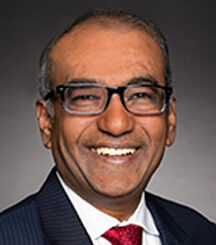
She also assailed the official Opposition Party, the Conservatives, for cancelling the Diwali event on Parliament Hill. She complimented the ruling Liberal party caucus for holding the Diwali celebrations on the Hill on Monday. The event, she said, was largely attended. Chandra Arya, also of the ruling Liberal, the main organizer of the Diwali celebrations on Parliament Hill, was also on X and wrote: “I was pleased to host Diwali on Parliament Hill. We also used the opportunity to raise the flag of the Hindu sacred symbol Aum on Parliament Hill. Great turnout with participants from Ottawa, the Greater Toronto Area, Montreal and many other places. The event was supported by 67 Hindu and Indo-Canadian organizations across Canada. The added pleasure this year was Diwali is also part of the Hindu Heritage Month across Canada. My sincere thanks to all those who attended, volunteers and artists of excellent cultural performances at the event.”
Meanwhile, Mayor of Brampton Patrick Brown said that he plans to bring a bill before Brampton Council to prohibit protests at places of worship. “I would also request Mississauga Council to enact a similar law,” he said.
Patrick Brown was on “X” saying “I will be bringing a motion to our Brampton City Council which would look at prohibiting protests at places of worship. Places of worship should be safe spaces that are free of violence and intimidation. I have asked our City solicitor to look into the legality of such a by-law for our next scheduled meeting of the City Council.”
Meanwhile, the Hindu Maha Sabha had given a call for holding a peaceful protest outside the Brampton temple to condemn the incidents of violence that took place on Sunday, November 3.
-
Pope’s child protection board urges transparency from Vatican sex abuse office and compensation
Vatican (TIP): Pope Francis’ child protection board called on October 27 for victims of clergy sexual abuse to have greater access to information about their cases and the right to compensation, in the first-ever global assessment of the Catholic Church’s efforts to address the crisis.
The Pontifical Commission for the Protection of Minors issued a series of findings and recommendations in its pilot annual report, zeroing in on the church in a dozen countries, two religious orders and two Vatican offices with detailed analysis. In its most critical note, it called for greater transparency from the Vatican’s sex abuse office, the Dicastery for the Doctrine of the Faith. It said the office’s slow processing of cases and secrecy were retraumatizing to victims, and its refusal to publish statistics or its own jurisprudence continues “to foment distrust among the faithful, especially the victim/survivor community.” Cardinal Sean O’Malley, the commission’s head, acknowledged the church’s failure to victims in the past and said the commission would work to continue to address “the unjust suffering that you have endured.”
“Nothing we do will ever be enough to fully repair what has happened,” O’Malley told a news conference. “But we hope that this report and those that will come, compiled with the help of victims and survivors at the center, will help to ensure the firm commitment that these events never happen again in the church.”
The 50-page report marks something of a milestone for the commission, which in its 10-year existence has struggled to find its footing in a Vatican often resistant to confronting the abuse crisis and hostile to endorsing victim-focused policies.
Juan Carlos Cruz, a survivor of sexual abuse who sits on the commission, said the report represented a significant step forward and gave him hope for further progress.
Its main conclusions, though, were of a global nature: Victims, it said, must have the right to information about their cases held by the church, since the secrecy and long processing times often serve to revictimize them. It proposed a special Vatican advocate or ombudsman to look after victims’ needs. (AP) -
At least 126 dead and missing in massive flooding, landslides in Philippines
TALISAY (TIP): The number of dead and missing in massive flooding and landslides wrought by Tropical Storm Trami in the Philippines has reached nearly 130 and the president said on October 26 that many areas remained isolated with people in need of rescue.
Trami blew away from the northwestern Philippines on Friday, leaving at least 81 people dead and 34 others missing in in one of the Southeast Asian archipelago’s deadliest and most destructive storms so far this year, the government’s disaster-response agency said. The death toll was expected to rise as reports come in from previously isolated areas.
Dozens of police, firefighters and other emergency personnel, backed by three backhoes and sniffer dogs, dug up one of the last two missing villagers in the lakeside town of Talisay in Batangas province on Saturday.
A father, who was waiting for word on his missing 14-year-old daughter, wept as rescuers placed the remains in a black body bag. Distraught, he followed police officers, who carried the body bag down a mud-strewn village alley to a police van when one weeping resident approaching him to express her sympathies.
The man said he was sure it was his daughter, but authorities needed to do checks to confirm the identity of the villager dug up in the mound. In a nearby basketball gym at the town center, more than a dozen white coffins were laid side by side, bearing the remains of those found in the heaps of mud, boulders and trees that cascaded Thursday afternoon down the steep slope of a wooded ridge in Talisay’s Sampaloc village.
President Ferdinand Marcos, who inspected another hard-hit region southeast of Manila Saturday, said the unusually large volume of rainfall dumped by the storm — including in some areas that saw one to two months’ worth of rainfall in just 24 hours — overwhelmed flood controls in provinces lashed by Trami.
“The water was just too much,” Marcos told reporters.
“We’re not done yet with our rescue work,” he said. “Our problem here, there are still many areas that remained flooded and could not be accessed even big trucks.”
His administration, Marcos said, would plan to start work on a major flood control project that can meet the unprecedented threats posed by climate change.
More than 4.2 million people were in the path of the storm, including nearly half a million, who mostly fled to more than 6,400 emergency shelters in several provinces, the government agency said. (AP) -
As Israel strikes deeper into Lebanon, fear rises in communities where the displaced took refuge
AITO (TIP): Dany Alwan stood shaking as rescue workers pulled remains from piles of rubble where his brother’s building once stood. An Israeli airstrike destroyed the three-story residential building in the quiet Christian village of Aito the day before. His brother, Elie, had rented out its apartments to a friend who had fled here with relatives from their hometown in southern Lebanon under Israeli bombardment.
Things were fine for a few weeks. But that day, minutes after visitors arrived and entered the building, it was struck. Almost two dozen people were killed, half of them women and children. Israel stated it targeted a Hezbollah official, as it has claimed in other strikes with high civilian death tolls.
This strike in northern Lebanon, deep in the Christian heartland, was particularly unusual. Israel has concentrated its bombardment mostly in the country’s south and east and in Beirut’s southern suburbs, which are majority-Shiite areas where Hezbollah has a strong presence.
Strikes in traditionally “safe” areas where many displaced families have fled are raising fears among local residents. Many feel they have to choose between helping compatriots and protecting themselves. “We can’t welcome people anymore,” Alwan said as rescue teams combed through the rubble in Aito. “The situation is very critical in the village, and this is the first time something like this has happened to us.”
Aito is in the Zgharta province, which is split between Christian factions that support and oppose Hezbollah. Some Christian legislators critical of Hezbollah have warned of the security risks that could come with hosting displaced people, mostly from the Shia Muslim community. They worry that many may have familial and social ties to Hezbollah, which, in addition to its armed wing, has civilian services across southern and eastern Lebanon.
Some also worry that long-term displacement could create demographic changes and weaken the Christian share in Lebanon’s fragile sectarian power-sharing system. The tiny country has a troubled history of sectarian strife and violence, most notably during a 15-year civil war that ended in 1990. Lebanon has struggled for decades to navigate tensions and political gridlock within its sectarian power-sharing government system. Parliament is deeply divided among factions that support and oppose Hezbollah and has been without a president for almost two years. (AP) -

Japan’s ruling coalition loses majority in the lower house, creating political uncertainty
TOKYO (TIP): Japanese Prime Minister Shigeru Ishiba’ s ruling coalition lost a majority in the 465-seat lower house in a key parliamentary election on October 27 , a punishment by voters’ outrage over the governing party’s extensive financial scandals.
Ishiba’s Liberal Democratic Party remains the top party in Japan’s parliament, and a change of government is not expected. But the results create political uncertainty. Falling short of a majority makes it difficult for Ishiba to get his party’s policies through parliament, and he may need to find a third coalition partner. The LDP’s coalition retains a majority in the less powerful upper house.
All told, the ruling coalition with junior partner Komeito secured 215 seats, down sharply from the majority of 279 it previously held, according to Japanese media. It is the coalition’s worst result since briefly falling from power in 2009.
Ishiba took office on Oct. 1 and immediately ordered the election in hopes of shoring up support after his predecessor, Fumio Kishida, failed to address public outrage over the LDP’s scandals.
“The results so far have been extremely severe, and we take them very seriously,” Ishiba told Japan’s national NHK television late Sunday. “I believe the voters are telling us to reflect more and become a party that lives up to their expectations.”
Ishiba said the LDP would still lead a ruling coalition and tackle key policies, compile a planned supplementary budget and pursue political reform.
He indicated that his party is open to cooperating with opposition groups if that suits the public’s expectations.
The Constitutional Democratic Party of Japan, led by centrist leader Yoshihiko Noda, made huge gains to 148 seats, from its previous 98. “We accomplished our goal of preventing the ruling coalition from a majority, which was a major achievement,” Noda said.
Noda called the election a rare chance for a change of government, and said he seeks to lead a coalition with other opposition groups to do so. But his party has had trouble finding partners, and many voters were skeptical about the opposition’s ability and inexperience.
For Ishiba, potential additional partners include the Democratic Party of the People, which calls for lower taxes, and the conservative Japan Innovation Party.
DPP head Yuichiro Tamaki said he was open to “a partial alliance.” Innovation Party chief Nobuyuki Baba has denied any intention to cooperate. The centrist DPP quadrupled to 28 seats, while the conservative Innovation Party slipped to 38.
Ishiba may also face backlash from a number of scandal-tainted lawmakers with former leader Shinzo Abe’s faction, whom Ishiba had un-endorsed for Sunday’s election in an attempt to regain public support.
The LDP is less cohesive now and could enter the era of short-lived prime ministers. Ishiba is expected to last at least until the ruling bloc approves key budget plans at the end of December.
“The public’s criticisms against the slush funds scandal has intensified, and it won’t go away easily,” said Izuru Makihara, a University of Tokyo professor of politics and public policy. “There is a growing sense of fairness, and people are rejecting privileges for politicians.” Makihara suggested Ishiba needs bold political reform measures to regain public trust. (AP) -
Israel strikes residential building in northern Gaza, kills 93 Palestinians, mostly women and children
DEIR AL-BALAH (TIP): Gaza’s civil defence agency said on October 27 that an overnight Israeli air strike killed 93 people in a residential building in the northern district of Beit Lahia.
“The number of martyrs in the massacre of the Abu Nasr family home in Beit Lahia has risen to 93 martyrs, and about 40 are still missing under the rubble,” agency spokesman Mahmud Bassal told AFP in an updated toll. “The explosion happened at night and I first thought it was shelling, but when I went out after sunrise I saw people pulling bodies, limbs and the wounded from under the rubble,” said Rabie al-Shandagly, 30, who had taken refuge in a nearby school in Beit Lahia.
“Most of the victims are women and children, and people are trying to save the injured, but there are no hospitals or proper medical care,” he told AFP.
On Tuesday, Palestinians searched through the rubble of the building and removed the dead, while others mourned over the bodies of relatives.
The bodies of 15 people killed in the strike were brought to Kamal Adwan Hospital, its director Hussam Abu Safia told AFP.
“We are still receiving a number of martyrs and wounded,” Safia said, adding that the hospital was struggling to treat patients due to a lack of staff and medicines.
“There is nothing left in the Kamal Adwan Hospital except first aid materials after the army arrested our medical team and workers when they invaded the hospital during the military operation in Jabalia,” Safia said.The ministry’s emergency service said another 20 people were wounded in the strike in the northern town of Beit Lahiya, near the Israeli border.
The army also detained hundreds of Palestinians from the hospital including health care workers, patients and others who had sought shelter in the facility.
The Israeli military has repeatedly struck shelters for displaced people in recent months, claiming it were precise strikes targeting Palestinian militants.
Israel’s latest major operation in northern Gaza, focused on the Jabaliya refugee camp, has killed hundreds of people and driven tens of thousands from their homes in another wave of mass displacement with many international organisations and countries terming it as an “ethnic cleansing.”
More than 770 people have been killed by Israel in northern Gaza in just 19 days, according to Palestinian officials. (AFP) -

Hezbollah names deputy head Naim Qassem to succeed slain leader
BEIRUT (TIP): Lebanon’s Hezbollah movement announced on October 27 it has chosen deputy head Naim Qassem to succeed Hasan Nasrallah as leader after his death in an Israeli strike on south Beirut last month. “Hezbollah’s (governing) Shura Council agreed to elect… Sheikh Naim Qassem as secretary general of Hezbollah,” the Iran-backed group said in a statement, more than a month after Nasrallah’s killing.
Hezbollah pledged to keep “the flame of resistance burning” until victory is achieved against Israel after all-out war erupted on September 23.
Qassem was elected by the five-member Shura Council, the group’s main decision-making body, two days before Tuesday’s announcement, a source close to Hezbollah said.
The source, who spoke on the condition of anonymity because he is not authorised to speak to the press, said a new Shura Council would be elected after the end of the war.
The council may then opt to elect a new leader or keep Qassem in the top post, the source said.
Qassem had long operated in the shadows of Nasrallah, a towering leader who was one of the most enigmatic and influential figures in the Middle East.
Hashem Safieddine, the head of Hezbollah’s executive council, was initially tipped to succeed Nasrallah.
But he too was killed in an Israeli strike on Beirut’s southern suburbs shortly after Nasrallah’s assassination.
Hezbollah’s Palestinian ally Hamas, whose October 7, 2023 attack on Israel triggered the Gaza war, welcomed Qassem’s election.
“We consider this election evidence of the party’s recovery from the targeting” of its leaders, Hamas said in a statement, pledging “support for the new leadership”.
Qassem, 71, was one of Hezbollah’s founders in 1982 and had been the party’s deputy secretary general since 1991, the year before Nasrallah took the helm.
He was born in Beirut in 1953 to a family from the village of Kfar Fila on the border with Israel.
He was the most senior Hezbollah official to continue making public appearances after Nasrallah largely went into hiding following the group’s 2006 war with Israel.
Since Nasrallah’s death in a huge Israeli air strike on September 27, Qassem has made three televised addresses, speaking in more formal Arabic than the colloquial Lebanese favoured by Nasrallah.
With less charisma and fewer oratorical skills than Nasrallah, Qassem said the group will soon replace its assassinated leader.
He claimed Hezbollah’s military capabilities were intact and backed efforts by parliament speaker Nabih Berri to broker a ceasefire.
In his last speech on October 15, Qassem said a ceasefire was the only way Israel could guarantee the return of its residents to the north.
The Israel-Hezbollah war erupted last month after nearly a year of cross-border fire.
On September 23, Israel ramped up strikes on Hezbollah strongholds and sent in ground forces while killing one member of the group’s top leadership after another.
The war has killed more than 1,700 people in Lebanon since September 23, according to an AFP tally of health ministry figures, though the real number is likely higher due to gaps in the data.
The Israeli military says it has lost 37 soldiers in its Lebanon campaign since it launched ground operations on September 30. (AFP) -
Canada: Bhajan Brar and Tajinder Grewal script history in Saskatchewan politics

By Prabhjot Singh Two turbaned Sikhs were among the three candidates of South Asian descent declared successful in the Saskatchewan Provincial Assembly elections. Bhajan Singh Brar and Tajinder Singh Grewal, both of the New Democratic Party (NDP), thus became the first turbaned Sikhs to sit in the Saskatchewan Assembly.
After the preliminary round of vote counting, Bhajan Brar (Regina Pasqua) and Tajinder Grewal (Saskatoon University-Sutherland) were declared successful. Noor Burki, also of NDP (Regina Coronation Park), was the third candidate of South Asian descent to be declared successful.
In all 14 candidates of South Asian descent were in the field. The ruling Saskatchewan Party, led by incumbent Premier Scot Moe, won a majority, bagging 34 seats in a House of 61. In the outgoing Assembly, the Saskatchewan Party had 48 seats, while the NDP occupied the remaining 13. This time, the NDP, led by Carla Beck, put up a splendid fight, taking its tally to 27.
The NDP virtually made a clean sweep as it won all 12 seats in the Regina region and 13 of the 14 seats in the second major urban area of Saskatoon.
In 2020, Gary Grewal became the first Canadian of Indian origin to sit in the Saskatchewan Provincial Assembly. He decided not to seek re-election this time.

Bhajan Brar Both Bhajan Brar and Tajinder Grewal, not only won with impressive margins over their rivals from the ruling Saskatchewan Party but also scripted history. They join the select band of Canadian politicians of Punjabi descent who would sit in the Assembly sporting their turbans. Never before any Sikh wearing a turban has sat in the Saskatchewan Provincial Assembly.
Bhajan Brar is a community leader, a father and a grandfather. He contested the Saskatchewan Provincial Assembly elections for the second successive team. In 2020 he lost narrowly. Bhajan Brar has been a dedicated volunteer, having worked with numerous organizations throughout Regina. Bhajan has been trained as an engineer and has spent time working as both a journeyperson electrician and a power engineer. He says he is devoted to ensuring a brighter future for all people in Saskatchewan.

Tajinder Grewal with NDP leader Carla Beck Tajinder is a renowned scientist and a devoted community leader. He represented the Saskatchewan NDP as its candidate in Saskatoon University-Sutherland. Tajinder Grewal has had a profound impact on the scientific and cultural landscapes of Saskatchewan, holding significant roles at SGS Canada Inc., the University of Saskatchewan, the Saskatchewan Research Council and the Punjabi Cultural Association of Saskatchewan. A dedicated volunteer and board member, he has served on many foundations and community organizations. Tajinder says he has dedicated his life to public service.
The third successful candidate of the South Asian community is Noor Burki who also won the NDP ticket and he defeated Riaz Ahmed of the ruling Saskatchewan Party.
Other candidates of South Asian descent who contested on various party tickets were unsuccessful. They include Parminder Singh, Rahul Singh, Khushdil (Lucky) Mehrok, Jaspreet Mander, Mohammad Abushar, Mumtaz Naseeb, Liaqat Ali, Mohammad Riaz, Caesar Khan, and Riaz Ahmad.
-

Vietnam death row tycoon awaits verdict in new trial
Ho Chi Minh City (TIP): A Vietnamese property tycoon sentenced to death for fraud totalling $27 billion arrived in court on October 17 to face a potential life sentence in a related trial on money laundering charges.
Property developer Truong My Lan was found guilty in April of swindling cash from the Saigon Commercial Bank (SCB) -which prosecutors said she controlled — in one of the biggest corruption cases in history, and sentenced to death. Tens of thousands of people who had invested their savings in the bank lost money, shocking the communist nation and prompting rare protests from the victims.
On Thursday, Lan and 33 other defendants — including her husband and niece — were brought to court in Ho Chi Minh City in a convoy of police vans.
Wearing a face mask, Lan sat at the front of the court flanked by two police officers to await the verdict after a four-week trial.
Prosecutors have called for a life sentence for Lan on charges of money laundering, illegal cross-border trafficking of cash, and fraud. Around 36,000 people who bought bonds issued by SCB have been identified as victims of the fraud.
Online noodle seller Nguyen Thi Huong told AFP she wanted to die after losing $20,000, her entire savings, in 2022.
“When I learned that I had lost all the money I had deposited at SCB Bank, I felt like I was losing my mind,” said Huong, 33.
She developed insomnia, her health deteriorated from stress and she no longer had money to send her children to extra classes, making them fall behind their peers, she said.
“I sat by my father’s grave, and wished he would take me with him in death,” Huong said.
State media reported earlier that Lan and her associates stole around $18 billion by taking assets from SCB between early 2018 and October 2022. Lan effectively owned a 90 percent stake in the bank.
Lan, chair of major real estate developer Van Thinh Phat, ordered her accomplices to withdraw cash and transfer it out of SCB’s system, state media said.
She then hid the origins of the money and used it to settle debts between companies or transferred the money abroad for fake contracts.
Dozens of victims in the case held protests in central Hanoi as her latest trial started, demanding authorities help them get their money back.
Lan had apologised to the victims in court, according to state media, and said she was “not a bad person”.
She was given the death penalty in April after being found guilty of embezzling $12.5 billion — a verdict she is appealing, though no date has yet been announced for it.
Prosecutors said the total damages caused amounted to $27 billion — a figure equivalent to about six percent of Vietnam’s gross domestic product in 2023. (AFP)
More than 140 people killed, dozens injured as gas tanker explodes in Nigeria
ABUJA (TIP)_: More than 140 people, including children, were killed in Nigeria when an overturned gasoline tanker truck exploded in flames while they tried to scoop up fuel, emergency services said October 16. Dozens more were injured.
Deadly tanker accidents are common in Nigeria, Africa’s most populous country, which lacks an efficient railway system to transport cargo. People often salvage fuel with cups and buckets — especially because of soaring fuel prices, which have tripled since the government ended costly gas subsidies last year.
The latest accident occurred at midnight in northern Jigawa state’s Majiya town when the tanker driver lost control on a highway, police spokesperson Lawan Adam said. Residents rushed to the scene before the “massive inferno.”
Most of the bodies were unrecognizable, emergency services said.
“Close to 140 people were put in a mass grave, apart from people buried in other places,” the head of the National Emergency Management Agency in the region, Nura Abdullahi, told The Associated Press.
Most other victims were “burned to ashes” at the scene, said Dr. Haruna Mairiga, head of the Jigawa emergency services.
“If they knew (about the danger), they wouldn’t have gone to fetch (the fuel),” Mairiga said. (AP) -

Italy makes it illegal to seek surrogacy abroad, activists say it targets LGBTQ community
ROME (TIP): Italy on October 16 criminalized citizens who go abroad to have children through surrogacy, a measure slammed by opponents as “medieval” and discriminatory to LGBTQ community
The measure extending a surrogacy ban in place since 2004 was promoted by Premier Giorgia Meloni’s far-right Brothers of Italy party and its conservative coalition partner, the League, asserting that it protects women’s dignity.
The Senate after a seven-hour debate passed the bill 84-58, the final step in the process after the Lower House’s approval last year.
Italians seeking surrogacy in countries such as the United States or Canada, where the practice is legal, can face up to two years in jail and up to 1 million euros ($1.1 million) in fines.
The surrogacy ban applies equally to all couples. But same-sex parent advocates say it hits gay families particularly hard in a country struggling with record-low birthrates and where only heterosexual couples are allowed to adopt.
Same-sex marriages are also banned in Italy, and LGBTQ+ couples have been fighting to obtain parental rights for the partner who is not the biological parent.
Several lawmakers and LGBTQ+ activists protested in front of the Senate to oppose the law, some holding banners that read: “Parents, not criminals.”
“When protectionism prevails, a social phenomenon is not erased,” opposition lawmaker Riccardo Magi said during the protest. “It is simply relegated to a dark area, which the law doesn’t reach. In that case, it’s easier for exploitation, abuse and rights violations to prevail.”
“We are very saddened because Italy has once again missed an opportunity to demonstrate that it is a country in line with what Europe and the world are,” said Cristiano Giraldi, the father of two 10-year-old children born from a surrogate mother in the U.S.
The Catholic Church has strongly opposed surrogacy in Italy and abroad, with Pope Francis calling for a universal ban and criticizing what he called the “commercialization” of pregnancy.
At the same time, the Vatican’s doctrine office has made clear that same-sex parents who resort to surrogacy can have their children baptized.
While commercial surrogacy contracts are common in the U.S. — including protections for mothers, guarantees of independent legal representation and medical coverage — they are banned in parts of Europe including Spain and Italy. (AP) -

UK government to impose sanctions on Israeli ministers
LONDON (TIP): British Prime Minister Keir Starmer said October 16 that the government was considering sanctions against far-right Israeli ministers Itamar Ben Gvir and Bezalel Smotrich.
Asked in parliament if the government would sanction the two officials, Starmer said: “We are looking at that because there are obviously abhorrent comments along with other really concerning activity in the West Bank.”
National Security Minister Ben Gvir and Smotrich, who is finance minister, are vocal supporters of settlements in the West Bank, which are considered illegal under international law.
Smotrich has also triggered international uproar by suggesting it would be justified to starve two million Gazans to free Israeli hostages in the Palestinian territory.
After Starmer’s comments, Smotrich remained defiant, vowing to fight Israel’s enemies in Gaza, Lebanon and Iran while working to prevent the establishment of a Palestinian state.
“No threat will stop me from doing what is right and moral for the citizens of Israel,” Smotrich posted on X.
Earlier this week, former foreign secretary David Cameron revealed that the previous Conservative government had been “working on” sanctions against the “extreme” politicians.
Starmer’s Labour government announced separate sanctions Tuesday against seven Israeli settler outposts and organisations.
Israeli settler violence and military raids have intensified in the occupied territory following October 7, after Israel launched its war on Gaza.
Pointing to the “dire” humanitarian situation in Gaza, Starmer also called for Israel to “take all possible steps to avoid civilian casualties, to allow aid into Gaza in much greater volume”.
Foreign Secretary David Lammy meanwhile announced that Britain, France and Algeria had called an urgent meeting of the UN Security Council after UN reports that “barely any food has entered” North Gaza in the last two weeks. (AFP) -

Britain’s Lammy hopes for ‘constructive’ dialogue with China
BEIJING (TIP): British Foreign Secretary David Lammy told Chinese counterpart Wang Yi on October 18 he hoped the two countries could discuss their differences “constructively”.
London has said Lammy will use his visit — the first by a British cabinet minister to China since Prime Minister Keir Starmer took office — to “challenge” Beijing on sensitive issues like Russia’s war in Ukraine but also to mend frayed ties.
On Friday afternoon, Lammy met with Wang at Beijing’s Diaoyutai State Guesthouse, telling the top diplomat the UK would “always put its national security and national interests first”.
He acknowledged “areas in which we have different perspectives”.
But he said he hoped the two countries could “find space to discuss such areas constructively”.
“Neither of us has an interest in escalation or greater instability,” Lammy told Wang.
Lammy earlier met with Chinese Vice Premier Ding Xuexiang and other top Communist Party officials.
Lammy is seeking to tread a fine line between shoring up ties with a major trade partner while pushing Beijing on issues like human rights, the Ukraine war and Chinese policies in Hong Kong. He will also meet with British business leaders in the eastern megacity of Shanghai during his two-day trip.
In an earlier statement, Lammy’s office said that the foreign secretary would “urge China to stop its political and economic support of the Russian war effort”.
China has boosted ties with Russia since the invasion of Ukraine but maintains it is a neutral party and denies selling arms to Moscow.
Beijing’s foreign ministry said it hoped Lammy’s trip would help to “boost strategic mutual trust and strengthen dialogue and cooperation in all fields”.
‘Golden era’ no more
Britain and China once made much of their burgeoning ties, with then Prime Minister David Cameron hailing a “Golden Age” in relations in 2015.
Much has changed since then, with Britain’s criticism of China on human rights issues prompting sharp rebukes from Beijing. The two sides have also sparred over espionage allegations, including cyberattacks and political interference. Advocacy group Human Rights Watch on Friday urged Lammy to put respect for rights at the “very centre” of ties. “David Lammy came to office promising to restore Britain’s commitment to international law,” associate China director Maya Wang said.
“A visit to China, a country that regularly seeks to subvert, manipulate or ignore these legal frameworks, will certainly test that ambition.”
Hong Kong hangover
Perhaps the biggest sticking point between the two countries has been Hong Kong, the former British colony that London handed back to China in 1997. Beijing imposed a sweeping national security law on the financial hub in 2020, snuffing out months of pro-democracy protests there.
London says the legislation has eroded special freedoms guaranteed under Hong Kong’s mini-constitution, while China maintains that it restored stability in the city.
Beijing has told the UK and other countries to stop interfering in an issue it regards as a purely domestic affair. (AFP) -
Lebanon slams ‘blatant interference’ over remarks attributed to Iran official
BEIRUT (TIP): Lebanon’s Prime Minister Najib Mikati on October 18 offered a rare rebuke of Iran, charging it with “blatant interference” over remarks attributed to its parliament speaker on a UN resolution on Hezbollah and Lebanon. The Security Council resolution, adopted in 2006 and which states that only the Lebanese army and UN peacekeepers should be deployed in southern Lebanon, has come into focus during the latest Israel-Hezbollah war.
In remarks published by France’s Le Figaro newspaper on Thursday, Iran’s parliament speaker Mohammad Bagher Ghalibaf reportedly said Tehran was ready to negotiate on the implementation of the resolution, which is seen as a precondition for a ceasefire in the current war.
Mikati hit back, accusing Iran of “blatant interference in Lebanese affairs and an attempt to establish an unacceptable guardianship over Lebanon”.
“The issue of negotiating to implement international resolution 1701 is being undertaken by the Lebanese state,” Mikati said in a statement released by his office. “Everyone is required to support it in this direction, not to seek to impose new mandates”. Mikati said that Lebanon’s foreign minister will summon Iran’s charge d’affaires to seek clarification on Ghalibaf’s remarks. Such public criticism is rare for the Lebanese government, over which Iran-backed Hezbollah holds sway. Iran’s foreign minister and parliament speaker have both visited Lebanon since the start of the Israel-Hezbollah war late last month.
Israel killed Hezbollah leader Hassan Nasrallah in a south Beirut air strike On September 27, dealing the group a seismic blow. (AFP) -

Jagmeet-led NDP bails minority Liberal government through 2nd no-confidence
Last month, the NDP ended a supply-and-confidence agreement that had stabilized the minority government for more than two years.

By Prabhjot Paul Singh OTTAWA (TIP): In less than a month after tearing its supply and confidence agreement with the ruling Liberal party, Jagmeet Singh-led New Democratic Party and Bloc Quebecois have bailed the Justin Trudeau Government through its second successive no-confidence motion. The motion was defeated 207-121.
Incidentally, Liberals have the largest representation of MPs of Indian descent, while the NDP leader, Jagmeet Singh, belongs to the Indian Diaspora. He is the only NDP MP of Indian descent in the present House.
After tearing the supply and confidence agreement on September 5, Jagmeet Singh had declared himself a prime ministerial candidate maintaining that the next election would be a direct contest between the NDP and the Conservatives as the Liberals were too weak to stop Conservatives.
The main opposition party, the Conservatives, which wants the present government to go, is also well represented by Members of Indian descent.
Even after the defeat of the no-trust motion brought in by the main opposition Party, the Conservatives, the threat continues to loom large over the minority Liberal Government.
The Bloc Quebecois has already served an ultimatum on the Liberals to concede two of its demands, including extending higher pensions to senior citizens belonging to the 65-74 age group, by Oct. 29 failing which it would side with the Conservatives as and when they bring in the next no-confidence motion.
After surviving a second non-confidence vote in as many weeks, the Liberal government has put at bay again the possibility of the country being plunged into an immediate election campaign.
Members of Parliament voted on a Conservative motion this afternoon that called for them to declare they have lost faith in Prime Minister Justin Trudeau and his nine-year-old government.
The Liberals, NDP and Bloc Québécois voted against the motion, as they did with a similar motion last week.
Last month, the NDP ended a supply-and-confidence agreement that had stabilized the minority government for more than two years.
Earlier in the day, the Bloc forced a debate in the House of Commons about increasing old-age security payments for all seniors, something that the party says is key to earning its support.
Bloc Leader Yves-François Blanchet has given the government until October 29 to green-light the pension bill, which is estimated to cost about $16 billion over five years.
Prime Minister Justin Trudeau claimed that he would continue to work for the Canadians while the Conservatives and NDP were playing politics. Trudeau survived a second parliamentary confidence motion in less than a week after opposition parties vowed to keep his minority Liberal government alive for now.
The Conservatives, who have a big lead in the polls ahead of an election that must be held by October 2025, say Canadians want an anti-Carbon tax election as they cannot afford a planned increase in the federal carbon tax, The main opposition party has also been accusing Trudeau of presiding over high prices and rising crime.
To trigger an election, the Conservatives need the backing of every single opposition legislator.
But the separatist Bloc Quebecois, which wants independence for the province of Quebec, backed Trudeau. The party said last week it would back Trudeau until at least the end of this month in return for boosting seniors’ pensions.
Even if the Bloc does turn against Trudeau, he could still be saved by the left-leaning New Democratic Party (NDP).
A Nanos poll released on Sept. 27 showed the Conservatives on 42 percent public support, far ahead of the NDP on 22 percent and the Liberals on 21 percent. Given this would result in a huge Conservative victory if replicated in an election, the NDP could be tempted to keep Trudeau in power, in the hope its own fortunes might recover.
(Prabhjot Singh, is a Toronto-based award-winning independent journalist, He was celebrated by AIPS, the international body of sports journalists, for covering ten Olympics at its centennial celebrations held at UNESCO Centre in Paris during the 2024 Olympic Games. Besides, he has written extensively about business and the financial markets, the health industry, the public and private sectors, and aviation. He has worked as a political reporter besides covering Sikh and Punjab politics. He is particularly interested in Indian Diaspora and Sikh Diaspora in particular. His work has also appeared in various international and national newspapers, magazines and journals.)
-

Petition for fresh Kanishka probe stirs a controversy
By Prabhjot Singh
OTTAWA (TIP): Spearheaded by Sukh Dhaliwal, Liberal MP from British Columbia, leaders of various Sikh organizations have petitioned the Canadian House of Commons demanding a fresh inquiry into one of the worst air tragedies in history.
Reacting to the petition sent to the House of Commons, Chandra Arya, also a Liberal MP (from Ontario), made a statement in the House saying “Now, there is a petition on the Parliament portal asking for a new inquiry and promoting conspiracy theories promoted by Khalistan extremists.”
There was no official word on the petition from the House of Commons or the Government of Canada.
Though the petition has been made to the House of Commons, its copies, urging Canadians to sign it, have been pasted at gurdwaras throughout Canada and several other important public places.
Signed among others by Manveer Singh, H S Hansra, Amarjit S Mann, Bhupinder S Dhillon, Sukhdev Singh and Manjit Singh Mann, the petition reads: “The Air India bombings of June 23, 1985, that left 331 people dead was the worst tragedy in the history of aviation terror before 9/11. The victims’ families continue to wait for justice and closure. The Sikhs in Canada widely believe that this was the handiwork of foreign intelligence to discredit their political activism and undermine their advocacy work for human rights in India.
“The recent developments within the Sikh community in British Columbia give credence to this perception. The Canadian government is looking into growing foreign interference in its political affairs.
“The Sikhs are living under fear since the murder of Surrey Delta Gurdwara President Hardeep Singh Nijjer in June 2023; and on September 18, 2023, the Prime Minister of Canada stated that there are credible allegations of a link between agents of the Government of India and the killing of Hardeep Singh Nijjer,” the petition said while calling upon the Government of Canada to order a fresh inquiry into the Air India episode to determine whether any foreign intelligence was involved in the crime.
“Mr. Speaker, 39 years back, Air India Flight 182 was blown up mid-air by a bomb planted by Canadian Khalistan extremists. It killed 329 people, and this is the largest mass killing in Canadian history, said Mr Chandra Arya in the House of Commons.
“Even today, the ideology responsible for this terrorist attack is still alive among a few people in Canada. Two Canadian public inquiries have found Khalistan extremists responsible for the bombing of the Air India flight. Now, there is a petition on the Parliament portal asking for a new inquiry and promoting conspiracy theories promoted by Khalistan extremists.
“Mr Bal Gupta, whose wife Rama was killed in this attack, told The Globe and Mail, “It’s deeply frustrating. It opens up old wounds all over again. It’s all garbage. It’s an attempt to gain publicity and support for terrorist activities,” Chandra Arya concluded.