Tag: World News

  • Embassy of India in Romania Organizes B2B on Information Technology & Communications

    Embassy of India in Romania Organizes B2B on Information Technology & Communications

    BUCHAREST (TIP): The Embassy of India successfully organized a Business-to-Business (B2B) meeting on Information Technology & Communications (IT&C) with Romanian companies to explore avenues for collaboration and partnership in the IT sector. The event witnessed enthusiastic participation from the Romanian IT industry and served as an important platform for strengthening India-Romania cooperation in the technology domain.

    Two eminent industry leaders from India participated as lead speakers: Mr. Sandeep Narula, Chairman (Global Outreach), and Mr. Gurmeet Singh, Director & CEO of the Electronics and Computer Software Export Promotion Council (ESC India). Their presence added significant value to the discussions and provided industry-driven insights into India’s rapidly growing IT ecosystem.

    Presentation shown during the B2B.

    The B2B meeting was held in a physical format, with more than 30 potential Romanian IT companies participating actively and demonstrating strong interest in exploring partnerships with Indian counterparts. The session commenced with special remarks by the Ambassador of India to Romania, Dr. Manoj Kumar Mohapatra, who highlighted the robust growth of India’s IT sector and its emergence as a global technology and innovation hub. The Ambassador also expressed his appreciation to the special guests who travelled from India to participate in the B2B meeting and formally honored them for their contributions.

    Addressing the participants, Ambassador Dr. Manoj Kumar Mohapatra emphasized India’s strengths in IT services, software development, digital innovation, and skilled human resources. He expressed confidence that Romanian companies would explore concrete trade and investment opportunities with Indian firms. The Ambassador reiterated India’s position as a reliable global partner in the IT sector and encouraged Romanian companies to consider sourcing, collaboration, and joint ventures with Indian IT enterprises. Indian companies, in turn, invited Romanian firms to visit India to gain firsthand exposure to their IT infrastructure and facilities. Impressed by the presentations and discussions, several Romanian companies expressed keen interest in visiting India.

    Questions were answered by the lead speakers of the event.

    During the session, Mr. Sandeep Narula briefed participants on the rapid expansion of India’s IT industry, driven by key Government of India initiatives and digital transformation projects that are positioning the country at the forefront of global technology development. He delivered a detailed presentation on the achievements and role of ESC India in promoting electronics and software exports with strong government support. He also addressed numerous questions raised by Romanian IT companies and extended a formal invitation to the Romanian IT industry to participate in India Soft 2026, a major international technology exhibition scheduled for March 23-25 in New Delhi, to experience Indian IT capabilities firsthand and forge concrete partnerships.

    Mr. Gurmeet Singh highlighted the sustained growth trajectory of India’s IT sector and its potential to emerge as one of the leading global IT hubs in the years to come. He emphasized the opportunities available for international collaboration and underlined ESC India’s commitment to facilitating partnerships between Indian and Romanian companies.

    One of the enthusiastic participants from ANIS Romania (@ANIS_RO), Mr. Edward Creescu, President, addressed the gathering and shared data-driven insights highlighting the robust and rapidly expanding Romanian IT sector. He expressed strong interest in visiting India to gain firsthand exposure to India’s dynamic IT ecosystem and conveyed his keen willingness to participate in India Soft 2026 (March 23-25, New Delhi), further strengthening avenues for India-Romania collaboration in the technology sector.

    A group photo taken during the event.

    The Embassy of India reaffirmed its continued commitment to strengthening economic and commercial ties between India and Romania, particularly in priority sectors such as information technology and communications. The Embassy assured participants of its full support in facilitating future engagements, exchanges, and business collaborations between stakeholders from both countries.

    The event concluded with productive and forward-looking discussions, reflecting strong mutual interest and laying the groundwork for deeper cooperation in the IT & Communications sector between India and Romania.

    (Based on a Press Release issued by the Embassy of India in Bucharest, Romania)

  • Embassy of India in Romania Organizes Virtual B2B on Home Appliances

    Opening remarks by Ms. Bavleen Kaur, Sr. Director, FICCI.
    Remarks by Ms. Mihai Chelbi, Com Director, Marelvi Impex SRL.

    BUCHAREST (TIP): The Embassy of India organized a Virtual B2B Meeting on Home Appliances between a Romanian company and four leading Indian companies – IFB, Dixon Technologies, Crompton Greaves, and Havells India. The meeting witnessed active and enthusiastic participation from the Indian side and was organized in coordination with Ms. Bavleen Kaur, Senior Director, Federation of Indian Chambers of Commerce & Industry (FICCI).

    Remarks by Ms. Mihai Chelbi, GM, Marelvi Impex SRL.
    Presentation by Mr. Anil Arora, VP, Dixon Technologies

    The meeting was organized in a virtual format as the Romanian company, Marelvi Impex SRL, is located in Suceava County, approximately 500 kms from Bucharest. This virtual engagement followed the visit of Ambassador of India, Dr. Manoj Kumar Mohapatra, to Suceava County, during which he met with the company’s management. During this interaction, the Romanian company expressed strong interest in establishing trade relations with India. Consequently, the Embassy facilitated this virtual B2B meeting with potential Indian companies that are already exporting globally and are keen to expand their presence in the Romanian market.

    Presentation by Mr. Rajan Rahi, Head of IFB.
    Presentation by Mr. Rahul Murgai, Head of Havells India.
    Presentation by Mr. Durgesh Buxy, AVP & Head of Crompton Greaves.

    The meeting commenced with opening remarks by Ms. Bavleen Kaur, Senior Director, FICCI, who highlighted the importance of institutional support in facilitating international business partnerships. This was followed by presentations from Marelvi Impex SRL and the participating Indian companies, which led to constructive and meaningful discussions.

    H.E. Dr. Manoj Kumar Mohapatra Ambassador of India, gives his remarks.
    H.E. Ambassador Dr. Mohapatra and Ms. Mihai Chelbi, GM, Marelvi Impex SRL engage in the discussion.

    Addressing the participants, Ambassador Dr. Manoj Kumar Mohapatra highlighted India’s strengths and capabilities in the home appliances sector and expressed confidence that Marelvi Impex SRL would explore concrete trade opportunities with India. The Indian companies also invited the Romanian company to visit India to gain firsthand exposure to their manufacturing facilities. The Romanian company, impressed by the presentations, expressed keen interest in visiting India. The Ambassador reiterated India’s position as a global manufacturing hub for high-quality products and encouraged Romanian companies to explore sourcing and partnership opportunities with Indian firms.

    The Embassy of India reaffirmed its continued commitment to strengthening economic and commercial ties between India and Romania, particularly in priority sectors such as home appliances and manufacturing, and assured participants of its support in facilitating future engagements.

    The event concluded with a fruitful discussion.

    (Based on a Press Release issued by the Embassy of India in Romania)

  • Embassy of India Hosts Successful Hybrid B2B Meeting on Medical Devices and Equipment

    Embassy of India Hosts Successful Hybrid B2B Meeting on Medical Devices and Equipment

    Remarks by Mr. Praveen Mittal, MD, EPCMD

    BUCHAREST, ROMANIA (TIP): The Embassy of India in Bucharest successfully organized a Hybrid Business-to-Business (B2B) Meeting on Medical Devices and Equipment, fostering robust engagement between leading Indian and Romanian companies. Held on January 15, 2026, the event drew active and enthusiastic participation from both sides, underscoring the deepening economic ties between India and Romania. It was coordinated in close partnership with Mr. Rajiv Nath, Forum Coordinator of the Association of Indian Medical Device Industry (AiMeD), and Mr. Praveen Mittal, Managing Director of the Export Promotion Council for Medical Devices (EPCMD). This collaboration highlighted the Embassy’s proactive role in bridging bilateral trade opportunities in high-priority sectors.

    In-person Romanian participation in the B2B

    Several prominent and emerging companies from the medical devices and equipment sector participated, signaling strong mutual interest. Indian firms expressed keen eagerness to export innovative products to Romania, showcasing their advanced manufacturing capabilities, diverse product portfolios, and proven track record in international markets. These included diagnostics tools, surgical instruments, imaging equipment, and consumables, positioning India as a reliable partner amid global supply chain shifts. Romanian companies reciprocated with equal enthusiasm, recognizing India’s rapid ascent as a global manufacturing powerhouse in healthcare. With India’s medical devices industry projected to reach $50 billion by 2030, driven by initiatives like Make in India and Production Linked Incentives (PLI), Romanian participants saw immense potential for cost-effective sourcing, technology transfers, and joint ventures.

    Leading Indian companies presented their presentations.

    The hybrid format maximized accessibility and reach: over 35 Romanian companies attended in person at the Embassy premises, while approximately 20 Indian companies joined virtually from across India. This innovative setup ensured seamless interactions despite geographical distances, enabling real-time discussions on regulatory alignments, certification standards (such as EU MDR compliance), and logistics for exports to the European market. Indian participants presented detailed overviews of their offerings, including quality certifications like ISO 13485 and CE marking, and shared case studies of successful exports to Europe.

    Romanian companies interacted with their counterparts from India.

    The meeting commenced with insightful opening remarks from Mr. Rajiv Nath and Mr. Praveen Mittal. They positioned India as a premier global hub for high-quality, affordable medical devices, emphasizing the sector’s resilience post-COVID and government support through schemes like Ayushman Bharat Digital Mission. They urged Romanian firms to explore sourcing partnerships, R&D collaborations, and co-development opportunities to address Romania’s growing healthcare demands.

    A photograph of participants taken during the event.

    Throughout the sessions, Romanian participants voiced specific interests in areas like orthopedic implants, cardiology devices, and digital health solutions. Productive one-on-one meetings followed, leading to promising leads for trials, MOUs, and sample shipments. The Embassy of India reaffirmed its steadfast commitment to bolstering economic and commercial relations between the two nations, with a special focus on healthcare and medical technology as pillars of bilateral cooperation. This aligns with ongoing initiatives under the India-Romania Joint Commission on Economic Cooperation and efforts to enhance trade, which reached €1.2 billion in 2025.

    The event concluded with a heartfelt vote of thanks from the Embassy, acknowledging all participants and coordinators. It marked a highly successful and productive B2B engagement, paving the way for sustained partnerships that will benefit both economies. Follow-up actions, including virtual follow-ups and trade delegations, are already in motion to convert discussions into tangible outcomes.

    (Based on a Press Release issue by the Embassy of India in Romania)

  • Embassy of India Celebrates World Hindi Day with Vibrant Community Participation in Romania and Moldova

    Embassy of India Celebrates World Hindi Day with Vibrant Community Participation in Romania and Moldova

    BUCHAREST (TIP): The Embassy of India celebrated World Hindi Day on 10th January with active and enthusiastic participation from members of the Indian diaspora and friends of India, highlighting the global relevance of the Hindi language and India’s rich cultural heritage. The programme commenced with the message of Hon’ble Prime Minister of India, Shri Narendra Modi, underscoring the significance of Hindi as a global language and a powerful medium for cultural connection and people-to-people engagement.

    Poetry recitation by the members of Indian Community and friends of India.

    On the occasion, Ambassador Dr. Manoj Kumar Mohapatra shared his thoughts on the importance of Hindi in daily life and emphasized the vital role played by the Indian diaspora in promoting and preserving the Hindi language across the world. He noted that the diaspora serves as an important bridge in spreading India’s linguistic and cultural values globally. As part of the celebrations, participants took part enthusiastically in Sulekhan and poetry recitation sessions, showcasing the creativity, beauty, and emotional depth of the Hindi language. The performances reflected the richness of Hindi literature and its expressive power.

    Ambassador sharing his thoughts on the importance of Hindi in daily life.

    The Embassy also hosted a special movie night featuring the screening of the film “Chhaava”, which brought together members of the Indian community and friends of India for an engaging evening of Indian cinema and storytelling. The screening highlighted India’s rich historical narratives and vibrant film tradition, offering an immersive and enriching cultural experience. On the occasion, the Ambassador announced that the next film screening will feature “Dhurandhar”, which will be showcased in cinema halls in both Romania and Moldova, further expanding the Embassy’s cultural outreach initiatives.

    Ambassador interacted with Indian diaspora at the Open House held in Embassy.

    In addition, the Embassy organized an Open House event, providing an open platform for members of the community to interact directly with Ambassador Mohapatra. Participants engaged in meaningful discussions, shared their views, and sought clarifications on a wide range of topics, further strengthening dialogue, mutual understanding, and community engagement.

    Embassy hosted movie night – screening of the film “Chhaava”

    In addition, the Embassy of India in collaboration with the Indo Moldova Business and Cultural Organization (IMBCO) and ASRM, organized a vibrant cultural event titled “Rhythm India” at USMF, Chisinau on 11 January, with enthusiastic participation from members of the Indian diaspora and friends of India. The programme featured mesmerizing Indian dance performances by artists from the Sitara Dance Group and Varenya Kala Kshetra, beautifully showcasing India’s rich cultural heritage, artistic diversity, and rhythmic traditions. The performances were warmly received by the audience and reflected the vibrancy and depth of Indian classical and folk-dance forms. Ambassador appreciated the artists for their valuable contribution to the propagation of Indian culture abroad. He congratulated the performers and distributed prizes in recognition of their artistic excellence and dedication.

    Cultural event “Rhythm India” was organized at USMF, Chisinau(Moldova)

    As part of the celebrations to mark World Hindi Day, students enthusiastically participated in Sulekhan (Hindi calligraphy) activities, celebrating the beauty, elegance, and cultural richness of the Devanagari script. The event provided a wonderful expression of language, learning, and cultural harmony, highlighting Hindi’s enduring appeal among younger generations.

    Students of ASRM enthusiastically took part in Sulekhan (Hindi calligraphy) activity

    On 12 January, the Embassy of India, in collaboration with IMBCO, also celebrated World Hindi Day in Chisinau. Members of the Indian diaspora and friends of India actively participated by reciting Hindi poetry, making the celebration a meaningful and engaging literary gathering. Ambassador Dr. Manoj Kumar Mohapatra commended the participants for their enthusiasm and commitment to promoting the Hindi language and presented prizes to encourage their continued engagement.

    Celebrations of World Hindi Day at Chisinau with participation of members of Indian diaspora and friends of India.

    The cultural presentations and literary activities together made the celebrations colorful, memorable, and reflective of India’s rich linguistic and cultural traditions, while further strengthening people-to-people ties between India and Moldova. During his visit, Ambassador Dr. Manoj Kumar Mohapatra also met with several important dignitaries in Moldova. A separate press release detailing these meetings will be issued.

    Cultural performances presented during the celebrations of World Hindi Day at Chisinau.

    The World Hindi Day celebrations reinforced the Embassy’s commitment to promoting the Hindi language, fostering cultural exchange, and deepening people-to-people ties between India and Romania.

    (Based on a Press Release issued by the Embassy of India in Bucharest)

  • Overseas Friends of India Canada urges Canadian government to expedite CEPA

    Overseas Friends of India Canada urges Canadian government to expedite CEPA

    By Prabhjot Singh

    TORONTO (TIP): As mutual exchange of visits between trade missions of India and Canada has been set in motion with an official delegation of British Columbia arriving in India on Manday, January 12, the Overseas Friends of India Canada – Ottawa (OFIC) has written a letter to strongly urge the Government of Canada to advance negotiations toward the conclusion of a Comprehensive Economic Partnership Agreement (CEPA) between the two long-time trade partner nations.

    Talks and negotiations on a Free Trade Agreement have been pending for more than a decade. Hopes of the two countries signing the CEPA got a boost with the recent exchange of ministerial and trade delegations between India and Canada.

    “We welcome and commend Global Affairs Canada’s recent positive re-engagement with India at this strategically important moment,” say Shiv Bhasker, President and Hemant Shah, President and Trade Director of Overseas Friends of India Canada – Ottawa (OFIC), respectively.

    A trade delegation of the Canadian Hindu Chamber of Commerce has completed its 11-day visit to India by visiting Assam, Uttar Pradesh, Haryana, Delhi and Chandigarh.

    The Canadian Prime Minister, Mark Carney, is also expected to lead a strong delegation to India early next month. In an endeavor to strengthen trade links with Asia, Mark Carney is also leaving for China this week. After China, he will visit Qatar before returning to the continent next month on his first official visit to India.

    The mood is upbeat as Indian industry, trade and business houses await the arrival of the first official trade delegation from Canada. Led by the Premier of British Columbia, David Eby, and Jobs Minister and Olympian Ravi Kahlon, this is the first official trade commission from any Canadian province to visit Chandigarh, New Delhi, Mumbai and Bengaluru to showcase its leadership and capabilities in sustainable forestry, clean energy and responsible mining. The Premier-led mission builds on the province’s Look West industrial and economic plan.

    The mission will arrive on Monday and stay in India till January 17. Both Premier David Eby and Ravi Kahlon will meet with government and business leaders in major centers of commerce and technology, as it will promote British Columbia’s businesses, critical minerals and sustainable wood products, supporting work to build a more independent economy and creating more good jobs for people in British Columbia.

    “With unjustified tariffs from the U.S. impacting B.C. workers and businesses, it’s more important than ever to deepen strategic relationships with international partners to attract new investment and support good-paying jobs in British Columbia,” Premier Eby said. India is a key market for B.C. with enormous trade opportunities. This trade mission is about deepening our relationships, supporting good jobs in B.C. and strengthening our position as the economic engine of the new Canadian economy.”

    As India moves toward becoming the world’s third-largest economy, the Premier will highlight opportunities for sustainable forestry, clean energy and responsible mining through new partnerships that are available only in B.C.

    India is the world’s third-highest energy consumer and has a growing demand for clean technology and clean energy. British Columbia has both to offer.

    The mission is part of Look West: Jobs and Prosperity for BC and Canada and aligns with the Look West goal of doubling exports to non-U.S. markets over 10 years.

    “British Columbia has the highest share of exports to India of any province,” Kahlon said. “Building on our Look West plan, the trade mission to India will showcase B.C.’s strengths in clean energy, sustainable forestry, responsible mining and clean technology. By attracting investment and reducing our reliance on U.S. markets through diversified trade partnerships, we will create good jobs and prosperity for all British Columbians.”

    “Diversifying trade and investment, securing supply chains, retaining customers and opening new markets have always been important, but are now more urgent due to the chaotic and unjustified tariffs from the U.S.,” Premier Eby said. “As we move forward, our government will continue to leverage B.C.’s strengths to create more opportunities for our businesses to export and attract investment, which means jobs, opportunity and prosperity for British Columbians.”

    In 2024, B.C.-origin exports of goods to India amounted to $1.3 billion. In early 2023, the B.C. government launched the Trade Diversification Strategy to strengthen and expand the province’s trading base. The province benefits from a network of more than 50 trade and investment representatives across 14 key markets in North America, Europe and Asia. This network includes trade and investment representatives in India in Chandigarh, New Delhi, Mumbai and Bengaluru (Bangalore). With 18 operating mines and two smelters, B.C. produces or has the potential to produce at least 19 of the critical minerals on Canada’s list and the U.S. 2025 draft critical minerals list, including copper, germanium, nickel and rare-earth elements.

    Within Canada, British Columbia is the second-largest producer of natural gas. If viewed independently, B.C. is the world’s 12th-largest natural gas producer, with substantial reserves that could allow the industry to expand further. Forestry Innovation Investment, B.C.’s market development agency for forest products, has been promoting B.C. wood species in India through the Canadian Wood brand.

    Meanwhile, Overseas Friends of India and Canada said in a letter to the Canadian Minister for International Trade, Maninder Sidhu, that Canada and India share a deep and enduring economic relationship founded on trust, mutual respect, and long-term cooperation. Canada has consistently supported India’s development—beginning with CIDA-led initiatives in the late 1970s that promoted Canadian mining, drilling, and engineering expertise, and extending to landmark collaborations such as the Canadian feasibility study for the New Mumbai Sea Port (Nhava Sheva). Canada remained an active and reliable partner even during India’s pre-liberalization period, as demonstrated by the 1985–86 Canadian trade mission and the widely recognized “Canada Week” trade fair in New Delhi.

    Shiv Bhasker and Hemant Shah said in their letter to Maninder Sidhu that the Canadian strengths continue to add value across priority sectors, including mining,

    agricultural storage, grains and pulses, aerospace, helicopters, and aviation maintenance. These sectors align closely with India’s development priorities and present significant opportunities for Canadian firms.

    Education remains a cornerstone of the bilateral relationship, dating back to Prime Minister Shri Lal Bahadur Shastri’s visit to Ottawa in the late 1960s and the establishment of the Shastri Indo-Canadian Institute. Since 2006, flight schools in Western Canada, including Winnipeg, have trained Indian commercial pilots who now serve India’s rapidly expanding aviation sector—an example of people-to-people ties translating into tangible economic benefit, Bhasker and Shah said in their letter.

    “CEPA is more than a trade agreement; it is a strategic instrument to expand market access, strengthen supply-chain resilience, and secure Canada’s long-term economic presence in one of the world’s fastest-growing major economies. The Indo-Canadian business community has played a critical role in sustaining bilateral trade for decades and will continue to serve as a vital bridge and driving force in this renewed partnership.

    “OFIC therefore strongly recommends moving forward decisively with CEPA negotiations. We fully support the conclusion of a Comprehensive Economic Partnership Agreement between Canada and India and firmly believe it will deliver lasting economic and strategic benefits for both nations.

    “OFIC stands ready and willing to assist the Government of Canada, Global Affairs Canada, and your office in any manner necessary to help make CEPA a reality, “ they said while concluding the letter.

    (Prabhjot Singh is a Toronto-based profusely awarded senior journalist who specializes in Sports and Political reporting)

  • UK is watering down plans for mandatory digital ID cards after a backlash

    UK is watering down plans for mandatory digital ID cards after a backlash

    London (TIP)- The British government has watered down plans for mandatory digital identification cards, a contentious idea it had touted as a way to help control immigration.
    It’s the latest policy U-turn by Prime Minister Keir Starmer’s embattled center-left government, which is under fire from both opposition politicians and governing Labour Party lawmakers.
    Officials confirmed Wednesday that it won’t be compulsory for citizens and residents to show a digital ID card in order to get a job, ditching a key plank of the policy announced in September.
    “The digital ID could be one way you prove your eligibility to work,” Transport Secretary Heidi Alexander told the BBC, alongside other documents such as biometric passports.
    The government said detailed plans for digital ID cards will be “set out following a full public consultation which will launch shortly.”
    Starmer announced in September that “you will not be able to work in the United Kingdom if you do not have digital ID. It’s as simple as that.”
    He said the plan would help reduce unauthorized immigration by making it harder for people to work in the underground economy. He said it would also make it simpler for people to access health care, welfare, child care and other public services. He faced an immediate backlash, with polls suggesting support for digital ID plummeted after Starmer backed the idea. Britain has not had compulsory identity cards for ordinary citizens since shortly after World War II, and the idea has long been contentious. Civil rights campaigners argue it infringes personal liberty and puts people’s information at risk.
    Former Prime Minister Tony Blair tried to introduce biometric ID cards two decades ago as a way of fighting terrorism and fraud, but the plan was abandoned after strong opposition from the public and Parliament.
    After the latest policy shift, opposition Conservative Party chairman Kevin Hollinrake said that “Labour’s only consistent policy is retreat.” Liberal Democrat spokeswoman Lisa Smart said Starmer’s office “must be bulk-ordering motion sickness tablets at this rate to cope with all their U-turns.”

  • Trump says Zelenskiy, not Putin, is holding up a Ukraine peace deal

    Trump says Zelenskiy, not Putin, is holding up a Ukraine peace deal

    WASHINGTON (TIP)- U.S. President Donald Trump told Reuters that Ukraine – not Russia – is holding up a potential peace deal, rhetoric that stands in marked contrast to that of European allies, who have consistently argued Moscow has little interest in ending its war in Ukraine.
    In an exclusive interview in the Oval Office, Trump said Russian President Vladimir Putin is ready to wrap up his nearly four-year-old invasion of Ukraine. Zelenskiy, the U.S. president said, was more reticent.
    “I think he’s ready to make a deal,” Trump said of the Russian president. “I think Ukraine is less ready to make a deal.”
    Asked why U.S.-led negotiations had not yet resolved Europe’s largest land conflict since World War Two, Trump responded: “Zelenskiy.” Trump’s comments suggested renewed frustration with the Ukrainian leader. The two presidents have long had a volatile relationship, though their interactions seem to have improved over Trump’s first year back in office.
    At times, Trump has been more willing to accept Putin’s assurances at face value than the leaders of some U.S. allies, frustrating Kyiv, European capitals and U.S. lawmakers, including some Republicans.
    In December, Reuters reported that U.S. intelligence reports continued to warn that Putin had not abandoned his aims of capturing all of Ukraine and reclaiming parts of Europe that belonged to the former Soviet empire. Director of National Intelligence Tulsi Gabbard disputed that report at the time.
    After several fits and starts, U.S.-led negotiations have been centered in recent weeks on security guarantees for a post-war Ukraine to ensure that Russia does not invade it again after a potential peace deal. In broad terms, U.S. negotiators have pushed Ukraine to abandon its eastern Donbas region as part of any accord with Russia. Ukrainian officials have been deeply involved in recent talks, which have been led on the U.S. side by special envoy Steve Witkoff and Jared Kushner, Trump’s son-in-law. Some European officials have cast doubt on the likelihood of Putin agreeing to some terms recently hashed out by Kyiv, Washington and European leaders.
    Trump told Reuters he was not aware of a potential upcoming trip to Moscow by Witkoff and Kushner, which Bloomberg reported earlier on Wednesday.
    Asked if he would meet Zelenskiy at the World Economic Forum in Davos, Switzerland, next week, Trump said he would but implied no plans were set.
    “I would – if he’s there,” Trump said. “I’m going to be there.”
    Asked why he believed Zelenskiy was holding back on negotiations, Trump did not elaborate, saying only: “I just think he’s, you know, having a hard time getting there.” Source: Reuters

  • Japan and Philippines sign new defence pact as they face growing China aggression

    Japan and the Philippines signed a defense pact on Thursday that would allow the tax-free provision of ammunition, fuel, food and other necessities when their forces stage joint training to boost deterrence against China’s growing aggression in the region and to bolster their preparation for natural disasters.
    Japan has faced increasing political, trade and security tensions with China, which was angered by Prime Minister Sanae Takaichi’s remark that potential Chinese action against Taiwan could spark Japanese intervention.
    Japan and the Philippines have also had separate territorial conflicts with Beijing in the East China Sea and South China Sea that have continued to flare and threaten to draw in the United States, a treaty ally of the two Asian nations.
    Japanese Foreign Minister Toshimitsu Motegi signed the Acquisition and Cross-Servicing Agreement with Philippine Foreign Secretary Theresa Lazaro in Manila. During the ceremony, Japan also announced new security and economic development assistance to the Philippines.
    The military logistical agreement, which has to be ratified by Japanese legislators before it takes effect, is the latest key defense pact to be forged between Japan and the Philippines to deepen their security alliance.
    Aside from facilitating joint combat drills, it would also help Japan and the Philippines jointly respond to natural disasters, a mutual concern, and participate in peacekeeping operations by the United Nations, according to Japanese and Philippine officials.
    In mid-2024, both countries signed the Reciprocal Access Agreement, which allows the deployment of forces of either country to the other’s territory for joint and larger combat exercises, including live-fire drills. The RAA took effect in September.
    Japanese and Philippine officials are still negotiating another agreement that aims to boost the security of highly confidential defense and military information the countries could share. When Philippine President Ferdinand Marcos Jr. and then-Japanese Prime Minister Shigeru Ishiba jointly announced the start of negotiations for the Acquisition and Cross-servicing Agreement in Manila in April last year, Ishiba underscored the opposition by their countries of “any attempt to unilaterally change the status quo through force or coercion in the East and South China seas.”

  • Former South Korea President Yoon Suk Yeol gets 5 years in jail over martial law bid

    Former South Korea President Yoon Suk Yeol gets 5 years in jail over martial law bid

    Seol (TIP)- South Korea’s impeached president Yoon Suk Yeol will be jailed for five years over abuse of power, obstructing justice and falsifying documents in relation to his failed martial law bid in 2024.
    This is the first of the verdicts in four trials linked to his shock martial law decree. Although short-lived, the move triggered nationwide turmoil, sparking protests as MPs rushed to the national assembly to overturn Yoon’s decision.
    Yoon’s actions “plunged the country into political crisis”, a judge said on Friday, Jan 16,noting that Yoon had “consistently shown no remorse”.
    Friday’s ruling offers clues as to how the rest of Yoon’s trials could go. His string of charges range from abuse of power to campaign law violations.
    The most serious charge is insurrection, for which prosecutors have demanded the death penalty. The verdict in that trial is expected in February.
    About 100 supporters of Yoon had gathered outside the courthouse on Friday to watch the livestreamed proceedings projected on a large screen.
    Some of them held red banners that read: “Yoon, again! Make Korea great again”. Several could be heard yelling at the judge as he delivered the guilty verdicts, while others looked solemn.
    On Friday, Jan 16, Yoon was convicted of using presidential bodyguards to prevent his arrest; failing to consult his entire cabinet before declaring martial law; as well as drafting and then destroying a falsified document claiming the martial law bid had been endorsed by the prime minister and defence minister.
    “The accused has the duty to safeguard the constitution and law but turned his back on them,” the judge said. Prosecutors had sought a 10-year jail term for the charges in Friday’s ruling. Both sides have seven days to appeal.
    Yoon denied the charges, arguing that the arrest warrant itself was invalid and that the letter of the law does not require him to consult every member of the cabinet before exercising emergency power.
    He had claimed across his trials that investigators had no legal basis to probe and arrest him in the first place. Most of the accusations against him are invalid because there was no procedural lapse when he declared martial law, he argues.
    South Korea’s courts often grant leniency when the accused accepts guilt or responsibility. But prosecutors argue that Yoon’s lack of remorse is grounds for an even more severe penalty.
    Park Geun-hye, who was sentenced to 20 years in prison for abuse of power and bribery in 2021, was the last former president to be jailed for a criminal charge. But she was pardoned and released from prison shortly after.
    Six months after Yoon’s martial law attempt, voters elected opposition leader Lee Jae Myung in a decisive victory .

  • Singapore PM strips Singh of Leader of Opposition post

    Singapore Prime Minister Lawrence Wong stripped Pritam Singh of his post as Leader of the Opposition on Thursday, Jan 15, saying his position had become untenable after his conviction for lying to parliament.
    The move, the first of its kind in Singapore, comes after parliament decided in a vote on Wednesday that Singh of the opposition Workers’ Party was unsuitable to continue in the post given his “dishonourable and unbecoming” conduct after a lying conviction.
    Wong in a statement said the decision was necessary to uphold the rule of law, as well as the dignity and integrity of parliament.
    “Having considered the matter carefully, I have decided that Mr. Singh’s criminal convictions, taken together with Parliament’s considered view of his unsuitability, make it no longer tenable for him to continue… Mr. Singh’s designation as the LO will therefore cease with immediate effect,” Wong said.
    The Leader of the Opposition is designated by the head of government and not provided for in the constitution or parliament’s standing orders.
    Despite the parliamentary vote, it was entirely up to Wong whether to remove Singh from the role.
    The post comes with certain privileges and duties, such as staff support and an additional allowance, as well as access to confidential government briefings, especially in the event of a national crisis or emergency.

  • Iran averts US strikes for now with vow to avoid executions

    Iran averts US strikes for now with vow to avoid executions

    Tehran (TIP)- Iran may have averted U.S. strikes for now by pledging not to execute protesters after pressure from President Donald Trump. Trump told reporters that he had been informed the “killing in Iran is stopping,” adding he would be “very upset” if the crackdown continued. That was a marked shift from earlier in the week, when he urged Iranians to keep demonstrating and vowed that “help is on the way.”
    Oil fell for the first time in six days as concerns eased over the likelihood of disruptions to supplies from Iran and Arab Gulf states. Brent dropped as much as 4.6% on Thursday — the most since November — paring gains of about 11% over the past week.
    On Thursday, Jan 15, Trump said in a post on Truth Social that Iran’s decision not to sentence protesters to death is “good news” and that he hopes it “will continue.” Iran’s judiciary ruled out on Wednesday a death sentence for 26-year-old Erfan Soltani, whom activists had said was at risk of imminent execution.
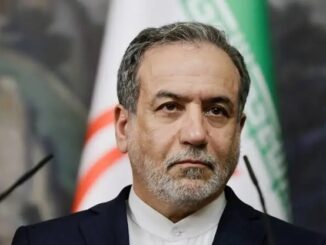
    Iranian Foreign Minister Abbas Araghchi gave an interview Wednesday to Fox News — one of the few U.S. outlets consistently favored by Trump — to rule out executions of protesters. That appeared to respond directly to the president’s earlier warning that he could take “very strong action” if Iran went down that route.
    “Hanging is out of the question,” Araghchi said on Special Report with Bret Baier. “I haven’t heard about that, and there’s no hanging today, tomorrow, or whatever. I can tell you, I’m confident about that. There’s no plan for hanging at all.”
    Turkey opposes military intervention against Iran, Foreign Minister Hakan Fidan said Thursday, adding he hoped Tehran and Washington can resolve their differences through dialog. Instability in Iran, he said, would be beyond the region’s capacity to manage.
    Tracking data from FlightRadar24 showed flights resuming over Iran’s airspace after a temporary closure. Iran’s Civil Aviation Organization said both inbound and outbound flights are underway, according to the semi-official Tasnim news agency.
    A series of developments earlier on Wednesday suggested Tehran and Washington were edging close to conflict. Iran temporarily closed its airspace amid reports of a partial redeployment of U.S. troops from Qatar and other regional bases, while the U.K. announced it was temporarily closing its embassy in Iran. Tensions remain high across the region, with the prospects of a renewed flare up — including a U.S. intervention — still possible.
    The protests in Iran appear to have receded since last week, when hundreds of thousands took to the streets nationwide to demonstrate against the regime of Supreme Leader Ayatollah Ali Khamenei. Authorities say they have reasserted control, accusing the U.S. and Israel of fueling unrest and arming terrorists to kill civilians.
    Pro-government rallies and state-planned public funerals have dominated state TV coverage, though an ongoing nationwide internet blackout continues to hamper reporting of events on the ground.
    Rights groups continued to report a mounting death toll from the demonstrations that began in late December and escalated significantly last week. The Oslo-based Iran Human Rights group said at least 3,428 protesters have died, marking it Tehran’s deadliest crackdown on dissidents in decades.
    Araghchi reiterated the stance that “diplomacy is much better than war” and pushed back against additional U.S. strikes. “Do not repeat the same mistake that you did in June. If you try a failed experience, you will get the same result,” he said.

  • Venezuela’s Interim Prez says citizens did not deserve ‘vile aggression’

    Venezuela’s Interim Prez says citizens did not deserve ‘vile aggression’

    Caracas (TIP)- Venezuela’s Interim President Delcy Rodriguez said in a message to the US that Venezuelans “did not deserve this vile, warmongering aggression,” El Cooperante reported.
    Rodriguez also announced the upcoming construction of a monument in honor of all citizens who died in the US military incursion into Venezuela on January 3.
    “No one surrendered here; there was a fight for this homeland, for our liberators, for Chavez, and for Venezuela. That is our greatest satisfaction, and that is our answer. We will face them, one-on-one, and we will show them what the children of Bolivar are made of,” she said as quoted by the Spanish El Cooperante news outlet.
    Rodriguez emphasized that weapons in Venezuela are used to “defend” the population, country, sovereignty and dignity, and not for acts of “aggression” against other nations.
    She added that Venezuela will give the US a “lesson” in diplomacy, because, he said, the country has a universal legacy dating back to Simon Bolivar. “Our liberator never taught our men and women in arms to be warmongers or to use supremacy to humiliate anyone.”
    Rodriguez stressed that the Venezuelans and Cubans who died during the US incursion are “children of the homeland,” asserting that they gave their lives for humanity.
    She also announced the creation of a commission for the families of the deceased citizens, as per El Cooperante.
    Meanwhile, Nobel Peace Prize recipient Maria Corina Machado asserted this Thursday that she will not rest until all “political prisoners” in the country are freed, following the government’s announcement regarding the release of a group of Venezuelans, as per El Cooperante.
    “Today, the truth that was persecuted and silenced for years is finally breaking through, despite the arbitrariness, the cruelty, and the fear. For many months, many years, even decades, their families have borne the fierce weight of a sentence that wasn’t in any file, the sentence of waiting, of silence, of the home that remained standing while the country seemed to be collapsing around them,” she said.
    Machado acknowledged the strength and determination of the detainees’ families and asked them to see this moment as an “act of moral restitution,” confirmation that their fortitude was not in vain. “Dignity knows how to wait without surrendering and ultimately triumph,” as reported by El Cooperante.

  • New clashes hit Iran as opposition urges protests, strikes

    New clashes hit Iran as opposition urges protests, strikes

    PARIS (TIP)- Security forces used tear gas and live fire to disperse protesters in Iran, rights groups said on Thursday (Jan 8), as people angered by economic crisis kept up their challenge to the authorities and exiled opposition groups urged new protests as well as strikes.
    Twelve days of protests have shaken the clerical authorities under Ayatollah Ali Khamenei already battling economic crisis after years of sanctions and recovering from the June war against Israel.
    The movement, which originated with a shutdown on the Tehran bazaar on Dec 28 after the rial plunged to record lows, has spread nationwide and is now being marked by larger scale demonstrations.
    Authorities have blamed unrest on “rioters” and the judiciary chief has vowed there would be “no leniency” in bringing them to justice.
    On Wednesday, Jan 7, an Iranian police officer was stabbed to death west of Tehran “during efforts to control unrest”, the Iranian Fars news agency said.
    Reza Pahlavi, the son of the shah ousted by the 1979 Islamic revolution and a key exiled opposition figure, said the turnout on Wednesday had been “unprecedented” in this wave of demonstrations and called for major new protests Thursday evening. He said in a message on social media he had received reports the “regime is deeply frightened and is attempting, once again, to cut off the internet” to thwart the protests.
    Iraq-based Iranian Kurdish opposition parties, including the Komala party which is outlawed by Tehran, called for a general strike on Thursday in Kurdish-populated areas in western Iran which have seen intense protest activity.
    SOLEIMANI STATUES ATTACKED
    The HRANA monitor published a video of protesters in Kuhchenar in the southern Fars province cheering overnight as they pulled down a statue of the former foreign operations commander of the Revolutionary Guards Qassem Soleimani, who was killed in a US strike in January 2020 and is hailed as a national hero by the Islamic republic.
    Persian-language TV channels based outside Iran also posted images of a statue of Soleimani in the central city of Kashan being set on fire. It was not immediately possible to verify the images.
    HRANA said according to its count protests had taken place in 348 locations over the last 11 days in all of Iran’s 31 provinces.
    It also published a video of people massing late at night in the Tehran satellite city of Karaj and lighting fires in the streets and also images of security forces using tear gas to disperse a protest in the Caspian Sea town of Tonekabon.
    Images it said were taken Wednesday, Jan 7, in the western city of Abadan showing security forces firing on protesters.
    The Norway-based Iran Human Rights group said security forces on Wednesday “opened fire on protesters, used tear gas and violently assaulted civilians” during a protest in the key southeastern hub of Kerman.

  • China hacked e-mails of US Congress staff: Report

    China hacked e-mails of US Congress staff: Report

    New York (TIP)- China has hacked e-mails used by staff members of committees in the US House of Representatives as part of a cyberespionage campaign known as Salt Typhoon, the Financial Times reported on Wednesday, citing people familiar with the matter.
    China accessed e-mail systems used by some staffers on the House China committee, as well as aides on panels covering foreign affairs, intelligence and the armed services, the report said.
    One person familiar with the alleged hacking told the Financial Times that it was unclear whether the attackers had accessed lawmakers’ e-mails in the intrusions, which were detected last month. Reuters could not immediately verify the report.
    The White House had no immediate comment.
    In November last year, the US Senate sergeant at arms notified multiple congressional offices of a “cyberincident,” in which hackers might have accessed communications between the Congressional Budget Office, which provides key financial research data to lawmakers, and some Senate offices.
    US officials have previously alleged that the hacking group is prepositioning itself to paralyze critical US infrastructure in case of a conflict with China.
    Beijing has repeatedly denied being behind the intrusions.
    Early last year, the US imposed sanctions on alleged hackers, accusing them of being involved in Salt Typhoon.
    China yesterday said that it was against “politically motivated disinformation” in relation to the report.
    “We have always opposed and lawfully combated hacker activities, and we are even more opposed to spreading false information related to China for political purposes,” Chinese Ministry of Foreign Affairs spokeswoman Mao Ning told a news conference when asked about the cyberattack.

  • 100 died in US attack that ousted Maduro, says Venezuela’s minister

    Venezuela’s interior minister Diosdado Cabello said late on Wednesday that 100 people died in the US attack which removed President Nicolas Maduro from power.
    Caracas have not previously given a number for those killed, but the army posted a list of 23 names of its dead. Venezuelan officials have said a large part of Maduro’s security contingent was killed “in cold blood,” and Cuba has said 32 members of its military and intelligence services in Venezuela were killed. Maduro’s wife Cilia Flores, detained alongside him, suffered a head injury during the US raid, Cabello said, and Maduro an injury to his leg.
    Venezuela’s interim President Delcy Rodriguez, who Cabello praised during his weekly show on state television as “courageous”, on Tuesday declared a week of mourning for members of the military killed in the raid.
    As tensions escalated, the White House confirmed that the United States plans to control Venezuela’s oil sales “indefinitely”. The move follows the US military’s seizure of an estimated 50 million barrels of Venezuelan crude stranded in tankers and storage facilities, as well as the capture of vessels linked to Russia and Iran. The administration has already signalled it intends to sell up to $3 billion worth of Venezuelan oil into the global market. US Energy Secretary Chris Wright said Washington would oversee all future crude sales, with proceeds ostensibly earmarked for the Venezuela.

  • Russia says any foreign forces in Ukraine would be ‘legitimate targets’, after UK and France pledge troops

    Russia says any foreign forces in Ukraine would be ‘legitimate targets’, after UK and France pledge troops

    Moscow (TIP)- Russia doubled down on its longstanding position of declaring Western forces in Ukraine “legitimate targets” on Thursday, days after France and the UK pledged to send troops there in the event of a peace deal.
    “The Russian Foreign Ministry warns that the deployment of military units, military facilities, warehouses, and other infrastructure of Western countries on the territory of Ukraine will be classified as foreign intervention,” spokesperson Maria Zakharova said in a statement.
    She was responding to a “declaration of intent” signed by UK Prime Minister Keir Starmer and French President Emmanuel Macron on Tuesday at the latest meeting of the so-called Coalition of the Willing, where they agreed to deploy a multinational force to guarantee Ukraine’s security.
    Russia has long opposed the presence of any Western troops in Ukraine. “These warnings have been voiced repeatedly at the highest level and remain relevant,” Zakharova said, characterizing the agreement reached by Ukraine’s allies as a “new militaristic declaration.”
    Ukrainian President Volodymyr Zelenksy has long insisted his Western allies provide robust security guarantees as part of any peace deal to deter a future Russian invasion.
    The precise nature of the guarantees that Europe and the US are willing to offer has gradually taken shape following months of meetings. Tuesday’s agreement set out the legal framework for allowing British and French troops to operate in Ukraine, Starmer said, after the two countries had previously stated their willingness to deploy troops there.
    Zelensky said Thursday that the agreement reached on security guarantees is now “essentially ready for finalization at the highest level with the president of the United States,” after further negotiations in France on Wednesday.
    But, even if the US, Europe and Ukraine reach their own agreement, Moscow’s statement underlines just how far apart the two blocs remain in these negotiations.
    Russia has only intensified its attacks in recent weeks, targeting Ukraine’s energy infrastructure to take out power with the winter cold at its most intense.
    Authorities in Kyiv warned residents Thursday to stock up on water, batteries and warm clothing in anticipation of further attacks, as temperatures plunge as low as -20 degrees Celsius (-4 degrees Fahrenheit).
    “We can only get to a peace deal if Putin is ready to make compromises,” said Starmer on Tuesday. “For all Russia’s words, Putin is not showing that he’s ready for peace.”

  • Taiwan detects 23 Chinese aircraft, 6 vessels, official ship around itself

    Taiwan’s Ministry of National Defense detected the presence of 23 Chinese military aircraft, six naval vessels and an official ship operating in its territorial waters as of 6am (local time) on Friday, Jan 9.
    In a post on X, the MND said, “23 PLA aircraft, 6 PLAN ships and 1 official ship operating around Taiwan were detected up until 6 a.m. (UTC+8) today. 19 out of 23 sorties crossed the median line and entered Taiwan’s northern, central, southwestern and eastern ADIZ. We have monitored the situation and responded.”
    Earlier on Thursday, Taiwan’s MND detected 21 sorties of PLA aircraft and five PLAN vessels.
    In a post on X, the MND said, “Overall 21 sorties of PLA aircraft in various types (including J-10, H-6K, KJ-500, etc.) were detected from 1456hr today. 19 out of 21 sorties crossed the median line of the Taiwan Strait and entered the northern, central and southwestern ADIZ in conducting air-sea joint training along with other PLAN vessels. ROC Armed Forces have monitored the situation and responded accordingly.” Earlier in the day, it had said, “9 sorties of PLA aircraft, 5 PLAN vessels and 1 official ship operating around Taiwan were detected up until 6 a.m. (UTC+8) today. 9 out of 9 sorties crossed the median line and entered Taiwan’s northern and southwestern ADIZ. We have monitored the situation and responded.”

  • BC Premier to visit India before PM Mark Carney

    BC Premier to visit India before PM Mark Carney

    After the overwhelming response to the Canadian Hindu Chamber of Commerce in Assam, UP, and Haryana, BC Premier will lead a delegation to India

    TORONTO (TIP): After a 20-member mission of the Canadian Hindu Chamber of Commerce (CHCC) received an overwhelming response in India, British Columbia Premier David Eby has decided to lead a trade mission to India next week. And these trade mission visits are being viewed in light of the upcoming visit of Canadian Prime Minister Mark Carney to India next month.
    Incidentally, the BC trade mission will be headed by its Premier, David Eby, and Jobs Minister, Ravi Kahlon. The BC delegation will visit India from January 12 to 17 and make stopovers in Mumbai, New Delhi, Bengaluru, and Chandigarh. It will be the first visit by a provincial premier to India in recent years.

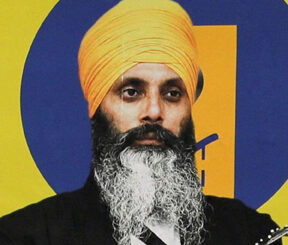
    It was the killing of Hardeep Singh Nijjar in Surrey, British Columbia, that led to a big spat in the bilateral relations between India and Canada. The BC Premier, while announcing his visit to India, said that he remains profoundly concerned about the murder of Hardeep Singh Nijjar and the accusation from the then Prime Minister Justin Trudeau that the “agents of India” were involved in his assassination.

    Photos: CHCC

    He said that it is the job of the federal government to work with the Indian government on “issues of shared concern.” The BC provincial government works at the level to look after the people of the province, including creating jobs in sectors struggling as a result of tariffs.

    “We have challenges with the US; we still work with the United States. We have challenges with China; we still work with China,” he added. The BC ministers held that India was an important nation that has the fastest-growing and third-largest economy in the world.

    British Columbia is one of the largest trade partners with India. Last year, the bilateral trade between India and BC was US $2.1 billion. The BC trade mission will be broadly looking at the forestry and clean energy sectors.

    Meanwhile, the CHCC undertook a series of cultural, trade, and business engagements in Assam, Uttar Pradesh, Delhi, and Haryana, aiming at strengthening people-to-people connections, deepening economic cooperation, and exploring long-term trade and investment opportunities between Canada and Assam.

    Canadian Hindu Chamber Trade Mission comprises Ashutosh Singh, Kushagra Dutt Sharma, Umesh Raj Unnikrishnan, Mukundbhai Jitendra Sheth, Shankar Kumar Dey, Gagan Kumar, Nareshkumar Narayanbhai Chavda, Bhargav Jambalaya Chavda, Anandkumar Acharya, Rakeshkumar Maravilha Kantaria, Vipulkumar Shankarbhai Rabari, Saurabh Rattan, Falgun Gulabsha Bhanderi, Nilay Shaileshbhai Thakkar, Amit Bijoy Chowdhury Nayankumar Ghanshyambhai Brahmbhatt, Shool Pani Singh, Josh Leslie, Rebecca Greco, and Gopal Krishan Saini have been on tour of India since New Year’s Day.

    Photos: CHCC

    Besides signing a Memorandum of Understanding with Deen Dayal Upadhyaya Gorakhpur University, members of the mission are also enjoying a religious pilgrimage as they were accorded the status of state guests by the Uttar Pradesh government to visit Ayodhya and Prayagraj. Earlier during their stay in Assam, they also paid their obeisance at some of the historic temples, including Kamakhya Temple, one of India’s most significant spiritual landmarks. The visit symbolized respect for Assam’s rich cultural and spiritual heritage and marked a meaningful beginning to the Chamber’s Assam engagements.

    The visit of the CHCC has marked a significant step toward strengthening academic, research, and industry collaboration between India and Canada. The MoU with Deen Dayal Upadhyaya University aims to promote student and faculty exchange programs, joint research initiatives, skill development, entrepreneurship, and enhanced cooperation between academia and industry. This partnership reflects a shared commitment to fostering global knowledge exchange, innovation, and capacity building, while creating new opportunities for students, researchers, and businesses across both regions.

    Starting its India engagements with a visit to the revered Kamakhya Temple, a high-level Canada–Assam trade & networking meet was successfully held at Hotel Apollo Grand, Guwahati, in collaboration with the Assam Chamber of Commerce. The event brought together senior business leaders, industrialists, and sectoral representatives from across Assam with members of CHCC.

    The session was addressed by Rupam Goswami, Chairman of the Assam Chamber of Commerce, who highlighted Assam’s growing industrial base, investor-friendly policies, and the importance of long-term international trade partnerships, particularly with Canada. Prominent industry leaders, including Manohar Chowdhury, a leading industrialist, and Rajiv Kumar Burah, a noted hotelier, shared insights on Assam’s industrial, hospitality, and tourism potential.

    Representing CHCC, Rakesh Kantaria, Secretary of the CHCC, outlined the Chamber’s mandate and its role in facilitating trade and investment linkages between Canada and India. Kushagra Dutt Sharma, President of CHCC, presented the objectives of the mission, identifying priority sectors such as tea, oil and gas, energy, agriculture, education, hospitality, infrastructure, and sustainable development as key areas for collaboration between Canada and Assam.

    The CHCC Mission conducted a field visit to the 16,000-hectare tea garden of Bhardwaj Tea & Timber Company. The visit offered a breathtaking view of Assam’s vast natural landscape and provided an in-depth learning experience on the complete tea value chain.

    The general manager shared detailed insights into the journey of tea—from plantation and cultivation to processing and the final product that reaches consumers. The interaction highlighted significant opportunities for the import of regular tea, green tea, and other tea-based products from Assam to Canada and the broader North American market, reinforcing Assam’s potential as a key sourcing destination.

    The CHCC delegation also held a detailed meeting with Assam Industrial Development Corporation Ltd (AIDC) in Guwahati. Discussions focused on potential investment opportunities in Assam, government support mechanisms, infrastructure development, and policy facilitation. The meeting was described as highly productive, resulting in the identification of multiple investment avenues and future areas of cooperation.

    An important Memorandum of Understanding (MoU) was signed between Deen Dayal Upadhyaya Gorakhpur University and the Canadian Hindu Chamber of Commerce (CHCC) on January 4, 2026, marking a significant step toward strengthening academic, research, and industry collaboration between India and Canada. The MoU aims to promote student and faculty exchange programs, joint research initiatives, skill development, entrepreneurship, and enhanced cooperation between academia and industry. This partnership reflects a shared commitment to fostering global knowledge exchange, innovation, and capacity building, while creating new opportunities for students, researchers, and businesses across both regions.

    Photos: CHCC

    Hemant Shah, Chair of the Trade Committee, said that the trade mission has already established a strong and solid relationship between Canada and India. Naresh Chavada, a trustee and founder of the Chamber, and President Kushagr Dutt Sharma, have worked tirelessly to make this trade mission successful.

    The engagements on the first three days marked an important step in strengthening Canada–Assam relations through a balanced focus on culture, trade, industry, and institutional collaboration. The CHCC reaffirmed its commitment to continued engagement with Assam’s government and business community, with the intention of translating these discussions into tangible trade, investment, and partnership outcomes.

    On arriving in Uttar Pradesh, the Hindu Trade mission received a warm welcome from the Chief Minister and the Governor. It called on Yogi Adityanath, Chief Minister. It held discussions to explore investment opportunities across MSMEs, religious tourism, and hospitality sectors—reflecting growing global confidence in India’s growth trajectory and the emerging opportunities in Uttar Pradesh.

    (Prabhjot Singh is a Toronto-based senior journalist. Widely traveled, he writes chiefly on Sports and politics.)

  • Looking Ahead: Western World wants the best and leave the rest while tightening immigration controls

    Looking Ahead: Western World wants the best and leave the rest while tightening immigration controls

    By Prabhjot Singh

    TORONTO (TIP): “Poaching the best and ignoring the rest” appears to be the new immigration mantra of the developed and flourishing West that it wants to portray and implement in 2026. Conveying a strong message to the nations overflowing with manpower resources, both raw and skilled, the elite group of nations—most sought after by prospective immigrants—has been gradually barricading the borders to minimize the “infiltration.” To cap it, member nations of this group have set in motion both legal and inhumane deportation processes to get rid of what they call “dead wood,” as most of their ageing sections of society have met their requirements of the workforce.

    When the new Liberal government, led by Mark Carney, assumed office in April this year and presented its maiden budget in November, it clearly indicated that it would “look for the best of brains” to head new groups of scientific research. Bowing to the pressures, the Liberal government not only scaled down immigration levels but also introduced drastic cuts to the intake of international students. This major shift in the immigration rigmarole spells doom for hundreds of thousands of youngsters who want or aspire to make one of the developed Western nations their new home. Those with no skills find the immigration doors closed for them for now.

    Donald Trump, soon after starting his second term in office in January of the outgoing year, started sending through full loads of US Air Force aircraft, bereft of basic passenger facilities, with immigration seekers without proper documents to the countries of their origin, including India. And the process has been continuing unabated since then. Hundreds of thousands have already been sent home unceremoniously. Aircraft loads of “unwanted immigrants” are even now leaving the shores of various North American ports for destinations in South Asia, Africa, and other parts of the world regularly. Incidentally, those being deported exclude the brain doctors, engineers, and scientists.

    It is not only the closure of a channel that was taking a lot of loads off the governments of developing nations, but it has now started rebuilding the pressure on shrinking job opportunities and resources in these immigration feeder nations. While their best talent would be leaving the shores of the country, they would be left with numbers that they would find extremely difficult to adjust to under the tightening global economic norms.

    The brain drain would continue unabated, thus putting additional pressure on these fund- and resource-starved nations. Producing a doctor with six to eight years in a government medical institution in India costs the state a minimum of Rs 20 lakh. The same is the case with an engineer or IT specialist groomed at a government institution; the money spent by the state is no less than that of a doctor. And once these young, bright doctors, engineers, and IT experts step out of their institutions, the developed nations are out poaching for them. Instead of repaying the society that spent on their training and grooming, they leave their homelands, lured by green pastures overseas.

    The result is obvious. Their home turfs suffer from a shortage of doctors, engineers, technocrats, and other professionals. A simple case to illustrate this dilemma is the acute shortage of mental health officers in the country. Despite directions from the Apex Court that each district in the country must have a mental hospital, not even 20 per cent of districts in the country have such a facility. There is an acute shortage of super specialists in a country like India. Many medical colleges fake figures to show specialists and super specialists on their faculties, while in fact their services are requisitioned mostly from the private sector at the time of inspections.

    It is not health care. Other areas, especially information technology, science and research, engineering, and related areas, would continue to be impacted by the changed immigration policies of Western nations.

    Other than these technical or scientific “brains,” countries like India are also facing an acute shortage of middle-rung officers in their defense forces. One foremost reason is that pay packages are perhaps not as attractive as their counterparts’ pass-outs from IITs. Then some of the perks associated with jobs in the defense sector have been spiked so much that their added attractions have vanished in recent years. Even a lifetime career in the defense forces is not guaranteed under the Agnipath Yojana. Intriguingly, some of the able-bodied youth, looking for green pastures overseas and shirking jobs in uniform at home, were forced to join the armed forces overseas, as it happened in the case of Russia.

    There is an urgent need for a fresh look at the immigration policies of the nations with abundant manpower or human resources. A country like India needs to regulate its brain drain as well as the outflow of its raw human resources. It also comes with a need to audit the education and healthcare infrastructure in the country. India, for example, can market both its education and health care potentials as a retort to the Western world.

    Otherwise, developing economies would continue to lose their best to the West and keep the rest for their own use.

    (Please print the detailed intro of Prabhjot here)

  • Embassy of India Hosts Interactive Session with University of Bucharest Students

    Embassy of India Hosts Interactive Session with University of Bucharest Students

    BUCHAREST (TIP): The Embassy of India hosted an engaging and interactive session with students of the University of Bucharest at the Embassy premises on 7 January, aimed at fostering greater understanding of India’s contemporary developments and its rich cultural heritage, with particular emphasis on the cultural diversity of India’s states and regions.

    Students were presented India’s culture, yoga, and Indian dance traditions, highlighting the depth and diversity of India’s cultural heritage.

    Ambassador Dr. Manoj Kumar Mohapatra, while interacting with the students, highlighted India’s robust economic growth, reform-driven development trajectory, and expanding opportunities across sectors. He underlined India’s emergence as one of the world’s fastest-growing major economies and discussed the country’s increasing role in the global economic landscape, driven by innovation, digital transformation, manufacturing, and sustainable development. In this context, he also referred to Gujarat International Finance Tec-City (GIFT City) as a flagship initiative, showcasing India’s ambition to emerge as a global financial and services hub through world-class infrastructure, regulatory reforms, and a conducive business ecosystem. The Ambassador also encouraged young scholars to explore academic, cultural, and professional engagement with India.

    Ms. Veronica Mathew conducted special yoga session for the students.

    Students from the University of Bucharest made insightful presentations on India, reflecting a deep appreciation of the country’s civilizational depth and cultural diversity. Special emphasis was laid on Yoga and Indian classical dance as enduring symbols of India’s soft power, holistic philosophy, and living traditions that continue to resonate globally.

    A special Yoga session was conducted by Ms. Veronica Mathew, who introduced participants to the fundamentals of Yoga and guided them through select practices. The session offered students a firsthand experience of Yoga’s physical, mental, and spiritual benefits, while underscoring its relevance in today’s fast-paced and stress-filled world.

    Ms. Mirela Cristea led an Indian dance session, familiarizing students with basic steps and movements.

    The cultural engagement continued with a special Indian dance session led by Ms. Mirela Cristea, who familiarized students with India’s rich and diverse dance traditions of different states. Through a lively and interactive format, students were introduced to basic steps and movements, providing them with an immersive experience of India’s vibrant cultural expressions. The session also showcased folk dances from the Indian states of Gujarat and Haryana, reflecting the energetic rhythms of Garba and the lively spirit of Haryanvi dance forms, thereby offering participants a glimpse into the regional diversity and cultural richness of India.

    University of Bucharest Students with Ambassador Manoj Kumar Mohapatra (Standing 9th from the right).

    The event served as a meaningful platform for people-to-people engagement, strengthening academic and cultural ties between India and Romania. The Embassy reaffirmed its commitment to promoting dialogue, cultural exchange, and greater awareness of India’s cultural diversity of India’s states and regions, economy, and timeless traditions among Romanian youth and academic institutions.

    (Based on a Press Release issued by the Embassy of India in Bucharest, Romania)

  • India-Romania Economic Partnership Advances

    India-Romania Economic Partnership Advances

    Ambassador Mohapatra Engages Arad County Leaders on Investment Opportunities in Strategic Special Economic Zone

    BUCHAREST (TIP): Dr. Manoj Kumar Mohapatra, Ambassador of India to Romania, visited Arad County of Romania and met with key Arad County officials, including Mr. Iustin Cionca, President of Arad County Council, Mr. Glad Varga, Senator of Arad, and Mr. Ionescu Aurel, Vice President of Arad Chamber of Commerce. The dialogue underscored the mutual resolve to deepen economic cooperation, harnessing Arad’s unique advantages to attract Indian investments and foster bilateral trade growth.

    Ambassador Dr. Manoj Kumar Mohapatra and Mr. Iustin Cionca, President of Arad County Council.

    Arad occupies a pivotal geographical position in western Romania, bordering Hungary and serving as a critical node along Pan-European Transport Corridor IV, which links major European hubs from Germany through Hungary to Turkey. This connectivity, coupled with excellent rail and road infrastructure, including proximity to Timișoara International Airport and the Port of Constanța on the Black Sea, renders Arad an ideal logistics and manufacturing base for Indian companies seeking efficient entry into the European Union market. The Arad Special Economic Zone (SEZ), equipped with modern facilities, tax incentives, and streamlined regulations, further amplifies these benefits, positioning it as a prime destination for sectors like automotive components, electronics, textiles, and renewable energy equipment where Indian firms excel.

    President of Arad County Council presenting a reproduction of “The Burial of Christ” to Ambassador.

    India and Romania enjoy a multifaceted bilateral relationship rooted in shared democratic values, historical goodwill, and expanding economic synergy. Diplomatic ties, elevated through frequent high-level visits and the 19th India-Romania Joint Committee Meeting on Economic Cooperation, have propelled trade volumes beyond €1 billion annually, with robust growth in IT services, pharmaceuticals, infrastructure projects, and defense collaboration. Cultural exchanges, such as Diwali celebrations and Hindi language promotions in Romania, complement these efforts, while emerging domains like artificial intelligence, green hydrogen, and sustainable agriculture hold immense untapped potential. This partnership aligns with both India’s and Romania’s resolve for greater partnerships, creating win-win opportunities for mutual prosperity.

    In a key outcome, Ambassador Mohapatra extended an official invitation for a delegation led by President Cionca to visit India, enabling direct interactions with Indian business leaders and government stakeholders. The parties committed to hosting a targeted Business-to-Business (B2B) forum in the second half of January or early February 2026. During this event, Arad representatives will present tailored opportunities within the SEZ to Indian companies expressing keen interest in Romanian investments, emphasizing local supply chain integration, skilled workforce availability, and EU-compliant manufacturing capabilities.

    Ambassador met Dr. Nilima Rajpal Kundnani, a local community leader in Timisoara.

    This engagement exemplifies the dynamic momentum in India-Romania relations, promising job creation, technology transfer, and innovation-driven growth. It reinforces Arad’s role as a bridge for Indian enterprises into Europe, while advancing Romania’s appeal as a reliable partner for India’s global ambitions.
    Separately, the Ambassador visited injured Indian national Mr. Rakesh Kumar, who is undergoing treatment at Casa Austria Hospital, and interacted with both the patient and the attending doctors. The Ambassador conveyed his best wishes to Mr. Kumar and wished him a speedy recovery.
    The Ambassador also met with Dr. Nilima Rajpal Kundnani, a local Indian community leader, to discuss proposed plans and activities for 2026, with particular emphasis on the welfare of the Indian community in Timișoara. The discussions focused on strengthening community support mechanisms, promoting cultural and social initiatives, and enhancing engagement between the Embassy and the Indian diaspora. Views were exchanged on organizing cultural events, community programs, and collaborative activities in 2026 aimed at promoting Indian culture and supporting the well-being and integration of the Indian community in Timișoara.
    (Based on a Press Release by the Embassy of India in Bucharest, Romania)

  • Yemen separatists announce plan to split country after 20 killed in Saudi-led strikes

    Yemen separatists announce plan to split country after 20 killed in Saudi-led strikes

    Sanaa (TIP)- Yemen’s separatists have announced a two-year transition to independence despite reporting 20 deaths in air strikes from a Saudi-led coalition in the south of the country. A military official from the separatist group — which is backed by the United Arab Emirates — announced on Friday, local time, that the fighters had been killed in air raids by the coalition on two military bases, an airport and other sites. Mohammed Abdulmalik, head of the separatist Southern Transitional Council’s (STC) in Wadi Hadhramaut and Hadhramaut Desert, said seven air strikes hit the Al-Khasha military camp. Further strikes targeted other sites in the region and the airport and military base in Seiyun, STC military sources and eyewitnesses told Agence France-Presse.
    The bombardment and surprise independence bid followed weeks of tensions between Saudi Arabia and the UAE over the STC’s land-grab last month.
    STC forces took much of resource-rich Hadhramaut, bordering Saudi Arabia, and neighbouring Mahra province on the Omani frontier, in a largely unopposed advance.
    Yemen, which was divided into North and South from 1967 to 1990, could again be split in two years if the STC’s independence plan comes to fruition.
    It would call the new country “South Arabia”.
    STC President Aidaros Alzubidi said the transitional phase would include dialogue with Yemen’s north — controlled by Iran-backed Houthi rebels — and a referendum on independence.
    But he warned the group would declare independence “immediately” if there was no dialogue or if southern Yemen was attacked again.
    “The Council calls on the international community to sponsor dialogue between the concerned parties in the South and the North,” Mr Alzubidi said in a televised address.
    “This constitutional declaration shall be considered immediately and directly effective before that date [January 2, 2028] if the call is not heeded or if the people of the South, their land, or their forces are subjected to any military attacks,” he added.
    Meanwhile, the head of the country’s Saudi-backed presidential council, Rashad al-Alimi, has asked Saudi Arabia to hold a forum with all factions in Yemen’s south in a bid to ease tensions.
    Saudi Arabia’s foreign ministry welcomed the request, calling on the factions — including the STC — to “formulate a comprehensive vision for fair solutions to the southern cause”.
    Both Saudi Arabia and the Emirates intervened in Yemen’s civil war in 2015 as the major players in a coalition fighting the Houthis in the north.
    But after a brutal, decade-long civil war, the Houthis remain in place, and the Saudis and Emiratis are backing different factions in the government-held territories. Yemen’s Aden-based government comprises a fractious coalition of groups, including the STC, united by their opposition to the Houthis.
    The UAE, which withdrew most of its troops from Yemen in 2019, pledged to pull out the remainder after the coalition’s air strikes earlier this week on an alleged weapons shipment at Mukalla port, despite denying it contained arms.

  • U.S. urges China to halt military pressure on Taiwan, days after Japan and others

    U.S. urges China to halt military pressure on Taiwan, days after Japan and others

    Taipei (TIP)- The United States urged China to cease military pressure on Taiwan on Jan 1, days after Japan and Western countries voiced concern over escalating tensions in the Taiwan Strait following two days of large-scale military exercises around the democratic island. “China’s military activities and rhetoric toward Taiwan and others in the region increase tensions unnecessarily,” State Department spokesman Thomas Pigott said in a statement. “We urge Beijing to exercise restraint, cease its military pressure against Taiwan, and instead engage in meaningful dialogue.”
    The United States, Pigott added, “supports peace and stability across the Taiwan Strait and opposes unilateral changes to the status quo, including by force or coercion.”
    The State Department’s criticism was the first public response by the administration of U.S. President Donald Trump to this week’s Chinese military exercises.
    Taiwanese Foreign Minister Lin Chia-lung welcomed the U.S. government’s statement, saying that Taipei “will continue to work with the United States and all like-minded nations to defend the rules-based international order.”
    But under Trump, Washington — which is bound by law to provide Taiwan with the means to defend itself, despite the lack of formal diplomatic ties — has taken a softer approach to Chinese pressure on the island than its predecessors, as the White House looks to avoid friction with Beijing in a bid to seal a broad trade deal with the Asian powerhouse.
    Trump, who is scheduled to make a state visit to the Chinese capital in April for talks with leader Xi Jinping, on Monday downplayed the exercises and the possibility of Xi ordering an invasion of Taiwan.
    Beijing views the self-ruled island as its “core of core issues” and regards it as a renegade province that must be unified with the mainland, by force if necessary.
    “I have a great relationship with President Xi. And he hasn’t told me anything about it. I certainly have seen it,” Trump said when asked about the exercises. “I don’t believe he’s going to be doing it,” Trump said in apparent reference to a Chinese invasion of the island.
    Asked if the exercises concerned him, he replied, “No, nothing worries me.”
    “They’ve been doing naval exercises for 20 years in that area,” he added. “Now people take it a little bit differently.”
    Japan’s Foreign Ministry said Wednesday that Tokyo had presented its concerns to the Chinese side over the drills, which it said “constitute actions that increase tensions across the Taiwan Strait.” Japan, Australia, Britain, France, Germany, New Zealand and the European Union all voiced concern over the exercises before the U.S. On Friday, China called the exercises “completely legitimate, necessary and beyond reproach.”
    “No one cherishes peace across the Taiwan Strait more than we do, yet we will never allow any individual or force to tie our hands in curbing ‘Taiwan independence’ separatist activities in the name of safeguarding cross-Strait peace,” Chinese Defense Ministry spokesperson Zhang Xiaogang said.
    Taiwanese President Lai Ching-te said in a New Year’s speech Thursday in Taipei that the island is determined to defend its sovereignty and pledged to boost its defenses — something the Trump administration has demanded — in response to China’s growing pressure.

  • China taxes condoms, contraceptive drugs in bid to spur birth rate

    China removed a three-decade-old tax exemption on contraceptive drugs and devices from January 1 in new steps to spur a flagging birth rate. Condoms and contraceptive pills now incur value-added tax of 13%, the standard rate for most consumer goods.
    The move comes as Beijing struggles to boost birth rates in the world’s second-largest economy. China’s population fell for a third consecutive year in 2024 and experts have cautioned the downturn will continue.
    China exempted childcare subsidies from personal income tax and rolled out an annual childcare subsidy last year, following a series of “fertility-friendly” measures in 2024, such as urging colleges and universities to provide “love education” to portray marriage, love, fertility and family in a positive light. Top leaders again pledged last month at the annual Central Economic Work Conference to promote “positive marriage and childbearing attitudes” to stabilise birth rates. China’s birth rates have been falling for decades as a result of the one-child policy China implemented from 1980 to 2015, and rapid urbanisation. The high cost of childcare and education as well as job uncertainty and a slowing economy have also discouraged many young Chinese from getting married and starting a family.

  • Russia asks US to stop pursuit of fleeing oil tanker, NY Times reports

    Russia asks US to stop pursuit of fleeing oil tanker, NY Times reports

    New York (TIP)- Russia has formally asked the United States to stop chasing an oil tanker that was headed to Venezuela and is now fleeing a U.S. Coast Guard vessel in the Atlantic Ocean. Russia’s request was first reported by The New York Times, which quoted two people familiar with the matter. They said the diplomatic note was delivered to the State Department late on New Year’s Eve and was also sent to the Homeland Security Council at the White House.
    Meanwhile, Venezuelan President Nicolás Maduro said he’s open to negotiations with Washington on combating drug trafficking.
    “The U.S. government knows, because we’ve told many of their spokespeople, that if they want to seriously discuss an agreement to combat drug trafficking, we’re ready,” Maduro said in a taped interview that aired Thursday on state television channel teleSUR, according to NBC News.
    Tanker dispute intersects Trump’s Ukraine talks and Venezuela oil blockade
    The dispute comes as President Donald Trump is trying to negotiate a peace deal between Russia and Ukraine. During a recent meeting with Ukrainian President Volodymyr Zelenskyy at Mar-a-Lago, both leaders projected hope for a resolution. However, The Times noted that complex negotiations regarding territory and security assurances remain unresolved.
    At the same time, the tanker confrontation is tied to Trump’s effort to pressure Maduro by imposing what The Times described as a quasi-blockade on some oil tankers, and what Trump called a “total and complete” maritime blockade of Venezuela’s oil exports.
    Energy Intelligence reported that the U.S. seized the Skipper and boarded the Centuries, and that Venezuelan crude is piling up on ships and in limited onshore storage. US calls tanker ‘stateless’ as Russia rushes flag registration
    American forces have been tracking the very large crude carrier, originally named Bella 1, for nearly two weeks. U.S. officials said that the tanker began its voyage in Iran and was headed to Venezuela to load oil when the Coast Guard tried to stop and board it in the Caribbean Sea.
    According to The Times, American authorities determined the ship was not displaying a legitimate national flag during the initial encounter, giving the Coast Guard legal authority to board and inspect the vessel. U.S. authorities reportedly held a court-approved seizure warrant based on the vessel’s history of transporting Iranian oil that the United States alleges is sold to finance terrorism.
    The crew, however, refused to allow the Coast Guard to board the ship and steered back toward the Atlantic. In the following days, U.S. officials said the crew painted a Russian flag on the hull and radioed the Coast Guard to claim they were sailing under Russian authority.