
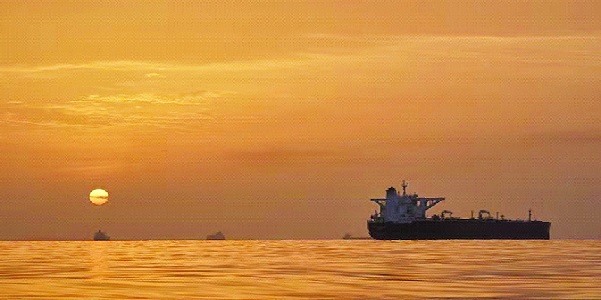

Tehran (TIP): The conventional military conflict in West Asia has increasingly given way to a grinding maritime contest, with both the United States and Iran targeting, seizing, and intimidating vessels as Washington and Tehran assert control over the strategic Strait of Hormuz, through which nearly 20 per cent of the world’s oil supply flows.
Following the US announcement of a naval blockade on Hormuz, Iran, which had already restricted passage since the early days of the war, has intensified its actions. The latest escalation came on Wednesday, when Iranian forces reportedly opened fire on three vessels transiting the strait, and seized two of them.
On April 22, Iran’s Islamic Revolutionary Guard Corps (IRGC) seized two container ships, MSC Francesca and Epaminondas, after firing on them in the strait. A third vessel, Euphoria, was hit by gunfire and forced off course. One of the seized ships was reportedly bound for India.
Iranian authorities justified the seizures by accusing the vessels of switching off their tracking systems and attempting covert transit, an allegation that has become a recurring pretext in recent interceptions.
The same day, the US stepped up its own maritime campaign. American forces intercepted at least three Iranian oil tankers in Asian waters and redirected them, part of a broader effort to choke Tehran’s oil exports. The US Navy diverted vessels operating near India, Malaysia, and Sri Lanka, signalling an expanded operational footprint across key shipping lanes.
In recent days, US forces have also seized an Iranian cargo ship and an oil tanker, while diverting at least three more Iranian-flagged tankers, according to Reuters, citing US and Indian shipping sources. Among them was an Iranian-flagged Deep Sea supertanker, partially loaded with crude and last tracked off Malaysia’s coast a week ago. Another vessel, the supertanker Dorena, carrying around 2 million barrels of crude, was intercepted off south India.
Shipping sources also indicated that the Iranian-flagged Derya tanker may have been intercepted after it failed to discharge its cargo in India before a US waiver on Iranian crude imports expired.
According to the latest update from US Central Command, American forces have directed at least 29 vessels to turn back or return to port since enforcing the blockade on ships entering or exiting Iranian ports.
From the Iranian side, in earlier incidents on April 18 and 19, Iranian gunboats fired on multiple tankers, including vessels linked to India, forcing several to abort their transit mid-route. These ships had attempted to cross after Iranian leaders, following an initial round of talks with the US, signalled that the strait would remain open. However, the passage was effectively shut within hours by Iranian forces.
Overall, more than 30 maritime attacks have been reported in the region since the US and Israel launched the conflict on February 28 with a surprise strike on Iran.
The strategic calculus on both sides is clear. Washington aims to economically strangle Tehran by cutting off its oil exports and exerting sustained pressure on its economy, while Iran has adopted a counter-strategy in which, if it cannot export its oil, it will make it prohibitively risky for others to do so.



Be the first to comment