
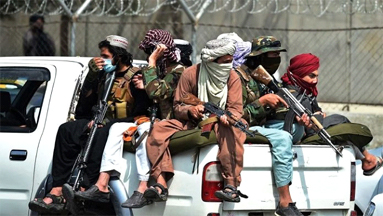

New York (TIP)- Though the Taliban, de-facto rulers of Afghanistan, have managed to keep the ban on opium and narcotics, the “trade continues to dominate informal economy” of the country, United Nations monitors have reported. “This trade sustains a large network of traffickers, criminal organisations, and even some State actors, who derive economic benefits,” a UN report dated 8 December said. The Taliban seized control of Kabul on 15 August, 2021, after Afghan President Ashraf Ghani fled the country, and US and allied forces withdrew following two decades of military presence there.
Poppy cultivation and opium production have fallen to record lows after Taliban took control, but large parts of the industry moved across the border, “where Afghan narcotics networks are demonstrating resilience by relocating farmers and equipment,” the report noted. Those areas, where the industry is being relocated, could potentially benefit Islamic State of Iraq and Levant (ISIL)-Khurasan, and Tehreek-e-Taliban Pakistan (TTP), it said. Taliban’s ban on opium cultivation in 2022 led to a reduction of heroin being processed and trafficked out of Afghanistan, but it also triggered an increase in prices of dry opium, “roughly four times higher than prices at the time when the ban was announced,” the report said. Dry opium is the main raw product needed for heroin production.
Farmers in Afghanistan, the report noted, have fought back against Taliban’s ban on opiates. Two people were killed in May in a showdown between the de-facto authorities and opium farmers. A month later, protests erupted again. Subsequently, authorities in Afghanistan’s Badakhshan and Jurm agreed to a 15-day window to allow poppy harvest before the fields were to be destroyed. According to the report, while opium production has dropped, the UN Office on Drugs and Crime has observed an uptick in crops used to make synthetic narcotics such as methamphetamine, particularly in rural areas of Afghanistan, where revenue sources are few. These drugs, UN monitors said, could slowly replace opium in the international market.
ISIL-K, led by Sanaullah Ghafari, has proved to be resilient in Afghanistan’s North and East, the report said, even though Taliban and Pakistan have inflicted losses on its leadership. The Islamic State draws its rank and file from poor central Asian communities, living on both sides of the Afghan border.
The outfit, the UN monitoring report noted, staged successful attacks outside Afghanistan last year, striking at a Shia mosque in Iran’s Kerman and at the Crocus City Hall in Moscow, Russia.
The TTP, led by Noor Wali Mehsud, has conducted increasingly lethal attacks on the Pakistani military, with more than 600 ambushes and bombings reported in 2025 alone. The outfit, the report said, maintains over 6,000 cadres in Afghanistan provinces of Khost, Kunar, Nangarhar, Paktika and Paktiya.

Be the first to comment