
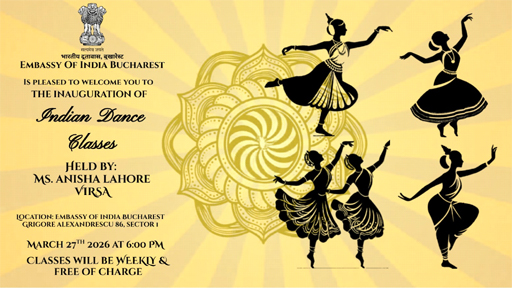

BUCHAREST (TIP): The Embassy of India in Bucharest successfully inaugurated Dance Classes at its premises on Friday, 27 March 2026. The classes are being conducted by Ms. Anisha Lahore of VIRSA – The Essence of Culture, with the objective of promoting Indian culture in Romania and strengthening people-to-people connections between the two countries. Notably, the initiative is being offered free of charge, reflecting the spirit of cultural exchange, friendship, and the longstanding ties between India and Romania.
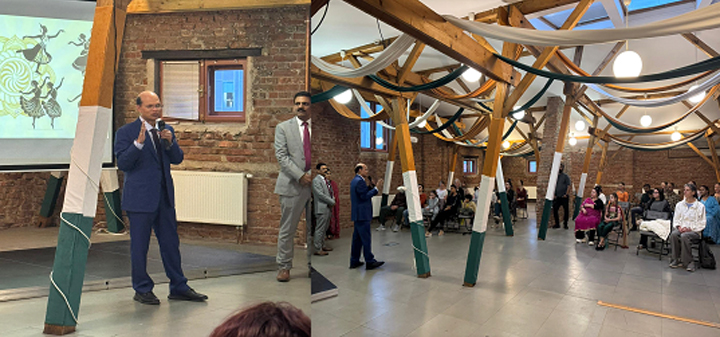
The inaugural event witnessed enthusiastic participation from members of the Indian community, Romanian friends of India, children, and representatives from business and cultural institutions. The gathering created a vibrant and celebratory atmosphere, bringing together individuals from diverse backgrounds to experience and appreciate the richness of Indian cultural traditions.
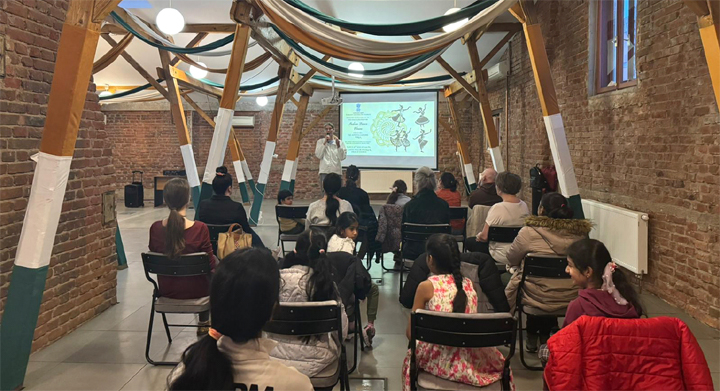
More than 100 guests attended the event, underscoring the growing interest in Indian dance, films, and cultural heritage in Romania. Participants responded very positively to the initiative and appreciated the Embassy’s efforts to showcase contemporary Indian culture. The wide participation highlighted the strong and steadily deepening cultural ties between India and Romania, countries that share a long history of friendly and cooperative relations.
H.E. Dr. Manoj Kumar Mohapatra, Ambassador of India to Romania, addressed the gathering and warmly welcomed the distinguished guests. In his remarks, he emphasized the significance of Indian culture and highlighted dance as one of its most vibrant and widely appreciated expressions. He noted that every state in India has its own unique dance forms, making dance a powerful medium for storytelling, cultural exchange, and mutual understanding between nations. He further stated that such initiatives provide a meaningful platform to share traditions, values, and artistic heritage, thereby strengthening bonds between societies.
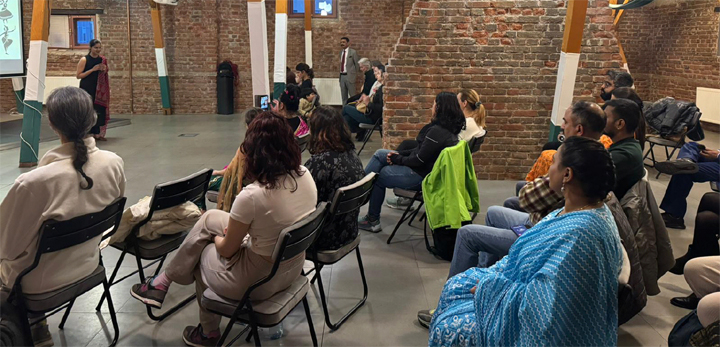
The Ambassador also expressed his sincere appreciation to Ms. Anisha Lahore and VIRSA – The Essence of Culture, for her generous gesture in offering these dance classes free of charge to both the Indian and Romanian communities. He noted that such contributions play a vital role in promoting Indian culture abroad and fostering closer people-to-people connections.
The event served as an effective cultural outreach initiative by the Embassy, showcasing the vibrancy, diversity, and expressive traditions of Indian dance. It also reinforced the Embassy’s continued commitment to promoting cultural engagement and mutual understanding between India and Romania.
The evening concluded on a warm and positive note, with participants expressing their gratitude to the Embassy for organising the dance classes and for its ongoing efforts to strengthen cultural interaction and friendship between the people of the two nations.
(Based on a press Release issued by the Embassy of India in Bucharest)
Indian classical dance is a timeless expression of India’s civilizational depth, blending rhythm, storytelling, devotion, and disciplined artistry. Rooted in the ancient treatise Natya Shastra, these dances are not merely performances but spiritual experiences, where the body becomes a medium to convey emotion (bhava) and aesthetic essence (rasa).
There are eight recognized classical dance forms in India, each representing a distinct region and cultural ethos. Bharatanatyam from Tamil Nadu is known for its geometric precision and expressive storytelling. Kathak from North India captivates with intricate footwork and swift spins. Kathakali and Mohiniyattam from Kerala offer contrasting styles—one dramatic and vibrant, the other graceful and lyrical. Kuchipudi blends dance with theatrical narration, while Odissi is distinguished by its sculptural poses. Manipuri is soft and devotional, and Sattriya has roots in monastic traditions.
These dance forms share a common language of hand gestures (mudras), facial expressions, and rhythmic patterns, yet each retains a unique identity shaped by regional traditions and histories. They often depict stories from epics like the Ramayana and Mahabharata, celebrating themes of love, valor, and devotion.
In essence, Indian classical dances are living traditions—bridging the past with the present, preserving heritage while continuing to evolve with time.


Be the first to comment