Tag: World Press Freedom Day

  • World Press Freedom Day

    World Press Freedom Day

    Observed on May 3 every year, The United Nations created this day to highlight the basic principles of press freedom worldwide. By celebrating World Press Freedom Day, journalists and supporters of democracy help protect freedom of speech, access to information, and media independence, which are constantly under attack globally.

    World Press Freedom Day is observed annually on May 3rd. Established by the United Nations General Assembly in 1993, this day serves to celebrate the fundamental principles of press freedom, assess the state of press freedom throughout the world, defend the media from attacks on their independence, and pay tribute to journalists who have lost their lives in the line of duty.
    The day also acts as a reminder to governments of the need to respect and uphold the right to freedom of expression as enshrined in Article 19 of the Universal Declaration of Human Rights. It highlights the importance of a free, independent, and pluralistic media in fostering transparency, accountability, and democracy.
    World Press Freedom Day provides an opportunity to raise awareness about the importance of press freedom and the challenges faced by journalists worldwide, including censorship, harassment, imprisonment, and violence. It also encourages dialogue and collaboration among media professionals, policymakers, civil society organizations, and the public to promote and protect press freedom around the globe.
    World Press Freedom Day History
    On the recommendation of the twenty-sixth session of UNESCO’s General Conference, World Press Freedom Day was proclaimed by the UN General Assembly in December 1993.
    May 3 acts as a reminder for the Governments to respect their commitments to press freedom. This day is a reflection for media professionals on issues of press freedom and professionals.
    World Press Freedom Day is a support day for media persons who are involved in press freedom, Journalists, media, etc.
    World Press Freedom Day 2024 Theme
    World Press Freedom Day is observed every year on May 3. It is significant for the press which deals with the information of the public on the Global Scale.
    The Theme of World Press Freedom Day 2024 is “A Press for the Planet: Journalism in the Face of the environmental crisis”.
    Significance
    The Significance of World Press Freedom Day was to celebrate the principles of press freedom, to prevent the media from attacks, and to assess the state of press freedom.
    The main aim of World Press Freedom Day was to raise awareness of the freedom of the press and freedom of expression. This day also represents a day of reflection for media professionals about issues of press freedom.
    The Global Conference provides an opportunity for journalists, civil society representatives, national authorities, and to work together for identifying solutions.
    The United Nations has celebrated World Press Freedom Day before 1993. In 1948, Article 19 said that everyone has the Right to Freedom of opinion, everyone has the right to say their opinion without fear, and everyone has the right to receive and impart their ideas through the Press and Media to the people.
    Prizes
    UNESCO marks World Press Freedom Day by conferring the UNESCO/Guillermo Cano World Press Freedom Prize on a deserving individual, organisation or institution that has made an outstanding contribution to the defence and/or promotion of press freedom anywhere in the world, especially when this has been achieved in the face of danger. Created in 1997, the prize is awarded on the recommendation of an independent jury of 14 news professionals. Names are submitted by regional and international non-governmental organisations working for press freedom, and by UNESCO member states.
    The Prize is named in honour of Guillermo Cano Isaza, a Colombian journalist who was assassinated in front of the offices of his newspaper, El Espectador, in Bogotá, on 17 December 1986. Cano’s writings had offended Colombia’s powerful drug barons.
    UNESCO also marks World Press Freedom Day each year by bringing together media professionals, press freedom organisations and UN agencies to assess the state of press freedom worldwide and discuss solutions for addressing challenges. Each conference is centred on a theme related to press freedom, including good governance, media coverage of terrorism, impunity and the role of media in post-conflict countries.
    UNESCO to host 2024 World Press Freedom Day in Chile
    The United Nations Educational, Scientific and Cultural Organization (UNESCO) will host 2024 World Press Freedom Day ceremonies in Santiago, Chile, from May 2 to 4, 2024. Celebrated every May 3, theme for this year is “A Press for the Planet: Journalism in the face of the Environmental Crisis” and focuses on the importance of journalism and freedom of expression in the context of the current global environmental crisis The 31st edition of World Press Freedom Day aims to highlight the significant role played by the press, journalism, access, and dissemination of information to ensure and secure a sustainable future that respects the rights of individuals and their diversity of voices, as well as gender equality.
    World Press Freedom Day 2024 is an important opportunity for the international community to collectively reflect on these multidimensional challenges, the fundamental role of journalism, and the transformative power that reliable information has to protect our planet, achieve sustainable development, and consolidate democracies. Partners from the media, academia, and civil society will also organize events in Santiago and around the world centered on this year’s theme.
    The Day will serve as a platform to bring together key actors and to reflect on the fundamental role of journalism and reliable information in protecting our planet, and discuss topics, including the importance of reliable and accurate information, especially that which denounces and investigates the environmental crisis and its effects.
    The conference will touch on the following
    The importance of reliable and accurate information, especially that which denounces and investigates the environmental crisis and its effects.
    Violence faced by journalists and communication workers when promoting sustainable development and environmental protection, encouraging a gender-responsive perspective that promotes non-sexist journalistic discourse.
    Support for the media to strengthen their institutional capacities to report on climate change and environmental crises, paying special attention to the viability of the media.
    Dis- and misinformation about environmental issues and its impact on public and political support for climate action, effective policies, and the protection of vulnerable communities affected by climate change.
    Use the occasion to recall the Santiago Declaration, which stresses the importance of respecting media pluralism and cultural, linguistic, and gender diversity as a fundamental factor of our democratic societies and which should be reflected in all media.

    The role of other critical voices, such as scientists and artists, will also be discussed. The urgency of tackling the massive waves of dis and misinformation about the current global environmental crisis will occupy a prominent space in next year’s agenda.
    World Press Freedom Day 2024 promises to be a pivotal moment for reflection, dialogue, and concerted action towards ensuring a press that is truly dedicated to safeguarding our planet and promoting a sustainable future for all.
    Persecution of Journalists
    Latin America and the Caribbean continues to be the region with the highest number of murders of journalists, according to the 2022 UNESCO Director-General’s Report on the Safety of Journalists and the Danger of Impunity.
    Since 1993, more than 1,600 journalists have been killed for reporting the news and bringing information to the public. In nine out of ten cases the killers go unpunished, according to the UNESCO observatory of killed journalists. Impunity leads to more killings and is often a symptom of worsening conflict and the breakdown of law and judicial systems.
    While killings are the most extreme form of media censorship, journalists are also subjected to countless threats – ranging from kidnapping, torture and other physical attacks to harassment, particularly in the digital sphere. Threats of violence and attacks against journalists, in particular, create a climate of fear for media professionals, impeding the free circulation of information, opinions and ideas for all citizens. Women journalists are particularly impacted by threats and attacks, notably by those made online. According to UNESCO’s discussion paper, The Chilling: Global trends in online violence against women journalists, 73 percent of the women journalists surveyed said they had been threatened, intimidated and insulted online in connection with their work.
    In many cases, threats of violence and attacks against journalists are not properly investigated. This impunity emboldens the perpetrators of the crimes and at the same time has a chilling effect on society, including journalists themselves. UNESCO is concerned that impunity damages whole societies by covering up serious human rights abuses, corruption, and crime.
    Journalists who were murdered
    From high-profile deaths like Jamal Khashoggi’s killing inside Istanbul’s Saudi consulate, to a shooting outside a journalist’s home in Yemen, to an attack on a convoy in South Sudan that killed five, such targeted acts to silence the press reflect government corruption and suppression of people’s rights and weaken public trust in a country’s judiciary.
    Jamal Khashoggi (Saudi Arabia)
    Jamal Khashoggi, former editor-in-chief of the Saudi newspaper Al-Watan and columnist for The Washington Post, was killed by a team of Saudi military and intelligence officials on October 2, 2018, shortly after entering the Saudi consulate in Istanbul. Turkish and Saudi courts have tried and sentenced several suspects in the case. It was revealed in September 2020 that, after Khashoggi’s murder, U.S. President Donald Trump admitted to helping shield Crown Prince Mohammed bin Salman, who ordered the journalist’s murder according to a report released by the CIA. A current lawsuit against the U.S. intelligence community seeks the release of documents that may provide information on its awareness of threats to Khashoggi’s life.
    Ahmed Hussein-Suale Divela (Ghana)
    In 2018, a member of parliament during a TV appearance threatened and encouraged violence against Ahmed Hussein-Suale Divela, and Divela had said he feared for his life. A member of the investigative journalism outlet Tiger Eye Private Investigations, 33-year-old Divela was shot and killed by two men on a motorbike in January 2019. He was driving in the Madina neighborhood of Ghana’s capital, Accra, and had been assisting government prosecutors with an investigation into corruption within the country’s soccer leagues. A Tiger Eye lawyer has called for charges to be brought upon the member of parliament, in addition to the two suspects.
    Dalia Marko (South Sudan)
    Dalia Marko, a reporter for the local radio station Raja FM, was among five journalists killed when unidentified gunmen ambushed an official convoy in South Sudan in 2015. There were 11 victims in total. According to reports, the convoy was returning from Sepo to Raja, having visited families of individuals killed in another attack by unidentified gunmen, when it was attacked with gunfire and machetes and set on fire. The motive for the attack remains unclear, and government spokesmen pointed blame at the time at different rebel groups. This is the deadliest attack on journalists in South Sudan since CPJ began collecting data in 1992.
    Natalia Estemirova (Russia)
    Since 2000, at least five journalists from independent Moscow newspaper Novaya Gazeta have been killed, including Natalia Estemirova. She also contributed to Caucasus news website Kavkazsky Uzel, served as a consultant for Human Rights Watch and was one of few people reporting on human rights abuses in Chechnya. In 2009, four men forced the 50-year-old into a car in Grozny, the capital of Chechnya, as she was leaving her apartment for work. According to press reports, the journalist shouted that she was being kidnapped as the car sped away, and later that day her body was found in the neighboring region of Ingushetia with gunshot wounds in her head and chest. A colleague believes Chechen authorities were behind the murder, condemned by former Russian President Dmitry Medvedev.
    Larry Que (Philippines)
    Publisher of weekly community newspaper Catanduanes News Now and owner of a local insurance company, Larry Que was entering an office building in December 2016 when a gunman fatally shot him in the head at close range and escaped on a motorcycle driven by an accomplice. The newspaper had recently published a column by Que alleging “official negligence” over an illegal methamphetamine laboratory and naming Catanduanes Governor Joseph Cua as responsible. Que’s wife believes Cua hired a hitman to “silence” Que. She filed a murder complaint, which police said is still under investigation as of August 2020. She also pursued charges of graft and misconduct against Cua; they were dismissed for lack of evidence.
    Nabil Hasan al-Quaety (Yemen)
    Secessionist conflict threatens justice in journalist’s murder. Journalist Nabil Hasan al-Quaety, 34, whose wife was expecting their fourth child, was killed in the southern port city of Aden on June 2, 2020. A group of men in military uniforms attempted to hit al-Quaety with their car as he exited his home and opened fire when he ran, shooting him in the head, chest and hand. The assailants then fled. A freelance reporter, videographer and photographer, al-Quaety had worked with the news outlet Agence France-Presse since 2015. The Yemeni government claims sole authority in Aden, but the city is effectively run by the Southern Transitional Council fighting for separation from the country. Both have condemned the killing, but an official investigation could prove difficult due to this makeup. A spokesman for the secessionist group said it recently embedded al-Quaety as a photographer and speculated that forces within the government may be responsible for his death.
    Danilo López (Guatemala)
    Two gunmen shot Danilo López in March 2015, while the reporter for Guatemala City daily Prensa Libre was walking in a park with a fellow journalist. In more than a decade with the newspaper, López had often written about corruption and misuse of public funds and had received threats in connection to his reporting. The case awaits a murder trial against Julio Juárez Ramírez, a former lawmaker who has been charged with orchestrating the attack and sanctioned by the U.S. Treasury Department under the Global Magnitsky Act. Courts sentenced the getaway driver to 30 years in prison, charged but have not arrested the alleged gunman and acquitted two other suspects. Authorities believe the case may be linked to an organized crime network working with a drug cartel and transferred the case in 2015 to a special court in the capital after local prosecutors investigating the crime received threats.
    Shujaat Bukhari (India)
    Four suspects are yet to be charged in the June 2018 killing of Shujaat Bukhari, founding editor of Rising Kashmir newspaper. Several unidentified gunmen fired at him as he was leaving his office for an iftar party. He suffered injuries to the head and abdomen and died, as did two police officers who had been assigned to protect him after an attack in 2000. In the days preceding the incident, Bukhari had requested additional security amid the conflict-ridden situation in Kashmir. Police claimed that Lashkar-e-Taiba, a Pakistan-based militant group was responsible, but the group has denied involvement. In November 2018, police and the army killed one of the prime suspects in a shootout. There have been no updates in the case since.
    Norma Sarabia Garduza (Mexico)
    In June last year, unknown attackers shot and killed reporter Norma Sarabia, 46, at the front door of her residence in Huimanguillo, in the southern state of Tabasco. She had received frequent death threats as a correspondent for newspapers Diario Presente and Tabasco HOY and had recently reported on a series of violent crimes, including murders and a kidnapping. Soon after her death, the Tabasco state attorney general’s office said in a statement released on Twitter that it had opened an investigation. To date, however, there has still been little movement in the investigation. Sarabia is one of 56 journalists killed in Mexico since 1992.
    Daphne Caruana Galizia (Malta)
    Daphne Caruana Galizia, a prominent journalist who reported on corruption and helped cover the Panama Papers, was killed in Malta in October 2017 by a car bomb near her house. Her widely read blog, Running Commentary, included investigative reports and commentary on politicians. Former Maltese Prime Minister Joseph Muscat considered Galizia a harsh critic of his but condemned the “barbaric” attack and stepped down in January 2020 over the political crisis sparked after the case. Four men have been in detention—some since December 2017—but no trial date has been set. CPJ and 18 other organizations have called on authorities to prevent political interference in the investigation.
    Gauri Lankesh (India)
    She was an Indian activist and journalist from Bangalore, Karnataka. She worked as an editor in Lankesh Patrike, a Kannada weekly started by her father P. Lankesh, and ran her own weekly called Gauri Lankesh Patrike. She was murdered outside her home in Rajarajeshwari Nagar on 5 September 2017. At the time of her death, Gauri was known for being a critic of right-wing Hindu extremism. She was honoured with Anna Politkovskaya Award for speaking against right-wing Hindu extremism, campaigning for women’s rights and opposing caste based discrimination.

  • Stop detaining and imprisoning journalists for doing their jobs: U.N. chief Guterres on World Press Freedom Day

    Stop detaining and imprisoning journalists for doing their jobs: U.N. chief Guterres on World Press Freedom Day

    World Press Freedom Day is observed annually on May 3

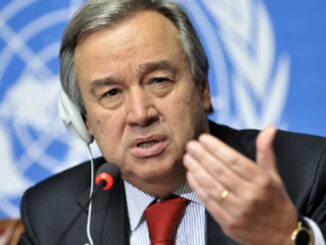
    UNITED NATIONS (TIP): U.N. Secretary-General Antonio Guterres on May 2 urged the international community to “speak with one voice” and call for stopping the detention and imprisonment of journalists for doing their jobs, as he sounded an alarm that freedom of the press is under attack in every corner of the world.
    Mr. Guterres underscored that “all our freedom” depends on press freedom.
    “Freedom of the press is the foundation of democracy and justice,” he said in his video message ahead of World Press Freedom Day 2023.
    World Press Freedom Day is observed annually on May 3.
    “On this and every World Press Freedom Day, the world must speak with one voice – Stop the threats and attacks. Stop detaining and imprisoning journalists for doing their jobs. Stop the lies and disinformation. Stop targeting truth and truth-tellers,” Guterres said in the message telecast in the UN General Assembly Hall here at a special event organized by UNESCO. Mr. Guterres voiced concern that in every corner of the world, freedom of the press is under attack. “Truth is threatened by disinformation and hate speech, seeking to blur the lines between fact and fiction, between science and conspiracy,” he said.
    He noted that at least 67 media workers were killed in 2022, an “unbelievable” 50 per cent increase over the previous years and nearly three-quarters of women journalists have experienced violence online and one in four have been threatened physically.
    “Journalists and media workers are directly targeted on and offline as they carry out their vital work. They are routinely harassed, intimidated, detained and imprisoned,” he said.
    The U.N. chief also added that the increased concentration of the media industry into the hands of a few, the financial collapse of scores of independent news organizations and the increase of national laws and regulations that stifle journalists are further expanding censorship and threatening freedom of expression.
    The event organized by UNESCO marks 30 years since the U.N. General Assembly’s decision proclaiming an international day for press freedom. This year’s theme for the Day is ‘Shaping a Future of Rights: Freedom of expression as a driver for all other human rights.’
    UNESCO Director-General Audrey Azoulay said hundreds of journalists globally have been attacked and imprisoned “just because they are doing their work. It is unacceptable.” She added that the level of impunity of crimes against journalists sends a “frightening” message and stressed that the security of journalists is a matter for society as a whole.
    Delivering the keynote address, Chairman and Publisher of The New York Times A.G. Sulzberger said that when the free press erodes in a society, “democratic erosion almost always follows.” He said all over the world, autocrats and those who aspire to join their ranks have used censorship, media repression and attacks on journalists to consolidate power. “That’s because gaining control of information is essential to gaining control of everything else.” He added that in countries where press freedoms were strong, including the United States, journalists now face systematic campaigns to undermine their credibility, followed by attacks on the legal
    protections that safeguard their work.
    In countries where press freedoms were already weak, journalists now face surging levels of violence, detention and harassment, he said adding that more journalists are being killed today for their work and the number of imprisoned journalists has reached a grim new record.
    “Spin a globe and you’ll find examples of these trends. In China, journalists are surveilled, intimidated and jailed…In Egypt, the government has used security services to buy up outlets and block uncooperative news sites…In India, authorities have raided newsrooms and treated journalists essentially as terrorists,” Sulzberger said.
    Referring to the situation in Russia, he said journalists who “dare to even acknowledge the war in Ukraine face long prison terms.” He called for the release of The Wall Street Journal reporter Evan Gershkovich, “who remains in Russian custody for sham charges.” Gershkovich was detained in March this year by Russian security services and is being held on an allegation of espionage.
    (Source: PTI)

  • Assault on Media Continues across the Globe

    Assault on Media Continues across the Globe

     India’s record on violations against Journalists has been among the worst in recent times. A nation, said to be the “beacon of hope” and the “largest democracy” in the world dropped eight laces to 150 — out of 180 countries — on the World Press Freedom Index compiled by the Paris-based Reporters Without Borders (RSF) for 2022. The index’s report notes that “with an average of three or four journalists killed in connection with their work every year, India is one of the world’s most dangerous countries for the media.” In the current year alone, it states, while one journalist has been killed, another 13 are behind bars. 

    By Ajay Ghosh

    “Finally, it is also an important right in a free society to be freely allowed to contribute to society’s well-being. However, if that is to occur, it must be possible for society’s state of affairs to become known to everyone, and it must be possible for everyone to speak his mind freely about it. Where this is lacking, liberty is not worth its name, Peter Forsskål, a philosopher, theologian, botanist and orientalist wrote in his pamphlet, Thoughts on Civil Liberty, published in Stockholm in 1759.

    And, it’s noteworthy that The World Press Freedom Day in Helsinki in 2016 adopted the Access to Information and Fundamental Freedoms, which is the right of every human being around the world, and its three perspectives: freedom of information as a fundamental freedom and a human right; protecting press freedom from censorship and surveillance overreach; and ensuring safety for journalism online and offline. Freedom of expression is a fundamental human right, and a prerequisite for several other democratic rights. It is a right, but it implies responsibility and respect for the rights of others. The role of media has been changing rapidly, especially in recent times, with the advent of social media platforms where not only the news and views of the trained and well-established journalists are published, but anyone has the right reports, post a comment and be appreciative or critical of people, programs and policies for their worth. The media is expected to be the “watchdog” of the other three branches of the government. Promoting the safety of journalists and combatting impunity for those who attack them are central elements within UNESCO’s support for press freedom on all media platforms. Media is described as the Fourth Estate after the executive, legislature, and judiciary.

    However, media has been constantly criticized, intimidated and their rights taken away for being the “watchdog.’ There are many forces assaulting journalism around the world: misinformation, intimidation, pressures on revenue models, and a growing trend of autocrats attacking press freedoms. Journalists are attacked, and imprisoned and their rights to disseminate news and views taken away in numerous countries across the globe. According to UNESCO, on average, every five days a journalist is killed for bringing information to the public. Attacks on media professionals are often perpetrated in non-conflict situations organized crime groups, militia, security personnel, and even local police, making local journalists among the most vulnerable. These attacks include murder, abductions, harassment, intimidation, illegal arrest, and arbitrary detention.”

    The 2020 UNESCO Director-General’s Report on the Safety of Journalists and the Danger Impunity stated that with 22 killings each, Latin America and the Caribbean, together with Asia and the Pacific, registered the highest number of fatalities among journalists.

    These organized crimes and strategies to prevent journalists, media and media platforms are not unique to the Third World or autocratic/tyrant rule d states alone. They are occurring on a daily basis in well-established democracies, using so called “democratic laws” as well as in those nations and their rulers who have no regard for freedom of speech and do not tolerate dissent or criticism.

    It’s noteworthy, after four years of contestant attacks on the media by his predecessor, President Jose Biden of the United States has kept the media at arm’s length while being decidedly less combative than his predecessor with reporters, an approach that was on display when he attended the White House Correspondents’ Association dinner this year.  It’s an approach that administration officials say is deliberate, and that Democrats say is part of Biden’s effort to return the White House to a more normal rapport with the media.

    Meanwhile, the US Department of Justice and Federal Trade Commission (FTC) under the Trump and Biden administrations are now going after tech giants in antitrust lawsuits, based on deals that were solidified under Obama’s watch. The FTC’s case against Facebook seeks to undo the company’s acquisitions of WhatsApp and Instagram that were approved under the former president.

    Filipino American media executive and Nobel Peace Prize laureate Maria Ressa, founder of the digital media outlet Rappler in the Philippines in 2012, has become the target of a series of attacks. Ressa has been arrested several times. This month, with the new administration of Bongbong Marcos in place, Rappler was ordered to shut down, for being the voice of the people.

    Rana Ayyub, a senior journalist summarized the state of today’s journalistic fraternity: “The burden of bearing witness and speaking truth to power comes at great personal risk for journalists in many countries around the world. They live a relentless struggle, slapped with lawsuits and criminal cases for sedition, defamation, tax evasion and more. Their lives, and too often the lives of their families, are made miserable.” Ayyub points to the heinous crimes inflicted on “Gauri Lankesh, Daphne Caruana Galizia and Jamal Khashoggi—all journalists with a profile, all brazenly killed in broad daylight. Their murders dominated the front pages of international publications. But their killers, men in power, remain unquestioned not just by the authorities but often by publishers and editors who develop a comfortable amnesia when meeting those in power. They do not want to lose access to them.”

    The Committee to Protect Journalists (CPJ) Termed the recent murders of British journalist Dom Phillips and Indigenous issues expert Bruno Pereira, whom police suspect were killed by people with ties to illegal fishing in the Amazon, amounted to a “nightmare” come true. “Central African Republic authorities should investigate the threats made against journalist Erick Ngaba and ensure his safety,” said Angela Quintal, CPJ’s Africa program coordinator, in Durban, South Africa. “The security situation in the Central African Republic is worrisome enough for media professionals without additional online harassment.”

    India’s record on violations against Journalists has been among the worst in recent times. A nation, said to be the “beacon of hope” and the “largest democracy” in the world dropped eight laces to 150 — out of 180 countries — on the World Press Freedom Index compiled by the Paris-based Reporters Without Borders (RSF) for 2022. The index’s report notes that “with an average of three or four journalists killed in connection with their work every year, India is one of the world’s most dangerous countries for the media.” In the current year alone, it states, while one journalist has been killed, another 13 are behind bars.

    In fact, in the last 20 years, India, which was ranked 80th on the index in 2002, has seen its press freedom ranking progressively plummet. The country profile by RSF on India also says that “the Indian press used to be seen as fairly progressive but things changed radically in the mid-2010s, when Narendra Modi became prime minister and engineered a spectacular rapprochement between his party, the BJP, and the big families dominating the media.”

    Twitter’s latest transparency report, for July-December 2021 says that the country made the highest number of legal demands to remove content posted by verified journalists and news outlets on Twitter. Of the total 326 legal demands Twitter received globally, against 349 accounts of verified journalists, India sent in 114 legal demands. India in fact also raised the second highest number of information requests, after the US, accounting for 19% of global information requests and 27% of the global accounts specified. Information requests seek details about an account and are issued by law enforcement or government agencies.

    Terming the Indian press as “a colossus with feet of clay”, RSF adds that Indian “journalists are exposed to all kinds of physical violence including police violence, ambushes by political activists, and deadly reprisals by criminal groups or corrupt local officials” by “supporters of Hindutva” with the situation “very worrisome in Kashmir where reporters are often harassed by police and paramilitaries.”

    If the powerful rulers of the countries use their power to intimidate the media world, the public are not immune to such ill thought out and narrow views. For some it’s their ideology that motivates them, for others it’s the belief in their “leader” who spreads lies and the flock follow them blindly, and for some who are so called well educated and well informed, it’s their goals to attain power, position and prestige in the society. Recently, I came across on a WhatsApp media posting, where a picture of half a dozen veterans, well respected and award-winning journalists meeting with a Justice of the Supreme Court of India were called as “traitors of India” because they criticize and point to the ruling party for its policies that do not benefit the people of India, but the members of the ruling regime.

    Speaking at a Stanford University event, former US President Barack Obama called the present as “another tumultuous, dangerous moment in history,” where social media platforms are well-designed to destroy democracies. “Disinformation is a threat to our democracy, and will continue to be unless we work together to address it,” he said.

    According to analysts, while free speech is protected by both the EU Charter of Fundamental Rights and the European Convention on Human Rights, these legal instruments offer governments much greater leeway than the First Amendment of the U.S. Constitution when it comes to defining categories, such as hate speech, that can be regulated.

    Reports state. the European Union is in the midst of finalizing the Digital Services Act (DSA), an ambitious legislative attempt to create a “global gold standard” on platform regulation. After five trilogues, on April 23, the European Parliament and European Council reached a provisional political agreement on the DSA. As such, the DSA is likely to affect the practical exercise of free speech on social media platforms, whether located in Silicon Valley or owned by American tech billionaires.

    Freedom of expression is a vital part of democracy, considering it does not cross the “Lakshman Rekha” of public order and morality, said former Chief Justice of India Ranjan Gogoi.

    Gogoi, while expressing his views on action against individuals over social media posts, said, “Now on social media — is a critical part of healthy democracy, so long as it does not cross the Lakshman Rekha of public order and morality, be it against an individual or an institution. If the opinion is within the line (of public order), it should not be restrained…,” said Gogoi.
    Adding that such an opinion should be based on facts and bonafide information, the former CJI said, “If it is an opinion not based on facts and disturbs public order and transgresses morality or creates distrust among the public for the institution, posing a threat to national interest, action needs to be taken. Nothing can be bigger than national interest.”
    Gogoi also said that the present generation youth in the country are fortunate to have the power of social media. “It is a powerful tool, but it can be misused, which is unfortunate… Youth today, who wish to enter public life or politics must be aware that they cannot be successful unless they work hard and base their journey on facts. This is because it is very easy for misinformation to be spread…”

    Media reports pointed out that in the first quarter of 2018, Facebook removed 2.5 million pieces of content for the transgression of community standards on hate speech. By the third quarter of 2021, the number had increased almost tenfold to 22.3 million. This was mainly the result of increased reliance on AI-based content-filtering algorithms. In 2018, AI caught 4 out of 10 transgressions before any user complaint, but in the third quarter of 2021, this rose to 96.5 percent.

    “We’ve come a long way towards realizing freedom of expression, and other fundamental freedoms. The right to access to information is entrenched in law in over a hundred countries,” said Secretary-General Guterres of the United Nations during the 70th anniversary of the Geneva Association of UN Correspondents (ACANU). “But despite these advances, in recent years, civic space has been shrinking worldwide at an alarming rate.”

    In the midst of all these, some recommend a model that would “encourage the implementation of human-rights standards as a framework of first reference in the moderation practices of large social media platforms. This would result in a social media environment that would be both more transparent and protective of users’ free speech on categories such as hate speech and disinformation. Using human rights law as the standard of content moderation would also provide platforms with norms and legitimacy to resist demands to censor dissent made by authoritarian states keen to exploit the well-intentioned but misguided attempts by democracies to rein in harmful online speech.” Stating that Journalism and the media are “essential to peace, justice, sustainable development and human rights for all – and to the work of the United Nations,” Guterres noted, paying tribute to reporters who “go to the most dangerous places on earth, to bring us important information, to give a voice to people who are being ignored and abused, and to hold the powerful to account. Your work reminds us that truth never dies, and that our attachment to the fundamental right that is freedom of expressions must also never die… Informing is not a crime.”

    (The author is Chief Editor of Universal News Network)

  • Free press makes for a stronger democracy: PM Modi on World Press Freedom Day

    Free press makes for a stronger democracy: PM Modi on World Press Freedom Day

    The United Nations General Assembly had declared May 3 as World Press Freedom Day to raise awareness about freedom of press.

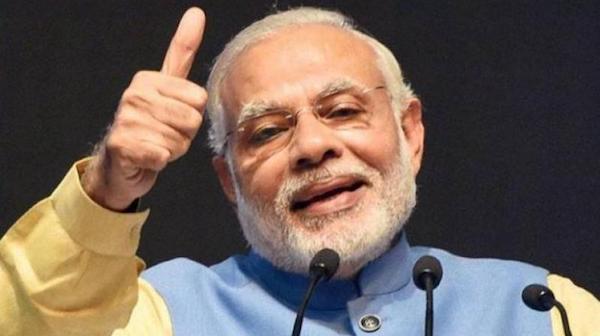
    NEW DELHI(TIP): Multiplicity of ideas and human expression make us more vibrant as a society and a free press makes for a stronger democracy, Prime Minister Narendra Modi said on World Press Freedom Day on Thursday, May 3.

    “Today on #WorldPressFreedomDay, let us reaffirm our commitment towards steadfastly supporting a free press. It is the multiplicity of ideas and human expression that makes us more vibrant as a society,” he said in a series of tweets.

    Narendra Modi

    ✔@narendramodi

    A free press makes a stronger democracy! Today on #WorldPressFreedomDay, let us reaffirm our commitment towards steadfastly supporting a free press. It is the multiplicity of ideas and human expression that makes us more vibrant as a society.

    2:56 AM – May 3, 2018

    Prime Minister Narendra Modi applauded all those who have been working tirelessly to uphold the freedom of press.

    “It is due to these countless women and men that the spirit of a free press is significantly enhanced…would once again like to appreciate the proactive role of everyone on social media for their commendable work towards safeguarding the freedom of press and expression,” the Prime Minister tweeted.

    Narendra Modi

    ✔@narendramodi

     I applaud all those who have been working tirelessly to uphold freedom of press. It is due to these countless women and men that the spirit of a free press is significantly enhanced. #WorldPressFreedomDay

    2:56 AM – May 3, 2018

    The United Nations General Assembly had declared May 3 as World Press Freedom Day to raise awareness about freedom of press.

    (Source: PTI)