Tag: YEAR IN REVIEW

  • Tragedies that shook India in 2025

    Tragedies that shook India in 2025

    From deadly stampedes and terror attacks to plane crashes, floods and industrial disasters, 2025 saw hundreds of deaths across India. Here are the major tragedies that shook India to the core this year.

    2025: A Year Of Death And Disaster For India
    Hundreds of lives were lost in several incidents across India, including stampedes, natural disasters, accidents, and terror attacks. Incidents like the Maha Kumbh Mela stampede, the Pahalgam terror attack, the Air India crash, the Delhi blast and others have shaken the nation to the core. Some tragic incidents also exposed negligence and mismanagement, while others were acts of sudden violence or unleashed by nature. These incidents have left deep scars on communities and raised urgent questions about safety, preparedness and accountability.
    Maha Kumbh Mela Stampede
    At least 30 people were killed, while 60 others were injured at the world’s largest religious gathering of Maha Kumbh Mela in Prayagraj on January 29, 2025. Thousands of pilgrims had gathered to take a holy dip in the Sangam on the occasion of Mauni Amavasya, one of the most auspicious days of the Hindu calendar. The 45-day-long festival witnessed over 660 million pilgrims in total.
    New Delhi Railway Station Stampede
    At least 18 people were killed, and 15 were injured in a stampede at New Delhi Railway Station late on February 15. The incident occurred after a sudden surge of passengers waiting to board trains to Prayagraj for the ongoing Maha Kumbh. Severe overcrowding on platforms 12 and 14 led to panic and chaos, resulting in one of the deadliest crowd crushes at the station in recent years.
    Telangana Tunnel Collapse
    On 22 February, in Telangana’s Nagarkurnool district, a section of the Srisailam Left Bank Canal tunnel under construction collapsed, trapping workers inside. Rescue teams fought hazardous conditions in an attempt to reach those buried under debris. The accident claimed the lives of at least eight workers, highlighting serious concerns over safety standards at major infrastructure worksites.
    Bengaluru Stampede
    On June 4, 2025, Bengaluru’s IPL victory celebrations turned tragic when a massive crowd crush occurred near the M. Chinnaswamy Stadium. Over two lakh fans gathered for the Royal Challengers Bengaluru (RCB) felicitation, leading to chaos. Asphyxia claimed the lives of 11 people, while many others were injured. The tragedy highlighted the dangers of severe overcrowding and poor crowd control during the victory event.
    Air India Flight 171 Crash
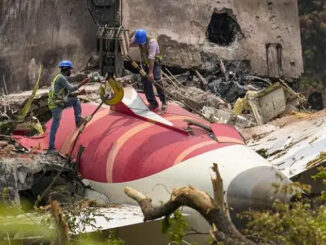
    In one of the deadliest plane crashes in history, London-bound Air India Flight 171, carrying 242 people onboard, crashed moments after taking off from the Sardar Vallabhbhai Patel International Airport in Ahmedabad on June 12. The Boeing 787 Dreamliner crash resulted in the death of 241 people on board, leaving only one survivor. Other casualties were also reported on the ground at the site of the crash, bringing the total death toll to 260. The investigation into the incident is still underway.
    Telangana Chemical Factory Explosion
    A massive explosion occurred at Sigachi Industries Limited in Pashamylaram, Sangareddy district, on June 30, killing 54 people and leaving eight missing. The blast, which flattened a three-story production building, was likely triggered by the ignition of a combustible dust cloud in a confined area. A technical committee cited gross negligence, including the use of untrained staff and outdated machinery, as primary causes.
    Uttarkashi Flash Flood
    On August 5, a devastating cloudburst (later suspected to be a glacial lake outburst) hit Dharali and Harsil villages in Uttarkashi. The resulting flash floods along the Kheer Ganga river claimed at least 5 lives, with over 50 people – including 11 Army personnel – missing. The deluge destroyed nearly 30 homes and 20 hotels. A massive rescue operation involving the Army, NDRF, and SDRF successfully evacuated over 400 people.
    Kishtwar Flash Flood
    On August 14, a massive cloudburst struck Chasoti village in Kishtwar, Jammu and Kashmir, killing at least 50 people and injuring 100 others. The disaster occurred midday when a large number of people had gathered for the Machail Mata yatra, catching a large gathering of pilgrims off guard. A massive rescue operation was launched involving the Army, NDRF, and SDRF to locate the missing and provide medical aid to survivors in the remote region.
    Karur Stampede
    On September 27, a tragic stampede occurred during a political rally for the Tamilaga Vettri Kazhagam (TVK) party, founded by actor-turned-politician Vijay. The incident took place at Velusamypuram in Karur district, Tamil Nadu, when large sections of the crowd surged towards Vijay in an attempt to catch a glimpse of his convoy after his arrival was delayed by nearly seven hours, leading to a stampede and crowd mismanagement. In the incident, 41 people were killed while over 100 others were injured.
    Nowgam Explosion
    At least nine people were killed, and 29 were injured after a blast at Nowgam Police Station in Jammu and Kashmir, which was investigating the “white-collar” Faridabad terror module, late November 14. The accidental explosion occurred when personnel were extracting samples from the cache of explosives, the officials said.
    Goa Nightclub Fire
    On December 6, a massive blaze erupted at the Birch by Romeo Lane nightclub in Arpora, North Goa, killing 25 people. Following the incident, the nightclub’s owners, Gaurav and Saurav Luthra, fled to Thailand. Investigators revealed that the venue lacked mandatory fire safety equipment and had no proper emergency exits on either the ground floor or the deck, despite hosting a large number of patrons. The fire left people trapped, with little chance to escape. The police have said that the Luthra brothers were aware of the safety lapses but went ahead with the event regardless. The brothers arrested in Delhi on December 16, after being deported from Bangkok, are now facing trial.

  • Newsmakers of 2025: Faces who defined India

    Every year brings a set of personalities whose actions, achievements, controversies, or resilience leave a lasting imprint on the nation. In 2025, India witnessed political shifts, cultural milestones, sporting triumphs, and social movements that captured headlines and public imagination. From stalwarts consolidating power to rising stars challenging the status quo, these individuals shaped national discourse and became the defining newsmakers of the year.
    Political Titans and Game Changers
    Narendra Modi – Steering India Through Turbulent Times
    Prime Minister Narendra Modi dominated headlines throughout 2025. The Lok Sabha elections, which resulted in a redefined political landscape, tested both his leadership and the ruling party’s organizational strength. The elections were marked by new alliances, shifting vote banks, and youth engagement, and Modi’s campaign strategy, combining mass outreach with digital mobilization, proved decisive.
    Beyond elections, the Prime Minister’s management of national security crises, including the Pahalgam massacre and the Red Fort car bombing, showcased a balancing act between diplomatic restraint and domestic action. His speeches emphasized unity and resilience, reinforcing his image as a decisive yet composed leader. Policy measures in renewable energy, digital governance, and infrastructure expansion also kept him in constant media focus.
    Rahul Gandhi – The Opposition Voice
    Rahul Gandhi, former Congress President and prominent leader of the opposition, emerged as one of the most vocal and active political figures of 2025. He played a critical role during the Lok Sabha elections, articulating the Congress party’s vision and critiquing government policies on employment, agrarian distress, and democratic accountability.
    Post-elections, Rahul Gandhi continued to influence the national conversation, focusing on democratic reforms, women’s reservation in legislatures, and social welfare measures. His speeches in Parliament, combined with media engagements and social campaigns, kept him consistently in the public eye, making him a central figure in debates over governance and policy. His efforts to revitalize grassroots politics and connect with youth voters reinforced his status as a key newsmaker of the year.
    Mallikarjun Kharge – Strategic Opposition Leader
    As leader of the opposition in Parliament, Mallikarjun Kharge complemented Rahul Gandhi’s activism by steering legislative debates, holding the government accountable, and highlighting policy gaps. His calm but assertive approach to parliamentary oversight earned him respect and media attention throughout the year.
    Smriti Irani – Championing Social and Educational Initiatives
    Union Minister Smriti Irani gained widespread recognition in 2025 for her work in women’s empowerment, education reform, and skill development initiatives. From launching innovative digital education programs to advocating for safety measures for women across states, her proactive approach made her a consistent feature in national headlines.
    Entertainment Icons
    Alia Bhatt – Redefining Contemporary Cinema
    Alia Bhatt had a breakthrough year, starring in films that blended social messaging with mainstream appeal, tackling themes such as mental health, gender equality, and urban isolation. Beyond acting, she made waves as a producer, supporting independent cinema and creating opportunities for emerging filmmakers. Her social advocacy, particularly in raising awareness about women’s safety and mental health, cemented her status as a newsmaker beyond the silver screen.
    Shah Rukh Khan – Global Ambassador of Indian Cinema
    SRK continued to be a focal point in entertainment news, with international collaborations and strategic business ventures drawing media attention. His philanthropic work, including educational and health initiatives, coupled with high-profile appearances at global events, kept him relevant in both film and social discourse.
    Rashmika Mandanna – The Pan-Indian Star
    Rashmika’s 2025 releases, including ‘Cocktail 2’ and other high-profile romantic comedies, cemented her status as one of India’s most bankable stars. She emerged as a youth icon, with her interviews, brand endorsements, and social media presence generating significant media coverage.
    Sports Stars – Triumphs and Glory
    Virat Kohli – The Cricketing Maestro
    Virat Kohli remained in the headlines for his leadership in domestic and international cricket. His focus on mentoring young talent, coupled with spectacular performances in high-stakes tournaments, ensured his position as one of India’s most influential sports figures.
    PV Sindhu – Bringing Glory to Indian Badminton
    PV Sindhu continued her remarkable run on the global stage, winning medals at world championships and inspiring a new generation of athletes. Her dedication, combined with advocacy for women in sports, made her a symbol of national pride.
    Neeraj Chopra – The Javelin Phenomenon
    Neeraj Chopra’s consistency and record-breaking performances in athletics kept him in the news throughout 2025. His commitment to training and representing India internationally highlighted the growing stature of Indian athletes on the world stage.
    Business Leaders and Entrepreneurs
    Ratan Tata – The Philanthropic Visionary
    Even in 2025, late Ratan Tata made headlines for philanthropic initiatives and mentoring young entrepreneurs, particularly in sectors like sustainability, healthcare, and technology innovation. His voice carried moral authority, blending business acumen with social responsibility.
    Mukesh Ambani – Expanding the Corporate Footprint
    Mukesh Ambani remained central in business news due to Reliance Industries’ expansion into renewable energy, digital infrastructure, and consumer tech. Ambani’s strategic partnerships, both domestic and international, reflected India’s growing corporate influence globally.
    Byju Raveendran – Revolutionizing Education Technology
    Byju continued to innovate in edtech, expanding learning platforms for students across India and abroad. International collaborations and initiatives to bridge digital education gaps kept him prominently in the news.
    Social Activists and Thought Leaders
    Medha Patkar – Environmental and Social Advocacy
    Patkar remained active in campaigning against displacement due to industrial and infrastructure projects, advocating for the rights of marginalized communities. Her involvement in nationwide environmental movements drew media attention and public support.
    Kiran Bedi – Law Enforcement and Public Safety Initiatives
    The former IPS officer maintained a visible presence in media discussions on police reforms, women’s safety, and governance accountability, further establishing her as a respected public intellectual.
    Faye D’Souza – Journalism with a Purpose
    Faye D’Souza continued to challenge societal and political narratives through fearless reporting. Her investigative journalism on social justice issues kept her at the forefront of media discourse.
    Science, Technology, and Health Pioneers
    Dr. Gagandeep Kang – Public Health Leadership
    Dr. Kang’s research and policy contributions in vaccine development and public health continued to influence India’s approach to health crises. Her work on community immunization and disease prevention kept her in the public eye.
    Shubhanshu Shukla
    A group captain and test pilot with the Indian Air Force (IAF) and gaganyatri (astronaut) with the Indian Space Research Organisation (ISRO). In July 2025 Shukla became the first ISRO astronaut to visit the International Space Station (ISS) while participating in Axiom Mission 4, a privately organised spaceflight. He is the second Indian to travel to space, following Rakesh Sharma’s flight in 1984.
    Cultural and Artistic Icons
    Anish Kapoor – International Artistic Influence
    Kapoor’s 2025 exhibitions, blending traditional Indian motifs with contemporary art, made waves globally, reinforcing India’s cultural influence in the art world.
    Zoya Akhtar – Filmmaking for Social Change
    Akhtar received accolades for films addressing gender, class, and societal challenges, making her a leading figure in socially conscious cinema.
    Raghu Dixit – Music as Activism
    Through cross-cultural performances and social messaging in his music, Dixit remained a prominent cultural voice in 2025.
    Emerging Faces
    2025 also saw young innovators, activists, and artists making headlines:
    – Aarav Mehta: Climate activist leading nationwide youth initiatives.
    – Ananya Singh: Health-tech entrepreneur gaining recognition for digital healthcare innovations.
    – Ishan Kapoor: Independent filmmaker whose socially relevant narratives gained national and international attention.
    Reflections on the Year
    The newsmakers of 2025 represent India’s diversity – politics, sports, entertainment, science, and social activism. Some shaped public opinion, some inspired change, and others became symbols of accountability and courage. The inclusion of Rahul Gandhi as a central opposition leader highlights the balance of political forces shaping discourse. As India prepares for 2026, these individuals embody stories of resilience, influence, and aspiration, and will continue to shape the narratives that define the nation.

  • Remembering the icons we lost in 2025 – India’s cultural & artistic giants

    They shaped our imagination, our language of emotions, our collective memory. In 2025, India paused repeatedly-to mourn, to remember, and to honor those whose lives left an indelible imprint on its cultural soul.
    The year 2025 will be remembered as one of profound transition-not merely for political churn or social change, but for the quiet departures of giants who had long been part of India’s everyday life. Actors whose faces felt familiar as family, singers whose voices became emotional landmarks, creators who shaped how India spoke to itself-many took their final bow this year.
    What united these losses was not just fame, but enduring relevance. These were figures who had outlived trends, crossed generations, and remained woven into India’s shared consciousness. Their passing marked the end of eras-and the beginning of reflection.
    Dharmendra (1935-2025): The Eternal He-Man with a Gentle Soul
    For over six decades, Dharmendra stood tall as one of Hindi cinema’s most enduring leading men. Dubbed the “He-Man” of Bollywood, he embodied rugged masculinity-but beneath the brawn lay an actor of extraordinary emotional sensitivity.
    From the rebellious passion of Phool Aur Patthar to the stoic righteousness of Satyakam, from the thunderous camaraderie of Sholay to the playful warmth of Chupke Chupke, Dharmendra moved effortlessly between intensity and tenderness. He represented an India that was idealistic yet grounded, heroic yet humane.
    In his later years, Dharmendra became less a star and more a living institution-a bridge between cinema’s golden age and its modern reinventions. His death in November 2025 prompted tributes that cut across generations, languages, and ideologies. For many, he was not just an actor-but a reminder of cinema’s moral heart.
    Manoj Kumar (1937-2025): Cinema’s Conscience Keeper
    Known eternally as “Bharat Kumar,” Manoj Kumar redefined patriotism on screen-not through spectacle, but through quiet conviction. At a time when nationalism was still finding its post-Independence voice, his films spoke directly to the nation’s conscience.
    Upkar, Purab Aur Pachhim, Roti Kapda Aur Makaan-these were not merely films, but cultural statements. Manoj Kumar believed cinema had a responsibility to society, and his body of work reflected that belief with unwavering clarity.
    His passing in April 2025 felt symbolic, coming at a time when India was once again debating ideas of nationhood, identity, and belonging. His films remain a reminder that patriotism, at its strongest, is rooted in empathy and social justice.
    Kamini Kaushal (1927-2025): A Pioneer Who Refused to Fade
    Kamini Kaushal belonged to an era when women on screen were expected to vanish after marriage. She quietly-and resolutely-defied that norm.
    From her historic debut in Neecha Nagar to her continued presence in cinema across decades, Kamini Kaushal embodied dignity, restraint, and inner strength. She aged on screen with grace at a time when roles for older women were scarce-and often stereotyped.
    Her passing closed a rare chapter of Indian cinema: that of an actress who had witnessed-and participated in-its journey from pre-Independence realism to contemporary storytelling.
    Asrani (1941-2025): Laughter That Outlived the Punchline
    Comedy in Indian cinema has often been underestimated. Asrani proved it could be immortal.
    Whether as the unforgettable jailer in Sholay or the gentle disruptor in Hrishikesh Mukherjee classics like Guddi and Chupke Chupke, Asrani possessed a rare gift-he could make audiences laugh without malice, satire without cruelty.
    His death in October 2025 felt deeply personal to viewers who had grown up repeating his dialogues, often without remembering when they first heard them. His legacy is laughter that never felt dated-and kindness that never felt forced.
    Satish Shah (1952-2025): Wit, Warmth, and the Middle-Class Mirror
    Few actors captured the quirks of India’s urban middle class as sharply as Satish Shah. With impeccable comic timing and observational humour, he made everyday absurdities unforgettable.
    For a generation, he will forever remain Indravadan Sarabhai-opinionated, sarcastic, and oddly lovable. Yet his career stretched far beyond sitcom fame, encompassing theatre, cinema, and voice work.
    Satish Shah’s death marked the loss of an actor who made intelligence funny and humor thoughtful-a rare balance in popular entertainment.
    Zubeen Garg (1972-2025): The Voice of a Region, the Sound of a Generation
    Zubeen Garg was not just a singer-he was a cultural movement. From Assam to Bollywood, his voice carried emotion, defiance, and deep-rooted identity.
    Equally at home singing soulful Bollywood numbers and Assamese folk-inspired compositions, Zubeen represented a generation of artists who refused to be boxed into one language or geography.
    His sudden passing in September 2025 sent shockwaves across the Northeast and beyond, highlighting how deeply regional voices have shaped India’s national cultural fabric.
    Pankaj Dheer (1956-2025): The Warrior with a Tragic Grace
    To millions, Pankaj Dheer will always be Karna-the noble warrior wronged by fate. His portrayal in Mahabharat was marked by dignity, restraint, and quiet pain.
    Beyond mythological television, Dheer worked steadily in films and serials, embodying authority figures with moral complexity. His death in October 2025 reminded audiences of an era when television characters were written-and performed-with epic gravitas.
    Mukul Dev (1971-2025): The Actor Who Thrived in the Shadows
    Mukul Dev never chased stardom-yet he never went unnoticed. With a commanding screen presence and understated intensity, he excelled in supporting roles that elevated entire narratives. From action dramas to comedies, he brought credibility and depth, often becoming the emotional anchor of the story. His untimely death in May 2025 was widely mourned within the industry, a reminder of how essential character actors are to Indian cinema’s ecosystem.
    Piyush Pandey (1955-2025): The Man Who Taught Brands to Speak Human
    Few individuals shaped India’s emotional vocabulary as profoundly as Piyush Pandey. Through advertising, he taught brands to speak the language of people-not markets.
    His campaigns blended humour, nostalgia, social insight, and storytelling, often reflecting India back to itself with warmth and honesty. His passing in 2025 was mourned not just by advertisers, but by anyone who had ever smiled at a commercial that felt deeply personal.
