Tag: Yemen

  • Chikmagalur: Karnataka’s coffee-scented getaway

    Chikmagalur: Karnataka’s coffee-scented getaway

    Tucked into the misty hills of Karnataka’s Western Ghats, Chikmagalur is a paradise for nature lovers, adventure seekers, and anyone in need of a caffeine-fueled escape from city life. With its rolling coffee estates, ancient temples, serene waterfalls, and breathtaking treks, Chikmagalur offers an immersive travel experience that blends tranquility, culture, and natural beauty.
    The Land Where Coffee Blooms
    Often referred to as the “Coffee Land of Karnataka,” Chikmagalur is believed to be the place where coffee was first introduced to India in the 17th century. Baba Budan, a revered Sufi saint, is said to have smuggled seven coffee beans from Yemen and planted them in the hills that now bear his name-the Baba Budangiri range.
    Today, visitors can explore sprawling coffee plantations that dot the hillsides. Many estates offer guided tours, home stays, and fresh brews right from the source. A morning walk through these lush, dew-kissed plantations, with the aroma of roasting beans wafting in the air, is an experience that lingers long after you leave.
    Nature’s Playground
    Chikmagalur is a haven for outdoor enthusiasts. The region’s crown jewel is Mullayanagiri, the highest peak in Karnataka, standing tall at 1,930 meters. Trekkers are rewarded with panoramic views of mist-draped valleys, grassy trails, and an exhilarating sense of accomplishment upon reaching the summit. Not far from here lies Baba Budangiri, a sacred mountain range known for its shrines and caves. The trail between Mullayanagiri and Baba Budangiri offers one of the most scenic hikes in the Western Ghats.
    Waterfalls are another highlight. Hebbe Falls, nestled within a coffee estate, is a two-tiered marvel best reached via a thrilling jeep ride through rugged terrain. Kalhatti Falls, with its temple built into the rocks, is equally enchanting, especially during monsoon season when the waters thunder down in full glory.
    A Cultural Mosaic
    While nature takes center stage, Chikmagalur also has a rich cultural and historical heritage. The Hoysaleswara Temple in nearby Halebidu and Chennakesava Temple in Belur are stunning examples of Hoysala architecture. Intricately carved stone sculptures narrate stories from Hindu mythology, offering visitors a window into the region’s glorious past.
    Local festivals and traditions add color to the landscape, with folk music, dances, and rituals that have stood the test of time. The influence of both Hindu and Islamic traditions is evident in the shrines, food, and everyday life in the region.
    Where to Stay and What to Eat
    Chikmagalur offers a wide range of accommodations-from budget guesthouses to luxury resorts and charming plantation homestays. Staying in a homestay allows travelers to enjoy home-cooked Malnad cuisine, which is a flavorful blend of rice, coconut, and spices. Don’t miss local specialties like akki rotti, kadubu, and the hearty pork curry popular among the region’s Kodava communities.
    Best Time to Visit
    The best time to explore Chikmagalur is between September and March, when the weather is cool and pleasant. Monsoon (June to August) transforms the region into a lush green dreamscape, ideal for photography and short treks, though trails may be slippery.
    Places to visit
    Mullayanagiri Peak
    – Why Visit: The highest peak in Karnataka (1,930 meters), perfect for trekking and panoramic views.
    – Activities: Trekking, photography, sunrise/sunset views.
    – Tip: Start early morning for cooler weather and fewer crowds.
    Baba Budangiri
    – Why Visit: Sacred to both Hindus and Muslims; believed to be where coffee was first planted in India.
    – Activities: Visit the shrine, explore caves, or hike to nearby peaks.
    – Must-See: Manikyadhara Falls nearby.
    Hebbe Falls
    – Why Visit: A scenic two-stage waterfall hidden inside a coffee estate.
    – Access: Reachable via a bumpy jeep ride and short trek.
    Kudremukh National Park
    – Why Visit: A biodiversity hotspot with lush hills, rivers, and wildlife.
    – Activities: Trekking, wildlife spotting, and photography.
    – Note: Entry requires permission; eco-sensitive zone.
    Belur & Halebidu Temples
    – Why Visit: Stunning 12th-century temples showcasing Hoysala architecture.
    – Highlights: Intricately carved sculptures, rich mythology.
    – Distance: ~25-35 km from Chikmagalur town.
    Z Point, Kemmangundi
    – Why Visit: One of the best viewpoints in the region.
    – Activities: Sunrise hikes, scenic jeep rides, and nature trails.
    – Nearby: Shanti Falls, Rock Garden.
    Kalhatti Falls
    – Why Visit: A peaceful waterfall with a temple built into the rocks.
    – Experience: Spiritual and natural vibes in one location.
    – Location: On the route to Kemmangundi.
    Coffee Plantations
    – Why Visit: Chikmagalur is famous for its coffee estates.
    – What to Do: Plantation tours, coffee tasting, stay in a homestay.
    – Recommended Areas: Attigundi, Hirekolale, and Mudigere.
    Hirekolale Lake
    – Why Visit: A serene lake surrounded by hills-ideal for photography and picnics.
    – Time to Visit: Early morning or evening for reflections and calm.
    Devaramane & Ettina Bhuja
    – Why Visit: Offbeat hilltops with scenic views and fewer crowds.
    – Perfect For: Trekkers looking for hidden gems.
    – Tip: Carry your own food and water-limited amenities.
    Honorable Mentions
    – Bhadra Wildlife Sanctuary: Jungle safaris, tiger and elephant sightings.
    – Jhari Falls (Buttermilk Falls): A secluded, picturesque waterfall near Attigundi.
    – Coffee Museum: Learn about the history and science of coffee cultivation in India.

  • Nimisha Priya execution: Won’t grant pardon, says family of Yemeni victim

    Nimisha Priya execution: Won’t grant pardon, says family of Yemeni victim

    MALAPPURAM / NEW YORK (TIP): The family of Talal Abdo Mahdi, the deceased Yemeni national, remains firm in their demand for retribution even as attempts to convince them to pardon Kerala nurse Nimisha Priya are under way.

    An intervention by All India Jamiyyathul Ulama general secretary and Sunni leader Kanthapuram A.P. Aboobacker Musliar through his close friend and respected Yemeni Sufi scholar Sheikh Habib Omar bin Hafiz had positive results, with the Yemeni authorities postponing the July 16 execution of Nimisha Priya.

    Mr. Musliar said talks had been under way with Talal’s family to persuade them to pardon Nimisha Priya, despite their strong desire for retribution.

    However, social media posts purportedly by Talal’s brother Abdul Fatah Mahdi indicated the family’s resolute stance on retribution as per the Islamic law rather than accepting the blood money and pardon Nimisha Priya.

    Mr. Fatah Mahdi said, “justice would prevail” and affirmed that “retribution would come regardless of any delays in the execution.”

    In a separate post, he said the family would not grant pardon to Nimisha Priya “in spite of interventions by anybody.”

    Mr. Fatah Mahdi ended his post saying, “the pens have been lifted, and the papers have been dried”, an Arabic idiom meaning the matter has been settled forever. This phrase is interpreted as the family’s resolution to ensure retribution.

    According to sources in Yemen, the family insists on “implementing God’s law in Quisas,” which means retribution in kind as per the Islamic law, instead of pardoning and accepting the blood money called ‘diya’.

    Meanwhile, certain people opposing Mr. Musliar on ideological, organizational and political grounds have further complicated the situation.

    They have been fueling the controversy by posting negative comments on social media, specifically targeting Talal’s family members. These online comments have likely exacerbated tensions, contributing to the complexity of the issue.

    They launched personal attacks on Mr. Musliar while persuading Talal’s family to reject Nimisha Priya’s pardon. In their comments, they argued that accepting blood money would “tarnish the family’s reputation and dishonor Talal’s memory.”
    (Agencies)

  • Calls for revenge echo at Haniyeh’s funeral; Tehran vows ‘punishment’

    Calls for revenge echo at Haniyeh’s funeral; Tehran vows ‘punishment’

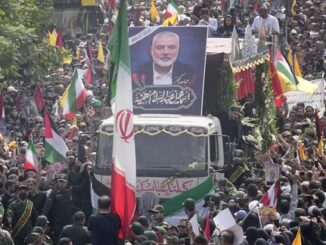
    TEHERAN (TIP): Iran held a funeral ceremony on August 1 with calls for revenge after the killing in Tehran of Hamas political chief Ismail Haniyeh in a strike blamed on Israel.

    Thousands of mourners paid respects to Haniyeh as the Israeli military confirmed that an air strike in Gaza last month killed the Hamas military chief, Mohammed Deif.

    Iran’s Supreme Leader Ayatollah Ali Khamenei led prayers for Haniyeh ahead of his burial in Qatar, having earlier threatened a “harsh punishment” for his killing.

    In Tehran’s city center, crowds, including women shrouded in black, carried posters of Haniyeh and Palestinian flags in a procession and ceremony that began at Tehran University.

    Iran’s Revolutionary Guards announced the day before that Haniyeh and a bodyguard were killed in a pre-dawn strike on Wednesday, July 31, on their accommodation in Tehran.

    It came just hours after Israel killed a top Hezbollah commander, Fuad Shukr, in a retaliatory strike in the south of Lebanon’s capital Beirut, raising fears of a wider regional conflict as the Israel-Hamas war in Gaza continues.

    Senior Iranian officials including President Masoud Pezeshkian and the Islamic Revolutionary Guard Corps chief, General Hossein Salami, attended the ceremony for Haniyeh, state TV showed. Qatar-based Haniyeh had been visiting Tehran for Mr. Pezeshkian’s inauguration ceremony on Tuesday. Khalil al-Hayya, Hamas’s foreign relations chief, vowed during the funeral ceremony that Haniyeh’s message will live on and “we will pursue Israel until it is uprooted from the land of Palestine”.

    Mr. Pezeshkian later told Mr. Hayya that Iran “will continue to support with firmer determination on the Axis of Resistance”, Iran-aligned regional groups that include Hamas, the official IRNA news agency said.

    Iran’s parliamentary speaker Mohammad Bagher Ghalibaf said, “It is our duty to respond at the right time and in the right place.” UN Secretary-General Antonio Guterres said the strikes in Tehran and Beirut represented a “dangerous escalation”.

    All efforts, he said, should be “leading to a ceasefire” in Gaza and the release of hostages taken during Hamas’s October 7 attack on southern Israel.

    US Secretary of State Antony Blinken also said Wednesday, March 31, that a ceasefire in Gaza was still the “imperative”, with White House National Security Council spokesman John Kirby later adding that the twin killings “don’t help” regional tensions.

    The killings come with regional tensions already inflamed by the war in Gaza, a conflict that has drawn in Iran-backed militant groups in Syria, Lebanon, Iraq and Yemen.

    One of those groups, Yemen’s Huthi rebels, “declared three days of mourning” for Haniyeh, with political leader Mahdi al-Mashat expressing “condolences to the Palestinian people and Hamas” over his killing, according to the group’s Saba news agency.

    Saudi Foreign Minister Prince Faisal bin Farhan, meanwhile, spoke by phone after the attack with his acting Iranian counterpart Ali Bagheri to discuss “the latest developments in the region”.

    The UN Security Council also convened an emergency meeting Wednesday, March 31 at Iran’s request to discuss the strike, with Tehran’s envoy Amir Saeid Iravani urging members to take “immediate action to ensure accountability for these violations of international law”.

    Hamas has for months been indirectly negotiating a truce and hostage-prisoner exchange deal with Israel, with Egypt, Qatar and the United States facilitating the talks.

    Analysts told AFP that Haniyeh was a moderating influence within the Islamist group, and that while he would be replaced, the dynamics within Hamas could change.

    Israeli Prime Minister Benjamin Netanyahu has vowed to destroy Hamas in retaliation for the October 7 attack that ignited war in Gaza.

    That attack resulted in the deaths of 1,197 people, mostly civilians, according to an AFP tally based on official Israeli figures.

    Militants also seized 251 hostages, 111 of whom are still held captive in Gaza, including 39 the military says are dead.

    Israel’s retaliatory campaign against Hamas has killed at least 39,445 people in Gaza, according to the Hamas-run territory’s health ministry.

    The prime minister of key ceasefire broker Qatar said Haniyeh’s killing had thrown the whole mediation process into doubt. “How can mediation succeed when one party assassinates the negotiator on the other side?” Sheikh Mohammed bin Abdulrahman Al-Thani said in a post on social media site X.
    (Source: AFP)

  • An expanding Gaza war, with no endgame in sight

    An expanding Gaza war, with no endgame in sight

    As the Gaza conflict reverberates across the region, West Asia could sleepwalk into Armageddon

    “Targeted killings serve no useful purpose: while the deceased leaders are quickly replaced, the assassinations increase mutual hostility and escalate tensions. The worrying possibility is that Mr. Netanyahu might not be averse to a regional conflagration: following the political and military failures that facilitated Hamas’s October 7 attacks and with no military success to speak of so far, now, with the Supreme Court rejecting his judicial reforms proposals, the Prime Minister faces the imminent prospect of resignation, arrest and imprisonment. Could a desperate Netanyahu not wish to seize this opportunity to obliterate all Palestinian resistance, eliminate Hezbollah as a fighting force, and debilitate Iran as a threat?”

    By Talmiz Ahmad

    With the Gaza war having reached its three-month mark, it has spread dangerously to Lebanon, Iraq, Yemen and even Iran. On January 2, an Israeli drone strike on a Hamas office in Beirut, killed Saleh al-Arouri, the deputy head of the Hamas leadership located abroad. The next day, two explosions in Kerman, at the mausoleum of General Qassem Soleimani, former head of the Al Quds Force, killed 95 people who had gathered at the shrine to mourn on the fourth anniversary of his assassination. Though the Islamic State has claimed responsibility, many Iranians suspect it to be Israeli’s hand.

    And, on January 4, the United States announced the targeted killing of the head of an Iran-affiliated militia in Baghdad that has been attacking American targets since the beginning of the Gaza war. These attacks have occurred amidst the ongoing skirmishes in the Red Sea’s waters over the last several weeks, with the Houthis targeting commercial shipping with drones and missiles and inviting strong U.S. retaliation. The Houthis have demanded that humanitarian assistance be provided urgently to the beleaguered Palestinians in Gaza.

    These attacks have escalated tensions in the already volatile region that is reeling from the death and destruction wreaked by Israel in Gaza since early October. Over the last three months, over 22,000 Palestinians have been killed, most of them women and children, while nearly two million have been displaced, the largest displacement of Palestinians in history. An extraordinary humanitarian catastrophe faces the two-million strong Palestinian community in Gaza.

    Netanyahu could pursue escalation

    Israeli troops have also expanded their military operations to the West Bank: nearly 300 Palestinians have been killed, several thousand taken into detention, and numerous homes destroyed. Israeli cabinet Ministers have complemented the violence of their soldiers by calling for the cleansing of Gaza of Palestinians and the resettlement of the enclave with Jewish settlers.

    The major concern at present is that a desperate Israeli Prime Minister Benjamin Netanyahu might pursue the escalation trajectory as, despite the mass killings in Gaza, Israel has very little to show for its efforts: though committed to the destruction of the Hamas war machine and of the movement itself, no prominent Hamas leader has been apprehended in Gaza, while Hamas continues to inflict damage on Israeli soldiers in the ground fighting. A few thousand women and children have been detained by Israeli security to reveal the location of Hamas leaders, with no apparent success so far.

    There are concerns that al-Arouri’s killing was carried out to proclaim some success in the war on Hamas. Saleh al-Arouri, by all accounts, was a soft target. Though he has been a prominent presence in the Hamas leadership, in recent years he had been located in Beirut and was principally liaising with Hezbollah and Iran. Most reports suggest that he had no involvement with the planning or execution of the October 7, 2023 attacks.

    Peace is distant

    Targeted killings serve no useful purpose: while the deceased leaders are quickly replaced, the assassinations increase mutual hostility and escalate tensions. The worrying possibility is that Mr. Netanyahu might not be averse to a regional conflagration: following the political and military failures that facilitated Hamas’s October 7 attacks and with no military success to speak of so far, now, with the Supreme Court rejecting his judicial reforms proposals, the Prime Minister faces the imminent prospect of resignation, arrest and imprisonment. Could a desperate Netanyahu not wish to seize this opportunity to obliterate all Palestinian resistance, eliminate Hezbollah as a fighting force, and debilitate Iran as a threat?

    The reason why this prospect is even being raised is because, through the three-month war in Gaza, no major player has exhibited a vision or a strategy regarding the endgame and the “day after” the cessation of hostilities. Beyond bellicose claims relating to the extermination of Hamas and ethnic cleansing of the occupied territories, Israel has shown no clarity about its war aims or the management of Gaza after the war. Certainly, there is no mention of a longer-term peace process. Thus, mass killings in Gaza and provocative targeted assassinations in the neighborhood have become ends in themselves.

    A role for Saudi Arabia

    The U.S. has been in search of a policy from day one. Beyond its total political and military support for Israel, the Biden administration has shed crocodile tears over humanitarian concerns, but achieved nothing on the ground. The region’s already discredited hegemon appears incapable of insisting on a peace process — obviously, the clout of Israel’s right-wing supporters in Washington have paralyzed the government and lulled it into somnolence.

    The Arab states have exhibited neither voice nor leadership so far: beyond pointless conferences and resolutions, there is no sign of a consensual and forceful approach to the broader Palestine issue or even concerns about regional security.

    The principal responsibility for ushering in peace now rests on Saudi Arabia. It alone has the regional and global standing to insist that its views be deferred to. Having shrugged off its subordination to U.S. diktat, it has been confidently pursuing an independent foreign policy that resonates positively with the world’s leading powers. Palestinian interests and regional peace require robust and pro-active Saudi initiatives, which have been missing so far.

    This is the time when West Asian rulers and their people should be on the same side to serve the region’s interests. Failing that, they will be swept away in the tidal wave of regional conflict they have done nothing to prevent.

    (The author is a former Indian diplomat)

  • Most significant events in 2021

    One good thing can be said about 2021: it wasn’t as tumultuous as 2020, which put in a claim to be the worst year ever. That, however, may be damning with faint praise. Yes, the past twelve months did bring some good news. Indeed, for a moment in early summer it seemed that COVID-19 was in the rearview mirror. However, it isn’t. And 2021 brought other bad news. So here are my top ten world events in 2021. You may want to read what follows closely. Several of these stories will continue into 2022 and beyond.

    The AUKUS Deal Debuts

    On September 15, President Joe Biden, Australian Prime Minister Scott Morrison, and British Prime Minister Boris Johnson jointly announced a new trilateral security partnership named AUKUS. The most significant part of the deal was the U.S. pledge to provide Australia with technology to build eight nuclear-powered (but not nuclear-armed) submarines. The only other country to receive similar access to U.S. technology is the United Kingdom. The statement announcing the pact justified it as necessary to “preserve security and stability in the Indo-Pacific.” Although none of the three leaders mentioned China by name, AUKUS was widely seen as a response to growing Chinese assertiveness. Not surprisingly, Beijing denounced the pact as “extremely irresponsible” and “polarizing.” But China wasn’t the only country unhappy with deal. France fumed because AUKUS terminated a $37 billion agreement it struck with Australia in 2016 to build a dozen diesel-electric powered submarines. As a result, Paris recalled its ambassadors to Canberra and Washington, a move without precedent in bilateral relations with either country.

    Migration Crises Test Rich Countries

    The downturn in international migration flows in 2020 triggered by COVID-19 continued into 2021. That didn’t translate, however, into the end of migration crises. A case in point was the southern U.S. border. By October, the number of people entering the United States illegally had hit 1.7 million over the prior year, the highest number since 1960. COVID-19, economic hardship, and political and natural events—the assassination of Haiti’s president and a subsequent earthquake sent thousands of Haitians abroad—drove the surge. But so too did the expectation that the Biden administration would be more welcoming than the Trump administration. To stem the inflow of migrants the Biden administration continued many of its predecessor’s harsh anti-immigration policies. Where it didn’t, the Supreme Court ordered it to. The European Union saw a 70 percent rise compared to 2020 in the number people entering illegally, with critics arguing that the EU was failing its duty to help migrants. A surge in migrants crossing the English Channel from France triggered a diplomatic row between Paris and London.

    Iran’s Nuclear Program Advances

    The year began with optimism that the Iran nuclear deal might be revived three years after President Donald Trump quit the agreement. Joe Biden came to office calling Trump’s Iran policy a “self-inflicted disaster” and pledging to return to the deal if Iran returned to compliance. Making that happen was easier said than done, however. In February the Biden administration accepted an invitation from the European Union to rejoin negotiations. Diplomatic jockeying between Tehran and Washington delayed the start of talks until April. An explosion at an Iranian nuclear facility in mid-April, likely the result of Israeli sabotage, prompted Iran to announce it had begun enriching uranium to 60 percent, a level that has no civilian use though it is below the threshold required for a weapon. Five more rounds of negotiations took place before Iran’s presidential election in June, which saw hardliner Ebrahim Raisi emerge victorious. He immediately dampened speculation that an agreement was near, saying “that the situation in Iran has changed through the people’s vote.” Negotiations finally resumed in late November, but Iran walked away from the concessions it made in earlier rounds and restated its initial demand that the United States lift all the sanctions the Trump administration imposed. As 2021 came to a close, the talks were on the verge of collapse, with Iran by some estimates just a month away from acquiring weapons-grade uranium and the Biden administration facing the question of what to do should diplomacy fail.

    The Taliban Return to Power

    The U.S. war in Afghanistan ended as it started twenty years earlier: with the Taliban in power. In 2020, President Donald Trump struck a deal with the Taliban that required withdrawing all U.S. troops by May 1, 2021. Two weeks before that deadline, President Joe Biden ordered that a complete U.S. withdrawal be concluded by no later than September 11, 2021—the twentieth anniversary of the 9/11 attacks. As the withdrawal proceeded, the Afghanistan national army collapsed and the Taliban overran the country. Kabul fell on August 15, trapping thousands of foreigners in the capital city. The United States launched a massive effort to evacuate stranded Americans by August 31, a deadline set by the Taliban. The U.S. withdrawal ended on August 30, leaving behind more than one hundred U.S. citizens and as many as 300,000 Afghans who may have qualified for expedited U.S. visas. Biden called the withdrawal an “extraordinary success.” Most Americans disagreed and his public approval ratings hit new lows. Allied dignitaries called the withdrawal “imbecilic” and a “debacle” among other things. The United States spent more than $2.3 trillion on Afghanistan over two decades, or roughly $300 million a day for twenty years. More than 2,500 U.S. service members and 4,000 U.S. civilian contractors died in Afghanistan. The number of Afghans who lost their lives likely topped 170,000. Despite claiming to be different, the new Taliban government so far has looked and acted just like the one that horrified the world twenty years ago and a massive humanitarian crisis looms.

    Joe Biden Becomes President

    “America is back.” Joe Biden made that point repeatedly in 2021. He moved quickly upon taking office to fulfill his promise to strengthen relations with America’s allies. He returned the United States to the Paris Climate Agreement and the World Health Organization, renewed New START for five years, sought to revive the Iran nuclear deal, and ended U.S. support for offensive military operations in Yemen. These moves away from former President Donald Trump’s America First policies drew applause overseas; initial polls showed a sharp improvement in the U.S. image abroad. As the year progressed, however, many foreign capitals openly wondered just how different, and how sustainable, Biden’s foreign policies were. On critical issues like China and trade, Biden’s policies differed from his predecessor’s more in tone than in substance. Biden also alarmed many allies, especially in Europe, with his penchant for unilateral action. He canceled the Keystone XL pipeline, withdrew from Afghanistan, supported a waiver for intellectual property rights for vaccines, and created AUKUS without significant consultations with critical partners. The bungled Afghanistan withdrawal, the clumsy AUKUS rollout, and the slow pace of announcing ambassadors also raised doubts about the Biden administration’s competence, which had been presumed to be its strength. With Biden’s approval rating sinking at home and the odds improving that Republicans will retake one or both houses of Congress in the 2022 midterm elections, U.S. allies have to entertain the thought that Trump and America First might return to the White House in 2025.

    United States Capitol attack

    On January 6, 2021, a mob of supporters of President Donald Trump attacked the United States Capitol in Washington, D.C.[note 1][28] They sought to overturn his defeat in the 2020 presidential election by disrupting the joint session of Congress assembled to count electoral votes that would formalize then President-elect Joe Biden’s victory.  The Capitol Complex was locked down and lawmakers and staff were evacuated, while rioters assaulted law enforcement officers, vandalized property and occupied the building for several hours. Five people died either shortly before, during, or following the event: one was shot by Capitol Police, another died of a drug overdose, and three died of natural causes. Many people were injured, including 138 police officers. Four officers who responded to the attack died by suicide within seven months.

  • Lloyd Austin is confirmed, becoming the first Black defense secretary in U.S. history

    Lloyd Austin is confirmed, becoming the first Black defense secretary in U.S. history

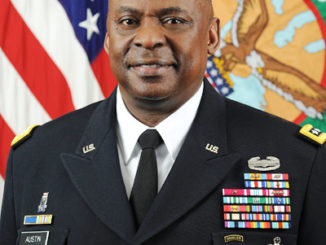
    WASHINGTON (TIP): The Senate on Friday, January 22, confirmed Lloyd J. Austin III as defense secretary, filling a critical national security position in President Biden’s cabinet and elevating him as the first Black Pentagon chief.

    The 93-2 vote came a day after Congress granted General Austin, a retired four-star Army general, a special waiver to hold the post, which is required for any defense secretary who has been out of active-duty military service for fewer than seven years. It reflected a bipartisan consensus on Capitol Hill that it was urgent for Mr. Biden to have his defense pick rapidly installed, a step normally taken on a new president’s first day. “It’s an extraordinary, historic moment,” said Senator Jack Reed, Democrat of Rhode Island and the chairman of the Armed Services Committee. “A significant portion of our armed forces today are African-Americans or Latinos, and now they can see themselves at the very top of the Department of Defense, which makes real the notion of opportunity.” Mr. Austin, 67, is the only African-American to have led U.S. Central Command, the military’s marquee combat command, with responsibility for Iraq, Afghanistan, Yemen and Syria. He retired in 2016 after 41 years in the military and is widely respected across the Army. Lawmakers in both parties initially had been uneasy at the prospect of granting General Austin an exception to the statutory bar against recently retired military personnel serving as Pentagon chiefs, a law intended to maintain civilian control of the military. They had already done so four years ago for President Donald J. Trump’s first defense secretary, Jim Mattis, a retired four-star Marine officer, and many had vowed not to do so again. But facing intense pressure from officials from Mr. Biden’s transition team and top Democrats, and after receiving assurances from General Austin that he was committed to the principle of civilian control, lawmakers rallied behind a barrier-shattering nominee. Two Republicans, Senators Josh Hawley of Missouri and Mike Lee of Utah, voted against the confirmation. Even though 43 percent of the 1.3 million men and women on active duty in the United States are people of color, the leaders at the top of the military’s chain of command have remained remarkably white and male. When President Barack Obama selected General Austin to lead the United States Central Command, he became one of the highest-ranked Black men in the military, second only to Colin L. Powell, who had been chairman of the Joint Chiefs of Staff. Mr. Austin will be the first Black Pentagon chief since the position was created in 1947 — just nine months before President Harry S. Truman ordered the desegregation of the armed forces, Representative Anthony Brown, Democrat of Maryland and a Black retired colonel in the Army Reserve, noted. “Secretary Austin’s confirmation is a historic first and symbolizes the culmination of the nearly 75-year march toward genuine integration of the department,” Mr. Brown said. “He is well positioned to draw upon his experiences as a seasoned military commander, respected leader and as a Black man who grew up amid segregation to drive progress forward as our next Secretary of Defense.”

    (Source: Washington Post / New York Times)

  • CIVILIANS AMONG 30 DEAD IN YEMEN AIR RAIDS

    CIVILIANS AMONG 30 DEAD IN YEMEN AIR RAIDS

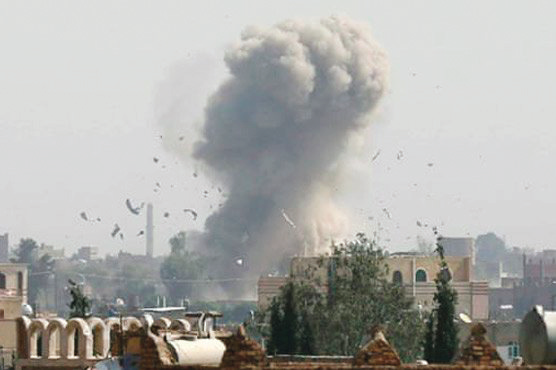
    SANAA (TIP):Air raids on Yemen s rebel-held capital on Wednesday killed more than 30 people, including civilians, local and international aid organisations said.

    Hussein al-Tawil, head of the Sanaa branch of Yemen Red Crescent, said at least 35 people were killed in raids on the northern outskirts of Sanaa, as rescuers continued to pull bodies from the rubble.

    An official with an international aid organisation confirmed to AFP that at least 30 people had been killed in a series of strikes on Sanaa, which is home to the country s anti-government Huthi rebels.

    At least 13 others were wounded and have been admitted to local hospitals, Tawil told AFP. At least one strike targeted a housing accommodation unit where workers from a nearby qat farm were staying, according to witnesses and the unit manager, Taher al-Ahdal. Source: AFP

  • At least 56 dead as smugglers throw 300 African migrants into Yemen sea

    At least 56 dead as smugglers throw 300 African migrants into Yemen sea

    DUBAI (TIP): At least 56 people have drowned over the past 24 hours, and dozens remain missing, after human traffickers forced 300 African migrants off two Yemen-bound boats and into the sea.

    Survivors — all Ethiopian and Somali migrants — managed to make their way to Shabwa, a southern province along Yemen’s Arabian Sea coastline, the International Organization for Migration said.

    The war in Yemen has left over 8,300 people dead and displaced millions since 2015, but the impoverished country continues to draw migrants from the Horn of Africa seeking work in prosperous Gulf countries further north.

    At least six people drowned on Thursday after human smugglers forced 180 Ethiopians off their boat and into the choppy waters of the Arabian Sea, an IOM spokesperson told AFP. Thirteen people remained unaccounted for, the spokesperson said. The majority of the migrants appeared to be teenagers and young adults.

    On Wednesday, traffickers also forced more than 120 Somali and Ethiopian migrants into the rough seas off Yemen to avoid arrest by local authorities, leaving at least 50 dead and 22 missing, IOM reported.

    IOM teams, working with the International Committee of the Red Cross, found the bodies of 29 migrants in shallow graves along the coast of Shabwa, currently under the control of Yemeni troops backed by the United States. They had been buried by survivors.

    “The smugglers deliberately pushed the migrants into the waters since they feared that they would be arrested by the authorities once they reach the shore”, an IOM emergency officer in Aden, where the Yemeni government is based, told AFP. Laurent de Boeck, IOM’s Yemen mission head, said the boat’s crew immediately returned to Somalia yesterday to pick up more migrants headed to Yemen on the same route. (AFP)

  • 20 Yemeni civilians killed in air strike UN, witnesses

    20 Yemeni civilians killed in air strike UN, witnesses

    ADEN (TIP): An air strike on a group of displaced Yemenis has killed at least 20 civilians, mostly from the same family, a UN statement and witnesses said July 19. The attack on Tuesday afternoon hit a group of civilians in the Mawza district of the southwestern province of Taez, a statement by the UN refugee agency said. Residents said the attack was carried out by a warplane from the Saudi-led coalition fighting Shiite rebels in support of Yemen’s internationally recognised government.

  • 100,000 cholera cases, 789 deaths, in Yemen in past month: WHO

    100,000 cholera cases, 789 deaths, in Yemen in past month: WHO

    GENEVA (TIP): A cholera outbreak of more than 100,000 cases has erupted in war-ravaged Yemen, killing nearly 800 people, in just over a month, the World Health Organization (WHO) said on June 8.

    The UN health agency said that since the end of April, 101,820 suspected cholera cases had been registered across 19 of the country’s 21 governorates, including 789 deaths. WHO has warned that a quarter of a million people could fall sick with cholera by the end of the year in Yemen, a country where two-thirds of the population are on the brink of famine.

    British charity Oxfam also voiced alarm on Thursday at what it described as “a runaway cholera epidemic” in Yemen, pointing out that the disease is currently killing nearly one person every hour.

    Cholera is a highly contagious bacterial infection spread through contaminated food or water. Reining in the disease is particularly complicated in Yemen, where two years of devastating war between the Huthis and government forces backed by a Saudi-led Arab military coalition has left more than half the country’s medical facilities out of service.

    Yemen’s conflict has killed more than 8,000 people and wounded around 45,000 since March 2015, according to the WHO. “Yemen is on the edge of an abyss. Lives hang in the balance,” Sajjad Mohammed Sajid, Oxfam’s Yemen country director, said in a statement.

    “Cholera is simple to treat and prevent but while the fighting continues the task is made doubly difficult,” he said, insisting that “a massive aid effort is needed now.” (AP)

  • Trump administration asks Supreme Court to revive travel ban

    Trump administration asks Supreme Court to revive travel ban

    WASHINGTON: President Donald Trump’s administration on Thursday asked the US Supreme Court to revive his ban on travelers from six Muslim-majority nations after it was blocked by lower courts that found it was discriminatory.

    The administration filed two emergency applications with the nine high court justices seeking to block two different lower court rulings that went against Trump’s March 6 order barring entry for people from Iran, Libya, Somalia, Sudan, Syria and Yemen for 90 days while the US government implements stricter visa screening.

    The move comes after the Richmond, Virginia-based 4th US Circuit Court of Appeals on May 25 upheld a Maryland judge’s ruling blocking the order.

    The administration also filed a separate appeal in that case. “We have asked the Supreme Court to hear this important case and are confident that President Trump’s executive order is well within his lawful authority to keep the nation safe and protect our communities from terrorism,” Justice Department spokeswoman Sarah Isgur Flores said in a statement.

    At least five votes are needed on the nine-justice court in order to grant a stay. The court has a 5-4 conservative majority, with Justice Anthony Kennedy – a conservative who sometimes sides with the court’s four liberals – the frequent swing vote. Another of the court’s conservatives, Neil Gorsuch, was appointed by Trump this year.

    If the government’s request is granted, the ban would go into effect. In its 10-3 ruling, the US 4th Circuit Court of Appeals said challengers of the ban, including refugee groups and others represented by the American Civil Liberties Union, were likely to succeed on their claim that the order violated the US Constitution’s bar against favoring or disfavoring a particular religion.

    The March ban was Trump’s second effort to implement travel restrictions on people from several Muslim-majority countries through an executive order. The first, issued on Jan. 27, led to chaos and protests at airports and in major US cities before it was blocked by courts.

    The second order was intended to overcome the legal issues posed by the original ban, but it was blocked by judges before it could go into effect on March 16. (Reuters)

  • Iran votes for reform

    Iran votes for reform

    “Mr. Rouhani’s decisive victory is a shot in the arm for the moderates coming after the elections in February last year for the Parliament and the Assembly of Experts where the moderates and the reformists had registered significant gains”, says the author.
    By Rakesh Sood

    After a difficult campaign, President Hassan Rouhani won a crucial second term in Iran’s presidential elections held on May 19. A high turnout of 73% helped him score a convincing victory over his principal challenger Ebrahim Raisi, a conservative cleric, in the first round itself, winning 57% of the votes compared to Mr. Raisi’s 38.5%. More than two-thirds of Iran’s voters are in urban areas and most of them are Rouhani supporters; therefore, as voting hours got extended to midnight indicating a high turnout, the mood in the Rouhani camp turned jubilant.

    A DIFFICULT CAMPAIGN:

    In 2013, Mr. Rouhani had campaigned and won on a platform that focused on bringing sanctions to an end,which he was able to achieve in July 2015 with the Joint Comprehensive Plan of Action (JCPOA), a nuclear agreement concluded with the P-5 + 1. The sanctions relief has had a positive impact on the economy with oil exports up and GDP growth hitting 6% last year though expectations were higher. In a TV debate in the run-up to the election, Mr. Raisi described the JCPOA as ‘a check that Rouhani had failed to cash’. Opinion polls had favored Mr. Rouhani, because Mr. Raisi, though close to the Supreme Leader,Ayatollah Ali Khamenei, was considered a relative newcomer to politics. However, concern grew when Mohammad Bagher Ghalibaf, a former Iranian Revolutionary Guards Corps (IRGC) pilot and the Mayor of Tehran since 2005, withdrew from the race in support of Mr. Raisi, who had spent most of his life in the judiciary before being appointed custodian of the shrine of Imam Reza in Mashhad last year. He also controls Astan-e-Quds Razavi, one of the wealthiest foundations, and is seen a possible successor to the present Supreme Leader who is 77 and in poor health.

    Therefore Mr. Rouhani’s decisive victory is a shot in the arm for the moderates coming after the elections in February last year for the Parliament and the Assembly of Experts where the moderates and the reformists had registered significant gains.

    ROUHANI’S CONSTRAINTS:

    However, given Iran’s complex governance structures, President Rouhani will have to tread carefully as his powers and those of the directly elected 290- member Parliament are constrained by the non-elected authorities. The key power center is the Supreme Leader who is appointed by the Assembly of Experts and in turn appoints the heads of radio and TV, the armed forces and the IRGC, the Supreme National Security Council, the 51-member Expediency Council and the higher judiciary. He also chooses six members of the powerful Guardian Council, with the other six nominated by the judiciary. The Guardian Council in turn vets candidates for all elections, presidential, parliamentary and the 88-member Assembly of Experts. It cleared only six candidates out of the more than 1,600 who filed nominations for the presidential contest; rejections included former President Mahmoud Ahmadinejad’s nomination. In addition, it approves all legislation passed by Parliament to ensure its consistency with Islamic jurisprudence. A dispute between Parliament and the Council is resolved by the Expediency Council. The Assembly of Experts is directly elected and its primary role is to appoint the Supreme Leader, critical during Mr. Rouhani’s second term.

    Mr. Rouhani’s principal challenge will be to sustain economic growth and nudge the reform process forward in order to tackle unemployment, currently running at over 12%, and higher among the youth. He has promised to expand individual and political rights, enlarge women’s role and ensure greater accountability.

    Some of these will be challenged. While his victory margin is a clear endorsement for reform, the Supreme Leader will play a critical balancing role. It is interesting that, in his immediate remarks, he praised the Iranian people for the impressive turnout, but did not congratulate the winner.

    In foreign policy, Mr. Rouhani will present the image of a moderate and more outward-oriented Iran. He is no stranger to Iran’s complex politics. From 1989 to 2005, he was Secretary of the Supreme National Security Council, reporting to the Supreme Leader, and handled the nuclear negotiations during 2003-05.

    During this period, he also served a term each as Deputy Speaker of Parliament and as member of the Expediency Council. Following Mr. Ahmadinejad’s election in 2005, he quit. After being elected in 2013, he persuaded the Supreme Leader to shift responsibility for the nuclear negotiations to the Foreign Ministry and let Foreign Minister Mohammad Javad Zarif take the lead.

    In addition to managing his home front, the other challenge for Mr. Rouhani will be keep the JCPOA going in the face of the U.S. Congress’s and now President Donald Trump’s declared hostility.

    DEALING WITH TRUMP:

    During the election campaign, Mr. Trump had called it the ‘worst deal ever’ and threatened to tear it up as soon as he was elected! Subsequently, he seems to have modified his position, realizing perhaps that it is not just a bilateral agreement with Iran but also includes Russia, China, the U.K., France, Germany and the European Union. In April, the Trump administration certified that Iran was abiding by its obligations but Secretary of State Rex Tillerson added that a 90- day policy review would be undertaken in view of ‘Iran’s alarming ongoing provocations’.

    More recently, on May 17, the Trump administration continued the sanctions waiver (under Section 1245 of the National Defense Authorization Act 2012), needed every 120 days even while imposing sanctions on seven Iranian and Chinese individuals and entities on account of missile proliferation activities.

    In April, a slew of human rights related sanctions were imposed. In mid- June another waiver, this time under the Iran Freedom and Counter-Proliferation Act, will need to be renewed if the JCPOA is to be sustained. These are necessary because in 2015, the Republican-dominated Congress rejected the JCPOA and U.S.

    President Barack Obama used executive authority to waive U.S. sanctions but these waivers need to be renewed periodically. The JCPOA was the outcome of protracted negotiations over more than a decade, during which Iran had steadily built up its nuclear capabilities, especially in the enrichment domain, and in 2015 was estimated to be only months away from acquiring enough Highly Enriched Uranium to produce one device (approximately 25 kg) though Iran consistently maintained that its program was exclusively for peaceful purposes. Given deep suspicions however, the JCPOA with its extensive inspection and reporting obligations was the best way to prevent Iran from developing a military nuclear capability for the next 10-15 years.

    Opponents say that while cheating is unlikely, they fear that Iran will retain its nuclear appetite after abstaining during the 10-15 year period and resume its activity once the inspection obligations expire.

    THE SAUDI FACTOR:

    Perhaps the most troubling problem is the new embrace of Saudi Arabia that was in evidence during Mr. Trump’s visit. It raises the prospects of greater U.S. involvement in the war in Yemen and can push relations with Iran into a confrontation. In 2016, there were 19 ‘incidents at sea’ between U.S. and Iranian vessels in the Persian Gulf. The most serious was in January 2016 when the IRGC held two U.S. vessels and 10 servicemen, accused of trespassing in Iranian waters. The crisis was resolved within hours, thanks to some quick phone conversations between U.S. Secretary of State John Kerry and Mr. Zarif. That link is missing today.

    It is all the more ironic because Iran is the one country that is opposed to the Islamic State. Yet the U.S. is keener to bless the Saudi-created Islamic Military Alliance to Fight Terrorism, a grouping of 41 Sunni nations, under the command of former Pakistani Army Chief, General Raheel Sharif. It remains unclear what the role of this coalition is, to fight the IS or Iran or in Yemen, or to secure the Gulf monarchies!

    For the last quarter century, the U.S. practiced dual containment of Iran and Iraq, a policy that suited both Israel and Saudi Arabia. Mr. Obama’s push for the JCPOA was driven by a desire to extricate U.S. policy from this stranglehold and expand options. If a return to the Saudi embrace creates additional tensions and a collapse of the JCPOA, it could push Iran to cross the nuclear threshold with much wider regional implications.Mr. Rouhani’s challenges are just beginning.

    (The author is a former diplomat and currently Distinguished Fellow at the Observer Research Foundation. He can be reached at rakeshsood2001@yahoo.com)

  • 34 dead, 2,000 sick with suspected cholera in Yemen: WHO

    34 dead, 2,000 sick with suspected cholera in Yemen: WHO

    34 dead, 2,000 sick with suspected cholera in Yemen: WHO

    SANAA (TIP): Thirty-four people have died of cholerarelated causes and more than 2,000 have been taken ill in less than two weeks in Yemen, the World Health Organization said on Tuesday. “There have been 34 cholera-associated deaths and 2,022 cases of acute watery diarrhoea in nine governorates, including Sanaa, during the period of April 27 to May 7,” a WHO official told AFP.

    This is the second wave of cholera-associated deaths in a year in Yemen, where a deadly war has destroyed hospitals and left millions of people struggling to access food and clean water.

    The WHO now classifies Yemen as one of the worst humanitarian emergencies in the world alongside Syria, South Sudan, Nigeria and Iraq.

    Conflict in Yemen has escalated over the past two years, as the Saudi-supported government fights Iran-backed Huthi rebels for control of the impoverished country. The United Nations, which has called Yemen “the largest humanitarian crisis in the world”, estimates that more than 7,000 people have been killed since 2015 and three million displaced. (PTI)

  • Hundreds of Yemenis with US visas stranded in Djibouti

    Hundreds of Yemenis with US visas stranded in Djibouti

    JOHANNESBURG (TIP): Hundreds of Yemenis with US visas are stranded in the tiny African state of Djibouti because of President Donald Trump’s ban on entry for citizens of seven Muslim-majority countries, an American lawyer there said Feb 1.

    “These are all children, parents and the spouses of US citizens,” lawyer Julie Goldberg told The Associated Press, emphasizing that those stranded are not refugees. They received visas last week, she said.

    More than half of the 200-plus Yemenis are children, including a 3-year-old whose parents are permanent residents in the US and has never seen her father in person, said Goldberg, an immigration lawyer.

    She has obtained a court order dated Tuesday from the US District Court in California’s central district instructing the US government to not enforce Trump’s executive order and allow the Yemenis to fly to the United tates.

    The court order calls on the US government to not cancel “validly obtained and issued immigrant visas” and to return passports containing those visas so people can travel to the US. Goldberg is now seeking an airline that will comply with the court order.

    “It’s super frustrating,” she said of the Yemenis’ plight. “They’re running out of money. Djibouti is very expensive. They can’t go back to Yemen, they would be killed.”

    Yemen has been engulfed in conflict since 2014. A Saudi-led coalition, backed by the United States, has been carrying out an air campaign against Iranian-backed Houthi rebels for nearly two years. Djibouti and Yemen lie on opposite sides of the narrow Bab al-Mandab — Arabic for “the gates of grief” —straits at the mouth of the Red Sea.

    Mohamed Mosleh Jeran is one of the Yemenis waiting in Djibouti. After his family’s home was blown up in Yemen’s conflict, he and his wife and two young children spent two years in Djibouti. Last month, the younger son died during what should have been a routine surgery. On Thursday, the family received their US visas and looked forward to joining Jeran’s father, a U.S. citizen, in New York City. (AP)

  • Yemen’s Shiite rebels say they back US-brokered cease-fire

    Yemen’s Shiite rebels say they back US-brokered cease-fire

    SANAA, YEMEN (TIP): Amid more clashes on Nov 17 in Yemen, the country’s Shiite rebels confirmed their endorsement a US-brokered cease-fire deal previously announced by US Secretary of State John Kerry.

    However, the backing of the deal by Yemeni rebels, also known as Houthis, was a moot point since Yemen’s internationally-recognized government has already dismissed the plan as “unilateral,” saying it was not involved in recent talks between Kerry and a Houthi delegation in Oman.

    On the ground, government forces expelled rebels from several districts in the western city of Taiz while an international rights group issued a damning report on Thursday, criticizing the Houthis’ detentions of political opponents.

    Human Rights Watch said the Shiite rebels have carried out hundreds of unlawful detentions and torture since capturing the country’s capital, Sanaa. The New York-based group said it has documented two deaths in custody and 11 cases of alleged torture and abuses.

    HRW also called upon the Houthis in Sanaa to hold officials accountable and to release the detainees – without forcing them to sign false confessions of cooperating with a Saudi-led coalition that is waging a war to expel the Houthis from territory the rebels captured.

    Sarah Leah Whitson, the Mideast director at Human Rights Watch, said the war between the Houthis and the Saudi-led coalition “provides no justification for torture and ‘disappearance’ of perceived opponents.”

    Houthis descended from their northern enclave in 2014 to take Sanaa and much of northern Yemen. The rebels forced President Abed Rabbo Mansour Hadi to flee the country and seek shelter in Saudi Arabia, which subsequently launched the intervention by mostly Gulf Arab states that has consisted mainly of a punishing air campaign.

    The airstrikes, together with the ground fighting, have pushed the already impoverished nation to the brink of famine and displaced nearly three million people. The conflict has killed over 4,000 civilians.

    In his announcement, Kerry said the cease-fire was supposed to start on Thursday and lead to the formation of a unity government before the end of the year.

    Mohammed Abdel-Salam, the Houthis spokesperson, told Al-Masirah TV late on Wednesday that the rebels agreed to the deal.

    The peace plane, however, sidelines Hadi, transfers his authorities to a newly appointed vice president, and gives the Houthis a share of power.

    Residents in Taiz, one of the worst-hit cities in Yemen’s conflict, said airstrikes rocked the city’s eastern districts. Images were posted on social media showing pro-government fighters on tanks and armored vehicles, flashing the victory sign in front of newly captured positions, including the city’s military hospital.

    Dozens were killed and wounded in the fighting but a precise death toll among fighters from the two sides was not available. The residents spoke on condition of anonymity, fearing for their safety. (AP)

  • Saudi Arabia says Yemen rebels fire missile toward Mecca

    Saudi Arabia says Yemen rebels fire missile toward Mecca

    DUBAI, UNITED ARAB EMIRATES (TIP): Siite rebels in Yemen fired a ballistic missile toward the holy Muslim city of Mecca overnight, Saudi Arabia said Friday, the insurgents’ deepest strike yet into the kingdom amid the country’s stalemate civil war.

    Rebel media in Yemen said the missile targeted an international airport in Jiddah, though Saudi Arabia said it was “intercepted and destroyed” 65 kilometers (40 miles) from Mecca, which is home to the cube-shaped Kaaba that the world’s Muslims pray toward five times a day.

    The missile launch shows the capability of Yemen’s Shiite rebels, known as Houthis, and their allies to continue to strike Saudi Arabia. It also drew the immediate anger of Saudi citizens, as the protection of Mecca is a key pillar of the Saudi royal family’s prestige and the country’s national identity.

    The Saudi military said the missile, fired Thursday night from Yemen’s northwestern Saada province bordering the kingdom, caused no damage.

  • ISIS ‘crucifies Catholic priest on Good Friday’

    ISIS ‘crucifies Catholic priest on Good Friday’

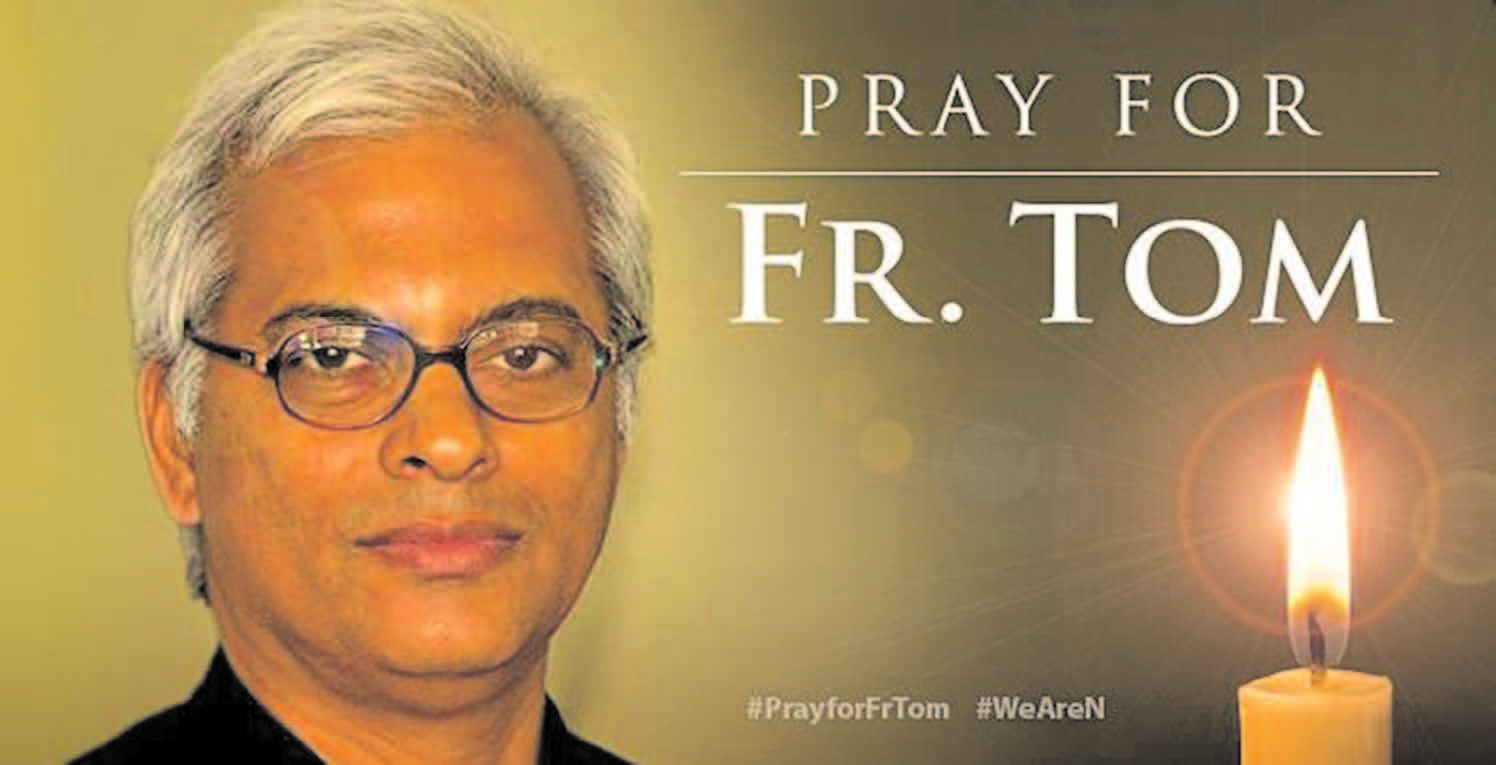
    YAMEN (TIP): The Indian Catholic priest kidnapped by ISIS-linked terrorists in Yemen earlier this month was crucified on Good Friday, it has been claimed.

    Father Thomas Uzhunnalil, 56, was taken by Islamist gunmen, reportedly linked to ISIS, killing at least 16 people, on March 4 – including four nuns – during the incident at the home in Aden, which is run by missionaries, the International Business Times India said.

    The terrorists reportedly carried out the heinous murder on Good Friday, after threatening to do so earlier in the week, according to the Archbishop of Vienna.

    However, a member of Bangalore’s Salesian Sisters of Don Bosco, Bangalore, of which Father Uzhunnalil was previously a part, told the International Business Times India: “There is no information about the whereabouts of Father Tom. We are only praying for him.”

    For more of the latest Islamic State news visit theindianpanorama.news/isis/


  • Sushma Swaraj appeals to all Indians living in danger zones to return

    Sushma Swaraj appeals to all Indians living in danger zones to return

    NEW DELHI (TIP): In the wake of death of four Indian women in strife-torn Yemen’s Aden city, external affairs minister Sushma Swaraj on March 4 appealed to all Indians living in “danger zones” to return home.”I appeal to all Indians in such danger zones to please come back to India,” she tweeted. She said the nurses stayed back in Yemen, ignoring advisories by the government. “Yemen – Four Indian nurses have been killed in a terrorist attack today. I am sorry the nurses stayed back/returned ignoring our advisories,” she said in another tweet.The four Indian women were among 16 people killed in Aden city today when a group of terrorists stormed a elderly care home run by a Kolkata-based Missionaries of Charity and sprayed bullets at the residents.

    Source: TOI

  • DEFENDING THE DIASPORA

    DEFENDING THE DIASPORA

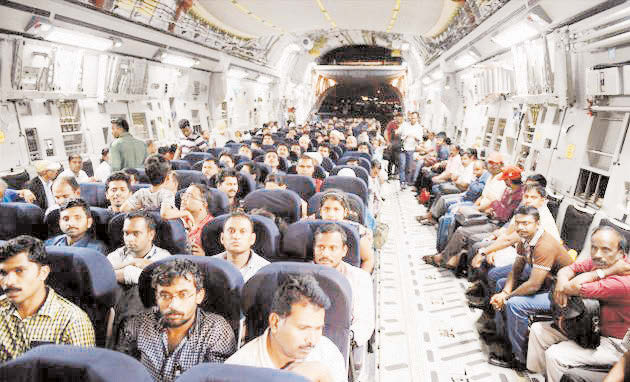
    AIRLIFT: "Whatever you might think of the Indian government, when it comes to expatriate citi-zens in conflict zones, our diplomats go to great extents to ensure their safety." Picture shows Indian nationals stranded in Yemen being evacuated from Djibouti on board an Indian Air Force aircraft. (Photo courtesy PTI)
    AIRLIFT: “Whatever you might think of the Indian government, when it comes to expatriate citi-zens in conflict zones, our diplomats go to great extents to ensure their safety.” Picture shows Indian nationals stranded in Yemen being evacuated from Djibouti on board an Indian Air Force aircraft. (Photo courtesy PTI)

    Many people involved in the massive evacuation of Indian expatriates from Kuwait in 1990 are disappointed at the mischaracterization of the role of the politicians, diplomats and airline officials in Airlift, a new Hindi film based on that incident. While film-makers have dramatic license to set fiction against facts, diplomats are rightly upset that the story of the biggest ever air evacuation in history, carried out by a resource-strapped government in the throes of political and economic crises, has deliberately painted foreign service officers in negative light.

    K.P. Fabian, who headed the Gulf desk at the Ministry of External Affairs (MEA) during that episode, is quoted in this newspaper as saying “young people who are watching this film are getting a wrong impression of their history”. Nirupama Rao, former Foreign Secretary, criticized the production of falling short on its research. Even the MEA’s official spokesperson stepped in to set the record straight. It is unfortunate that the producers felt the need to reinforce popular prejudices of uncaring bureaucrats in that one area where that prejudice could not be more wrong.

    Whatever you might think of the Indian government, when it comes to expatriate citizens in conflict zones, our diplomats go to great extents to ensure their safety. The airlift from Kuwait is only the biggest and the most famous one – more recently Indian diplomats and armed forces coordinated mass evacuations from Lebanon (in 2006), Libya (2011) and Yemen (2015). This is a job our diplomats, armed forces and airline officials do well, and it is unfair and self-defeating to cast them in poor light.

    The damage, however, is done. But the public interest arising from the movie and the debate over the accuracy of its portrayal of the government’s role is a good opportunity to focus on the issue of diaspora security.

    Indians around the world

    According to government figures, as of January 2015, there were 11 million Non-Resident Indians (NRIs) and 17 million Persons of Indian Origin (PIOs) around the world. The largest populations were in the Gulf, the United States, United Kingdom, Southeast Asia and Nepal. On the thin end, there were seven Indians in North Korea, two in Nauru and one in Micronesia.

    Until the turn of the century, the government’s relationship with overseas Indians has been twofold. Indian citizens (NRIs) were treated differently from ethnic Indians holding other citizenships. While the government concerned itself with the former, the latter were encouraged to be loyal and upstanding citizens of their respective countries.

    In the recently released Netaji Files, in 1960, Prithi Singh, India’s envoy to Malaya, reminds headquarters that “our own expressed policy has been to encourage persons of Indian origin, domiciled abroad, to absorb themselves into the life of these countries and I feel that any step which we might take which helps them to maintain rigidly their emotional and/or communal links with India, actually prevents them from giving their whole-hearted loyalty to the countries of their adoption”.

    This policy has served India and overseas Indians well. If the Indian diaspora is highly successful and integrated into the societies around the world, it is in part due to the fact that the loyalties of persons of Indian origin are beyond doubt. They might retain Indian customs and faith, but they bat for the interests of the country they are citizens of.

    Courting the diaspora

    The longstanding policy began to shift in the 1990s, with India looking East and West initially due to economic adversity and subsequently due to opportunity. The Atal Bihari Vajpayee government put the courtship on a formal footing with a high-level committee recommending the long-term visas under a PIO Card Scheme, a grand conference and recognition in the form of awards. The United Progressive Alliance government constituted an entire ministry for overseas Indians which, wisely, the Narendra Modi government has recently decided to merge back into the MEA.

    No Prime Minister has gone so far out to court overseas Indians as Narendra Modi. Reaching out to the humble construction worker, the middle-class professional and the wealthy elite has galvanized the emotional links NRIs have with their home country. Mr. Modi has reinforced the growing feeling among NRIs since the turn of the century that India is a great country to be from.

    Mr. Modi’s highly publicized engagement of overseas Indians changes the tenor of the government’s old policy to downplay their emotional links to India. It is for the Prime Minister to decide what the new policy should be. What we should recognize is that change comes with risks that need to be managed.

    First, to the extent that New Delhi is seen to engage NRIs and protect their interests in foreign countries, foreign governments will not consider it an intrusion in their politics. However, if New Delhi begins to speak out on behalf of ethnic Indians who are not Indian citizens, then the interventions are likely to encounter resistance. In 2007, Malaysian politicians reacted viciously when Indian politicians made comments critical of Kuala Lumpur’s strong-arm tactics against its Indian minorities.

    The modern world is constructed on the Westphalian model, where sovereign states relinquished their right to intercede on behalf of their religious and ethnic kin in other sovereign states. To violate this norm risks inviting any number of foreign interventions into our own domestic affairs.

    Second, the reputation that PIOs have cultivated over several decades for being loyal citizens of the countries they live in can come under a shadow. In many parts of the non-Western world, countries are still reconciling with their nationhood and identity.

    Any suspicion, even at the margin, of PIOs having multiple loyalties can be detrimental to their interests. Notice how the Singapore government insisted that only NRIs attend Mr. Modi’s public event, demarcating the line between its own citizens of Indian ethnicity and expatriates with Indian citizenship.

    Airlifts of the future

    Finally, the airlifts and naval evacuations of the future might be more complex in a context where there is a conflation of NRIs, PIO card-holders and other ethnic Indians with foreign citizenships. During crises when time and resources are tight, who should Indian diplomats priorities? Will they have moral grounds to put non-citizens on a lower priority than citizens? If they do, what impact will it have on the Indian government’s reputation and the expectations it has created? New Delhi ought to review the political and security risks to its diaspora populations and create the capacity to act in their interests should the need arise.

    It is unclear if India’s overstretched diplomatic corps has been tasked with paying greater attention to multilateral arrangements, institutions and agreements that pertain to diaspora-related interventions.

    Similarly, the external intelligence establishment needs to be reoriented towards gathering and analyzing information relating to the threats that diaspora populations might face. The conceptual move from defending the homeland to defending the diaspora needs a concomitant retooling of government machinery.

    Diaspora security will require more naval ships, wider patrolling, foreign berthing and outposts. Military heavy lifting capacity apart, it will also require policy measures, like for instance, license conditions in civil aviation requiring private airlines to put their aircraft and crew at the government’s disposal during emergencies.

    The commitments that India makes require the state to have the capacity to redeem them. If we widen the scope of our commitments, we must invest in the capacity to carry out the airlifts of the future.

    By Nitin Pai - The author is director of the Takshashila Institution, an independent think tank and school of public policy.
  • Saudi Arabia urged to make more of its human rights successes by foreign office minster Tobias Ellwood

    Saudi Arabia urged to make more of its human rights successes by foreign office minster Tobias Ellwood

    RIYADH (TIP): A government minister has urged Saudi Arabia to do a “better job” of trumpeting its human rights successes during an official visit to the country, less than a month after it carried out the mass execution of 47 people.

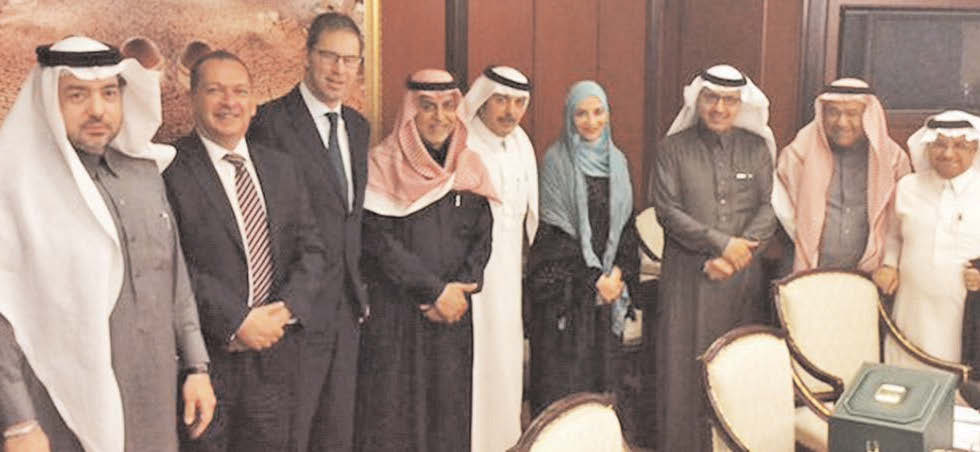
    Tobias Ellwood, the Foreign Office minister for the Middle East, made the comments on Monday as he and other British delegates addressed Saudi Arabia’s National Society for Human Rights in the capital Riyadh, The Independent understands.

    Leading human rights organisations described Ellwood’s remarks as “astonishing”, pointing out that Saudi Arabia was currently presiding over a surge in executions and engaging in a brutal military campaign in Yemen that may be breaking international laws.

    During the visit, which was not publicised by the Foreign Office, Ellwood was told that Saudi Arabia had introduced a series of reforms, such as allowing women to vote in municipal elections.

    In response, he told his hosts that they needed to improve the way they promoted their human rights successes, according to people present at the meeting.

    Accounts of the meeting that appeared in three Saudi media outlets claimed that Ellwood went even further, saying that people in Britain were unaware of the “notable progress” made on human rights by the Saudi regime.

    An article in the daily newspaper Al Watan read: “Tobias Ellwood revealed the ignorance of the British to the notable progress in Saudi Arabia in the field of human rights, confirming throughout the visit of a British FCO delegation… that he had expressed his opinion regarding the human rights situation in Saudi Arabia before the British Parliament, and that the notable progress in this area has been obscured.”

    However, a Foreign Office spokesman strongly denied that Ellwood had used those words. “We do not recognise these remarks,” he said. “Ellwood raised our human rights concerns in all of his meetings in Riyadh… The Government will continue to raise our concerns in public and private.

    “The minister was very clear that despite some recent incremental progress – such as December’s municipal elections… in which women were allowed to stand and vote in -further progress still needed to be made.” A press release issued by the National Society for Human Rights said Ellwood had been joined at the private meeting by Simon Collis, the British Ambassador, who stressed the importance of creating partnerships between human rights organisations in the two countries.

    The chairman of the society, Dr Mofleh bin Rabiean Qahtani, told Ellwood he was concerned that some high profile individual cases were being “exploited, generalised and circulated” in order to discredit Saudi Arabia’s reputation, the press release said.

    Recent cases which have drawn international condemnation include that of Raif Badawi, the liberal writer sentenced to 10 years in jail and 1,000 lashes for promoting free speech, and Ali al-Nimr, who was sentenced to death at the age of 17 for taking part in a pro-democracy protest.

    Nimr’s uncle, the Shia cleric Sheikh Nimr al-Nimr, was among 47 people killed by Saudi Arabia earlier this month as part of the country’s biggest mass execution for more than 30 years. It has since emerged that two of those killed were minors at the time they were arrested.

    Human rights groups have criticised Ellwood’s comments. “As Tobias Ellwood must surely realise, there’s one very easy way for Saudi Arabia to gain a better human rights reputation – and that’s by genuinely reversing the ongoing crackdown,” said Amnesty International UK’s head of policy and government affairs Allan Hogarth.

    “Saudi Arabia needs to release prisoners of conscience… to end rampant executions… and to ensure that the rights of women and repressed groups are properly respected.”

    Maya Foa, of the human rights organisation Reprieve, added: “These comments are astonishing. The Saudi authorities have a bad reputation on human rights because of their appalling human rights record – not because of bad PR.

    Ellwood told MPs earlier this month that Saudi Arabia was “making small progress” on human rights, but added that the Government still had serious concerns.

    (AFP)

  • 14,000 Indians Overstayed In US In 2015

    14,000 Indians Overstayed In US In 2015

    WASHINGTON:  Over 14,000 of the 8.8 lakh Indians who travelled to the US on visitor or business visa in 2015 overstayed in the country, according to official figures.

    The data provided by the Department of Homeland Security (DHS) said that 14,348 Indians overstayed in the US in 2015.

    In 2014, of the 7.6 lakhs Indians who were supposed to leave the country before the expiry of their B1-B-2 visas, 11,653 of them overstayed in the US, it said.

    Overstaying means a non-immigrant who was lawfully admitted to the US for an authorised period but stayed or remains in the country beyond his or her lawful admission period.

    According to the “Entry/Exit Overstay Report” released by the DHS, in fiscal 2015, of the nearly 45 million non-immigrant visitor admissions through air or sea ports of entry that were expected to depart last year, 527,127 individuals overstayed their admission, for a total overstay rate of 1.17 per cent.

    In other words, 98.83 per cent had left the US on time and abided by the terms of their admission, the report said.

    The report does not include student on F-1 visa or those who arrived on work visas like H-1B.

    In FY 2015, of the nearly 45 million nonimmigrant visitor admissions through air or sea ports of entry that were expected to depart in FY 2015, DHS determined that 527,127 individuals overstayed their admission, for a total overstay rate of 1.17 per cent.

    In other words, 98.83 per cent had left the US on time and abided by the terms of their admission.

    The report breaks the overstay rates down further to provide a better picture of those overstays that remain in the US beyond their period of admission and for whom CBP has no evidence of a departure or transition to another immigration status, DHS said in a statement.

    At the end of FY 2015, the overall Suspected In-Country Overstay number was 482,781 individuals, or 1.07 per cent.

    Due to further continuing departures by individuals in this population, by January 4, 2016, the number of Suspected In-Country overstays for FY 2015 had dropped to 416,500, rendering the Suspected In-Country Overstay rate as 0.9 per cent, it said.

    In its report, DHS said a number of countries with ties to terrorism had significant numbers of nationals still in the US accounted for by the federal government: 1,435 from Pakistan, 681 from Iraq, 564 from Iran, 440 from Syria, 219 from Yemen, 219 from Afghanistan, and 56 from Libya.

  • THE RISE AND RISE OF ISIS

    THE RISE AND RISE OF ISIS

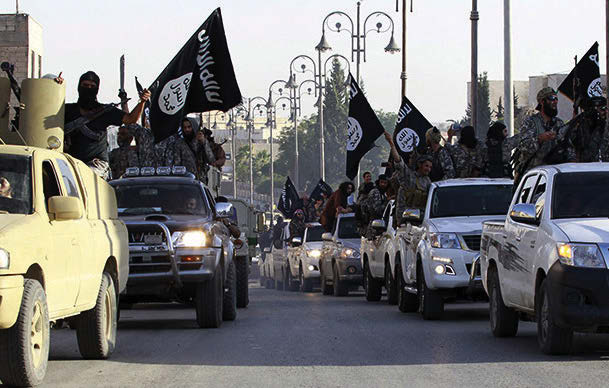
    ISIS ushered in 2015 with the terrifyingly typical displays of brutality which initially put the group in the international community’s crosshairs. They beheaded Japanese hostages, burned a Jordanian pilot alive in a cage and announced the death of American captive Kayla Mueller.

    The Sunni militants seized Ramadi in May and later the ancient city of Palmyra.

    David Phillips, a former senior adviser to the State Department on Iraq, said ISIS was “on a roll” at the beginning of the year.

    “They started off at a gallop,” explained Phillips, now director of the program on peace-building and human rights at Columbia University.

    But something was shifting as the year progressed.

    If 2014 was all taking and consolidating territory – Mosul, Tikrit and more – the seizures of Palmyra and Ramadi this year were overshadowed by losses on the ground. Key leaders were killed and territory slipped away.

    “In 2015, they’ve consistently had to abandon territory,” Phillips said.

    ISIS has been prevented from expanding operations in Iraq and Syria because of resistance they’ve encountered on the battlefield from Kurdish fighters backed by Western airstrikes, and Iran-backed militias, according to Phillips.

    “The caliphate has been restricted, hemmed in and is under more pressure now than it ever has been particularly with the start of the Russian airstrikes,” echoed Matthew Henman, head of IHS Jane’s Terrorism and Insurgency Center.

    But he and other analysts warned not to count ISIS out just yet: It’s important to note that the caliphate has survived another full year.

    “They remain hanging on,” Henman said. “They’re still in the game.”

    ISIS is still controlling “priority areas” in Syria and Iraq, Henman noted. The key cities of Fallujah, Ramadi, Mosul, Raqqa and Palmyra are still in ISIS hands despite billions of dollars worth of airstrikes against ISIS.

    “The group doesn’t need territory,” Henman added. “If it loses control of those cities it reverts back to insurgent operations – the threat doesn’t go away.”

    That’s also because ISIS in 2015 has experienced a great deal of international expansion, with operations in Libya, Yemen, Saudi Arabia, Pakistan, Egypt and Afghanistan. Even if ISIS is wiped out in Iraq and Syria, Henman warned it’s still got its hooks into other places.

    “That ideology now is something which can’t just be bombed away,” he said.

    ISIS appears to be driving that point home by increasing its attacks internationally and outside of their strongholds in Iraq and Syria, showing that it can strike out and hit its adversaries on their home turf.

    The group claimed responsibility for massive terror attacks in Tunisia, France, Yemen and the downing of a Russian passenger plane.

    “They’ve shown a consistent ability to project their terrorist goals,” Phillips said. “It’s a stark reminder that you’re not safe anywhere.”

    Those attacks outside Iraq and Syria serve several purposes, analysts said.

    First, it’s direct retribution for Western airstrikes. It also serves as a distraction from whatever losses ISIS may be suffering, according to Henman.

    “It’s that show of strength to inspire fear into the heart of their enemies but also to buoy up their supporters at a time when they’re coming under pressure,” Henman said. “It’s all about distracting away from their losses and reinforcing that narrative of continued expansion and momentum and winning victories.”

    It’s also partially about pulling the West further into the fight, Henman and other experts said.

    Analysts note that the first thing France did in response to the Paris attacks was to intensify airstrikes – which might play right into the ISIS-driven narrative.

    “They’re targeting farther abroad because they’re trying to draw the West into a major conflict and use that as a basis for a third world war,” Phillips said. “Their ideology is about the end of days and civilization as we know it being destroyed.”

    Whatever the goal – baited or otherwise -external actors have gotten more directly involved in the battle against ISIS this year.

    The killing of the Jordanian pilot drew Amman into the fight against ISIS. Moscow intensified airstrikes against ISIS following the downing of the Russian passenger plane. The U.S. said it was sending special operations forces into Syria and the Paris attacks provoked further action, confirming longstanding fears about the potential of returned foreign fighters to carry out mass-casualty attacks in the West.

    “It underlined that that threat is very real… It has catalyzed nations into acting,” Henman said.

    It also looks like the end of the year could hit ISIS particularly hard: an offensive against ISIS to retake Ramadi got under way on Tuesday and Iraqi forces have continued to advance in the days since.

    Still, ISIS released a new audio message purportedly from its leader on Saturday mocking the U.S. for not putting boots on the ground. Abu Bakr al-Baghdadi said in the clip that airstrikes against ISIS were failing and the group was thriving.

    It’s become increasingly difficult to ascertain how ISIS really is faring in terms of financing and fighter strength, analysts said. The group is particularly good at managing its image and keeping their propaganda tightly controlled.

    But while the various coalitions against ISIS have been criticized for a lack of cohesion or strategy, analysts note their impact can’t be discounted.

    “There’s a lot going on in terms of the lack of unity by the international community but nevertheless ISIS has been hit quite severely,” said Dr. Nelly Lahoud, a senior fellow for political Islamism at the London-based International Institute for Strategic Studies.

    She said some of that is clear from ISIS’ own propaganda releases. For example, ISIS has released several videos denouncing the recently-announced Saudi Arabian coalition against terrorism.

    “If you read what ISIS is saying they are very annoyed. They are alarmed,” Lahoud said. “It’s more preoccupied with attacking others on the rhetorical level and on the ideological level more so than showing the territorial victories because they don’t have any.”

    That level of alarm could bode worse for the West and the territories under ISIS control, she warned.

    “One has to be scared and concerned about what the group might decide to do when it is losing,” Lahoud said. “Mercy is not something that ISIS has shown to be part of its vocabulary … It is perhaps even more dangerous when it is losing.”

  • Iran accuses Saudi Arabia of bombing its embassy in Yemen

    Iran accuses Saudi Arabia of bombing its embassy in Yemen

    DUBAI (TIP): Iran’s state-run news agency IRNA says a Saudi-led air strike last night hit the Iranian embassy in Yemen.

    No Associated Press journalist in Yemen could immediately reach the embassy in the war-torn capital Sanaa on Thursday after the IRNA report. Saudi officials could not be immediately reached for comment.

    The Yemeni capital is held by Shia rebels known as Houthis. They are targeted by an ongoing Saudi-led military campaign on behalf of Yemen’s internationally recognized government. Iran has offered support to the Houthis, but denies actively supporting their war effort.

    Saudi Arabia severed ties with Iran on Sunday after crowds of protesters attacked two of its diplomatic posts in Iran. Those attacks came after Saudi Arabia executed a prominent opposition Shia cleric Nimr al-Nimr over the weekend.

    Iran has banned the import of goods from Saudi Arabia after the kingdom cut diplomatic ties over attacks on the Saudi embassy following the execution of al-Nimr. Iranian state television made the announcement on Thursday. It said the decision came during an emergency meeting of the cabinet of President Hassan Rouhani. (AP)

  • Iran and Saudi Arabia: Islamic Intolerance or Oil Intolerance | In-depth Coverage & Analysis

    Iran and Saudi Arabia: Islamic Intolerance or Oil Intolerance | In-depth Coverage & Analysis

    Saudi Arabia has announced it is severing diplomatic ties with Iran following Saturday’s (January 2) attack on its embassy in Tehran during protests against executions in the kingdom.

    Adel al-Jubeir, the Saudi foreign minister, made the announcement on Sunday while the foreign ministry said it was asking Iranian diplomatic mission to leave the kingdom within 48 hours.

    The Saudi foreign ministry also announced that the staff of its diplomatic mission had been evacuated and were on their way back to the kingdom.

    Later reports said the flight carrying the Saudi embassy staff had landed in Dubai in the UAE.

    Saudi Arabia’s interior ministry announced on Saturday the execution of 47 people on terrorism charges, including a convicted al-Qaeda leader and a Shia religious leader.

    Many of the men executed had been linked to attacks in Saudi Arabia between 2003 and 2006, blamed on al-Qaeda.

    Four of those executed were said to be Shia.

    Nimr al-Nimr, the Shia leader, was accused of inciting violence and leading anti-government protests in the country’s east in 2011. He was convicted of sedition, disobedience and bearing arms.

    He did not deny the political charges against him, but said he never carried weapons or called for violence.

    Nimr spent more than a decade studying theology in predominantly Shia Iran.

    His execution prompted demonstrations in a number of countries, with protesters breaking into the Saudi embassy in Tehran late on Saturday night and starting fires.

    At Sunday’s press conference in Riyadh, Jubeir said the Saudi diplomatic representative had sought help from the Iranian foreign ministry when the building was stormed, but the requests were ignored three times.

    He accused the Iranian authorities of being complicit in the attack, saying that documents and computers were taken from the embassy building.

    Calling the incident an act of “aggression”, he said Iran had a history of “violating diplomatic missions”, citing the attacks on the US embassy in Tehran in 1979 and the British embassy in 2011.

    “These ongoing aggressions against diplomatic missions are a violation of all agreements and international conventions,” he said, calling them part of an effort by Iran to “destabilise” the region.

    – With Inputs from Al Jazeera

    IRANIAN ACTION

    Earlier on Sunday, Iranian President Hassan Rouhani ordered the arrest and prosecution of individuals involved in the embassy attack, while also condemning the execution of Nimr.

    Asked at the press conference what other steps the Saudis would take against Iran, Jubeir said “we will cross each bridge when we will get to it”.

    “We are determined not to allow Iran to undermine our security,” he said.

    Ellie Geranmayeh, an Iran expert at the European Council on Foreign Relations, said the Saudi decision was likely to have repercussions for the region, particularly concerning the Syrian negotiations.

    “Western powers must increase efforts to safeguard this process and encourage the Saudis and Iran to continue their participation [in the Syria peace talks],” she told Al Jazeera from London.

    “These events further set back the urgently needed rapprochement between Tehran and Riyadh, and spell further trouble for an already fragile region.”

    BAHRAIN, UAE AND SUDAN RALLY TO SAUDI SIDE IN IRAN ROW

    Saudi Arabia’s regional allies have stepped up diplomatic pressure on Iran, breaking or downgrading relations with the country following an attack on the Saudi embassy in Tehran, which followed executions in the kingdom.

    Bahrain announced on Monday that it was closing its embassy in Iran, and called upon Iranian diplomats to leave the country within 48 hours.

    Bahrain frequently accuses Iran of being behind protests among its majority Shia population.

    Within hours of the announcement, Sudan also said it was cutting off diplomatic relations with Iran “in solidarity with Saudi Arabia”.

    For its part, the UAE said it was downgrading its ties with Iran, replacing its ambassador with an embassy officer-in-charge.

    Saudi Arabia announced on Sunday it was severing diplomatic relations with Iran and urged its allies to follow its move.

    The decision came after Iranian protesters attacked its embassy in Tehran, following the kingdom’s decision to execute Shia religious figure Nimr al-Nimr along with 46 other mostly Sunni convicts on terrorism charges.

    Shia minorities across the Middle East have been demonstrating after Nimr’s execution.

    Saudi Arabia is adamant Nimr got a fair trial. Many of the men executed had been linked to attacks in Saudi Arabia between 2003 and 2006, blamed on al-Qaeda.

    Saudi Arabia further announced on Monday that it was cutting commercial ties with Iran and cancelling all flights to and from Iran, according to Reuters.

    In an interview with the news agency, Adel al-Jubeir, Saudi foreign minister, said the kindom was banning all its citizens from travelling to Iran.

    However, Iranian pilgrims are still welcome to visit Saudi Arabia and Mecca, Islam’s holiest site, he said.

    Earlier, Abdul Latif bin Rashid al-Zayani, secretary-general of the Gulf Cooperation Council, condemned the attack in Tehran and held Iranian authorities fully responsible for failing to protect the Saudi diplomatic mission.

    IRANIAN PERSPECTIVE

    It is not the first time diplomatic relations have been cut between Saudi Arabia and Iran. However, there are fears it could lead to more violence.

    Iran’s foreign ministry said Saudi Arabia was using the attack on its embassy in Tehran as a pretext to fuel tensions..

    The statement came after Iran was given a 48-hour deadline to remove its diplomatic mission from Riyadh.

    “Iran … is committed to providing diplomatic security based on international conventions. But Saudi Arabia, which thrives on tensions, has used this incident as an excuse to fuel the tensions,” Hossein Jaberi Ansari, Iran’s foreign ministry spokesman, said in televised remarks on Monday.

    On the other hand, Jubeir has accused Iranian authorities of being complicit in the attack, saying that documents and computers were taken from the embassy building.

    He said the Saudi diplomatic representative had sought help from the Iranian foreign ministry when the building was stormed, but the requests were ignored three times.

    Hamid Soorghali, a UK-based Iran observer said, the attack of the Saudi embassy “only works to damage and affect the image of Iran”.

    He said while the leadership in Iran is unified in condemning the execution of Nimr, it is divided in terms of the reaction.

    “We get different responses from different institutions and leaders in Iran. We get a harsher message from Iran’s supreme leader, which very much reverberates in the mood and scenes of protesters in front of the embassy,” he told Al Jazeera.

    ‘NO LOVE LOST’

    Ghanbar Naderi, a journalist with Kayhan, a publication closely linked to Ayatollah Ali Khamenei, Iran’s supreme leader, said the breaking of diplomatic relations between Saudi Arabia and Iran was inevitable.

    “It was going to happen today or tomorrow. This is a natural outcome of what has been going on for the past four or five years in Syria, Iraq and Yemen,” he told Al Jazeera.

    “Make no mistake about it, there is no love lost between the Iranians and the Saudis.”

    Al Jazeera’s James Bays, reporting from New York, said diplomats at the UN have expressed worries over the escalating war of words.

    “What we are seeing is the fallout across the Gulf countries,” he said. “In terms of the relationship between Saudi Arabia and Iran, I think most people think that this is probably as bad as you can get.”

    On Sunday, Ban Ki-moon, UN secretary-general, issued a statement saying he was “concerned” about both sides of the diplomatic dispute, while criticising both the executions and the attack on the Saudi embassy in Tehran.

    Ban was to send Staffan de Mistura, the UN special representative for Syria, to Riyadh and Tehran on Monday, a UN official told Al Jazeera.

    In a call on Monday, Ban conveyed his concerns to the foreign ministers of Saudi Arabia and Iran, a UN statement said.

    The statement said he urged the two countries “to avoid any actions that could further exacerbate the situation between two countries and in the region as a whole”.

    THE OIL PRICE, IRAN AND SAUDI’S ECONOMY

    Analysis: How Iran’s return to global oil markets may impact Saudi Arabia’s 2016 budget.

    During last month’s OPEC meeting, Saudi Arabia again declined to cut oil production despite the world being awash with oil.

    The great unanswered question for Saudi Arabia is: How low can prices go, and for how long?

    Saudi Arabia’s refusal to reduce oil output shows no sign of abating, but its determination to drive out US shale producers is taking a toll on the kingdom’s economy, recent data suggests. And with the expectation of Iran’s return to global oil markets already undermining fragile prices, Riyadh’s strategy looks increasingly like it might be a gamble with declining odds.

    Although the kingdom has substantial reserves, it appears to be burning through its financial war chest at an alarming rate. According to the Saudi Arabian Monetary Agency, foreign exchange reserves fell to $648bn at the end of October from $742bn a year earlier.

    OIL PRICES AND OPEC

    If OPEC does not compensate for the increase in Iran’s oil exports by cutting oil production, the International Monetary Fund says oil prices could fall between five and 10 percent in the medium term. Energy giant BP estimates that Iran has the fourth-largest proven oil reserves in the world after Venezuela, Saudi Arabia and Canada, as well as the second-largest gas reserves, according to the IMF.

    How quickly Iran can ramp up production is up for debate, but a consensus appears to be emerging. Industry Think Tanks believe that Iran will add between 0.5 to one million barrels a day within a year, while the IMF forecasts an increase of around 0.6 million barrels a day in 2016.

    Bijan Zangeneh, Iran’s oil minister, is considerably more bullish about the country’s ability to bolster output but, whatever the figure, it is expected to increase pressure on Saudi’s economy, in which about 90 percent of government revenues are derived from hydrocarbons.

    At the same time, there are signs that the Saudi campaign against US shale is having an impact. There is mounting evidence that shale production in the United States is beginning to wane, while energy consumption in advanced economies is rising. Elsewhere in the world, major energy companies have shelved a number of projects – a move that will support of prices in the medium term.

    SAUDI ECONOMY

    Even so, the IMF predicts that the gross domestic product in Saudi Arabia will grow by only 2.2 percent in 2016, compared with 4.4 percent in Iran.

    Eduard Gracia, a principal at the AT Kearney consulting firm, says Saudi Arabia’s decision not to cut production is due in part to the supply-demand dynamics of the global market.

    “It only makes sense ‎to cut production if the supply situation is such that a small output reduction results in a substantial price increase,” Gracia told Al Jazeera. “In a situation of global oversupply this may not be the case, so the appeal of a production-cutting strategy is not clear.”

    By the end of this year, Saudi Arabia’s budget deficit will reach 20 percent of GDP, according to a December report from Capital Economics. The situation has prompted the IMF to warn that Saudi could exhaust its reserves within five years if policies remain unchanged. Riyadh has responded with cutbacks in spending, and is under intense pressure to reduce expensive energy subsidies.

    The IMF estimates that these implicit subsidies cost the government $83bn in 2014, one of the highest totals in the Gulf Cooperation Council countries, second only to Bahrain. Attention is now turning to Saudi’s 2016 budget. It is expected to be one of mostly heavily scrutinised budgets in years, as investors seek reassurance that the kingdom’s finances are under control.

    According to press reports, leaked memos from King Salman to the Ministry of Finance in October ordered government entities to stop new infrastructure projects and to postpone purchases of new cars and furniture. Mounting economic uncertainty led Standard & Poor’s to downgrade Saudi’s rating from AA-/A-1+ to A /A-1 in October, with a warning of a possible further downgrades.

    The downgrade pushes up the costs of borrowing at a time when government revenues have fallen sharply. There has also been speculation in financial markets about how this could affect the Saudi riyal, with the spread between forward and spot rates recently widening to the highest level since 2003.

    However, according to Capital Economics, that scenario would be the last resort, and Saudi has other options that could include tapping into the international bond markets early in 2016 – something it has never done before. Authorities are currently issuing around SAR 20bn ($5bn) of debt per month to local banks, reducing the amount local banks have left to lend to the private sector, according to an estimate from Capital Economics.

  • Saudi Arabia in Recession | Cuts Spending to Shrink Deficit

    Saudi Arabia in Recession | Cuts Spending to Shrink Deficit

    A glut of oil, the demise of OPEC and weakening global demand combined to make 2015 the year of crashing oil prices. The cost of crude fell to levels not seen for 11 years – and the decline may have further to go with Iran’s supplies joining the global supply pool in 2016.

    Pressured by low oil prices and costly wars in the Middle East, Saudi Arabia announced a sharp reduction in its 2016 budget to control a worsening deficit, which is steadily draining the kingdom’s financial reserves.

    The official Saudi news media reported that the Finance Ministry would cut spending, adopt new taxes and reduce price subsidies for fuel, water and power.

    The cost of some grades of domestic gasoline, among the first to be affected, could rise as much as 50 percent, a potentially unsettling spike in a country where mass transit does not exist and cars are a basic necessity.

    The IMF has raised the prospect that Saudi Arabia could go bankrupt in five years without changes to its economic policy, cuts in support to foreign allies seem inevitable.

    In our next issue – How the Oil powers have been affected

    The price of oil, Saudi Arabia’s most important export, has tumbled this year because of reduced global demand and fierce competition by producers — including the Saudis — to keep their share of the market. The market is expected to be increasingly competitive because Iran could soon be free to sell its oil under relaxed international sanctions after Tehran’s nuclear agreement with world powers. In the summer of 2014, oil exceeded $100 a barrel, but it is now trading well below $40.

    The falling price has benefited oil-consuming nations while putting severe financial pressure on exporters like Saudi Arabia, Russia and Venezuela.

    At the same time its revenue has slowed, Saudi Arabia has increased military spending, financing rebels in Syria and intervening in Yemen, where Saudi warplanes have been bombing the insurgent Houthi movement since March.

    The Saudi kingdom has been spending more than it takes in, and by some estimates it could exhaust its foreign exchange reserves, now roughly $640 billion, by 2020 without deep cuts in spending, a big rise in the price of oil, or a combination of both.

    The government ran a record deficit of about 367 billion riyals, or roughly $98 billion, in 2015, according to the Saudi-owned Al Arabiya news channel. Under the 2016 budget, the goal is to reduce the deficit to 326 billion riyals, or about $87 billion.

    The Finance Ministry projected the 2016 budget to be about 840 billion riyals, down from 975 billion riyals this year, Al Arabiya reported.

    Analysts examining the budget said the Saudis were assuming that a barrel of oil would average about $45 in 2016. But some said even that projection was overly optimistic.