Tag: Yemen

  • UN AID CHIEF DEMANDS PROBE OF YEMEN WEDDING BOMBING

    UN AID CHIEF DEMANDS PROBE OF YEMEN WEDDING BOMBING

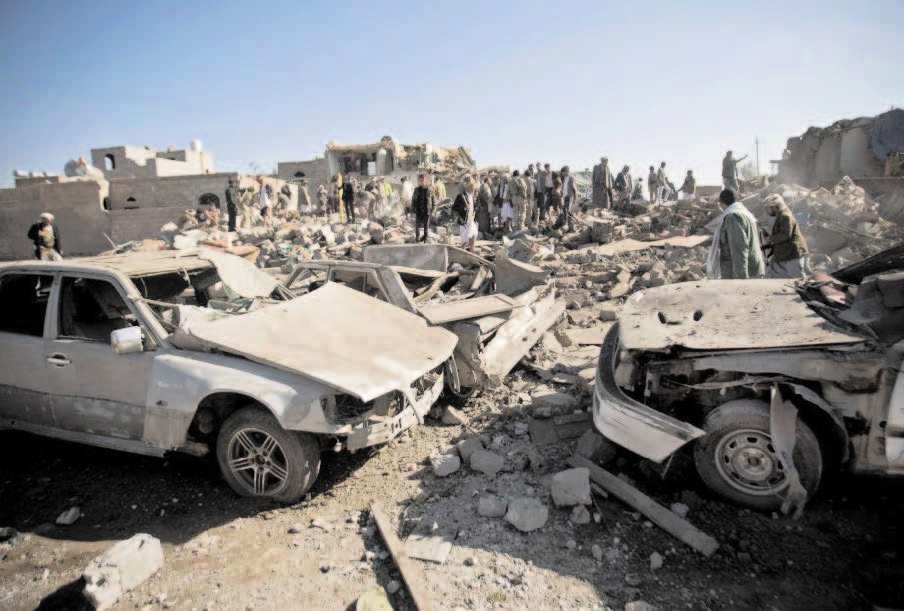
    UNITED NATIONS (TIP): The top United Nations aid official has called for a swift investigation of a suspected Saudi-led air strike that killed dozens of people at a wedding in Yemen.

    Stephen O’Brien, the UN under-secretary-general for humanitarian affairs, yesterday said he was “deeply disturbed” by the news that civilians had been killed in Wednesday evening’s bombing.

    “I call for a swift, transparent and impartial investigation into this incident,” O’Brien said in a statement.

    “Real accountability for parties to conflict, whether they are states or non-state groups, is urgently needed, to ensure that the commitment under international law to protect civilians is meaningful,” he added.

    O’Brien quoted Yemen’s ministry of public health as saying that at least 47 people were killed and 35 were injured, among them many women and children, in the strike.

    Medical sources confirmed at least 28 deaths to AFP.

    The raid hit a house where dozens of people were celebrating in the town of Sanban in Dhamar province, 100 kilometers south of the capital Sanaa, residents said.

    It was the second alleged air strike by the Saudi-led coalition on a Yemeni wedding party in just over a week.

    But the coalition, under mounting criticism over the civilian death toll of its bombing campaign against Iran-backed Shiite rebels, denied any involvement in the latest attack.

    O’Brien noted that 4,500 civilians have been killed or injured since the Saudi-led coalition began air strikes against rebels in Yemen in March.

    “That is more than in any country or crisis in the world during the same period,” he noted.

    The strongly-worded statement underscored that the sides have a responsibility under international law to avoid damage to homes and other civilian structures.

  • Bronze Age Britons mummified dead

    LONDON (TIP): Ancient Britons may have mummified their dead during the Bronze Age, claims a study that is the first to show that mummification may have been a common funerary practise in the UK.

    Building on a previous study conducted at a single Bronze Age burial site in the Outer Hebrides in Scotland, Tom Booth from University of Sheffield used microscopic analysis to compare the bacterial bioerosion of skeletons from various sites across the UK with the bones of the mummified bodies from Yemen and Ireland.

    The damp British climate is not favourable to organic materials and all prehistoric mummified bodies in UK will have lost their preserved tissue if buried outside of a preservative environment, researchers said. “We know that bones from bodies that have decomposed naturally are usually severely degraded by putrefactive bacteria, whereas mummified bones demonstrate immaculate levels of histological preservation,” said Booth. “The idea that European Bronze Age communities mummified and curated a proportion of their dead fundamentally alters our perceptions of funerary ritual and belief in this period,” Booth said.

  • Yemen mosque bombing kills 25

    SANAA (TIP): A suicide bomber struck a mosque in Yemen’s rebel-held capital on Thursday in an attack targeting Shiites that killed at least 25 people and wounded dozens during holiday prayers.

    There was no immediate claim of responsibility but Sanaa has been shaken by a string of bombings by the Islamic State (IS) jihadist group in recent months targeting Shiites.

    Iran-backed Shiite Huthi rebels, considered heretics by the Sunni extremists of IS, seized control of Sanaa a year ago.

    Thursday’s blast ripped through the Balili mosque, located near a police academy, where the rebels and their supporters go to pray, according to witnesses. It came as Muslims marked Eid al-Adha, the Feast of the Sacrifice, the most important holiday of the Islamic calendar.

    Witnesses said after a first blast inside the mosque, a suicide bomber detonated an explosives belt at the entrance.

  • Coalition strikes, fighting kill 40 rebels in Yemen’s Aden

    ADEN (TIP): Saudi-led coalition strikes against Iran-backed Shiite rebels in Yemen’s second city Aden today and ground clashes killed at least 40 Huthis and their allies, the city’s deputy governor said.

    Residents reported non-stop air raids on rebel positions across the city amid heavy fighting.

    The coalition air campaign against the rebels and allied forces loyal to former leader Ali Abdullah Saleh began on March 26 in an effort to restore UN-backed President Abedrabbo Mansour Hadi to power.

    “Coalition forces carried out qualitative and successful operations against the rebels after coordination between the coalition leadership and the Popular Resistance Council leadership” on the ground in Aden, the southern city’s deputy governor Naef al-Bakri told AFP.

    Anti-rebel forces — pro-government fighters, Sunni tribes, and southern separatists — are referred to as Popular Resistance Committees.

    Bakri did not give details on the operations but said warplanes destroyed a number of rebel vehicles and hit checkpoints in Aden’s north and northeast, adding that Popular Resistance fighters were also “provided with qualitative weapons”.

    “At least 40 rebels were killed and dozens were wounded” in air strikes and fighting, he said.

    A military source close to the Huthis confirmed to AFP that they had sustained “heavy losses”.

    Aden health chief Al-Kheder Lassouar said at least 19 civilians and anti-rebel fighters have been killed in two days of fighting there.

    Meanwhile in the capital, coalition jets hit a rebel-held air base and an arms depot on the Fajj Attan hill overlooking Sanaa. Similar strikes on Fajj Attan last month set off a chain of explosions that killed 38 civilians.

    Amnesty International warned today that “scores of casualties in Sanaa have been caused by anti-aircraft munitions shot by the Huthi armed group which detonated after landing in populated areas, killing and maiming civilians”.

    The London-based rights group’s senior crisis adviser Lama Fakih said both the coalition and the rebels “have failed to take the necessary precautions to protect civilian lives in violation of the laws of war. Instead they have carried out attacks that have had devastating consequences for the civilian population.”

    Amnesty urged the Arab coalition states “to take all feasible precautions to minimise the risks posed to civilians, as required by international humanitarian law.

    “The Huthi armed group should also move its military positions away from populated civilian areas where feasible,” the watchdog said.

  • Majority of Americans support drone strikes in Pakistan: Survey

    Majority of Americans support drone strikes in Pakistan: Survey

    WASHINGTON: (TIP) Nearly 60 per cent of Americans support the country’s policy of carrying out drone strikes against militants in Pakistan, according to a national survey.

    The Pew survey, released on May 28, stated that while 58 per cent Americans approve of US drone strikes to target militants in countries such as Pakistan, Yemen and Somalia, about a third (35 per cent) disapproves such attacks.

    The survey was conducted between May 12-18 based on telephone interviews with around 2,000 adults living in all 50 US states and the capital Washington.

    It stated that the public opinion about US drone strikes has changed only modestly since February 2013, when 56 per cent approved of them.

    Compared to the 74 per cent Republicans who favour the drone strikes, only 56 per cent independents and 52 per cent Democrats support them, the survey said.

    While men approve of drone attacks by more than two-to-one (67 per cent to 28 per cent), the balance of opinion is much narrower among women.

    Half (50 per cent) of the women approve of the use of drones, while 42 per cent disapprove them, it said.

    The survey also found that a majority (56 per cent) of the Americans say the US has mostly failed in achieving its goals in Afghanistan, while 36 per cent say the it has mostly succeeded.

    Also a declining share of Americans sees prospects for long-term stability in Afghanistan.

    Just 29 per cent respondents say it is likely that Afghanistan will be able to maintain a stable government following the departure of US forces from the country.

    More than twice as many (68 per cent) say this outcome is unlikely, the survey added.

  • Indian-origin Keith Vaz appointed Labour party vice-chairman

    LONDON: One of Britain’s longest-serving Indian-origin member of parliament, Keith Vaz, has been appointed as vice-chairman of the Labour party.
    The Party does not have a leader at present with Ed Miliband resigning after the recent election debacle. 
    This effectively makes 58-year-old Vaz the top man in the party at the moment. Vaz has been an MP since 1987 was re-elected from his Leicester East stronghold at the May 7 general election. 
    He received 61% of the votes. Vaz was first elected MP in June 1987 and has been re-elected as a MP six times. 
    Born to Goan parents in Aden, Yemen, Vaz who also serves as the chair of the influential home affairs select committee in the House of Commons was educated at Cambridge University where he studied law and then became a solicitor. 
    Vaz has his roots in Anjuna. His sister Valerie Vaz is also a Labour MP.
    Vaz said “I am delighted to have been appointed as vice-chairman of the Labour Party. After coming through a difficult election, it is time for the party to regroup and bring fresh new ideas to the table. Playing a part in that process is a source of great pride for me”. 
    Vaz has been appointed by acting leader of the opposition Harriet Harman. 
    His appointment clearly follows Labour’s interest in garnering the all-important Indian origin support in the future. 
    The Indian community has been growing in prominence year by year. In 1987, there were only two members of Indian origin in both the houses of parliament. Today, there are over 25 – over 10 times. 
    Recent data showed that up to a million ethnic minority votes helped put David Cameron back into Downing Street.
  • Secrets of the bin Laden ‘treasure-trove’ – 106  documents released

    Secrets of the bin Laden ‘treasure-trove’ – 106 documents released

    In his final years hiding in a compound in Pakistan, Osama bin Laden was a man who at once showed great love and interest in his own family while he coldly drew up quixotic plans for mass casualty attacks on Americans, according to documents seized by Navy SEALs the night he was killed.

    On May 20th  morning, the U.S. Office of the Director of National Intelligence released an unprecedented number of documents from what U.S. officials have described as the treasure-trove picked up by the SEALs at bin Laden’s compound in Abbottabad, Pakistan, on May 2, 2011.

    Totaling 103 documents, they include the largest repository of correspondence ever released between members of bin Laden’s immediate family and significant communications between bin Laden and other leaders of al Qaeda as well as al Qaeda’s communications with terrorist groups around the Muslim world.

    Also released was a list of bin Laden’s massive digital collection of English-language books, think tank reports and U.S. government documents, numbering 266 in total.

    To the end bin Laden remained obsessed with attacking Americans. In an undated letter he told jihadist militants in North Africa that they should stop “insisting on the formation of an Islamic state” and instead attack U.S. embassies in Sierra Leone and Togo and American oil companies. Bin Laden offered similar advice to the al Qaeda affiliate in Yemen, telling it to avoid targeting Yemeni police and military targets and instead prioritize attacks on American targets.

    Much of bin Laden’s advice either didn’t make it to these groups or was simply ignored because al Qaeda affiliates in Yemen and North Africa continued to attack local targets.

    ISIS, of course, didn’t exist at the time bin Laden was writing. The group, which now controls a large swath of territory in the Middle East, grew out of al Qaeda in Iraq and has charted a different path, seeking to create an Islamic state and not prioritizing attacks on the United States and its citizens.

    Taken together, these documents and reading materials paint a complex, nuanced portrait of the world’s most wanted man in the years before he was killed in the raid on his compound.

    In the letters that bin Laden exchanged with his many sons and daughters, he emerges as a much-loved and admired father who doted on his children. And in a letter he sent to one of his wives, he even comes off as a lovelorn swain.

    That’s in sharp contrast to the letters bin Laden sent to al Qaeda leaders that demanded mass casualty attacks against American targets and insisted that al Qaeda affiliates in the Middle East stop wasting their time on attacks against local government targets. “The focus should be on killing and fighting the American people,” bin Laden emphasized.

    What bin Laden was reading

    Bin Laden’s digital library is that of an avid reader whose tastes ran from “Obama’s Wars,” Bob Woodward’s account of how the Obama administration surged U.S. troops in Afghanistan in 2009 and 2010, to Noam Chomsky as well as someone who had a pronounced interest in how Western think tanks and academic institutions were analyzing al Qaeda.

    Bin Laden was a meticulous editor, and some of the memos he wrote were revised as many as 50 times. Of the thousands of versions of documents recovered from computers and digital media that the SEALs retrieved at bin Laden’s compound, the final tally numbers several hundred documents.

    The new documents show how bin Laden reacted to the events of the Arab Spring, which was roiling the Middle East in the months before his death. While bin Laden had nothing to say publicly about the momentous events in the Middle East, privately he wrote lengthy memos analyzing what was happening, pointing to the “new factor” of “the information technology revolution” that had helped spur the revolutions and characterizing them as “the most important events” in the Muslim world “in centuries.”

    Some of the documents paint an organization that understood it was under significant pressure from U.S. counterterrorism operations. One undated document explained that CIA drone attacks “led to the killing of many jihadi cadres, leaders and others,” and noted, “(T)his is something that is concerning us and exhausting us.” Several documents mention the need to be careful with operational security and to encrypt communications and also the necessity of making trips around the Afghan-Pakistan border regions only on “cloudy days” when American drones were less effective.

    Al Qaeda members knew they were short on cash, with one writing to bin Laden, “Also, there is the financial problem.”

    Some of the documents have nothing to do with terrorism. One lengthy memo from bin Laden worried about the baleful effects of climate change on the Muslim world and advocated not depleting precious groundwater stocks. Sounding more like a World Bank official than the leader of a major terrorist organization, bin Laden fretted about “food security.” He also gave elaborate instructions to an aide about the most efficacious manner to store wheat.

    Family concerns

    Many of the documents concern bin Laden’s sprawling family, which included his four wives and 20 children. Bin Laden took a minute interest in the marriage plans of his son Khalid to the daughter of a “martyred” al Qaeda commander, and he exchanged a number of letters with the mother of the bride-to-be. Bin Laden excitedly described the impending nuptials, “which our hearts have been looking forward to.”

    Bin Laden corresponded at length with his son Hamza and also with Hamza’s mother, Khairiah, who had spent around a decade in Iran under a form of house arrest following the Taliban’s fall in neighboring Afghanistan during the winter of 2001.

    Hamza wrote a heartfelt letter to bin Laden in 2009 in which he recalled how he hadn’t seen his father since he was 13, eight years earlier: “My heart is sad from the long separation, yearning to meet with you. … My eyes still remember the last time I saw you when you were under the olive tree and you gave each one of us Muslim prayer beads.”

    In 2010 the Iranians started releasing members of the bin Laden family who had been living in Iran. Bin Laden spent many hours writing letters to them and to his associates in al Qaeda about how best he could reunite with them.

    In a letter to his wife Khairiah, he wrote tenderly, “(H)ow long have I waited for your departure from Iran.”

    Bin Laden was paranoid that the Iranians –who he said were “not to be trusted” — might insert electronic tracking devices into the belongings or even the bodies of his family as they departed Iran. He told Khairiah that if she had recently visited an “official dentist” in Iran for a filling that she would need to have the filling taken out before meeting with him as he worried a tracking device might have been inserted inside.

    U.S. intelligence officials have a theory that bin Laden might have been grooming Hamza eventually to succeed him at the helm of al Qaeda because the son’s relative youth would energize al Qaeda’s base. But Hamza never made it to his father’s hiding place in Abbottabad. When the SEALs raided bin Laden’s compound, they assumed Hamza would likely be one of the adult males living there, but he wasn’t.

    U.S. intelligence officials say they don’t know where Hamza, now in his late 20s, is today.

  • Two Indian cities at high risk of terror strike

    Two Indian cities at high risk of terror strike

    LONDON (TIP): Two Indian cities -Imphal (ranked 32) and Srinagar (ranked 49) have been named to be at “extreme risk” of a terrorist attack, mainly aiming to cause mass casualty and destroy public transport networks.

    According to an analysis of the terror risk to 1,300 commercial hubs and urban centres around the world, populations and businesses in 113 Indian cities have been identified to be at some risk – high, medium or low risk of facing terrorist attacks.

    The next major Indian city after these two that faces a terrorist threat is Chennai even though the risk quotient has been marked as medium risk.

    Bangalore is the fourth most prone city even though it is placed at 204th in the global threat list followed by Pune and Hyderabad at 206th and 207th respectively

    Cities like Nagpur (ranked 2010) and Kolkata (2012) have been found to face a higher risk of a mass attack by terrorists that the usually expected targets like Delhi (447) and Mumbai (298).

    Around 64 cities around the world are at “extreme” risk, with most in the Middle East and Asia – and three in Europe.

    London ranked as low as at 400 due to the lack of a terror incident since the 7/7 bombings while Paris has soared into the top 100 cities following the Charlie Hebdo shooting, according to Verisk Maplecroft’s new Global Alerts Dashboard (GAD).

    Arvind Ramakrishnan, head of Maplecroft India said “When it comes to Imphal and Srinagar, terrorist attacks aren’t on commercial targets as much as against the security forces. However n most of the other metropolitan cities, the targets are both to cause mass casualty and cripple its commercial hubs. Public transport networks in India are also prime targets”.

    Ramakrishnan added “The Mumbai attack in 2008 was the turning point for India. But lack of intelligence sharing among states is a big worry. Law and order is still a state subject in India and political rivalries across states leads to state intelligence agencies not sharing actionable data. Virtually all police forces in India lack modern equipment and adequate manpower to counter a terrorist threat. This brings down the overall morale of the force. India does not face threats from cross border terror organisations but also from home grown ones like the Indian Mujahideen”.

    Charlotte Ingham, head of security analytics at Maplecroft UK said in total, 64 cities are categorised as
    ‘extreme risk’ in an online mapping and data portal that logged analysed every reported terrorism incident since 2009.

    Based on the intensity and frequency of attacks in the 12 months following February 2014, combined with the number and severity of incidents in the previous five years, six cities in Iraq top the ranking.

    Over this period, the country’s capital, Baghdad, suffered 380 terrorist attacks resulting in 1141 deaths and 3654 wounded, making it the world’s highest risk urban centre, followed by Mosul, Al Ramadi, Ba’qubah, Kirkuk and Al Hillah. Ingham said “just because a city in India hasn’t seen a terrorist attack in a while does not mean it isn’t potentially facing one. The rankings are based on the frequency and intensity of attacks.

    Belfast has been named as the most dangerous city in Europe while Baghdad topped the list worldwide.

    Outside of Iraq, other capital cities rated ‘extreme risk’ include Kabul (13th most at risk), Mogadishu in Somalia (14th), Sana’a in Yemen (19th) and Tripoli in Libya (48th).

    However, with investment limited in conflict and post-conflict locations, it is the risk posed by terrorism in the primary cities of strategic economies, such as Egypt, Israel, Kenya, Nigeria and Pakistan that has the potential to threaten business and supply chain continuity.

    “An estimated 80% of global GDP is generated from cities,” states Ingham. “Visibility of the sub-national differences in terrorism levels should be an imperative for multinational organisations looking to understand and price the risks to assets, employees and supply chains”.

    As Africa’s largest economy, Nigeria’s role as a commercial hub is central to economic growth across the region. Because of Boko Haram 13 out of the 24 Nigerian cities experienced a significant increase in the intensity and frequency of terrorist attacks compared to the previous quarter.

    Paris (97th and ‘high risk’) has experienced one of the steepest rises in the ranking, reflecting the severity of the terrorist attack in January 2015 that left 17 people dead. The risk level in Paris is representative of a wider trend for Western countries, including Belgium, Canada and Australia, where the level of risk in key urban centres is substantially higher than elsewhere in the country”.

  • Decline of American clout – Gulf countries ”loss of trust in the leadership and credibility of the US”

    Decline of American clout – Gulf countries ”loss of trust in the leadership and credibility of the US”

    A near unanimous decision by the six heads of state of the Gulf Cooperation Council not to personally attend the meeting convened by the American President is a most dramatic demonstration of the decline of American clout in a part of the West Asian region where it was the strongest. The meeting was called by the President to explain and reassure his Gulf allies about the Iran nuclear deal. The boycott is a measure of the extent of the loss of trust of the Gulf countries in the leadership and credibility of the United States. The American Administration has of course been aware of the widening gulf in mutual trust between the two sides but was probably not aware of its depth. It tried to assuage its erstwhile protégés’ sensibilities by vocally and strongly supporting the Saudi-led intervention against the Houthi-led insurrection in Yemen. It provided crucial logistic and intelligence support and deployed powerful naval armada in the Gulf of Aden, even ordering the hugely powerful   aircraft carrier USS Enterprise to those waters. Evidently, these efforts and gestures have not had the desired result.

    The causes of this disenchantment among the kingdom and its GCC allies are well known. It started with the phenomenon which prematurely came to be described as the Arab Spring. The Saudis were deeply disappointed with the American lack of decisiveness in standing behind President Mubarak and for eventually ditching him.

    They left the Americans in no doubt about their displeasure. When Morsy was overthrown, the Americans again were on the other side since they openly condemned what they called the coup against the ‘democratically elected’ leader, even though they knew that Saudi Arabia was firmly opposed to Moslem Brotherhood.

    The Saudi disillusionment with America became stronger with the developments in the Syrian civil war. The Saudis expected their American friends to be more forthright in joining the campaign to topple President Bashar Al Assad. The kingdom had never been happy with the unwillingness of the Syrian regime to align itself with them. Syria’s dominance of Lebanon, especially during the period when Rafiq Hariri was its Prime Minister, was intensely resented by the then King who considered Hariri as his protégé. (Hariri made his millions in Saudi Arabia.)

    President Obama had declared that if the Assad regime used chemical weapons, that would mean crossing a ‘red line’ for him and he would bomb the regime’s strongholds. Chemical weapons were used and Obama did nothing. The Saudis were furious at being let down. The concerted propaganda launched by them as well as Qatar had succeeded in creating a strong perception that it was the Assad government which had used the weapon of mass destruction. However, an internal investigation in Washington, at the least, found several holes in the story, compelling Mr. Obama not to carry out his threat or promise.

    The proverbial last straw which broke the camel’s back was the determined push   by the American President in the nuclear talks with Iran. Both Iran and Saudi Arabia have been polite in their public utterances and played down the intense mistrust and hostility which they entertain for each other. The fact remains that the two are rivals in the region for dominance. The sectarian divide is no doubt one important factor since the kingdom regards itself as the leader of all the Muslims in the world and the Islamic Republic considers itself as the defender of the Shia community. Shias and Sunnis deliberately downplay their differences in public discourse but the theological gap between them is unbridgeable. Worldwide, Shias are only 10 to 15 % of the Muslim Ummah and are in majority in only four countries – Iran, Iraq, Bahrain and Azerbaijan. Shia minorities have been persecuted in most Sunni majority     countries, and it is only in recent years that they have asserted themselves. Iran’s rise as the Islamic Republic has undoubtedly a lot to do with this assertiveness.

    Saudi Arabia has legitimate concerns at the rise of Iran, given the fact that its Shia population, about 10-12 %, is located in the eastern province where the kingdom’s oil resources are concentrated. If Iran comes to have an effective voice in Yemen, it might generate dissidence in the country. Sectarian considerations, while important, have been overplayed by the Saudis. Their principal concern is that if Iran succeeds in striking a deal with the US, which would permit it to retain its nuclear weapon capability, it would forever tilt the balance of power in favor of Iran. Consequently, when the talks between Iran and P-5 + 1 made progress, raising expectations about a successful conclusion by the end of June, the Saudi kingdom thought something had to be done.

    That something turned out to be the intervention in Yemen. In this adventure, they were actively encouraged and assisted by Israel whose Prime Minister has mounted a most effective campaign against the nuclear deal for his own reasons. The Saudis and Israelis are allies in this anti-Iran exercise. If the nuclear talks conclude in a mutually acceptable agreement, Iran will undoubtedly emerge as the dominant power in the region.

    Saudi Arabia has mounted a huge media blitz to convince the major powers of Iran’s active involvement on the side of the Houthis, alleging political, logistical and military support to the Houthi insurgency. Iran denies all such allegations. The U.S. has warned Iran against helping the Houthis, accusing it of everything that     the   Saudis accuse Iran of. But not all Western politicians subscribe to the claim of Iranian involvement. Even by the UN account, Yemen is flush with 40 to 60 million weapons of different sorts. Yemen’s deposed President has aligned himself with the Houthis, mainly to secure political future for his son, and he has strong following in the Yemeni army.

    If Iran miscalculates, it might force Mr. Obama to rethink the nuclear deal. He is already under tremendous pressure domestically. Mr. Netanyahu has mobilized the Republican Senators against the deal. It is to the President’s credit that he has withstood all the pressure and persevered in the negotiations. A misstep by Iran just might force Obama’s hand and call off the talks. Iran of course realizes this danger.

    Not everyone in Iran is in favor of the deal, but a huge majority is, especially the one person whose voice counts the most, namely, the Supreme Leader. It is perhaps more up to Iran to make sure that it exercises maximum restraint in the Yemeni affair. It is also Iran’s responsibility to reassure its smaller neighbors about its peaceful and good neighborly intentions towards them.

    The unprecedented public display of no-confidence by the Gulf countries in President Obama is equally a challenge for him as well as for Iran.

  • U.S. Praises India’s Role in Nepal Quake Relief Efforts

    New Delhi April 28 (TIP) : US praised India’s leadership role in helping earthquake-hit Nepal and persons of different nationalities stranded in war-ravaged Yemen.

    “India has demonstrated its global leadership in recent weeks, first in Yemen and now in Nepal. We are grateful; we are impressed; we are inspired.

    “And because our cooperation is expanding, India is using C-17s and C-130s on the front lines of its response,” US Ambassador to India Richard Verma said here at the Amcham function.

    He said that the US side has received administrative clearances for its relief efforts in Nepal without delay.

    “As our relationship progresses, we will be able to do even more together,” he added.

    India was the first to respond to the Nepal crisis and it immediately sent relief material.

    The death toll in the devastating earthquake that rocked Nepal has climbed to over 4,350 today with more than 8,000 injured.

    Crisis loomed over quake-hit Nepal with an acute shortage of food, water, electricity and medicines as fear of another quake kept tens of thousands of people out in the open.

    Verma also said that the US has provided USD 10 million in humanitarian funding.

    He said that the embassy has deployed personnel and disaster response resources to Nepal to participate in the rescue effort.

    Source : PTI

  • US is often unsure about who will die in drone strikes

    US is often unsure about who will die in drone strikes

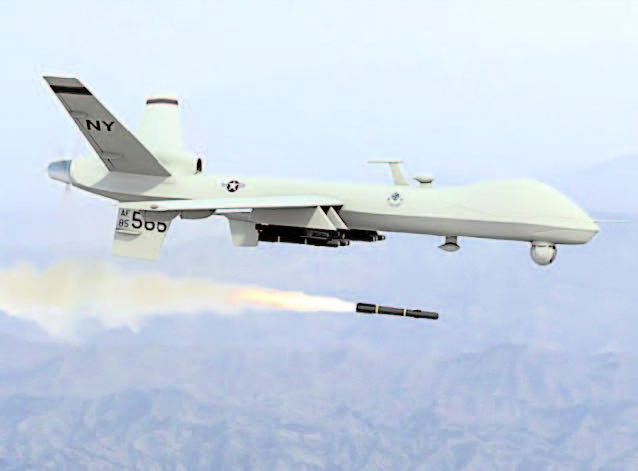
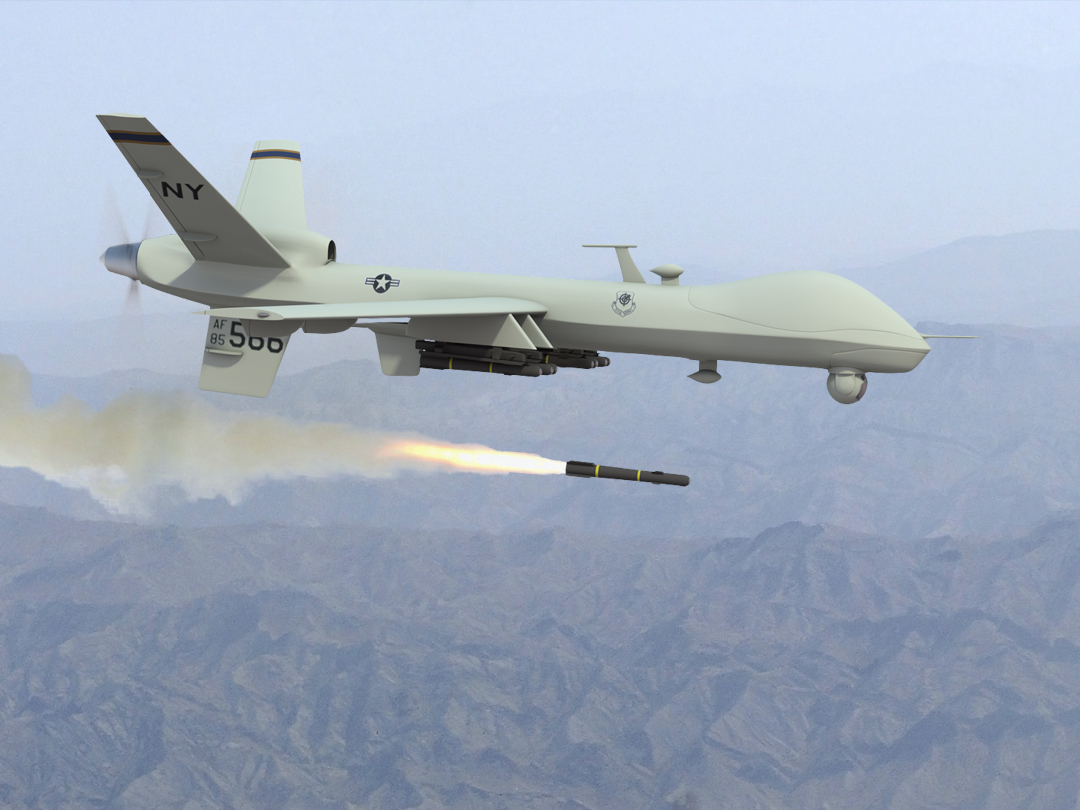
    WASHINGTON (TIP): Barack Obama inherited two ugly, intractable wars in Iraq and Afghanistan when he became president and set to work to end them. But a third, more covert war he made his own, escalating drone strikes in Pakistan and expanding them to Yemen and Somalia.

    The drone’s vaunted capability for pinpoint killing appealed to a president intrigued by a new technology and determined to try to keep the United States out of new quagmires. Aides said Obama liked the idea of picking off dangerous terrorists a few at a time, without endangering American lives or risking the years long bloodshed of conventional war.

    “Let’s kill the people who are trying to kill us,” he often told aides.

    By most accounts, hundreds of dangerous militants have, indeed, been killed by drones, including some high-ranking al-Qaida figures. But for six years, when the heavy cloak of secrecy has occasionally been breached, the results of some strikes have often turned out to be deeply troubling.

    Every independent investigation of the strikes has found far more civilian casualties than administration officials admit. Gradually, it has become clear that when operators in Nevada fire missiles into remote tribal territories on the other side of the world, they often do not know who they are killing, but are making an imperfect best guess.The president’s announcement on Thursday that a January strike on al-Qaida in Pakistan had killed two Western hostages, and that it took many weeks to confirm their deaths, bolstered the assessments of the program’s harshest outside critics. The dark picture was compounded by the additional disclosure that two American members of al-Qaida were killed in strikes that same month, but neither had been identified in advance and deliberately targeted.

    In all, it was a devastating acknowledgment for Obama, who had hoped to pioneer a new, more discriminating kind of warfare. Whether the episode might bring a long-delayed public reckoning about targeted killings, long hidden by classification rules, remained uncertain.Even some former Obama administration security officials have expressed serious doubts about the wisdom of the program, given the ire it has ignited overseas and the terrorists who have said they plotted attacks because of drones. And outside experts have long called for a candid accounting of the results of strikes.

    “I hope this event allows us at last to have an honest dialogue about the US drone program,” said Rachel Stohl, of the Stimson Center, a Washington research institute. “These are precise weapons. The failure is in the intelligence about who it is that we are killing. “Stohl noted that Obama and his top aides have repeatedly promised greater openness about the drone program but have never really delivered on it.

    In a speech in 2013 about drones, Obama declared that no strike was taken without “near-certainty that ano civilians will be killed or injured.” He added that “nevertheless, it is a hard fact that US strikes have resulted in civilian casualties” and said “those deaths will haunt us as long as we live.”

  • Iran minister meets Pakistan military chief amid Yemen dilemma

    Iran minister meets Pakistan military chief amid Yemen dilemma

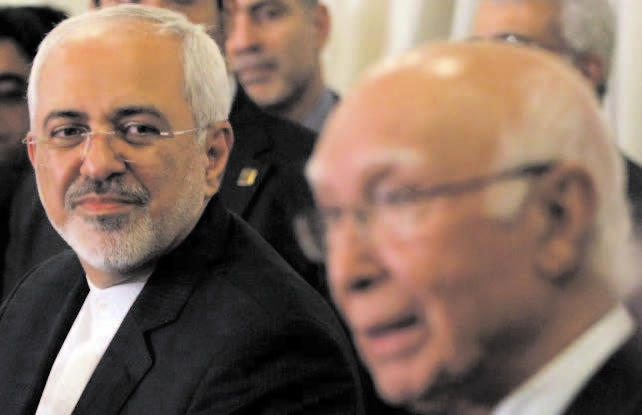
    ISLAMABAD (TIP): Iranian foreign minister Mohammad Javad Zarif met Pakistan’s powerful military chief Thursday, as the Pakistan government wrestled with a dilemma over how to respond to a request from Saudi Arabia for Pakistani troops to fight in Yemen.

    Zarif was winding up a two-day trip during which he was expected to urge Pakistan to reject the Saudi request for troops, planes and naval support for a Saudi-led coalition against Iran-allied Houthi fighters in Yemen.

    Pakistan’s chief of Army staff general Raheel Sharif has publicly remained silent on the request. Army officials say they will defer to the civilian government.

    Saudi Arabia’s request puts Pakistan in a tight spot. The nuclear-armed nation of 180 million people has strong economic, religious and military ties to Saudi Arabia but also a long and porous border with Iran in a mineral-rich region plagued by a separatist insurgency.

    Shi’ite Iran and Sunni Saudi Arabia are rivals for power in the volatile Middle East and many in Sunni-majority Pakistan fear being caught between them if Pakistani troops are sent to Yemen. A military statement on the meeting between Zarif and Sharif emphasised border difficulties and possible defence cooperation. “Focus of the discussion remained on regional security including the evolving situation in the Middle East, Pak-Iran border management and defence and security cooperation between both the countries,” it said. “The unity and integrity of Muslim Ummah (community) and greater harmony amongst the Muslims was emphasized.” 

    A Saudi-led coalition began air strikes against Iran-backed Houthi forces in Yemen last month. Iran denies Saudi and US accusations that it has armed the Houthis, who hail from the Zaidi branch of Shi’ite Islam.

    Although the causes of the Yemen conflict are complex, analysts fear it could spark a bloody sectarian battle between proxies of Iran and Saudi Arabia that could inflame the Middle East. Pakistan’s parliament has been debating the Saudi request to join the coalition this week. Legislators emphasised brotherly ties with Saudi Arabia but no one spoke in favour of going into Yemen. “The consensus that is emerging in parliament is that Pakistan should not participate in any military offensive. We should try to mediate, influence and facilitate peaceful dialogue,” Sartaj Aziz, the prime minister’s adviser on security.

  • Bringing Yemen’s tragedy to an end – Need for a fair Shia-Sunni deal

    The civil war in Yemen, exacerbated by the intervention of outside powers, is poised at a delicate stage which could impinge on the larger picture of the Middle East’s future trajectory. The truth is that the poorest country in the region lies along several fault lines.

    They are the Shia-Sunni schism in the Muslim world, the rivalry between Saudi Arabia and Iran, the interest of outside powers such as the United States and the major European trading nations and the broader state of US-Russian relations. Despite its appeals, the United Nations is, for the present, a spectator, rather than an effective actor.

    The military intervention of Saudi Arabia and its Gulf allies by launching air strikes on Houthi rebels in Yemen, who are aided by Iran and are in the process of capturing the better part of the country, has complicated the picture. In a sense, it was inevitable because Riyadh could hardly stand aside even as a Shia sect set about conquering a Sunni majority country. The Saudis are now demanding the surrender of the Houthis before stopping their bombing runs.

    The United States is helping the Saudis by providing logistical and other technical assistance, a delicate dance for US Secretary of State John Kerry. He decries Iranian help to the Houthis. Tehran denies even as he eyes a landmark deal with Iran on its nuclear program. Pakistan, on its part, is facing a cruel dilemma in accepting the Saudi demand to join the intervention against the backdrop of its substantial Shia population at home.

    For Pakistan, the dilemma is of a state beholden to Riyadh for its generous subsidies. A contingent of Pakistani troops is permanently stationed in Saudi Arabia in part payment for Saudi goodies. Prime Minister Nawaz Sharif himself is beholden to the Saudis for saving him from possible execution in the days of Gen Pervez Musharraf rule, first giving him refuge and then re-injecting him into the Pakistani political scene.

    Grave as the dilemmas for Pakistan are, the larger picture is more menacing because of the fault lines. The most salient is the Saudi-Iranian contest in the Middle East in which Tehran is seeking to spread its wings through fortuitous circumstances and its own activism. Thanks to the American invasion of Iraq, the latter, with its Shia majority, ultimately fell into its lap. Iran is well placed in Lebanon with its allied Hezbollah movement in a confessional division of political factions.

    Bahrain remains a tempting target because it is ruled by a Sunni monarch underpinned by Saudi power over a Shia majority. Saudi apprehension over the proposed nuclear deal with Iran, shared by Israel, is that it would give Tehran greater opportunities to strengthen its regional role.

    As if the picture were not complicated enough, the growth of Sunni extremists, first in the form of Al-Qaida and its affiliates, then their evolution into ISIS and ultimately into a caliphate holding territory in the shape of the Islamic State (IS), is a fact of life. Americans have reluctantly returned to the region by undertaking bombing runs on the IS and are ironically on the same side as Iran in trying to attain this goal.

    How then is the world, or the major powers, to unscramble the mess because of the very nature of the crises? If relations between the United States and Russia were not as frigid as they are over Ukraine and other issues, they could have joined hands to bring about at least a temporary ceasefire in Yemen. After all, in the five plus one (UN Security Council permanent members plus Germany) format of talks on Iran’s nuclear program, Russia was a participant. But the prevailing animosities in what was once the Big Two make the going tough.

    Individuals and circumstances have contributed to creating the Yemen crisis. Mr. Ali Abdullah Saleh, the long-time dictator, was eased out of office with the help of Gulf monarchies in the wake of the short-lived Arab Spring in 2011. He was nursing his wounds while keeping his powder dry and still had ambitions – for son, if not for himself. He chose to ally with the Houthis while still retaining the loyalty of sections of the country’s armed forces.

    Houthis, who traditionally control the north of the country, were ready to revolt against the Sanaa dispensation presided over by an unimpressive Sunni imposed by Saudis. They felt their interests were being sacrificed and, thanks to Saleh’s support, they had the strength to overrun the capital and even try to take over Aden, the principal city of South Sudan.

    The nature of the strikes being what it is, there are reports of increasing civilian casualties. Although some humanitarian aid has now got in and India, among other countries, has managed to evacuate most of its citizens, international demands are growing by the day to stop the bombing runs and seek a political solution.

    Houthis, being a minority, cannot hope to rule Yemen. Yet, given the military prowess they have demonstrated, they will insist on a fair share of the national cake in any future framework agreement. Saudi Arabia shares a long border with Yemen and will not tolerate a Shia-dominated dispensation despite the earlier long rule of Mr. Saleh, himself a Houthi.

    For its part, Iran has already suggested that the Saudi-led action is a “mistake” and the United States is seeking to maintain a balance between the hoped-for nuclear deal with Iran and warnings to Tehran to refrain from aiding the Houthis. Ultimately, the problem will land in the lap of the United Nations, but the question is how much longer the process will take and how long the regional contestants will drag their feet before a truce is called.

    The scale of the fighting and deaths is leading to growing demands for a ceasefire. The Saudis have made their point that there cannot be a Shia-dominated dispensation along its shared border. But a compromise must include a fair sharing of power with Houthis.

  • Pakistan remains neutral in Yemen fight

    Pakistan remains neutral in Yemen fight

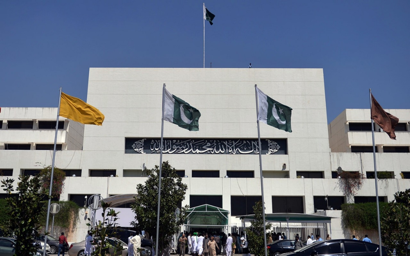
    Pakistan’s parliament on Friday voted against joining the Saudi-led coalition of Sunni-majority Arab states launching airstrikes against Iranian-backed Shia rebels in Yemen, dashing Riyadh’s hopes for support from outside the region in its fight to halt the fighters’ advance.

    Saudi Arabia had asked Pakistan, a fellow Sunni-majority country, to provide ships, aircraft and troops for the campaign, now in its third week. Instead, Pakistan adopted a resolution calling on all sides to resolve their differences peacefully.

    “[Parliament] desires that Pakistan should maintain neutrality in the Yemen conflict so as to be able to play a proactive diplomatic role to end the crisis,” the resolution states, while expressing “unequivocal support for the kingdom of Saudi Arabia” and promising to “stand shoulder to shoulder with Saudi Arabia and its people” if Saudi territory is violated.

    The Saudi-led coalition launched its military campaign against the rebels, dubbed Houthis after their late leader Hussein Badreddin al-Houthi, on March 26 after they advanced from the capital, Sanaa, which they seized in September, toward the southern port city of Aden.

    Saudi Arabia is concerned that the violence could spill over the border it shares with Yemen and is also worried about the growing influence of Iran, which has denied Saudi allegations it has provided direct military support to the Houthis. Many analysts fear the conflict is quickly spiraling out of control into an all-out regional proxy war.

    Iran’s Supreme Leader Ayatollah Ali Khamenei has called the Saudi-led coalition’s involvement in Yemen “genocide” and said that a diplomatic solution was needed to resolve the crisis.

    ‘Catastrophic’ situation

    Coalition missiles rained down on Yemen for a 16th straight day on Friday, targeting weapons depots used by soldiers loyal to former President Ali Abdullah Saleh, a powerful supporter of the Houthis.

    He is still influential in the military — despite giving up power in 2012 after mass protests against his rule — complicating efforts to stabilize the country.

    Troops loyal to Saleh are backing the Houthi rebels in their fight against his successor, President Abd Rabbu Mansour Hadi, a former general seen by the Shia fighters as a pawn of Sunni-majority Gulf Arab monarchies and the West. Hadi has fled to Saudi Arabia.

    In Aden, residents said electricity and water have been cut in several districts, trash has been left uncollected and hospitals have been unable to cope with the influx of wounded fighters and civilians.

    “The humanitarian situation in Aden is catastrophic and disastrous, both in terms of the rising number of killed and injured as well as in declining capabilities of medics, along with shortages in water and electricity,” said Al-Khadr Lawsar, a local Health Ministry official.

    “We call on fighters to adhere to international law and respect the work of ambulances and medical staff in the field,” he added, citing the fatal shooting of two brothers working for the Red Crescent while evacuating the wounded last week.

    Aden residents reported heavy explosions from coalition airstrikes and naval bombardment on Houthi positions, which shook windows throughout the city.

    An Indian ship captain working in Aden was killed in shelling on the city’s dockyard overnight, his company announced, and local news outlets reported that Houthi and allied army units fired mortars into the area.

    An airstrike hit a local government compound in the northern suburb of Dar Saad, and fires in Aden’s outskirts sent plumes of smoke into the air.

    Two planes carrying emergency medical aid landed in Sanaa on Friday, the first deliveries from international aid groups since the heavy fighting began. They were brought in by the International Committee of the Red Cross and UNICEF, which had been trying for weeks to gain access to the country.


  • 519 dead in two weeks of Yemen fighting: UN

    UNITED NATIONS (TIP): Some 519 people have been killed and nearly 1,700 injured in two weeks of fighting in Yemen, the UN aid chief has said, raising alarm over the fate of civilians.

    Valerie Amos yesterday said she was “extremely concerned” for the safety of civilians trapped in the fierce fighting and appealed to armed factions to do their utmost to protect ordinary Yemenis.

    The violence has sharply escalated in Yemen following a Saudi-led air campaign launched on March 26 to stop an advance by Shia Huthi rebels that forced President Abedrabbo Mansour Hadi to flee to Saudi Arabia.

    Aid groups have expressed alarm over the mounting toll of civilian casualties following an air strike on a camp for displaced people and the bombing of a dairy. Dozens were killed in both attacks.

    “Those engaged in fighting must ensure that hospitals, schools, camps for refugees and those internally displaced and civilian infrastructure, especially in populated areas, are not targeted or used for military purposes,” Amos said in a statement.

    The UN children’s agency this week said at least 62 children had been killed and 30 injured over the past week in Yemen, and that more of them were being recruited as child soldiers.

    Tens of thousands of people have fled their homes, some making the perilous journey by sea to Djibouti and Somalia, Amos said.

    UN aid agencies are working with the Yemen Red Crescent to deliver emergency health kits and generators so that civilians can have clean water, food and blankets, she added.

    UN secretary-general Ban Ki-moon this week reminded all sides to uphold international humanitarian law and protect civilians.

    The United Nations is backing Hadi as Yemen’s legitimate leader in the face of the Huthi uprising that has plunged the poor Arab state deeper into chaos.

    The Huthis seized power in the capital Sanaa in February and last month advanced on the port city of Aden, Hadi’s stronghold, where they seized the presidential palace on April 2.

  • Saudi Arabia-led air forces bomb Yemen’s Sanaa, Taiz

    Saudi Arabia-led air forces bomb Yemen’s Sanaa, Taiz

    SANAA (TIP): The Saudi Arabia-led coalition forces launched a fresh air strike against military targets in Yemen’s capital Sanaa and the southern province of Taiz on March 26 night, sources told Xinhua.

    The airstrike in Sanaa hit a military base affiliated with the reserve forces, which is the former elite republican guards loyal to former President Ali Abdullah Saleh, a security officer said on condition of anonymity.

    Another struck an infantry base at the western suburb of the capital, which is also affiliated with the reserve forces.

    The Houthi fighters responded the air raid with intensified anti-aircraft artillery, which can be heard across the city.

    Before bombing the capital, the Saudi fighter jets raided the southern province of Taiz, which is under control of the Houthi group.

    “The headquarters of the Tariq military air base was bombed by the Saudi-led air forces, causing huge damages,” the local government official said on condition of anonymity.

    A military source confirmed to Xinhua by phone “the air strike destroyed some air defenses and missiles inside the air base of Tariq controlled by the Shiite Houthi group.”

    There were no immediate reports of casualties till now, according to sources in Sanaa and Taiz.

    The Saudi-led forces started their air raid early Thursday in Yemen, including the capital Sanaa, the Houthi stronghold of Saada province and the southern Lahj province.

    Warplanes struck the al-Dailamy air force base in northern Sanaa and destroyed the runway, which is adjacent to the civil airport, a defense ministry official told Xinhua on condition of anonymity.

    The strikes also targeted weapon depots at a missile base in the southern part of Sanaa, which is controlled by the army loyal to former President Ali Abdullah Saleh.

    Rescue personnel who arrived at a civilian compound near the air base on Thursday morning found at least 15 houses destroyed in the air raid. They said they have found 25 bodies till Thursday afternoon, and that there might be more victims found after they removed all wreckage.

    Meanwhile, 50 people have been sent to hospitals for treatment, all of them are civilians living in houses near the air force base.

    During a televised speech on Thursday night, the leader of Shiite Houthi group, Abdul Malik al-Houthi, called Saudi Arabia and Gulf countries criminals and become “tools for the United States.”

    In the southern port city of Aden, the Houthi fighters were fighting pro-Hadi tribal militia on the outskirts on Thursday night.

    Yemeni President Abdrabbo Mansour Hadi, who was supposed to stay in Aden for the past two days, arrived in the Saudi Arabia’s capital of Riyadh on Thursday, Saudi Press Agency reported.

    Upon arrival at Riyadh Airbase, Hadi was received by Prince Mohammed bin Salman bin Abdulaziz, also the defense minister, the president of the Royal Court and special advisor to the Saudi King, as well as Khalid bin Ali Al-Humaidan, the chief of General Intelligence, the report said.

    No further details were reported about the nature of the visit, as Hadi is supposed to head the delegation of his country to participate in the Arab League summit which will be held in Egyptian Red Sea resort city of Sharm el-Shiekh during March 28-29.

  • PAKISTANI-BORN BROTHERS PLEAD GUILTY IN FLORIDA TERROR PLOT

    PAKISTANI-BORN BROTHERS PLEAD GUILTY IN FLORIDA TERROR PLOT

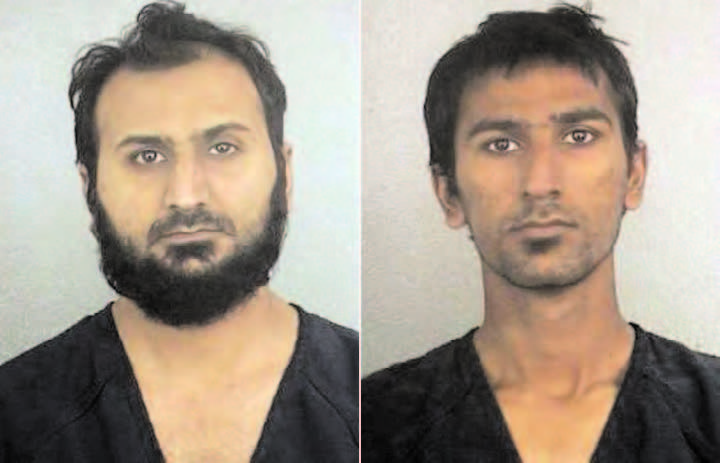
    MIAMI (TIP): Two Pakistani-born brothers pleaded guilty on March 11 to charges of plotting a terrorist explosives attack against New York City landmarks and assaulting two deputy US marshals while in custody.

    The pleas were entered Thursday in Miami federal court by Sheheryar Alam Qazi, 32, and Raees Alam Qazi, 22. The pair has been in federal custody since late November 2012 after Raees Qazi returned from New York by bus following an aborted attack, possibly involving bombs made of common chemicals and Christmas tree lights.

    Assistant US attorney Karen Gilbert, reading from a factual statement signed by both brothers, said Raees Qazi had unsuccessfully attempted to enter Afghanistan to join Islamic extremists while visiting Pakistan in 2011. After that, she said, he decided to become a “lone wolf” who would find a way to attack the US from within.

    In one meeting with a confidential FBI informant, Gilbert said, Raees Qazi said he had been in contact with al-Qaida operatives and added, “the leaders know what they are talking about so when they call on Muslims in the West to stay in the West, there’s a reason for that.” 

    Sheheryar Qazi’s role was to provide financial and emotional support for his younger brother’s quest to launch a terror attack, Gilbert said.

    “Although Sheheryar Alam Qazi likely did not know all the details of the planned operation, he encouraged his brother to succeed in his task,” she said.

    Both brothers were avid followers of lectures by Anwar al-Awlaki, an American-born radical Muslim cleric who was killed by a US drone strike in Yemen in September 2011, according to the statement. Raees Qazi also admitted logging on to Internet sites linked to al-Qaida to research bomb-making techniques and other ways of launching attacks with common items.

    US district Judge Beth Bloom set sentencing June 5 for both men. Raees Qazi faces up to 35 years in prison, while Sheheryar Qazi faces a 20-year maximum. Raees Qazi’s maximum sentence is higher because he pleaded guilty to an additional material support count. Key evidence includes FBI wiretap and other communications intercepts. Earlier in the case, defense lawyers sought access to information about the brothers collected under the once-secret National Security Agency surveillance program revealed by one of its contractors, Edward Snowden.

  • EU leaders debate new anti-terror measures

    BRUSSELS (TIP): Galvanized by the recent terror attacks in France, European Union leaders on February 12 debated a range of ambitious steps to better protect their 28 nations, including exchanging airliner passenger manifests, tightening controls at the border and combating extremism on the Internet.

    EU President Donald Tusk, the summit meeting’s host, said he would seek agreement on a “work plan to step up the fight against terrorism.” The bloc’s top official for counter-terrorism warned member governments last month that “Europe is facing an unprecedented, diverse and serious threat.”

    Counter-terrorism policy shot to the top of the EU agenda following the Jan. 7-9 terror attacks in Paris against a satirical weekly, a policewoman and a kosher grocery store that claimed a total of 17 victims. The three gunmen, who proclaimed allegiance to Al-Qaida in Yemen and the Islamic State group, were also shot dead by French police.

    The attacks mobilized France and other EU countries to seek more effective ways to deal with armed Islamic militancy, especially the problem of radicalized European-born Muslims who go to fight in Syria or Iraq and then return home.

    The attacks in the French capital “were a game-changer” for EU counter-terrorism policy, said Alexandra de Hoop Scheffer, senior trans-Atlantic fellow and director of the Paris office of the German Marshall Fund think tank. To prepare for Thursday’s summit in Brussels, EU foreign, finance and interior and justice ministers drew up recommendations on what to do.

    But as the leaders met, some officials urged caution. Finnish Prime Minister Alexander Stubb said it was imperative to strike “a careful balance between civil liberties and security.” European Parliament President Martin Schulz, who addressed the summit, told a news conference afterward that rashly limiting individual rights in the name of boosting public safety would play right into the terrorists’ hands by discrediting Western-style democracy.

    “We need to be a state of law and democracy,” Schulz said. “We need to protect our values.”

    Some of the steps the leaders were expected to consider:

    AN EU-WIDE PASSENGER REGISTRY TO SHARE INFORMATION ON AIR TRAVELERS 

    “It sounds crazy, but we don’t have that system within the EU, though we have it with the U.S., Canada and Australia,” said de Hoop Scheffer. An earlier attempt to launch an EU-wide exchange of air traveler data for prevention, detection, investigation and prosecution of terrorist offenses and other serious crimes died in the European Parliament in 2013 when a committee rejected it on civil liberties grounds.

    On Wednesday, European Parliament members, by a 532-136 vote, pledged to work toward getting a passenger name record program enacted by the end of 2015, but insisted the EU simultaneously rewrite its rules on data collection and sharing to ensure legally-binding protections.

    Even that wasn’t sufficient for Europe’s Greens, who opposed the resolution, saying it gave “carte blanche for EU governments to scale back personal freedoms.” The Greens said it would be more effective to conduct targeted surveillance on individual suspects already known to authorities.

    TIGHTER BORDER CHECKS ON TRAVELERS 

    Twenty-six European countries, among them 22 EU nations, have abolished passport and customs controls among one another in what’s commonly known as the “Schengen area.” According to EU officials, current identity checks on European travelers leaving or re-entering the area are often cursory.

    Gilles De Kerchove, the EU’s counter-terrorism chief, has called for the swift implementation of a new screening system to detect suspicious travel movements, and suggested it is also time to change some of the rules governing the Schengen area.

    FIGHTING THE USE OF THE INTERNET TO SPREAD RADICAL IDEAS 

    A draft statement prepared for Thursday’s summit calls for measures to “detect and remove Internet content promoting terrorism and extremism,” including reinforced cooperation between public and private sectors and a coordinating role for Europol, the EU’s law enforcement agency.

    “Preventing radicalization is a key element of the fight against terrorism,” the draft statement says. It also calls for development of communication strategies to promote tolerance, non-discrimination, fundamental freedoms and solidarity throughout the EU, and use of education, vocational training and rehabilitation to limit the lure of radicalization, including for people in prison.

    If all three of the major proposals are adopted, “the EU would be better equipped” to deal with the terrorism challenge, said de Hoop Scheffer.

    The EU leaders were expected to consider other measures as well, including better coordination among existing institutions like Europol, Eurojust _ the EU-wide agency of prosecutors, police and investigating magistrates _ and the bloc’s counter-terrorism coordinator.

  • Why this massacre of the innocents?

    Why this massacre of the innocents?

    It was a massacre of the innocents. Every report must admit this – because it’s true. But it is not the whole truth. The historical and all-too-real connections between the Pakistan army, the Inter-Services Intelligence (ISI) security police and the Taliban itself – buoyed by the corruption and self-regard of the political elite of the country – may well explain just how cruel this conflict in the corner of the old British Empire has become. And the more ferocious the battle between the military and the Islamists becomes in Waziristan, the more brutal the response of the Islamists.

    Miltary barbarity

    Thus when stories spread of Pakistani military barbarity in the campaign against the Taliban in Pakistan – reports which included the execution of Taliban prisoners in Waziristan, whose bodies were left to lie upon the roads to be eaten by animals- the more certain became the revenge of the Taliban. The children of the military officers, educated at the army school just down the road from the famous Edwardes College in Peshawar – were the softest and most obvious of targets. For many years, the ISI and the Pakistani army helped to fund and arm the mujaheedin and then the Taliban in Afghanistan.

    Saudis & weapons

    Only a few months ago, the Pakistani press was reporting that the Saudis were buying weapons from the Pakistani army to send to their rebel friends in Syria. Pakistan has been the tube through which America and its Arab allies supplied the anti-Russian fighters in Afghanistan, a transit route which continued to support the Taliban even after America decided that its erstwhile allies in that country had become super-terrorists hiding Osama bin Laden. Turkey is today playing much the same role in Syria.

    David Gosling, who was the principal of Edwardes College for four years until his return to Britain in 2010, believes that while individuals in the Pakistani army may wish for revenge after the Peshawar schoolchildren atrocity, the military may well now
    “soft-peddle their activities in Waziristan”. The Taliban, he says, “has always reacted to the army’s campaigns in Swat and Waziristan with bombs. The Pakistan army is going to be very disturbed by all this. Attacking civilian targets has a powerful effect on the population. These are soft targets. The army is going to be furious – but you have these close links between the ISI, the army and the Taliban…”

    Old loyalties

    For years, the Pakistani authorities have insisted that the old loyalties of individual military and security police officers to the Taliban have been broken – and that the Pakistani military forces are now fully dedicated to what the Americans used to call the “war on terror”. But across the Pakistan-Afghan border, huge resentment has been created by the slaughter of civilians in US drone attacks, aimed – but not necessarily successfully targeted – at the Taliban leadership. The fact that Imran Khan could be so successful politically on an anti-drone platform shows just how angry the people of the borderlands have become. Pakistani military offensives against the Taliban are now seen by the victims as part of America’s war against Muslims.

    But if the Pakistan security forces regard the Taliban as their principal enemy, they also wish to blunt any attempt by India to destroy Pakistan’s influence in Afghanistan; hence the repeated claims by the Afghan authorities – if such a term can be used about the corrupted institutions of Afghanistan – that Pakistan is assisting the Taliban in its struggle against the pro-American regime in Kabul. The army hates the Taliban – but also needs it: this is the terrifying equation which now decides the future of Pakistan.

    It may well be that the Taliban, knowing the dates of the American withdrawal in Afghanistan, now wishes to extend its power in Pakistan. More seriously, the greater the extension of Islamist rule in the Muslim Middle East – in Algeria and Libya, as well as in Syria, Iraq and Yemen, even in Lebanon – the more encouraged the Taliban becomes. As Sunni Muslims, they have often inflicted enormous carnage on their fellow Shia citizens in Pakistan -although without the headlines devoted to yesterday’s massacre.

    “You must remember,” Gosling says, “how enraged people were with the Israeli attacks on Gaza this year. People in Pakistan were furious at the casualty toll – more than 2,000 people, many of them children.” Needless to say, the phrase “massacre of the innocents” was not used about those children.

    Eight deadly years

    2014

    2 NOVEMBER: Taliban suicide bomber kills 60 people in an attack on a paramilitary checkpoint close to the Wagah border crossing with India.

    8 JUNE: A suicide bomber in the country’s south-west killed at least 23 Shia pilgrims returning from Iran.

    2013

    22 SEPTEMBER: Twin suicide bomb blasts in a Peshawar church kill at least 85 people.

    3 MARCH: Explosion in Karachi kills 45 Shia outside a mosque.

    10 JANUARY: Bombing in Shia area of Quetta kills 81 people.

    2012

    22 NOVEMBER: A Taliban suicide bomber struck a Shia procession in the city of Rawalpindi, killing 23.

    5 JANUARY: Taliban fighters kill 15 Pakistani frontier police after holding them hostage for more than a year.

    2011

    20 SEPTEMBER: Militants kill at least 26 Shia on a bus near Quetta.

    13 MAY: A pair of Taliban suicide bombers attack paramilitary police recruits in Shabqadar, killing 80, in retaliation for Osama bin Laden’s killing.

    2010

    5 NOVEMBER: A suicide bomber strikes a Sunni mosque in Darra Adam Khel, killing at least 67 during Friday prayers.

    1 SEPTEMBER: A triple Taliban suicide attack on a Shia procession kills 65 in Quetta.

    9 JULY: Two suicide bombers kill 102 people in the Mohmand tribal region.

    2 JULY: Suicide bombers attack Pakistan’s most revered Sufi shrine in Lahore, killing 47 people.

    29 MAY: Two militant squads armed with hand grenades, suicide vests and assault rifles attack two mosques of the Ahmadi minority sect in Lahore, killing 97.

    1 JANUARY: A suicide bomber drives a truckload of explosives into a volleyball field in Lakki Marwat district, killing at least 97 people.

    2009

    28 DECEMBER: Bomb blast kills at least 44 at a Shia procession in Karachi.

    9 OCTOBER: A suicide car bomber hits a busy market area in Peshawar, killing 53.

    2008

    20 SEPTEMBER: A suicide bomber devastates the Marriott Hotel in Islamabad with a truck full of explosives, killing at least 54.

    2007

    27 DECEMBER: Former Prime Minister Benazir Bhutto and 20 other people are killed in a suicide bombing and shooting attack in Rawalpindi.

  • Reliving the Memories of 1984

    Reliving the Memories of 1984

    Thirty years after the anti-Sikh riots that raged in Delhi, there are no easy answers to these questions: What should the Sikhs do? Should they forget the past? Should they live in the past? Or should they live with the past?

    By Mohinder Singh

    Let me begin my story from my diary of 1984, to be precise, that of March 24. On that day I escorted my teacher Dr Ganda Singh to the Rashtrapati Bhawan where he was to be conferred the Padma Bhushan by Giani Zail Singh, the then President of India. In the glittering ceremony, I noticed Mrs Indira Gandhi, the Prime Minister, Members of her Cabinet and other dignitaries and distinguished citizens who were to be honoured for their contribution in different fields. After the ceremony when we were going out for tea, Dr Ganda Singh, who had some eye problem, banged into the glass door of the Ashoka Hall and his Padma medal and spectacles fell on the floor. Rajiv Gandhi, who was walking beside him, quickly picked up the two items and passed them on to him and gently escorted him till the tea was over.

    Prominent Sikhs

    Later that evening, the Guru Nanak Foundation had arranged a reception for Dr Ganda Singh. It was attended by almost all prominent Sikhs in the national capital with the late Khushwant Singh as the main speaker. While writing my diary for that day, I felt proud that the Sikh community, which constituted less than 2 per cent of the Indian population, has done so well in independent India. Some of the prominent names that came to my mind were those of Baldev Singh, the first Defence Minister of independent India, Surjit Singh Majithia, Deputy Defence Minister of India, Swaran Singh as the Minister for Defence and later External Affairs, Hukam Singh and Gurdial Singh Dhillon as Speakers of the Lok Sabha, Buta Singh, Minister for Parliamentary Affairs, Sport, Works and Housing, Dr Manmohan Singh as Governor of the Reserve Bank of India, Arjan Singh and Dilbagh Singh as Chiefs of the Indian Air Force and many Sikhs in other important positions.

    In spite of talk of grievances, some real and some imaginary, Sikhs were doing well in all walks of life, be it business, sports or services. Little could I imagine that this best period in the history of the Sikh community would turn out to be the worst because of Army action in the Golden Temple, killing of Prime Minister of India, Indira Gandhi by two of her Sikh bodyguards and countrywide anti- Sikh riots that followed. On that fateful day, I happened to be in Chandigarh for an official meeting where we got to know that Prime Minister Indira Gandhi was dead though a formal announcement was made late that evening.

    While I managed to reach my home in Hauz Khas late that evening, what came as the first shock was to see the Green Park gurdwara set on fire. My family heaved a sigh of relief when I knocked at the door. In that group of 40 houses, I was the only turbaned Sikh. My immediate neighbours, all Hindus, were more worried about my safety than me. On the top floor, a young boy had stocked soda water bottles and stones to keep the mob away in case of any attack. Another neighbour who carried his service revolver offered to stay with our family the whole night to ensure that we were duly protected.

    Alarming situation

    On November 1, when violence spread throughout the city as a result of organised gangs taking over command of the anti-Sikh pogrom, the situation became rather alarming. I was advised by my teacher Prof Bipan Chandra to move to his home in the JNU campus. I was told that the mob was checking all vehicles at the IIT crossing, looking out for Sikhs and it was advisable for me to hide myself in a blanket and lie down in the leg space in the Ambassador car, with my wife and daughters occupying the backseat. My wife was advised to camouflage her identity by changing her dress.

    It was for the first time that I found my distinct identity, of which I always felt proud, had become my liability in spite of my opposing militant activity in Punjab and fighting the ideology of hate throughout my teaching career. My daughters who faced this trauma for the first time could not understand as to what was happening in a secular country. My younger daughter asked as to who had killed the Indian Prime Minister. Before I could answer, Bipan Chandra replied, “Ideology of hate”. She was too young to understand that it was this ideology which had led to the division of India and, later, the killing of Mahatma Gandhi who was opposed to any division on communal lines.

    That night I missed my sleep and kept on thinking how political parties use the ideology of hate for electoral gains. What disturbed me the most was the fact that Sikhs outside Punjab, who for their own reasons did not support the militant movement in Punjab, had become victims of mob violence for no fault of theirs.

    Communal politics

    In spite of my best efforts, I could not reconcile to the overnight change of the Sikh image from trusted lieutenants of the Indian State to a potential threat to its unity. I regretfully recalled how Punjab politics was communalised for electoral gains, with disastrous consequences for the Sikh community and the Indian State. The next day we heard about the violence spreading to different parts of Delhi and other parts of the country and the police and state machinery mutely watching this carnage. Later in the evening, Gopi Arora, a senior civil servant, asked Bipan for his advice as to how to check the growing violence.

    Bipan’s answer was simple, “You control the media. Let the TV and radio keep on announcing rioters being killed by the police.” But HKL Bhagat, who was the Minister for Information and Broadcasting, had other plans up his sleeve. On the contrary, he wanted to use the media to create a mass hysteria against the Sikhs, with an eye on the forthcoming Parliamentary elections. The Mishra Commission noticed that when Mrs Gandhi’s dead body was lying in state in Teen Murti, a group of people walking passed the body raised slogans, “Khoon ka Badla Khoon,” which was duly covered by the country’s only television channel, Doordarshan, and repeated 18 times for obvious reasons.

    Attacks and pelting stones on the cars in the entourage of the President of India, who rushed to the AIIMS, soon after his return from Yemen, and other incidents of October 31, 1984, are mentioned by the Nanavati Commission as “first signs of public resentment resulting in an angry outburst in Delhi,” but what happened for three consecutive days and nights between November 1 and November 3, in the national capital in the presence of heads of many countries who had joined in the national mourning, could not have happened without a free hand given to the organised gangs consisting of party workers and criminal elements from different political outfits.

    Gangsters armed with weapons of destruction like pistols, petroleum and other inflammable materials surrounding hapless Sikhs inside their localities and houses points toward an organised pogrom. According to the Mishra Commission, “If troops had been called on the morning of November 1, 1984 and Army columns had been moving in the streets properly, lives of at least 2,000 people could have been saved.” According to Nanavati Commission’s report, “There is enough material on record to show that at many places police had taken away their (Sikhs) arms and other articles with which they could have defended themselves against the attacks by the mobs.” According to the Nanavati Commission, at some places mobs indulging in violence were allowed to use DTC buses or other vehicles belonging to the State Transport Corporation.

    The modus operandi of the attackers was almost the same in various localities. The attackers “either came armed with weapons and inflammable materials like kerosene, petrol and some white powder or were supplied with such materials soon after they were taken to the localities where the Sikhs were to be attacked.”…. “Male members of the Sikh community were taken out of their houses. They were beaten first and then burnt alive in a systematic manner. In some cases, tyres were put around their necks and then were set on fire by pouring kerosene or petrol over them. In other cases, a white inflammable powder was thrown on them which immediately caught fire. This was a common pattern which was followed by the big mobs which had played havoc in certain areas.”

    The silver lining in the otherwise dismal picture was the role played by the wellmeaning members of the civil society and organisations like the People’s Union for Civil Liberties (PUCL), People’s Union for Democratic Rights (PUDR) and the Sikh Forum. At that difficult moment when most of the Sikhs had taken shelter in the homes of non-Sikh neighbours and friends and poor widows and children taken to relief camps, it were mainly non-Sikhs, especially Mrs Mohini Giri and her colleagues from the Guild of Service and War Widows Bhavan, who rushed relief to Teliwara and other areas in East Delhi which were not easily accessible. Faculty and students of the JNU played a positive role in coming out in open defence of the hapless Sikhs, who had become objects of hate and ridicule overnight. It was only appropriate that when Sant Harchand Singh Longowal came to visit Delhi to express sympathy with the members of the Sikh community, the first thing he did was to visit the JNU, wherein he started his speech by thanking non-Sikh sisters and brothers for saving many Sikh lives.

    While immediate relief was provided to the victims of the riots in different camps, no long-term strategy was planned for their emotional and economic rehabilitation and integration in the mainstream. VP Singh, who became the Prime Minister of India in 1989, in his wisdom provided small flats to the widows of 1984 riots in Tilak Vihar, Sector 16-J, Rohini and Garhi in East of Kailash, thus giving the national capital the dubious distinction of having “widows colonies” to be used as a votebank during every election. In spite of nine inquiry commissions, during the Congress, Janata Dal, NDA and UPA rule at the Centre, justice has eluded the Sikhs. This shows that the State is either unequipped or unwilling to punish the guilty.

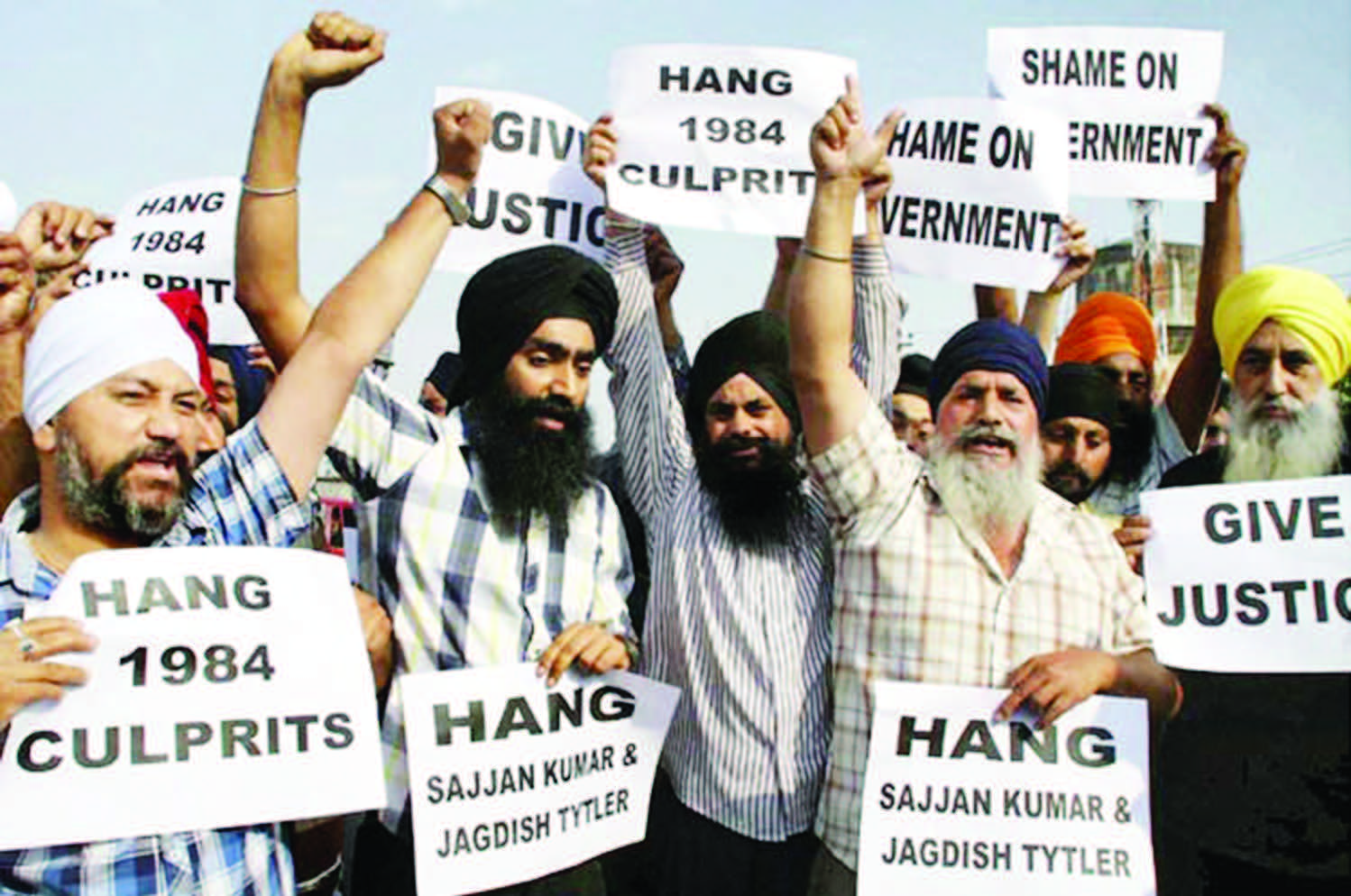
    In spite of the Mishra Commission fixing the responsibility of the Delhi carnage on Congress workers and criminal elements and giving a clean chit to Congress leaders, popular Sikh memory will neither forgive nor forget HKL Bhagat, Sajjan Kumar, Jagdish Tytler, Dharam Das Shastri and others for their role in the anti-Sikh riots. Now that history has come full circle – from November 1984, when the Sikhs were hiding their identity and taking shelter in safe havens – to May 2004 when Dr Manmohan Singh, a turbaned Sikh, was elected to highest executive office of the Prime Minister of the world’s largest democracy: What should the Sikhs do? Should they forget the past? Should they live in the past? Or should they live with the past? These are the questions to which there are no easy answers. -The writer is Professor of Eminence, Punjabi University, Patiala

    Violence unleashed

    * After the assassination of Indira Gandhi on October 31, 1984, by two of her Sikh bodyguards, anti-Sikh riots erupted on November 1, 1984, and continued in some areas for days, killing more than 3,000 Sikhs.
    * Sultanpuri, Mangolpuri, Trilokpuri, and other Trans-Yamuna areas of Delhi were the worst affected.
    * Mobs carried iron rods, knives, clubs, and combustible material, including kerosene and petrol.
    * The mobs swarmed into Sikh neighbourhoods, and arbitrarily killed any Sikh men or women they could find.
    * Their shops and houses were ransacked and burned down.
    * In other incidents, armed mobs stopped buses and trains, in and around Delhi, pulled out Sikh passengers and either lynched them or doused them with kerosene before burning them alive.
    * Others were dragged out from their homes and hacked to death with bladed weapons. (British English. Courtesy The Tribune, Chandigarh)

  • Pakistan second-worst country in gender equality

    Pakistan second-worst country in gender equality

    ISLAMABAD (TIP): Pakistan has emerged as the world’s second-worst country in terms of gender equality, according to the annual Global Gender Gap Report published by the World Economic Forum. The report, published on Tuesday, measures the size of gender inequality in 142 countries in areas of economic participation and opportunity (salaries, participation and highly-skilled employment), educational attainment (access to basic and higher levels of education), political empowerment (representation in decision-making structures), health and survival (life expectancy and sex ratio).

    In terms of equal economic participation and opportunity for women, Pakistan is ranked 141, followed by Yemen, 132 in empowerment terms of education attainment, 119 for health and survival and 85 for political empowerment. Since 2006, when the WEF first began issuing its annual Global Gender Gap Reports, women in Pakistan have seen their access to economic participation and opportunity gone down to 141 from 112. It maintains the position of second to last ranking for the third year. India’s ranking fell from 101 out of 136 countries last year to 114 out of 142 countries this year.

    According to the report, Iceland tops the list with the most equitable sharing of resources among men and women, followed by Finland, Norway, Sweden and Denmark in the top five spots. The other countries in the top 10 are Nicaragua, Rwanda, Ireland, the Philippines and Belgium.The United States climbed three spots from last year to 20th, after narrowing its wage gap and hiking the number of women in parliamentary and ministerial level positions.WEF said that the worldwide gender gap in the workplace had barely narrowed in the past nine years. While women are rapidly closing the gender gap with men in areas like health and education, inequality at work is not expected to be erased until 2095, the report added.

    “Based on this trajectory, with all else remaining equal, it will take 81 years for the world to close this gap completely,” the WEF said in a statement.

  • National imperatives in a complex world

    National imperatives in a complex world

    A well-thought-through response combining intelligence, the internal security apparatus and mature political initiatives are called for. The design and execution of a response that is successful will need to ensure that the response itself does not exacerbate the problem, as would appear to be the case so far. Use of a sledge hammer either leaves a crater or results in diffusion and dispersion even more difficult to address”, says the author.

    Adecisive electoral mandate provides just the opportunity required for a comprehensive review of the national security architecture long overdue. It gives the Prime Minister the freedom and authority to evaluate existing systems. Considered judgment will be needed on the efficacy of existing systems and structures, particularly of their cohesiveness and efficient functioning. Should the “review” so warrant, new systems capable of assessing threats and delivering appropriate responses to challenges to the nation’s security will need to be put in place early before existing systems are tested.

    New threats

    The nature of threats to national security is fast altering. These emerge inter alia from the changing nature of violence in troubled hotspots like Afghanistan, Yemen, from Syria and Iraq where there are deepening and exploding sectarian fault lines, from transnational organized crime like piracy and terrorism, weapons of mass destruction, cyber security and from instability in fragile states and cities. The BJP’s election manifesto acknowledges the comprehensive canvas of national security to include military security, economic security, cyber security, energy, food, water and health security and social cohesion and harmony.

    In the BJP’s view, the lack of strong and visionary leadership over the past decade, coupled with multiple power centers, has led to a chaotic situation. Clarity is required on the factors that have led to this. Revisiting the genesis of the national security architecture as it has evolved, including prior to 1998 when the first National Security Advisor (NSA), Brajesh Mishra assumed office is instructive. It was clear all along that crafting a national security architecture on a Cabinet Parliamentary model would pose difficulties.

    Members of the Cabinet, entrusted with responsibility for defense, external affairs, home and finance invariably are senior political figures. As members of the Cabinet Committee on Security (CCS), given their seniority and influence, there was anticipation they could operate as independent silos. Experience has shown there are in-built institutional constraints to correctly assess emerging threats in an evolving and fastchanging strategic landscape by functionaries within a silo. The institution of a National Security Adviser (NSA) has worked best in a Presidential system, such as in the United States, where the NSA draws authority from the President as the chief executive.

    This apprehension has been validated over the past decade and a half, variations in the personality of individuals notwithstanding. The strategic community, both within the country and outside has looked to the NSA to obtain the government’s line on issues central to the nation’s security. The ability to respond quickly, appropriately and, if necessary, decisively to threats to national security, imminent and real is of vital essence. This has, however, not always been the case.

    The “review” being proposed could catalogue the challenges to national security over the past decade and a half and critically examine them as case studies to evaluate the efficacy of our response. Caution needs to be exercised. Not always is the failure to respond appropriately due to institutional constraints. Weak political leadership in the past has also been an important factor.

    The attack by the Haqqani network on our Embassy in Kabul was anticipated by the CIA but could not be prevented. By the time its deputy director reached Islamabad, the terror machine had struck. No self-respecting nation can allow itself to be repeatedly wounded. Unless retribution is demonstrated, further attacks will follow.

    Bifurcation of two jobs

    The first NSA’s success was partly due to the fact that he doubled up as the Principal Secretary and was known to enjoy the full confidence of the Prime Minister. Healthy disagreements between the first NSA and the then External Affairs Minister, in spite of both being familiar with issues relating to defense, intelligence and diplomacy, the three components of national security, viewed holistically, was, however, an early pointer of the shape of things to come. The decision to bifurcate the two jobs for a short period under UPA-I is well documented for its shortcomings. Even Mani Dixit, the tallest professional of his generation, could not manage the pressures from the EAM and turf battles within the PMO.

    The performance of successors largely content “to push files”, succeeded or failed depending on how weak or strong the silos were in defense, external affairs and home. The NSA’s influence fluctuated particularly in relation to the incumbent in the Home Ministry. In the absence of full play in the areas of defense and home, even a talented professional ended up as no more than a foreign policy advisor. The portfolios of home, defense, finance and external affairs now have incumbents who, in terms of seniority within the BJP, have the benefit of several decades of association with the Prime Minister.

    This gives them clout which no civil servant can ever hope to acquire. Battles for turf are central to the functioning of any democracy. Weak political leadership in the Ministry of External Affairs (MEA) over the last decade, in spite of a first-rate Foreign Service has led to the relative weakening of the MEA. This weakness has been most manifest in relation to the conduct of our bilateral relationships in our immediate neighborhood which are in varying degrees of disrepair, as are our relations with China and the United States.

    The policy of acquiescence with China will need to be shed at the earliest and more clinical and realistic assessments put in place. Deep incursions into our territory cannot continue to be explained away in terms of an un-demarcated border. With the United States, the transactional nature of the relationship resulting from absence or insufficient attention in Washington has been more than matched by our own shortsightedness. It will be easier to deal with China, if our relations with the United States are perceived to be on the upswing.

    Focusing on Japan alone will place us in an untenable situation. The game changer will be the twin focus on US and China. In terms of military strength, there has been lack of clarity in what capability we are seeking. Most war games and doctrines are still addressing either 1971- type scenarios or a tactical nuclear weapons exchange. It is a sad reflection on the state of play that we are the biggest importers of conventional armaments, even after acquiring strategic capability.

    Rationalization of armed forces

    Every other country, including China and now the United States have “rationalized” their Armed Forces, a euphemism for reducing. On the other hand, we are seeking creation of three more Commands – Special Forces, Aerospace and Cyberspace. The Central Army and Southern Air force Commands have limited roles yet, we keep increasing our “tails and turf”. There is an urgent need to rationalize our defense thinking and structures as part of an overall national security review.

    In 1965, the Government of India had commissioned Arthur D. Little, an American consultancy firm to make recommendations on defense production in India. Many of their recommendations, including on the involvement of the Indian private sector, are still valid. It should not be difficult given the visible and available political will to break through the dependence on imports to modernize our own defense production structures using FDI and an infusion of technology. The present system is unsustainable.

    Resources are not only limited but the evolving situation in Iraq could place us in dire straits. Every dollar increase in the benchmark price of brent crude results in an additional liability of Rs 3,000 to 5,000 crore. The producers of oil are salivating at the prospect of oil prices touching new highs. This could spell gloom and even doom for importing countries, particularly those heavily dependent on imports, the price having gone up from $106 to $115 in just five days.

    Shoring up security
    ● In 1965, the Government of India had commissioned Arthur D. Little, an American consultancy firm to make recommendations on defense production in India. Many of their recommendations, including on the involvement of the Indian private sector, are still valid.
    ● Given the political will, it will be easy to break through the dependence on imports to modernize our own defense production structures using FDI and an infusion of technology.
    ● Along with an evaluation of existing systems, a comprehensive review of all security challenges emanating from developments outside our borders is imperative.
    ● We are the biggest importers of conventional armaments, even after acquiring strategic capability. Every other country, including China and now the United States have “rationalized” their Armed Forces The attack by the Haqqani network on our Embassy in Kabul was anticipated by the CIA but could not be prevented. Along with an evaluation of existing systems, a comprehensive review of all security challenges emanating from developments outside our borders is imperative.

    Entities known to be inimical to India’s interests, particularly those enjoying some form of support from agencies of the state, if not outright patronage, in a few countries in our immediate neighborhood would readily suggest themselves and constitute the relatively easier part of this exercise. The ability of these entities to make common cause with sections of our own population whose alienation quotient has been enhanced by internal mismanagement is easy to identify if not easy to counter.

    A well-thought-through response combining intelligence, the internal security apparatus and mature political initiatives are called for. The design and execution of a response that is successful will need to ensure that the response itself does not exacerbate the problem, as would appear to be the case so far. Use of a sledge hammer either leaves a crater or results in diffusion and dispersion even more difficult to address. The BJP’s election manifesto separately calls for a study of India’s nuclear doctrine and its updating to make it relevant to current challenges.

    (The author, a retired diplomat, was till early 2013 India’s Ambassador and Permanent Representative to the United Nations in New York. He is presently Non- Resident Senior Adviser, International Peace Institute, New York. He has recently joined the BJP).

  • Ex-London imam cries in US terror trial testimony

    Ex-London imam cries in US terror trial testimony

    NEW YORK (TIP): An Egyptian cleric known for fiery oratory at a London mosque has quietly cried at his New York terrorism trial while describing seeing Muslims being harmed. Mustafa Kamel Mustafa was emotional on May 8 as he also described losing his hands and an eye.

    He says he worked as an engineer in 1993 when he assisted in the testing of liquid explosives for the Pakistani military. He says he was given a device that heated up and exploded before he could toss it away. Mustafa laughed as he recalled hearing rumors his hands were cut off as punishment for crimes.

    He later cried while describing the killing of Muslims in Bosnia. He has denied participating in a 1998 kidnapping in Yemen and trying to organize a jihad training camp in Oregon.

  • CHIKMAGALUR

    CHIKMAGALUR

    Chikmagalur is situated in south western part of Karnataka. Chikmagalur literally means “The town of the younger daughter” in the Kannada language. The district is named after its headquarters town of Chikmagalur. The major commercial crop is coffee. The hill stations around Chikmagalur are famous summer retreats since they remain cool even during summers. Mullayanagiri, the highest peak in Karnataka is 12 Kms away from Chikmagalur. The district is dotted with many holy spots and tourist places. Number of rivers originates from the hills of Chikmagalur district and flow in all the seasons.

    PLACES OF INTEREST
    Amruthapura (67 km)

    Amruthapura is known for the splendid Amriteshwara temple built in 1196 AD by Amriteshwara Dandanayaka, a general of the Hoysala ruler Ballala II. The temple is an excellent specimen of Hoysala style, with some features which are unique in design and execution. The entire temple is built using black soapstone quarried from a small hill called Annegudda, 20 km away. Amrithapura village is only 10 km from Tarikere.

    Ayyanakere (18 km)
    Ayyanakere is about 18 kms north-east of Chikmagalur town. It is located at the eastern base of the Baba-Budan range, this ancient tank to have been constructed by Rukmangada raya, a chief of Sakrepatna and renovated later in 1156 AD during the Hoysala times. The tank now provides irrigation facility to about 1,500 hectares of land.

    The Bababudan Range
    Originally called Chandra drona parvatha, Baba Budan Giri Range is one of the highest mountain peaks between the Himalayas and the Nilgiris. Peaks in the Baba Budan Giri Range include Mullayanagiri (1930 meters) and Baba Budan Giri (1895 meters). The peak, Baba Budan Giri is named after the Muslim saint Baba Budan. It is believed that the saint Baba Budan brought back seven seeds of coffee from his pilgrimage to Yemen and planted the seeds around his shrine, which soon spread to other regions.

    Sri Guru Dattatreya Bababudanswamy’s Darga
    Sri Guru Dattatreya Bababudanswamy’s Darga on the Baba budan hills is respected by both Hindus and Muslims. A cave here is believed to have been sanctified by the residence of Shri Dattatreya swamy and Hazarat Dada Hayath Mir Khalandar and other saints. Nearby are the famous waterfalls – Gada Theertha, Kamana Theertha and Nellikayi Theertha.

    Ballala Rayana Durga
    Ballalarayana Durga: The ancient ruins of the Hoysala fort are located on top of a hill. One can have a amazing view of the Western Ghats from the parapet of this ancient fort.


    43

    Balehonnur (45 km)
    Balehonnur is located on the banks of river Bhadra in Narasimharajapura taluk, the famous Shrimad Jagadguru Rambhapuri Veerasimhasana Mahasamstana Peeta (matha) and the Veerabhadra Temple are the main attractions here. The Veerabadra temple attached to the matha has metallic images of Veerabhadra and Bhadrakali.

    Belavadi (29 km)
    Belavadi, also known as Ekachakranagara is a village. Belavadi is a land of rich historical references; this ancient village is dotted with temples and shrines. The most excellent among these is the Veeranarayana temple – a fine example of Hoysala architecture. Belavadi is only 10 km north-west of the Hoysala capital of Halebid

    Bhadra Wildlife Sanctuary (38 km)
    Bhadra Wildlife Sanctuary is 38 km northwest of Chikmagalur town. The sanctuary is surrounded by Mullayanagiri, Hebbe Giri, Gange Giri and Baba Budan Giri hills and has the tributaries of the Bhadra river flowing through it. The various wildlife can be found in this sanctuary like Gaur, Elephants, Tiger, Leopard, Sambar, Chital spotted deer, Boar, Porcupine, Muntjac, birds like the Peacock, Parrot, Partridge, Pigeon, Munia and Bee eaters, and reptiles such as King Cobras and Indian Rock Pythons.

    Bhadra Reservoir (76 km)
    Bhadra Reservoir is 20 km from Bhadravati town, the Bhadra reservoir dam is used for irrigation and power production. There is scope for water sports as well.

    Devanur (35 km)
    Devanur is famous popular for the 17th century Sri Lakshmikantha temple and the 13th century Sri Siddeshwara temple which is visited by scores of pilgrims

    Gangamoola (110 km)
    Gangamoola is located amidst thick forests. The three main rivers, the Tunga, Bhadra and Netravathi originate from here. The shrine of Goddess Bhagavathi with the 6ft. tall and 1.8 m tall Varaha image can be found here. Gangamoola is inaccessible during the monsoons.

    Hariharapura (104 Km)
    Hariharapura is a small village and a pilgrimage center located in the Koppa Taluk of Chikmagalur district. The main attraction of Hariharapura is the Adi Shankaracharya Sharada Lakshmi Narasimha Peeta.

    Hiremagalur
    Hiremagalur is a village located at the south-east of Chikmagalur town. As per the people of this place, Hiremagalur was a prosperous town during the 9th and 11th centuries.

    Horanadu (100 km)
    Horanadu is about 100 km south-west of Chikmagalur. A place of charming natural scenery, the ancient temple of Goddess Annapoomeshwari here has been restored and renamed as the Adi-Shaktyatmaka Shri Annapoomeshwari. The place attracts lots of pilgrims who are provided free food, boarding and lodging by the temple.

    Kalasa (92 km)
    Kalasa is located 92 km south-west of Chikmagalur and 7 Km from Horanadu and is surrounded by lofty hills of the Western Ghats. This ancient Agrahara settlement on the banks of the river Bhadra, and is looked upon as one of the pancha- kshetras. On a small hillock here is the Sri Kalaseshwara temple dedicated to Lord Shiva, with a Kshetrapala shrine of soap stone nearby. The Madhawacharya Bande, a large rock at one of the theerthas here, is supposed to have been placed by Sri Madhawacharya.

    Khandya (43 km) Khandya is situated on the banks of the river Bhadra, It is believed Khandya is one of the five sacred places

    Kemmangundi (55 km)
    Kemmangundi is located on the most fascinating spot in the Baba Budan range. Kemmangundi is also known as K.R. Hills after Wodeyar King, Krishnaraja Wodeyar who had made it his favourite summer camp. An ideal retreat of loneliness and natural beauty. The two waterfalls – Kallathagiri and Hebbe are best picnic spots.

    Kigga (96 km)
    Kigga is a small village located at a distance of 9 Km from Sringeri in Chikmagalur district.

    Kudremukh (95 km)
    Kudremukh literally means ‘horse face’. It is so called, for its mountain ranges look like the face of a horse. The deep valleys and steep precipices of this hill station have great natural beauty. Cool and salubrious climate throughout the year.

    Manikyadhara Falls
    Manikyadhara Falls is located at a distance of 25 kilometers from Chikmagalur on Bababudangiri hills near Kemmangundi.

    Marle (12 km)
    Marle is home for ancient temples. Most chief amongst them is the Chennakeshva temple dating back to 1150 AD

    Narasimha Parvatha
    Narasimha Parvatha also known as the Agumbe peak, is portion of the popular “Agumbe – Sringeri” trekking path.

    Rathnagiri Bore
    Rathnagiri Bore is a beautiful place located in northern side of Chikmagalur town which gives you peace to mind.

    Simhanagadde
    Simhanagadde is a beautiful Jain pilgrim center located in picturesque location in Narasimharajapura Taluk.

    Shakatapuram
    Shakatapuram is a small village and a religious place located in Koppa Taluk of Chikmagalur district. Shakatapuram is also known by name Bandigadi. A Mutt by name Shri Vidya Peetam is located on the banks of River Tunga.

    Somapura
    Somapura is situated on the banks of river Bhadra. It is believed Khandya is one of the five sacred places.

    Sringeri (103 km)
    Sringeri is a well-known pilgrim centre and Hindu religious centre situated on the banks of the River Tunga. The Dakshinamnaya Sringeri Sharada peetam here, was founded by Jagadgiri Sri Adi Shankaracharya, the promoter of the Advaita philosophy. In the Vidya Shankara Temple here, there are 12 Zodiac pillars, which are so constructed that the rays of the sun fall on the pillar corresponding to the month.

    Thuruvanahalli (44 km)
    Thuruvanahalli is popular for a cave associated with Nirvanaswami.

    HOW TO REACH CHIKMAGALUR
    Rail and Road facilities connect Chikmagalur with other important towns and cities in Karnataka.

    Road (Route)
    1. From Bangalore: Bangalore – Kunigal- Hassan – Belur – Chikmagalur.
    2. From Bangalore: Bangalore -Tumkur – Arasikere – Kadur-Chikmagalur.
    3. From Mysore: Mysore – Hassan -Belur – Chikmagalur.
    4. From Mangalore: Mangalore – Ujire -Mudigere- Chikmagalur

    By Train:
    1. From Bangalore: Bangalore -Tumkur – Arasikere – Kadur – Birur.
    2. From Mysore: Mysore – Hassan -Arasikere – Kadur – Birur.

  • Tunisia shines amid gloom

    Tunisia shines amid gloom

    Arab Spring protests not in vain
    After three years of turmoil and bloodshed in the Middle East and North Africa, where is the Arab Spring? Apart from the relatively tiny state of Tunisia, where it all started, the picture in the rest of the region that had been swept away by the storm looks bleak today. Egypt, the largest of the Arab world, seems to be retracing its steps to three decades of the Mubarak era, with the Army flexing its muscles.

    Libya, which never had recognized governing institutions during the long Gaddafi era, is seeking to emancipate itself from the unofficial rule of militias armed to the teeth. Nor is there encouraging news from elsewhere. Yemen has still a long way to go to achieve stability. Although the former ruler Saleh was pushed aside by a group of neighbors, he retains influence. And in Syria, in the throes of civil war, negotiations of a sort seem to be going nowhere. President Basher al-Assad is disinclined to give up power as his country is literally being destroyed.

    It is clear that he cannot remain the ruler of a united country, yet it is uncertain when circumstances will compel him to go. Obviously, he does not accept the agenda of Geneva I leading to an inauspicious start to Geneva II requiring an effective transitional authority to govern Syria by replacing the present leader. Amidst this deep gloom, it is instructive to examine the causes of the Tunisian success, tentative as it is. A key to the reconciliation in the country was the sagacity of the major Islamic party Ennahda and its leader Rached Ghannouchi, in recognizing the fact that although it was the dominant political force, it would have to meet the aspirations of others, particularly the secularists.

    In fact, it took the murder of two Socialist leaders to bring to the Islamists the truth that their philosophy must be brought into the national consensus. Going for Tunisia were its secular traditions and the freedoms women enjoyed. Significantly, the new constitution passed by Parliament as a technocratic government was formed is the most gender liberal in the Arab world. No wonder France’s President Francois Hollande graced the ceremony marking the birth of new Tunisia while the European Union gave its own blessings. Much work remains to be done, but Tunisia is showing the way to the future in the entire region. The starkly different picture in Egypt is more representative of the region.

    For a time after the Arab Spring, it seemed that the country was trying to break away from its military-dominated past. A president was freely elected for the first time in the country’s history, with the military allowing him to take office. But the task for Mohamed Morsi and his Muslim Brotherhood proved too arduous to manage. In short, he botched it, and as political dissent against Morsi and the Brotherhood mounted, a relieved Army under then General el-Sisi dethroned him. Although Sisi, now elevated to the rank of Field Marshal, is being coy in announcing his decision to contest the presidency, it is a matter of time before the announcement is made.

    The administration has taken draconian steps to try to crush the Brotherhood, calling it a terrorist organization and trying Mr. Morsi. The Brotherhood is no stranger to suppression in its 85-year history, but it has survived by its grassroots support through its long tradition of charity work in feeding and caring for the poor. And Egypt is in dire economic straits, thanks to the three years of political turmoil despite the attractive aid package the Gulf monarchies have given the military dispensation to express their relief at the end of the Brotherhood experiment.

    The Egyptian story is very much in the making because although the military will bask for a time in the popularity of Field Marshal Sisi, who is being presented as something of a new Nasser, the modern Arab hero, disillusionment will set in as he is crowned. Bred on military rule for more than half a century after the dethronement of Kung Farouq, there are few genuine democratic institutions for people to bank upon. Fattened on generous American military aid to further its own reasons and to protect Israel, the military has a vast economic empire. It is interesting that even during the yearlong Morsi presidency, the defense portfolio was given to Sisi and the defense budget was beyond prying civilian eyes.

    In short, the region of the Middle East and North Africa will remain turbulent for years and decades because the Arab Spring has broken the somnolence of at least half a century. It seems a matter of time before popular revolts will break out again. As it is, the continuing civil war in Syria is roiling the whole neighborhood as its neighbors and others are seeking to cope with more than two millions of Syrian refugees, and that weathervane of the Arab world, Lebanon, is increasingly being subjected to the storms raging all around it. The time frame for future events will be determined in part by how long it will take to douse the flames of war in Syria. The Basher al-Assad regime shows no inclination of leaving office, having bought time to accept the Russian-sponsored deal to divest itself of its deadly chemical arms.

    Russia has an obvious stake in retaining its foothold in Syria but there will come a time when Russian support for the Assad regime will prove too expensive. For the Tunisian street fruit seller who set off the Arab Spring by protesting against his suppression by the authorities through publicly ending his own life, it was a tragedy. But the larger tragedy has been the havoc and changes brought about by protestors leading thus far to a reassertion of the military in Egypt, thanks to the Muslim Brotherhood’s fumbling in seeking to buttress its own position, instead of giving good governance. But for the bright spot represented by Tunisia, the Middle East and North Africa will continue to roil until the US and Russia and the regional powers will make a genuine attempt to seek peace, instead of merely feathering their own nests.

    The Middle East and North Africa will remain turbulent for years and decades because the Arab Spring has broken the somnolence of at least half a century. It seems a matter of time before popular revolts will break out again. As it is, the continuing civil war in Syria is roiling the whole neighborhood as its neighbors and others are seeking to cope with more than two millions of Syrian refugees, and that weathervane of the Arab world, Lebanon, is increasingly being subjected to the storms raging all around it”, warns the author.