Tag: Zakir Hussain

  • SALUTING ZAKIR HUSSAIN

    • By Mabel Pais

    “If people all over the world would consider interacting with each other the way musicians and artists all over the world interact with each other, we would have a much more peaceful planet.”

    – Zakir Hussain in an interview with India Today magazine

    Rachel Cooper of Asia Society speaks at the Memorial for Maestro Zakir Hussain. (Credit: Sneh Arts)

    A memorial tribute to the legendary Ustad Zakir Hussain was hosted by The Asia Society, New York, in collaboration with Sneh Arts, New York and Sound Traditions, New Jersey. ‘A Life In Rhythm’ celebrating the maestro was held on February 1 at The Asia Society (725 Park Avenue, New York, NY 10021 – (212) 288-6400) at 4 p.m.

    The event brought together an extraordinary gathering of cultural leaders, admirers and local musicians who celebrated his unparalleled legacy through stories, shared memories, and music.

    PROGRAM

    The program commenced with inspiring opening remarks by Rachel Cooper (Asia Society’s Director of Global Performing Arts and Cultural Initiatives), Sunny Thakkar (Founder, Sneh Arts & Sneh Arts Foundation), and Shruti Rawoot (Co-Founder, Sound Traditions). Their reflections set the tone for an evening of deep gratitude and admiration for Ustad Zakir Hussain’s monumental contributions to music and culture.

    The opening musical offering was a deeply spiritual moment, featuring a harmonious blend of:

    Shruti Rawoot’s serene rendition of ‘Dhrupad Bandish.’

    Amira Dvorah’s moving Islamic prayers.

    Deepak Kumar’s soul-stirring Sanskrit peace prayer accompanied by the tanpura.

    A curated video tribute captured key milestones of Zakirji’s illustrious career, evoking emotions among the audience as they witnessed his journey through sound and artistry. 

    Community Reflections

    The memorial brought forth heartfelt reflections from esteemed members of the community. Speakers shared personal anecdotes and professional insights into Zakir ji’s life, influence, and enduring impact.

    Robert Browning, Founder-then Executive Director of the World Music Institute (WMI) said of Zakir Hussain, ”He brought a musical genius to all his endeavors. He was someone who had the strongest respect and empathy for people from so many cultures. He exuded joy, innovation & a deep appreciation for all life. He made us feel that we were all part of a family of music lovers and adventurers. No matter how dull or trying your day may have been, you came away from a Zakir Hussain concert with a feeling of exaltation.”

    Gaby Sappington, current Executive Director of WMI said, “He will always be an inspiration to all of us at WMI. His service as an honorary Board member added prestige and credibility to our small but mighty non-profit organization. Zakir brought the soul of Indian music to collaborations with a wide variety of international artists such as George Harris, Ben Morris, Bill Laswell, Mickey Hart, John McLaughlin, and Bela Fleck…. just to name a few.”

    Musical Tribute

    The tribute continued with mesmerizing performances by:

    Avirodh Sharma (tabla) and Rohan Misra (sarangi) in a special dedication to Zakirji.

    Amira Dvorah shared some personal funny stories and music with a moving flute performance.

    The program concluded with a final video of Zakir ji speaking about being one with his instrument and the magic that happens when their spirits meet. It created a powerful closing moment that resonated with all in attendance.

    Watch a video of the event: youtu.be/bs73jvsGU80

    Sneh Arts

    Sneh Arts (@snehartsny): A New York-based arts organization founded by Sunny Thakkar, dedicated to preserving and promoting Indian music, dance, and culture. 

    Sound Traditions

    Sound Traditions: Co-founded by Shruti Rawoot, promoting “Baithak Style” concerts and sparking cultural innovation through Indian classical music.

    Asia Society Museum

    Asia Society Museum: A leading institution fostering global understanding through arts and education.

    ———————————————————

    WHARTON ARTS’ YOUNG MUSICIANS CREATE GIANT MUSICAL PARTY AT JERSEY GARDENS MALL

    Wharton Arts Music Schools perform. (Credit: WhartonArts.org)
    • By Mabel Pais

    Wharton Arts will bring the joy of music to the mall at The Mills at Jersey Gardens on Sunday, March 16 from 12:00 p.m. until 6:00 p.m. located at 651 Kapkowski Road in Elizabeth.

    Families and audiences of all ages are invited to Jersey Gardens for a day of creativity, community, and inspiring performances. Wharton Arts welcomes guests to experience the performing arts up close—with free participatory music-making stations and performances by over 700 young musicians from the New Jersey Youth Chorus, New Jersey Youth Symphony, Paterson Music Project, and Performing Arts School. All are encouraged to celebrate the festivities!

    Wharton Arts Day Schedule

    Center Court

    12:00 p.m. Performing Arts School

    1:00 p.m. Paterson Music Project

    2:00 p.m. New Jersey Youth Chorus

    4:00 p.m. New Jersey Youth Symphony PLAYATHON

    Pop-Up Stage near Saks OFF 5TH

    1:00 p.m. New Jersey Youth Symphony Fortissimo Flutes

    1:30 p.m. New Jersey Youth Symphony Clarinet Ensemble

    2:00 p.m. New Jersey Youth Symphony Jazz Program including the Jazz Orchestra, Big Band, and Jazz Workshop

    Kids Zone near Center Court

    12:00 – 3:15 p.m. Instrument Petting Zoo, Art Activities, and more!

    Kids Zone (Zona Infantil) Schedule

    12:00-12:45 PM Paper Violin Craft (Manualidad de Violín de Papel)

    12:45-1:00 PM Drum Circle #1 (Círculo de Tambores)

    1:00-1:45 PM Hosophone Activity (Actividad de Instrumento con Manguera de Jardín)

    1:45-2:00 PM Drum Circle #2 (Círculo de Tambores)

    2:00-2:45 PM Make your Own Pan Flute (Haz Tu Propia Flauta de Pan)

    2:45-3:15 PM Drum Circle Finale #3 (Círculo de Tambores)

    Helen Cha-Pyo, Artistic Director and Principal Conductor, said, “Wharton Arts Day is like a giant musical party at the mall! There’s nothing more exciting than filling the space with the energy and passion of over 700 young musicians. From movie soundtracks to jazz grooves, and even the chance to conduct a 500-piece orchestra, there’s something for everyone. We invite the community to experience the joy of live music, engage in hands-on activities, and witness the incredible talent of our students. This event not only showcases the powerful impact of music education but also reinforces our commitment to making the performing arts accessible to all.”

    The New Jersey Youth Symphony (NJYS) returns to ‘The Mills at Jersey Gardens,’ New Jersey’s largest outlet and value retail center, for its annual Playathon as part of the 2025 Wharton Arts Day. Over 500 talented young musicians will entertain shoppers with pops favorites, including symphonic highlights from ‘Harry Potter,’ ‘The Lord of The Rings,’ and ‘Star Wars.’

    Audience members can bid on a chance to conduct the 500-piece orchestra and the crowd favorite ‘Stars and Stripes Forever’ at 5:15 p.m. In addition to the festival orchestra performance in Center Court at 4:00 p.m., an additional stage will feature NJYS jazz and woodwind performers beginning at 1:00 p.m.

    PLAYATHON & MUSICARES

    As the youth orchestra program’s largest fundraiser, Playathon helps provide financial assistance for students who would not otherwise be able to participate in NJYS, as well as ensures the continuation of programs that support excellence in music education for all. This year, 20% of donations made to the Playathon on March 16 will go to support MusiCares’ fire relief effort to support music professionals impacted by the Los Angeles wildfires. For more information, visit musicares.org. To learn more or donate to the NJYS Playathon, visit playathon.givesmart.com.

    Wharton Arts’ Mission & Vision & Arts Education

    Learn more at WhartonArts.org

    (Mabel Pais writes on The Arts and Entertainment, Spirituality, Social Issues, Cuisine, and Health & Wellness)

  • The Chandigarh Imbroglio

    The Chandigarh Imbroglio

    By Prabhjot Singh

    Several significant decisions taken in recent months by the NDA government at the Centre were a clear indication that transfer of Chandigarh to Punjab was nowhere under its consideration. Intriguingly, on eve of the Punjab Assembly elections in February, speculations were afloat that the Prime Minister Narendra Modi during his pre-election rallies in Punjab may announce transfer of Chandigarh to this border State. For many, writing on the wall was obvious. Changing the structure of the Management of the Bhakra Beas Management Board (BBMB) was an indication of the Centre Government’s thinking. And if that was not enough, the union home minister during his last visit to Chandigarh, announced a major policy decision of bringing Union Territory of Chandigarh employees under the central Civil Service rules thus putting to an end to the continuation of Punjab Civil Service rules.

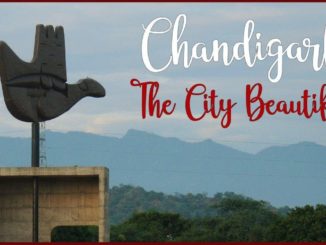
    On November 1, 1966, when Chandigarh was carved out of Punjab as a Union Territory, Dr MS Randhawa, ICS, was appointed its first Chief Commissioner. Since then, Chandigarh has grown from “a city of greying beards and green hedges” to a throbbing millennial mini-India, while remaining mired in various controversies.

    Unlike major Punjab cities, the Union Territory has a large population of migrants from far off places, including Tamil Nadu, Kerala, Uttar Pradesh, Bihar, Uttarakhand, Manipur, Nagaland, and Jharkhand that has assimilated into a multiethnic and multicultural community making it unique in more than one way.

    Built as a planned city and capital of Punjab, it has been gradually inching to clinch its own special identity. Supported by the Central Government with lavish funding since 1966 and the unfortunate diminishing interest of parent States of Punjab and Haryana, this adopted territory stands alienated from its motherland.

    Developed as a City of Excellence with top of the shelf facilities like open green spaces, wide roads, storm water drainage system, it soon grew to an educational and top-class health care hub with the coming up of institutions. Less than one third of the normal size of a district in Punjab or Haryana, Chandigarh now boasts of institutions that provide world class education in health, engineering, architecture, law, pharmacy, home care and art. It has exclusive sports stadia for cricket, hockey, tennis, football, skating, indoor sports, and water sports. It has one the highest ratio of tennis courts to population, an extremely popular Golf Club, and a golf range besides several swimming pools, including centrally heated pools.

    Besides Zakir Hussain Rose Garden, Chandigarh has the distinction of having plant specific gardens, like Bougainvillea Garden, in addition to an exclusive Japanese garden, a topiary park, a bird sanctuary and two Botanical gardens. Sukhna Lake and Rock Garden make it a major tourist attraction.

    It does not have much industry but still it is a top production Centre for steel furniture, sanitary fittings, pharmaceuticals, and needles. It had investment from world leaders in pharmacy (Pfizer) and needles (Goetz & Beckett). The Chandigarh Administration in its wisdom decided to put a full stop before further growth of industry and allowed change of land use making room for multiplexes, malls, and hotels to come up in place of existing industrial units like Pfizer.

    It is the misfortune of the Union Territory that continuity was a glaring missing link that followed the change of administrative head. Ambitious projects like captive power generation – Chandigarh does not have a source of power generation – building of Nehru Centre for Performing Arts, construction of elevated road from the PGI to the Transport Chowk, flyover over The Tribune inter section, Mass Rapid Transport System, and building of Chandigarh Trade Fair ground on the lines of Pragati Maidan never progressed beyond paperwork. Huge amounts were spent on consultancies and feasibility reports. Money was spent lavishly on holding foundation stone laying ceremonies of Nehru Centre for Performing Arts and the Chandigarh Trade Fair ground, but no one was ever held accountable for these languishing projects. These aspects apart, Chandigarh has always remained a bone of contention between Punjab and Haryana, both claiming their rights over its control. When the 1966 Reorganization Act was implemented, Chandigarh was declared a Union Territory as a stop gap arrangement so that Haryana could build its own new capital. It was to be transferred to Punjab. However, claims and counter claims continued with the Centre playing the role of a clever monkey in a fight between two cats. The Reorganization Act mandated that Union Territory of Chandigarh would be run by employees drawn from Punjab and Haryana in the 60:40 ratio. Since it was a small territory, it had a Chief Commissioner as its administrative head followed by Home Secretary, Finance Secretary, Chief Engineer, Chief Architect, an Inspector-General of Police (of the rank of a Deputy Inspector-General) and a Superintendent of Police. These posts were equitably divided between Punjab and Haryana.

    All employees, from top to bottom, used to be drawn from the “partner” states. The system continued to work well till about late 80s and early 90s when on the command of the Centre, the Union Territory of Chandigarh started recruiting people directly by gradually cutting down the share of both Punjab and Haryana. Since the protests from Punjab and Haryana were meek, the move picked pace. A stage was reached when the number of employees on deputation was reduced to almost nothing. Most of the positions, from bottom to top, are now filled with UT cadre employees except for a few top bureaucratic slots like Home Secretary, Finance Secretary and Deputy Commissioner.

    Even before the “centralization” of the Chandigarh Administration started, the rehabilitation of migrant workers scheme was given a boost by offering tenements to jhuggi dwellers. Thousands of migrant workers, given these tenements, started making capital out of it as they would sell their dwellings at a huge profit and move back to jhuggis to stake claims for new units in future colonies.

    Punjab was caught in a vicious fight against terrorism. It was during this period that the Governor of Punjab was appointed Administrator of Chandigarh and the post of the Chief Commissioner was changed to Adviser to the Administrator. Mr. Krishna Banarji, who was till then Chief Commissioner, became the first Adviser to the Administrator of Chandigarh.

    In 1985, when the Rajeev Gandhi- Sant Harchand Singh Longowal agreement was signed, hopes were raised that the decision to transfer Chandigarh to Punjab on January 26, 1986, would finally be implemented. Punjab Government led by then Chief Minister Surjit Singh Barnala drew all plans for the smooth transfer of Chandigarh.

    A senior bureaucrat Inderjit Singh Bindra was named Administrator of Chandigarh. Invitations were sent out for the formal ceremony that was to take place as a part of the Republic Day celebrations. However, on the night of January 25, the decision was put on hold. Once again, there was a little hue and cry in Punjab political circles. No sincere or concerted effort was made thereafter to get the Rajeev-Longowal agreement implemented. It was Darshan Singh Pheruman, who led a breakaway group of Shiromani Akali Dal, who started fast unto death to demand immediate merger of Chandigarh with Punjab. His fast continued till his death but nothing moved either the Centre or the then Punjab political leadership. His sacrifice remains unacknowledged by the Punjab government. Several significant decisions taken in recent months by the NDA government at the Centre were a clear indication that transfer of Chandigarh to Punjab was nowhere under its consideration. Intriguingly, on eve of the Punjab Assembly elections in February, speculations were afloat that the Prime Minister Narendra Modi during his pre-election rallies in Punjab may announce transfer of Chandigarh to this border State. For many, writing on the wall was obvious. Changing the structure of the Management of the Bhakra Beas Management Board (BBMB) was an indication of the Centre Government’s thinking. And if that was not enough, the union home minister during his last visit to Chandigarh, announced a major policy decision of bringing Union Territory of Chandigarh employees under the central Civil Service rules thus putting to an end to the continuation of Punjab Civil Service rules. While the decision was overwhelmingly welcomed by employees in general as the retirement age now goes up from 58 to 60 and they also get other benefits, including extended maternity leave for women employees, Punjab units of a couple of political parties, including the ruling Aam Aadmi Party (AAP), have not only assailed the move the NDA government at the Centre but also announced to fight it tooth and nail to save the rights of Punjab.

    (The author is  a veteran journalist with over three decades of experience covering a wide spectrum of subjects and stories. He has covered  Punjab and Sikh affairs for more than three decades besides covering seven Olympics and several major sporting events and hosting TV shows. For more in-depth analysis please visit probingeye.com  or follow him on Twitter.com/probingeye. He can be reached at prabhjot416@gmail.com)