The morning, it is said, is the herald of the day. By that measure, Zohran Mamdani’s first week as Mayor of New York City has raised genuine hopes that the city is now being led by a man who does not merely promise but means to deliver. In just seven days, Mamdani has attempted to do precisely what he pledged during the campaign: govern like a man in a hurry—because New York’s affordability crisis is itself in a hurry.
Sworn in just after midnight on January 1, 2026, Mamdani assumed office with an unusually elaborate “day-one” agenda and a collection of promises that together form a clear governing philosophy: make the city cheaper to live in, and make government feel closer, more responsive, and more humane. It is an ambitious undertaking in any era; it is especially daunting in a city where housing, transit, childcare, and public safety collide daily at the subway turnstile.
So how has he fared in his first week? Judging by the early evidence, Mamdani’s start can fairly be described as directionally bold, administratively energetic, and politically combustible.
Housing—the central pillar of his mandate—has been the clearest focus. Mamdani campaigned on freezing rents for rent-stabilized tenants, cracking down on predatory landlords, and expanding housing supply simultaneously. In his opening days, he placed early markers through executive actions aimed at speeding up housing production and strengthening tenant protections. Task forces were announced to identify city-owned land for housing development and to remove long-standing permitting barriers that delay projects and inflate costs. He also ordered citywide “rental ripoff” hearings—public forums intended to expose illegal or abusive practices and convert public testimony into enforcement and policy tools.
This is not yet a rent freeze, nor a completed housing plan. But it is an unmistakable signal: Mamdani intends to deploy the executive authority of the mayor’s office to reorganize how City Hall wages the housing battle.
His second notable initiative has centered on civic participation. Mamdani moved swiftly to create an Office of Mass Engagement, designed to coordinate public outreach across agencies and, in his own words, to “revolutionize” how ordinary New Yorkers are heard. Supporters see this as democratic renewal; critics call it political machinery dressed in bureaucratic clothing. Either way, the intent is clear—to institutionalize a continuous feedback loop between neighborhoods and City Hall, something many administrations profess to value but few attempt to systematize so early.
The third development has produced a tangible affordability headline: childcare. On January 8, Mayor Mamdani and Governor Kathy Hochul announced a pathway toward free childcare for two-year-olds in New York City, with a phased rollout beginning in high-need neighborhoods and initial funding commitments from the state. If this initiative survives the inevitable budget negotiations and Albany politics, it could become one of the most consequential early victories of the administration—because for working families, childcare costs function as a second rent.
Yet the first week has also exposed predictable friction points. Mamdani’s ideological identity—he has openly embraced the democratic socialist label—along with his appointments, has already drawn intense scrutiny. Controversies surrounding prior statements by at least one appointee illustrate the risk of governing as a movement politician: personnel become policy proxies, and yesterday’s rhetoric becomes today’s headline.
It bears emphasizing that no mayor delivers fare-free buses, city-owned grocery stores, or a reimagined public safety architecture in seven days. These were among Mamdani’s boldest campaign promises, and each requires sustained financing, legal authority, labor negotiations, and cooperation from the state. Week one, therefore, is not about outcomes; it is about seriousness.
On that measure, Mamdani has passed the first test. He appears prepared, he is moving decisively, and he is choosing battles consistent with the mandate voters gave him. The harder test—already approaching—is whether moral urgency can be converted into administrative competence, and competence into durable, measurable results, without allowing ideology to substitute for execution.
New Yorkers did not elect a slogan. They elected a mayor. The first week suggests Zohran Mamdani understands the difference. Now comes the part where the city insists on proof.
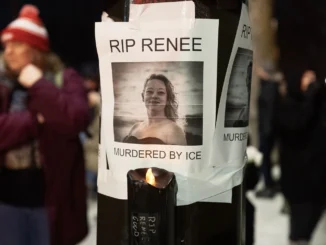
NEW YORK (TIP): New York elected officials and immigrant advocate groups are reacting with horror and outrage after an ICE agent shot and killed a 37-year-old woman in Minneapolis during an immigration crackdown.
Video circulating online appears to show a female driver blocking the path of federal agents on the roadway with her SUV. When one agent attempted to open the door of the vehicle, the driver looked to pull away — leading a second agent to draw their gun and fire. The woman was shot three times and died, according to preliminary reports.
“Oh my God,” a voice could be heard screaming off screen.
DHS officials allege that the unnamed driver attempted to mow down the federal officer, with Homeland Security Advisor Stephen Miller and Kristi Noem, the Homeland Security Secretary, calling it “domestic terrorism” — without providing any proof to back up such a claim.
“An ICE officer, fearing for his life, the lives of his fellow law enforcement and the safety of the public, fired defensive shots,” a statement by DHS read.
Minnesota Gov. Tim Walz responded on social media by instantly denouncing the official narrative.
“I’ve seen the video. Don’t believe this propaganda machine. The state will ensure there is a full, fair, and expeditious investigation to ensure accountability and justice,” Walz wrote.
Meanwhile, New York elected officials are echoing Walz’s sentiments. U.S. Rep. Dan Goldman, who has been an outspoken critic of ICE tactics in Manhattan’s immigration courts, also took to social media to express outrage to Miller.
“We’re done with your gaslighting @stephenm. Even if the officer were run over, it’s not domestic terrorism. But as you can see from the path of the car after she was shot, she was trying to drive away. You are inciting untrained thugs to murder Americans. This is on you,” Goldman wrote.
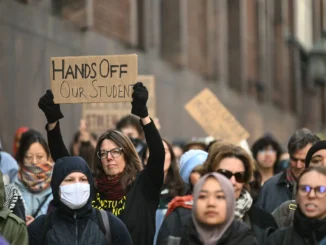
Mayor Zohran Mamdani addressed the shooting during an unrelated press conference late Wednesday afternoon in which he called it horrific.
“We know that when ICE agents attack immigrants, they attack every single one of us across this country. And this is a city that stands up for immigrants across the five boroughs, and I have made it clear to everyone within my city government, and that extends to NYPD, that we are going to uphold our sanctuary city policies,” Mamdani said. “We are going to adhere to that. That is why one of the 11 executive orders that we signed was to repeal the previous administration’s order to allow for collaboration with ICE on Rikers Island.
The mayor also pledged not to aid immigration enforcement in any way, including making certain the NYPD does not aid ICE.
“What we are going to be doing is following the laws that we have set, laws which have kept New Yorkers safe, and we are going to make it clear to each and every person in the city what their rights are. That’s why we took the time to make a Know Your Rights video, because it goes back to the earlier question, if you don’t know of your rights, then how can you be expected to actually use those rights?” Mamdani said. “So, we are going to take every opportunity we have to inform New Yorkers of what they already can do, and also to make it clear to our own city government agencies and departments across the board, including NYPD, that we are not here to assist ICE agents in their work. We are here to follow the laws of New York City.”
amNewYork also reached out to New York Public Advocate Jumaane Williams, who has also pushed back on ICE operations in the Big Apple.
“ICE has a total disregard for public safety, and human life. Because of Trump’s reckless, lawless deportation agenda, today a woman was shot to death. And in 2025, 32 human beings died in ICE custody. The Department of Homeland Security is making everyone less safe,” Williams said.
State Senator Jessica Ramos, who serves a massive immigrant population in Jackson Heights, Queens, spoke to amNewYork about the fatal shooting.
“ICE relies on fear, chaos, and enforcement tactics that treat entire communities as suspects and creates the conditions for tragedy. Now a woman is dead and we all saw it. We need less muscle memory and more rule of law, restraint, and accountability,” Ramos said.
It wasn’t only New York politicians who fumed over the fatal shooting. Immigration advocates also let loose.
Murad Awawdeh, President and CEO of New York Immigration Coalition, charged that this is the next step in ICE escalation.
“Today’s news from Minneapolis is a tragedy and marks a violent escalation in ICE’s tactics and the state’s repression of political dissidents. Let’s be very clear: ICE and the federal agents are the ones sowing chaos and violence in our cities — and are now killing people who oppose their fascist abduction program. “This tragedy did not happen in a vacuum. It is the direct and predictable result of a federal agency that has been allowed to operate with impunity, secrecy, and unchecked force.”
(Source: amNewYork)
NEW YORK (TIP): New York City parents may soon have access to free child care for their 2-year-olds, under a plan unveiled Thursday, January 8, by Gov. Kathy Hochul and Mayor Zohran Mamdani — a major boon for the city’s mayor on one of his signature campaign promises just days into his new job, an AP report says.
The two Democrats announced the program at a celebratory event in Brooklyn, with Hochul and Mamdani casting the initiative as a transformative step toward easing the city’s notoriously high cost of living.
“This is the day that everything changes,” Hochul said, also debuting a proposal to expand statewide access to child care in the coming years.
For Mamdani, whose ambitious agenda has been met with heavy skepticism, the announcement was a significant political victory in the opening days of his mayoralty, coming after a campaign that centered on elevating the needs of the city’s struggling working-class residents.
“Today we take one step to realizing a city where every New Yorker, every family, every child can afford to keep calling it their home,” Mamdani said.
“To those who doubt the power of the people to make their own destiny, to the cynics who insist that politics is too broken to deliver meaningful change, to those who think that the promises of a campaign cannot survive once confronted with the realities of government, today is your answer,” he added.
Hochul, a moderate who is up for reelection this year, has been politically aligned with the city’s new progressive mayor on his plan to offer free child care in the city, though questions remained on how the program could take shape and what it might cost over the long term.
The governor said she is committing to funding the first two years of the city’s free child care program for 2-year-olds, describing it as an expansion of the city’s existing universal pre-K and 3-K programs.
The first year will focus on “high-need areas” selected by the city, then expand across the city by its fourth year, according to the statement.
Speaking to reporters after the event, Mamdani said he expects the program to cover around 2,000 children this fall and then continue to expand until it becomes a universal program. He said that the city will work with home-based providers to carry out the plan.
Additionally, Hochul rolled out a sweeping, longer-term proposal to expand access to universal pre-K statewide, with the goal of having the program available throughout New York by the start of the 2028-2029 school year.
She will include the plans in her annual state of the state address, but said she anticipates investing $1.7 billion for the programs she announced Thursday.
Rebecca Bailin, executive director for the advocacy group New Yorkers United for Child Care, called the plan a “historic moment,” adding: “By bringing together the Governor and Mayor around a shared commitment to child care, tens of thousands of families could finally get the relief they desperately need.”
(With inputs from agencies)
Toronto-based Punjabi artist Babbulicious takes the stage to perform his track ‘Gaddi Red Challenger’
NEW YORK CITY (TIP): In a moment celebrated by many across the global Punjabi diaspora, the inauguration of New York City’s first Indian-origin mayor, Zohran Mamdani, concluded with a high-energy Punjabi music performance that has since gone viral on social media.
Toronto-based Punjabi artist Babbulicious, also known as Babbu Singh, took the stage on January 1 to perform his track “Gaddi Red Challenger”, bringing a distinct South Asian flavor to the close of the formal ceremony. Wearing a striking fuchsia turban, the singer led the crowd in a chant of the chorus, “New York vich munda rehnda, sohniye Punjabi aayi ae”. Mamdani, the son of filmmaker Mira Nair, who has Punjabi roots, was seen dancing to the beats alongside his wife, artist Rama Duwaji.
The moment quickly gained traction online after Babbulicious shared a photograph with the mayor on X, captioned with the lyric: “NEW YORK VICH MUNDA REHNDAAAAA”.
While the performance was widely praised as a celebratory nod to Mamdani’s South Asian heritage, it also drew polarized reactions on social media. A video posted on X attracted Islamophobic commentary, with one user falsely framing the event as an “Islamic takeover of America”. Republican politician Josh Barnett echoed the criticism in a reply to the post, questioning whether New Yorkers would “put up with this”.
Supporters, however, were quick to push back, with many using the viral moment to highlight Sikh identity, Punjabi culture and New York City’s long-standing multicultural nature.
The Punjabi performance marks the latest in a series of cultural references embraced by Mamdani, who had earlier used the Bollywood track “Dhoom Machale” during his victory speech.
Revokes executive orders issued after former mayor Eric Adams had been indicted on corruption charges
I.S. Saluja
NEW YORK CITY (TIP): Zohran Mamdani was formally sworn in as New York City’s 112th Mayor in a private ceremony held just moments into the New Year in an old subway station here. The 34-year-old Indian-descent Queens state assemblyman became the first South Asian and Muslim elected to helm the largest city in the US. Mamdani was sworn in at the old City Hall subway station at a private ceremony attended only by his family and close advisers, held around the stroke of midnight as the city ushered in the New Year.
He was sworn in on a Quran as the city’s 112th mayor — and its second-youngest — by state Attorney General Letitia James on Thursday, January1 morning below City Hall Park in a grand, abandoned old subway stop with his wife, artist Rama Duwaji, by his side.
On the choice of the old subway station as the venue for his historic swearing-in, the New York Times quoted Mamdani as saying that when the Old City Hall Station first opened in 1904 — one of New York’s 28 original subway stations — “it was a physical monument to a city that dared to be both beautiful and build great things that would transform working people’s lives.” “That ambition need not be a memory confined only to our past, nor must it be isolated only to the tunnels beneath City Hall: it will be the purpose of the administration fortunate enough to serve New Yorkers from the building above.”
The New York Public Library announced on Wednesday that Mamdani will use a Quran from the collections of the Schomburg Centre for Research in Black Culture to take the oath of office at the midnight swearing-in ceremony on New Year’s Eve.
“This marks a significant moment in our city’s history, and we are deeply honored that Mayor-elect Mamdani has chosen to take the oath of office using one of the Library’s Qurans,” said Anthony W. Marx, President and CEO of The New York Public Library.
“This specific Quran, which Arturo Schomburg preserved for the knowledge and enjoyment of all New Yorkers, symbolizes a greater story of inclusion, representation, and civic-mindedness.”
NYPL termed the selection of the Quran by the incoming administration as highly symbolic, both because of its connection to one of NYC’s most groundbreaking scholars and for its simple, functional qualities.
“The black and red ink, as well as the small, portable size, indicate this Quran was intended for an ordinary reader and everyday use. Although neither dated nor signed, the Quran’s minute naskh script and its binding, featuring a gilt-stamped medallion filled with a floral composition, suggest it was produced in Ottoman Syria in the 19th century,” it said.
After working part of the night in his new office, Mamdani returned to City Hall in a taxicab around midday Thursday, January 1, for a grander public inauguration where US Sen Bernie Sanders, one of the mayor’s political heroes, administered the oath for a second time.
“Beginning today, we will govern expansively and audaciously. We may not always succeed, but never will we be accused of lacking the courage to try,” Mamdani told a cheering crowd.
“To those who insist that the era of big government is over, hear me when I say this: No longer will City Hall hesitate to use its power to improve New Yorkers’ lives,” he said.
Throngs turned out in the frigid cold for an inauguration viewing party just south of City Hall on a stretch of Broadway known as the “Canyon of Heroes,” famous for its ticker-tape parades. Mamdani wasted little time getting to work after the event.
He revoked multiple executive orders issued by the previous administration since September 26, 2024, the date federal authorities announced former mayor Eric Adams had been indicted on corruption charges, which were later dismissed following intervention by the Trump administration.
Then he visited an apartment building in Brooklyn to announce he is revitalizing a city office dedicated to protecting tenants and creating two task forces focused on housing construction.
‘I will govern as a democratic socialist’
Throughout the daytime ceremony, Mamdani and other speakers hit on the theme that carried him to victory in the election: Using government power to lift up the millions of people who struggle with the city’s high cost of living.
Mamdani peppered his remarks with references to those New Yorkers, citing workers in steel-toed boots, halal cart vendors “whose knees ache from working all day” and cooks “wielding a thousand spices.”
“I was elected as a democratic socialist and I will govern as a democratic socialist,” Mamdani said. “I will not abandon my principles for fear of being deemed radical.’”
Before administering the oath, Sanders told the crowd that most of the things Mamdani wants to do — including raising taxes on the rich — aren’t radical at all.
“In the richest country in the history of the world, making sure that people can live in affordable housing is not radical,” he told the crowd. “It is the right and decent thing to do.”
Mamdani was accompanied on stage by his wife, Rama Duwaji. Adams was also in attendance, sitting near another former mayor, Bill de Blasio.
Actor Mandy Patinkin, who recently hosted Mamdani to celebrate Hannukah, sang “Over the Rainbow” with children from an elementary school chorus. The invocation was given by Imam Khalid Latif, the director of the Islamic Center of New York City. Poet Cornelius Eady read an original poem called “Proof.” In addition to being the city’s first Muslim mayor, Mamdani is also its first of South Asian descent and the first to be born in Africa. At 34, Mamdani is also the city’s youngest mayor in generations.
Mamdani insisted in his inaugural address that he will not squander his opportunity to implement the policies he promised in his election campaign.
“A moment like this comes rarely. Seldom do we hold such an opportunity to transform and reinvent. Rarer still is it the people themselves whose hands are on the levers of change. And yet we know that too often in our past, moments of great possibility have been promptly surrendered to small imagination and smaller ambition,” he said.
In his speech, Mamdani acknowledged the task ahead, saying he knows many will be watching to see whether he can succeed.
“They want to know if the left can govern. They want to know if the struggles that afflict them can be solved. They want to know if it is right to hope again,” he said. “So, standing together with the wind of purpose at our backs, we will do something that New Yorkers do better than anyone else: We will set an example for the world.”
Mamdani was born in Kampala, Uganda, the son of filmmaker Mira Nair and Mahmood Mamdani, an academic and author. His family moved to New York City when he was 7, with Mamdani growing up in a post-9/11 city where Muslims didn’t always feel welcome. He became an American citizen in 2018.
He worked on political campaigns for Democratic candidates in the city before he sought public office himself, winning a state Assembly seat in 2020 to represent a section of Queens.
Now that he has taken office, Mamdani and his wife will depart their one-bedroom, rent stabilized apartment in the outer-borough to take up residence in the stately mayoral residence in Manhattan.
The new mayor inherits a city on the upswing, after years of slow recovery from the COVID-19 pandemic. Violent crime has dropped to pre-pandemic lows. Tourists are back. Unemployment, which soared during the pandemic years, is also back to pre-COVID levels.
Yet deep concerns remain about high prices and rising rents.
In opening remarks to the crowd, U.S. Rep. Alexandria Ocasio-Cortez praised New Yorkers for choosing “courage over fear.”
“We have chosen prosperity for the many over spoils for the few,” she said.
During the mayoral race, President Donald Trump threatened to withhold federal funding from the city if Mamdani won and mused about sending National Guard troops to the city.
But Trump surprised supporters and foes alike by inviting the Democrat to the White House for what ended up being a cordial meeting in November.
“I want him to do a great job and will help him do a great job,” Trump said.
Still, tensions between the two leaders are almost certain to resurface, given their deep policy disagreements, particularly over immigration.
Several speakers at Thursday’s inauguration criticized the Trump administration’s move to deport more immigrants and expressed hope that Mamdani’s City Hall would be an ally to those the president has targeted.
Mamdani also faces skepticism and opposition from some members of the city’s Jewish community over his criticisms of Israel’s government.
Still, Mamdani supporters in Thursday’s crowd expressed optimism that he’d be a unifying force.
“There are moments where everyone in New York comes together, like when the Mets won the World Series in ‘86,” said Mary Hammann, 64, a musician with the Metropolitan Opera. “This feels like that — just colder.”
(With inputs from PTI, AP)
Come January 1, 2026, and Zohran Mamdani will formally assume charge of New York City, the most complex, influential, and unforgiving city in the United States. No other mayoralty carries such weight. No other city so relentlessly exposes the strengths and weaknesses of those who govern it. As the calendar turns and the New Year begins, it is both appropriate and necessary to extend good wishes to Mayor-elect Mamdani—while also offering an unvarnished reminder of the promises he made and the perils that await him.
Mr. Mamdani’s victory was a conscious, calculated choice by New Yorkers. This was not a default election. It was not an accident of turnout or a quirk of division. The people of New York deliberately turned away from familiar political “war horses” and entrusted their future to a new leader, a new political vocabulary, and a new promise of governance. That decision was born of frustration, aspiration, and impatience—frustration with a city that feels unaffordable, aspiration for fairness and dignity, and impatience with leaders who seemed unable or unwilling to confront systemic problems.
This mandate, therefore, is not symbolic. It is specific. It carries expectations, timelines, and accountability.
During his campaign, Mr. Mamdani made clear and repeated promises. He promised to take on the affordability crisis that is hollowing out the middle class and crushing working families. He promised meaningful action on housing—not rhetoric, not pilot programs, not endless studies, but visible relief for tenants burdened by rent increases and displacement. He spoke forcefully of economic justice, insisting that a city built by workers must not be governed solely by the wealthy. He pledged safer streets achieved through trust, reform, and professionalism—not through fear or abandonment. He committed to transparent governance and to listening to communities too often spoken about but rarely heard.
These words won him the election. They must now guide his administration.
For New York is a city where broken promises are remembered long after political victories fade. New Yorkers are a demanding electorate not because they are cynical, but because they are deeply invested in their city. They live with the consequences of municipal decisions every day—on overcrowded subways, in underfunded schools, in neighborhoods transformed by gentrification, and in the rising cost of simply staying put.
Mayor-elect Mamdani must therefore understand a fundamental truth: goodwill has a short shelf life. The honeymoon period in New York is brief, sometimes imaginary. The grace extended to new leaders evaporates quickly when rhetoric outpaces results.
One immediate source of pressure will come from within his own ranks. Those who mobilized passionately for his victory will now demand speed, scale, and ideological purity. They will press him to move fast, to disrupt aggressively, to prove that this victory was not merely symbolic. While such energy is understandable, it can also become a trap. Governing a city of more than eight million people cannot be conducted as an activist campaign. Policy made in haste, without institutional grounding, risks unintended harm—especially to the very communities it intends to serve.
Leadership will require Mr. Mamdani to occasionally disappoint his most fervent supporters in order to protect the broader public interest. That is not betrayal; it is governance. Courage in office often means resisting applause when prudence demands caution.
The second pressure will come from seasoned political opponents and entrenched interests. New York City is home to powerful unions, vast real-estate interests, financial institutions, lobbyists, and deeply rooted bureaucracies. Many of these actors will test the new mayor early—not necessarily through open confrontation, but through delay, resistance, selective cooperation, and quiet obstruction. Others will actively hope for failure, waiting to declare that idealism cannot govern.
Mr. Mamdani must not mistake opposition for illegitimacy. He has won fairly. But he must also not underestimate the sophistication of those who have long navigated City Hall. Moral clarity alone will not overcome institutional inertia. Strategy, negotiation, and administrative competence will be equally essential.
Public safety is likely to become the earliest and most decisive measure of his leadership. No political philosophy survives prolonged insecurity. New Yorkers want safety without brutality, policing without prejudice, and accountability without chaos. This is not an abstract debate; it is about whether parents feel safe letting children ride the subway, whether seniors can walk to the store without fear, whether small businesses can operate without being preyed upon.
Mayor-elect Mamdani must remember that reform is not the same as retreat. A city that surrenders its streets to disorder abandons its most vulnerable first. Balancing justice and safety will require firm resolve, clear standards, and unwavering support for lawful, professional public servants—alongside serious reform where reform is due.
Equally critical will be fiscal discipline. The mayor of New York is the steward of one of the largest municipal budgets on the planet. Every promise must ultimately be paid for. Compassion divorced from arithmetic becomes irresponsibility. Progressive aspirations must be matched with credible funding mechanisms, realistic timelines, and transparent trade-offs. New Yorkers are willing to debate priorities; they are far less forgiving of fiscal recklessness disguised as virtue.
Mr. Mamdani must also guard against the intoxicating pull of symbolism. New York is a global stage. Every statement echoes far beyond its borders. But headlines are not governance, and gestures are not substitutes for sustained administrative work. Cities are improved quietly—by fixing systems, appointing capable commissioners, enforcing standards, and insisting on measurable outcomes.
Perhaps the greatest temptation facing the new mayor will be ego—the belief that electoral victory confers infallibility. History offers ample warning here. Power isolates. Advisors flatter. Social media amplifies applause and outrage alike. The strongest leaders are those who remain grounded, who listen to uncomfortable truths, and who remember that authority is borrowed, not owned.
Mr. Mamdani must never forget this: the trust placed in him was not blind allegiance. It was conditional confidence.
The voters who elevated him did so in hope—but they also did so with watchful eyes. They will measure his success not by ideology, but by impact. Are rents stabilizing? Are neighborhoods safer? Are services more reliable? Are opportunities expanding for those long excluded from prosperity?
As the New Year arrives, therefore, we wish Mayor-elect Zohran Mamdani well—but not lightly. We wish him wisdom equal to his ambition, patience equal to his passion, and humility equal to his authority. Walk carefully, Mr. Mayor. Govern cautiously, but decisively. Remember that every policy choice touches millions of lives.
New York has entrusted you with its present and a large part of its future. Honor that trust—not with slogans, but with steady, principled, competent leadership.
Happy New Year, Mayor-elect Mamdani! The city is watching and hoping.
Barry Sternlicht threatens to relocate Starwood Capital due to Mamdani’s policies
NEW YORK (TIP): Real estate billionaire Barry Sternlicht has issued a stark warning about New York city’s future under mayor-elect Zohran Mamdani, suggesting that his company may relocate operations due to what he described as a looming crisis in development costs and public safety.
Sternlicht, the CEO of Starwood Capital Group, criticized New York’s powerful trade unions for driving up the costs of construction and management, arguing that the problem would worsen under Mamdani’s progressive agenda.
“Every project in New York has to go union, and it’s super expensive,” he told CNBC. “It leads to extremely expensive housing.” Following his election victory, Mamdani, a Democratic Socialist and the city’s first Muslim and Indian-origin mayor-elect, pledged to implement sweeping social programs.
His platform includes a rent freeze on rent-stabilized apartments, free bus service, universal free childcare for children aged six months to five years and five city-owned grocery stores, one in each borough.
Sternlicht warned that such policies could discourage investment and worsen housing shortages.
“Developers can’t add supply economically unless the government provides massive subsidies or the unions become more flexible,” he said. “Otherwise, you just can’t make the numbers work.”
He also voiced concern over public safety, recalling Mamdani’s earlier calls to “defund the police.” “If people don’t feel their kids are safe, they’ll leave,” Sternlicht said.
“If he defunds the police or doesn’t give them the prestige they deserve, the city’s in for a really tough time.”
Sternlicht compared the potential outcome to Mumbai, citing rising construction costs, powerful trade unions and high regulatory hurdles.
Sternlicht added that Starwood Capital Group is already considering moving its Midtown Manhattan office.
“Maybe he’ll learn from history,” he said. “Maybe the million people who voted for him won’t realize that socialism has never worked anywhere on the planet Earth.”
Despite the criticism, Mamdani— who ran on a message of equity and affordability — drew broad support from New York’s diverse electorate, winning four out of five boroughs in last week’s election.
The 34-year-old Democratic Socialist quotes the first PM of India from his famous “Tryst with Destiny” speech of 1947 to reflect his own agenda of revitalization, equality and tackling corruption
NEW YORK (TIP): “A moment comes but rarely in history,” said New York’s winning mayoral candidate Zohran Mamdani, as he addressed a few thousand core campaign volunteers at the Brooklyn Paramount Theater in New York last night, “when we step out from the old to the new, when an age ends and when the soul of a nation long suppressed finds utterance.
“Tonight,” he added, now rephrasing Jawaharlal Nehru, “we have stepped out from the old into the new.” Zohran’s words echoed through the room, resonating deeply and touching upon the various aspects of one’s being – migration, belonging and freedom.
His parents, the Punjabi filmmaker of Indian origin, Mira Nair, and the noted anthropologist Mahmood Mamdani as well as his wife, the artist Rama Duwaji of Syrian descent, stood proudly in the crowd, a first family of immigrants who must have taken seriously the words inscribed beneath the Statue of Liberty. “Give me your tired, your poor, your huddled masses yearning to breathe free…” “Together,” Zohran said, the first Muslim mayor-designate of Indian origin, to thunderous cheer, “we will usher in a generation of change”.
The 34-year-old Democratic Socialist was also pointing towards Donald Trump, whose contemptuous dismissal of him through the campaign and endorsement of Mamdani’s opponent, the scandal-hit former Democrat Andrew Cuomo, as well as his other opponents, gave the campaign a definite edge.
“They and their ilk should turn the volume up to the sound of change…. New York, tonight you have delivered a mandate for change, a mandate for a new kind of politics, a mandate for a city we can afford.”
Mamdani secured over 50 per cent of the vote, defeating Cuomo with 40 per cent and Republican nominee Curtis Silwa, who garnered a mere 7 per cent of the vote.
According to the New York Board of Elections, two million votes were cast for the first time in this election since 1969. He will be inaugurated as the 111th mayor of New York in January.
Mamdani’s historic victory to run the city of more than 8.4 million people is seen as a comeback of progressive politics, with Mamdani vowing to prioritize working-class issues as he proposed initiatives like free childcare, rent-freeze, free bus services and government-run grocery stores to make New York affordable to live.
The road ahead, however, will be far from easy as Republicans have long questioned Mamdani’s ability to actuate on change, whether it’s tax hike or free buses. But the Mayor-elect is aware this idealism doesn’t exist in a vacuum, and it requires tireless advocacy and action to shift a perspective that has lost its way to convenience. Certainly, real listening will come into play. What we do now know is that the world is trembling itself into a new existence, and as Zohran said, “In this moment of political darkness, New York will be the light.”
(Also read on page 2 : Stop Rhetoric, Start Action)
(Source: The Tribune)
The 2025 New York City mayoral election will go down in the annals of the city’s political history as one of the most remarkable — not merely for its result, but for the message it conveys about the evolving identity of New York and, indeed, of America itself.
For the first time in history, New York City has elected a Muslim, Indian-origin, Social Democrat, and the youngest mayor ever at 34 — Mr. Zohran Mamdani. His victory, with 51 percent of the vote against Andrew Cuomo’s 41 percent, signals a generational and ideological shift in the political consciousness of the city. This was an election that drew the highest voter turnout in five decades, with youth participation surging to unprecedented levels.
Despite fierce opposition, including overt attempts by President Donald J. Trump to delegitimize Mamdani’s candidacy and warn of dire consequences if he were elected, the people of New York exercised their right to choose — emphatically, decisively, and democratically.
The People Have Spoken
Mr. Mamdani’s victory speech was both emotional and visionary. “This city belongs to all who build it, clean it, teach in it, and dream in it,” he declared to thunderous applause in Queens. Indeed, New York’s choice of Mamdani is a reaffirmation of America’s enduring faith in democracy, pluralism, and inclusivity — the very principles enshrined in the Preamble of the U.S. Constitution, which promises to “establish justice, insure domestic tranquility, provide for the common defense, promote the general welfare, and secure the blessings of liberty.”
It is worth recalling the words of President Abraham Lincoln, who said, “The ballot is stronger than the bullet.” The voters of New York have, by their ballot, chosen a new direction for their city — a direction that calls for social justice, economic reform, and fairness.
The Challenge Ahead
However, as the saying goes, winning an election is one thing; governing after it is another.
In an earlier editorial (See the June 28th edition of The Indian Panorama-https://www.theindianpanorama.news/opinion/comments/zohran-mamdanis-stunning-victory-in-nyc-mayoral-primary-a-tale-of-promises-populism-and-political-miscalculation/), we had raised valid questions about how Mr. Mamdani planned to fund his ambitious promises — free transportation, free baby-sitting, rent stabilization, and wage increases — all of which appeal strongly to working-class and middle-income New Yorkers. We had asked for clarity on his resource mobilization plans. Unfortunately, there was no response from his campaign then.
Now that he is Mayor, rhetoric must give way to reality. It is time for Mr. Mamdani to move from the poetry of campaigning to the prose of governing.
Trump’s Threat and the Federal Factor
Among the immediate challenges Mamdani faces is political hostility from Washington. President Trump, now in his second term, has already hinted at withholding federal grants from New York City as a form of punishment for electing Mamdani — a move both dangerous and undemocratic.
Let us be clear: any such action by the President would amount to punishing the citizens of New York for exercising their constitutional right to vote. It would be an affront to the sovereignty of the people, violating the very oath the President takes under Article II, Section 1 of the U.S. Constitution: “to faithfully execute the office of President of the United States, and to preserve, protect and defend the Constitution of the United States.”
The Constitution does not give the President power to discriminate between states or cities based on political leanings. The Tenth Amendment preserves the rights of states and municipalities in managing their own affairs. For a President to interfere in city-level governance out of political spite is not only unprincipled but deeply unethical.
Moreover, such interference demeans the dignity of the Presidency. As Theodore Roosevelt once said, “The Presidency is not an office to be used for the gratification of personal ambition.” The people’s mandate must be respected — whether or not one agrees with it politically.
Call for Cooperation
The politicians who opposed Mamdani during the campaign must now put aside partisanship and work with him in the larger interest of New York City. Democracy demands magnanimity in victory and grace in defeat. It is time to close ranks, not deepen divides.
Mamdani’s success or failure will not be his alone — it will be New York’s. The city’s economic revival, infrastructure renewal, and social cohesion depend on cooperation between the Mayor’s office, City Council, State government, and the federal administration.
As John F. Kennedy once reminded Americans, “Let us not seek the Republican answer or the Democratic answer, but the right answer.” That wisdom must guide New York’s leaders today.
Mayor for All New Yorkers
For Mr. Mamdani himself, the challenge is to prove that he is not merely a symbol of representation, but a servant of all New Yorkers. He must lead as a Mayor for every community — white, Black, Latino, Asian, Arab, Jewish, Sikh, Christian, Hindu, and Muslim alike. While he may rightly feel pride in being the first Muslim to lead America’s largest city, he must also remember that he is not the Mayor of Muslims, but the Mayor of New York City — a city whose greatness lies in its diversity and secular spirit.
He must ensure that no group feels alienated or excluded. His leadership should echo the words of George Washington, who in his 1790 letter to the Touro Synagogue wrote: “The Government of the United States gives to bigotry no sanction, to persecution no assistance.”
Governance and the Road Ahead
Mr. Mamdani’s policy platform is ambitious, even audacious. Free transportation, free baby-sitting, rent stabilization, and wage increases are noble goals — but they will require robust fiscal management.
New York’s infrastructure is visibly struggling. Roads and bridges need urgent repair. The subway system, once the pride of the city, now suffers chronic delays, equipment breakdowns, and safety concerns. Sanitation and public cleanliness remain subpar for a global metropolis that aspires to world-class status.
To realize his promises, Mamdani must first fix the fundamentals — efficiency, accountability, and transparency in governance. One possible step is to trim the city’s top-heavy bureaucracy, where layers of management often stifle decision-making. Redirecting funds from administrative excess to essential services could help balance the books.
Yet, Mamdani must also learn an old truth of economics: charity cannot cure poverty. Sustainable prosperity requires employment, not entitlement. The new Mayor would do well to focus on job creation, reviving small businesses, and supporting local entrepreneurship — the very backbone of New York’s economy.
While social welfare has its place, it should be a safety net, not a permanent cushion. Handouts may provide temporary relief, but opportunity provides dignity. The people of New York deserve both compassion and competence from their leaders.
Consultation and Collaboration
The Mayor should convene roundtable consultations with business leaders, labor unions, educators, transit experts, housing advocates, and community representatives to design practical solutions. Governance is not a solo act; it’s a symphony of stakeholders.
As we wrote before the election, the real test of leadership lies not in making promises, but in keeping them. The time has come for Mr. Mamdani to translate his ideals into policies, and his policies into measurable outcomes.
Beyond the politics, Mamdani’s victory carries a profound symbolic weight. It tells every child of immigrant parents, every Muslim, every South Asian American that the American Dream — though battered and bruised — still breathes.
In a time of deep polarization, his election reminds us that democracy remains capable of renewal. The Founding Fathers, in their wisdom, created a republic flexible enough to evolve with its people. As Thomas Jefferson said, “We do not have government by the majority. We have government by the majority who participate.”
The youth of New York participated — and they changed history.
Mr. Mamdani now carries the hopes of millions — those who voted for him and those who did not. His success will depend on his ability to unite, to listen, and to deliver. The city’s problems are immense, but so are its possibilities.
As the world watches this young, first-of-his-kind Mayor step into City Hall, the message from the voters is clear: Enough talk. It’s time for action.
We wish Mayor Zohran Mamdani a tenure marked by integrity, innovation, and inclusivity — one that truly serves the people of New York, honors their trust, and justifies their faith in democracy.
Groups That Won Mamdani Primary Form Coalition to Fight for His Platform
Final Get Out the Vote Push in Swing Neighborhoods as Billionaire-backed Super PACs Flood Airwaves
NEW YORK (TIP): On Sunday, Nov. 2, hundreds of thousands of working class and immigrant New Yorkers will launch the People’s Majority Alliance ahead of the general election on November 4 to win Zohran Mamdani’s affordability platform and beat back Cuomo’s billionaire super PAC donors. Working class New Yorkers will get out the vote for mayoral candidate Zohran Mamdani, rallying at Sunset Park before canvassing in the neighborhood. The rally will be joined by electeds including CM Alexa Avilés and AM Marcela Mitaynes; and will be hosted by labor unions, DSA, tenant and immigrant groups, and other working-class organizations that delivered Mamdani a historic 13-point victory over Cuomo in June. Community leaders and members will speak in support of Mamdani and commit to winning a rent freeze, fast and free buses, and universal childcare, in the face of a deepening affordability crisis and escalating ICE deportations. Canvassers will then get out the vote in Sunset Park, a hotly contested neighborhood that turned out for Cuomo but made gains with Mamdani during the June primary.
WHEN: Sunday, November 2, 2025 at 3pm WHERE: Sunset Park (Flagpole near 41st St. and 6th Ave. entrance) WHY: Rally and march to get out the working class vote for Mamdani in the last two days of early voting
3pm Rally starts
4pm GOTV canvassing in Sunset Park
RSVP: Email Irene Hsu (ihsu@caaavvoice.org) for full details to attend, and to speak with organizers
NEW YORK (TIP): Mayor Adams’ exit from this year’s race for City Hall is benefitting independent candidate Andrew Cuomo, though the ex-governor still trails Democratic front-runner Zohran Mamdani by double digits, according to a new poll released Thursday, October 9, says Daily News. The Quinnipiac University poll, the first major survey to analyze the state of the mayoral race since Adams’ Sept. 28 campaign exit, found Cuomo pulling 33% support among likely New York City voters. That’s up from the 23% Cuomo netted in a Quinnipiac survey from early September, when Adams was still in the race and polling at 12%.
Still, Cuomo, who resigned as governor in 2021 amid sexual and professional misconduct accusations he now denies, remains well behind Mamdani, the Democratic mayoral nominee who scored 46% support in the latest Quinnipiac poll, up one point from the September survey.
“Andrew Cuomo picked up the bulk of Adams’ supporters cutting into Zohran Mamdani’s lead, but Mamdani’s frontrunner status by double digits stays intact,” said Mary Snow, an assistant polling director at Quinnipiac.
Republican mayoral nominee Curtis Sliwa, the only other major candidate in the race, raked in 15% support in the new survey, the same figure he got in the September poll.
Rich Azzopardi, Cuomo’s spokesman, seized on the poll as an indication of his boss’ momentum, saying it shows “this race is shifting decisively.”
“The path is now clear: This is a two-person race between Andrew Cuomo and Zohran Mamdani,” Azzopardi said. “As voters learn more about the stakes and Cuomo’s record of results — rebuilding LaGuardia, revitalizing the MTA, expanding affordable housing, and keeping New York safe — they are rallying behind proven leadership.”
A spokeswoman for Mamdani, Dora Pekec, said the poll doesn’t change the fact that he is “meeting voters every day in all five boroughs who are ready to turn the page on the broken politics of the past and build a city everyone can afford.”
“As the billionaires continue to throw out their last-ditched efforts to prop up Andrew Cuomo, we have genuine enthusiasm and 80,000 volunteers on our side. Last time, it wasn’t the billionaires who won that matchup,” Pekec said, a reference to how Mamdani defeated Cuomo in June’s Democratic mayoral primary by over 12%.
The detailed breakdown of the new poll features some downsides for Cuomo, including that 52% of New York City voters gave him an “unfavorable” rating, compared to 37% who viewed him as “favorable.” Mamdani, by contrast, got a 43% favorable rating, compared to a 35% unfavorable listing.
The survey, which was conducted between last Friday and this past Tuesday, quizzed 1,015 likely city voters. It has a margin of error of +/- 3.9%.
US President denies encouraging any candidates to drop out but says the race is winnable if it is one-on-one
WASHINGTON, D.C. (TIP): US President Donald Trump has said he thinks Democrat Zohran Mamdani is likely to become New York City’s next mayor unless two of the three major candidates running against him drop out of the race.
But the Republican didn’t say which two candidates he’d like to see quit. Trump said “No” when he was asked by a reporter on Thursday, September 4 night if he’d urged or encouraged any of the candidates in the race to drop out, but went on to say he would like to see that happen.
“I don’t think you can win unless you have one-on-one, and somehow he’s gotten a little bit of a lead,” Trump said of Mamdani.
“I have no idea how that happened.”
The president, who spoke as he hosted a dinner at the White House with tech executives, went on, “I would like to see two people drop out and have it be one-on-one, and I think that’s a race that could be won.”
Mamdani, a 33-year-old democratic socialist, has been the presumptive favorite in the election since soundly beating former governor Andrew Cuomo in the Democratic primary in June.
But Cuomo is still on the ballot as an independent, as is incumbent Mayor Eric Adams. Joining those three Democrats in the field is Republican Curtis Sliwa, the founder of the Guardian Angels crime patrol group.
Recently, intermediaries for Trump reached out to people close to Adams to talk about whether he would consider abandoning his reelection campaign to take a federal job, according to people familiar with those conversations who spoke to The Associated Press on condition of anonymity because of the private nature of the talks.
On a recent trip to Miami, Adams met with Steve Witkoff, a former real estate developer in New York who is now one of Trump’s main diplomatic envoys in Washington, according to one of the people briefed on the discussions.
Adams acknowledged meeting with “several political figures” on his Florida trip, which he said was to “deal with some personal issues.” But he has repeatedly insisted he won’t quit.
Adams reiterated his intention of staying in the race Thursday, adding that he wasn’t bothered by growing calls for him to end his campaign.
“No pressure, no diamonds,” Adams told reporters at an event touting an endorsement from some Muslim leaders.
“Just because people yell at you and call your names, and just because a number of people ask you to step down or don’t do what you believe, you’re supposed to succumb to that? That’s not what I do.” Adams’ campaign was deeply wounded when he was indicted on corruption charges last year, then developed a warm relationship with Trump that bothered many Democrats in one of the country’s most liberal cities.
There was further backlash from Democrats after the Justice Department said it was dropping the case so that Adams could assist with Trump’s immigration crackdown.
At a news conference on Thursday, September 4, Cuomo called on Adams to drop out. “If Mamdani is the existential threat, if you believe that, then at a point you should defer to the strongest candidates,” Cuomo said.
Sliwa, meanwhile, has cast himself as the best candidate to take on Mamdani.
“The assumption here is that Eric Adams’ voters, if he does drop out, are all going to jump to Cuomo. That ain’t happening,” Sliwa said in an interview.
“There’s a lot of anger toward Cuomo. They’ve been going back and forth like two scorpions in a brandy glass.”
Sliwa added that he also isn’t quitting, and said no one from the Trump administration had reached out yet to urge him to do so.
“I can assure you for 9,852nd time in this campaign I’ve had to answer this: I’m not dropping out. I’m in it until November 4,” he said.
“I don’t care if people drop out. I’d encourage them to stay in. Let people decide. That’s what democracy is about, a vote.”
As Democrats continue to sift through the wreckage of the 2024 election, one truth should be impossible to ignore: they are bleeding support among working-class voters and Donald Trump’s stumbles alone will not save them. From Black and Latino men to young and low-income voters, Trump’s re-election made it clear that working Americans increasingly feel alienated from the Democratic party.
Democrats today might not be as sanguine about sidelining the working class as Chuck Schumer was before the 2016 election, when he claimed that for every blue-collar voter Democrats lost, they could pick up two college-educated Republicans. But it’s clear that many Democrats still don’t see winning back working-class voters as essential – either to defeat Maga or to build durable, majoritarian progressive coalitions for the future.
A new report from the Center for Working-Class Politics (CWCP) and Jacobin magazine, based on an analysis of hundreds of public opinion questions spanning six decades, suggests that blue-collar voters are not out of reach – if Democrats are willing to lead with economic populism. The report shows that American workers have long supported – and still overwhelmingly favor – a bold progressive economic agenda. If Democrats placed these policies consistently at the heart of their platform, they could not only improve conditions in working-class communities but also begin to rebuild trust with the very voters they need most.
Progressive economic reforms – from raising the federal minimum wage and implementing a federal jobs guarantee to expanding social security, taxing the rich, and investing in public goods such as education and infrastructure – are supported not only by Democratic-leaning voters but also by substantial segments of Donald Trump’s base.
And while national Democrats remain unsure how to reconnect with these voters, a new generation of economic populists across the country is already showing the way. In New York City, Zohran Mamdani won the Democratic mayoral primary campaigning to tax the rich, fund public goods and confront corporate landlords. In Nebraska, independent union leader Dan Osborn – a mechanic and labor activist – ran on a tight platform of workers’ rights and corporate accountability and over-performed Kamala Harris by 14 points in a deep-red state.
In difficult House swing districts, Democrats are leaning into economic populism with promising results. In Pennsylvania’s 17th district, Chris Deluzio, a representative and navy veteran, champions “economic patriotism”, calling out economic elites and damaging trade agreements while pushing to rebuild domestic industry and strengthen labor rights. In New Mexico’s second district, Gabe Vasquez has built his platform around a sharp critique of corporate greed – condemning CEOs and wealthy investors for inflating profits while shortchanging workers – and has pushed for a $15 minimum wage and cutting taxes for working families.
Meanwhile, in Wisconsin’s third district, Democrat Rebecca Cooke – a waitress and small business owner who grew up on a dairy farm – is mounting a 2026 comeback bid after over-performing other Democrats and losing by less than three points in 2024, running on a platform that targets corporate price gouging, expands affordable rural housing and defends family farms.
The path to winning back working-class voters runs through authenticity, clarity and a credible commitment to improving people’s lives.
These candidates come from different regions and backgrounds, and hold diverse ideological positions, but nonetheless share a core political strategy: they are highly disciplined economic populists who speak to working-class voters in language that’s grounded, direct and relatable.
And, contrary to many centrist pundits, while they do need to avoid fringe rhetoric, Democrats don’t have to embrace social conservatism to do it. The CWCP study shows that while working-class voters are generally to the right of middle-class voters on cultural issues, most hold moderate, and in some cases even progressive, views on issues such as immigration, abortion and civil rights. These voters do not want Democrats to mimic Republicans on controversial wedge issues, but they do want a commonsense message focused on the economic realities of working Americans.
Yet working-class voters don’t just embrace politicians who support the right policies. Our previous research shows that they want leaders who understand people like them, share a similar class background and speak plainly about what they’ll do and why it matters. The path to winning back working-class voters runs through authenticity, clarity and a credible commitment to improving people’s lives.
Unfortunately, the national party has been slow to adapt. Harris’s 2024 campaign offered ambitious economic proposals that could have benefited millions of working Americans. But as the race wore on, she grew increasingly reluctant to lead with economic populism, instead doubling down on a strategy rooted in fear of Trump. That may have comforted donors and consultants, but it left many working-class voters cold – and opened the door for Republicans to posture as the party of the people.
This vacuum has given Republicans room to pose as economic populists, despite an agenda that overwhelmingly serves corporations and the wealthy. Trump’s so-called Big Beautiful Bill Act delivered massive tax cuts for the rich while masquerading as a working-class boon. House Republicans have attacked union protections and slashed social welfare programs – moves wildly out of step with working-class preferences. But without a compelling Democratic alternative, the right’s billionaire populism can take hold. If Democrats want to rebuild a durable majority, they need candidates who stay focused on populist economics and steer clear of the culture wars.
Reversing the Democratic party’s working-class decline will not be solved by platitudes or photo ops with hard hats. It demands a real shift in priorities. It means crafting campaigns that focus relentlessly on tangible economic outcomes and elevating candidates who reflect the experience of the working class. And it demands a clear, consistent message that puts class and dignity back at the center of Democratic politics.
(Jared Abbott is the director of the Center for Working-Class Politics. Bhaskar Sunkara is the president of the Nation magazine and the founding editor of Jacobin)
Mamdani’s promises speak to a deep hunger for change. But unless he and his campaign begin to share detailed, actionable, and financially viable plans, these promises risk becoming yet another chapter in New York’s long book of political disillusionment.
By Prof. Indrajit Saluja
In a city as iconic and vibrant as New York, promises from political candidates are often met with both enthusiasm and skepticism. The Democratic mayoral nominee, Zohran Mamdani, has captured the imagination of many with a progressive platform that promises to transform New York City into a more affordable, equitable, and livable space for all. His ambitious agenda includes raising the minimum wage to $30 per hour, providing free bus rides citywide, ensuring juice for children in public schools, and launching sweeping infrastructure and cleanliness reforms. These pledges have excited many working-class residents, youth groups, and progressive voters who are weary of rising rents, stagnating wages, and decaying public services.
But amid the applause lies a pressing question: can these promises actually be fulfilled? With the city grappling with chronic fiscal constraints, rising crime, decaying infrastructure, and persistent urban blight, New Yorkers are right to demand clarity and realism. Can Mamdani’s vision be more than campaign rhetoric? Or are these bold declarations just the sweet music of electoral populism?
The $30 Minimum Wage: Economics or Election Slogan?
One of Mamdani’s most headline-grabbing promises is his commitment to raise the minimum wage in New York City to $30 per hour—nearly double the current minimum wage of $16/hour, which was implemented in 2024 under a state mandate. At first glance, this sounds like a dream for low-wage workers, especially those in retail, hospitality, and the gig economy, who have long struggled to meet the city’s ever-increasing cost of living.
But the economic implications are profound. According to the New York State Department of Labor, there are approximately 3.8 million workers in the city, of which about 1.2 million earn less than $30/hour. To elevate all of them to the proposed wage would require massive adjustments from private employers—many of whom are still recovering from the post-pandemic economic disruptions and inflation shocks. Small businesses, in particular, could be crushed under such a wage mandate, leading to layoffs, business closures, or relocation to other states.
More importantly, wages are not solely determined by political will; they are tightly bound to productivity, profit margins, and market dynamics. Without significant subsidies or tax relief to offset these costs, this promise, while noble, could backfire on the very workers it aims to uplift.
Free Bus Rides: A Transit Dream That Needs a Budget
Another key promise is free bus service across New York City, an initiative aimed at promoting equity in transit access, reducing car dependency, and alleviating the burden on working-class commuters. New York City Transit runs approximately 5,700 buses serving more than 300 routes, carrying over 2 million passengers per weekday.
Currently, the Metropolitan Transportation Authority (MTA) faces a budget shortfall of nearly $2.5 billion over the next few years, despite receiving federal aid during the pandemic. Free bus service would add hundreds of millions in lost fare revenue annually—estimated at $800 million according to MTA’s latest financial reports.
If the city or state does not provide a dedicated funding stream—such as new congestion pricing tolls, higher taxes on the wealthy, or increased federal grants—such a plan is unlikely to be sustainable. As appealing as “free buses” sound, transportation experts warn that without adequate funding, the quality of service—frequency, maintenance, driver salaries—could collapse.
Juice for Schoolkids and Other Populist Promises
Mamdani’s pledge to provide free juice for children in public schools may seem trivial in scale compared to wage hikes and transit reform, but it symbolizes a broader political messaging style—populist, emotive, and symbolic. While such a program might cost just a few million dollars annually, it raises a broader concern: how many similar small-ticket promises are being made without clarity on funding or execution?
New York City’s public school system serves approximately 920,000 students. Even a basic nutrition expansion program, including juice or snack supplementation, requires coordination with food vendors, health compliance, logistics, and recurring budgeting—none of which are currently detailed in Mamdani’s policy outline.
Law and Order: A Crisis Ignored?
While the nominee’s focus has been on affordability and social equity, many residents point to a rapidly deteriorating law-and-order situation as the most pressing issue in the city today. NYPD staffing has been cut drastically in recent years—from 36,000 uniformed officers in 2020 to about 32,500 in 2025—partly due to budget cuts and partly in response to calls for police reform following mass protests.
Yet the reality is sobering. According to NYPD crime statistics, felony assaults rose by 11% in 2024 compared to the previous year, and property crimes increased by 9%, including widespread retail thefts and subway violence. Public confidence in safety, especially among elderly residents, women, and small business owners, has sharply declined.
If the city is to be made truly “affordable,” it must first be safe. No amount of free bus rides or wage raises will be meaningful if New Yorkers feel unsafe on the streets or in the subways. Mamdani’s campaign has so far not outlined a clear public safety strategy—raising fears that crime will worsen under an administration focused more on slogans than security.
A Crumbling Cityscape: Potholes, Trash, and Concrete
Beyond wages and law enforcement, the very physical state of New York City is a daily frustration for its 8.3 million residents. Roads are cracked and riddled with potholes. Public housing units are in disrepair. Litter clogs sidewalks. According to NYC’s Department of Sanitation, the volume of trash complaints has increased by 18% since 2023. The problem worsens in outer boroughs like the Bronx and Queens, where waste collection has been deprioritized.
Meanwhile, green cover remains poor. Beyond Central Park and a handful of city-maintained green belts, most neighborhoods look like concrete jungles. Tree canopy coverage, according to the NYC Parks Department, has fallen to 21%, down from the city’s goal of 30% by 2025. Residents in low-income neighborhoods face higher heat indexes due to this lack of greenery, exacerbating climate inequality.
While Mamdani promises to “revitalize” the city, few specifics have been shared. What’s the budget for green renewal? How will sanitation be improved in areas with underfunded services? Where will the investment in roads, bike lanes, and pedestrian infrastructure come from?
Fiscal Realities: Where Will the Money Come From?
Perhaps the biggest elephant in the room is this: how will all of this be paid for? The city’s 2025 operating budget stands at $112 billion, and it is already stretched thin across schools, police, sanitation, housing, and healthcare. The city also faces a looming pension burden and debt repayments nearing $6 billion annually.
Mamdani has vaguely gestured toward taxing the rich, ending corporate subsidies, and redirecting funds from NYPD to social programs. But these are not new ideas—and they’ve already been met with stiff political and legal resistance in Albany and beyond. Moreover, wealth taxes are largely state-level powers and cannot be unilaterally imposed by the city government.
There is also the question of private capital flight. Over the past five years, over 350 financial firms have either downsized or relocated from New York, citing high taxes and crime. If the tax burden grows heavier, the trend could accelerate, further eroding the city’s tax base.
New Yorkers Demand Real Plans, Not Just Poetic Promises
To be clear, Mamdani’s campaign is inspiring for many, especially those disillusioned by decades of establishment politics. His message resonates with younger voters, communities of color, and workers exhausted by rising rent, stagnant wages, and urban decay. But inspiration is not a substitute for implementation.
New Yorkers are asking: where is the blueprint? Where is the spreadsheet that matches spending with revenue? Where is the timeline? Where is the team that will ensure these ideas are realized in a city as complex and politically fragmented as New York?
City governance is not a Broadway production. It demands not just slogans, but spreadsheets; not just rhetoric, but roadmaps.
New York City is at a critical juncture. It is both a symbol of global aspiration and a city burdened with deeply entrenched problems. The next mayor—whoever he or she may be—must lead with both vision and realism.
Mamdani’s promises speak to a deep hunger for change. But unless he and his campaign begin to share detailed, actionable, and financially viable plans, these promises risk becoming yet another chapter in New York’s long book of political disillusionment.
As one lifelong resident put it: “Give us fewer dreams. Give us more answers.”
(Author is the chief editor of The Indian Panorama. He can be reached at salujaindra@gmail.com)
Mamdani would be the city’s first Muslim and Indian-American mayor, if elected
NEW YORK (TIP): Former New York Governor Andrew Cuomo on Tuesday, June 24, conceded to state lawmaker Zohran Mamdani in the Democratic primary election for New York City mayor, setting up the 33-year-old democratic socialist Mamdani to win the party’s nomination in the heavily Democratic city. Mamdani was born on October 18, 1991, in Kampala, Uganda, into a family of Indian descent.
His parents are Mahmood Mamdani, an Indian-Ugandan colonialism and postcolonial studies professor at Columbia University of Gujarati Muslim descent, and Mira Nair, an Indian-American filmmaker of Punjabi descent.
Mamdani, a 33-year-old democratic socialist member of the state Assembly, started to pull ahead with more than an estimated 80 per cent of ballots counted. Cuomo, in a speech to supporters, said Mamdani “won” and that “we are going to take a look and make some decisions”. “Tonight is his night,” Cuomo said.
Mamdani would be the city’s first Muslim and Indian-American mayor if elected.
Cuomo is trying to make a comeback from a sexual harassment scandal. Incumbent Mayor Eric Adams skipped the primary. He’s running as an independent.
The race’s ultimate outcome could say something about what kind of leader Democrats are looking for during President Donald Trump’s second term.
The vote takes place about four years after Cuomo, 67, resigned as governor following a sexual harassment scandal. Yet he has been the favorite throughout the race, with his deep experience, name recognition, strong political connections and juggernaut fundraising apparatus.
The party’s progressive wing, meanwhile, had coalesced behind Mamdani. A relatively unknown state legislator when the contest began, Mamdani gained momentum by running a sharp campaign laser-focused on the city’s high cost of living and secured endorsements from two of the country’s foremost progressives, Rep. Alexandria Ocasio-Cortez and Sen. Bernie Sanders.
The primary winner will go on to face incumbent Adams, a Democrat who decided to run as an independent amid a public uproar over his indictment on corruption charges and the subsequent abandonment of the case by Trump’s Justice Department.
Republican Curtis Sliwa, the founder of the Guardian Angels, will be on the ballot in the fall’s general election. There is also a possibility that Cuomo runs on the November ballot.
The mayoral primary’s two leading candidates — one a fresh-faced progressive and the other an older moderate — could be stand-ins for the larger Democratic Party’s ideological divide, though Cuomo’s scandal-scarred past adds a unique tinge to the narrative.
State Assembly man Zohran Mamdani speaks about the budget allocation of $20 Million for the Asian American and Pacific Islanders Coalition (AAPI) and the start of AAPI Heritage Month. (Photo : Jay Mandal-On Assignment)
After years of anti-Asian hate, coalition kicks off AAPI Heritage Month with action plan for future
NEW YORK CITY, NY (TIP): After years of nonstop anti-Asian hate, the AAPI Equity Budget Coalition, a coalition of over 50 AAPI community leaders and organizations, kicked off AAPI Heritage Month by celebrating the historic $20 million investment in AAPI communities in the Fiscal Year 2022-23 state budget. This allocation represents a significant improvement over last year’s first-ever allocation by doubling the state’s investment in AAPI communities. The coalition gathered on April 28 to celebrate this marked progress, and to renew its call for a sustained fair and equitable funding stream for AAPI communities throughout the state.
Earlier this year, a coalition of over 50 AAPI groups formed the AAPI Equity Budget Coalition, and issued a statement of needs for an AAPI Equity Budget to address the horrific surge in AAPI hate crimes, the disproportionate impacts of COVID-19, and the historic underfunding of AAPI communities. The coalition envisioned funding for programs and services ranging from operational support for AAPI community organizations to AAPI curriculum designed for students in Pre-K through 12th grade. Funds would also go toward the creation of an AAPI State Commission, which would serve to advise the governor’s office on the needs of the AAPI community and examine critical issues like language access among state agencies, departments, and commissions. In May 1990, President George H.W. Bush signed a law designating the month of May as AAPI Heritage Month to recognize the historical and cultural contributions of Asian American and Pacific Islanders. Today, the coalition commemorated the start of AAPI Heritage Month by celebrating this year’s $20 million budget allocation, and recommitted to pushing for even greater budget parity in coming years in order to achieve true equity within AAPI communities.
State Senator John Liu said, “May is AAPI Heritage Month, and after two years of being the targets of racist incidents and violent assaults, we are choosing to take the pain of our collective past and turn it into action and healing for the near future. This historic funding will provide the community groups who work directly with our state’s diverse AAPI communities the tools they need to get the job done. To truly combat the hatred that has relentlessly pervaded our community for the last two years, we will bolster education, community outreach, language services, programs and services. On this AAPI Heritage Month, we ask all New Yorkers of every race, color and creed to join us in this effort to forge a brighter, safer and more harmonious future for all New Yorkers.”
State Assemblymember Yuh-Line Niou said, “I am immensely proud that due to the incredible efforts of advocates, organizers and legislative allies we were able to get $20 million in state funding for our community. The dual pandemics of COVID and racist violence have hurt AAPI New Yorkers deeply, but we know that they are just the latest chapter in a history of violence towards and disinvestment from our communities. We are long overdue for a more equitable New York and this budget allocation is a step towards changing how our community has been consistently underserved and overlooked by our government.”
State Assemblymember Zohran Mamdani said, “Too often, Asian communities are only recognized in death. Today, New York State takes a first step towards rectifying that. With this $20 million in state funding, our budget is finally moving towards a full recognition of the needs of our community as we still live and breathe, and the needs of the community organizations that safeguard, support, and strengthen us along the way.”
State Senator ZellnorMyrie said, “I’m proud to represent one of New York’s largest and oldest Chinese communities in Sunset Park, and equally proud this year’s budget included $20 million in resources to support Asian American communities across New York. I’m happy to kick off AAPI Heritage Month by recognizing and supporting organizations that work with our communities on the ground, everyday.” State Senator Brad Hoylman said: “New York needs to do better for our AAPI community. Anti-Asian hate crimes have skyrocketed in our city, and many live in fear of being verbally or physically assaulted. I am immensely proud that we are dedicating a historic $20 million in funding for our AAPI communities, who deserve, like anyone else, to move around our city freely. I celebrate the AAPI Equity Budget Coalition for dedicating an immense amount of time and effort championing AAPI issues. Announcing this funding is a terrific way to kickstart AAPI Heritage Month.”
State Senator Sean M. Ryan said, “Asian Americans have faced senseless bigotry in recent years, and we must stand united with the AAPI community against this violence and discrimination. Doubling our state’s commitment to AAPI-focused organizations in this year’s budget is an important step toward combating the issues that New York’s Asian-American communities face every day.”
State Senator Jessica Ramos said, “The $20 million secured in this budget is deeply meaningful to my neighbors in the 13th Senate District, which is the most racially and ethnically diverse constituency in the country. This money recognizes the unique challenges borne by AAPI New Yorkers, while simultaneously understanding that all the communities that fall under that identity are not a monolith. This funding will bolster adult literacy initiatives, arts and cultural projects, as well as targeted support for pandemic recovery. Thank you to my colleagues for championing this funding in our budget.” State Senator Jamal Bailey said, “Our Asian communities have been devastated by the COVID-19 pandemic. From the rise in anti-Asian violence to the unprecedented need for social services and culturally appropriate and accessible programming, the pandemic has only exacerbated disparities caused by years of systemic underinvestment in AAPI communities. While $20 million in funding for AAPI communities in the State budget is a step in the right direction, we must do more to invest in a just recovery for AAPI New Yorkers and support the community groups working on the ground to bridge these gaps. I want to thank my colleagues in the legislature, the AAPI Equity Budget Coalition and all of the organizations that fought for this important funding in the budget.”
State Senator Andrew Gounardes said, “The $20 million that the AAPI Equity Budget Coalition won in this year’s state budget will mean real, positive differences for our Asian American community members here in southern Brooklyn. The AAPI Equity Budget is a crucial step towards ensuring that New York’s Asian American communities are not overlooked or underfunded. I’m proud to have supported its inclusion in our unified budget, and glad to see community-based organizations in southern Brooklyn, which has a large AAPI population, receive the funding they deserve. I look forward to seeing the resources this budget will bring to New Yorkers across the state.”
Assembly Member Gina L. Sillitti said, “I am proud that we secured $20 million for our AAPI Equity Budget coalition in this year’s budget. From mental health services to language access, to combating hate and implementing AAPI school curricula, our AAPI community needs our support. This budget is a great start and we will continue to do our best to help our AAPI communities in NYC, in Long Island and throughout New York.”
Assembly Member NilyRozic said, “Tireless advocacy from the AAPI-led organizations has led to this vital win securing $20 million in this year’s state budget to invest in the ongoing work on the ground in support of AAPI New Yorkers. From combatting rising anti-Asian hate to strengthening language access services, these funds are a step in the right direction to problem-solving harmful inequities that have only been exacerbated by the COVID-19 pandemic.” Asian American Federation Associate Director Ravi Reddi said, “The State Budget this year has taken important steps to help our community in this crisis – and for this we are grateful. The $20 million allocated to Asian-led and Asian-serving organizations that provide essential services and are critical lifelines for our community is another step in the right direction. We will rely on our state leaders to ensure that the Asian community has access to these funds and that there are further allocations made that will consider that 1 in 4 Asian Americans in New York State live in poverty and that the COVID pandemic combined with anti-Asian hate proved catastrophic for Asian Americans. The work has only just begun, but we’re grateful to have electeds fighting for our community in Albany.”
CACF’s Co-Executive Directors Anita Gundanna and Vanessa Leung said, “The Coalition for Asian American Children and Families (CACF) is grateful for our AAPI communities’ champions in the NY State Legislature. The historic $20 million AAPI Equity Budget is only made possible by a unified and strong collaborative effort across over 70 CACF organizational members and partners Statewide to spread awareness about our diverse communities. This investment in our diverse communities will help holistically address the rise in anti-Asian violence and the traumatic impacts of COVID-19 on the AAPI community, and will also support the implementation of a Statewide AAPI curriculum in K-12 public schools. In the face of our communities’ growing challenges impacting the AAPI community, New York State’s commitment to AAPI New Yorkers is a crucial step towards ensuring that our diverse communities are no longer overlooked and under-resourced. Our community organizations know best what our communities need to recover and heal. We are confident that this investment, as shaped by our AAPI coalition, will prove critical in promoting the health, wellness, and safety of our communities. We look forward to continued commitment from New York State to support our diverse AAPI community.”
Garden of Hope Executive Director Yuanfen Kristen Chi said, “The pandemic and rise of anti-Asian hate crimes have highlighted the devastating effect that a lack of approachable and accessible crime victim services and community mental health support have on the Chinese immigrant communities we serve at Garden of Hope. The AAPI Equity Budget provides vital resources to support linguistically and culturally responsive social services that ensure the most vulnerable in our communities are not left behind in these challenging times.”
Arab-American Family Support Center President and CEO Rawaa Nancy Albilal said, “The Arab-American Family Support Center (AAFSC) is proud to partner with the Coalition for Asian American Children and Families and our champions in the state to bring culturally-responsive and linguistically competent initiatives to vulnerable AAPI New Yorkers. Together, we are investing in communities disproportionately impacted by poverty, discrimination, and hate crimes and creating an equitable path towards healing.”
International Institute of Buffalo Executive Director Jenny Rizzo-Choi said, “Over the past several years, IIB has seen a nearly 30% increase in the number of referrals to our domestic violence services program and unfortunately, has also seen a significant increase in the level of abuse experienced by survivors seeking support. With the AAPI community making up 50% of all survivors served, we are grateful to our state officials for recognizing the need to name the specific and growing needs of this community. We are also grateful for our partnership with the Karen Society of Buffalo, who has provided leadership within the community and an imperative partnership with IIB in serving survivors within this population.”
Karen Society of Buffalo Director Faustina Palmatier said, “We applaud our state officials for their recognition of our community’s growing safety needs with the increase in dedicated funds for community-based organizations serving the AAPI community. This funding will allow organizations like ours to expand our internal capacity and outside partnerships, like the one we rely on with the International Institute of Buffalo, so that we may experience safety in our families and neighborhoods.”
CMP Executive Director Hong Shing Lee said, “CMP is grateful to NYS for the support of the AAPI community. This historic commitment marks the beginning of healing from the pandemic. As our communities emerge, CMP will continue to assist those in need of workforce and entrepreneurial development by enhancing their employability, learning new job skills, and helping small businesses to recover.” Adhikaar Executive Director PabitraKhati Benjamin said, “We are grateful that the state has decided to fund the AAPI Equity Budget for $20 million, signaling to our AAPI communities in New York that we are being seen and heard. With the allocation from this initiative, Adhikaar will be better equipped to protect and serve immigrant workers, like domestic workers, nail salon workers and TPS members of our community. Now more than ever, providing equitable funding to Asian American New Yorkers is necessary in the recourse and revitalization of our communities. We are confident that with the Governor, Assembly and Senate’s continued support, our Asian American-led and -serving organizations can serve our most vulnerable community members as they recover and heal from tragic events of this past year. Special gratitude to our legislative champions for pushing this across the finish line.”
Mekong NYC Executive Director ChhayaChhoum said, “We celebrate the commitment from the state for the AAPI community. We hope the acknowledgement of our different communities’ needs and resources are also reflected in all communities of colors.” United Sikhs Senior Manager Jagjit Kaur said, “We are very grateful to all the legislative members who supported the $20 million AAPI Equity Funding. This will help provide critical services to the most vulnerable AAPI community members.”
EmiraHabiby Browne Founder & CEO of the Center for the Integration & Advancement of New Americans said, “As we move into the recovery phase of the COVID-19 pandemic, we must continue to address the systemic inequities and the dire effects of the pandemic on the lives of the AAPI communities in NYC. As a small CBO, with limited financial resources, the Center for the Integration and Advancement of New Americans (CIANA), applauds the $20 million investment that the New York State has made in addressing the needs of our marginalized and underserved AAPI communities. It will uplift CIANA and other community-based organizations that are working tirelessly to increase language and culturally competent direct social services and address critical needs – community safety; food, legal, and economic insecurity; housing and rental evictions; loss of employment; healthcare; and comprehensive family support. We are very grateful for this historic effort that will help meet the many challenges impacting the diverse AAPI community in New York.”
Sapna NYC, Inc. Executive Director Diya Basu-Sen said, “We are excited to see that New York is recognizing the specific needs of AAPI communities across the state in this historic investment in the community-based organizations that provide critical services to AAPI immigrant New Yorkers. We look forward to continuing to work alongside our champions in the legislature to continue to narrow the gap between our AAPI community needs and the services and resources they receive. AAPI community-based organizations like Sapna NYC have been filling the gap between government services and the needs of the community for years, but particularly during this pandemic. Services have ranged from food pantries to vaccine navigation to domestic violence support to mental health counseling. Through this AAPI Equity Budget, Sapna NYC will be able to invest in increased outreach and case management so that the most vulnerable New Yorkers who never make it through our doors also receive the help they need. This will connect New Yorkers with much needed mental health services, workforce development programs, benefits assistance, health education, and more.” Chinese-American Planning Council President and CEO Wayne Ho said, “We are thankful to our state legislators for championing the Asian American and Pacific Islander community in the State budget. The $20 million AAPI Equity Budget is an important investment to address the dual pandemics of COVID and anti-Asian hate across New York. Community based organizations are on the front lines of promoting public health, economic recovery, and public safety for the diverse AAPI community. CPC looks forward to receiving the funding soon so that we can continue to provide essential services to over 125,000 community members throughout the five boroughs of New York City and beyond.”
Korean American Family Service Center Executive Director JeehaeFishcer said, “KAFSC is grateful for our champions in the legislature for fighting for the $20M AAPI Equity Budget. With this support, KAFSC along with other AAPI-led CBOs are able to sustain and expand the critical programs and services that we are providing to our AAPI communities. KAFSC knows how best to support our AAPI immigrant survivors of gender-based violence and this investment will meet the immediate needs and further support the recovery and healing of our survivors during this critical time.”
Academy of Medical and Public Health Services Executive Vice President Mok Yuck Yu said, “New York State’s $20 million commitment to the AAPI Equity Budget means that our community can access the services that they urgently need. Despite being one of the fastest growing ethnic groups in New York City with one of the highest poverty rates, the AAPI is often overlooked and underfunded, leading to the perpetuation of socioeconomic and food insecurity and growing fear and anxiety. Spikes in anti-Asian hate crimes over the past two years have exacerbated these issues. The Academy of Medical & Public Health Services is proud to have stood in the fight for this funding and would like to thank the legislative partners who have made this possible. This funding will enable us to expand our language-appropriate social services, launch community safety initiatives, and offer expanded multilingual mental health services — connecting the most vulnerable and invisibilized populations to help.”
The AAPI Equity Budget Coalition consists of a diverse array of over 50 AAPI organizations from across the state that are providing community-informed, culturally relevant, and language accessible services and community programs, and is jointly led by the Asian American Federation (AAF) and the Coalition for Asian American Children and Families (CACF). Programming and services address issues such as gender-based violence, healthcare, senior and youth programs, research, advocacy and legal assistance, as well as multi-service programming such as housing assistance, benefits navigation, small business support, workforce development/job training, food services, legal service, mental health support, violence intervention and prevention, aid to homeowners and tenants, safety-related services, and more.
Supporting organizations include, but are not limited to:
A Place for Kids
Academy of Medical & Public Health Services
Adhikaar
Apex for Youth
Apicha Community Health Center
Arab-American Family Support Center
Asian Americans for Equality
Brooklyn Chinese-American Association
Caribbean Equality Project
Center for the Integration & Advancement of New Americans, Inc.
Charles B. Wang Community Health Center
Chhaya CDC
Chinatown YMCA
Chinese-American Family Alliance for Mental Health
Chinese-American Planning Council
CMP
Council of Peoples Organization Inc.
DRUM NYC
Educational Alliance
Garden of Hope
Grand Street Settlement
Hamilton-Madison House
Henry Street Settlement
Homecrest Community Services, Inc.
India Home Inc.
Korean Community Services of Metropolitan New York, Inc.
Korean American Family Service Center
Laal
Mekong NYC
MinKwon Center for Community Action
Sakhi for South Asian Women
Sapna NYC
South Asian Council for Social Services
South Asian Youth Action
Turning Point for Women and Families
United Chinese Association of Brooklyn
University Settlement
Womankind
Women For Afghan Women
YWCA Queens
Signup to our Newsletter!
Don’t miss out on all the happenings around the world