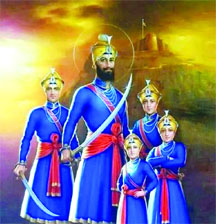
Guru Gobind Singh’s life is a remarkable tapestry of sacrifice, courage, and devotion to the principles of justice and righteousness. Among the numerous sacrifices he made, the most heart-wrenching was the loss of all four of his sons—known as the “Sahibzade”—in the struggle to uphold the values of Sikhism and protect the oppressed. This narrative encapsulates the essence of his ultimate sacrifice and the legacy it left behind.
The Four Sahibzade
The four sons of Guru Gobind Singh-Ajit Singh, Jujhar Singh, Zorawar Singh, and Fateh Singh-are collectively known as the Sahibzade. They were raised in an environment imbued with Sikh values of bravery, compassion, and unwavering faith in the divine. Despite their young ages, each Sahibzada exhibited remarkable courage and dedication to the ideals of Sikhism, becoming immortalized as symbols of sacrifice and resilience.
Ajit Singh (1687-1704)
Ajit Singh, the eldest son of Guru Gobind Singh, was born on January 26, 1687, in Paonta Sahib. As a young boy, he displayed extraordinary intelligence, physical prowess, and a keen sense of responsibility. His upbringing in the Guru’s household prepared him to be a fearless warrior and a compassionate leader.
Ajit Singh’s first significant contribution to the Sikh cause came during the Battle of Nirmohgarh in 1702, where he led a group of warriors against the Mughal forces. His bravery earned him admiration and respect among his peers. However, his ultimate sacrifice came during the Battle of Chamkaur in December 1704. At just 17 years old, Ajit Singh led a small group of Sikh warriors against the vast Mughal army, fighting valiantly until his last breath. His fearless sacrifice inspired his younger brother, Jujhar Singh, to follow in his footsteps.
Jujhar Singh (1691-1704)
Jujhar Singh, the second son of Guru Gobind Singh, was born on March 14, 1691, in Anandpur Sahib. Like his elder brother, Jujhar Singh was trained in martial arts, weaponry, and the teachings of Sikhism. His unwavering faith and courage made him a natural leader among his peers.
During the Battle of Chamkaur, Jujhar Singh, then only 14 years old, witnessed his elder brother’s martyrdom. Undeterred, he sought his father’s permission to join the fight. Guru Gobind Singh, though heartbroken, blessed his son and encouraged him to uphold the principles of righteousness. Jujhar Singh led a charge against the Mughal forces, fighting with unmatched bravery until he too attained martyrdom. His sacrifice is remembered as a shining example of youthful valor and devotion to a higher cause.
Zorawar Singh (1696-1705) and Fateh Singh (1699-1705)
The younger Sahibzade, Zorawar Singh and Fateh Singh, were born in Anandpur Sahib. Zorawar Singh, born on November 17, 1696, and Fateh Singh, born on February 25, 1699, were brought up with the same values as their elder brothers. Despite their tender ages, they exhibited wisdom and courage beyond their years.
In 1705, when the Guru’s family was forced to evacuate Anandpur Sahib under the Mughal siege, the younger Sahibzade were separated from Guru Gobind Singh. Accompanied by their grandmother, Mata Gujri, they were betrayed by a trusted servant and handed over to Wazir Khan, the governor of Sirhind.
Wazir Khan attempted to break their spirit by offering them wealth, titles, and safety in exchange for converting to Islam. However, Zorawar Singh and Fateh Singh remained steadfast in their faith, refusing to bow to tyranny. Their unwavering resolve enraged Wazir Khan, who ordered them to be bricked alive. The boys faced their execution with unshakable courage, reciting Sikh hymns and reaffirming their commitment to their beliefs. Mata Gujri, imprisoned in a freezing tower, passed away upon hearing of her grandsons’ martyrdom.
The Legacy of the Sahibzade’s Sacrifice
The sacrifice of the four Sahibzade is unparalleled in history. Their martyrdom exemplifies the highest ideals of faith, courage, and selflessness. The Sahibzade chose death over compromise, leaving behind a legacy that continues to inspire Sikhs and non-Sikhs alike.
Their sacrifices are commemorated annually during the “Shaheedi Jor Mela”, held in Fatehgarh Sahib, Punjab. The event draws thousands of devotees who come to pay homage to the Sahibzade and reflect on their enduring legacy. Their story is also a cornerstone of Sikh education, ensuring that future generations understand the values of sacrifice and resistance against oppression.
The story of the Sahibzade is a testament to the power of faith and the strength of the human spirit. Despite their youth, they displayed remarkable courage and an unwavering commitment to righteousness. Guru Gobind Singh’s sons gave their lives to uphold the principles of Sikhism, becoming eternal symbols of sacrifice and resilience. Their legacy serves as a source of inspiration, reminding humanity of the importance of standing firm in the face of injustice and oppression.
Tag: Zorawar Singh
-

Guru Gobind Singh: Epitome of Sacrifice
-
An Unparalleled Sacrifice in History
On the Martyrdom of the Four Sons of Guru Gobind Singh

Prof. Indrajit S Saluja The history of the world bears testimony to countless acts of bravery and sacrifice, but few compare to the monumental story of Guru Gobind Singh, the Tenth Guru of the Sikhs, and the ultimate sacrifice of his four young sons—Sahibzada Ajit Singh, Sahibzada Jujhar Singh, Sahibzada Zorawar Singh, and Sahibzada Fateh Singh. Their martyrdom is not only an integral part of Sikh history but a chapter of unparalleled valor and commitment to righteousness in human history.
Guru Gobind Singh, the founder of the Khalsa in 1699, envisioned a faith rooted in equality, justice, and the fight against tyranny. Living in a time of severe oppression under Mughal rule, Guru Gobind Singh sought to instill courage and a sense of identity in his followers. The Khalsa, with its distinctive identity and unyielding commitment to justice, emerged as a force against injustice and a beacon of hope for the oppressed. The creation of the Khalsa marked a revolutionary moment in history, but it also drew the ire of tyrannical rulers who sought to crush this growing resistance.
Guru Gobind Singh’s life was a saga of relentless battles and unwavering resolve. His personal sacrifices were profound—he became the only figure in history to offer his entire family, including his four sons, for the cause of righteousness. The heartbreaking story of his sons, who faced death with unparalleled bravery, stands as a testament to their faith, principles, and courage.
The two elder sons of Guru Gobind Singh, Sahibzada Ajit Singh (18 years old) and Sahibzada Jujhar Singh (14 years old), embraced martyrdom during the Battle of Chamkaur in December 1704. Outnumbered by the Mughal forces, they stood firm alongside their father and other brave warriors. Despite the overwhelming odds, Sahibzada Ajit Singh led the Khalsa soldiers into battle with extraordinary valor. When he fell, Sahibzada Jujhar Singh took up the mantle, fearlessly plunging into the battlefield to uphold the honor of the Khalsa.
Their sacrifices exemplified unwavering faith and the courage to stand against injustice, inspiring generations of Sikhs to remain steadfast in the face of adversity.
While Guru Gobind Singh and his elder sons faced battle, his two younger sons, Sahibzada Zorawar Singh (9 years old) and Sahibzada Fateh Singh (7 years old), were captured along with their grandmother, Mata Gujri, by Mughal forces. Imprisoned at the fort of Sirhind, they were subjected to immense psychological pressure to renounce their faith and convert to Islam. Despite their tender age, the young Sahibzadas displayed an unshakable commitment to their beliefs.
On December 26, 1704, when they refused to abandon their Sikh faith, the tyrannical Mughal governor Wazir Khan ordered them to be bricked alive. This inhuman punishment shocked the conscience of all who heard of it. Even as the bricks enclosed them, the young sons of Guru Gobind Singh recited Sikh prayers and remained resolute in their faith, demonstrating courage far beyond their years. Their martyrdom stands as a poignant reminder of the ultimate price they paid for their principles.
The martyrdom of the Sahibzadas is commemorated annually as Veer Bal Divas (The Brave Children’s Day) on December 26. This day serves as a moment of reflection and reverence for their bravery and the values they upheld. It is a day to remember not only their sacrifices but also the teachings of Guru Gobind Singh, who believed in unwavering commitment to righteousness: Shubh Karman te Kabahon na Taron (Never turn away from righteous deeds).
Guru Gobind Singh’s life and the sacrifices of his family remind us of the cost of freedom and justice. They exemplify the highest ideals of humanity—courage, selflessness, and steadfastness in the face of tyranny.
In an age where principles often waver under pressure, the story of Guru Gobind Singh and his sons serves as a beacon of inspiration. Their sacrifices remind us to stand firm in the face of injustice, to uphold the values of equality and freedom, and to remain committed to righteous causes, no matter the personal cost.
As we remember the Sahibzadas on Veer Bal Divas, let us pledge to honor their legacy by embodying their values in our own lives. Their story is not just a part of Sikh history—it is a universal testament to the triumph of the human spirit against oppression, a chapter in history that will forever inspire generations to come.
