Tag: Zoya Hasan

  • It’s back to the drawing board for the Congress

    It’s back to the drawing board for the Congress

    The Congress needs to go beyond the current focus on the negative aspects of the ruling dispensation or its perceived faultlines

    “The Congress can build on this base, but to take this process forward, it needs to project a clear ideological narrative and articulate its own politics. For a start, it shouldn’t try to outdo the BJP as a ‘more Hindu’ party, particularly when voters have the option to go for the real thing. The ideological counter must reflect a different model of development with an emphasis on rights-based welfare, especially employment guarantees interlaced with social harmony. In sum, the Congress has to reboot its political discourse by foregrounding something substantive, which is best done by advocating a positive agenda that can galvanize the electorate and goes beyond the current focus on the negative aspects of the ruling dispensation or the perceived faultlines within it and the politics it has promoted.”

    By Zoya Hasan

    The Congress’ remarkable victory in Telangana was overshadowed by its devastating defeat in the Hindi heartland in the just-concluded Assembly elections. The Congress has suffered a big blow as it lost all three states — Madhya Pradesh, Rajasthan and Chhattisgarh — it had won in 2018. The Bharatiya Janata Party’s (BJP) comprehensive victory was backed by support across most regions in these states and a strong showing in urban areas. But the Congress, despite its defeat, has managed to retain its vote share — Madhya Pradesh (40.4 per cent), Rajasthan (39.5 per cent) and Chhattisgarh (42.23 per cent). The BJP has gained mostly at the expense of others in the fray. With these triumphs, the BJP has expanded its dominance of a key region ahead of the 2024 General Election. However, the Congress vote share holds considerable significance in the run-up to the Lok Sabha elections.

    The Congress tried to highlight issues such as joblessness and caste discrimination in the hope that it would appeal locally in the state elections and nationally in the General Election. But its two-pronged plank of welfare schemes and social justice was upstaged by the subtext of Hindu nationalism and communal politics. The BJP’s victories highlight the consolidation of Hindu nationalism and the great resonance it enjoys in the heartland states. The use of state machinery, ample financial resources and the party’s organizational framework, buttressed by RSS cadres, have helped it promote itself as a champion of a strong nation, development and welfarism as well as of Hindu interests and the Hindu religion.

    From the outset, the BJP’s campaign pivoted on Prime Minister Narendra Modi, relegating established state leaders to the sidelines. The party decided not to nominate a chief ministerial candidate for any of the states going to the polls. This meant that even popular state leaders of the Congress like Ashok Gehlot and Bhupesh Baghel were not pitted against their local BJP rivals, but against Modi himself. The PM’s huge popularity in north and central India neutralized the public acceptance of these leaders.

    Taking a cue from its experience in Karnataka, where the visibility and prominence of local leaders paid off, the Congress projected state leaders, who were given a free hand. However, the infighting and overweening ambitions of its leaders in Rajasthan and Chhattisgarh put paid to this strategy. Factionalism and divided state leadership, which have been the undoing of the Congress in many states, was on full display throughout its term in office in these two states. Leaders were attacking each other until a few months before the elections, which sent a message to voters that this was a party that couldn’t keep its house in order. A settlement was forged between the warring leaders in both states, but it was a case of too little, too late.

    Apart from factionalism, there was no accord or concord between the state leadership and the high command. The Congress campaign lacked coherence; it appeared disjointed, with powerful state satraps unwilling to countenance any interference on their turf. In contrast, the BJP’s campaign was intensive and focused and the party spoke in one voice. This is not surprising, as the contemporary BJP is a highly centralized party, while the Congress, in a departure from the past, is relatively decentralized.

    To make matters worse, there was no agreement between the Congress and its allies in the state elections. The 28-party INDIA grouping led by the Congress, which came together to fight the BJP, did not feature in the state polls due to inter-party rivalries. Opposition parties should have negotiated state-specific alliances and seat adjustment in a spirit of give-and-take. This is easier said than done. Seat-sharing didn’t happen, which hurt the Congress as well as the INDIA bloc, which the voters saw as a divided house. The fate of the Congress and other parties in this election makes it clear that they can tackle the BJP only when they are united against it.

    A caste-based census was the big battlecry of the Congress to undercut the BJP’s support among the OBCs, but it turned out to be a ‘no-ball’. This call had little traction on the ground, with the issue not paying dividends — the BJP’s share of OBC votes has increased. In any case, it is doubtful that the demand for a caste census is an inspiring or effective counter to Hindu identity politics, which holds much greater appeal for subaltern groups in the current conjuncture. Caste politics and ideas of social justice were not enough without a clear political plank to serve as a counterpoint to the BJP’s politics in these states or effective campaigning, ideological clarity and organizational cohesion to communicate its message.

    There is limited evidence of a correlation between state and national elections. Yet, there’s little doubt that the Congress’ decisive defeat at the hands of the BJP in straight contests has undermined its credibility and is bound to demoralize it at a crucial time when the Lok Sabha elections are just five months away. However, all is not lost as the majority of the voters have opted for non-BJP parties in these critical states.

    The Congress can build on this base, but to take this process forward, it needs to project a clear ideological narrative and articulate its own politics. For a start, it shouldn’t try to outdo the BJP as a ‘more Hindu’ party, particularly when voters have the option to go for the real thing. The ideological counter must reflect a different model of development with an emphasis on rights-based welfare, especially employment guarantees interlaced with social harmony. In sum, the Congress has to reboot its political discourse by foregrounding something substantive, which is best done by advocating a positive agenda that can galvanize the electorate and goes beyond the current focus on the negative aspects of the ruling dispensation or the perceived faultlines within it and the politics it has promoted.
    (The author is Professor Emerita, Centre for Political Studies, JNU)

  • Lack of debate is weakening Parliament

    Lack of debate is weakening Parliament

    By Zoya Hasan

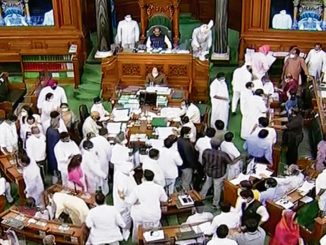
    Parliament and parliamentary norms have been undermined by the rise of adversarial politics (perceiving the Opposition as an adversary rather than a partner in the lawmaking process) and a domineering executive that has sidelined all other institutions. Parliament was intended to function as a body that keeps the executive in check but it seems to be working the other way now.

    “The basic problem starts with the government’s refusal to acknowledge the legitimacy of the Opposition and give space to it to express its position on any issue. Instead, the effort has been to paint the entire Opposition as sore losers and frustrated disruptors who aren’t reconciled to the PM’s popularity and the BJP’s electoral victories. With the Opposition not falling in line, the government has used its majority to push through important Bills without discussion.”

    The stormy monsoon session of Parliament, adjourned sine die last week, was a virtual washout because of the deadlock between the government and the Opposition over issues ranging from the Pegasus phone-hacking row to the government’s handling of the pandemic and the farmers’ protest. The government attacked the Opposition, accusing it of not allowing the Parliament’s monsoon session to function.

    To put all the blame on the Opposition for the impasse in Parliament obscures the government’s share of responsibility for this denouement. A closer look at parliamentary proceedings reveals that the session was disrupted by the ruling party’s deliberate deflection and stubborn refusal to discuss issues of national importance.

    The faceoff between the government and Opposition escalated over the Pegasus issue, resulting in the non-stop disruption of Parliament. This government, having a huge majority, has nothing to fear, and yet it refused to be flexible and accommodating towards the Opposition or even acknowledge the public issues raised by the latter.

    With both sides unwilling to give in, acrimonious events marked the session with legislators on both sides engaging in competitive disruption. The embarrassing turn of events led the government to field seven ministers at a press conference to take on the Opposition on the adjournment issue and to determinedly dismiss the snooping scandal as an issue of no consequence. Besides the Pegasus issue, government-Opposition relations hit rock bottom on the controversial Bill to enhance the private sector’s role in public sector insurance companies. Opposition MPs asked for the Bill to be sent to a select committee but the government didn’t agree. The Insurance Business Amendment Bill was passed amidst high drama which rocked the Rajya Sabha, culminating in allegations of physical violence from both sides. Only an impartial inquiry can establish the veracity of the charges and counter-charges. But the issue is why we have come to this pass.

    The basic problem starts with the government’s refusal to acknowledge the legitimacy of the Opposition and give space to it to express its position on any issue. Instead, the effort has been to paint the entire Opposition as sore losers and frustrated disruptors who aren’t reconciled to the PM’s popularity and the BJP’s electoral victories. With the Opposition not falling in line, the government has used its majority to push through important Bills without discussion.

    The extent to which parliamentary proceedings have degenerated can be seen from the astonishing speed in passing Bills. The Lok Sabha, on an average, took less than 10 minutes to pass a law, and the Rajya Sabha passed laws in less than half an hour. There were 13 Bills in this LS session in which no Member of Parliament spoke, other than the minister in charge of the Bill.

    In addition to this, the PRS Legislative Research data has shown a significant decrease in the involvement of standing committees in legislative matters. So far, only 17 of the 82 Bills since the NDA government was re-elected in 2019 have been referred to standing committees for review. No Bills had been sent to the Select Committee in the monsoon session. All this raises legitimate concerns of bypassing important checks and balances in the parliamentary system. What is more, Bills were passed in the midst of din and noise with no consideration to the Opposition protests.

    Not surprisingly, the government accomplished its entire legislative agenda without a debate on the Pegasus affair, Covid-19 mismanagement, farm laws, and the deepening economic crisis. However, passing Bills without debate in the House or scrutiny by a committee reduces Parliament to a clearance window for legislations. This effectively means Parliament was neither fulfilling its function of deliberative lawmaking nor of holding the executive accountable.

    Democratic accountability demands that the executive decisions be subjected to legislative scrutiny. While this session might represent a new low in this regard, the lack of scrutiny is not new.

    Take the case of the national lockdown which was never debated in Parliament as sessions were either cut short or adjourned. Unlike parliaments elsewhere, the Indian Parliament did not devise modalities to be functional during the pandemic. No proposal to allow digital meetings of standing committees was taken up at the top level even though the Opposition repeatedly demanded it. Parliament’s functioning was even more severely restricted in the second wave of the pandemic. Standing committees of the Parliament didn’t meet after the second wave. Virtual meetings weren’t permitted even though plenty of public meetings and election rallies were held during the second wave.

    Even when Parliament assembled, laws were passed without adequate deliberation. Both the farm laws and labor codes were passed without discussion. The labor codes were passed in the absence of Opposition MPs who had boycotted the session. The government pushed the farm Bills, ignoring the demand to send them to select committees, provoking fierce protests from the Opposition benches.

    The manner in which the Bills have been passed in this and in some previous sessions shows utter disregard for the democratic system, disdain for the parliamentary processes and contempt for the Opposition. This has weakened the significance of Parliament to the point of inconsequence. The proposal to turn Parliament House into a museum is emblematic of this new reality.

    Finally, Parliament and parliamentary norms have been undermined by the rise of adversarial politics (perceiving the Opposition as an adversary rather than a partner in the lawmaking process) and a domineering executive that has sidelined all other institutions. Parliament was always intended to function as a body that keeps the executive in check but it seems to be working the other way round now.

    The MPs exercise accountability on behalf of the people they represent. Questions and debates are used for this purpose, but neither of these tools is functioning effectively these days, which greatly damages our democracy.

    The government has weaponized the electoral mandate to dispense with the need for consultation and debate both inside and outside Parliament. This compounds the problem of accountability and representation as the meaning of democracy shifts from a representative to a majoritarian one, giving the executive the upper hand in most matters.

    (The author is Professor Emerita, Centre for Political Studies, JNU)

  • Trumping majoritarianism in the Hindi heartland

    Trumping majoritarianism in the Hindi heartland

    By Zoya Hasan
    While regional parties will continue to be significant in various States of the Union, the principal challenge of overcoming majoritarianism lies in the Hindi heartland, especially in U.P. Oppositional electoral alliances, notably the formation of a federal front, are important strategies in this battle but it is no less important to challenge the ideological foundations of the majoritarian project through progressive and inclusive politics.

    The landslide victory of the All India Trinamool Congress in the West Bengal Assembly elections and the pushback of the Bharatiya Janata Party (BJP) in West Bengal, Tamil Nadu and Kerala have given rise to a pervasive belief that right-wing politics can be defeated by regional assertions. Undoubtedly, regional and cultural assertion in these States acted as an effective bulwark against the BJP’s expansionary plans in southern and eastern India. The regional-cultural tropes deployed by Mamata Banerjee, for example, worked so well that at one point, Home Minister and BJP leader Amit Shah was even forced to clarify that if the BJP is elected, someone from Bengal would be the Chief Minister. This underlines the effectiveness of regional culture and politics in trumping communal politics. However, this claim needs to be tempered by the realism that it cannot work in the Hindi heartland, which is dominated by caste and communal politics, and has so far not seen any serious ideological and political challenge to politics based on these identities.

    Encompassing nine States whose official language is Hindi, namely Bihar, Chhattisgarh, Haryana, Himachal Pradesh, Jharkhand, Madhya Pradesh, Rajasthan, Uttar Pradesh (U.P.) and Uttarakhand, this region retains a central position in the electoral strategies of the BJP and its larger political imagination. The party’s stunning show in these States propelled it to power in the 2014 and 2019 parliamentary elections. Its continued political dominance in the heartland will neutralize its losses now as well as in future in States where it has been bested by regional players. I will focus here on U.P. to illustrate the limits of the regional assertion.

    Dimensions in the heartland

    The Hindi heartland is clearly different. There are at least four important dimensions of this difference. First is the absence of regional identity in States such as U.P. This is evident from the debate on States reorganization and the reorganization of Uttar Pradesh in the 1950s. The compulsions of nation-oriented identity emerged very clearly from the discussions in the States Reorganization Commission on suggestions for the division of U.P. for administrative convenience. U.P. leaders argued for a large and powerful State in the Gangetic valley as a guarantee of India’s unity.

    In this sense, U.P. was considered the backbone of India and the centerpiece of political identity in modern India. Importantly, it was supposed to provide the chief bulwark against growing regionalization and fragmentation elsewhere. Instilling a sense of regional pride, an essential part of Congress strategy in southern and coastal India, was not followed in U.P. U.P. was seen as the political heartland in contrast to Punjab and Bengal for instance, which were splintered and incorporated into two different nation states. As is well known, the bases of this post-colonial identity varied from its location in the freedom struggle to staking claim as the cultural homeland of Hindi and Hinduism. In both cases, it was centered in the idiom of the nation-state and strong central authority.

    Second, although U.P.’s cultural homogeneity remains a matter of disagreement, the idea of the heartland had great resonance among the political elite who opposed the demand for U.P.’s reorganization. The long-standing traditions of composite cultural identity and shared plural cultures began to yield place to a singular homogenized identity. The Hindi-Urdu divide, which mirrored the communal cleavage of U.P. society, played a crucial role in this process. Urdu was excluded as it was seen to symbolize Muslim cultural identity in independent India, while Hindi was boosted to promote the development of a Hindi-Hindu heritage for this region. The project of homogenization of Indian/U.P. culture as Hindu culture was quickened in later decades. Even though it would be hard to assume a direct link between Hindi dominance and communal politics of subsequent decades, it is nevertheless a fact that all political parties in the State used it as an ingredient of social and cultural differentiation and a means to consolidate political dominance.

    Role of communal politics

    Third, it is clear that communal politics and communal movements have played a key role in U.P.’s modern history which in turn have diluted other identities.

    In some respects, this process gained momentum in the wake of Partition which cast its long shadow upon political institutions and culture in U.P. and to a great extent affected the perspectives of Hindus and Muslims alike. Hindu nationalism was marginalized within the Congress party but many of its ideas were accepted in framing party policies. The State leadership was instrumental in forging a conservative consensus in the State under Chief Minister G.B. Pant who steered the affairs of the state for eight years after Independence.

    The intensification of communal politics took a new turn with the mass mobilization for the construction of a Ram temple at Ayodhya which was deftly used by the Hindu right to establish a major presence in U.P. and to facilitate the political reconstruction of U.P. through the promotion of a collective Hindu identity. The crusade for the appropriation of disputed shrines is central to the communalization of politics and short circuiting the more complex process of political expansion for the BJP.

    Importantly, this has laid the groundwork for building permanent electoral majorities through the deployment of ascriptive symbols in U.P. which, given its huge size, helps it to establish a strong base in the Hindi heartland to offset the appeal of countervailing identities elsewhere in India.

    Caste politics too

    Finally, caste politics which was expected to counter Hindutva expansion has failed to do so; in fact, caste politics has become a building block for the BJP’s expansion. The party has reached out to Dalits, actively mobilizing them and other backward castes to assimilate them into the Hindutva meta-narrative. Instead of erasing caste from electoral politics, the BJP-Rastriya Swayamsevak Sangh has sought to court fragments of castes as a way of undermining broad-based political movements and opposition to it. It has used the wider appeal of Hindu nationalism to co-opt backward castes and Dalits who are keen to align themselves to the larger narrative of Hindu nationalism.

    A reset is needed

    While regional parties will continue to be significant in various States of the Union, the principal challenge of overcoming majoritarianism lies in the Hindi heartland, especially in U.P. Oppositional electoral alliances, notably the formation of a federal front, are important strategies in this battle but it is no less important to challenge the ideological foundations of the majoritarian project through progressive and inclusive politics. This requires a reset of the basic political mindset in U.P. which can only be done by reviving the splendid heritage of the national movement in which this region played a central role and in which Gandhiji and Nehru played a heroic part. Invoking the spirit of the Bhakti movement which was the first major challenge to the religious orthodoxy of Hinduism would also help in resetting the cultural clock. This must, however, combine with much greater concern for the fundamental social and economic issues of the State, and making the struggle between communal and secular forces the central issue through public campaigns that address the problems of religious traditionalism and the cultural underpinning that this provides to the push to make India a Hindu state.

    (Zoya Hasan is Professor Emerita, Jawaharlal Nehru University)