Month: May 2013

  • WOMEN WEAR RED, PINK WHEN MOST FERTILE

    WOMEN WEAR RED, PINK WHEN MOST FERTILE

    Anew study has found that women wearing red or pink were about three times more likely to be at peak fertility than women donning other colours. In the study, researchers from the University of British Columbia asked 124 women ages 18 to 47 what colour shirt they were wearing, and when they had had their last period.

    After calculating peak fertile days for each woman, the researchers found an association with red and pink shirts and fertility, the New York Daily News reported. According to the report, the researchers plan to conduct a follow-up study to further ask women why they selected a particular color on the day of the survey.

    Possibilities include that women feel sexier at peak fertility and want to grab more attention, consciously or unconsciously, the researchers said.

  • Foods that fight wrinkles and ageing

    Foods that fight wrinkles and ageing

    Ageing, dark spots, wrinkles, and fine lines… these are the last things that a person would like to see on his or her skin. No wonder, both men and women are willing to shell out a lumpsum to look good and are going all natural in the process. According to experts, the secret lies in the plate and that’s precisely why what you eat matters the most.

    Food experts recommend people to opt for natural products to maintain a youthful look in a healthy way. And when it comes to these natural products, there are umpteen varieties to choose from. We give you a list of products that one could choose from to delay the ageing process and to maintain that youthful look. LEAFY GREENS: Like eggs, leafy greens such as spinach, kale, turnip greens, and romaine lettuce, are great sources of lutein and zeaxanthin.

    Studies have shown eating foods rich in these antioxidants can significantly reduce risk of AMD (age-related macular degeneration), as well as non- Hodgkin’s lymphoma. Spinach has a very high ORAC (Oxygen Radical Absorbance Capacity) score. It is a measurement of a food’s ability to destroy the free radicals that cause damage in your body. The higher the ORAC score, the better a food is for you. BLUEBERRIES: These tiny berries are powerhouses of nutrition.

    They are loaded with antioxidants, which stops premature ageing and help prevent cancer.Wild blueberries also boost your health. A study suggests that anthocyanins in blueberries appear to combat oxidative stress, which is one of the main causes of ageing. YELLOW AND ORANGE ROOT VEGETABLES: Put plenty of betacarotene on your plate. These superantioxidants are good for your skin and eyes. Good choices include carrots, sweet potatoes, pumpkins, and squash.

    BROCCOLI: Quercetin is a powerful antioxidant that is found in broccoli, along with other foods including cranberries, onions, and apples. It is a natural anti-inflammatory agent as well, fighting the number two cause of aging. Broccoli sprouts have 30 times more isothiocyanates (yet another antioxidant) than regular broccoli. RAW, ORGANIC EGGS: A single egg contains, nine essential amino acids.

    It’s rich in proteins and has naturally occurring Vitamin D. Consuming your eggs raw is the best thing to do as cooking destroys some of the highly perishable nutrients. ALOE VERA: Aloe vera’s antiageing properties have been known for ages. Scientific evidence suggests that Aloe Vera juice can heal skin and reverse skin ageing. Skin ages because of UV light damage and loss of collagen in the skin.

    Collagen helps in keeping the skin firm and elastic. Ageing breaks down the collagen matrix in your skin which leads to wrinkles. Drinking aloe vera juice is known to reduce the wrinkle depth and improve skin elasticity due to increased collagen production.

  • SIMPLE REMEDIES TO BATTLE SINUS

    SIMPLE REMEDIES TO BATTLE SINUS

    Constantly battling a sinus problem and desperate for relief ? Here are some remedies that might help you… – The body requires plenty of liquids to increase its moisture levels, so make sure you drink a lot of fluids
    — go for nutrient-rich vegetable and fruit juices.
    – Rest and relaxation is important. So, forget worrying for once and just curl up in bed.
    – Get as much rest as you possibly can. But if you have to go to work, make sure you have an early night.
    – Take a teaspoon of honey — it is a natural antiseptic
    — and the juice of half a lemon, a natural source of Vitamin C. Dissolve it in warm water and drink. Opt for herbal leaf tea or green tea as an alternative to normal tea. – Chicken soup is believed to be a good food for colds
    — it’s an age-old belief that holds true.
    – If you are suffering from a blocked nose, prop yourself up in bed with pillows to help ease your breathing at night. – Install a humidifier in your bedroom to regulate the moisture. This will help reduce mucous drainage and promote nasal relief while sleeping.
    – Master Jala Neti — a yoga technique. All you have to do is take in warm saline water through one nostril while bending your head sideways and letting it come out through the other. You have to leave your mouth open to breathe.

    Symptoms to look out for
    -Nasal congestion with discharge – Pain or pressure around the inner corner of the eye or down one side of the nose – Severe ache in the forehead – Sore throat and bad breath
    – Increased discomfort throughout the day with
    -increased cough at night

  • MEDITATION: STORY FROM UPANISHADS

    MEDITATION: STORY FROM UPANISHADS

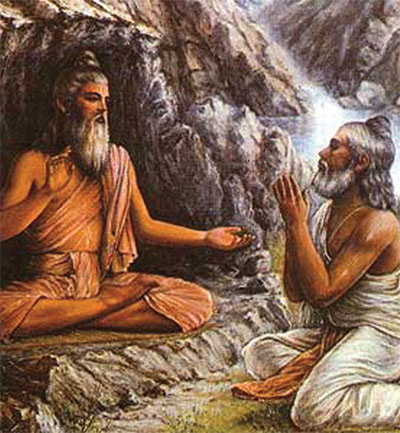
    There were five wise people learned in sacred lore, performers of sacrifices, but who could not come to a conclusion in regard to the final destination of their meditations. These great men were Prachinasala, Satyayajna, Indradyumna, Jana, Budila. They were all well versed in meditation according to their own techniques, but they had doubts in their minds, because in the course of their meditations, in spite of the fact that they discovered good results, there was something lurking in their minds, pointing to a defect in their meditations.

    They were unable to understand the defect was. So, they conferred among themselves: “What is Atman? What is Brahman? What is the difficulty with us? Can any one enlighten me? Why is it that there is no agreement among us?” Each one was questioning the others. There must be some point which we are missing. Then they thought, “Well, in our locality is another great man. Why do we not go to him? Perhaps he knows this secret of the Vaishvanara-Atman. He is Aruni, the great sage who lives nearby. Let us go to him.

    Everyone agreed and they decided to approach Aruni, with their problem. Aruni was surprised when he saw five great persons approaching his cottage. Aruni guessed that these great sages are coming to him obviously with some very difficult question regarding the Highest Reality. Aruni was not sure whether he will be able to answer these great sages satisfactorily.

    Aruni was not ready to take this risk, so he decided that he will direct these persons to some other person who is more knowledgeable than him. When the five sages approached Aruni, and placed their problem before him, he said “O great men! I know why you have come. I am also in the same boat as you are. I have also doubts of my own. I do also meditate as you are all doing, and I have also some difficulties in spite of the fact I have been meditating for years together.

    Why not we all go together to the great emperor Ashvapati who is a master at meditation and is highly proficient in the supreme technique of meditation called Vaishvanara-Vidya [Vaishva = Universe / Nara = Man / Vidya = Knowledge / Knowledge of Universal Being]. Hence, they all including Aruni went to the king’s palace and presented themselves before him. When Brahmanas go to a king, naturally they go for some Bhiksha.

    That is the usual tradition. The king thought that these people had come expecting some gift or money. He received them with great respect and honour, offered them seat. He received each person separately with due honour. He garlanded them, gave them water to drink and enquired how they were and said “I welcome you O Brahmanas! I am ready to offer you anything that you need by way of gift, if you have come for that”. These great men said: “O king! You are so kind, but there is a different purpose with which we have come to you.

    We have not come for money; we have not come for wealth. The Brahmins said “We have heard O Great King! You are in possession of a great knowledge, the knowledge of the Supreme Being, about which we have great doubts and concerning which we have not come to any conclusion among ourselves. We have come as students begging for this knowledge that you possess; the wisdom of meditation upon the Vaishvanara-Atman, which we do not know.

    This is the purpose for which we have come,—not for wealth, not for money, nor for gifts.” The seekers were very great people, perhaps elder in age to the king himself, not ordinary persons, but they humbled themselves before this mighty knowledge which the king possessed; and approached the king with offerings of samit (sacred firewood) according to ancient tradition, the offering with which students used to approach the Master.

    They did not regard themselves as Brahmanas or punditas superior to the Kshatriyas. They went as students of higher knowledge to the great master that the king was. The King saw that these Brahmins were well-prepared already; they were Brahmanas, highly experiences in art of meditation, religious people, and entirely devoted to spiritual life. They were not ordinary, raw brahmacharins approaching a Guru for knowledge.

    He accepted them as students at once, merely on their declaring themselves as students: “We have come as students.” “Well, I accept you as students.” The king questioned them one by one, “What is it that you are meditating upon already? Why is it that you are in difficulty?” Now, each one was asked this question. The first one was Prachinasala. Prachinasala said “I meditate on Heaven (Aakash) as the Supreme Being, Your Highness. That is the symbol I take for fixing my attention of consciousness. I consider the highest region of Heaven as the final symbol for my meditation.

    I regard it as the Absolute. Therefore, I consider it as the Atman. So, this is how I meditate. But I have no peace of mind. There is something wrong with this technique, and for that purpose I have come to you.” The king replied: “You are a very honest student of meditation. Heaven is, of course, a part of the great Vaishvanara, the Universal Being, which you are meditating upon. You have abundance of wealth in your house. You perform large sacrifices without end, and you have no difficulty in receiving guests and feeding them.

    This is what will happen to any person who meditates like this, as you are doing, on the Vaishvanara-Atman. And this is your case also. But, there is a great mistake in your meditation. Heaven is only a part of the whole Reality. This is the head of Reality, the topmost region of the Vaishvanara, the crown, the head of the Universal Being. Thus,you have mistaken a part for the whole, you have considered the head for the whole body, because you have made this mistake in your meditation, your head would have fallen, one day or the other; some great calamity would have befallen you if you had not come to me now, at the proper time, for rectification.”

    In the same way the king puts the same questions to rest of the Brahmins. Each Brahmin relied in his own way. Satyayajna said “O King I meditate upon Sun (Surya) as symbol of the Absolute. The King said “But the mistake that you are making in your meditation is that the Sun is the eye, as it were, of the cosmic body of Vaishvanara. It is not the whole of Reality. Indradyumna said “I meditate upon the Cosmic Air (Vayu) that blows, as the all-pervading Reality, Your Highness.” The King replied “This is a wonderful meditation, but there is a defect in this meditation.

    Air is only the vital breath, as it were, of the Vaishvanara-Atman. You have mistaken it for the whole” Jana said “I meditate on the all-pervading Space, Your Highness.” The king said “But, this is not the correct meditation; there is an error in this meditation also, because the Space that you are thinking of as the Cosmic Reality, is really the body, as it were, and not the whole, of Vaishvanara”. Budila said “I meditate on Water (Jal), Your Highness. I contemplate Water (the ocean) as symbolic of Reality, as an endless expanse.

    This is my Atman.”. The King said “But, this is also a defective form of meditation because it is the lower belly, as it were, of the cosmic Vaishvanara. It is just the watery element of the whole cosmic embodiment”. Aruni said “I meditate upon the Earth (Prithvi) in its comprehensiveness as Reality, Your Highness.”. The king said “But, the Earth is only the footstool of the Vaishvanara-Atman, as it were.

    It is the feet of the Vaishvanara-Atman because it is the lowest degree among the manifestations of Reality” Having asked all the Brahmins about their method of meditation, the king started telling them the real method of meditation. The king said “All of you are very sincere in your meditations, and honest, indeed. Because of your honesty and sincerity and firmness in meditation, you enjoy plenty of everything in your houses and in your families and within yourselves. But you do not know that you have committed errors in your meditations.

    In the beginning, everything looks all right even in an erroneous meditation, but afterwards some difficulty arises which cannot be rectified even by the best of methods. Well, you have all made two mistakes, to put the whole thing precisely. You have considered some parts of the whole as the whole. You have mistaken the finite for the Infinite. Nothing that you are thinking in your minds can be the hole, because the mind is accustomed to think only finite objects.

    Whatever be our concept of expanse in regard to the particular object on which you are meditating, it is still finite. This is one error”. The king proceeded to tell them the second error. “The second mistake that you are making is that you think of the Atman as an object, as if it is outside. You say, it is Space, it is Water, it is the Sun, it is the Earth, and so on. Well, it is all very beautiful.

    But, it is ‘outside you’! How can non-Atman be the Atman? “And what do you mean by the Atman? How can the Atman be outside you? Your own Self is external to you? What a concept! You have really committed a blunder in conceiving your own Self as a non-Self. The first point, then, is that a finite thing cannot be regarded as the Infinite. The other thing is that an external thing cannot be regarded as the Self. You have committed both these mistakes. You are having the knowledge of this Great Being, little by little, part by part, as in the story of the blind men and the elephant.

    Each blind man was touching a part of the elephant’s body and regarding it as something specific”. “There is no need to pour water and put manure on every leaf of the tree if you want to tend a tree. You have to water the root; that is sufficient. You concern yourself with the root of the tree, and then you see there is an efflorescence of every part of the tree, automatically. The root of the Reality is missed by your consciousness.

    Whoever can conceive in his mind the true Vaishvanara as that which extends from the earth to the heavens, from the heavens to the earth, from the topmost level of manifestation down to the lowest level, missing no link whatsoever, visualises the Whole. This is the Vaishvanara-Atman, the All-Self. Whoever can meditate in this manner becomes the Self of every being all at once. One becomes the Self of all the worlds; he becomes the Self of anything that can be anywhere. All these parts which you have mentioned are various limbs of the Cosmic Body.

    You have to bring them together and conceive the Whole, at once, in your consciousness. Do not say, ‘This is the sun, this is space, this is water,’ and all that. Do not think like this. Let all these be thought together, immediately, in their comprehensiveness, without missing any one whatsoever, by feeling oneness with Earth, Water, Sun, Air, Space, Heaven, and everything.”

  • Pakistan Taliban vow to avenge Waliur death

    Pakistan Taliban vow to avenge Waliur death

    ISLAMABAD (TIP): A “shocked” Pakistani Taliban on Thursday confirmed the death of its deputy chief Waliur Rehman in a American drone strike and announced it was withdrawing its offer to hold talks with the new Pakistan government over the killing. “I confirm the martyrdom of Waliur Rehman in a drone strike on Wednesday. We are shocked at the martyrdom of our leader but are proud of his sacrifices,” said Ihsanullah Ihsan, spokesman for the banned Tehrik-e-Taliban Pakistan.

    Ihsan said the Taliban was withdrawing its offer of a dialogue with the new government, and would take revenge for Rehman’s killing. “We had sincerely offered a dialogue to the government but we strongly believe that the government has a role to play in the drone strikes,” he said. The Taliban consider the Pakistan government “fully responsible” for the drone strikes because it was “passing on information” to the US, he said.

    Rehman and three senior militant commanders were among six persons killed in the CIA-operated drone strike carried out in Chashma Pul area of North Waziristan Agency. Sources said his death would hit the incoming PML-N government’s plans to open a dialogue with the Taliban as mediators were hoping to establish contact with the militants through the relatively moderate Rehman. The PML-N, which won the general election earlier this month, has said it will hold talks with the Taliban and other militants to usher in peace in the country.

    Earlier in the day, security officials told journalists in the country’s northwest that Rehman was buried at an undisclosed location on Wednesday night. The US had accused Rehman of involvement in a 2009 suicide attack in Afghanistan that killed seven CIA employees. Rehman was carrying a $5 million bounty on his head. The Pakistani Taliban, formed in late 2007, aims to overthrow the Pakistani government, which it believes is too closely aligned with the US.

  • Red Cross halts all staff movement after Afghan attack

    Red Cross halts all staff movement after Afghan attack

    KABUL (TIP): The International Committee of the Red Cross has halted all staff movement across Afghanistan and closed its office in Jalalabad that was hit by a suicide and gun attack. “All movements have been frozen throughout Afghanistan, there is not a single ICRC delegate or employee that is moving, taking the roads, today,” Jacques De Maio, ICRC’s South Asia chief, said in a statement released in Geneva on Thursday.

    “Our sub-delegation in Jalalabad has been closed, so we are reconnecting with the government and re-connecting with armed groups to determined what happened and why.” The ICRC maintains strict neutrality in the Afghan conflict and was thought to be protected from attack by its working relations with the Taliban and other insurgent groups. No militant group has claimed responsibility for Wednesday evening’s attack, in which one guard died at the start of the two-hour assault.

    “He was unarmed, defenceless, he was protecting a compound from where hundreds of thousands of Afghans were getting valuable services,” De Maio said in the video statement. “It was a brutal, despicable and frankly senseless attack… there isn’t a single Afghan that would not recognise that we are strictly independent and humanitarian in what we do.” It was the first time that offices of the ICRC had been targeted since the organisation began work in Afghanistan in 1987. ICRC, which has 1,800 employees nationwide, had 36 staff, including six expatriates, in the eastern city of Jalalabad.

  • US urges Myanmar to remove its two child policy for Muslims

    US urges Myanmar to remove its two child policy for Muslims

    WASHINGTON (TIP): The United States has appealed to Myanmar to immediately shun its plan of a two-child policy for Rohingya Muslims. “We are deeply concerned over reports that local officials in Myanmar’s Rakhine state plan to enforce a twochild limit for Rohingya Muslims,” State Department spokesperson Jen Psaki said, asserting that Washington will oppose any such “coercive and discriminatory birth limitation policy”.

    “We have pressed senior Myanmar government officials to abolish this local order. We urge the government to eliminate all such policies without delay,” Mr Psaki said. Meanwhile, UN Secretary General, Ban Ki-moon has welcomed the agreement reached between the government and the Kachin Independence Organisation after their first meeting in Myanmar since the conflict broke out in June 2011. UN Special Adviser on Myanmar Vijay Nambiar was present as observer at the talks on behalf of the United Nations, accompanied by representatives from the Chinese Embassy and Myanmar’s ethnic nationality groups.

    “The Secretary-General notes the seven-point agreement as a significant achievement that could lay the basis for a genuine process of national reconciliation in the country,” a UN statement said. “He commends the leaders of both delegations for their courage and perseverance, and hopes this agreement will allow the two parties to address the concerns and needs of the people of Kachin state,” it added.

  • BASTAR MAOIST ATTACK: DID SOMEONE CHANGE ROUTE OF CONVOY?

    BASTAR MAOIST ATTACK: DID SOMEONE CHANGE ROUTE OF CONVOY?

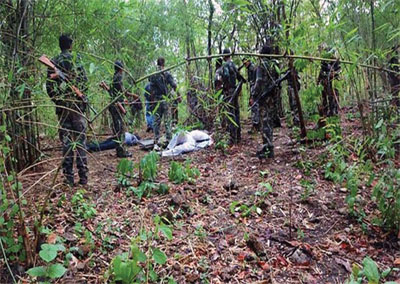
    NEW DELHI (TIP): As investigations by different agencies into the Darbha massacre in Chhattisgarh gather momentum, it is now emerging that there may actually have been a last-minute change in the route of Congress cavalcade diverting it to Darbha Ghati where 28 people, including senior Congress leaders, were gunned down by Maoists in an ambush last week.

    Sources in CRPF, which conducted spot inquiry into the lapses that led to the attack, say that not only were there glaring mistakes committed by the security apparatus, there are also strong indications that someone got the route of the Congress rally changed at the last minute. Sources said it was natural for the Congress rally to come via Gadiras in Dantewada as it wanted to cover more areas in the tribal belt.

    “It had already done the Darbha Ghati route while going to Sukma from Jagdalpur. Several sources told us that the original plan to come to Jagdalpur was via Gadiras in Dantewada. However, it is not clear when, how and who suggested a change of route,” said an officer privy to the details of spot enquiry. The rally plan given to Chhattisgarh Police did not mention preference of route, said sources.

    It only mentioned about journey from Jagdalpur to Sukma and back. “The route plans were intimated orally to the police hours before taking them and accordingly security arrangements were made,” said the officer. The National Investigation Agency (NIA), which is probing the incident, will look into this matter, said sources. If the information is found to be correct, it would point to a conspiracy where the agency would have to ascertain whether the route change suggestion was given to save time — there is a difference of 50km between the two routes — or with prior knowledge of an ambush. Sources said, the security set up was found to be fairly inadequate as there were only three state police personnel with each company of CRPF.

    “That is why between Darbha and Togpal forces could do road opening only upto 5 km on each side on a stretch of 25 km. The incident occurred right in the middle,” the officer added. Enquiry found that Naxaliteleaning villagers were stationed at certain intervals on the route and gave real time relay signals of the approaching cavalcade to the Maoists.

    There were also lapses on part of the state police in failing to conduct even a coordination meeting on security where proper stock of the situation would be taken and responsibilities divided among central and state forces for rally security. All decisions were left to local police even as the district SP was absent.

  • PRESSURE MOUNTS ON BCCI CHIEF TO GO

    PRESSURE MOUNTS ON BCCI CHIEF TO GO

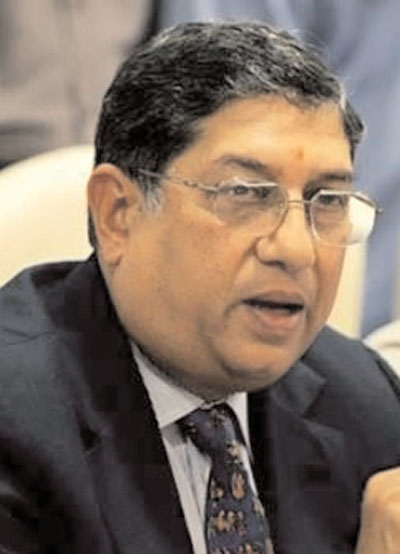
    NEW DELHI (TIP): Board of Control for Cricket in India (BCCI) president N Srinivasan came under all round attack with the Sports Ministry and Board heavyweights mounting pressure on him to quit. Srinivasan, however, remained unfazed and refused to step down. The Ministry for Sports and Youth Affairs said the BCCI chief should resign to avoid a conflict of interest, four days after the police arrested his son-in-law Gurunath Meiyappan in connection with the IPL scandal.

    “There is a conflict of interest in this inquiry. Therefore, the BCCI president should tender his resignation on moral grounds pending the outcome of the inquiry,” the ministry said in a statement. Pressure mounted on Srinivasan from within the Board too as two key members — Rajeev Shukla, vicepresident, and Arun Jaitley, vice president — asked the BCCI chief to stay away from the top post till investigations into the scandal were completed.

    “Srinivasan is an elected president, but we are of the view that it would be good if he stays away from this procedure (of the inquiry into the fixing scandal). We have made this suggestion. The decision is up to him,” Shukla said after meeting Jaitley. Shukla said he and Jaitley were in touch with all Board members. A three-member BCCI inquiry committee is probing Meiyappan’s role and the spot-fixing allegations against three Rajasthan Royals players and its franchise as well as the Chennai Super Kings.

    Srinivasan, on his part, showed no signs of relenting under pressure. “I saw Rajiv Shukla’s interview. What he says is that this commission has been appointed and I should disassociate myself from the procedure,” he said. “I had said in Kolkata that I will have nothing to do with the commission — its appointment, its terms of reference and its decision. Rajiv Shukla has reiterated this only,” said Srinivasan.

    “I have nothing to do with the commission. It is independent. Under the operational powers, they have powers to sanction and impose punishment. So, we will just await the results,” he said. Pressure has been mounting on Srinivasan to quit ever since his son-in-law was arrested in the fixing scandal, though his own name has not been linked to the scandal. He cannot be forced to quit, unless the Board takes a majority decision.

    He, however, can be prevailed upon to step down on moral grounds. The Sports Ministry, meanwhile, said it was in favour of a law to curb malpractices in all sports, and it will send its comments on the Bill drafted by the Law Ministry to all stakeholders. The ministry also clarified that enacting a law regularising betting in sports was a State subject, and therefore it “cannot be part of a Central Law”. “The ministry has made no recommendations to regularise betting to the Law Ministry or to any other organisation”, the ministry stated.

  • SPOT-FIXING: SACHIN TENDULKAR BREAKS SILENCE, SAYS HE IS SHOCKED AND DISAPPOINTED

    SPOT-FIXING: SACHIN TENDULKAR BREAKS SILENCE, SAYS HE IS SHOCKED AND DISAPPOINTED

    NEW DELHI (TIP): Breaking his silence on the raging spot-fixing scandal, Sachin Tendulkar on May 31 said that the developments of the last two weeks were “shocking and disappointing” and the faith reposed by the millions of fans in the game should be justified. Tendulkar said the authorities must take sincere steps to get to the root of the issue and ensure that credibility of the game is restored.

    The champion batsman, who retired from IPL after his side Mumbai Indians won the title recently, said as a cricketer he has always learnt to play in the true spirit of the game. “It has always hurt me when the game of cricket is in the news for the wrong reasons. The developments in the last two weeks have been shocking and disappointing. As cricketers we are always taught to go out, fight hard, give our very best and play in the true spirit of the game,” Tendulkar said in a statement.

    The milestone man of Indian cricket said it was important that the authorities get to the root of the problem. “During this difficult phase, I join every cricketer, from the boys in the maidans across the country to those who represent clubs, states and the country, who trust the authorities to take sincere steps to get to the root of the issue. “The faith reposed by the millions of fans should be justified and we owe it to them to ensure that Indian cricket is all about pride and joy,” the statement added.

    Tendulkar’s statement on the spotfixing scandal assumes great importance since none of the current Indian cricketers have spoken on the issue, since it broke out about two weeks ago. Indian skipper Mahendra Singh Dhoni has steadfastly refused to speak on the scandal, apparently under a gag order from the BCCI. Dhoni evaded questions on spot-fixing at the pre-departure press conference in Mumbai on Tuesday and also did the same at the media interaction in Birmingham on Thursday ahead of the Champions Trophy.

    The only thing Dhoni said at the press conference in Birmingham was that Indian cricket’s reputation was not “gone” and that some people were “slightly mentally weak” compared to others. He said that he will speak when the time was right. With more and more cricket boards and state unit officials coming out in the open against BCCI president N Srinivasan’s continuance over the last few days, it will be interesting to see whether more cricketers also start giving their views, taking a cue from Tendulkar.

  • RITUPARNO GHOSH, TRAILBLAZER OF NEW WAVE BENGALI CINEMA, DIES

    RITUPARNO GHOSH, TRAILBLAZER OF NEW WAVE BENGALI CINEMA, DIES

    KOLKATA (TIP): Noted filmmaker Rituparno Ghosh died of cardiac arrest at his south Kolkata residence on May 30. He was 49. Winner of 12 national and some international awards, Ghosh was suffering from pancreatitis and died of heart attack at 7.30 am, his family said. Credited for ushering in a new wave in Bengali cinema by his trailblazing films like ‘Unishe April’ and ‘Dahan’, director-turned-actor Rituparno Ghosh was known for glorifying women besides exploring the touchy subject of same-sex relationships.

    As someone who had a different take on sexuality, life, filmmaking and equally adaptive to the trends and changes of contemporary filmmakers, Ghosh blazed the turf of Bengali film industry with his works. Ghosh played an important role in the revival of the film industry post the nineties with his arty and sensitive films like ‘Unishe April’, ‘Dahan’, ‘Chokher Bali’, which were not essentially melodramatic.

    A self-confessed Satyajit Ray fan, Ghosh’s films glorified women, their inner feelings, passion and sufferings. The filmmaker also explored same-sex relationship in his last release ‘Chitrangada’. Fondly known as Ritu da, Ghosh was never apologetic about his crossdressing or his sexuality and in Kaushik Ganguly’s ‘Arekti Premer Galpo’ and Sanjoy Nag’s ‘Memories in March’, he played pivotal gay roles.

    Born on August 31, 1963, Ghosh grew up in Kolkata. His father was a documentary filmmaker and so he was exposed to the world of art and cinema right from childhood. He started his career as a creative artist in an advertising agency, and later shifted to films. He made his directional debut in 1994 with children’s film ‘Hirer Angti’. His second film ‘Unishe April’ starring Aparna Sen and Debashree Roy won him his first of the 12 National Film Award.

    Having an uncanny grasp on the prowess, Ghosh has been credited discover the other side of actors like Rituparna Sengupta. Earlier only known to be part of hardcore formula Bengali films opposite Prosenjit Chatterjee mostly, Sengupta’s second innings as an actor began after starring in Ghosh’s 1997 film ‘Dahan’, which earned her a National Film Award for Best Actress alongside co-star Indrani Halder. Ghosh also mentored Raima Sen, grand-daughter of legendary actress Suchitra Sen, and gave her the turning point of her career in ‘Chokher Bali’.

    He later shifted from working with only Bengali actors to Bombay-based ones. He worked with Kirron Kher in ‘Bariwali’, Raakhee in ‘Shubho Mahurat’, Aishwarya Rai in ‘Chokher Bali’ and ‘Raincoat’, which also starred Ajay Devgn. For his first English language film ‘The Last Lear’, Ghosh roped in megastar Amitabh Bachchan, Preity Zinta and Arjun Rampal. Bipasha Basu also made her debut in Bengali films with Ghosh’s ‘Shob Charitro Kalponik’ in 2008.

    His other National award winning films include ‘Dahan’, ‘Asukh’, ‘Chokher Bali’, ‘Utsab’, ‘Raincoat’, ‘Shubho Mahurat’, ‘Abohoman’, ‘Shob Charitro Kalponik’ and ‘The Last Lear’. Ghosh made his acting debut in 2003 with an Oriya film ‘Katha Deithilli Ma Ku’ directed by Himanshu Parija. He hosted two celebrity chat shows- ‘Ebong Rituporno’ and ‘Ghosh and co’. He also was the scriptwriter of hit soap ‘Gaaner Opare’ for few initial episodes. His last release was ‘Chitrangada’, a modern take on Rabindranath Tagore’s tale of the same name.

    The film won the special jury award at the 60th National Film Awards. Charting a different course from his last few films on relationship and alternative sexuality, Ghosh took up the ambitious work of filming the exploits of popular Bengali sleuth Byomkesh Bakshi. The film starring ‘Kahaani’ director Sujoy Ghosh and actress Arpita Chatterjee, was in postproduction stage.

  • BJP to decide PM candidate ‘soon’: Rajnath

    BJP to decide PM candidate ‘soon’: Rajnath

    NEW DELHI (TIP): There is “no question mark” on Gujarat Chief Minister Narendra Modi’s popularity and the party will “soon” decide its prime ministerial candidate, BJP president Rajnath Singh has said. “The decision on the prime ministerial candidate will be taken at the right time and it may be soon,” Rajnath Singh told IANS in an exclusive interview here.

    Asked if Modi could be the party’s choice for the prime minister’s post ahead of the 2014 Lok Sabha battle, he refused to make a comment but said Modi’s popularity cannot be denied. “There is no question mark on the popularity of Modi.” What about the reservations against Modi expressed by ally Janata Dal- United? “We are old allies, the alliance is strong. If there is a difference, we will sit and talk and sort it out.”

    In 2009, the BJP projected L.K. Advani as its prime ministerial candidate, but the Congress won the election. Amid speculation on who the BJP would project as its prime ministerial candidate, Rajnath Singh,MP from Ghaziabad, told his party colleagues not to comment on the subject after taking charge in January. The 61-year-old said the BJP was hopeful of forging new alliances.

  • COALGATE: CBI SEEKS PERMISSION TO QUIZ BUREAUCRATS

    COALGATE: CBI SEEKS PERMISSION TO QUIZ BUREAUCRATS

    RANCHI (TIP): The Central Bureau of Investigation (CBI) has sought Jharkhand governor’s permission to probe the role of some bureaucrats, including former chief secretary AK Basu, for their alleged role in irregularities in allotment of coal blocks. The agency has sought to interrogate Basu, who retired in 2009, for illegal allocation of a coal block to Vini Iron and Steel Udyog in 2008.

    Sources in CBI said Basu made the recommendation for allotment of the block to Vini during his tenure when Madhu Koda was the chief minister and the company was promoted by some of his close associates. “The name of Vini Iron and Steel was not recommended initially. It was only after the company was acquired by close aides of Koda that a recommendation was made and it was allotted Rajhara coal block, which has an estimated reserve of 17.09 million tonnes.

    The change in ownership coincided with the change in the government’s view and it was also reflected in the recommendation made by the chief secretary,” said the source. He said the developments which took place during 2008-09 raised suspicions about the role of the government officials in the scam. “The company had showed its net worth to be over Rs 850 crore in its application to acquire the block. Actually, it was not more than Rs 70 crore,” said the source. State officials declined to comment.

  • DOGS, TREES AND CHAIRS HAVE AADHAAR CARDS

    DOGS, TREES AND CHAIRS HAVE AADHAAR CARDS

    BANGALORE (TIP): In hilarious slip-ups in the Aadhaar card enrolment process, some cards have ended up with pictures of an empty chair, a tree or a dog instead of the actual applicants. Asked about the cases, where data collected from applicants were not reflected on the cards, Unique Identity Authority of India (UIDAI) deputy director general Ashok Dalwai said no system was foolproof.

    “There have been some errors,” he said. “We had even come across an empty chair printed as the applicant’s photo on an Aadhaar card. This could have happened due to the operator’s mistake. We look for accuracy in the fingerprints and photograph. The operator might have copied a wrong photo, but it may have matched only because of a lack of clarity. To avoid such errors, we have in place another team to go through the printed Aadhaar cards, to check for manual duplication.”

    Acknowledging slip-ups in the Aadhaar enrolment process, UIDAI deputy director general Ashok Dalwai said there have been cases where an operator’s fingerprints had been registered instead of the applicant’s. “This could have happened while the operator was guiding the applicant on where and how to put his finger during data enrolment,” he said. “We have four attempts in which the right data has to be fed into the system. In some cases, the operators have registered their own fingerprints by mistake,” he added.

    In such cases, Aadhaar enrolment is rejected and the applicant informed about the rejection. Such applicants have to undergo fresh enrolment. Dalwai said no one should apply more than once for an Aadhaar card unless he/she receives a rejection letter from the UIDAI. “Please don’t reapply for the card,” he said. “The applicant can reapply only in the case of rejection of the accuracy of data and only on getting a rejection letter. Otherwise, it’s a waste of time for us and the applicant.”

  • FBI: RICIN LETTER TO BARACK OBAMA SENT FROM WASHINGTON

    FBI: RICIN LETTER TO BARACK OBAMA SENT FROM WASHINGTON

    SEATTLE (TIP): A suspicious letter containing the deadly poison ricin was mailed to President Barack Obama from Spokane, Washington, on the same day similar ricin-tainted letters were mailed to a federal judge and a post office, the FBI said on May 30. A man arrested last week in Spokane has been charged with sending the letter to the Spokane-based judge after that letter and the letter to the post office were intercepted on May 14.

    The Obama letter was intercepted May 22, along with a similar letter sent to Fairchild Air Force Base, near Spokane, the Seattle FBI office said in a written statement. The FBI and the US Postal Inspection Service said all four envelopes were postmarked May 13 in Spokane and are in the possession of law enforcement. Three contained active ricin toxin, but the letter sent to the Air Force base continues to undergo testing.

    Each was addressed by hand in red ink. The authorities said they have information that a fifth similar letter was sent to a Central Intelligence Agency location in McLean, Va., and it was “detected” May 22 but has not been located. “Active monitoring of the mail stream continues in an effort to locate this letter and mitigate any risk its contents might pose,” the FBI statement said. It is unlikely the letter would be encountered by a member of the public, but it should not be opened or handled, and law enforcement authorities should be notified immediately, the statement said.

    According to the Centers for Disease Control and Prevention, ricin is a poison found naturally in castor beans. Symptoms can include difficulty breathing, vomiting and redness on the skin, depending on how the affected person comes into contact with the poison. The FBI is not aware of any illness resulting from exposure to the Spokanepostmarked letters, agency spokeswoman Ayn Dietrich said. Matthew Ryan Buquet, a 37-year-old registered sex offender who lives near downtown Spokane, has pleaded not guilty to a single charge of mailing a threatening communication and was being held without bail.

  • 15 Indian-American students qualify for Spelling Bee semis

    15 Indian-American students qualify for Spelling Bee semis

    WASHINGTON (TIP): 42 have made it to the national Spelling Bee semifinals. Of them 15 are Indian-American students. Six of them are girls. The Indian American students account for almost one-third of the total 42 candidates who have qualified. The girls who succeeded include Himanvi Kopuri from Colorado, Nikitha Chandran from Florida, Vanya Shivashankar from Kansas, Neha Seshadri from Michigan, Shobha Dasari from Texas and Vismaya Kharkar from Utah.

    Vanya is already making her third appearance in the Scripps National Spelling Bee. Her sister Kavya was a fourtime participant and the 2009 national champion. Vanya competed in the 2010 national finals, and tied for tenth place at last year’s Bee.

    The boys who made it to the semifinals after the day-long competitions are Pranav Shivakumar from Illinois, Kuvam Shahane from Michigan, Gokul Venkatachalam from Misouri, Ryan Devanandan, Sriram Hathwar and Arvind Mahankali from New York, Ashwin Veeramani from Ohio, Aditya Rao from New Jersey, and Chetan Reddy from Texas. However, Tara Singh, 8, the youngest in the competition, could not make it to the semi-finals.

    In all there were nearly 50 Indian Americans who came to Washington to take part in this prestigious national-level competition. Indian-origin people remain unchallenged in the Scripps National Spelling Bee since 2008, with Sameer Mishra winning it in 2008, Laodicean Kavya Shivashankar (2009), Anamika Veeramani (2010), Sukanya Roy (2011) and Snigdha Nandipati (2012).

    For the first time in the 86-year history of the National Spelling Bee, the evaluation of vocabulary knowledge will be formally incorporated as an element of the competition, the organizers said. “This is a significant change in the Scripps National Spelling Bee, but also a natural one,” said Paige Kimble, director of the Scripps National Spelling Bee. “It represents a deepening of the Bee’s commitment to its purpose: to help students improve their spelling, increase their vocabularies, learn concepts and develop correct English usage that will help them all their lives.”

    Earlier this month, 12-year-old Indian- American Sathwik Karnik won the National Geographic Bee contest in the US. In 2008, Akshay Rajagopal from the community won the geographic bee contest while the 2012 edition was won by Rahul Nagvekar

  • Enforcement Directorate attaches Chautala’s flat

    Enforcement Directorate attaches Chautala’s flat

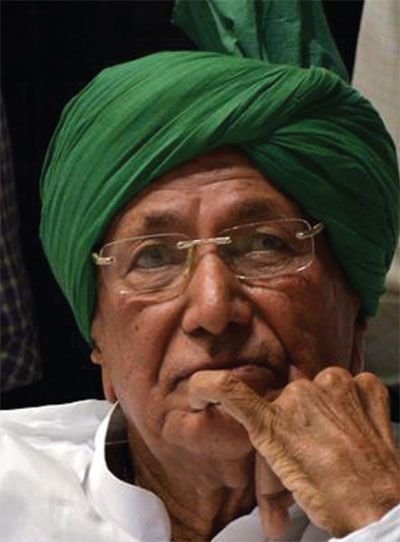
    NEW DELHI (TIP): Following conviction in the teachers recruitment scam, former Haryana chief minister Om Prakash Chautala is facing confiscation of his properties. Enforcement Directorate on Thursday attached a residential property belonging to Chautala under the criminal provisions of money laundering laws. This is the first attachment order by the agency against the five-time CM even as it prepares to attach assets acquired by him “illegally and beyond his known sources of income” with an estimated value of over Rs 6 crore.

    The first attachment order was issued by the agency against him for a flat in Gurgaon on Delhi’s outskirts and, according to ED, the house is in the “exclusive” name of Chautala with a total value of Rs 46,96,000. The flat is located in Sector 28 of Tech-city under Haryana Jan Pratinidhi Cooperative Group Housing Society scheme. The agency is probing the politician and his associates under the Prevention of Money Laundering Act (PMLA) after it registered a case based on a CBI chargesheet.

    The ED’s attachment order can be challenged at the PMLA Adjudicating Authority in Delhi within 180 days of issue. Chief of Indian National Lok Dal, 78-year-old Chautala, along with 54 others, is on interim bail for medical treatment after he was sentenced by a Delhi court in the 2000 Junior Basic Trained (JBT) Teachers recruitment scam. On January 22, the trial court had convicted and sentenced Chautala and nine others, including his son Ajay Chautala, to 10 years’ jail term for illegally recruiting 3,206 junior teachers.

    Among other convicts, 44 have been sentenced to four years in jail and one was sentenced to a fiveyear jail term. All of them were held guilty of cheating, forgery, using fake documents as genuine, conspiracy under the IPC and for abusing their official position under the Prevention of Corruption Act.

  • INDIA, JAPAN TO SPEED UP EFFORTS ON CIVIL N-DEAL E

    INDIA, JAPAN TO SPEED UP EFFORTS ON CIVIL N-DEAL E

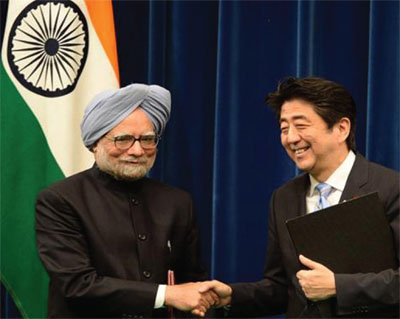
    TOKYO (TIP): Prime Minister Manmohan Singh and his Japanese counterpart Shinzo Abe decided to speed up talks on a civil nuclear deal to allow Japan to export nuclear reactors to India and to bolster maritime security cooperation at a time when China’s postures in the seas of the regional have caused concerns.

    A joint statement issued at the end of the exhaustive talks between Manmohan Singh and Abe said the two Prime Ministers reaffirmed the importance of civil nuclear cooperation between the two countries, while recognising that nuclear safety is a priority for both governments. “In this context, they directed their officials to accelerate the negotiations of an Agreement for Cooperation in the Peaceful Uses of Nuclear Energy towards an early conclusion,” it said.

    India and Japan welcomed the expanding bilateral defence ties and agreed to further cooperate on maritime issues to ensure freedom of navigation and unimpeded commerce. Terming Japan as a partner, Manmohan said at a time of global uncertainties, change and challenges, India and Japan are “natural and indispensable partners for advancing prosperity in our two countries and for a peaceful, stable, cooperative and prosperous future for the Asia-Pacific and Indian Ocean regions”.

    The remarks came amidst flexing of muscles by China in the South China Sea and East China Sea. Both sides expressed their commitment to continue to work to prepare the ground for India to become a full member in the international export control regimes. These included the Nuclear Suppliers Group, the Missile Technology Control Regime, the Australia Group and the Wassenaar Agreement.

    Abe stressed on the importance of bringing into force the CTBT at an early date. Japan wants India to sign both the NPT and the CTBT, which New Delhi terms as discriminatory. On his part, Manmohan reiterated India’s commitment to its unilateral and voluntary moratorium on nuclear explosive testing. The two sides signed the Exchange of Notes for yen loan totalling $ 424 billion. This includes $ 71 billion for the Mumbai Metro Line-lll project as well as the yen loan of the fiscal year 2012 for $ 353.106 billion for eight projects.

    The two sides vowed to further strengthen their strategic ties and deepen economic cooperation. Manmohan said India attaches particular significance to intensifying political dialogue and strategic consultations. He said cooperation in high technology, space, energy security and rare earth minerals will also add rich content to the strategic relationship between the two countries.

    The Prime Minister said there was a meeting of minds in his discussions on global and regional issues. The two leaders welcomed the expanding defence relations between the two countries and decided to conduct naval exercises on a regular basis with increased frequency.

  • COOPERATION WITH JAPAN SPELLS TROUBLE FOR INDIA: CHINESE DAILY

    COOPERATION WITH JAPAN SPELLS TROUBLE FOR INDIA: CHINESE DAILY

    BEIJING (TIP): Strategic cooperation with Japan “can only bring trouble to India”, warned a state-run Chinese daily following Indian Prime Minister Manmohan Singh’s three-day visit to Tokyo. There may be some tacit understanding in strategic cooperation between India and Japan, “given the long-lasting Diaoyu Islands dispute and China-India border confrontation”, said an article in the Global Times on May 30.

    The article “India gets close to Japan at its own peril” said that “India should keep sober over (Japanese Prime Minister Shinzo) Abe administration’s vicious intentions of denying the World Anti- Fascism War as a just war”. “East Asian countries that were the victims of the World War II won’t indulge Japan. Overheated strategic cooperation with the Abe administration can only bring trouble to India and threaten its relationships with the relevant East Asian countries,” it warned.

    Indian Prime Minister Manmohan Singh concluded his visit to Japan Wednesday. The visit came after Chinese Premier Li Keqiang’s recent trip to India. “India’s efforts to develop its relationship with Japan are part of its `Look East’ policy,which has undergone great changes in recent years. In addition to Southeast Asia, the targeted region of the policy has expanded to East Asia and Northeast Asia.

    “It has emphasized more cooperation in the fields of strategy and security in addition to economy,” said the article by Liu Zongyi, a visiting fellow at the Center for Strategic and International Studies and a research fellow at Shanghai Institutes for International Studies. It noted that India has strengthened economic, strategic and security cooperation with countries like Japan, South Korea and Vietnam.

    “It has interfered in the South China Sea disputes in a highprofile manner against the backdrop of the US pivot to Asia…” Pointing out that India and Japan share common ground in developing relations, it said: “Both long for the status of permanent member state of the UN Security Council. Japan and India are theoretically complementary in their economies since India is an emerging economy with a huge potential market but constrained by inadequate capital and backward technology.

    Both countries have territorial disputes with China and are unhappy with China’s rise. It went on to say that India and Japan hold different attitudes to the priorities of the bilateral relationship. “For Japan, strategic and security cooperation are more important than economic cooperation…Abe uses infrastructure construction and the buildup of the Delhi- Mumbai industrial corridor as bait to sell his promotion of `the arc of freedom and prosperity’ and the ‘democratic security diamond’.

    “The Japanese government also encourages enterprises to invest in India with the purpose of reducing Indian dependence on China. However, so far, the results of economic cooperation between India and Japan are not satisfactory,” it added. From New Delhi’s perspective, cooperating with Japan in strategy and security is a long-term goal. In the short term, India’s main task is to guarantee a peaceful environment to boost the domestic economy, it said. “Indians well understand that the current India is incomparable to China in strength.

    The economic ties between China and India are much closer than those between India and Japan. The trade volume between China and India is about four times that of India and Japan.” The article stressed that Indian policymakers are aware of the benefits that being a swing state on the global stage can bring to India.

    “…the core of India’s diplomacy is maintaining a relative balance among big powers,while the China factor is the best excuse for it to win economic and technological support and assistance from the West. As for the India-Japan relationship, currently, India wants more economic, technological and capital help from Japan.”

  • School sex scandal rocks China, several teachers held

    School sex scandal rocks China, several teachers held

    BEIJING (TIP): A major sex scandal has rocked schools in China as a number of teachers have been held for molesting girl students in recent days, prompting the apex court to strengthen crackdown on crimes against juveniles. Yang Shifu, a 55-year-old teacher from Tongbo County in Henan province, was arrested today for molesting several of his students since last Spring, local officials said.

    Yang was detained on May 23 after police received tips and conducted inquiries among the victims and their family members. The students also received medical check ups, state-run Xinhua news agency reported. Internet reports had previously claimed that the parents had collectively taken their children to a local hospital for medical examination, which revealed that the hymens of nine girls had been broken.

    The headmaster of the school has been suspended. Police in the southern city of Shenzhen detained a primary school teacher on molestation charges. The 42-year-old suspect, surnamed Wu, was a secondgrade teacher at the Hongji Primary School. Wu pleaded guilty to molesting female pupils since last August. Police have detained a primary school teacher for allegedly molesting 12 female students, officials in Jiahe County, central China’s Hunan Province told Xinhua yesterday.

    The 12 girls, all second graders at the Puman Central Primary School, have told police that their math teacher, Zeng Xingming, sexually assaulted them. An official, surnamed Yin, said Zeng had confessed to molesting five girls, and the investigation would continue. On May 14, a primary school headmaster and a government employee in Wanning City, Hainan Province, were detained by police for sexually assaulting six girl students.

    Sources with the Supreme People’s Court said today that courts across the country would strengthen the crackdown on crimes against juveniles, show minimal tolerance toward such offenders and offer the greatest level of protection to the children, the Xinhua report said.

  • Chinese baby rescued from sewer released to family

    Chinese baby rescued from sewer released to family

    BEIJING (TIP): A Chinese newborn who was rescued from a sewer pipe has been released to his family and his mother is unlikely to face criminal charges because authorities concluded he fell into the toilet after his birth accidentally, local officials and media reports said. The baby was released from a hospital to his maternal grandparents late Wednesday, while his 22-year-old mother remains under medical care, the state-run Jinhua Evening News reported, in an account confirmed Thursday by a local police official who declined to give his name.

    The baby’s stunning, two-hour rescue from a pipe underneath a squat toilet in Zhejiang province’s Pujiang county captivated the world, prompting both horror and an outpouring of charity on his behalf. The mother initially raised the alarm about the baby when he got stuck Saturday in a pipe just below a squat toilet in a public restroom of a residential building, but she had cleaned the room of signs of a fresh birth and did not immediately come forward as the mother, officials have been quoted as saying.

    She admitted she was the mother two days later when confronted by police who found baby toys and bloodstained tissues in her apartment, the reports said. Police later concluded that the incident was an accident and that the woman did not initially come forward because she was frightened, but that she later started telling the truth, the Jinhua Evening News and a Pujiang county propaganda official said.

    The police initially treated the case as a possible attempted homicide, but now are unlikely to file criminal charges, the newspaper and the official said. A man tracked down by police who is believed to be the baby’s father has requested a paternity test and — if the baby is his — is willing to help support the child, said the Pujiang official, who declined to give his name, as is customary among Chinese officials.

    Officials have not publicly released the names of anyone connected with the case, which has raised discussion over China’s lack of proper education about sex, birthing and contraception in many schools. Unwanted pregnancies have been on the rise because of an increasingly lax attitude toward premarital sex. Duan Wanjin, a criminal lawyer based in Xi’an, said local police erred in not prosecuting the mother. He said she could be charged with attempted homicide for not immediately calling for help after the newborn became stuck.

    “The local police may have considered the woman was still young and did not have any malice, and have come to the decision from the human perspective, but it sends a terrible signal to the public,” Duan said. Sociologist Li Yinhe said the only mistake by the woman was not to immediately admit the baby was hers. “I don’t think that’s a big deal. After all, the child is safe, and it has a happy ending,” Li said.

    “The Chinese people still lean heavily on the human considerations. Let it be bygones if there’s no serious crime.” The woman told police she got pregnant after a brief affair with the man, hid her pregnancy from family and neighbors, and secretly delivered the child Saturday in a rental building’s restroom. She said the infant accidentally slipped into the squat toilet and — after cleaning up the scene — raised the alarm. Firefighters who arrived at the rental building found the infant trapped in an L-shaped section of sewage pipe just below the squat toilet in one of the building’s shared restrooms.

    In video footage, officials were shown removing the pipe from a ceiling that apparently was just below the restroom and then, at the hospital, using pliers and saws to gently pull apart the pipe, which was about 10 centimeters (3 inches) in diameter. The baby, who weighed 2.8 kilograms (6 pounds, 3 ounces), had a low heart rate and some minor abrasions on his head and limbs, but was mostly uninjured, according to local reports. The placenta was still attached.

  • Indians in New Zealand rape case not guilty, to be deported

    Indians in New Zealand rape case not guilty, to be deported

    WELLINGTON (TIP): Three Indians accused of raping a woman in Hamilton two years ago have been found not guilty by a jury in New Zealand on may 30 and will be deported to India. A jury of seven women and five men in the high court of Hamilton found Harvinder Singh, 22, Kamaljeet Singh, 27, and Sumit Vermani, 26 not guilty in the rape case that allegedly took place in a house on a road leading to Lake Rotorua on the intervening night of April 16- 17, 2011, media reports said.

    The judge ruled that the men had treated the woman as an object of sexual gratification while one man admitted he had consensual sex with her. Vermani’s lawyer, Mike Robb, was quoted by stuff.co.nz as saying that at the instruction of the New Zealand immigration department, the trio would be deported to India. A fourth accused, Amir Chand, 25, was acquitted without conviction May 24 and has been deported to India.

    The woman, whose nationality has not been revealed, had claimed that the four men raped her during the Hamilton 400 weekend, the V8 supercar racing event that took place on the streets of that New Zealand city. While Amir Chand, Harvinder and Sumit are from Hamilton, Kamaljeet is from Kaitkati town in New Zealand’s North Island. Prosecutor Philip Crayton had said the woman, who was aged 19 at the time of the incident, was drinking with a friend near the Waikato Stadium near Hamilton where the ZZ Top group was performing.

    The two then went to a Pak N Save shop on Mill Street where they met a 16-year-old girl from the US. The duo then asked the 16- year-old to accompany them to the city and the three started walking across the Pak N Save parking space. It was then that a car driven by Chand with Vermani in the passenger seat pulled up beside the trio. The men then asked the trio to get in the car. The alleged victim said that she had initially declined to get in but since their 16-year-old friend knew the men, they eventually got in.

    However, she said she got worried when the car, instead of heading towards the city, started taking the road to Lake Rotoroa. She said she and her friends were taken to a house on Lake Road where she alleged she was raped first by Chand and then by the other three men. After Thursday’s ruling, Harvinder, Kamaljeet and Vermani were handcuffed and taken to the Hamilton Central Police Station.

    As the men had been charged with rape and subsequently had to face a trial, they could not apply for residency and hence will be deported to India. According to the reports, the jury had retired Thursday morning after being told by Justice Venning that the definition of consent was crucial in this particular case and took four hours before reaching their verdicts.

  • SYRIA’S ASSAD ‘CONFIDENT OF VICTORY IN CIVIL WAR’

    SYRIA’S ASSAD ‘CONFIDENT OF VICTORY IN CIVIL WAR’

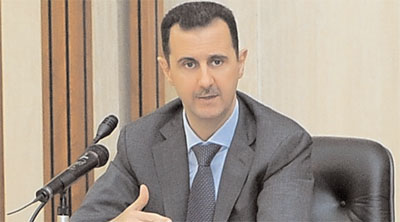
    BEIRUT (TIP): Syrian President Bashar Assad said in an interview broadcast on May 30 that he is “confident in victory” in his country’s civil war, and he warned that Damascus would retaliate for any future Israeli airstrike on his territory. Assad also told the Lebanese TV station Al-Manar that Russia has fulfilled some of its weapons contracts recently, but he was vague on whether this included advanced S- 300 air defense systems.

    The comments were in line with a forceful and confident message the regime has been sending in recent days, even as the international community attempts to launch a peace conference in Geneva, possibly next month. The strong tone coincided with recent military victories in battles with armed rebels trying to topple him. The interview was broadcast as Syria’s main political opposition group appeared to fall into growing disarray. The international community had hoped the two sides would start talks on a political transition.

    However, the opposition group, the Syrian National Coalition, said earlier Thursday that it would not attend a conference, linking the decision to a regime offensive on the western Syrian town of Qusair and claiming that hundreds of wounded people were trapped there. Assad, who appeared animated and gestured frequently in the TV interview, said he has been confident from the start of the conflict more than two years ago that he would be able to defeat his opponents.

    “Regarding my confidence about victory, had we not had this confidence, we wouldn’t have been able to fight in this battle for two years, facing an international attack,” he said. Assad portrayed the battle to unseat him as a “world war against Syria and the resistance” – a reference to the Lebanese Hezbollah, a close ally. “We are confident and sure about victory, and I confirm that Syria will stay as it was,” he said, “but even more than before, in supporting resistance fighters in all the Arab world.”

    Assad has said he would stay in power at least until elections scheduled in 2014, but he went further in the interview, saying he “will not hesitate to run again” if the Syrian people want him to do so. Taking a tough line, he also warned that Syria would strike back hard against any future Israeli airstrike. Earlier this month, Israel had struck near Damascus, targeting suspected shipments of advanced weapons purportedly intended for Hezbollah.

    Syria did not respond at the time. Assad said he has informed other countries that Syria would respond next time. “If we are going to retaliate against Israel, this retaliation should be a strategic response,” he said. Russia’s S-300 missiles would significantly boost Syria’s air defenses and are seen as a game-changer, but Assad was unclear whether Syria has received a first shipment. Earlier Thursday, Al-Manar had sent text messages to reporters with what it said was an excerpt from the interview.

    The station quoted Assad as saying Syria had received a first shipment of such missiles. The Associated Press called Al- Manar after receiving the text message, and an official at the station said the message had been sent based on Assad’s comments. In the interview, Assad was asked about the S-300s, but his answer was general. He said Russia’s weapons shipments are not linked to the Syrian conflict.

    “We have been negotiating with them about different types of weapons for years, and Russia is committed to Syria to implement these contracts,” he said. “All we have agreed on with Russia will be implemented and some of it has been implemented recently, and we and the Russians continue to implement these contracts,” he said. Earlier this week, defense minister Moshe Yaalon said Israel considered the S- 300s in Syrian hands a threat and signaled it was prepared to use force to stop delivery. Israel had no comment on Thursday.

    The S-300s have a range of up to 200 kilometers (125 miles) and can track and strike multiple targets at once. Syria already possesses Russian-made air defenses. The US and Israel had urged Russia to cancel the sale, but Russia rejected the appeals. US secretary of state John Kerry told Russian Foreign Minister Sergey Lavrov this week that the US is concerned about Moscow’s continued financial and military support for the Assad regime, said State Department spokeswoman Jen Psaki. Meanwhile, Assad dismissed Syria’s political opposition as foreign-directed exiles who don’t represent the people of Syria.

  • SYDNEY TO HOST REGIONAL PRAVASI BHARATIYA DIVAS

    SYDNEY TO HOST REGIONAL PRAVASI BHARATIYA DIVAS

    NEW DELHI/MELBOURNE (TIP): The seventh regional Pravasi Bhartiya Divas will be held in Sydney from November 10 to 12 with an aim to woo overseas investors and deepen two-way engagement with the Indians living there. A simultaneous announcement in this regard was made by Minister of Overseas Indian Affairs Vayalar Ravi here and Barry O’Farrel, Premier of New South Wales through video conferencing from Australia.

    “We organise regional PBDs in different parts of the world, especially where Indians are living. Australia and Pacific region is one such area where large Indian contingent reside,” said Ravi. Speaking from Australia, O’Farrel thanked the Indian government for choosing Sydney for the event.

    “I am delighted to be jointly announcing with minister Ravi that the strong bond between NSW, India and overseas Indians will be further strengthened during the 2013 Regional Pravasi Bharatiya Divas in Sydney…I am confident that the event will be a major success,” O’Farrell said. “The aim of the Regional Pravasi Bharatiya Divas – or Overseas Indian Conference – is to connect India with its vast Indian diaspora and bringing their knowledge, expertise and skills together. NSW is honoured to be a part of this fantastic event,” he added.

    He also hailed Sydney as the perfect location for the conference, adding that the event will generate an estimated USD 2.8 million of economic activity for NSW. Officials in Ministry of Overseas Indian Affairs said the main aim of the event is to showcase India as an attractive investment destination and to deepen the engagement with the Indian community living in Australia. Australian High Commissioner Patrick Suckling, who was present during the announcement, highlighted the growing relationship between the two countries.

    “We have a very strong economic relationship with India. We have a nice, balanced and strategic relationship. We have 4,50,000 Indian citizen living in Australia and Indian people are the fastest growing migrant group in Australia. “Currently Punjabi is the fastest growing language in Australia, Hinduism is the fastest growing religion in Australia and the Prime Minister is determined that India becomes one of our top five partners,” he said. The 2013 Regional Pravasi Bharatiya Divas, the seventh such conference to be held outside India, is expected to attract about 1,000 delegates from the Asia-Pacific.

  • Obama terms Srikanth Srinivasan as a ‘Favorite’ person

    Obama terms Srikanth Srinivasan as a ‘Favorite’ person

    WASHINGTON (TIP): US President Barack Obama has described Indian-origin Srikanth Srinivasan, who created history by becoming a top federal judge, as one of his “favourite” persons. “One of my favourite people right now [is], Sri Srinivasan, who has just been confirmed,” Obama said at a White House reception held to celebrate the month of Asian American and Pacific Islanders (AAPI).

    “I was proud to nominate Sri, and he was just confirmed unanimously to become the first South Asian American federal appeals court judge,” Obama said addressing the gathering at the White House last evening. “I was telling his kids, who are here today, if he starts getting a big head, walking around the house with a robe asking them to call him ‘Your Honor’ then they should talk to me,” Obama said amidst laughter.

    Media reports suggest Obama might consider nominating Srinivasan, one of his favourite legal luminaries, for the Supreme Court judge in case of the next vacancy on the bench. Last week, Srinivasan was confirmed by the US Senate (97-0) votes as a judge on the DC circuit court of appeals, which is considered as the top court of the country after the Supreme Court. He is the first Indian-American to achieve the fete. Addressing the gathering, Obama fondly remembered delicacies like ‘keema’ and ‘daal’ cooked by his Indian and Pakistani classmates during college days.