Month: May 2013

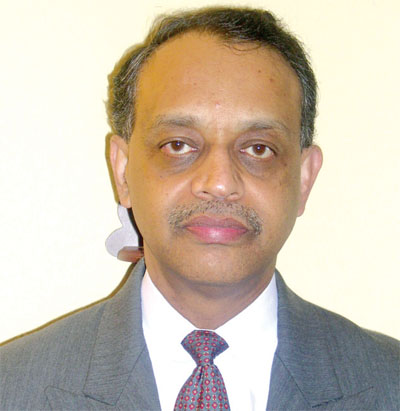
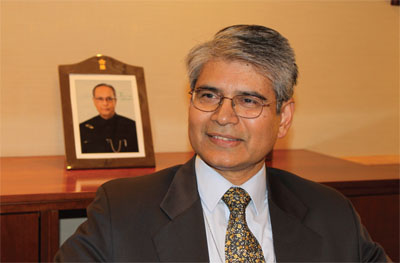
  • India’s Ability To Articulate Has Always Been Very High ASOKE K. MUKERJI

    India’s Ability To Articulate Has Always Been Very High ASOKE K. MUKERJI

    Q. Can you tell us a few high and low points of your career in Foreign Service so far?

    I joined the Indian Foreign Service 35 years ago. We were young then. We didn’t realize how the would changed right after the Cold War. Whatever we have achieved after that was a collective effort. The Indian Foreign Service was a small team during those years. For me personally dealing with a part of the consequences of the Cold War was when I was posted in Russia. This was right after Russia broke into 15 independent countries. Five of those countries were directly in my charge. I was the only English-speaking diplomat in Central Asia. I had to establish the foundations of political and economic relations with each of these countries. This meant we had to pave way to negotiating treaties from the scratch. This was rather unusual for us because India inherited most of the treaties during 1947. But doing that part of my job was one of the most satisfying phases of my career. It was a real learning experience. Another moment of satisfaction was when I got the opportunity to work with the World Trade Organization (WTO). This was a body that not only negotiated our trade relations legally but also protected the economic and commercial interest of each participating region. WTO had a body within which was called the Dispute Settlement body. I represented India in 11 disputes that were heard by the court. This was an equally satisfying experience. We won some cases, we did lose my cases but that is how it goes in the court of law. When I was working in UAE as the Consul General, we pioneered the set up of a mechanism, which involved the community, the public sector and the government. This was called the Indian Community Welfare. I chaired the committee. We were able to reach out to 1 million Indian passport holders who live and work in those parts of UAE. Today, our government has taken that model and established it many missions across the world. Also in 2005, I was sent to Kazakhstan as Ambassador. Our main purpose was to get oil for ONGC. Even recently the President of Kazakhstan reiterated that to be able to draw a negotiation without any hassles of tenders or disputes is surely an achievement. This was possible only due to a transparent government-to-government dialogue. Each assignment has rewards. Of course, there are shortcomings too. But it is the reward that stays with you and you remember when you look back.

    Q. Can you also tell us a bit about the challenges that you faced during your service?

    Well, there have been many weak points but the one sole challenge for any diplomat is the way the world is changing. It is not only changing to something entirely new but it is also fast paced. So you need to keep up with it. You can never say that I know everything. You have to keep educating yourself. Yet, this kind of education does not come through books and periodicals. You get educated these days by meeting people, participating in events and attending informative seminars. I do all of them and I am very fond of learning in this manner. One of the challenges for us in the Foreign Service is how the world is adept at technology. The technological advancement is ever changing and cannot be contained. Everything is pursued through technology, be it communicating with your elected representatives, banking on mobiles or communication in general. For any Foreign Service or a diplomat technological advancement plays an important role. This can also affect diplomacy. Before coming here, I was involved in India’s cyber dialogue with many other countries. Each of these dialogues was about education as it is a completely new sector.

    Q. Do you see such similar challenges in your time as the Permanent Representative of India to the UN?

    Certainly. We have always felt that the changes that take place in the world must be reflected in the United Nations. Whether it was disarmament in 1950s or terrorism right now, we need to as a mission in the UN participate in a way that the international community responds to these challenges. All of us know about our views on the Security Council reforms. We are hopeful that the process that has been initiated and has faced 9 rounds of discussion, it will lead to reforms in Security Council. It is very difficult to implement reforms, if you do not have the tools to implement them. Tools are as important as the objective that is put forward. Implementation requires carrying the consensus of all member states towards a common objective. So if you have a common consensus among all participating countries, the chances are that implementing the objective will be easy. If you have objectives that are set outside the international community and are forced to be carried through UN, then chances of implementing these objectives are lower.

    Q. Where are we as far as Security Council reforms are concerned?

    I think we are significantly further down the road to reforming the SC. Initially even the idea of reforming the SC was not accepted. We have moved from that to a process of discussing groups. Within the groups and participating countries that have discussed this matter, there is now a larger consensus about reforms in SC. The next stage is how we put all these reforms into a document. Then we need to discuss this document and then how to execute the suggested reforms. We are currently at that stage. It has taken us 9 rounds of discussions to reach here. Of course, there are still several groups that have not consented to reforms maybe because they have not analyzed the benefits of these reforms in their own regions.

    Q. Can you hypothesize a time frame within which these reforms could be executed?

    Apart from the political will for reforms, we have to also keep in mind of the procedures of the UN through which the reforms are implemented. We have to focus on the reforms of the UN procedures as well. These were created at the end of World War Two. They have evolved in their own way. The time frame cannot be set in only one process.

    Q. Can you shed some light on how diplomacy can work in today’s age of spiraling conflicts around the world?

    Diplomacy is one side of the coin. The other side has traditionally been war. In the last 20 to 30 years there has not been wars but instabilities. Instability may not have been caused by states, but even non-state influencers like viruses, pandemics, etc. The way we achieve diplomacy cannot be conventional methods of stopping war anymore, but also in understanding that our issues of instabilities are not conventional and thereby our methods can’t be the same either. Today we are dealing with issues like poverty, terrorism, gender, cyber attacks and such issues. These are newer issues for diplomacy. That is why we must take a wider approach on how to do our job. Our biggest strength in Indian Foreign Service today is that we have large number of technically proficient members. This is certainly an advantage that we did not have during our time of Foreign Service. So we need to adopt newer means to combat today’s instabilities.

    Q. Diplomacy is straightjacket post. How would you like to win more admiration for India? How would you be able to take other nations along and meet the agenda that India has manifested and make it successful?

    I start from a very strong foundation. When we were elected to Security Council elections we had 187 votes out of 190. That itself is a manifestation of the regard in which India is held in the International community. How do we carry forward this momentum? I think the answer is in conveying the message and in emphasizing in the substance of your message. If we show that the challenges to the international community are challenges to everybody and that there is no one who is immune from it, then you make sure that there are more friends than foes. India’s ability to articulate has always been very high. We are a knowledge-based society. If we maintain this tradition, I don’t see why we cannot carry everyone along with us.

  • Aam Aadmi Party Joins Sikh Protest Against Sajjan’s Acquittal

    Aam Aadmi Party Joins Sikh Protest Against Sajjan’s Acquittal

    NEW DELHI (TIP): In support of the Sikh community’s protests over the acquittal of Congress leader Sajjan Kumar in a 1984 anti-Sikh riots case, Arvind Kejriwal’s Aam Aadmi Party (AAP) on May 3 joined the hunger strike for a day at Jantar Mantar in central Delhi. “We are joining hands with our Sikh brothers to protest against the acquittal of Sajjan Kumar. We will join the protest of the family of Nirpreet Kaur, who began her indefinite hunger strike from May 3,” Manish Sisodia, senior AAP member said. In solidarity with Kaur, AAP members Arvind Kejriwal, Manish Sidoda, Gopal Rai, Sanjay Singh and Kumar Vishwas will also sit on a day’s fast, and later continue to support her indefinite hunger strike. Various Sikh groups have been on protest since Tuesday, ever since the verdict was pronounced. On Thursday, they staged a protest at the residence of Congress president Sonia Gandhi. Over 115 protesters were detained and later let off.

  • Parliament Again Disrupted Over Coal Blocks Allocation

    Parliament Again Disrupted Over Coal Blocks Allocation

    NEW DELHI (TIP): Both houses of parliament were on May 3 adjourned till noon as the BJP persisted with its demand for Prime Minister Manmohan Singh’s resignation over irregularities in the allocation of coal blocks. The Lok Sabha was adjourned minutes after the day’s proceedings began at 11am as Bharatiya Janata Party (BJP) members advanced to the speaker’s podium demanding the prime minister’s resignation over the issue. Speaker Meira Kumar’s efforts to calm BJP members proved futile and she adjourned the house till 12 noon. The scene in the Rajya Sabha was similar with BJP members shouting slogans against the prime minister. Amid the pandemonium, chairman Hamid Ansari adjourned the house till noon. Both houses have seen repeated disruptions by opposition parties over the allocation of coal blocks and 2G spectrum. The BJP has said it will not let parliament function till Manmohan Singh resigns over the alleged involvement of his office in the irregularities in the allocation of coal blocks and 2G spectrum.

  • Indian Doctor From Mumbai’s Tata Memorial Hospital Awarded For Tobacco Control Efforts

    Indian Doctor From Mumbai’s Tata Memorial Hospital Awarded For Tobacco Control Efforts

    WASHINGTON (TIP): An Indian doctor of Mumbai’s Tata Memorial Hospital has been awarded with the prestigious Judy Wilkenfeld Award for International Tobacco Control Excellence for his innovative efforts in reducing tobacco consumption in India. Dr Pankaj Chaturvedi, cancer surgeon, received the award by the ‘Campaign for Tobacco Free Kids’ yesterday at a function here. The smokeless tobacco industry has unleashed an epidemic of such cancers in India, with alarming increases among our youth. In fact, India has earned the dubious distinction of being the mouth cancer capital of the world,” Chaturvedi said in his acceptance speech through video. He added that tobacco kills at least one million Indians each year.

    This is equivalent to ten packed jumbo jets crashing every day or ten tsunamis hitting our shores every year. Chaturvedi also heads the advocacy group Voice of Tobacco Victims, which is leading India’s growing tobacco control movement that has resulted in ban of smokeless tobacco products in nearly all Indian states and increased taxes on tobacco throughout the country. “We have worked through our courts and state governments to ban sale of gutka, a cheap and popular form of smokeless tobacco that is a primary cause of the oral cancer epidemic. 23 of India’s 28 states and five of seven union territories have now banned the sale of gutka,” Chaturvedi said. He added that tax on tobacco products in 20 Indian states covering a total population of over 700 million people have been increased. “If these tax increases result in comparable price increases, they can save as many as 5 million lives. These changes were unimaginable just a few short years ago,” he said.

    The Wilkenfeld Award was established in honour of Judy Wilkenfeld, the founder of Tobacco-Free Kids’ international program, who passed away in May 2007. The award recognises international tobacco control advocates who contribute significantly to reducing tobacco use and inspire others to do the same in the spirit exemplified by Wilkenfeld. The Campaign for Tobacco-Free Kids is a leading force in the fight to reduce tobacco use and its deadly toll in the United States and around the world.

  • First Woman Added To Fbis Most Wanted Terrorists List

    First Woman Added To Fbis Most Wanted Terrorists List

    WASHINGTON (TIP): The FBI has put a woman on its most wanted terrorist list for the first time, announcing a reward of USD 1 million for information leading to her arrest. Joanne Chesimard, a member of the extremist group Black Liberation Army, was convicted of killing a New Jersey state trooper 40 years ago during a routine traffic stop. She has been on the run since 1979 when she escaped from prison in Clinton, New Jersey, where she was serving a life term for murder. The state has added its own USD 1 million on top of the million dollars already offered by the FBI for her capture. The FBI said yesterday that on May 2, 1973, Chesimard and two accomplices were stopped for a motor vehicle violation on the New Jersey Turnpike by two troopers with the state police. At the time, Chesimard was wanted for her involvement in several felonies, including bank robbery. Chesimard and her accomplices opened fire on the troopers. “One trooper was wounded and the other was shot and killed execution-style at point-blank range.

    Chesimard fled the scene, but was subsequently apprehended. One of her accomplices was killed in the shoot-out and the other was also apprehended and remains in jail,” the FBI said. Four years later, Chesimard was found guilty of first degree murder, assault and battery of a police officer, assault with a dangerous weapon, assault with intent to kill, illegal possession of a weapon, and armed robbery. She was sentenced to life in prison. On November 2, 1979, Chesimard escaped from prison and lived underground before being located to Cuba in 1984. Among others listed in this most wanted terrorists list include the Tehrik-e-Taliban Pakistan (TTP) leader Hakimullah Mehsud.

  • Musharraf Arrested Over Killing Of Baloch Leader

    Musharraf Arrested Over Killing Of Baloch Leader

    ISLAMABAD (TIP): Pakistani police on May 2 arrested and interrogated beleaguered former president Pervez Musharraf over the killing of Baloch leader Akbar Bugti in a 2006 military operation, one of three high-profile cases that have dogged him since he returned to the country from self-exile. A team of Balochistan police arrested the former military ruler and grilled him for nearly four hours at his farmhouse on the outskirts of Islamabad, which was declared a “sub-jail” by authorities. The five-member police team confirmed to reporters outside the sprawling farmhouse that Musharraf had been arrested over the killing of Bugti. Musharraf, 69, was the army chief when the operation against Bugti was ordered. Earlier in the day, Judge Chaudhry Habib-ur- Rehman of an anti-terrorism court in Rawalpindi accepted a request from Balochistan Police to include Musharraf in the probe into Bugti’s death.

    Shortly after the judge issued the order, the police team went to Musharraf’s farmhouse to question him. Musharraf is facing charges over the death of Bugti. A court in Balochistan had issued a warrant for his arrest in 2011. Since his return to Pakistan in March, Musharraf has also been arrested for detaining more than 60 judges during the 2007 emergency and over the assassination of former premier Benazir Bhutto. In a related development, Aftab Ahmed Khan Sherpao, who was Interior Minister in Musharraf’s regime, appeared in an anti-terrorism court in Quetta for the hearing of a case over Bugti’s killing.

  • Prosecutor In Bhutto Killing And Mumbai Attacks Shot Dead In Pakistan

    Prosecutor In Bhutto Killing And Mumbai Attacks Shot Dead In Pakistan

    ISLAMABAD (TIP): Gunmen killed Chaudhry Zulfikar Ali, a court prosecutor working on the murder case of the former prime minister Benazir Bhutto early Friday, May 3, casting into turmoil a politically charged case that has also embroiled Pakistan’s former military leader, Pervez Musharraf. Assailants fatally shot Chaudhry Zulfikar Ali as he was leaving his home in a suburb of the capital, Islamabad, for a court hearing in which Mr. Musharraf, who is currently under house arrest, was due to seek bail. Initial reports said that gunmen traveling by motorbike and car sprayed Mr. Ali’s car with bullets. His bodyguard was wounded and a woman passer-by was killed when his car veered out of control, the police said. One reporter at the scene said that one of the assailants had been wounded by Mr. Ali’s bodyguard but managed to escape in a vehicle. A doctor at the hospital where his body was brought said he had been shot 13 times. Mr. Ali represented the Federal Investigation Agency, which has implicated Mr.

    Musharraf in the case of Ms. Bhutto, who was assassinated in December 2007, just before the last election. Mr. Ali was also the prosecutor in the trial of seven people from the militant group Lashkar-e- Taiba who have been charged with orchestrating the Mumbai attacks of November 2008. After a court hearing on April 30, Mr. Ali told reporters there was “solid evidence” that connected Mr. Musharraf with Ms. Bhutto’s death. Investigators had compiled evidence that “directly connect the accused” with the killing, he said. Mr. Ali was also involved in other prominent cases including the militant assault on the military’s general headquarters in Rawalpindi in October 2009, and the trial of militants accused of orchestrating the Mumbai attacks. The killing comes at a politically sensitive time, with Pakistanis due to go to the polls for a general election on May 11. Campaigning has been marred by widespread Taliban violence against candidates from secular parties. Mr. Musharraf, who returned from exile in order to contest the election last month, faces charges in several cases related to his time in power, including the murder of Ms. Bhutto, the killing of a Baloch nationalist leader, and the firing of senior judges.

    Mr. Musharraf has been disqualified from contesting the election and earlier this week a court banned him from politics for life. The retired general also faces possible treason charges, although no decision will be taken until a new government is formed after the May 11 election. A lawyer for Mr. Musharraf condemned the killing shortly afterward and said that killers should be brought to justice. In the court hearing in nearby Rawalpindi, lawyers for Mr. Musharraf argued that he should be exempted from appearing in person in the case, Pakistani television stations reported. The hearing was adjourned until May 14.

  • Five Of Indian Origin Family Die In Malaysia Car Crash

    Five Of Indian Origin Family Die In Malaysia Car Crash

    SINGAPORE (TIP): Five members of an Indian origin family were killed and one was seriously injured when the car they were travelling in rammed into the iron pillar of a signpost on the North-South Expressway in the Malaysian state of Johor. Those killed have been identified as P. Pavai, 65, her daughters, R Selvarani, 46, and R Greetha, 42, and two grandsons, G Vikneswaran, 19, and A Akash, 7, media reported on May 2. They were on their way from Skudai to Kulaijaya in Johor state Wednesday when the accident happened. Fire and rescue department personnel took more than 30 minutes to extricate the bodies from the accident site at Km 17.9 of the highway. The injured, G Vinitha, 16, has been admitted to the intensive care unit of the Johor Specialist Hospital. Vikneswaran was reportedly driving the car when he lost control. The car first hit the left hand side of the divider and then rammed into the pillar. Seven-year-old Akash was flung out of the car.

  • Going Under The Hammer: A Drop Of Bapu’s Blood

    Going Under The Hammer: A Drop Of Bapu’s Blood

    LONDON: A drop of Mahatma Gandhi’s blood is now up for sale. The largest collection of memorabilia relating to Gandhi — including his personal prayer beads from which he was inseparable, will, power of attorney to his son and a personal copy of the Ramayana — will soon go under the hammer. London-based auctioneers Mullocks will put up 50 objects belonging to Gandhi for auction on May 21. The list includes “a fragment of Gandhi’s blood — on a sliver of a microscope slide”. Donated by Gandhi, when he was in convalescence after an operation for appendicitis, to Sumati Morarjee in 1924, it is expected to fetch £15,000. “This is by far the largest collection of memorabilia relating to Mahatma Gandhi ever to be offered for sale,” Mullocks’ historical documents expert Richard Westwood-Brookes told TOI.

    “We expect the 50 objects belonging to Gandhi to fetch at least a quarter of a million pounds. The items have come from all over the world.” Other objects that will be up for sale include Gandhi’s trademark leather sandals, his favourite shawl, made from linen thread he spun himself, his bed sheet, his personal bowl with fork and spoon, and his personal drinking cup. “A remarkable artefact showing how Gandhi kept with him the philosophical message carried by the figures of the [three wise] monkeys at all times will also be auctioned,” Westwood-Brookes said. Gandhi’s power of attorney to his son — signed by him in November 1920 and written on four pages along with various Bank of Baroda and Bank of India stamps as well as the seal of the sub-registrar of Ahmedabad — will also be sold. It is expected to fetch £40,000.

    Several important letters written by Gandhi, too, will go under the hammer. The auction will include a rare British Parliament paper declaring Gandhi a “terrorist” in 1932. The paper devotes considerable discussion to the Civil Disobedience Movement and Gandhi, and refers to the campaign as a “terrorist movement”. In February Mullocks had sold a letter by Gandhi – “a plea for freedom” when he was detained by British forces in 1943 – for a record £115,000.London: A drop of Mahatma Gandhi’s blood is now up for sale. The largest collection of memorabilia relating to Gandhi – including his personal prayer beads from which he was inseparable, will, power of attorney to his son and a personal copy of the Ramayana – will soon go under the hammer. London-based auctioneers Mullocks will put up 50 objects belonging to Gandhi for auction on May 21. The list includes “a fragment of Gandhi’s blood – on a sliver of a microscope slide”.

    Donated by Gandhi, when he was in convalescence after an operation for appendicitis, to Sumati Morarjee in 1924, it is expected to fetch £15,000. “This is by far the largest collection of memorabilia relating to Mahatma Gandhi ever to be offered for sale,” Mullocks’ historical documents expert Richard Westwood-Brookes told TOI. “We expect the 50 objects belonging to Gandhi to fetch at least a quarter of a million pounds. The items have come from all over the world.” Other objects that will be up for sale include Gandhi’s trademark leather sandals, his favourite shawl, made from linen thread he spun himself, his bed sheet, his personal bowl with fork and spoon, and his personal drinking cup. “A remarkable artefact showing how Gandhi kept with him the philosophical message carried by the figures of the [three wise] monkeys at all times will also be auctioned,” Westwood-Brookes said.

  • Murder Of Sarabjit Singh In Pakistani Jail Widely Condemned

    Murder Of Sarabjit Singh In Pakistani Jail Widely Condemned

    NEW YORK (TIP): Death of Sarabjit Singh as a result of injuries inflicted on him in a brutal attack in Kot Lakhpat Rai jail in Pakistan has evoked strong condemnation from the Indian community across the world. Indian National Overseas Congress (I) USA in a statement said it strongly condemns the murder of the Indian prisoner Sarabjit Singh in the Pakistani Government custody. He died following a vicious assault by fellow prisoners in Kot Lakpat jail in Pakistan. ‘We share the grief of the family and of the nation’ said George Abraham, President of the INOC (I),USA. ‘Civility and the International law that should govern foreign prisoners in custody are thrown out of the window and Pakistan may be in violation of the Geneva protocol in this regard’ the statement added.

    It is a barbaric crime and the culprits need to be apprehended and punished to the fullest extent of the law’ said Shudh Prakash Singh, Sr. Vice-President of the INOC (I), USA. ‘Our hearts and minds are with the family and a shocked nation’ the statement added. After almost two decades of mental and torturous agony, Sarabjit Singh allegedly succumbed to the battered wounds he sustained in the jail cell. The governmental authorities cannot absolve itself of responsibility in this incident. “All the hard work of leaders from both countries who try to build bridges of cooperation and understanding hits zero when such indiscriminate acts are allowed to happen that are not only contrary to international law and order but also are highly provocative.” said Harbachan Singh, Acting General Secretary of INOC(I) USA. “When people cannot stop hating others, chances are that hate could begin to grow within them, he lamented. INOC(I) USA expresses its deepest sadness at the terrible tragedy that occurred and joins with all those who mourn the loss of Sarabjit Singh. INOC(I) USA call upon all peace loving people in the world to help ensure that the perpetrators of this tragedy are apprehended and prosecuted to the full extent of the law.

    Thomas T Oommen, a leader of the Christian community in the Tri- States area, in a statement said: “Indian Christian community in North America strongly protest the killings of the two Indian prisoners who were imprisoned in Pakistan. We urge the government of India to do a thorough investigation, and find out why the government machinery failed to proactively pursue the demands made by the family of Mr. Sarabjit Singh. This is the second Indian subjected to brutality in Pak jail. Both of them died. Also we request the government to look into the matter of Indian citizens being held in foreign prisons. Fashion designer Anand Jon is in the US prison. We sincerely hope that the death of Mr. Sarabjit Singh will be an eye opener and authorities will take this matter very seriously.” Master Mohinder Singh, a prominent leader of the Sikh community in New York blamed Pakistani authorities for the tragic death of Sarabjit Singh.

    He condemned the inaction of government of India in securing Sarabjit Singh’s life which was known to be threatened. He also accused the government of India of discrimination against the Sikh community and consistent denial of justice by craftily protecting those responsible for killings of Sikhs in 1984, as has happened recently when Sajjan Kumar, accused of engineering murder of dozens of Sikhs in Delhi in 1984 was let off the hook. Similarly, the unfair trial and sentencing to death and subsequent denial of mercy petition of Prof. Davinderpaul Singh Bhullar has also led to an uncomfortable feeling in the community the world over and hence the widespread demand for his immediate release. The attitude of government of India on the Sikh issues alienates even the most liberal Sikhs within and outside India.

  • Accused Boston Bomber Dzhokhar Tsarnaev’s Friends Hid Damning Evidence, Feds Say

    Accused Boston Bomber Dzhokhar Tsarnaev’s Friends Hid Damning Evidence, Feds Say

    BOSTON (TIP): Three college friends of Boston Marathon bombing suspect Dzhokhar Tsarnaev were arrested and accused Wednesday, May 1 of removing a backpack containing fireworks emptied of gunpowder and a laptop from Tsarnaev’s dorm room three days after the attack to try to keep him from getting into trouble. In court papers, the FBI said one of them threw the items in the garbage after they concluded from news reports that Tsarnaev was one of the bombers. Azamat Tazhayakov and Dias Kadyrbayev were charged with conspiring to obstruct justice by concealing and destroying evidence.

    A third man, Robel Phillipos, was charged with lying to investigators about the visit to Tsarnaev’s room. In a court appearance Wednesday, May 1 afternoon, Tazhayakov and Kadyrbayev waived bail and agreed to voluntarily detention. Their next hearing is scheduled for May 14. Phillipos was ordered held pending a detention and probable cause hearing scheduled for Monday. Three people were killed and more than 260 injured on April 15 when two bombs exploded near the finish line. Tamerlan Tsarnaev died after a gunfight with police days later. His younger brother, Dzhokhar Tsarnaev, a 19-year-old sophomore at the University of Massachusetts at Dartmouth, was captured and lies in a prison hospital. Tazhayakov and Kadyrbayev, who are from Kazakhstan, have been held in jail for more than a week on allegations that they violated their student visas by not regularly going to class at UMass.

    All three men charged Wednesday began attending UMass with Tsarnaev at the same time in 2011, according to the FBI. The three were not accused of any involvement in the bombing itself. But in a footnote in the court papers, the FBI said that about a month before the bombing, Tsarnaev told Tazhayakov and Kadyrbayev that he knew how to make a bomb. Investigators have not said whether the pressure cooker bombs used in the attacks were made with gunpowder extracted from fireworks. Meanwhile, Boston bombings suspect Dzhokhar’s hearing has been fixed for May 30. A US court has fixed May 30 for the first hearing of Dzhokhar Tsarnaev, the lone surviving Boston bombings suspect, during his initial court appearance from the hospital room. The first court hearing would be held in a Massachusetts District court on May 30, the judge ruled yesterday. The 19-year-old Chechen-origin suspect is charged with conspiring to use “weapon of mass destruction”, faces death penalty if convicted by the court.

  • Sonia: Bjp Damaged Karnataka, We’ll Reconstruct It

    Sonia: Bjp Damaged Karnataka, We’ll Reconstruct It

    BANGALORE (TIP): With just 60 hours left for the big day, Congress president Sonia Gandhi on May 2 quickened the pace of campaigning by attacking the BJP for the near-collapse of Karnataka and said her party has readied a plan to reconstruct the state to its glory. The Congress chief addressed two backto- back election meetings in Gulbarga and Bangalore. At both venues, Sonia chanted the accountability mantra and said Congress leaders will be accountable for their every act, if voted to power.

    Accusing the BJP of severely damaging the development and reputation of the state, Sonia said the Congress will reconstruct Karnataka. “Sadly, the BJP has floundered and betrayed the mandate of the people. It has earned the dubious reputation of being involved in largescale illegal mining, land grabbing and maladministration. The time has come for ‘badalavane’ (change) and the Congress will restore Bangalore and Karnataka’s pride,” she said. Sonia said Karnataka earlier was looked upon by other states as a model, but, in the past five years, it is known for wrong reasons like corruption. She lashed out at the BJP for not keeping its promises. “The Congress will never make false promises like providing 24×7 uninterrupted power supply to farmers and finally leaving them in lurch,” she taunted the BJP. In Gulbarga, Sonia accused the BJP of conspiring to divide the people based on their caste, creed and religion by sowing the seeds of communal hatred. “The BJP played with the sentiments of the people, and conspired to divide brothers by causing disputes between them in the name of culture and tradition.

    The Congress is very much against such communal forces which tried to incite and play with traditional sentiments of the people,” she said. The Congress chief said that as a result of BJP’s indiscriminate illegal mining, there is no water in the region. “The Bellary zone is reeling under severe drought and people are migrating to other states in search of jobs. Thanks to the absence of water and jobs, many people have migrated to other states.” Tom-tomming her government’s achievements, she said the UPA, in order to prevent the exodus of people, implemented the Mahatma Gandhi National Rural Employment Guarantee Act to provide jobs to rural people and released crores of rupees to the Karnataka government. “In the past five years, more than Rs 88,000 crore was released to the state under various schemes and programmes, but the BJP government had not utilized this money effectively and the needy haven’t benefited from this. A few BJP leaders became crorepatis with the amount. People should ask BJP leaders where that money gone and people should question them,” she said. Sonia asked the people to make best use of RTI Act to expose “the ugly face of the tainted BJP leaders” who allegedly misused the central funds in the state.

  • More Than 6,500 Indians Languish In Foreign Jails

    More Than 6,500 Indians Languish In Foreign Jails

    CHENNAI (TIP): More than 6,500 Indians are living an uncertain life in prisons in 80 foreign countries, half of them in three Gulf countries. The Gulf countries have the largest number of Indian prisoners, with 1,691 in Kuwait, 1,161 in Saudi Arabia and 1,012 in the UAE. Among the neighbours, Pakistan holds 253 Indians in its prisons, China has 157 of them and Sri Lanka 63. Languishing in the Nepal prisons are 377 Indians. Italy, a country that recently raised a huge uproar demanding special guest house and home-made food for its two citizens arrested on charges of killing two Indian fishermen off the Kerala coast, has 121 Indian citizens in its prisons. The United Kingdom has 426 Indian inmates in their jails, thanks to a fast growing migration of skilled and unskilled labourers.

    There are 155 Indians in the US prisons. The statistics, obtained through RTI by Kochi-based NGO Human Rights Defense Forum, shows 6,569 Indians are in foreign prisons. On Indian prisoners in 30 countries, the ministry of external affairs said it had ‘nil report.’ The RTI reply also says “this figure keeps changing,” and gives no details about the prisoners or the charges against them. In 2007, it was reported that the number of Indian prisoners abroad had come down from 6,730 in 2005 to around 6,000. The RTI reply given by the ministry last month shows the number has gone up again. T P Sreenivasan, former ambassador of India to the United Nations, said ordinary crimes, drug trafficking and domestic violence land Indians in jails in European countries.

    “But a large number of prisoners in the Gulf countries are arrested for badly formulated contracts, illegal stay and migration,” he said. In Malaysia (187 Indian prisoners) and Singapore (156), most of the Indians have been arrested for immigration violations and a few for criminal cases like drug trafficking. In Pakistan, Bangladesh and Sri Lanka, most of the arrests are made on charges of violation of immigration laws. Sreenivasan said different factors, including delay in ensuring justice, communication between the local government and the Indian offices abroad play a major role in the number and duration of detentions.

  • Town Of North Hempstead Hosts Fourth Annual Asian American Festival

    Town Of North Hempstead Hosts Fourth Annual Asian American Festival

    PORT WASHINGTON, NY (TIP): “Supervisor Jon Kaiman and the North Hempstead Town Board are proud to host the fourth annual Asian American Festival, a celebration of the growing ethnic diversity within the Town of North Hempstead. The festivities will include cultural performances, folk art, and food unique to China, India, Japan, Korea and Pakistan”, a press release says.The beach-front festival will be held on Saturday, May 18 at North Hempstead Beach Park, located on West Shore Road in Port Washington.

    The event will run from noon to 6:00 P. M. “It is important to recognize the growing diversity within our Town,” said Supervisor Kaiman. “The Asian American Festival is a great way of learning about all the different cultures that make North Hempstead one of the best places to live.” Featured performances and activities include K-pop, Bollywood and Chinese puppeteers. The festival will also showcase a traditional Japanese farmer’s market, Korean BBQ, as well as delicious cultural delights from across the Asian-Pacific countries. The event sponsor is WAC Lighting, with media sponsors being the Pakistan Voice and the Chinese World Journal. Other co-sponsors are Kiss, and Shanghai Commercial Bank. For more information on this event, please call 311 or (516) 869-6311 from outside the Town.

  • Walt Disney Pulls Out From Pakistan, Bangladesh

    Walt Disney Pulls Out From Pakistan, Bangladesh

    WASHINGTON (TIP): The Walt Disney Company has announced its decision to pull out of Bangladesh, Pakistan and three other countries by April next year, citing safety standards of workers in the supply chain. The decision was made before last week’s devastating collapse of a factory building in Bangladesh that left more than 400 people dead and over 2,500 injured. Disney said that its decision was prompted by the November fire at the Tazreen Fashions Factory in Bangladesh’s capital Dhaka that killed 112 people, and another fire in Pakistan that killed 262 garment workers last September. The decision is likely to badly hit the garment export industry of Bangladesh and Pakistan.

    Disney will also halt production in Ecuador, Venezuela and Belarus. “After much thought and discussion, we felt this was the most responsible way to manage the challenges associated with our supply chain,” said Bob Chapek, president of Disney Consumer Products in a statement yesterday. He added that our decision is based on a recent report from the World Bank, which assesses how countries are governed, using metrics like accountability, corruption and violence, among others. These five countries had the lowest scores on those measures. On April 24, five garment factories housed in the illegally constructed, eight-storey Rana Plaza collapsed in Savar, a suburb in capital Dhaka.

  • China Emerging As New Force In Drone Warfare

    China Emerging As New Force In Drone Warfare

    BEIJING (TIP): Determined to kill or capture a murderous Mekong River drug lord, China’s security forces considered a tactic they’d never tried before: calling a drone strike on his remote hideaway deep in the hills of Myanmar. The attack didn’t happen — the man was later captured and brought to China for trial — but the fact that authorities were considering such an option cast new light on China’s unmanned aerial vehicle program, which has been quietly percolating for years and now appears to be moving into overdrive. Chinese aerospace firms have developed dozens of drones, known also as unmanned aerial vehicles, or UAVs. Many have appeared at air shows and military parades, including some that bear an uncanny resemblance to the Predator, Global Hawk and Reaper models used with deadly effect by the US Air Force and CIA.

    Analysts say that although China still trails the US and Israel, the industry leaders, its technology is maturing rapidly and on the cusp of widespread use for surveillance and combat strikes. “My sense is that China is moving into large-scale deployments of UAVs,” said Ian Easton, co-author of a recent report on Chinese drones for the Project 2049 Institute security think tank. China’s move into large-scale drone deployment displays its military’s growing sophistication and could challenge US military dominance in the Asia-Pacific. It also could elevate the threat to neighbors with territorial disputes with Beijing, including Vietnam, Japan, India and the Philippines. China says its drones are capable of carrying bombs and missiles as well as conducting reconnaissance, potentially turning them into offensive weapons in a border conflict. China’s increased use of drones also adds to concerns about the lack of internationally recognized standards for drone attacks.

    The United States has widely employed drones as a means of eliminating terror suspects in Pakistan and the Arabian Peninsula. “China is following the precedent set by the US The thinking is that, ‘If the US can do it, so can we. They’re a big country with security interests and so are we’,” said Siemon Wezeman, a senior fellow at the arms transfers program at the Stockholm International Peace Research Institute in Sweden, or SIPRI. “The justification for an attack would be that Beijing too has a responsibility for the safety of its citizens. There needs to be agreement on what the limits are,” he said. Though China claims its military posture is entirely defensive, its navy and civilian maritime services have engaged in repeated standoffs with ships from other nations in the South China and East China seas. India, meanwhile, says Chinese troops have set up camp almost 20 kilometers (12 miles) into Indian-claimed territory.

    It isn’t yet known exactly what China’s latest drones are capable of, because, like most Chinese equipment, they remain untested in battle. The military and associated aerospace firms have offered little information, although in an interview last month with the official Xinhua News Agency, Yang Baikui, chief designer at plane maker COSIC, said Chinese drones were closing the gap but still needed to progress in half a dozen major areas, from airframe design to digital linkups. Executives at COSIC and drone makers ASN, Avic, and the 611 Institute declined to be interviewed by The Associated Press, citing their military links. The Defense Ministry’s latest report on the status of the military released in mid-April made no mention of drones, and spokesman Yang Yujun made only the barest acknowledgement of their existence in response to a question.

  • Priya Sisters Sweeten Rama Navami with Carnatic Vocal Concert

    Priya Sisters Sweeten Rama Navami with Carnatic Vocal Concert

    LEMONT, IL (TIP): Shanmukha Priya and Hari Priya, popularly known as the Priya Sisters gave a stellar performance to a packed hall at Sama Rathi auditorium of the Hindu Temple of Greater Chicago (HTGC) at Lemont, Ill. on April 19, 2013 on the occasion of Rama Navami. According to the HTGC press release, the concert was also co-sponsored by RR International and Raja Veena Foundation. Usha Pariti, Chair of the HTGC fine arts committee, introduced the event followed by a welcome speech by HTGC President Tilak Marwaha. Supriya Rao then introduced the artists. The concert concluded with a vote of thanks by HTGC Vice- President Bhima Reddy, with all the artistes being honored with silk shawls.

    The HTGC press release also shared some highlights from the concert. “Saami Ninne Nammi Naa Pai”, a stately Adi Tala varnam in Pantuvarali, sung in two speeds, began the concert. A brisk “Gana Naayakam” in Poornashadjam followed suit with quick solfege improvisation (kalpanasvara) in the pattern of ‘gmnnsnpmgrs’, which is characteristic of the raga. After a moving “Marugelara” in raga Jayanthashri, the sisters took up Purvikalyani for a detailed delineation of this raga. Despite some minor audio issues and voice not cooperating at times, the sisters gave a wonderful treatment of Thyagaraja’s krithi “Gyana Mosaga Radha.” Kalpanasvaras seemed to flow effortlessly for the aptly chosen line “paripurna nishkalanka” from the end section (caranam). There were some delightful moments during the second section (anupallavi) and (caranam) when Violin Parur M. A. Krishnaswamy and Mridangam (percussion) Neyveli Skandasubramanian added embellishment and color through scholarly phrases and enjoyable rhythms.

    Taking the dhaivatham note as the landing point for the svaras in Purvikalyani, was departure from the usual and mridangam accompanying some of the sarvalaghu (i.e., flowing without complex calculation) phrases added sweetness to the delivery. Arunachala Kavi’s Arivaar Yaar Unnai in ragam Mukhaari set to Mishra Chaapu taalam was steeped in devotion. The central attraction of the evening was the portrayal of the ragam Madhyamaavathi, though the transition from Mukhari to Madhyamavathi could have been clearer at the start of the ragam. However Haripriya more than compensates with excellent traditional ‘pidis’ and pleasing ‘brigas’ (brisk passages across the raga’s entire range). Violin M. A. Krishnaswami intervened at this point to soak the Madhyamavathi in emotion (bhaavam) with flourishes on all the three octaves.

    The sequences (prayoga) within the lower octave (mandra shthayi) were especially deep and elegant. Very aptly chosen for Rama Navami, was Thyagaraja’s krithi “Rama Katha Sudharasa Paanamu.” The song extols the greatness and healing power of Rama’s story, the underlying emotion being ‘Bhakti’. It did seem like the sisters had this in mind when they chose the lines “Bhama Mani Janaki Saumitri” for neraval (extempore construction, elaboration, and improvisation of svaras for a particular line in the composition). The pace for the krithi (composition) was in tune with the deep devotional meandering during neraval: a gradual progression to the madhyama kala (medium tempo) svaras made for a delectable experience. The sisters chose Bindumalini for Ragam Tanam Pallavi which was a wonderful exercise in creativity and deliberation. After the enjoyable percussion solo (tani avarthanam), the sisters concluded the evening with some of their popular devotional numbers and Sai Bhajans.The concert was very well attended for a Friday evening despite the inclement weather conditions, which is yet another proof of the Chi-towner’s love for Indian classical music! The reviewer ends with “kudos to HTGC Lemont, RR International, and Raja Veena Foundation for always striving to bring high quality classical music and dance programs to Chicago!” (Based on a press release)

  • Us Rethinking Its Opposition To Arming Syrian Rebels: Hagel

    Us Rethinking Its Opposition To Arming Syrian Rebels: Hagel

    WASHINGTON: The United States is rethinking its opposition to arming the Syrian rebels, President Barack Obama’s defense chief said on May 2, even as Obama himself signaled that no decision to deepen US involvement in the conflict was imminent. Defense secretary Chuck Hagel cautioned that giving weapons to the forces fighting President Bashar al-Assad was only one option being considered by the United States. It carries the risk of arms finding their way into the hands of anti-American extremists among the insurgents, such as the Nusra Front. But it may be more palatable to many in the United States than direct US military intervention in the conflict, such as carving out a no-fly zone or sending in troops to secure chemical weapons. Asked whether the Obama administration was rethinking its opposition to arming the rebels, Hagel said, “Yes.” “You look at and rethink all options.

    It doesn’t mean you do or you will” choose them, Hagel told a Pentagon news conference. Obama, speaking in Mexico, said the United States would “look at all options.” But he also signaled no decision would be rushed. “We want to make sure that we look before we leap and that what we’re doing is actually helpful to the situation, as opposed to making it more deadly or more complex,” Obama said. Pressure on Obama to act on Syria has grown since the disclosure of US intelligence that Assad’s forces likely used chemical weapons on a small scale, particularly sarin gas. The Syrian government has also mounted a string of attacks reaching from the capital, Damascus, and the central city of Homs out to the Mediterranean coast, homeland of the Alawite minority sect to which Assad himself belongs. Forces loyal to Assad stormed the coastal village of Baida on Thursday, killing at least 50 people, including women and children, the Syrian Observatory for Human Rights said. An Obama administration official, speaking on condition of anonymity, said re-examining the option of arming the rebels was part of a broad look at ways to hasten an end to the conflict, which has cost more than 70,000 lives and forced refugees to flee to US allies Turkey and Jordan. “Does that mean that they (arms) will be provided? No, it means we’re reviewing all options to see how we can accelerate the transition in Syria,” the official told Reuters.

    Most Americans do not want the United States to intervene in Syria’s civil war even if the government there uses chemical weapons, a Reuters/Ipsos poll showed on Wednesday. British Defence Secretary Philip Hammond, speaking alongside Hagel, noted that his government was constrained by a European Union ban on supplying armaments to the rebels. “Both of our nations will only do what we legally can do,” Hammond said, adding his government would “look at the situation when that ban expires in a few weeks’ time.” Chemical weapons The Obama administration would be extremely reluctant to authorize any intervention involving a large-scale US ground force, and Hagel warned of the risks of Americans being mired in a broad, regional conflict. The Pentagon has developed plans, however, to potentially deploy troops if needed to secure Syrian chemical weapons sites.”Any kind of boots-on-theground scenario like Iraq is not likely at all,” the US official said. Indeed, the United States has resisted being dragged militarily into Syria’s conflict and is providing only nonlethal aid to rebels trying to overthrow Assad. The US official denied that looking again at possibly arming the rebels was being done in response to the intelligence assessment of Syria’s likely use of chemical weapons.

  • Transition in Afghanistan: A War of Perceptions

    Transition in Afghanistan: A War of Perceptions

    While the US and NATO and the Afghan security officials are willing to underline the latter’s ascending capacities, such views have been viewed with considerable skepticism among civil society and women groups, NGO’s and people in Afghanistan . The impressive performance of the ANSF during some of the high-profile and well coordinated insurgent attacks has been cited as evidence of its growing strength and capabilities. Analysts insist that they have come of age and no longer the ‘rag tag’ men in uniform they used to be.

    At the same time, concerns still exist on the ANSF capability to gather adequate intelligence on the planning and execution of well-coordinated multiple sieges, an insurgent tactic that has gained predominance. Example is cited of the multicity Taliban attack on 15 April 2012, when Taliban suicide attackers carried out attack on Kabul, and three other eastern provinces – Nangarhar, Logar and Paktia. The fact that the insurgents could slip into the protected capital evading several security check points with a huge stockpile of weapons and penetrate the most secure inner circle of Kabul’s ring of steel is a matter of deep worry. NATO commended the ANSF for effectively defending the city and ultimately quelling the attack. But observers are quick to point out that the operation appeared impossible to conclude without the back-up support from NATO helicopters and Special Forces.

    NATO’s praise for the ANSF is understandable, for it is on such success that the exit strategy is predicated. The ANA has been primarily employed to augment the international forces’ COIN campaign. In 2011, over 90 per cent of ISAF operations were conducted in conjunction with the ANA, an increase from 62 per cent of such operations in spring and summer of 2008. However, this projected conjunction could actually be a misnomer. According to a recent US Department of Defense report in 2012, only 13 out of the 156 Afghan Army battalions are classified as ‘independent with advisers’ and only 74 are seen as ‘effective with advisers’. In effect, there is very little to indicate that the ANA will be able to act autonomously over large swathes of the countryside in the next two or three years. Especially remote in the coming years is the possibility of transferring responsibility for the protection of the provinces bordering Pakistan to the Afghan army. Alongside the questions of capacities, maintaining a huge security force establishment is a financial impossibility for the resource-starved Afghan government.

    The total strength of the ANSF in October 2011 reached 306,903 (170,781 soldiers and 136,122 policemen). Future plans envisage an increase to 352,000 personnel (195,000 ANA and 157,000 ANP) by October 2012. Final ANSF end-strength post-2014, however, remains to be determined by prevailing security, political and financial conditions. The government in Kabul is bound to face the most formidable challenge of mentoring the forces and finding continuous funding for such a huge project.. These numbers would be highly unsustainable for an external aid dependent state whose core annual budget is barely US$2.685 billion for the 2012-13 financial year. It was after much deliberation, the US and its allies at the Chicago summit, envisaged a force of 228,500 with an estimated annual budget of $4.1 billion. This amounts to what the U.S. currently spends every 12 days in Afghanistan The greater worry, however, lies in the scenario of acceleration of training impinging on the quality of the forces. Analysts suggest that the ANSF is already ‘unmanageable’ and hence, the term ‘expansion’ is nothing but a paradox.

    While observers perceive some success in terms of raising a capable and independent ANA, serious concerns have been expressed about the capabilities of the ANP and the convoluted attempts in establishing rule of law. Analysts point out that while the ANA is seen as a relative success vis-a-vis the ANP, the chronic deficiencies and problems of funding, equipment, training, desertion, ethnic balancing and infiltration cannot be overlooked. There are serious concerns of creating a ‘hyper-militarized’ state. The feasibility of building a large army without addressing larger issues of civil-military relations has been questioned, particularly when the government in Kabul is perceived to be weak. The lingering concerns of ethnic balancing and representation combined with the challenges of building a national army on meritocratic lines remain.

    Despite major efforts by the NATO Training Mission in Afghanistan (NTM-A) in recent years, the development of the institutional capacity of the ANSF will take years. The ANSF’s quality, its professional and institutional capability and its capacity to function in an unstable and conflict-ridden environment are bound to be tested in the coming years. The rising incidence of ‘green on blue attacks’, i.e. rogue soldiers and police turning their weapons on their ISAF mentors, remains a serious concern. In 2011, 35 NATO soldiers and trainers were killed in 21 incidents of such ‘green on blue’ attacks by the Afghan soldiers. In the first half of 2012, there have been 32 such incidents, killing 40. The Taliban are quick to claim credit for such attacks, claiming infiltration of its cadres into the ANSF ranks. NATO commanders, on the other hand, argue that many such attacks are driven by personal grudges rather than loyalty to the Taliban or other groups.

    In addition to problems associated with inadequate vetting mechanisms and background checks due to the rush to recruit, the increased number of attacks has led to a ‘trust deficit’ between the Afghan soldiers and their mentors leading to scaling down of the NATO’s training and mentoring assistance. While the ANA is construed to be relatively successful, the Afghan National Police (ANP) is bedeviled with problems. The ANP is expected to perform law enforcement, border protection and counter-narcotics functions. However, the ANP is not only perceived to be ineffective, corrupt and illdisciplined, it faces the problems of funding, training, recruitment, equipment, infiltrations and desertions. ANP’s development has been hindered by lack of institutional reform, widespread corruption, insufficient international military trainers and advisors. As a result, ANP has minimal control over the urban centers, with almost no presence in Afghan villages where they are most needed.

    To address the inadequacies of the ANP, a stop-gap measure of recruiting tribal militias under the Afghan Local Police (ALP) has been initiated. In a spate of anti-Taliban uprisings, on the lines of the Anwar Awakening in Iraq, these forces have been successful in repelling the harsh Taliban edicts, school closings in Ghazni, music bans in Nuristan, beheadings in Paktia and murders in Laghman, among other causes. However, concerns remain of such independent and ‘well-stocked armoriesmilitias and they typically behave like the Taliban with a different name’. The project of replicating the Iraq model runs imminent danger of a contravention of the efforts of long-term institution-building and reforms in the security sector. These persisting weaknesses and ‘quick fixes’ are bound to affect the ANSF performance in the long term. Political Sector, Constitutional and Electoral Reform While most of the debate on transition has veered towards security sector, meaningful discussion on the transition in the political sector, particularly when the year of handover of responsibility coincides with the 2014 presidential elections in Afghanistan, seems to be missing. Analysts posit that ‘placing sole responsibility for Afghanistan’s future stability on the ANSF without making progress in creating a stronger political consensus among Afghanistan’s diverse factions, both armed and unarmed, is a highrisk gamble’.

    Over the past decade, the highly centralized executive form of political system has been constantly challenged, both by the insurgent campaign to discredit the present political system and also by the challenges from within the system. The constant bickering between the President and Parliament, deteriorating security, poor governance and the near-absence of rule of law have sparked debates inside and outside Afghanistan for the need for wide-ranging political sector reforms. The magnitude of the problem and simmering discontent has led observers to forewarn: ‘If in 2001 the West was afraid that the absence of a strong centralized government in Kabul would prompt Afghanistan’s dissolution, by 2011 the West has come to fear that a dysfunctional centralized government could cause this same outcome.’ In addition to the existing challenges in the political sector, the complexity of holding elections in the year of handover of authority is daunting. Analysts point out: ‘The Afghan presidential election slated for 2014 is an uninspiring prospect given the skyhigh levels of corruption, nepotism, and patronage that beleaguers the Afghan political system.

    To make things worse, President Hamid Karzai has suggested holding the elections in 2013 to avoid an overlap with the planned end of NATO’s combat mission. And there is still no functional plan in place for a smooth transfer of political power to a post-Karzai government.’ In the absence of large scale political sector and electoral reform, the danger of repeat of previous instances of electoral malpractices at a crucial time of transition is cause for widespread concern. The challenges associated with institutionbuilding in the political sector stem from inadequate steps taken by the international community to help build a robust political system based on a sound understanding of the nature of the Afghan state and the political processes, which shape the local preferences.

    Abstract

    A decade after the military intervention that dislodged the Taliban-Al Qaeda combine, peace and stability continues to elude Afghanistan. There is still no consensus in Western capitals on what constitutes the ‘end-state’ in Afghanistan. The Western public’s frustration with a long-drawn war has coalesced with the global economic slowdown, the Euro crisis and the pressures of electoral campaign politics in the United States – thereby complicating the efforts for the long-term stabilization of Afghanistan. Premature announcements of exit and dwindling financial assistance have added to the Afghan anxieties of being ‘abandoned’ once again. This paper brings to light the divergent perceptions among the key stakeholders in Afghanistan and in the international community (IC) on the trajectory of the ‘inteqal’ (transition) process. The paper argues that the war in Afghanistan is essentially a war of perceptions on progress made thus far. This widening gap in perceptions is bound to complicate the transition and long term stabilization process.

    To be continued next week

  • Karnataka State Election: A Key Test

    Karnataka State Election: A Key Test

    The 224-member Karnataka assembly will go to polls on May 5 and counting of votes will take place on May 8. Undoubtedly, this will set the tone for the 2014 general elections and will have significant impact on the political parties as to how they would conduct themselves in the realignment process. It is well known that the state of Karnataka has been beset with corruption, nepotism, ineptitude, public squabbling and internal rivalries and to simply put it, very bad governance. The BJP regime has also become known for its religious intolerance of the minorities and moral policing.

    In nutshell, BJP in their years as a ruling party saw Karnataka take a beating in terms of development as well as suffering a setback to the progressive image of such a vibrant state. I do believe the Kannada people deserve better governance. It was a state that created a Silicone Valley for India through its dynamism and energy under various Congress Governments. Non-Resident Indians working with entrepreneurs in India played a vital role in transforming the Karnataka State especially the city of Bangalore into a world class metropolis. US president Barack Obama has mentioned Bangalore in many of his speeches including once when he exhorted American students ‘to toil harder at school, saying their success would determine the country’s leadership in a world where children in Bangalore and Beijing were raring to race ahead’.

    Successive Congress Governments in Karnataka played key roles in making this a reality. It was the Congress governments under Veerappa Moily and S.M. Krishna who have ushered Karnataka into the modern age recognizing the potential of the Information Technology and Biomedical research and laid the foundation for their growth. In addition, the land reform act, major irrigation projects, establishments of several Universities including the University for Medical Studies and the prestigious Law School of India University were all part of those notable achievements. Moreover, four lakh houses were constructed during the last Congress Karnataka Government under “Rajiv Gandhi rural housing program.

    Since 1980 Karnataka leads the nation in GDP and per capita GDP as compared to other states in India and it should also be noted that with the initiatives undertaken during the Congress Government, Karnataka became home of largest biotechnology with 50% of large firms in Bangalore.” Sonia Gandhi in a major address pepping up the Congress cadres in Karnataka said “we all know corruption is a disease, a cancer. Who does it affect the most, it is the poor. No other party has done what UPA has done to fight corruption. We brought RTA (Right to Information Act) because we genuinely want to fight corruption”. She went on to say that the UPA government wanted to pass the Lokpal bill but BJP has indeed obstructed the initiative. There is no doubt that corruption is endemic and it is a national problem that transcends all boundaries. However, it is clear to those keen political observers who take an objective look at the issue that UPA Government has done a whole lot more to fight corruption than any one other party.

    Anyone who is directly accused of corruption has either resigned from the Government, or sent to jail or under active investigation and facing possible trial. The RTI itself has become the catalyst in unearthing numerous cases of corruption and has become a very effective tool in the hands of the civil society. In addition, the UPA Government has introduced a number of bills in the Parliament to combat corruption in public places that include The Public Procurement Bill, 2012, Grievances Redresser Bill, Foreign Bribery Bill, Judicial Accountability Bill as well as the Whistle Blowers Protection Bill. What happened to Karnataka under the stewardship of Yeddyurappa is out there for the record. He is accused of massive corruption, with 15 cases including him and his family members and was subsequently jailed. This is the first Chief Minister who has been jailed because of corruption.

    It has been reported in the media that “All restraint appears to have been thrown to the winds during the reign of Chief Minister B S Yeddyurappa when the Reddy brothers, ministers in his Bharatiya Janata Party government who had allegedly bankrolled the party’s campaign, were given free rein and the illegal mining spilled into adjoining Andhra Pradesh” A former BJP leader and a junior central minister Mr. V. Dhananjaya Kumar has even alleged that one of the national leaders of BJP was on the take from the Yeddyurappa Government in this web of corruption and the misguided governance. BJP also tried to turn Karnataka into a mini Gujarat with fanning of the flame of communalism across the state.

    There were cases of people getting killed, worship places of minorities attacked and their leaders jailed for exercising their right to religious freedom under the Constitution. Once again the objective of the BJP Government was to divide the people along caste and religious lines. Sonia Gandhi while visiting the Mangalore city said, “We have to see the forces of communalism are defeated… We must stand up and fight these forces. We must fight communalism regardless of where it originates from”. The UPA Government under the capable leadership of Dr. Manmohan Singh has shown the way for economic growth and prosperity for all its citizens by leading India as an important player in the global arena while keeping the integrity of the nation and providing inclusive growth opportunity to everyone. The Mahatma Gandhi Rural Employment Act alone has given much needed relief for the so many unskilled laborers across the country.

    The reforms in the economic arena including granting of FDI to multinationals are not only to benefit the consumer but are also expected to bring technology and jobs along with. Undoubtedly, the NRIs in United States especially from the proud state of Karnataka with a long history and tradition would like to see their State continue to be a beacon of hope for freedom, liberty and Justice for all. The cosmopolitan city of Bangalore that has become a magnet for those with a vision, dynamism and energy has to be sustained and to be protected.

    The NRIs indeed have a stake in the outcome of this very important election. Therefore, the time is ripe for the people of Karnataka to speak out on the Election Day with their ballots. They can reclaim their state by electing clean candidates who are committed to good governance. I am certain that people of Karnataka will deliver their answer on May 5th. (The author is the President of the Indian National Overseas Congress (I) which is the recognized entity in USA by the All India Congress Committee and has various chapters that include a Karnataka Chapter headed by Dr. Dayan Naik)

  • Sarabjit Singh’s Killers Must Be Punished

    Sarabjit Singh’s Killers Must Be Punished

    Even as thousands in Bhikhiwind, Amritsar, the native place of Sarabjit Singh, watched with tearful eyes the cremation of the brave son of India, some thoughts must have crossed their minds. Why did he have to die the way he did? Why was he to be battered to death? And finally, who is responsible for the tragic end to his life? Even as the thousands were overwhelmed with grief when leaders of all hue, including Rahul Gandhi, the Punjab Chief Minister Prakash Singh Badal, the Deputy Chief Minister Sukhbir Singh Badal and several others paid their homage to the dear departed Sarabjit Singh whose body was draped in the tri-color, some thoughts must have crossed their minds. Where were these people when Sarabjit Singh was languishing for 22 long years in a Pakistani prison? Where were these leaders when his sister repeatedly expressed concern for her brother’s safety? Where were these leaders when she ran from pillar to post begging for saving her brother’s life? Even amidst overwhelming grief, these people must have been filled with abhorrence for the unfeeling and inhuman bodies known as their leaders. No, more than that, they must have been filled with rage to think that the insensitivity of their leaders led to the loss of a life and devastation of a family.

    I can understand why a whole nation is upset that a son of India was inhumanly and brutally killed in a Pakistani jail. I can understand the rage of the people of India against their political leaders and the government of India. I can understand their anger against the government of Pakistan. However, I am afraid, this may be a passing sentiment with the people. But let it not be so with government of India. A government is worth nothing if it cannot protect its people. Let government of India learn it better now than never. Let government of India shed its attitude of unconcern and think of the dignity of its people and the nation. The least it can do is to put diplomatic pressure on Pakistan to punish those guilty of snuffing out the life of an Indian citizen. It may not bring back to life the gone for ever Sarabjit Singh. But it will be a consolation to people of India and more particularly, the bereaved family, that the culprits who were responsible for the death of their kin were brought to justice.

  • Shahnaz Husain Promotes Plant Stem Cells Research

    Shahnaz Husain Promotes Plant Stem Cells Research

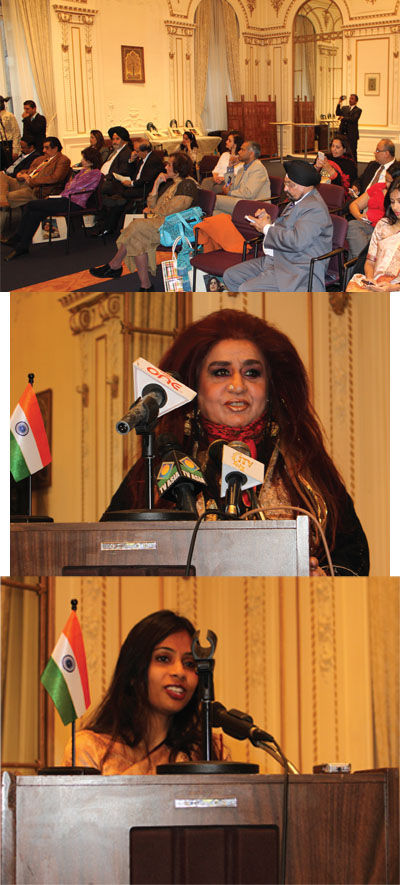
    NEW YORK, NY (TIP): At an event organized at the Indian Consulate in New York, April 29th, beauty mogul Shahnaz Husain addressed the press about her new research in using plant stem cells for beauty products. Shahnaz provided the members of the media with evidence of her research on how plant stem cells compel in slowing aging signs and also help in keeping beautiful skin intact. She also presented a collaboration of products for skin problems after chemotherapy, vision enhancing kajal and other beauty remedies. “I am appalled at the rate of chemicals that we use on our bodies. There are chemicals in everything and there is only so much your body can take.

    One day your body will succumb to the ill effects of these hazardous chemicals. I have designed a series of all-natural Ayurvedic products that not only enhance beauty but also preserve it. Our latest research in plant stem cells has provided us with early evidence that this can be achieved in a healthy and natural manner without any side effects,” said Husain. Shahnaz Hussain – just back from MIT where she was invited to speak on Ayurvedic innovation and woman empowerment also spoke of her MIT experience. She was earlier invited by Harvard Business School to speak on how to create a brand without commercial advertising. She has also spoken at Oxford University, UK and London School of Economics on the positive impact of innovative entrepreneurship. She is also the recipient of World’s Greatest Woman Entrepreneur award by Success Group USA, the first woman ever to receive this award in 104 years.

  • Indian American Charged With Drug Trade

    Indian American Charged With Drug Trade

    CHICAGO (TIP): Phulbir Singh, an Indian American settled in the state of Indianapolis has been sentenced to three years in jail for selling drugs, according to available reports published May 2. He will have to return to India once he completes his jail term, as a part of the punishment. Thomas Cannon Jr, Delaware Circuit Court Judge 5 awarded the punishment to Singh. According to the judge, the accused has been using different names and his actual name remains unknown to everyone.

    Moreover, he did not have any clear identity since his arrival to the U.S. Singh, who did not have any legal status in the country, has been accused of selling drugs that resulted in the death of people. But, according to the representatives of a gurdwara in Indianapolis, Singh is a hardworking man who has a very helpful attitude. Kelly Bryan, his lawyer said that Singh has confessed of being involved in the drug trade and most of the charges against him were dismissed in a plea deal, considering his strong work ethic.

  • Midtown NYC Boutique Co-Working and Technology Hub helps Innovative Start-Ups Secure Stability

    Midtown NYC Boutique Co-Working and Technology Hub helps Innovative Start-Ups Secure Stability

    NEW YORK, NY (TIP): Incubators, accelerators, and coworking spaces are becoming extremely important to the development of next generation entrepreneurs. INC39 (inc39.com) is uniquely positioned to help start-ups grow with our depth of resources, expertise, and experience. INC39 provides an open, hybrid membership model, with all of the advantages of a semester driven incubator that will provide freedom to the participating companies. Companies can gain access to co-working space, hardware, and important services vital to a startup technology company to stimulate technological innovations. INC39 is the only company that provides telecom switching, an onsite backup power generator, and a dedicated data center for companies who need onsite server access. INC39 is located in Midtown Manhattan a few blocks away from Grand Central Terminal making it easily accessible for people throughout all five boroughs as well as Connecticut, Long Island, and New Jersey.

    Under INC39 Qualified Start-Ups can:
    o Receive free prime location space, free technical support and funding.
    o Work side-by-side with dedicated experts to develop new technologies.
    o Exclusive access to a board-room, seminar room, printing facilities, and related incubator-style resources.
    o Attend dynamic lecture, mentoring and networking workshops with VC firms, academics and industry experts.
    o Participate in bi-monthly funding events, where each company has the possibility to receive funding.

    INC39’s founder, Kent Charugundla, believes in a holistic approach. As an alumnus of NYU, Kent is pleased to mentor, not only fellow NYU alumni but also, all aspiring entrepreneurs. INC39 aims to support a strong network of tech-entrepreneurs by creating a community and inspiring innovation.

    For more information, visit www.inc39.com . INC39 is located at 142 East 39th Street, New York, NY 10016. To schedule a tour contact: jesse@inc39.com

  • Pilots Sleep As Air-Hostess Turns Off Autopilot On Bangkok-Delhi Flight

    Pilots Sleep As Air-Hostess Turns Off Autopilot On Bangkok-Delhi Flight

    MUMBAI (TIP): Two Air India pilots put the lives of 166 passengers on a Bangkok- Delhi flight in danger by taking a 40-minute break from the cockpit and getting two stewardesses to operate the plane in their absence. Their stunt almost ended in disaster after one of the stewardesses accidentally turned off the auto-pilot, forcing the pilots to rush back to their seats. The incident took place 33,000 feet in the air on Air India flight AI 133 (an Airbus 321) from Bangkok to Delhi on April 12, which took off from Bangkok on schedule, at 8.55 am. Thirty minutes later, First Officer Ravindra Nath excused himself from the cockpit for a bathroom break and got airhostess J Bhatt to occupy his seat in his absense. “According to the guidelines it is a standard procedure to ensure the presence of second person in the cockpit so that if the pilot is not able to operate the aircraft for some reason, the other crew member in the cockpit can immediately call for the other pilot. But what actually happened after this made a mockery of air safety,” said a a source in Air India, who did not wish to be named. Minutes after his co-pilot left the cockpit, Captain B K Soni called another stewardess, Kanika Kala, and asked her to take his seat.

    Captain Soni did not leave the cockpit immediately; instead, he spent a few minutes teaching the two stewardesses how to operate the aircraft. He left the cockpit after putting the plane on auto-pilot, leaving the stewardesses to operate the flight by themselves for the next 40 minutes while he and his co-pilot took a nap in business class. Putting an aircraft on auto-pilot does not exempt pilots from remaining in the cockpit; their presence is required to monitor the flight’s status and turn off auto-pilot if required.

    This was illustrated perfectly when Captain Soni and First Officer Nath were forced to rush back to their seats after one of the stewardesses accidentally switched off the auto-pilot, engangering the lives of everyone on board.”A senior cabin crew member witnessed the entire drama unfold and brought the matter to the notice of the airline’s management. All four were derostered and later suspended for this violation,” added the Air India source. Director General Arun Mishra of the Directorate General of Civil Aviation (DGCA), confirmed that all four employees had been suspended. “Following a safety violation, the airline has already suspended the people in question.We are conducting a inquiry into the matter,” Mishra told reporters.