Month: July 2013

  • A Jeep-Like Amphibious Car

    A Jeep-Like Amphibious Car

    NEW YORK (TIP): Amphibious car! Two men in the US claim to have developed a hybrid vehicle that can be driven on land as well as the sea. Called the Panther, the amphibious car’s co-founders Fred Selby and Dave March have been working on amphibious vehicle projects for more than a decade. The genesis of their work came about after March purchased an Amphicar — a German-designed amphibious convertible from the 1960s. But, he desired a vehicle faster than the Amphicar’s 40-somehorsepower engine could muster.

    The duo dabbled with engines from Subaru and Chevrolet, but settled on the Honda engine because of its strength and its copious horsepower — around 250. “It’ll never be the world’s best car, and it’ll never be the world’s best boat,” Selby said. “But it sure as hell is the fastest amphibious vehicle on this globe.” The ‘WaterCar’ resembles a Jeep pickup truck, down to the flatfaced front and its signature taillights. Panther’s grille is only six slots, instead of the Jeep’s signature, trademarked seven-slot grille.

    The Panther’s body is constructed of fibreglass, rather than steel, for the sake of lightness, and is coated in anti-corrosion sprays to ward off the effects of salt water. To keep the Panther afloat, a hull is also lined with foam, ‘New York Daily News’ reported. The Panther’s spare interior bears little similarity to the Jeep’s , allowing owners room for customization and individuality .

    The hull sticks out slightly from underneath the front of the Panther in order to ensure smooth sailing as well as seamless integration into the vehicle’s design . Panther effortlessly transition from car to boat, the report said. Unlike operating a traditional boat, driver and passengers are all seated, making it somewhat difficult to see through and over the windshield when the boat is on plane, essentially with the nose pointed up and the accelerator floored.

  • Be Invisible To Mosquitoes

    Be Invisible To Mosquitoes

    WASHINGTON (TIP): Researchers, including an Indian-origin scientist, have developed the world’s first lightweight patch that can make people ‘invisible’ to pesky mosquitoes and could prove key in the battle against malaria. The affordable patch is a colourful sticker, small enough to be worn virtually without notice. Once worn, it provides the user with up to 48 hours of protection from mosquitoes.

    The technology hampers mosquitoes host-seeking behaviour , was identified at the University of California, Riverside in 2011, and has led to the development of the product that blocks mosquitoes’ ability to efficiently detect carbon dioxide, their primary method of tracking human blood meals. The initial research was performed in the laboratory of Anandasankar Ray, an associate professor of entomology , and was featured in the journal Nature. Ray’s lab identified volatile odour molecules that can impair, if not completely disrupt , mosquitoes’ carbon dioxide detection machinery. Called the KiteTM Mosquito Patch, the product marks a significant advancement in the global fight against mosquito-borne diseases such as malaria, West Nile virus and dengue fever.

    The patch delivers mosquitorepelling compounds in a simple, affordable and scalable sticker that can be used by individuals in regions impacted by malaria and other mosquito-borne diseases. Estimated to cost a fraction of existing repellents, Kite is applied to clothing and can be used by people of all ages , including infants and pregnant mothers. “I am very excited to see how Olfactor Labs has rapidly taken our initial discovery to a product that can have great value in the war against mosquitoes and disease,” Ray said.

    “I am most impressed that they have designed something affordable and convenient for use in Africa and around the world. I am rooting for this to become a game changer in lowering instance of malaria, dengue, filariasis and other dangerous diseases ,” said Ray. Kite’s technology is the culmination of years of development work on a class of odour molecules, all of which are non-toxic compounds approved for human consumption by the US Food and Drug Administration.

    “The Kite Mosquito Patch isn’t just another mosquito product, but a powerful alternative to most products on the market, enabling people to live normal lives with a new level of protection against contracting mosquito-borne diseases,” said Michelle Brown, the chief scientist and vice president of Olfactor Laboratories.

  • A Lab-Made Retina

    A Lab-Made Retina

    LONDON (TIP): British scientists have grown the lightsensitive cells of the eye in a lab with the help of an artificial retina. This may pave way for restoring eyesight of blind people using stem-cell transplants , a new study has found. University College London scientists grew a synthetic retina in a dish and then successfully implanted it in a blind mice, carrying out the first successful transplant of light-sensitive photoreceptor cells (extracted from the synthetic retina).

    When transplanted into night-blind mice these cells appeared to develop normally, integrating into the existing retina and forming the nerve connections needed to transmit visual information to the brain. Scientists may have been unable to show any improvement in the vision of the blind mice, however , they are confident that this will soon be possible in further experiments . Researchers said the development should enable them to move to the first clinical trials on patients within five years.

    The new 3D technique mimics normal development, which means doctors are able to pick out and purify the cells at precisely the right stage to ensure successful transplantation. The team grew retinal precursor cells using the new 3D culture method and compared them closely with cells developed normally, looking for different markers at different stages of development. They also carried out tests to look at the genes being expressed by the two types of cells to make sure they were biologically equivalent.

    They then transplanted around 200,000 of the labgrown cells by injecting them into the retina of night blind mice. Three weeks after transplantation the cells had moved and integrated into the recipient mouse retina and were beginning to look like normal mature rod cells. These cells were still present six weeks after transplantation.

    The researchers also saw nerve connections (synapses), suggesting that the transplanted cells were able to connect with the existing retinal circuitry. Doctors said, “Now that we have proved the proof-of-concept , the road is clear to the first set of trials on humans just to see whether it’ll work.”

  • Your Face Is The New Credit Card

    Your Face Is The New Credit Card

    MELBOURNE (TIP): No more swiping cards! A new technology that allows customers to use their facial features instead of swiping a credit card to purchase goods has been developed by a Finnish company. The technology provided by Uniqul, works by recognizing the customer’s face and then linking it to the individual’s bank account . So instead of swiping a credit card to purchase goods, the customer gazes into a camera.

    Uniqul claims its service is secured with military-grade algorithms , ‘The Australian’ reported . Uniqul’s Ruslan Pisarenko said the technology — which is due to roll out next month — has the ability for transactions to be completed instantly and can even distinguish between identical twins, ‘News Limited Network’ reported. According to Pisarenko, “the face is a PIN and it’s more like a complete way to identify a person. But in some cases where the system is not 100% accurate, it will ask a person to input their PIN as security,” he said.

    There is no payment card involved, nor is a mobile or wallet needed. Customers sign up to the technology by registering their identification and bank details. Once the items are scanned through the customers’ details will flash up on a screen and they click “OK” to confirm the transaction. The new tech is similar to facial recognition identification which is used by international travellers at airports in Australia.

    The company is getting ready for deployment of the system in Helsinki, news website goodnewsfinland .com reported. The company said its patent pending technology allows to reduce time spent on transactions close to zero seconds.

  • Air Asia To Take Off With Three Aircraft

    Air Asia To Take Off With Three Aircraft

    CHENNAI (TIP): Getting the cost structure right will be the key to success of operating a low-cost airline in India, says Tony Fernandes, CEO, AirAsia, which is all set to launch a low-cost airline in association with the Tata Group this year according to a news item in The Hindu BusinessLine. “I cannot be clear on the launch. We are waiting for the No Objection Certificate and Air Operator Certificate, but things looks promising and moving in the right direction. Our hope is to start this year,” Fernandes told newspersons.

    “It is a perfect time to enter India because no one has done it (a low-cost airline offering) right. Wait and see for two years,” he said, asked about the entry into India when domestic travel is shrinking. “Our model is straight forward. We will charge as low as we can. If you want to add on things like bags, you will have to pay for it,” he said. Fundamentally, theirs (other operators’) are not true low-cost airlines, he said.

    “I said that for a long time. The closest was Air Deccan, which had the right fare but wrong cost structure. So, it was unsustainable,” he said. Running a low-cost airline is a tough and hard business. “People in India who started the low-cost airline looked at me, wearing a T-shirt and hat, said that if that guy can do it, we can do it. But it is hard and the key failure in the Indian aviation industry is cost management,” he said.

    The project is not delayed but moving pretty fast. Even the Tatas could not believe that the Foreign Investment Promotion Board clearance came so fast, he explained. “The hardest thing is to convince you guys (the media). You are the most skeptical people,” he said. Fernandes said the airline will start with three Airbus aircraft and add an aircraft every month. “I don’t know how many aircraft I will add,” he said.

    The low-cost airline, however, will not operate in airports where charges are high. “We do not have to go to all the airports. In some airports like Delhi and Mumbai, it is like going to a Taj Hotel, which the Tatas like while I like going to a budget hotel. GVK has got an expensive airport, and we won’t go there. It is too expensive for any market,” he said.

  • Air India To Launch Flights To Birmingham

    Air India To Launch Flights To Birmingham

    DELHI (TIP): Air India is to introduce a flight from Amritsar and Delhi to Birmingham four days a week from August 1, 2013. This will be the fourth Air India flight to UK from India. Earlier in June this year, Air India had introduced its B-787 Dreamliner services to London, which was the third flight to the city from India. Air India is offering attractive inaugural fares on the Delhi-Birmingham-Delhi sector for a limited period with a free add on sector from Delhi to Ahmedabad, Kochi, Thiruvananthapuram and Kozhikode.

    The new flight introduced by Air India will operate on the Amritsar-Delhi-Birmingham-Delhi-Amritsar route with the state-of-the-art Dreamliner aircraft on Mondays, Tuesdays, Thursdays and Saturdays. The flight from Amritsar will leave at 1030 hrs, reach Delhi at 1150 hrs. AI- 113 will depart from Delhi at 1330 hrs and reach Birmingham at 1800 hrs. The return flight AI-114 will take off from Birmingham at 2130 hrs and reach Delhi the next day at 1005 hrs.

    The flight for Amritsar will leave Delhi at 1205 hrs and arrive in Amritsar at 1305 hrs. Air India’s direct flight from Delhi to Birmingham will not only fulfill the needs of the ethnic community to fly to India direct but also help to develop better tourism and trade relations in general. Air India at present operates 21 flights to London per week, seven on the Mumbai-London-sector, and 14 on the Delhi-London sector.

  • US Officials Will Not Declare Whether Coup Occurred In Egypt

    US Officials Will Not Declare Whether Coup Occurred In Egypt

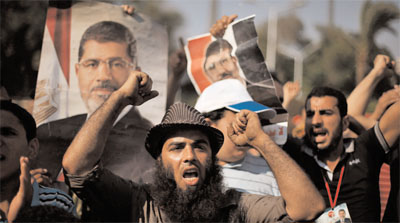
    WASHINGTON (TIP): The Obama administration told Congress on July 25 it does not plan to make a determination on whether a military coup occurred in Egypt, avoiding a decision that would force the cut off of most of the annual $1.55 billion in US aid. US Deputy Secretary of State William Burns delivered the message in separate briefings to senior members of the US Senate and the House of Representatives, several lawmakers told reporters after meeting the number two US diplomat.

    The question of whether a military coup took place has vexed the White House, which generally wants to be seen as supporting democratically elected leaders but which had no love lost for ousted Egyptian President Mohamed Mursi. Under US law, most aid must stop to “any country whose duly elected head of government is deposed by military coup d’etat or decree” or toppled in “a coup d’etat or decree in which the military plays a decisive role.” However, the law does not actually oblige the White House to make a decision.

    “The law does not require us to make a formal determination as to whether a coup took place, and it is not in our national interest to make such a determination,” said an Obama administration official who spoke on condition of anonymity. Speaking after the session with Burns, Senator Bob Corker, the top Republican on the Senate Foreign Relation Committee, said the Obama administration might never make a decision on the matter and suggested that U.S. law needed to be changed. “No determination has been made.

    It’s possible that no determination will ever be made,” Corker told reporters. The Egyptian armed forces deposed Morsi on July 3 after huge street protests against his rule, clearing the way for last week’s installment of an interim Cabinet charged with restoring civilian government and reviving the economy.

    Current and former officials have said the administration has no appetite for terminating aid, which runs at about $1.55 billion a year, $1.3 billion of which goes to the military, for fear of antagonizing one of Egypt’s most important institutions. Nor does it wish to increase instability in the most populous Arab nation, which is of strategic importance because of its peace treaty with close US ally Israel and its control of the Suez Canal, a vital waterway for the US military.

  • BJP Cautions US Against Peace Talks With Taliban

    BJP Cautions US Against Peace Talks With Taliban

    WASHINGTON (TIP): The BJP has cautioned the US against any peace talks with the Taliban arguing that the terrorist outfit is unlikely to change its behavior and reconciliation effort would be a futile exercise.

    “The eagerness to engage with elements that want to return Afghanistan to the status of ‘Islamic Emirates’ in the hope that they would deliver, and in the process humiliating and weakening the democratic leadership, doesn’t behove well for the region,” BJP President Rajnath Singh said here, July 23.

  • Reconciliation Only Path For Afghanistan To Achieve Peace: United States

    Reconciliation Only Path For Afghanistan To Achieve Peace: United States

    WASHINGTON (TIP): The United States, July 20, said it believes that reconciliation is the only ultimate path forward for Afghanistan to achieve peace, as Washington asked Taliban to decide how it wants to move forward on the peace talks. “We absolutely believe that reconciliation is the only ultimate path forward for Afghanistan to achieve peace. Afghans have to have these negotiations with Afghans, “White Press Secretary Jay Carney told reporters.

  • Check Cashing Company In NJ Failing To File Proper Reports Ordered To Pay Over $ 1 Million

    Check Cashing Company In NJ Failing To File Proper Reports Ordered To Pay Over $ 1 Million

    CAMDEN, N.J. (TIP): GB Check Cashing LLC, a check cashing company licensed in New Jersey, pleaded guilty Thursday, July 11, and was ordered to forfeit more than $1 million for failing to file currency transaction reports as required by law. The investigation was conducted by U.S. Immigration and Customs Enforcement’s (ICE) Homeland Security Investigations (HSI). The co-owners of GB Check Cashing, Dalwinder S. Ghuman, 45, and Talvinder S.

    Ghuman, 53, both of Mount Laurel, entered the plea on behalf of GB Check Cashing before U.S. District Judge Robert B. Kluger in federal court. Following the guilty plea, Judge Kluger sentenced GB Check Cashing to one year of probation and ordered the company to forfeit $1,086,894. According to court documents, GB Check Cashing is a money service business which the Ghumans have coowned and operated since 2003.

    The business has four storefronts located in Pennsauken, Delran, Carteret and East Windsor. Under federal law, such companies are obligated to file a currency transaction report whenever they are involved in a transaction for the payment, receipt or transfer of more than $10,000. From September 2010 through June 2011, an individual, referred as “CC” in court documents, operated a check cashing business in New Jersey without the appropriate license.

    CC brought several checks from customers of the unlicensed business to GB Check Cashing and exchanged them for cash, less a one percent fee. Because the value of those checks was usually greater than $10,000, so was the amount of cash CC received. GB Check Cashing documented each transaction to make it appear as though CC’s customers went directly to GB Check Cashing to cash their checks.

    In all, GB Check Cashing cashed approximately $1.15 million of CC’s customers’ checks, paying approximately $1.09 million to CC in increments greater than $10,000. GB Check Cashing did not file currency transaction reports for any of those transactions. You may also visit us on Facebook, Twitter and YouTube, or access this news release on your mobile device.

  • Halliburton Agrees To Plead Guilty In Spill, Said US

    Halliburton Agrees To Plead Guilty In Spill, Said US

    NEW ORLEANS: Halliburton Energy Services has agreed to plead guilty to destroying evidence in connection with the 2010 Gulf oil spill, the Department of Justice said on July 25. Federal officials said in a news release that a criminal information charging Halliburton with one count of destruction of evidence was filed in federal court in Louisiana.

    Halliburton has agreed to pay the maximum fine, be on probation for three years and continue to cooperate with the government’s criminal investigation, according to the news release, which did not list the amount of the fine. The Houston-based company has also made a $55 million voluntary contribution to the National Fish and Wildlife Foundation. It was not a condition of the court agreement, the news release says.

    The company said in a statement Thursday night that it had agreed to plead guilty “to one misdemeanor violation associated with the deletion of records created after the Macondo well incident, to pay the statutory maximum fine of $200,000 and to accept a term of three years probation.” The Justice Department has agreed it will not pursue further criminal prosecution of the company or its subsidiaries for any conduct arising from the 2010 spill, Halliburton’s statement said, adding that federal officials have also “acknowledged the company’s significant and valuable cooperation during the course of its investigation.”

    The plea agreement is subject to court approval, the company said. Halliburton was BP’s cement contractor on the drilling rig that exploded in the Gulf of Mexico in 2010. The blowout triggered an explosion that killed 11 workers and spilled millions of gallons of oil into the Gulf. According to the news release, Halliburton conducted its own review of the well’s design and construction after the blowout, and established a working group to review “whether the number of centralizers used on the final production casing could have contributed to the blowout.”

  • OFBJP Organizes Public Reception For BJP President Rajnath Singh

    OFBJP Organizes Public Reception For BJP President Rajnath Singh

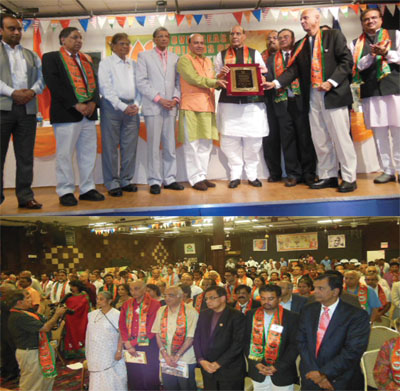
    EDISON, NJ (TIP): Indian American community of tri-state area (New Jersey, New York, and Connecticut) gave a rousing welcome to Rajnath Singh, President of Bharatiya Janata Party (BJP) and his BJP delegation Ananth Kumar, General Secretary; Sudhanshu Trivedi, National Spokesperson; and Vijay Jolly, Convener of Overseas Affairs and Overseas Friends of BJP (OFBJP) in TV Asia Studio Auditorium at Edison, NJ on Sunday July 21, 2013. The program was organized by OFBJP-USA as part of its community global outreach program.

    The program was broadcasted live on TV Asia across US reaching out to 1.5 million viewers. The program was also relayed live in India, Canada, UK, Europe and Middle East thru various channels. Addressing the jam-packed auditorium, Rajnath Singh said that he was elated by the warm welcome that had been accorded to him by the Indian Americans here in US. He said that trust and credibility have become a big problem in India and BJP is the only option. No party in India has grown bigger than Congress except the BJP.

    BJP is the only party that has not suffered a vertical split. Communists have lost relevance and Congress has no policy on any of the issues nor has any ideology. Since its inception in 1951 as Bharatiya Jan Sangh and later on as BJP, the party has been pursuing a policy of Nation first. He continued that Atal Behari Vajpayee led a 24 party coalition for 6 years and the NDA rule was far better than 55 years of Congress rule in every aspect.

    Corruption, Inflation and price rise are the signature of congress rule whereas NDA government controlled the inflation and price rise in spite of the prevailing severe drought and economic sanctions imposed by the entire West after Pokhran nuclear tests. NDA inherited a GDP growth of 4.8% and 10% inflation whereas BJP handed UPA a GDP of 8.4% and inflation 3.5% in 2004. Amidst applause from the audience he said that Pokhran test was a big step wherein the BJP led govt made India a nuclear power even though we knew economic sanctions were staring at us.

    Countries that are much smaller have become developed countries but India is still a backward country and not sure why 55 years of Congress rule did not change much. Congress has to answer as to how much time they need to make India better, to remove poverty. BJP invited FDI in telecom sector but encouraged Indian investors whereas Congress has opened up the telecom sector 100%, increased in the LIC sector from 26% to 49%. Foreign investors have pulled out $7.5 billion from India and no one is ready to invest.

    Even after 60 years of Independence we still have 67% of people who don’t get food and we need a food security bill. We need leaders with firm conviction and leaders with vision and when we come in power we will make India a super economic power in 10-15 years. National Highway development has seen tremendous growth during NDA rule. 50% of the highways that were built during 1980-2012 happened during 6 years of NDA rule and the other 50% were built during 26 years of non-BJP rule.

    Gujarat development has become a role model across the world. Madhya Pradesh agricultural growth (19%) is the highest in the world and very soon will be providing 24hrs of power supply. Chhattisgarh PDS system serves 90% of the population without any corruption and is a model for other states to emulate. Goa is the only state in India where Petrol is cheaper than Diesel. India has a GDP growth of 4.8% whereas BJP ruled states have 10% GDP growth. UPA government has no plan to tackle Naxalism or terrorism.

    Appeasement has become the state policy whereas BJP never links terrorism to any religion, caste or region. After Mumbai terror attack, Prime Minister made a statement that he will not talk to Pakistan until it gives an assurance that they will control terror activities and not support any groups that work against India but changed all that in a matter of few months. Our foreign policy is at its worst with no friendly neighbors around us. During NDA rule we maintained good relations with Russia and development excellent relations with US.

    We made US our strategic partner. He appealed to the US govt to lift the ban on visa to Narendra Modi, he said on one side US agencies rate Gujarat as the best state and Modiji as an excellent administrator and on the other hand they deny visa to him. It will be better if US takes a decision soon as they will be forced to take a decision anyway later. When BJP comes to power we will make India a power of Rishi and Krishi (knowledge and Prosperity), he said. Indian culture influenced the world for thousands of years.

    We never planned to dominate the world and even Swami Vivekananda came to Chicago on his own and had great influence on the world by his teachings. Citing the example of Newsweek columnist Lisa Miller who stated that by imbibing Yoga, Pranayam, Ayurveda and Organic farming people in the West are becoming Hindus whereas it is a crime in India if you say you are a Hindu.Talking on the recent controversy related to Narendra Modi statement that he is a Hindu and Nationalist, media created and pseudo secularists made a big fuss.

    Professing your Hindu culture became a communal word in India. He said that as per the Supreme Court, Hindutva is a way of a life. Hindutva teaches love not only for human beings but even for animals, plants, rivers, mountains etc. It is Hindutva that teaches us to serve milk to a snake and take care of animals like ants and birds. He called on the Indian American Community to support BJP to build a strong India.

    Shri Rajnath Singh was accorded standing ovation. Shri Rajnath Singh was honored by the OFBJP executive committee with a plaque for his contributions to the party and the country. Earlier, Ram Rakshpal Sood (Sr.Advisor, OFBJP) acting as the Emcee welcomed the audience, chief guests and the sponsors of the event. After the traditional lamp lighting ceremony amidst the chanting of Vedic mantras by Pandit Pravin Shastri and Chandrakant Trivedi and blowing of conch shell by Pravin Shashtri. Mrs. Vidya Labroo led the rendition of Vandemataram.

    Jayesh Patel (President, OFBJP) welcomed the distinguished guests and said that entire India is chanting Narendra Modi (NaMo) mantra and expressed hope that BJP will be able to get majority on its own merit in the next election. Ram Kamath (General Secretary, OFBJP) introduced Dr. Mahesh Mehta, National Coordinator of OFBJP-USA. Speaking on the occasion, Dr. Mehta said that mission 2014 is about transforming India into a global leader and Global Indians should contribute to be the part of this great movement that will eventually contribute to the development of India.

    Dr. Adapa Prasad (Immediate Past President) introduced Vijay Jolly, Convener of BJP Overseas Affairs and OFBJP, as a dynamic leader and former MLA who took on Delhi Chief Minister during the last election.

    In his electrifying speech, Vijay Jolly urged the audience to applaud for Rajnath Singh for honoring the feelings of the people by making NaMo as the chairman of the campaign committee. Stressing the fact the OFBJP is on a mission to develop leaders by inducting youth into the organization to dethrone the corrupt Congress regime in India. Stating that NRI’s have always made India proud, he said that OFBJP has setup its chapters in UK, Norway, Nepal, Kenya and other countries to work for the welfare of Indian diaspora.

    He got the past Presidents of OFBJP-USA honored by Rajnath Singh Introducing SudhanshuTrivedi, BJP National Spokesperson, Dr. Dinesh Agrawal (Former- President, OFBJP) said that as the national spokesperson, he is very active effective on TV channels spreading the message and its ideology of BJP. SudhanshuTrivedi reminded that July 21st the day of the program is a historical day when US astronauts landed on the moon. Edison town, the venue of the program, is also a historical town, named after the inventor of light bulb.

    Hence, he said that word Bharat stands for light and inspires us to take India to the pinnacle of glory. Stating that BJP is all set to form the next government is not based on hope but on facts. He concluded reciting a poem by A.B. Vajpayee. R.P. Singh (Org. Secretary, OFBJP) introduced Ananth Kumar, BJP general Secretary. Amidst thunderous applaud from the audience, Shri Ananth Kumar introduced himself as the Hanuman of South as Kishkinda, the birth place of Lord Hanuman is in Karnataka whereas Rajnath Singh is from U.P, the land of Ram. For Ram’s team to win we need Hanuman and he is there to lend services for the party and the country.

    India, he said is going through turbulent times and like A.B. Vajpayee model, we have Gujarat model of development under NaMo leadership and we will soon have NaMo model of governance. He said that BJP is already in battle mode, under NaMo and Rajnath Singh’s leadership we are all set to take on the corrupt congress government. Once in power, BJP will make India a global player not only in spirituality but in culture, strategic matters and will be a decisive player in the world. He urged the NRI’s to connect with their districts back home and work for BJP’s victory in 2014.

    Chandrakanth Patel introduced Rajnath Singh as a man of impeccable image in spite of being in political life for 40+ years. Born in a farmer’s family in Varanasi, he rose to be the president of BJYM. He was part of the J.P movement and became the Agricultural minister in A.B. Vajpayee’s government. He was the President of BJP between 2007-2009 and again became the President in January, 2013.

    Currently, he is a Member of Parliament from Ghaziabad, U.P. Earlier, the President of TV Asia and a well known community leader, Shri H.R.Shah addressed the gathering and said that TV Asia always supported India causes and he has been an admirer of Mahatma Gnadhi and Sardar Patel. He said he felt close to BJP principles and supported BJP. He wished that Narendra Modi would be elected as the Prime Minister. Krishna Reddy (Treasurer, OFBJP) presented the vote of Thanks.

  • Not In The Race For Prime Minister : RAJNATH SINGH

    Not In The Race For Prime Minister : RAJNATH SINGH

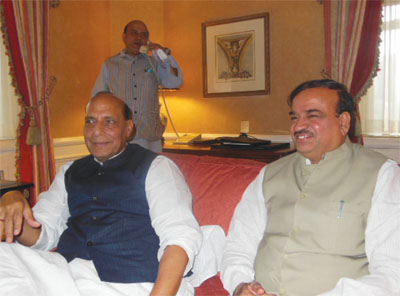
    NEW YORK (TIP): The Bharatiya Janata Party President Rajnath Singh on Saturday, July 20, categorically denied that he is in the race for Prime Minister of India if BJP returns to power at the Center. “I am more interested in getting the BJP back into power in Center and packing off the corruption-ridden bad governance of the Congress in my tenure as President of the party,” he said addressing a news conference of Indian-American media at Hotel Waldorf Astoria in Manhattan.

    On the question of party president not being projected as Prime Ministerial candidate in the Lok Sabha elections, he said it is not necessary that the two positions be placed in the hands of one person. “It’s not necessary that party president should also be a crowd puller and a prime ministerial candidate. I have an assignment to do for my party. I have a job to deliver – that is victory of the party in the 2014 elections.”

    “Seven months before the elections, I have nominated Gujarat Chief Minister Narendra Modi as chairman of the party campaign committee. What is unusual in that? We have nominated Modi like other parties do and why read between lines. I have named him as campaign head in view of his image, popularity and commitment to the party,” he said. He said Modi is certainly the most popular and the tallest leader of India.

    He is a crowd puller not only in Gujarat but also in Tamil Nadu, Andhra Pradesh, Uttar Pradesh and Bihar – from North to South, East to West. He is one single leader with a national appeal. His popularity will help the party in the elections. On the issue of visa rejection issue of Narendra Modi, he said he would take up the issue with the US lawmakers in Washington.

    “I will appeal to the US government to clear the US visa to the Gujarat Chief Minister.” People of India have now realized that BJP is the only solution after comparing the performance-oriented BJP led NDA Government and corruption-ridden inefficient Congress UPA dispensation, he said. The performances of several BJP-ruled states like Gujarat, Madhya Pradesh, Chhattisgarh are there for the people to see and if these states can provide 24 hour power supply, clean and efficient government, fillip to industries compared to poor performance of many Congressruled State governments what would people prefer? People have made up their mind, he said.

    Detailing steps taken by the BJP to face the national elections in 2014, he said the party had brought changes in organizational level by forming polling booth committees in every booth. “We have formed a committee consisting of 10 to 15 party men at grassroots level to strengthen the organization at village level,” he said Congress ruled for 10 long years at national level and what are their achievements other than wholesale corruption and compromise in national and international security, he asked.

    Indian voters are now realized that when the Center can’t guarantee growth rate of five percent or less, the growth rate in Gujarat, Madhya Pradesh and Chhattisgarh are approximately 10 percent. No one can fool Indian voters any more, he said. On the recent debacle of the party in Karnataka and setbacks in other states, the BJP President said assembly elections and municipal elections are different from parliament elections where people vote for a stable government.

    Voters are intelligent enough to compare the two governments and Congress will be out of power soon. They have ruled for 10 long years and now its time to give them rest, he said “We are confident that the failure of the Congress government will help BJP return to power in the center. Any political party that aspires to come to power should give good governance and satisfy the needs of the people.

    If they fail in this front, they will be out of power.” There is wholesale failure on economic front, compromise on internal and external security and diplomatic fronts as well. People are demanding a change very badly. If people want any change, the only choice is BJP who can provide an alternative to this government, he said. On allies deserting the party, he said BJP will try to get a clear majority in Lok Sabha polls but at the same time will not forget its allies – old and new.

    “Despite a clear majority in sight, we want our allies to participate in the government at the center. Now we have Shiv Sena and Shiromani Akali Dal and may get some nearer to the elections. There is also a possibility of post poll alliance with like minded parties if there is a need,” he said. In the coming Lok Sabha elections, Congress will be routed in Andhra Pradesh due to its ambiguity on Telengana issue.

    The BJP is the only national party that favors separate Telengana and it was passed as a resolution in our national executive committee meeting, he said. There is no ambiguity in the BJP unlike the Congress camp in the matter and BJP is in favor of Telengana. But it’s not in favor of bifurcation of UP and other states as Telengana issue is a totally different one. On the question of poll promises, he said BJP would rather go in for developmental debate than Ram Janma Bhoomi issue. “Ram temple was not a major poll issue anytime.

    It was at best a national issue but not an election issue,” he added. BJP government will consider instituting an inquiry commission to go into the corruption and scandals of the Congress government and will provide transparent and honest government with people’s interest as uppermost, he said. Ananth Kumar, party general secretary and chairman of Parliamentary Foreign Affairs Committee who is accompanying Rajnath Singh on the US tour, said the four member BJP delegation will meet members of the US Senate and House Representatives from both sides of the aisle – Democratic Party and the Republicans especially members of the Congressional Caucus of Indians and Indian Americans at the Capitol Hill.

    Ananth Kumar said Rajnath’s visit to the US is a two track outreach program – to outreach the Indian Diaspora to assess the mood of three million Indian-Americans across the nation who occupy important and powerful positions besides being opinion makers; and to meet with India Caucus Congressmen to impress on them that a change is sweeping in India on the heels of Lok Sabha elections.

    The other two members of the delegation are Dr. Sudhanshu Trivedi, party spokesman and advisor to the BJP President and Vijay Jolly, BJP national convener for Overseas Affairs and a former Delhi MLA. Jolly said the visit was to re-connect the Party President with the Indian-American Diaspora that plays a leading role in fostering friendship between the two countries. “We want to work closely with Non Resident Indians.” BJP – both as a government and party – will work with mainstream American and Indian-American business community on economic and investment matters.

    clearly is of the view that India and the US have a close correlation in internal and external security and they are strategic partners being natural allies, he said. Jolly said the Overseas Friends of BJP in the US has over 7000 members across the US and project a positive image of the party among Indian-Americans and policy makers. The Foreign Affairs Committee of the party will address the concerns of Indian Diaspora and include in them in the BJP parivar by assigning a major role in the ensuing elections.

    Rajnath Singh said it was NDA government under Vajpayee that gave voting rights to Non-Resident Indians and introduced Overseas Citizens Card (OCI) and Persons of Indian Origin (PIO) card. It was under Vajpayee’s leadership that the first Pravasi Bharatiya Divas was held in 2003 in New Delhi to bring all the Non- Resident and Diaspora Indians to work for the welfare of India. “All these were made possible due to the visionary leadership of Vajpayee and only the BJP has done a lot for NRIs and PIOs.”

    On the spate of killing of Hindu and BJP leaders in Tamil Nadu, he said he would appeal to Tamil Nadu Chief Minister to give protection to party leaders. “I appeal to Jayalalithaa to help stop the killing of Hindu and BJP leaders in Tamil Nadu. We will try to build pressure on state government so that it takes it seriously to put an end to such killings.”

  • Largest US Hacking And Data Breach Scheme: Russians, Ukrainian Charged

    Largest US Hacking And Data Breach Scheme: Russians, Ukrainian Charged

    NEWARK (New Jersey) (TIP): Four Russian nationals and a Ukrainian have been charged in what’s being called the largest hacking and data breach scheme ever prosecuted in the United States. They’re accused of running a hacking organization that penetrated computer networks of more than a dozen major US and international corporations over seven years, stealing and selling at least 160 million credit and debit card numbers, resulting in losses of hundreds of millions of dollars.

    Indictments were announced on July 25. US attorney Paul Fishman called the case the largest hacking and data breach scheme ever prosecuted in the country. Heartland Payment Systems Inc, which processes credit and debit cards for businesses, was identified as taking the biggest hit in a scheme starting in 2007 — the theft of more than 130 million card numbers at a loss of about $200 million. Global Payment Systems, another major payment processing company, had nearly 1 million card numbers stolen, with losses of nearly $93 million, prosecutors said.

    The indictment did not put a loss figure on the thefts at some other major corporations, including Commidea Ltd., a European provider of electronic payment processing for retailers. The government said hackers in 2008 covertly removed about 30 million card numbers from its computer network. About 800,000 card numbers were stolen in an attack on the Visa network, but the indictment did not cite any loss figure. Not all the companies the hackers infected over the years with malicious computer software suffered financial losses.

    Customer log-in credentials were stolen from Nasdaq and Dow Jones Inc., the indictment said, though prosecutors said Nasdaq’s trading platform was not affected. The defendants were identified as Vladimir Drinkman, 32, of Russia; Aleksander Kalinin, 26, of Russia; Roman Kotov, 32, of Russia; Dmitriy Smilianets, 29, of Russia; and Mikhail Rytikov, 26, of the Ukraine. Smilianets was in US custody and was expected to appear in federal court next week. His lawyer, Bruce Provda, said Smilianets was in the US “sightseeing” when he was arrested.

    “It’s a rather complex international charge of hacking,” Provda said. “If it goes to trial, it’s going to be a lengthy trial.” Drinkman was being held in the Netherlands pending extradition, prosecutors said. His lawyer there, Bart Stapert, did not immediately return a message. The other three defendants remained at large. The prosecution builds on the 2009 case that resulted in a 20-year prison sentence for Albert Gonzalez of Miami, who was identified in the new complaint as an unindicted co-conspirator.

    Prosecutors identified Kalinin and Drinkman as sophisticated hackers who specialized in penetrating the computer networks of multinational corporations, financial institutions and payment processors. Kotov’s specialty was harvesting data from the networks after they had been penetrated, and Rytikov provided anonymous web-hosting services that were used to hack into computer networks and covertly remove data, the indictment said. Smilianets was the information salesman, the government said.

    All five are charged with taking part in a computer hacking conspiracy and conspiracy to commit wire fraud. The four Russian nationals are also charged with multiple counts of unauthorized computer access and wire fraud. The individuals who purchased the credit and debit card numbers and associated data from the hacking organization resold them through online forums or directly to others known as “cashers,” the indictment said. According to the indictment, US credit card numbers sold for about $10 each; Canadian numbers were $15 and better-encrypted European ones $50.

    The data was stored on computer servers all over the world, including in Latvia, the Netherlands, Bahamas, Ukraine, Panama and Germany. The cashers would encode the information onto the magnetic strips of blank plastic cards and cash out the value, by either withdrawing money from ATMs in the case of debit cards, or running up charges and purchasing goods in the case of credit cards.

    Kalinin was also charged, along with another Russian man, in a separate indictment unsealed Thursday. The men are accused of hacking into computer systems at Citibank and PNC Bank and giving co-conspirators information who encrypted blank ATM cards that were used to withdraw $4.2 million from customer accounts in 2006 and 2007.

  • Indian Americans Join ‘Justice For Trayvon Martin’ Vigil

    Indian Americans Join ‘Justice For Trayvon Martin’ Vigil

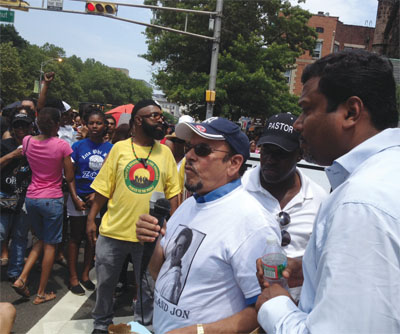
    NEWARK, NJ (TIP): Indian American community joined the history making nationwide vigil of “Justice for Trayvon Martin”, led by the National Action Network [NAN] of Rev. Al Sharpton. Thousands participated at the New Jersey vigil, held before the Federal Building in Newark. Representing the immigrant Indian community, leaders from New York, New Jersey and Philadelphia participated.

    They demanded FREEDOM FOR ANAND JON held behind bars in California prison without trial which is denial of justice. They declared solidarity with the ‘Justice for All’ movement of NAN. While raising voice for the ‘voiceless’ they appealed to President Obama to take bold steps to implement laws on Gun Control, Racial Profiling, and to establish “ONE LAW UNDER ONE GOD” .

  • New York Life Agent Mahendra Parekh Recognized As Leader Protecting Lives

    New York Life Agent Mahendra Parekh Recognized As Leader Protecting Lives

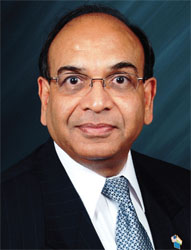
    SADDLE BROOK, NJ (TIP): New York Life Agent Mahendra Parekh from the New Jersey General Office was recently recognized for assisting the greatest number of policyholders with exceptional life insurance coverage in the New Jersey/New York area. Mahendra was among nearly four hundred Agents whose dedication to serving diverse communities was recognized during a meeting at New York Life’s headquarters in New York City.

    “We applaud Mahendra Parekh for this achievement and dedication to helping families protect their financial futures, especially in the “Asian Indian community” said John T. Baier, Managing Partner of New York Life’s New Jersey General Office. “Life insurance provides beneficiaries the chance to move forward with a degree of financial security otherwise impossible – and that’s making a real difference across the country.”

    Last year, New York Life paid billions to beneficiaries and Mahendra was part of that effort, which helped families maintain their lifestyle and keep their future plans on track.”

  • India’s Economic Growth: Once a Shining Economy, India is in Danger of Running out of Gas

    India’s Economic Growth: Once a Shining Economy, India is in Danger of Running out of Gas

    “India Shining” has been the unofficial slogan for India since the turn of the 21st century. India averaged 8% annual GDP growth in the three years before the recent global financial crisis. Armed with population strength of more than a billion people, India is now the 11th largest economy in the world. According to data, from India’s Planning Commission, rapid economic growth has contributed to a decline in the poverty rate with 37.2% in 2005 to 29.8% in 2010, a drop of 40 million people in the absolute number of the country’s poor.

    Per capita income doubled during those five years. Internationally, India has also become an important actor. Forming the ‘I’ in the BRICS group of nations, India plays a very important role in the leadership of the emerging markets and developing nations. India boasts a culture of entrepreneurship and innovation, pioneering the global IT services industry, and has a global Diaspora that are leaders in various fields.

    On paper, India’s potential is immense, with approximately 500 million people between the ages of 18-25; its best years seem to be ahead. Polls have revealed that the Indian youth and business people are bullishly confident of a bright future in India. This potential is reason why India is tipped to become the largest economy by 2050. However, potential does not always translate to growth, and India has been learning this the hard way.

    An economy that once was shining is now rapidly losing that shine. India is at a serious risk of plunging itself into a crisis, one that might soon be too large to be defeated by policy.

    The Twist
    1991 is often used as the central year for economists and other experts when discussing the Indian economic growth story.In June 1991, then finance minister Manmohan Singh, passed widespread reforms that liberalized and opened India’s economy to the world. However, 1991 is also the year the last time India has passed economic reforms of such significance. Over the past 12 months, the optimistic mood within India’s economy has taken a sharp dip. GDP growth slowed to 6.3% in 2011-12; the worst it has been in 9 years, and the first quarter of 2012 India grew a measly 5.3%, according to some estimates.

    While a slowdown in GDP growth has been relatively recent, India has been battling with a rising inflation for the past two years, which included food inflation at between 15-25%. The Rupee has been in a sharp decline, decreasing by 25% in value of the past six months to become one of the worst performing currencies in the international market.

    Although a weakening external demand, due to the Eurozone crises and U.S. economic slowdown has contributed to the slowdown, India’s economy is very much based on internal demand, which has slowed recently partly because of private consumption dropping from 5.5% in 2011/12 from 8.1% the previous year. India’s economy is showing signs of overheating with a growing demand and inability to match it with supply.

    Leading domestic business people have exerted frustration at the economic situation. Since business confidence is at a low, the IMF, OECD and financial rating agency S&P are all issuing warnings to the Indian government. They all unanimously call for….

    Reform, Reform, Reform
    In its current form, the Indian economy is like a car sputtering forward and now slowly running out of fuel. India is in desperate need of reform of its tax laws. For over two years it has delayed passing laws on the goods & services tax which will allow the central government to regulate taxing on services and certain goods, rather than the current system of state regulations. In the current system, it is extremely difficult for business to run operations across the 28 state lines. Foreign investors have raised concerns on two Indian provisions seeking to tax indirect investments and combat tax evasion.

    The first gives India power to retroactively tax the indirect transfer of assets. The second targets tax evaders via the General Anti-Avoidance Rule (GAAR), putting the responsibility on investors registered in countries with special tax exemptions with India to prove they do not intend to explicitly avoid tax. Investors are fretting and such policies are threatening to drive away private investment rather than encourage it.

    Major hedge funds such as Macquarie’s Asia hedge fund which manages over $50 billion in emerging markets, have begun pulling out. A situation unthinkable a couple of years ago, India is feeling significant strains on its fiscal budget. When India was growing at 8% a few years ago, no one questioned the government’s spending. The Indian government spent freely on a variety of populist subsidies programs, racking up a fiscal deficit that it allowed itself due to GDP growth. India considered this deficit sustainable.

    The deficit currently stands close to 7% and the government must reign in on its spending, and it must discontinue these subsidies programs and allocate money to other sectors. For over a year, the central government has attempted but failed to institute such reforms.

    Bottlenecks
    India is in urgent need of reform on Foreign Direct investment (FDI) rules, particularly in its retail sector. Outdated technology, and lack of organization and inefficiency, has seen the Indian retail industry slowly and steadily pull down India’s economy. The Indian retail industry’s has an annual revenue of $500 billion as of 2011 and employs the second-most number of people after agriculture, a sector that is intrinsically linked to the retail sector. Yet, the Indian retail industry is also one of the most unorganized sectors in the country. 90% of the retail industry is controlled by smallscale, family-run operations with big chains making up just 10% of the market.

    Thus far, Indian suppliers have not been able to deliver to the consumer. Indian Commerce Minister Anand Sharma asserted that 30% of agricultural produce does not reach the market, and of the remaining 70%, more than 50% is lost due to poor transportation and storage technology. This is a gross waste in any country; especially in a developing country where there are still hundreds of millions bellow the poverty line.

    This lack of organization has led to much inefficiency, which is the root of many of India’s problems, especially inflation. Over the past two years, basic foods have been suffering an inflation of 15-20% and they have been directly linked to the inefficient supply chain. Increasing the cap on FDI in the retail sector will allow foreign firms to enter the country and make major investments that will significantly modernize the sector and will set the country on a path towards further modernization, and help it to increase consumer spending and address the food inflation.

    When the shoe doesn’t fit anymore
    India’s biggest challenge is its infrastructure deficit. If you have traveled to India, you have experienced tremendous traffic on poor roads burdened with bottle necks. India’s infrastructure deficit problem is nothing new, and the government has been trying to catch up for years. However, India’s economy has grown to a size that e will make it very difficult for both new businesses to enter the market and existing business to expand.

    According to the consulting firm Mckinsey, India is suffering a shortfall of $190 billion in the infrastructure sector and is in urgent need of capital. India’s roads are often unsuitable for large vehicles and they even literally form blockades for progress. The railways and roads dominate the country’s transport landscape.Within these two modes, 2% of road length carries 40 percent of all road traffic of the country, and one-sixth of the rail network.

    With the fragmented character of the industry, road transport services in India are generally poor and logistics costs high. Clocking the world’s lowest average speeds, trucks in India are used for 60,000-100,000 km annually – less than a quarter of the average in developed countries. A quick comparison with an immediate neighbor to the northeast gives you an idea. The time to travel by rail or road between India’s political capital New Delhi and Financial hub Mumbai is over 12 hours to cover 1180 km.

    In China, between Beijing and Shanghai, a train covers the 1071 km in approximately 5 hours. India needs to boost growth in this sector, and fast. Indian Urban Development Minister Kamal Nath stated, “With growth preceding infrastructure, we are not building for the future, but for the past.” There is a sense of saturation within the economy that is proving to be a damper for business. The government has steadily increased spending, but some wounds are self-inflicted.

    Private business have been desperately calling for reform in land acquisition, and in its current state, the lack of reform means companies are facing problems making large capital investment.Without such reform or encouragement for further private investment through allowing foreign funds and mutual insurance funds, India will continue to be building for the past. The root of India’s economic woes, in all the areas mentioned above, all find themselves leading to one common problem: The central government.India is in a crisis of politics and the center of the Indian government is stuck in a paralysis.

    In Office But not in Power
    India’s center of governance lies in the parliament in the capital city of New Delhi. However, power seems to lie everywhere, but in the center. The way India’s parliamentary system works is the ruling party holds together a coalition of smaller parties who come together to form a majority in the parliament. The current ruling coalition since 2009, called the UPA, is weak and fragmented, while the incumbent Prime Minister has shown himself to be to inept.

    The parliament has no significant majority and the center is loosing power to regional parties who consistently threaten to pull support from the coalition over major reform issues, forcing the leadership to back down. The opposition party, BJP, has shown itself more committed and content to reveal the weaknesses of the congress than to work towards a solution.

    The word ‘political paralysis’ has now become synonymous when discussing the Indian economy. Bills on subsidy reduction, tax reform, land acquisition reform, and FDI reform all exist, but a divided parliament is unable to pass such bills, and continues to be laborious and indecisive. The government has attempted to answer the calls for an end to the fiscally straining fuel and fertilizer subsidies that totally amount to 2.5% of GDP. However, these subsidies are extremely popular measures and the government has consistently faced opposition from regional parties.

    During the last 12 months, each time the central government has attempted to repeal the subsidies, regional parties carried out “All-India Bandhs,” enforcing the closure of all business for a day, using force if necessary. Acts such as this have only crippled the country further, diminishing the central government’s power and preventing reform. However, perhaps the biggest symbol of the political paralysis has been the attempt to raise the cap for FDI in the retail industry.

    In December 2011, PM Manmohan Singh announced that he was set to approve the bill on raising the cap from 21% to 49% FDI in domestic retail. There was a sense of relief for this would have a revolutionary impact on the retail industry. However, relief was short lived as Mamata Banerjee, Chief Minister of West Bengal, and an important UPA ally, threatened to pull support if this bill was passed, forcing the PM to once again pull back. There is a popular saying in India that all “economic growth in the country has been in spite the government, rather than because of the government,” and this tells a tale of frustration among Indian and foreign business people.

    Corruption has “paralyzed the government,” reckons the chief executive of one of India’s most prestigious firms. Further asserting, “We know what the problems are and we have done nothing … somebody’s neck has got to be on the line,” says the leader of a bank. What Indians always knew, is now beginning to reveal itself internationally. Business confidence in India is taking a big hit. Bureaucracy and red tape continue to scare foreign investors away.

    For example, regulatory and other obstacles recently delayed a proposed $12 billion steel investment deal from Korean company POSCO, who joined the list of other countries who have faced similar restrictions. Standard & Poor recently announced, in a special report, that India is in serious risk of being downgraded from its current BBB+ to BBB-. This downgrade is mainly connected to India’s slowing economic growth and weakening fiscal profile. S&P cited poor governance and political paralysis as the key root to India’s economic woes.

    What lies ahead?
    The most encouraging sign, although equally frustrating, is that the answers lie in its own hands. Reform bills, if passed, will take effect in a very short time, speeding business up while also inspiring confidence, which will encourage investors currently too afraid or unable to open their check book to begin investing again. The government recently announced the controversial bill on retroactive bill will be changed, which is a boost for foreign investors and is also a sign that the government is still capable of making decisions.

    Although still affected by the European debt crises and the global slowdown, India is still not as dependent on the international economy and is mostly inward looking. The service sector is continuing to grow and perform well. India’s monetary policy has proved extremely resilient, and helped carry India through from the financial crises until now. Masking inaction under conservatism or simply suffering from a gridlocked parliament will not help India’s cause.When times are tough a country needs its leaders to stand up and be counted.

    The unfortunate truth is PM Singh is not capable or powerless to do so, as he answers to Congress head Sonia Gandhi, and holds no true power base of his own. The last two years have seen a diffusion of power from the center to regional parties and this is alarming for the country. Regional parties are playing to popular vote policies, with short term rather than long term in interest.

    The situation is not as bad as it was in 1991, but it seems like it would take a crises of that magnitude to bring about the change. So far, high economic growth has legitimized the UPA’s inaction; however, that growth is no more. Ultimately, India is a democracy, and the government is responsible to the people. If reform does not come, the “Indian shining” story will be no more.

  • Politicization Of Criminals

    Politicization Of Criminals

    Need for a preventive remedy.
    “I am more disturbed by the second judgment holding valid Section 62(5) of the Representation of the People Act, 1951, which prohibits any person from voting if he is confined to prison even on a petty offence or is in the lawful custody of the police (say being a slum dweller, a poor rickshaw driver, and thus unable to obtain bail) while permitting rich accused persons like those involved in the Colgate and telecom scandals if on bail, but denying the trade union workers like those of Maruti the right not only to contest an election but also the right to vote because the anti-labor state colludes to keep them in jail…”, says the former Chief Justice of High Court of Delhi.

    A recent judgment of the Supreme Court holding that Section 8(4) of the Representation of the People Act, 1951, which exempts a sitting legislator from vacating the seat if convicted of offences under sub sections (1), (2) and (3) of Section 8 (which prohibit a person from contesting elections to the legislatures) till his appeal is decided, is ultra vires of the Constitution.

    Surprisingly, there is less panic and opposition to the judgment than one would have expected – evidently because the judgment exempts from its applicability the existing legislators – thus the present members of Parliament and state legislatures going to the polls this year are not really affected. The two-judge Bench side-stepped a five- judge decision in the Prabhakar case which had categorically held that the two categories, one of persons who are not legislators and the other who are legislators, “is based on a wellestablished nexus with a public purpose”.

    The two situations are different – in the latter course the vacation of a seat affects the House. As it is, the courts on their own have developed a universal practice of permitting the convicted member only to mark his presence to prevent his disqualification but forbidding him to take part in the proceedings or vote till his appeal is decided. So for all practical purposes a convicted MLA plays no part in the deliberations of the legislature.

    This interpretation by the Supreme Court would have serious consequences for opposition human rights activists, trade unionists and political activists, who are so indiscriminately and partisanly prosecuted under various security laws or even when holding bandhs and demonstrations. In such a situation automatic vacation of the seat of a sitting legislator would empower the ruling party with an arbitrary unanalyzed power.

    Consider the enormity of injustice to the elected legislator,who had no conviction at the time of getting elected, but getting convicted during his term would automatically have his seat vacated, notwithstanding that his conviction may be set aside in appeal shortly thereafter; but by then another person would have been elected, thus causing irreparable damage to the career of the political activist.

    The court recognizes the anomaly but opines that the legislator can ask for a stay of conviction by the appellate court and, if granted, he can continue. With respect, is this not leaving to the uncertainty of different reactions by judges prompting the cynical comment in English law that what is justice is measured by the length of the Chancellor’s foot.

    I am afraid this process is so discretionary and would vary with individual decisions by different judges – hardly a satisfactory alternative to Section 8(4) of the Act, which had at least a practical object to see that the electorate choice is not nullified by an adverse decision of the trial court without giving an opportunity of it being corrected in appeal which is his statutory right.

    In order to avoid further delay (which is really the villain) it could be legislated that the seat would stand vacated if the first appeal fails – no further appeals or revision before the courts will prevent the seat from being vacated. It could also be provided that the appeal by a sitting convicted legislator will be mandatorily decided within three months.

    This alternative has the merit of removing criminality from elections and also the prevention of irreparable harm and injustice to the elected legislator. No, I am not underestimating the danger of criminalization of politics – personally I would call it politicization of criminals because previously criminals helped candidates win, now criminals compete to become legislators themselves – a horrible undemocratic situation endangering clean democracy. A recent survey shows that at present 162 out of the 545 Lok Sabha members and 1,258 out of the 4032 sitting MLAs have themselves declared that criminal cases are pending against them.

    And this in spite of the warning given by the Vice President, Mr. Hamid Ansari, as far back as 2004: “Exactly 23% of MPs elected in 2004 had criminal cases registered against them – over half of these cases could lead to imprisonment of five years or more. The situation is worse in the case of MLAs… Are we not progressing?” My opposition to the extreme interpretation by the Supreme Court resulting in a validly elected legislator losing his seat should not be interpreted as in any way minimizing the danger of criminality in our legislatures.

    Rather the contrary. I feel that a more satisfactory mechanism to halt the politicization of criminals is to have a law, long advocated by the P.U.C.L., that if six months before the polling date, a person has been chargesheeted by a court, he /she would stand debarred from contesting the forthcoming election. This time-frame would give the person concerned sufficient time to have the charge sheet quashed by an appellate court, thus negating the doubtful defense put forth by political parties of false cases being lodged against political rivals on the eve of the nomination date.

    I am more disturbed by the second judgment holding valid Section 62(5) of the Representation of the People Act, 1951, which prohibits any person from voting if he is confined to prison even on a petty offence or is in the lawful custody of the police (say being a slum dweller, a poor rickshaw driver, and thus unable to obtain bail) while permitting rich accused persons like those involved in the Coalgate and telecom scandals if on bail, but denying the trade union workers like those of Maruti the right not only to contest an election but also the right to vote because the anti-labor state colludes to keep them in jail – would this not (against their better sense) provoke an ordinary simpleton citizen to tend to agree with Charles Dicken’s favorite Character Bumble when he said, “If law supposes that – the law is an ass – an idiot”, echoing in the same strain what provoked George Chapmen (1559-1634) to say:

    “I am ashamed, the law is such an ass.” In the U.K. the right to vote is only denied if a person is convicted and sentenced to 12 months. In Israel even a convicted person in jail is allowed to vote. The United Nations as far back as 1955 resolved “that unconvicted prisoners are presumed to be innocent and shall be treated as such”.

    Also why is it that the political parties, which are so upset at the latest Supreme Court ruling, are mysteriously silent and inactive at not amending the election rules to give the voters the right of negative voting, by carrying out the unanimous recommendation of the Election Commissions to the Central Government so as to provide an extra button of negative voting in the electronic voting machine? Are they afraid of facing the searing answer of the electorate in the voting machine of “None of the above”?

  • A Big Game And A Big Player

    A Big Game And A Big Player

    Bharatiya Janata Party President Rajnath Singh flew in to New York last week on a five day visit of the U.S. The purpose, said Singh was twofold. One, to meet and interact with the Indian diaspora; and, two, to meet with the U.S. lawmakers, policymakers and business community.

    What did Rajnath Singh want to discuss with the U.S. lawmakers and policymakers? Whatever else it may have been, one of the issues top on his agenda was to lobby with them for a Visa to Modi. Shalli Kumar, a Republican from Chicago is said to have been actively involved in arranging meetings between Rajnath Singh and Republican Senators and Congressmen to firm up support for a Visa to Modi. Shalli Kumar had only a few weeks ago taken to Gujarat a delegation of Republican Senators and Congressmen who were received warmly by Modi.

    The delegation had felt pleased with Modi and the state of Gujarat which has made tremendous progress under Modi. The Republican delegation is reported to have then assured of their support for Visa to Modi. Rajnath Singh’s visit must be looked in to proper perspective. It was primarily meant to garner support for a Visa to Modi. And secondly, it was to carry a message in the US corridors of power that the BJP was on way to succeed the Congress led UPA government.

    The BJP wanted to create that impression emphatically and who more competent than the President of the party himself. The question is why a Visa to Modi is so important? Why a sense of urgency that the BJP president himself had to dash to Washington? The answer is not that complicated. The BJP is keen that Modi visit the U.S. now and as early as possible, before the elections, to earn legitimacy for himself.

    The cases relating to state violence against people of one community and fake encounters in which many were killed, at the behest of people in the Modi government, seem to stretch on.With that the needle of suspicion keeps pointing to Modi and his cohorts. It may take quite some time before they come out clean or are penalized. The BJP wants the U.S. to give Modi a Visa which will then be interpreted as U.S. acknowledging that Modi is innocent.

    That is why there is this sense of hurry. Visa to Modi in the year 2005 was declined under 214(b) of the U.S. Immigration and Nationality Act under which foreign government officials are considered ineligible for a visa should the State Department view them as “responsible for, or directly carried out, at any time, particularly severe violations of religious freedom.”

    In April, 2012, when the question of Visa to Modi was raised by U.S. Congressman Joe Walsh, Republican of Illinois, in a letter to Secretary of State Hillary Clinton, regarding whether the U.S.’s 2005 decision to not to issue Mr. Modi a visa would be reviewed, State Department Spokesperson Victoria Nuland had clarified in a press conference that there was no change in its decision to deny Mr. Modi a visa to enter the country.

    However, it is a general perception that the decision can be reviewed if there is any change in the circumstances. And the BJP is keen to get Modi a Visa so that it can claim the U.S. recognized the change in circumstances, which here means that the U.S. does not any more consider Modi guilty of any violation of religious freedom. Again, it is interesting to note how much money and effort are being put in to securing a visa for Modi. It is no small game. It is a big one, really big.

  • Pakistan Taliban Claim Responsibility For ISI Office Attack

    Pakistan Taliban Claim Responsibility For ISI Office Attack

    ISLAMABAD (TIP): The Jundullah group of the Pakistani Taliban has claimed responsibility for Wednesday’s attack on the headquarters of the Inter-Services Intelligence in Sukkar town of Sindh, the death toll in which has risen to nine. “We sent four suicide bombers and the target was the ISI office,” a spokesman said from an undisclosed location.

    “It was in revenge of the killing of Taliban deputy chief Wali Ur Rehman. These intelligence officials are the friends of the US and as long as they provide them services, we will not refrain from targeting them.”

  • Nepal’s Breakaway Maoists To Boycott Polls

    Nepal’s Breakaway Maoists To Boycott Polls

    KATHAMNDU (TIP): Nepal’s November 19 general elections have been cast to fresh doubts after the breakaway Maoist faction on july 25 announced that it will boycott election. “The present government is illegal and the election conducted by the government is not legal,” said chairman of the Communist Party of Nepal -Maoist Mohan Baidya at a press conference. The party has been demanding that the present government led by sitting chief justice Khilraj Regmi be dissolved before the party can think of participating in the elections.

    The other political parties have however rejected this demand. At a meeting between Baidya and chairman of UCPN (Maoist) Prachanda, Nepali Congress president Sushil Koirala and UML chairman Jhalnath Khanal earlier on Thursday, efforts made to find a common ground failed. Prachanda said that the structure of the government could be changed but did not agree to change its leadership. Nepali Congress president Sushil Koirala stressed on the need to hold elections for the constituent assembly that will prepare a new constitution on November 19.

    Baidya, who broke way from the UCPN (Maoist) last year, however said, “The constituent assembly will not be able to prepare a new constitution.” Nepal’s constituent assembly was dissolved last year was after the parties could not agree on the federal structure to be adopted in the new constitution. Meanwhile, the Election Commission has asked the agitating parties be brought to the election fold by mid August failing which the election schedule will be affected.

  • ‘Burka Avenger’ Pakistani Superwoman To Fight For Girls

    ‘Burka Avenger’ Pakistani Superwoman To Fight For Girls

    ISLAMABAD (TIP):Wonder Woman and Supergirl now have a Pakistani counterpart in the pantheon of female superheroes, one who shows a lot less skin. Meet Burka Avenger: a mild-mannered teacher with secret martial arts skills who uses a flowing black burka to hide her identity as she fights local thugs seeking to shut down the girls’ school where she works. Sadly, it’s a battle Pakistanis are all too familiar with in the real world.

    The Taliban have blown up hundreds of schools and attacked activists in Pakistan’s northwest because they oppose girls’ education. The militants sparked worldwide condemnation last fall when they shot 15-yearold schoolgirl activist Malala Yousafzai in the head in an unsuccessful attempt to kill her. Action in the “Burka Avenger” cartoon series, which is scheduled to start running on Geo TV in early August, is much more lighthearted.

    The bungling bad guys evoke more laughter than fear and are no match for the Burka Avenger, undoubtedly the first South Asian ninja who wields books and pens as weapons. The Urdu language show is the brainchild of one of Pakistan’s biggest pop stars, Aaron Haroon Rashid, known to many as simply Haroon, who conceived of it as a way to emphasize the importance of girls’ education and teach children other lessons, such as protecting the environment and not discriminating against others.

    This last point is critical in a country where Islamist militants wage repeated attacks on religious minorities. “Each one of our episodes is centered around a moral, which sends out strong social messages to kids,” Rashid said. “But it is cloaked in pure entertainment, laughter, action and adventure.” The decision to clothe the superhero in a black burka, also often spelled burqa, a fulllength robe commonly worn by conservative Islamic women in Pakistan and Afghanistan, could raise eyebrows because some people view the outfit as a sign of oppression .

    The Taliban forced women to wear burkas when they took control of Afghanistan in the 1990s. The version worn by the Burka Avenger shows only her eyes and fingers, though it has a sleeker, more ninjalike look than the bulky robes of an actual burka. Rashid, who is certainly no radical Islamist, said he used a burka to give a local feel to the show, which is billed as the first animated series ever produced in Pakistan. “It’s not a sign of oppression.

  • Tata Business Support Services Partners With Club Vantage Agora

    Tata Business Support Services Partners With Club Vantage Agora

    NEW YORK (TIP): Tata Business Support Services Limited (TBSS), a Tata Sons Group in Hyderabad, has entered into strategic partnership with Cleveland, Ohio-based CLUB VA (Vantage Agora) Enterprise, a social platform. According to the MoU, CLUB VA’s information centric platform will offer a secure enterprise-wide platform that connects TBSS employees at real-time across locations, empowers employees; enables and enhances customer centricity and operational excellence, all at the same time.

    The Platform makes contextual collaboration, a way-of-life in the organization enabling employees to work smarter. “Our strategic partnership with Vantage Agora is to provide a breakthrough collaboration platform for our associates that we believe, eventually will benefit our customers,” stated Sarajit Jha, Chief Operating Officer, Tata Business Support Services Limited in Hyderabad.

    TBSS, a Global Customer Experience Management company, is among the largest third party outsourcing service providers. TBSS is a wholly owned subsidiary of Tata Sons and part of the 142-year-old Tata Group. With state-of-the-art facilities across 18 delivery centers in 15 locations, TBSS employs over 11,000 PILOTS (Preparing Innovative Leaders of Tomorrow), and has the expertise to seamlessly transition and servicing global clients, through voice and nonvoice processes to integrate into a Oneview global delivery model across Telecom, Media and Entertainment, Automotive, Retail, CPG & eCommerce, Healthcare & Life science, Travel, Leisure and Hospitality.

    TBSSs’ ‘End to End’ Verticalized solutions reinforce its commitment to work with clients in developing winning strategies through “rightshoring” and “Take Over- Make Over- Turn Over” concept to provide a high ROI, Jha said. “TBSS focuses on global growth and customer care brings a unique addition to the CLUB VA platform,” stated Sudhir Achar, Vantage Agora’s CEO and Founder.

    “We welcome them as our new partner and look forward to furthering their commitment to collaboration and operational excellence through the use of the CLUB VA solution.” Sarajit Jha and Sudhir Achar attended the World BPO/ITO event in New York and strategized a joint go to market plan.

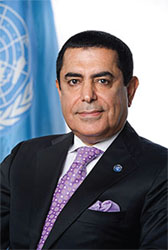
  • Ethnic-Based Violence Highlights Need For Greater Dialogue: UN OFFICIAL

    Ethnic-Based Violence Highlights Need For Greater Dialogue: UN OFFICIAL

    NEW YORK (TIP): Deeply concerned about the increasing number of acts of violence worldwide based on ethnicity and religion, a senior United Nations official has called for addressing the root causes of such violence and promoting dialogue and tolerance. “Such acts develop into incitement to hatred, racism, and xenophobia that often lead to national, regional and international instability,” Nassir Abdulaziz Al-Nasser, the High Representative for the Alliance of Civilizations said.

    “These acts are contrary to the values the Alliance of Civilizations is striving to promote such as cultural diversity, inclusiveness, religious tolerance and meaningful dialogue in accordance with the UN Charter.” Al-Nasser urged concerned religious and political leaders to address the root causes of ethnic and religious violence and uphold the rule of law, as well as engage in preventive diplomacy efforts with the aim of ensuring peace and security, protecting human rights and strengthening efforts leading to sustainable development.

    “The High Representative reiterates the importance of building bridges between ethnic groups to create an environment conducive to reconciliation, peace and prosperity for all,” he said. Launched in 2005 through the initiative of Spain and Turkey, and under the auspices of the UN, the Alliance seeks to promote better cross-cultural relations worldwide.

  • Sikh Community Leaders Call On The Consul General

    Sikh Community Leaders Call On The Consul General

    A delegation of Sikh community leaders led by Master Mohinder Singh, founder President of Gurdwara Baba Makhan Shah Lobana called on the Consul General of India, Ambassador Dnyaneshwar Mulay and apprised him of the problems the community faced with regard to passports, visas, OCI cards etc.

    They were particularly critical of the poor services being provided by the new service provider, BLS. Mr. Mulay heard them patiently and gave an assurance of improved services. Delegation included Gurmej Singh and Mohinder Singh, President and Vice President respectively of Gurdwara Baba Makhan Shah Lobana. The meeting was arranged through the good offices of Prof. Indrajit S. Saluja.