Month: October 2013

  • UK, AP to share tech, work on energy conservation

    UK, AP to share tech, work on energy conservation

    HYDERABAD (TIP): The UK Government has agreed to collaborate with Andhra Pradesh in sharing latest technologies and best practices in energy conservation and efficiency, according to a statement from the State Energy Conservation Cell. The State has set up an internal target of achieving energy savings of around 15,000 million units per annum worth about Rs 7,500 crore. Andrew McAllister, British Deputy High Commissioner at Hyderabad, along with his team, met P.K. Mohanty, State Chief Secretary and assured him that the UK is willing to extend technical support to the State in bringing best practices in energy efficiency and energy conservation.Mohanty said the Bureau of Energy Efficiency has identified Andhra Pradesh as high potential State for energy conservation and the Central Electricity Authority has recognised the recent energy conservation initiatives across various sectors including industry, agriculture and Government.

  • Sri Srinivasan takes oath holding Gita in hand

    Sri Srinivasan takes oath holding Gita in hand

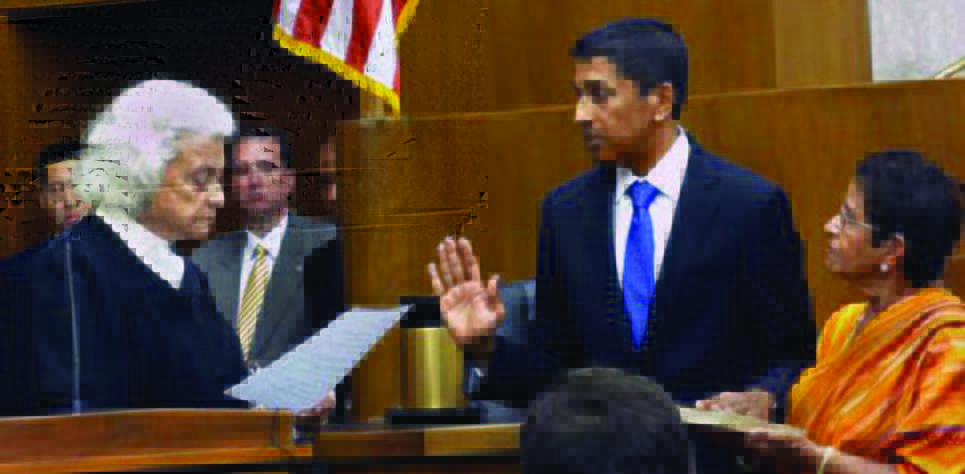
    WASHINGTON (TIP): Sri Srinivasan, 46, was sworn in an overflowing court room by retired Supreme Court judge Sandra Day O’Connor, in the presence of legal luminaries, friends and families as his mother Saroja Srinivasan held the Gita, the sacred book of Hinduism, before him. Gursharan Kaur literally rushed from the airport with just a short halt at the hotel to watch the investiture of Srinivasan on the bench of the US Courts of Appeal for the District of Columbia Circuit. O’Connor, for whom Srinivasan once clerked, called him “fair, faultless and fabulous”. Confirmed by the US Senate in May by a 97 to 0 vote, Srinivasan was earlier principal deputy solicitor general of the US to which job he succeeded another Indian American, Neal Kumar Katyal, in August last year.

    Srinivasan came to the US with his parents in the 1970s at the age of four. His family settled in Lawrence, Kansas, where his father was a mathematics professor at the University of Kansas, and his mother taught at the Kansas City Art Institute. He received his BA with honors and distinction in 1989 from Stanford University and his JD with distinction in 1995 from Stanford Law School, where he was elected to Order of the Coif and served as an editor of the Stanford Law Review. Addressing the gathering, Srinivasan acknowledged the contribution of his parents and family on his achievements. Srinivasan was first nominated by Obama on June 11, 2012. On January 2, his nomination was returned to the President, due to the sine die adjournment of the Senate. On January 3, 2013, Obama re-nominated him for the same office. His appointment is a testimony to his credibility and caliber as a brilliant legal luminary of the US. Srinivasan was previously the Principal Deputy Solicitor General of the United States. He is a highly respected appellate advocate who has spent a distinguished career litigating before the US Supreme Court and the US Courts of Appeals, both on behalf of the United States and in private practice.

  • California to grant driver’s licenses to illegal immigrants

    California to grant driver’s licenses to illegal immigrants

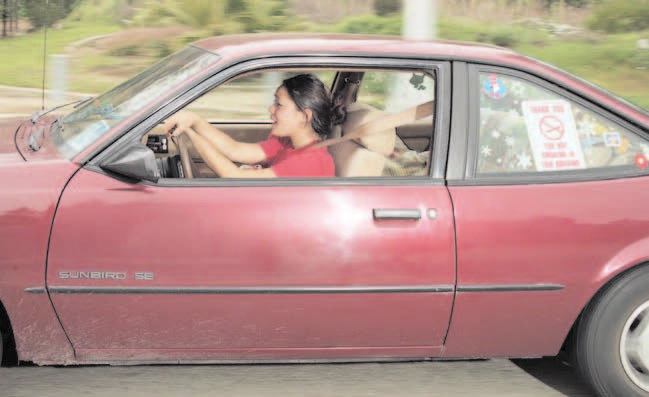
    SACRAMENTO (TIP): California Gov. Jerry Brown has signed a bill adding California to a growing list of states that will grant driver’s licenses to immigrants in the country illegally. Brown signed the legislation at a Los Angeles City Hall ceremony October 3 morning. Immigrant advocates have long lobbied for the change in California so immigrants in the country illegally can drive without fear of being pulled over for a ticket, which could wind up getting them deported. Department of Homeland Security estimated 2830,000 illegal immigrants in California in 2011. The new licenses will not be considered valid federal identification and will be marked differently from other licenses. The licenses are expected to be issued starting Jan. 1, 2015.

  • President Obama Launches Advanced Manufacturing Partnership Steering Committee ‘2.0

    President Obama Launches Advanced Manufacturing Partnership Steering Committee ‘2.0

    WASHINGTON, DC (TIP): President Obama launched, September 26, the Advanced Manufacturing Partnership Steering Committee “2.0,” part of a continuing effort to maintain U.S. leadership in the emerging technologies that will create highquality manufacturing jobs and enhance America’s global competitiveness. The Advanced Manufacturing Partnership (AMP) was created by the President in 2011 with the recognition that industry, academia, and government must work in partnership to revitalize our manufacturing sector. The new Steering Committee comprises leaders in industry, academia, and labor, will build on progress made by the inaugural Advanced Manufacturing Partnership Steering Committee, created by the President. As outlined in its report released last year, Capturing Domestic Competitive Advantage in Advanced Manufacturing, that group called for a national effort to strengthen the U.S. advanced manufacturing sector.

    Most importantly, the inaugural Steering Committee called for sustaining U.S. investments in science, technology, and innovation; establishing a National Network of Manufacturing Innovation Institutes-a set of public-private partnerships to build shared high-tech facilities and advance U.S. leadership in emerging technologies; upgrading communitycollege workforce training programs and deploying the talent of returning veterans to meet critical manufacturing skills needs; and improving the business climate for manufacturing investment through tax, regulatory, energy, and trade reform. The new Steering Committee will build on the progress made over the last several years and continue to make America a magnet for jobs and manufacturing so we continue to manufacture things the rest of the world buys. Through Administrative action, bipartisan legislative proposals, and private-sector initiatives, several of the Steering Committee’s original recommendations are now well underway. For example, this fall, three new manufacturing-innovation institutes will join the pilot institute created last year in Youngstown, Ohio, as a down payment on the formation of a National Network for Manufacturing Innovation.

    Also in response to the initial Steering Committee, the Administration has made investing in community colleges an important focus, proposing an $8 billion fund to help community colleges work with industry on new workforce development and training collaborations. The Administration continues to make investment in advanced manufacturing research and development a sustained priority, with a focus on accelerating the launch of technologies from lab to market. The Advanced Manufacturing Partnership Steering Committee 2.0 will function as a working group of the President’s Council of Advisors on Science and Technology (PCAST). In addition, it will work closely with the White House’s National Economic Council and Office of Science and Technology Policy and the Department of Commerce, to fully implement the initial Steering Committee’s previous recommendations, scale promising manufacturing workforce innovations and partnerships, and identify new, concrete strategies for securing the Nation’s competitive advantage in transformative early-stage technologies. In addition, the Advanced Manufacturing Steering Committee 2.0 will engage the broader manufacturing community through regional working sessions and forums designed to surface examples of innovative strategies to build US manufacturing competitiveness. Recognizing that the U.S. manufacturing sector draws its strength from a multitude of tightly linked capabilities contributed by the private sector, academia, and labor, the Advanced Manufacturing Partnership and its second-generation Steering Committee will draw upon leadership from across manufacturers of all sizes, leading universities, and labor.

  • Obama cancels trip to Asia

    Obama cancels trip to Asia

    WASHINGTON (TIP): The White House announced October 3 late night that President Obama’s upcoming trip to Asia has been canceled. “Due to the government shutdown, President Obama’s travel to Indonesia and Brunei has been cancelled,” White House press secretary Jay Carney said in a statement. “The President made this decision based on the difficulty in moving forward with foreign travel in the face of a shutdown, and his determination to continue pressing his case that Republicans should immediately allow a vote to reopen the government. Secretary (of State John) Kerry will lead delegations to both countries in place of the President.” Earlier this week, the White House announced Obama’s trip has been scaled back, canceling stops in Malaysia and the Philippines.Carney added that: “The cancellation of this trip is another consequence of the House Republicans forcing a shutdown of the government.”The trip was scheduled to begin on Saturday.The White House said Obama will schedule the trip for another date. “The President looks forward to continuing his work with our allies and partners in the Asia-Pacific and to returning to the region at a later date,” Carney said.

  • Suicide car bombing kills 15 people in Pakistan

    Suicide car bombing kills 15 people in Pakistan

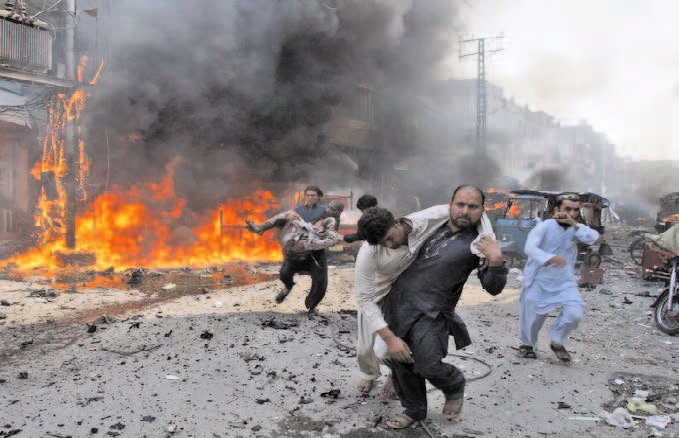
    PARACHINAR (TIP): A suicide bomber rammed a car packed with explosives into the compound of a rival militant commander in northwest Pakistan on October 3, killing 15 people, a government official said. The commander, Nabi Hanfi, was not present at the time of the attack, said Wajid Khan, a local government administrator. Hanfi has been battling the Pakistani Taliban in the Orakzai tribal area where the bombing occurred. Gunmen first fired shots at Hanfi’s compound in Balandkhel village, and then the suicide bomber detonated his vehicle, said Khan. The blast killed 15 people and wounded six others, he said. No one has claimed responsibility, but suspicion will likely fall on the Pakistani Taliban. A local tribal leader, Malik Nek Marjaan, said the Pakistani government has been supporting Hanfi’s group in its battle against the Pakistani Taliban. On Wednesday, suspected separatists killed two Pakistani soldiers, in a wave of attacks targeting troops doing relief work in a remote region of the country’s southwest where a major earthquake killed at least 376 people last week, military officials said. Also in southwestern Balochistan province on Wednesday but far from the earthquake zone, a bomb went off at the Pakistan-Afghan border, killing six people and wounding 11 others, said Pakistani security officials.

    The attacks on soldiers providing earthquake assistance highlight the difficulty and danger involved in doing such work in an area where separatists have been battling the army for years. In the first attack, a bomb blast hit a military vehicle, killing the two soldiers, the officials said. The explosion near Mashkay, a village in the province’s southwest, also wounded three soldiers. Their unit had been dispatched to the disaster zone after the magnitude 7.7 earthquake rocked the province on September 24. Later in the day, gunmen carried out four separate attacks against troops delivering relief supplies in the same area and a checkpoint established as part of the effort, said Pakistani military officials. No one was hurt in those attacks, they said, speaking on condition of anonymity because they were not authorized to speak to the media. There was no claim of responsibility for the attacks but suspicion fell on Baloch separatists who have been battling the Pakistani military for years and have claimed responsibility for similar attacks in recent days.

    The military has been ferrying aid into the region by helicopter and evacuating the injured, but their increased presence in a particularly contested area at the earthquake’s epicentre has led to renewed clashes. Awaran district where the quake was centred has been a stronghold of the separatists. Even among Balochistan residents who aren’t part of the armed conflict, there is strong resentment against the central government, which many residents contend exploits the southwestern province’s oil, natural gas and mineral deposits. On Saturday, gunmen killed four Pakistani troops carrying rations for earthquake victims. Last week, militants fired on two helicopters, including one carrying top government officials surveying the damage. No one was wounded in the incidents. Wednesday’s bombing at the Pakistan-Afghan border took place at a land crossing located in the Pakistani town of Chaman, some 480 kilometres (300 miles) south of the earthquake zone, security officials said. The six people who were killed were civilians. The wounded included six Pakistani border guards and five civilians, said the officials, also speaking on condition of anonymity because they were not authorized to talk to the media.

  • Mentor of 9/11 kingpin joins president race in Afghanistan

    Mentor of 9/11 kingpin joins president race in Afghanistan

    KABUL (TIP): A former Islamist warlord who is said to be responsible for bringing al-Qaida to Afghanistan and who trained the mastermind behind the 9/11 attacks, announced he was running for president on October 3, a move likely to be greeted with apprehension by the international community. A conservative Islamic scholar, Abdul Rasul Sayyaf ran paramilitary training camps in Afghanistan and Pakistan in the 1980s and 1990s, and it was there he meet al-Qaida leader Osama bin Laden . In 1996, Sayyaf helped Laden return to Afghanistan after he was ejected from Sudan . Laden stayed in the country under the protection of the Taliban until the Americanled invasion of late 2001. Sayyaf was named in the 9/11 commission report as the “mentor” of Khalid Sheikh Mohammed, the key plotter of the 2001 attacks on New York and Washington. Mohammed attended the military camps organized by Sayyaf in Pakistan and from which several of the 2002 Bali bombers graduated. “Today I nominate myself in order to serve my countrymen and my nation — I want to stand alongside the true servants of Afghanistan,” Abdul Rassoul Sayyaf said before he registered at the offices of Kabul’s Independent Election Commission. Western diplomats have previously talked of their concerns regarding Sayyaf ‘s nomination, given his deeply conservative views regarding women’s rights and social freedoms, and his deep ties to militant Islam. Sayyaf ‘s nominee for first vice president, Ismail Khan, will also worry the country’s Western backers.

  • After YouTube, Pak targets more sites

    After YouTube, Pak targets more sites

    NEW DELHI (TIP): It’s been a year since YouTube was banned in Pakistan last September. But that’s not a stray case of online censorship in the strife-torn country. Activists say that several other websites such as those highlighting human rights violation in Balochistan have also been blocked in Pakistan. “We have what you can best describe as ‘covert censorship’. A significant number of websites covering Balochistan human rights violations have reportedly been blocked. Similarly, a website on the genocide of Shias in Pakistan was blocked and later unblocked,” says Sana Saleem of activist group, Bolo Bhi. The YouTube block was prompted by an Islamophobic film, Innocence of Muslims, which had found its way to the video-sharing website. Authorities justified the online jamming saying that the film could cause widespread violence. But activists point out that authorities have resorted to online censorship to stop people from watching politically inconvenient videos as well. One of them is a three-year-old video of former Pakistani president Asif Ali Zardari pausing mid-speech at a public rally to say “Shut up!” to someone off-camera that prompted a YouTube block back then. Similarly, Dhinak dhinak, a song of the irreverent satirical band Beyghairat Brigade, has also been blocked on Vimeo, another video-sharing website.

  • 2 killed in Nepal ultra-light aircraft crash

    2 killed in Nepal ultra-light aircraft crash

    KATHMANDU: Two people, including a Chinese tourist, were killed on Thursday when an ultra-light aircraft crashed in bad weather in Nepal’s resort town of Pokhara. Pilot Stephen Shrestha and a Chinese national died when the ultra-light aircraft crashed after slamming into a hill near the Shanti Stupa in Pumdibhumdi village in Pokhara, 210 kilometres west from here, according to police. Ultra-light aircraft is popular among tourists for sightseeing in the Pokhara Valley and the Annapurna mountain range. The bodies have been sent for postmortem. It was raining and the sky was cloudy when the accident took place, eyewitnesses said. The ultra-light aircraft belongs to Avia Club Nepal, which has started the flight since 1997. Over 5,00,000 tourists visit Nepal every year, mostly from neighbouring India and China, and tourism is one of the major contributors to the economy of the impoverished Himalayan nation.

  • Pakistani passport among worst for travel: Survey

    Pakistani passport among worst for travel: Survey

    ISLAMABAD (TIP): A Pakistani passport is among the worst to travel on as the country’s citizens can only enter 32 countries without a visa, according to a survey. Pakistan shared its ranking with Somalia in the list of some 200 countries surveyed by Henley & Partners, beating only Iraq which ranked 92nd and Afghanistan, which came in last. India ranked higher than all three countries at 74. Many intervening positions were shared by several countries, showing India ranked much higher than other nations. The report said Pakistanis had access to only 32 countries without a visa, while Afghans could access just 28. The Visa Restriction Index 2013 was released by Henley & Partners to rank countries based on the visafree entry enjoyed by their citizens. The firm analysed visa regulations around the globe to determine the results. “Pakistan, Somalia, Iraq and Afghanistan remain in the bottom four places of the ranking, which means that citizens of these countries enjoy the least freedom of travel,” the firm said in a statement.

  • Russian embassy in Libya evacuated after attack

    Russian embassy in Libya evacuated after attack

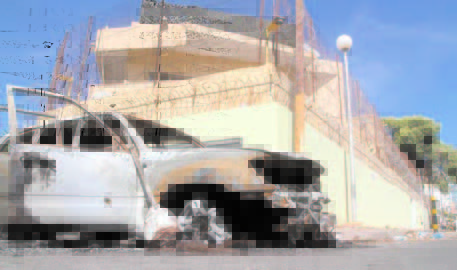
    MOSCOW (TIP): Russia on October 3 evacuated all of its diplomats and their families from Libya, the day after a mob attack on the Russian embassy, and issued a warning to its citizens against visiting the country. The Russian foreign ministry said none of the embassy staff was hurt in Wednesday’s attack, which came in response to the death of a Libyan air force officer, who was allegedly killed by a Russian woman. An armed mob broke into the embassy compound in the Libyan capital Tripoli, climbing over walls, breaking down a metal gate and shooting in the air. One of the attackers was killed by the gunfire, and four more were wounded, Libyan officials said. Russian foreign ministry spokesman Alexander Lukashevich said in Thursday’s statement that Moscow decided to evacuate the embassy after Libya’s foreign inister Mohamed Abdelaziz visited its grounds and told the Russian ambassador that Libya was unable to protect the personnel.

    Lukashevich added that all the embassy workers and their families safely crossed the border into Tunisia on Thursday. He said that the Libyan authorities had promised to protect Russian assets and try to quickly restore conditions for the safe operations of the embassy. Several senior diplomats will stay in Tunisia to maintain contacts with Libya, while the rest of the embassy workers will be flown to Moscow on Friday, Lukashevich said. He added that the foreign ministry recommends Russian citizens should refrain from visiting Libya. Wednesday’s violence briefly raised fears of a repeat of last year’s deadly attack on a US compound in the eastern city of Benghazi, in which the US ambassador and three other Americans were killed. In that instance, on the anniversary of the September 11, 2001, terror attack, militants fired mortars at the consulate, surrounded it and set it on fire. A Libyan official said Wednesday’s attackers took down the Russian flag that was hanging from the balcony of one of the buildings. But they did not enter the embassy buildings, he said, speaking on condition of anonymity because he was not authorized to talk to the media.

  • Another Tipu Sultan sword surfaces, to be auctioned

    Another Tipu Sultan sword surfaces, to be auctioned

    LONDON (TIP): A new sword belonging to Tipu Sultan has been discovered. Decorated with Tipu’s personal emblem, the bubri or tigerstripe motif, the sword will be sold by Sotheby’s in London on October 9. This comes nearly a decade after liquor baron Vijay Mallya bought Tipu Sultan’s sword and brought it back to India. The sword is fitted with an English blade and was taken as booty during the storming of the fortress of Seringapatam by the British in May 1799. It is estimated that the sword will fetch around £1,20,000. The sword is among the 11 works relating to Tipu Sultan including weaponry, prints, watercolours and portraits that is up for sale. Another of Tipu’s assets up for grabs is an 11-bore silver-mounted flintlock duck gun from the personal armoury of Tipu Sultan signed Sayyid Masum belonging to 1789. This is expected to fetch £80,000-1 ,00,000. A gem-studded gold dagger and scabbard belonging to the year 1700 will also be auctioned on October 9 and expected to fetch around £1,00,000. This dagger, overlaid with gold and set with rubies, emeralds and turquoise, embodies the prestige accorded to such weapons and the message of power that they conveyed as presentation pieces. To go along with it is a diamond-set and enamelled gold tray and casket from North India from the 18th Century. Sothebys said, “Covered with bright green enamel and set throughout with diamonds in the kundan technique , the creator of the present box and tray has conceived a masterful combination . The diamonds are carefully faceted to bring out the brilliance of each. Whereas jewelled examples exist, it is incredibly rare to find this shape. It is expected to fetch around £30,0,000.”

  • Malala is among top Nobel peace contenders

    Malala is among top Nobel peace contenders

    Malala Yousafzai, the Pakistani teenager who took on the Taliban , and Russian human rights activists are seen as top contenders for this year’s Nobel Peace Prize, the International Peace Research Institute said. Sister Mary Tarcisia Lakot is also a potential winner for her work promoting peace in Uganda, Kristian Berg Harpviken, head of the Oslo-based institute that ranks potential winners each year, said in a statement. Russians that may win include the “formidable , female, three-generation trio” of Lyudmila Alexeyeva, Svetlana Gannushkina and Lilya Shibanova, he said. Yousafzai, 16, was shot in the head in Pakistan’s Swat Valley in retaliation for her campaign for girls to be given equal rights to schooling, defying threats from Taliban militants in her hometown of Mingora. She now lives in the United Kingdom and has since then gained global recognition for her promises to continue her struggle against illiteracy, poverty and terrorism.

  • Indian-origin scientist develops ‘brain’ for robots

    Indian-origin scientist develops ‘brain’ for robots

    WASHINGTON (TIP): Robot brain! An Indian-origin scientist in US has developed a new feedback system that allows robots to operate with minimal supervision and could eventually lead to autonomous machines. The system may lead to robots that think for themselves, learn, adapt and use active critique to work unsupervised. Developed by Dr Jagannathan Sarangapani, from Missouri University of Science and Technology, the system makes use of current formation moving robots and introduces a fault-tolerant control design to improve the probability of completing a set task. The new feedback system will allow a “follower” robot to take over as the “leader” robot if the original leader has a system or mechanical failure. In a leader/follower formation, the lead robot is controlled through a nonholonomic system, meaning that the trajectory is set in advance, and the followers are tracing the same pattern that the leader takes by using sonar. When a problem occurs and roles need to change to continue, the fault tolerant control system comes into use.

    It uses reinforcement learning and active critique, both inspired by behaviourist psychology to show how machines act in environments to maximise work rate, to help the new, unmanned robot to estimate its new course. Without this, the follower wouldn’t have a path to follow and the task would fail. “Imagine you have one operator in an office controlling 10 bulldozers remotely,” said Sarangapani, the William A Rutledge – Emerson Electric Company’s distinguished professor in Electrical Engineering at S&T. “In the event that the lead one suffers a mechanical problem, this hardware allows the work to continue,” said Sarangapani. The innovative research can be applied to robotic security surveillance, mining and even aerial manoeuvring. Sarangapani believes that the research is most important for aerial vehicles. When a helicopter is in flight, faults can now be detected and accommodated. This means that instead of a catastrophic failure resulting in a potentially fatal crash, the system can allow for a better chance for an emergency landing instead. The fault tolerance would notice a problem and essentially shut down that malfunctioning part while maintaining slight control of the overall vehicle. “The end goal is to push robotics to the next level,” said Sarangapani. “I want robots to think for themselves, to learn, adapt and use active critique to work unsupervised. A self-aware robot will eventually be here, it is just a matter of time, he said.

  • Asian Indian Chamber of Commerce Hosts Successful Franchise Seminar

    Asian Indian Chamber of Commerce Hosts Successful Franchise Seminar

    EDISON, NJ (TIP): The Asian Indian Chamber of Commerce hosted its first Franchise Seminar and Show September 22 at the New Jersey Convention & Expo Center in Edison, NJ. Several franchise companies specializing in food, child-care centers, tutoring centers, computer IT services, senior care, financial planning and staffing and employment services participated. The event was co-chaired by AICC board members Nandini Menon and Rajeev Krishna. According to AICC Chairman Anil Bansal, the event was held to understand franchising from a franchisee’s point of view. “The event was a perfect opportunity for people to meet franchisees and franchisors and to facilitate a better understanding of the business process and business opportunities in one’s area of interest,” he said. Franchising can be an effective option for midsize to large companies seeking to enter new markets nationally and internationally, Bansal said. AICC has plans to make this an annual event. Based on feedback from attendees, sponsors and exhibitors, this event fulfills an important need of the Asian Indian Community which had not been addressed till now.

    For prospective franchisees the seminar offered advice and guidelines in financial and marketing resources and panel discussions with existing franchisees; while for existing franchisees the seminar offered alternative financial resources and introduction to marketing companies. Some of the participants at the daylong event included Action Coach, Rainbow Academy, Benetrends, Tutor Doctor., Global Life Enterprises LLC., Frannet, Vocelli Pizza, Rock ‘n Joe coffee and others. Other activities of the AICC include Networking Nights held every fourth Wednesday of each month to provide a networking forum for exchange of business ideas, referrals and business contracts for the mutual benefit of members; develop international connections to promote business growth, via trade missions & trade delegations, to and from India and other countries; strengthen commercial, social and political relationships between United States and India; provide a forum for the Promotion and Enhancement of Businesses, to showcase products and services; enhance education, knowledge and interact with keynote speakers and industry leaders and advocate and lobby the business concerns to political leaders at State and National levels, participate in political forums & meetings Delegation to Washington DC to meet with political leaders and policy decision makers. AICC is led by Anil Bansal, president; along with Vice President Priti Pandya- Patel.

  • Fighting Corruption: Rahul Gandhi takes a stand

    Fighting Corruption: Rahul Gandhi takes a stand

    Indian National Congress Vice-President Rahul Gandhi’s criticism of the controversial ordinance to protect convicted lawmakers is refreshing and gives us hope in putting the party on sound footing as it faces general election in 2014. Mr. Gandhi’s statement simply reflects the values and principles on which the party was founded upon. Mistakes are often made in the policymaking arena; however, realizing the ramifications of those decisions and rectifying the errors in a timely manner certainly takes courage. Mr. Rahul Gandhi has indeed risen to that challenge and for which he is widely applauded by the NRIs in USA. Corruption, the abuse of public office for private gain, is endemic in India and it transcends all sectors in every region. Though it is not limited to any political party, there is a general agreement to the fact that it is a cancer that is debilitating the soul of the nation. It is indeed a serious issue that is facing the nation; however, there is very little consensus as to how to deal with it or arrest its onslaught especially in the public arena.

    The recent mass movements have not gotten any tracking because they were hijacked by vested interests for political gains. Corruption is likely to occur when there are restrictions and government interventions where there is potential for excessive profits. General evidence based on cross country comparisons suggests that corruption has large and adverse effects on private investment and economic growth. Corruption is also most prevalent where there are political instability, bureaucratic red tape and weakening of legislative and judicial systems. Government with the help of the legislatures needs to create laws that would seriously clamp down on these mushrooming activities that are having a detrimental effect on the development of the nation and the safety of its citizens. The UPA Government has taken a number of steps to fight corruption by introducing several bills before the parliament such as Public procurement Bill, whistle blower’s protection bill, foreign bribery bill and prevention of money laundering and so on. However, what is required is courageous leadership along with strong and unambiguous stand that would create an environment that would seriously discourage people from engaging in corrupt activities. It is a known fact that once a corrupt system is in place, majority of the people operate within that system.

    What is required then is fundamental change to the very culture of corruption we tend to tolerate. Everyone in society might not have received a payoff; however, most folks may have paid here of there to get things done thereby contributing to the process. Mr. Rahul Gandhi has indeed taken a strong stand against ordinance prepared by India’s governing coalition to allow Indian lawmakers convicted of a crime to contest election while appeals against their conviction are pending in higher courts. He said the following at a press conference “My opinion of this ordinance is that it is a complete nonsense. It should be torn up and thrown out. This is the time to stop this nonsense. If we want to actually fight corruption in this country, whether it is my party or the B.J.P., we can’t continue making these small compromises,” Although the timing of his announcement when the Prime Minister was on a foreign trip may have received some criticism, people in general are impressed by the objective assessment of the issue and the courageous and principled stand he has taken. The time has come to define concrete results that might appear to be a tall order. Yet, this incident could well be a turning point in making a difference in fighting the corruption. I hope in the coming days, the Lokpal bill could become law and the Parliament will allow Lokpal to function as a constitutional body, as Mr. Rahul Gandhi has proposed.

  • U.S. failure to pay bills hurts everyone

    U.S. failure to pay bills hurts everyone

    If Congress does not raise the debt limit soon, seniors, veterans, kids, among others, are at risk.

    In an op-ed published in the October 4, 2013 edition of USA TODAY, Treasury Secretary Jacob J. Lew discusses the importance of Congress raising the debt limit immediately to avoid self-inflicted wounds that could impede economic growth and create uncertainty for families and businesses.
    It might be hard to believe, but there is a dangerous debate underway in Congress right now over whether the United States, the world’s strongest economy, should pay all of its bills. This is not a debate about reducing future spending or cutting the deficit. This is about making sure the United States can meet its existing obligations to our citizens, businesses and investors – and the stakes could not be higher. If the United States cannot pay its bills in full and on time, each and every American will be affected, including seniors who rely on Social Security, veterans who depend on disability payments, children in need of food assistance, and doctors and hospitals who treat Medicare patients, among others.

    The stock market, including investments in retirement accounts, could tumble, and it could become more expensive for Americans to buy a car, own a home and open a small business. We cannot put our nation in the position of not paying its bills because Congress has refused to raise the country’s debt limit. It is important to note that increasing the debt limit does not give the government the ability to spend more money. An increase in the debt limit simply allows us to pay our bills. Without a debt limit increase, our government will – in a matter of days – not have the resources it needs to make good on its commitments. Only Congress has the power to lift the debt limit. That means only Congress can clear the way for our government to meet all of its financial obligations. The United States has met all its financial obligations for more than 200 years. We are a nation that keeps our word. We are a nation that stands behind our full faith and credit. Some claim that the United States does not need to meet every one of its commitments. They argue that the government could pay certain bills and let others go unpaid without consequences.

    The United States cannot be put in a position of having to choose which commitments it should meet. How could we possibly decide among supporting our veterans, maintaining food assistance for children in need, or sending Medicare payments to hospitals? President Obama has made clear that he stands ready to find a sensible solution to curb spending and bring down our deficits. He has already worked with Congress to shrink our deficits by more than half by the end of this year. And he has put forward a budget plan that contains spending cuts favored by Republicans because he is committed to making compromises to strengthen our economic future. He has also made clear, however, that we will not negotiate over whether the United States pays its bills for past commitments. It is a solemn responsibility with which Congress has been entrusted. Congress has met that responsibility consistently throughout our history. It must do it again now.

  • Unemployment & Inequality

    Unemployment & Inequality

    Social safety net for jobless and sick needed

    Even if GDP growth rises, there will be growing inequalities unless there are strong policies aimed at the uplift of the vulnerable sections and the rich are taxed in an efficient and judicious manner. There should be some insurance against unemployment and sickness which will enable low income families to live with dignity”, suggests the author.
    The Indian economy is faltering even though there are some rays of hope. Exports are rising again due to the weakened rupee and agricultural growth is poised to be higher after a good monsoon. But one bad news is that unemployment has risen in the last one year from 3.8 per cent to 4.7 per cent, according to the Labor Bureau’s survey. This is hardly surprising because there has been a slackening of manufacturing growth to unprecedented levels and it is the manufacturing sector which creates jobs for the semi-skilled labor force. Agricultural growth has not been high either and it is the paucity of nonagricultural jobs that is causing an increase in unemployment in the villages. India’s unemployment rate, however, is lower than some of the member countries of the EU, such as Spain, Portugal, Greece and France. In India, even part-time workers call themselves ’employed’, so there is always an underestimation involved. Even if unemployment has risen to 4.7 per cent, it is still much lower than the unemployment in European countries, the US or UK. But unlike in the EU, the Indian unemployed do not get any dole.

    The unemployed youth in India pose a big problem for the future. There are going to be 423 million jobseekers by 2030. Only rigorous skill training of youth will enable them to get jobs. Unemployment, especially in the lower income groups, is a personal disaster and people with meager savings recede into debt rapidly. One illness in the family can reduce the family to penury and push it below the poverty line. The lack of any kind of social insurance or security is what is lacking in India and has to be corrected. We are wasting millions of rupees on unnecessary expenditure like foreign travel of ministers and dignitaries but we still do not have in place a social safety net that may provide a minimum income to the poorest families to tide over their education and health expenditure. Families with low incomes, and who are without job guarantee or pension, are most vulnerable today, yet no one is talking of a universal social safety net. On the other hand, an increase in unemployment will only widen the income inequalities in the country. Already the inequalities are rising as is evident from an increase in the Gini coefficient (a number between 0 and 1) which has risen in recent years from 0.34 to 0.38 (at perfect equality of incomes, Gini is 0). But according to experts, India’s Gini coefficient is not a proper indicator of rising inequalities because it takes into account the expenditure data rather than income data.

    According to them, the Gini coefficient is much higher at 0.54 when it is measured by income levels. Inequalities are rising because in every sector there is wide disparity between the big players and the small ones. In agriculture, 80 per cent are small and marginal farmers and the disparity of income between the big farmers and the small ones is huge. This disparity is increasing further with fall in agricultural incomes and inflation. Also as has been pointed out, the agricultural subsidies like free power and low priced fertilizers are cornered by big farmers rather than the small and marginal. In manufacturing sector too, most units are small or medium scale. There is a profusion of micro units and the small-scale sector contributes to 45 per cent of exports and employs 60 million people. Their productivity and incomes are low. Around 40 per cent of the employees in the manufacturing sector are in the lowpaying food, beverages, textiles, leather, and garment units. The large industrialists have big incomes and capability to invest and earn high profits. Their deep pockets enable them to undersell their products and wean away competitors. In the service sector, too, only 2 per cent are high earners, who are in the finance, insurance or real estate sectors.

    Most of the service sector employees are in the informal or unorganized sector and are low-income earners. All domestic servants, guards, cleaners, street vendors, construction workers are in the service sector, but the difference in income between the top earners and the bottom ones is huge. This widening income disparity is evident everywhere – in towns, villages and big cities. The ultra-high net worth Indians are growing at the fastest rate among BRICS. They are worth $30 million and their number is at 7,850 in India. Counting in dollars, there are 69 billionaires and 2 lakh millionaires in India who can afford the lifestyle of the richest in the world. There is inequality in every country and Joseph Stiglitz in his book “The Price of Inequality” describes the growing inequality in the US. But in India, the contrast is glaring and unpalatable. People living without basic needs and human dignity are within a stone’s throw of big mansions of the rich. The fatalistic nature of Indians enables them to tolerate such contrasts with stoic silence. There are few protests in India, considering the way the poor live and how they are treated. In the past, Indian industrialists were known for their simple living and philanthropic acts. Unfortunately, that era is gone and today only 19 per cent of the rich engage in philanthropic deeds. If we go deeper we find that government policies have been somewhat pro poor since Independence but have been diluted over the years.

    With the latest food security Bill as an example of equitable distribution, the UPA government can earn kudos for thinking about the poor. But on the whole, the government has not been able to eradicate corruption or establish better governance so that expenditure meant for the poor reaches them. All we hear of is how the middle men have pocketed the food grain meant for the poor or the money meant for the welfare of the downtrodden. Every country has had problems after the global financial crisis but many have tried to provide for the low income population in a humane and efficient manner. Hopefully with the news of rising unemployment there will be some action taken for the benefit of those in the lowest income bracket. Even if GDP growth rises, there will be growing inequalities unless there are strong policies aimed at the uplift of the vulnerable sections and the rich are taxed in an efficient and judicious manner. There should be some insurance against unemployment and sickness which will enable low income families to live with dignity.

  • Punishment, at last

    Punishment, at last

    Corruption got a jolt with RJD chief and former Bihar chief minister Lalu Prasad being sentenced to five years in jail and fined Rs 25 lakh in a fodder case – RC 20 A/96 – by a special CBI court on October 3 in Ranchi. With the sentencing Lalu has also been disqualified from Parliament and has lost his Lok Sabha seat. Another former Bihar chief minister Jagannath Mishra has been sentenced to four years in jail and fined Rs 5 lakh in the same case. Janata Dal United MP Jagdish Sharma, another accused, has also got a four-year jail term and he also loses his Lok Sabha seat. In all, there are 44 persons, besides Lalu who have been found guilty. The case went on for more than 17 years. On Monday, September 30th, special CBI judge Pravas Kumar K Singh held Lalu and 44 others guilty in the fodder scam case. Lalu has been convicted of corruption, criminal conspiracy and cheating. The other politicians who have been convicted and jailed are former Legislators RK Rana, Dhruv Bhagat and Vidya Sagar Nishad. The sentencing also renders Lalu ineligible for contesting elections for 11 years. One hopes, the punishment to politicians and bureaucrats in the fodder scam case will send the right signal to all and will prove to be a deterrent to corrupt practices. India needs more such convictions to instill fear in the mind of people in public service who have made corruption a sacred way of their lives.

  • A Government shutdown in the United States

    A Government shutdown in the United States

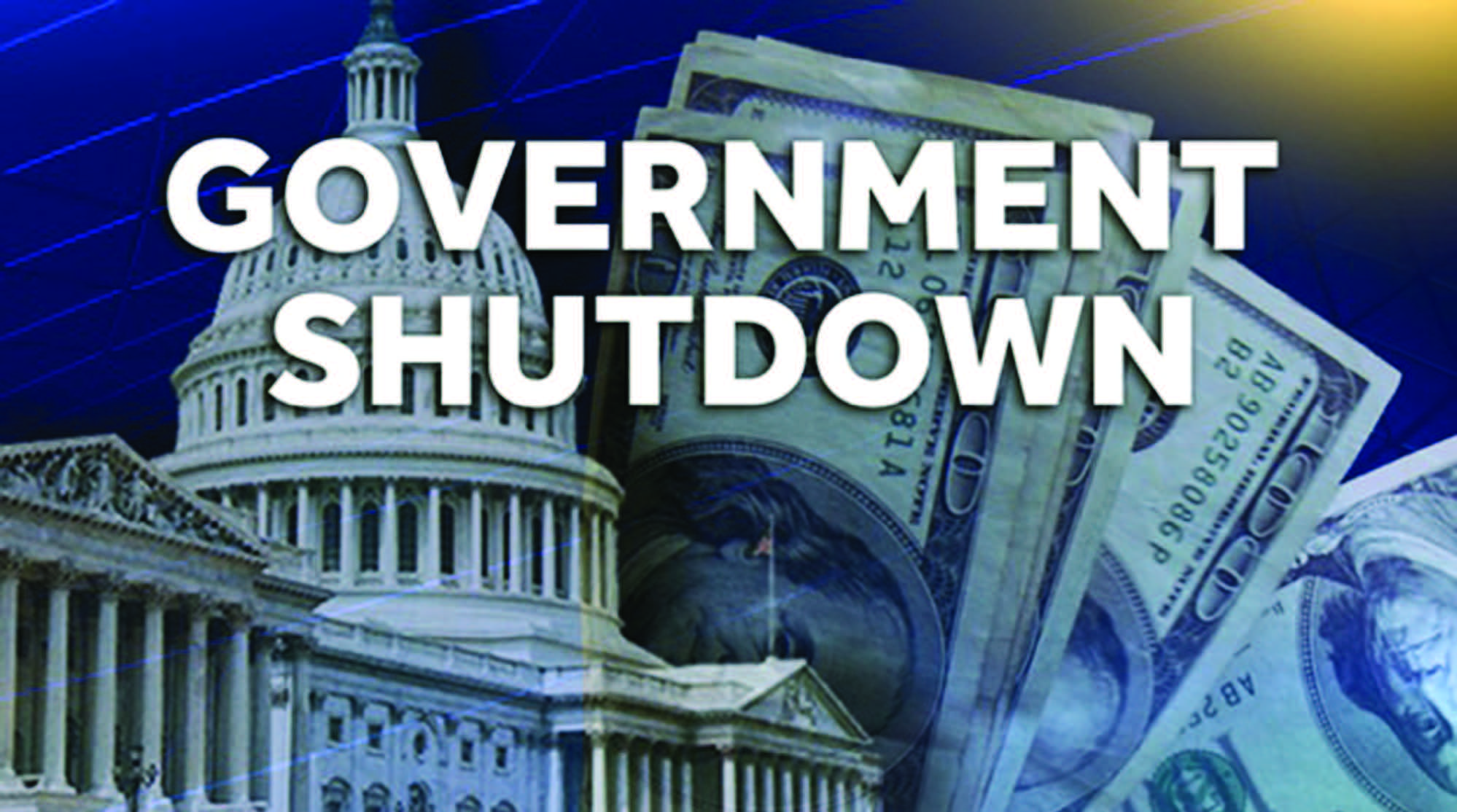
    In U.S. politics, a government shutdown is a situation in which Congress fails to pass authorization for sufficient funds for government operations. Typically, the government stops providing all but “essential” services at first, but since Congress must authorize all expenditures, there is no law protecting any government service from stoppage. Federal services that may continue for a time after a shutdown include the National Weather Service and its parent agencies, medical services at federal facilities, armed forces, air traffic management, and corrections (the penal system). During the Ford and Carter administrations, there were 6 partial government shutdowns that affected only the departments of Labor and Health, Education, and Welfare. These partial shutdowns lasted from 8 to 18 days and the primary issue of dispute was federal funding for abortion. During the Reagan administration, there were 8 full government shutdowns that lasted only 1 to 3 days each, primarily over the issue of the United States budget deficit. There was a similar 4-day shutdown during the first Bush administration. During the Clinton administration, after conservatives made massive congressional gains in the 1994 Republican Revolution, there were two full government shutdowns lasting 5 and 21 days respectively, the second of which was by far the longest of its kind to that date. The primary issue was again the United States budget deficit. The United States federal government shutdown of 2013 is ongoing, having begun on 1 October 2013. The primary issue of dispute between the Republican-controlled House of Representatives and the Democratcontrolled Senate (the latter supported by President Obama) is the Republicans’ desire to oppose the Affordable Care Act, signed into law in 2010.

    Mechanism of a Shutdown
    Under the separation of powers created by the United States Constitution, both the Senate and House of Representatives must approve an agreed budget, which then goes to the President of the United States for signature. If the President vetoes the budget, it goes back to Congress, where the veto can be overridden by a two-thirds vote. Government shutdowns tend to occur when the President and one or both of the chambers of Congress are unable to resolve disagreements over budget allocations before the existing budget cycle ends. Shutdowns of the type experienced by the United States are nearly impossible in other democracies. Under the parliamentary system used in most European nations, the executive and legislative branch are not separate, with the parliament designating all executive officials, typically called “ministers”. In non-parliamentary democracies, a strong executive branch typically has the authority to keep the government functioning even without an approved budget. This was the case in the United States up until 1980, when the administration of Jimmy Carter interpreted the 1884 Antideficiency Act to limit the power of federal agencies in the lack of congressional approval.

    What’s Affected by a Government Shutdown?
    Below, find an overview of some of the government services and operations that will be impacted until Congress passes a budget to fund them again. * Vital services that ensure seniors and young children have access to healthy food and meals may not have sufficient Federal funds to serve all beneficiaries in an extended lapse. * Call centers, hotlines and regional offices that help veterans understand their benefits will close to the public. * Veterans’ compensation, pension, education, and other benefits could be cut off in the case of an extended shutdown. * Every one of America’s national parks and monuments, from Yosemite to the Smithsonian to the Statue of Liberty, will be immediately closed. * New applications for small business loans and loan guarantees will be immediately halted. * Research into life-threatening diseases and other areas will stop, and new patients won’t be accepted into clinical trials at the National Institutes of Health. * Work to protect consumers, ranging from child product safety to financial security to the safety of hazardous waste facilities, will cease.

    The EPA will halt non-essential inspections of chemical facilities and drinking water systems. * Permits and reviews for planned energy and transportations projects will stop, preventing companies from working on these projects. Loans to rural communities will be halted. * Hundreds of thousands of Federal employees including many charged with protecting us from terrorist threats, defending our borders, inspecting our food, and keeping our skies safe will work without pay until the shutdown ends. * Hundreds of thousands of additional federal workers will be immediately and indefinitely furloughed without pay. Shutdowns in the past have also affected the Washington, D.C., municipal government, closing schools and suspending utilities such as garbage collection. Starting in 1976, the United States Federal Government has shut down on 18 occasions. The highest number of shutdowns-8- was in the Presidency of Reagan, followed by 5 in the presidency of Carter.

  • SAPAC 2013 Annual Lunch Meet Promises Attendance of Political Elite

    SAPAC 2013 Annual Lunch Meet Promises Attendance of Political Elite

    HICKSVILLE, NY (TIP): The South Asian -American Political Action Committee, better known as SAPAC, was founded by a community and political activist Zahid Syed with the avowed objective of educating the large South Asian community on politics and government and preparing them to play an active role in the mainstream politics. In order to realize its objective, SAPAC brings together the community and political and civic leaders together on various occasions when they network and interact. However, the most important of these events is the annual lunch which is usually attended by political elite of New York State. SAPAC annual lunch has the honor and exception of being the rarest of rare events of South Asian Community where US Congressmen, State Senators, Assemblymen, County officials, Town Supervisors, District Attorney and many more politicians of various hues can be found interacting with the community. Over the years, this annual lunch has become a must attend event of the South Asian Community with who’s who of Politicians, Officials , Businessmen & Community Leaders networking and discussing issues important to the community.

    When asked to highlight some of the achievements of SAPAC, Zahid Syed, its Chairman said “SAPAC has played an instrumental & vital link in highlighting as well as getting addressed some of the very important issues facing our South Asian Community, by the elected officials. We have got representation for the community on different boards, forums and agencies. We have also been successful in getting jobs for a number of our South Asian brothers and sisters”. “But our biggest achievement, what I think is that we have spread awareness about need for political representation in the election process for the South Asian Community and hence seeing so many candidates with South Asian background running for different elected offices”, commented Zahid when asked what he considers SAPAC’s biggest achievement. “We help to ensure a candidate’s success through financial help and getting them votes as well volunteers”, said Zahid. SAPAC has undoubtedly established itself as one of the highly successful community mobilization machines, through fundraisers with votes to the right candidates, who are attentive to the cause of South Asian community. “This wouldn’t have been possible without the help of our friends and supporters”, concluded Zahid. The next annual lunch of SAPAC is scheduled for October 20 at Mint Long Island, one of the best known South Asian Restaurants in Long Island. For further information, please contact Zahid Syed at ZahidSyed9@aol.com or call him on 516-832-6151.

  • Gurmail Singh of Richmond Hill, NY pleads guilty of tax fraud

    Gurmail Singh of Richmond Hill, NY pleads guilty of tax fraud

    WASHINGTON (TIP: An Indian-American has pleaded guilty of tax fraud by concealing his checkcashing activities from his tax return preparers resulting in an estimated revenue loss of between $400,000 and $1 million. Gurmail Singh, a resident of Richmond Hill in New York, had pleaded guilty in July, 2013 in US District Court in the Eastern District of New York, the Justice Department and Internal Revenue Service said. Singh faces a potential maximum sentence of three years in prison and a maximum fine of $250,000. Sentencing is scheduled for January 6, 2014. According to the indictment, court records and admissions made by Singh, he used check-cashing services to cash more than $2.9 million in checks paid to his construction company, Fancy and Vicky Construction Co. Inc. in Richmond Hill, for services between 2006 and 2008. Singh concealed his check-cashing activities from his tax return preparers, and this income was not included as gross income on the company’s tax returns, prosecutors alleged. Singh diverted the cash receipts earned by his companies for his own personal use. He admitted that his failure to report Fancy and Vicky’s gross receipts caused a tax loss of between $400,000 and $1 million, the Department of Justice said.

  • New York State Relief Commission Announced

    New York State Relief Commission Announced

    ALBANY, NY (TIP): Since taking office, Governor Cuomo has been committed to growing the economy while cutting taxes for middle class families and small businesses. Thanks to the Governor’s reforms, middle class families in New York now pay the lowest tax rate in 62 years, and New York businesses will save nearly $800 million in tax relief over the next three years. In addition, the Governor’s groundbreaking initiative – START-UP NY – will create zero-tax communities on SUNY campuses to attract start-ups and new businesses to create jobs for our people. In addition to the Governor’s ongoing efforts to streamline and improve New York’s tax code to make the state more affordable and competitive, the Governor announced the New York State Relief Commission today that will identify ways to reduce the State’s property and business taxes. The new Tax Relief Commission includes two of our state’s most respected leaders, former Governor Pataki and Comptroller Carl McCall, and will collaborate with the Tax Reform and Fairness Commission, launched last December.

  • Govt bows before Rahul, withdraws ordinance plan

    Govt bows before Rahul, withdraws ordinance plan

    Also goes back on bill shielding convicted lawmakers; partygovt relations take a hard knock

    NEW DELHI (TIP):In a complete U-turn, the UPA government decided to withdraw the proposed ordinance as well as the bill seeking to protect the right of a convicted MP or MLA to save his seat and seek re-election. The bill is pending before a standing committee of Parliament. The ordinance was drafted to resolve the imbalance arising from a Supreme Court order decreeing Article 8(4) of the Representation of the People Act (which prevents disqualification in case of conviction) illegal. After the outburst of Congress Vice- President Rahul Gandhi who termed the proposed ordinance ‘nonsense’ while Prime Minister Manmohan Singh was abroad, Gandhi met the PM on Wednesday morning for 25 minutes. That was followed by a meeting of the Congress core committee, a meeting between the President and the PM, and later in the day, a meeting of the Cabinet which “unanimously” resolved to withdraw both legislative proposals. Agriculture Minister Sharad Pawar spoke briefly during the Cabinet meeting where he said “it seems we failed to study the ordinance enough”.

    Law Minister Kapil Sibal rebutted this and said he had studied judgments and laws in great detail. Non-conventional Energy Sources Minister Farooq Abdullah said what had happened was unfortunate because it sent the message that the government was not pulling as one. The PM was silent. While the withdrawal of the proposed ordinance was on expected lines since the time Rahul Gandhi trashed it, the withdrawal of the bill came as a surprise. Briefing reporters after the Cabinet meeting, I&B Minister Manish Tewari said, “A special motion at an appropriate time would need to be moved to withdraw the bill, which is now the property of Parliament.” While this seemed to signal the end of a frantic week of high drama, the balance of power between the Congress party and the government stands altered. Interestingly, Sonia and Rahul Gandhi called on Defence Minister A K Antony, who is recuperating from an operation at a military hospital here. The meeting lasted nearly an hour. Rahul Gandhi has publicly acknowledged Antony as “my leader” and, before his Press Club of India bombshell, had asked colleagues what Antony’s position on the ordinance had been at the Cabinet meeting that considered it. During his return flight from the US, the PM did not deny that he disapproved of Rahul Gandhi’s public dismissal of a move that had been mulled by the government and party over days. When asked a pointed question about Rahul Gandhi’s description of the ordinance as ‘nonsense’ at a time when the PM was abroad, Singh wryly remarked, “Well, I am not the master of what people say.

    It has happened and when I go back I will try to find out the reasons why it had to be done that way and how do we handle it.” That the relationship appeared to have been damaged was clear from the body language of the PM and Congress President Sonia Gandhi at their first interaction upon his return. At Rajghat to pay homage to Mahatma Gandhi, both appeared stiff and ill at ease and, in a departure from protocol, Sonia Gandhi left the premises while the PM was still sitting there. Though that could be temporary awkwardness, interested parties seized upon it. Alliance partners like the Nationalist Congress Party (NCP) said they would stand by what the Prime Minister and the Cabinet decided, not act on the basis of an interjection by some individual from the Congress party. “We are allies of the UPA, not some individuals in the Congress,” said Tariq Anwar, minister of state for agriculture. “If this was the position of the Congress party, there should have been some discussion in the Cabinet.” The PM had made it clear he would not heed to the advice of former advisors and quit. But in a malaise that appeared to go deeper, the chief minister of a Congressruled state said the entire incident suggested the emergence of a ginger group within the party getting impatient at the ‘compromises’ the government was making. “Now you know why Rahul Gandhi never became a minister. If he had, this kind of thing… differences with the government would have been a routine, daily affair,” he said. There were suggestions that the group would lobby publicly that the Right to Information law apply to political parties. Some UPA alliance partners no longer appear sure that they would want to do business with a party whose leader — likely to be Rahul Gandhi come 2014 — would be so unilateral in his outlook. “Doctor Sahib (the PM) is a consensus man. By this incident, Rahul Gandhi has proved he is not. We will have to watch this tendency carefully. It will be a factor in our judgment about future dealings,” a leader of an ally party said.

  • Ramdev and Swami hit out at Gandhis and Congress at Hindu Unity Day Celebrations

    Ramdev and Swami hit out at Gandhis and Congress at Hindu Unity Day Celebrations

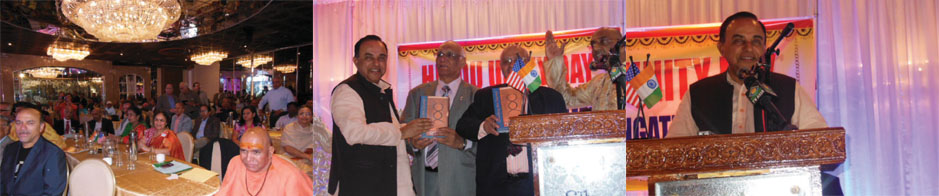
    HICKSVILLE, NY (TIP): Hitting out at Sonia Gandhi and Rahul Gandhi in his characteristic phlegmatic style, Baba Ramdev called upon the gathering at the Hindu Unity Day celebrations organized by the Indian American Intellectuals Forum on September 29th, to show the door to the corrupt Congress party and bring in Narendra Modi as the Prime Minister of India. He predicted a cakewalk for the saffron party in the 2014 general elections and decimation of Congress, the ‘party of Englishmen’. He said BJP under Modi will get as many as 300 Lok Sabha seats, forming the government, and then the glory of India of old will be restored. He said he had vowed to travel to every nook and corner of the country to seek ouster of the Congress party and its replacement with BJP under Modi. Baba Ramdev recalled the glorious heritage and culture of the Hindus. He said, “We were born to rule”. The time has now come to occupy our rightful place, he said. Paying tribute to NRIs, the Baba said that the number of NRIs in America may be small but they are number one in per capita income in the country.


    img13

    “You should now make India No. 1 in the world,” he exhorted the Indian American audience. Dr. Subramanian Swami, who has been a regular at Hindu Unity Day celebrations, spoke disparagingly of the Gandhis, blaming Sonia for being the high priestess of corruption. He dwelt at length on stories of corruption and involvement of Sonia and others from her family in them. He held Congress party responsible for culture of political corruption in India. He called upon the gathering to drive out the corrupt Congress party for ever. He heaped praise on Narendra Modi for being an upright man whose sole concern was glory to India and Indians. Dr. Swami also took digs at Dr. Manmohan Singh whom he described as a weak person, unable to withstand pressures, particularly from Sonia and Rahul to whom he is slavish. Speaking about terrorism and Pakistan’s support to it, Swami said Pakistan was no match for India and could be annihilated provided China was neutralized. He blamed the government of India for not having done enough to neutralize China and taken on Pakistan. Interestingly, both Baba Ramdev and Dr. Swami made identical remarks on Sonia, Rahul, Dr. Manmohan Singh and Pakistan. A day later, Modi also made similar remarks which leaves no doubt in the mind that the BJP is running a well orchestrated propaganda against the Congress party and its leaders. It is no coincidence that they touched upon the same issues and had the same remarks except for the difference in expression. The pattern cannot be missed.