Year: 2013

  • Movie Review-Chashme Baddoor

    Movie Review-Chashme Baddoor

    Cast: Ali Zafar, Siddharth, Divyendu Sharma, Taapsee Pannu, Lillette Dubey, Anupam Kher, Rishi Kapoor
    Direction: David Dhawan
    Genre: Comedy
    Duration: 2 hours 11 minutes

    STORY: Shy Siddharth loves feisty Seema – but his buddies falsely boast of flings with her, breaking the couple up. Can love be remade?

    MOVIE REVIEW: The answer’s yes – love can be remade and so can a lovely film like 1981’s Chashme Buddoor (CB). This version’s as different as paapri chaat from a dhokla. But it retains the original’s madness, masti and movie-mania. The remixed CB unrolls in Goa where phatichar shayar Omi (Sharma) is addressing, ahem, the St. Stephens College of Arts and Science, while wanna-be hero Jai (Siddharth) is over-acting into a rape scene. Watching the dolts in full bloom, CB has you chuckling from the start.

    Things only get better when sober Sid (Zafar) pops up, yodels with his cheap chums and explains their drought of dough to doughty cafe owner Joseph Futado (Kapoor) and landlady Josephine (Dubey). Meanwhile, Seema (Pannu) is escaping an arranged marriage, scooting towards the three idiots. Love happens – but after lust, lies and lots of laughs.

    CB’s boy-band impresses with consistent acting. With his silky sleaziness, Sharma often steals the show while Siddharth’s comic rhythm is a revelation. Zafar is endearing with his clenched-jaw charm, graceful as he dances, cute as he romances and rather hot when he throws a punch or two. Pannu’s bubbly without being overwhelming while Kapoor and Dubey light up the screen with their little love story – hardcore CB fans, you’ll find their romance does chamko! But the star remains the story, spicily modernized, yet its salt still that passion for filmi fun, rainy moments, shared chattris, judwaa bhais, overpowering Ma’s, red coats-yellow pants (Dhawan clearly enjoying a Govinda flashback), cheap shers, cheaper lusts and triumphant love. CB’s music is catchy, its lines too – “Bomb woh thi, blast main ho gaya!” – while the hilarity underlines the wise adage: friends stab you in the front but good friendship deserves chashme buddoor.

  • Kruger Named New Face Of Chanel Beauty Campaign

    Kruger Named New Face Of Chanel Beauty Campaign

    Diane Kruger has been unveiled as the new face of French fashion house Chanel’s new beauty campaign. Chanel praised the 36-year-old actress’ “natural elegance and beauty” and her “cosmopolitan spirit” and said that it will be releasing the images later this year, the New York Daily News reported. Previously, Kruger appeared in ads for the Chanel’s Paris-Biarritz bag line in 2007, having made her Chanel debut back in the 1990s with a print campaign for the Allure fragrance.

  • Olivia Wilde To Wed Next Spring

    Olivia Wilde To Wed Next Spring

    Hollywood actress Olivia Wilde has reportedly been overheard saying that she will marry actor Jason Sudeikis in New York next spring.

    Wilde announced her engagement to Sudeikis in January. The actress has already chosen Monique Lhuillier to design her bridesmaids’ dresses.

    The actress was overheard at a dinner at The General here Monday, telling guests about her wedding plans, according to the New York Post newspaper, reports femalefirst.co.uk. She also joked that having a long engagement bucked a family trend of marrying just months after a proposal. The actress previously admitted that she can’t wait to start a family with her 37-year-old fiance. “I can’t wait for children. I’m open-minded about how many, but three, which I love, is like a little party. I am not trying to have kids now – there’s no strict plan for anything in my life,” said Wilde. “What happens, happens. Jason’s so good with kids… I’ve never before experienced looking at someone and thinking, ‘That’s who I want to raise a child with,’” she added.

  • Movie Review-Jurassic Park 3D

    Movie Review-Jurassic Park 3D

    Cast: Sam Neill, Laura Dern, Jeff Goldblum, Richard Attenborough
    Direction: Steven Spielberg
    Genre: Adventure
    Duration: 2 hours 6 minutes

    STORY: Spielberg’s 1993 epic blockbuster has been remastered into 3D, so that fans can revisit the classic in theatres, while the younger ones can get introduced to the cult dinosaur disaster movie with enhanced viewing experience. REVIEW: There is something about disaster films that make us want to watch them over and over again. While watching others battle hard to survive a catastrophe, you subconsciously become those characters, which ensures an adrenalin rush.

    Their fear and courage engulf you, enabling you to live the adventure you see on the big screen. Who better than Steven Spielberg to help you do so! 20 years back, ripples were not just created in the glasses of water kept on the dashboard of a car in the film’s iconic scene, marking the thunderous footsteps of an approaching dinosaur, but also at the box office as the ‘first-of-its-kind’ eco-horror took the audiences by storm.

    The re-release of the triple Oscar-winning movie gives you an opportunity to watch the lunging velociraptors and T. Rexes in 3D. But before the fun part (dinosaur attack) begins, the opening half of the film does seem a bit ‘old-fashioned’ in its slow and gradual build-up. Lectures on the science of ‘cloning dinosaurs’, DNA, etc., along with an introduction to the paleontologists and scientists who are invited to millionaire John Hammond’s ( Richard Attenborough) island theme park ‘Jurassic Park’ for a preview make you a tad impatient.

    Post-that, you are kept on the edge of your seat till the end, with not just impactful CGI and 3D but also by striking an emotional chord with you. Dr. Alan Grant’s ( Sam Neill) rapport with the kids, Ian Malcolm’s ( Jeff Goldblum) sharp one-liners and John Hammond’s (Richard Attenborough) heartfelt love for his dangerous theme park is simply wonderful. In times of Life of Pi and Avatar, the 3D doesn’t seem outstanding but nowhere does it fall short of giving you goosebumps, especially in the brilliant scene towards the end, when velociraptors stalk the kids in the kitchen. While Spielberg’s story-telling still stays the film’s USP, the 3D does add to its brilliance. Here’s looking forward to Jurassic Park 4 in 2014!

  • Make Your Meal Nutrition Rich

    Make Your Meal Nutrition Rich

    Experts suggest how you can fortify your child’s meals so that they are wholesome. We are a health-conscious generation and in theory, know the nutritional value of almost every food. But our taste buds are not slaves of the information we’ve gathered. In fact it’s clearly the other way round! Some fruits are just non-seasonal the year round, while some veggies can never make it to the menu. If we don’t like the taste of one, the smell of the other makes us say “eew” (the calcium-rich milk has my vote!). Well, we all may just get to keep our lists of outcasts without having to ever hear the doctor announce the deficiency we invited ourselves. Just grasp the tricks of food fortification.
    A pinch of this and a pinch of that!
    Fortification is not new to Indian cuisine. Our spices are a storehouse of vitamins and other nutrients, informs nutritionist Naini Setalvad. Think of an ailment, and our good old turmeric’s ready to fight. She reminds us of its anti-septic, antihistamine and even cancer fighting properties. And indeed, the yellow power is rich in tonnes of nutrients – dietary fiber, vitamin C, vitamin B6, niacin, manganese, iron, potassium, magnesium, omega 3 fatty acids, omega 6 fatty acids and phytosterols.

    Sow the seeds for a healthy heart
    Cardiologist Dr Dhanashri Chonkar prescribes sunflower seeds, flaxseeds, pumpkin seeds, and sesame seeds to ensure that bad cholesterol doesn’t come knocking. These seeds contain good monounsaturated fats that help keep cholesterol levels low and also lower blood pressure. While in the Western countries these seeds often land on buns and bakes, she suggests that we can incorporate them in our chutneys. “In fact, the traditional Maharashtrian diet serves interesting chutneys made from these seeds with bakhri.”

    Substitute nutrition

    While for the non-vegetarians, fish serves as a great source of the very important omega 3 essential fatty acids not produced by our body, those not into seafood can include in their meals flaxseeds, says Setalvad. “And to ensure that your family’s diet in rich in calcium, mix oats and barley to the flour,” she suggests. For sulphur, onions are very good, woch the Indian cooking uses almost be default. For a dose of zinc, she counts the other seeds already suggested by Dr Chonkar.
    Fortifying desserts
    Nutritionist Namita Jain says honey makes for the perfect topping sauce thanks to glucose, B complex, C vitamins and some antioxidants. What’s more, honey is always welcome to our taste buds, and works well practically with all the desserts says, Chef Arindam Bahel. More concerned with the taste aspect, he suggests marrying honey with cream, nuts and even chocolates.

    For the kids
    It’s the kids who are the most fussy, agree all mothers worried about ensuring that their little ones receive a balanced diet. Paediatrician Dr Deepa Bhandarkar shares some sneaking tips for them, “Mix jaggery in dal.
    It’s a rich source of iron.” She also says that if kids don’t like vegetables, prepare a blending and knead the dough in that liquid. “Like this you can sneak in their requirements of vitamin A and B, she says. And according to her, allow them to indulge in bhel. If made with chana, peanuts and sprouts, it’s not really junk food.”

  • Coming Soon, Anti-Inflammatory Drugs Sans Side Effects

    Coming Soon, Anti-Inflammatory Drugs Sans Side Effects

    Researchers at Georgia State University have found a potential new strategy for developing new drugs to control inflammation without serious side effects. Jian-Dong Li, director of Georgia State’s Center for Inflammation, Immunity and Infection, and his team discovered that blocking a certain pathway involved in the biological process of inflammation will suppress it. Inhibiting a molecule called phosphodiesterase 4B, or PDE4B, suppresses inflammation by affecting a key gene called CLYD, a gene that serves as a brake on inflammation. Li explained the process of overactive inflammation using a “police” analogy. When a pathogen – such as bacteria or viruses — infects a patient, he said, it triggers an “alarm” to which the “police” of immune system respond.

    In turn, it triggers neutrophil attractant called cytokines to respond, leading to inflammation that serves to help rid the body of the pathogen. But if inflammation isn’t stopped, tissue damage can result. The pathways during the response are termed “positive,” like a gas pedal on a car, and “negative,” like a brake, with the process in the positive pathway going down the line from the pathogen to inflammation, and negative going the other direction.

    PDE4B is involved in controlling the negative pathway. Many researchers have been focusing on developing anti-inflammatory agents by stopping the positive pathway, but the discovery by Li and his colleagues gives scientists a new route to stop inflammation using safer or even existing drugs proven to be nontoxic as they have found that accelerating the negative pathway will reduce inflammation.

    There is a need for better drugs to control inflammation, because current treatments come with serious side effects, Li said. Steroids are commonly used, but cannot be used over the long-term, as they suppress the immune system.

  • Oily fish cuts triple-negative breast cancer risk

    Oily fish cuts triple-negative breast cancer risk

    Researchers from Fox Chase Cancer Center have found that omega-3 fatty acids and their metabolite products slow or stop the growth in the number of triple-negative breast cancer cells more effectively than cells from luminal types of the disease. The omega-3s worked against all types of cancerous cells, but the effect was observed to be stronger in triple-negative cell lines, reducing proliferation by as much as 90 per cent.

    Omega-3 fatty acids are found in oily fish like sardines and salmon, and also in oils derived from plants like hemp and flax. Previous studies suggest these compounds can negatively affect critical mechanisms in cancer cells, namely those responsible for proliferation and for apoptosis, or programmed cell death.

    Lead author on the study Thomas J. Pogash, a scientific technician in the Fox Chase Cancer Center lab of Jose Russo, MD, said that the new work underscores the important role common compounds found in food may play in keeping cancer at bay. “When you compare a western diet to a mediterranean diet, which has more omega-3s, you see less cancer in the mediterranean diet. They eat much more fish,” Pogash said.

  • Let The Flowers Bloom Indoors

    Let The Flowers Bloom Indoors

    Afresh flower arrangement never fails to lift your spirits. It adds colour to your house, filling it with positivity and energy. But what measures can one take to make all this last longer? As laymen, we are aware of certain measures such as adding a spoonful of sugar or an aspirin for the nourishment of the flowers or using a water spray to keep them looking bright. But, the process of making fresh flowers stay fresh starts right from its selection process. Be careful while taking your pick as these flowers are expensive compared to their artificial counterparts. Ideally, one should look for the ones that look youthful and not matured.

    The tell-tale signs of the latter would be drooping petals with a yellowish or brownish tinge at the corners. Fresh ones shall always have petals that are firm and are just beginning to bloom. The vase or the container in which the flowers are to be kept should be clean.

    They should be free from any leftover mucous from the earlier arrangements. Light is the source of life. Hence, it is advisable to keep flowers in a place where there is enough light coming in. This surely does not mean that you expose them to direct sunlight, as that will only make them shrink. Just make sure they aren’t put away in some dark corner of a room, and expose air them once in a while.

    An important thing to remember is that one should not keep flower arrangements atop devices that heat up such as a television, a refrigerator or an oven. This can cause the flowers to lose excess water and wither away quickly. Sharing some tips, florist Munira Taherbhoy says, “It is important to keep a constant watch that the stems do not catch any fungus. The trick to achieve that is by removing the leaves that are below the waterline. They are the main cause of promoting the growth of fungicausing bacteria. It also helps to retain the freshness of these flowers, as the leaves soak up a lot of water resulting in less water being transported to the other parts.” Taherbhoy also suggests a daily change of water in the container.

    Some other tried and tested ways are adding a mixture of a pinch of salt and baking soda or adding a copper element to the water. Also, ready pouches of medicine are available in the market. They keep these colourful creations of nature smiling.

  • Ford Chennai plant the first in the world to use eco-friendly 3-wet paint technology

    Ford Chennai plant the first in the world to use eco-friendly 3-wet paint technology

    CHENNAI (TIP): Car multinationals like Ford, Hyundai and Volkswagen are using cutting edge technology and practices to save power and water resources in their plants in India, where both are in serious short supply. Indeed, Ford Motor Company is expanding its 3-wet paint capacity by 50 % this year, adding the environmentally friendly paint process, which is already in use in its Maraimalainagar plant in the outskirts of Chennai, to four more plants on three continents.

    The actions will reduce CO2 emissions by an estimated 30% at those facilities. Ford India’s Chennai plant is the first Ford car plant in the world to use the 3-wet high-solids paint technology. The plant also does heat recovery by utilizing exhaust heat air to heat fresh air, and propane gas has been introduced as a fuel in its ovens instead of diesel, making for an environment-friendly paint process.

    According to Ford, the 3-wet high solids technology has resulted in VOC emission coming down by 23%, the best in the Ford Asia Pacific region. It has also reduced dock-to-dock time by 40% and CO2 emission by 21%. Water consumption has come down by 15000 KL/annum and the energy saved in the paint shop – 27.6 million kWh/annum – is enough to power almost 12,000 households in Chennai for a year, or to light up the entire Chennai street lights in night for almost 4 months. Ford, which was the first automaker to implement the 3-wet high solids solvent borne technology in 2007, currently has eight plants in North America, Asia Pacific and Europe, equipped for using the process to paint vehicles.

    That will expand to 12 plants in 2013 and then to additional facilities worldwide over the next four years. The 3-wet process derives its name because three layers of paint are applied one after the other before the prior coats have been cured. The process eliminates stand-alone primer application and a dedicated oven required in the conventional process that was used before.

    Advanced chemical composition of 3-wet paint materials allows for the three layers of paint — primer, base coat, and clear coat – to be applied while each layer is still wet without baking in between. “The 3-wet paint process is significantly more advanced than conventional technologies in applying durable paints in a highquality, environmentally sound and cost-efficient manner,” said Bruce Hettle, director of manufacturing engineering.

  • Delta Faucet enters India with its first store

    Delta Faucet enters India with its first store

    HYDERABAD (TIP): Delta Faucet Company, a leading American brand, today opened its first flagship store in Hyderabad, and outlined plans to set up about 20 stores in all by the year end. Delta sells a wide range of products and solutions that directly fit into local requirements. It has already finalised locations of 10 of these stores to be set up in next three months, with two stores coming up in Delhi during the week. Named the Dream Kitchen’s store, it has been set up through their local franchisee.

    It houses an array of faucets, storing products for the bathroom and kitchen space. Part of the $7.7-billion Masco Corporation, Delta is now in the process of establishing its presence in the country through a subsidiary. The store functions as an experience zone where people can visit and try them.

    Hans-Juergen Kalmback, Vice- President International, Delta Faucet Company, said India has emerged as one of the fastest growing markets for the company . The US company introduced its range of built-to-order kitchen cabinet products. These are designed and assembled in the US and shipped for fitment to the end customer. The company sees hospitality, public utilities, high-end homes as its potential customers.

  • Infosys Revenue Forecast Disappoints, Shares Dive

    Infosys Revenue Forecast Disappoints, Shares Dive

    BANGALORE (TIP): Infosys Ltd (INFY.NS) forecast full-year sales growth that missed analyst expectations by a margin of up to 50 percent, dimming investor hopes that India’s No.2 software services firm will soon start reaping the benefits of its strategic revamp. Infosys forecast on April 12 dollar revenue to grow between 6 percent and 10 percent for the fiscal year that began this month. That was less than analysts’ estimates for revenue growth of as much as 12 percent, and slower than a gain of 12 to 14 percent expected for the overall industry.

    Shares of Infosys tumbled as much as about 20 percent. The company, which had been losing market share for about two years to industry leader Tata Consultancy Services Ltd (TCS) (TCS.NS) and smaller rivals like HCL Technologies Ltd (HCLT.NS), has cut its pace of hiring to the slowest in three years with the aim of boosting profitability.

    Yet Infosys said on Friday that margins will be under pressure in the near term. “The (revenue) forecast looks quite conservative, which is a concern. Fiscal 2013 was also not very good for Infosys,” said K.K. Mital, CEO for portfolio management services at Globe Capital in New Delhi. “This looks like company-specific problem. Even mid-cap companies are expected to perform better than this.” Infosys, once seen as a trend-setter for India’s $108 outsourcing services industry, has turned in a string of disappointing results, except for in January when it surprised the market by raising its outlook.

    The rough patch was caused in part by the challenge of implementing its “Infosys 3.0” push for revenue through the development of its own software platforms, to differentiate its services from those of its competitors, amid sluggish demand from clients in its core western markets. In a sign that this strategy has yet to deliver, its products and platforms services contributed 5.7 percent of its overall revenue in the March quarter, down from 6.2 percent a year earlier. Infosys lost more than $5 billion in market value after the forecast was announced, with its shares on track to post their biggest single-day percentage fall since April 2003.

    Q4 PROFIT
    Consolidated net profit for the fiscal fourth quarter ended March 31 was 23.9 billion rupees, compared with 23.16 billion a year earlier. Revenue for the quarter rose 18 percent to 104.5 billion rupees. That compared with an average estimate of 23 billion rupees in a survey of 18 analysts by Thomson Reuters I/B/E/S. Revenue was estimated to grow 21 percent to 107 billion rupees. Infosys said it expected margins and pricing for its services to be under pressure in the short term, after reporting that billing rates fell 0.7 percent in the fourth quarter from the December quarter. Analysts also said the absence of an outlook for earnings per share from the company, which stopped giving quarterly forecasts last year, was a reflection of uncertainty.

    The company added 56 clients in the quarter, taking the total to 798, compared with an addition of 52 last year. “We are confident, considering the deal wins in the last one year and the wins in the recent past, we feel that we are well positioned for the next year,” Rajiv Bansal, chief financial officer, told reporters. Infosys also said it would set aside up to $100 million to invest in products, platforms and solutions ideas. “Because of this volatility we also understand that growth is the biggest challenge for us and that we’ve to get the growth back, which will require some investment, accelerating investments in the marketplace, also differentiate our service offering,” Bansal said.

  • NRI deposits rise 37% on high domestic interest rates

    NRI deposits rise 37% on high domestic interest rates

    MUMBAi (TIP): Non-resident Indians (NRIs) are keeping faith with the returns their banks back home are giving them. In the first eleven months of FY13, NRI deposits in the banking system rose 37 per cent (by $13.379 billion against $9.733 billion in the year-ago period). The NRI deposit accretion was solely in the non-resident (external) rupee account or NRE account. In the reporting period, NRE deposits soared by a whopping 161 per cent at $15.271 billion ($5.854 billion in the year-ago period). NRIs may be pouring money into the NRE deposits because they fetch handsome returns (for example, SBI is offering 8.75 per cent interest on NRE deposits of 1-10 years). Another reason why NRIs may be parking money in NRE deposits is that they may be taking a view that the rupee will appreciate down the line, thereby enabling them to make gains at the time when the deposit matures, said a senior public sector bank official. For example, if NRIs place NRE deposits now then the dollars they remit will fetch them Rs 54.50 a dollar.

    However, if the rupee appreciates to (say) 50 to the dollar at the time of maturity of the deposit (say two years down the line) then the depositor makes a gain of Rs 4.50 a dollar. Besides, the possible exchange rate gain, he earns interest on the deposit. The other two components of NRI deposits — Foreign Currency (Non- Resident) or FCNR Account and Non- Resident Ordinary (NRO) Rupee Account — have seen outflows. NRO deposits saw an outflow of $1.732 billion (against an accretion of $3.926 billion). FCNR deposits declined $160 million (against a decline of $48 million).

  • Finch, Uthappa end Pune’s losing streak

    Finch, Uthappa end Pune’s losing streak

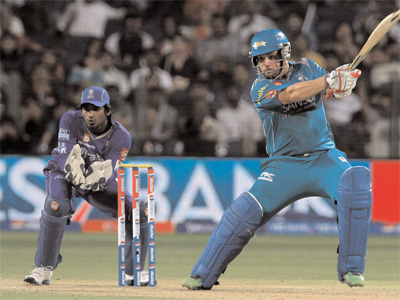
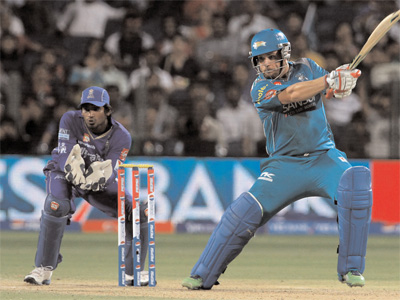
    PUNE (TIP): When Pune Warriors stumbled to 99 for 9 after choosing to bat against Kings XI Punjab and crashed to their 11th successive defeat, their captain Angelo Mathews said his batsmen needed to sort their “intent and attitude” towards the first six overs. Warriors had made 24 for 2 in the first six overs that evening. Four days later, Robin Uthappa and Aaron Finch blasted them to 64 for 1 in the same period, and Warriors made short work of the target of 146 set by Rajasthan Royals to break the longest losing streak in the IPL.

    Finch was playing only because Marlon Samuels was injured, and his arrival heralded a complete change in the way Warriors approached the Powerplay. Instead of starting overcautious and getting tied down, they started aggressively and never looked back on a slowish pitch. Royals captain Rahul Dravid gambled with India Under-19 left-arm spinner Harmeet Singh for a couple of overs at the start, ahead of James Faulkner, Kevon Cooper and Siddharth Trivedi. Harmeet was making his Twenty20 debut, and while his first over went for just six, the next one was taken for 17.

    There was no gamble with giving Sreesanth two overs from the other end. And while the first went for just seven, the second was shredded for 21. Uthappa did most of that damage, pulling successive long-hops from Harmeet for six and also lifting Sreesanth over long-on and deep square leg for two more sixes.

    Warriors catapulted to 51 for 0 in four overs, the frenetic start all but ending Royals’ hopes. Though Uthappa went for 32 off 16 deliveries to a brilliant one-handed take by Dravid in an opening partnership of 58 in 4.5 overs, Finch kept going and going. He’d already lofted Harmeet and Sreesanth for a couple of straight sixes and went on punishing slight width either side of the wicket, swinging Cooper over deep square leg to reach his fifty off 36 balls. Yuvraj Singh returned after missing the previous game with an injury to finish the chase in the 19th over with a huge six over deep midwicket off Sreesanth. It wasn’t that Royals had ended short of expectations in setting the target. Rahane said during the innings break they had aimed for anything between 140 and 150.

    Kusal Perera had gone first ball of the match to a Bhuvneshwar Kumar inswinger, but Dravid and Rahane had set the platform with a second-wicket stand of 81 off 67. Dravid was in superb touch on his way to 54 off 48, timing several pleasing drives through the off side. Rahane rotated the strike well, but both batsmen fell to sharp catches off the spinners as Royals lost their way in the middle of the innings. Rahul Sharma was especially difficult to get away with his full and quick legbreaks. Royals did scrap some runs towards the end, but the way Uthappa and Finch batted, Warriors’ losing streak had no chance of getting extended.

  • Friends no more? Gautam Gambhir, Virat Kohli involved in ugly on-field spat

    Friends no more? Gautam Gambhir, Virat Kohli involved in ugly on-field spat

    BANGALORE (TIP): There was no love lost between the rival captains as Kolkata Knight Riders’ Gautam Gambhir and Royal Challengers Bangalore’s Virat Kohli were involved in an ugly on-field spat after the latter was dismissed in the 10th over of the innings. It was an incident that took everyone by surprise as Gambhir and Kohli have been not only played together for the country but also for their state side Delhi, North Zone and same office side ONGC.

    The incident happened off the first delivery of the 10th over bowled by Lakshmipathy Balaji. Kohli, who had hit Pradeep Sangwan for two sixes, went for a wild slash but was caught in the sweeper cover region.

    As Gambhir and other players walked towards cover region to celebrate the dismissal, Kohli instead of trudging back to the pavilion walked towards short extra cover and apparently made a remark.

    Suddenly, Gambhir was seen walking angrily towards his junior India teammate. However it was another Delhi lad Rajat Bhatia, who got in between them and tried to calm Gambhir down. Both Gambhir and Kohli sought to downplay the incident at the presentation ceremony. “Some things happen in the heat of the moment…its nothing”, Gambhir said when asked whether he would have a cup of tea with his Royal Challengers Bangalore counterpart tonight. Kohli also shrugged off the on-field spat, saying “what’s done on the field is done”.

  • The Golden Temple or Sri Darbar Sahib?

    The Golden Temple or Sri Darbar Sahib?

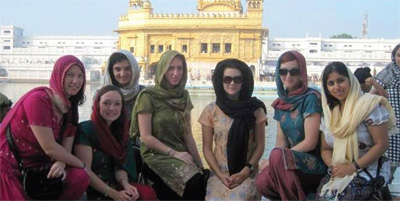
    Avast majority of the Sikh community is very progressive and forward looking. They have most admirably adopted new professions and cutting edge technologies. But there are some Sikhs, who want to generate controversies even on nonissues. Of late some Sikhs are advocating that we should call our most revered heritage shrine only as Sri Darbar Sahib. They contemplate a complete ban on the alternate name of this holy place “The Golden Temple”. I strongly contend that this is a non issue and we should concentrate our energies on some other real life issues. Most popular things are generally known by several names. Alexander the Great was called Sikandar in oriental civilizations. Egypt is known as “Misr” in the Arabic and Persian speaking countries. The West calls one of our neighbors Thailand, but its neighbors call it Siam.World’s most popular name is “God”. Millions of people all around the world question even the very existence of “God” and they are within their rights to believe so. The Hindus call “God” using several names like “Ishwar”, “Parmatma”, “Bhagwan”, “Vidhata” etc. The Mohammedans address “God” as “Allah” in the Arabic countries and as “Khuda” in Persian, Uzbek, Tajik, Dari, Pashton, Baloch, Sindhi and Punjabi speaking people. All these people believe that there is one God. All fathers and mothers love their daughters and they call them by several names. When Hazrat Mian Mir laid the foundation stone of “Sri Darbar Sahib”, it had, of course only one name. As the time passed, there came about a proliferation of names for it. Some people started calling it “Hari Mandir Sahib”. Some simplified it as “Harmander Sahib”. At one time the forces of Ahmed Shah Abdali not only ransacked the “Darbar Sahib”, they even damaged the shrine quite extensively.When the Sikh Misls became powerful in the second half of the eighteenth century, they rehabilitated the structure with the original materials- bricks and lime mortar. On annexation of Amritsar by the Sikh Emperor Maharaja Ranjit Singh in the first quarter of the nineteenth century, the emperor wanted to develop this home of “God” into a distinctly unique structure.

    Although the rules of historic preservation call for keeping the heritage structures in the same condition, in which those structures were originally constructed, but the Sikh custodians of religion believe in replacing the ancient structures with magnificent marble structures. Of course, Emperor Ranjit Singh also had the same beliefs as the other custodians of the Sikh heritage.

    He may not have altered the structure of the sanctum sanctorum in the “Darbar Sahib”, but he completely covered its interior and exterior with gold leaves. From the point of view of historic preservation, gold plating of the structure was wrong. But it has gone through two hundred years ago, under orders of the Sikh emperor Ranjit Singh.

    What the present Sikh generation inherited from Emperor Ranjit Singh was a beautiful shrine in white marble and gold. The Imperial British Indian Forces, after defeating the Imperial Sikh Army in 1949 occupied Amritsar along with Lahore. Those British officers, who actually visited “Sri Darbar Sahib” were dazzled by its ambience and the peace of mind that it gives. In order to acquaint the occidental world with the magnificence of this amazing place of worship, the British rulers of India gave it their own name “The Golden Temple”. It could also be called the “Gold and Marble Temple”, but that was too unwieldy name and the British were known to dislike long names. So the new name Golden Temple clicked with the world and it has become a shrine of the world. Some of our Sikh brethren want the world to know this place only as the “Darbar Sahib”. They want all the signs in Amritsar to change to reflect the old name.We sometimes forget that Guru Nanak was the social reformer for the entire world and not for a tiny community.

    This home of Guru Nanak is for the entire world and the world longs to pay their respect to this sacred place. Everyone is welcome and should be welcome in this home of God. It should not hurt any person’s sentiments, if this great place is known by more than one name. That is how I think, I may be wrong. In case you think, I am wrong, please forgive me for this transgression

  • New Ideological Battle in Pakistan: Traffic Circle’s Name

    New Ideological Battle in Pakistan: Traffic Circle’s Name

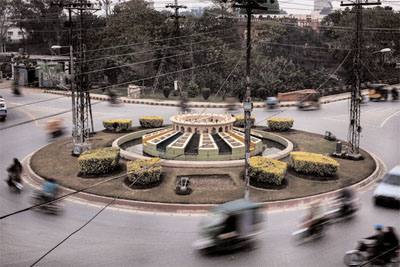
    If ever a squabble over a street name could sum up a nation’s identity crisis, it is happening in Lahore, Pakistan’s cultural capital.

    Late last year, a group of Lahoris made progress in getting local officials to for Bhagat Singh, a Sikh revolutionary who was hanged at the site by the British in 1931 after a brief but eventful insurrection against colonial rule. They see it as a chance to honor a local hero who they feel transcends the ethnic and sectarian tensions gripping the country today – and also as an important test of the boundaries of inclusiveness here.

    But in the Islamic Republic of Pakistan, questions of religious identity also become issues of patriotism, and the effort has raised alarm bells among conservatives and Islamists.

    The circle was named in 2010 for Chaudhry Rehmat Ali, a Muslim student who coined the name Pakistan in the 1930s, and there was an outcry at the news that it might be renamed for a non-Muslim. “If a few people decide one day that the name has to be changed, why should the voice of the majority be ignored?” asked Zahid Butt, the head of a neighborhood business association here and a leader of the effort to block the renaming. The fight over the traffic circle – which, when they are pressed, locals usually just call Shadman Circle, after the surrounding neighborhood – has become a showcase battle in a wider ideological war over nomenclature and identity here and in other Pakistani cities. Although many of Lahore’s prominent buildings are named for non-Muslims, there has been a growing effort to “Islamize” the city’s architecture and landmarks, critics of the trend say. In that light, the effort to rename the circle for Mr. Singh becomes a cultural counteroffensive. “Since the ’80s, the days of the dictator Gen.

    Zia ul-Haq, there has been an effort that everything should be Islamized – like the Mall should be called M. A. Jinnah Road,” said Taimur Rahman, a musician and academic from Lahore, referring to one of the city’s central roads and to the country’s founder. “They do not want to acknowledge that other people, from different religions, also lived here in the past.” A recent nationwide surge in deadly attacks against religious minorities, particularly against Ahmadi and Hazara Shiites, has again put a debate over tolerance on the national agenda. Though most Sikhs fled Pakistan soon after the partition from India in 1947, the fight over whether to honor a member of that minority publicly bears closely on the headlines for many. A push to honor Mr. Singh has been going on here for years.

    But it was not until the annual remembrance of his birth in September that things came to a head. A candlelight demonstration to support renaming the traffic circle had an effect, and a senior district official agreed to start the process. As part of it, he asked the public to come forward with any objections.

    The complaints started pouring in. Traders of Shadman Market, the local trade group led by Mr. Butt, threatened a strike. Chillingly, warnings against the move were issued by leaders of the Islamic aid group Jamaat-ud-Dawa, largely believed to be a front for the militant group Lashkar-e- Taiba. Clerics voiced their opposition during Friday Prayer. The issue quickly became a case for the city’s High Court, which said it would deliberate on a petition, initiated by Mr. Butt and a coalition of religious conservatives, to block the name change. That was in November, and the case still awaits a hearing date. The provincial government has remained in tiptoe mode ever since. “It is a very delicate matter,” said Ajaz Anwar, an art historian and painter who is the vice chairman of a civic committee that is managing the renaming process. Mr. Anwar said some committee members had proposed a compromise: renaming the circle after Habib Jalib, a widely popular postindependence poet.

    That move has been rejected out of hand by pro-Singh campaigners. Mr. Rahman and other advocates for renaming the circle paint it as a test of resistance to intolerance and extremism, and they consider the government and much of Lahore society to have failed it. “The government’s defense in the court has been very halfhearted,” said Yasser Latif Hamdani, a lawyer representing the activists. “The government lawyer did not even present his case during earlier court proceedings.” The controversy threatens to become violent. On March 23, the anniversary of Mr. Singh’s death, police officers had to break up a heated exchange between opposing groups at the circle. Mr. Rahman and the other supporters have vowed to continue fighting, saying it has become a war over who gets to own Pakistan’s history. “There is a complete historical amnesia and black hole regarding the independence struggle from the British,” Mr. Rahman said, adding of the Islamists, “They want all memories to evaporate.”

  • India, Germany ink six deals to enhance cooperation

    India, Germany ink six deals to enhance cooperation

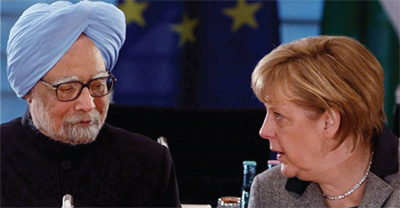
    BERLIN (TIP): India and Germany on April 11 signed six agreements to enhance cooperation in the areas of green energy, education, agriculture and science and technology. The agreements were signed in the presence of visiting Indian Prime Minister Manmohan Singh and German Chancellor Angela Merkelafter the second intergovernmental meeting between the two countries. The prime minister and the chancellor co-chaired the meeting and discussed the areas of cooperation. Addressing a joint press conference after the meeting,Manmohan Singh said the high level bilateral engagement between the two countries in the recent years had substantially and tangibly raised the quality of cooperation across a broad range of areas. “We look forward to expand defence cooperation anchored in technology transfer, co-development and coproduction in India,” he said. India’s Minister for New and Renewable Energy Farooq Abdullah and German parliamentary state secretary Gudrun Kopp signed an agreement for establishment of a “green energy corridor”.

    Two agreements were signed to enhance cooperation in education and research. Joint declarations of intents were signed for cooperation in agriculture, food security and civil security research. “High technology commerce would benefit from further easing of German export controls to India. The agreement today on scientific collaboration on technologies for civilian security adds a new dimension to our growing security cooperation,” Manmohan Singh said. Chancellor Markel said the inter-governmental talks had helped strengthen economic and strategic ties. “The scale and spectrum of agreements signed after the inter-governmental cooperation was a testimony of deep and close cooperation between the two countries,” she said.

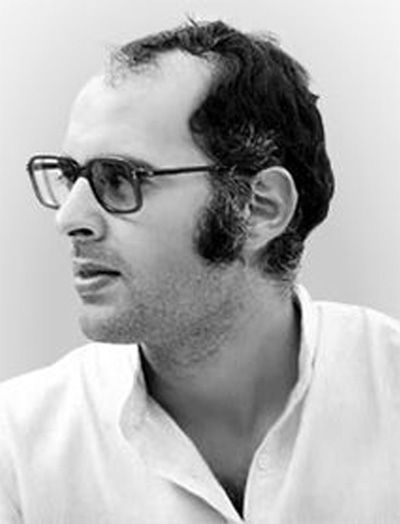
  • Three attempts were made to kill Sanjay Gandhi: WikiLeaks

    Three attempts were made to kill Sanjay Gandhi: WikiLeaks

    NEW DELHI (TIP): There were three assassination attempts on Sanjay Gandhi, a key figure during the Emergency, including one where a high powered rifle was used when the leader was visiting UttarPradesh, a US cable outed by WikiLeaks has claimed. In a September 1976 dispatch, the US embassy reported the then prime minister Indira Gandhi’s younger son was targeted by an unknown assailant in a “well planned assassination attempt” which failed. The date suggests the incident occurred during the Emergency. “Indira Gandhi’s son Sanjay was shot three times on August 30 or 31 by an unknown assailant,” the cable says, attributing the information to a clandestine source. The report says Sanjay escaped and was not critically injured.

    If Sanjay did suffer injuries, their nature is not specified but interestingly the cable bases its information on information provided by Indian intelligence sources. “According to Indian intelligence, this is the third attempt on the younger Gandhi’s life,” the cable states and goes on to surmise that the attack will eventually be blamed on revolutionary elements sponsored by outside powers. As is now evident, no word was let out on the UP incident or any of the other alleged assassination attempts.

    It is now unclear whether the intelligence sources quoted in the capable were impeccable, but Sanjay’s authoritarian image did earn him powerful enemies. Opposition to Emergency and the Gandhi family came from conventional political sources as well as radical elements of both right and left wing persuasion.

    Other US cables have noted that Sanjay and Indira’s private secretary R K Dhawan were “non-ideological” authoritarian figures behind the Emergency who worked to ensure the PM’s power remained unchallenged. A telegraphic summary provided by US intelligence to the state department on September 6, 1976 says of the UP incident, “The information concerning the incident is under tight control at present, but the attack will eventually be blamed on revolutionary elements sponsored by outside powers.” The excesses of the Emergency led to Congress suffering a decisive defeat in the 1977 election that were held after Indira Gandhi lifted the curbs on fundamental rights. Janata Party swept to power but in all investigations that followed, there was no mention of any attempts to kill Sanjay. Sanjay was killed in a plane crash in the Capital on June 23, 1980 soon after Congress came back to power after internal bickering consumed the Janata Party. He was 33 and a rising star in the Congress clearly seen as successor to his mother.

    His early death brought his elder brother Rajiv into politics who till then was a commercial pilot with Indian Airlines. Rajiv eventually became prime minister after the assassination of his mother and then prime minister Indira Gandhi in 1984.

  • Supreme Court Rejects Bhullar’s Mercy Plea

    Supreme Court Rejects Bhullar’s Mercy Plea

    NEW DELHI (TIP): The Supreme Court on April 12 rejected the mercy petition of Khalistan Liberation Force (KLF) terrorist Devinderpal Singh Bhullar, who was seeking commutation of his death sentence to life term because of inordinate delay in his execution. Delivering the verdict, the apex court said there was no merit in Bhullar’s mercy plea. The Bench had reserved its order on April 19 last year on a petition by the family of Khalistan Liberation Force (KLF) terrorist Devinderpal Singh Bhullar.

    The verdict is now likely to have a bearing on several others pleas, including those of convicts in the Rajiv Gandhi assasination case and four aides of sandalwood smuggler Veerappan, and also the eight convicts whose mercy pleas had been rejected last week, since most of these had been on the death row for years together, awaiting decisions of their mercy petitions. Bhullar was awarded death penalty for triggering a bomb blast in September, 1993, here killing nine people. The Supreme Court had on March 26, 2002, dismissed Bhullar’s appeal against the death sentence awarded by trial court and endorsed by the Delhi High Court. He had filed a review petition which was also dismissed on December 17, 2002.

    Bhullar had then moved a curative petition, which too had been rejected by the apex court on March 12, 2003. Bhullar, meanwhile, had filed a mercy petition before the President on January 14, 2003. The President, after a lapse of over eight years, dismissed his mercy plea on May 25 last year.

  • Reopen 1984 riots case against Jagdish Tytler: Court

    Reopen 1984 riots case against Jagdish Tytler: Court

    NEW DELHI (TIP): The ghost of the 1984 anti-Sikh riots has returned yet again to haunt Congress leader JagdishTytler. A sessions court on Wednesday ordered reopening of the case against him despite CBI giving him the clean chit twice. The former Union minister is accused of instigating a mob on November 1, 1984, whose actions led to the death of three persons taking shelter in a gurdwara.

    Setting aside the order of a magisterial court, which had accepted the CBI’s closure report in 2010, the court directed the agency to record the statements of purported witnesses. “CBI is directed to conduct further investigation…and to record statements of witnesses, who it had come to know during the investigation itself, are claiming to be eyewitnesses of the incident,” additional sessions judge Anuradha Shukla Bhardwaj said. “Let the law take its own course,” Tytler said, putting up a brave front. “CBI has nothing on me and I will come out clean. Today, the court has asked CBI to further investigate and has said nothing against me. This matter is purely between CBI and Lakhwinder Kaur (complainant). I am not in the picture,” the veteran Congress leader said.

    The court’s order came on a plea challenging the magisterial court’s order that accepted CBI’s closure report. Appearing for the riot victims and Lakhwinder Kaur, whose husband Badal Singh was one of the victims, senior advocate H S Phoolka had sought the court’s direction for further investigations. Phoolka had alleged that the agency disregarded the statement of material witnesses. Kaur in her plea had claimed there are four persons, Resham Singh, Chanchal Singh, Alam Singh and Santosh Singh, who witnessed the incident.

    The CBI had sought dismissal of the Kaur’s plea saying the probe had made it clear that Tytler was not present on November 1, 1984 at Gurudwara Pulbangash in north Delhi, where three people were killed during the riots. He was at Teen Murti Bhawan, where Indira Gandhi’s body lay in state, on that day, the agency had said. While the CBI has given a clean chit to Tytler twice in the past citing the witnesses as “non reliable”, Wednesday’s order left the investigating agency red-faced as the court found fault with the probe for not examining all available witnesses. “We understand that the CBI reserves its right to conclude that these witnesses were planted and not truthworthy and thus to file a closure report giving its opinion on the issue, however, it did not have any right to have not recorded the statements of these witnesses and thus to have prevented the court from forming its own opinion regarding reliability of these witnesses,” it said in its 12-page order. The CBI had contended that the statements of eyewitness Surinder Singh, who had died, were contradictory and could not be relied upon.

    The court, however, cited a Supreme Court judgment in another 1984 riots case against Sajjan Kumar, in which it was held that contradictions in the statements of witnesses were a matter to decided during the trial and could not be considered earlier. “Going by the law laid down by the Supreme Court, the contradictions in the statements of witness Surinder Singh given at different points of time could not be analysed and read for or against any party at the stage of summoning,” it said.

  • India has More to Offer than Meets the Eye-GSF Accelerator Founder Rajesh Sawhney

    India has More to Offer than Meets the Eye-GSF Accelerator Founder Rajesh Sawhney

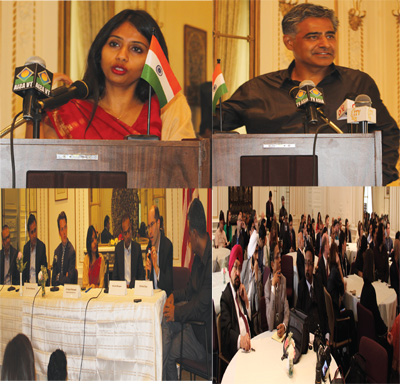
    NEW YORK, NY (TIP):Leading startup accelerator GSF India arrived in New York as part of its multi-city World Expedition. This unique cross-border event is targeted at providing entrepreneurs direct access to one of the most vibrant and growing accelerators in India. The expedition that was here April 9, had an interactive talk session on “Technology Entrepreneurship in India and Beyond: A Cross-Border Dialogue”, and is scheduled to tour London, Berlin, Boston, San Francisco and Palo Alto.

    The Acting Consul General Dr. Devyani Khobragade welcomed the delegates and spoke about the importance of enhancing the influx of investments in the country. She said, “The FM and the government are concentrating mainly on fiscal prudence and measuring ways to turn around the slump we are facing.We have already brought the fiscal deficit to 5.2 and we have targets to better that number.” She commended the efforts made by GSF in accelerating the many startups. “I was extremely happy to read about the startups and this is precisely what we need. Especially, while providing access to technology-based entrepreneurship. Technology has been the game changer for us. And I would urge investors to look beyond the red-tape bureaucracy that India is accused of fashioning and see that India always survives and thrives,” she added. Rajesh Sawhney, founder of GSF Accelerator, repeated that India has more than meets the eye. “I urge everyone to not give up on India.

    The kind of growth that you see in India cannot be measured or compared to other countries. It has been an absorbent of technology of any kind, be it DTH, 4G or any other venture. India’s technological foresight cannot be matched against,” said Mr. Sawhney. He also led a panel discussion with delegates that included Shantanu Surpure, Anish Malhotra, Andrew Montgomery, Samir Bhangara and David Teten. David Teten, a New York based venture capitalist and author described the startup-thriving ecosystem that New York is. “New York is the center of media hubs and that’s always good news for startups. Besides that most other spurts that we have seen in other fields such as fashion and films began and center around New York. So New York does provide that kind of an atmosphere for startups to thrive. So despite our own bureaucracy that we face, New York is still a far more desirable city to base your start up in,” said David.

    Founder of Indiagames, Samir Bhangara admitted to the difficulties in starting up ventures in India. “Sure it takes a long time to process everything. The procedure is slow and taxing too. But it’s about how far you want to look ahead. Either stop at the taxing procedures or look beyond and see what you can get once your initial set up is done,” he added. Brij Bhasin, Entrepreneur-in- Residence (Bangalore, India), also clarified the process of setting up ventures in India. “It is a long process.We admit that. The tax models in India are different too. And it can be a long procedure. But then again, after the initial set up, the primary positive of such ventures is that there is not a lot of government interference. Additionally, if you prepare an excellent business model, then you have lesser worries at hand,” said Bhasin.

    GSF Accelerator is India’s largest and most successful tech accelerator, founded by Rajesh Sawhney, and backed by 20 iconic Indian Digital Founders and 5 leading funds from across the World. It is a 9-week program designed to foster innovation in India’s fast-growing digital economy

  • The Sikh Temple of North Texas,Garland Organizes Sports Mela

    The Sikh Temple of North Texas,Garland Organizes Sports Mela

    DALLAS (TIP): Despite bad weather conditions, the Sports Mela organized by the Sikh Temple of North Texas, Garland, March 30th, attracted a large number of sportspersons and sports lovers. It was the 13th annual sports event organized by the Temple management with the tremendous support of the 400 families strong congregation. The organizers had expected some 400 participants in about a dozen events. But weather played foul and held back some of them. However, hundreds of men, women and children participated in the events.

    Hundreds cheered the participants. Women seemed to be more enthusiastic and were seen constantly cheering up the participants, particularly, if the participants were members of their family. The sports included races, basket ball, skipping, volleyball, soccer, tug-o-war etc.

    The organizers had very thoughtfully created age groups for participants. It was sheer joy to see the participants vying for honors in the true spirit of sportsmanship. Among the more interesting sports were the three legged race and spoon in mouth carrying a ball. Kids really enjoyed the fun a lot. The prize winners were surely on the ninth cloud but their relations and friends were no less delighted. They were seen rushing to congratulate and hug the prize winners. Prizes were given away by senior citizens. Gurjit Kaur, a senior citizen, has been coming every year in the last 13 years to watch the sports.

    Her daughter Rashpal Kaur and her grand daughter Raman Kaur who is 8 were with her. They said they enjoyed the event immensely. Jarnail Singh, 40, had his three kids participating. His 15 year old daughter Charanpreet Kaur who participated in a race won 2nd position. Navjot Johl, 11 years old, won 2nd position in Jumps. His third daughter, 9 year old Pritpal Johal got a 3rd position. Jarnail Singh was very pleased and said to this reporter that it was worth the while to bring the kids for sports events. However, he had some suggestions for the organizers. First, he said, the organizers should have a time schedule for each sporting event. Second, there should be some entertainment also.

    It should be in the form of dances, like Bhangra and songs. A community event, it had full community support, according to Manjit Singh Sahota, President of Garland Sikh Temple. He gave credit for the success of the sports mela to the community and his colleagues on the managing committee. He had special word of appreciation and gratitude for the sponsors. He mentioned to me that almost every food item and medals for prize winners were sponsored. Nat Family sponsored medals in the memory of Jasjeet Singh Nat. Langar was sponsored by Noni Toor, Sodhi Toor and Toor family. Water and soft drinks were sponsored by Davinder Singh Toor.

    The much liked Kulfi was sponsored by S. Haripritam Singh of Karinas Kulfi and the delectable Jalebi by Lalli Sandhu. Others recognized included donors and senior citizens who were kind enough to come and give away the prizes. Mr. Sahota also recognized Vijay Handa for his services.

    The most appreciation was reserved for the sports committee that organized the sports mela. It included Noni Singh Toor, Avtaar Singh Parvagga,Mandhir Singh Bal, Balkar Singh, Rakesh Saini, Harjit Singh Randhawa, Shera Punjab Singh Randhawa, Jeeta Randhawa,Sodhi Singh Toor, Gurshant Singh,Paramjit Sodhi, and Manjinder Kaur Banipal. The managing committee members who call themselves sevadars, are Manjit Singh Sahota, Balbir Singh Dhillon, Manmohan Singh, Amrik Singh Grewal , Dyal Singh Saini, Mukhtar Singh, Gobind Dhiman, Rupinder Singh, Langar Sevadar Santokh Singh Nijjar, Ranbir Singh Bunti, Bahadhar Singh Sahota, Parpal Singh Malhi and Tajinder Singh Teji. Gurjeet Kaur (first from right), Rashpal Kaur (first from left) and Raman

  • The Sikh Temple Of North Texas, Garland Organizes Sports Mela

    The Sikh Temple Of North Texas, Garland Organizes Sports Mela

    The Sikh Temple Of North Texas,Garland Organizes Sports Mela Prize Winners

  • JD(U) Mocks Modi’s ‘National’ Ambitions

    JD(U) Mocks Modi’s ‘National’ Ambitions

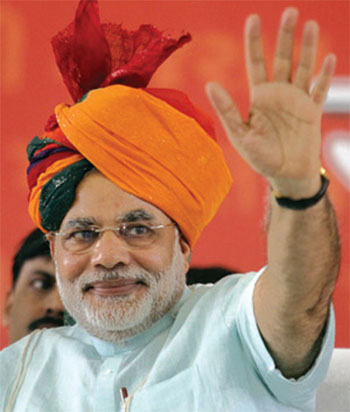
    NEW DELHI (TIP): Continuing to rile Narendra Modi, JD(U) on April 5 mocked Gujarat CM for his comment that after having served Gujarat he was ready to pay his debt to the country. A day after Modi’s comment at a book launch event in Ahmedabad was widely interpreted as his desire to take a shy at prime ministership, JD(U) MP Shivanand Tiwari said that Modi’s expression of gratitude to the country was just a cloak for his ambition to move to national stage. The outspoken JD(U) leader rubbed it in by saying that Modi’s ambitions may go unfulfilled. “What does he mean? Isn’t serving Gujarat same as serving India? If a man serves his village, he serves India. Nitish Kumar is serving Bihar and by that virtue alone he is serving the country.When a political leader says that, it only reflects his national ambitions.

    But only 2014 will decide who will sit in Delhi?” said Tiwari. He added, “It is the duty of every child to repay the debt he owes to Mother India. Not only Modi, every child and citizen owes a debt to Mother India…it is his duty to repay the debt whenever an opportunity arises.” Significantly, BJP did not react to the attack even though all available indications point to the party fast coming around to let Modi play the central role in its campaign for 2014 polls.

    This was the second provocation from JD(U). The NDA partner, which has been chaffing at the prospect of BJP projecting Modi as its PM candidate, had earlier attacked him for the Lokayukta Bill. Tiwari’s colleague Ali Anwar has called the Gujarat legislation on ombudsman “toothless”, echoing the criticism of Modi’s arch rival, Congress. The BJP had ignored previous anti- Modi swipe as well. JD(U), which is eyeing the sizeable Muslim vote in Bihar, has consistently expressed its reservations about Modi’s elevation in BJP’s scheme of things for 2014, and has threatened to walk out of the NDA if its views were not heeded by the saffron outfit.

  • President Confers Padma Awards

    President Confers Padma Awards

    NEW DELHI (TIP): President PranabMukherjee on April 5 conferred Padma Awards, the country’s highest civilian awards, to 108 personalities. The awards comprise 4 PadmaVibhushan, 24 PadmaBhushan and 80 PadmaShri Awards on Friday. 24 of the awardees are women and the list also includes 11 people in the category of foreigners, NRIs, PIOs and posthumous awardees. Noted physicist Yash Pal and space scientist Roddam Narasimha were chosen the second highest civilian honour Padma Vibhushan. Batting great Rahul Dravid and Olympic bronze medallist MC Mary Kom and late Bollywood actor Rajesh Khanna were named for the prestigious Padma Bhushan award, the third highest civilian award of the country. Renowned sculptor Raghunath Mohapatra and painter S Haider Raza were chosen for Padma Vibhushan.

    The list of 108 Padma awardees for this year also includes actress Sridevi, actors Nana Patekar and Malayalam star Madhu of Chemmeen fame and Olympians Yogeshwar Dutt and Vijay Kumar. Nobody was named for Bharat Ratna for this year too. The last awardee was late Bhimsen Joshi in 2008. Satirist Jaspal Bhatti, who died in a road accident last year, film maker D Rama Naidu, noted South Indian playback singer S Janaki, Bharatnatyam dancer Saroja Vaidyanathan, missile scientist Dr A Sivathanu Pillai of BrahMos programme, Industrialist Adi Godrej and R Tyagarajan, former bureaucrat M K Bhan were among the 24 Padma Bhushan awardees. In all four personalities were awarded Padma Vibhushan, 24 for Padma Bhushan and 80 Padma Shri. Of the awardees 24 are women, 11 belong to the category of foreigners, NRI, PIOs and posthumous.

    Padma Awards, the country’s highest civilian awards, are conferred in three categories, namely Padma Vibhushan, Padma Bhushan and Padma Shri.

    PADMA VIBHUSHAN
    Raghunath Mohapatra, Art, Orissa
    S Haider Raza, Art, Delhi
    Prof Yash Pal, Science and Engineering, Uttar Pradesh
    Prof Roddam Narasimha, Science and Engineering,Karnataka

    PADMA BHUSHAN
    Dr Ramanaidu Daggubati, Art, Andhra Pradesh
    Sreeramamurthy Janaki, Art, Tamil Nadu
    Dr (Smt) Kanak Rele, Art, Maharashtra
    Sharmila Tagore, Art, Delhi
    Dr (Smt) Saroja Vaidyanathan, Art, Delhi
    Abdul Rashid Khan, Art, West Bengal
    Late Rajesh Khanna, Art, Maharashtra
    Late Jaspal Singh Bhatti, Art, Punjab
    Shivajirao Girdhar Patil, Public Affairs, Maharashtra
    Dr Apathukatha Sivathanu Pillai, Science, Engineering,Delhi
    Dr Vijay Kumar Saraswat, Science and Engineering,Delhi
    Dr Ashoke Sen Science and Engineering,Uttar Pradesh
    B N Suresh, Science and Engineering, Karnataka
    Prof Satya N Atluri, Science and Engineering, USA
    Prof Jogesh Chandra Pati, Science and Engineering,USA
    Ramamurthy Thyagarajan, Trade and Industry,Tamil Nadu
    Adi Burjor Godrej, Trade and Industry, Maharashtra
    Dr Nandkishore Shamrao Laud, Medicine,Maharashtra
    Mangesh Padgaonkar, Literature and Education,Maharashtra
    Prof Gayatri Chakravorty Spivak, Literature & Education USA
    Hemendra Singh Panwar, Civil Service,Madhya Pradesh
    Maharaj Kishan Bhan, Civil Service, Delhi
    Rahul Dravid, Sports, Karnataka
    H Mangte Chungneijang Mary Kom, Sports, Manipur

    PADMA SHRI
    Gajam Anjaiah, Art, Andhra Pradesh
    Swami G C D Bharti alias Bharati Bandhu, Art,Chhattisgarh
    B Jayashree, Art, Karnataka
    Sridevi Kapoor, Art, Maharashtra
    Kailash Chandra Meher, Art, Orissa
    Brahmdeo Ram Pandit, Art, Maharashtra
    Vishwanath D Patekar alias Nana Patekar, Art,Maharashtra
    R Nageswara Rao alias Surabhi Babji, Art, Andhra Pradesh
    Lakshmi Narayana Sathiraju, Art, Tamil Nadu
    Jaymala Shiledar, Art, Maharashtra
    Suresh Dattatray Talwalkar, Art, Maharashtra
    P Madhavan Nair alias Madhu, Art, Kerala
    Apurba Kishore Bir, Art, Maharashtra
    Ghanakanta Bora Borbayan, Art, Assam
    Hilda Mit Lepcha, Art, Sikkim
    Sudha Malhotra, Art, Maharashtra
    Ghulam Mohammad Saznawaz, Art,Jammu and Kashmir
    Ramesh Gopaldas Sippy, Art, Maharashtra
    Mahrukh Tarapor, Art, Maharashtra
    Balwant Thakur, Art, Jammu and Kashmir
    Puran Das Baul, Art, West Bengal
    Rajendra Tikku, Art, Jammu and Kashmir
    Pablo Bartholomew, Art, Delhi
    Shri S Shakir Ali, Art, Rajasthan
    S K M Maeilanandhan, Social Work, Tamil Nadu
    Nileema Mishra, Social Work, Maharashtra
    Reema Nanavati, Social Work, Gujarat
    Jharna Dhara Chowdhury, Social Work, Bangladesh
    Late Dr Ram Krishan, Social Work, Uttar Pradesh
    Late Manju Bharat Ram, Social Work, Delhi
    Prof Mustansir Barma, Science and Engineering,Maharashtra
    Avinash Chander, Science and Engineering, Delhi
    Sanjay Govind Dhande, Science and Engineering,Uttar Pradesh
    Prof (Dr) Sankar Kumar Pal, Science, Engineering,West Bengal
    Deepak B Phatak, Science and Engineering,Maharashtra
    Dr Mudundi Ramakrishna Raju, Science and Engg,Andhra Pradesh
    Prof Ajay K Sood, Science and Engineering, Karnataka
    Prof Krishnaswamy Vijayraghavan, Science & Engg,Karnataka
    Dr Manindra Agrawal, Science and Engineering,Uttar Pradesh
    Dr Jayaraman Gowrishankar, Science & Engineering,Andhra Pradesh
    Prof Sharad Pandurang Kale, Science & Engineering,Maharashtra
    Vandana Luthra, Trade and Industry, Delhi
    Rajshree Pathy, Trade and Industry, Tamil Nadu
    Hemendra Prasad Barooah, Trade and Industry,Assam.
    Milind Kamble, Trade and Industry, Maharashtra
    Kalpana Saroj, Trade and Industry, Maharashtra
    Dr Sudarshan K Aggarwal, Medicine, Delhi
    Dr C Venkata S Ram alias Chitta, Venkata Sundara Ram, Medicine, Andhra Pradesh
    Dr Rajendra Achyut Badwe, Medicine, Maharashtra
    Dr Taraprasad Das, Medicine, Orissa
    Prof (Dr) T V Devarajan, Medicine, Tamil Nadu
    Prof (Dr) Saroj Chooramani Gopal, Medicine,Uttar Pradesh
    Dr Pramod Kumar Julka, Medicine, Delhi
    Dr Gulshan Rai Khatri, Medicine, Delhi
    Dr Ganesh Kumar Mani, Medicine, Delhi
    Dr Amit Prabhakar Maydeo, Medicine, Maharashtra
    Dr Sundaram Natarajan, Medicine, Maharashtra
    Prof Krishna Chandra Chunekar, Medicine,Uttar Pradesh
    Dr Vishwa Kumar Gupta, Medicine, Delhi
    Prof (Capt) Dr M Sharaf-eAlam, Literature & Education, Bihar
    Dr Radhika Herzberger, Literature & Education,Andhra Pradesh
    J Malsawma, Literature and Education, Mizoram
    Devendra Patel, Literature & Education, Gujarat
    Dr Rama Kant Shukla, Literature & Education, Delhi
    Prof Akhtarul Wasey, Literature & Education, Delhi
    Prof Anvita Abbi, Literature & Education, Delhi
    Nida Fazli, Literature & Education, Madhya Pradesh
    Surender Kumar Sharma, Literature & Education,Delhi
    Dr Jagdish Prasad Singh, Literature & Education,Bihar
    Late Shaukat Riaz Kapoor Alias Salik Lakhnawi,
    Literature & Education, West Bengal.
    Prof Noboru Karashima, Literature & Education, Japan
    Christopher Pinney, Literature & Education, UK
    Premlata Agrawal, Sports, Jharkhand
    Yogeshwar Dutt, Sports, Haryana
    Hosanagara Nagarajegowda Girisha, Sports,Karnataka
    Subedar Major Vijay Kumar, Sports, Himachal Pradesh
    Ngangom Dingko Singh, Sports, Maharashtra
    Naib Subedar Bajrang Lal Takhar, Sports, Rajasthan
    Ritu Kumar, Fashion Designing, Delhi
    Dr Ravindra Singh Bisht, Archaeology, Uttar Pradesh.