Year: 2013

  • Two die in shooting at Canada day care centre

    Two die in shooting at Canada day care centre

    GATINEAU (TIP): A man has shot dead another man at a day care centre in Quebec then killed himself, and the 53 children present were evacuated unharmed. Police said some may have watched the killings. For a moment, Canada feared its own version of last year’s deadly school shooting in the United States, where 20 young children were killed. The police on April 5 received a call about an armed man with a shotgun threatening people, Gatineau Police Chief Mario Harel said.

    They arrived to find one man dead with a shotgun beside him and a second man, an unidentified employee of the day care, also dead. Mr. Harel said the shooting seemed to be related to a recent separation between a couple but didn’t elaborate. The Racines De Vie Montessori day-care is located in two homes, and Sergeant Jean- Paul LeMay said police found a body in each one. LeMay said the children were safe at a nearby house. Police speculated that some children likely witnessed the killings. “It’s a small area, it’s a close space,” said Mr. Harel. “For sure, they should have been witness (to) the event.” Parents sobbed and hugged while they waited for investigators to bring them to their children.

    Omar Eltalawi rushed to the scene from his nearby home as soon as he heard about the shooting, fearful for his 3-year-old daughter, Zain. “It was horrible,” Eltalawi said as he described the fear of not knowing what was going on inside the day care. “You see these things on the news and you don’t expect it to happen to you.” Gatineau city is just across the river from Ottawa, the capital.

  • Indonesia hit by 7.2 magnitude earthquake

    Indonesia hit by 7.2 magnitude earthquake

    JAYAPURA (TIP): A 7.2 earthquake struck the eastern Indonesian province of Papua, the US Geological Survey said, sending panicked crowds running into the streets. There were no immediate reports of damage and no tsunami warning was issued after the quake struck on land at 1.42pm local time today at a depth of 75km, 272km west-southwest of provincial capital Jayapura, the USGS said. ”Based on all available data a destructive Pacific-wide tsunami is not expected and there is no tsunami threat to Hawaii,” the Pacific Tsunami Warning Centre has posted on its website.

    Local seismologists had measured the quake at 7.2. People in the area told AFP they felt the quake strongly and hundreds went running into the streets, witnesses told AFP. Narsi Bay said she was in a meeting on the first floor of a hotel in Jayapura when she felt ”strong shaking”. ”I went downstairs to go outside as quickly as I could as I was afraid that the building would collapse”. An official from the country’s meteorology, climatology and geophysics agency said the quake happened on land and there was no tsunami threat. ”We haven’t received any reports of damage.” Indonesia sits on the Pacific ”Ring of Fire” where continental plates collide, causing frequent seismic and volcanic activity.

  • Richmond Hill Punjabi Merchants Association holds maiden meeting

    Richmond Hill Punjabi Merchants Association holds maiden meeting

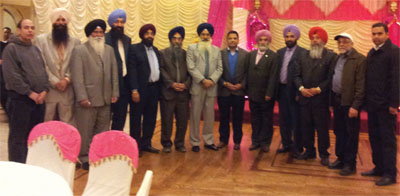
    NEW YORK (TIP): The recently constituted Richmond Hill Merchants Association held its maiden meeting last week at Royal Indian Palace Restaurant. Speaking at the meeting, the Association Chairman, Jaswinder Johal of Apna Bazar described creation of the association as a good step in the direction but cautioned members against an environment of bitterness within the organization. Association President Pritam Singh Gilzian said many wanted to be members of the association and he expected membership to grow to a hundred. Others who spoke on the occasion included Raghbir Singh Subhanpur, Vice President Himat Singh Sarpanch and General Secretary Kashmir Singh Pehowa.

    For any further information on membership, please contact Pritam Singh Gilzian at 917-687-3701

  • Punjab announces 10 per cent housing quota for NRIs

    Punjab announces 10 per cent housing quota for NRIs

    CHANDIGARH (TIP): The Punjab government on April 5 said under the proposed industrial investment and the real-estate policy, 10 per cent quota will be reserved for NRIs. The industrial investment policy and the real-estate policy “for comprehensive development of the state” is expected to be launched later this month. Deputy chief minister Sukhbir Singh Badal said, “The government has evolved a comprehensive plan to make NRIs equal partners in the industrial progress of the state and a 10 per cent quota of projects and plots is being reserved for Punjabi diaspora.” All new colonies of PUDA, GMADA and other urban development agencies will also have 10 pc quota in residential plots for NRIs. “All new colonies and other urban development agencies would also have 10 per cent quota in residential plots for NRIs,” he said. Accompanied by NRI affairs minister Bikram Singh Majithia, Sukhbir reviewed schemes promised to NRIs in the two day NRI sammelan held at Chandigarh and Jalandhar in January this year, an official spokesman said. Sukhbir said that he was satisfied that all departments of the Punjab Government have worked unitedly to fulfil most of the promises made to NRIs. However, he expressed concern over fraudulent marriages involving NRIs and said that they are being dealt with firm hand.

    Sukhbir said that Punjab is the first state in the country that has made registration of marriages by NRIs mandatory and the Punjab Compulsory Registration of Marriages Act-2012 has been notified and district authorities have been instructed to ensure its total compliance.

  • US man indicted for racially motivated assault on Sikh man

    US man indicted for racially motivated assault on Sikh man

    WASHINGTON (TIP): A federal grand jury in Seattle has indicted a man in Washington state on a federal hate crime charge relating to a racially motivated assault of a 50-year-old Sikh man. Jamie W Larson appeared on Tuesday before a US magistrate judge after his arrest by the FBI, where he pleaded not guilty, the Seattle Times reported.

    He faces up to 10 years in prison if convicted under the Matthew Shepard and James Byrd Jr Hate Crimes Prevention Act, according to the Federal Bureau of Investigation (FBI). “Attacks such as this one, based on prejudice and racial hate, are contrary to who we are and violate the law,” said US Attorney Jenny A Durkan. “Protecting the civil rights of all the members of our community is a top priority for our office.” The single-page indictment does not provide details of the attack, nor did a news release from the US Attorney’s office. It alleges only that Larson assaulted the victim, identified as KH, on Oct 17 in Federal Way “based upon the victim’s actual or perceived race, color and national origin, which include Middle Eastern and Arab descent.” However, state charges that were initially filed in the incident said Larson attacked his Sikh cab driver, beating him savagely and using racially charged language.

    The complaint said Larson pulled part of the man’s beard out, which was found by police on the ground. Larson was arrested at the scene of the attack after a witness called 911. Larson has a long history of arrests, including five convictions for drunk driving, and convictions for domestic-violence assault and disorderly conduct, according to the state charges.

  • Jackson Heights Merchants Association New Committee Members Announced

    Jackson Heights Merchants Association New Committee Members Announced

    NEW YORK (TIP): The Jackson Heights Merchants Association (JHMA) announced the names of the new committee members including the President, Vice Presidents and Chairman. The new Executive was announced at a dinner held at Jackson Heights on Tuesday. April 2. Deepak Verma (Amba Jewelers) is the new President of JHMA. Other committee members are Jagir Singh (Sabzi Mandi) as Chairman, Saif Nagra (Dera Restaurant) as Senior Vice President; Suresh Gandhi (S.R. Travel) and Sunil Patel (Alankar Jewelers) as Vice Presidents, Sarabjit Tamber (Raja Foods) as Treasurer and Harshit Chugh (Arman Bridal) as Secretary.

    The winners of board of directors elections announced last month are Amit Sharma aka Manu Rampal (JMD/ Black Wireles) , Amarjit Singh (Money Gram Agent) and Kamal Kumar (Sona Mandi). Shiv Dass, the pioneer and Chief Patron of JHMA blessed the new committee and wished them well to carry on the Association’s glory. “I am extremely happy with the names selected. I am sure that they will do very well in the long run.” On being asked about the diminishing numbers of the visitors at Jackson Heights, the newly elected President Deepak Verma said, “We are aware of this issue and our new committee’s focus is going to be to bring back business and visitors to Jackson Heights. But the economy is not too good also right now. Still this is our primary focus.

    We are going to ensure safety and security of our customers. We already have regular patrolling of our street. We are also in the process to expand parking area for the customers.” Amit Sharma, better known as Manu, one of the Board of Directors of JHMA said that a lot more younger crowd has been included in the community to allow newer ideas to spread. “We have included several younger guys because we want fresher ideas and thoughts on how we can revive our street’s business,” he added. The event was largely attended by business owners of the 74th street and members of Jackson Heights Merchants Association besides a few guests that included Bobby Kumar, a long time friend of the Jackson Heights Merchants Association.

  • 52% of Americans want marijuana legalized

    52% of Americans want marijuana legalized

    NEW YORK (TIP): For the first time in more than four decades of surveys in the United States on marijuana use, a majority of Americans have lent support to legalizing the drug that has been a traditional intoxicant in India. In a finding that reveals a decisive shift in attitudes towards the recreational use of marijuana (or cannabis) in the US, the latest Pew Research Center survey showed support for legalizing the drug at 52%, an increase of 11 percentage points since the 2010 Pew poll. In the poll conducted on March 13-17, 45% Americans said the drug should not be made legal.

    Opinion on the issue has undergone a sea change in the US since the first poll was conducted in 1969 by Gallup, where just 12% of Americans favoured legalization of marijuana use, while 84% were opposed to it. Pew, a respected polling agency in the US, found increased support for legalizing the organic drug across racial and age profiles. Young people were the most supportive, with 65% of those born since 1980 – called Millennials – favouring legalization, up from 36% in 2008. Surprisingly, the survey also found increased support for legalization among older Americans whose opinions were seen to be set. Half of US Baby Boomers (those born from 1946 to 64) supported making the drug legal. Even those born before 1946 (the Silent Generation) were more supportive of legalization than before – the percentage having nearly doubled, from 17 to 32, since 2002. The use, sale and possession of cannabis is illegal under US federal law, although some states have created exemptions to allow medical use of the drug. In November 2012, the states of Colorado and Washington made history by approving measures making the sale and possession of marijuana legal for both medical and non-medical use.

  • BJP announces core team; Modi returns to Board

    BJP announces core team; Modi returns to Board

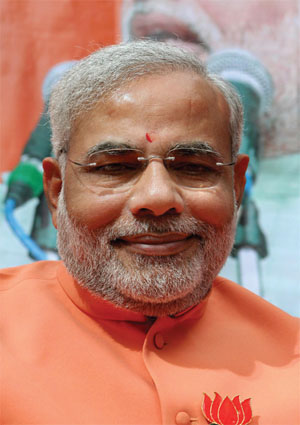
    NEW DELHI (TIP): The Bharatiya Janata Party (BJP) on March 31 announced its new Parliamentary Board and as speculated, Gujarat Chief Minister Narendra Modi was reinducted into the panel after a gap of six years. Among the other new members, who were appointed in the board, were Varun Gandhi and Modi’s close aide and former Gujarat home minister Amit Shah. The appointment is a shot in the arm for Modi, who is expected to play a big role in the next Lok Sabha elections after his three years of consecutive victory in Gujarat polls. Shah’s appointment, however, was opposed by a faction of the party. Among the new Vice Presidents appointed in the board are – Mukhtar Abbas Naqvi, Smriti Irani and Prabhat Jha.

    Madhya Pradesh Chief Minister Shivraj Singh Chauhan, however, did not find a place in BJP’s Parliamentary Board. Modi is the only Chief Minister who has been appointed in the board. Reacting to the development, party spokesperson Nirmala Sitharaman said, “Both Narendra Modi and Shivraj Singh Chauhan are important leaders for BJP.

    It is not fair to pick one Chief Minister to the other.” Smriti Irani, however, was happy with Modi’s induction and said, “Workers enthused after Modi’s induction in BJP Board.” She was also delighted with her elevation in the panel and thanked Rajnath Singh. Before announcing his new team, BJP chief Rajnath Singh had met senior party leader LK Advani, who continues to be a part of the party’s Central Parliamentary Board.
    Following is the list of BJP’s new Parliamentary Board:
    BJP General Secretaries:
    Ananth Kumar
    Thawarchand Gehlot
    JP Naddha
    Dharmendra Pradhan
    Tapir Gaon
    Amit Shah
    Varun Gandhi
    Rajeev Pratap Rudy
    Murlidhar Rao
    Ramlal (GS Org)
    BJP Central Parliamentery Board:
    Rajnath Singh (President)
    Atal Bihari Vajpayee
    Lal Krishna Advani
    Dr Murli Manohar Joshi
    M Venkeya Naidu
    Nitin Gadkari
    Sushma Swaraj
    Arun Jaitely
    Narendra Modi
    Ananth Kumar
    Thawar Chand Gehlot
    Ram Lal (GS Org)
    Vice Presidents:
    Sadananda Gauda
    Mukhtar Abbas Naqvi
    Dr CP Thakur
    Jual Urao
    SS Ahluwalia
    Balbir Punj
    Satpal Malik
    Prabhat Jha
    Sushri Uma Bharti
    Bijyo Chakravarti
    Lakxmikanta Chawla
    Kiran Maheshwari
    Smriti Irani

  • Thane Building Collapse

    Thane Building Collapse

    Death toll climbs to 62
    THANE (TIP): The death toll in the sevenstorey building collapse has mounted to 62 even as rescuers continued to scour the site for more bodies and survivors, the disaster control room said on April 5. According to regional disaster management control (RDMC) sources, 62 people including 30 women were killed in the tragedy while around 36 injured have been admitted to hospitals in Thane, Kalwa and Mumbra.

    The seriously injured have been shifted to JJ and Sion Hospitals in Mumbai. A 65-year-old woman, identified as Kutibi Shaikh, was rescued after being trapped for almost 30 hours, they said. She was admitted to the CSM hospital here last night in a state of shock but is stable, doctors attending on her said. At the collapse site, another survivor Shabnam told reporters that she had received a distress call on her mobile phone from a young teacher around 3pm yesterday saying that she was trapped along with sixseven students, but lost contact thereafter. The fate of the teacher and students is still not known as relief operations.

    Heartbreaking tales like a male survivor losing 13 of his family members have unfolded, as rescuers looked for survivors and bodies in the debris of bricks, mortar and twisted steel. Earlier, the national disaster response force, pressed into service to assist the local police and civic administration, had rescued 59 people.

    A case has been registered against builders Salil and Khalil Jamadar under Sec 304 (culpable homicide not amounting to murder) of IPC but no arrests have been made so far in the case, police control room said. Maharashtra chief minister Prithviraj Chavan had yesterday told the Maharashtra assembly that the local deputy municipal commissioner and senior police inspector were suspended. An additional chief secretary level probe has been ordered, he said. The illegal structure, which was underconstruction, collapsed in Shil Phata area at around 6.30PM on Thursday. Shil Phata is located between Mumbra and Dombivli in Thane district.

  • Community Organizations Take Care of Community Health

    Community Organizations Take Care of Community Health

    LONG ISLAND, NEW YORK (TIP): “For the first time, the Indian Association of Long Island (IALI) partnered with six other prominent organizations to bring free health camp to community members”, said a proud IALI President Dr. Kishore Kuncham. India Association of Long Island (IALI) and North America Telugu Society (NATS) in partnership with the American Association of Physicians of Indian Origin, Queens- Long Island (AAPI QLI), Arya Samaj of Long Island, Asamai Temple, Hicksville, Telugu Literary & Cultural Association (TLCA) and Sant Baba Nidhan Singh Ji Cultural Society (SBSNCS), held a Health Camp at Asamai Temple on Sunday, March 24, 2013. The event was held from 12 Noon to 4 P.M. Over 80 community members took advantage of the free consultative services of 18 volunteer doctors, in the area of: Internal Medicine, Opthalmology, Neurology, Pulmonary & Critical Care, Gastroenterology, Nephrology, Endocrinology, Cardiology, OB/GYN, Dental, etc., There also was an EKG service available for those individuals who needed an EKG. Volunteers also were there with their glucose monitors and blood pressure monitors ready to provide services. In addition, Flushing Hospital was able to provide appointments for Mammography and Colon Cancer Screening to individuals in need.

    Also, many Committee Members of the sponsoring Organizations, along with their spouses and young children gave up their Sunday to provide their volunteering services so that the community members could be triaged appropriately and over 100 wellwishers and friends from various organizations came to support the event. The hall of Asamai Temple was spacious, comfortable and convenient. The sponsors also provided breakfast (courtesy Ras Raj) and lunch (courtesy Asamai Temple) for everyone present. Dr. Kishore Kuncham, President of India Association of Long Island who coordinated the health fair and brought several key organizations together profusely thanked doctors, volunteers, and leaders of various organizations for their time, expertise and services.

    He praised Dr. Madhu Korrapati, Vice Chairman, NATS who was instrumental in organizing all the doctors and free glucose monitors. He acknowledged the cooperation and recognized Dr. Tarun Wasil (AAPI QLI), Mr. Veer Mukhi (Arya Samaj), Mr. Gobind Bhatija (Asamai Temple), Mrs. Krishnasri Gandham (TLCA), Mr. Satnam Parhar (SBSNCS), and Mr. Harshad Patel (Gujarati Samaj). The program concluded with all the attendees taking part in Laughter Yoga. It was very heartwarming to see the various organizations coming together and proudly serving the community and there was a sense of pride and hope to bring more programs jointly. The community needs to focus on the health and care needs of the elderly. It is time to think of a home for the Indian American seniors where they can live a free and healthy life. Hope, the caring community leaders would realize it.

  • A Good Samaritan Of Queens

    A Good Samaritan Of Queens

    Swami Durga Das lives for fellow human beings
    It was late in the morning last month when I walked in to Swami Durga Das’s modest office-cum-ashram, The River Fund, at Richmond Hill for an interview with him for The Indian Panorama. The River Fund is an exceptional nonprofit organization established in three locations in New York to help people by providing them food supplies and other assistance. His office was bustling with daily activities and dozens of people waiting for their cards to be prepared. Swamiji greeted them all with a warm smile and as I much expected, he waded through all my questions with a positively inspiring smile.

    Swami Durga Das is unlike any Swamis you have met. Born Michael Portillo into an Italian family, Swami Durga Das was always in search of finding the true meaning of self. He spent his teenage years traveling and seeking more meaning to his life. “I was a Hippie traveling around,” he admits. But he did find the answers he was looking for in India. “I was traveling aimlessly in the 60s when one day someone told me that I should visit India. At that point it sounded all so wonderfully foreign and exciting that I decided to make the trip. Once I set foot in India, I knelt down and kissed the Earth. It was an instantaneous connection that I felt.

    There was something profound about India,” he adds. The changes he was adopting weren’t well received by his family in the beginning. He says, “I grew up in Queens. My mother was not a big fan of me changing my name. Eventually she saw how good this was doing me. Initially when she used to hear me talk about Ma, she used to say ‘I am your only mother’. But she warmed up from the natural Italian jealousy.” India, he says, is the place that changed everything for him. During his visit he met Ma Jaya Sati Bhagawati. Ma was born in Brooklyn and also rendered to a lifetime of proving services to the ones in need. She was the inspiration behind Swami Durga Das’s renunciation of the material world. “As a youth, I was trying to find out who I was. I met Ma and there was an instant connection through her teachings and lessons. I realized that it really is a life of service.

    She taught me that ego is what needs to be destroyed; she called it death of the ‘I’. In 42 years of being with her I learned that it is not about me, it is about the journey. So I vowed to serve lifelong,” he says. He reveres the name he was given by Ma. He tells us, “Ma gave me the name of Acharya Swami Durga Kali Saraswati Das. Although I follow Hinduism I do not care if people say I am not a Hindu. It doesn’t matter. With Ma, I learnt that acceptance is the key to serving lifelong. You cannot do your duties if you discriminate. I am a gay man. I am now celibate. But even then, Ma accepted me for what I am.” Unfortunately Ma Jaya Sati Bhagawati passed away two years ago. Yet Swami Durga Das leads his life with all the ideals she taught him. He explains, “Her principal was basic, be the best of who u are inside. As human beings or any living specie, we all have many breaths inside us.

    With all the breath you have, what use are you making of these breaths. By Fighting? Or crying? Or hating? She taught me to make use of breaths wisely. By destroying the elements of negativity and using it with wisdom for more positive acts. Of course, there are many other ways to accepting faiths. Ma used to say that if you sit with someone and they say that their way is the only way, you go the other way”.

    Swami Durga Das or Swamiji as he is commonly known to everyone is the Executive Director of The River Fund at New York. Although The River Fund has several other establishments throughout the country, the one at Queens was established 21 years ago. Swamiji has been providing exceptional services to people all these years and he wants to continue to do so for as long as he can. “I always tell myself that no one should go hungry. Hunger is a situation that I believe we can eradicate if we put our minds to it. I do my best here at New York by providing food supplies to over 700 families every week.”

    The River Fund, founded through Ma, is known for the free quality food services it provides for the less-fortunate who live in or near the vicinity of New York. Every Saturday, Swamiji and his team open the ashram door to hundreds of people who have been lining up for hours. “River Fund operates a client choice pantry on every Saturday. It starts at 7.30. We serve about 500 to 700 families every week. People start lining up at 3 AM. You don’t need any kind of criteria. We don’t turn away anyone, there is no discrimination.

    We have a card system. But that is only for us to understand what kind of food requirements the family has, if they are diabetic, or they need formula, etc.” However, it has come to our attention that there are many people who are well-off enough who come every Saturday to get supplies from Swamiji’s ashram. When enquired about this, Swamiji smiles and says, “Every type of human nature comes on our lines. I have seen many different kinds of people who come here and stand for hours. Of course there are people who do that, I’ll be honest. But I am not someone who will go look into that. There are a people who steal millions and compared to that a person who can afford the bill and still comes to us for a grocery bag worth $40 is immaterial. I look at it this way. If this person is willing to stand in the line for about three to four hours, there is a need. And need is what we work with. It is a struggle to survive these days.” The River Fund has other centers in the US. Swamiji elaborates, “We have a center in LA for the HIV affected and senior citizens. In LA they have a brilliant program called ‘Under the bridges’ which literally mean helping people who live under the bridges by providing them with food and shelter. In Uganda and India they have many centers that facilitate providing food for the needy.” The garage is stocked with food supplies for the next Saturday. There were three giant refrigerators to chill frozen products. There is always need for strong financing.

    Swamiji explains, “We always have to raise money through grants and donation. We do need continual financial support and we try to get it from different places. As far as supplies are concerned, Food Bank is a partner, City Harvest, Robin Hood foundation, Trader Joes, Broadway Cares, United Way, Hilton Foundation, Costco, private donors and many other organizations are partners with us or they aid us in other ways.” In his long years of service, Swamiji has had his own share of ups and downs. His high point was when he arrived in India for the first time and when he met Ma there. He calls them his two most pivotal moments of his life. Although he faced many lows, he like everyone learned profound lessons from these moments. “Losing my partner to AIDS was the weakest moment for me. It’s not that I am not familiar with death. I embrace death but losing him in that manner and in 9 months was very difficult for me. And losing my Guru was also another weak moment. There were many other lows, like death of the ego, it’s very painful.

    But today I am here only because slowly I understood that I have to go on doing what I came here to do irrespective of any highs or lows. And that was it.” When Swamiji decided to renunciate his life to take up Sanyasan, he found the reasons to do so very easily. “Years later I wanted to be a renunciate. I wanted to take up the life of a Sanyasan. Being a renunciate does not mean that I want to stop caring about the world. It means to live in this world by helping the ones in need and not have expectations or demands from the world at all.” Swamiji stresses on spirituality more than religion and he explains why, “Hinduism is our base, but we believe in faith or spirituality. We believe more in Spirituality than religion. According to me, religion is a set of rules and guidelines that help us live a good life. And spirituality is the actual practice of it. This is the reason why I prefer spirituality. All religions preach kindness, compassion, caring, loving and helping others. But spirituality is the aspect that gets us to do all that.” The biggest difference between Swami Durga Das and other Swamis we meet is that he is not a preacher. He lives on ideals he found are apt for him. He is willing to help people when they are wrong but he does not prefer to sermonize. “I am not here to preach. I am not here to say that Lord Hanuman or Lord Ganesha is the way to go. Or to tell people that Jesus Christ or Mary Mother are the right religious leaders to follow.”

    Such a thought process could help us in the times we live in. Where fighting in the name of land or religion or other arbitrary factors are highly prevalent. “We live in the most chaotic times. It’s human nature to wage wars, start killing innocents or destroy the environment. Anger is a human nature. But the other side of this nature is kindness. I remember during 9/11 how despite the religious tensions, people across the country came together and helped each other despite the atrocities that were committed. But the question is how long can we be like that. As months went by, everybody went back to their lives and it all changed.” Swamiji explains that while anger and hate are one side to the human nature, the other side is kindness and compassion. What we must understand is what side we want to remain at and master ways to remain on the good side for long. He attributes most of his learning such as this from many Hindu religious texts that he has read.

    But it is not certain whether he can return to India permanently to learn more. “I want to go back to India. But I work seven days here. The needs are ever growing here. So it may be a bit difficult.” With that I take my leave and wish Swami Durga Das, his team and The River Fund establishment a very bright success on behalf of the readers of The Indian Panorama.

  • CBP Announces Automation of Form I-94 Arrival/Departure Record

    CBP Announces Automation of Form I-94 Arrival/Departure Record

    Eliminates Paper Forms, Streamlines Admission Process
    WASHINGTON (TIP): U.S. Customs and Border Protection announced March 21 that it has submitted to the Federal Register a rule that will automate Form I-94 Arrival/Departure Record to streamline the admissions process for individuals lawfully visiting the United States.

    Form I-94 provides international visitors evidence they have been lawfully admitted to the U.S. which is necessary to verify alien registration, immigration status, and employment authorization. The automation means that affected visitors will no longer need to fill out a paper form when arriving to the U.S. by air or sea, improving procedures and reducing costs.

    The change will go into effect 30 days after the rule is published in the Federal Register. “Automation of the I-94 will increase efficiency and streamline the admission process,” said CBP Deputy Commissioner David V. Aguilar. “Once fully implemented, the process will facilitate security and travel while saving CBP an estimated $15.5 million a year.” Travelers wanting a hard copy or other evidence of admission will be directed to www.cbp.gov/I94* to print a copy of an I-94 based on the electronically submitted data, including the I-94 number from the form, to provide as necessary to benefits providers or as evidence of lawful admission. ( www.cbp.gov/I94 ) As part of CBP’s work to bring advances in technology and automation to the passenger processing environment, records of admission will now be generated using traveler information already transmitted through electronic means. This change should decrease paperwork for both the officer and the traveler and will allow CBP to better optimize its resources. *The www.cbp.gov/i94 website will be live 30 days after the rule is published to the Federal Register. ( www.cbp.gov/I94 ) U.S. Customs and Border Protection is the unified border agency within the Department of Homeland Security charged with the management, control and protection of our nation’s borders at and between the official ports of entry. CBP is charged with keeping terrorists and terrorist weapons out of the country while enforcing hundreds of U.S. laws.

  • Easter

    Easter

    Easter, which celebrates Jesus Christ’s resurrection from the dead, is Christianity’s most important holiday. It has been called a moveable feast because it doesn’t fall on a set date every year, as most holidays do. Instead, Christian churches in the West celebrate Easter on the first Sunday following the full moon after the vernal equinox on March 21. Therefore, Easter is observed anywhere between March 22 and April 25 every year.

    Orthodox Christians use the Julian calendar to calculate when Easter will occur and typically celebrate the holiday a week or two after the Western churches, which follow the Gregorian calendar.

    The exact origins of this religious feast day’s name are unknown. Some sources claim the word Easter is derived from Eostre, a Teutonic goddess of spring and fertility. Other accounts trace Easter to the Latin term hebdomada alba, or white week, an ancient reference to Easter week and the white clothing donned by people who were baptized during that time. Through a translation error, the term later appeared as esostarum in Old High German, which eventually became Easter in English. In Spanish, Easter is known as Pascua; in French, Paques. These words are derived from the Greek and Latin Pascha or Pasch, for Passover. Jesus’ crucifixion and resurrection occurred after he went to Jerusalem to celebrate Passover (or Pesach in Hebrew), the Jewish festival

    commemorating the ancient Israelites’ exodus from slavery in Egypt. Pascha eventually came to mean Easter. Easter is really an entire season of the Christian church year, as opposed to a single-day observance.

    Lent, the 40-day period leading up to Easter Sunday, is a time of reflection and penance and represents the 40 days that Jesus spent alone in the wilderness before starting his ministry, a time in which Christians believe he survived various temptations by the devil. The day before Lent, known as Mardi Gras or Fat Tuesday, is a last hurrah of food and fun before the fasting begins. The week preceding Easter is called Holy Week and includes Maundy Thursday, which commemorates Jesus’ last supper with his disciples; Good Friday, which honors the day of his crucifixion; and Holy Saturday, which focuses on the transition between the crucifixion and resurrection.

    The 50-day period following Easter Sunday is called Eastertide and includes a celebration of Jesus’ ascension into heaven. In addition to Easter’s religious significance, it also has a commercial side, as evidenced by the mounds of jelly beans and marshmallow chicks that appear in stores each spring. As with Christmas, over the centuries various folk customs and pagan traditions, including Easter eggs, bunnies, baskets and candy, have become a standard part of this holy holiday.

  • April Fools’ Day

    April Fools’ Day

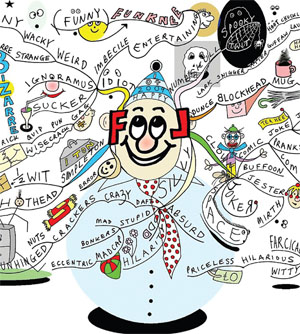
    April Fools’ Day, sometimes called All Fools’ Day, is one of the most light-hearted days of the year. Its origins are uncertain. Some see it as a celebration related to the turn of the seasons, while others believe it stems from the adoption of a new calendar.

    New Year’s Day Moves
    Ancient cultures, including those of the Romans and Hindus, celebrated New Year’s Day on or around April 1. It closely follows the vernal equinox (March 20th or March 21st.) In medieval times, much of Europe celebrated March 25, the Feast of Annunciation, as the beginning of the new year. In 1582, Pope Gregory XIII ordered a new calendar (the Gregorian Calendar) to replace the old Julian Calendar. The new calendar called for New Year’s Day to be celebrated Jan. 1. That year, France adopted the reformed calendar and shifted New Year’s day to Jan. 1. According to a popular explanation, many people either refused to accept the new date, or did not learn about it, and continued to celebrate New Year’s Day on April 1. Other people began to make fun of these traditionalists, sending them on “fool’s errands” or trying to trick them into believing something false. Eventually, the practice spread throughout Europe.

    Problems With This Explanation
    There are at least two difficulties with this explanation. The first is that it doesn’t fully account for the spread of April Fools’ Day to other European countries. The Gregorian calendar was not adopted by England until 1752, for example, but April Fools’ Day was already well established there by that point. The second is that we have no direct historical evidence for this explanation, only conjecture, and that conjecture appears to have been made more recently.

    Constantine and Kugel
    Another explanation of the origins of April Fools’ Day was provided by Joseph Boskin, a professor of history at Boston University. He explained that the practice began during the reign of Constantine, when a group of court jesters and fools told the Roman emperor that they could do a better job of running the empire. Constantine, amused, allowed a jester named Kugel to be king for one day. Kugel passed an edict calling for absurdity on that day, and the custom became an annual event. “In a way,” explained Prof. Boskin, “it was a very serious day. In those times fools were really wise men. It was the role of jesters to put things in perspective with humor.” This explanation was brought to the public’s attention in an Associated Press article printed by many newspapers in 1983. There was only one catch: Boskin made the whole thing up. It took a couple of weeks for the AP to realize that they’d been victims of an April Fools’ joke themselves.

    Spring Fever
    It is worth noting that many different cultures have had days of foolishness around the start of April, give or take a couple of weeks. The Romans had a festival named Hilaria on March 25, rejoicing in the resurrection of Attis. The Hindu calendar has Holi, and the Jewish calendar has Purim. Perhaps there’s something about the time of year, with its turn from winter to spring, that lends itself to lighthearted celebrations.

    Observances Around the World
    April Fools’ Day is observed throughout the Western world. Practices include sending someone on a “fool’s errand,” looking for things that don’t exist; playing pranks; and trying to get people to believe ridiculous things. The French call April 1 Poisson d’Avril, or “April Fish.” French children sometimes tape a picture of a fish on the back of their schoolmates, crying “Poisson d’Avril” when the prank is discovered.

  • Give the Undocumented millions a Status

    Give the Undocumented millions a Status

    Ihave always maintained that the undocumented aliens in the country need to be given status as much for their smooth living in the country as for the economic gain for the country. As of now, millions are making money but a majority does not pay any taxes. Obviously, it is a big loss to the country. We allow them to live and work, make money, send money home and do not realize from them the taxes that each American requires to pay under the laws of the land. We have been losing money for years now.

    However, now that wisdom seems to have dawned on our lawmakers and political leadership and they have realized that the immigration system is broken and needs to be overhauled, Americans can expect a movement in the direction of giving status to the more than 11 million “illegal immigrants”. But, let it be understood, there should be no attempt to discriminate between present citizens and the wannabe citizens. If the government has not realized taxes from them, it is not their fault. There should be no attempt to force them in to a situation which will break many of them. All talk of back taxes has to be ended. Criminals. Yes.America does not want them. Deport them. But all others should be allowed to start a fresh life as free people in a free country without feeling trapped.

    America stands for freedom and justice. Let there be no break in the glorious tradition.

  • As I See It-Making India Truly Incredible

    As I See It-Making India Truly Incredible

    Some scary happenings
    Incredible India is the Union Tourism Ministry’s sales pitch to attract more and more highspending tourists from across the world. But is anyone in authority worrying about the hugely negative impact the gangrape of a Swiss woman in Madhya Pradesh and the plight of a younger British woman who fractured both her legs while jumping from the balcony of an Agra hotel to escape molestation, all within three days, are bound to have on the inflow of tourists? This is disgraceful beyond words.

    However, there are tragedies of a different kind that should shake us no less. Indeed, these are making us a laughing stock. Only a few most recent examples should suffice. The first is the controversy, nay, blatant contradiction between the rival accounts of the same episode by the Delhi police, on the one hand, and both the government and the police of the state of Jammu and Kashmir, on the other.

    On Friday, March 22, after arresting an alleged Hizbul Mujahideen terrorist, Liyaquat Ali Shah, the Delhi police had patted itself on the back and claimed that it had averted a massive terrorist attack on the nation’s capital around Holi. It had also stated that it had recovered arms, including an AK-56 and grenades stored for Shah in a guesthouse close to Delhi’s Jama masjid. But Shah’s family in Kashmir, backed fully by the state police and the government, has declared this to be false. Shah, according to them, was a former militant who was returning home from Pakistan via Nepal, to partake in the state government’s policy to “rehabilitate” those militants that had gone to Pakistan or Pakistan-Occupied Kashmir for training but had later realized their mistake and were willing to surrender.

    The state authorities have also endorsed the Shah family’s assertion that it had already filed an application with the Kupwara police to seek “benefits” under the “rehabilitation policy”. This is not all. Sections of the Indian media have also been punching holes in the claims of the capital’s cops who still stick to their version.

    It was no surprise, therefore, that Kashmir’s Chief Minister Omar Abdullah traveled to Delhi to parley with Union Home Minister Sushilkumar Shinde and the latter reportedly agreed to his demand for a “time-bound inquiry” by the National Intelligence Agency. Since then both the warring sides have raised the ante. The official word from the Home Ministry is that it is examining whether the incident calls for a probe. Is this the measure of cooperation and coordination between the Centre and the government of a very sensitive state? What makes it even more disturbing is that the Congress that leads the ruling coalition at the Centre and the National Conference that heads the government in Kashmir are coalition partners in both New Delhi and Srinagar. Worse, the squalid episode is not a stray one. It is part of a pattern that was not altogether absent in the past but has assumed more worrisome proportions since the hanging of Afzal Guru. The state government, the Opposition and the bulk of the Kashmiri political class are talking in roughly the same language, which is critical of the Centre.

    The death of a young man during a firing by a Central police organization stirred the pot even further. And what happened after the first Pakistan-backed terrorist attack on Srinagar after an interval of three years in which five jawans of the Central Reserve Police Force were shot in cold blood has made the situation even more alarming. For, it was acknowledged only then that, under orders issued by Srinagar, the CRPF is no longer allowed to carry firearms and make do with lathis.

    The CRPF formation that came under the terrorist assault had only one rifle and a lot of lathis. The question is whether New Delhi had accepted this incredible restriction. Naturally, Parliament was very critical of this state of affairs whereupon the latest inanity of Shinde was:” Sometimes one has to fight with lathis.” Of several other recent events that do neither the country nor the polity any credit and sometimes ought to make us hang our heads in shame, let me mention just one more. It is the shocking and bizarre reaction to the Supreme Court’s judgment on the horrific 1993 serial bomb blasts in Bombay (now Mumbai) that killed 257 innocent people and wounded another 700. It is a perfectly legitimate comment on the Indian judicial and investigative systems that they have taken two long decades to bring this chilling case to a close.

    Indeed, come to think of it, the unspeakable outrage is not yet properly rounded off. For, the mastermind of the mass murder and his deputy, both Indian nationals – Bombay Mafia don, Dawood Ibrahim, and Yaqub Memon – have not yet been brought to justice. They are strutting around Pakistan, enjoying its hospitality and protection. They are Smart Alecs that demand that New Delhi must “intensify” its pressure on Pakistan to hand over Dawood and Menon who seem to be ignorant of Islamabad’s response to our repeated plea for appropriate action against the mastermind of 26/11, Hafiz Sayeed. There were 100 accused before the apex court. Of them 98 have been punished.

    One is to be hanged, 10 will undergo life imprisonment and others varying terms behind bars. Nobody has commented on these men, largely poor and unknown individuals, or even about the two young Muslims who have been acquitted. But this country’s elite, especially the uppermost of the upper crust – including politicians, judges, actors, corporate honchos and, above all, movie moghuls of Bollywood – are renting the sky with their tearful pleas that poor, little Sanjay Dutt, sentenced to five years imprisonment, be pardoned without a minute’s delay. Why? Because he alone is “one of us”, and to hell with the hoi polloi.

    The lament of the rich and the powerful is: “Our poor Sanju” has already spent 18 months in jail and suffered for two decades. What about the two innocent souls that have been acquitted, not convicted, by the apex court. They spent nearly 20 years in the slammer. In our country, the Constitution ensures equality of all before the law. Must it be converted into an Orwellian republic where all are equal but some always “more equal than the others”?

  • Securitization of the BRICS

    Securitization of the BRICS

    “BRICS is a serendipitously created international grouping without any serious initial thoughts about its charter. Having said that it is a reality now and we must maximize our participation and derive maximum geo-political benefit from it”, says the author.

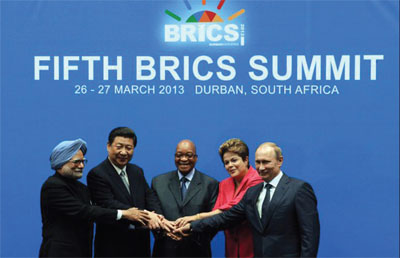
    Since independence India has traditionally shied away from joining security based pacts or military blocks. Chanting the same mantra, India refused to join ASEAN when membership of the ASEAN was being offered to India as a founding member. India’s political leadership at that time naively but wrongly assumed that the ASEAN is a successor organization to SEATO (South East Asia Treaty Organization). A non-aligned and pacifist India used to reflexively sermonize against military pacts in international fora. In the last decade or so, we have surprisingly grown fond of calling every bilateral relationship as “strategic partnership” devaluing the concept of strategic relations. However, this initial geo-strategic reticence and subsequent schizophrenia of Indian foreign policy is bound to change after the fifth summit of the BRICS in Durban, South Africa on March 26-27th 2013. Starting from a catchy acronym (BRIC) coined in 2001 by Jim O’Neill, an international banker from Goldman Sachs, the grouping of 4 emerging economies has evolved and enlarged. Russia under Putin became the prime mover of the BRIC as previously in 1990s, former Russian Premier Yevgeny Primakov had already suggested formation of RIC (Russia, India, China) grouping directed against the US. Owing to divergences in respective national strategic interests, RIC never became prominent. Primarily the BRICS has remained merely as a “talking shop” with economic agenda hoping to replace the Western dominated Bretton-woods institutions. India has persistently articulated the need to establish a “BRICS Developmental Bank” but differences in perceptions and power motives have prevented it from materializing. Last enlargement of BRIC to BRICS was smartly schemed by China during the Beijing Summit in 2011 in order to make IBSA (India, Brazil, & South Africa) grouping irrelevant. South Africa aspired to join the BRIC but was nowhere near any of the 4 emerging economies club members economically. China had felt excluded from the group of three large “developing democracies” and unilaterally invited South Africa to the BRIC summit. There are others who may be interested in joining the BRICS. Egyptian President Mohammad Morsi came recently to New Delhi seeking economic and defense cooperation with India. He also advocated for enlargement of the BRICS to include Egypt as well thereby changing the grouping to E-BRICS.

    Divide Loyalties and Heterogeneity
    BRICS is a serendipitously created international grouping without any serious initial thoughts about its charter. Having said that it is a reality now and we must maximize our participation and derive maximum geo-political benefit from it. The five members grouping inadvertently have two tiered membership de facto. Russia and China are the permanent members of the UNSC and the other three are aspiring candidates for permanent membership. Both Russia and China are major partners in the Shanghai Cooperation Organization (SCO) an anti-West multilateral security framework in Central Asia. Both of them conduct joint annual military exercises under the framework of the SCO to develop inter-operability of armed forces. Russia is still China’s largest arm supplier as China remains under Western arms embargo following the Tiananmen Square massacre of protesting students. India has only an observer status with the SCO and has been made to wait on sidelines. China has steadfastly refused to increase the active membership of the SCO with a view to denying India a larger sphere of influence. Since the strategic interests of these two dominant members of the SCO converge and their policies are much more harmoniously coordinated in the UNSC by virtue of their being permanent members, one wonders if these two SCO members will become the puppet masters of the BRICS driving its strategic and security agenda.

    US Pivot to Asia and Emerging RCP Axis
    India must remain aware that following improvement in bilateral relations between India and US, both Russia and China have grown concerned about India’s strategic intentions and aspirations though for entirely different reasons. Moscow is miffed because India no longer offers a ready and automatic market for Russian substandard military hardware. Repeated delays in the delivery of refurbished Admiral Gorshkov or INS Vikramaditya is indicative of Putin’s displeasure conveyed diplomatically. China remains paranoid about being contained by the nascent but de facto G-2 of India and the US especially after the US pivot to Asia and its strategic retreat from South West Asia. China has done anything and everything to deny India a significant role in the international arena whether it is the UNSC permanent membership, membership of NSG, MTCR, Australia Club or enlargement of ASEAN plus frame work to ASEAN plus six instead of ASEAN plus three. China is already the largest arms supplier to Pakistan and has several thousands of PLA soldiers in POK. China has started to use the Gwadar and Karachi ports as naval bases. Both Russia and China have overtly expansionist aims. Putin doctrine envisages re-establishment of the former territory of the Soviet Union under Russian control. Xi Jin-Ping’s signature slogan of “China dream” involves grabbing land, sea-based and other natural resources under the elastic concept of “core issues” and protecting “Chinese sovereignty”. Russia has also started to engage Pakistan both economically and militarily. President Putin visited China as the first foreign country after re-claiming the presidency of Russia. Hu Jintao’s first stop was also Russia when he assumed Chinese leadership. Similarly, Xi Jin-Ping ‘s holy pilgrimage to Russia (just before the Durban summit of BRICS) after becoming the new paramount leader of China is worth taking notice. What we are witnessing is essentially an emerging RCP (Russia, China, & Pakistan) geo-political axis with wider strategic implications for India.

    BRICS: Identity Confusion
    In the Durban summit of the BRICS, securitization of this group is bound to happen though primarily it is an economic grouping. The issues of security and combating terrorism may become formal part of the BRICS agenda. President Vladimir Putin wants the BRICS to broaden its role and cooperate collectively on geopolitical issues. Putin wants to transform the group into a new mechanism of “global governance”. In a pre-summit interview with Itar-Tass news agency and following a bilateral meeting with Xi Jin- Ping, he disclosed that the BRICS members are working on joint communiques on the conflicts in Syria, Afghanistan, Iran’s nuclear program and other issues including the middle-east. The group members have not voted together consistently in the UN on strategic issues in the past though Russia and China have adopted similar positions and policies.

    According to a Kremlin transcript of this interview, Putin exhorted “We invite our partners to gradually transform the BRICS from a dialogue forum that coordinates approaches to a limited number of issues into a full-scale strategic cooperation mechanism that will allow us to look for solutions to key issues of global politics together”. Putin also plans to announce the creation of a BRICS Business Council to promote trade and investment within the group and help launch multilateral business projects. The group leaders will also endorse plans to create a joint foreign exchange reserves pool and an infrastructure/development bank besides promoting intra-group trade and investments.

    Other Russian suggestions include creating a network of “informal political and working-level mechanisms to strengthen coordination”, introducing rotating presidency, drafting a long-term “BRICS development strategy” and launching “a dialogue on ways, pace and concrete forms of possible institutionalization of the BRICS”, including the establishment of a “permanent secretariat”. India’s analysts and strategic thinkers have either been very gloomy or very “naively musical” in embracing the BRICS and its future agenda. A balanced, cautious, middle of the road and well calculated strategic response to the BRICS challenges is required without having “great expectations” for the moon. Instead of shying away with security based multilateral groupings, time has come for India to embrace such groupings to safeguard India’s strategic interests.

    A resurgent India must learn to be proactive and not reactive in execution of her foreign policy. India should present a formal charter for the BRICS and minimum criteria for future membership. Future membership of this group should be criteria based and not driven by Chinese or Russian strategic interests. Here one would agree with the Russian suggestion for freezing the BRICS membership for next 3-4 years. India, simultaneously must do the necessary ground work and home work so that the “enhanced” BRICS does not end up swallowing and eventually digesting the “IBSA” where India has been one of the prime movers. India must enlarge the “IBSA” to “IIBSAA” (India, Indonesia, Brazil, South Africa & Argentina) in order to make this block of democracies more relevant in the international fora. This would require two other “developing democracies”, namely Indonesia and Argentina to be invited to join the “IBSA”. Both China and Russia are not true democracies and do not deserve a seat on the enlarged “IIBSAA”. In bilateral meetings with Putin and Xi Jin-Ping on the sidelines of BRICS, Prime Minister Dr. Man Mohan Singh must demand full membership for India in the SCO with a change in its charter to rename it as Solidarity and Cooperation Organization instead of Shanghai Cooperation Organization. Such a deft move by India will prevent “the SCO tail wagging the BRICS dog” in contentious geopolitical issues and will simultaneously increase India’s strategic footprints in Central Asia. India must ensure that she does not endorse either Chinese or Russian hegemonic claims or ambitions as the BRICS takes a higher geo-political profile.

    As a precondition for securitization of BRICS, India should also demand that BRICS formally adopt a joint declaration on the enlargement of the UNSC at the conclusion of the Durban Summit. India should insist that all the BRICS members must categorically endorse the UNSC permanent membership for India, Brazil and South Africa with full veto powers. There should not be mere platitudes coming from China and Russia on this important issue if the BRICS has to assume a greater role in international geo-political affairs. In the final analysis, India must systematically strengthen up her comprehensive national power (CNP) in order to have gravitas in international arena whether it involves UN, BRICS, SAARC, APEC, AEC, ASEAN or ARF. India must do multi-dimensional internal reforms, improve the infrastructure, energize the manufacturing sector, harness her youth power, modernize her armed forces, increase the budgetary allocation for her security needs and develop a rational and pragmatic pro-active foreign policy in order to safeguard her geo-political interests.

  • With eye on vote bank, BJP wants FDI in retail trashed

    With eye on vote bank, BJP wants FDI in retail trashed

    NEW DELHI (TIP): BJP has conveyed to the US that it is still firm in its opposition to FDI in multi-brand retail, a proposal which the government has decided to go ahead with after getting an approval from Parliament. BJP sources said the issue was flagged by US Ambassador Nancy J Powell when she called on party president Rajnath Singh yesterday.

    Singh made it clear that his party is opposed to the proposal due to a host of reasons. The main Opposition is opposed to FDI in multi-brand retail primarily as it fears the small and medium traders, who form a bulk of its vote bank, would be affected if MNCs like Walmart, Tesco and Carrefour set up shop in India.

    The Opposition was defeated in Parliament on the issue and the government has announced it will go ahead with the policy of allowing FDI in retail. During the 70-minute meeting, Singh expressed concern over the evolving security scenario in South Asia after the proposed withdrawal of NATO forces from Afghanistan in 2014. “Keeping in mind the proposed withdrawal of NATO forces from Afghanistan beginning in 2014, Singh also expressed his concerns over the evolving security scenario in the South Asian region,” BJP said in a statement.

    Powell brought up the issue of partnership between the two nations in the fields of trade and technology. The issue of terrorism was also discussed. Singh highlighted the significance of warm and cordial bilateral ties between both the countries and emphasised on the need to increase mutual cooperation and collaboration. Vijay Jolly, Convener, Overseas/ Foreign Affairs of BJP, and Sudhansu Trivedi, Political Advisor to BJP National President, were present during the meeting with Powell.

  • Top Indian Space Scientist Inducted Into Satellite Hall Of Fame

    Top Indian Space Scientist Inducted Into Satellite Hall Of Fame

    BANGALORE (TIP): Renowned space scientist Prof U R Rao has been inducted into the highly coveted “Satellite Hall of Fame”, Washington, by the Society of Satellite Professionals International. Rao, a former Indian Space Research Organisation (Isro) chairman and Department of Space secretary, is the first Indian space scientist to be inducted into the Satellite Hall of Fame, joining the select group of about 50 Hall of Fame members. He was conferred the honour at a function attended by over 1,000 distinguished guests consisting of space scientists, industry leaders, administrators and professionals on March 19, 2013 at Washington, an Isro release said. The citation read out at the time of induction said Rao has contributed to the development of space technology in India and its extensive application to communications and remote sensing of natural resources. “..

    More than any other single individual, Prof. Rao is responsible for the creation of India’s space and satellite capabilities and their application to the nation’s development,” it said.

  • Drugs case: Boxer Ram Singh dismissed from Punjab Police

    Drugs case: Boxer Ram Singh dismissed from Punjab Police

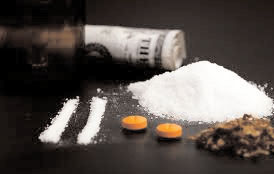
    CHANDIGARH (TIP): The Punjab Police has dismissed two officials from service – including international boxer Ram Singh – following their alleged involvement in a drugs racket busted in the state recently. The other person dismissed on March 28 is sub-inspector Sarabjit Singh. Ram Singh, a head constable in the force, is a fellow boxer with Olympics bronze medal winner Vijender Singh, whose name also figured in the drugs controversy. He is being questioned in the case.

    The Fatehgarh Sahib district police had on March 7 recovered over 28 kg heroin, worth Rs.130 crore in the international market, from the possession of Canadabased drugs dealer Anoop Singh Kahlon and had arrested him. The drug haul was made from Kahlon’s flat in Zirakpur, near Chandigarh, and his car. Police also found a SUV, registered in the name of Vijender Singh’s wife Archana, parked outside Kahlon’s flat. Kahlon reportedly told police that Vijender and fellow boxer Ram Singh were his “clients”.

    Police have already questioned Vijender in connection with the drugs racket. The boxer has refused to give his blood and hair samples to the police. Vijender, who is a deputy superintendent of police (DSP) in the Haryana Police, was questioned by the Punjab Police team recently. A Punjab Police spokesperson said subinspector Sarabjit Singh’s house at Naya Gaon near Chandigarh was raided Tuesday night and drugs and weapons were recovered. The police official has been absconding since the raids. Another dismissed police official, Jagdish Bhola, who is wanted in the drugs haul case, and is absconding, had gone to Sarabjit’s house on March 11, police said. “Sarabjit Singh is an active member of gang of smugglers headed by Anoop Singh Kahlon and Jagdish Bhola.

    He aided Jagdish Bhola in absconding and arranged hideouts for Bhola,” the spokesperson said. He said that 10 kg powder used as a rave drug in parties and worth Rs. 10 crore, was recovered from Kulbir Singh, a resident of Karnal, who has earlier been arrested in this case. Amongst those arrested in the case are a Britain-based NRI, a retired deputy superintendent of Uttar Pradesh Police and a Canadian national.

  • Indian-Americans protest against Wharton’s Modi slight

    Indian-Americans protest against Wharton’s Modi slight

    It’s an attack on freedom of speech, they say
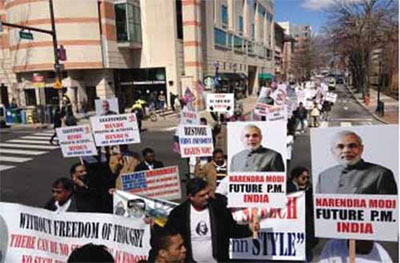
    NEW YORK (TIP): About 200 Indian-Americans held a protest march in Pennsylvania against the withdrawal of an invitation to Gujarat Chief Minister Narendra Modi to speak at the Wharton India Economic Forum (WIEF). Under the banner of “Americans for Free Speech,” they raised slogans like “We want Modi” and displayed his pictures. Most of the protesters who had arrived from New York and New Jersey marched down several blocks to hold a demonstration in front of the WIEF event on Saturday.

    The WIEF held its day-long conference on India’s economic development. Several speakers addressed the protesters gathered across the street from the Harrison Auditorium at the University of Pennsylvania, where the conference was held. “Members of the press were denied entrance to the conference,” The Daily Pennsylvanian reported, putting the number of protesters at 200. Opposing the WIEF canceling its invitation to Mr. Modi after three Pennsylvania University professors protested against it, Narain Kataria of the Indian American Intellectuals Forum alleged that the WIEF had attacked “freedom of speech” and called it an “inappropriate interference” in the Indian political process. Later, in a memorandum submitted to the University president Amy Gutmann, the protesters said they were “saddened and outraged to see this great university being bullied by a mere three English and Social Work activist professors” of Indian origin. “The principal issues here are freedom of speech and right to dissent.

    Sadly, both of these have been brutally trampled on at UPenn by this action,” the memorandum stated. Wharton snubbed Mr. Modi at the eleventh hour and withdrew invitation to speak at the forum by live video following a petition from a group of university faculty and students not connected with Wharton. The US administration has denied a U.S. visa to Narendra Modi for his alleged role in the 2002 riots in Gujarat State under his rule.

  • Comptroller Liu proposes plans to resuscitate small businesses

    Comptroller Liu proposes plans to resuscitate small businesses

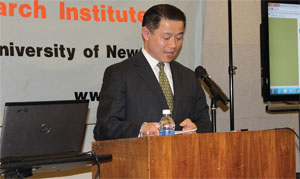
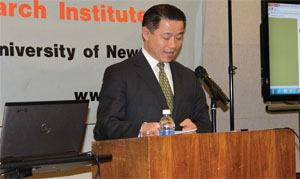
    NEW YORK (TIP): NYC Comptroller John C. Liu presented a set of plans that will help the small time business ventures gain more tax breaks and expand further. The proposals were made in his keynote address at the Fifth Annual Asian American Economic Empowerment Conference at the City University of New York, March 28. John said, “What this city needs is more small business ventures, which has always been an integral part of the city.

    But unfortunately, if you are a small business venture holder here at the city, then you not only pay regular taxes but also you end up paying additional regulatory fees and such. What we plan to do is provide more tax breaks to this group. Such tax subsidies are currently enjoyed only by bout 10 percent of the big corporates.” He also proposed a few set of plans to better the city’s infrastructure and education system. He said the public education system must be injected with a much needed shot in the arm. “In the research that my office did, we found that 4 out of 5 kids do not graduate from college. It is clear that our public school system is in crisis.

    We must invest a lot in our education system,” said John. He also commended CUNY for holding the Asian American conference and lauded the achievements of the Asian American community in America. John said, “The Asian American is the fastest growing community in the United States. We have achieved a lot through our persistent efforts. But we are also a community that has a lot of diversities within ourselves. We must overcome them to Be more fructuous.”

  • Making Dollars & Sense

    Making Dollars & Sense

    South Asian Young Women Entrepreneurs Unveil Six-City Financial Education Tour
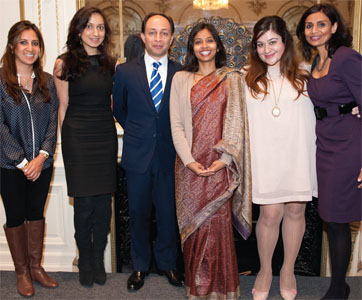
    NEW YORK (TIP): In celebration of National Women’s History Month in March, South Asian Young Women Entrepreneurs (SAY WE), a network of business-minded executives in the fields of technology, finance, entertainment and fashion, announced the launch of a six-city financial education tour, in association with the Consulate General of India (New York) and powered by Wells Fargo. “Making Dollars & Sense: Financial Education for South Asian Women Business Owners” will kick off in San Francisco on April 18.

    The panel of financial experts and successful South Asian women entrepreneurs will provide insights, tips and resources on topics such as building business credit, reinvesting in a business, protecting credit and maximizing relationships with business bankers. After the first event, the tour will stop in Los Angeles, Houston, Dallas, New Jersey, and culminate in New York City on May 30.

  • Terrorist tried three 9/11-type attacks in UK since 2009

    Terrorist tried three 9/11-type attacks in UK since 2009

    LONDON (TIP): Terrorists tried to carry out three 9/11-type attacks in the UK since 2009, British Home Office said on March 26. The home office listed three occasions: in December 2009, October 2010 and April 2012, when terrorist groups targeted civilian aircraft to carry out such attacks but were thwarted by British security agencies. Home secretary Theresa May on Wednesday said, “Aviation security is a high priority of our protective security programme. We have accelerated the deployment of new airport security scanners, which give us the best chance of detecting the threat from nonmetallic improvised explosives. Following a risk based assessment these are now operational in all terminals at major UK airports.”

  • Acting CG Highlights FM’s Focus During His Coming Visit To US

    Acting CG Highlights FM’s Focus During His Coming Visit To US

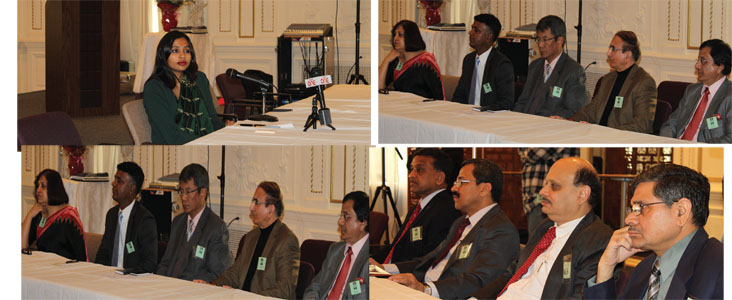
    NEW YORK (TIP): Acting Consul General Dr. Devyani Khobragade arranged a one-on-one meeting at the Indian Consulate in New York to welcome any inputs and suggestions that the Indian businesses set up in New York had preceding the Finance Minister’s visit. The event was attended by representatives of companies such as Wipro, ICICI, UBS, Incredible India, Andhra Bank, Kotak, Bank of Baroda, among others. Dr. Khobragade highlighted that the immediate focus of the Indian government in the next quarter is to attract investors from the US. She also explained that the FM’s visit will encourage investments from the sectors of sustainable development, energy, trade, education, health and nuclear power. Dr. Khobragade said, “This is the multifaceted dialogue that we are conducting with the US government. Our immediate focus will of course be to get investments and facilitate infrastructure deals.

    We plan to take all the problems that we face here in our business houses and highlight them to the US government, including requests to apply leniency in many regulations.” The attendees highlighted a few points that need to be included in the agenda for the FM’s visit. Sujata R. Thakur, Incredible India’s Regional Director for the Americas highlighted the adverse effects of the periodic travel advisories that United States publishes. “Most of them are released during October and that is our key tourist season. This has a very diverse effect on the number of tourists wanting to visit India.” B.B. Joshi, Chief Executive of US Operations at the Bank of India asked the CG to request the FM to review the role of regulations in the banking industry. “Our biggest concern is the FATCA regulation.

    And the Finance Minister’s visit is very timely in that matter. It will be very beneficial if this matter could be taken by the FM during his meetings with the US government.” Manish Mehta, President and CEO of Kotak International requested the Indian Consulate to overlook the portrayal of India in the international news media. “Ever since 2011, since India started to do badly, many major international publications have been carrying only negative stories about India. And the recent rape case also has tarnished the reputation further.We cannot risk investors coming in because of bad reputation.” Dr. Khobragade admitted to the situation but asserted the government’s limitation in managing the press. “We are not authorized to micromanage the press even at home.

    As far as the international media is concerned we cannot exert our rights there either.What we can do is convene a press address with the international media where we will get an opportunity to highlight some of the positives of our country and its economic situations.” The attendees also spoke for the review of H1B and Green Card laws meant for Indians. The Acting CG agreed to carry all the viewpoints forward and address them to both US and Indian governments respectively.