Month: June 2014

  • US supports Ukraine- Russia peace talks: Joe Biden

    US supports Ukraine- Russia peace talks: Joe Biden

    WASHINGTON (TIP): Vice President Joe Biden has said the United States strongly supports negotiations among Ukraine, Russia and international diplomats to resolve the crisis in Ukraine. The White House said that Biden spoke by phone on Wednesday with Ukraine’s new president, Petro Poroshenko. It was their second conversation in two days. The White House also said that Poroshenko told Biden that he’s still committed to his offer to grant amnesty to insurgents who lay down their arms or allow them to return to Russia.

    Biden told Poroshenko that the US applauds the peace plan he presented on Saturday during his inauguration. Biden has said that Moscow must recognize Poroshenko as Ukraine’s legitimate leader, stop supporting pro-Russian separatists and prevent arms from flowing over the border. The White House added that the leaders also conferred on the security situation in eastern Ukraine.

  • Ruby Dee, actress and civil rights activist, dead at 91

    Ruby Dee, actress and civil rights activist, dead at 91

    NEW YORK (TIP): Ruby Dee, an acclaimed actor and civil rights activist whose versatile career spanned stage, radio television and film, has died at age 91, according to her daughter. Nora Davis Day told the Associated Press on June 12 that her mother died at home at New Rochelle, New York, on Wednesday night of “natural causes.” Dee, who frequently acted alongside her husband of 56 years, Ossie Davis, was surrounded by family and friends, she added. “We have had her for so long and we loved her so much,” Day said. “She took her final bow last night at home surrounded by her children and grandchildren.”

    Day added: “We gave her our permission to set sail,” said Day. “She opened her eyes, closed her eyes and away she went.” Her long career brought her an Oscar nomination at age 83 for best supporting actress for her role in the 2007 film “American Gangster.” She also won an Emmy and was nominated for several others. Age didn’t slow her down. “I think you mustn’t tell your body, you mustn’t tell your soul, `I’m going to retire,”‘ Dee told the Associated Press in 2001. “You may be changing your life emphasis, but there’s still things that you have in mind to do that now seems the right time to do.

    I really don’t believe in retiring as long as you can breathe.” Since meeting on Broadway in 1946, she and her late husband were frequent collaborators. Their partnership rivaled the achievements of other celebrated performing couples, such as Hume Cronyn and Jessica Tandy. But they were more than a performing couple. They were also activists who fought for civil rights, particularly for blacks. “We used the arts as part of our struggle,” she said at an appearance in Jackson, Miss., in 2006. “Ossie said he knew he had to conduct himself differently with skill and thought.”

    In 1998, the pair celebrated their 50th wedding anniversary and an even longer association in show business with the publication of a dual autobiography, “With Ossie and Ruby: In This Life Together.” Davis died in February 2005. At his funeral, his widow sat near his coffin as former President Clinton led an array of famous mourners, including Harry Belafonte and Spike Lee. (In this October 28, 1957 file photo provided by Paramount Pictures, Nat ‘King’ Cole and Ruby Dee, relax on the set of the ‘St. Louis Blues,’ based on the life of WC Handy.) Davis and Dee met in 1945 when she auditioned for the Broadway play “Jeb,” starring Davis (both were cast in it).

    In December 1948, on a day off from rehearsals from another play, “The Smile of the World,” Davis and Dee took a bus to New Jersey to get married. They already were so close that “it felt almost like an appointment we finally got around to keeping,” Dee wrote in “In This Life Together.” They shared billing in 11 stage productions and five movies during long parallel careers. Dee’s fifth film, “No Way Out” with Sidney Poitier in 1950, was her husband’s first. Along with film, stage and television, their richly honored careers extended to a radio show, “The Ossie Davis and Ruby Dee Story Hour,” that featutred a mix of black themes. Davis directed one of their joint film appearances, “Countdown at Kusini” (1976).

  • Ippies Awards Recognize Achievements of Non-Mainstream Media

    Ippies Awards Recognize Achievements of Non-Mainstream Media

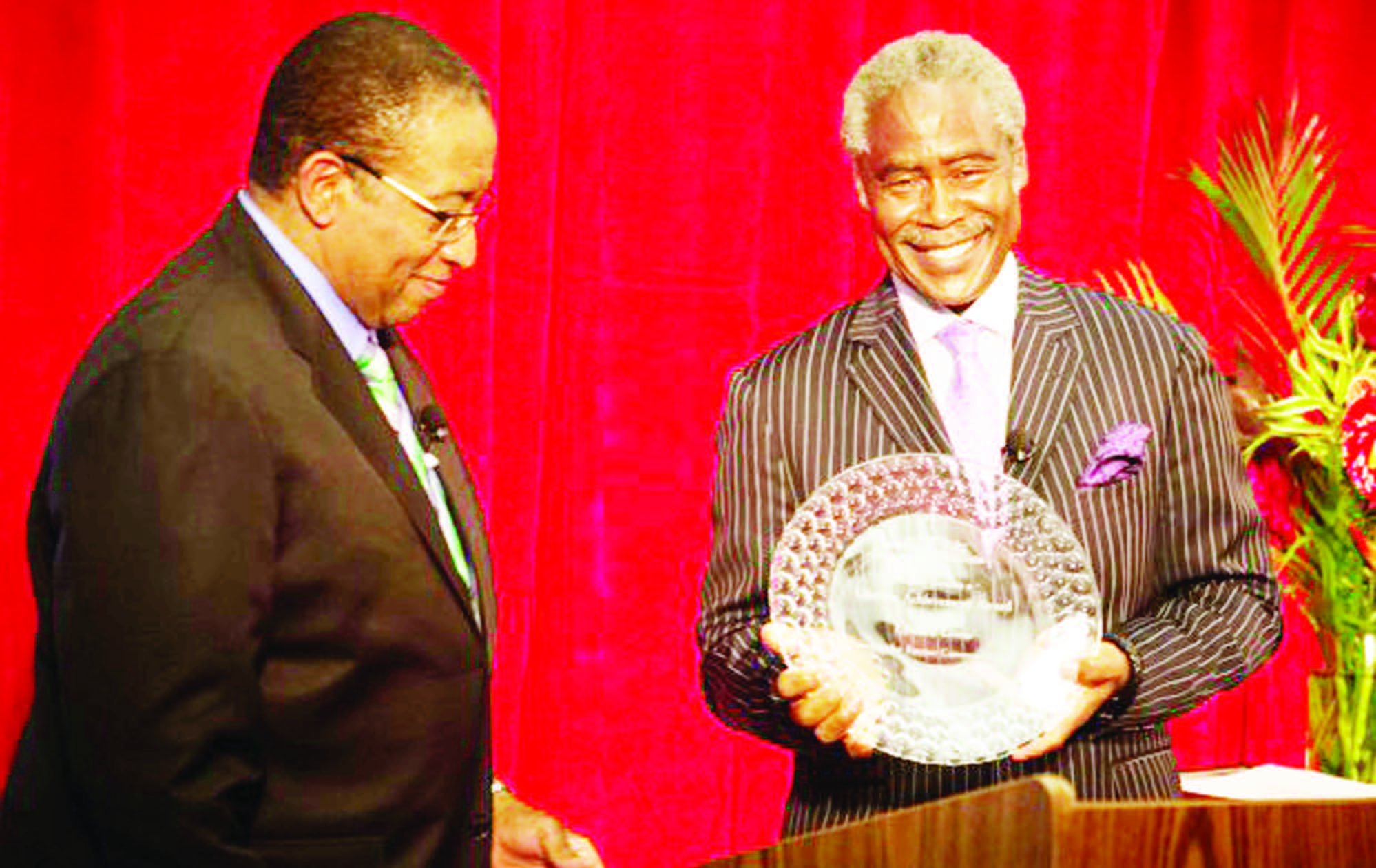
    NEW YORK CITY (TIP): Nearly 150 people gathered June 5 at the CUNY Graduate School of Journalism for the 12th annual Ippies Awards celebrating the thriving community and ethnic media in the New York City area. Honorees from among the more than 300 non-mainstream media outlets in NYC took home Ippies plaques and a total of $8,250 in prize money for their journalistic excellence. Also recognized, with a Lifetime Achievement Award, was Edward Lewis, who co-founded Essence Communications Inc., one of the country’s largest African- American multimedia organizations. The company was acquired by Time Inc. in 2005. Jose Antonio Vargas, a Pulitzer-prize winning journalist, filmmaker and the founder of Define America, a campaign that seeks to elevate the conversation around immigration delivered the keynote address.

    “The Ippies is one of my favorite events each year. The work that is celebrated here serves as a powerful reminder of the vibrancy of this media sector,” said Sarah Bartlett, Dean of the CUNY Graduate School of Journalism. Established by the Independent Press Association of New York, the Ippies are now given annually by the Center for Community and Ethnic Media (CCEM) at the CUNY Graduate School of Journalism. They are the only journalism awards to honor reporting in English and other languages by New York City’s ethnic and community press. CCEM Executive Director Garry Pierre- Pierre noted that the Center plans an annual “State of the Ethnic Media” survey and will continue to offer training sessions in digital media, as well as sponsor roundtables and other events with NYC politicians and newsmakers. The Center also publishes Voices of NY, an online site that curates stories from the community and ethnic media and publishes original reporting about communities, ethnic groups, immigration, labor and other issues.

    The cocktail and dinner reception at the CUNY J-School was abuzz with local journalists who write and broadcast in English, Spanish, Chinese, Arabic, Bengali, Korean, Russian and other languages. The crowd also got to sample a number of ethnic food, from Spanish tapas to Afghan kebabs. This year, over 150 submissions were received from more than 49 outlets for work published or broadcast in 2013. An independent panel of judges reviewed entries in 10 categories and awarded 1st, 2nd and 3rd place prizes.

    No prize was given this year for “Best Editorial/Commentary.” Among the Ippies winners were the Long Island Press in the “Best Story about Immigrants” category for “Muslim Americans: Behind the Veil of a Religion under Attack;” DNAinfo.com in the “Best Investigative” category for “Millions Raised by AIDS Walk Spent on Rent, Not HIV Services,” and City Limits in the “Best Social Issues Story” competition for “Pushing Cops to Consider Kids When Arresting Parent.” These three winners earned the top prize of $1,500 each; the rest of the first-place honorees received $750 each. The citations were given away by Jehangir Khattak, Communications Director, CCEM.

    Here is the complete list of Ippies winners:
    Best Immigrant Story

    WINNER: Long Island Press: “Muslim Americans: Behind the Veil of a Religion Under Attack” by Rashid Mian
    2ND PLACE: “An American Dream” by Ela Dutt
    3RD PLACE: “English is Absent” by Sonja Sharp

    Best Investigative Story

    WINNER: DNAinfo.com New York: “Millions Raised by AIDS Walk Spent on Rent, Not HIV Services” by Matthew Katz
    2ND PLACE: Sing Tao Daily: “The Dark Corner in An Elite High School’ by Rong Xiaoqing
    3RD PLACE: The South Asian Times: “H4 Visa: Languishing in a golden cage” by Jinal Shah

    Best Social Issues Story

    WINNER: City Limits: “Pushing Cops to Consider Kids When Arresting Parent” by Rachel Blustain
    2ND PLACE: Open City: “What Separates Welfare from Work” by E. Tammy Kim
    3RD PLACE: DNAinfo New York: “Islan Nettles Coverage” by Jeff Mays

    Best Audio Project

    WINNER: Feet in 2 Worlds: “Remembering Srini, a Leader in a Hidden Part of New York” by Ramaa Reddy Raghavan
    2ND PLACE: Feet in 2 Worlds: “What’s in an Accent? Both Opportunity and Barriers for Immigrant Actresses” by Sara Loscos, John Rudolph, Jocelyn Gonzales

    Best Multimedia Project

    WINNER: Feet in 2 Worlds: “‘What I Carried” – A New Collection of Immigration Stories From Fi2W and Cowbird
    2ND PLACE: El Diario La Prensa: “We Are Dreamers”
    3RD PLACE: Long Island Press: “One Year Later: Long Islanders Still Suffering from Sandy” by Rashed Mian, Christopher Twarowski Rashed Mian, Christopher Twarowski

    Best Online Design

    WINNER: Tablet Magazine: Alana Newhouse, Editor-in-Chief
    2ND PLACE: Island Voice: Shereese Mullings
    3RD PLACE: Long Island Press: Michael Conforti

    Best Photo

    WINNER: World Journal / Chenghui Hsu / Protest against ABC
    2ND PLACE: Diario de Mexico / Gery Vereau / Leticia Ponce, who suffers from terminal cancer, fulfilled her wish of getting married.
    3RD PLACE: DNAinfo New York / Ben Fractenberg / See How Bikes are Made in New York’s Oldest Cycle Factory

    Best Print Design

    WINNER: Allewaa Alarabi (Sept. 13, 2013) / Atef El Beialy
    2ND PLACE: Desi Talk (June 14, 2013) / Parikh Worldwide Media LLC
    3RD PLACE: Nueva Luz / En Foco, Inc. / Volume 18:1

    Best Video

    WINNER: SinoVision / Melody Cao, Yiyi Wang, Mumi Zhao, Zhaochen Dai, Tian Tian, Yuefeng Zhou, Fan Bu / Behind the Protests
    2ND PLACE: SinoVision / Zhaochen Dai, Han Cui, Juan Guo, Tian Tian, Yuefeng Zhou, Fan Bu / Carnage in Brooklyn’s Chinatown
    3RD PLACE: SinoVision / Lingjing Bian, Dizhi Ge, Tian Tian, Yuefeng Zhou / Investigating Postpartum Centers in Flushing

  • Modi gives Gujarat its lifeline

    Modi gives Gujarat its lifeline

    Narmada Dam height to be raised by 17 metres; lakhs will lose their homes, activists say

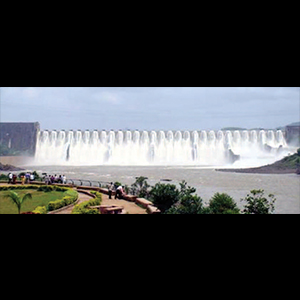
    NEW DELHI/AHMEDABAD (TIP): The government has decided to raise the height of the Narmada Dam by 17 metres — a longstanding demand of Gujarat — within 20 days of Narendra Modi becoming the Prime Minister, raising protests from activist Medha Patkar who drew attention to the resultant displacement of thousands of people. On June 10, the Narmada Control Authority (NCA) approved the proposal to raise the dam’s height from 121.9 metres to 138.7 metres, making it the second highest dam in the world after Grand Coulee in the US. The approval came two days after the Gujarat chief minister Anandiben Patel met Modi and water resources minister Uma Bharti and reiterated the state’s demand.

    A higher dam will optimize hydropower generation and water supply capacity of this project, and is expected to benefit not just Gujarat but also neighbouring Rajashthan, Maharashtra and Madhya Pradesh. Gujarat has been demanding this for the last eight years, and Modi would place this demand before the Centre on every official visit to Delhi as chief minister. Medha Patkar, who heads the Narmada Bachao Andolan, held a press conference in Mumbai to say the decision was taken in an undemocratic manner.

    “The government has neither given us any hearing nor has it taken any time nor made any attempt to know the ground reality before deciding on the dam’s height,” she said. Patkar said at its present height, the dam has 2 lakh people in its affected region. If the height is raised by 17 metres, the densely populated villages in Nimad area of Madhya Pradesh with houses, farms, shops, temples, mosques and standing crops would be drowned, she said. Asked about the sudden change of stand by NCA which is headed by central water secretary, the Union water resources minister Uma Bharti said the decision was taken on the basis of a report of the ministry of social justice and empowerment on the rehabilitation of displaced people.

    “Social justice ministry has given its report and the officials are 100% satisfied (of the measures being taken by the affected states)… All the responsibilities they have to commit they have done. They have full satisfactory report in this meeting today. That is why the decision was taken,” Bharti said. Though the Supreme Court had earlier given the approval for the project to raise the height of the dam, it got embroiled in controversy over displacement of project-affected people.

    The main problem had come from Maharashtra as the state had fallen behind the rehabilitation schedule. Some 400 families were left to be resettled, leaving the height issue unresolved. Officials said that the rehabilitation work was now on track, making it possible for the NCA to give its final approval. The NCA has representatives of the four states of Madhya Pradesh, Gujarat, Maharashtra, Rajasthan and representatives of various central ministries. The project, considered a lifeline for parched Gujarat, was inaugurated by Jawaharlal Nehru on April 5, 1961.

  • Defence projects along LAC to get quick green nod

    Defence projects along LAC to get quick green nod

    NEW DELHI (TIP): The ponderous elephant will now try to catch up with the fleet-footed dragon. The Narendra Modi government has decided to fast-track clearances for roads and other military infrastructure projects along the 4,057-km Line of Actual Control (LAC) with China, signalling that environmental clearances will not needlessly hamper national security objectives. “Construction of roads within 100-km of LAC will be given fast-track approvals under the new policy being formulated,” environment minister Prakash Javadekar said after meeting defence secretary R K Mathur and other top officials on Junbe 12.

    “Delays in defence projects were happening due to the case-to-case decision-making process. We are evolving policy-based solutions. The new policy will ensure faster clearances without compromising environmental issues,” he added. This comes soon after the environment ministry gave the green nod to two other crucial long-pending defence projects, the expansion of the strategic Karwar naval base in coastal Karnataka and installation of a radar station at Narcondam in the A&N Islands.

    The defence establishment has for long identified delays in environmental clearances as one of the major stumbling blocks for India’s lumbering attempts to strategically counter China’s huge build-up of military infrastructure all along the LAC, from Ladakh to Arunachal Pradesh. Defence officials say the construction of around 80 roads, adding up to around 6,000-km, along the LAC as well as infrastructure build-up in about 5,000 acres of land in Arunachal and Assam for the new Army mountain strike corps and other formations being raised against China have been “on hold” due to lack of environmental nods.

  • Terror threat: Security to be stepped up at Ayodhya, Varanasi and Mathura

    Terror threat: Security to be stepped up at Ayodhya, Varanasi and Mathura

    NEW DELHI (TIP): Security at religious places in Ayodhya, Varanasi and Mathura will be enhanced following intelligence inputs which suggested that terror outfits may try to attack them. This decision was taken at a meeting held here on Thursday and chaired by Union home secretary Anil Goswami.

    It was attended by DGP of CRPF Dilip Trivedi, Uttar Pradesh DGP A L Banerjee, principal secretary (home) Deepak Singh Singhal among others. More CCTV cameras and other electronic devices will be put in place as per the new security drill which will be carried out at the religious sites. CRPF, which is guarding the sites, has been asked to deploy more forces and remain alert round-the-clock to foil any possible attempt by terrorists to attack these sites. Ayodhya and Varanasi had witnessed terror attacks in the past.

    On July 5, 2005, five terrorists attacked the makeshift Ram temple at the Ram Janambhoomi-Babri Masjid complex in Ayodhya. All five terrorists were shot dead in the gunfight with CRPF personnel, while one civilian died in a grenade attack. The CRPF suffered three casualties. Terrorists carried out blasts in Varanasi twice. In July 2006, three explosions hit the temple town while the Aarti was in progress. In December 2010, an explosion occurred at Sheetla Ghat, adjacent to the main Dashashwamedh Ghat, where the evening prayer ritual had commenced. A two-year-old girl was killed and her mother was critically injured along with 38 others.

  • RSS NOT A REMOTE CONTROL, SAYS ITS CHIEF MOHAN BHAGWAT

    RSS NOT A REMOTE CONTROL, SAYS ITS CHIEF MOHAN BHAGWAT

    NAGPUR (TIP): The BJP’s ideological mentor, the Rashtriya Swayamsevak Sangh or the RSS, reiterated that the organisation does not act like a ‘remote control’ to the ruling party. Addressing cadres for the first time since the Lok Sabha elections, RSS chief Mohan Bhagwat in Nagpur said, “The RSS is not a remote control, we just awaken people.” Bhagwat, 64, without directly naming the BJP or Prime Minister Narendra Modi said that the “change people wanted has come and the change is good.” “People of India voted this time for who they thought deserved. People thanked us but all we said was vote for those who deserve… It has been only 15 days.

    We have to be hopeful that things will change,” Mr Bhagwat said at the convocation function for over 700 cadres who completed a 25 day course. “Swayamsevaks are always there to help the country… Leaders can’t make all changes, people have to also change,” the RSS chief added. BJP’s former general secretary Sanjay Joshi, spiritual guru Sri Sri Ravishankar, who was the chief guest, and the RSS’s Ram Madhav were also present at the convocation ceremony of the organisation.

    The RSS, it is believed, plays an important role in the BJP’s decisionmaking and also mediates during crises. Ahead of government formation, a long list of BJP leaders had visited the RSS office in Delhi, although the Sangh insists that it did not interfere in the cabinet process. Prime Minister Narendra Modi is the RSS’ most famous alumnus. Mr Modi, 63, was an active campaigner in the RSS into his 30s and RSS workers played a significant grassroots role in campaigning for him.

    However, he chose to make issues like the economy and development the main focus of his campaign rather than highlighting a “Hindutva” or Hindu nationalist agenda. The RSS wants a Ram temple built at the disputed site in Ayodhya where the Babri mosque was brought down by Hindu activists in 1992. The pledge to build a Ram temple is a part of the BJP’s election manifesto.

  • Maharashtra Cabinet Approves New Law to Ban Dance Bars

    Maharashtra Cabinet Approves New Law to Ban Dance Bars

    MUMBAI (TIP): A year after the Supreme Court cancelled a ban on dance bars in Mumbai, the Maharashtra government wants to re-introduce a ban on dance bars in the state’s capital. The Maharashtra cabinet has reportedly approved a new law to impose the ban in the country’s financial capital and other parts of the state.

    In July last year, the Supreme Court allowed hundreds of premises which employ women to dance and entertain customers to reopen. Sources say the proposal cleared by the cabinet asks for a ban on dance bars in three and five-star hotels. In 2005, the Mumbai Police had banned dance performances in Maharashtra in bars but cleared them for “elite establishments” and hotels that were of three-star standard or higher.

  • Sadhus, MPs and MLAs to be Part of Ganga Cleaning Mission: Uma Bharti

    Sadhus, MPs and MLAs to be Part of Ganga Cleaning Mission: Uma Bharti

    Will treat Sutlej on par with Ganga: Centre New Delhi (TIP): The Centre has decided to treat the Sutlej river on par with the Ganga. Punjab Chief Minister Parkash Singh Badal, who on June 12 called on Water Resources Minister Uma Bharti and Agriculture Minister Radha Mohan Singh, said the Centre had decided to treat the Sutlej at par with the Ganga, which is being cleaned under the prestigious National Mission.

    New Delhi (TIP): Water resources minister Uma Bharti has announced plans to convert the “Ganga Cleaning Mission” into a jan andolan or mass movement. Participants in a brainstorming session in July will include, she said, lawmakers from constituencies through which the mighty river flows, sadhus (sages) and “all those related to the cause of the Ganga.” She has promised a plan by October this year. The “Ganga Manthan (introspection)” would include Prime Minister Narendra Modi, Ms Bharti said today.

    “MPs and MLAs who come from seats falling along Ganga will also be part of this manthan. Narendra Modi is the MP from Benares. So obviously he is a prominent part of this exercise,” she added. Cleaning up the Ganga River was a promise that Mr Modi had made while he was campaigning during the Lok Sabha elections in Varanasi. The new government’s resolve to clean the river was part of President Pranab Mukherjee’s speech to the joint session of Parliament on June 9 too.

    “River Ganga is a part of our rich cultural heritage, a symbol of faith and the lifeline for millions,” President Mukherjee said, adding, “However, Ganga continues to remain polluted with many stretches of the river becoming dry in the lean season. My government will take all necessary steps to ensure a perennial, clean and pristine Ganga.” Her ministry, Ms Bharti said, would take up the task of cleaning up others rivers too, such as Yamuna.

    “The same parameters will apply for cleaning and purifying the rivers, but this will not be possible without a jan andolan,” she said. The government has already formed an inter-ministerial group, comprising the ministries of environment, tourism and shipping, besides water resources, to pool their resources for cleaning Ganga river, which figures high on the Prime Minister’s “to do” list. It held its first meeting on June 6. MPs and MLAs who come from seats falling along Ganga will also be part of this manthan. Narendra Modi is the MP from Benares. So obviously he is a prominent part of this exercise.

  • Lady Drinks New York hosts an event for women entrepreneurs

    Lady Drinks New York hosts an event for women entrepreneurs

    Kajol Bishnoi

    NEW YORK (TIP): Lady Drinks hosted another successful event for Tri-state women Entrepreneurs, in collaboration with Mayor’s office on “How to Raise Capital for Your Small Business?” The Event held on June 5 in New York City attracted a number of women entrepreneurs. Each month, Lady Drinks hosts a monthly networking event, so professional women can build business, adopt better practices and work synergies. Opening remarks were given by Joya Dass -News Anchor and Co-founder of Lady- Drinks. Jeff Hamer from Mayor’s office gave a presentation on NYC Business Solutions which is city’s initiative to help small businesses raise money for their enterprises. The presentation was followed by a Q and A round. Others who spoke included Lara Land, owner of Land Yoga, and celebrity baker Aliyyah Baylor, of MakeMyCake.

    These two women business owners have raised money through city’s program and because of their hard work and dedication, were named as successful entrepreneurs of New York. The three major messages from this edition of Lady Drinks were-

    1. NYC Business solutions is great in helping you drill down on your strategy for raising money, before you approach a traditional or alternative lender.
    2. Lean on organizations like http://www.score.org/ to get mentorship and free business advice from retired executives.
    3. To be taken seriously in business, women entrepreneurs have to dress formally and know their numbers/data inside out.

    Lady Drinks NY is a women’s networking initiative which holds meetings on the first Thursday of each month. It features workshops, panel discussions, and networking events/dinners geared towards the female entrepreneur. Joya Dass and Greta Knutzen, have been hosting this monthly event since July 2012. Over time, attendance has gone from 4o to 300 women. Lady Drinks had its roots in Toronto, where women in film or TV production came together on the first Thursday of each month to network and find jobs. Today, in its New York incarnation, it is a monthly networking initiative for women who either own their businesses or are contemplating starting one. Like any, a business relationship takes time to grow. The end goal for Lady Drinks is to become an accelerator for women-owned businesses.

  • Beas tragedy: Two more bodies found, 16 still missing

    Beas tragedy: Two more bodies found, 16 still missing

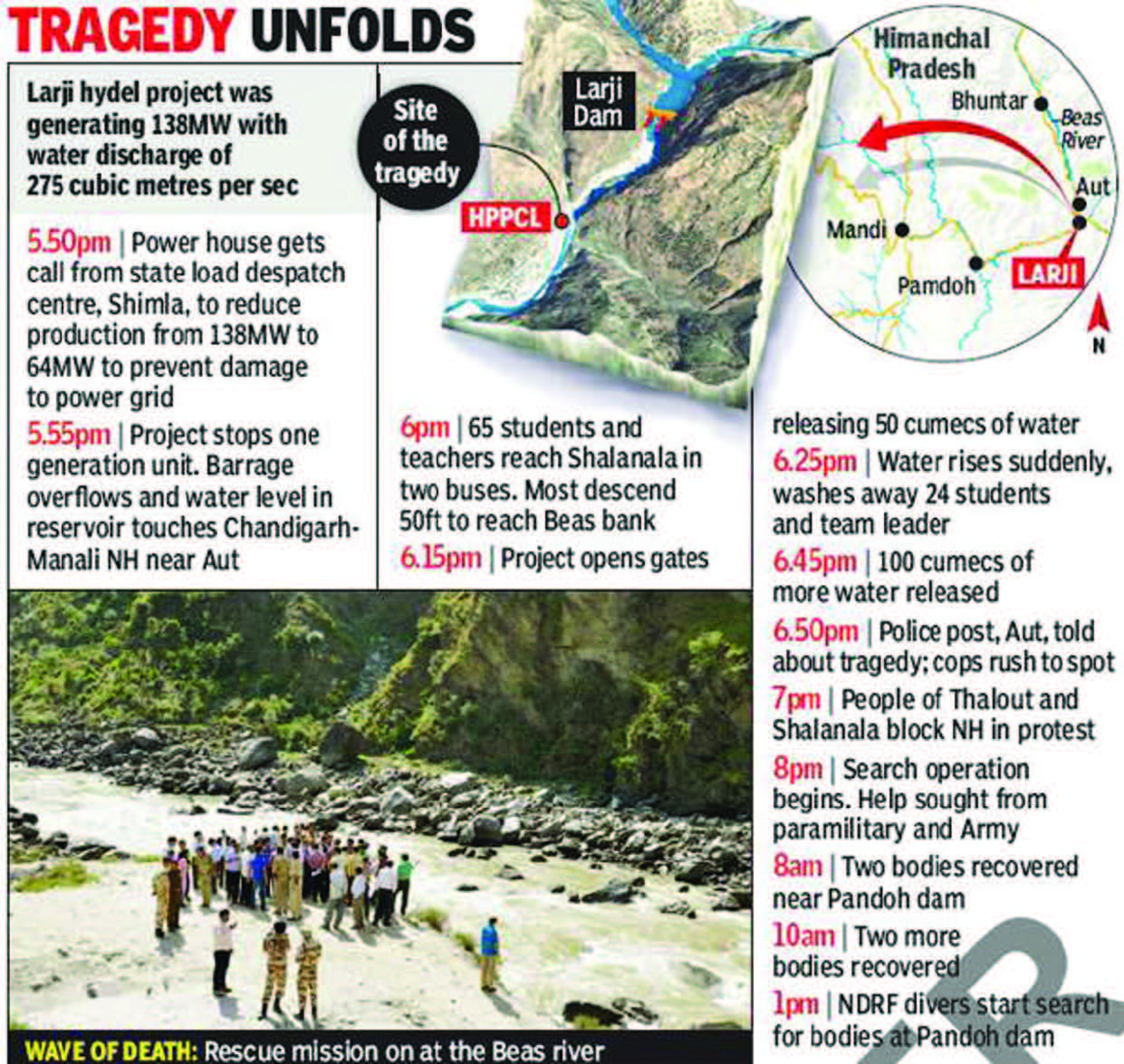
    PANDOH (TIP): The rescue team fished out two more bodies of students of the Hyderabadbased VNR Vignana Jyothi Institute of Engineering and Technology from the Beas river at Pandoh on June 12. According to certain media reports, the bodies were recovered by the joint rescue team of the National Disaster Response Force (NDRF), Sashastra Seema Bal (SSB), Indian Tibet Border Police (ITBP), police and local divers.

    With this, the total number of bodies recovered so far has reached eight. However, there was no trace till Thursday evening of the remaining 16 students who were washed away in flash flood in the Beas river, caused due to the sudden release of water from Largee Dam on Sunday evening. The bodies recovered on June 12 have been identified as T Upendra, son of Tallada Srinivas of Khammam district of Telangana, and Gonoor Arvind Kumar, son of G Vinod Kumar of Vanasthali Puram of Hyderabad.

    Gonoor’s maternal uncle Shridhar identified the dead body of his nephew. The rescue team recovered Upendra’s body from 500 meter ahead of the incident site at Thalout and Gonoor’s body was recovered from Rainsnala area, nearly 1 kilometer away from the site. Police later sent the two bodies for post mortem at the zonal hospital in Mandi. The incident occurred at around 6 pm on June 8 when the students, six of them girls, were clicking pictures on the banks of the river. They were on their way from Shimla to the resort town of Manali for an excursion. A sudden release from the reservoir of the Larji dam led to a surge in the water level in the river which is feared to have swept away the students.

  • 3 RAJYA SABHA MPs BOOKED FOR ALLEGEDLY CLAIMING FAKE AIR TRAVEL BILLS

    3 RAJYA SABHA MPs BOOKED FOR ALLEGEDLY CLAIMING FAKE AIR TRAVEL BILLS

    NEW DELHI (TIP): The Central Bureau of Investigation or CBI has booked three sitting and three former Rajya Sabha MPs in connection what is being called the Leave Travel Concession or the LTC scam. The investigating agency alleges that the six MPs – D Bandhopadhyay of the TMC, Brajesh Pathak of the BSP, Lalhming Liana of the Mizo National Front and JPN Singh of the BJP, Mahmud Madni of the RLD and Renu Bala Pradhan of the BJD – claimed reimbursements for free air tickets that they got for their companions.

    Each MP allegedly claimed fake bills multiple times. Sources in the CBI say while they claimed amounts of up to one lakh rupee per journey, they only paid airport tax for their companions. The residences and offices of the six MPS and some travel agents are being searched in Delhi and Odisha today. “We are looking for documentation or any paperwork to establish that they claimed fake bills,” a senior CBI official said. Sources say the MPs could be questioned by the CBI soon.

  • Goa MLAs to ‘Study’ World Cup in Brazil, Congress Cries Foul

    Goa MLAs to ‘Study’ World Cup in Brazil, Congress Cries Foul

    PANAJI (TIP): Football fever is running high and the BJP government in Goa has scripted a controversy by sanctioning a Rs. 90 lakh junket for six MLAs, including the sports minister, to Brazil, where the FIFA World Cup began on June 12 night. It has been pegged as a “study tour.” The Congress has alleged that Chief Minister Manohar Parrikar is misusing public funds and has demanded that the trip be scrapped.

    “Yesterday Narendra Modi spoke in Parliament about sanitation, house, water for poor people and today his own government in Goa is investing 89 lakhs so that his MLAs can go and watch a football match,” said the party’s Rashid Alvi. A livid Goa Congress leader Durgadas Kamat called it an “utter loot of the state treasury.” Sources in the Goa government argued that the trip is a “study tour” for politicians of a state that regularly holds sporting events. They pointed out that no bureaucrats were being sent. Only politicians who “bring the vision.”

    “The decision has been taken in the interest of Goa, football is our state sport. Some MLAs on the team are exfootballers,” explained Chief Minister Manohar Parrikar. The delegation has no sportsman or anyone connected with football either, though the tiny state has given India some of its leading national football stars. Two of Goa’s former footballers, Bruno Coutinho, and Brahmanand Shankhwalkar, both Arjuna award winners, had reportedly asked if they could be sent to Brazil to watch the tournament.

    Bruno Coutinho a former India captain, said, “I am hurt, if MLAs can go, why not a sportsman. I am not just any footballer, am an Arjuna Awardee. I have captained the Indian football team.” Sources said Mr Coutinho’s name was on an initial list for the trip but was dropped. Apart from Goa sports minister Ramesh Tawadkar, two other ministers and three MLAs will now watch matches to be held at the end of this month. The final of the tournament will be played in Rio on July 13. India is ranked a poor 154 in world football, but lakhs of fans eagerly await the World Cup held every four years. The first match was played between Brazil and Croatia.

  • India-America Chamber of Commerce hosts roundtable on how to make India’s massive public sector productive and profitable

    India-America Chamber of Commerce hosts roundtable on how to make India’s massive public sector productive and profitable

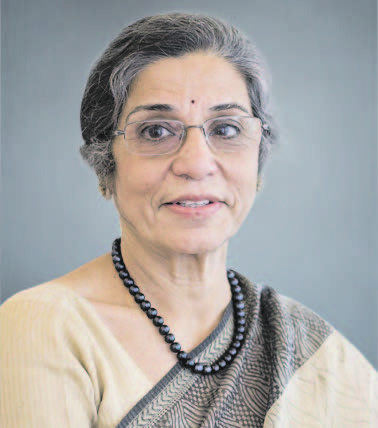
    NEW YORK CITY (TIP): Mrs. Ranjana Kumar, former Chairperson and CEO of Indian Bank, and Ambassador Dnyaneshwar M. Mulay, Consul General of India, participated in an interactive discussion, June 12, on – “What Should India Do to Make Its Massive Public Sector Productive and Profitable.” “This is a very exciting time for those of us who work in the U.S.-India corridor,” said Rajiv Khanna in his opening remarks to the members of the Chamber. “According to a recent article in The Sunday Guardian, the Indian GDP is expected to grow from less than $2 trillion a year to $10 trillion a year in the next few years.

    During the same period, the U.S.-India trade is expected to grow from the current level of $100 billion per year to $500 billion per year. As many of you know, the India-America Chamber of Commerce was formed in 1932 and has since then, worked tirelessly to promote trade and investment between India and the United States,” said Rajiv. Ambassador Dnyaneshwar M. Mulay added by saying, “this is truly a turnaround moment for India, we have had a fascinating election and now it’s time for business of the nation, and business of the common man.

    Our Prime Minister Narendra Modi has a good record on the business side. We now have government in place, a government that delivers, as we look to build our nation and find its true role, which is to have a significant role to make not only India a better place, but also this planet. ” Rajiv welcomed Mrs. Ranjana Kumar and expressed his enthusiasm for having her speak to the members of the Chamber and for sharing her experience in the public sector and posed the question of how to make the public sector in India productive and profitable. Mrs. Kumar said, “the country has seen tremendous activity during the elections and the change in the government, and everything took place in the calmest fashion. Since the new government came to power, the rupee is stronger.

    So far in the public sector iron, steel, textile and cement have been growing but there are certain issues that need to be tackled. We have to analyze these issues in depth. The main point I want to draw on today is the human resource management in the public sector and how it should be handled.”

    Mrs. Kumar touched upon a few key points that play a vital role for success of a public sector enterprise:

    ● Clarity of vision, plan of action and execution of the plan
    ● Implementation of technology and utilizing great talent and potential
    ● Business environment needs and requires – objective, fair and a transparent model
    ● Distinguishing between performer and non-performer
    ● Taking initiatives and having good knowledge of the opportunities
    ● Promotion should be given to right people based on the outstanding annual reports
    ● Reasonable time to perform for performers; keeping the environment conducive for growth
    ● Companies have to keep restructuring and evolving with the evolution of markets

    In her interaction with the members, Mrs. Kumar added, “the private sector is changing and similarly, the public sector will have to change and adapt. I truly believe in delegation and being clear when delegating. When you delegate you need to empower people, when people are empowered they can possibly make mistakes and when mistakes are made be sure to check the changes that need to be made in policies for the solution. We still have enormous work to update our policies. The policies need to be reviewed annually to determine if they are practical to implement. Restructuring takes time, but it has to be consistent.” India- America Chamber of Commerce has recorded this discussion and will be sharing it with members of the Chamber and press.

    About India-America Chamber of Commerce

    IACC) provides members of the Chamber a vital platform to connect and build relationships with prominent speakers and attendees from India and the U.S. The roundtable was moderated by Rajiv Khanna, President of IACC and Equity Partner at Seyfarth Shaw LLP and the evening was hosted by Seyfarth Shaw LLP. The India-America Chamber of Commerce works to promotes business-to-business dialog between the business and policy leaders of India and the U.S. – the two largest democracies in the free world.

    The Chamber serves as a platform for open and spirited interaction among U.S. and Indian business leaders from private and public sectors. The Chambers’ monthly meetings include keynote presentations by visiting cabinet ministers, ambassadors and other prominent business leaders from the U.S. as well as India. For additional information check www.indiaamericachamber.com. The Chamber is now open for new members. For additional details on the membership applications, please contact the following members.

  • Russia wants UN action to stop violence in Ukraine

    Russia wants UN action to stop violence in Ukraine

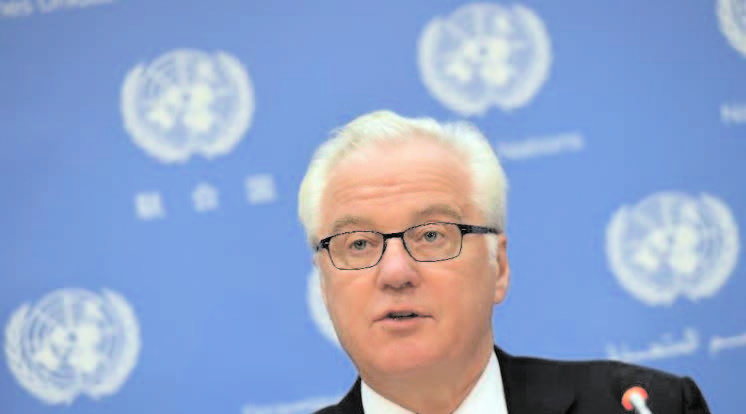
    UNITED NATIONS (TIP): Russia introduced a UN Security Council resolution on June 12 that strongly urges an immediate end to all violence in Ukraine and the launching of a national dialogue involving all political forces and regions. The draft resolution, circulated to council members and obtained by The Associated Press, calls on all parties to immediately implement a “road map” to peace put forward by the Organization for Security and Cooperation in Europe on May 12.

    Russia’s UN ambassador Vitaly Churkin said the draft supersedes a text he circulated June 2 demanding an immediate halt to deadly clashes in eastern Ukraine, which has languished. Western diplomats have insisted that any UN resolution reaffirm Ukraine’s sovereignty and territorial integrity, a critical issue following Russia’s invasion and annexation of Ukraine’s Crimean Peninsula which the United States and the European Union refuse to recognize.

    Like the June 2 draft, the newly proposed Russian resolution does not mention Ukraine’s sovereignty or territorial integrity, which makes its approval by the Security Council highly unlikely. Churkin said there was only a brief discussion of the text, with support from some council members and suggestions from others. He said council experts would meet Friday to go over the text “to try to accomplish this very quickly.” Lithuania’s UN Ambassador Raimonda Murmokaite called the resolution “another surprise … like a rabbit out of the box.”

    Any resolution on Ukraine has to “insist on territorial integrity, sovereignty and inviolability of Ukraine’s borders and we have to clearly name insurgents and militant separatists and what they’re doing,” she said. Lithuania and some others will also express concern “that there’s military movement across Russia’s border including recent information on three tanks which have crossed into (Ukraine’s) territory,” Murmokaite said.

    “For Russia not to be able to take care of its own borders and not to prevent the flow of arms, insurgents and military capabilities is a highly troubling situation.” The draft expresses deep concern at the intensification of hostilities and killing of civilians in eastern Ukraine, where government forces have battled pro-Russian rebels for two months. Churkin noted reports of the use of white phosphorous munitions, which are banned, by the Ukrainian side.

  • Fresh fighting erupts on DR Congo-Rwanda border

    Fresh fighting erupts on DR Congo-Rwanda border

    KINSHASA (TIP): Rwandan and Congolese troops traded heavy weapons fire on June 12 in a second day of fighting on the border between the two neighbours which have been locked in a decades-long dispute. After the morning clashes abated, rival troops were engaged in a staredown from afar in the mountainous Kanyesheza region which straddles the border, a Congolese administrative official said on condition of anonymity.

    An AFP reporter on a press trip to the area with the Rwandan army and foreign defence attaches said the combat zone — some 20 kilometres (12 miles) north of the border towns of Goma in the DRC and Gisenyi in Rwanda — was calm on Thursday afternoon. “There were heavy arms fire, explosions, rockets,” which lasted for half an hour, said a resident in the area of the morning clashes. Another resident on the Congolese side of the frontier said about “30 families” were fleeing the border regions after the fighting.

    – Trading blame –

    senior Congolese military officer said that Rwandan troops had attacked their positions, but a Rwandan military source, also speaking anonymously, told AFP that there had “not been serious clashes, they were sporadic firings” of heavy weapons. The latest cross-border clash came a day after the two sides exchanged automatic weapons fire, with each blaming the other for the outbreak of violence. Rwanda’s army on Thursday displayed five bodies to journalists which it said were Congolese soldiers killed in the fighting on Wednesday, an AFP reporter said.

    Lambert Mende, a spokesman for the Congolese government, accused Rwanda of lying about the deaths of its soldiers. “Rwandans have taken corpses from hospitals, or killed poor peasants — perhaps Congolese, Rwandan maybe — just to back up their story,” he said. The DRC has said only one of its soldiers was killed. The Congolese army said the conflict started after one of its soldiers was kidnapped by Rwandan troops who crossed into its North Kivu province. However Rwanda said Congolese troops crossed into its territory and opened fire on Rwandan soldiers. “We are only seeking to reinforce our positions,” North Kivu governor Julien Paluku said.

    A resident of a village on the road from Goma to Kanyesheza, said he saw mounted heavy machine-guns and three army tanks roll past on June 12 morning.Each side denied returning fire when shelled by the other.In an apparent sign of goodwill, the Rwandan and Congolese armies sent a team from a Joint Verification Mission (JVM) they have formed with the United Nations to carry out checks in the conflict zone, a JVM official who monitors the border said.

    Both the JVM and a western military source confirmed the deaths of the five Congolese soldiers. No deaths were reported in Thursday’s fighting. Farhan Haq, a spokesman for the UN Secretary- General Ban Ki-moon, said diplomatic efforts were under way to “avoid unnecessary tension” and to encourage the DRC and Rwanda to “continue furthering good neighbourly relations.”

    – Strained relations –

    have been strained for decades between the neighbours, with the DRC accusing Rwanda of seeking to destabilise it by backing various militia which have risen up against Kinshasa.Much of the tension arises from the presence in the eastern DRC of Rwandan Hutu rebels in the Democratic Forces for the Liberation of Rwanda (FDLR).This armed movement’s older members are accused of taking part in the 1994 genocide of ethnic Tutsis in Rwanda which left an estimated 800,000 dead in three months of slaughter.

  • Harrison Ford injured on ‘Star Wars’ set

    Harrison Ford injured on ‘Star Wars’ set

    LONDON (TIP): Veteran actor Harrison Ford was airlifted to hospital on June 12 after suffering an ankle injury on the set of the new “Star Wars” movie in Britain. The 71-year-old was hurt when a garage door fell and hit him at Pinewood Studios outside London, according to emergency services. “We were called just after 5:00 pm to reports of a 71-yearold man being injured in an incident believed to involve a garage door,” said a spokesman for Thames Valley police.

    “The man was airlifted to John Radcliffe Hospital with injuries which are not believed to be life threatening.” A Disney studios spokeswoman confirmed that Ford sustained the injury during filming on the set of “Star Wars: Episode VII.” “He was taken to a local hospital and is receiving care. Shooting will continue as planned while he recuperates,” she added in a statement. Filming began in May on the new episode of the iconic franchise, directed by blockbuster filmmaker J J Abrams.

    Original cast members Ford, Carrie Fisher, Mark Hamill, Anthony Daniels, Peter Mayhew and Kenny Baker star in the new film, due for worldwide release on December 18, 2015. Ford is back as smuggler Han Solo, 62-year-old Hamill will return as Jedi Knight Luke Skywalker and Fisher, 57, reprises the role of Princess Leia. Disney recruited “Star Trek” and “Mission: Impossible III” director Abrams in a bid to re-create the magic from the original trilogy: “Star Wars,” “The Empire Strikes Back” and “Return of the Jedi.”

  • It’s a new era in India’s foreign policy as countries compete to woo Modi

    It’s a new era in India’s foreign policy as countries compete to woo Modi

    “The new majority government in power in New Delhi, freed from debilitating coalition politics and attaching priority to economic development, has aroused external interest”, says the author.

    In foreign policy, Prime Minister Modi has hit the ground running, taking unexpected initiatives. He reached out to our neighbors, taking the unprecedented step of inviting their leaders to his swearing-in ceremony. While invitations to Bangladesh, Nepal, Bhutan, Maldives and Afghanistan carried only positive connotations, those to Prime Minister Nawaz Sharif and President Rajapakse carried mixed political implications. It was felt that the plus points in extending invitations to Pakistan and Sri Lanka outweighed the negatives.

    Engagement

    In Pakistan’s case the dilemma is whether we should engage it at the highest level without any ground-clearing move by Nawaz Sharif on terrorism, the Mumbai trial and trade. The Pakistani premier has been, on the contrary, aggressive over Kashmir, invoking the UN resolutions and self-determination as a solution, seeking third party intervention, permitting tirades by Hafiz Saeed against India, maintaining the pitch on water issues and reneging on granting MFN status even under a modified nomenclature.

    In these circumstances, the move to invite him risked suggesting that, like the previous government, the new government too was willing to open the doors of a dialogue in the hope of creating a dynamics that would yield some satisfaction on the terrorism issue. In other words, practically delinking dialogue from terrorism, despite having taken a position to the contrary while in opposition.

    In Sri Lanka’s case, the whipped-up sentiments in Tamil Nadu against President Rajapakse for his triumphalist rather than reconciliatory policies on the Tamilian issue have upset the overall balance of India’s foreign policy towards Sri Lanka that requires that we adequately weigh the need to counter powerful adversarial external forces are at play there against our interests. Inviting President Rajapakse to New Delhi obviously risked provoking a strong reaction in Tamil Nadu, but the new government had to decide whether, like its predecessor, it would get cowed down by such regional opposition, or it would act in the greater interest of the country even when according importance to the sentiments of a section of our population.

    This dramatic outreach to the neighbors has elicited praise internally and externally, primarily focused on the invitation to the Pakistan president and its implication for the resumption of the Indo-Pak dialogue. Internally, those pro-dialogue lobbies that have espoused the previous government’s placative policies towards Pakistan have naturally welcomed the surprise move by Modi. Externally, India has always been counseled to have a dialogue with Pakistan irrespective of its conduct and its terrorist links, the argument being that these two South Asian nuclear armed neighbors with unresolved territorial conflicts risked sliding into a nuclear conflict unless they found a way to settle their differences for which a dialogue was an inescapable necessity. Such praise from within and without from predictable quarters should neither be surprising nor worth much attention.

    Outreach

    The new majority government in power in New Delhi, freed from debilitating coalition politics and attaching priority to economic development, has aroused external interest. The sentiment outside the country- as well as inside it – has been that the previous government lost its way, leading India into the quagmire of high fiscal deficits and tumbling growth, belying international expectations about its economic rise paralleling that of China.

    If India can be steered back into a high growth trajectory with stronger leadership and improved governance, more economic opportunities will open up for our foreign partners. This would also draw renewed attention to India’s geo-political importance which, though an accepted reality now, has receded from the foreground lately.

    Reassurance

    Modi is seen as the man of the moment. This would explain the telephone calls from world leaders to Modi and the invitations given and received. India is being courted, and Modi’s choice of the countries he first visits or foreign leaders he first receives, is drawing external attention as an indication of his diplomatic priorities.

    On this broader front too, Modi is following an unanticipated script of his own. He is being generous to the US despite its reprehensible conduct in denying him a visa, by prioritizing national interest over his individual feelings. He has not waited for the stigma of visa refusal to be erased by a US executive order removing his name from the State Department black-list. He is planning to meet President Obama in Washington in September – the first external visit to be announced – quickly relieving the Americans of fears that the visa issue could become a hurdle in engaging him.

    In another remarkable gesture that the State Department would have noted for its political import, he has agreed to a book launch by an American think-tank at Race Course Road. China wants to complicate moves by Japan to strengthen strategic ties with India. Its decision to send its Foreign Minister to India after the swearing-in seems to have been motivated by this rivalry, apart from seeking to build on the personal contacts established by China with Modi when he was Chief Minister. If the Chinese FM was allowed to be the first consequential foreign leader to meet Modi, it appears Japan may be the first foreign country – barring Bhutan – the latter may visit en route to the BRICS meeting in July in Brazil.

    The Bhutan visit underscores the importance Modi intends attaching to neighbors. Russia’s Deputy Prime Minister is visiting Delhi on June 18. It would seem that Modi’s immediate priority is to reassure all his important interlocutors, friends or adversaries, that they should have no misgivings about him and the direction of his policies, and that he seeks to engage with all power centers in a balanced manner.

  • Pirates steal tanker carrying million litres of oil, Malaysia on hunt

    Pirates steal tanker carrying million litres of oil, Malaysia on hunt

    KUALA LUMPUR (TIP): Malaysia is hunting for a group of machete-wielding pirates who hijacked a tanker off its eastern coast, stealing a million litres of oil, in the latest in a spate of attacks in its waters, an official said on June 13. Pirates hijacked the Malaysia-registered tanker MT Budi Mesra Dua last Saturday off Bintulu in the oil-rich Sarawak state as the ship sailed from neighbouring Singapore.

    “Ten machete-wielding pirates boarded the ship, which was carrying about a million litres of diesel. They took control of the tanker for about 10 hours,” Mohamad Sufi Mohamad Ramli, a local commander with the Malaysian Maritime Enforcement Agency told AFP. The armed pirates siphoned off the diesel fuel to another ship, robbed the crew of their valuables and destroyed communication equipment before escaping, he said.

    “We have activated 24-hour sea patrols around Bintulu waters (in the South China Sea) to prevent similar attacks,” Mohamad Sufi said.”We are hunting down the pirates,” he added. Pirates have attacked a number of vessels in waters off Indonesia, Singapore and Malaysia recently. In April, pirates injured the captain and stole diesel fuel from a Thailand-owned tanker off the eastern coast of Malaysia. In the same month, three Indonesian crew were kidnapped and diesel fuel stolen from a Singaporemanaged tanker in the Strait of Malacca, an important shipping lane.

  • Colombia, ELN guerrillas launch peace process

    Colombia, ELN guerrillas launch peace process

    BOGOTA (TIP): Colombia’s government and the country’s second largest guerrilla group, the National Liberation Army, announced Tuesday they have opened peace talks, with a tense presidential election just days away. In a joint statement released by the government, the two sides said they have been holding exploratory talks since January “with the objective of agreeing on the agenda and design of the process to make viable the end of the conflict and build the peace.”

    The government already is in the midst of peace talks with the Revolutionary Armed Forces of Colombia (FARC), Colombia’s largest rebel group, which were launched in November 2012. No date or place was given for the next set of talks with the National Liberation Army, or ELN, though Ecuador’s president Rafael Correa said Tuesday his country was ready to “provide the facilities.” President Juan Manuel Santos said they would be no different than those being held with the FARC.

    The process would involve the laying down of arms, an agenda with specific points, and talks held outside the country, he said. “The political responsibility for this new peace effort falls exclusively on my shoulders and on no one else’s,” Santos said. “A peace process that includes both the FARC and the ELN is the best guarantee … that this conflict is ended for good, and that it will never be repeated.”

    The joint statement said the two sides have agreed to discuss the victims of the conflict and the rebel group’s “participation in society.” “The rest will have to be agreed on” at a later time, the statement said. UN chief Ban Ki-moon said he welcomed the start of talks with the ELN. “Combined with the progress already achieved in the ongoing talks with the Revolutionary Armed Forces of Colombia (FARC), the Secretary- General hopes that this new development will contribute to ending the hemisphere’s longest armed conflict and to building sustainable peace for the Colombian people,” he said in a statement.

    The surprise announcement comes as Santos, who is seeking a second term, finds himself in a close run-off election on Sunday. Opposition candidate Oscar Ivan Zuluaga has made the peace talks the main point of contention in the race. He called the timing of the announcement of talks with the ELN “suspicious,” saying it showed the “desperate attitude” of the government to influence voters.

    The FARC, meanwhile, welcomed the ELN’s talks with the government, calling the announcement “very important news for peace.” “We consider them (the talks) positive and we hope that they proceed in a spirit of peace and not in an electoral spirit,” FARC negotiator Andres Paris told AFP in Havana. Both sets of talks aim to end a leftist insurgency that has afflicted Colombia for half a century, claiming the lives of more than 220,000 people and uprooting another five million. The FARC has between 7,000 and 8,000 fighters, according to the army. The ELN has another 2,000 or so combatants under arms. As in the talks with the FARC, several countries will act as guarantors of the peace process, including Cuba, Chile, Ecuador, Norway and Venezuela.

    “The message is one of a new opportunity, a historic event,” said Fabrizio Hochschild, the head of the UN delegation in Colombia. “It’s very important because it completes the panorama of peace,” said Jorge Alberto Restrepo, an analyst with the Colombian think tank Cerac. “One could not have an internal conflict that is resolved with the FARC but continues with the ELN.”

    It is the third attempt at a negotiated peace with the ELN, after two failed efforts under the governments of Cesar Gaviria (1990-1994) and Alvaro Uribe (2002-2010). After the government embarked on peace talks with the FARC — their fourth attempt — the ELN’s leadership said it was ready to join the peace process. Operating mainly in the north of the country along the border with Venezuela, the ELN recently focused on fighting “the looting of natural resources” by multinational companies. It has pursued a campaign of sabotage against oil and mining installations, and has taken engineers and other workers hostage. Unlike the FARC, the ELN has not publicly.

  • Much More than Rhetoric is needed for Good Governance

    Much More than Rhetoric is needed for Good Governance

    The Aam Aadmi Party made too many promises to be kept in too little a time and fell flat. From a rising star it turned in to a fallen star. One hopes, other political parties will take a lesson and not be in a hurry to promise suns, moons and stars to the people of the country.

    So long as the people are not taken in to a dream world they compromise with their conditions, howsoever unpleasant. But once, their desire to be transported in to that world is aroused, they are like hungry wolves. They must devour whatever comes their way. AAP knows it by now. One sincerely hopes the new government that has been emphasizing so much on “sushshan”- good governance- will not go in for populism beyond what the BJP has already done and let the people know they cannot expect a sea change overnight. Already, BJP has made too many commitments to 1.2 billion people that have given much hope for a change in their living conditions.

    One shudders to think what they will do if they feel cheated and betrayed. While nobody should doubt the sincere desire of the new government to bring in a perceptible change in the governance, it ought to be kept in mind that governance depends upon the conditions obtaining in the country.

    It is not always that governance changes the conditions. More often conditions decide the form and efficacy of governance. Take for example, the recent power shortage in Delhi. There may be nothing wrong with “governance” but there is nothing right with the conditions and situation. Despite the best intentions, government is not in a position to evidence its good governance. Similarly, the rising prices that affect most the masses whose smile, you never know when it will change in to a frown, once they conclude the government is inefficient. The measure of governance of a government is how far it is able to keep the masses satisfied. And, much more than rhetoric is needed to achieve that end.

  • Blast in apartment in China’s Yunnan province kills 3

    Blast in apartment in China’s Yunnan province kills 3

    BEIJING (TIP): Three people were killed and four others were injured in a blast in an apartment in southwest China’s Yunnan province on June 13. The blast, which occurred at around 2:30 am, ripped through the fourth floor apartment on Ziyun Street in Chuxiong City, state-run Xinhua news agency reported. The injured people have been hospitalised, and the cause of the explosion is under investigation.

  • Japan summons China envoy over ‘dangerous’ flights

    Japan summons China envoy over ‘dangerous’ flights

    TOKYO (TIP): Japan on June 13 summoned the Chinese ambassador to complain about fighter jets flying “dangerously” close to two of its military planes over the East China Sea, officials said. In the latest up-close confrontation between the two sides, Tokyo says two Chinese SU-27 jets flew just 30 metres away from its aircraft in a spot where the two countries’ air defence zones overlap.

    “It was an action that was extremely regrettable, and which cannot be tolerated,” said top government spokesman Yoshihide Suga, of the yesterday’s incident. It was the second time in less than three weeks that Tokyo has accused Beijing of playing chicken in the skies near the hotly-contested Japanese-controlled Senkaku islands, which China also claims and calls the Diaoyus.

    It comes after a similar event which occurred last month,” Suga said. “The government will continue urging China to prevent an accident and restrain itself. “Japan will seek cooperation from countries concerned.” Japan’s vice minister for foreign affairs, Akitaka Saiki, called the Chinese ambassador to Japan, Cheng Yonghua, to the ministry, where he was expected to have urged Beijing to create a maritime communication system with Tokyo.

    The incident occurred as Japan and Australia held the fifth round of so-called “2+2” talks between their defence and foreign affairs chiefs in Tokyo. The meeting was part of a trend in which military and political alliances are being forged and strengthened around the Asia-Pacific, as countries in the region look with alarm at China’s growing willingness to forcefully push its claims in territorial disputes. The two sides reached a broad agreement on a legal framework to allow them to conduct joint research and trade in defence equipment.

    That comes as Japanese Prime Minister Shinzo Abe has relaxed strictures on his country’s arms industry to allow it to sell its high-tech weaponry abroad, and as Canberra is known to be shopping for submarines. Abe has also made great play of offering Japan as a benign counterweight for countries looking askance at China’s recent heavy-handedness, which has seen it involved in destabilizing rows with Vietnam and with the Philippines.

  • Terror attacks: Inaction or capitulation?

    Terror attacks: Inaction or capitulation?

    By Zahid Hussain

    “The Karachi airport attack once again exposed the vulnerability of our security system. The sense of urgency in Islamabad was not commensurate with the scale of the crisis”, says the author.

    The ferocious terrorist attack on the Karachi international airport is a grim reminder of a state under siege with little hope of it being salvaged. The security forces cleared the airport after a fierce gun battle stretching to several hours that left over 20 people killed and some aircraft damaged. Notwithstanding the claim of success in containing the damage, the incident once again exposed the vulnerability of our security system in dealing with such organized and daring terrorist assaults.

    The most worrisome aspect was the complete lack of leadership at the national level as the country faced one of its most serious security challenges. The sense of urgency in Islamabad was not commensurate with the scale of the crisis at the country’s premier airport that was under attack with thousands of passengers caught in the crossfire.

    The federal interior minister surfaced the next morning saying that an enquiry has been ordered. He did not satisfy queries when he arrived in Karachi 22 hours later. One was also disappointed that the prime minister, apart from issuing the routine condemnation, in the manner of his predecessors, did not make a TV appearance instilling some confidence in the people during or after the crisis.

    Taking on the TTP

    This has led to observations in some circles that the prime minister’s concern for attacks outside his home province of Punjab is far less than expected. Even though all parties had agreed to give peace a chance, the present government’s inaction borders on a capitulation that has further strengthened the militants. There is still no show of any resolve to take on the TTP, which has claimed responsibility for Sunday night’s attack. There was a lot of similarity between the attack on Karachi airport and the earlier assaults on the Mehran and Kamra airbases. All were carried out by highly trained suicide squads armed with sophisticated weapons and aimed at inflicting maximum damage.

    One more objective of selecting these high-profile targets was to get maximum international publicity. The terrorists seem to have achieved both goals. The attack on the country’s biggest international airport and commercial gateway carried much greater long-term consequences for the country’s image and economy. The incident may force international airlines to review their operations in Pakistan. One should also forget about any foreign direct investment coming into the country at least for some time.

    It is shocking the way terrorists carrying huge bags of firearms and explosives breached the supposedly high-security zone and entered the runway. It was apparent that the assailants had all the relevant information about the airfield – not possible without internal help. A Taliban spokesman claimed one of their aims was to hijack a passenger aircraft.

    The attempt may have been foiled by the security forces, but the attackers could have been close to achieving their goal. The government and the security agencies are downplaying the damage as TV footage of a thick curtain of smoke covering the runway and fire engulfing areas around the aircraft shows.

    Militant nexus

    More importantly, the attack gives some insight into the militant nexus operating in Karachi. The country’s main financial centre has long been a haven for the Taliban, sectarian militants, jihad financiers and Al-Qaida sleeper cells. This lethal brew seems to have been responsible for high-profile attacks such as the one on Karachi airport and earlier, the Mehran base. Security officials suspect that most of the attackers were Uzbeks or from the tribal areas.

    It is quite plausible given that a large number of foreign fighters have taken sanctuary in North Waziristan. But these outsiders could not have carried out such coordinated and professionally planned assaults without a powerful organizational network in the city itself. Such sophisticated terrorist actions also required comprehensive planning, finances and logistical support. The presence of this kind of sophisticated terrorist network makes the city much more vulnerable, particularly with no counter-terrorism strategy in place.

    The virtual collapse of the administrative system and of lawenforcement in the city lends a favorable environment for the terrorist networks to operate with such impunity. What happened in Karachi cannot be seen in isolation. The growing stridency of the militants is a direct result of the government’s policy of appeasement in the name of peace negotiations. This approach has virtually legitimized militant violence giving the terrorist outfits even greater space.

    Fear of backlash in Punjab

    Despite the fact that hundreds of soldiers have been killed in militant attacks, the government has not given the go-ahead to the military to eliminate militant sanctuaries in North Waziristan. One major reason for avoiding an operation is seen as the fear of backlash in Punjab.

    As a result, the threat to national security from the rising militancy has become much more serious. The notion of Punjab’s safety first and foremost carries serious consequences for the country’s unity and stability. Ironically this inaction makes Punjab much more insecure in the long term. The province is the biggest incubator of sectarian extremists and jihadists. Many of the Punjabi militant groups have made North Waziristan their operational base and are working closely with the TTP and Al-Qaida. Surely, it suits these militant groups to buy time sparing Punjab for the time being. But it is not going to be very long when they will turn their attention to their home province. They have already shown their prowess by launching some spectacular attacks in Lahore and Rawalpindi not long ago.

    Also, the rise in sectarian violence has further destabilized the country. Hours before the Karachi airport attack the sectarian extremists killed over 20 Shia pilgrims in Taftan on the border with Iran. There is a clear link between the sectarian extremist group and militant outfits attacking the security forces. The latest spate of violence provides an opportunity to the government to unify the country for a decisive war against terrorism. But is anyone listening?

  • Iraqi Kurds take Kirkuk, Sunni rebels surge towards Baghdad

    Iraqi Kurds take Kirkuk, Sunni rebels surge towards Baghdad

    BAGHDAD/ARBIL (TIP): Iraqi Kurds took control of the northern oil city of Kirkuk on June 12 after government forces abandoned their posts in the face of a sweeping Sunni Islamist rebel push towards Baghdad that threatens Iraq’s future as a unified state. Peshmerga fighters, the security forces of Iraq’s autonomous Kurdish north, swept into bases in Kirkuk vacated by the army, a peshmerga spokesman said. “The whole of Kirkuk has fallen into the hands of peshmerga,” said Jabbar Yawar.

    “No Iraqi army remains in Kirkuk now.” Kurds have long dreamed of taking Kirkuk and its huge oil reserves. They regard the city, just outside their autonomous region, as their historical capital, and peshmerga units were already present in an uneasy balance with government forces. The swift move by their highly organized security forces to seize full control demonstrates how this week’s sudden advance by fighters of the al-Qaida offshoot Islamic State of Iraq and the Syria (ISIS) has redrawn Iraq’s map.

    Since Tuesday, black clad ISIS fighters have seized Iraq’s second biggest city Mosul and Tikrit, home town of former dictator Saddam Hussein, as well as other towns and cities north of Baghdad. They continued their lightning advance on Thursday, moving into towns just an hour’s drive from the capital. The army of the Shia PM Nuri al-Maliki’s government in Baghdad has essentially fled in the face of the onslaught, abandoning buildings and weapons to the fighters who aim to create a strict Sunni Caliphate on both sides of the Iraq-Syria frontier.

    The stunning advance of ISIS, seizing northern Iraq’s main population centres in a matter of days, is the biggest threat to Iraq since US troops withdrew in 2011. Hundreds of thousands of people have fled their homes in fear. Security and police sources said Sunni militants now controlled parts of the small town of Udhaim, 90 km north of Baghdad, after most of the army troops left their positions and withdrew towards the nearby town of Khalis.

    “We are waiting for supporting troops and we are determined not to let them take control. We are afraid that terrorists are seeking to cut the main highway that links Baghdad to the north,” said a police officer in Udhaim. The global oil benchmark jumped over $2 on Thursday, as concerns mounted that the violence could disrupt supplies from the OPEC exporter.