Month: August 2014

  • World on alert as Ebola outbreak claims 729 lives

    World on alert as Ebola outbreak claims 729 lives

    FREETOWN (TIP): Sierra Leone declared a health emergency and called in troops to quarantine Ebola victims on Thursday, joining neighbouring Liberia in imposing tough controls as the death toll from the worstever outbreak of the virus hit 729 in West Africa. The World Health Organization said it was in talks with donors and international agencies to deploy more medical staff and resources to one of the world’s poorest regions. The WHO reported 57 new deaths between July 24-27 in Guinea, Liberia, Sierra Leone and Nigeria.

    Authorities in Nigeria, which recorded its first Ebola case last week when a US citizen died after arriving on a flight from Liberia, said all passengers travelling from areas at risk would be temperature-screened for the virus. In a measure of rising international concern, Britain on Wednesday held a government meeting on Ebola and called it a threat requiring a response. The White House also said President Obama was being briefed on the situation. But international airlines association IATA said the WHO was not recommending any travel restrictions or border closures, and there would be a low risk to other passengers if an Ebola patient flew.

    The outbreak of the haemorrhagic fever, for which there is no known cure, began in the forests of remote eastern Guinea in February, but Sierra Leone now has the highest number of cases. Sierra Leone President Ernest Bai Koroma said he would meet leaders of Liberia and Guinea in Conakry on Friday to discuss ways to combat the epidemic.

  • Imam of China’s biggest mosque killed in Xinjiang

    Imam of China’s biggest mosque killed in Xinjiang

    BEIJING (TIP): The head of a China’s largest mosque was murdered after conducting morning prayers, the local government in the far western region of Xinjiang said Thursday, amid intensifying violence in the turbulent region. Jume Tahir, the governmentappointed imam of the 600-year-old Id Kah mosque in the city of Kashgar, was killed on Wednesday by “three thugs influenced by religious extremist ideology”, the Xinjiang government web portal Tianshan said.

    Police launched an all-out investigation and shot dead two of the alleged assailants while capturing the other at about noon on Wednesday as they violently resisted with “knives and hatchets,” Tianshan said. Tianshan said Tahir’s killing was “premeditated” and that the suspects intended to commit a “ruthless murder”. It also said they wanted to “increase their influence through ‘doing something big’”. Tianshan identified the suspects by their names in phonetic Chinese. The official Xinhua news agency in an English-language report gave their names as Turghun Tursun, Memetjan Remutillan and Nurmemet Abidilimit. Neither Tianshan nor Xinhua initially identified who among them was shot dead and who was apprehended.

    Tahir was found dead in a pool of blood outside the mosque’s prayer house, Radio Free Asia (RFA) reported earlier on its website. Xinjiang, home to China’s mostly Muslim Uighur ethnic minority, has seen escalating violence which in the past year has spilled over into other parts of China. RFA cited what it described as “witnesses and other officials”, including the director of a neighbourhood stability committee in Kashgar, who described the killing as an assassination. Imams and other religious leaders in China are appointed by the government and subject to strict control on the content of their preaching.

    US-based RFA said that Tahir had been critical of violence carried out by Uighurs, and China’s official Xinhua news agency in early July quoted him as condemning terrorist violence carried out in the name of ethnicity and religion. Tahir, 74, “enjoyed a high reputation among Muslims nationwide”, Xinhua said in its dispatch on July 31.

  • India Day Parade, Hicksville on August 9th

    India Day Parade, Hicksville on August 9th

    Celebration of India, Heritage and Culture
    POONAM DHILLON IS THE GRAND MARSHALL

    I.S. Saluja The countdown to celebrate the 67th Anniversary of India’s Independence Day at the 3rd IDPUSA India Day Parade in Hicksville, Long Island on Saturday, August 9th, 2014 has begun. The celebrated Bollywood siren Poonam Dhillon will be the Grand Marshall while the Guest of Honor will be Nassau County Chief Executive Mr. Edward Mangano.

    The Parade will start from Patel Brothers store in Hicksville at noon sharp. Moving on Broadway, it will reach the parking area opposite Asa Mai HinduTemple where a shopping arcade, where visitors can buy various wares and enjoy the taste of delectable food, has been planned. Also, part of the celebrations is an entertaining and colorful cultural show. Several tastefully decorated floats and musical bands will be attractions of the colorful Parade.


    37
    The leading lady of Sony’s Ek Nayi Pehchan and a popular Bollywood actor Poonam Dhillon will be the Grand Marshall at the IDPUSA in Hicksville on August 9th


    38
    The Chief Executive of Nassau County, Edward P. Mngano will be the Guest of Honor


    39
    Bobby Kalotee, Founder, IPDUSA

    The parade to celebrate the 67th anniversary of India’s Independence is a celebration by Indian Americans of India, her heritage and rich culture.Without the enthusiastic participation of people there can be no parade, whatever the arrangements”, said Bobby Kalotee, founder of India Day Parade USA in Hicksville, in an interview with The Indian Panorama Chief Editor, Prof. Indrajit S Saluja.

    Bobby exhorted Indian Americans to join the parade on August 9. He said, “I humbly request all my brothers and sisters to join us at the Parade to celebrate India’s freedom and India’s rich culture.” Seated with the organizing Committee members in his All American Independence Party office in Hicksville, he spoke at length of the enormous contribution of organizing committee members, sponsors, volunteers and media in putting together, once again, a memorable and enjoyable experience of celebrating India, India’s heritage and rich culture. Bobby had a word of praise for the Parade organizing committee.

    He said, “The committee led by Peter Bheddah and Indu Jaiswal has worked hard and independently, without any outside interference, to put together the Parade. The committee has made an excellent selection of the Grand Marshall in Poonam Dhillon, a celebrated film actor from India”. He thanked committee chairs for the great work they have done. Bobby said the Parade also worked as a bridge between the Indian Americans and the mainstream and thanked the Nassau County and various town administrations for their y cooperation to the organizing committee to ensure the Parade is a grand success.

    Bobby Kalotee hardly needs an introduction. He is a man of vision and action. Three years ago, with likeminded friends, which included Indu Jaiswal, President of IAF, he thought of the brilliant idea of celebrating India’s Independence in Hicksville which has come to have a large population of persons of Indian origin. Once he hit upon the idea he brought together various sections in the Indian American community to celebrate the glorious day in Independent India’s history. That was 2012. Since then we have had 2 parades. The one on August 9, 2014 is the 3rd one, and each has been growing in size, strength and quality.


    40
    Peter Bheddah, Chair, IDPUSA

    It is a great privilege and honor to be at the helm of affairs of the 3rd India Day Parade to celebrate the 67th Independence Day of India in Hicksville, Long Island on August 9, 2014″, said Peter Bheddah, Chairman of the 3rd India Day Parade in Hicksville, New York, in an interview with the Chief Editor of The Indian Panorama, July 29, 2014. Peter spoke at length of the “stupendous task” involved in organizing the scheduled Parade on August 9. Turning to his colleagues, with gratitude oozing on his face, he said, “It could not have been possible to make such tremendous progress in arrangements of the Parade without the support and cooperation of my committee members.

    I thank each one of them, and in particular, founder member Bobby Kalotee and IDPUSA Coordinator Indu Jaiswal, for their unstinted and ungrudging support and cooperation in organizing the Parade that is so expressive of the Indianness of the Indian Americans”. The organizing committee members greeted his statement with a loud applause. On the occasion, Peter Bheddah heaped praise on the sponsors who have been extremely generous in their support for the parade. He said but for their solid backing, the event could not have been possible. He thanked them and hoped for their continued support for the event.

    Peter Bheddah is an old horse, tried and tested in many a battle. He has commendable credentials as a community leader and a philanthropist. He has donated huge sums in charity and has held responsible positions in various organizations. He has been President of Nargis Dutt Memorial Foundation and India Association of Long Island. Honored and awarded for his yeoman’s services, Peter is recipient of the coveted and prestigious Ellis Island Medal of Honor, besides a large number of recognitions from administration and community.


    41
    Indu Jaiswal, President, IAF, Co-Ordinator, IDPUSA

    Indu Jaiswal, one of the best known community leaders on Long Island, President of Indian American Forum, and IDPUSA coordinator, appreciated coming together of Indian Americans of various hues under one umbrella of IDPUSA to celebrate the 67th anniversary of India’s independence. “Together we will make a difference. Together we will walk”, she said. She welcomed the participation in the parade of various businesses, corporate houses, hospitals, banks, restaurants and international airlines. “We have grown bigger and better, with each celebration”, said Indu.


    42
    Rajan Nabe

    Rajan Nabe, Chair Finance / Budget, an honoree and a grand sponsor said he has been associated with IDPUSA since its inception. He said he was happy to see it grow in the last three years.

  • GUJARATI SAMAJ OF NEW YORK LEADERS HONORED

    GUJARATI SAMAJ OF NEW YORK LEADERS HONORED

    Senator Toby Ann Stavisky (D-Flushing) honored the President and Board of Directors of the Gujarati Samaj of New York on the organization’s 40th anniversary, for their nearly half century of service to the community. Since 1974, the Gujarati Samaj has been dedicated to preserving and celebrating the traditions, language culture of the State of Gujarat in India, famous as the home of Mahatma Gandhi and India’s current Prime Minister Narendra Modi.

    The Samaj solidified their roots in the Queens community in 1985 when they opened a community center in Fresh Meadows, which has since been the meeting place for hundreds of community events, such as religious festivals and community healthcare programs.

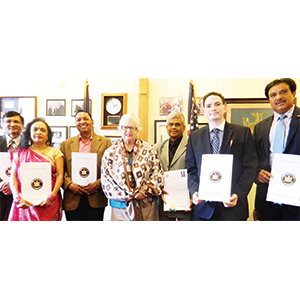
    To commemorate the anniversary, Senator Stavisky presented Senate proclamation to President Harshad Patel, Program Manager Bharati Desai, Chair of the Board of Trustees Raman Patel, Vice Chair Khandu Patel, President of the Society of Indo American Engineers and Architects Mihir Patel, Community Advocate Jitu Mehta and Chairperson Dilip Chauhan. On the occasion, Senator Stavisky was honored with traditional shawl by the Gujarati Samaj of New York.

  • Musical concert Ek Sham Rafi- Kishore ke Nam casts spell

    Musical concert Ek Sham Rafi- Kishore ke Nam casts spell

    SAAZ Enterprises ( Indu Gajwani and Rita Shah) organized a memorable musical concert Ek Sham Rafi-Kishore ke Nam on July 27th, 2014 in Flushing. The 4 hour musical bonanza cast spell on the audience who sat all through the program. Qawalis, introduced for the first time in this year’s program found a lot of appreciation. Devanand regaled the audience with his inimitable anecdotes.

    SAAZ Enterprises are coming up with another show on public demand and the show title is “Sajda Sisters & Mukesh Ki Yadein”. The tentative date of the show is September 28th 2014 at the Community Center at Holly Avenue, Flushing.

  • Queens Borough President’s Ecology Concern

    Queens Borough President’s Ecology Concern

    Queens Borough President Melinda Katz joined the Jamaica Bay Ecowatchers on Friday, July 18, on a boat tour of the Bay to observe the restoration projects taking place on the marsh lands in the areas of Broad Channel and the Rockaway Peninsula.

    Ecowatchers co-founders Dan Mundy Sr. (l.) and Dan Mundy Jr. (r.) and Jamaica Bay advocate and film maker Dan Hendrick updated the Borough President on projects such as the Sunset Cove wetlands restoration effort, a federally funded initiative to restore the shoreline of the southern portion of Broad Channel Island.

    The project will create wetlands along the shoreline and include a rock and oyster revetment barrier, a dune berm with a walking trail and an upland forest. The Borough President said projects like the Sunset Cove restoration are ecologically sound and play an important role in protecting the communities along Jamaica Bay against hurricanes and other serious weather events.

  • IDPUSA ORGANIZING COMMITTEE

    IDPUSA ORGANIZING COMMITTEE

    Others who spoke with The Indian Panorama included Flora Parekh, Co-ordinator and chair IT/ Social Media/ Communications , Rajan Nabe, Chair Finance/Budget, Eric Kumar, Chair Souvenir/Journal,; Sunita Sadhnani, Chair Cultural; Vijay Goswamy, Chair, Vendors/Booth/Tents; Hussain Baqueri, Co-Chair Parade/Floats; Ajay Batra, Chair Media; Anu Gulati, Co-Chair (Badge/Sashes/Ribbons); Dr. Bhavani Srinivasan Chair & Bina Sabapathy, Chair Religious Community Liaison; Mike Michales, Stage ; Satbir Singh Bedi Kucha, Music; Mohinder Singh Taneja, honoree, Rizwan Qureshi, Vice President HAB Bank, and Mata Ji from Divya Jyoti Jagran Sansathan.


    24
    Sunita Sadnani
    Sunita Sadnani, Chair Cultural who has been associated with earlier parades also, promised a rich cultural fare for all age groups. She said, “Besides the strong Bollywood content, we have planned to showcase the rich classical dances and music of India. The cultural program which will start at 2 P.M. will continue up to 5.30 P.M. during which time around 20 to 25 performances will be presented”.


    25
    Vijay Goswamy
    Vijay Goswamy, Chair, Vendors/Booth/Tents expressed satisfaction with the community support and said the sponsors and vendors have been forthcoming and quite generous. He listed some of the major sponsors that include Patel Bros, Bolla Mgt., Lotus Mgt. (Rajan Nabe), Delta Airlines (Jaya Travels), Glamorous Event Planners, Apna Bazar, Metlife, Indus American Bank, HAB Bank and Saavn. He said, “additionally we have 25+ other sponsors and supporters”. Goswamy said some booths are available and added, the organizers will welcome food vendors.


    26
    Dr. Bhavani Srinivasan
    Dr. Bhavani Srinivasan Chair, Community liaison added that many community organizations “wanted to be in the thick of action”.


    27
    Hussain Baqueri
    Hussain Baqueri, Co-Chair Parade/Floats, who is President of Nargis Dutt Memorial Foundation, besides being involved in many community projects and activities, said that there has been a lot of enthusiasm amongst people to book floats. He said the artistically decorated floats will lend color and charm to parade.


    28
    Ajay Batra
    Ajay Batra, Chair, Media, who has a long association with organizing various events and is associated with almost every important community organization on Long Island, said “media is our eyes and ears and takes our message across to people. We have great respect for media and will like to see all mediapersons are comfortable at the parade. He said a press conference with the Grand Marshall has been planned for August 8.


    29
    Bina Sabapathy
    Another Chair, Community liaison (Religious) Bina Sabapathy said for the first time religious organizations are sending their marching groups in the parade.


    30
    Satbir Singh Bedi Kucha
    Satbir Singh Bedi Kucha who is widely viewed as the best DJ around and was instrumental in a successful cultural program at IDPUSA 2013 said he was all set to provide the best music and entertainment. So, look for a rocking time with Kucha


    31
    Flora Parekh
    Flora Parekh, Coordinator and chair IT/ Social Media/ Communications wondered at the synergy that was in evidence all around. She said, “People want to be a part of the IDPUSA, like never before”.


    32
    Eric Kumar
    Eric Kumar, Chair Souvenir/Journal said the theme of the parade is “India Rising”. He said though the journal is in the final stages, he would welcome articles from young students on any aspect of India and Indian independence, He said the articles should reach him by August 2. He also invited advertisements. The journal contains messages from officials, profiles of honorees, articles and advertisements. He promised to come up with a profusely illustrated impressive and informative journal that will enhance the prestige of any library.


    According to the information made available, the following will be honored at the Parade.


    33
    Mafat Patel


    34
    Kamaljit Kaur Bolla


    35
    Mohinder Singh Taneja


    36
    Rajan Nabe

  • Leaders in Washington, Sikh Community gather for Langar

    Leaders in Washington, Sikh Community gather for Langar

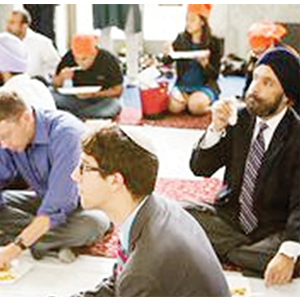
    Creating Sikh American history, SALDEF’s SikhLEAD held the first-ever Langar on Capitol Hill, introducing Congressional leaders, colleagues and neighbors to a Sikh American way of life. Reflecting the values of langar, all faiths and races were invited and they sat together on the floor sharing a simple, vegetarian meal in the Rayburn Building of the U.S. House of Representatives.

    National leaders, including Congresswoman Judy Chu (D-CA), Congressman Mike Honda (D-CA), Congressman Ami Bera (D-CA), and Congressman Mark Takano (D-CA), addressed the gathering, reflecting on Sikh American contributions, alongside their ongoing commitment to serve Sikh American communities across the nation. Congresswoman Grace Meng (D-NY) and Congresswoman Jan Schakowsky (D-IL) also visited the langar.

    During the event, Congresswoman Chu-a co-chair of the American Sikh Caucusannounced that the Caucus, through its cochair Congressman David Valadao (R-CA), along with 32 other co-sponsors from around the country, introduced a resolution honoring the memory of the attack on the Sikh Gurdwara in Oak Creek, Wisconsin (H.Res. 698).

    Congresswoman Chu also accepted the Dalip Singh Saund Award in recognition of the American Sikh Caucus’ support of the Sikh American community. Jasjit Singh, SALDEF’S Executive Director, also spoke on the significance of Langar as a 500 year-old anti-segregation movement, and celebrated the remarkable leadership demonstrated by this year’s SikhLEAD Internship Class.

  • Royal® Basmati Rice celebrates Ramadan and Eid with the community in New York, California and Illinois

    Royal® Basmati Rice celebrates Ramadan and Eid with the community in New York, California and Illinois

    LOCATIONS:
    Chicago: July 22nd- Ayesha Masjid
    Address: 2409 W. Devon Ave., Chicago, IL 60659

    Los Angeles: July 24th- Islamic Center of Orange County
    Address: One Al-Rahman Plaza, Garden Grove, CA 92844

    New York: July 24th – Muslim Majlis of Staten Island
    Address: 104 Rhine Ave. , Staten Island, NY10304

    July 27th: CHAAND RAAT
    Address: Coney Island Avenue, Brooklyn, NY 11230

    NEW YORK (TIP):
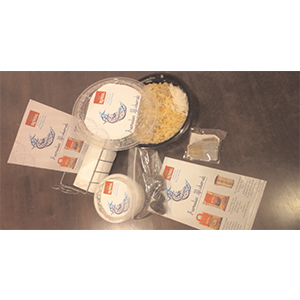
    Royal® Basmati Rice shared the spirit of giving this Ramadan by reaching out to communities at different locations in selected target markets in the U.S. During the last week of Ramadan, Royal® Basmati Rice brand ambassadors gave out free Iftar to Muslim communities in Chicago, IL, Staten Island, NY and Garden Grove, CA. In addition, Royal®Basmati Rice provided, for free, henna applications for the Chaand Raat Mela in Brooklyn, NY on the eve of Eid, the biggest celebration in the Muslim world observed at the end of Ramadan.

    The overall response of the program was very positive and Royal® Basmati Rice outreach to the local community was welcomed by all attendees. As part of the program, Royal® Basmati Rice hosted Iftar in selected mosques located in the heart of major community hubs, such as Devon Ave. in Chicago, IL.

    Most of these events were attended by a large audience who truly appreciated Royal® Basmati Rice’s involvement in the community. The events were promoted by the Imams of the mosque prior to the iftars as a sign of their appreciation for the company’s efforts. As a leading food brand that works closely within these communities, Royal® brand is embracing the culture of its customers during the time of Ramadan and Eid.

    The Royal® Brand recognizes that their high quality food products are used in many Muslim households throughout the USA and this was their way of thanking this community for their loyalty and patronage in making Royal® products one of the best selling brands for basmati rice, chakki atta and tea. “This is an important time of the year for our Muslim consumers and we want to ensure that we partake in their customs and traditions” – says Nadine Curias, VP Marketing. “Reaching out to the community to celebrate their major holiday is a part of Royal®’s continued commitment to our diverse communities.

    Ramadan is among the biggest celebration in the Muslim community and we wanted to ensure that we celebrate this at the grassroots level”, Curias added. A trusted household brand for 25 years, Royal® is the #1 best-selling Basmati Rice in America. To understand why, it’s important to realize that all Basmati is not created equal. Similar to what champagne is to France, truly authentic Basmati Rice can only come from the foothills of the Himalayas. Under the attentive care of India’s finest farmers, Royal® Basmati Rice grows within the perfect harmony of climate, fertile soil and pure mountain spring water.

    After harvesting, we then age our rice in temperature-controlled silos for a minimum of 12 months. The result is a non-sticky, fluffy long-grain rice that is distinctively rich in aroma and delicately flavored. To guarantee that our rice meets the highest standards, we have rigorous QC measures in place that test each batch for purity, length, consistency and density.

    We also use state-of-the-art equipment to ensure that every ROYAL® bag is packed with only the finest rice grains containing natural goodness. For more product information visit www.ltfoodsamericas.com or call 800-550- RICE.

  • MOTHER TERESA OF AMRITSAR: BHAGAT PURAN SINGH

    MOTHER TERESA OF AMRITSAR: BHAGAT PURAN SINGH

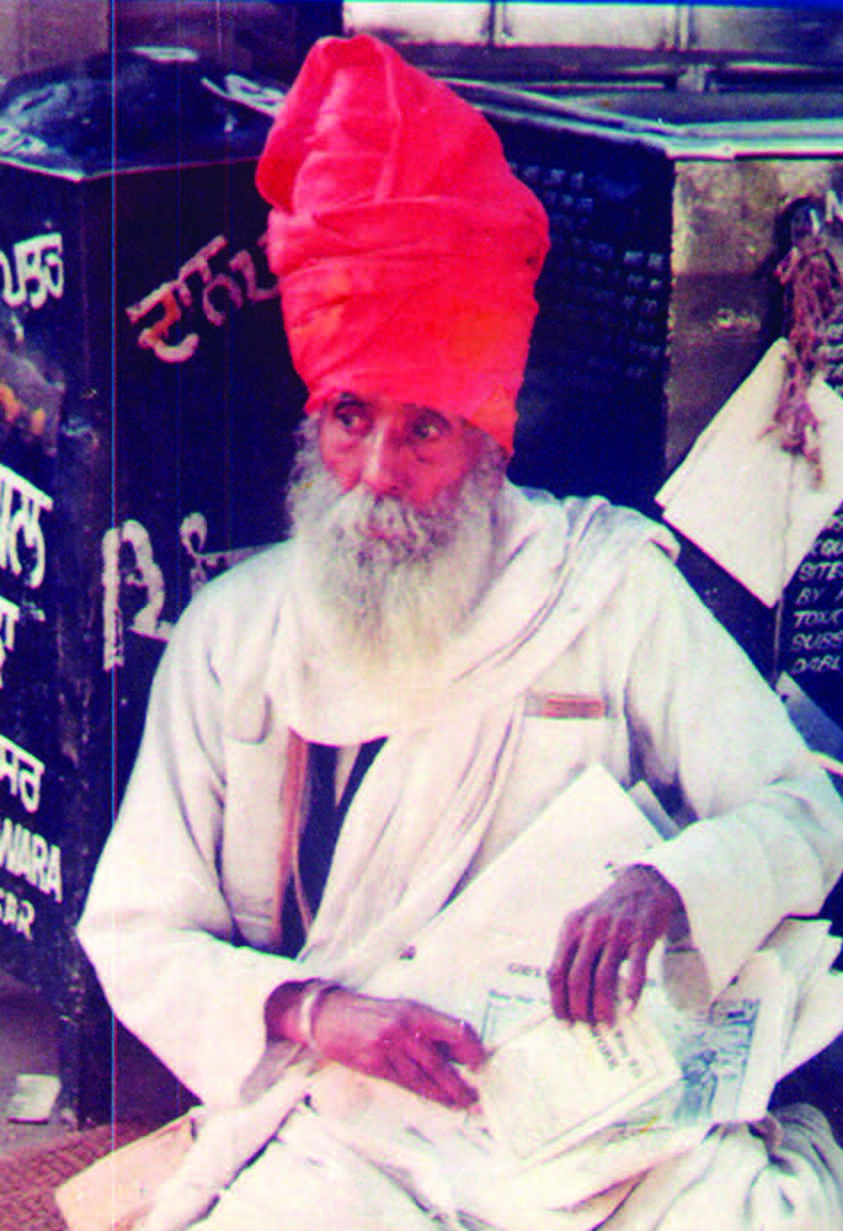
    Bhai Puran Singh (4 June, 1904 – 5 August, 1992) was born at Rajewal, in district Ludhiana on June 4, 1904 to mother, Mehtab Kaur and father, Chaudhari Chibu Mal, who was from the Hindu faith. During childhood, Bhai ji was a Hindu and his original name was Ramjidas. He started his education at Khanna, Punjab and then later joined Lahore’s Khalsa High School. He used to perform “sewa” in Gurdwara Dera Sahib and Gurdwara Shahid Ganj of Lahore where he would help with cleaning, cooking and serving food; he also tended to the aged, infirm and sick who came to the Gurdwaras to pay their respect to Guru Granth Sahib

    Becoming a Sikh

    In an interview with Bhai Patwant Singh, Bhagat Puran Singh discloses how he became a Sikh. In his early life he would travel a lot from village to village and would stay overnight at Hindu Temples. One day when he was staying at one such temple, the Brahmins told him to clean the temple and then when he had done that, they sat in front of him and ate food without offering him anything.

    The next time, he took shelter at a Gurdwara and the Gurdwara’s Giani ji (“priest”) not only gave him good hot food but also a cot and a glass of milk afterwards and all without asking for any sewa (service) for the Gurdwara. Bahi Sahib ji wrote: “Every night 25-30 travellers would come to the Gurdwara to stay; they were all served food from the common kitchen. This culture of the Gurdwaras deeply affected me”. Following this incident, Ramjidas, the Hindu, decided to take Khanda-da-Amrit and became a Khalsa Sikh in 1923. Bhagat ji is one of the most prominent Sikh heroes of this century.

    He gave most of his adult life to the total selfless service to terminal and mentally ill patients, who in most cases had been abandoned by their families and society at large. He gave his life to provide the last hope for these desperate patients. It is recorded that whenever and wherever he saw a deserted dead body (human or animal), he would immediately prepare by his own hand a grave and give the corpse a deserving burial or cremation as a sign of respect for the dead body. He is recorded to have said, “Dignity in death is a birthright of each living thing.”

    He was the “Mother Teresa” of India

    Against the ugly backdrop of violence and poverty of the 1947 partition, he established a premier care institute in Amritsar, Punjab which was established to cater to the needs of the distitue, sick, disabled and forlorn people of the state of Punjab providing them with housing, food, medical care, love and attention. His life is a story of great personal sacrifice; a dogged determination against a huge problem; a passion for service and seva; complete faith and surrender to the powerful Almighty and unending love for the suffering beings of the world. From an early age, Bhagat ji was involved in helping other beings and doing Nishkam Sewa.

    This was something that his mother had promoted and taught him. Bhagat ji wrote: “From my childhood, my mother had asked me to do personal service to all the creations of God. This tender and distinct feelings of virtuous tasks was ingrained in my mind. My mother had taught me to provide water to the animals, plant trees and water newly planted saplings, offer feed to the Sparrows, Crows and Mynahs, pick up thorns from the paths, and remove the stones from cart tracks. This had embedded the Name of the Almighty in my heart.

    She had entrusted me to the custody of Gurdwara Dera Sahib and started me on a path of virtuous living. By following this path your mind can never waver.” In 1947, Bhagat ji founded the institute called Pingalwara meaning “the home of the crippled” with a few discarded crippled or sick patients. The word “Pingal” means “Cripple” and “wara” mean “home”. Today, this institute which is run by Bibi Dr Inderjit Kaur cares for over 1000 patients. Bhagat ji was also writer as well as publisher and an environmentalist.

    Bhagat Ji’s contribution in spreading awareness about the global dangers of environmental pollution, increasing soil erosion, etc are now well recognised. For his dedication and unreserved service to humanity was awarded with heaps of honours from many quarters. Prestigious among these was the Padamshri award in 1979, which he surrendered in the wake of the army attack on the Golden Temple in 1984. Bhagat ji left for his heavenly abode on August 5, 1992 aged 88 years.

    Early Days

    He was born on 3 June,1904 in village Rajewal of Ludhiana district of Punjab, (British India). After the death of his father, his mother encouraged him to pass matric level of education and find a Government job. His mother worked as a domestic help in the house of a doctor at Mintgumury to organise money for her son’s education. Later, she went to Lahore and cleaned utensils in households there to earn money.

    Puran Singh was sent to a hostel where he was sent Ten rupees every month by his mother. Unfortunately, he failed his Class tenth examination, after which became sad and dejected.His mother told him,”Don’t be sad, even those who fail eat their meal.” Later in his life he wrote about this incident as,” She was the daughter of a farmer. She had seen that her parents would leave for the fields by daybreak and return home in the evening after a whole day of back-breaking hard work.

    Even then they weren’t sure if they would get the harvest or will have to suffer starvation. Had she been the daughter of an officer she would have been disheartened by my failure and my inability to sit on an office chair with a pen in my hand.” He was called back to Lahore and admitted in a local school there but he was not interested in studying his course books as they were filled with hypothetical and theoretical knowledge with absolutely no connection or applications in the everyday life. He, however, would spend hours browsing books in the Dyal Singh Library,Lahore and try to gain as much knowledge as he could. Sooner, this boy became a reservoir of the knowledge which some of the greatest scholars could not even dream of possessing.

    Service towards humanity

    While in Lahore, he would often visit Gurudwara Dehra Sahib and commit himself to the service of the people by attending the visitors to the Gurudwara and providing them water for bathing and also managing the cattle belonging to the Gurudwara. He would also serve in the Langar, the common kitchen, by cleaning the utensils, making chapatis and distributing food to the sangat(people coming to the Gurudwara). He even cleaned the floor of the Gurudwara in the evening.

    One day, a visitor fell from the roof of the Gurudwara and got badly injured. Bhagat Puran Singh immediately rushed him to the local ‘Mu Hospital’. Experiencing inner joy after helping the patient, he took a man with badly bleeding leg full of worms to hospital where he expressed his thanks to Bhagat Puran Singh and said,”Son! Now I can die a peaceful death.” With this incident, the service of humanity became the mission of his life. Now he would wander here and there finding the injured, physically handicapped persons and toking them to the Hospital. He also took care of them as his pocket and capability allowed.

    Once, he even washed the clothes of an old and poor beggar who was suffering from loosemotions. On a moonless night of the year 1934, someone left a four-year-old leper boy on the door of Gurudwara Dehra Sahib who was handed over to Bhagat Puran Singh by the then Head Granthi of the Gurudwara, Jathedar Acchar Singh after performing prayers for his well being. He named the boy Piara Singh, who was taken care of by Bhagat Puran Singh. This incident completely transformed the face of his life.

    After the partition of India in 1947, Bhagat Puran Singh reached a refugee camp in Amritsar which housed over 25,000 refugees with just 5 annas(0.3 rupees) in his pocket. A large number of refugees were critically wounded and incapable of nursing themselves.

    The government didn’t make any arrangements to take care of these refugees. Bhagat Puran Singh took the initiative, he took some chloroform and Turpentine oil and started treating the wounds of the wounded. He would often go in the nearby colonies to get food for the hungry and medicine for the ill. Later days From 1947 till 1958, Bhagat Puran Singh did not get a permanent dwelling. He could be seen outside the chief Khalsa Diwan, post offices, railway stations or under the tree outside the office of the Civil Surgeon.

    He would wander in the streets, asking for donations to help the needy. Some people offered to help him, but most of the others kept themselves from donating towards the noble cause. At last, he founded ‘The All India Pingalwara Charitable Society’ whose annual budget at that time was 12.5 million rupees and got it registered. Even today, this institution, headquartered at Tehsilpura, Grand Trunk road, Amritsar, works for helping the poor, the diseased and the physically and mentally handicapped. He died in 1992.

    Bhagat Puran Singh Ji was undoubtedly the single Sikh hero of our times who worked selflessly all his life to provide the last hope to the mentally and terminally ill patients. He was to Sikhism, what Mother Teresa was to Catholicism. Against the backdrop of violence and poverty in 1947 he established a premier institute – Pingalwara at Amritsar- which takes care of the sick, the disabled and the forlorn. With the passage of time and diverse needs of community, managers at Pingalwara have added to their concern environment and rural education. Pingalwara today is a worldwide organization and has immense support from all communities, particularly the Sikh community. — Editor

  • India’s Lawmakers need to get rid of Feudal Mindset

    India’s Lawmakers need to get rid of Feudal Mindset

    India has long lived with the remnants of a feudal system which is in total opposition to the democratic system in the civilized world. Our members of Parliament and ministers behave more or less like the privileged members of the royal families of the past, demanding special privileges and preferential treatment.

    They had better look at the democratic world around. In Canada, a member of Canadian Parliament will stand in a queue at a restaurant. He will carry his bag himself. He gets no security guard. He gets no chauffeur. He gets no government vehicle to drive in. He gets no government accommodation.

    All he gets is his salary. Will members of Parliament look to the civilized world for inspiration?
    Readers Write

  • Consulate refuses to issue visa for overstaying citizens of India

    Consulate refuses to issue visa for overstaying citizens of India

    I am a big fan of your weekly newspaper that keeps Indians tied up to their culture, religion and last but not the least, mother India. Your views have the strength of echoing the walls of Indian Parliament. As and when required, you have risen to even trying to deliver justice to our people living in this country.

    I am a social worker who in a small amount does contribute to the service of social cause. Recently some people approached and expressed their woes in renewing or re issue of the expiring passport, as Consulate General’s office have refused to entertain application who have overstayed in USA.

    I wonder how it violates provisions of Indian Passport Act. I strongly feel that judging this new policy amounts to contempt of a recent Delhi High Court ruling which adjudicated that it is the right of an Indian citizen to hold passport and to travel.

    I have sent an email to our Consulate, which I have attached for your information, and I request your office to do something in the matter at the earliest. Thank you for your attention and time.

  • KICK

    KICK

    Cast: Salman Khan, Jacqueline Fernandez, Randeep
    Hooda, Nawazuddin Siddiqui, Mithun Chakraborty,
    Saurabh Shukla
    Direction: Sajid Nadiadwala
    Genre: Drama
    Duration: 2 hours 26 minutes

    Story: Shaina loves Devi who loves anything that gives him a kick – what happens when Devi discovers the highs of low crime?

    Review: Straight on, Kick is Bollywood biryani, a masala movie spiced with the superstardom of Salman Khan, garnished by charming Jacqueline, smouldered over the wry talent of Randeep Hooda. Kick is not for lovers of fine filmi foie gras, but for those who want a hearty Eid banquet to enjoy. Shy Shaina (Jacqueline) meets eccentric Devi Lal (Salman) who will do anything – including beat up eveteasing “micro-terrorists ki gang” – for a kick.

    The couple’s love blossoms in a blaze of golden confetti but withers as Devi is unwilling to hold down boring jobs despite Shaina – who is a “magaz ki doctor” or psychiatrist – pleading. As Devi walks away, even hot Inspector Himanshu (Randeep), who visits Shaina and her diplomat dad (Saurabh Shukla) in Poland, is unable to charm the broken-hearted girl. What happens when an amnesiastruck Devi shows up? And when he mysteriously appears in the super-robbery case Himanshu’s determined to crack? Kick is vintage Salman Khan, the star flipping from fun-loving Devi to dead-serious Devil with goofy, yet deadly grace.

    Salman’s clearly having fun here – he drawls, “Meri cat, mujhi pe attack” with creamy cattiness, while in the stiltedly sexy Marjawan featuring Nargis Fakhri, where he’s togged up as a devil, Salman grins sideways, as if he knows just how ridiculous this is.

    But if Salman’s getting his kicks, so are the others. Randeep Hooda matches Salman with his restrained, velveteen performance as Inspector Himanshu whose coat, he explains, “isn’t Armani but sarkaari”, while Jacqueline is best-in-lipsticks so far this year, carrying off librarian-hot with grace, her Shaina beautifully elegant – until she throws off her jacket and burns the screen in Jumme ki Raat.

    As Shiv Gajra, criminal head of a charitable trust, Nawazuddin tries too hard to be bad. His Faster Fenaylike ‘tock’ and hammy laugh get on your nerves but his role’s sharp and small, restricted to “Pollen-d” and a bank sequence with, well, a shocking end. But shocks aside, Kick has laughs too. A jail sequence involving Devi’s pitaji (Mithun) is LOL-hilarious while there’s unintended comedy too, including animation featuring Salman with a body suspiciously like Hrithik’s and a Polish chase sequence involving a London Kings Cross bus. At times, the plot resembles the bus itself, wobbling madly until the next killer line.

  • MR. MODI’S BAGGAGE IN OFFICE

    MR. MODI’S BAGGAGE IN OFFICE

    S Nihal Singh

    There are obvious contradictions between Mr. Modi’s concept of tapping the very best in technology for the greater good and obscurantist and ludicrous beliefs that defy logic. The great danger is that the very constituency – the urban aspirational middle class that brought Mr. Modi to power – will be increasingly disillusioned with a ruling party still living in an imaginary ancient world”, says the author

    With the Modi government settling down to its new responsibilities, it is becoming increasingly clear that it comes with its baggage. And each day brings a new gem of wisdom from the Bharatiya Janata Party’s (BJP’s) ranks and its allies to offer a concept of India and the world that is part medieval, part gauche. Judging by our six years of experience of the Vajpayee government, we had come to expect our education and allied ministries to be packed with Rashtriya Swayamsevak Sangh (RSS) ranks or sympathizers.

    We have seen an obscure historian with pronounced RSS sympathies take over the Indian Council of Historical Research. In the ministry dealing with education and allied subjects, instead of an ideologue, the Modi Government has done better: appointing a novice and school leaver to provide the RSS a sheet of blank paper to write on. Indeed, the oratory of BJP ranks and allies has been in full flow in welcoming a Hindu India of Mr. Modi’s concept and in dilating upon the evils of such peril as bikinis and bars in Goa. On the sensitive issue of rape, very much in the public eye, BJP party men’s views are as conservative and retrograde as those of many other parties such as the Samajwadi Party.

    The world’s gender revolution has still to catch up with the bulk of our male politicians who still live in a male-dominated society, with the country’s traditional and mythical tales reinforcing a chauvinist mindset. There are obvious contradictions between Mr. Modi’s concept of tapping the very best in technology for the greater good and obscurantist and ludicrous beliefs that defy logic. The great danger is that the very constituency – the urban aspirational middle class that brought Mr. Modi to power – will be increasingly disillusioned with a ruling party still living in an imaginary ancient world.

    The fact that the scale of the BJP’s victory in the Lok Sabha election that brought the party to power, much to its own surprise, meant that many candidates were given the ticket indiscriminately without proper scrutiny and comprise a large element of the lumpen class. Some of the BJP’s allies are, of course, a class by themselves. We are therefore treated to the dubious entertainment of honorable members of Parliament stuffing rotis into the unwilling mouths of the catering staff.

    Another aspect of Mr. Modi’s Gujarat model has made its appearance in Delhi. Indeed, the Prime Minister appears to be part sanitary inspector, part micromanager, part strict headmaster in running the national government. And such conduct must lead to serious doubt whether what would work in one state can be replicated nationally. If ministers cannot appoint their own private secretaries, it must leave question marks. Perhaps the quality most sought after by a majority of people who voted for him is the expectation of his decisiveness.

    After the United Progressive Alliance II experiment with a dual key arrangement kicking problems to a bewildering array of committees, the people took Mr. Modi as advertised and voted for him. Many problems are too complex to be resolved instantly, but those who voted the BJP expect those that can be promptly dealt with to be attended forthwith. Language has proved to be another deal breaker, with an ambiguous government note on compulsory noting in files in Hindi riling non-Hindi speakers.

    In any event, the missionary zeal with which the new government is promoting Hindi is counterproductive. One problem, of course, is that many of the BJP leaders are not fluent in English and choose to speak a Sanskrit’s Hindi hard to understand because it abandons commonly spoken Hindustani espoused by Mahatma Gandhi. The danger, of course, is that by using Hindi in their discourse, the BJP government is cutting out non-Hindi speakers from the South and the East in particular from the national dialogue.

    Indeed, one delegate made known his predicament after a Hindidominated conference because he simply could not comprehend what was being said. There was no translation offered, whether of simultaneous or subsequent variety. The Gujarat model of governance can therefore lead Mr. Modi to go off at a tangent. India is not peopled by one homogeneous people or language. Language, as preceding upheavals have shown, strikes at the heart of a people’s being and deeply affects their outlook.

    One hopes the brand new Modi government will learn its lesson in desisting from forcing Hindi on unwilling peoples. One conclusion one can draw from these early days of the Modi government is that scale makes an immense difference between how problems can be looked at and resolved. As Chief Minister, Mr. Modi was able to subdue the Opposition and largely govern the state as a single-party government, even worsting the Governor in diluting the Lokpal’s role.

    The Opposition, singly or collectively, cannot be thus subdued at the national level. And in conducting parliamentary or other business, there has to be an element of give and take. Whatever decision the Speaker of the Lok Sabha takes on giving the official status of Leader of the Opposition to the Congress, the BJP lost an opportunity in not being immediately generous, instead of hiding behind precedents. Mr. Modi demonstrated in Gujarat that he could keep fringe and extremist elements of the Sangh Parivar at bay in his state.

    His task is immensely more complicated at the national level because the RSS backed him to the hilt for leadership and will now demand its pound of flesh not only in appointing pliable or ideologues as ministers but also in doing its bidding on issues it considers important. Against Mr. Modi’s eloquence and vitriol on the election campaign, his silence on major issues of the day has been much commented upon.

    The tasks of governance are, of course, quite distinct. Responsibilities of government impose restrictions on the free flow of ideas, but interactions with media restricted to short tweets or terse official press notes will prove to be a handicap in running the country. Mr. Modi is a quick learner and one hopes he will change course in some areas as he moves forward.

  • ILEANA D’CRUZ LOSS IS KANGANA RANAUT’S GAIN

    ILEANA D’CRUZ LOSS IS KANGANA RANAUT’S GAIN

    Nikhil Advani who is coproducing ‘Katti Batti’ with Sidharth Roy Kapoor, has signed Kangana Ranaut opposite Imran Khan for the romedy. Confirming this, he says she’s the perfect choice for Payal, a fine arts student who isn’t sure if she wants to be a model, a teacher or an architect. But hadn’t Ileana D’Cruz been finalised for the part? “We were talking to several people one of whom was Ileana. But as the script shaped up, we felt Kangana’s quirky personality would bring this eccentric character to life,” Nikhil asserts.

    Wasn’t it difficult convincing Kangana considering Imran’s dismal box-office run? She has rejected a couple of films recently. Nikhil insists she heard the narration and immediately said yes. “She’s a gutsy actress who has never played safe. When I told Imran that she’s on board, he was thrilled,” he insists. The film rolls in September before Hero releases and will be shot in Mumbai, Ahmedabad and Delhi. “It’s a progressive look at modern relationships. The title reflects the dramatic equation Kangana and Imran share in,” says Nikhil.

  • Pakistan’s shrinking minority space

    Pakistan’s shrinking minority space

    By Farahnaz Ispahani

    The desire of Islamist extremists to ‘purify’ Pakistan has resulted in a major catastrophe for the minorities. The country cannot emerge as a modern pluralist state until the reversal of this culture of intolerance.

    “Pakistani laws, especially the one that deals with blasphemy, deny or interfere with the practice of minority faiths. Religious minorities are targets of legal as well as social discrimination”, says the author. .

    The murder in Gujranwala of an elderly woman, a seven-year-old girl and an infant in a mob attack on members of the Ahmadi community highlights the continuing deterioration of Pakistan’s treatment of its religious minorities. The mob was incited by an Ahmadi youth allegedly sharing blasphemous material on his Facebook page. But the cause of incitement is hardly relevant. Pakistan has been described by several human rights organizations as one of the nations with the least tolerance in religious matters.

    The latest incident should be viewed as part of a tragic pattern that has evolved over decades. Ironically, the intolerance that is now widely associated with Pakistan had little to do with its founder’s vision of a country where “in course of time Hindus would cease to be Hindus and Muslims would cease to be Muslims, not in the religious sense, because that is the personal faith of each individual, but in the political sense as citizens of the State.” The Ahmadis consider themselves Muslim but their beliefs are deemed by the orthodox as falling outside the tenets of Islam.

    The community recognizes Mirza Ghulam Ahmed of Qadian as messiah and an emissary from god, a concept that runs contrary to the Orthodox Muslim notion of Khatm-e- Nabuwwat or Finality of the Prophethood. Anti-Ahmadi agitations have often been used by religious-political groups, particularly in the Punjab, as an instrument of polarization. Violent attacks on Ahmadis in 1953 resulted in Pakistan’s first instance of limited martial law being imposed in the city of Lahore.

    Growing discrimination
    In 1974, another wave of violence led to Pakistan’s Parliament amending the Constitution to declare Ahmadis as non- Muslims for legal purposes. It was argued at the time that once the Ahmadis’ apostasy is legally recognized and they are classified legally as non-Muslims, their orthodox Muslim critics would be satisfied and anti- Ahmadi violence would decline. But that has not happened. Instead, attacks on Ahmadis have continued unabated and along with other minority religious communities, there is an effort to marginalize the community, convert them or push them out of Pakistan.

    Currently, the Ahmadis are barred by law from calling themselves Muslim or using Islamic terminology like “masjid” to describe their places of worship. Violation of that law entails criminal proceedings and imprisonment. But the community is not afforded any legal protection even as a non- Muslim minority. Over a one-and-a-half year period in 2012-2013, there were 54 recorded mob attacks against Ahmadis.

    The latest incident stands out because of the frivolousness of its ostensible cause and the innocence and helplessness of its victims. A grandmother and her seven-year-old granddaughter or an infant could hardly pose a threat to Islam in Gujranwala, a large city with millions of inhabitants and hundreds of mosques and madrasas. The desire of Islamist extremists to “purify” Pakistan has resulted in a major catastrophe for the country’s minorities.

    The violence of Partition denuded Pakistan of the majority of its Hindus and Sikhs, who would have otherwise constituted almost 20 per cent of the new country’s population based on the 1941 census. Now that a sizeable swathe of Pakistan’s Muslim population has been turned into zealots, communities such as the Ahmadis, who were considered Muslim at independence, have joined the ranks of endangered minorities. Even the Shia, almost 20 per cent of the populace, are being attacked by extremists who do not acknowledge them as being a part of Muslim society.

    The attempts to describe Shias as non-Muslims are particularly ironic in view of the fact that Pakistan’s founder, Quaid-e- Azam (the great leader) Muhammad Ali Jinnah was himself a Shia Muslim. Jihadist groups created and trained to fight “infidel” communists in Afghanistan and “Hindu” India have become a threat at home and no one in a position of power seems to have the will or the courage to shut them down.

    Such is the sway of extremist ideology that the murder in cold blood of Ahmadis, Shias, Christians, Hindus and now increasingly Barelvi or “soft Sunni” Muslims and other religious groups who do not belong to the majority Sunni Muslim interpretation of Islam no longer seems to have any shock value left. According to reports, crowds celebrated all night on July 27 after the bloodshed in Gujranwala.

    Erosion of diversity
    That this occurred in the month of Ramzan, a month meant to be spend praying and asking for forgiveness of one’s earthly sins, indicates the absence of any connection between violence against minorities and any notion of religious piety among the orthodox Sunnis who victimize them. More than three days have passed since the Gujranwala attack and most Pakistanis have seen the television images of the crowd who perpetrated this calumny, dancing in the streets all night in celebration.

    However, there was no condemnation heard from the Prime Minister of Pakistan, Nawaz Sharif or his brother, the Chief Minister of Pakistani Punjab. The utter irrationality of the rejection of the Ahmadiyya community in Pakistan is encapsulated in the manner in which one of its most famous sons, Dr. Mohammad Abdus Salam was spurned by his country. The physicist was the first and the only Pakistani as well as the first Muslim to win a Nobel Prize in science.

    After his death in 1996, Salam’s remains were returned to Pakistan and buried in an Ahmadi cemetery, with his tombstone describing him as the “First Muslim Nobel Laureate.” A magistrate subsequently ruled that the word “Muslim” on an Ahmadi grave was blasphemous and ordered it to be sanded off. It seems that nobody in Pakistan remembers Jinnah’s comments when confronted with the demand to exclude Ahmadis from the fold of Islam. Jinnah had said, “If someone describes himself as a Muslim, how can I judge him otherwise.

    Let God decide that matter.” When Pakistan was born on August 14, 1947, the new country’s capital, Karachi, was home to a religiously diverse community. The city’s architecture, too, reflected the traditions of several religions. In addition to mosques of various Muslim denominations, there were Catholic and Protestant churches, a Jewish synagogue, Parsi (Zoroastrian) fire temples, as well as Jain and Hindu temples devoted to various deities. The Muslim call to prayer (Azan) was called on loudspeakers by Shias, Sunnis and Ahmadis five times a day.

    Various religious holidays were observed openly and often across communities. Sixty seven years later, Karachi is no longer Pakistan’s capital. The country’s federal government now conducts its business from a purpose built capital, Islamabad, whose very name suggests a close relationship between Pakistan and Islam. Karachi’s synagogue has shut down as have several of its churches.

    The few remaining churches have a dwindling number of worshippers. Many Pakistani Christians have emigrated to North America or Australia. Most Jain and Hindu temples have either been destroyed or taken over by squatters or land-grabbers and property developers. The Parsi populations have also declined though their temples exist. The Muslim call to prayer no longer sounds from Ahmadi places of worship.

    Incremental intolerance
    Pakistan’s incremental intolerance in matters of religion is exemplified by the brutal assassination of former Punjab Governor Salmaan Taseer and its aftermath. Taseer had attempted to help a poor unlettered Christian woman, Asia Bibi who was facing false blasphemy accusations. He was accused of being a blasphemer himself and killed by his own bodyguard.

    His murderer, Mumtaz Qadri, was garlanded and showered with rose petals by educated middle class lawyers outside a courthouse at his arraignment. According to the independent Human Rights Commission of Pakistan (HRCP), the country’s problem is the tolerance of “pervasive intolerance” in the country. The commission’s director, I.A. Rehman, asserts that “Pakistan continues to offer evidence of its lack of respect for the rights of religious minorities.”

    He attributes it to “the virus of intolerance” that he maintains “has infested the Pakistani people’s minds.” Human rights advocates like Mr. Rehman demand “visible action to end abuse of minorities’ rights” instead of “half-truths and subterfuge in defending the state,” which they feel have been consistently employed by Pakistan officials over the years. Pakistani laws, especially the one that deals with blasphemy, deny or interfere with the practice of minority faiths.

    Religious minorities are targets of legal as well as social discrimination. Most significantly, in recent years, Pakistan has witnessed some of the worst organized violence targeting religious minorities. Over an 18-month period covering 2012 and part of 2013, at least 200 incidents of sectarian violence were reported, that led to 1,800 casualties, including more than 700 deaths.

    Those of us who have been born in Pakistan have seen and experienced the effects of the hatred fed to us through our textbooks, television sets, newspapers, religious clergy and military dictators about the purity of only one religion and one version of Islam.

    Their need to destroy any threat to its purity, and therefore the purity of the state, has ensured that the well of tolerance has by now been well and truly poisoned. Pakistan cannot emerge as a modern pluralist state until the reversal of this culture of intolerance.

  • DEEPIKA PADUKONE GOES ON A WORLD TOUR

    DEEPIKA PADUKONE GOES ON A WORLD TOUR

    Deepika Padukone is all set to go on her first world tour ever, for her upcoming film ‘Happy New Year’ this September. Directed by Farah Khan, the film, which stars the industry’s biggest names, is now in news for its unique promotional and marketing strategies.

    As a part of their innovative promotional idea, Deepika Padukone will be touring the United States of America and Canada for the ‘SLAM’ musical concert. The actress will be on tour along with her hit film co-star, Shahrukh Khan and the rest of the ‘Happy New Year’ cast. With ‘Happy New Year’, Deepika hopes to deliver another entertainer for her fans this year. This is the actress’ third film with superstar Shahrukh Khan. The film is produced by Gauri Khan under the banner Red Chillies Entertainment and distributed worldwide by Yash Raj Films.

  • CHARLIZE THERON GETS APPROVAL FROM SEAN PENN’S DAUGHTER

    CHARLIZE THERON GETS APPROVAL FROM SEAN PENN’S DAUGHTER

    Actor Sean Penn’s daughter is thrilled that her father has found love in actress Charlize Theron. The 38-year-old actress has been dating the 53-year-old actor for the past eight months, reports femalefirst.co.uk. “They’re a great couple. They’re both very happy and yeah, I love it.

    They’re both extremely strong personalities and they’re very intelligent so conversation lasts between them,” said Dylan, Sean’s daughter from his marriage to Robin Wright. Theron sparked speculation about an engagement when she was recently spotted wearing a ring on her left hand. Dylan, 23, says she has no idea if they are planning to walk down the aisle. She said: “I don’t even know. I have no idea.” But asked if she would welcome Theron into the family, she said: “Always. Sure, why not? If it’s meant to be.” And the model was equally enthusiastic about a sibling for her and brother Hopper, 20. She said: “Always. The more the merrier.”

  • The Grand Budapest Hotel

    The Grand Budapest Hotel

    Brody, Willem Dafoe, F. Murray Abraham, Edward Norton,
    Saoirse Ronan
    Direction: Wes Anderson
    Genre: Drama
    Duration: 1 hour 36 minutes
    Story: As murder, fascism and war surround,
    can Gustave and his iconic hotel survive?

    Review: Wes Anderson is Hollywood’s Lewis Carroll – and The Grand Budapest Hotel is his Wonderland. Set in the imaginary Eastern European republic of Zubrowska, in the delicately hysterical years between two World Wars, the Grand Budapest Hotel is a lacy handkerchief of nostalgia, a naughty piece of silky lingerie – and a dagger soaked in blood.

    Monsieur Gustave (Fiennes) is the supremely stylish concierge of the Grand Budapest who watches the 1930s hotel’s luxuries “like a hawk with a horsewhip”, frequently delighting its rich ladies with room service in bed. His wide-eyed lobby boy Zero Mustafa (Revolori, later Abraham) shadows Gustave with adoring admiration – even when Gustave’s imprisoned, accused of murdering millionaire Madame D. (Tilda Swinton) by her son Dmitry (a deliciously dark Brody) who unleashes his feudal Frankenstein Jopling (chilling Dafoe) on a trail of chopped fingers, sawn-off heads and a thrilling ski chase. Framed by Dmitry and pursued by Fascists, can Gustave, Zero and the Grand Budapest Hotel survive?

    Anderson is famous for his richly picturesque films and TGBH reaffirms this. Every scene is like a painting come alive, some characters straight out of Edvard Munch, scenes – slender lanes that twist archly as they draw you into their misty embrace – like a Van Gogh with people walking within. Alongside, the humour – don’t miss the ‘Kunts Museum’ – is trademark Anderson, ironic, witty, Martini-dry.

    Ralph Fiennes is perfect as Gustave of the silken manners, large heart and bedroom eyes, while Revolori is a revelation as poignantly pure Zero, with only Gustave and Agatha (Ronan), his baker girlfriend, to call his own.

    Alongside, several cameos – Jude Law as a pipe-chomping writer suffering ‘Scribe’s Fever’, Bill Murray from a stewards’ society that channels Wodehouse, Jeff Goldblum as a monochrome lawyer, golden-haired Owen Wilson as ‘Monsieur Chuck’ – divertingly tease. But it is the story of the Grand Budapest that stars, for this is an ode to an age of beauty and brutality, velvet and crystal, puddings and pomade, based on ‘the Bureau of Labour and Servitude’ – which discards its diamonds and puts on its war boots.

    This whimsical tale oozes charm while brisk editing lets you enjoy – but not be overwhelmed by – cakes like mountains and mountains like cakes, chandeliers, perfumed men and Persian pussies. Hitchcock, Rembrandt and Orwell are some of the guests at The Grand Budapest Hotel. If you like them, you will like this Wonderland.

  • Pakistan mob kills woman, girls, over ‘blasphemous’ Facebook post

    Pakistan mob kills woman, girls, over ‘blasphemous’ Facebook post

    ISLAMABAD (TIP):
    A Pakistani mob killed a woman member of a religious sect and two of her granddaughters after a sect member was accused of posting blasphemous material on Facebook, police said on Monday, the latest instance of growing violence against minorities. The dead, including a seven-year-old girl and her baby sister, were Ahmadis, who consider themselves Muslim but believe in a prophet after Mohammed.

    A 1984 Pakistani law declared them non- Muslims and many Pakistanis consider them heretics. Police said the late Sunday violence in the town of Gujranwala, 220 km (140 miles) southeast of the capital, Islamabad, started with an altercation between young men, one of whom was an Ahmadi accused of posting “objectionable material”. “Later, a crowd of 150 people came to the police station demanding the registration of a blasphemy case against the accused,” said one police officer who declined to be identified.

    “As police were negotiating with the crowd, another mob attacked and started burning the houses of Ahmadis.” The youth accused of making the Facebook post had not been injured, he said. Under Pakistani law, Ahmadis are banned from using Muslim greetings, saying Muslim prayers or referring to his place of worship as a mosque. Salim ud Din, a spokesman for the Ahmadi community, said it was the worst attack on the community since simultaneous attacks on Ahmadi places of worship killed 86 Ahmadis four years ago.

    “Police were there but just watching the burning. They didn’t do anything to stop the mob,” he said. “First they looted their homes and shops and then they burnt the homes.” The police officer said they had tried to stop the mob. Accusations of blasphemy are rocketing in Pakistan, from one in 2011 to at least 68 last year, according to the Human Rights Commission of Pakistan. About 100 people have been accused of blasphemy this year. Human rights workers say the accusations are increasingly used to settle personal vendettas or to grab the property of the accused.

  • KATE MOSS THINKS SHE HAD AN ‘EMBARRASSING’ BODY AS TEEN

    KATE MOSS THINKS SHE HAD AN ‘EMBARRASSING’ BODY AS TEEN

    English model Kate Moss recently revealed that she wasn’t always proud of her body. During an interview with photographer Nick Knight, the 40-year-old beauty, who had started posing since the age of 14, said that she was really skinny and tiny back then and felt very “self conscious”, the Daily Express reported. She added that she just used to have junk food and snacks back then, as the fashion jobs she had didn’t provide food. Moss, who’s mom to a teenage daughter, Lila Grace, also said that her girl has the same frame that she had at her age, and her wrinkled smile really reminds her of The Face magazine’s cover, which she did back in 1990.

  • Pakistan hands over Islamabad security to army

    Pakistan hands over Islamabad security to army

    ISLAMABAD (TIP):
    The Pakistan government on Friday handed over federal capital Islamabad’s security to the army for three months. The move is seen in light of opposition Pakistan Tehreek-e-Insaf (PTI) chief Imran Khan’s call for “decisive” march to Islamabad on the eve of the country’s independence day on August 14. Khan has been mounting pressure on the government to agree to an independent inquiry into the alleged rigging in the national polls last year. He said his dream of “new Pakistan” would be realized only by taking to the streets.

    “On the Independence Day, I would expose the whole team that had fixed the last general election match,” Khan said in Lahore. “The azadi (independence) march from Lahore will be a final battle to root out the corrupt and bring in a fair system in the country.” Political analysts believe the government is primarily trying to contain Khan’s march besides countering the terrorist threats in the wake of ongoing anti-Taliban military offensive in North Waziristan by calling the army.

    “The decision shows complete incompetence of civilian government to run the affairs. Such decisions in the past always resulted in paving the way for military intervention,” said Ihsanullah Tipu Mehsud, an Islamabad-based analyst. The government called the army by invoking the constitution’s article 245.article. Under the provision, it can call to the armed forces to defend Pakistan against any external aggression, threat or deteriorating internal law and order situation.

    The PTI said the move proves Prime Minister Nawaz Sharif-led government is scared of the march. “We have been demanding an independent verification of 2013 elections. This is our just, democratic and constitutional demand,” said PTI lawmaker Murad Saeed. “By involving the armed forces the government is bent upon snatching our basic democratic right of peaceful protest and such tactics would not stop us from marching on Islamabad on August 14.” He said the government involves the military in the business of state and then blames it for derailing democracy.

  • SRI GURU GRANTH SAHIB

    SRI GURU GRANTH SAHIB

    CONTD FROM Vol 8 ISSUE 29

    ONE UNIVERSAL CREATOR GOD.
    TRUTH IS THE NAME.
    CREATIVE BEING PERSONIFIED.
    NO FEAR.
    NO HATRED.
    IMAGE OF THE UNDYING.
    BEYOND BIRTH.
    SELF-EXISTENT.
    BY GURU’S GRACE: SORAT’H, FIRST MEHL, FIRST HOUSE, CHAU-PADAS:

    Death comes to all, and all must suffer separation. Go and ask the clever people, whether they shall meet in the world hereafter. Those who forget my Lord and Master shall suffer in terrible pain.

    || 1 || So praise the True Lord, by whose Grace peace ever prevails. || Pause || Praise Him as great; He is, and He shall ever be. You alone are the Great Giver; mankind cannot give anything.Whatever pleases Him, comes to pass; what good does it do to cry out in protest?

    || 2 || Many have proclaimed their sovereignty over millions of fortresses on the earth, but they have now departed. And those, whom even the sky could not contain, had ropes put through their noses. O mind, if you only knew the torment in your future, you would not relish the sweet pleasures of the present.

    || 3 || O Nanak, as many as are the sins one commits, so many are the chains around his neck. If he possesses virtues, then the chains are cut away; these virtues are his brothers, his true brothers. Going to the world hereafter, those who have no Guru are not accepted; they are beaten, and expelled.

    || 4 || 1 || SORAT’H, FIRST MEHL, FIRST HOUSE: Make your mind the farmer, good deeds the farm, modesty the water, and your body the field. Let the Lord’s Name be the seed, contentment the plow, and your humble dress the fence. Doing deeds of love, the seed shall sprout, and you shall see your home flourish.

    || 1 || O Baba, the wealth of Maya does not go with anyone. This Maya has bewitched the world, but only a rare few understand this. || Pause || Make your ever-decreasing life your shop, and make the Lord’s Name your merchandise. Make understanding and contemplation your warehouse, and in that warehouse, store the Lord’s Name. Deal with the Lord’s dealers, earn your profits, and rejoice in your mind.

    || 2 || Let your trade be listening to scripture, and let Truth be the horses you take to sell. Gather up merits for your travelling expenses, and do not think of tomorrow in your mind. When you arrive in the land of the Formless Lord, you shall find peace in the Mansion of His Presence.

    || 3 || Let your service be the focusing of your consciousness, and let your occupation be the placing of faith in the Naam. Let your work be restraint from sin; only then will people call you blessed. O Nanak, the Lord shall look upon you with His Glance of Grace, and you shall be blessed with honor four times over.

    || 4 || 2 || SORAT’H, FIRST MEHL, CHAU-TUKAS: The son is dear to his mother and father; he is the wise son-in-law to his father-in-law. The father is dear to his son and daughter, and the brother is very dear to his brother. By the Order of the Lord’s Command, he leaves his house and goes outside, and in an instant, everything becomes alien to him. The self-willed manmukh does not remember the Name of the Lord, does not give in charity, and does not cleanse his consciousness; his body rolls in the dust.

    || 1 || The mind is comforted by the Comforter of the Naam. I fall at the Guru’s feet – I am a sacrifice to Him; He has given me to understand the true understanding. || Pause || The mind is impressed with the false love of the world; he quarrels with the Lord’s humble servant. Infatuated with Maya, night and day, he sees only the worldly path; he does not chant the Naam, and drinking poison, he dies. He is imbued and infatuated with vicious talk; the Word of the Shabad does not come into his consciousness. He is not imbued with the Lord’s Love, and he is not impressed by the taste of the Name; the self-willed manmukh loses his honor.

    || 2 || He does not enjoy celestial peace in the Company of the Holy, and there is not even a bit of sweetness on his tongue. He calls his mind, body and wealth his own; he has no knowledge of the Court of the Lord. Closing his eyes, he walks in darkness; he cannot see the home of his own being, O Siblings of Destiny. Tied up at Death’s door, he finds no place of rest; he receives the rewards of his own actions.

    || 3 || When the Lord casts His Glance of Grace, then I see Him with my own eyes; He is indescribable, and cannot be described.With my ears, I continually listen to the Word of the Shabad, and I praise Him; His Ambrosial Name abides within my heart. He is Fearless, Formless and absolutely without vengeance; I am absorbed in His Perfect Light. O Nanak, without the Guru, doubt is not dispelled; through the True Name, glorious greatness is obtained.

    || 4 || 3 || SORAT’H, FIRST MEHL, DU-TUKAS: In the realm of land, and in the realm of water, Your seat is the chamber of the four directions. Yours is the one and only form of the entire universe; Your mouth is the mint to fashion all.

    || 1 || O my Lord Master, Your play is so wonderful! You are pervading and permeating the water, the land and the sky; You Yourself are contained in all. || Pause || Wherever I look, there I see Your Light, but what is Your form? You have one form, but it is unseen; there is none like any other.

    || 2 || The beings born of eggs, born of the womb, born of the earth and born of sweat, all are created by You. I have seen one glory of Yours, that You are pervading and permeating in all. || 3 || Your Glories are so numerous, and I do not know even one of them; I am such a fool – please, give me some of them! Prays Nanak, listen, O my Lord Master: I am sinking like a stone – please, save me!

    || 4 || 4 || SORAT’H, FIRST MEHL: I am a wicked sinner and a great hypocrite; You are the Immaculate and Formless Lord. Tasting the Ambrosial Nectar, I am imbued with supreme bliss; O Lord and Master, I seek Your Sanctuary. || 1 || O Creator Lord, You are the honor of the dishonored. In my lap is the honor and glory of the wealth of the Name; I merge into the True Word of the Shabad. || Pause || You are perfect, while I am worthless and imperfect. You are profound, while I am trivial. My mind is imbued with You, day and night and morning, O Lord; my tongue chants Your Name, and my mind meditates on You.

    || 2 || You are True, and I am absorbed into You; through the mystery of the Shabad, I shall ultimately become True as well. Those who are imbued with the Naam day and night are pure, while those who die to be reborn are impure.

    || 3 || I do not see any other like the Lord; who else should I praise? No one is equal to Him. Prays Nanak, I am the slave of His slaves; by Guru’s Instruction, I know Him.

    || 4 || 5 || SORAT’H, FIRST MEHL: He is unknowable, infinite, unapproachable and imperceptible. He is not subject to death or karma. His caste is casteless; He is unborn, self-illumined, and free of doubt and desire. || 1 || I am a sacrifice to the Truest of the True. He has no form, no color and no features; through the True Word of the Shabad, He reveals Himself. || Pause || He has no mother, father, sons or relatives; He is free of sexual desire; He has no wife. He has no ancestry; He is immaculate. He is infinite and endless; O Lord, Your Light is pervading all.

    || 2 || Deep within each and every heart, God is hidden; His Light is in each and every heart. The heavy doors are opened by Guru’s Instructions; one becomes fearless, in the trance of deep meditation.

    || 3 || The Lord created all beings, and placed death over the heads of all; all the world is under His Power. Serving the True Guru, the treasure is obtained; living the Word of the Shabad, one is emancipated.

    || 4 || In the pure vessel, the True Name is contained; how few are those who practice true conduct. The individual soul is united with the Supreme Soul; Nanak seeks Your Sanctuary, Lord.

    || 5 || 6 || SORAT’H, FIRST MEHL: Like a fish without water is the faithless cynic, who dies of thirst. So shall you die, O mind, without the Lord, as your breath goes in vain.

    || 1 || O mind, chant the Lord’s Name, and praise Him.Without the Guru, how will you obtain this juice? The Guru shall unite you with the Lord. || Pause || For the Gurmukh, meeting with the Society of the Saints is like making a pilgrimage to a sacred shrine. The benefit of bathing at the sixty-eight sacred shrines of pilgrimage is obtained by the Blessed Vision of the Guru’s Darshan.

    || 2 || Like the Yogi without abstinence, and like penance without truth and contentment, so is the body without the Lord’s Name; death will slay it, because of the sin within.

    || 3 || The faithless cynic does not obtain the Lord’s Love; the Lord’s Love is obtained only through the True Guru. One who meets with the Guru, the Giver of pleasure and pain, says Nanak, is absorbed in the Lord’s Praise. || 4 || 7 || SORAT’H, FIRST MEHL: You, God, are the Giver of gifts, the Lord of perfect understanding; I am a mere beggar at Your Door.What should I beg for? Nothing remains permanent; O Lord, please, bless me with Your Beloved Name.

    || 1 || In each and every heart, the Lord, the Lord of the forest, is permeating and pervading. In the water, on the land, and in the sky, He is pervading but hidden; through the Word of the Guru’s Shabad, He is revealed. || Pause || In this world, in the nether regions of the underworld, and in the Akaashic Ethers, the Guru, the True Guru, has shown me the Lord; He has showered me with His Mercy. He is the unborn Lord God; He is, and shall ever be. Deep within your heart, behold Him, the Destroyer of ego.

    || 2 || This wretched world is caught in birth and death; in the love of duality, it has forgotten devotional worship of the Lord. Meeting the True Guru, the Guru’s Teachings are obtained; the faithless cynic loses the game of life.

    || 3 || Breaking my bonds, the True Guru has set me free, and I shall not be cast into the womb of reincarnation again. O Nanak, the jewel of spiritual wisdom shines forth, and the Lord, the Formless Lord, dwells within my mind. || 4 || 8 || SORAT’H, FIRST MEHL: The treasure of the Name, for which you have come into the world – that Ambrosial Nectar is with the Guru. Renounce costumes, disguises and clever tricks; this fruit is not obtained by duplicity.

    || 1 || O my mind, remain steady, and do not wander away. By searching around on the outside, you shall only suffer great pain; the Ambrosial Nectar is found within the home of your own being. || Pause || Renounce corruption, and seek virtue; committing sins, you shall only come to regret and repent. You do not know the difference between good and evil; again and again, you sink into the mud.

    || 2 || Within you is the great filth of greed and falsehood; why do you bother to wash your body on the outside? Chant the Immaculate Naam, the Name of the Lord always, under Guru’s Instruction; only then will your innermost being be emancipated.

    || 3 || Let greed and slander be far away from you, and renounce falsehood; through the True Word of the Guru’s Shabad, you shall obtain the true fruit. As it pleases You, You preserve me, Dear Lord; servant Nanak sings the Praises of Your Shabad. This page is sponsored by Sardar Paramjit Singh Bedi and family Elle Belle LLC 3 Commercial Street Hicksville, N.Y. 11801 TO BE CONTINUED

  • Quakes strike Myanmar, Andaman islands; no tsunami warning

    Quakes strike Myanmar, Andaman islands; no tsunami warning

    NEW DELHI (TIP):
    Earthquakes of magnitude 6.2 and 6.1 struck Myanmar and Andaman islands on Thursday, the US Geological Survey (USGS) said. No Tsunami warning was issued after the Andaman quake, an official at the India Meteorological Department said.

    The Myanmar quake struck 185 miles west of Mergui and was 19.3 miles deep, according to USGS.

  • Nepal expects positive outcome from PM Narendra Modi’s visit

    Nepal expects positive outcome from PM Narendra Modi’s visit

    NEW DELHI:
    Seeking a strong support from India, Nepal today said it is looking forward to the visit of Prime Minister Narendra Modi as both the countries can work together to enhance trade and economic development.

    “We are looking forward to welcome him because he has come up with a new theory of economic development as his top most priority in India as well as in the SAARC nations. “We think that India and Nepal can work together for economic growth and development.