contined from vol 8 issue 33
Queen Kausalya’s bosom rankles with a woman’s secret smart, Let her not with woman’s vengeance turn upon her prouder foe,
And as crownéd Rama’s mother venge her in Kaikeyi’s woe, Mark my word,
my child Kaikeyi, much these ancient eyes have seen,
Rama’s rule is death to Bharat,
insult to my honoured queen!” Like a slow but deadly poison worked the ancient nurse’s tears,
And a wife’s undying impulse mingled with a mother’s fears,
Deep within Kaikeyi’s bosom worked a woman’s jealous thought,
Speechless in her scorn and anger mourner’s dark retreat she sought.
THE QUEEN’S DEMAND
Rama shall be crowned at sunrise, so did royal bards proclaim,
Every rite arranged and ordered, Dasaratha homeward came,
To the fairest of his consorts, dearest to his ancient heart,
Came the king with eager gladness joyful message to impart,
Radiant as the Lord of Midnight, ere the eclipse casts its gloom,
Carne the old and ardent monarch heedless of his darksome doom! Through the shady palace garden where the peacock wandered free.
Lute and lyre poured forth their music,
parrot flew from tree to tree,
Through the corridor of creepers,
painted rooms by artists done,
And the halls where scented Champak and the flaming Asok shone,
Through the portico of splendour graced by silver, tusk and gold.
Radiant with his thought of gladness walked the monarch proud and bold.
Through the lines of scented blossoms which by limpid waters shone,
And the rooms with seats of silver, ivory bench and golden throne.
Through the chamber of confection,
where each viand wooed the taste,
Every object in profusion as in regions of the blest,
Through Kaikeyi’s inner closet lighted with a softened sheen,
Walked the king with eager longing,–but Kaikeyi was not seen! Thoughts of love and gentle dalliance woke-within his ancient heart,
And the magic of her beauty and the glamour of her art,
With a soft desire the monarch vainly searched the vanished fair,
Found her not in royal chamber,
found her not in gay parterre! Filled with love and longing languor loitered not the radiant queen,
In her soft voluptuous chamber, in the garden, grove or green,
And he asked the faithful warder of Kaikeyi loved and lost,
She who served him with devotion and his wishes never crost,
Spake the warder in his terror that the queen with rage distraught.
Weeping silent tears of anguish had the mourner’s chamber sought! Thither flew the stricken monarch; on the bare and unswept ground,
Trembling with tumultuous passion was the Queen Kaikeyi found,
On the cold uncovered pavement sorrowing lay the weeping wife,
Young wife of an ancient husband,
dearer than his heart and life! Like a bright and blossoming creeper rudely severed from the earth,
Like a fallen fair Apsara, beauteous nymph of heavenly birth,
Like a female forest-ranger bleeding from the hunter’s dart,
Whom her mate the forest-monarch soothes with soft endearing art, Lay the queen in tears of anguish! And with sweet and gentle word To the lotus-eyéd lady softly spake her loving lord: Wherefore thus, my Queen and Empress, sorrow-laden is thy heart,
Who with daring slight or insult seeks to cause thy bosom smart?
If some unknown ailment pains thee, evil spirit of the air,
Skilled physicians wait upon thee, priests with incantations fair,
If from human foe some insult, wipe thy tears and doom his fate,
Rich reward or royal vengeance shall upon thy mandate wait!
Wilt thou doom to death the guiltless,
free whom direst sins debase, Wilt thou lift the poor and lowly or the proud and great disgrace,
Speak, and I and all my courtiers Queen Kaikeyi’s hest obey,
For thy might is boundless, Empress,
limitless thy regal sway! Rolls my chariot-wheel revolving from the sea to farthest sea,
And the wide earth is my empire, monarchs list my proud decree,
Nations of the eastern regions and of Sindhu’s western wave,
Brave Saurashtras and the races who the ocean’s dangers brave,
Vangas, Angas and Magadhas, warlike Matsyas of the west,
Kasis and the southern races, brave Kosalas first and best,
Nations of my world-wide empire, rich in corn and sheep and kine,
All shall serve my Queen Kaikeyi and their treasures all are thine, Speak,
command thy king a obedience, and thy wrath will melt away,
Like the melting snow of winter ‘neath the sun’s reviving ray!” Blinded was the ancient husband as he lifted up her head, Heedless oath and word he plighted that her wish should be obeyed,
Scheming for a fatal purpose, inly then Kaikeyi smiled,
And by sacred oath and promise bound the monarch love-beguiled: “Thou hast given,
Dasa-ratha, troth and word and royal oath, Three and thirty Gods be witness,
watchers of the righteous truth, Sun and Moon and Stars be witness,
Sky and Day and sable Night, Rolling Worlds and this our wide Earth,
and each dark and unseen wight,
Witness Rangers of the forest, Household Gods that guard us both,
Mortal beings and Immortal,–witness ye the monarch’s oath,
Ever faithful to his promise, ever truthful in his word,
Dasa-ratha grants my prayer, Spirits and the Gods have heard! Call to mind,
O righteous monarch, days when in a bygone strife, Warring with thy foes immortal thou hadst almost lost thy life, With a woman’s loving tendance poor Kaikeyi cured thy wound,
Till from death and danger rescued, thou wert by a promise bound,
Two rewards my husband offered, what my loving heart might seek,
Long delayed their wished fulfilment,-now let poor Kaikeyi speak,
And if royal deeds redeem not what thy royal lips did say,
Victim to thy broken promise Queen Kaikeyi dies to-day! By these rites ordained for Rama,-such the news my menials bring,– Let my Bharat,
and not Rama, be anointed Regent King,
Wearing skins and matted tresses,
in the cave or hermit’s cell,
Fourteen years in Dandak’s forests let the elder Rama dwell,
Month: September 2014
-

NRI landlord needn’t prove ownership to evict tenant, says SC
NEW DELHI (TIP): Non-resident Indians cannot be asked to prove ownership of their property to get their tenants evicted, the Supreme Court has said while overruling a high court order. “If ordinarily a landlord cannot be asked to prove his title before getting his tenant evicted on any one of the grounds stipulated for such eviction, we see no reason why he should be asked to do so only because he happens to be a non-resident Indian (NRI),” a Supreme Court bench said.
The court was ruling on a case from Punjab where an NRI returned and wanted to vacate a shop he had rented out as he wanted to start a business. The tenant contested the NRI’s title to the shops and won a case in the lower court, and a high court bench subsequently upheld the ruling of the rent controller. The court ruled in the NRI’s favour. “Section 13-B is a beneficial provision intended to provide a speedy remedy to NRIs who return to their native places and need property let out by them for their own requirement or the requirement of those who are living with and economically dependent upon them.
Their position cannot, therefore, be worse off than what it would have been if they were not NRIs,” it said. Justices TS Thakur and C Nagappan said the law entitles an NRI who returns to India to demand eviction of any residential or non-residential building let out by him, if it is required for his use or his dependant. -

Leaders: US, UK will ‘not be cowed’ by militants
NEWPORT, WALES (TIP): Faced with a mounting militant threat in the Middle East, US President Barack Obama and British Prime Minister David Cameron declared on Thursday that their nations will “not be cowed” by extremists who have killed two American journalists. “We will be more forthright in the defense of our values, not least because a world of greater freedom is a fundamental part of how we keep our people safe,” the leaders wrote in a joint editorial in the Times of London.
Their comments come as world leaders gather at a golf resort in Wales for a high-stakes NATO summit. While the official agenda will focus on the crisis in Ukraine and the drawdown of the NATO combat mission in Afghanistan, the rise of the Islamic State group in Iraq and Syria will dominate discussions on the sidelines of the summit. The militants have claimed responsibility for murdering two American journalists, releasing gruesome videos of their beheadings.
Both the US and Britain are deeply concerned about the potential threat to their homelands that could come from the foreign fighters who have joined the violent Islamic State group. Cameron on Monday proposed new laws that would give police the power to seize the passports of Britons suspected of having traveled abroad to fight with terrorist groups. Obama and Cameron appear to suggest that NATO should play a role in containing the militants, but were not specific in what action they would seek from the alliance.
The two leaders were to visit with students at a local school Thursday morning before joining their counterparts from France, Germany and Italy to discuss the crisis in Ukraine. New Ukrainian President Petro Poroshenko was also to join the discussion in a show of Western solidarity with his embattled nation. Ukraine and Russia have been locked in a standoff for months, with pro- Moscow forces stirring instability in eastern Ukrainian cities. On the eve of the NATO summit, Russia and Ukraine said they were working on a deal to halt the fighting, but Western leaders expressed skepticism, noting it wasn’t the first attempt to end the deadly conflict.
NATO leaders are expected to agree this week on the creation of a rapid response force that would set up in nations in the alliance’s eastern flank to serve as a deterrent to Russia. Baltic nations and others in the region fear Moscow could set its sights on their borders next. “We must use our military to ensure a persistent presence in Eastern Europe, making clear to Russia that we will always uphold our Article 5 commitments to collective self-defense,” Obama and Cameron wrote.
Under Article 5 of the NATO charter, an attack on one member state is viewed on an attack on the whole alliance. Obama reiterated his support for that principle Wednesday during a visit to Estonia, one of the newer NATO members set on edge by Russia’s provocations. -

Where are you, NDMF?
Every year, come September, and we would hear Nargis Dutt Memorial Foundation knock at the door. But strangely enough, there is no knock as yet this year. Nor is there any sound of approaching footsteps, though it is end of the first week of September already. What’s wrong, NDMF? We will come to you next week, to present you in people’s court. Indian American community will not allow a pack of egoists and power players to ruin a glorious legacy treasured by one and all.
-

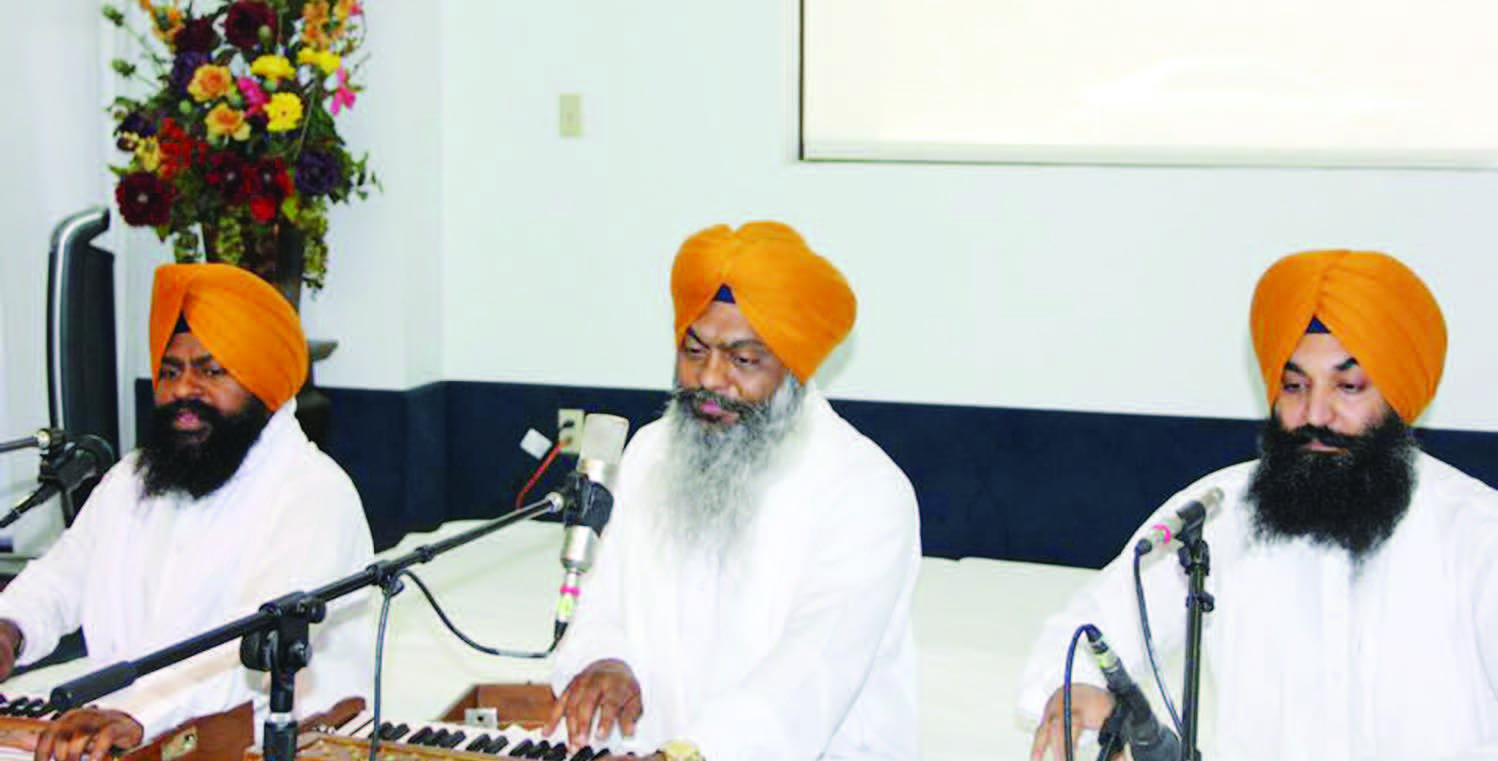
SIKHS IN DALLAS CELEBRATE THE INSTALLATION OF SHRI GURU GRANTH SAHIB, THE SIKH SCRIPTURE
DALLAS (TIP): The local Sikh Temple, Garland, celebrated with zeal the historic day of installation of the Sikh Scripture, the Master of the Sikhs , Shri Guru Granth Sahib, September 1. As part of the celebration, hymns were sung by the Gurdwara resident Raagi Jatha and lecture delivered by eminent Kathavachak Bhai Paramjit Singh Uttaranchalwale.
Bhai Paramjit Singh, in his discourse, spoke of the eternity and immortality of Shri Guru Granth Sahib. He said, it was on this day, in 1604 that the Fifth Master of the Sikhs, Shri Guru Arjan Dev Ji, had installed Shri Guru Granth Sahib, with the legendary Baba Buddha Ji as the head Granthi, at Shri Harmandir Sahib, the holiest of the Sikh shrines.
Bhai Paramjit Singh reminded the Sikh congregation that they have only One Master- Shri Guru Granth Sahib, Who has to be regarded as the Living Master- and only the Holy Scripture has to be obeyed. The head of a Sikh should bow only before the One Guru- Shri Guru Granth Sahib. He further said that Shri Guru Granth Sahib is the repository of all knowledge and can give guidance for every situation and every aspect of life, whether it is material or spiritual.
He exhorted the devotees to have unflinching faith in Shri Guru Granth Sahib. Bhai Paramjit Singh recounted the creation of the great Granth and said Shri Guru Granth Sahib contained the wisdom of 6 Gurus, 15 Bhagats, 11 Bhatts and 3 Sikhs. It was impossible to match the unfathomable knowledge contained in Shri Guru Granth Sahib. Sikhism is the youngest and the fifth largest religion of the world, with 25 million followers the world over. -

Dallas City Council, in broad strokes, backs proposal to privatize Fair Park
DALLAS (TIP): The Dallas City Council on Wednesday, September 3, offered broad support for a proposal to hand over Fair Park’s operations and management to a private, nonprofit group. A special Fair Park task force briefed the council – and the Dallas Park and Recreation Board – on that and other plans to revitalize the 277-acre, city-owned park.
The ninemember group was tasked by Mayor Mike Rawlings to come up with “dramatic ideas.” Topping the list was the idea to overhaul Fair Park’s labyrinth governance structure and replace it with a model that’s been successful at the Dallas Zoo. Other proposals included improving access to Fair Park and establishing a community park on its southern side. And though there were no formal votes, council members were clearly impressed.
“Today was to talk about this and measure the passion – that was my goal,” Rawlings said. “And I got a lot of passion. … There is some real gold in the visions you laid out.” Now the hard part begins, especially as it relates to Fair Park’s operations and management. Council members had lots of questions:
What might privatization actually look like?
How would the nonprofit be organized?
Who would serve on the group’s board?
How would the surrounding community be involved?
And quite simply, what’s the next step?
Task force members acknowledged that there aren’t easy answers in untangling the bureaucratic web that’s held back Fair Park for years. And they deferred to the council and park board in coming up with the best way to implement any recommendations. But the panel was clear that a new governance model – combined with improved funding – was critical.
“You have to fix the governance first, the money second, and good things should happen,” said Jack Matthews, a Dallas developer who serves on the task force. The Fair Park task force – led by Linda Perryman Evans, president of the Meadows Foundation – featured prominent officials like former City Manager Mary Suhm, former City Council member Diane Ragsdale and Park Board President Max Wells.
Over the last several months, the group gathered nearly 30 times in meetings that were closed to the public. The end result was a 46- page report that echoed many past Fair Park studies, including a comprehensive development plan that was completed in 2003.
The task force’s report, however, was noteworthy in its keen focus on Fair Park’s governance. The city owns and operates Fair Park. The State Fair of Texas takes over the park during its annual run, but the Dallas Park and Recreation Board and ultimately the City Council otherwise set the park’s policy and direction. And that’s only the beginning of a cavalcade of city departments, appointed boards, nonprofit entities, preservationists, private companies and other groups that have a say in how things are done at Fair Park.
The task force proposes to cut through that maze by creating a new nonprofit that would be the park’s sole governing body. The group would still report to the city, and its board would represent the various stakeholders in and around Fair Park. But with its own executive director and staff, the nonprofit alone would handle scheduling, maintenance, operations and marketing. That would eliminate red tape, encourage more investment and create an avenue for other major improvements to follow, officials said. “I’m with this 100 percent,” Council Member Dwaine Caraway said.
“This is … where we should’ve been a long time ago.” There were some reservations. Some council members complained about the task force’s secrecy and relative lack of community involvement. Some pointed out that the suggested financial infusions – Fair Park’s capital needs are $478 million – had to be weighed against other dire demands in the city. Several also made a point to highlight that the park department has done a pretty good job running Fair Park, all things considered.“The park department works hard to maintain this jewel with what they have,” Monica Alonzo said. Some council members also focused on other recommendations. Rawlings, for instance, stressed that a proposal to lower Interstate 30 near Fair Park and to cover it with a deck park is “one of the most transformative ideas in the city of Dallas.”
But most were curious about how the proposed governance model might work. Jennifer Staubach Gates and Scott Griggs pressed for more details on the structure and responsibilities of the proposed nonprofit organization. Tennell Atkins emphasized that there needs to be a timeline outlining how everything would come together. And Rawlings cautioned that there are legal and logistical hurdles in making it all happen. Officials, however, aren’t wasting any time. Wells, the Park Board president, pledged that his board would “move quickly.” -

PM Modi seen as Pied Piper for Japanese investments in India
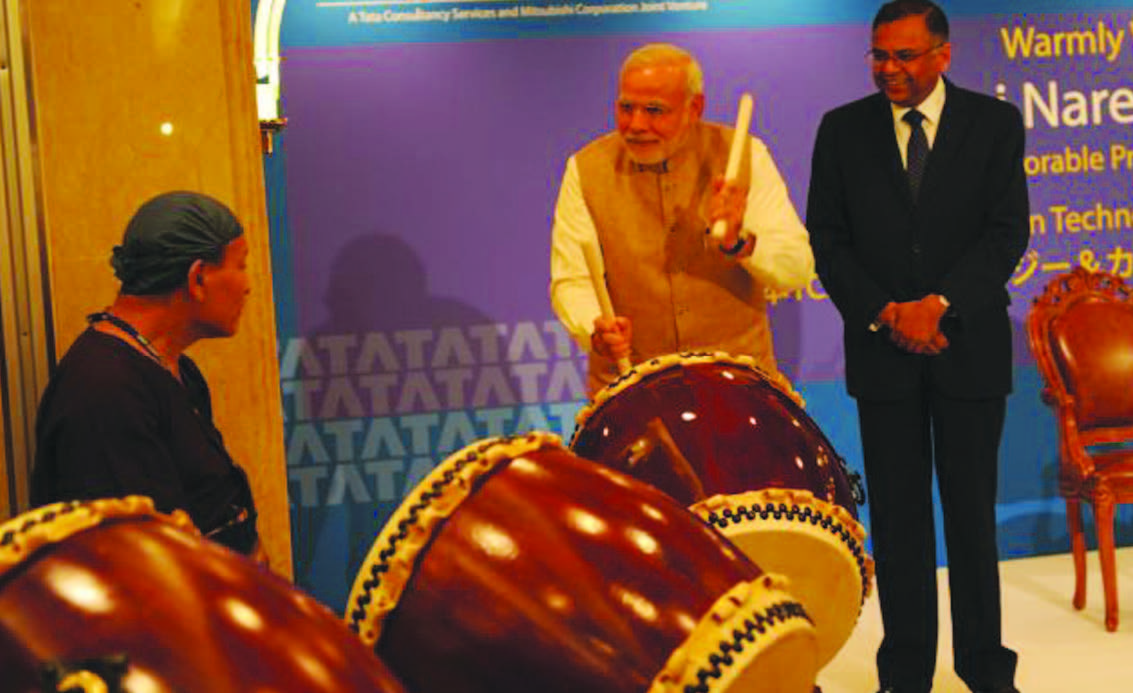
NEW DELHI (TIP): India Inc sees a big leap in Japan’s business interest in India, with the commitment of $35 billion in infrastructure a case in point, as Prime Minister Narendra Modi returned home on September 3 after a five-day visit to this East Asian nation.
This optimism, the stakeholders added, got a boost with Modi assuring Japanese investors a “red carpet” instead of “red tape” and even walking the extra mile by announcing a team in his office with two Japanese nominees to fast-track their investment proposals. On the trade front, the industry saw no difficulty in realizing the stated intent of raising the value of annual bilateral merchandise shipments exchanged between the two countries to $50 billion in five years from the current level of $16 billion. “The visit marks a defining moment in our relationship.
It will be registered in history as one that significantly elevated the level of India-Japan engagement across areas,” said Sidharth Birla, president of the leading industry chamber Ficci. “We are particularly enthused about the launch of the Japan-India Investment Promotion Partnership in which the two sides have agreed to double the flow of foreign investment into India and the number of Japanese companies over the next five years,” he added.
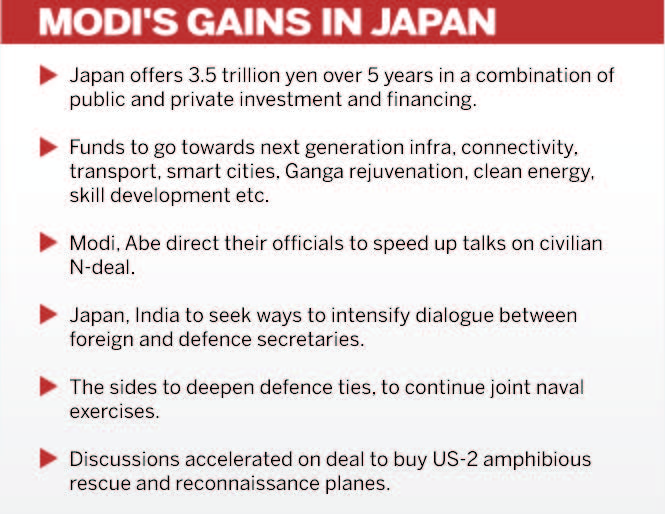
Japan, in fact, has pledged support for virtually every project Modi has spoken about in his 100 days in office – such as infrastructure, transport links, including high-speed trains, smart cities, Ganga rejuvenation, clean energy, skilling and food processing. This is no loose talk. All this — and more — has been incorporated in the 3,300-word document which emerged after bilateral talks between Modi and his counterpart Shinzo Abe — the Tokyo Declaration for India-Japan Special Strategic and Global Partnership.
These were not passing remarks when Prime Minister Abe, after overseeing the signing of several agreements between the two sides with his Twitter-mate Modi, said: “Our bilateral relationship is one with the most potential in the world.” Another industry association, the PHD Chamber, said the visit had resulted in combining “Abenomics” and “Modinomics” into what it termed as “Modi-Abe Dynamics” and said both Japanese and Indian investors will look forward to enhanced collaboration.
“We expect future Indo-Japan ties to further cement, motivating the latter companies’ number going up from 1,000 to over 1,500 in the next five years, and India agreeing to allow these companies to operate on its exclusive economic zones,” it said. A Japanese perspective was provided by NEC India, a subsidiary of NEC Corporation – Japan’s leading IT and networking company.
“Indian Prime Minister Narendra Modi’s visit to Japan is set to take the relations between the two countries to newer heights,” said Koichiro Koibe, managing director, NEC India. It can be argued that the big leap in economic ties after Modi’s visit in a situation where bilateral trade declined to $16.3 billion in 2013-2014 as compared to $18.5 billion the year before could not have occurred without a favourable political context. This context was provided by the elevation of ties that were till now in the framework of a “strategic partnership” into a “special strategic partnership”, agreed on during Modi’s visit.
A major dimension of the strategic partnership is the cooperation on defence and security issues since 2001, when the bilateral Comprehensive Security Dialogue was inaugurated. Further institutionalization of bilateral security cooperation continued, with the two countries issuing the Joint Declaration on Security Cooperation in October 2008. -

India offers essential 3Ds to Japan – democracy, demography & demand
Tokyo (TIP): Inviting Japanese investors to ‘Make in India’, Prime Minister Narendra Modi said, “There is no better place than India for Japanese investors.
India is one of the most competitive markets in the world.” Addressing Japan’s Nikkei Exchange, Modi said that India offers the three essential ‘Ds’ for businessmen to thrive namely; Democracy, Demography and Demand. “It is important for Japan to move to low cost hubs of manufacturing.” Promising a conducive environment for investors, Modi said, “Foreign investors need a proper environment to grow in India.
We are working towards improving ease of doing business in India.” “There is no red tape but red carpet in India. We have eased off a lot of regulations,” Modi sought to assure. Talking about Japan’s prowess in hardware manufacturing, Modi advocated India’s robust software industry. “India is known for its software services, Japan for its hardware.
Let’s work together to enhance the two,” Modi said. He told Japanese investors that India is a “god gifted location” for reaching out to global markets. Modi said his government is ready to offer whatever is required to promote foreign investment into India. “Without Japan, India is incomplete and without India, Japan is incomplete”, he said.
Modi also said that India plans to roll out metro trains in at least 50 cities. Government is focused on promoting small & medium industries, Modi added. “India has a government that is working on development, to increase manufacturing.” Confident of great results from India-Japan ties, Modi said, “India & Japan can create history by working together in several sectors such as digital, solar energy, technology, skills.”
Citing the recent spurt in GDP growth, Modi said, “Within 100 days of our government, we have managed to achieve a 5.7% growth. GDP growth indicates that our policies, decisions and ease of business are yielding results.” Hardselling India as a manufacturing destination, Prime Minister Narendra Modi invited Japanese investments, saying the era of “red tape” has been replaced by “red carpet” with ease of doing business and liberalisation. -

Modi’s Japan visit: Top 10 initiatives
1) Japan has committed to doubling its current investment in India to $35 billion over the next five years. This will be primarily towards developing India’s infrastructure and will involve Japanese firms. The agreement also envisages a doubling of Japanese firms doing business in India.
2) Japan has also pledged $500 million towards the Public-Private Partnership Infrastructure Financing Project to the India Infrastructure Finance Company Limited (IIFCL). Additionally, Japan will also provide about $156 million for the Guwahati Sewerage Project in Assam.
3) Both countries will work towards industrial infrastructure development with the creation of Smart Community projects in six Indian states as part of the Delhi Mumbai Industrial Corridor (DMIC) Project. The DMIC project will involve cooperation in developing power plants, assured water supply, high-volume urban transport, logistics facilities and skill development programmes for youth in regions along the corridor.
4) Ponneri in Tamil Nadu, Krishnapatnam in Andhra Pradesh and Tumkur in Karnataka have been marked as potential industrial nodes, and officials from both countries have been instructed to finalise the Master Plan and the Development Plan of these cities by March 2015.
5) Modi also inked a Memorandum of Understanding (MoU) between the Ministry of New and Renewable Energy of India and the Japan Bank for International Cooperation (JBIC) in the field of new and renewable energy. Both sides have also asked their officials to move forward on the civil nuclear energy program, which has been held up from the Japanese side since India’s nuclear weapons tests in 1998. Additionally, both countries will cooperate on building highly efficient and environment-friendly coal-fired power plants, and on cooperation in Clean Coal Technologies (CCT).
6) India and Japan signed an agreement on the development of the Shinkansen system Bullet trains for India, starting with the Mumbai- Ahmedabad corridor. As part of this deal, Japan will provide technical, financial and operational support for such trains. Japan also said it would help India improve connectivity with its neighbouring countries, besides improving transport routes to the North Eastern states.
7) Japan has agreed to ease foreign end-user entities list for India. As a starter, it has removed 6 Indian space defence-related entities from its restricted list. Both countries will also conduct talks to identify future areas of cooperation.
8) The Joint Working Group will work on speeding up cooperation on the US-2 amphibian aircraft, which will include transfer of the aircraft and its technology to India. Both countries will also work on the roadmap for development of the Indian aircraft industry.
9) Japan will work with India on creating smart cities, starting with the Kyoto-Varanasi project. As part of this, Japan will help India Varanasi – Modi’s Parliamentary constituency – develop urban infrastructure to make it a ‘smart’ city. Japan will also help India improve basic amenities across selected cities.
10) Modi will set up a Special Management Team within the Prime Minister’s Office to deal exclusively with Japanese investment. This special cell will facilitate Japanese investments so that they do not get bogged down in red tape. -

Scrap all but 46 coal blocks allotted since 1993: Attorney general
NEW DELHI: The Centre has told the Supreme Court that the government was prepared for the eventuality of cancellation of all coal block allocations since 1993 as that was the logical corollary of the court terming them illegal. Attorney general Mukul Rohatgi said, “All coal blocks are declared illegal. One simple consequence is to cancel all of them.
As the judgment stands, across the board, all allocations are illegal and cancellation is a logical corollary. Our endeavour is to settle this at the earliest, especially when the country is facing a serious power crisis.” He added, “If that happens, we will work out the consequences. We have no problem, we will auction the cancelled allocations.”
Appearing before a bench of Chief Justice RM Lodha and justices Madan B Lokur and Kurian Joseph, which on August 25 had declared all allocations since 1993 as illegal, Rohatgi said the government was prepared for auction of cancelled coal block allotments.
The court asked the Centre to file an affidavit on this issue within a week and posted it for hearing on September 9. The government also said it did not want a committee of retired Supreme Court judges, as suggested by the apex court on August 25, to go into each case and determine whether any of them could be saved from cancellation. “The bottom line is — we do not want the committee.
We are not going to save anything declared illegal. If the Supreme Court says all must go, then let all go,” Rohatgi said while requesting the court to examine the possibility of saving 40 coal block allocations linked to end-use plants which were operational after signing lease agreement with state governments where the coal mine was located.
He said there were another six such coal blocks where end-use plants had been set up and were on the verge of starting operations using coal from the allotted mines. But since no agreement had been signed with the states, the apex court said they could not be categorized along with the 40 coal blocks mentioned by the Centre.
Rohatgi, who had assistance from solicitor general Ranjit Kumar and additional solicitor general Maninder Singh, said those coal blocks allowed to be operated by functional end-use plants would be levied Rs 295 per tonne of coal extracted for using the mineral at cheap price if the power generating units had not signed power purchase agreements with states. Power purchase agreements takes care of the subsidized coal provided to the generating units and passes on the benefit to consumers, he said. -

Akhilesh laptops to play Modi CDs
LUCKNOW (TIP): Political opposition notwithstanding, the Samajwadi Party government in Uttar Pradesh has made elaborate arrangements to ensure that Prime Minister Narendra Modi’s speech reaches lakhs of students in the state this Teachers’ Day.
The UP secondary education department has issued detailed instructions asking for the necessary arrangements to be made for the live telecast of the speech, which has come under attack in some Opposition quarters amid a clarification from the Centre that the exercise involving students was voluntary. Ahead of the event on September 5, the Akhilesh Yadav-led government is making sure that the PM’s speech reaches students through television, webcasting, loudspeakers and even via laptops, which were distributed among UP students by the CM under a flagship scheme.
“The education department has been directed to ensure that CDs of Modi’s speech should be showed on laptops that have been distributed by the state government,” principal secretary, Information, Navneet Sehgal, said. In a circular sent to all district inspectors of schools, director of secondary education, Awadh Naresh Sharma, specified that, “Modi’s programme would be in addition to the regular programme organised in schools and colleges. In schools where computers are available, preparations should be made for live webcast, it added. It was also advised that in remote areas the programme should be relayed on public address systems via radio. -

Andhra Pradesh’s new capital to be located in Vijayawada region: Naidu
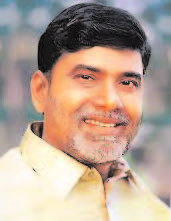
NEW DELHI (TIP): Andhra Pradesh’s new capital will be located in Vijayawada region, chief minister N Chandrababu Naidu announced in the state assembly on September 4. Naidu told the assembly that the government has decided to “locate the capital at central place of the state around Vijayawada”.
Naidu said the decision was taken in the state cabinet meeting on September 1. Naidu had deferred plans to announce decision on state’s new capital for Thursday, as he was advised that Tuesday is not an auspicious day for the announcement, according to reports. Tension was palpable in the joint capital Hyderabad, with the AP chief minister convening an emergency meeting late on Wednesday to evolve a strategy to tackle the opposition in the House once his announcement was made. In the meeting, Naidu told his ministers not to express any opinion on the choice of the capital on their own. -

Court Issues Death Warrant Against Surinder Koli in Nithari Case
Ghaziabad (TIP): In a fresh development in Nithari serial murder cases, Ghaziabad sessions court has issued death warrant against Surinder Koli in connection with the brutal killing of 14-year-old Rimpa Halder. CBI sources saidthat a death warrant was issued by Additional sessions Judge Atul Kumar Gupta in the name of Koli that he should be hanged to death after the convict exhausted all his legal remedies in this case.
The death warrant has been sent to the Uttar Pradesh government for making necessary preparations for execution of 42-year-old Koli, who has been sentenced to death in four other cases. Koli has been lodged in a Ghaziabad jail. The sources said the court had fixed September 12 as the date of hanging but the final date can be reworked with the UP administration.
Union Home Minister Rajnath Singh had earlier recommended to President Pranab Mukherjee that Koli’s mercy plea be rejected barely a month after he had taken over as the minister. The President, exercising his powers, rejected the mercy petition on July 27, thereby paving the way for the judicial process to commence for hanging of Koli. It was not immediately clear whether Koli would be hanged as already 11 cases of murder were pending against him. CBI had filed chargesheet against him in 16 cases where he had allegedly killed children after sexually abusing them. -

IN NEW DING TO CREDIBILITY, HARYANA GOVERNMENT TOLD TO CANCEL DLF DEAL
Chandigarh (TIP): The Haryana government has been ordered to cancel the allocation of 350 acres of land in Gurgaon to real estate major DLF. The verdict of the Punjab and Haryana High Court further will add another ding to the credibility of the state’s Congress government, which has been accused of allowing sweetheart land deals between DLF and Robert Vadra, the entrepreneur son-in-law of Congress president Sonia Gandhi.
The assignment of 350 acres of prime property in the Wazirabad had been challenged by villagers who claim they were told that the government was acquiring their land for a recreational park. Instead, the land was given to DLF which planned to develop golf courses and villas for commercial sale. The state government headed by Chief Minister Bhupinder Singh Hooda had also been accused by the villagers and activist-turned-politician Arvind Kejriwal of favouring DLF over two other bidders for the same property.
The court on September 3 has asked the government to invite fresh bids for the property. The government’s consultants valued the land and set a reserve price of nearly 1700 crores. When only DLF was deemed eligible by a government committee, its bid which was almost identical was accepted – so the government appears to have accepted a poor offer.
In a statement, DLF said it is waiting for a copy of the verdict and it would ” like to clarify that the said land was allotted to DLF after two rounds of International Competitive Bidding process.” Ashok Khemka, a senior bureaucrat in Haryana who handled land records in an earlier posting has alleged that the Hooda administration allowed Mr Vadra to strike illicit land deals in Gurgaon which allowed him windfall gain.Mr Khemka has alleged a long campaign of vendetta by the government, which transferred him.
The government has rejected the charges and has declared Vadra’s deals with DLF were clean. Haryana votes soon for its next government. The BJP won seven of the state’s 10 seats in the national elections that were held in May. -

COMMITMENTS ON 3 FRONTS TEST OBAMA’S FOREIGN POLICY
WASHINGTON (TIP): In vowing in Estonia on Wednesday to defend vulnerable NATO nations from Russia, President Obama has now committed the United States to three major projections of its power: a “pivot” to Asia, a muscular presence in Europe and a new battle against Islamic extremists that seems likely to accelerate.
American officials acknowledge that these commitments are bound to upend Mr Obama’s plans for shrinking the Pentagon’s budget before he leaves office in 2017. They also challenge a crucial doctrine of his first term: that the use of high technology and only a “light footprint” of military forces can deter ambitious powers and counter terrorists.
And the commitments may well reverse one of the key tenets of his two presidential campaigns, that the money once spent in Iraq and Afghanistan would be turned to “nation-building at home.” But the accumulation of new defensive initiatives leaves open the question of how forcefully Mr Obama is committed to reversing the suspicion, from Europe to the Middle East to Asia, that the United States is in an era of retrenchment.
In his travels in Europe this week and to Asia this fall, the president faces a dual challenge: convincing American allies and partners that he has no intention to leave power vacuums around the globe for adversaries to fill, while convincing Americans that he can face each of these brewing conflicts without plunging them back into another decade of large military commitments and heavy casualties.
“There is a growing mismatch between the rhetoric and the policy,” said Richard N. Haass, the president of the Council on Foreign Relations and a senior American official during the fall of the Berlin Wall in 1989, and again as the war with Iraq loomed a dozen years ago. “If you add up the resources needed to implement the Asian pivot, recommit to the Middle East and increase our presence in Europe, you can’t do it without additional money and capacity.
The world has proved to be a far more demanding place than it looked to this White House a few years ago.” So it is no surprise that at a moment when Mr Obama is still answering critics for saying last week that “we don’t have a strategy yet” to combat the Islamic State in Iraq and Syria, he now needs several strategies, each tailored to problems that in the past year have taken on surprising complexities.
In facing the more than 10,000 ISIS fighters, he must find a way to confront a different kind of terrorist group, one determined to use the most brutal techniques to take territory that the backwash from the Arab Spring has now put up for grabs.
The American bombing campaign against ISIS targets in Iraq is nowhere close to approaching the costs of the invasion and occupation of that country, but the weapons, fuel and other expenses are running up anticipated bills of about $225 million a month, according to Pentagon officials. ISIS “is not invincible,” Matthew G Olsen, the director of the National Counterterrorism Center, said in a talk at the Brookings Institution on Wednesday, and does not yet pose the kind of direct threat to the United States that Al Qaeda did before the attacks of Sept. 11, 2001.
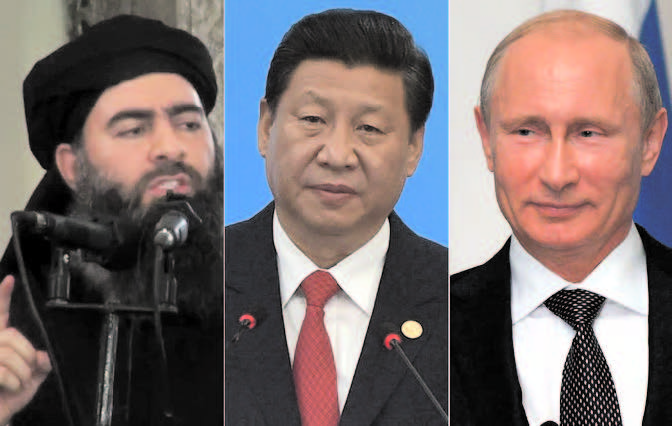
It is “brutal and lethal,” he said, and defeating it will require a long-term commitment of a kind Mr Obama clearly did not anticipate earlier this year. In the Russia of President Vladimir V. Putin, Mr Obama faces a declining power — afflicted by a shrinking population, a strident nationalism and an economy highly dependent on oil exports — that he is betting cannot sustain Mr Putin’s appetites. But the arguments inside the administration have been over how directly and where to draw the line — and not surprisingly, in Tallinn, Estonia, on Wednesday, he drew it at NATO’s own boundaries.
The question is whether Mr Putin believes him. And in China, the president faces an entirely different kind of challenge: a rising power with growing resources and a sense that this is China’s moment to reassert influence in Asia in a way it has not in hundreds of years.
Here the surprise to Mr Obama has been the aggressiveness with which Xi Jinping, China’s president, has embraced efforts to press territorial claims against Japan, South Korea, Vietnam and the Philippines, rather than focus on the domestic economy. “We didn’t see this coming,” one former member of Mr Obama’s national security team said this summer, “and there’s a lot of debate about how to counter it.”
The statement could be true for each of the challenges Mr Obama is confronting. And it explains why the administration is having such a difficult time explaining how this combination will affect its future plans. Defense Secretary Chuck Hagel was put in his job in part to find ways to shrink the military, especially after the official combat mission in Afghanistan ends this year. But Mr Hagel has been either unable or unwilling to articulate the long-term implications.
There are plans afoot to shift the American presence to the Pacific over the next six years, aiming toward the moment when 60 percent of America’s forces abroad are in the region. But many Asian leaders question whether Mr Obama and his successor will carry through. “We hear a lot of planning,” said one Southeast Asian diplomat, “but the actual manifestations of the pivot are hard to detect.” Many fear that the Chinese sense the same thing, and that may explain the recent incidents in which American aircraft have been buzzed by the Chinese, and the continued pace of cyberattacks on American targets.
The uncertainty about Russia’s ambitions add another element. Mr Obama mentioned several responses in his speech in Tallinn, including enhanced missile defenses. It was an interesting allusion, because until now he had insisted that the American missile defenses planned in Europe were entirely aimed at deterring Iran, not Russia, whose nuclear capabilities could overwhelm the kind of defenses that the Pentagon is currently deploying. But the bigger question is what the cost will be of a sustained American training and exercising presence in the region. -

US sending 200 troops for drills in Ukraine: Pentagon
WASHINGTON (TIP): The United States will send about 200 troops to take part in a US-led annual exercise in Ukraine later this month, the Pentagon said on Wednesday, in a show of solidarity with Kiev.
The presence of 200 soldiers from the 173rd Airborne Brigade will mark the first deployment of US ground troops to Ukraine since the Kiev government’s conflict with pro-Russia separatists erupted earlier this year. Dubbed “Rapid Trident,” the yearly exercise was set for September 13-26 and will involve more than a dozen countries, including “approximately 200 personnel” from the US military, spokesman Colonel Steven Warren said.
“It’s a peacekeeping exercise,” said Warren, and would focus in part on countering homemade bombs. The drill was due to be held in Yavoriv, about 40 miles (60 kilometers) from Lviv in western Ukraine. US naval forces also were due to take part in a separate maritime exercise starting next week in the Black Sea which will involve forces from Ukraine, Turkey, Georgia and Romania, officials said.
Two vessels from a NATO maritime group will also participate. Washington is sending the USS Ross, a guided missile destroyer, to join the naval drill, dubbed “Sea Breeze,” which runs from Monday to Wednesday. About 280 US sailors were due to take part.
The aim of the exercise was “to improve interoperability while promoting regional stability and security” among allies and partners, spokeswoman Lieutenant Colonel Vanessa Hillman said. With Russia’s intervention in Ukraine raising alarm in Eastern Europe and beyond, the United States has held a series of high-profile military exercises in the region in a bid to reassure anxious allies on NATO’s eastern border.
Ukraine, facing a separatist rebellion and suspected Russian military operations in its east, has asked for US military aid but Washington has declined so far to provide weapons to the Kiev government. -

UN says $600 million needed to tackle Ebola as deaths top 1,900
WASHINGTON/CONAKRY (TIP): The United Nations said $600 million in supplies would be needed to fight West Africa’s Ebola outbreak, as the death toll from the worst ever epidemic of the virus topped 1,900 and Guinea warned it had penetrated a new part of the country. The pace of the infection has accelerated, and there were close to 400 deaths in the past week, officials said on Wednesday.
It was first detected deep in the forests of southeastern Guinea in March. The hemorrhagic fever has spread to Liberia, Sierra Leone, Guinea, Nigeria, and Senegal, and has killed more people than all outbreaks since Ebola was first uncovered in 1976.
There are no approved Ebola vaccines or treatments. An experimental Ebola vaccine that Canada said it would give to the World Health Organization for use in Africa was as of Wednesday still in the lab that developed it as officials are puzzled over how to transport it. Ottawa said on Aug. 12 that it would donate between 800 and 1,000 doses of the vaccine, being held at Canada’s National Microbiology Laboratory in Winnipeg.
“We are now working with the WHO to address complex regulatory, logistical and ethical issues so that the vaccine can be safely and ethically deployed as rapidly as possible,” Health Canada spokesman Sean Upton said in a statement. “For example, the logistics surrounding the safe delivery of the vaccine are complicated.” Upton said one of the challenges was keeping the vaccine cool enough to remain potent.
Human safety trials are due to begin this week on a vaccine from GlaxoSmithKline Plc and later this year on one from NewLink Genetics Corp. The US Department of Health and Human Services said on Tuesday a federal contract worth up to $42.3 million would help accelerate testing of an experimental Ebola virus treatment being developed by privately held Mapp Biopharmaceutical Inc. Dr David Nabarro, senior UN Coordinator for Ebola, said the cost of getting the supplies needed by West Africa countries to control the crisis would amount to $600 million. That was higher than an estimate of $490 million by the WHO last week.
Moving workers and supplies around the region has been made difficult by restrictions by some countries on air travel and landing rights as they try to control Ebola’s spread. “We are working intensively with those governments to encourage them to commit to the movement of people and planes and at the same time deal with anxieties about the possibility of infection,” Nabarro said.
He said the president of Ghana has agreed to allow an airbridge, or route, through the country to affected regions to move people and supplies. Ivory Coast, which closed its borders with Liberia and Guinea last month, said on Tuesday it would open humanitarian and economic corridors to its two western neighbors.
Epidemic gains, evacuation eyed for doctor Dr. Margaret Chan, director-general of the World Health Organization (WHO) told a press conference in Washington, “This Ebola epidemic is the longest, the most severe and the most complex we’ve ever seen.” Chan said there were more than 3,500 cases across Guinea, Liberia and Sierra Leone.
In Liberia, Dr Rick Sacra, a 51-yearold Boston physician infected with Ebola could be medically evacuated as soon as Thursday, according to staff at the hospital where he worked. Two other Americans recovered from the virus after being taken to the United States for treatment last month. Amid shortages of equipment and trained staff, more than 120 healthcare workers have died in West Africa in the Ebola outbreak.
The Liberian government has begun offering a $1,000 bonus to any healthcare workers who agreed to work in Ebola treatment facilities. Guinea, the first country to detect the virus, previously said it was containing the outbreak but announced that nine new cases had been found in the prefecture of Kerouane, some 750 km (470 miles) southeast of the capital Conakry. -

GIRL, 5, TRAPPED IN SPINNING WASHING MACHINE, SURVIVES
AUSTIN (TIP): A five-year-old girl is recovering in hospital after she became trapped in a washing machine in an American launderette. The child, who has not been named, was churned inside the drum for several minutes as it started its cycle on Tuesday.
An employee at Le’s Washeteria cut the electricity supply when the alarm was raised and managed to get her out, ABC reported. Police said the girl climbed into the machine in Pasadena, Texas, while the woman she was with was not looking. The customer had been unable to get the machine to work and had gone to find a different washer. It was unclear how the door managed to close and lock the girl inside but the spin cycle was activated for several minutes before the woman noticed what had happened.
Vance Mitchell, from Pasadena Police, told Fox News: “Unfortunately she spun around in that washing machine for several minutes and apparently it was on high speed. “She was tumbling pretty fast in there.”One person walked by and said they saw something flopping around in there they thought it was just a dress or something because it was moving pretty fast.
“The child was airlifted to hospital as a precaution but here injuries were not said to be lifethreatening. Police are treating it as an accident.In 2010 a baby died in the US after being put into a washing machine with a pile of laundry for 40 minutes. Two girls aged two and four also died in China last year after their parents claimed they climbed inside and accidentally switched their machine on before shutting the door. -

Biden: US will follow terrorists to ‘gates of hell’
KITTERY (MAINE (TIP)): Vice-President Joe Biden on September 3 said America will follow the terrorists who posted videos showing the beheading of two journalists “to the gates of hell.” Biden said the Islamic State militant group responsible for beheading James Foley and Steven Sotloff won’t intimidate the United States.
“The American people are so much stronger, so much more resolved than any enemy can fully understand,” Biden said at the Portsmouth Naval Shipyard in Maine. “As a nation, we’re united. And when people harm Americans, we don’t retreat, we don’t forget.”
A videotape showing Sotloff’s murder was broadcast on September 2, two weeks after the same group released a video showing Foley’s killing.
“We take care of those who are grieving and when that’s finished, they should know we will follow them to the gates of hell until they are brought to justice,” Biden said. “Because hell is where they’ll reside.” Biden, a potential 2016 Democratic candidate for president, has used “gates of hell” before, invoking it in an October 2012 vice presidential debate when talking about the killing of Osama bin Laden.
Foley was from New Hampshire and Sotloff attended school there, bringing their killings close to home for many in attendance at Biden’s speech. The shipyard employs many New Hampshire residents. -

US to hold new nuclear talks with Iran in Geneva
WASHINGTON (TIP): American and Iranian officials will resume negotiations in Geneva this week as they seek to hammer out a full nuclear deal ahead of a November deadline, US officials said on September 3. The US team led by Deputy Secretary of State Bill Burns and Under Secretary Wendy Sherman will meet with Iranian officials on Thursday and Friday in the Swiss city, the State Department said in a surprise late-night statement.
-

Gay group to march openly in Saint Patrick’s Day Parade in New York
NEW YORK (TIP): Organizers of the New York City Saint Patrick’s Day Parade said on Wednesday they will allow a gay group to march under its own banner in the 2015 procession, changing a decades-old policy that has come under criticism in recent years.
The group that will be allowed to walk under its own sign Out@NBCUniversal, a lesbian, gay, bisexual and transgender (LGBT) support group associated with WNBCTV, the longtime broadcast partner of the nationally televised event, scheduled for next March 17. Controversy over the ban had led to lawsuits and boycotts.
Democratic Mayor Bill de Blasio refused to march in this year’s parade. Two big sponsors, brewers Guinness and Heineken, yanked their sponsorship due to the ban. Gay groups have been allowed in the city’s largest St. Patrick’s Day parade provided they did not display banners, flags and pins that identified sexual orientation.
The NBC-affiliated group will be the only one allowed to hoist its banner in 2015 and others can apply to march in the 2016 event, said parade spokesman William O’Reilly in an email statement. The parade committee said the new policy was aimed at welcoming lesbian, gay, bisexual and transgender groups while staying true to the teachings of the Catholic Church as the parade moves into its 253rd year.
Cardinal Timothy Dolan, Roman Catholic archbishop of New York, expressed support for the parade committee, saying he hopes “the parade would continue to be a source of unity for all of us.” -

Modi, Japan and Diplomatic Balancing
“Modi’s challenge will, however, be to balance competing interests between the U.S., Japan and China even as he pursues an independent Indian foreign policy based on national interest”, says the author.
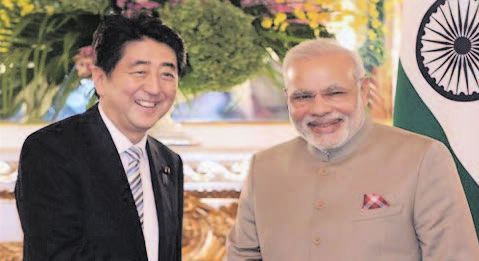
If photo-ops are considered to be vital part of conveying messages in diplomacy then the image of India’s Prime Minister Narendra Modi and his Japanese counterpart Shinzo Abe hugging each other last week should go down as a defining moment in India- Japan relations.
Traditionally, the Japanese are not known to be demonstrative or even to encourage physical contact but if the enthusiastic reception accorded to Modi during his five-day trip to Japan – his first bilateral trip outside the Indian sub-continent – is any indication, New Delhi and Tokyo are all set to transform geo-politics in Asia.
The two prime ministers, also close personal friends, not only discussed a wide range of bilateral issues during an unusually long trip but also worked towards building a counterweight to an increasingly assertive China. Although the only reference – and an oblique one at that – to China came from Modi, the joint statement was dominated by plans to cooperate on security issues that will have far-reaching implications in Asia.
“Everywhere around us, we see an 18thcentury expansionist mind-set: encroaching on another country, intruding in others’ waters, invading other countries and capturing territory,” Modi told his Japanese audience without mentioning China. Even the joint statement by the two countries spoke about regional tensions and steps that they intend to take to control the situation.
It said, in parts: “The two Prime Ministers affirmed their shared belief that at a time of growing turmoil, tensions and transitions in the world, a closer and stronger strategic partnership between India and Japan is indispensable for a prosperous future for their two countries and for advancing peace, stability and prosperity in the world, in particular, in the inter-connected Asia, Pacific and Indian Ocean Regions.
Prime Minister Abe briefed Prime Minister Modi on Japan’s policy of ‘Proactive Contribution to Peace’ and Japan’s Cabinet Decision on development of seamless security legislation. Prime Minister Modi supported Japan’s initiative to contribute to peace and stability of the region and the world.” The joint statement was labeled “Tokyo Declaration for India – Japan Special Strategic and Global Partnership,” a fact that would not have gone unnoticed in Beijing. While the fine print of various agreements will be known in due course, the larger message of Modi’s visit is loud and clear: For the first time India is willing to throw in its lot with Japan, a known U.S. ally. So far, New Delhi has refrained from an overt alliance with the U.S. but it has accepted a need to have closer defense cooperation with both Tokyo and Washington.
One early manifestation of this was the recent trilateral naval cooperation Exercise Malabar held off the Japan coast in June. This was a significant departure from the recent past. Since 2007, Japan had kept away from Exercise Malabar after Beijing had protested in the wake of a five-nation exercise in the Indian Ocean. But under Abe’s leadership, Japan is turning many of its defensive policies on their head.
The easing of Japan’s defense exports rules will allow Japanese defense firms to participate in India’s huge weapons market. An amphibious military aircraft is likely to be one of the first exports to India. A civil nuclear deal is also progressing well, although much against Modi’s wishes it could not be clinched during his visit. However, Japan’s commitment to invest around $34 billion in India’s key infrastructure projects over the next five years will boost the India- Japan partnership further.
Officially, there was no reaction by China but Modi’s breakthrough visit was certainly keenly watched in Chinese official media, where it drew some pointed comment. Global Times, the hardline voice of the Chinese establishment in China had two strident back-to-back editorials on the Modi-Abe tango. In the first, the paper commented: “The increasing intimacy between Tokyo and New Delhi will bring at most psychological comfort to the two countries. What is involved in China-India relations denotes much more than the display of the blossoming personal friendship between Modi and Abe. After all, Japan is located far from India. Abe’s harangue on the Indo- Pacific concept makes Indians comfortable.
It is South Asia where New Delhi has to make its presence felt. However, China is a neighbour it can’t move away from. Sino-Indian ties can in no way be counterbalanced by the Japan-India friendship.” The second one attacked Japan directly in an editorial titled, ‘Tokyo lost the war, and must accept defeat,’ threatening Japan openly: “What we need is a rational Japan that behaves itself and stops serving as a pawn of the US to sabotage China’s strategic interests. We need to crush Japan’s will to constrain a rising Beijing and only in this way can Sino- Japanese friendship garner a fresh, solid foundation.” It is instructive to note that Chinese criticism so far is muted as far as India is concerned.
The reason is clear. In less than a fortnight after Modi ended his successful Japan trip, Chinese President Xi Jingping is expected in India. Xi has an ambitious agenda for his visit. China wants to take full advantage of a probusiness regime under the new prime minister and raise bilateral trade beyond 100 billion dollars. Economic partnerships apart, China would want to keep its negotiations on the contentious border issue going, if only to keep India interested since India is now being wooed by the world.
The U.S. has already sent three of its cabinet secretaries to India, all before Modi has even visited America. That visit is due in late September, where he will hold a summit meeting with President Barack Obama. Clearly, Washington wants to reboot ties with New Delhi after a downslide in relationship over the past four years. Australian Prime Minister Tony Abbott has left for Mumbai and New Delhi, and is expecting to sign a deal to supply uranium to India. Canberra has already indicated it wants much closer defense cooperation with India.
Modi’s foreign minister Sushma Swaraj has toured Vietnam – one of several of China’s neighbors that have territorial disputes with Beijing – and Bangladesh to re-establish India’s primacy in the region. The prime minister has himself decided to reach out to smaller but important nations in the Indian sub-continent by visiting Bhutan and Nepal, the two Himalayan countries wedged between India and China. His decision to call off talks with Pakistan also shows he is prepared to make a departure from conventional practice.
Clearly, Modi is the international flavor of the season. His challenge will, however, be to balance competing interests between the U.S., Japan and China even as he pursues an independent Indian foreign policy based on national interest.
(The author is Security & Strategic Affairs Editor at NDTV) British English (Source: The Diplomat)