Month: July 2015

  • Greece defaults on IMF payment !!!

    Greece defaults on IMF payment !!!

    Greece became the first developed country to default on the International Monetary Fund, as the rescue program that has sustained it for five years expired and Greece’s last-minute overtures to international creditors for financial aid on Tuesday, June 30, were not enough to save the country.

    The Washington-based fund said the Greek government failed to transfer €1.55 billion ($1.73 billion) by close-of-business on Tuesday—the largest, single missed repayment in the IMF’s history.

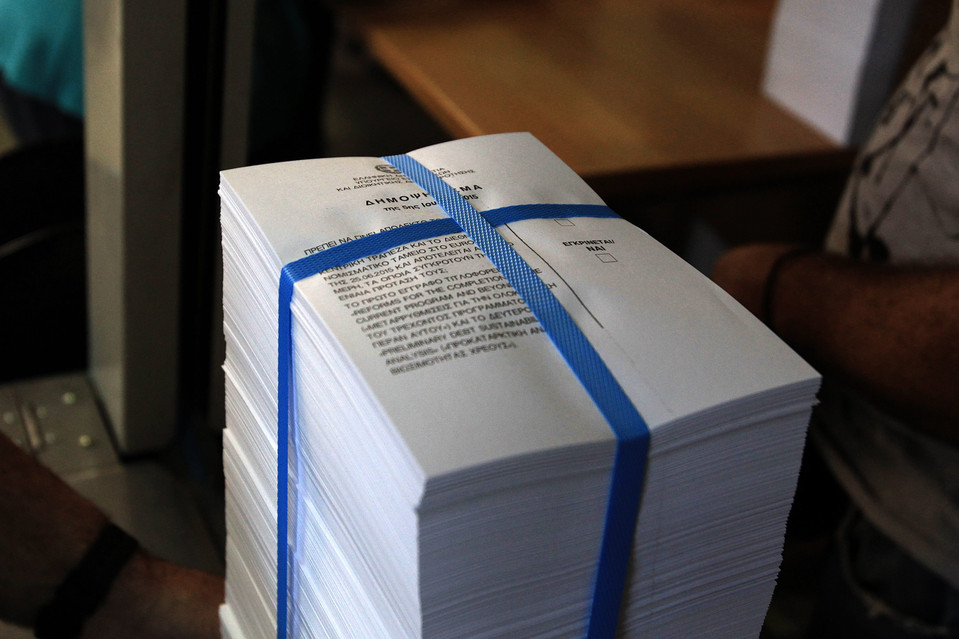
    Fears of a Greek default have unnerved financial markets on concerns that it would ultimately lead to the country’s exit from the euro common currency. The fate of Greece’s membership in the 19-nation currency bloc still hangs in the balance ahead of a referendum on Sunday when Greek citizens will vote on whether to accept the austerity terms of continued international aid.

    An opinion poll published on Wednesday in the Efimerida ton Syntatkton newspaper, said 54 percent of Greeks plan to oppose the bailout proposal against 33 percent in favor. Late yesterday, June 20, Greek officials were also raising doubts over their plans for a referendum planned for Sunday, in which the government had asked its citizens to vote against pension cuts and sales-tax increases demanded by its creditors.

    However a breakdown of the results compared with a poll taken before the decision on Sunday to close Greek banks showed the gap between the “yes” and “no” votes narrowing slightly.

    IMF spokesman Gerry Rice said Greece can now only receive further funding from the global lender once the arrears are cleared. He confirmed that Greece asked for a last-minute repayment extension earlier on Tuesday, June 30, which the fund’s board will consider “in due course.”

    in Berlin, Chancellor Angela Merkel and other senior officials sought to lower expectations for a quick resolution to Greece’s financial crisis.

    Before Greeks have voted on the measures demanded by creditors, “we will not negotiate about anything new at all,” Ms. Merkel said. Her deputy and coalition partner, Sigmar Gabriel of the Social Democrats, urged Greece to cancel the referendum altogether. “Then one could very quickly gather for talks, initial talks. If that’s not the case, then we should certainly do this after the referendum,” Mr. Gabriel said.

    European stocks and bonds fell amid the uncertainty and the euro declined against the U.S. dollar.

    In Washington, President Barack Obama played down the potential impact of Greece’s worsening crisis on the U.S. and broader global economy. “That is not something that we believe will have a major shock to the system,” he said.

    Treasury Secretary Jacob Lew has been urging his European counterparts to press ahead with bailout talks to find a “pragmatic compromise” that includes both tough economic overhauls and debt relief, to prevent Europe’s economic problems from dragging on U.S. growth.

    The expiration of the existing bailout and a default on the IMF aren’t expected to have immediate consequences for Greece’s economy. Its banks have already been ordered closed until Monday, after the European Central Bank capped emergency loans to Greek lenders over the weekend. Cash withdrawals by Greeks have been limited to €60 a day for each account-holder since Monday.

    On Wednesday, Jul 1, the focus will again be on the ECB, whose governing council is due to meet in Frankfurt.

    The council, which includes central bankers from the eurozone’s 19 member states, is reluctant to take any additional steps for now that would inflict more pain on Greek banks—for instance, by forcing them to pay back the outstanding loans just days ahead of the referendum, people familiar with the matter said, despite a growing level of impatience over the central bank’s exposure to Greece.


  • Sabotage suspected as Pakistan troop train plunges into canal

    Sabotage suspected as Pakistan troop train plunges into canal

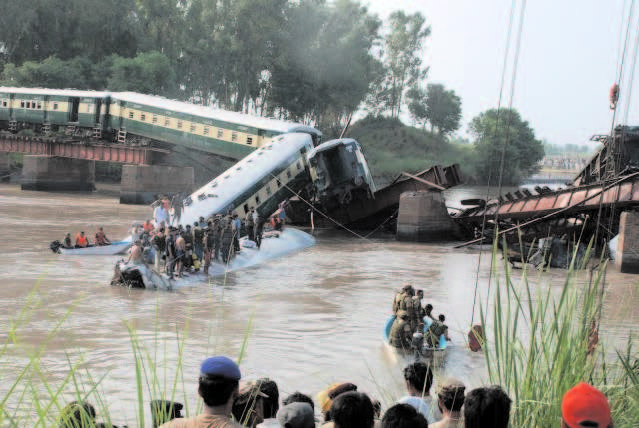
    LAHORE (TIP): A train carrying hundreds of Pakistan soldiers and their families plunged several feet into a canal on July 2 when a bridge collapsed in the country’s east in what the army suspects was sabotage, officials said.

    At least six people were missing, but officials at the ministry of railways and the military had not confirmed any deaths. An army spokesman confirmed that four carriages plunged into the canal.

    The military is fighting a Taliban insurgency in several regions of the country’s tribal areas bordering Afghanistan in the northwest.

    The crash in Pakistan’s Gujranwala district, in the northeast, happened as an army unit was being transported from southern Sindh province to northern Pakistan.

    “There were around 300 passengers on board,” Minister for Railways Khawaja Saad Rafiq told Reuters. “It is too early to say about the reason for the mishap. Rescue work is under way.”

    More than 50 people were rescued, a military official said.
    Television images of the scene showed several carriages partly submerged in the canal.

    Rafiq told local Geo TV that six people were missing and the cause of the crash was unknown. But a senior military official said the army suspected sabotage.

    “We suspect that this was an act of sabotage and the planks on the rail were tampered with,” the official said, requesting anonymity as he was not authorised to speak to the media.

    The collapse also raises concerns about the safety of infrastructure. Several TV channels reported that the bridge had been marked as “extremely dangerous”.

    In May, a Pakistan military helicopter carrying diplomats to inspect a tourist project crashed, killing seven people, including the ambassadors of Norway and the Philippines.

  • Indians in UK face risk of radicalization by terrorists, says British Parliament

    Indians in UK face risk of radicalization by terrorists, says British Parliament

    LONDON (TIP): Indian youngsters in UK face real time risk of being radicalized by Islamic terrorist organizations and handlers, says Britain’s House of Commons.

    Keith Vaz, Britain’s longest-serving Indian-origin MP who was recently re-elected as chair of Parliament’s influential Home Affairs Select Committee told TOI in an exclusive interview that Indian families in UK need to be vigilant. Indians are the largest foreign-born group in London. Nearly 9% of all foreign-born residents in London are now Indian. In sheer numbers, this means 2.63 lakh persons born in India are now living in London.

    Vaz told TOI “radicalization of our young people is at the forefront of our minds”.

    He added “So far there has not been much evidence of young Asian and Indian individuals falling victim to the propaganda and extremist influence on the internet or via other means, but members of the community should remain vigilant. The government needs to be far better at working with communities, not against them”.

    UK’s Office of National Statistics has confirmed that Indians had overtaken the Irish to become the largest foreign-born ethnic group in the whole of England and Wales. The latest census had revealed that the number of Indians went up by over 52%, from 4.56 lakh in 2001 to 6.94 lakh a decade later.

    Britain’s International Centre for the Study of Radicalization (ICSR) says that a record number of foreign fighters have now been confirmed to have joined militant organizations in Syria and Iraq. It is now estimated that the total now exceeds 20,000 – of which nearly a fifth were residents or nationals of western European countries.

    The largest European countries -France, the UK, and Germany – also produce the largest numbers of fighters. This has made the conflict in Syria and Iraq the largest mobilization of foreigner fighters in Muslim majority countries since 1945. It now surpasses the Afghanistan conflict in the 1980s, which is thought to have attracted up to 20,000 foreigners.

  • SUICIDE BOMBER ATTACKS NATO CONVOY IN KABUL

    SUICIDE BOMBER ATTACKS NATO CONVOY IN KABUL

    KABUL, AFGHANISTAN (TIP): A suicide attacker driving an explosives-packed vehicle targeted a Nato military convoy in the Afghan capital, Kabul, on July 1, police and a Nato official said.

    Police on the scene said casualties were expected. “It was a suicide car bomber, there are casualties but it is too early to know the extent of the damage,” said Kabul deputy police chief Sayed Gulagha.

    A spokesman for the Nato mission in Afghanistan, US Army Col Brian Tribus, said that a coalition convoy had been attacked.

    “We can confirm there was an attack on coalition forces. We are gathering information,” he said.

    SUICIDE BOMBER ATTACKS NATO CONVOY IN KABUL (inset)The explosion happened at 1.20pm on the main airport road in eastern Kabul. The blast sent a huge plume of black smoke over the city.

    It happened as government employees were leaving their offices and roads were choked with vehicles as the working day is shortened during the Ramadan fasting month.

    It comes a week after an audacious attack on the nation’s parliament, which highlighted the ability of insurgents, who have been fighting to overthrow the Kabul government for almost 14 years, to enter the highly fortified capital to stage deadly attacks.

    Also on Tuesday, a suicide attack on the police headquarters of southern Helmand province killed up to three people and wounded more than 50, including policemen, officials said.

    Omar Zawak, spokesman for the governor of Helmand province, said most of the injured in the Tuesday morning attack were women and children.

    Police spokesman Farid Hamad Obaid said a car packed with explosives was driven into the back wall of the police headquarters in an attempt to breach a gate. All the gunmen fled the area, he said.

    Also Tuesday in eastern Paktya province, three people were killed and one wounded when their vehicle hit a roadside mine, the provincial police chief Zalmai Oryakhel said.

  • Nearly 150 killed in suspected Boko Haram attacks in northeast Nigeria

    Nearly 150 killed in suspected Boko Haram attacks in northeast Nigeria

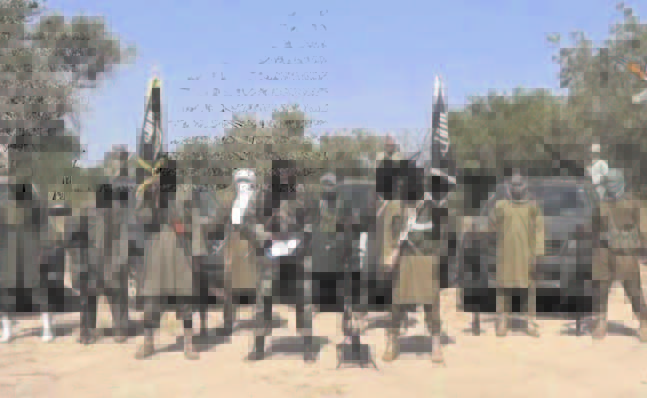
    MAIDUGURI (TIP): Suspected Boko Haram militants have killed nearly 150 people in northeastern Nigerian villages, mowing down men and children while they prayed in mosques and shooting women preparing food at home, witnesses said on July 2.

    Dozens of militants stormed three remote villages in the flashpoint Borno state on Wednesday evening, setting houses ablaze in the bloodiest day of attacks by the extremist group since President Muhammadu Buhari came to power in May.

    Gunmen killed at least 97 people in Kukawa, the worst-affected village, a local who gave his name as Kolo and who said he had counted the bodies told AFP.

    “They wiped out the immediate family of my uncle… They killed his children, about five of them,” Kolo said.

    A fisherman who witnessed the attack corroborated the death toll.

    Babami Alhaji Kolo, another witness in Kukawa who fled to the state capital Maiduguri, said more than 50 militants had stormed the village.

    “The terrorists first descended on Muslim worshippers in various mosques who were observing the Maghrib prayer shortly after breaking their fast,” he said.”They… opened fire on the worshippers who were mostly men and young children.

    “They spared nobody. In fact, while some of the terrorists waited and set most of the corpses on fire, others proceeded to houses and shot indiscriminately at women who were preparing food,” he said.

    Malami Abdulkareem, an Arabic teacher in Kukawa, said some of the victims were as young as four.

    “The attackers did not spare even children between four and 12 years old who went to mosques with their fathers.

    “I saw at least nine kids who were killed in two mosques,” he said. A military source in Maiduguri, who refused to be named, confirmed the attack but could not yet give a death toll.

    “The military responded with aerial bombardments on terrorist positions,” he said, without giving further details.

    In two other villages near the town of Monguno, meanwhile, gunmen killed 48 people and injured 11 others, local lawmaker Mohammed Tahir and witnesses told AFP.

    “They selected particular male residents from among the crowd of worshippers… and opened fire on them before setting the two villages on fire and razing them to the ground,” Tahir said.

    Another resident who managed to flee said the militants arrived in vans and on motorcycles.

    “Many of us managed to escape amid volleys of bullets,” said the resident who asked not to be named for safety reasons.

    Kukawa is around 50 kilometres (30 miles) away from the two villages near Monguno.

    All three are located near Lake Chad, which straddles Nigeria, Niger, Chad and Cameroon and has been a focal point of the unrest.

    Boko Haram had captured scores of towns and villages in the northeast last year, but has since been pushed back into hide-outs by a four-nation military offensive that kicked off in February.

    Despite their territorial losses, the insurgents have kept up their deadly raids, explosions and suicide attacks on “soft” targets such as markets and mosques.

    And the armed group has intensified its campaign of violence since Buhari came to power on May 29 vowing to crush the jihadists’ bloody uprising that has claimed at least 15,000 lives.

    Since then, some 400 people have been killed in attacks blamed on the extremists, who have sworn allegiance to the Islamic State group, according to an AFP tally.

    A new regional fighting force comprising 8,700 troops from Nigeria, Niger, Chad, Cameroon and Benin is due to deploy at the end of the month to try and put an end to the insurgency.

    Speaking in Yola in Adamawa state, which borders Borno and had been overrun by the militants before they were cleared out, he said one of the government’s priorities there was to de-mine farmlands in areas recovered from Boko Haram.

    The militants “plant land mines and other forms of explosives, making it difficult for people to resettle and that is the reason why it is absolutely important for us that the farmlands are swept clean of mines and explosives,” he was quoted as saying in a statement.

  • Four dead, two missing in South Korea storage tank explosion

    SEOUL (TIP): Four workers were killed and two others were missing July 3 when a waste water storage tank exploded at a chemical plant in the South Korean industrial city of Ulsan, authorities said.

    The blast at Hanwha Chemical Co. occurred when the workers were doing welding work on the tank, a spokesman from Ulsan Nam Fire Station told media.

    “Gas from the waste water which had piled up inside the tank was apparently ignited by the welding torch”, he said.

    An investigation is under way to determine whether the accident was a result of negligence, he added.

  • China says 6.5 quake hits far western region of Xinjiang

    BEIJING (TIP): A magnitude 6.5 earthquake shook buildings in China’s far western region of Xinjiang on July 3, sending people out onto the streets, but there were no immediate reports of casualties from the sparsely populated area surrounding the epicenter.

    The quake hit Pishan county in the Hotan region of Xinjiang at a depth of about 10 kilometers shortly after 9am on Friday, the China Earthquake Networks Center said.

    “Buildings were trembling and people rushed to the streets,” said Jin Xingchang, an express courier in Hotan city, about 15 kilometers away from Pishan.

    The mostly ethnic Muslim Uighur area of Pishan is at the southern edge of the Taklamakan desert near the border with India, and is abundant in mineral resources including coal, crude oil, natural gas and jade.

  • PM Modi launches Digital India campaign; asks why Google can’t be made in India

    PM Modi launches Digital India campaign; asks why Google can’t be made in India

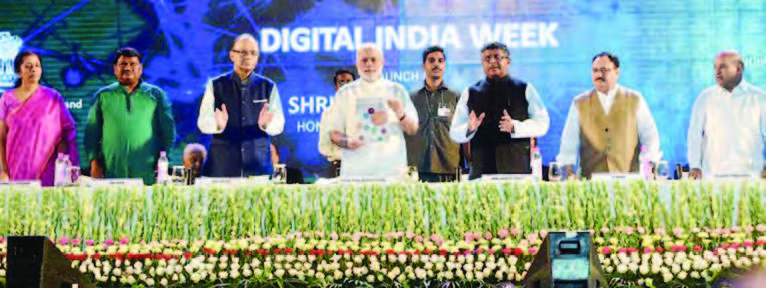
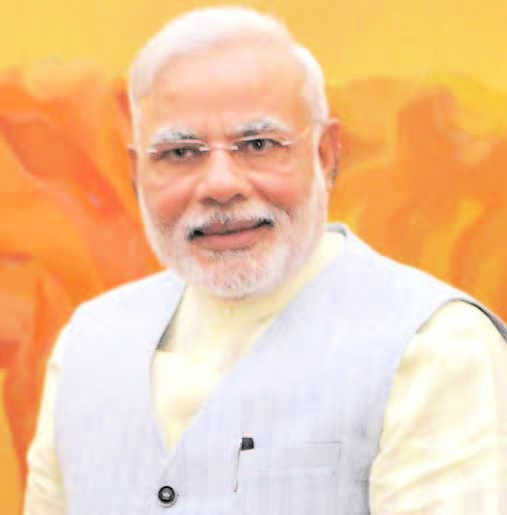
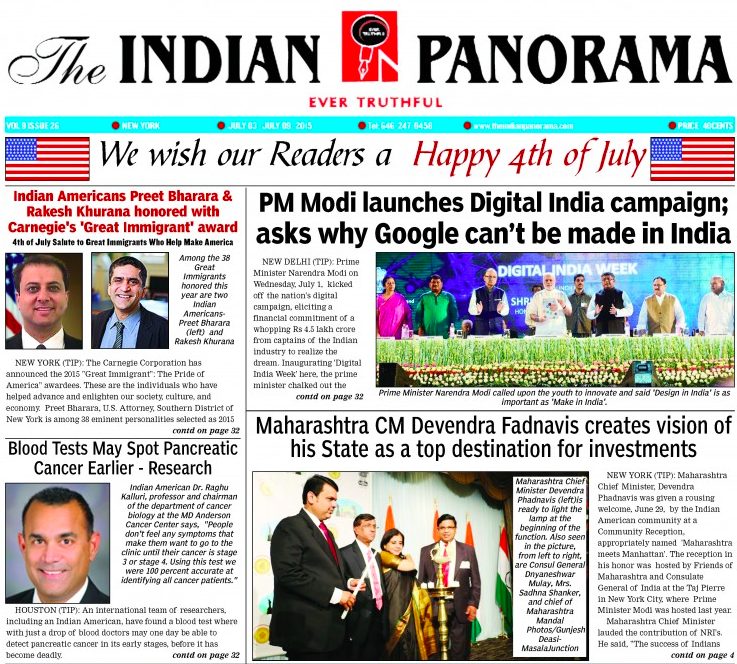
    NEW DELHI (TIP): Prime Minister Narendra Modi on Wednesday, July 1, kicked off the nation’s digital campaign, eliciting a financial commitment of a whopping Rs 4.5 lakh crore from captains of the Indian industry to realize the dream. Inaugurating ‘Digital India Week’ here, the prime minister chalked out the vision of a digital revolution in the country, saying that it is necessary to deal with problems like corruption, help provide transparent and efficient governance and bridge the rich-poor divide. “We have to move from e-governance to m-governance. m-governance does not mean Modi governance, it’s mobile governance,” he quipped as a packed audience listened in rapt attention. The audience included several ministerial colleagues, leading lights of India Inc and CEOs of global corporates.

    The prime minister pointed out that India has huge capabilities in the field of information technology (IT) and vowed to encourage manufacturing of electronic goods within the country, which account for the second largest item of imports next only to oil. Pointing out that times have changed and that India would be left behind unless it carries out revolution in the IT field, the PM exhorted India Inc to boost production of electronic devices and goods in the country, as part of the Make in India initiative, to reduce dependence on imports.

    He called upon the youth to innovate and said ‘Design in India’ is as important as ‘Make in India’. Promising government support to startups, Modi said India has the potential to become the second country after the US in this area. “India may have missed the industrial revolution, but will not miss the IT revolution,” he said.

    Highlighting the advantages of IT, Modi said at the same time, “clouds of a bloodless war are hovering over the world” in a reference to the global fears over cyber security. “The world is terrified by this… India has a big role to play in this. Can India play this big role? India has talent. Can India provide a shield to the world by providing innovative and credible solutions? Why should we not have such confidence? We should accept this challenge to ensure that entire humanity lives in peace,” the PM asserted. He illustrated the dangers posed to cyber security by pointing out that “somebody, with an education of up to the 10th or 12th class, sitting thousands of miles away, can clean up your bank account with a click of the mouse. This situation needs to be addressed”.

    Noting that India had lagged behind when the world went through the industrial revolution, Modi said he dreams of a Digital India where government services are easily available to citizens on mobile devices. “I dream of a digital India where the government proactively engages with people through social media… I dream of Digital India where cyber security becomes integral part of national security,” he said, reminding the audience of the historical speech of Martin Luther King.

    The digital week will involve citizen awareness programs, but the main strategy is to step up domestic investments in manufacturing so that net imports of technology and electronic goods come down to nil by 2020, while creating over 100 million jobs.

    Modi is active on social media, particularly Twitter, where he has 13 million followers and is widely seen as a tech savvy leader.

    With a growing economy and falling handset prices, India is one of the fastest growing smartphone markets in the world. But there is a huge challenge ahead. India’s average Internet speed was ranked 115th globally in the first quarter of the year, among countries studied by services provider Akamai Technologies. The country had just a little over 100 million broadband subscribers at the end of April, out of a population of close to 1.3 billion, according to telecom regulator Trai.

    The function was attended by Union ministers Arun Jaitley, Ravi Shankar Prasad, JP Nadda, Thaavar Chand Gehlot, Jual Oram and Nirmala Sitharaman. The India Inc was represented by RIL chairman Mukesh Ambani, ADAG chairman Anil Ambani, Bharti Enterprises chairman Sunil Mittal, Tata Group chairman Cyrus Mistry, Aditya Birla Group chief KM Birla and Wipro’s Azim Premji. Some global honchos were also part of the grand event.

  • Maharashtra CM Devendra Fadnavis creates vision of  his State as a top destination for investments

    Maharashtra CM Devendra Fadnavis creates vision of his State as a top destination for investments

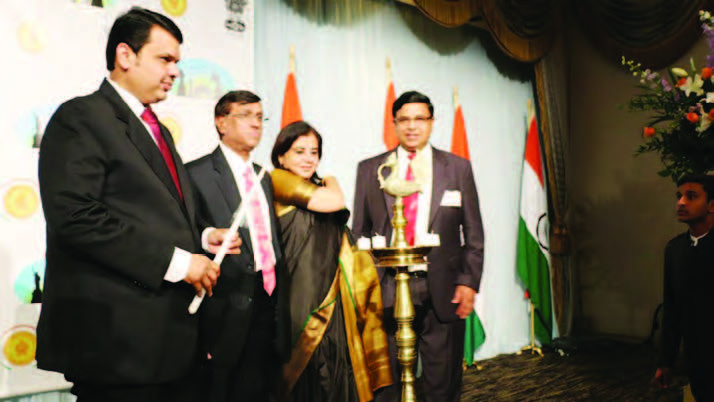
    NEW YORK (TIP): Maharashtra Chief Minister, Devendra Phadnavis was given a rousing welcome, June 29, by the Indian American community at a Community Reception, appropriately named  ‘Maharashtra meets Manhattan’. The reception in his honor was  hosted by Friends of Maharashtra and Consulate General of India at the Taj Pierre in New York City, where  Prime Minister Modi was hosted last year.

    Maharashtra Chief Minister lauded the contribution of NRI’s. He said, “The success of Indians here gives me immense pride. But now it’s time to give back.”

    Phadnavis spoke of the demographic advantage of India where 50% population is below the age of 25. He said  India was in a position to provide human resource to the entire world and the time to fulfill the dream of becoming the topmost nation of the world had arrived.

    Pitching for ‘Make in Maharashtra’, he mentioned that his government has reduced the number of permissions from 148 to 20 to make Maharashtra investor friendly. He also spoke about different upcoming projects undertaken by him like coastal road, Mumbai-New Mumbai connecting  road, and second international airport near Navi Mumbai. He said the projects of roads and bridges the government was contemplating would decongest entire Western Mumbai. He also spoke of the project to have 30 smart cities, each with a different theme and another project, an automobile hub in Aurangabad.

    “Maharashtra is full of possibilities. There are huge opportunities”, he said. He invited the gathered Indian Americans to invest in Maharashtra and assured them of his personal attention to their needs . He said he works 24/7 and is available 365 days of the year.

    Others who spoke included Consul General Dnyaneshwar Mulay who welcomed the Chief Minister and the Industries Minister Subhash Desai who outlined the opportunities for investors in the industries sector in his State.

    Earlier, in the day, a group of U.S. industry executives from the U.S.-India Business Council (USIBC) met with him for a discussion about investment opportunities in the state.

    The Chief Minister engaged with senior business executives on important topics that have dominated the bilateral commercial relationship in recent months and addressed areas such as Maharashtra’s comparative edge as an investment destination, regulatory reform measures that have been undertaken by the government to promote ease of doing business in the state, and cultural dialogues that can enhance the bilateral relations between India and the United States.

    Emphasizing the investment opportunities that are available in Maharashtra, Chief Minister Fadnavis said, “The Government has taken a variety of measures to promote ease of doing business in the state and we want to be viewed as a top destination for both domestic as well as international investments. The state eagerly awaits the formation of joint ventures in critical projects such as the Delhi – Mumbai Industrial corridor, Smart Cities and in sectors such as manufacturing, agriculture, aviation, engineering and IT. Our Government is committed to providing a boost to both Make in India and Make in Maharashtra campaigns, provide business to both medium and small enterprises and create much-needed jobs. We invite investors from the United States to be a part of Maharashtra’s growth story.”

    Lauding the vision of Chief Minister Fadnavis, Mukesh Aghi, President of USIBC, said, “The Council’s member companies have been encouraged by the ease of doing business in Maharashtra. Many of the companies have significant investments in the state. Therefore, appropriate and timely policy measures are critical. USIBC and member companies look forward to participating in the state’s investment opportunities that will not only promote entrepreneurship, but also inclusive growth, positioning it as a model state both in India and globally. I have no hesitation in saying that the state has the potential to emerge as a high ranking state on the ease of doing business index.”

    Ashok Vasudevan, Chairman and CEO of Preferred Brands International, manufacturer and marketer of the natural foods brand, Tasty Bite, said, “Tasty Bite has been operating in Maharashtra since the early 90’s and has become one of India’s largest exporter of prepared foods. The state is remarkably resilient due to its diversified base of industry that includes energy, agriculture, food processing, entertainment, engineering, chemicals, pharmaceuticals and financial services. The infrastructure, a mature workforce, a series of business friendly administrations over the last few decades makes it an attractive FDI destination.”

    The event was also attended by companies and senior leaders from every major sector of business- Monsanto, Taj Hotels, HSBC, Caterpillar, Cargill, Johnson and Johnson, KPMG, Baker & McKenzie, Citi, New Silk Route and Pfizer.

  • MEA reinstates Devyani Khobragade, but Bharara continues to haunt her

    MEA reinstates Devyani Khobragade, but Bharara continues to haunt her

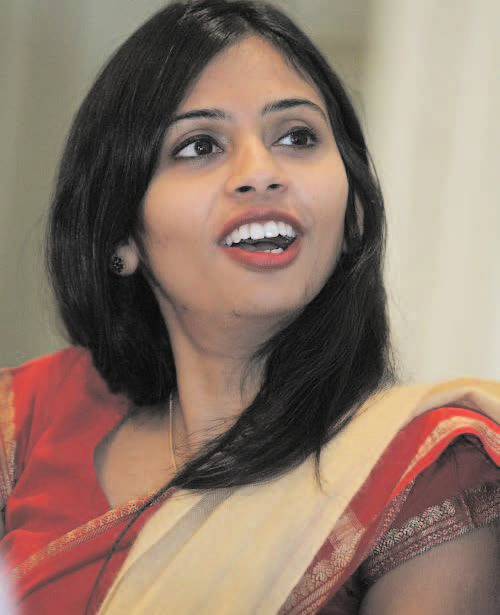
    NEW DELHI (TIP): The recalling of India’s high commissioner to New Zealand, after his wife allegedly assaulted a domestic help, has again brought under focus Devyani Khobragade who continues to suffer in the absence of a closure to her case which threatened to derail Indo-US ties not so long back.

    The ministry of external affairs (MEA) has sought to make better her situation by reinstating her and making her director of the important States division but with a US arrest warrant still pending against her, the 1999 IFS officer has not been able to travel abroad.

    Khobragade had been stripped of her responsibilities with the ministry last year in December and put on “compulsory wait” after she gave interviews to the media in which she said the vigilance inquiry against her was unfair. The inquiry sought to know how her 2 daughters were in possession of both Indian and US passports.

    The decision to reinstate Khobragade was taken by foreign secretary S Jaishankar who felt Khobragade was being unnecessarily victimised. That has not fully ended her ordeal though as she is still unable to travel and the passports of her kids remain confiscated.

    Khobragade met senior officials in the PMO last week to discuss her case. Her children’s passports have not been restored yet despite the Delhi high court staying the revocation of the travel documents. The kids are spending their summer vacation with their father in the US but will require Indian visas to return.

    The government, however, has decided not to contest the case legally in the US and instead focus on a political settlement. Khobragade has not travelled abroad since she returned to India after her arrest and humiliating strip-search for underpaying her nanny. The ministry is unable to post her to any country with which the US has an extradition treaty.

    “The very fact that she is now posted in an important division shows that the ministry is mindful of her interests,” said a senior official who did not wish to be quoted. The official added that MEA’s decision to reinstate Khobragade came despite her appeal in court challenging the revocation of her children’s passports by the ministry.

    Indian authorities have discussed with the US state department the possibility of resolving the issue politically, sources said.

    US state department though has expressed helplessness in the absence of an approval for such a resolution from the department of justice. Indian officials don’t want to engage the department of justice not only because they believe it has no jurisdiction over the issue but also because of the presence there of attorney Preet Bharara who continues to be hostile to Khobragade.

    Government in fact may wait for Bharara to demit office as US attorney for Southern District of New York before moving forward. Bharara had chosen to re-indict Khobragade last year even after her return to India, leading India to say that this re-indictment was going to hurt attempts to mend ties between the 2 countries.

  • TERROR TALKS TOP PM’S CENTRAL ASIA VISIT

    TERROR TALKS TOP PM’S CENTRAL ASIA VISIT

    NEW DELHI (TIP): As Prime Minister Narendra Modi heads for Central Asia, the first PM to visit all the five ‘Stans’ in one shot, India is hoping political outreach, counter-terrorism cooperation, energy and soft power will overcome the challenge of physical connectivity with the region.

    PM is expected to visit Uzbekistan and Kazakhstan on his way out to Russia, and Turkmenistan, Kyrgyzstan and Tajikistan on his return journey. The growing threat of extremist terrorism, of the kind unleashed by Islamic State is perceived as a clear threat by these states — they have watched with concern, thousands of their young citizens travelling to Iraq and Syria to join IS. The prospect of IS taking root in these countries is real. India hopes to engage these countries in a deeper conversation on counter-terrorism. “They are worried about radicalization, and we hope to be able to cooperate and look for solutions together,” said government sources.

    Energy has always been an attractive draw between India and Central Asia but there is the challenge of getting that energy to India. That will be the focus of conversations in both Kazakhstan and Turkmenistan. Many pipelines, including TAPI, have been the subject of intensive discussions, but there has been little progress so far. India already has a uranium supply agreement with Kazakhstan.

    The Afghanistan situation post-2014 will be a common thread in the discussions. There is a resurrection of Taliban forces, even in their regions which means all countries involved have an interest in Afghanistan’s immediate future. The bigger aim behind Modi’s visit is to reclaim politically a part of India’s near neighbourhood. India has always believed this to be its strategic backyard, but in recent years, Central Asia has built very close trade and security links with China. India cannot possibly replace China, or compete with such a large presence, but New Delhi hopes to be a viable alternative in the region.

  • Hema Malini injured in road accident, driver booked for rash driving

    Hema Malini injured in road accident, driver booked for rash driving

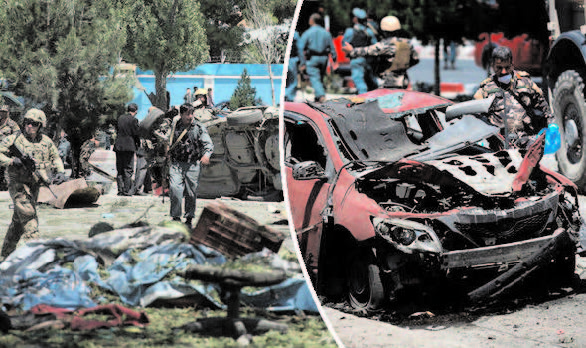
    JAIPUR (TIP): Actress and BJP MP Hema Malini’s driver was on July 2 detained and an FIR filed against him for rash driving and causing death by negligence in connection with last night’s accident in which a four-year-old girl was killed and five others including the actress were injured.

    Ramesh Chand, who was driving Hema’s Mercedes that collided with another car, has been detained for interrogation at Kotwali Thana, SHO Dilip Singh said.

    Hanuman Mahajan, who lost his daughter in the accident in Dausa, 60 km from here, and was among the four injured, filed an FIR with the Kotwali police station there against Ramesh.

    FIR was lodged against the driver, who hails from Vrindavan, under various sections of IPC including 279 (rash driving) and 304 (A) (causing death by negligence) in the wee hours, SHO said.

    He said both the vehicles were seized and a probe was on. “It is to be ascertained how the accident occurred and who was at fault,” he said, adding there were three persons in Mercedes– BJP MP from Mathura Hema Malini, her PA and driver, while five persons including two children, two women and the complainant Hanuman Mahajan were in the other car. Sonam, four-year-old daughter of Hanuman, succumbed to injuries on way to hospital in Dausa, while four others Hanuman, his wife Shikha (35), Somil (5), and Seema (40), were shifted to Jaipur’s SMS hospital, the SHO said.

    The 66-year-old actress was undergoing treatment at Fortis hospital here.

    “She suffered a cut near an eyebrow, some problem in nasal bone, injury on forehead and had body ache,” Rajasthan Minister Rajpal Singh Shekhawat, who visited her late last night, told reporters.

    Shekhawat said she went through CT scan and other tests as a matter of precaution. Plastic surgeons were examining her face and wounds.

    A number of other specialists including Anoop Jhurani, bone replacement expert, also attended to the actress, a senior doctor said. Hema was proceeding from Mathura via Bharatpur to Jaipur when the mishap occurred on Agra-Jaipur National Highway- 11 near Dausa in Rajasthan around 9 PM yesterday.

  • Raje, Sushma, Smriti and LaMo: Cong has ammo against Modi govt

    NEW DELHI (TIP): On July 1, every TV channel in India had a similar story to tell, but with different characters.

    One of them was talking about Lalit Modi’s job offer to Swaraj Kaushal; another about Pankaja Munde and her ‘chikki scam; on a Hindi channel there was a lot of tongue-wagging on Varun Gandhi’s alleged meeting with the ex-IPL chief and Smriti Irani’s degree (or the lack of it); and on NewsX, a young reporter was chasing revenue department officials for records related to Vasundhara Raje’s Dholpur Palace.

    The Congress must be excited, eyeing the prey, the media has lined up for it before the Monsoon Session of the Parliament begins on 5 August. But the Congress has a problem: Even after three weeks of relentless attack on BJP leaders and Rajasthan CM Vasundhara Raje and her son, the Congress still doesn’t have a single prey.

    The signs are ominous. The Congress has indicated that it will stall the Parliament. The BJP has made it clear that Lalit Modi and his cronies in the Narendra Modi government are irrelevant. The Congress is unlikely to back off easily after smelling blood. The BJP is least likely to run away or capitulate resulting in total mayhem in the Monsoon Session of Parliament.

    The Congress is justified in seeking action against Sushma Swaraj and Vasundhara Raje. The foreign minister deciding the case of her family’s client, bypassing the Indian diplomatic channels is a clear case of impropriety, if not illegality. Raje’s case is even more serious. Her alleged statement in support of Lalit Modi’s immigration application, the attempt to keep it a secret from Indian authorities, leave her with no valid defence. Her son Dushyant’s questionable financial deals with Modi are almost similar to the transaction between Robert Vadra and DLF. In addition, the government of India has already told a court that it is probing the deal.

    The Congress has a valid case. It knows that a section of the media is on its side in the fight against Raje and Swaraj. In the public, Modi’s image of a leader who would not tolerate corruption, nepotism and impropriety has also taken a beating. It would insist on strict action against the two BJP leaders. But the BJP can’t afford to act against both Raje and Sushma, albeit for different reasons.

    Acting against Raje is fraught with risks. She has a brute majority and may even split the party if forced to quit — an idea that has been attributed to her in the past too —and turn into Rajasthan’s BS Yedyurappa. With the Bihar election on the horizon, the BJP can’t afford rebellion and dissent.

    Acting only against Raje would not be easy. Even if PM Modi is keen to sack her, he will have to find a way to de-link Raje with Swaraj, whose offence and seniority perhaps warrant opprobrium but not a resignation.

    Also, Modi is known to not act in haste, sometimes not at all. He has his own definition of Raj Dharma and doesn’t wilt under pressure from the Opposition or the media. For him, politics always weighs much more than Opposition’s demands for morality and propriety. Silence has always been Modi’s favourite way of dealing with uncomfortable questions. Knowing Modi, he will continue to ignore the Opposition and its noise.

  • NGT BANS USE OF PLASTIC IN HARIDWAR; ANNOUNCES  RS 5,000 FINE

    NGT BANS USE OF PLASTIC IN HARIDWAR; ANNOUNCES RS 5,000 FINE

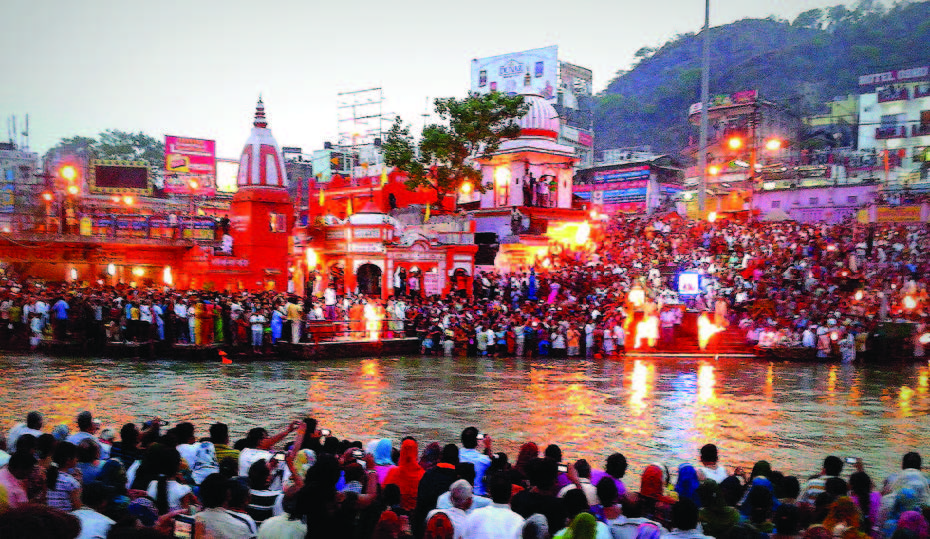
    NEW DELHI (TIP): The National Green Tribunal on July 2 imposed a complete ban on plastic bags in the pilgrimage towns of Haridwar and Rishikesh, slamming the authorities for lackadaisical attitude in keeping the Ganga clean, warning of action against those violating the order.

    The NGT expressed displeasure at the “pathetic” state of affairs prevailing on the bank of river Ganga and castigated the authorities for lackadaisical approach on the issue, as it pronounced the order to make the Ganga pollution- free to allow devotees to take a dip and collect clean water and imposed a fine of Rs 5,000 per violation.

    “There shall be complete prohibition on plastic in the entire Haridwar and Rishikesh, particularly on the banks and flood plains of river Ganga. Plastic will not be used for any purpose whatsoever i.e for serving food, commodities, packing items etc.

    “Any person found using, bringing or in any way dealing with plastic material in that area would be liable to pay Rs 5,000 per incident as compensation for degradation of environment,” the bench headed by NGT Chairperson Justice Swatanter Kumar said while passing a slew of directions to make the Ganga free from pollution.

    The Tribunal ordered that Haridwar Nagar Nigam, police and state pollution control board officials posted in that area would take rounds of flood plains and ghats of Ganga to ensure that no plastic is used in any manner.

    It also held that no commodity of any kind is sold by the shopkeepers in plastic bags and the Nigam would ensure that any kind of municipal solid waste or animal waste is not permitted to be thrown in the ghats under any circumstances.

    “The Nigam, pollution control board and police shall within one week from today place appropriate sized dustbins near the shops and it would be mandatory for prople to throw waste in dustbins only. The waste shall be collected on daily basis and taken at appropriate site and dumped according to MSW Rules, 2000,” the bench said while directing “round the clock” cleaning activities on the ghats.

    “These state agencies would be further responsible for making an appropriate site and prepare it scientifically for storage of waste. It shall be treated, waste deposit shall be covered by soil and disinfectant sprayed regularly,” the bench said.

  • Latecomer VIPs delay flight

    NEW DELHI (TIP): Minister of State for Home Kiren Rijiju and Deputy Chief Minister of Jammu & Kashmir Nirmal Singh were caught in a controversy on July 2 following reports that an Air India flight was delayed due to their late arrival.

    Some fliers, including a senior official, were offloaded to accommodate them.

    The Air Traffic Controller of Leh confirmed that on June 24, flight AI 446 to Delhi was delayed to accommodate the Union minister, says a report by the Indian Air Force that runs the 21 Wing ATC at Leh.

    The Prime Minister’s Office has asked the Ministry of Civil Aviation for a report on delay in Air India flights on account of VIP travels in the recent past. The Civil Aviation Ministry, in turn, has sought a report from Air India on the two incidents at Leh and Mumbai. The Mumbai incident involves a US-bound delegation of the Chief Minister Devendra Fadnavis earlier this week.

    The Leh-Delhi flight was to depart at 11:20 am, but the schedule was later revised to 10:20 am as it reached early. The flight was held for almost 50 minutes.

    It finally took off at 11:12 am after at least three passengers, including an Indian Foreign Service officer, were not permitted to fly. Because of the rarefied atmosphere, flights from Leh maintain a permissible weight limit as overloaded flights cannot take off due to low air pressure.

  • Time not right to lift AFSPA in J&K, says Rajnath Singh

    SRINAGAR (TIP): Union home minister Rajnath Singh on July 2 ruled out revocation of the draconian Armed Forces Special Powers Act (AFSPA) from Jammu & Kashmir, saying the situation was not conductive for it.

    “The situation should be such and I pray to the Almighty that AFSPA should not be needed anywhere in the country. We will need cooperation of one and all to achieve this goal,” Singh told reporters after praying at the Amarnath cave shrine in South Kashmir Himalayas.

    Singh ruled out talks with the Kashmiri separatists as well. “We are ready to listen (and) talk to anyone but anti-national activities should be opposed and boycotted.”

    The home minister said he had no reason to believe the PDP-BJP state government would not last its full term due to differences.

    He said the Centre was sensitive to Jammu & Kashmir’s problems and assured maximum possible assistance to the victims of last year’s floods that killed 300 people and affected over a million.

    “I want to assure the state government of maximum possible assistance for relief and rehabilitation,” Singh said.

  • DELHI GOVT GETS FLAK FOR RS 526 CRORE AD BUDGET

    NEW DELHI (TIP): The Delhi government has come under fire for setting aside Rs 526.74 crore for information and publicity in the budget. With an outlay of Rs 41,129 crore for the current financial year, the opposition calls the advertising budget
    “ridiculous”, especially since the government has trimmed its outlay for infrastructure work like road repair.

    Deputy CM Manish Sisodia justified the allocation, saying that with media largely showing negative stories about the government, it needed a platform “where it could show the real picture”.

    Leader of opposition Vijender Gupta said the allocation was 2,200% more than the previous year’s allocation. “The AAP government wants to present its leader Arvind Kejriwal as a messiah.

    While Rs 526.74 crore has been earmarked for information and publicity, Rs 338 crore has been allocated for SC/ST/EWS welfare, Rs 350 crore for nutrition, Rs 208 crore for labour and employment and Rs 400 crore for development of slums,” said Gupta.

    Sources said the allocation for publicity in 2014-15 was Rs 23.7 crore, Rs 25 crore in 2013-14, Rs 24.9 crore in 2012-13 and Rs 27.6 crore in 2011-12.

    DPCC chief Ajay Maken said while there was no money for infrastructure development, the government had earmarked such a huge amount for glorification of the CM.

    The government has already received severe criticism for a television ad that showed a housewife struggling with day-to-day work while her husband sat around watching TV. Sources said the campaign cost the state exchequer about Rs 1.5 crore.

    A government spokesperson denied the figures put out by BJP and Congress for previous years, saying no department had ever given a proper budget for advertising undertaken by them. “This is the first time ever that Delhi government has opened itself to scrutiny and put out an exact figure earmarked for advertising. This is a consolidated figure for all departments for advertisements, public outreach programmes and information outflow” he said.

  • 5 aftershocks recorded in Nepal

    KATHMAMNDU (TIP): Five mild aftershocks have been recorded in Nepal in the last two days as the country was still reeling under the impact of the deadly temblor that struck two months ago and claimed nearly 9,000 lives.

    An aftershock measuring magnitude 4 was recorded at 3.33 am today with epicenter located at Sindhupalchowk district, near the Tibetan border.

    Another aftershock measuring magnitude 4 was recorded at 9.12 am with epicenter located at Dolakha district, according to the National Seismological Centre.

    Another mild tremor was felt yesterday of 4.4 magnitude at 3.31 am with epicenter located at Kavre district, 50 km east of Kathmandu.

    In past two days a total of five aftershocks were recorded.

    Two minor aftershocks were recorded in the interval of 7 minutes on Monday night. The first one with 4.1 on the Richter scale occurred at 11:27 pm while the second one with 4 magnitude was recorded at 11:34 pm. Both the aftershocks had Sindhupalchowk epicenter.

    In total 335 numbers of aftershocks with 4 or more magnitude have been so far recorded after the devastating earthquake that rocked Nepal on April 25.

  • Al-Qaida’s Bangladesh chief arrested

    DHAKA (TIP): Al-Qaida’s Bangladesh chief and his top advisor were among 12 militants belonging to the group arrested by police which also seized a huge cache of explosives, foiling a major attack planned for the end of Ramzan, officials said on July 2.

    The 12 militants were held in a crackdown as raids were conducted in different parts of the capital, Maksudul Alam, assistant director of Rapid Action Battalion (RAB) legal and media wing said.

    Among the 12 arrested are — Mufti Mainul Islam, Bangladesh’s chief coordinator of al-Qaida in the Indian Subcontinent (AQIS), and his advisor Maolana Zafor Amin, he said.

    “Huge stash of explosives, bomb-making materials, knives, training and jihadi books were seized from their possession,” Alam said.

    Islam is a former leader of the radical Harkat-ul-Jihad-al-Islami (HuJI) militant outfit which has carried out a series of attacks in Bangladesh since 2001 with the deadliest being the one on a rally of Prime Minister Sheikh Hasina in 2004.

    AQIS had been planning an attack in the Muslim-majority nation after Eid-ul Fitr, Commander Mufti Mahmud Khan, the most senior RAB spokesman, told reporters.

    “They’ve selected a madarsa in (the northern district of) Bogra for training,” he said.

    The group was financed by individuals from Saudi Arabia and United Arab Emirates, he added.

    AQIS has claimed responsibility for the murder of secular bloggers Avijit Roy and Ananta Bijoy Das, who were brutally murdered this year.

    Since then, police and the RAB have tried to track down the AQIS network and those connected with it.

    Bangladesh recently banned Ansarullah Bangla Team (ABT), suspecting its involvement in bloggers’ murders and having links to al-Qaida.

    Police’s intensified clampdown came as last month ABT sent out letters in AQIS’ name, threatening to kill 10 prominent Bangladeshis, including Prime Minister Sheikh Hasina’s adviser H T Imam, vice chancellor of premier Dhaka University Professor Arefin Siddique and popular writer and physicist Professor Zafar Iqbal.

    AQIS is an al-Qaida affiliate for militant activities in South Asia.

    In September last year, al-Qaida launched a new branch to “wage jihad” in South Asia to invigorate its waning Islamist extremist movement.

    Al-Qaida chief Ayman al-Zawahiri had said, in a video message, the new chapter would take their fight to Myanmar, Bangladesh and India.

  • New York – JUL 03 – 4th Of July INDEPENDENCE DAY Edition

    New York – JUL 03 – 4th Of July INDEPENDENCE DAY Edition

    A New Way to Read This Week’s Print Edition

    The Latest from The Indian Panorama | New York Desk

    Reimagined for the Web
    Volume 9 Issue 26
     | Desktop Edition | July 03

    VOL9ISSUE26-NY

    The Indian Panorama is a South–Asian English newspaper with print editions in New York City, the Tristate area and now also as the first English Indian Newspaper from Dallas, printed weekly every Friday.

    The newspaper is distributed free across the United States and is available at all Indian Temples, gurdwaras & Indian Stores.

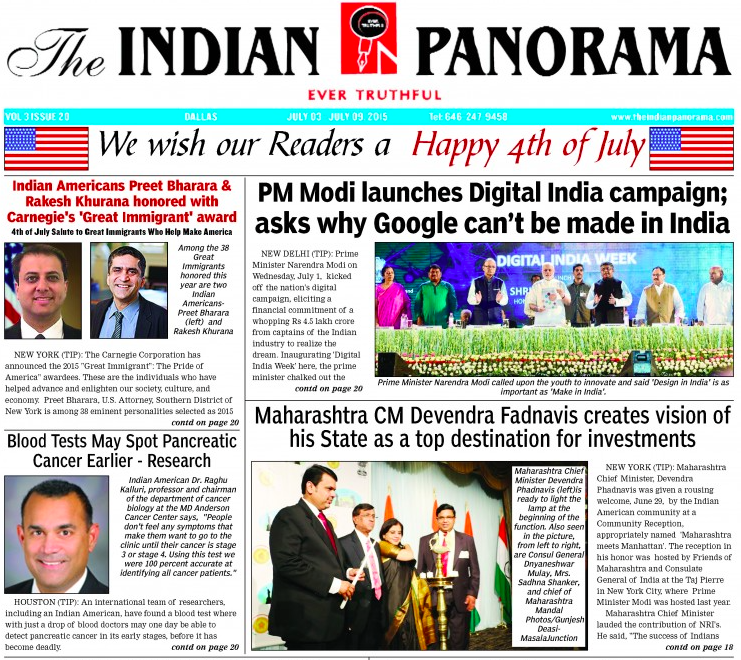
  • Dallas JUL 03 – 4th of July INDEPENDENCE DAY Edition

    Dallas JUL 03 – 4th of July INDEPENDENCE DAY Edition

    A New Way to Read This Week’s Print Edition

    The Latest from The Indian Panorama | Dallas Desk

    Reimagined for the Web
    Volume 3 Issue 20
     | Desktop Edition | July 03

    VOL3ISSUE20-TX

    The Indian Panorama is a South–Asian English newspaper with print editions in New York City, the Tristate area and now also as the first English Indian Newspaper from Dallas, printed weekly every Friday.

    The newspaper is distributed free across the United States and is available at all Indian Temples, gurdwaras & Indian Stores.

  • INDEPENDENCE DAY IN UNITED STATES

    INDEPENDENCE DAY IN UNITED STATES

    Independence Day is annually celebrated on July 4 and is often known as “the Fourth of July”. It is the anniversary of the publication of the declaration of independence from Great Britain in 1776. Patriotic displays and family events are organized throughout the United States.

    INDEPENDENCE DAYIndependence Day is a day of family celebrations with picnics and barbecues, showing a great deal of emphasis on the American tradition of political freedom.

    Activities associated with the day include watermelon or hotdog eating competitions and sporting events, such as baseball games, three-legged races, swimming activities and tug-of-war games.

    Many people display the American flag outside their homes or buildings. Many communities arrange fireworks that are often accompanied by patriotic music. The most impressive fireworks are shown on television. Some employees use one or more of their vacation days to create a long weekend so that they can escape the heat at their favorite beach or vacation spot.

    Independence Day is a patriotic holiday for celebrating the positive aspects of the United States. Many politicians appear at public events to show their support for the history, heritage and people of their country. Above all, people in the United States express and give thanks for the freedom and liberties fought by the first generation of many of today’s Americans. The Statue of Liberty is a national monument that is associated with Independence Day.

    INDEPENDENCE DAY 3Public life

    Independence Day is a federal holiday. If July 4 is a Saturday, it is observed on Friday, July 3. If July 4 is a Sunday, it is observed on Monday, July 5. Government offices and schools are closed. Some businesses may be closed as well. In some years, many employees use a proportion of their vacation days to create a long weekend. This can cause congestion in some places, particularly towards popular holiday destinations.

    There are many public events, parades, shows and fireworks displays. This may cause local disruption to traffic. Public transit systems do not usually operate on their regular timetables.

    Background

    INDEPENDENCE DAY 1During the American Revolution, the legal separation of the Thirteen Colonies from Great Britain occurred on July 2, 1776, when the Second Continental Congress voted to approve a resolution of independence that had been proposed in June by Richard Henry Lee of Virginia declaring the United States independent from Great Britain. After voting for independence, Congress turned its attention to the Declaration of Independence, a statement explaining this decision, which had been prepared by a Committee of Five, with Thomas Jefferson as its principal author. Congress debated and revised the wording of the Declaration, finally approving it on July 4. A day earlier, John Adams had written to his wife Abigail:

    The second day of July, 1776, will be the most memorable epoch in the history of America. I am apt to believe that it will be celebrated by succeeding generations as the great anniversary festival. It ought to be commemorated as the day of deliverance, by solemn acts of devotion to God Almighty. It ought to be solemnized with pomp and parade, with shows, games, sports, guns, bells, bonfires, and illuminations, from one end of this continent to the other, from this time forward forever more.

    Adams’s prediction was off by two days. From the outset, Americans celebrated independence on July 4, the date shown on the much-publicized Declaration of Independence, rather than on July 2, the date the resolution of independence was approved in a closed session of Congress.

    Historians have long disputed whether Congress actually signed the Declaration of Independence on July 4, even though Thomas Jefferson, John Adams, and Benjamin Franklin all later wrote that they had signed it on that day. Most historians have concluded that the Declaration was signed nearly a month after its adoption, on August 2, 1776, and not on July 4 as is commonly believed.

    Coincidentally, both John Adams and Thomas Jefferson, the only signers of the Declaration of Independence later to serve as Presidents of the United States, died on the same day: July 4, 1826, which was the 50th anniversary of the Declaration. Although not a signer of the Declaration of Independence, but another Founding Father who became a President, James Monroe, died on July 4, 1831, thus becoming the third President in a row who died on the holiday. Calvin Coolidge, the 30th President, was born on July 4, 1872, and, so far, is the only U.S. President to have been born on Independence Day.

  • Hilary e-mails show US struggling with Pakistan policy amid ‘Ghandi’ fiasco

    Hilary e-mails show US struggling with Pakistan policy amid ‘Ghandi’ fiasco

    WASHINGTON (TIP): The emails range from the mundane to the mysterious to the methodical.

    A large tranche of Hillary Clinton’s emails released by the State Department on Tuesday in response to a Freedom Of Information Act lawsuit shows the inner workings of the U.S government — from extended debates over policy to personal touches. There are several references to India and the subcontinent in the 3000 pages released so far – which is only a small part of the 55,000 pages that has to be released by the end of the year – and they don’t always show the state department in a flattering light.

    For instance, soon after the UPA’s government returning to power in the 2009 Lok Sabha election, Clinton aide Huma Abedin, also known as her constant shadow and ”body woman,” alerts the then Secretary of State about the appointment of
    S.M.Krishna as India’s External Affairs Minister. ”What do we know about him?” Clinton asks in a reply email. ”Long time politico, was close to rajiv ghandi. III send his bio to oscar to print for you,” Abedin responds.

    Abedin, who was born in Michigan to mixed Indian-Pakistani parents (father from India; mother from Pakistan), is unable to nail the Gandhi spelling notwithstanding her sub-continental heritage and a degree from George Washington University. She later flags for Hillary Clinton’s attention possible calls to India following the election results.

    ”On election calls, SCA is recommending calls to Congress Party head Sonia Ghandi, outgoing FM Mukherjee, and incoming FM Krishna. We also have a call sheet for Prime Minister Singh in case you want to call. Please let me know if u want to do these calls tomorrow,” she writes. SCA stands for South Central Asia, the State Department bureau that deals with India.

    Pakistan too figures in some of the emails, coming across as a major worry for U.S planners on account of its chronic instability due to its support for terror groups.

    In fact, in one exchange, a long term strategy group that conducts simulations for U.S agencies on geo-political scenarios writes to Clinton outlining a possibility Pakistan breaking up. It proposed exploring ”The impact of a potential end of effective central government in Pakistan that leaves a Punjab state co-existing with a Baluch/Sindh state and an Afghanistan that expands to control the border regions now part of Pakistan.”

    In a more elaborate note, former National Security Adviser Sandy Berger also writes to Clinton suggesting that the U.S target Pakistani military leaders who give support to Al Qaeda and its allies. No one even questions the premise that Pakistan is supporting terror groups.

    ”Assuming we have adequate intelligence, we can go after bank accounts, travel and other reachable assets of individual Pakistani officers, raising the stakes for those supporting the militants without creating an inordinate backlash,” Berger writes in an October 4, 2009 e-mail to Hillary Clinton.

    ”Thanks, Sandy. This is very helpful,” Clinton responds, without saying whether she intends to accept the suggestion.

    On a lighter note, the emails also show Hillary Clinton is clueless about operating a fax machine and has to be walked though how to receive a fax by her aide Huma Abedin.

  • Greek Debt Mess: Uncertainty over Europe

    On Monday, June 29, global stock markets were reeling from the news out of Greece. Dow Jones was down by 350 points. With many global crises like Ukraine, ISIS, Syria, Iran nuclear deal already threatening to tip the world into chaos, the one crisis that could undermine not only the Eurozone itself but international financial structure is Greece and its monstrous debt crisis.

    While the Wall Street collapse of 2008 is supposed to have impacted many economies driving them into recession, the main reason for the Greece debt is the structural imbalance in the Greek economy in the form of high debt to GDP ratio.

    The implosion of the Greek economy in 2009 led to the fear that the Greek government would not be able to service its high debt obligations thus leading to sovereign debt crisis. As a result, Greece was unable to borrow on the international markets and had to turn to International Monetary Fund, European Central Bank and the European Commission to seek the bailout to avoid the impending financial crisis.

    But the bailouts did not come cheaply. Too many strings were attached to it. The Greek government was required to carry out numerous painful reforms: pensions were supposed to be reduced, tax receipts were to be streamlined by curbing tax evasions, steep tax hikes were required to be implemented to generate more revenue, and deep budget cuts were to be put in place.

    The result of all these attached conditions was the absolute impoverishment of the population which was already reeling under the hardships due to ongoing recession.

    This caused resentment among the population and resulted in the resounding victory of anti-austerity Syriza party in January which campaigned on the promise of ending painful bailout agreement.

    The two sides – EU and Syriza – are now at loggerheads. Syriza wants significant reduction in debt and more leeway in how it raises its tax revenues while protecting the pensions and other public obligations while EU is demanding significant reduction in pensions and steep VAT tax hike to increase the revenue. This has led to an impasse.

    The deadline for the loan repayment program that was extended in February has expired on June 30th, and given the fact that Greece is already on the verge of bankruptcy, missing the deadline means Greece would be held in default of IMF loan – a first developed nation to do so. How the dominoes would fall as a result of its default, nobody knows.

    And, this is driving the markets and the central banks all over the world nervous: How to prevent the contagion from spreading if Greek economy and banking system collapses?

    On top of it, Syriza has decided to seek referendum of the people – which will be held on July 5th – whether to accept the bailout agreement or leave euro. As of now, the mood of both Syriza and EU towards each other has become more hardened.

    Even though Greek Prime Minister Tsipras has now sent another letter to EU accepting lenders’ conditions but with modifications, given the fact that the deadline for agreeing to the new debt program has already expired, the letter seems to be too little, too late.

    Since there is no debt deal to talk about, July 5th’s referendum has become moot. It would be seen as nothing but a referendum on whether to stay in EU or not. EU has taken note of the letter submitted by the Greek government but has decided to stick to its guns and is waiting for the outcome of July 5th referendum before commenting on the contents of the letter.

    As of now, the “No” vote to the “troika” proposed bailout deal is in majority. And, if “No” vote wins in the referendum, then it would be anybody’s guess how the resulting scenario would unfold for Eurozone and its banking system.

    Quite a mess and a very big dark cloud over Eurozone and its economy.

  • Happy 4th of July – Editorial Comment

    Happy 4th of July – Editorial Comment

    Prof Indrajit S Saluja
    Prof Indrajit S Saluja

    As the nation prepares to celebrate 4th of July I am reminded of the long and grim struggle that American people had to wage to secure their independence. The indomitable spirit of those who led the struggle fills every generation with awe and admiration for their spectacular achievement.

    1776 to 2015 has been a long period. America has moved on from strength to strength. From a bipolar world a couple of years ago the world seems to have become unipolar, with America dictating the rest of the world.

    The world has witnessed time and again the heroism of American people. Drawn into conflicts, and there have been many, America has always given enough evidence of its resolve to win and stay on top, minor debacles notwithstanding. A proud nation, America has taken adversities in its stride.

    However, it is not that America does not make mistakes. But there have always been amends post mistakes too. But the last couple of years found America piling up these mistakes and inviting trouble. It is necessary that American leadership makes amends for the terrible chain of mistakes having been made during the last few years.

    One, America has realized the futility of engaging in avoidable conflicts abroad. Barack Obama deserves all appreciation for the gradual disengagement in these conflicts which has caused loss of valuable American lives and drained the resources of the country. These conflicts have been a serious drain on the shrunk resources of a nation that has huge debt burden. These conflicts have taken a heavy toll of lives of sons and daughters of America. These conflicts have created enemies of America.

    America must say no to fighting wars of and for others.

    The economic scenario as of today offers no satisfaction. The unemployment rate, though steadily improving in the last couple of years since 2008, is quite disturbing. The real estate is in a shambles, with foreclosures mounting and families losing their homes which they had made with such great love. Businesses are closing and jobs are vanishing.

    Then there are social welfare aspects. Education and healthcare. If America cannot come up with better educational facilities for its children and healthcare for all its citizenry, all claims of America being number one nation of the world amount to empty bragging.

    American lawmakers on both sides of the aisle, instead of dying to push their ideological agenda, need to introspect and look only at what America and Americans need. If they cannot do enough for America when it is passing through hard times they are doing a great disservice to our forefathers who dreamed of an America where each could realize his dream.

    On this 4th of July, let each American pledge to emulate the spirit of our founding fathers, resolving to overcome all obstacles to the happiness of the common American man, woman and child. Let each American realize that it is in him to change the course of history and that he will change it. Yes, he can. Happy Independence Day!