Month: July 2015

  • BOEING INKS PACT TO ‘MAKE IN INDIA’ WITH TATAS

    BOEING INKS PACT TO ‘MAKE IN INDIA’ WITH TATAS

    HYDERABAD (TIP): Tata Advanced Systems Limited (TASL) and US-based aircraft maker Boeing on Wednesday signed a strategic framework agreement here to collaborate in the sphere of aerospace and defence manufacturing as well as explore the potential of developing integrated systems, including unmanned aerial vehicles. The pact was signed by Shelley Lavender, president of Boeing Military Aircraft, and Sukaran Singh, MD & CEO of Hyderabad-based TASL.

    Though Boeing has been procuring components from 18 suppliers in India, the latest deal will actually see it ‘Make in India’ along with the Tatas. For the first time, Boeing will develop high-end aerospace and defence sector technology in India, which can cater to the global markets. TASL will get “significant work packages” in the aerospace-defence manufacturing space, said a Boeing spokesperson.

    The Tatas have a big manufacturing footprint at the Adibatla Aerospace and Precision Engineering Park on the outskirts of Hyderabad, where they have already invested over Rs 1,000 crore, and are expected to further beef up their presence here. TASL, whose focus areas include aerospace, missiles, homeland security, optronics, UAVs and radars, among other defence-related products, already has a couple of JVs — Tata Sikorsky Aerospace and Tata Lockheed Martin Aerostructures — that manufacture aerospace and defence products at the Adibatla park.

    “This framework agreement is the result of TASL’s world-class competencies as well as the vendor eco-system it has helped establish in India. It gives us an opportunity to explore the massive potential in India for aerospace manufacturing and make the investments required to grow the industry,” TASL chairman S Ramadorai.

  • HONDA CARS HOPES TO JAZZ UP ITS SALES

    HONDA CARS HOPES TO JAZZ UP ITS SALES

    HYDERABAD (TIP): Japanese auto major Honda Cars India Limited (HCIL) expects its newly launched third generation Honda Jazz to rev up the company’s sales and help it register a double digit growth in FY16 surpassing the industry growth figures, said HCIL senior vice-president (marketing and sales) Jnaneswar Sen here on Wednesday. The company sold 1.89 lakh units last fiscal.

    “During the first quarter of this fiscal, we have registered a growth of 9% and are hopeful that the launch of the new Jazz will help us attain a double digit growth in 2015-16,” Sen said on the sidelines of the launch of third generation Honda Jazz in Andhra Pradesh and Telangana.

    Sen pointed out that the auto industry is expected to grow at 8-9% this fiscal, which is “neither good nor bad” and HCIL expects to outstrip this growth.

    On the expansion of the company’s dealership network he said, HCIL had 232 dealerships in FY15 and this fiscal, it expects to add another 68.

    Sen pointed out that the all new Jazz has been developed at Honda’s R&D Centre located in Tochigi, Japan. The car has been designed on the basis of results obtained from extensive market surveys across the world, including India, for people’s driving needs and lifestyles. The petrol variants of the compact hatchback are priced between Rs 5,40,900 – Rs 7,98,500 (ex-showroom Hyderabad), while its diesel variants are priced between Rs 6,62,900 – Rs 8,75,500 (ex-showroom Hyderabad), the company said.

    The new Jazz will be manufactured at the company’s Tapukara plant in Rajasthan, which is being expanded at an overall cost of Rs 380 crore to increase the total annual capacity to 3 lakh per annum from the current 2.4 lakh per annum. The company has also acquired land in Gujarat to cater to its long-term manufacturing plans, he added.

  • Greek parliament approves tough creditor reforms bill

    Greek parliament approves tough creditor reforms bill

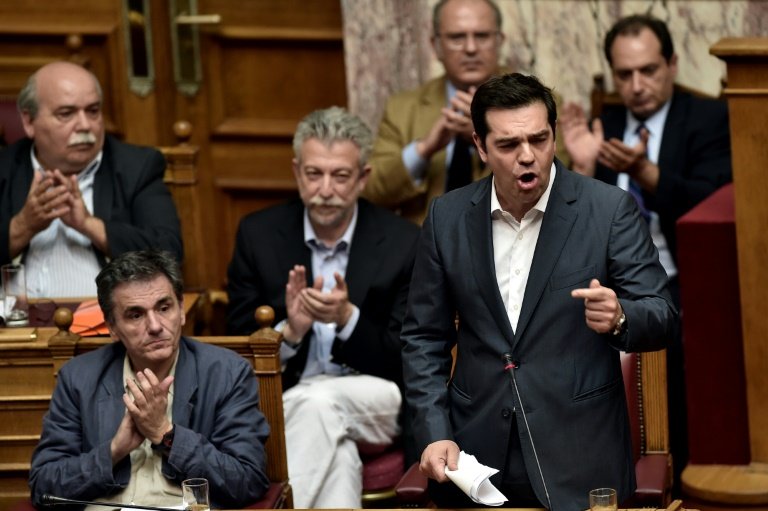
    ATHENS (TIP): Greece’s parliament early on Thursday strongly approved a bill of tough reforms demanded by the country’s creditors in return for a new bailout, according to official results.

    A final count showed 229 lawmakers voted in favour of the measures, with 64 voting against and six abstaining.

    The ruling radical Syriza party passed the bill thanks to support from pro-European opposition parties as a large group of government lawmakers – including former finance minister Yanis Varoufakis, the head of parliament Zoe Constantopoulou and energy minister Panagiotis Lafazanis – voted against the measures. Prime Minister Alexis Tsipras, who has nearly split his party in the process, insisted he did not agree with the bulk of the draconian deal, that demands tax hikes, a pensions overhaul and privatization pledges.

    But he said the country had no other choice if it wanted to stay in the euro. “We will not back down from our pledge to fight to the end for the right of the working people,” he told the chamber ahead of the vote.

    There is no other option but for all of us to share the weight of this responsibility,” Tsipras said.

  • InMobi takes on Google, Facebook in ads

    InMobi takes on Google, Facebook in ads

    SAN FRANCISCO (TIP): In 1999, Infosys brought global attention to Indian IT when it listed on the Nasdaq. It was then software services. Sixteen years later, an Indian software product company, InMobi, has created a similar moment. The Bengaluru-based advertising technology company literally took its battle to its biggest competitors, Facebook and Google. In a prime San Francisco venue overlooking the magnificent Golden Gate bridge and with over 500 people in attendance, including high-profile Silicon Valley investors, entrepreneurs and academicians, InMobi launched a major new product that carries the potential to disrupt mobile advertising as we know it today.

    InMobi co-founder Naveen Tewari described the new platform, called Miip, as revolutionary. Only time will tell how accurate the description is. But the basic premise of the platform lies in one that is increasingly acknowledged as true: Consumers dislike ads, mainly because ads are pushed on them, with no concern about relevance. It becomes worse in mobile phones -the device that’s fast becoming the primary content viewing format -because the ads become particularly intrusive on the small screen.

  • Snapdeal launches new mobile marketplace Shopo

    Snapdeal launches new mobile marketplace Shopo

    NEW DELHI (TIP): E-commerce major Snapdeal today re-launched Shopo, a mobile-based open marketplace which will allow small businesses to list their products without paying any commission. Snapdeal had acquired Shopo in mid-2013 for an undisclosed amount.

    Businesses can now list their products on Shopo without submitting any document and long verification procedures and reach out to customers without paying Snapdeal any commission for the sale. “We have launched Shopo, a mobile-based open marketplace that will allow businesses as well as individuals to harness the power of Internet instantly and at zero cost,” Snapdeal Co-founder and CEO Kunal Bahl told reporters here.

    The aim is to bring one million such entities on the Shopo platform in the next one year and help them become a part of India’s digital commerce ecosystem, he added.

    Individuals selling anything from cakes to jewellery can click photo of their products and list on Shopo for sale. The application also provides a chat facility for customers to interact with shop owners. A seller and a buyer can choose a mutually convenient mode of transaction as well as delivery. The application is currently available on Android and Apple’s iOS platform. “Currently less than 0.1 per cent of small and medium businesses in India have online presence. Shopo aims to build a platform to help millions of small businesses, home entrepreneurs, artisans and individual sellers set up their online shop in the most convenient way,” Bahl said.

  • IPL star-crossed? Team owners hit by bad luck

    IPL star-crossed? Team owners hit by bad luck

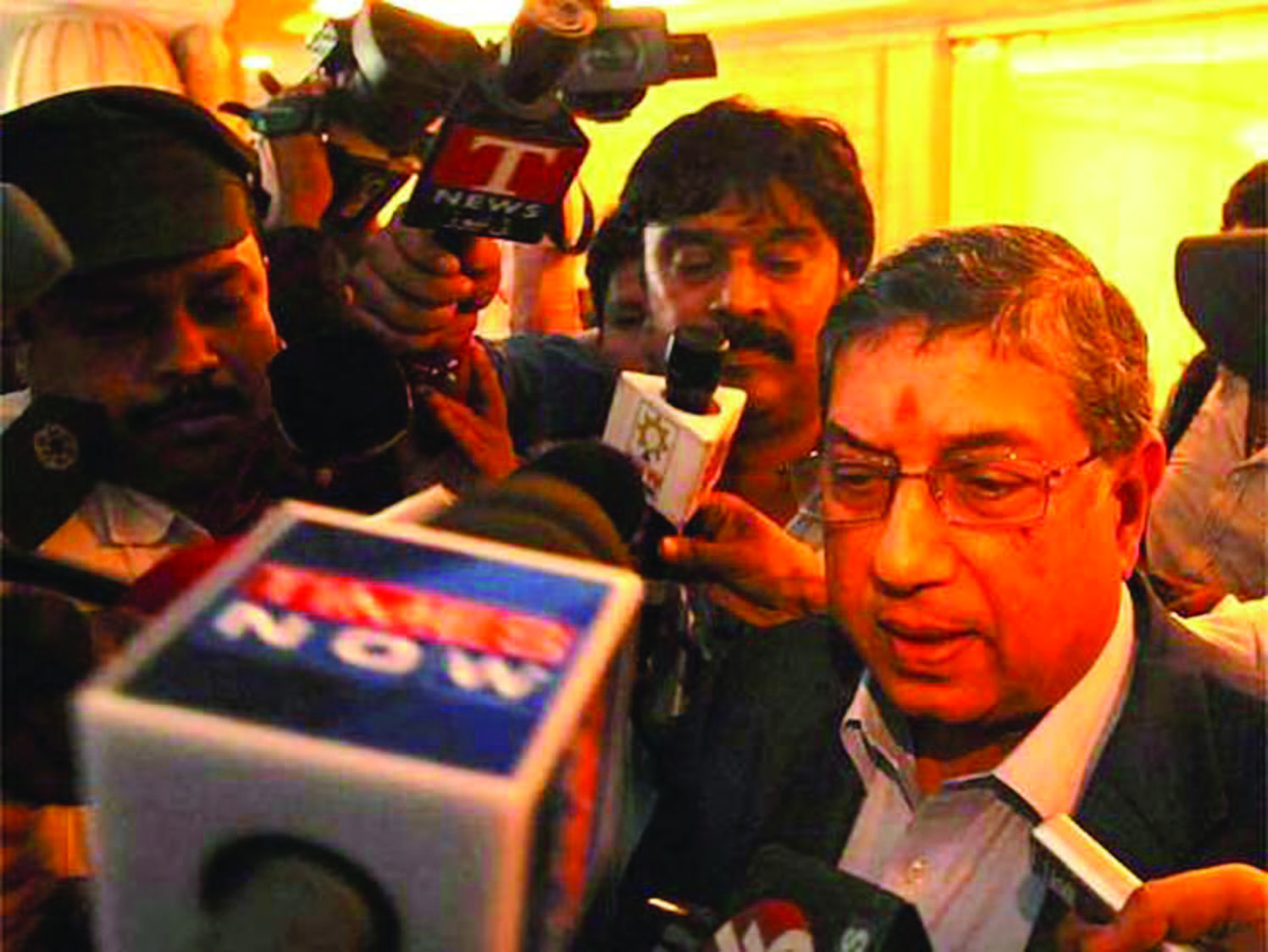
    MUMBAI (TIP): A leading Mumbai businessman, once interested in buying an Indian Premier League franchise today wants nothing to do with the glamorous cricket league. He believes IPL is bringing bad luck to team owners.

    Dramatic as it may sound, a quick look at where the owners have landed up post their IPL buys tends to lend credence to this expression of superstition. The businessman was insistent: “Vijay Mallya, Subrata Roy, Venkattram Reddy, the Maran brothers, even Lalit Modi – just look where they are. Isn’t it eerie?”

    IPL star-crossed statsAs facts go, the businessman isn’t off the mark. Subrata Roy is in jail, Reddy was arrested, Mallya is in trouble with the authorities, Maranowned Sun TV is having problems with the home ministry over security clearances, Lalit Modi is wanted by ED, and Sunanda Pushkar is dead. Even love has gone missing from Ness Wadia and Preity Zinta’s lives. And N Srinivasan has lost his prized BCCI president’s chair.

    Wait, not just Srinivasan. His son-in-law Gurunath Meiyappan, a mere cricket enthusiast according to his father-in-law, has been pulled up by the Supreme Court for talking to bookmakers and banned for life from cricket. Ditto with another part owner, Raj Kundra of Rajasthan Royals.

    Those who have bucked the trend are movie star Shah Rukh Khan, India’s biggest businessman Mukesh Ambani and his wife Nita, and the Delhi franchisee GMR.

    Heck, the league itself is now in massive trouble. The judgment delivered by the SC-appointed Justice Lodha committee has reduced the IPL to just six teams of which, again, some are in serious financial trouble.

    T Venkattram Reddy, the strapping boss of Deccan Chronicle Holdings Ltd, from Hyderabad, lost his team Deccan Chargers after cases of financial fraud with several banks began surfacing post 2011.

    And the owners who replaced the team in Hyderabad – Maran Brothers of Sun TV -are also struggling. Once the eyes and ears of former DMK chief M Karunanidhi, the Chennai media barons are no longer politically protected. Apart from the cloud over their TV channels, they have had to sell their airline SpiceJet back to the original promoter.

    Is this the reason why Parth Jindal of Bangalore-based JSW Group doesn’t want to get into the IPL?


  • Yuki brings India back after Somdev’s surprise defeat

    Yuki brings India back after Somdev’s surprise defeat

    CHRISTCHURCH (TIP): Yuki Bhambri rescued India with an impressive win after Somdev Devvarman’s shock defeat, leaving the visitors locked 1-1 with New Zealand on day one of the Davis Cup Asia Oceania Group I tie on July 17.

    Michael Venus, ranked as low as 548 in the singles, turned the tables on Somdev, who lost the opening singles 6-4, 6-4, 3-6, 3-6, 1-6 after three hours and 43 minutes.

    The fortunes changed dramatically for India as Somdev, who came into the tie after winning a Challenger title in USA, was firmly in control before losing his way.

    Egged on by the home crowd, Venus recovered amazingly after losing the first two sets and outsmarted 148th ranked Somdev to surprise the visiting camp.

    The onus to bring India back was now on Yuki, who did not disappoint the Indian camp as he raced to a 6-2, 6-1, 6-3 win over Jose Statham in the second singles.

    In the opening set, Yuki broke Statham, ranked 345th, in the fifth game for a 3-2 lead and consolidated his position with an easy hold in the next.

    The Indian youngster, ranked 151st, was on top of his game as he broke Statham for the second time in the seventh game and served out the set in the second.

    An early break put Yuki in the driver’s seat. Statham held serve in third game but dropped again in the fifth to hand the 23-year-old Delhi boy a 4-1 cushion.

    Yuki had tightened his grip over the match and it was a matter of time before he served out the second too.

    Statham raised his game a bit, putting up some fight against Yuki as the first five games went on serve. However, Yuki yet again found a way to get a break and created a lead of 4-2, following a break in the sixth game.

    Yuki held his serve in the next and at 2-5, Statham was serving to stay in the set.

    The Kiwi player managed to hold in the eighth but could not stop Yuki from serving out the match in the next.

    The winner of the tie will qualify for the World Group Play-offs to be held in September.

  • Indian women’s hockey future is bright: Rani

    Indian women’s hockey future is bright: Rani

    JAIPUR (TIP): It’s a dream come true for Rani Rampal. Her stupendous show kept India’s hopes of qualifying for the Rio Games alive as the team earned a fifth-place finish in the women’s Hockey World League semifinals in Antwerp last Saturday. Rani also scored in India’s 1-0 win over Japan.

    “Playing for my country is a great honour and I will keep working hard to win more games for my team in the coming years,” she told TOI after the team reached New Delhi on Monday morning.

    “Our target is to qualify for Olympics and we are still in contention. All the players played to their strengths. The last two games were very crucial for us and the team members were well aware of their jobs and they performed superbly. The younger players, especially, played really well and I can confidently say that the future for women’s hockey in India is very bright,” Rani said.

    Rani scored a brilliant goal in the 13th minute and that proved to be the difference. “Going into the fifth place playoff, we drew confidence from our victory over Japan in the bronze medal game of the Asian Games in Incheon. It was a tough match no doubt, but we knew the war would be over if we lost belief in ourselves,” she said.

    The young India striker said doubts are always going to creep into one’s mind before a crunch game. “But we stayed focused since our target was to qualify for the Rio Olympics. We played some of the higher-ranked teams, which helped us to improve ourselves in some areas,” she stated.

  • Work force from India

    Work force from India

    Prime Minister Narendra Modi ‘s emphasis on India having a huge and young work force and his assertions that India can provide work force to the whole world, clearly reveal his mind. He realizes that it will not be possible to create employment for the large number of young people in the country. Having learnt a long time ago from the experience of the Gujarati community how rewarding it could be to be working abroad, and realizing that there is enough demand from countries across the world for work force, Modi has set his ken on adding work force to the list of exports.

    People from Gujarat are all over the world today. They are in African countries; in European countries, in USA, in Canada, in Australia and in New Zealand. They are everywhere. It is easier to list the countries where they are not present than to count the countries where they are. And they are amongst the best. They have established themselves particularly as sensible and intelligent businessmen. Business is in their blood. Look at all the top businessmen and industrialists in India and you will find they all belong to Gujarat. Similarly, those who are in professions are doing very well. It is another matter that every day you come across a dubious character who is involved in illegal activity and suffers the consequences.

    Readers will recall that it is not for the first time that PM Modi has spoken of India having a huge work force. He had said that earlier too. Now, with the launch of “Skill India” campaign, he has added an adjective to work force. The adjective is “skilled”. It may sound ambitious to be creating Crores of skilled young people over the next 5 years, as claimed by the Prime Minister but then they say the goal should not be mean. And given the fact that the Indian Prime Minister believes in the best, whether it be clothes or travel, we should suspend our disbelief and go along with him.

    Moreover, just as the NRIs , today, are making India rich with their remittances and investments, the would -be NRIs , too, would enrich the country. The mathematics is perfect. Young people will have jobs abroad and India will benefit from their presence overseas in terms of acquisition of foreign exchange. So we have employment generation and generation of wealth going hand in hand. One would wish it happens sooner than later.

  • New York City settles “pre-litigation claim” with Eric Garner estate for $5.9 million

    New York City settles “pre-litigation claim” with Eric Garner estate for $5.9 million

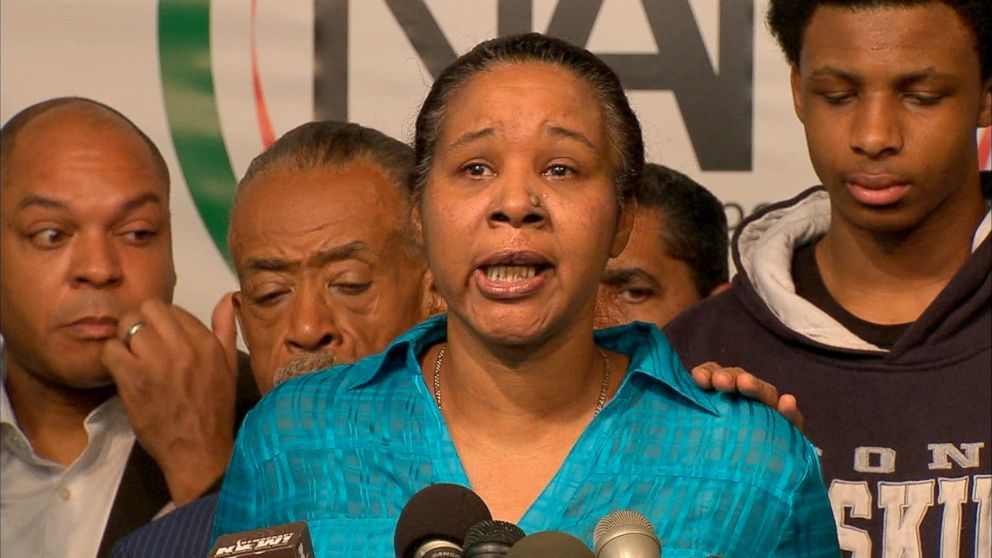
    NEW YORK CITY (TIP): Eric Garner’s family has settled with New York City for $5.9 million — nearly a year after the man was put into an apparent chokehold by police in Staten Island and repeatedly said he couldn’t breathe, according to the comptroller’s office. The family of Eric Garner accepted a pretrial settlement from the city Monday, July 13.

    “Following a judicious review of the claim and facts of this case, my office was able to reach a settlement with the estate of Eric Garner that is in the best interests of all parties,” said New York City Comptroller Scott Stringer, whose office is charged with settling claims against the city.

    Cell phone video of the fatal encounter in July 2014 shows Garner, an African-American man, being held on the ground by an NYPD officer in an apparent chokehold. Garner, who had been apprehended for allegedly illegally selling cigarettes, repeatedly yelled, “I can’t breathe! I can’t breathe” — words that would later become a rallying cry at anti-police demonstrations.

    “We are all familiar with the events that led to the death of Eric Garner and the extraordinary impact his passing has had on our City and our nation,” said Stringer. “It forced us to examine the state of race relations, and the relationship between our police force and the people they serve.”

    No officer was indicted in his death, and Stringer said that while the multi-million dollar settlement “acknowledges the tragic nature of Mr. Garner’s death… the city has not admitted liability.”

    The incident — and perhaps the subsequent protests — triggered reforms in several areas how police go about their business, particularly in minority communities. Asked about Garner prior to the settlement announcement, New York City Mayor Bill de Blasio said the anniversary of his death was on his mind, as it was with many New Yorkers, but also said “I think the important thing is to stay focused on the work of reform.”

    “I think we’ve come a long way, even in the last year, in terms of bringing police and community together,” said de Blasio. “The whole police force is being retrained.”

    (Source CNN)
  • $136 Million Multi-State Settlement with Chase Over Credit Card Debt Collection Practices

    $136 Million Multi-State Settlement with Chase Over Credit Card Debt Collection Practices

    NEW YORK (TIP): Chase Bank USA N.A. and Chase Bankcard Services Inc. will reform its credit card debt collection practices through a $136 million joint state-federal settlement with Attorney General Eric Schneiderman, attorneys general in 47 states plus the District of Columbia, and the Consumer Financial Protection Bureau. The settlement is expected to net $5,950,000 in restitution to approximately 5,300 Chase customers impacted across New York State, and an additional $11,272,338 will be paid to New York State.

    “There has to be one set of rules for everyone, no matter how rich or how powerful, and that includes the biggest multi-national financial institutions,” said Attorney General Schneiderman. “Chase’s consumer credit card debt collection practices were harmful to families when it pursued collections cases based on false and outdated information. In some cases the listed debt was the wrong amount, was associated with the wrong person, had previously been discharged, or was a time barred or very old ‘zombie’ debt.”

    Agreement Requires Debt Collection Reforms

    The agreement requires Chase to significantly reform its credit card debt collection practices in areas of declarations, collections litigation, debt sales and debt buying. Debt buying involves the sale of debt by creditors or other debt owners, often for pennies on the dollar, to buyers who then attempt to collect the debt at full value or sell it to other buyers.

    Among other reforms, the agreement requires new safeguards to help ensure debt information is accurate and inaccurate data is corrected, provides additional information to consumers who owe debts, and bars Chase’s debt buyers from reselling consumer debts to other purchasers.

    Resale Prohibition

    The resale prohibition is significant. Previously, initial buyers of Chase’s consumer credit card debt could resell the debt, the subsequent buyer could flip the debt to another buyer, and the process could repeat itself many times over. If initial information about the debt was incorrect or was transmitted with errors to a subsequent debt buyer, that could result in long-term harm to the consumer and leave the consumer with the difficult or even impossible burden of successfully challenging or correcting errors.

    Investigation Uncovered Unlawful Debt Collection Practices

    According to the joint state-federal probe, Chase:

    • Subjected consumers to collections activity for accounts that were not theirs, in amounts that were incorrect or uncollectable.
    • Subjected consumers to inaccurate credit reporting and unlawful judgments that may affect consumers’ ability to obtain credit, employment, housing and insurance in the future.
    • Sold certain accounts to debt buyers that were inaccurate, settled, discharged in bankruptcy, not owed by the consumer, or otherwise uncollectable.
    • Filed lawsuits and obtained judgments against consumers using false and deceptive affidavits and other documents that were prepared without following required procedures, a practice commonly referred to as “robo-signing.” These practices misled consumers and courts and caused consumers to pay false or incorrect debt and incur legal expenses and court fees to defend against invalid or excessive claims.
    • Made calculation errors when filing debt collection lawsuits that sometimes resulted in judgments against consumers for incorrect amounts.

    Chase Suspended Credit Card Debt Sales & Collections Litigation

    Chase suspended its consumer credit card debt sales in 2013 and collections litigation in 2011. In 2012 Chase maintained approximately 64.5 million open accounts with $124 billion in outstanding credit card debt. From 2009-2013, Chase recovered approximately $4.5 billion of debt from defaulted accounts through collection lawsuits, selling defaulted accounts to third-party debt buyers, or both.

    Chase to Cease Collecting on 528,000 Consumers

    Chase has agreed to cease all collection efforts on more than 528,000 consumers, including an estimated 5,300 in New York. Chase sued the affected consumers for credit card debts and obtained judgments between January 1, 2009 and June 30, 2014. Chase will notify affected borrowers of the change and will request all three major credit reporting agencies to not report the judgments.

    Consumer Restitution

    The agreement also ensures that Chase will fulfill $50 million in consumer restitution through a separate 2013 consent order reached with the Office of the Comptroller of the Currency. Chase estimates that so far it has provided $5,950,000 in restitution to 5,300 New York consumers.

    If Chase’s consumer restitution through the OCC action falls short of $50 million by July 1, 2016, Chase must pay the remaining balance to state attorneys general and the CFPB.

    Payment to States and CFPB

    Chase will pay more than $95 million to the 47 participating states and the District of Columbia, an additional $11 million to the executive committee states that conducted the investigation and settlement negotiations, and $30 million to the CFPB.

    Participating States

    The following state attorneys general are participating in the Chase settlement: Alaska, Alabama, Arkansas, Arizona, Colorado, Connecticut, Delaware, District of Columbia, Florida, Georgia, Hawaii, Idaho, Illinois, Indiana, Iowa, Kansas, Kentucky, Louisiana, Maine, Maryland, Massachusetts, Michigan, Minnesota, Missouri, Montana, Nebraska, Nevada, New Hampshire, New Jersey, New Mexico, New York, North Carolina, North Dakota, Ohio, Oklahoma, Oregon, Pennsylvania, Rhode Island, South Carolina, South Dakota, Tennessee, Texas, Utah, Vermont, Virginia, Washington, West Virginia and Wisconsin.

    Consumers with Debt Collection Questions or Complaints

    Debt collectors are bound by state and federal laws, including the Fair Debt Collection Practices Act (FDCPA), which prohibits debt collectors from using abusive, unfair, or deceptive practices to collect from consumers. Consumers may also have the option of pursuing claims in state or federal court.

  • City Council holds Bail Hearing

    City Council holds Bail Hearing

    NEW YORK CITY (TIP): The Courts & Legal Services Committee and the Fire & Criminal Justice Services Committee recently held a joint hearing, ‘Examining the New York Bail System and the Need for Reform.’ The hearing, chaired by Council Member Lancman and Council Member Elizabeth Crowley, looked at how to reform our dysfunctional bail system.

    “Our bail system is failing us,” said Council Member Lancman. “Too many people are detained on Rikers not because they have been convicted of a crime, but simply because they are too poor to make bail. This hurts defendants and it hurts taxpayers too, who pay $125 million each year to keep pretrial detainees on Rikers.”

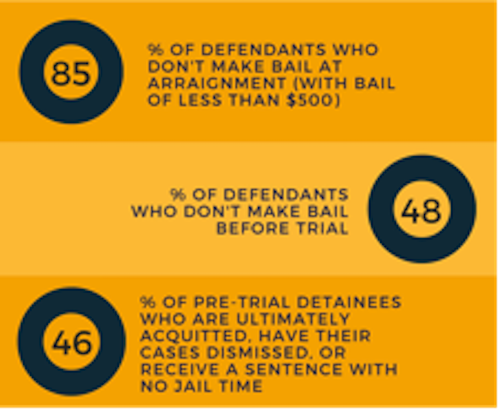
    A recent New York Law Journal op-ed by Council Member Lancman and his Legislative Counsel Molly Cohen detailed why New York City deserves a bail system that not only ensures that defendants return for court appearances, but that does not punish people for their poverty, is not racially discriminatory, does not distort case outcomes, and runs efficiently. The current bail system is far from achieving this goal: 85% of defendants with bail set at $500 or less can’t make bail at arraignment and 48% of defendants with bail of less than $1,000 never post it, even though 46% of all pretrial detainees will be acquitted, have their cases dismissed or receive a sentence without any jail time at all (not even time served).

    The hearing explored the creation of a citywide bail fund, along with a wide range of other possibilities for reform. Testimony was given by: the Mayor’s Office of Criminal Justice; the Center for Court Innovation; NYC Criminal Justice Agency; Office of the Queens District Attorney; Pretrial Services Agency for the District of Columbia; Pretrial Justice Institute; The Legal Aid Society; The Bronx Defenders; Brooklyn Defender Services; The Bronx Freedom Fund; Brooklyn Community Bail Fund; Human Rights Watch; Vera Institute of Justice; and the Prisoner Re-entry Initiative at John Jay College of Criminal Justice.

    The Director of Washington D.C.’s Pretrial Services Agency testified on that city’s success at substantially reducing the use of monetary bail:

    “Any criminal justice system which looks to provide the most fair treatment of its pretrial defendant population, while maintaining the safety of its community, must embrace a robust preventive detention statutory framework. While no system can absolutely guarantee the future success or failure of a released defendant pending his or her next court appearance, Washington D.C.’s example shows that reducing the use of monetary bail while virtually abolishing commercial bond, can keep people out of jail while ensuring people make their court appearances: 85-90% of arrestees are released at their first appearance before the judge and 88% make it to all of their court appearances,” said Cliff Keenan, Director of Washington D.C.’s Pretrial Services Agency.

    Several legal service providers testified about the pressure and problems their clients face when they are detained pretrial and the success of alternatives including supervised release:

    “The current bail system is inefficient, unfair and is costing the city millions of dollars while doing a poor job of protecting public safety,” said Tina Luongo, Attorney-in-Charge of the Criminal Practice at The Legal Aid Society of New York. “Having bail set forces people to plead guilty so that they can return to their homes, jobs and families and avoid being held at Rikers Island. NYC can do better.  We should move away from cash bail on low level misdemeanors and nonviolent felonies and adopt procedures such as community supervision which have shown to produce fairer results while better protecting the public.”

    “New York should lead the nation in bail reform by eradicating money bail and ensuring that justice is never determined by the size of one’s bank account,” said Justine Olderman, Criminal Defense Practice Managing Director of the Bronx Defenders.

    “The overuse of cash bail and insurance company bond does not reflect the important tenet in our law, which is that someone is presumed innocent until proven guilty,” said Lisa Schreibersdorf, Executive Director of Brooklyn Defender Services. “By setting bail and holding someone in jail prior to a conviction, the punishment happens first and the decision about guilt or innocence happens later. This is backwards and troubling, it hurts a lot of people, it costs a lot of money and it is morally wrong. NYC should follow the federal courts and other state courts that focus on setting conditions for release that a person can meet or releasing a person on their own recognizance.”

  • New York needs Immigration Relief

    New York needs Immigration Relief

    NEW YORK CITY (TIP): In what has become a long and drawn out process, the U.S. Court of Appeals for the Fifth Circuit will begin the process of hearing oral arguments Friday, July 17 on the merits of a district judge’s temporary court order freezing President Obama’s executive action on immigration.

    Lifting the delay would allow immigrants who were brought to the U.S. as children and those who are parents of U.S. citizen children to live and legally work in the United States without fear of deportation. Texas and 25 other states are fighting to keep the injunction in place.

    DEFERRED ACTION PROGRAMS COULD BE A LONG WAY OFF

    The states are making a huge mistake.

    If we delay implementing the President’s actions any longer, we will not only keep millions of immigrant families in the shadows, but also hinder efforts to strengthen state economies across the country.

    For years, we have called on Congress to fix our broken system by passing comprehensive immigration reform. In the absence of Congressional action, President Obama took necessary steps by announcing a package of “administrative relief” actions to alleviate the fear of deportation for mixed-status families and immigrants who were brought to this country at a young age.

    If these executive actions are allowed to go forward, up to five million of our country’s residents will be able to register with the government, request a deferral from deportation, and apply for a temporary work permit. Enabling immigrants to work legally will trigger a cascade of benefits, from a rise in earnings to a rise in tax contributions.

    AMERICANS THINK UNDOCUMENTED IMMIGRANTS IN U.S. SHOULD GET TO STAY: SURVEY

    It will also demonstrate how essential immigration reform is in the long term when we see how much these programs benefit communities.

    This is why New York joined attorney generals from 14 other states and the District of Columbia in an amicus brief filed earlier this year asking that the court lift the injunction so that the President’s program can proceed nationwide.

    Fifth Circuit to weigh hold on Obama’s immigration orders

    In the alternative, should the court not lift the injunction nationwide, the brief argues that it should be limited to Texas, the only state that a lower court found would be directly harmed by the deferred action program. In New York, the fiscal and economic benefits are clear: if the approximately quarter-million New Yorkers eligible for deferred action were allowed to work legally, state and local tax revenues would grow by $100 million per year.

    While we wait for the Fifth Circuit to come to a decision, we are continuing to work to provide opportunities and protect the rights of immigrants in New York.

    The Attorney General’s Office, in collaboration with other local and state agencies, and non-profit organizations, is working to combat immigration services fraud to ensure that communities are not taken advantage of by individuals and businesses that falsely claim they are able to provide a pathway to citizenship.

    Community partners like the New York Immigration Coalition are training hundreds of volunteers who will help community members navigate the application process and connect them to legal service providers.

    When the legal process finally does conclude, we will be ready to hit the ground running.

    The economic benefits and legal arguments are compelling, but the most important benefit of a court decision allowing President Obama’s actions to move forward will be to finally bring millions of American newcomers out of the shadows. New Yorkers should not live in fear that one day their families will be torn apart.

    We will continue to fight in the courts and prepare to make sure that our communities can be finally free of this fear.

    (Schneiderman is the Attorney General of New York. Choi is the executive director of the New York Immigration Coalition).

  • Great pre-K program:  free, full-day, high-quality pre-K seats available

    Great pre-K program: free, full-day, high-quality pre-K seats available

    NEW YORK CITY (TIP): To apply to free, full-day, high quality pre-K seats, families should go to the upgraded pre-K search tool, which is now available in ten languages.

    Families can filter their options by looking for district schools, charter schools or Early Education Centers at https://maps.nyc.gov/upk/. Families may also visit their Family Welcome Centers (see addresses below) or they can call 718.935.2067. In addition, 311 operators are available 24 hours for assistance.

    Families that have already accepted their pre-K offer by pre-registering for their free, full-day, high-quality pre-K seat don’t need to take any further action.

    Here is a quote you can use from Chancellor Fariña:  “Our efforts to work with every family one-on-one to find the right pre-K program for their child continues this summer. Families who have not yet applied and want a seat for their child should register as soon as possible. Through this additional year of learning, children will explore with science projects, learn new vocabulary words, develop social skills and bring their families into the classroom as partners.”

    Family Welcome Centers

    Bronx

    1 Fordham Plaza, 7th Floor
    Bronx, NY 10458
    Districts Served: 7, 9, 10


    1230 Zerega Avenue, Room 24
    Bronx, NY 10462
    Districts Served: 8, 11, 12


    Brooklyn

    1780 Ocean Avenue, 3rd Floor
    Brooklyn, NY 11230
    Districts Served: 17, 18, 22


    415 89th Street, 5th Floor
    Brooklyn, NY 11209
    Districts Served: 20, 21


    1665 St. Mark’s Avenue, Room 116
    Brooklyn, NY 11233
    Districts Served: 19, 23, 32


    29 Fort Greene Place (BE12)
    Brooklyn, NY 11217
    Districts Served: 13, 14, 15, 16


    Manhattan

    333 Seventh Avenue, 12th Floor; Room 1211
    New York, NY 10001
    Districts Served: 1, 2, 4


    388 West 125th Street, 7th Floor; Room 713
    New York, NY 10027
    Districts Served: 3, 5, 6


    Queens

    28-11 Queens Plaza North, 3rd Floor
    Long Island City, NY 11101
    Districts Served: 24, 30


    30-48 Linden Place, 2nd Floor
    Flushing, NY 11354
    Districts Served: 25, 26


    90-27 Sutphin Boulevard, 1st Floor
    Jamaica, NY 11435
    Districts Served: 27, 28, 29


    Staten Island

    715 Ocean Terrace, Building A
    Staten Island, NY 10301
    District Served: 31


    * open Mon-Fri, 8 am – 3 pm

  • Chattanooga shooting: 1 shooter, 3 crime scenes, 7 victims

    Chattanooga shooting: 1 shooter, 3 crime scenes, 7 victims

    CHATTANOOGA, TENNESSEE (TIP): Four Marines were killed during what’s being called a “brutal and brazen attack” at a Naval recruiting station Thursday, July 16 morning in Chattanooga.

    A Chattanooga police officer responding to the shooting was shot in the ankle and is in stable condition at Erlanger Medical Center. He was identified as veteran officer Dennis Pedigo. His family is reportedly with him at the hospital.

    NBC News quoted a defense official as saying a Navy sailor was also shot multiple times and was “critically injured.”

    The shooter was also killed, though authorities will not say how he died. A Senior Federal Official confirmed to NBC NEWS that the suspect was Muhammad Youssef Abdulazeez, a naturalized U.S. citizen from Kuwait. He is from Hixson, which is just a few miles across the river from Chattanooga.

    The suspected gunman, Mohammad Youssuf Abdulazeez, first opened fire at a military recruitment office, located in a strip mall off Lee Highway in Chattanooga. Witnesses saw Abdulazeez spray a hail of bullets at the glass doors of a military recruiting center in a strip mall .Then the gunman, who according to a law enforcement official was driving in a rented silver Ford Mustang convertible, moved on to his next target more than seven miles away: a Naval reserve center. There, he rammed into a gate at some point during his shooting rampage and was eventually killed by police, a U.S. official said.

    The shooting resulted in the death of four Marines.

    Mohammad Youssuf Abdulazeez was carrying 30-round magazines when he opened fire, according to a source briefed by law enforcement. Abdulazeez kept police at bay for some time with the amount of ammunition he had, according to the source.

    The shooting suspect was armed with an AK-47 style weapon‎ at the time of the attack according to two law enforcement officials briefed on the investigation.

    Suspected shooter Mohammad Youssuf Abdulazeez, 24, is dead, the FBI said. But — publicly, at least — investigators haven’t said much more about him.

    Now, with the FBI in the lead, a terrorism task force is investigating, a law enforcement source said.

    Authorities “have not determined whether it was an act of terrorism or whether it was a criminal act,” Ed Reinhold, FBI special agent in charge, told reporters. “We are looking at every possible avenue, whether it was terrorism — whether it was domestic, international — or whether it was a simple, criminal act.”

    A key detail will help them make that determination: finding out the suspect’s motive.

  • James Holmes found guilty of murder in 2012 Colorado theater shooting

    James Holmes found guilty of murder in 2012 Colorado theater shooting

    CENTENNIAL, CO (TIP): James Holmes faced two counts of first-degree murder for each of the 12 victims. The jury found him guilty on all 24 counts.

    Holmes, who had pleaded not guilty by reason of insanity, showed no reaction as the verdict against him was announced. He stood at the defense table with his attorney, his hands in his pockets. He faced a total of 165 charges.

    The jury also found Holmes guilty of attempted murder on all of the 140 counts against him for the 70 people wounded in the shooting. Additionally, he was found guilty of one count of possession or control of an explosive or incendiary device.

    The gallery in the courtroom was full of survivors of the shooting and friends and family of the victims. When the judge read the first guilty verdict, family members let out an audible sigh. As the verdicts continued to be read, and people waited for the specific counts relating to their loved ones, family members started reaching out to one another — placing their hands on each others’ shoulders and backs in support.

    A sentencing phase, which is expected to last about one month, is slated to begin next Wednesday. The same jury will deliberate during that phase. In 2013, the prosecution signaled it would seek the death penalty.

    By virtue of his insanity plea, the now 27-year-old Holmes had never denied he was behind the killings. But given his mental state, his lawyers argued that he should not be found culpable.

    “The evidence is clear that he could not control his thoughts, he could not control his actions, and he could not control his perceptions,” defense attorney Dan King said during closing arguments.

    King told the court psychosis had obscured Holmes’ ability to think about things the way a rational person does.

    “Only the mental illness caused this to happen and nothing else.”

  • Community in Baltimore raises a  Punjabi School; Dr. Gill appointed principal cum coordinator

    Community in Baltimore raises a Punjabi School; Dr. Gill appointed principal cum coordinator

    [vc_row][vc_column][vc_images_carousel images=”44259,44260,44261″ onclick=”link_image” custom_links_target=”_self” mode=”horizontal” speed=”3000″ slides_per_view=”1″ autoplay=”yes” hide_pagination_control=”” hide_prev_next_buttons=”” partial_view=”” wrap=”yes” img_size=”full”][vc_column_text]

    MARYLAND (TIP): A determined community can achieve anything. The Sikh community in Baltimore decided to have a Punjabi school and they had it.

    A long cherished dream of the Sikh committee of the area was realized when a Punjabi school was inaugurated  in the premises of Gurudwara Sikh Association of Baltimore on Sunday, July 12. President of the DSGPC Manjit Singh GK and Gurudwara Sikh Association of Baltimore Trustee Dr. Kirpal Kaur cut the ribbon to inaugurate the school.

    The gurdwara management appointed Dr. Surinder Singh Gill as Principal cum Coordinator of the school. Dr. Gill is an educationist who has a long experience in school management, having established three schools in India.

    Once the management of the Gurdwara gave Dr. Gill the full authority to start a school, Dr. Gill, with the help of Paramjit Singh began wok to obtain equipment for the school.

    Dr. Kirpal Kaur and Jesse Singh took the responsibility of the expenses on trailer which was to be used to house the school. Dr. Gill prepared curriculum and arranged for books, registration and the other allied material and equipment for the school in just two weeks and made it possible for inauguration ceremony to take place on July 12, 2015.

    Speaking on the occasion, Dr. Kirpal Kaur said that the community felt the need of a Punjabi school. Without the knowledge of mother tongue, children will become    orphans. They will get lost. They will lose touch with their religion and culture.

    Manjit Singh GK congratulated the school management and Dr. Gill, in particular for realizing the need and setting up the school. He said Punjabi School was a need of the community and without Punjabi Sikhs cannot survive.

    On this occasion, Avatar Singh Hit offered five thousand books for the school and advised  the management to start the library from the ensuing session.

    Speaking on the occasion, Gurdwara President Jeet Singh said the Gurdwara management appreciated all who supported the idea of the school and contributed generously for its set up. In particular, he thanked Kawaljit Singh Soni, KK Sidhu, Baljinder Singh Shami, Dr Sukhpal Singh, Jeet Singh president, Karam Singh, Kanta Sami and the teachers of the school for their cooperation.

    Dr. Gill informed The Indian Panorama that in just 15 days thirty students were enrolled and the management provided free books, note books and bags to the students.. Dr. Gill said, “It is a great step for the Punjabi community and will go long way to mark a great start. The management expects more enrollments of students and looks forward to adding another Trailer very soon so that the State could designate it as a chartered school”.

    Dr. Gill said he was confident of the support of the community and the State administration and hoped to see the school being recognized as a chartered school.

    [/vc_column_text][/vc_column][/vc_row]

  • Companies in India create thousands of US jobs

    Companies in India create thousands of US jobs

    “The 100 Indian-based companies surveyed for the study have made an aggregate $15.3 billion investment in their U.S. operations. That, in turn, has created 91,000 jobs in the U.S., which by any measure is a substantial contribution to the American economy. Those jobs are scattered throughout the country. In fact, the survey found that Indian companies have a presence in all 50 states.”

    “In the U.S., IT comprises 40 percent of Indian-company investment, according to the survey. The rest is highly diversified. Life sciences, pharmaceuticals and health care companies make up 14 percent of Indian investment here. Another 14 percent are manufacturers and mining companies. 16 percent offer financial, engineering, construction and entertainment services. The remainder is companies in the automotive, energy, hospitality and food businesses.”

    “The exchange is good for both nations and should be encouraged. The U.S. and India have much in common. They are the largest democracies in the world. They are also economic powerhouses that are helping each other grow in a dynamic global marketplace. We have a stake in each other’s economic future – and that future is very bright.”

    A remarkable story that has often escaped public attention in the overall context of the vibrant India-U.S. relationship is that Indian companies have been pouring investment dollars into businesses in the U.S. and creating tens of thousands of American jobs. A new report from the Confederation of Indian Industry and the accounting firm Grant Thornton reveals that not only is Indian investment in the U.S. large, it’s also extremely widespread and clearly growing.

    The 100 Indian-based companies surveyed for the study have made an aggregate $15.3 billion investment in their U.S. operations. That, in turn, has created 91,000 jobs in the U.S., which by any measure is a substantial contribution to the American economy. Those jobs are scattered throughout the country. In fact, the survey found that Indian companies have a presence in all 50 states.

    The U.S. isn’t just a favored destination for the time being; it is likely to remain attractive for Indian investors for years. When asked if they plan to invest in the U.S. in the next five years, 84.5 percent of the Indian companies surveyed said yes. Only 4 percent said no. Asked if they plan to hire more employees locally in the U.S. over the next five years, 90 percent of the companies answered in the affirmative.

    The survey also challenges the greatest stereotype about the kinds of Indian companies in the U.S. They are not all information technology companies. Far from it. In the U.S., IT comprises 40 percent of Indian-company investment, according to the survey. The rest is highly diversified. Life sciences, pharmaceuticals and health care companies make up 14 percent of Indian investment here. Another 14 percent are manufacturers and mining companies. 16 percent offer financial, engineering, construction and entertainment services. The remainder is companies in the automotive, energy, hospitality and food businesses.

    The average investment received from Indian companies per state is substantial: $433 million. The top five states with the highest volume of investment – $1 billion or more – are Texas ($3.85 billion), Pennsylvania ($3.56 billion), Minnesota ($1.8 billion), New York ($1.01 billion) and New Jersey ($1 billion).

    In terms of employment generated by Indian companies, the top five states are New Jersey and California, each with about 9,000 jobs, Texas (6,000 jobs), Illinois (5,000 jobs) and New York (4,000 jobs).

    All of these numbers have been rising steadily, a sign that the U.S. market is among the strongest investment destinations in the world. These substantial investments are also a testament to the trust and openness that India and the U.S. enjoy both at the people-to-people and government-to-government levels. According to Select USA, India is now the fourth-fastest growing source of foreign direct investment into the United States. The significant and growing contributions of Indian investments in the U.S. remain a vital component of the bilateral relationship.

    American firms, of course, have long been major investors in India. Foreign direct investment by U.S. firms in India has been more than $1 billion a year. Efforts by Prime Minister Narendra Modi to make economic growth a hallmark of his administration have accelerated U.S. investment there.

    India has been lowering barriers to investment and encouraging business expansion. For example, the Indian government has over the past year raised limits on foreign investment in sectors such as insurance, medical devices, railways and defense. This will no doubt provide myriad opportunities for U.S. companies to increase their presence in India and will strengthen Indian companies so that they can enlarge their footprint in the U.S.

    The exchange is good for both nations and should be encouraged. The U.S. and India have much in common. They are the largest democracies in the world. They are also economic powerhouses that are helping each other grow in a dynamic global marketplace. We have a stake in each other’s economic future – and that future is very bright.

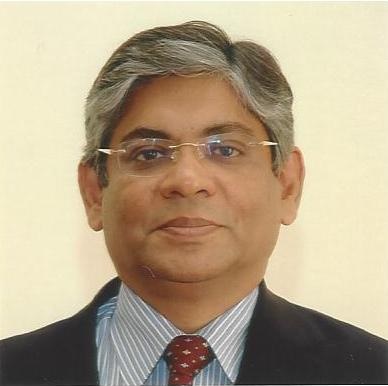
    By Ambassador Arun K. Singh (The author is India’s ambassador to the U.S.)

  • The Greek deal has lessons for all nations

    The Greek deal has lessons for all nations

    ATHENS (TIP) : After all the brinkmanship, including holding of a referendum, Greece has finally agreed to the conditional bailout package offered to it, thus averting an exit from the eurozone and setting a precedent for other countries.

    It took 17 hours of marathon talks between the European Council and Greece to hammer out a third bailout worth $95 billion under the European Stability Mechanism. If the talks had been unsuccessful and a Grexit could not have been avoided, it could have led to a precedent for a similar exit by Spain, Italy or Portugal to knock down the very idea of a stable and economically stable Europe.

    The bailout has, however, bound Greece to initiate economic reforms including increase in taxes and restructuring of its pension scheme. The banks in Greece, which are nearly insolvent, were ordered to close over a fortnight ago and are likely to re-open within a week. If the talks a failed, the country would have slipped into a dark abyss and could have had international ramifications.

    Even as the deal has been done, the tougher part of its implementation remains. Greek Prime Minister Alexi Tsipras was forced to accept an austerity package which was worse than what he had rejected some time ago. Its implementation would be a tough task for him. He will have to sell the austerity package to his party as well as to the opposition in order to revive its economy which is in complete mess.

    The agreement which helped avert a tragedy makes it mandatory for Greece to initiate measures including simplifying VAT rates, impose more taxes and cutback pensions. It is also supposed to request continued IMF support from March 2016. It also needs to cut cost of administration, ensure creditor approval for key legislation, go in for privatization, involving transfer of assets to the independent fund designed to raise 50 billions euros. The country is to set a clear time table for pensions reforms, privatizing electricity network and strengthening financial sector including action on non performing loans.

    European Commission president Jean-Claude Juncker later said that “in this compromise there are no winners and no losers…..it is a typical european arrangement”.

    The lesson for other governments clearly is to set their own house in order and set in economic reforms rather than go in for populist measures.


  • Interfaith Ramadan:  The essence may be traceable in your faith

    Interfaith Ramadan: The essence may be traceable in your faith

    Whether you are an Atheist, Baha’i, Buddhist, Christian, Hindu, Jain, Jewish, Native American, Pagan, Shinto, Sikh, Wicca, or Zoroastrian or from any other tradition, you may feel a sense of connection with the spirit of Ramadan.

    God is a word for the cause that creates, sustains and recycles this universe, and belongs to all that exists and is not the exclusive dominion of anyone. No matter how and what name you call upon him – he (she or it) cannot be a different causer for each one of us.

    The physical aspect of human journey from the sperm and an egg stage through the death is programmed precisely. The formula is same for all of humanity; and there is no such thing as a Christian, Jewish, Muslim, Hindu or other gene.

    Regardless of what is being said about origins in terms of evolution, creation or the big bang, the undeniable fact is our existence, and we have to figure out how to live with each other.

    When the universe came into being, two main products of the process were Matter and Life.

    While the matter is programmed to be in self-balance and functions precisely for which it is designed, like the Sun, Jupiter, Earth or the Moon playing its part, the (human) life on the other hand was not programmed; we were given complete freedom, guidance and intelligence to create our own balance for survival.

    A balanced society is where every one of us functions cohesively in small parcels of this big World Wide Web. It is sustained by respecting the otherness of others and accepting the God given uniqueness of each one of us. If we mess with the web, we mess with ourselves ultimately. If we mess with the environmental balance we will pay for it, just as we bear the loss of health if we mess with what we eat, drink and smoke. There is a consequence for imbalance.

    Birth of Religion

    We lose the balance if we don’t trust and lie to each other, rob the other, and not keep the promises we make to fellow beings. This is when religion appears; it is the love of the creator for his creation, just as a mother loves her children –someone among us will rise and restore that balance. Didn’t Moses, Krishna, Buddha, Jesus, Muhammad and other masters restore the righteousness and balance in the society? I hope you can relate with this thought in your own scriptures and legends.

    An identical spiritual wisdom emerges in different parts of the world simultaneously; the greatest example would be how a mother figures out what to do with her crying baby in the jungles of Amazon or the high society in London.

    Indeed, beauty is in the eyes of the beholder, and as a corollary I would say, faith is in the heart of the believer, and every religion is dear to its believer.

    Religion is about love for fellow beings, a majority of us in every religion get that right but for a few, who keep messing up the cohesiveness of the society. Those few are not an identifiable group, but the infraction in each one of us when we become biased towards the others. Religion is never the problem; it is the individuals who don’t get their religion right are the problem.

    Ramadan and you

    From the moment we are born to the last rites of our life, and every moment in between is laden with rituals, even though some of us may deny it. Whether we go to the gym, eat, sleep, wear clothes, drive or talk on the phone, we follow rituals.

    Rituals signify the milestones of our daily life. Every significant moment of the day is a ritual. It is an unwritten way of measuring our progression, a memory pattern to bring discipline to our actions.

    Discipline is necessary to do things on time, manage personal relationships, drive to a destination or keep within budget. The result of disciplined behavior is worthwhile for most people. When we are joyous, whether we are a theist or not, we have to express that sentiment, otherwise a sense of incompleteness lingers in our hearts.

    The spiritual masters have captured the human gravity towards rituals and have molded it with the art and science of self-discipline in their respective religions. The noble purpose of each one of them was to bring a balance in our lives and a balance with our environment.

    Every faith is composed of a set of unique rituals to bring discipline and peace to human life. Fasting is one of the five key rituals that Muslims around the world observe.

    Ramadan is the ninth month of the Islamic lunar calendar and is generally observed with a ritual precision; it is an annual training or a refresher. It requires one to abstain from food, drink, intimacy, ill-will, ill-talk, ill-actions and other temptations from dawn to dusk, every day for a month. One has to rise above his or her baser desires. Islam gifts this month to its followers to inculcate discipline to bring moderation to their daily lives. Twenty five hundred years ago, Buddha, the enlightened one taught that human suffering is caused by unrestrained desire to possess and had recommended a middle path, and the same recommendation was made by Prophet Muhammad fourteen hundred years ago.

    Although Ramadan is popularly known in the west for its culinary delicacies and fancy iftars (ceremonial breaking of fast at sun down), the spirit and intent of Ramadan lies in a human transformation in a month-long inner spiritual journey of finding oneself in tune with spirituality.

    Hindus can see that transformation in nine days of fasting during Navaratri, the Jains in 8-10 days of fasting during Paryushana, Christians during 40 days of lent, Jews for 7 days around Yom Kippur….likewise you find fasting is a way of life in most traditions.

    God has no need for the hunger or thirst of someone who hurts others, violates their dignity or usurps their rights, said Prophet Muhammad (PBUH). The fasting of the stomach must be matched by the fasting of the limbs. The eyes, ears, tongue, hands and feet all have their respective fasts to undergo. The tongue’s temptations, for example — lies, backbiting, slander, vulgarity and senseless argumentation — must be challenged and curbed to maintain the integrity of the fast.

    Consciousness of behavior and vigilance over action are the most profound dimensions of fasting: the fasting of the heart focuses on the attachment to the divine. That is when Ramadan really becomes a source of peace and solace, just as Christmas or Dussera goes beyond the rituals to bring forth kindness, charity and caring.

    True fasting is self-purification; and from this comes a rich inner life that bring about values such as justice, generosity, patience, kindness, forgiveness, mercy and empathy — values that are indispensable for the success of the community.

    Knowing about hunger is different from knowing hunger. Empathy is not an intellectual equation; it is a human experience. Our hardness of heart often springs from our distance from the human condition of others. The poor, sick, disenfranchised, oppressed — we rarely walk a mile in their shoes, not even a few steps. “Rest assured,” cautioned one teacher, “if you do not taste what it feels like to be hungry, you will not care for those who are.”

    Ramadan will come and go with such stealth that we cannot but be reminded of our mortality. What is it that we value and why? Habits, customs, even obsessive behavior like smoking can be curtailed with relative ease in the face of a higher calling.

    For fasting to be truly universal, its benefits must extend beyond the fraternal ties of Muslims and must extend to forging a common humanity with others. Fasting is meant to impart a sense of what it means to be truly human, and its universality is reflected by its observance in Baha’i, Buddhist, Christian, Hindu, Jain, Jewish, Sikh, Zoroastrian and other faiths.

    Let the spirit of Ramadan develop an understanding and respect for each one of God’s creation – that is all of us. Ramadan Mubarak!

    Mike Ghouse

    (The author is a versatile genius. He is a speaker, thinker, writer, pluralist and a human rights activist committed to building cohesive societies and offers pluralistic solutions on issues of the day. More about him in 63 links at MikeGhouse.net and writings at TheGhouseDiary.com)

  • India to build next aircraft carrier with US technology

    India to build next aircraft carrier with US technology

    NEW DELHI (TIP): India and the US have worked out the terms of reference for building the next Indian aircraft carrier with US technology.

    This has been pushed through after the visit of US defence secretary Ash Carter. As both countries prepare for a September round of strategic dialogue in Washington DC, India is preparing to send a team to speed up talks on the aircraft carrier and the Light Combat Aircraft jet engine, which is also slated to be built with US assistance.

    The agenda has been set in the two summits held in September and January, but the key will be checking off the ambitious bucket list of projects.

    This will be the first strategic dialogue to be held in the new 2+2 format, including the foreign and commerce ministers. From the US side, it will be John Kerry and Penny Pritzker, commerce secretary, rather than Michael Froman their chief trade negotiator, who is generally believed to take a dim view of India and its trade practices. The US and India are expected to take forward earlier agreements on smart cities, which is likely to get priority.

    This year India-US relations will be tested on climate change as the Paris climate change summit, COP 21 looms. India will be under unprecedented pressure to declare ambitious emission targets. Climate change is a legacy issue for Barack Obama and he’s expected to push hard.

    China has been smarter – first, by clinching a climate deal with the US during Obama’s visit, and second, by declaring their INDC (intended nationally determined contributions) just before a meeting with the French president, which made it seem like it was a special gesture by China. India tried to match it somewhat with an energy deal when Barack Obama visited India.

    Even though India is far below China on per capita emissions, India will be cynosure of global, particularly US attention when it does finalize and announce its INDC. Officials expect this to be done in the coming weeks.

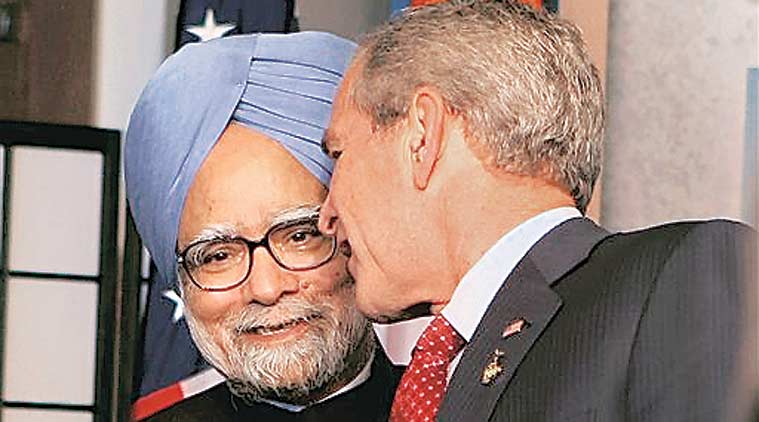
  • When Manmohan played hardball with US; threatened to call off N-deal

    When Manmohan played hardball with US; threatened to call off N-deal

    WASHINGTON (TIP): This disclosure by former national security advisor M K Narayanan was made in Washington on July 14, after former US Secretary of State Condoleezza Rice told a Washington audience that then Prime Minister Singh called off the deal a night before its scheduled announcement on July 18, 2005 because the opposition parties in India were up in arms against it.

    “I just wanted to set the record straight. I know that a view has been widely propounded that on the night of the July 17/18, Manmohan Singh had called off the deal. I think there were very valid reasons,” Narayanan said in his clarification issued during a day-long conference on the 10th anniversary of the landmark civil nuclear deal.

    “There was an understanding which had been reached (by the Prime Minister’s Office) with the (US) President’s office that the number of Indian reactors that would be kept out of the international safeguards would be number such and such,” he said at the event organized by the Carnegie Endowment for International Peace and the Confederation of Indian Industry.

    “The (US) State Department had a lot of people who wanted to teach India a lesson. By the time the visit was due, the number that was agreed on six to eight was reduced to two. That was the figure that was totally unacceptable from the point of view of the external affairs ministry,” Narayanan said describing the sequence of events on the night of June 17/18 when Singh was visiting the United States.

    “And therefore the position that night was… the prime minister’s words, which I might use, at 12.05, if the chairman of the Atomic Energy Commission and the National Security Advisor are not willing to go along with the figure, let’s call it off and then we will,” Narayanan said.

    Such a decision by the prime minister sent a strong message to the Americans. As the news reached the White House, Bush sent Rice to Willard Hotel where Singh was staying.

    According to Narayanan, the prime minister did not want to meet Rice at this point of time as he would not prefer to share this bad news directly.

    Rice met the then External Affairs Minister Natwar Singh who then took Rice to the suite of the prime minister.

    Once the Americans agreed on a figure that was acceptable to Indians, the prime minister gave his go ahead for the deal, he said.

    “I want history to record that this deal would not have gone through from the Indian side without Manmohan Singh being 150 per cent for the deal,” Narayanan said.

    Later participating in a panel discussion along with three other former national security advisors from the two countries — Stephen Headley, Tom Donilon and Shivshankar Menon — Narayanan said it was what he called the “suspension of disbelieve” which was the reasons for the two countries to be able to get the civil nuclear deal done.

  • Opposition parties keeping their powder dry for the monsoon session of parliament starting July 20

    Opposition parties keeping their powder dry for the monsoon session of parliament starting July 20

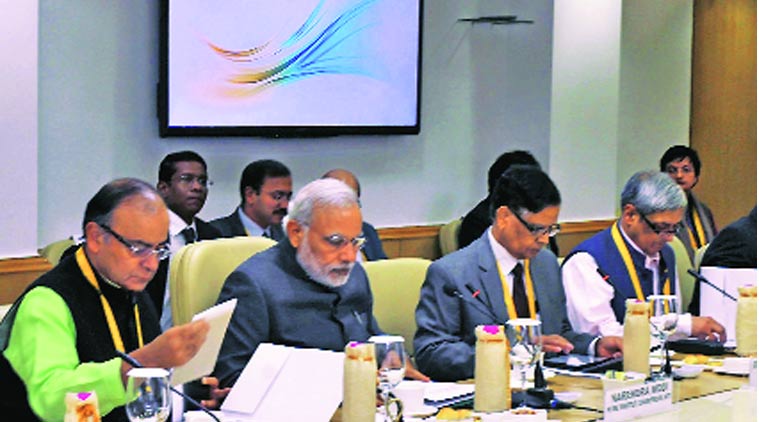
    NEW DELHI (TIP): The absence of chief ministers belonging to the Congress and the third front from the July 15 meeting of Niti Ayog called by Prime Minister Narendra Modi is a clear indication that the opposition is looking forward to confront the NDA government. The ensuing prestigious Assembly elections in Bihar are expected to add fuel to the fire as the opposition looks to score brownie points over a plethora of issues.

    The Modi government has already braced up for the fight. Speaking on the contentious land acquisition bill, which had been a cause of confrontation with the Congress and other opposition parties in the past, Finance minister Arun Jaitley has already stated that the Centre was planning to leave it to the states to implement their own land acquisition laws. Even the BJP’s coalition partner Shiromani Akali Dal had expressed reservations on some of the proposed provisions of the Bill. It is of the view that the consent of the farmers whose land is to be acquired must be made mandatory.

    But besides the land acquisition bill, there are a host of issues which are expected to keep the government on a leash during the session.

    Although the Madhya Pradesh government has agreed for a CBI inquiry into the Vyapam scandal, the BJP is likely to come under heavy fire in the light of new revelations that the main accused in the scandal had been hosting BJP and RSS leaders and had given them favors. The opposition is also likely to ask for MP Chief Minister’s resignation.

    The biggest attack is likely to be mounted against external affairs minister Sushma Swaraj and the Rajasthan chief minister Vasundhara Raje Scindia for their alleged links with cricket czar Lalit Modi. The prime minister, who has been maintaining a studied silence over the issue, may be forced to come out with a clear stand.

    It is a strange and interesting coincidence that  the three targets of the opposition attack –  Sushma, Swaraj, Vasundhara Raje and the MP chief minister Chauhan-.were  believed  to be in the camp opposed to projecting Modi as party’s prime ministerial candidate.

    Another major target of the opposition attack is going to be Education minister Smriti Irani over her alleged false declaration of her educational qualifications.

    Leader of Opposition in the Rajya Sabha Ghulam Nabi Azad has already made it known that it would be virtually impossible to transact any business if the opposition demands for the resignations of two Central ministers and Rajasthan Chief Minister are not met.

    The government would like to move forward on two important legislations — The Constitution (122nd Amendment) (GST) Bill, 2014, and the Right to Fair Compensation and Transparency in Land Acquisition, Rehabilitation and Resettlement Bill, 2015.

    The NDA leaders also met on Thursday, July 16 to devise a strategy to counter the expected opposition onslaught. Their attempt is to put the onus for the likely non-functioning of Parliament on the opposition.

  • Dallas JUL 17 Edition

    Dallas JUL 17 Edition

    A New Way to Read This Week’s Print Edition

    The Latest from The Indian Panorama | Dallas Desk

    Reimagined for the Web
    Volume 3 Issue 22 | Desktop Edition | July 17

    VOL3ISSUE22TX

    The Indian Panorama is a South–Asian English newspaper with print editions in New York City, the Tristate area and now also as the first English Indian Newspaper from Dallas, printed weekly every Friday with in-depth coverage on Indian-Americans, Diaspora, India & The World.

    The newspaper is distributed free across the United States and is available at all Indian Temples, gurdwaras & Indian Stores.

  • WEAK US RETAIL SALES HINT AT SLOWER GROWTH RATE

    WASHINGTON (TIP): US retail sales unexpectedly fell in June as households cut back on purchases of automobiles and a range of other goods, raising concerns the economy was slowing again.

    Tuesday’s weak retail sales report, together with signs of some softening of the labor market, dampened expectations a bit for an interest rate hike from the Fed Reserve this year, which most economists expect could come in September.

    “The underlying tone of this report suggests that the recovery is beginning to show some signs of strain. If anything it will temper, at the margin, any consideration for a September rate hike,” said Millan Mulraine, deputy chief economist at TD Securities in New York. The Commerce Department said retail sales slipped 0.3% last month, the weakest reading since February, after May’s downwardly revised 1% increase.