Month: October 2015

  • BJP breathes easy as RSS chief backs reservations

    BJP breathes easy as RSS chief backs reservations

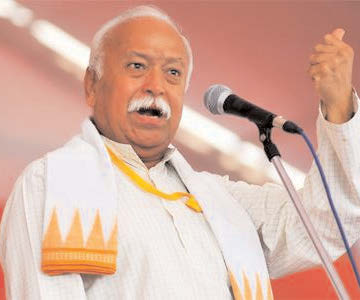
    NAGPUR (TIP): RSS chief Mohan Bhagwat on October 22 expressed support for reservations provided for under the Constitution, in a big relief to BJP which is having to fend off accusations of being “anti-quota” during the crucial Bihar polls.

    The RSS chief began his annual Dussehra speech by praising Ambedkar. “He made a life-long struggle against the injustice of social inequality and made provisions in the Constitution thereby eradicating those discriminations from political and economic spheres of our national life,” Bhagwat said in what read like an endorsement of the reservations provided for under the Constitution for the socio-economically underprivileged- in other words, SCs/STs and the OBCs.

    The speech was marked by praise for Modi government, absence of any reference to the recent flare-up in communal tensions in certain parts, criticism of judiciary for meddling with the rituals of Jains and an appeal for framing a policy for population control by disregarding ‘vote bank’ politics.

    Significantly, Bhagwat stressed the importance for dialogue for bringing about a change in customary religious practices and cultural tradition. “We should not be guided by cheap popularity or political incentives. What is truthful and just should be our guiding principle. By adopting a compassionate approach towards every section of society, we can change their approach through a friendly and respectable dialogue,” he said. Although he made the remark in the context of a court verdict banning Santhara – the custom of Jain elders fasting themselves to death — it was at odds with the usual right-wing pitch of early enactment of the Common Civil Code.

    For BJP, the remarks on reservation could not have been more timely. Its chief opponents in Bihar, RJD boss Lalu Prasad and chief minister Nitish Kumar, have cited Bhagwat’s advocacy for a review of the working of quotas to accuse BJP of being anti-quota and seek to mobilize Dalits and OBCs against the party. BJP chief Amit Shah has dismissed the charge by declaring party’s “unequivocal support” to quotas and even RSS, uncharacteristically, came out with a statement to say the same. However, opponents have refused to let go of the matter.

    In fact, in his speech Bhagwat stressed that the year happens to mark the 125th birth anniversary of Ambedkar, and even quoted his powerful predecessor, M S Golwalkar, to describe the framer of the Constitution as “confluence of Acharya Shankar’s sharp intellect and Tathagat Buddha’s unbounded compassion”.

    Bhagwat’s speech, 90th by a chief of the parent Hindutva outfit, came just before the Bihar battle enters the terrain BJP considers to be more friendly.

    Bhagwat also gave a big thumbs up to the Narendra Modi government endorsing that it was moving in the right direction and should deliver results soon. “When we ponder over the present situation in the country, we get a very optimistic and soothing view. The atmosphere of disappointment and lost faith, which existed couple of years back, has evaporated.

    An atmosphere of expectations has come to the fore, generating a sense of optimism that such expectations shall be fulfilled,” said the RSS chief, the remark contrasting so starkly with the perception about rise in communal tension in certain parts.

  • VK Singh sparks row with ‘dog’ remark on Dalit deaths, apologizes

    VK Singh sparks row with ‘dog’ remark on Dalit deaths, apologizes

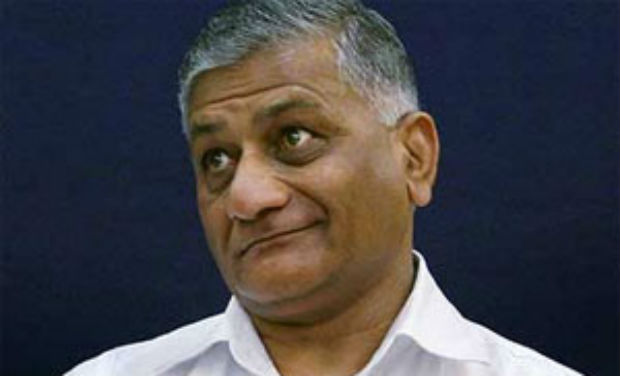
    NEW DELHI (TIP): BJP’s run of controversial statements continues with minister of state V K Singh’s ill-phrased comment that the government cannot be held responsible if a stone is thrown at a dog – in the context of the murder of two dalit children in Faridabad – inviting a storm of criticism from opposition parties. Though Singh tried to initially defend his remarks, by late evening he apologized for them. Sources said his fuller apology came after BJP chief Amit Shah spoke to him.

    “I will be very clear on this that in case, because of this mixing up of two things, which someone else has done, if somebody’s feelings have been hurt, I am apologizing for it. Because some people have created a totally different picture altogether, which was never there. I had no intention of hurting anybody. Because of this imaginative linking of somebody if somebody’s feelings have been hurt, I apologize whole-heartedly,” Singh told ANI before flying to Thailand on a ministerial assignment.

    The opposition pounced on Singh’s comments and demanding he be sacked. The issue resonated in Bihar as well where RJD chief Lalu Prasad came down heavily on the minister and BJP at a time when the NDA feels a significant section of dalits are finally moving towards it. Singh’s made the controversial remarks when he was in Ghaziabad, the constituency he represents in the Lok Sabha.

  • Complaint against Shiv Sena for ‘insulting’ President

    Complaint against Shiv Sena for ‘insulting’ President

    MUMBAI (TIP): The state unit of Congress has filed a complaint against Shiv Sena for “insulting” President Pranab Mukherjee through an “objectionable” poster, which claimed that he “bowed” before the late saffron party supremo Bal Thackeray. A delegation of Maharashtra Pradesh Congress Committee (MPCC), led by party legislator Bhai Jagtap lodged the complaint at the Shivaji Park Police Station.

    “The objectionable write up on the poster was close to the President’s picture. Mukherjee had visited Thackeray during the Presidential election campaign. In keeping with Indian culture and tradition, Mukherjee folded his hands on meeting Thackeray. But, a write up on the poster says the President bowed before him,” the complaint said.

    Congress has accused the Sena of using the poster showing the President, who is the constitutional head of the country, for “political mudslinging”.

  • Google launches paid version of YouTube | Introducing YouTube Red

    Google launches paid version of YouTube | Introducing YouTube Red

    LOS ANGELES (TIP): YouTube on October 21 unveiled a new $10-a-month subscription plan in the US called Red that combines ad-free videos, new original series, movies from top YouTubers, and on-demand unlimited streaming music.

    Red builds on Google’s existing music streaming service by providing ad-free access to YouTube programming, along with features such as the ability to download videos to mobile devices and have music playing in the background while using other mobile apps.

    YouTube Red will expand to other major markets next year. For users of iPhones and other Apple Inc. devices, the service will cost $12.99 a month. The subscription price for Apple users is more expensive because Apple charges app makers a 30% fee on in-app purchases such as subscriptions, a Google spokeswoman said.

    “We’re realizing paid membership is a really hard business to be in,” said YouTube Chief Business Officer Robert Kyncl at a press event Wednesday at YouTube’s campus near the Los Angeles International Airport, a sprawling space where YouTube stars and mainstream artists frequently perform and make videos. To compete, Mr. Kyncl said the company focused on its exclusive content and the “most desired” features on subscription services, such as offline capabilities.

    YouTube’s new music app will also seek to differentiate itself from competitors. For instance, subscribers will have access not just to the same 30 million-song library that they do on Spotify and Apple Music, but also to an easily searchable database of each artist’s music videos, live performance videos, covers, remixes and other unofficial versions of their songs.

    The music app will be free to download and use, but subscribing will remove ads and unlock additional background and offline features. App users get a 14-day free YouTube Red membership without entering a credit card number, and can extend their trial for an additional 30 days after entering credit card information.

  • VOLKSWAGEN CHECKING IF LATEST ENGINE CONTAINS CHEAT SOFTWARE

    VOLKSWAGEN CHECKING IF LATEST ENGINE CONTAINS CHEAT SOFTWARE

    BERLIN (TIP): Volkswagen is looking into whether earlier versions of its latest diesel engine model contained software capable of rigging emissions tests, it said on Thursday, potentially widening a scandal that has rocked Europe’s biggest carmaker.

    The German company said last month that software used to cheat US diesel emissions tests could be in up to 11 million vehicles worldwide fitted with its older EA 189 diesel engine.

    It said in a brief statement on Thursday it was examining whether the software might also be in earlier versions of its latest EA 288 diesel engine.

    That could add millions more to the number of affected vehicles, said Ferdinand Dudenhoeffer, head of the Center of Automotive Research at the University of Duisburg-Essen.

    The more vehicles that include illegal software, the higher the costs Volkswagen could face for refitting them, as well as for potential regulatory fines and lawsuits.

    “I think it is a big problem,” Dudenhoeffer said, adding the lack of information from Volkswagen made it impossible to know for sure how many more vehicles might be affected.

    “It suggests it doesn’t know it’s product, which is a tragedy.”

    Investigations

    Almost five weeks after it admitted to cheating diesel emissions tests in the United States, Volkswagen is still grappling to get to the bottom of a scandal that has wiped about a third off its stock market value, forced out its long-time CEO and rocked the global car industry and German establishment.

    “The way this is all coming out…is amazing,” said Bernstein analyst Max Warburton. “Perhaps they can change their advertising slogan from ‘Das Auto’ to ‘Das Motor: Engines so complicated even we don’t understand how they work!’” he said.

    Volkswagen said in its statement there was no banned software built into vehicles with its latest EA 288 Euro 6 diesel engine, adding this had been confirmed by Germany’s KBA automotive regulator.

    “Other generations of the EA 288 are currently being examined,” it added, without elaborating.

    US regulators have already said they are investigating Volkswagen’s “generation 3” vehicles in the United States, which contain the EA 288 diesel engine.

    But analysts said that would be small number compared with the volume of vehicles with EA 288 engines on European roads. Diesel vehicles account for about a half of auto sales in Europe, compared with a small fraction in the United States.

    Volkswagen said last week it would recall and refit 8.5 million vehicles in the

    European Union. It added on Wednesday that about 3 million of those would need hardware changes — a more costly upgrade than the software changes needed for the other affected vehicles.

  • NAVRATRI CELEBRATED IN  INDIA SQUARE, NEW JERSEY

    NAVRATRI CELEBRATED IN INDIA SQUARE, NEW JERSEY

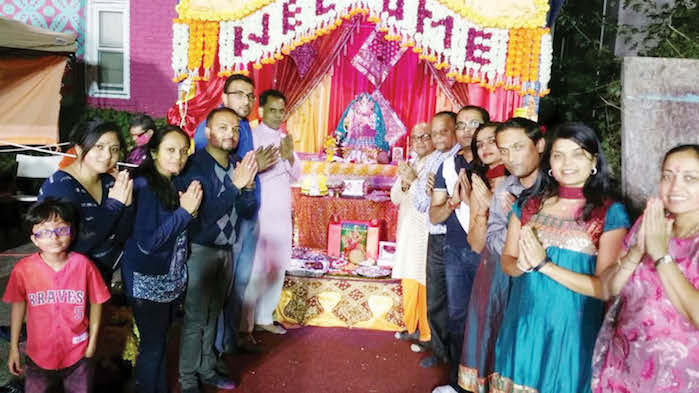
    JERSEY CITY, NJ (TIP): Navratri festival was lighted up in India Square in Jersey City and organized by Carry On Restaurant, Patel Video, Patel Bros with free dinner, free entry and free Maha Prasad. It attracted many residents to do Garba dance in different costumes in all age groups.

    The  Nine Nights of Navratri and Dussehra are  Hindu celebrations of Goddess Durga. The festival was held on Newark Avenue between Tonnelle Avenue and Kennedy Boulevard.

    The audience constituted  various religious  and ethnic communities.

  • RBI GOVERNOR TO KEEP FINAL SAY ON INTEREST RATES

    RBI GOVERNOR TO KEEP FINAL SAY ON INTEREST RATES

    NEW DELHI (TIP): After months of debate, the finance ministry and the Reserve Bank of India seem to be converging on the proposed monetary policy committee (MPC), which will have equal representation from both sides, with the governor having the deciding vote on interest rates.

    Sources said the plan is to have a six-member panel — with three members being nominated by the government and an equal number coming from RBI.

    While the RBI governor will have the casting vote, the deputy governor and executive director dealing with monetary policy will be the members.

    In case of the government nominees, the finance ministry will decide on who would be nominated.

    The move to form a monetary policy committee (MPC), with the RBI governor having the deciding vote on interest rates, is set to be endorsed by the cabinet. It comes after a bitter debate over the constitution of the committee that will replace the existing system where the RBI is the sole authority on interest rates although the governor consults a technical committee.

    Under the new mechanism — a part of which has already been implemented —the Centre and the central bank would agree to an inflation target and RBI would then move the policy rates accordingly based on the recommendations of the proposed monetary policy committee. Currently, the target is 4% inflation with a possible movement of 2% either way.

    There have been various suggestions on how the committee should be structured. The Financial Sector Legislative Reforms Commission had suggested a seven-member committee with the governor as the chairman, an RBI executive director, three members from the government and two to be jointly decided by the Centre and RBI.

    Then, a committee headed by RBI deputy governor Urjit Patel had recommended a five member panel with three central bank officials and two two external members, who were to be appointed by the governor and D-G. The governor was to get a casting vote in case of a tie.

    A few months ago, a draft report was put out on the finance ministry website which suggested a seven-member committee with four members to be nominated by the government and three coming from RBI, with the governor getting a casting vote. The report was widely criticized and the government said that it was not its draft.

  • AS CHINA WEAKENS, RECESSION STALKS NORTH ASIA

    AS CHINA WEAKENS, RECESSION STALKS NORTH ASIA

    The slowdown in China’s economy, the world’s second largest, is sucking the growth out of North Asia and tilting some economies towards recession.

    As China undergoes a painful rebalancing of an economy that accounts for 16 percent of global GDP – up from below a tenth a decade ago – the International Monetary Fund predicts 5.5 percent growth this year for a region that also includes export powerhouses Japan, South Korea, Hong Kong and Taiwan.

    That would be the weakest growth rate since the global financial crisis.

    Japan’s exports grew by 0.6 percent from a year earlier in September, the slowest since August last year, data showed on Wednesday, as shipments to China dropped by 3.5 percent.

    “Without a doubt, as long as China remains in a very soft spot … it’s natural that North Asia, which is very highly oriented to China’s market, whether directly or as a conduit, also takes a knock,” said Vishnu Varathan, a senior economist at Mizuho Bank in Singapore.

    Japan’s weak export numbers have heightened concerns that its economy may slip into recession in the third quarter, with a weak yen not doing enough to support its overseas shipments.

    Singapore narrowly missed a third-quarter recession after the export-reliant economy expanded just 0.1 percent from the previous three months, but Taiwan still looks very close to one.

    China’s rapid growth and liberalisation, especially after accession to the World Trade Organisation in 2001, gave a tremendous boost to Asian trade. Supply chains spread across the region, sucking in everything from coal to fuel its factories, to electronic components for mobile phones to be shipped to markets in the West.

    Now, though, things are different.

    PMI readings are contracting across most of Asia-Pacific, with new orders falling at the fastest pace since early 2009, and inventories piling up, meaning that production may have further to fall before economies shake off spare capacity, according to HSBC.

    Feeling the pinch 

    On Tuesday, Japan’s Yaskawa Electric Corp, which specialises in factory automation and robotics and relies on China for about a fifth of its sales, trimmed its annual revenue outlook, citing China’s economic slowdown.

    Nidec Corp, another Japanese technology firm, on Wednesday posted higher second-quarter operating profit but kept its outlook unchanged, citing China’s slowdown.

    Yasuo Sakuma, a fund manager at Bayview Asset Management in Tokyo, doesn’t see things improving soon for companies like Yaskawa. “We still need to be cautious, considering we’re not seeing a bottoming out in orders,” he said.

    Elsewhere, South Korea’s exports tumbled 8.4 percent from a year earlier in September, while Taiwan’s export orders for that month declined 4.5 percent, with orders from China sinking 9.8 percent.

    As global trade stalls, Asia’s air and sea cargo operators are feeling the pressure, with the only boost to business coming from pre-Christmas shipments to the United States.

    “We’re seeing some good volumes from China. The tonnage is there, but given the air freight capacity on the market we’re not getting the ‘super’ peak yields we would be hoping for at this time of year,” said Mark Sutch, Cathay Pacific’s general manager for cargo sales and marketing.

    “We will be operating our peak transpacific schedule … this week and expect the peak to continue to Thanksgiving (at end-November). A pre-Christmas rush is hard to predict.”

    At Hong Kong Air Cargo Terminals (HACTL), one of the main cargo handlers, business is flat compared with last year.

    “Slowdown in China is impacting Hong Kong in a whole range of ways, including air cargo,” said HACTL’s CEO Mark Whitehead. “I can’t see significant growth in this market … although longer term I do have a very robust view of air cargo.”

    Economists predict that North Asia’s dismal export numbers will continue for some time.

    “It’s going to probably look like that to the first half of 2016 at least,” said Mizuho’s Varathan.

    “We’re looking for (China’s) exports to bottom and some pick-up in consumption as we head into the middle of next year.

  • KARWA CHAUTH

    KARWA CHAUTH

    The fast of Karwa Chauth is of particular importance to all Hindu married women in India. They believe that the festival ensures prosperity, longevity and well-being of their husbands. The origin of this festival was based on a very sweet and noble idea. Though this idea has lost its true sense as today the whole outlook of this festival has changed.In the ancient time, girls used to get married at a very early stage, and had to go and live with their in-laws in other villages. After marriage, if she faces any problem with her in-laws or her husband, she would have no one to talk to or seek support from. There used to be no telephones, buses and trains long ago. Her own parents and relatives would be quite far and unreachable. Thus the custom started that, at the time of marriage, when bride would reach her in-laws, she would befriend another woman there who would be her friend or sister for life. It would be like god-friends or god-sisters. Their friendship would be sanctified through a small Hindu ceremony right during the marriage.

    The Legend 

    The Story of Queen Veeravati

    A long long time ago, there lived a beautiful girl by the name of Veeravati. She was the only sister of her seven loving brothers, who was married to a king. On the occasion of the first Karva Chauth after her marriage, she went to her parents’ house. After sunrise, she observed a strict fast. However, the queen couldn’t stand the rigors of fasting and was desperately waiting for the moon to rise. The seven brothers who loved her dearly, were very disturbed watching the distress of their sister and decided to end her fast by deceiving her. Then the brothers reflected a mirror through Pipal tree leaves. The sister, taken it as moon rise, broke the fast and took food. However, the moment the queen ate her dinner, she received the news that her husband, the king, was seriously ill.

    The queen rushed to her husband’s palace and on the way, she met Lord Shiva and his consort, Goddess Parvati. Parvati informed her that the king had died because the queen had broken her fast by watching a false moon. However, when the queen asked her for forgiveness, the goddess granted her the boon that the king would be revived. But to achieve this, she would have to undertake the Karva Chauth fast under strict rituals, then only her husband would come top life. Thus, by strictly following all the rituals of Karwa chauth, queen Veeravati relivened her husband.

    The Legend of Mahabharata

    The belief in this fast and its associated rituals goes back to the pre-Mahabharata times. Draupadi, too, is said to have observed this fast. Once Arjun went to the Nilgiris for penance and the rest of the Pandavas faced many problems in his absence. Draupadi, out of desperation, remembered Lord Krishna and asked for help. Lord Krishna reminded her that on an earlier occasion, when Goddess Parvati had sought Lord Shivas guidance under similar circumstances, she had been advised to observe the fast of Karva Chauth. Draupadi followed the instructions and observed the fast with all its rituals. Consequently, the Pandavas were able to overcome their problems. On this day, fasting women listen to Karva Chauth legends with rapt attention.

    The Story of Satyavan and Savitri

    There is the story of the Satyavan and Savitri. When Lord Yama, came to procure Satyavan’s soul, Savitri begged him to grant him life. When he refused, she stopped eating and drinking and Yamraj finally relented. He granted her, her husband’s life. To this day, Karva Chauth is celebrated with great faith and belief.

    KARWA CHAUTHThe Legend of Karwa

    According to another legend, a woman named Karwa was deeply devoted to her husband. One day while bathing, he was caught by a crocodile. Karva came running and bound the crocodile with a cotton yarn. She then went to Yama, the Lord of the death, and requested him to send the offending crocodile to hell. When Yamarefused, she threatened to curse him. Afraid of the power of a devoted wife, Yama readily accepted and sent the crocodile to Yamalok or hell, and blessed Karva’s husband with long life.

    The festival of Karwa Chauth was emerged as a day to celebrate the season of autumn and enjoy the company of friends and relatives. But later on, many mythological legends were added to give it a religious touch. This festival is glorified and widely solemnized by the Hindus and Sikh of north-western India. As the name signifies, Karva meaning a clay pot and chauth corresponding to the fourth, this festival is commemorated on the the fourth day after the Full Moon in Kartik month of Hindu calendar. A few days before Karva Chauth, married women buy new karvas, the spherical clay pots and paint them on the outside with beautiful designs. Inside the pot, they put bangles and ribbons, home-made candy and sweets, make-up items and small clothes e.g. handkerchief. The women then visit each other on the day of Karva Chauth or immediately afterward, and exchange these karvas. Season-wise, soon after the harvest, it is an excellent time to enjoy festivities, meet one another and exchange gifts. During the time of Karwa Chauth, parents send gifts to married daughters and their children.

  • MAHARSHI VALMIKI JAYANTI

    MAHARSHI VALMIKI JAYANTI

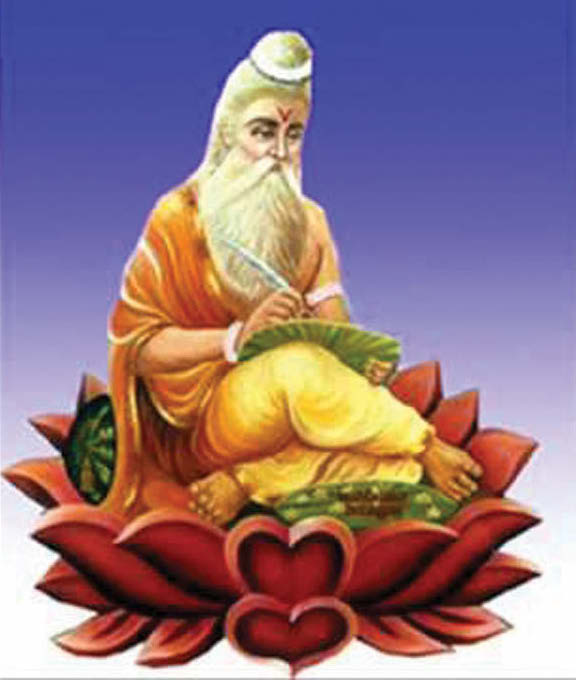
    Maharshi Valmiki, the author of the great Indian epic Ramayana, was a Hindu sage who lived around the beginning of the first millennium B.C. He is referred to as the ‘adikavi’, the original creator of the Hindu ‘sloka’ – a verse form in which most of the great epics such as Ramayana, Mahabharata, Puranas, and other works are composed. His jayanti falls on October 24.

    How Valmiki Got His Name

    He was a Brahman by birth belonging to the lineage of Bhrigu. Fate consigned him to a family of robbers which brought him up. Accidental contact with the Saptarsis – the Seven Sages and with the sage Narada changed his life. By the repetition of Ramanama or the name of Ram, he attained the supreme state of a ‘maharshi’ or great sage. Since a ‘valmika’ or an anthill had grown over his body during his long period of austerities and poised state of penance, he came to be known as Valmiki.

    The Epic Vision

    When the mythical sage Narada came to his hermitage, Valmiki who received him with due honor, posed a question -who was an ideal man? The reply came from Narada in the form of Samkshepa Ramayana which formed the foundation on which the magnificent 24,000 verse edifice was built by Valmiki.

    Then, immersed deep into this story, Valmiki left for the river Tamasa with his disciple Bharadwaj. The pleasant and placid river reminded the seer of the mature and modest quality of his hero. He visualized a pure and pious man’s mind reflected in the deep waters. In the next instant he witnessed a heartless hunter mercilessly killing a male bird that was in love with its mate. The piteous wailing of the distressed female moved the heart of the sage so much that he spontaneously uttered a curse on the hunter. However, this curse came out of his mouth in the form of a ‘sloka’, a perfectly metrical composition, which surprised the sage himself: “No – You shall not command any respect in society for a long time as you have shot dead an innocent bird engrossed in love”. The sage had turned into a poet.

    Lord Brahma’s Command

    His powerful emotions found equally powerful medium for their manifestation. It was a spontaneous outburst of his inner voice motivated by divine will. When he returned to his hermitage, Brahma (the fourfaced God, the creator), appeared to him and commanded him to compose an epic poem on the story of Ram as he had heard it from the great sage Narada, in his newly discovered metre. He also gave him the boon of the visions of all the incidents and the revelation of all the secrets connected with the story. Accordingly, Valmiki composed the epic, named it The Ramayana – the way or the conduct or the lifestory of Ram – the story of Ram’s march in search of truth and righteousness.

    A contemporary of the heroes of the Ramayana, Maharshi Valmiki gives very little information about himself since he was a sage who had completely dedicated his life to contemplation on God and service to humanity. History has no account of his life except that he figures briefly and modestly on two occasions in the course of the epic he wrote:

    Valmiki’s Cameo in Ramayana

    He is one of the first sages whose hermitage Ram visits along with his wife and brother on his way to Chitrakoot after leaving Ayuodhya. Valmiki welcomes them with love, affection and reverence and utters just one word ‘asyatam’ (be seated). He feels honored when Ram accepts his request and sits a while. The other occasion is when Ram banishes Sita, it is Valmiki that shelters her and rears up her twin sons Luv and Kush. When they recite the epic poem in his royal court, Ram invites Valmiki and requests him to bring Sita along so she can prove her chastity before the elders and sages. Valmiki is offended yet keeps his composure and says Sita would comply with Ram’s wishes for he is her husband. While presenting Sita in the Mandapa (prayer hall) Valmiki utters words that highlight the penance and perseverance which Valmiki practiced his entire life.

  • Kohli overtakes Ganguly to become second-highest Indian ODI centurion

    Kohli overtakes Ganguly to become second-highest Indian ODI centurion

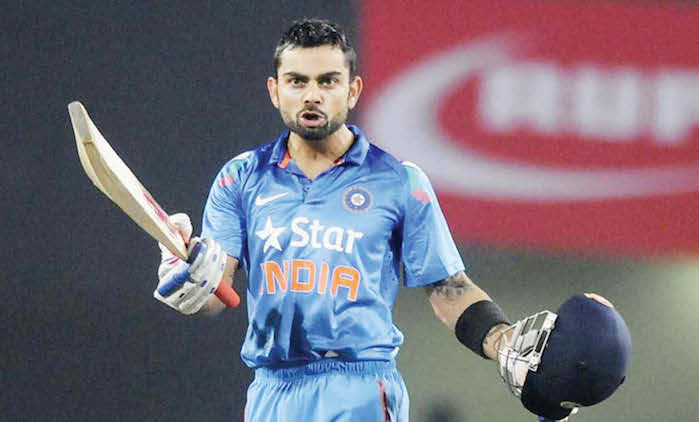
    CHENNAI (TIP): It took Virat Kohli 248 days and 13 innings to move from his 22nd ODI century to his 23rd. Facing a do-or-die situation in the series, the champion announced his return to form, scoring 138 off 140 balls and going on to become the second-highest century maker for India in ODIs. It helped him go past Sourav Ganguly, who held that position with 22 hundreds.

    Ganguly said it was a foregone conclusion that the 26-year-old will surpass his mark. “The way he has been batting for the last couple of years, it was quite evident that he will surpass my 22 tons. I didn’t see Virat’s innings today so I cannot comment on his batting. He is a class act and I am sure by the time he finishes his career, he will score plenty more,” Ganguly told TOI on Thursday.

    Kohli 1Highlights

    • It took Virat Kohli 248 days and 13 innings to move from his 22nd ODI century to his 23rd.
    • During his 202-minute vigil, Kohli played shots all around the park and dominated the bowlers.
    • Ganguly said it was a foregone conclusion that the 26-year-old will surpass his mark.

    During his 202-minute vigil, Kohli played shots all around the park and dominated the bowlers. Walking in at the fifth over, the 26-year-old had the stage set to express himself. He started off patiently and took eight overs to settle down before he hit spinner Aaron Phangiso for a six. That was the spark that he needed and despite the ball stopping on a dry surface, Kohli was up for it. There were six boundaries and five sixes, the highlight being the over-boundary that helped him move from 95 to 101.

    It was not just the boundaries, the Test captain was always alive to take the singles. There were a couple of occasions where he could be run out, but luck was with Kohli on a hot and humid Chennai afternoon. It was the 127-run partnership with Suresh Raina that helped India reach 299. Raina, who also got a half-century after quite a while, praised the right-hander for his effort.

    “Kohli’s knock was crucial for us. He also shared a very good partnership with (Ajinkya) Rahane and that set the tone for a big total. I was happy with the way I batted and supported Kohli today,” said Raina.

    Sunil Gavaskar said Virat’s ability to use his top and bottom hands so skilfully helped him succeed. “He adapted well to the conditions. He has an excellent knowledge about his hands. He uses his top hand marvellously and you will hardly see any chinks with his bottom hand.”

  • Sanjay Dutt buys team in the Masters Champions League

    Sanjay Dutt buys team in the Masters Champions League

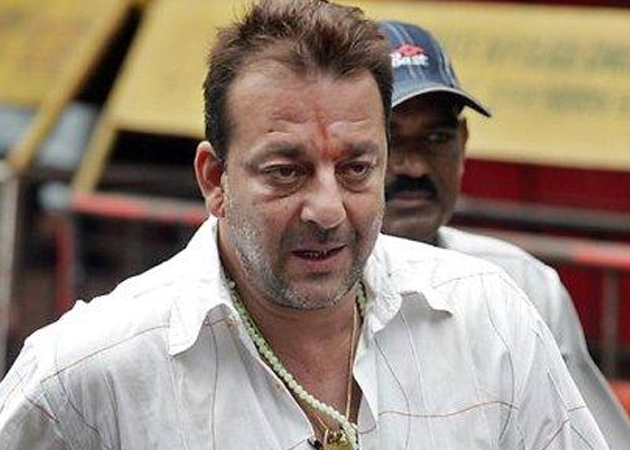
    MUMBAI (TIP): Movie actor Sanjay Dutt, serving time until next year for his alleged role in the 1993 Bombay blasts, has bought a franchise in the UAE-based Masters Champions League (MCL). Dutt’s wife, Maanyata, who’s been looking after his business interests in his absence, worked on the deal with the new league for retired international cricketers that will get underway next year.

    On Oct 20, former India batsman Virender Sehwag was in Dubai, alongside Brian Lara, Graeme Smith and others, to announce his participation in the league for ex-cricketers. Speaking to TOI about the move to buy the franchise, Maanyata said “As a family, we have always been passionate about sport. Sanjay, in particular, has been an avid sports enthusiast since childhood.”

    Highlights

    •  Sanjay Dutt’s wife, Maanyata, who’s been looking after his business, worked on the deal with new league.
    •  The MCL is for retired international cricketers that will get underway next year.
    •  Dutt’s first foray into sport was with Super Fight League that was formed in 2012.

    Dutt is expected to finish his prison sentence next year and until he’s back, talent management company CAA KWAN will run the team. “Like most Indians, we are extremely passionate about cricket and just the thought of owning a team with legends like Sehwag, Lara, Kallis being part of it is tremendously exciting. We are sure MCL is a unique concept and will prove to be a valuable investment,” Maanyata added.

    Dutt’s first foray into sport was with the Super Fight League that was formed in 2012 along with actor Shilpa Shetty’s husband and former Rajasthan Royals co-owner Raj Kundra. India captain MS Dhoni’s good friend and manager Arun Pandey, who runs Rhiti Sports, has also invested in a MCL franchise. Digital agency Everymedia is also buying an MCL franchise.

  • Dhanraj Pillay bats for Pakistanis’ participation in HIL

    Dhanraj Pillay bats for Pakistanis’ participation in HIL

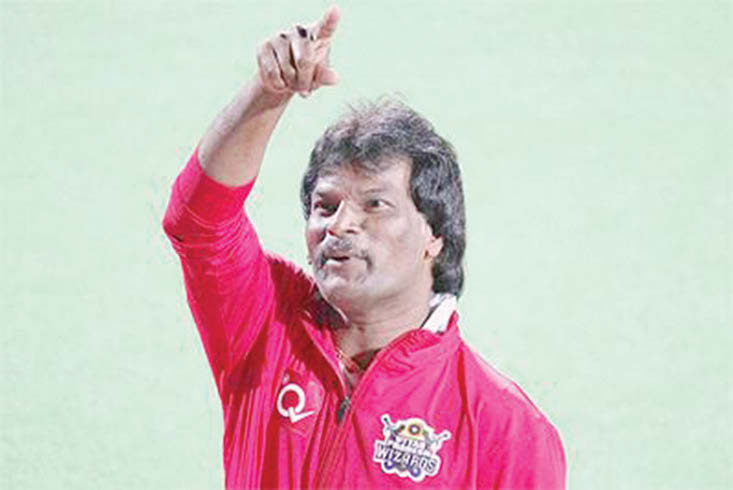
    BENGALURU: Former India captain Dhanraj Pillay on Oct 21 batted for the participation of Pakistani players in Hockey India League and suggested the league authorities to siphon off some money for setting up academies to develop and improve the quality of the sport in India.

    Pillay said Hockey India should have taken permission from the politicians to allow Pakistani players to participate in Hockey India League.

    “Hockey India should have taken permission from the politicians to allow Pakistani players to participate in the HIL. I don’t think they would have any issues with that,” he said. Pillay is in the city for the second edition of Bengaluru Cup which is being played at the Hockey Stadium here. Pillay is guiding Air India team.

    The crux of the matter is that Pakistanis refused to tender apology for their misconduct and hence they have banned them from playing in the HIL, Pillay said.

    “The problem is they have not apologized for their misconduct … that happens. However, things could have been sorted if the federations would have approached the politicians,” he said. The International Hockey Federation (FIH) on December 14 last year banned two Pakistani players for one match each in the aftermath of Pakistan’s victory over India in the Champions Trophy semifinal.

    After winning the game 4-3 in a thrilling battle, several Pakistani players had removed their shirts, danced in jubilation, and raised obscene gestures towards the crowd.

    Replying to a query on development of academies in the country to boost hockey, Pillay said Hockey India League authorities should siphon off some money for setting up of academies to breed young talented players. “The HIL authorities should give some money for setting up of academies to breed young talents and bring them onto the world stage,” he said.

    “We had appointed Roelant Oltmans as the High Performance Director, but did not give any grassroot programme for developing and improving the sport in India.

    “Oltman was aiming only at the established players whether they were playing for a junior, sub-junior, Under-21 or senior team.

  • Viswanathan Anand off-form in World Blitz too, finishes 22nd

    Viswanathan Anand off-form in World Blitz too, finishes 22nd

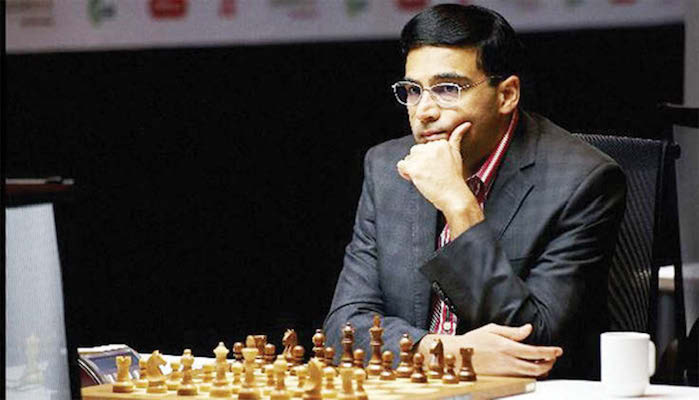
    BERLIN (GERMANY) (TIP): Former world champion Viswanathan Anand’s bad form continued as he could only finish 22nd in the World Blitz Chess championship, which concluded on Oct 22.

    Anand’s final day was marred by draws and the silver lining for the Indian was the fact that he did not lose a single game on the last day that had 10 games.

    After finishing day one on a disappointing note with just 6.5 points out of 11, Anand got the same points getting seven draws and three victories on the final day.

    The five times world champion will next take part in the Bilbao Final Masters as the defending champion later this month at Bilbao in Spain.

    Grandmaster P Harikrishna, who came here straight after winning the Poker Masters tournament in Isle of Man, ended as the second best scorer amongst Indians on 12 points, a half point ahead of Krishnan Sasikiran.

    Among other Indians in the fray, Surya Shekhar Ganguly and Vidit Santosh Gujrathi scored an identical 11 points, B Adhiban ended his campaign on 10.5 while S P Sethuraman scored 9.5 points in all.

    Grandmaster Alexander Grischuk of Russia emerged as the deserving winner finishing with a flourish that got him eight points out of last nine rounds. The Russian scored an impressive 15.5 points from his 21 rounds, losing three drawing five and winning the remaining 13 games.

    It was a two-way tie for the second spot and Frenchman Maxime Vachier-Lagrave finished second on his better tiebreak than Vladimir Kramnik of Russia who too came back strongly after a disappointing show in rapid chess.

    World champion in Classical and rapid, Magnus Carlsen of Norway could not keep the momentum ticking on the final day of the event and his 14 points were good for the 6th spot only.

  • Chinese media laud Xi’s Britain visit

    Chinese media laud Xi’s Britain visit

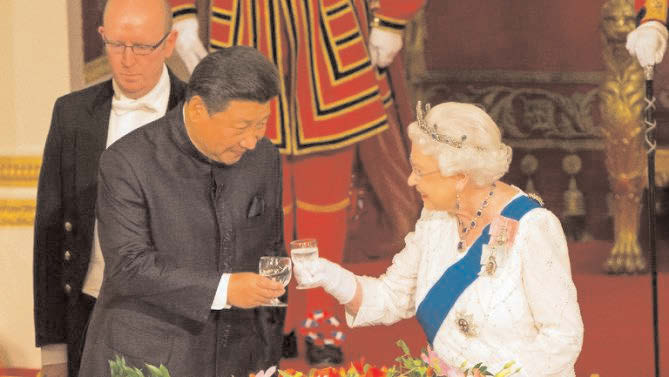
    BEIJING (TIP): Chinese media on Oct 22 trumpeted President Xi Jinping’s visit to Britain, running triumphant coverage of the trip at odds with Western accusations that London has sold out to the Asian giant. Editorial pages in the United States and Britain have lambasted Downing Street for abandoning human rights concerns in favour of improved trade relations with the world’s second largest economy, but Chinese state media praised British “pragmatism”.

    Front pages across the country featured glamorous pictures of President Xi Jinping and first lady Peng Liyuan with British politicians and royalty, opulently illustrating what the governments have described as a “new golden era” between the nations. The “ultra-state visit” put on for Xi featured the best of everything, according to a breathless commentary in the overseas edition of the People’s Daily, the Communist Party’s official mouthpiece, which portrayed the trip as the start of a beautiful friendship. Britain is seeking increased trade, investment and international influence from its relationship with China, it said, and “the two countries should eliminate all disturbances, and seize the moment to deepen the development of their bilateral relations”.

    It suggested that London may in the future even support Beijing on the UN Security Council.

    British business deals with China, including in such sensitive sectors as nuclear power, should set an example for other countries, according to an editorial in the Global Times, which is close to the ruling party.

    Meanwhile reports speculated on the benefits of merging the two “cultural great powers”, showing Chinese-made electric black cabs and arguing that improved relations might raise the level of Chinese footballers a pet project of Xi, who has called for the country to win a World Cup.

    The tone is dramatically different to Chinese media declarations when relations soured after Prime Minister David Cameron met the exiled Tibetan spiritual leader the Dalai Lama during a 2012 visit to London.

    That tete-a-tete “hurt the feelings of the Chinese people”, Beijing said, and the chairman of China’s legislature, Wu Bangguo, abruptly cancelled a trip to Britain. The high-level freeze lasted for over a year. When Prime Minister David Cameron travelled to China in 2013 hoping to patch up relations, an editorial in the Global Times mocked Britain for being “an old European country”, useful only for “travel and study”.

  • Indian students 3rd in generating London’s revenue

    Indian students 3rd in generating London’s revenue

    LONDON (TIP): Indian students in London were the third largest revenue generator for the city last year, contributing £130 million. London mayor Boris Johnson’s first-of-its-kind analysis has found that Indian students paid £56 million in fees and nearly £74 million in living costs, with the money creating and supporting 1,643 jobs.

    But the report also confirms a major fall in Indian students in the UK -from 10% of all international students in London in 2010 to around 4% in 2014. While Chinese student numbers have grown by 49% since 2009- 10, the Indian numbers have continued to decline, falling by 11% year on year.

    “Indian students coming to London and the rest of the UK have approximately halved over the last five years,” the report says.

  • CBI TO PROBE ATTACK ON DALIT FAMILY IN FARIDABAD, RAJPUTS FLEE VILLAGE

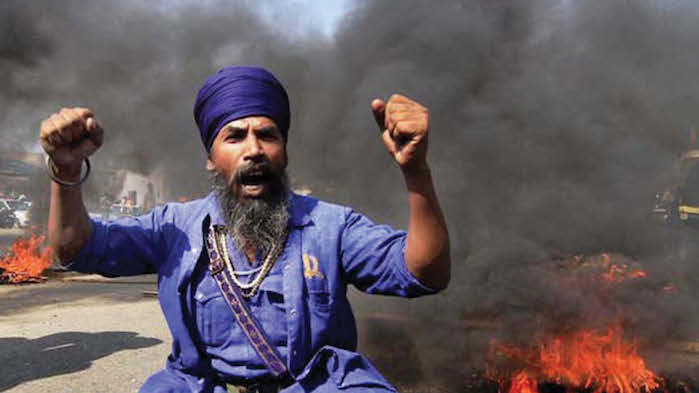
    BALLABHGARH (TIP): As scores of Dalits gathered in Sunpedh on Wednesday, a day after two Dalit children in the village were burnt alive in an attack by Rajputs on their family, the Haryana government said it would recommend a CBI probe into the incident.

    Villagers blocked the Delhi-Agra highway for most of the day in grief and anger, with the bodies of two infants who died on Tuesday placed on blocks of ice. They allowed the children to be buried only after meeting with the district administration.

    On Wednesday morning, the bodies of three-year-old Vaibhav and nine-month-old Divya, wrapped in white sheets, were brought to the village from AIIMS. A crowd first gathered in support of their father Jitender, and soon swelled after Dalits from other villages arrived and demanded stringent action against the guilty.

    After protesting at the bypass for a few hours, the demonstrators began to march from Jaat Chowk in Sunpedh till the Faridabad highway. The highway was blocked for over two hours before the Faridabad administration spoke to the family and asked them to form a committee of six people to put forth the demands.

    The crowd, however, had to be pushed away with force while at least 300 policemen from Faridabad and Gurgaon were deployed to maintain security. An additional five battalions of reserve forces were also called in.

    Around 6 pm, the family finally started the last rites of the two children who were buried in an empty plot near the village. Jitendra’s wife Rekha
    (23) is still battling for life in Delhi’s Safdarjung Hospital. Police on Tuesday arrested four named by Jitendra in the FIR.

    Also on Wednesday, politicians from across party lines made a beeline for the village, including Congress vice president Rahul Gandhi, Union Minister of State and Faridabad MP Krishan Pal Gujjar, CPI(M) leader Brinda Karat and AAP leader Ashutosh.

    Gandhi arrived with Haryana Congress chief Ashok Tanwar and Congress leader Shakeel Ahmed. Speaking to the family, Rahul said: “If you are weak you can be crushed. This is the attitude shared by the Prime Minister, Haryana Chief Minister, BJP and the RSS. They have been killed for no fault of theirs except that they were poor.”

    Gandhi also objected to a reporter’s query on allegations that his visit was a mere ‘photo opportunity’. “This is insulting when someone says it when someone comes here. It is not insulting to me. It is insulting to these people. What is a photo op. What you mean? People are dying. I will keep coming to such places,” Gandhi said. Source: The Indian Express

  • 5 turbaned Sikhs among 19 Indo-Canadians elected to Canadian Parliament

    5 turbaned Sikhs among 19 Indo-Canadians elected to Canadian Parliament

    TORONTO (TIP): The 1.25 million-strong Indo-Canadian community had much to cheer about on Tuesday, October 20, as it doubled its representation in the new Parliament with the election of a record number of 19 MPs.

    Though comprising only about 3% of the population of Canada, the community outperformed those numbers. The new number of Indo-Canadian lawmakers far outstripped the previous high of nine.

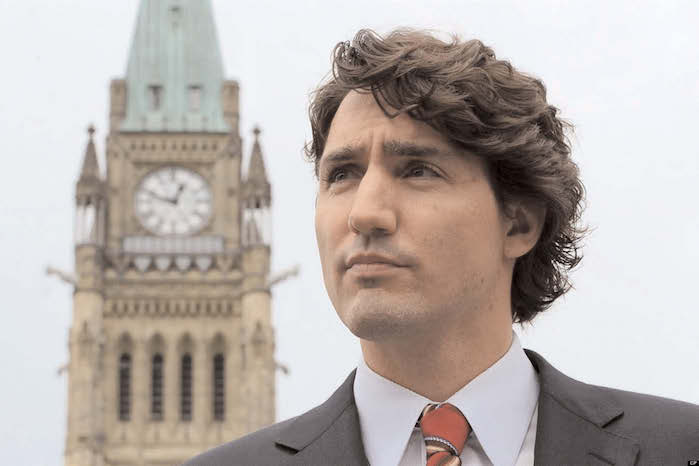
    In 2011, almost all the Indo-Canadians MPs were Conservatives, with no Liberals elected, reflecting the overall mandate. The triumph of Justin Trudeau catapulted at least 15 Indo-Canadian Liberals to the Parliament in Ottawa.

    Two Turbaned Sikh MPs Lt Col Harjit Singh Sajjan (left) and Randeep Singh Sarai
    Two Turbaned Sikh MPs Lt Col Harjit Singh Sajjan (left) and Randeep Singh Sarai

    There will also be an overhaul in the ranks of the community’s MPs, with only a couple of sitting members re-elected. Indo-Canadians won seats in four provinces – Ontario, Quebec, British Columbia and Alberta.

    Canadians voted out the Conservative Party by handing a landslide to the Liberal Party on Monday, October19.

    Winners Ruby Sahota
    Ruby Sahota

    If there were significant victors among these candidates, the biggest loser was minister of state for sports Bal Gosal, who lost by about 6,000 votes to Liberal Party candidate Ramesh Sangha in Brampton Centre constituency of Ontario, once held by Liberal Gurbax Singh Malhi.

    Among the prominent winners was Harjit Sajjan of the Liberal Party, a Canadian Armed Forces veteran who served three operational deployments in Afghanistan.

    The longest-serving Indo-Canadian MP, Deepak Obhrai, won for the seventh time from Calgary Forest Lawn, while four-time MP Nina Grewal lost the elections.

    Winners Deepak Obhrai
    Winners Deepak Obhrai

    Also a winner was Sukh Dhaliwal, another Liberal, who as an MP in 2010 had moved a resolution in the Canadian Parliament to have the 1984 riots in India declared a “genocide”. Dhaliwal lost in 2011 but he turned the tables on his opponent, sitting MP Jinny Sims of the New Democratic Party, this time.

    Some candidates emerged victorious in ridings (as constituencies are called in Canada) where the Indo-Canadian vote wasn’t a major factor. Among them was Liberal candidate Chandra Arya, a former executive and chair of the Indo-Canada Ottawa Business Chamber, who won from Nepean that falls within the boundary of Ottawa, Canada’s capital.

    His party colleague, Anju Dhillon, won from Dorval-Lachine-LaSalle, a constituency on Montreal island, becoming the first Indo-Canadian to win a seat in the French-speaking province of Quebec.

    Most Indo-Canadian victories came in Canada’s biggest province of Ontario as many seats in Brampton and Mississauga cities went to candidates from the community.

    Some Indo-Canadian MPs

    • Anju Dhillon: Liberal, won the Quebec constituency of Dorval-Lachine-LaSalle
    • Chandra Arya: Liberal, won from Nepean in Ontario
    • Ramesh Sangha: Liberal, won from Brampton Centre in Ontario, defeating minister of state Bal Gosal
    • Gagan Sikand: Liberal, won from Missauga-Streetsville in Ontario
    • Deepak Obhrai: Conservative, won from Calgary Forest Lawn in Alberta
    • Harjit Sajjan: Liberal, won from Vancouver South in British Columbia
    • Sukh Dhaliwal: Liberal, won from Surrey Newton in British Columbia
    • Raj Saini: Liberal, won from Kitchener Centre in Ontario
    • Bardish Chagger: Liberal, won from Waterloo in Ontario
    • Bob Saroya: Conservative, won from Markham-Unionville in Ontario
  • PM Modi lays foundation stone for Andhra’s new capital

    PM Modi lays foundation stone for Andhra’s new capital

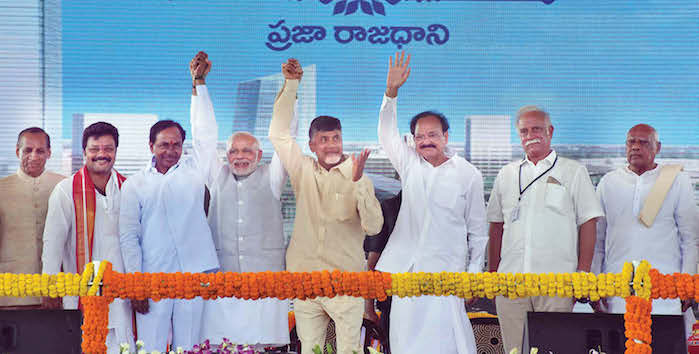
    AMARAVATI  (TIP): Amid fanfare, Prime Minister Narendra Modi on October 22 laid the foundation stone of Andhra Pradesh’s new capital Amaravati at Uddandarayunipalem village in Guntur district.

    Union Ministers M Venkaiah Naidu, Ashok Gajapathi Raju and Nirmala Sitaraman, AP and Telangana Governor E S L Narasimhan and Chief Ministers of AP and Telangana N Chandrababu Naidu and K Chandrasekhar Rao, respectively, were among those present on the occasion of ‘shila nyas’ in the village, about 40 kms from Vijayawada, the commercial hub of the state.

    Modi went around ‘Amaravati Pavilion’, a walk through showcasing evolution of Amaravati, a place of immense historical, mythological and cultural significance, its present and future.

    Amaravati was once the seat of power of Satavahana rulers. As per a call given by Chandrababu Naidu, soil and water from 16,000 villages in the state and prominent pilgrim centres in the country have been brought to the capital region to be used in the construction of the capital city.

    The idea is to promote a sense of belongingness among the people, officials said. Singapore government agencies have prepared the master plans for the three-layered capital –seed capital, capital city and capital region.

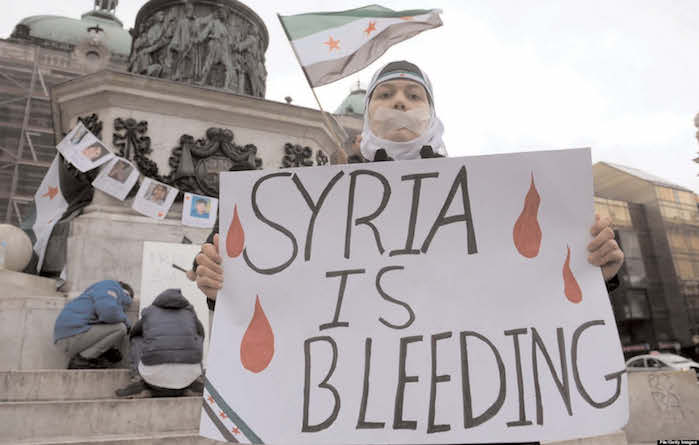
  • India needs to play a greater role in the Syrian Conflict

    India needs to play a greater role in the Syrian Conflict

    Syrian Conflict has different meaning for different Nations; however, they stand united on one important issue – Counter-Terrorism.

    Syria recently asked India to play a greater role in resolving the conflict there. New Delhi has consistently maintained that dialogue is the only way to solve the crisis in Syria. However, it has backed Russia’s recent military intervention in the country.

    Syria’s civil war has now taken a dramatic turn with Russian & Iranian involvement in helping Bashar al-Assad’s depleted army and could change the dynamics in the Middle East for the next decade.

    India’s Role so far

    India’s responses to the Syrian civil war have thus far been on the side-lines of the UN, where it has often tilted in favor of the Assad regime.

    2011 saw India voting in favor of a UNSC draft resolution that would implement a peace plan proposed by the Arab League only after a call for Assad to step down was dropped. Then, in October that year, India abstained from a UNSC resolution condemning Assad’s crackdown on pro-democracy protests. The following August, in 2012, India abstained from an UNGA resolution that expressed “grave concern” for the escalation of violence. The reason India gave for this decision was that the resolution referred to Arab League calls for Assad to step down and for UN member states to severe ties with Syria.

    Another Indian show of support for the Assad regime took place during the Geneva II talks in 2013 that sought to end the crisis. Former external affairs minister Salman Khurshid was firmly against the idea of military intervention. At the time, Russia, China and Iran held the same view.

    However, the contours of the conflict have dramatically changed since the Geneva talks.

    Yet, India has not taken the lead and has kept its role restricted to diplomatic peace efforts.

    Now, there seems to be a need for a shift in India’s policy on the issue, and here are the reasons.


    1. India in United Nations Security Council as a permanent member: India has been trying to garner support for its bid to the United Nations Security Council as the emerging power from Asia for quite some time now. To be included in the UNSC means that India will have to take sides and clear its view point on global events where at-least multiple countries are involved.
    2. Isis’s influence poses an immediate challenge: India has been prone to terror attacks coming from foreign soil and it shouldn’t let another outfit join the list. So far, New Delhi has been successful in proactively monitoring cyber recruitments by terror outfits and keeping a real time check. However, given the terror policy adopted by its neighbors and the growing unrest in the country over sacrileges & religious intolerance towards minorities, it is not the best of time for freedom of religion.
    3. Pakistan’s continuous threat of first-use nuclear policy: In order to check Pakistan’s nuclear strike threat if it comes to war with India, New Delhi must send a clear message of its military prowess. Pakistan’s policy seems to be of misdirect, the objective being to unite militant groups engaged in armed conflict within Pakistani to unify & redirect their attacks against India.
    4. With the U.S. – Iran Nuclear standoff being settled, the geopolitical picture is changing with Iran coming closer to the Gulf Cooperation Council (GCC). Gulf has remained no man’s land when it comes to U.S. & Russia and U.S. involvement or argument has always been to prevent one single power from controlling the region’s resources – OIL. The nuclear agreement between Iran and the P5+1-China, France, Russia, the United Kingdom, and the United States plus Germany-raises the possibility, albeit a distant one, of creating a new security order in the Gulf, one that could improve relations between Iran and the Gulf Arab states and help reduce the American military commitment. This deal has opened up huge commercial and strategic opportunities for India and Iran after a decade of U.S. pressure to restrict ties.
    5. The Modi government’s emphasis on greater synergies both economic and strategic with the GCC and Israel.

    This changing environment makes the time ripe for India to chart its revised foreign policy.

    India’s goal to emerge as a major player in West Asia will remain unrealized until India decides to play a greater role in the Middle East.

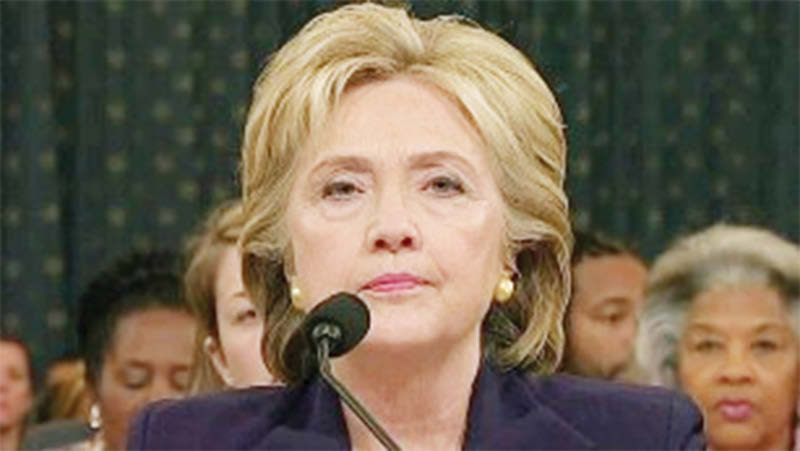
  • Hillary emerges stronger from 11 hour marathon Congressional hearing on Benghazi

    Hillary emerges stronger from 11 hour marathon Congressional hearing on Benghazi

    WASHINGTON (TIP): At times, appearing impatient but never losing control of self, Hillary Clinton answered questions at a nearly 11-hour congressional hearing Thursday, October 22. The Congressional hearing was dominated by Republican criticism of her response to the Benghazi attacks. After a day-long grilling on the details of the attack and how Clinton handled it, the former secretary of state was forced to defend her use of a private email account while in office from a flurry of late evening attacks by GOP lawmakers.

    CNN reports that she also came under testy cross-examination over the extent to which she has taken responsibility for the deaths of the Americans in the September 11, 2012, attacks and her contact with U.S. Ambassador to Libya Chris Stevens, one of the victims, after sending him to the North African country.

    “I came here because I said I would. And I’ve done everything I know to do, as have the people with whom I worked, to try to answer your questions. I cannot do any more than that,” Clinton said towards the end of the grueling day — before later breaking into a coughing fit and taking a throat lozenge to ease her failing voice.

    One of the most dramatic moments of the hearing came when Clinton was asked about her contact with Stevens. She acknowledged that she couldn’t recall having talked to him after having sworn him in as ambassador, though she believed they had spoken.

    Despite the day’s intensity, Clinton appeared cool and in command for much of the hearing. But as the day wore on, she seemed to be increasingly impatient with the Republican line of questioning and with the constant interruptions from the GOP members on the panel.

    In her most emotive testimony, Clinton sought to defang the GOP attacks by arguing that she was agonized over the deaths of four Americans in Libya more than anyone else on the panel.

    “I would imagine I have thought more about what happened than all of you put together,” she said. “I have lost more sleep than all of you put together. I have been wracking my brain about what more could have been done or should have been done.”

    Clinton noted that an independent Accountability Review Board that she set up as secretary had pulled no punches, unveiling 29 recommendations for improving security for U.S. diplomats overseas. She also noted that previous attacks on Americans abroad, including in 1983 on a U.S. Marines barracks and the U.S. Embassy in Beirut, had produced changes to U.S. security procedures after nonpartisan investigations by Congress.

  • Indian-American  Sameer Lalwani Appointed in U.S. Think Tank

    Indian-American Sameer Lalwani Appointed in U.S. Think Tank

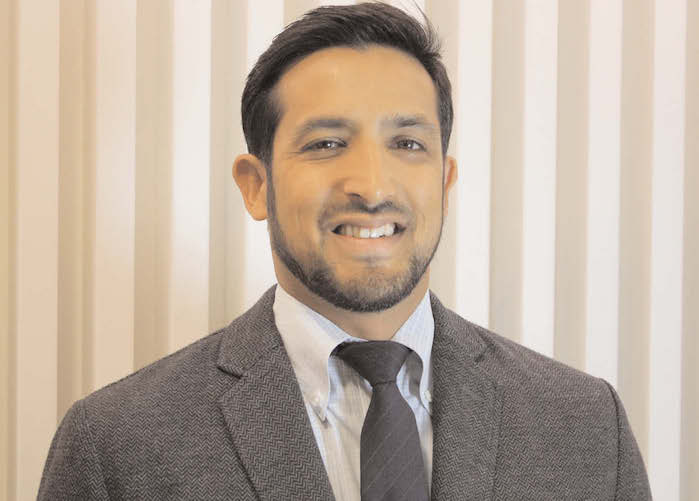
    WASHINGTON (TIP): The Stimson Centre announced the appointment of Sameer Lalwani as Deputy Director for its South Asia program.

    Mr Lalwani’s research will focus on crisis management, nuclear security, and national security decision making in South Asia, a press statement adding that he will help devise Stimson’s online open courses on nuclear-related issues.

    “I look forward to joining Michael and the Center’s extremely talented team,” Mr Lalwani said.

    Sameer Lalwani is Deputy Director for Stimson’s South Asia program. From 2014-15, Lalwani was a Stanton Nuclear Security Postdoctoral Fellow at the RAND Corporation. He completed his Ph.D. in political science at MIT and remains a Research Affiliate at MIT’s Center for International Studies. His research interests include grand strategy, counterinsurgency, civil-military relations, ethnic conflict, nuclear security, and the national security politics of South Asia and the Middle East. Sameer has conducted field research in Pakistan, India, Kashmir, Sri Lanka, and the British archives. His work has been published through RAND, Oxford University Press, the Journal of Strategic Studies, Foreign Affairs, Foreign Policy, The National Interest, CTC Sentinel, the Los Angeles Times, the New York Times, and a number of other outlets. Previously he was a fellow at George Washington University’s Institute for Security and Conflict Studies, a member of the CNAS Next Gen National Security Leaders Program, a participant in the CSIS Nuclear Scholars Initiative, and a policy analyst with the New America Foundation. He holds B.A. in political science from University of California, Berkeley.

    Founded in 1989, Stimson builds effective security solutions through pragmatic research and innovative analysis.

  • GURU GRANTH SAHIB DESECRATION – Centre seeks report from Punjab on ‘foreign hand’

    GURU GRANTH SAHIB DESECRATION – Centre seeks report from Punjab on ‘foreign hand’

    NEW DELHI (TIP): The centre has sought a report from the Punjab government on information about the alleged involvement of a foreign hand in recent incidents of the sacrilege of the holy book that sparked state-wide protests.

    The central government is seized of the matter and has sought a report from the Punjab government, a senior home ministry official said.

    The official said all necessary action will be taken against criminal elements be it within or outside the country.

    Punjab police on Tuesday said, it had arrested two brothers for alleged involvement in the desecration of the Guru Granth Sahib and claimed that they were getting instructions and funding from handlers in Australia and Dubai.

    Jaswinder Singh and Rupinder Singh were arrested for the case of sacrilege of the Sikh holy book at Bargari village in Faridkot district. The police said the brothers phone records had been traced to people in Australia and Dubai and a special investigation team would probe the matter.

    Aam Aadmi Party MP, Punjab, Bhagwant Mann met home minister Rajnath Singh on Thursday and urged him to ensure peace.

    During the 15-minute meeting, Mann told Rajnat Sing the situation in Punjab was ‘very disturbing’ in the wake of recent incidents.

    The sources said, the home minister gave him a patient hearing and told him that he had already spoken to Punjab chief minister Parkash Singh Badal. Chairman of International Sikh Council Mukhtiar Singh also met the home minister.

    Rajnath spoke to Badal on Monday and assured him ‘all possible help” from the centre to address the situation. Singh later apprised Prime Minister Narendra Modi of the situation in Punjab.

  • GOPIO-New York to Discuss NRI Property Issues and Protecting Assets in India

    NEW YORK (TIP): Increased international mobility of both capital and labor in recent years has forced advanced countries to examine their fiscal policies from international perspective. In this age of globalization, cross-border matters have become of great concern to individuals. Citizen of other countries, at times, move to the USA or own assets here, and U.S. Citizens often move or own assets outside the United States.

    “Indian Americans, as an immigrant community to the USA, are greatly affected with this spur in globalization as most still own vast assets, particularly real estate back home in India,” said Attorney Anand Ahuja.

    “As with owning assets outside USA, the Indian American community is at greater risks, therefore, any sale-purchase of real estate in India, estate, gift or tax planning should be considered from international perspective than just domestically,” Attorney Ahuja continued.

    GOPIO-New York and the Indian American Kerala Center will discuss these issues at an open interactive session on Sunday, October 21st starting at 2 p.m. at the Kerala Center (1824 Fairfaxt St., Elmont, NY). The speakers are Attorney Anand Ahuja and Pambayan Meyyan MBA, Sr. Vice President of Forest Hills Group. The session will be chaired by Dr. Thomas Abraham, Founder President of the Global Organization of People of Indian Origin (GOPIO) International.

    “This is a great opportunity to discuss these issues in a community forum and develop strategies for a community campaign and reach out to the Govt. of India and the state governments on NRI property issues back home,” said Dr. Abraham For registration, contact: The Kerala Center, Tel: 203-358-2000, kc@keralcenterny.com.