Month: July 2016

  • FACEBOOK TEAM BRINGS LIGHT-BASED INTERNET CLOSER TO REALITY

    FACEBOOK TEAM BRINGS LIGHT-BASED INTERNET CLOSER TO REALITY

    Scientists at the Facebook’s Connectivity Lab have developed a new way to detect light signals travelling through the air, an advance that may lead to fast optical wireless networks capable of delivering internet service to remote places. High-speed wired communication networks today use lasers to carry information through optical fibres, but wireless networks are based on radio frequencies or microwaves. “A large fraction of people don’t connect to the internet because the wireless communications infrastructure is not available were they live, mostly in very rural areas of the world,” said Tobias Tiecke, who leads the research team. Light-based wireless communication, also called free-space optical communications, offers a promising way to bring the internet to areas where optical fibres and cell towers can be challenging to deploy in a cost-effective way.

    Using laser light to carry information across the atmosphere can potentially offer very high bandwidths and data capacity, but one of the primary challenges has been how to precisely point a very small laser beam carrying the data at a tiny light detector that is some distance away.

  • Twitter’s Android app goes easy on the eyes with  night-mode

    Twitter’s Android app goes easy on the eyes with night-mode

    Micro-blogging website Twitter has updated its Android app and added a dark-themed mode for night time viewing to make it a little easier on the eyes. The feature can be found in the app’s main menu (under your profile icon or the hamburger icon) where users can easily switch it on or off, tech website Mashable.com reported on Wednesday.

    Once on, Night Mode switches the app to a darker colour palette which is similar to what Tweetbot and a few other third-party Twitter clients have had for some time. There is no official word yet on a similar feature for iOS, the report added.

    In the meantime, iOS users can do so with Night Shift, Apple’s feature for changing the colour temperature of display at night. Rolled out with iOS 9.3, the feature will kick in automatically once it starts to get dark to make looking at devices at night a little less painful.

  • BLACKBERRY LAUNCHES WORLD’S MOST SECURE PHONE

    BLACKBERRY LAUNCHES WORLD’S MOST SECURE PHONE

    #BlackBerry has launched another Android-based handset on with a broad app catalogue for security and productivity features at a lower price (USD$320 ~Rs 20,000).

    The faded smartphone pioneer is hoping the DTEK50 will sell in greater numbers than the Priv, its first phone using the Android operating system, which Chief Executive John Chen has said suffered because of its high price.

    The company said the 5.2-inch touchscreen-only DTEK50 is available from Tuesday for pre-order from BlackBerry’s online shop in the U.S., Canada, UK, France, Germany, Spain, Italy and The Netherlands for $299. It plans to begin shipping the device on August 8.

    “This is a good marriage of proposition and price point for enterprises,” said John Jackson, an analyst at International Data Corp.

    Shares in the Waterloo, Ontario-based company were up 1.4 percent at $7.18 on the Nasdaq and rose 1.6 percent to C$9.50 in Toronto.

    At its November launch the Priv, which features a slide out keyboard, cost $699 without a contract in the United States and C$899 without a contract in Canada. The company trimmed the Priv’s price in April.

    Calling the DTEK50 “the world’s most secure Android smartphone,” BlackBerry said it will alert users if someone is making remote use of its camera or microphone, or accessing the phone’s location information. BlackBerry did not announce any distribution deals with major US carriers, with initial US sales instead expected to come mostly via Best Buy, Amazon and BlackBerry’s own online store.

    Canada’s biggest wireless carriers will all sell the device.

    “The lack of specific detail on operator channels outside Canada says that there’s still no path to massive volumes,” IDC’s Jackson added.

    BlackBerry recognized sales of roughly 500,000 devices in the three months to the end of May, down from some 1.1 million a year earlier as demand for its aging product portfolio sunk.

    Once a dominant force in smartphones, BlackBerry now holds just a sliver of the global smartphone market. Earlier this month it said it would cease production of its Classic handset, which uses its own BlackBerry 10 operating system.

    Chen last month expressed confidence the company’s trimmed-down handset business can turn a profit by a self-imposed September deadline, even as some analysts urge the company to ditch the unit.


  • HOW OFTEN SHOULD YOU EAT?

    HOW OFTEN SHOULD YOU EAT?

    In our race to be the biggest loser, most of us go after different diets. The trusted and age-old three-meals-a-day concept works for some, while others swear by the new-age eight-meals-a-day. Most of us have been brought up on the notion that having untimely in-between meal snacks, is one of the major causes of weight gain. Of late, however, a number of trainers, nutritionists and dieticians have come up with the ‘six-to-eight-meals-a-day’ plan. And many Bollywood actors and actresses claim that following such diets have made them the biggest losers.

    They believe that in-between snacks help them stay slim and this regular intake also boosts metabolism. However, there are health gurus and trainers who believe that eating too many meals may just work against you and increase your weight. Read on to find out what the experts have to say…

    Eat six to eight meals a day

    Eat to burn! This can be one of the easiest and most reliable ways to ensure fat loss. Digestion itself is a calorie-burning activity. For every calorie you ingest, your body uses some to burn what you are eating. The question is, how do you make this wonderful feature of your body work for you? This is the essential principle behind the practice of frequent eating where eating at shorter intervals
    (six to eight meals a day or more!) enables your body to use more calories to aid digestion. When you constantly provide fuel to your body, it means you are also tickling your body to work. Keep working, keep burning. This is called the thermogenic effect of food and it is not only an incredibly smart way of losing weight, it also helps you increase your BMR (Basal Metabolic Rate).

    I like to call this the Internal Workout —because by continually making it work for digestion, you’re giving your body a workout. And while you may not be able to see the furious digestive activity going on in your body at any point in time, trust me, your body is working way harder than if you eat at longer intervals (three-to-four meals a day).

    More meals means less stored fat

    Eating six to eight meals a day rather than three, is better because it boosts metabolism, controls blood sugar levels and helps in weight management.

    Consuming three meals increases the likelihood that one will start an exercise regime with a low blood sugar level. For instance, if we eat lunch around noon, generally our second meal of the day, we would not have much energy for an optimal, calorie-burning workout in the evening.

    On the other hand, if we follow a six-meal-a-day plan and have a small meal around noon and another meal around 3 pm, our blood sugar level would be more stable, providing us with more energy for our workout. Cortisol, a hormone, breaks down body fat. However, if we eat a large, high-calorie meal, cortisol is produced in large quantities, but transports the fat from under the skin to deep within the abdominal cavity. This increases the risk of chronic diseases including abdominal obesity, heart disease and diabetes. Incorporating a six-meal-a-day plan into one’s routine decreases the magnitude of cortisol production.

    Eating within 30 minutes of every exercise session enables our muscles to maximally replenish the glucose we used during the workout. Consuming another meal two hours after the post-workout meal further enhances post-exercise recovery and replenishment.

    Eating every three-to-four hours can ward off hunger and prevent binges that lead to weight gain. It also maintains metabolism and can help regulate proper digestion to prevent gastrointestinal discomfort.

    When people consume the same number of calories in one single daily meal rather than three, they show significant increase in blood pressure, total cholesterol levels and levels of ‘bad’ LDL cholesterol.

    Eight meals increase our energy levels, accelerate muscle growth, and speed up our metabolism without storing fat. In fact, frequent eating will actually allow us to eat up to 50 per cent more calories without storing an ounce of it as fat.

  • Take care of your direct warriors — feet

    Take care of your direct warriors — feet

    Feet are the direct warriors which fight with dirt, pollution, age-counting, infections, and high-heel pain on a regular basis — and so it is important to pamper your feet the way you do to your face.

    Meghna Gupta, Cosmetic Dermatologist and Director at Delhi Skin Centre, lists some handy tips to keep in mind to avoid “dirty”, “cracked” and “sweaty” feet.

    – It’s important to notice foot fungus at an early stage. Carefully follow complete procedures as instructed by a verified expert.

    – After washing properly with a medicated soap, apply a foot cream that not only has skin-hydrating lubricants to keep your feet soft and free from cracks and dryness. Look for moisturisers with AHA or lactic acid.

    – Try to keep your foot nails short which are good to carry everyday with minimal dirt in it.

    – Cracked feet are also a sign of dehydration. Along with daily water intake, try to include more fruits and vegetables in your routine. Try to avoid or cut down coffee, tea and alcohol.

    – Continuous habit of good scrubbing is a natural way to prevent common foot problems like cracked heels and tired feet. Rough feet are never pretty and you certainly want your skin to feel as beautiful as the shoes you are stepping into. It doesn’t mean you have to sit at a parlour every week. Try pumice stone, bristle brush and exfoliating creams at home only.

    – Don’t have time to visit a spa or salon? You can prepare a foot mask for cracked and dry feet. Add two table spoons of powdered oatmeal, 1/2 table spoon honey, 1/2 table spoon olive oil, make a thick paste and apply it. Leave it on for the next half an hour. Rinse properly and complete it with good massage with nice moisturiser.

  • KATE BECKINSALE DENIES DATING DAVID WALLIAMS

    KATE BECKINSALE DENIES DATING DAVID WALLIAMS

    Actress Kate Beckinsale has denied rumours that she is dating her close friend and comedian David Walliams. The pair sparked dating rumours after they enjoyed a dinner date together last week.

    Beckinsale took to Twitter on Sunday to deny the rumours, reports mirror.co.uk. With a photograph of them together, Beckinsale wrote: “This is my dear friend, David Walliams. If I ever see him naked I will immediately tattoo a (*****) on my face for clarity.

    She added: “Until that appears, everyone can relax and know we are friends, as we have been for the last 2000 years. Please the size of the tattoo is unlikely to be actual size. As far as I know.”

  • LINDSAY LOHAN APOLOGIZES FOR RANT OVER FIANCE

    LINDSAY LOHAN APOLOGIZES FOR RANT OVER FIANCE

    Actress Lindsay Lohan took to Instagram to apologize her fans for social media rant over fiance Egor Tarabasov.

    The 30-year-old ‘Mean Girls’ actress shared several now-deleted posts on Instagram, Snapchat and Twitter over the weekend accusing her fiance of cheating on her when he didn’t return home after a night of partying.

    In her latest post Lohan told her fans she is ok and apologized for the outburst.

    “Dear friends. I’m good and well #ATM (At the moment), I am taking time for myself with good friends. I am sorry that I’ve exposed certain private matters recently. I was acting out of fear and sadness… We all make mistakes. Sadly mine have always been so public. “I have done a lot of soul searching in the past years, and I should have been more clear minded rather than distract from the good heart that I have. Social media comes with the territory of the business and the world we now live in. My intentions were not meant to send mixed messages,” she wrote.

    The ‘Freaky Friday’ star also shared hopes of working on her relationship. “Maybe things can be fixed… Maybe not.. I hope they can. But I am 30 years old and I do deserve a #GENTLEgiant. Life is about love and light. Not anger. Thank you to those who stand by my side.

  • HAS NARGIS FAKHRI LEFT INDIA FOREVER?

    HAS NARGIS FAKHRI LEFT INDIA FOREVER?

    If recent buzz is to be believed, actor Nargis Fakhri, who would next be seen in the upcoming musical film ‘Banjo’, has reportedly left India forever. As per a report in popular magazine Filmfare, the 36-year-old actress, who has quit Bollywood, has left the country for a “good” and is unlikely to come back and is planning to settle down permanently in the United States. It is said that the actress, who was last seen in comedy ‘Housefull3’, wants to be “around her friends and family” in US.

    Rumour has it that the ‘Rockstar’ actress was emotionally disturbed following her split with the actor boyfriend Uday Chopra and since then, she had stayed away from all promotional activities of her films ‘Azhar’ and ‘Housefull 3’. Nargis made her Bollywood debut with 2011 movie ‘Rockstar’, is known for her work in ‘Madras Cafe’, ‘Main Tera Hero’, ‘Azhar’ and ‘Housefull 3’.

  • FOR ANUSHKA, SUCCESS LIES IN BEING VERSATILE ACTOR

    FOR ANUSHKA, SUCCESS LIES IN BEING VERSATILE ACTOR

    She been a part of top grossers like ‘PK’ and ‘Sultan’, but Anushka Sharma says that being seen as a versatile actress is true success. Anushka, who ventured into Bollywood in 2008 has carved a niche for herself and has worked with experienced filmmakers like Aditya Chopra, Yash Chopra, Rajkumar Hirani, Zoya Akhtar, Karan Johar and will now be seen in Imtiaz Ali’s next. She also featured in debutant Navdeep Singh’s dark film ‘NH10’ and has experimented with her roles.

    The 28-year-old says her interest in these directors is because they all are from different schools of thoughts. “All their films are very different. I think if you as an actor can convince such directors, who are different from one another, that you can be convincing part in their film…I think that for me is a huge success because that just shows that everyone sees you as a versatile actor,” Anushka told IANS. Asked if she considers working with big names important, she said: “I feel like it is for the work they do. For me, it’s not like I am going to look t the money the director’s film has made before their film… For me, it is about working with the director whose work I have admired.”

    Source: IANS

  • 2006 arms haul case: 12 convicted of plot against then Gujarat CM Modi

    2006 arms haul case: 12 convicted of plot against then Gujarat CM Modi

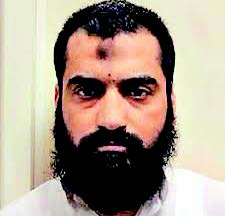
    MUMBAI (TIP): A special court on July 28 (Thursday) convicted 12 persons, including 26/11 Mumbai attacks accused Abu Jundal and Faisal Shaikh, the bomb planter sentenced to death for the 11/7 train blasts, in the 2006 Aurangabad arms haul case. Eight of the 22 accused were acquitted, one faces a separate trial and another is on the run.

    Arguments for the sentencing will begin on Friday and the convicts face a maximum punishment of life imprisonment, said the prosecutor. The Maharashtra Control of Organised Crime Act (MCOCA) charges against all of them were dropped.

    The cache of 43kg of RDX, 16 AK-47 assault rifles, 3,200 live cartridges and 50 hand grenades were sourced from Pakistan and were intended for attacks on then Gujarat CM Narendra Modi and Vishwa Hindu Parishad leader Pravin Togadia to avenge the 2002 Gujarat riots, observed special judge S L Anekar. The accused had worked to strike terror by carrying out jihad, the court added.

    The arms and ammunition were intercepted by the state ATS after a chase on a highway near Aurangabad after a tip-off. In his ruling, special judge Anekar relied on the confession statements of three accused, all of whom were found guilty and significantly included Faisal Shaikh, who’s on death row since last year for the 2006 train bombings.

    The judge accepted that key arms haul accused Mohammed Amer Shaikh was in touch with another accused Mohammed Aslam Kashmiri, both convicted from the Lashkar-e-Taiba since 1996. Amer conceived the terror plot, and was joined in 1999 in the conspiracy by Zabihuddin Ansari alias Abu Jundal and absconding accused Fayaz Kagzi.

    The accused were convicted separately under sections of the Unlawful Activities Prevention Act (UAPA), the Explosive Substances Act, the Explosives Act and the Indian Penal Code.

    Eight were acquitted of all charges, and Munna Mustafa, who turned approver but later retracted his statement, is being tried separately. Nayeem Shaikh, another accused, gave the police the slip during the trial and has been absconding since.

    The trial in the case, conducted mostly at the special court on the premises of the Arthur road jail. started in right earnest in 2013 after Jundal was handed over by Saudi Arabia. The trial could not begin earlier as Amer challenged the slapping of MCOCA in the Supreme Court. In 2010, the SC vacated the stay, but the trial did not move forward for the next few years as several applications such as bail pleas were being heard. A supplementary chargesheet was filed on November 3, 2012, naming Jundal and Kagzi. In June 2015, the SC directed the trial court to expedite the trial.

  • Murderer’s son cracks JEE in India while living in jail

    Murderer’s son cracks JEE in India while living in jail

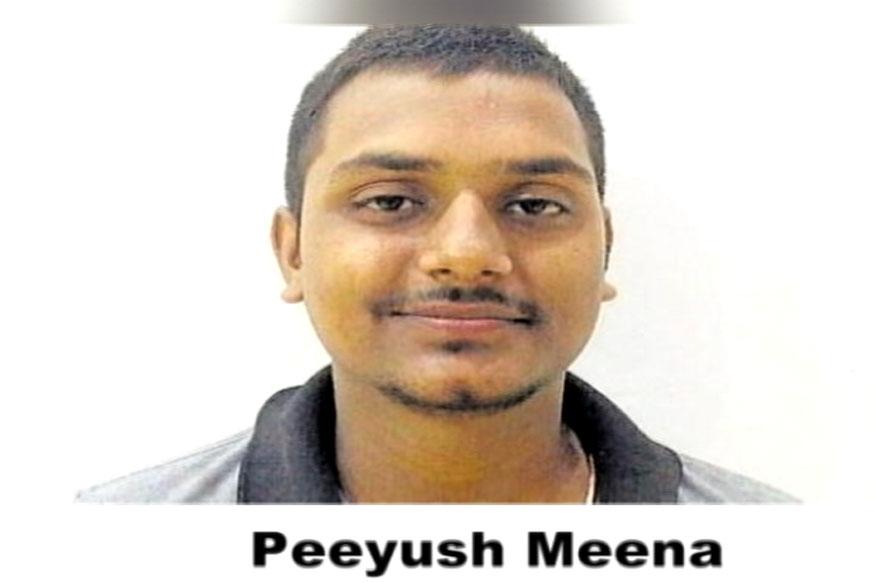
    JAIPUR: A convict’s son has scripted an extraordinary success story by preparing for IIT entrance exams while staying with his father in an 8×8 feet cell in an open jail in Kota for almost two years, because he did not have money for the hostel fee.

    Peeyush Meena, son of convict Phoolchand, has secured 453 rank (ST Category) in JEE-Advanced results.

    Open jail rules not only permit family members to stay with the convict but the latter can also go out daily for earning a living. Much against his father’s wishes, Peeyush shifted to the jail in July 2014. “I required Rs 2 lakh, which included coaching and hostel fees. After convincing my relatives and friends for months, I could arrange Rs 1 lakh, which was not enough to cover even the coaching fees,” said Phoolchand, a former government teacher.

    He tried for a job in private schools to fulfil his son’s IIT dreams. But his being a convict was an obstacle, forcing him to settle for the lowly paid job of a medical store helper.

    Elated after his JEE success, Peeyush said: “I never told anyone that I live in prison and that I am the son of a convict. But now, I would tell everyone that my father has done something which has no parallel. My sole aim is to give him a better life after his jail term.”

    Phoolchand has spent 12 years in jail and has to complete two more years before he can walk out free.
    Recounting his experience in jail, Peeyush said: “Initially, it wasn’t easy to study as an open jail has strict rules.” For instance, lights were turned off in the cells at 11pm. “I used to study in the dim light coming through the window. The room was so small that my father would spend time outside the cell until I completed my target for the day. He could never enter the cell before 4am,” Peeyush said.


  • Yoghurt, milk may help reduce breast cancer risk: Study

    Yoghurt, milk may help reduce breast cancer risk: Study

    TORONTO (TIP): Including probiotic-rich dairy products such as yoghurt and milk in diet may help protect women against breast cancer, a new study suggests.

    Bacteria that have the potential to abet breast cancer are present in the breasts of cancer patients, while beneficial bacteria are more abundant in healthy breasts, where they may actually be protecting women from cancer, researchers said.

    These findings may lead ultimately to the use of probiotics such as yoghurt and milk to protect women against breast cancer, they said.

    Scientists from Lawson Health Research Institute in Canada obtained breast tissues from 58 women who were undergoing lumpectomies or mastectomies for either benign (13 women) or cancerous (45 women) tumours, as well as from 23 healthy women who had undergone breast reductions or enhancements.

    They used DNA sequencing to identify bacteria from the tissues and culturing to confirm that the organisms were alive.

    Women with breast cancer had elevated levels of Escherichia coli and Staphylococcus epidermidis, are known to induce double-stranded breaks in DNA in HeLa cells, which are cultured human cells, researchers said.

    “Double-strand breaks are the most detrimental type of DNA damage and are caused by genotoxins, reactive oxygen species, and ionising radiation,” said researchers.

    The repair mechanism for double-stranded breaks is highly error prone, and such errors can lead to cancer’s development.

    Conversely, Lactobacillus and Streptococcus, considered to be health-promoting bacteria, were more prevalent in healthy breasts than in cancerous ones. Both groups have anticarcinogenic properties, researchers said.

    For example, natural killer cells are critical to controlling growth of tumours, and a low level of these immune cells is associated with increased incidence of breast cancer.

    Streptococcus thermophilus produces anti-oxidants that neutralise reactive oxygen species, which can cause DNA damage, and thus, cancer, researchers said.

    The motivation for the research was the knowledge that breast cancer decreases with breast feeding, said Gregor Reid from Lawson Institute.

    Lactation might not even be necessary to improve the bacterial flora of breasts. “Colleagues in Spain have shown that probiotic lactobacilli ingested by women can reach the mammary gland,” said Reid.

    “Combined with our work, this raises the question, should women, especially those at risk for breast cancer, take probiotic lactobacilli to increase the proportion of beneficial bacteria in the breast?,” he said.

    Besides fighting cancer directly, it might be possible to increase the abundance of beneficial bacteria at the expense of harmful ones, through probiotics, he added.

    The findings were published in the journal Applied and Environmental Microbiology.

  • Russian Spies answer Trumps call ~ Hack Hillary Clinton’s Presidential Campaign

    Russian Spies answer Trumps call ~ Hack Hillary Clinton’s Presidential Campaign

    Hillary Clinton’s presidential campaign along with other Democratic Party organisations has been hacked as part of a larger cyber attack, law enforcement officials said on Friday night.

    The Federal Bureau of Investigation (FBI) and the Justice Department has launched a probe against the latest hack that follows two data breaches involving the Democratic National Committee (DNC) and the Democratic Congressional Campaign Committee (DNCC), CNN reported.

    “An analytics data programme maintained by the DNC, and used by our campaign and a number of other entities, was accessed as part of the DNC hack,” said Clinton campaign spokesman Nick Merrill.

    “Our campaign computer system has been under review by outside cyber security experts. To date, they have found no evidence that our internal systems have been compromised,” CNN quoted Merrill as saying

    The intrusion was discovered by private investigators hired by the campaign, according to the law enforcement officials.

    The private investigators believed that it was similar to the DNC hack, but federal investigators were still working to determine the scope and nature of the intrusion, the officials said.

    The Justice Department’s national security division, which was already investigating the DNC intrusion, is handling the probe because of the believed similarities, CNN reported citing the officials as saying.

    The DCCC, which is the political arm for House Democrats, confirmed on Friday it had been the subject of a cyberhack, raising the possibility that alleged Russian hackers might have breached a much broader swath of Democratic records than originally thought.

    The revelation comes just days after the leak of thousands of Democratic National Committee emails — US officials allege Russian hackers — prompted major turmoil within the party, causing the abrupt resignation of its chairwoman, Representative Debbie Wasserman Schultz, reports CNN.

    The FBI’s chief of cyber investigations James Trainor told CNN in an interview recently that hackers have targeted political party entities and think tanks in Washington.

    The official said there is a long list of intrusions that the FBI and other agencies were also investigating.

    Hacking has become a major flashpoint in the presidential race. Revelations about targeting the Clinton campaign come as the two nominees — Republican party’s Donald Trump) are set to begin receiving national security briefings, CNN noted.

    Trump earlier in the week drew criticism for appearing to suggest that Russia should use espionage to find Hillary Clinton’s deleted emails.

    The Republican nominee later tried to walk back the comments by saying that he was only being sarcastic.

  • GST Deadlock: PM Modi Meets Top Minister To Firm Up Strategy

    GST Deadlock: PM Modi Meets Top Minister To Firm Up Strategy

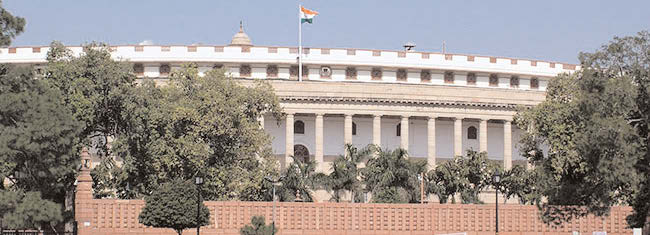
    Prime Minister Narendra Modi on Friday night held a meeting with the top minister of his cabinet to firm up strategy for the long-awaited Goods and Service Tax (GST) bill.

    According to reports, the government will most likely table its proposal for the tax reform to the Rajya Sabha on Tuesday.

    Meanwhile, Union Finance Minister Arun Jaitley and Chief Economic Adviser Arvind Subramanian have been busy in holding several rounds of exhaustive negotiations with leaders of Congress and other parties, including the Samajwadi Party, the Janata Dal-United and the Communist Party of India-Marxist.

    “We have our fingers crossed,” Jaitley said in a statement to the media.

    Of the 32 parties, 30 are now supporting the bill.

    Discussion on the matter is going on with different political parties to build a consensus. The government is hopeful of passage of the Bill,” Minister of State for Parliamentary Affairs Mukhtar Abbas Naqvi told reporters outside Parliament on Friday.

    “Most of the parties are on board,” he added.

    Dubbing the GST as an “instrument of growth”, the Congress, however, said on Friday that it must be passed but it must be practically implementable.

    “There is no final assurance yet given to government either by Congress or other Opposition parties,” Congress spokesman Randeep Singh Surjewala told a press conference.

    The Congress leader said that “issues” are still being deliberated and the party is willing to negotiate.

    The party, however, welcomed the Union cabinet’s decision to approve key changes in the proposed legislation, including dropping the proposed one per cent additional tax on inter-state sale.

    Congress sources said party Vice President Rahul Gandhi also expects a positive outcome from these consultations, which have entered a “decisive and positive phase”.

  • US Documents Reveal Pak-Based JeM’s Involvement In Pathankot Attack

    US Documents Reveal Pak-Based JeM’s Involvement In Pathankot Attack

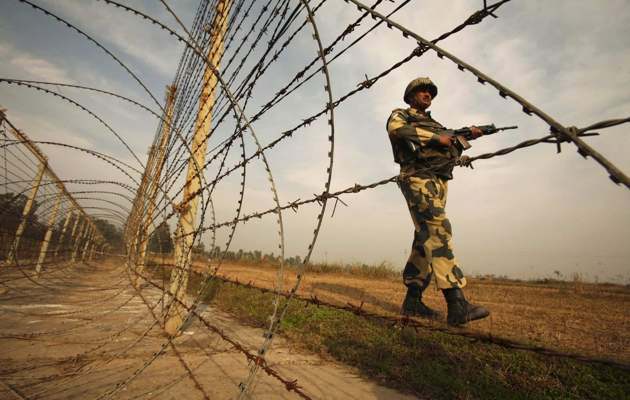
    The National Investigation Agency (NIA) has recently received documents from the United States that support India’s claim regarding Pakistani terror group, Jaish-e-Mohammad’s involvement in the Pathankot IAF base attack.

    According to a report in Times of India, over a 1000 pages of chats and conversations between JeM handler Kashif Jaan and the four fidayeen (identified as Nasir Hussain, Punjab province, Abu Bakar, Gujranwala, Umar Farooq and Abdul Qayum, both from Sindh) are included in these documents.

    Reportedly, the conversations recorded prove that the attack was carried out from Pakistan. The handlers maintained regular contact with the four fidayeen members.

    The Daily reported that the conversations of Kashif Jaan with other office holders of the Pakistan-based JeM were also contained in these documents.

    The Facebook account that was in use by Kashif Jaan was also connected to the cell number that the attackers used to make calls from Pathankot following the abduction of Punjab police SP Salwinder Singh.

    Another Facebook account under the name ‘Mulla Daadullah’ was connected to a number that the terrorists had called.

    WhatsApp chats amongst the terrorists were also included in the documents that are now being analysed by the NIA.

    These accounts are said to have been accessed around and during the time of the Pathankot attack. The IP addresses used were found to be those of telecom firms (Telenor and Pakistan TeleCommunications Company Ltd, Islamabad)

    The Al-Rahmat Trust, that funds the JeM, was also contacted by these mobile numbers discovered by the US upon the request of the NIA.

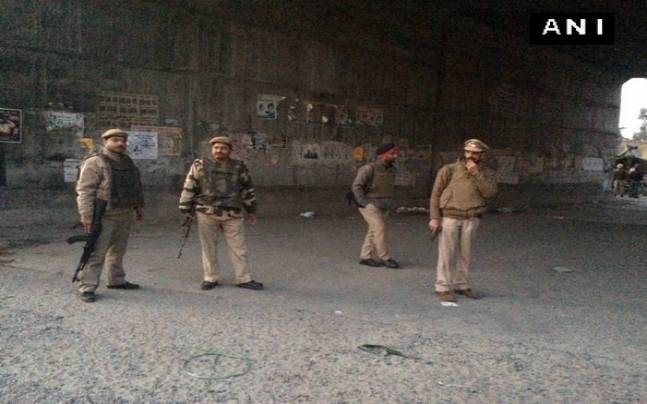
    The Pathankot Air Force Station was infiltrated on the night of January 1 to conduct the attack the next day.

    The ensuing encounter resulted in the deaths of seven security personnel and four terrorists.

    India had asserted that JeM chief, Masood Azhar had devised the attack and seeks action against the JeM.

    A list of a total of 300 questions was submitted to Pakistan along with besides soliciting voice samples of Azhar, his brother Abdul Rauf and Khayyam Baber (mother of slain terrorist Nasir). It is reported that Nasir had spoken to his mother during the attack.

    Pakistan’s investigation team had visited India in March to probe the incident.

    The strike had advanced the tensions between the two countries and the India-Pakistan Foreign Secretary-level talks was also postponed as a result of the attack.

  • China says its troops did not cross Ladakh border

    China says its troops did not cross Ladakh border

    BEIJING (TIP): China’s defence ministry on July 28 said that the country’s soldiers have not transgressed India’s borders. This was in response to reports in India about incursions by Chinese troops at the Ladakh border.

    The Chinese troops “always conducted activities on the Chinese side of Line of Actual Control. We are committed to maintain peace and stability along the China-India border,” ministry spokesman Yang Yujun said.

    Yang said China’s defence forces “always abide by relevant agreements signed between the two countries”. He said that the two countries are “neighbours, partners not competitors or enemies”.

    People of both countries have a “common aspiration” to maintain peace stability along the border”. “We hope that Indian side can work in the same direction as the Chinese side and implement the census reached between the leaders of the two countries and maintain peace and tranquillity along the China-India border”, Yang said.

    (AP)

  • GH launches trial of BCG vaccine to reverse type 1 Diabetes

    GH launches trial of BCG vaccine to reverse type 1 Diabetes

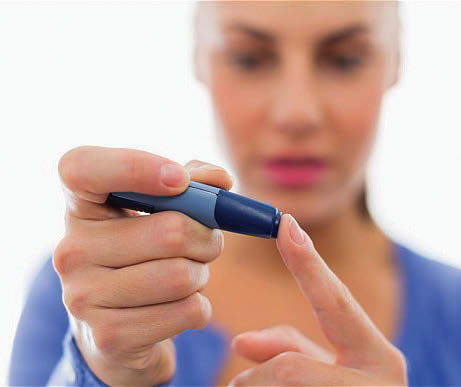
    NEW YORK (TIP): A phase II clinical trial testing the ability of the generic vaccine bacillus Calmette-Guérin (BCG) to reverse advanced type 1 diabetes has received approval from the U.S. Food and Drug Administration (FDA). The approval of this trial, which will shortly begin enrolling qualified patients, was announced today at the 75th Scientific Sessions of the American Diabetes Association (ADA) by Denise Faustman, MD, PhD, director of the Massachusetts General Hospital (MGH) Immunobiology Laboratory and principal investigator of the study.

    The five-year trial will investigate whether repeat BCG vaccination can clinically improve type 1 diabetes in adults between 18 and 60 years of age who have small but still detectable levels of insulin secretion from the pancreas. Faustman’s research team was the first group to document reversal of advanced type 1 diabetes in mice and subsequently completed a successful phase I human clinical trial of BCG vaccination. She announced the FDA approval to launch the phase II trial during her ADA presentation, “Low Levels of C-Peptide Have Clinical Significance for Established Type 1 Diabetes.”

    “We have learned a lot since the early studies in mice – not just about how BCG works but also about its potential therapeutic benefits, similar to what are being seen in trials against other autoimmune diseases,” says Faustman. “We are so grateful to all of the donors, large and small, who have made this trial possible -especially the Iacocca Foundation, which has believed in us and has been a supporter since our early days. Our goal is to complete enrollment and also to raise the remaining funds needed for the trial by the end of this year.”

    A generic drug with over 90 years of clinical use and safety data, BCG is currently approved by the FDA for vaccination against tuberculosis and for the treatment of bladder cancer. The vaccine is known to elevate levels of the immune modulator tumor necrosis factor (TNF), which Faustman’s team previously showed can temporarily eliminate in both humans and mice the abnormal white blood cells responsible for autoimmune type 1 diabetes. Increased TNF levels also stimulated production of protective regulatory T cells.

    In the phase I clinical trial, which was published in the August 8, 2012, issue of PLOS Medicine, two injections of BCG spaced four weeks apart led to temporary elimination of diabetes-causing T cells and provided evidence of a small, transient return of insulin secretion. The phase II clinical study will include more frequent dosing over a longer time period to determine the potential of repeat BCG vaccination to ameliorate the autoimmune state and improve clinical parameters such as HbA1c, a marker of average blood sugar control.

    In the new trial, which will be double blinded and conducted at MGH, 150 adults with long-term type 1 diabetes will be randomized to receive two injections four weeks apart of either BCG or placebo and then a single injection annually for the next four years. Patients will be closely monitored over the five-year trial period. The primary outcome measure will be improved results on the HbA1c blood test, which have been shown to prevent complications.

    “In the phase I clinical trial we demonstrated a statistically significant response to BCG, but our goal in phase II is to create a lasting therapeutic response,” says Faustman, an associate professor of Medicine at Harvard Medical School. “We will be working again with people who have had type 1 diabetes for many years. This is not a prevention trial; instead, we are trying to create a regimen that will treat even advanced disease. In addition to our phase I trial, we took guidance from the BCG clinical trials that are underway globally for other autoimmune diseases such as multiple sclerosis.”

    Lee Iacocca, founder of the Iacocca Foundation, says, “My family and I have been fortunate to be part of this research for many years. It is incredibly exciting to be talking about curing people, not mice. I made a promise to my late wife to find a cure for type 1 diabetes. Now my family and I look forward to the continued progress and are proud to support this effort to get closer to that goal.” The Iacocca Foundation provided major funding for the phase I trial and has taken a leadership role in funding the phase II trial.

    More than $19 million has been raised out of a total of $25 million needed to conduct the phase II study over the next five years.

    Massachusetts General Hospital, founded in 1811, is the original and largest teaching hospital of Harvard Medical School. The MGH conducts the largest hospital-based research program in the United States, with an annual research budget of more than$760 million and major research centers in AIDS, cardiovascular research, cancer, computational and integrative biology, cutaneous biology, human genetics, medical imaging, neurodegenerative disorders, regenerative medicine, reproductive biology, systems biology, transplantation biology and photomedicine.

  • Kalpita’s charity dance show to help the blind

    Kalpita’s charity dance show to help the blind

    NEW YORK (TIP): Kalpita Chakote, a rising senior at George W. Hewlett High School, New York help raise over $7,000 to prevent blindness and restore eyesight by giving a charity dance performance in Port Washington last week.

    Kalpita is the daughter of Dr. Vajinath Chakote, president of AAPI- QLI and a leading Indian-American physician of Long Island and Jyoti Chakote.

    The combined Bharatanatyam and Bollywood dance performance at Jeanne Rimsky Theater drew loud appreciation from discerning audience that include Tom Suozzi, former Nassau County Executive and Democratic Party Congressional candidate.

    Kalpita, a student of Guru Satya Pradeep, Artistic Director of Nritya Saagaram Dance Academy, commenced her program with Pushpanjali, a traditional welcome and prayer in praise of Lord Ganesha and exhibited various rhythmic patterns.

    She followed it up with an item on Ardhanareeswara and explained the merger of Lord Shiva and Goddess Parvathi in Ragamalika. She danced to the Hindustani number Deva Devam Bhaje, a famous Annamacharya keertan on Lord Ram and ended the segment with a Thillana – a joyful conclusion of the recital. All the four were choreographed by Satya Pradeep.

    The second half saw her on an upbeat mood by dancing the famous Bollywood song “1, 2, 3, 4 Get on the dance floor” from the movie Chennai Express. She performed Gunday’s Jiya, Chennai Express’ Titli and Goliyon Ki Rasleela Ram-Leela’s Ram Chahe Leela. She also danced to the famous numbers – Bajirao Mastani’s Pinga and Devdas’ Dola re dola. These dances were choreographed by Guru Archana Phillip. She ended the performance with Drake’s One Dance, Dhoom-3’s Dhoom machale and Calvin Harris’s this is what you came for choreographed by Guru Nikhil Sadhnani.

    A student of Bharatanatyam since she was six and trained by guru Satya Pradeep, she did her debut performance (Arangetram) a solo two and half hour performance at the age 12. She had performed in prestigious locations such as the United Nations, the Metropolitan Museum of Art and America Tamil Sangam.

    She is good at Bollywood dance as well. Under the tutelage of gurus Archana Phillip and Nikhil Sadhnani, she was able to excel in the dance form and performed Bollywood dances at several fundraisers including for St. Jude’s Children’s Hospital and Himalayan Development Foundation. She plays flute in her school’s advanced band Wind Ensemble and at New York State School Association. Kalpita swims competitively and excels in the 100 yard butterfly.

    Kalpita’s charity dance 1“Dancing is my way of expressing my emotions and relating to others. I am happy that our team collected more than $7,000 to help restore eye sight and prevent blindness,” she said

    “I have a severe astigmatism, irregularities in the curvature of my eyes. It has made me extremely nearsighted. It used to affect me when I danced. Before I had contact lenses and I danced without my glasses. I couldn’t see anything on stage. I was looking at complete darkness. I just had to trust that someone would catch me if I were too close to the edge of the stage. Sometimes my jewelry fell off, and I couldn’t see where it was. I just had to ignore it and hope that I wouldn’t step on it.

    I am lucky because those situations were isolated events. I do not have to relive those moments. However, not being able to see and hoping nothing goes wrong are aspects of some people’s daily lives. They don’t have eye care. I stumbled upon Seva Foundation whose mission to restore eyesight and prevent blindness, I wanted to help because I knew what they faced.”

    Seva Foundation is a global non-profit eye care organization that helps and strengthens communities by restoring eye sight and preventing blindness. The organization has helped four million blind regain eye sight in more than 20 countries, she said.

  • The Indian Panorama Editor Prof. Saluja bereaved

    The Indian Panorama Editor Prof. Saluja bereaved

    Shanti Devi, the revered mother-in-law of The Indian Panorama Publisher-editor Prof. Indrajit S Saluja passed away July 26, 2016. The 90-year-old Shanti Devi had not been keeping well, having broken her hip bone a number of times and was bedridden for some years. She died in peace with family members by her bedside.

    Shanti Devi leaves behind two sons, Surjit Singh Chawla, retired Superintending Engineer, Punjab State Electricity Board and Harmohinder Singh Chawla, retired Indian Railways officer, daughters in law and a large number of grand and great grandchildren.

    Bhog of Sri Akhand Path Sahib and Antim Ardas for the dear departed will take place on Saturday, July 30th at 1669 Phase 1, Urban State, Dugri, Ludhiana, Punjab, India.

    For more information, please contact Surjit Singh Chawla at 9855729717 or Harmohinder Singh Chawla at 9878792426.

  • Ekal Vidyalaya’s Phenomenal Fund-Raising Success in 2016

    Ekal Vidyalaya’s Phenomenal Fund-Raising Success in 2016

    NEW YORK (TIP): As India is emerging as an economic power on the world stage, there is another contrarian reality by its side which is quite unsettling. Even in this technologically advance new millennium, there are tens of thousands rural-tribal areas in India, which are yet to be touched by the existential necessities and amenities, that we all routinely take for granted. Many of these areas seem frozen in time. There are noapproachable roads nor basic educational or healthcare facilitieswithin their reach. “Ekal Vidyalaya Foundation”,has been supporting functional-literacy, healthcare, and integral development in such places, for past 27 years. As of now, there are 53,000 Ekal-schools(and counting), in almost 30 statesthroughout India, including in Nepal & Jammu-Kashmir. For just $365, Ekal is able to provide education and healthcare trainingto a group of 30-40 children (termed as one Ekal school) for the entire year. The main objective of this social-venture is not only to eradicate illiteracy, but also, to empower these rural lives by providing sustainable village-based skills. ‘Ekal’ achieves this objective by raising funds, primarily in India and USA.

    Every year Ekal-USA, hosts a series of fund-raising concerts, between February and June, in all major U.S. metropolises by bringing well-known Artistes from India. In addition, the funds are also raised by direct appeals to consistent, major donors. In recently concluded fund-raising efforts, ‘Ekal’ hosted 62 concerts, all across U.S. through its satellite ‘Chapters’. According to Dr. Jawahar Taunk, Regional President of Florida, $400,000 was raised in his region alone. Through concerts only, Ekal has raised more than $4 Million so far this year. In addition, for newly initiated ‘Endowment Fund’, $1 Million has been pledged by couple of generous donors in U.S. and Canada. A handful of entrepreneurs have also picked up their own specific projects based on necessities in certain areas. Inspired by Hon. PM Modi’s clarion call for ‘Clean-India’ campaign, Himanshu Shah of ‘Shah Capital’, has taken responsibility to make a cluster of villages ‘environmentally clean’ by devoting his personal resources. Moreover, considering30% of total funds come into Ekal-coffer, each year, during November-December, Ekal is pretty confident to cross $7.5 Million mark, this year, just for USA alone. This is also a great tribute its 1,000 strong selfless dedicated volunteers in USA.

    Ekal Vidyalaya 1This year ‘Ekal’ had invited two groups of artistes to headline its various events. One group was headed by ‘Rajdeep Chatterjee & Pallabi Roy Chowdhuri’ and another was headed by ‘Anand Vinod & Vibhavari Yadav’. All the concerts pulled record crowds everywhereconfirming, once again, not only the popularity of the quality programming by Ekal, but also, people’s overwhelming support to this divine cause. All concerts were preceded by DVD-briefing on Ekal’s major activities and futuristic plans. During the concerts, the peoplewere also treated to highly focus ‘Power-Point’ presentation that depicted Ekal’s historic progress from its inception, allocation of funds and the model for accountability, at every level. It is worth noting that Ekal renders its services without any credence to caste, creed, religion and region and its overhead is in single digit.

    Iconic CEO of ‘ZEETV’, Dr. Subhash Chandra’s induction as the Chairman of ‘Ekal Global’ has been a boon to “Ekal Abhiyan” in attracting major industrial houses and entrepreneurs. Earlier this year, while releasing Subhash Chandra’s autobiographical book, ‘ZEE Factor’, Hon.PM Modi also lauded Ekal’s awe-inspiring comprehensive rural work as a role model for other organizations to follow. Now, Students and young adults around the country are also gravitating to Ekal to play a key role in this ‘people’s movement’. Earlier this year, “Health Foundation for Rural India (‘HFRI’)”, a health wing of “Ekal Abhiyan” had taken a group of Medical student from USA to Indian villages under its ‘Internship Program’. The rationale behind it was, not only to acquaint them with unique healthcare problems in rural areas,but also, to groom them for selfless service for these neglected masses. Every month, new donors are coming on board to support Ekal as they realize that it is the largest grass-root NGO movement of its kind, globally undertaken by Indians and NRIs. Ekal is in dozen countries, including in some ‘Middle-East’ regions. For your support and participation in ‘Ekal Movement’, kindly visit its web www.ekal.org.

    (Press Release by Prakash Waghmare)

  • Democratic Convention, Philadelphia July 25-28, 2016Obama Steers 2016 Presidential Election away from Trumpism

    Democratic Convention, Philadelphia July 25-28, 2016

    Obama Steers 2016 Presidential Election away from Trumpism

    PHILADELPHIA (TIP): Barack Obama, July 27 made a powerful endorsement of Hillary Clinton as the next US President, saying no one including himself was ever more qualified than his former secretary of state, as Democrats united against “homegrown demagogues” like Republican rival Trump who sell “fear and cynicism”.

    The two-time president, also the first black to have occupied the top post, said he was “ready to pass the baton” to his rival in 2008 as he painted an optimistic picture of an “already great nation”.

    “I can say with confidence there has never been a man or a woman-not me, not Bill (Clinton), nobody-more qualified than Hillary Clinton to serve as president of the United States of America,” Obama said amid deafening cheers from thousands of delegates and guests packed into a sports arena here.

    In his 45-minute fiery speech, the most high-profile in the ongoing Democratic national convention, Obama asked Americans to shun “cynicism and fear” being propagated by the 70-year-old reality TV star.

    “And now I’m ready to pass the baton and do my part as a private citizen. So this year, in this election, I’m asking you to join me, to reject cynicism and reject fear and to summon what is best in us; to elect Hillary Clinton as the next president of the United States and show the world we still believe in the promise of this great nation,” he said.

    Obama, 54, said the November 8 presidential elections were a “fundamental choice” about what the country is and the very “meaning of our democracy”, and “not just a choice between parties or policies; the usual debates between left and right.”

    He endorsed Clinton for having a first-hand knowledge of the challenges that come with the job and contrasted it with the lack of experience of the Republican nominee – a non-politician.

    “You know, nothing truly prepares you for the demands of Oval Office. Until you’ve sat at that desk, you don’t know what it’s like to manage a global crisis, or send young people to war. But Hillary’s been in the room; she’s been part of those decisions.

    “He (Trump) is not really a plans guy. Not really a facts guy, either. He calls himself a business guy, which is true, but I have to say, I know plenty of businessmen and women who’ve achieved success without leaving a trail of lawsuits, and unpaid workers, and people feeling like they got cheated,” he said.

    The third day of the convention also witnessed Vice President Joe Biden making an emotional valedictory speech and Virginia Senator Tim Kaine formally nominated as vice-presidential candidate.

    “Ronald Reagan called America ‘a shining city on a hill’. Donald Trump calls it ‘a divided crime scene’ that only he can fix. It doesn’t matter to him that illegal immigration and the crime rate are as low as they’ve been in decades, because he’s not offering any real solutions to those issues. He’s just offering slogans, and he’s offering fear. He’s betting that if he scares enough people, he might score just enough votes to win this election,” he added.

    “That is another bet that Donald Trump will lose. Because he’s selling the American people short. We are not a fragile or frightful people,” Obama said.

    Obama said democracy doesn’t work if people constantly demonize each other.

    “She (Hillary) knows that for progress to happen, we have to listen to each other, see ourselves in each other, fight for our principles but also fight to find common ground, no matter how elusive that may seem,” he said.

    Making a passionate plea to elect Hillary as his successor, Obama said time and again, they have elected him. “Tonight, I ask you to do for Hillary Clinton what you did for me. I ask you to carry her the same way you carried me,” he said.

    Indian-Americans in spotlight at democratic convention

    The growing clout of Indian-Americans in US politics came to spotlight as three leaders from the community took the center stage at the ongoing Democratic National Convention that anointed Hillary Clinton as party’s presidential nominee

    Neera Tanden
    Neera Tanden

    Neera Tanden in her political debut at the national stage of the Democratic party, made a strong case for Clinton as the next president of the US

    Ami Bera
    Ami Bera

    Ami Bera, an Indian-American Congressman, in his brief appearance said: “As the only South Asian member of Congress, as a member of the Foreign Affairs Committee, I support Hillary Clinton because she is the only candidate that understands the complexity of the world and is prepared from day one to lead America.”

    Raja Krishnamoorthi
    Raja Krishnamoorthi

    Raja Krishnamoorthi, an Indian-American Democratic Congressional candidate from Illinois, has been introduced as one of the party’s emerging leaders during the convention.


    Tim Kaine Accepts Vice-Presidential Nomination  

    Tim Kaine is the running mate of Hillary Clinton
    Tim Kaine is the running mate of Hillary Clinton

    Democrats gathered in Philadelphia formally selected Tim Kaine as their US vice-presidential candidate, completing the party’s ticket for the November election. Kaine, a 58-year-old senator from the battleground state of Virginia, was nominated by voice vote

    The tickets are now set for both parties: Hillary Clinton and running mate Kaine for the Democrats, with Republicans Donald Trump and running mate Mike Pence, both of whom were nominated last week and their party’s convention in Cleveland.

    With working-class roots and a spotless record both as Virginia governor and senator, he is seen as helping Clinton garner support among reluctant independent male voters-although at the risk of alienating the party’s progressive left wing.

    Prez Trump? God help us: Bloomberg to voters 

    Former New York Mayor Michael Bloomberg labeled Trump a conman
    Former New York Mayor Michael Bloomberg labeled Trump a conman

    Independent former New York mayor Michael Bloomberg told divided Americans it was time to unite behind Hillary Clinton in order to defeat “demagogue” Donald Trump “Trump says he wants to run the nation like he’s running his business? God help us,” Bloomberg, who like Trump is a billionaire businessman, told the Democratic National Convention in Philadelphia

    “I’m a New Yorker, and I know a con when I see one.” He issued stinging rebukes to Trump, describing him as singularly unfit for the presidency and calling his business plan “a disaster in the making.”

  • MAHASWETA DEVI 1926-2016 | She gave voice to those on the margins

    MAHASWETA DEVI 1926-2016 | She gave voice to those on the margins

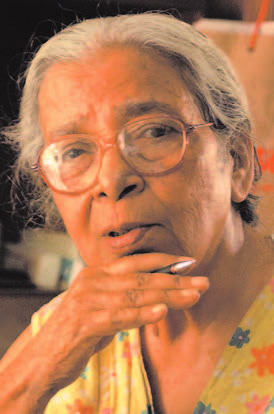
    Mahasweta Devi, the 90-year-old eminent writer-activist who passed away, July 28, symbolized writing for life’s sake. As she herself said, “It is my conviction that a storywriter should be motivated by a sense of history that would help her readers to understand their own times. I have never had the capacity nor the urge to create art for art’s sake. Since I haven’t ever learnt to do anything more useful, I have gone on writing. I have found authentic documentation to be the best medium for protest against injustice and exploitation.”  Mahasweta was no ivory-tower writer, a crusader’s zeal propelled her. Be it her involvement with the Singur agitation in West Bengal or welfare of tribals of Bihar, Orissa, Bengal and Madhya Pradesh that won her the Padma Shri in 1986, she chronicled the struggles of the subaltern classes. She fought for the rights of the landless and peasants, taking on corporate and politically entrenched interests. The recipient of the Jnanpith Award for 1996, explored motifs in modem Indian life through figures and narratives of indigenous tribes of India.

    Born in 1926, she was reared in a Dhaka family whose bread-winner, a lawyer, chose against all odds to fight the imperialists. As she said: “My grandfather had to suffer a lot for fighting the cases of freedom fighters. But right from childhood, I was brought up in an atmosphere where compromise was taboo…”. Her father, poet Manish Ghatak, uncles Sachin Choudhury, the founder-editor of the Economic and Political Weekly, and Ritwik Ghatak, an avant garde filmmaker were dominant influences. Her mother and grandmother too wrote. In fact, the women in the family had a lively relationship with books. In 1948, Mahasweta married the legendary playwright Bijon Bhattacharya of IPTA, the author of Navanno.

    Mahasweta studied literature but loved history and experienced life in varied ways – be it as a teacher or during a stint at the office of the DAG Posts and Telegraphs, assignments as a roving village reporter of the Bengali daily Jugantar. All these combined to hone the social realism that characterized her fiction. Besides 42 novels, 20 collections of short stories, five books for children, a collection of plays and translations, she also co-authored a book in Hindi – Bharat Mein Bandhua Mazdoor. Mahasweta created a span of history, allowing individuals to evolve through their interactions with the historical process. While chronicling history, she captured tones of oral narratives, in the raw idiom of everyday speech, often drawing words from several sources simultaneously. She was aghast at the casual way in which peasant up risings had been dismissed by chroniclers of India’s freedom movement. By documenting the lives and times of folk heroes, Mahasweta felt she was lending voice to the voiceless sections of society. Winning the Sahitya Akademi award for Aranyer Adhikar (1977) was a personal triumph. She had reconstructed the career of Birsa Munda, leader of a millenarian tribal revolt at the turn of the century. Her first published work, Jhansir Rani (1956), was a fictional reconstruction of the career of feudal chieftain Laxmibai, who fought against the British for her rights. For this, Mahasweta delved into archival records and travelled through the desert villages and plateau where the queen had lived and fought more than a 100 years ago.

    With painstaking care, she collected scraps of legends and folk ballads treasured in the collective memory of the region. Some of her other works are Not, (1957), Ki Basantj Ki Sorate (1958), Amrita Sanchay (1964), Andhar Manik (1967), Hajar Churashir Ma (1974), Aranyer Adhikar (1977), Agnigaritha (1978) and Chotti Munda o Tar Teer (1979). Besides this, Sunghursh, (1968) Rudaali (1993), Hazar Churasi Ki Ma (1998), Maati Maay (2006) and Gangor were movies made on her stories.

    From the late 1970s, the subjects of her stories became the subjects of her life and she got more and more involved with her work with tribals and underprivileged communities in the districts of Mednapur, Purulia, Singhbhum and Mayurbhanj. She set up several voluntary organizations for their welfare and helped bring their grievances to the view of an indifferent bureaucracy. With the funds sent by her translator Gayatri Spivak, she set up five schools in the tribal heartland of Purulia.

    While working with the tribals, Mahasweta noticed the peculiar paradox of tribal women’s life – their almost superhuman lifestyle and their fierce independence. From this flowed greatest short stories – Standayini, Draupadi, Douloti and Gohuinni.

    She was surprised at, the red-carpet treatment given to her when she visited Delhi to receive her Sahitya Akademi Award in 1979. All those who listened to her, at the India International Centre were struck by her sharp manner. No glib urban sophistication. After all, she came to Delhi very often and made the rounds of offices to collect funds for her cause. This time it was in the air-conditioned confines where she was being questioned about feminism. For a woman with a cause, her preoccupations transcended boundaries of gender and facile generalizations.

    Two classes of characters dominate Mahasweta’s stories The first are mothers bearing the brunt of social and political oppression and resisting with indomitable will. The other are sensitive individuals, initially apolitical, bound to the community with strong ties. As the individual absorbs the dehumanizing experience of exploitation, he grows to the role of a leader. Mahasweta’s Bashai Tudus, Chotu, Mundas and Mastersaabs are products of exploitation, direct and inhuman. Right from Chandi, cast out by a superstitious community in Baoen (1971), to the tribal Naxalite Draupadi in the story named after her, Mahasweta’s mothers are too earthy and emotion-charged to bear overtones of any mystical, mythical or archetypal motherhood.

    The most famous novel, Hajar Churashir Ma (Mother of 1084) is set against the climactic phase of the annihilation of urban Naxalite movement and its aftermath. Sujata,the mother of corpse number 1084, can find a moral rationale for her son Brati’s revolt only when she can piece together, exactly two years after his killing, part of her son’s life she had never known. She can see in Brati’s revolt an articulation of the silent resentment she has against her corrupt but respectable husband, her other children, their spouses and friends.

    Urvashi o Johnny,the story about the relationship between a ventriloquist and his talking doll, is just about the Emergency.The cancer of the throat of the doll is a metaphor for the suppression of democratic rights. The shock, pain and utter helplessness which the Emergency plunged Indian sensibility is captured in this strange story. In an age where books are more about hype and market-savvy tricks, writers like Mahasweta are rare. Digging a well is a leitmotif in her stories and that is what she did even in life – digging away and carving out an existence for the people whom she had given herself to. In an era of liberalization and, fast-changing beliefs (if any), the much-awarded writer embodied the triumph of substance over style.

    (The author can be reached at arutinayar@gmail.com)

  • DEMOCRATS DISPLAY UNITY AND ELAN AT THE CONVENTION

    DEMOCRATS DISPLAY UNITY AND ELAN AT THE CONVENTION

    Democratic Convention concluded July 28, with powerful endorsement of Hillary Clinton as the President of USA and an exultant Hillary accepting the nomination.  In sharp contrast with the visible divisions and rancor in the Republican camp at the Republican Convention in Ohio a week earlier, Democrats succeeded in presenting an image of unity, despite differences which are too well known by now. The most bitter foe of Hillary Clinton during primaries to the run up to the convention, Bernie Sanders, while acknowledging policy perception differences with Hillary, came up with a strong endorsement of Hillary, much to the chagrin and disappointment of his followers.

    Scores of party stalwarts and dignitaries spoke at the Convention. While Michelle Obama was widely acclaimed for her polished and moving speech, Michael Bloomberg’s barbs on Trump did not fail to amuse the gathering.

    However, it was for Obama to win the most admiration and appreciation as he spoke of what democracy is and what leadership is. He clearly steered the 2016 presidential election away from Trumpism when he called upon Americans “to reject cynicism and fear” being propagated by the 70 year old New York Realty Moghul Donald Trump, and “summon what is best in us”.

    Hillary Clinton., accepting the nomination, spoke of what she believes in and what she would do as President. She spoke of the priorities she has on mind which all aim at ensuring security and peace not only in America but also in the world. Her speech threw up quite a few quotable statements. “America is great because America is good.” “Our democracy isn’t working as it should”. “Wall Street will never again be allowed to rip Americans”.

    Hillary’s speech touched upon all aspects of life of all sections of people. Referring to young students, she said Bernie and she would work together for free college education and for a new set of rules governing student loans. Creating more opportunities, more jobs, raise in wages are the areas she said she would address on priority. “None of us can do it alone”, she said. “Together” we can achieve our cherished goals was the message from the Democratic Presidential nominee. As for Donald Trump, she seemed to pity him. She dismissed him as a man with no ideas, no vision,offering no solutions to problems. “Donald offers no change. He has only words”.

    The impressive array of endorsements, the impressive display of unity, and the exposition of democratic nominee’s vision bode well for Hillary Clinton. All eyes are now on Tuesday, November 8, 2016.

  • The finest Obama Moment:  Lessons in Leadership in Times of Trouble

    The finest Obama Moment: Lessons in Leadership in Times of Trouble

    Thursday (July 28) morning, many of us found ourselves riveted to television screens, listening to President Barack Obama deliver one of the most substantive and wise speeches by any world leader in recent years. Of course, he was speaking at the Democratic Party’s National Convention in Philadelphia. Such conventions in American politics are primarily tribal gatherings, with well-honed rites and rituals of endorsement, denunciation and demonization. Expectedly, Obama did all that – and, then a bit more. He ended up educating the Americans and the rest of the world in the principles and practices of leadership.

    Obama, in his speech at the Democratic Convention in Philadelphia said leadership meant "creating the possibility for people of goodwill to join and make things better".
    Obama, in his speech at the Democratic Convention in Philadelphia said leadership meant “creating the possibility for people of goodwill to join and make things better”.

    In outlining differences between Hillary Clinton and her Republican opponent, Donald Trump, President Obama reflected on what constitutes leadership, particularly in these troubled times when the world order is looking somewhat frayed. These reflections were worth every penny because this is the time when political leaders, especially in the West, are being fashionably run down as unable and ill-equipped to address the concerns of their disillusioned, disenchanted and disenfranchised citizens. The masses are supposed to be in some kind of ‘revolt’ against the political classes. Suddenly, the world over, there appears be a clamor for the boorish demagogue, who does not care for the so-called elites and their expertise and addresses himself, instead, directly to the modern equivalent of the unwashed millions. The damage such demagogues can inflict on a society’s political and social stability was very much evident in the recent British referendum on the European Union. Britain is no exception. All over, inciters and imposters are finding victims among gullible and confused citizens.

    In Philadelphia, Obama spoke up against this global current of demagogic sales-pitch. In endorsing Hillary Clinton and indirectly depreciating Donald Trump, Obama sought to wean the Americans and other citizens the world over from the seductive charm of the slogan-mongers. (We in India are not unfamiliar with this phenomenon and its bewitching potential. We have even coined a name for it, too: jumala-baazi). Obama courageously cautioned against those who seek to use the pulpit to fan “resentment, and blame, and anger, and hate.” The demagogue preys on the citizens’ anxieties about a world the national governments are no longer able to cope with, leave alone control and coerce.

    President Obama has the experience and the credentials to be critical of Donald Trump for “not offering any real solutions” and, instead, “just offering slogans, and offering fear.” Despite being a partisan at a patently partisan show, Obama’s censure does underscore the complexities of the modern-day government.

    Presiding over a country – any country – is a complicated affair. Everyone wants change and every two-penny bit of a politico promises change with a capital C. But what Obama managed to underline was the stark reality: there are no teach-it-yourself manuals for the business of government, the science of governance and the art of governing. It is easy to promise and not all that easy to deliver. He was warning not just the Americans but also the voting citizens all over the world: beware of the man who sells a quick-fix. There are no quick-fixes, as we have been discovering for ourselves since May 2014.

    Democratic voices and forces all over the world would be grateful to President Obama for reminding us once again that a democracy does not depend upon one person. Instead, the beauty of democracy is that its resilience and resourcefulness empower one and all: “Our power does not come from a self-declared savior promising that he alone can restore order. We don’t look to be ruled.” In making this assertion, Obama raised his voice against the ever-present weakness for the megalomaniac and against the shaman and his black bag of magic medicines.

    A democratic polity, be it in India, America or England, is an arrangement of institutions and processes and protocols. A democratic system intrinsically frowns upon potential Caesars and other purveyors of personality cult. Authority in democracy can only be an institutionalized exercise of power.

    Leadership means not just arousing the passions and animosities of your followers; it means enlisting the support and cooperation of your rivals once the vote is over. “It’s creating the possibility for people of goodwill to join and make things better,” Obama proposed.

    An essential corollary of this proposition is that a true leader is not intimidated by talent around him or her, is not afraid of other brilliant and bright men and women, and does not surround himself with mediocrities and second-raters. In our own case, at the most critical moment of modern history, Jawaharlal Nehru and Sardar Patel, though rivals, made a formidable diarchy; and, with the Mahatma’s blessing, they were willing to -and, did – share power and space and public gaze with those who were not their political associates in the fight against the British. The post-Independence leadership felt secure enough to invite ‘rivals’ and outsiders to be part of the Cabinet and become partners in the great task of rebuilding the new Indian State.

    An essential element of leadership has to be a capacity to work with other people. Not a one-man show. As Obama noted that “even when you’re 100 per cent right, getting things done requires compromise. That democracy does not work if we constantly demonize each other.” (His admonition can well be directed at Arvind Kejriwal’s AAP government and its equally unsparing rivals in the Modi sarkar).

    As Obama would tell us, leadership is not about instigating followers to a civil war; nor is it about deepening society’s divisions and fault-lines. Leadership is about tapping collective positive impulses and energy. Or, as Obama put it, cultivating and nurturing “bonds of affection; that common creed.” Leadership is about summoning citizens to rise above their petty animosities and prejudices. Invoking inclusiveness is a primary obligation for any leader because every country is a divided society. Obama was brilliant and courageous in acknowledging the diversity among the Americans “whether they wore a cowboy hat or a yarmulke; a baseball cap or a hijab.” We should certainly be able to feel the import of these words at a time when the majority in India feels itself empowered enough to beat up the minorities. But Obama argued that politics of togetherness will always trump the politics of divisiveness. “We are stronger together,” he intoned.

    And, summoning togetherness is not at all easy a task. Because that involves offering a moral leadership. Obama exhorted the Americans to “reject cynicism, reject fear, to summon what’s best in us.” This is not just an American requirement; this is an axiom that has to be valid and relevant in every country around the world.

    (Yale alumnus author is a former Media Advisor of the Indian Prime Minister. He remained in Prime Minister's Office from June 2009 to January 2012)
  • FREE, HEALTHY SUMMER MEALS FOR NYC CHILDREN

    FREE, HEALTHY SUMMER MEALS FOR NYC CHILDREN

    No child should ever have to go without a meal. That’s why the DOE is, once again, offering completely free, nutritious breakfasts and lunches to anyone 18 years or younger in New York City all summer long. With nearly 1,100 sites in all five boroughs, the summer meals program ensures that children will have easy access to meals over summer break, so they can start the school year ready to learn.

    If you haven’t already, I encourage you to participate in this important program and help us raise awareness. New York City’s summer meals program is the largest in the country, and together, we can make sure that children don’t go hungry during the summer months.

    Eating healthy, regular meals is an essential part of every child’s development. Hungry children have trouble concentrating, and often suffer from frequent stomachaches, headaches and other medical issues. Children and families in New York City, no matter their zip code, deserve access to high-quality food.

    Already, summer meals have been a tremendous success – in 2015, we served 8.2 million meals, up from the 7.1 million meals served in 2012 – and we hope to make even more progress this year. We’re serving summer meals at sites across the city, including schools, pools, libraries, NYCHA locations, and four mobile food trucks. At the summer meals sites, children can choose from a variety of healthy and delicious options, such as egg-and-cheese sandwiches, pizza, locally sourced fruit, and my personal favorite, roasted chicken.

    As a teacher and a principal, I learned very quickly that our responsibilities to students don’t end when school gets out. For every child, the summer is an important break – it’s a time of much-needed rest, self-exploration and great personal growth. And, as parents and educators, the shared goals we have for our children during the school year – high-level achievement, serious effort, real learning – depend on how we nourish and support children over the summer.

    Summer meals will be offered through September 2. No registration, documentation or I.D. is required to receive breakfast or lunch – just stop by a site and enjoy the food.

    To find site locations and view daily menus, download the Schoolfood app or visit www.schoolfoodnyc.org.