TRIPOLI (TIP): Close to 100 migrants were feared missing after their boat sank off the Libyan coast near Tripoli on Thursday, a coastguard official said.
Coastguard spokesman Ayoub Qassem said 23 migrants were rescued from the craft off Gargaresh, a western suburb of Tripoli. Survivors said the inflatable boat had set off with about 120 people on board.
“Some 97 are still missing, including 15 women and children,” Qassem said. “What happened is that the base of the boat got wrecked and the boat had sunk.”
Libya is the main departure point for migrants hoping to reach Europe by sea, and more than 150,000 have made the crossing from Libya to Italy in each of the past three years. (AP)
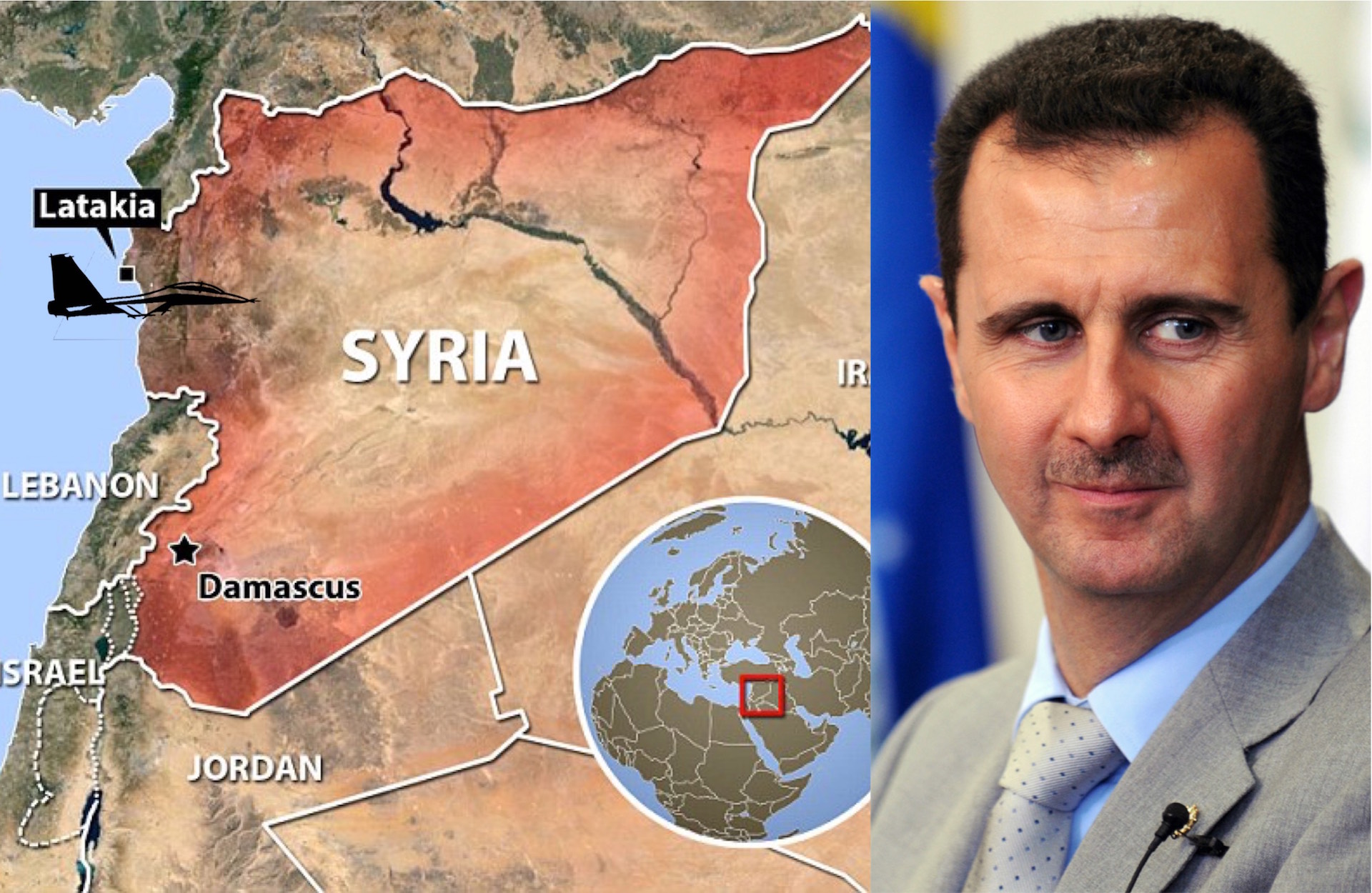
DAMASCUS (TIP): Syrian President Bashar al-Assad said his government handed over all its chemical weapons stockpiles in 2013 and could not have been behind last week’s suspected sarin attack.
“There was no order to make any attack… We gave up our arsenal a few years ago. Even if we have them, we wouldn’t use them,” Assad said in an exclusive interview with AFP in Damascus on Wednesday. (AFP)
WASHINGTON (TIP): An airstrike on Tuesday by a US-led coalition fighting Islamic State mistakenly killed 18 members of the Syrian Democratic Forces south of the city of Tabqa, Syria, the Pentagon said on Thursday.
“The strike was requested by the partnered forces, who had identified the target location as an ISIS fighting position,” it said in a statement, referring to the Islamic State militant group by an acronym. “The target location was actually a forward Syrian Democratic Forces fighting position.” (Reuters)
WASHINGTON (TIP): An airstrike on Tuesday by a US-led coalition fighting Islamic State mistakenly killed 18 members of the Syrian Democratic Forces south of the city of Tabqa, Syria, the Pentagon said on Thursday.
“The strike was requested by the partnered forces, who had identified the target location as an ISIS fighting position,” it said in a statement, referring to the Islamic State militant group by an acronym. “The target location was actually a forward Syrian Democratic Forces fighting position.” (Reuters)
Assad says army ‘gave up’ all chemical weapons in 2013
DAMASCUS (TIP): Syrian President Bashar al-Assad said his government handed over all its chemical weapons stockpiles in 2013 and could not have been behind last week’s suspected sarin attack.
“There was no order to make any attack… We gave up our arsenal a few years ago. Even if we have them, we wouldn’t use them,” Assad said in an exclusive interview with AFP in Damascus on Wednesday. (AFP)
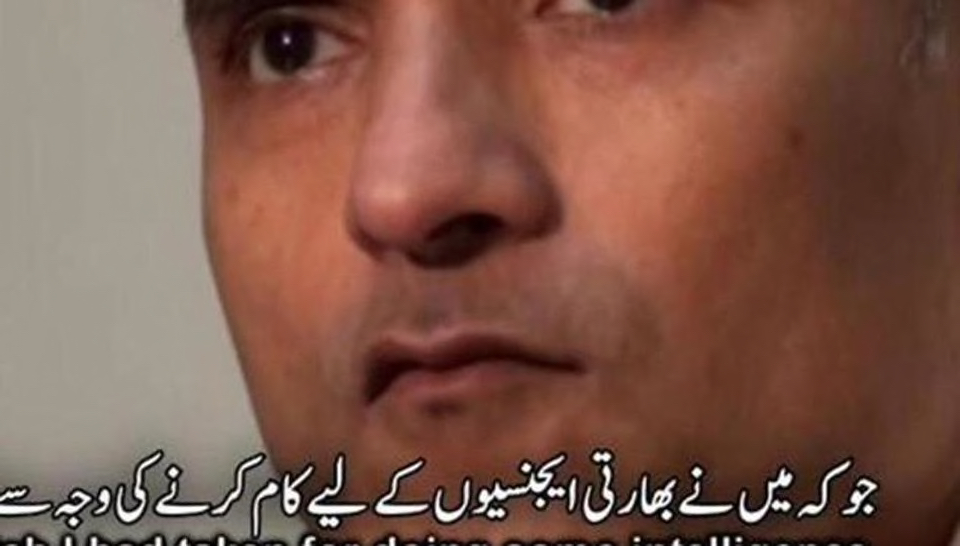
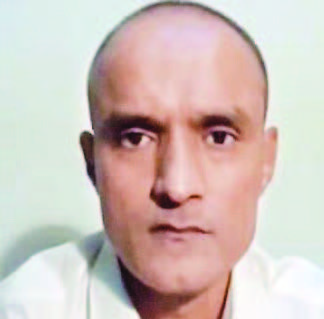
NEW DELHI (TIP): Pakistan Army’s decision to execute alleged Indian spy Kulbhushan Jadhav seems to have found little support globally. Not only has Amnesty International slammed the decision but also the civil rights groups within Pakistan.
Top US think-tanks have questioned the secrecy of trial and the US NSA visit here next weekend is expected to see some plain speak by India on its ties with Pakistan, hinted people familiar with the developments.
Neighbouring Iran, from where Jadhav has been doing business for over a decade, had earlier snubbed Islamabad for its attempt to drive a wedge between New Delhi and Tehran using the so called “spy card”.
Iran has not supported Pakistan in the ongoing episode. “The death sentence given to Kulbushan Jadhav shows yet again how Pakistan’s military court system rides roughshod over international standards,” said Biraj Patnaik, South Asia director of Amnesty International.
“What the Pakistan Army has done is to embarrass both the Sharif and the Modi governments,” said a civil activist from Pakistan. Yet another Pak activist described the decision of the military court as a sham and Pakistan military may be using this to seek concessions from Delhi after feeling the pressure over India’s growing support in West Asia and strong opposition to the China-Pakistan-Economic-Corridor.
Officials also referred to the successful visit of Bangladesh PM Sheih Hasina and momentum in BIMSTEC process as factors that have further isolated Pakistan within the South Asian region. There is also an opinion that China may have influenced Pak decision after the Dalai Lama’s visit to Arunachal.
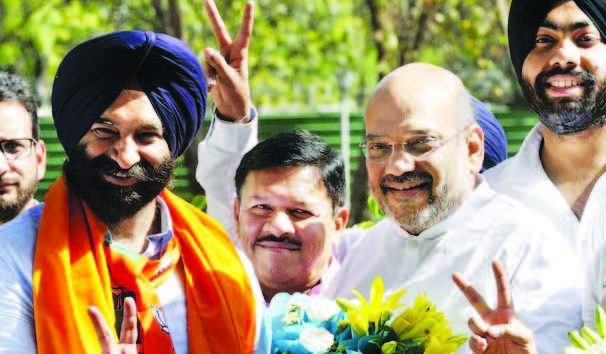
NEW DELHI (TIP): The Bharatiya Janata Party (BJP) registered a huge victory in the Rajouri Garden Assembly bypoll in the national capital on April 13 handing a humiliating defeat to the ruling Aam Aadmi Party (AAP), which finished a distant third and even lost deposit.
BJP-Shiromani Akali Dal (SAD) joint candidate Manjinder Singh Sirsa bagged 40,602 seats, over 50% of the total votes polled, in a boost for the saffron party ahead of the 23 April municipal polls.
Congress’ Meenakshi Chandela finished second with 25,950 votes while AAP’s Harjeet Singh managed to get only 10,243 votes, less than one-sixth of the total votes polled, and lost deposit.
In terms of vote share, the Congress staged a turnaround of sorts by getting around 33% of the total votes cast,in a jump of over 21% over the 2015 Assembly polls.
Around 47% of the over 1.6 lakh electors of the west Delhi seat had cast their vote on 9 April.
With the victory, the BJP’s tally in the 70-member Delhi Assembly will become four. The Congress does not have any presence in the House.
The seat fell vacant early this year after AAP’s Jarnail Singh quit as MLA to contest the Punjab Assembly poll against SAD patron Parkash Singh Badal.
Delhi’s richest MLA
Sirsa will be the richest MLA in Delhi with declared assets of over Rs 185 crore.
By this distinction, Sirsa dislodges AAP’s Pramila Tokas who topped the list of wealthiest MLAs until now with declared assets of Rs 87 crore. Tokas is an MLA from RK Puram in south Delhi.
Sirsa, who had contested the assembly election in 2015 also, had declared assets of Rs 239 crore at that time. However, the worth of his assets has dropped by over 22% since then. Sirsa, who calls himself an “agriculturalist and businessman” on his affidavit filed in 2017, has declared moveable assets, such as money, cars, and other valuables worth almost Rs 89 crore, and immovable assets, such as agricultural land and commercial buildings worth over Rs 120 crore. He has also declared liabilities and other outstanding dues, like bank loans, worth approximately Rs 24 crore.
According to an analysis by Association of Democratic Reforms (ADR), 11 of the 70 Delhi MLAs had total assets worth more than Rs 10 crore after the assembly election in 2015.
NEW DELHI (TIP): The bank account data of one crore Indians was up for sale. And it was dirt cheap at 10 or 20 paisa per individual, police investigations have revealed.
Probing the case of an 80-year-old woman from Greater Kailash in south Delhi, who had lost Rs 1.46 lakh from her credit card, the cops have busted the module which stole data from insiders in banks, call centres and authorized firms, and sold it to crooks.
What is shocking is that the arrest of a key player in the trade has led the cops to recover stolen data of one crore people, claimed DCP (south east) Romil Baaniya.
The data, comprising card number, card holder name, date of birth and mobile number, is in several categories and runs into more than 20 gigabytes. Most sought after data is of senior citizens bank details, police said.
The arrested person, Puran Gupta, a resident of Pandav Nagar, has claimed that he usually sold bulk data of around 50,000 people for anything between Rs 10,000-20,000. The accused is said to have bought the data from a Mumbai-based supplier. Raids are being conducted to arrest him.
The crooks used this data by posing as bank representatives and convinced people into sharing details such as the CVV number and OTP, and used these to withdraw money.
As the crooks were already armed with details such as the person’s name and card number, many of their targets fall into the trap and ended up furnishing their passwords.
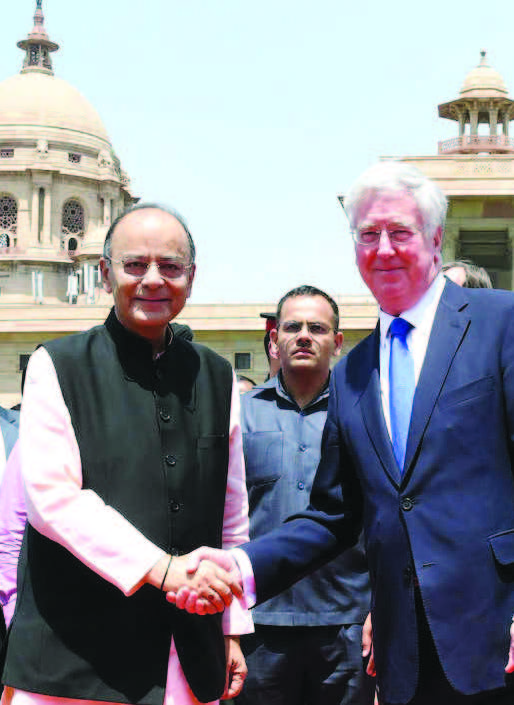
NEW DELHI (TIP): India and the UK are jointly making one of the most powerful engines for fighter jets of the future and the first such engine will be unveiled within a year.
The gas turbine engine, the very latest in technology, is being developed in collaboration between UK’s Rolls Royce and India’s Defence Research and Development Organisation (DRDO) and Gas Turbine and Research Establishment (GTRE), said Stephen Phipson, Head of Defence and Security Organisation, Department of International Trade, UK.
He was interacting with mediapersons along with UK Secretary of State for Defence Sir Michael Fallon here after the India-UK Strategic Defence Dialogue. The UK delegation held talks with the Indian side led by Defence Minister Arun Jaitley.
“This is a very high-thrust engine. It has the highest thrust possible in a jet engine,” said Phipson, who accompanied Sir Fallon at the press briefing. He, however, refused to divulge the details.
Rolls Royce develops engines for leading global plane manufacturers, including military aircraft produced by countries such as the US.
Sir Fallon said the UK and India were looking forward to having a defence and security partnership for a sea-borne aircraft carrier besides extending defence equipment cooperation to enable companies to collaborate on air defence missiles and gas turbine engines.
“We are working on inter-operatability. We can include doctrines and training,” said Lt Gen Mark Poffley, the Deputy Chief of Defence Staff, UK’s Ministry of Defence.
The two countries are looking to hold bilateral exercises in all three domains -Army, Air Force and Navy.
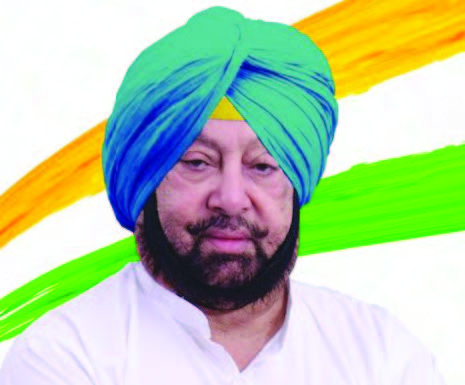
CHANDIGARH (TIP): Punjab chief minister Captain Amarinder Singh’s statement against Canadian defence minister Harjit Singh Sajjan terming him a “Khalistani sympathiser” has triggered a diplomatic row with the Canadian high commission on April 13 terming it “disappointing and inaccurate”.
Reacting to the remarks, the Canadian high commission here said Canada greatly values its relationship with the people and the government of Punjab, and look forward to further advancing it. “We regret that the CM of Punjab is unavailable to meet with Canada’s minister of defence. The CM is welcome to visit Canada,” the high commission added.
However, Amarinder rejected Canada’s defence and said he stood by his principled stand of not associating himself with any “Khalistani sympathiser”. Amarinder reiterated that the Canadian defence minister and several other top leaders in Canada were sympathising with those indulging in anti-India activities, notwithstanding Canada’s claims to the contrary, said a press note issued by his office.
He named other Canadian political leaders, including Navdeep Bains, Amarjit Sohi, Sukh Dhaliwal, Darshan Kang, Raj Grewal, Harinder Malhi, Roby Sahota, Jagmeet Singh and Randeep Sari, as “well known for their leanings towards the Khalistani movement”.
Amarinder had on April 12 alleged that Sajjan, like his father, is a “Khalistani sympathiser” and he would not meet him during his scheduled visit to India from April 17 as he (Sajjan) and four other Sikh ministers in the Justin Trudeau cabinet scuttled his visit to Canada before Punjab assembly polls.
Canadian Defense minister Harjit Singh Sajjan
The CM said while Sajjan was welcome to attend conferences and meets, and even to visit the Golden Temple in Amritsar, he would personally not entertain the Canadian minister. The state government would provide full security to the minister and also ensure that he gets due treatment as per protocol, said Amarinder.
Amarinder also lashed out at the Aam Aadmi Party (AAP) and the Dal Khalsa for their criticism of his refusal to meet Sajjan.
In Canadian federal elections of 2015, Jutin Trudeau and his liberal party faced criticism from a section of Punjabi diaspora in Vancouver over World Sikh organisation (WSO), said to be a radical organisation, supporting Punjabi-Sikh candidates in the polls, including Sajjan.
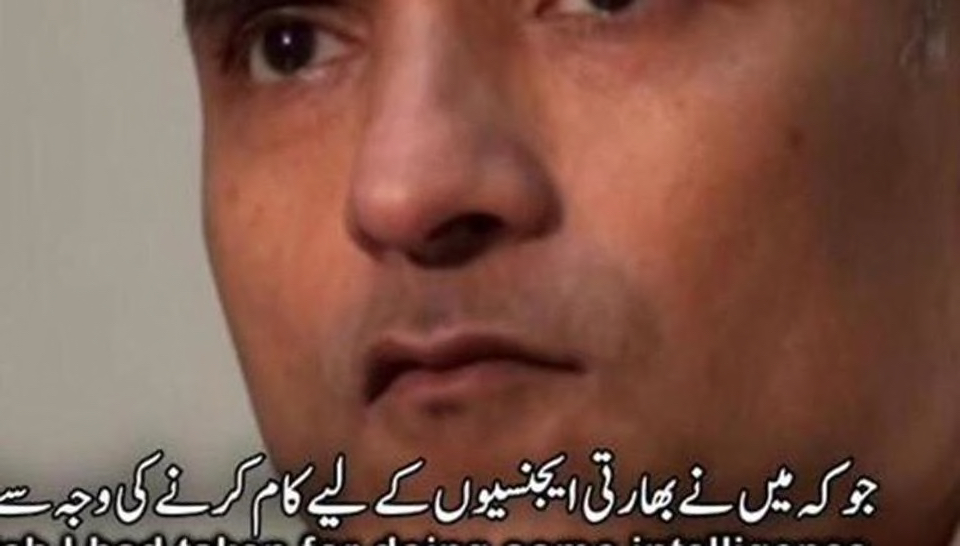
New Delhi/Islamabad (TIP): The Pakistan army brass decided after a discussion on April 13 that there would be no compromise on the issue of the death sentence+ awarded to retired Indian Navy commandant Kulbhushan Jadhav, an Inter-Services Public Relations (ISPR), the Pak army’s media wing, said in a statement. Also, the Pakistan foreign office officially acknowledged that one of its retired army officers was missing in Nepal.
The Jadhav issue was discussed at the corps commanders’ conference held in the army’s General Headquarters in the garrison city of Rawalpindi, and presided over by the chief of army staff, Gen Qamar Javed Bajwa. The participants were briefed about Jadhav+ , who was sentenced to death by a field general court martial earlier this week, the ISPR presser said. The unprecedented April 10 decision has sparked a major diplomatic row between the two hostile neighbours.
The Pakistan authorities also warned against the linking of its missing ex-army officer in Nepal with the Jadhav issue.
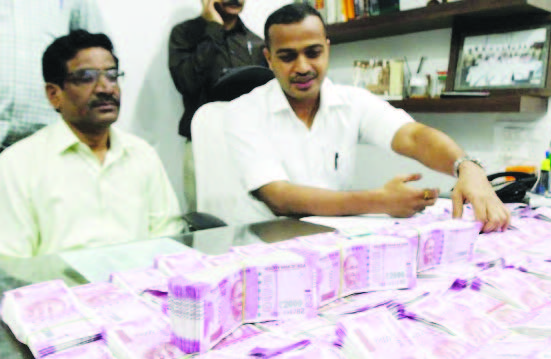
NEW DELHI (TIP): The Income Tax department will investigate over 60,000 individuals under the second phase of the ‘Operation Clean Money’ which was launched on Friday with a view to detecting black money generation post demonetisation.
The Central Board of Direct Taxes (CBDT), policy-making body of the department, said it had detected undisclosed income of over Rs 9,334 crore between November 9, 2016 and February 28 this year. The note ban was announced by Prime Minister Narendra Modi on November 8 last year.
“More than 60,000 people, including 1,300 high-risk ones, have been identified for investigation into claims of excessive cash sales during the demonetisation period. More than 6,000 transactions of high value property purchase and 6,600 cases of outward remittances shall be subjected to detailed investigations (under Operation Clean Money II).
“All the cases where no response is received shall also be subjected to detailed enquiries,” the CBDT said.
A senior officer said advanced data analytics had been used to identify suspect cash deposits before launching the latest edition of the operation. As part of the first phase of the ‘Operation Clean Money’, launched on January 31 this year, the department had sent online queries and investigated 17.92 lakh people out of which 9.46 lakh people had responded to the department. Source: PTI
NEW DELHI (TIP): Amid raging controversy over authenticity of electronic voting machines (EVMs), the Supreme Court on April 13 issued notices to the Centre and the Election Commission on petitions alleging that EVMs can be easily hacked to favour a particular candidate or a political party. The petitions demanded paper trail on all EVMs.
A Bench headed by Justice J Chelameswar asked the NDA government and the EC to respond to the petition filed by the Bahujan Samaj Party and Samajwadi Party MLA Ataur Rehman by May 8, the next date of hearing.
After tasting poll defeat, BSP chief Mayawati and AAP convener and Delhi Chief Minister Arvind Kejriwal had alleged that EVMs were tampered with. The BSP alleged that large-scale tampering of EVMs helped the BJP to win the UP Assembly polls. The Congress and Trinamool Congress told the court that they, too, wanted to be heard in the matter.
“The views of technicians working in this field are important and not of what political parties say,” the Bench told senior counsel P Chidambaram who appeared for both the BSP and Rehman. The Bench said EVMs were a remedy to several ills that plagued the voting system before it was introduced. Chidambaram pointed out that a 2013 verdict of the SC made it mandatory for the EC to install VVPAT. Despite the EC writing to the government 10 times since June last, including the Chief Election Commissioner’s letter to the Prime Minister, the government didn’t release funds for paper trail machines. “They need Rs 3,000 crore for having this system,” he told the Bench.
He, however, chose to withdraw the BSP’s prayer for deferring forthcoming elections until paper trail machines were made available after the Bench said it would not like to get drawn into political controversies.
On behalf of the Congress, senior counsel Kapil Sibal said EVMs were not used in any democracy, except a couple of countries in latin America. “But, this system was introduced when your party was in power,” the Bench commented. Noting that it would not decide the issue on the basis of which country was using or not using it, the Bench said: “We would purely go on the basis of law and technical data.”
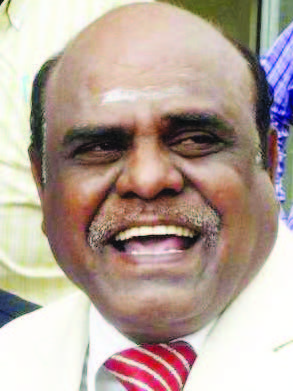
KOLKATA (TIP): A defiant Calcutta High Court Judge Justice CS Karnan on April 13 asked the Chief Justice of India (CJI) and six judges of the Supreme Court, who have issued a contempt notice to him, to appear before him at his “residential court” on April 28.
Justice Karnan claimed the seven judges of the Bench had insulted him “wantonly and deliberately and with malafide Justice CS Karnan intention”.
He said the judges had been asked to defend themselves against the charge of violating the SC/ST Prevention of Atrocities Act, levelled by him. Justice Karnan has been insisting that he is being discriminated against because he is a Dalit.
Addressing journalists at his residence, Justice Karnan said, “On April 28 at 11.30 am the seven judges will appear before me at my ‘Rosedale Residential Court’ and give their views regarding quantum of punishment for the violation of the SC/ST Prevention of Atrocities Act.”
He passed the “suo motu judicial order” from his residence which, he said, has now become his “makeshift court”. In the signed order, Justice Karnan said on March 31, he had “pronounced a judgment wherein the seven judges are accused under the SC/ST Prevention of Atrocities Act”.
Justice Karnan had on March 31 appeared in the SC in the contempt case against him, a first in the Indian judicial history. Source: PTI
NEW DELHI (TIP): Striking a note of caution against any blanket ban on medical tourism-related content available online, the Supreme Court on April 13 said people’s right to know, be informed and gain wisdom from the Internet can’t be curtailed unless the content violated the law against sex-determination law in India.
A three-judge Bench headed by Justice Dipak Misra said it was only for the nodal officers appointed by the Centre and state governments under the Pre-Conception and Pre-Natal Diagnostic Techniques Act, 1994, to ask intermediaries to take measures for the removal of objectionable content. The intermediaries such as Microsoft, Yahoo and Google can’t take any action on their own, it added.
The clarification came from the Bench after senior counsel Harish Salve and Abhishek Manu Singhvi—representing Microsoft and Google—said the intermediaries could take action only on directions from nodal officers, and not on their own volition. The Bench posted the matter for further hearing on September 5.
The Bench said any online information could not be blocked unless it violated Section 22 of the Act that prohibited advertisements relating to pre-natal determination of sex. Attorney General Mukul Rohatgi had told the Bench the right to know was a fundamental right that could not be curtailed by banning information on the Internet.
“There is distinction between information and advertisement. A person out of curiosity wants to know or study something. The right to know is a fundamental right and we cannot curtail it… We cannot curtail free search. The right to know is a fundamental right. If we stop information, then we stop knowledge, then we stop thinking…” Rohatgi had said.
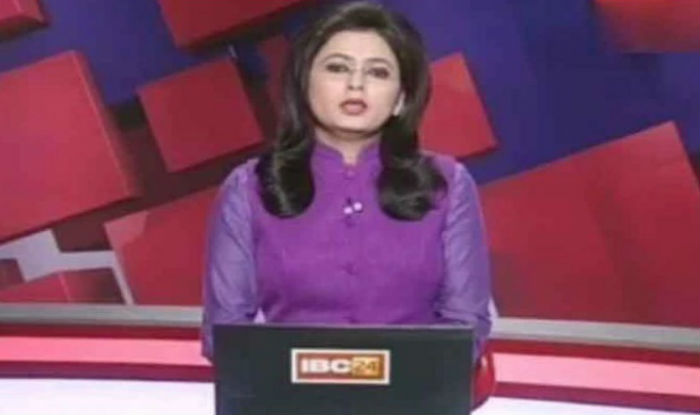
Supreet Kaur, a news anchor with Chattisgarh’s private IBC-24 channel was reading her morning bulletin on Saturday and was directed to break the news of a fatal accident in the Mahasamund district fifteen minutes after her show began. A car had crashed as a result of which three out of five people who were travelling in the vehicle were dead.
The local reporter, who was sharing details of the accident on air, wasn’t able to reveal the identity of the passengers. But Supreet, 28, realised soon after that one of them could be her husband as she knew that he was supposed to travel in a Renault Duster on the route at the same time with four of his friends. She read the news without letting viewers understand her plight and completed the show, reports suggest, before she went out of the studio and broke down.
The Editor said that the production team was aware of the news but could not inform Supreet as she was live.
She has reportedly left for the accident site.
“She is an extremely brave lady. We are proud of her as an anchor, but what happened today has left us in shock,” Supreet’s colleague said, Hindustan Times reports.
Harshad Gawde and two others – Gaurav Sahu and Nishant Wakil – were killed on the spot and two others were injured when their SUV collided with the rear end by a truck on Saturday morning while they were returning from Saraipali towards Raipur, news agency PTI reports.
Chhattisgarh Chief Minister Raman Singh expressed his condolence over the incident and praised the woman’s courage.
“I salute Supreet’s strength in dealing with her husband’s demise with extraordinary bravery and professionalism. May the departed soul rest in peace,” Mr Singh said in a tweet last night.
Supreet Kaur, who has been working with IBC-24 since the past nine years, married Harsad Kawade a year ago, news reports state.
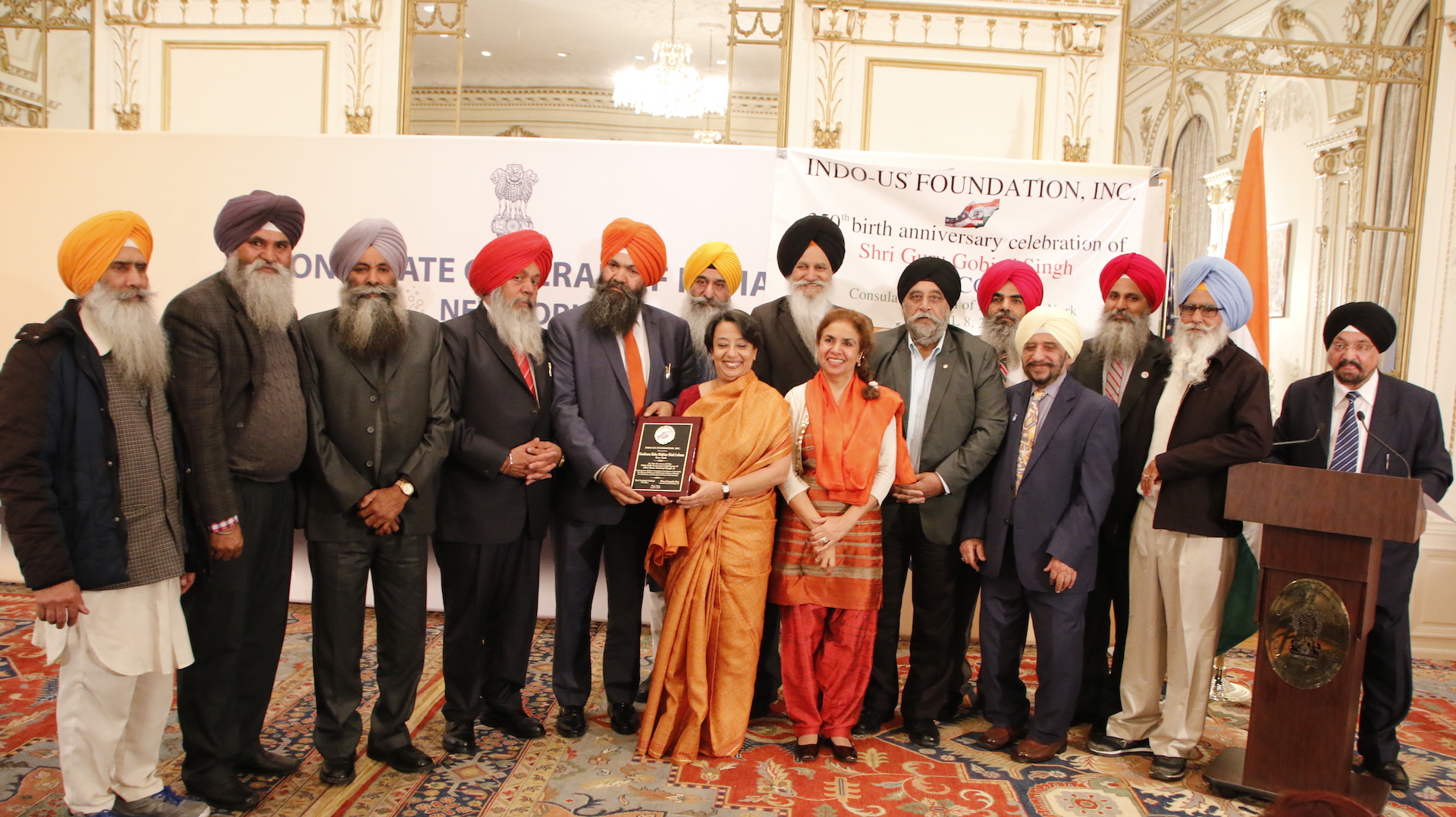
NEW YORK (TIP): The Indian American community and their friends from the mainstream came together to celebrate the 350th birth anniversary of the Tenth Master of the Sikhs, Shri Guru Gobind Singh.
It was for the first time that the birthday of a Sikh Master was celebrated at the Indian Consulate in New York.
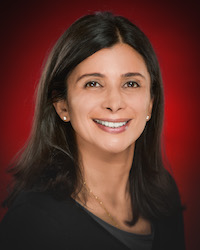
Welcoming the gathering, the Consul General Riva Ganguly Das characterized Guru Gobind Singh who created Khalsa as the savior of the people against the tyranny of the rulers of the time. She recalled that as a young girl in Delhi she would often visit with her parents Gurdwara Bangla Sahib and Gurdwara Sisganj Sahib and listen to Gurbani which she found extremely soothing. She said she learnt about the wonderful traditions of the Sikhs from her visits to gurdwaras and from her readings on Sikhism.
Consul General Das, who is a Bengali, said Guru Rabiindra Nath Tagore, one of the greatest writers who was the first Indian to be honored with a Nobel Prize, the greatest name among Bengali writers, and one of the greatest sons of India, was influenced by Guru Nanak and wrote a couple of poems dedicated to the First Sikh Guru.
Consul General spoke appreciably of the great contribution of the Sikh community in India and abroad and said she was delighted to host the 350th birth anniversary celebration of Guru Gobind Singh at the Consulate. She added that she looked forward to many such events being organized to focus on Sikhs.
Ambassador Das chose to heap her praise on Prof. Indrajit S Saluja, President of Indo-US Foundation for organizing the event.
Welcoming the guest speaker, Dr. Nikky Guninder Kaur Singh, the endowed Crawford Professor of Religious Studies at Colby College, Waterville, Maine, the Consul General said Dr. Singh was a great scholar and an authority on religions and that it was a momentous occasion to have her at the Consulate to speak about the great Sikh Guru.
Earlier, welcoming the Consul General Prof. Indrajit S Saluja said Ambassador Das, in just over a year, had taken significant steps to streamline working at the Consulate, with the result that the image of the Consulate was refurbished. The consular services improved. Prof. Saluja attributed the rising approval rating of the consular services to the efforts made by the Consul General who has been traveling extensively in all 10 States under her jurisdiction and reaching out to people, under the “Consulate at your doorstep” program. Another significant step she had taken was to reach out to administration and politicians which helped not only in strengthening of relations between the administration and the Indian Community but also in strengthening of relations between the US and India.
Dr. Nikky Guninder Kaur Singh spoke at length about the personality and philosophy of Guru Gobind Singh and took questions.
Dr. Singh enlightened the audience on four aspects of the great Guru.
A young Sikh boy presented a bouquet on behalf of the community to Dr. Nikky Guninder Kaur Singh
Consul General Das presents a plaque to Guest speaker Dr. Nikky Guninder Kaur Singh
Dr. Nikky Guninder Kaur Singh presented a plaque to Air India Regional Manager USA Vandana Sharma
Consul General presents a plaque to Gurdwara Baba Makhan Shah Lobana
Dr. Nikky Guninder Kaur Singh presented a plaque to Mrs. and Jatinder Singh Bakshi of Singh & Singh Distribution. Dr. Hetal Gor is seen to the right of Dr. Singh
Consul General presents a plaque to Mr. Sunil Sharma, CE of Bank of India
Malini Shah presented Citation from New York City Council to Consul General Das and Dr. Nikky Guninder Kaur Singh
Malini Shah presents a Citation from New York City Council to Prof. Indrajit S Saluja
Consul General presents a plaque to Balwant Hothi, Technical Head of PTC TV
A view of the audience
A young girl in Sikh traditional dress presented a bouquet on behalf of the community to Consul General Riva Ganguly Das
Prof. Indrajit S Saluja, President of Indo-US Foundation introduced the program and the Consul General
Dr. Nikky Guninder Kaur Singh spoke on four aspects of Guru Gobind Singh
“Guru Gobind Singh was an epoch maker”: Consul General Riva Ganguly Das
Universalism
With the founder Guru Nanak as his matrix, Professor Nikky-Guninder underscored Guru Gobind Singh’s vison of the Divine One. She cited verses from the Jaap Sahib carrying forward the first Guru’s Japji in breathtaking speed. Countless ways are envisioned by Guru Gobind Singh only to underscore the absolute singularity of the Ultimate Reality: anek hain phir ek hain.
Pluralism
Dr. Nikky-Guninder reminded us that for Guru Gobind Singh pluralism went beyond mere diversity and tolerance. The Guru acknowledged diversity as a mere consequence of different regions and climates — niare desan ke bhes ko prabhao hai. But we humans are ultimately alike — ekai nain ekai kan ekai deh ekai ban (Akal Ustat: 86). The Guru powerfully makes the plea that humans recognize (pahicanbo) that they all belong to the same one caste. Birth and biology justify human equality. He does not want his people to be afraid of one another; he does not intend for people to merely tolerate one another with different colored eyes or complexions or accents or texture of hair. We can hear an urgency in Guru Gobind Singh’s tone as he voices the two imperatives “pahicanbo” (recognize) and “janbo” (know).
manas ki jat sabai ekai pahicanbo….
ek hi sarup sabai ekai jot janbo (Akal Ustat, 85)
Recognize: humanity is the only caste….
Know: we are all of the same body, the same light.
Guru Gobind Singh imposed a moral obligation that people actively learn about others and recognize our fundamental humanity, which we desperately need to do in our dangerously divided and polarized world.
Activism
The visionary Guru was also an ardent activist. He was a phenomenal leader who fought battles against political and social oppression. But all his actions were inspired by the doctrine of the Divine One and his belief in the collective humanity.
His momentous creation of the Khalsa in 1699 was to free his Sikhs from their stifling past and provide them with a liberating new present. The Five Beloved had come to Anandpur from different regions of India and they belonged to different social classes. But by sipping the amrit from the same bowl prepared by the Guru, they pledged their allegiance to fight against political oppression and social injustice for the sake of liberty and equality of humanity. In Sikh memory, the Guru also revoked the oppressive patriarchal lineage by giving the surname “Singh” (meaning “lion”) to the men, and “Kaur” (meaning princess) to the women. In the new family of the Khalsa everyone was to share the same name and worth. Their sense of identity was strengthened by the five external markers of their faith, the five k-s.
His passing of Guruship to the sacred book is yet another unparalleled accomplishment. With his boundless humanity and divinity, the Guru made the historical and spiritual past perpetually present. The Guru Granth Sahib is the physical presence that bonds the Sikhs metaphysically with the Divine One, historically with their ten Gurus, and socially with their community. The spiritual and moral legacy of the glorious Guru resonates vibrantly in the everyday social, political, economic, and cultural life of the Sikhs.
Poetic Genius
Dr. Nikky-Guninder analyzed the poetic genius of the Tenth Guru. In the tradition of his spiritual predecessors, the Tenth Guru lyrically expressed the themes of love and equality, and a strictly ethical and moral code of conduct. Deprecating idolatry and superstitious beliefs and practices, he evoked the Singular Divine. Injustice was challenged through both word and deed. Poetry became the medium to impart a new orientation to his subjugated community. The fusion of the devotional and the martial was the most important feature of the philosophy of Guru Gobind Singh, and of his career as a spiritual leader and harbinger of a revolutionary impulse.
What was kindled by the Tenth Sikh Guru some 350 years ago in India, must be kept alive in the new millennium and in the new world.
Dr. Nikky-Guninder thanked the Consul General and her Sikh community for hosting the significant event in the Big Apple, and especially Dr. Indrajit Singh Saluja for his meticulous organization. Memories have a future. Our future is shaped by our past. By holding on to our rich past let us today enjoy the wonderful resources of our global society, let us together – Hindu, Muslim, Jew, and Christian, let us together —white, black, brown and yellow, let us together —men and women, old and young, let us together create a truly just and egalitarian future. Our fundamental principle should be love. In the experience of love, all the toxic stuff that clogs our arteries– hate, prejudice, stereotyping, hostility — dissolves. As the visionary Guru Gobind Singh says, jinni prem kio tinu hi prabh paiao – those who love, find the beloved.
A major attraction was screening of two documentaries, one on the life of Guru Gobind Singh, and, another on Vaisakhi. Both the documentaries were produced by Prof. Indrajit S Saluja. The audience was pleased and impressed with the documentaries.
The Bhangra group “Soormay” gave a scintillating Bhangra performance. The young students from St. John’s University created a nostalgic vision of Punjab where Bhangra is a must at every happy occasion. The dance simply soars the spirit and fills even the dead with life.
Those honored the occasion included Consul General Riva Ganguly Das, Dr. Nikky Guninder Kaur, Gurdwara Baba Makhan Shah Lobana, Bank of India, Air India, India Tourism, Singh & Singh Distribution and Balwant Hothi. Each was presented a plaque by Indo-US Foundation headed by Prof. Indrajit S Saluja.
Harpreet Singh Toor who represented Assembly Member David Weprin presented citations from NY State Assembly to Consul General Das and Dr. Nikky Singh.
Malini Shah who represented NY City Council Member Paul Vallone presented citations to the Consul General, Dr. Nikky Singh and Prof. Indrajit S Saluja
The event was co-hosted by the Consulate General of India and Indo-US Foundation, with cooperation from Gurdwara Baba Makhan Shah Lobana, Bank of India, Singh & Singh Distribution, Air India and India Tourism.
About Dr. Nikky – Guninder Kaur Singh
Dr. Nikky-Guninder Kaur Singh is the endowed Crawford Professor of Religious Studies at Colby College. Her interests focus on Sikh scripture. Dr. Nikky-Guninder has published several books and numerous articles. She is the author of the Birth of the Khalsa published by the State University of New York Press in 2005. She also authored Of Sacred and Secular Desire (2012), which is a translation of Punjabi poets — Sikh, Hindu, and Sufi. To name some of Dr. Singh’s other books: Sikhism (IB Tauris: 2011), Cosmic Symphony (2008), The Name of My Beloved (Penguin, 2001), The Feminine Principle in the Sikh Vision of the Transcendent (Cambridge University Press, 1993), Metaphysics and Physics of the Guru Granth Sahib (Sterling 1981). Her views have also been aired on television and radio in America, Canada, England, Ireland, Australia, India, and Bangladesh. She serves as a trustee for the American Institute of Indian Studies, and is on the editorial board of several journals including the History of Religions, the Journal of the American Academy of Religion, and Sikh Formations. She came to America as a young teenager to attend a girls’ prep school in Virginia, got her BA from Wellesley College, her Masters from the University of Pennsylvania, and her PhD from Temple University. Professor Nikky-Guninder is currently working on translations from the Guru Granth Sahib for Harvard University Press.
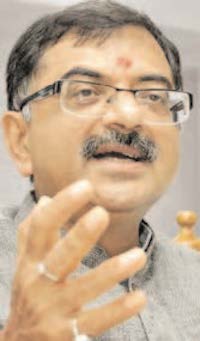
NEW YORK (TIP): “It is shocking to hear another racist thought and political bigotry emanating from a member of BJP and a former Rajya Sabha MP who may have inadvertently revealed his true colors in his black and south Indian remarks’ said George Abraham, Chairman of the Indian National Overseas Congress, USA. ‘However, there is little surprise as to the sentiment expressed by Tarun Vijay may be widely shared by his party and a good segment of its cadre. Such remarks are not forgotten post simple apology’ Mr. Abraham added. It should be noted that Mr. Vijay was the chief editor of the RSS publication Panchjanya.
In a discussion on Al Jazeera network, Tarun Vijay said that Indians cannot be called racists as they live with “black people” from southern states of Tamil Nadu, Kerala, Karnataka and Andhra Pradesh.
“If we were racist, why would we have the entire south, which is complete, you know, Tamil, you know Kerala, you know Karnataka and Andhra, why do we live with them? We have black people around us,” said Vijay.
The RSS/BJP combine has been successful in camouflaging their upper caste and racist ideology under cover of religious fanaticism. Occasionally, they couldn’t help themselves but by exposing their hypocrisy towards the people of dark skin color. Although Southern states have played a crucial role in the economic revival of India, the political operatives in BJP seem to be fixated on the amount of melanin in their skin.
The deafening silence of their leadership including the Prime Minister towards the attack on the Nigerian students in Noida clearly illustrates that racism is well and alive in India and it may be still abetted by a large segment of the folks like Tarun Vijay.
Non-resident Indians who live among various cultures and races around the globe ought to be concerned with the ever increasing number of racist incidents emanating out from India and how they would be perceived abroad as the nationalistic sentiments are on the uptick.
WASHINGTON (TIP): The United States dropped a massive GBU-43 bomb, the largest non-nuclear bomb it has ever used in combat, in eastern Afghanistan on Thursday, April 13, against a series of caves used by Islamic State militants, the military said.
It was the first time the United States has used this size of bomb in a conflict. It was dropped from a MC-130 aircraft in the Achin district of Nangarhar province, close to the border with Pakistan, a Pentagon spokesman said.
Also known as the “mother of all bombs,” the GBU-43 is a 21,600 pound (9,797 kg) GPS-guided munition and was first tested in March 2003, just days before the start of the Iraq war. The security situation in Afghanistan remains precarious, with a number of militant groups trying to claim territory more than 15 years after the US invasion which toppled the Taliban government.
General John Nicholson, the head of US and international forces in Afghanistan, said the bomb was used against caves and bunkers housing fighters of the Islamic State in Afghanistan, also known as ISIS-K. It was not immediately clear how much damage the device did.
White House spokesman Sean Spicer opened his daily news briefing speaking about the use of the bomb and said, “We targeted a system of tunnels and caves that IS fighters used to move around freely, making it easier for them to target US military advisers and Afghan forces in the area.”
Last week, a US soldier was killed in the same district as the bomb was dropped while conducting operations against Islamic State. “The United States takes the fight against ISIS very seriously and in order to defeat the group, we must deny them operational space, which we did,” Spicer said.
He said the bomb was used at around 7 p.m. local time and described the device as “a large, powerful and accurately delivered weapon.” The United States took “all precautions necessary to prevent civilian casualties and collateral damage,” he said.
US officials say intelligence suggests Islamic State is based overwhelmingly in Nangarhar and neighboring Kunar province.
Estimates of its strength in Afghanistan vary. US officials have said they believe the movement has only 700 fighters but Afghan officials estimate it has about 1,500.
Islamic State’s offshoot in Afghanistan is suspected of carrying out several attacks on minority Shi’ite Muslim targets. The Afghan Taliban, which is trying to overthrow the U.S.-backed government in Kabul, are fiercely opposed to Islamic State and the two group have clashed as they seek to expand territory and influence.
Efforts to dismantle ISIS strongholds have been concentrated in Iraq and Syria. But a small stronghold of fighters made up of former Taliban members has grown in eastern Afghanistan since 2014. The group is known as Islamic State Khorasan, according to a U.S. Institute for Peace report released in November.
“IS-K receives funding from the Islamic State’s Central Command and is in contact with leadership in Iraq and Syria, but the setup and day-to-day operations of the Khorasan province have been less closely controlled than other Islamic State branches such as that in Libya,” the report notes.
President Donald Trump lauded the strike on Thursday, calling it “another very, very successful mission.” Just last week, he also approved a strike on a Syrian air base in the aftermath of a chemical weapon attack on Syrian civilians that killed almost 100 people.
Trump, while advocating for a lessened U.S. role in international conflicts, also claimed he would “bomb the shit” out of the Islamic State during his presidential campaign.
There is an anxious concern on US plans about North Korea. In view of the bombings carried out in Syria and Afghanistan, there is concern that US may translate its warning given by Nikki Haley, its ambassador to the UN that if the World Body failed to act against North Korea, US will act against the “rogue regime” on its own. And, quite obviously, member nations are concerned about the consequences of a US strike against North Korea.
“Jingoism may work for domestic electoral cycles, but can be dangerous internationally. Confronting the Sino-Pak combine, assuming Trump as a credible pro-India counterweight, is risky at best. Pliny the Elder’s advice to avoid ‘brutum fulmen’ or ‘senseless thunderbolt’ is perennially sound. PM Modi needs to send his ‘Rasgotra’ to Pakistan and avoid public fist-clenching”, says the author – KC Singh.
Harold Wilson’s quip that a week is a long time in politics comes to mind reviewing last fortnight’s developments. The US rained missiles on Syrian air base at Shayrat, near Qoms, in retaliation for the alleged Syrian use of sarin gas, notified as a chemical weapon, against civilians in Khan Sheikhoun. Pakistan upped the ante sentencing to death, for espionage and terrorism, Kulbhushan Jadhav, a former Indian Naval officer, allegedly apprehended in Balochistan. India ignored Chinese threats over the Dalai Lama visiting Tawang, which has the second holiest Buddhist monastery after Lhasa, and the birthplace of the sixth Dalai Lama.
Taking them serially, Trump’s decision to punish Syria’s Assad regime surprised both his “Alt-right” allies, who felt betrayed by his neo-interventionism, as too his critics in own party and among Democrats, who were elated. Trump was recanting from his election rhetoric of distancing the US from geopolitical cesspools. He perhaps had multiple motives. He was able to jettison charges of cosiness, if not actual complicity, between the Russian government and his election campaign. It is speculated that the US gave Russians a heads-up to avoid direct conflict by ensuring no Russian lives were lost. Careful target selection by avoiding living quarters and attacking in the dead of night, when plane hangars were unmanned, also had the same objective.
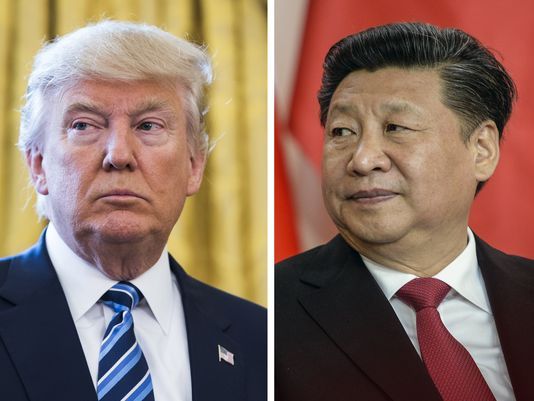
Chinese President Xi Jinping did not get the same courtesy as Trump, having ordered the Tomahawks fired, sat down for dinner with him at his Mar-a-Lago resort in Florida, informing him of the decision only post meal. Trump thus altered the dynamics between Xi and himself, demonstrating the resolve to defend the global order, which his withdrawal from the Trans-Pacific Partnership (TPP), flip-flop on ‘one-China’ policy and election rhetoric, urging isolationism, seemed to question. Xi swallowed the embarrassment but the Chinese media — after he left the US — lambasted the breach of Syrian sovereignty.
Analysts are wondering if this was a mere knee-jerk reaction, or the first move towards replacing the Assad regime. If the latter is true, there is yet no evidence that Russia is ready to abandon the Iran-Assad-Hezbollah alliance sine qua non to re-balance the Shia alliance. In any case, to force a ceasefire and realign half-a-dozen Sunni groups which oppose the Assad regime and hold parts of Syrian territory, ranging from effective Kurds — whose success Turkey resists — to Al Qaida associates and the IS, would be impossible without an international force, ideally with the UN Security Council imprimatur and the US and NATO participation. But such a force would be an anathema to Russia and China. Clearly, the generals manning critical positions in the Trump administration are finally getting to influence policy choices.
Prime Minister Nawaz Sharif Of Pakistan
This may not augur well for India-Pakistan relations as Pakistan gets emboldened the minute it gets access to influential US presidential aides. Trump’s revision of the Obama doctrine to use the Shias, led by Iran, to counter the IS by attempting to separate Russia from the Shia alliance has resurrected the demoralized Sunni brigade, led by Saudi Arabia. Pakistan allowing its former army chief Gen Raheel Sharif to head the Sunni alliance forces conducting operations in Oman indicates re-convergence of Pakistani, GCC and US interests.
That leads to the next issue of Pakistan suddenly pronouncing the death sentence on Kulbhushan Jadhav. The Indian public reaction and uproar in Parliament is perfect reading by Pakistan to get Indian attention. The exact motive is difficult to decipher at present, but may be multi-fold. It could have been triggered by a former Pakistan ISI officer going missing in Nepal, allegedly abducted by India. The desire to exploit the spring offensive by protesters in the Kashmir valley, whose protests have seen unprecedented success by forcing the negation of the electoral process, is a perennial factor. The Central government’s inability to understand this dynamic is inexplicable, particularly that the rise of Yogis as commissars will feed the paranoia of the Muslim majority in a sensitive state and that an alliance with the BJP has rendered the PDP politically irrelevant in the Valley. The Pakistan army may also have concluded that PM Nawaz Sharif is vulnerable to indictment in the Panama Papers case and political instability seems real. Finally, after the initial trepidation about how Trump led to the detention of Hafiz Saeed in a fit of delayed contrition, Pakistan now has a measure of Trump the interventionist, at whose court Pakistan will present itself as the nuclear weapon-wielding mercenary.
Finally, the Indian decision to test China by a more forward policy is laudable, but the timing may be inappropriate if it is based on the assumption of continued US assessment that a stronger India was in US interests to balance a rising China. This has been the US assumption since after the initial brouhaha over Indian nuclear tests of 1998. Although the Trump-Xi summit in Florida was overshadowed by the Syrian imbroglio, the two leaders seem to have bought time to negotiate differences over imbalanced trade, North Korea and South China Sea, etc. The statement by US ambassador to UN Nikki Haley about US mediation in India-Pakistan dispute raises questions whether Pakistan is really as isolated as the BJP claims.
Finally, the Indian reaction to the Kulbhushan episode, with External Affairs Minister Sushma Swaraj promising all in India’s power, is hyperbolic. Hostage takers are best dealt with by quiet threats, which should be credible, and carrots that are tangible. By minimizing Indo-Pak contact there are few carrots that India holds. The only credible threat, short of a war, can be that abducting each other’s citizens and conducting mock trials is letting security agencies override diplomacy. Former foreign secretary MK Rasgotra recalls calling on President Zia-ul-Haq to convey Indira Gandhi’s message that if Pakistan did not stop abetting the hijacking of planes — which was assuming epidemic proportions in the early 1980s — India would do likewise. The gambit worked as differential of power between the two states had not yet been levelled by Pakistan possessing nuclear weapons.
Jingoism may work for domestic electoral cycles, but can be dangerous internationally. Confronting the Sino-Pak combine, assuming Trump as a credible pro-India counterweight, is risky at best. Pliny the Elder’s advice to avoid ‘brutum fulmen’ or ‘senseless thunderbolt’ is perennially sound. PM Modi needs to send his ‘Rasgotra’ to Pakistan and avoid public fist-clenching.
(The author is a former Secretary, Ministry of External Affairs, Government of India)
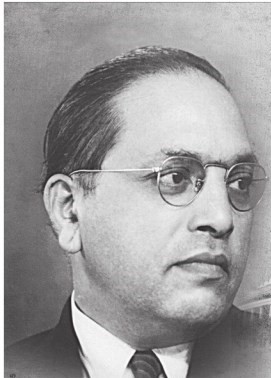
In a speech to the Constituent Assembly in 1949, B.R. Ambedkar stressed on the need to have social democracy, and not only political democracy. He spoke of the need to shun the grammar of anarchy and avoid hero worship of political figures. According to him, in 1950, the Republic will enter a phase of contradictions. In politics, we will have equality and in social and economic life there will be inequality.
On January 26, 1950, India will be an independent country. What would happen to her independence? Will she maintain her independence or will she lose it again? This is the first thought that comes to my mind. It is not that India was never an independent country. The point is that she once lost the independence she had. Will she lose it a second time? It is this thought which makes me most anxious for the future.
What perturbs me greatly is the fact that not only India has once before lost her independence, but she lost it by the infidelity and treachery of some of her own people.
In the invasion of Sindh by Mahommed-Bin-Kasim, the military commanders of King Dahar accepted bribes from the agents of Mahommed-Bin-Kasim and refused to fight on the side of their king. It was Jaichand who invited Mahommed Gohri to invade India and fight against Prithvi Raj and promised him the help of himself and the Solanki kings. When Shivaji was fighting for the liberation of Hindus, the other Maratha noblemen and the Rajput kings were fighting the battle on the side of Moghul Emperors. When the British were trying to destroy the Sikh rulers, Gulab Singh, their principal commander sat silent and did not help to save the Sikh kingdom. In 1857, when a large part of India had declared a War of Independence against the British, the Sikhs stood and watched the event as silent spectators.
Will history repeat itself? It is this thought which fills me with anxiety. This anxiety is deepened by the realisation of the fact that in addition to our old enemies in the form of castes and creeds, we are going to have many political parties with diverse and opposing political creeds. Will Indians place the country above their creed or will they place creed above country? I do not know. But this much is certain that if the parties place creed above country, our independence will be put in jeopardy a second time and probably be lost for ever. This eventuality we must all resolutely guard against. We must be determined to defend our independence with the last drop of our blood.
On January 26, 1950, India would be a democratic country in the sense that India from that day would have a government of the people, by the people and for the people. The same thought comes to my mind. What would happen to her democratic Constitution? Will she be able to maintain it or will she lose it again? This is the second thought that comes to my mind and makes me as anxious as the first.
Democratic system
It is not that India did not know what is democracy. There was a time when India was studded with republics, and even where there were monarchies, they were either elected or limited. They were never absolute. It is not that India did not know Parliaments or parliamentary procedure.
A study of the Buddhist Bhikshu Sanghas discloses that not only there were Parliaments — for the Sanghas were nothing but Parliaments — but the Sanghas knew and observed all the rules of parliamentary procedure known to modern times. They had rules regarding seating arrangements, rules regarding Motions, Resolutions, Quorum, Whip, Counting of Votes, Voting by Ballot, Censure Motion, Regularisation, Res Judicata, etc. Although these rules of parliamentary procedure were applied by the Buddha to the meetings of the Sanghas, he must have borrowed them from the rules of the political assemblies functioning in the country in his time.
This democratic system India lost. Will she lose it a second time? I do not know. But it is quite possible in a country like India — where democracy from its long disuse must be regarded as something quite new — there is danger of democracy giving place to dictatorship. It is quite possible for this new-born democracy to retain its form but give place to dictatorship in fact. If there is a landslide, the danger of the second possibility becoming an actuality is much greater.
Three warnings
If we wish to maintain democracy not merely in form, but also in fact, what must we do?
The first thing in my judgement we must do is to hold fast to constitutional methods of achieving our social and economic objectives. It means we must abandon the bloody methods of revolution. It means that we must abandon the method of civil disobedience, non-cooperation and satyagraha. When there was no way left for constitutional methods for achieving economic and social objectives, there was a great deal of justification for unconstitutional methods. But where constitutional methods are open, there can be no justification for these unconstitutional methods. These methods are nothing but the “Grammar of Anarchy” and the sooner they are abandoned, the better for us.
The second thing we must do is to observe the caution which John Stuart Mill has given to all who are interested in the maintenance of democracy, namely, not “to lay their liberties at the feet of even a great man, or to trust him with power which enable him to subvert their institutions”. There is nothing wrong in being grateful to great men who have rendered life-long services to the country. But there are limits to gratefulness. As has been well said by the Irish Patriot Daniel O’Connel, “No man can be grateful at the cost of his honour, no woman can be grateful at the cost of her chastity and no nation can be grateful at the cost of its liberty”. This caution is far more necessary in the case of India than in the case of any other country. For in India, Bhakti or what may be called the path of devotion or hero-worship, plays a part in its politics unequalled in magnitude by the part it plays in the politics of any other country in the world. Bhakti in religion may be a road to the salvation of the soul. But in politics, Bhakti or hero-worship is a sure road to degradation and to eventual dictatorship.
The third thing we must do is not to be content with mere political democracy. We must make our political democracy a social democracy as well. Political democracy cannot last unless there lies at the base of it social democracy. What does social democracy mean? It means a way of life which recognises liberty, equality and fraternity as the principles of life. These principles of liberty, equality and fraternity are not to be treated as separate items in a trinity. They form a union of trinity in the sense that to divorce one from the other is to defeat the very purpose of democracy.
Liberty cannot be divorced from equality, equality cannot be divorced from liberty. Nor can liberty and equality be divorced from fraternity. Without equality, liberty would produce the supremacy of the few over the many. Equality without liberty would kill individual initiative. Without fraternity, liberty would produce the supremacy of the few over the many. Without fraternity, liberty and equality could not become a natural course of things. It would require a constable to enforce them.
We must begin by acknowledging the fact that there is complete absence of two things in Indian society. One of these is equality. On the social plane, we have in India a society based on the principle of graded inequality. We have a society in which there are some who have immense wealth as against many who live in abject poverty. On January 26, 1950, we are going to enter into a life of contradictions. In politics we will have equality and in social and economic life we will have inequality. In politics, we will be recognising the principle of one man, one vote and one vote, one value. In our social and economic life, we shall, by reason of our social and economic structure, continue to deny the principle of one man, one value. How long shall we continue to live this life of contradictions? How long shall we continue to deny equality in our social and economic life? If we continue to deny it for long, we will do so only by putting our political democracy in peril. We must remove this contradiction at the earliest possible moment or else those who suffer from inequality will blow up the structure of political democracy which this Assembly has so laboriously built up.
The second thing we are wanting in is recognition of the principle of fraternity. What does fraternity mean? Fraternity means a sense of common brotherhood of all Indians — of Indians being one people. It is the principle which gives unity and solidarity to social life. It is a difficult thing to achieve. How difficult it is, can be realised from the story related by James Bryce in his volume on American Commonwealth about the United States of America. The story is — I propose to recount it in the words of Bryce himself:
“Some years ago the American Protestant Episcopal Church was occupied at its triennial Convention in revising its liturgy. It was thought desirable to introduce among the short sentence prayers a prayer for the whole people, and an eminent New England divine proposed the words `O Lord, bless our nation’. Accepted one afternoon, on the spur of the moment, the sentence was brought up next day for reconsideration, when so many objections were raised by the laity to the word ‘nation’ as importing too definite a recognition of national unity, that it was dropped, and instead there were adopted the words `O Lord, bless these United States.” There was so little solidarity in the USA at the time when this incident occurred that the people of America did not think that they were a nation. If the people of the United States could not feel that they were a nation, how difficult it is for Indians to think that they are a nation?
A great delusion
I remember the days when politically minded Indians, resented the expression “the people of India”. They preferred the expression “the Indian nation.” I am of opinion that in believing that we are a nation, we are cherishing a great delusion. How can people divided into several thousands of castes be a nation? The sooner we realise that we are not as yet a nation in the social and psychological sense of the world, the better for us. For then only we shall realise the necessity of becoming a nation and seriously think of ways and means of realising the goal. The realisation of this goal is going to be very difficult — far more difficult than it has been in the United States. The United States has no caste problem. In India there are castes. The castes are anti-national. In the first place because they bring about separation in social life. They are anti-national also because they generate jealousy and antipathy between caste and caste. But we must overcome all these difficulties if we wish to become a nation in reality. For fraternity can be a fact only when there is a nation. Without fraternity, equality and liberty will be no deeper than coats of paint.
These are my reflections about the tasks that lie ahead of us. They may not be very pleasant to some. But there can be no gainsaying that political power in this country has too long been the monopoly of a few and the many are only beasts of burden, but also beasts of prey. This monopoly has not merely deprived them of their chance of betterment, it has sapped them of what may be called the significance of life. These down-trodden classes are tired of being governed. They are impatient to govern themselves. This urge for self-realisation in the down-trodden classes must not be allowed to devolve into a class struggle or class war. It would lead to a division of the House. That would indeed be a day of disaster. For, as has been well said by Abraham Lincoln, “a House divided against itself cannot stand very long”. Therefore the sooner room is made for the realisation of their aspiration, the better for the few, the better for the country, the better for the maintenance for its independence and the better for the continuance of its democratic structure. This can only be done by the establishment of equality and fraternity in all spheres of life. By independence, we have lost the excuse of blaming the British for anything going wrong. If hereafter things go wrong, we will have nobody to blame except ourselves. There is great danger of things going wrong.
Times are fast changing. People including our own are being moved by new ideologies. They are getting tired of Government by the people. They are prepared to have Governments for the people and are indifferent whether it is Government of the people and by the people. If we wish to preserve the Constitution in which we have sought to enshrine the principle of Government of the people, for the people and by the people, let us resolve not to be tardy in the recognition of the evils that lie across our path and which induce people to prefer Government for the people to Government by the people, nor to be weak in our initiative to remove them. That is the only way to serve the country. I know of no better.
British English (Excerpts from the last speech by B.R Ambedkar to the Constituent Assembly on November 25, 1949).
Pakistan’s sudden announcement on Monday, April10, that former Indian naval officer Kulbhushan Jadhav has been sentenced to death by a Field General Court Martial is a development fraught with danger.
It could lead to a rapid escalation in bilateral tensions that the region can ill afford.
The trial, sentencing, and its confirmation by the Pakistan Army chief, General Qamar Javed Bajwa, were carried out so secretly that the news took many in Pakistan as well by surprise. There are glaring holes in the procedures followed by Pakistan’s government and military in the investigation and trial of Mr. Jadhav.
His recorded confession that was broadcast at a press conference within weeks of his arrest in March 2016 appeared to have been spliced. At various points in the tape, and in the transcript of the confession made available, Mr. Jadhav contradicts his own statements, suggesting that he had been tutored. Even if the confession was admissible in a court of law, little by way of corroborative evidence has been offered by Pakistan to back up the claim that Mr. Jadhav, who was allegedly arrested in Balochistan last year, had been plotting operations against the China-Pakistan Economic Corridor.
Foreign Minister Sushma Swaraj’s statement in Parliament detailing 13 requests by the government for consular access, and replies from the Pakistan government that made the access conditional on India cooperating in the investigation, further casts the procedures followed in a rather poor light.
International human rights agencies too have criticized them. Mr. Jadhav must be allowed a retrial, preferably in a civil court and with recourse to appeal.
New Delhi must step up its responses in the matter, as it seems to have kept it on the backburner, confining itself to fruitless, repeated representations. India must also pursue the issue with Iran, where Mr. Jadhav is believed to have been based for more than a decade, and investigate how he was brought, by force or otherwise, into Pakistan.
The timing of the announcement of the death sentence is also being seen in a spy versus spy context, with the recent disappearance of a former Pakistan Army officer in Nepal. These are matters best left to security agencies at the highest level, but the questions around Mr. Jadhav’s arrest need to be dispelled.
Moreover, this escalation highlights the consequences of the breakdown in the India-Pakistan dialogue process, limiting the channels of communication between the two governments to sort out matters in a sober manner.
The government has stood fast on its decision to not hold bilateral talks after the Pathankot attack in January 2016, but this policy is hardly likely to bring the desired results when a man’s life hangs in the balance.
The Jadhav case requires a proactive three-pronged response from India: impressing on Pakistan that the death sentence must not be carried out, explaining to the international community the flawed trial process, and sending interlocutors to open backchannels for diplomacy for Mr. Jadhav’s safe return home.
The John Simon Guggenheim Memorial Foundation announced 173 fellowships on Friday, April 7, to artists, writers, scholars and scientists, including three Indian Americans – Sandeep Mukherjee, Pramila Vasudevan and Shalini Shankar.
Appointed on the basis of prior achievement and exceptional promise, the successful candidates were chosen from a group of almost 3,000 applicants and represent 49 disciplines and artistic fields, 64 academic institutions and 27 states and the District of Columbia. The recipients range in age from 27 to 79. Sixty-eight Fellows have no academic affiliation or hold adjunct or part-time positions at universities. In addition, the Dorothy Tapper Goldman Foundation is once again underwriting the Fellowship in Constitutional Studies.
Sandeep Mukherjee from Fine Arts Category ,Pramila Vasudevan in Choreography category, and Shalini Shankar in Anthropology and Cultural Studies. All winners get the same prize, around $50,000.
“It’s exciting to name 173 new Guggenheim Fellows. These artists and writers, scholars and scientists, represent the best of the best. Each year since 1925, the Guggenheim Foundation has bet everything on the individual, and we’re thrilled to continue to do so with this wonderfully talented and diverse group. It’s an honor to be able to support these individuals to do the work they were meant to do, said Edward Hirsch, president of the Foundation.
The size of grants vary and are given for six months to one year, depending on the scope of the project. The foundation was established in 1925 and has awarded more than $350 million in fellowships to more than 18,000 people who, according to the organization’s website, “have already demonstrated exceptional capacity for productive scholarship or exceptional creative ability in the arts.”
Shalini Shankar
SHALINI SHANKAR
Field of Study: Anthropology and Cultural Studies
Dr. Shalini Shankar is Professor of Anthropology and the Director of the Asian American Studies Program at Northwestern University. She is a sociocultural and linguistic anthropologist concerned with issues of race and ethnicity, youth and migration, language use, and media. She has conducted ethnographic research with South Asian American youth and communities in Silicon Valley, with advertising agencies in New York, San Francisco, and Los Angeles, and with spelling bee participants and producers in various US locations.
During the Guggenheim Fellowship year, Shankar will be based in Brooklyn, NY. She will research Generation Z, exploring how this demographic category can be defined in ways that more centrally account for the contributions of immigrants and minorities.
More Info – http://www.gf.org/fellows/all-fellows/shalini-shankar/
PRAMILA VASUDEVAN
Field of Study: Choreography
Website: http://www.aniccha.org/
Pramila Vasudevan is a choreographer and interdisciplinary artist based in Minneapolis. She has a combined 30+ years of experience in Bharatanatyam (classical Indian dance) and contemporary Indian dance, plus a B.F.A. in Interactive Media and a B.A. in Political Science, all which inform her interdisciplinary voice and socially conscious performance practice.
Vasudevan is the founder and Artistic Director of Aniccha Arts (2004), an experimental arts group producing site-specific performances that examine agency, voice, and group dynamics within community histories, institutions, and systems. Aniccha Arts is best known for the all-night outdoor performance project ‘Census’ (2016) and ‘In Habit: Living Patterns’ (2012), both commissions of Northern Lights.mn that were experienced by thousands of audience members through the Northern Spark Festival; and ‘Every Other’ (2015), a site-specific installation performance at the Grain Belt Studios, which was nominated for an ‘Outstanding Performance’ Sage award. Aniccha Arts also has been commissioned by the Walker Art Center, to develop and present F6 as part of the Momentum: New Dance Works series (2013), and by the Weisman Art Museum, as part of the ‘Clouds: Temporarily Visible’ exhibit (2016).
More Info – http://www.gf.org/fellows/all-fellows/pramila-vasudevan/ &/or http://www.aniccha.org/
For full list – visit – http://www.gf.org/fellows/current/
TROY – Dr. Priya Menon, associate professor of English at Troy University, has received a Fulbright U.S. Scholar Program grant to India from the U.S. Department of State and the J. William Fulbright Foreign Scholarship Board.
In her research, Dr. Menon will study and document a counter-archive of the typical success stories of emigration to the Arabian Gulf States disseminated by mainstream media in India. In addition to her research, Dr. Menon will be offering a series of lectures and discussions on the topic and will help local faculty develop curricula, host seminars and engage in community services that will benefit expatriates who have returned to India from the Gulf States.
Dr. Menon is one of more than 1,200 U.S. citizens who will teach, conduct research and provide expertise abroad for the 2016-2017 academic year through the Fulbright U.S. Scholar Program. Recipients of Fulbright awards are selected on the basis of academic and professional achievement, as well as record of service and demonstrated leadership in their respective fields.
“This is an incredible honor, and I am very excited and humbled to be a part of the illustrious Fulbright alumni,” Dr. Menon said. “There is an exciting and growing body of literary texts, primarily conceived and circulated in southeast Asia, featuring these emigrant workers’ quotidian experiences which often involves exploitation grounded in a neo-colonial model of economic inequality and exclusion. It will be interesting to study whether literature can aid in bringing about social change apropos Arabian Gulf emigration.”
Dr. Larry Blocher, dean of the College of Communication and Fine Arts, commended Dr. Menon for the award.
“It is exciting to see Dr. Menon’s scholarship recognized at this level,” Dr. Blocher said. “She is a bright light among our Communication and Fine Arts faculty and all Troy University faculty. We certainly commend her for the dedication she has to teaching, her scholarly research and service to others.”
A member of the TROY faculty full-time since 2007, Dr. Menon received the University’s Ingalls Award for Excellence in Classroom Teaching in 2009. She holds two bachelor’s degrees and a master’s degree from Calicut University in Kerala, India. She also earned a master’s degree in English education from TROY in 2005, and received her doctorate in literary studies from Georgia State University in 2011.
The Fulbright Program is the flagship international educational exchange program sponsored by the U.S. government and is designed to build relations between the people of the United States and other countries that are needed to solve global challenges. The Fulbright Program is funded through an annual appropriation made by the U.S. Congress to the U.S. Department of State. The Fulbright U.S. Scholar Program is administered by the Council for International Exchange of Scholars.
NEW YORK CITY, N.Y. April 8, 2017: Shree Muktajeevan Swamibapa Pipe Band USA performed at the 2017 New York City Tartan Day Parade, featuring nearly 50 bagpipe groups from all across North America. The Indian American band was certainly a standout in this year’s parade lineup; sporting a traditional, Scottish bagpipe uniform, uniquely accompanied by traditional Indian elements. Other bands and the crowds adored the diversity and flare of the first Indian-American bagpipe band in North America. Thousands dotted the parade route on Sixth Avenue and cheered on as band entertained with Indian melodies and Scottish favorites.
Members from the non-profit organization, Round Hill Highland Games, shared about the band “Got to hand it to this band – they piped the whole length of the parade route with a lot of pep in their step.” In addition, parade organizers, from NYC Tartan Week, agreed with the statement and shared “They sure did! Pure enthusiasm! Awesome to see different cultures embrace the pipes & drums!”
Maninagar Shree Swaminarayan Gadi Sansthan, an international non-profit Hindu religious organization, promotes spiritual, cultural, and social welfare across the world. Music is a universal language, unifying cultures and people. As such, Shree Muktajeevan Swamibapa Pipe Band uses the medium of music to personify the organization’s mission, bringing welfare and peace throughout the world with its eclectic tunes.
The band’s earlier branches in Nairobi and London were founded by Shree Muktajeevan Swamibapa Himself after He enjoyed hearing the sounds of bagpipes during a tour of the United Kingdom. Swamibapa’s spiritual heir, H.D.H. Acharya Swamishree Purushottampriyadasji Maharaj, followed in His guru’s footsteps and founded the newer branches of the band in Bolton, U.S.A., and India. In December 2015, during the 60th anniversary celebrations of the band’s Nairobi branch, Acharya Swamishree brought all five bands together and established one united international band in honor of His guru.
Shree Muktajeevan Swamibapa Pipe Band, the first international Hindu-Indian traditional Scottish bagpipe band, consists of 214 members worldwide from the United States of America, the United Kingdom, Kenya, and India. Featuring bagpipes, snare drums, bass drums, and tenor drums, the band’s repertoire consists of Scottish tunes, patriotic tunes, and cultural melodies. Band members travel to perform at parades, religious events, cultural expositions, and charity performances across the world. The band is composed of students, entrepreneurs, physicians, lawyers, doctorates, and other professionals, ranging from ages 10-50.
Two Rice University undergraduate students have been awarded Goldwater Scholarships for the 2017-2018 academic year.
Rohan Palanki and Constantine Tzouanas were nominated by Rice and selected based on academic merit from a field of 1,286 natural sciences, mathematics and engineering students nationwide. The scholarships will cover the cost of tuition, fees, books and room and board up to a maximum of $7,500 per year.
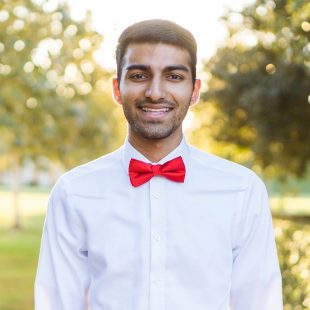
Rohan Palanki, a Rice sophomore from Mobile, Ala., is majoring in bioengineering and pursuing an M.D. from Baylor College of Medicine through the Rice/Baylor Medical Scholars Program. He intends to attain a Ph.D. in bioengineering and become a professor and researcher in academia.
“I hope to lead a cutting-edge research group that utilizes translational bioengineering and synthetic biology methods to develop diagnostic point-of-care medical devices, while also carrying out clinical work at a hospital,” Palanki said.
Palanki is currently studying the optimization of two-component bacterial systems for biosensor applications in the Tabor Lab at Rice.
“By using mathematical modeling, bioinformatics and site-directed mutagenesis, I have engineered sensitivity-tuned, mutant bacteria,” Palanki said. “These bacteria can be incorporated into an oral diagnostic, such as yogurt, that can be ingested to detect intrinsic disease biomarkers for intestinal disease. The sensitivity-tuning method that has been developed can also be applied to create a wide range of biosensors for other medical, industrial and environmental applications.”
Palanki holds a number of roles in Rice organizations, including campus chairperson of Rice University Global Brigades, president of Rice South Asian Society, Jones College senator for the Rice University Student Association, campus tour guide for the Rice Student Admissions Council and a member of two Indian dance teams: Rice Chowl Bhangra and Rice Riyaaz.
– See more at: http://news.rice.edu/2017/04/10/2-rice-students-named-goldwater-scholars-2/#sthash.QzDYYEjO.dpuf
Signup to our Newsletter!
Don’t miss out on all the happenings around the world