Month: September 2017

  • University of North Texas Establishes Professorship in Jain Studies

    University of North Texas Establishes Professorship in Jain Studies

    DALLAS (TIP): The University of North Texas has named George Alfred James, a distinguished faculty member in the department of philosophy and religion, as its first Bhagwan Adinath Professor of Jain Studies. The professorship aims to promote Jainism, an ancient religion of India, in the US. It was created in the university’s College of Liberal Arts and Social Sciences with a USD 500,000 gift from the Jain Education and Research Foundation.

    The professorship was established by the foundation to promote the study of Jainism, an ancient religion of India, in the United States. The central tenet of Jainism is nonviolence and love toward all living beings, with nonviolence, non-absolutism and non-possessiveness as the three main principles. Mahatma Gandhi adopted many Jain principles in his life, although he was born and raised Hindu. The professorship at UNT is named for the first Tirthankara, a spiritual guide in Jain tradition who preaches the dharma, or righteous path.

    On June 27, 2017 Jain Education and Research Foundation signed an MoU to establish the Professorship in Jain Studies at the University of North Texas (UNT). This was the second major initiative after successful establishment of the Bhagwan Mahavir Professorship of Jain Studies at Florida International University (FIU) in Miami in 2010. The professorship at FIU has flourished in the past 6 years exposing thousands of students to Jain values through academic courses and other programs. The program at UNT aims to follow in the footsteps of FIU to create a perpetual center of Jain education and research. UNT is ideally suited for this endeavor with its many scholars of Jainism and other Asian cultures. UNT is also one of the largest Tier-1 US universities with student body of almost 40,000 from diverse religious and ethnic backgrounds.

    James, who joined the UNT faculty in 1983, has included information about Jainism in the courses on South Asian philosophy and world religions that he teaches in the Department of Philosophy and Religion. The department also occasionally offers a course on Jainism, which was created after Pankaj Jain was hired as an assistant professor with a joint appointment in the Department of Philosophy and Religion and the Department of Anthropology. Jain taught a similar course at North Carolina State University.

    James also studies environmental movements in India and has traveled extensively to the nation for his research.

    He said a Jain professorship at UNT “will help to fortify the religion program and provide UNT with distinction.”

    “Not every university includes information about Jainism as part of its courses, but there’s a long legacy of the influence of Jainism throughout history. The religion’s idea of nonviolence was extremely influential on Gandhi and also Martin Luther King, who adopted Gandhi’s actions during the civil rights movement,” he said. “Unfortunately, the idea of nonviolence is now getting less and less attention in the world.”

    Interest from the professorship’s endowment will eventually fund conferences focusing on nonviolence as it pertains to contemporary issues and bring speakers with expertise in Jainism to UNT, James said.

    David Holdeman, dean of the College of Liberal Arts and Social Sciences, said many faculty members and students in the college and at UNT are interested in cultural and social issues pertaining to India.

    “We hope that the Jain professorship will help to foster additional discussion not only of Jainism in particular but also of Indian religion and culture more generally. We are excited and grateful to be able to launch this new professorship,” he said.

  • Indian American Cosmetic Surgeon Reappointed to Nevada State Board of Osteopathic Medicine

    Indian American Cosmetic Surgeon Reappointed to Nevada State Board of Osteopathic Medicine

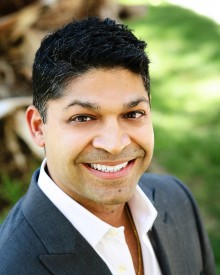
    LAS VEGAS (TIP): Las Vegas based Indian American cosmetic surgeon, Dr. Samir Pancholi has been reappointed to the Nevada State Board of Osteopathic Medicine for a four year second term ending June 2021.

    Earlier, NV Governor announced the appointment of another Indian American Swadeep Nigam to the NV State Board of Osteopathic Medicine as a public member to the Board.

    Dr. Samir Pancholi is fellowship-trained in cosmetic surgery and a diplomat of the American Board of Cosmetic Surgery. After graduating from medical school, he completed a surgical internship at Ohio University and then spent 5 years training at Michigan State University in general surgery and then head, neck and facial plastic surgery training programs. In 2006, he completed an advanced, one year accredited Cosmetic Surgery fellowship training program through the American Academy of Cosmetic Surgery.

    Dr. Pancholi has trained specifically in and exclusively practices cosmetic surgery. With an artistic approach, he has developed a focus in breast augmentation and breast implant revision surgery. As one of the fastest growing cosmetic surgery practices in Las Vegas, Dr. Pancholi is highly respected by his peers and considered a leading expert in cosmetic surgical procedures of the face and body.

    Throughout his career Dr. Pancholi has attained a number of accomplishments including publishing several articles and serving on cosmetic surgery boards and committees. He’s lectured on cosmetic surgery locally, nationally, and internationally; performed live surgery demonstrations of facial, breast, and body cosmetic procedures and taught other surgeons his techniques. In 2009, Dr. Pancholi was selected as a guest editor to review peer articles submitted to The American Journal of Cosmetic Surgery. This journal publishes leading research and advances in the world of cosmetic surgery.

    Dr. Pancholi was selected in 2010 as one of Las Vegas’ Top 40 Under 40, honored for gaining recognition in Las Vegas as a breast implant revision specialist. In 2011, he was recognized as a distinguished speaker by the American Academy of Cosmetic Surgery and also selected as a chairperson to the Annual Scientific Meeting of the American Academy of Cosmetic Surgery. In 2014, Dr. Pancholi was featured as one of Las Vegas’ Top 3 “Best-Dressed Gents” by Luxury Las Vegas Magazine, an honor that speaks to his eye for aesthetic detail, balance and proportion.

  • Indian American Congressman Raja Krishnamoorthi Calls on FEMA to Incorporate Climate Change Impacts into Projecting Flood and Disaster Risks

    Indian American Congressman Raja Krishnamoorthi Calls on FEMA to Incorporate Climate Change Impacts into Projecting Flood and Disaster Risks

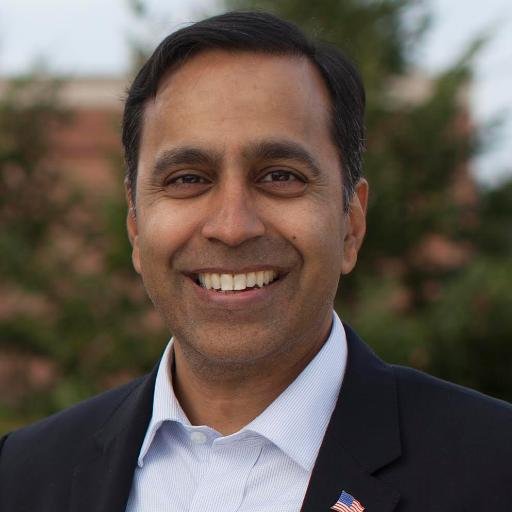
    WASHINGTON (TIP): Indian American Congressman from Illinois Raja Krishnamoorthi called upon the Federal Emergency Management Agency (FEMA) on Sept 11 to issue a report on any steps FEMA is taking to help communities address the increasing likelihood of severe weather through incorporating the impacts of climate change into its risk projections, including flood maps.

    “The scientific evidence of climate change is undeniable and so too is its potential to destabilize weather patterns and increase the likelihood of extreme weather events,” said Congressman Raja Krishnamoorthi. “As our country recovers from the devastating human and material costs of the recent string of one-hundred-year floods and hurricanes, it is vital that government agencies, communities, and businesses have the best available risk assessments for future storms. To guarantee the quality of our weather projections, the impacts of climate change must be taken into account.”

    In his letter to Administrator Brock Long, Krishnamoorthi wrote, “The Federal Emergency Management Agency’s responsibility to protect the United States from natural and man-made disasters is one of the most important functions of the federal government. The increased dangers posed by climate change and the recent devastation caused by Hurricane Harvey along with the incredible ferocity of Hurricane Irma underscore the stakes of adequate preparation. One-hundred year floods and hurricanes are happening too regularly; forest fires are raging with an intensity and frequency not seen until now; and other severe weather events are occurring that outdated weather models and maps are not properly accounting for.  If we do not properly prepare for these events, our citizens and taxpayers will continue to foot the bill for inadequate preparation.

    In July, the House of Representatives recognized the national security implications of failing to address climate change. The FY2018 NDAA acknowledged that climate change is a direct threat to national security and required the Department of Defense to take climate change into account when assessing threats, use of resources, and readiness.

    It is long past time for civilians to have the same level of preparation. When planning for storms, communities need to have the most up-to-date information about the threats and dangers posed by severe weather. Engineers need to know the true likelihood of encountering hurricane-force winds, severe floods, and other extreme weather.

    To this end, I respectfully request that you provide me with all the steps FEMA is taking to help communities address the increasing likelihood of severe weather. Specifically, I would like to know if FEMA is taking the greater odds of severe weather and climate change into account in the Risk MAP program and when drawing flood maps.

    The human and economic cost of climate change is no longer academic, and our failure to take this into account will only increase the toll of future storms.”

  • Harris, Senate Democrats Introduce Students before Profits Act

    Harris, Senate Democrats Introduce Students before Profits Act

    WASHINGTON (TIP): After President Donald Trump and U.S. Secretary of Education Betsy DeVos named a former official of the fraudulent DeVry University to direct the Department of Education unit in charge of combating fraud, U.S. Senator Kamala D. Harris joined Senate Democrats in reintroducing the Students Before Profits Act, a bill to protect students from deceptive practices and bad actors in the for-profit college sector. The bill ensures students have access to important and accurate information, strengthens oversight and regulation, and holds for-profit schools and their executives accountable for violations and poor performance. In 2013, as Attorney General of California, Harris sued Corinthian Colleges for false and predatory advertising, securities fraud and intentional misrepresentations to students, winning a $1.1 billion judgment.

    “For-profit colleges like Corinthian engaged in systemic fraud and preyed on students by falsely promising a meaningful education that would lead to a job. Corinthian’s predatory behavior lined its pockets with profit at the expense of shattered dreams and mountains of bad debt for its students,” said Harris. “That’s why I sued them as Attorney General, and then worked with the Department of Education to forgive the loans for those young adults. It’s clear this Administration believes a quality education is a privilege, not a right, so we must fight to protect our students from deceptive practices.”

    Currently, for-profit colleges enroll 10% of all postsecondary students, but account for 35% of all student loan defaults. Since Corinthian Colleges, the infamous for-profit institution, closed its doors earlier this year after extensive allegations of fraud, the U.S. Department of Education has discharged $247 million in student loan debt held by former students. The Students Before Profits Act provides for new tools to recoup federal dollars from the owners and executives who reap huge profits from failed, fraudulent for-profit institutions.

    The Students Before Profits Act:

    • Authorizes enhanced civil penalties on institutions and their executive officers if it is determined that the institution misrepresented its cost, admission requirements, completion rates, employment prospects or default rates, and uses those penalties to fund a Student Relief Fund to help defrauded students;
    • Improves oversight of default rate manipulation by requiring the Secretary of Education to use corrected data to recalculate student loan cohort default rates for institutions of higher education that have engaged in default manipulation and make determinations on whether an institution should be disqualified from participating in financial aid programs;
    • Makes college executives share the risk, giving the Department of Education broader discretion to require owners and executives to assume personal liability for financial losses associated with Title IV funds and including executives and owners among those against whom the Department can pursue a claim after discharging borrowers’ debts;
    • Prevents “repeat offenders” by prohibiting board members and executive officers of an institution against which the Department has brought an enforcement action from serving in leadership positions at another college.


  • N-energy, defence to set tone of ties with Japan: Jaishankar

    N-energy, defence to set tone of ties with Japan: Jaishankar

    NEW DELHI (TIP): Drawing the emerging contours of its bilateral relations with Japan and latter’s contribution to modernisation of Indian economy, New Delhi today said it will create a multi-polar Asia and highlighted civil nuclear energy and defence as two important fields that would set direction of the ties.

    “Today, the two countries clearly see each other much more strategically. This is expressed through a wide range of contacts and activities, including in areas that are relatively new. Obviously, India’s accelerated economic growth provides new business opportunities for Japanese companies. But the logic of our current cooperation is much deeper,” Foreign Secretary S Jaishankar said in his address to the “India-Japan Colloquium” ahead of Prime Minister Shizo Abe visit next week. “A broader modernisation of the Indian economy and society is very much in Japan’s larger interest. This would help create a more multi-polar Asia that, in turn, enables a more multi-polar world,” he said.

    Stating that cooperation in civil nuclear energy and in defence are two domains that portend the future direction of India-Japan ties, he said Japan could make a substantive difference to the country’s nuclear industry. In 2016, during Prime Minister Narendra Modi’s visit to Japan, both countries signed a civil nuclear deal that allows Japan to export nuclear power plant technology to India.

  • Army plans to induct 800 women in military police

    Army plans to induct 800 women in military police

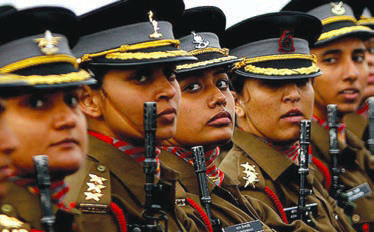
    NEW DELHI (TIP): A day after Nirmala Sitharaman took over as the country’s first full-time female defence minister, the army on Friday announced that it is giving finishing touches to a proposal for inducting women into the military police.

    The proposal is very significant as women will be inducted in the military’s non-officer cadre for the first time, although they will be in a non-combat role.

    In a presentation made at the army chiefs’ conclave, adjutant general Lieutenant General Ashwani Kumar said, “The proposal is being finalised for induction of 800 women in the military police with a yearly intake of 52.”

    The three-day conclave, hosted by army chief General Bipin Rawat, is being attended by eight former army chiefs. The platform provides an opportunity to the force to draw on the collective experience of its former leaders and seek their inputs on key issues.

    The force expects the plan to move fast under Sitharaman. The proposal is being pushed by General Rawat himself.

    Lieutenant General Kumar said women were required in the Corps of Military Police (CMP) to investigate gender-specific allegations and crime. The women will be inducted as junior commissioned officers and jawans. The armed forces account for around 3,500 women officers, all of whom are in noncombat roles.

    Women were allowed to join the military as officers outside the medical stream for the first time in 1992.

    The move to induct women in the CMP comes at a time when India’s first female pilots are preparing to fly warplanes after they complete the last leg of their training later this month. Source: HT

  • UNRULY PASSENGERS TO BE PUT ON ‘NO FLY LIST’

    UNRULY PASSENGERS TO BE PUT ON ‘NO FLY LIST’

    BAN DURATION

    • Up to 3 months: For unruly physical gestures, verbal harassment, unruly inebriation

    • Up to 6 months: For physically abusive behaviour such as pushing, kicking, hitting,inappropriate touching

    • Minimum 2 years: For lifethreatening behaviour such as assaults, damage to aircraft systems

    NEW DELHI (TIP): The government on Sept 8 unveiled rules to tackle cases of onboard unruly behaviour by passengers. The move would allow airlines to ban such passengers for a period ranging from three months to lifetime.

    The commander of the flight would have the right to file a complaint against such passengers. The revised Civil Aviation Requirement (CAR), effective immediately, defines three categories of unruly behaviour —verbal, physical and life threatening.

    There is a provision for debarring passengers from flying for three months for verbal unruly behaviour, six months for physical and two years or more for life-threatening behaviour.

    The complaint by the pilot-in-command will be probed by an internal committee to be set up by the airline that will decide the quantum of ban. If the panel fails to give a decision in 30 days, the passenger will be free to fly.

    Civil Aviation Minister Ashok Gajapathi Raju said the new rules would allow formation of a national “No Fly List” that would be shared among airlines. The promulgation of the list in India was the first of its kind in the world, he claimed.

    The revised CAR will be applicable to all Indian operators engaged in scheduled and non-scheduled air transport services, both domestic and international carriage of passengers. It would also be applicable to foreign carriers, subject to compliance of Tokyo Convention, 1963. Aggrieved persons will be allowed to appeal within 60 days.

  • Members of WA Delegation Call for Protecting Dreamers

    Members of WA Delegation Call for Protecting Dreamers

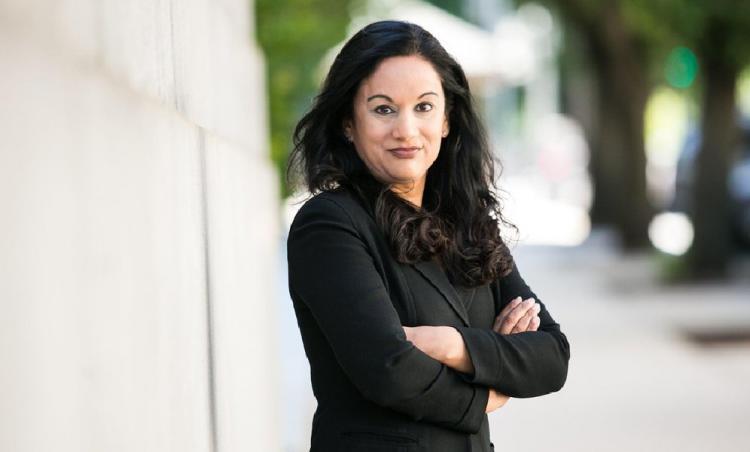
    WASHINGTON (TIP): In a letter to President Trump, led by Senator Patty Murray (D-WA) and Indian American Congresswoman Pramila Jayapal (WA-07), members of the Washington congressional delegation, including Senator Maria Cantwell (D-WA) and Representatives Adam Smith (WA-09), Rick Larsen (WA-02), Suzan DelBene (WA-01), Denny Heck (WA-10) and Derek Kilmer (WA-06), urged President Trump to reconsider his decision to repeal DACA and make sure that Dreamers’ application information is not used for immigration enforcement. The members also called on President Trump to work with Congress to pass clean legislation to protect Dreamers.

     “We write to express our profound disappointment in your decision to repeal the DACA program. This repeal will impose severe harm, not only on the 800,000 DACA recipients nationally, but also the broader community,” the letter said. “We urge you to immediately work with Congress to pass clean legislation to protect Dreamers.”

    Earlier, Congresswoman Pramila Jayapal heavily criticized Trump for his decision to terminate the DACA Program.

    “President Trump is destroying the future of nearly 800,000 young men and women who were brought here by their parents and know no other country but this one. After toying with their futures and raising their hopes with talk of his ‘big heart,’ Donald Trump has shown exactly what his priorities are. He has once again sided with hate and xenophobia, putting in place a repeal that is cruel, inhumane and unjust”, she said.

    Termination of the program will impact more than 17,500 Washingtonians who have been granted DACA status in Washington State. Moreover, this move by the Trump administration will cost the state an estimated $1.1 billion in annual gross domestic product (GDP).

  • Indian American professor Receives Fulbright Award to India

    Indian American professor Receives Fulbright Award to India

    WASHINGTON (TIP): S Shankar professor of English at the University of Hawaiʻi at Mānoa, received the prestigious Senior Fulbright-Nehru Academic and Professional Excellence Award (Teaching and Research) for 2017–18. He will soon head to India where he will teach at the Indian Institute of Technology-Madras, in Chennai, India, conduct research, and interact with students and faculty in India for the academic year.

    The Fulbright-Nehru enables the most outstanding students, academics, and professionals in India and the United States to study, research and teach in the host country. The Fulbright-Nehru award poses an exciting opportunity for Shankar both personally and professionally. Originally from India and of Tamil heritage, Shankar is pleased to have the opportunity to share his Tamil and American cultures with others through this academic endeavor. He has experienced India’s emergence as an economic power and the growth of its citizens in many educational fields. In 1987, Shankar came to the United States to pursue graduate studies and received his PhD from the University of Texas at Austin. In 2002, he joined the  Department of English the University of Hawaiʻi at Mānoa.

    1. Shankar is a critic, novelist, and translator. His scholarly areas of interest are postcolonial literature (especially of Africa and South Asia), literature of immigration, film, and translation studies. He is Professor of English and Director of the Creative Writing Program. His most recent book is Flesh and Fish Blood: Postcolonialism, Translation, and the Vernacular (2012; U. of California P.; OrientBlackswan India).  In a citation accompanying the award of Honorable Mention from the American Comparative Literature Association, the 2013 Rene Wellek Prize committee noted, “Over-all, Shankar’s book combines theoretical sophistication, deftness of interpretation and an impressive clarity and cogency of argument. It makes a compelling claim for rethinking postcolonialism within the framework of comparative vernacular literatures and makes a much needed case for a more capacious curriculum.”

    Shankar’s novel No End to the Journey, published by Steerforth Press in 2005, is set in a village in South India and draws on the ancient East Indian epic the Ramayana. It tells the story of Gopalakrishnan and his difficult relationship to his son. In favorable reviews, Booklist compared it to Kazuo Ishiguro’s Remains of the Day and the Indian Express noted that “it packs a punch.” A Spanish translation of the novel appeared in 2009. In 2001, Shankar published his first volume of criticism, entitled Textual Traffic: Colonialism, Modernity, and the Economy of the Text (SUNY Press). The book has been positively reviewed for its explication of the relationship between colonialism and modernity and its innovations of critical methodology.

    A Map of Where I Live (1997), Shankar’s first novel, intertwines a story of love and political intrigue set in Madras with the memoir of an Indian historian who discovers that Lilliput (as in Jonathan Swift’s Gulliver’s Travels) really exists. Shashi Tharoor called the novel “highly original, compelling, and vivid,” and World Literature Today described it as “a minor masterpiece.” Shankar is also co-editor of the anthology Crossing into America: The New Literature of Immigration (New Press, 2003), which brings together poems, excerpts from novels and memoirs, short stories, letters, and essays to present immigrant literature since 1965. This book, San Antonio Express News notes, is “a strong and diverse literary story of multicultural America… likely the most original and best introduction to the new immigration available today for its balanced, informative, moving, and comprehensive offerings.” The paperback edition of the anthology was published in 2005. The book has been used as common text in Freshman Experience programs.

    Shankar is a translator from Tamil, including of the full-length Tamil play Water by Komal Swaminathan, published in 2001 in India by Seagull Press and in the US by Asian Theatre Journal, and of the famous 18th-century Krishna devotional “Alaipaayuthey,” which appears in No End to the Journey as “Restless as the Waves of the Ocean.” Shankar has published shorter pieces in a wide variety of scholarly and general interest periodicals in India and the US. His scholarly articles, poems, reviews, and literary essays have appeared in such academic journals and popular venues as PMLA, Tin House, Massachusetts Review, Outlook, The Hindu, Pioneer, Village Voice, and The Nation. “Midnight’s Orphans, or A Postcolonialism Worth Its Name,” a scholarly article appearing in Cultural Critique 56 (Winter 2004), has been widely read and cited. He has work forthcoming in PMLA and Comparative Literature.

    Aside from being Professor in the Department of English, Shankar was Director of the Center for South Asian Studies at the University of Hawai‘i at Mānoa from 2004-2010. He was appointed Convener of XVIth Annual Convention of the Forum on Contemporary Theory (India) in 2013. He is 2016 Scholar-in-Residence at University of Houston-Downtown.

    While serving as a Senior Fulbright Scholar, Shankar will undertake the research project, “Translation, Comparatism, and the Tamil Cultural Sphere.”


  • Indian American Appointed as Top Economic Diplomat

    Indian American Appointed as Top Economic Diplomat

    WASHINGTON (TIP): The White House announced Sep 7th, President Trump’s intent to nominate Indian American Manisha Singh of Florida as Assistant Secretary of State, Economic and Business Affairs. When confirmed by the US Senate, Singh will succeed Charles Rivkin, who had resigned following Trump’s swearing-in as the 45th President of the United States. Ms. Singh is Chief Counsel and Senior Policy Advisor to U.S. Senator Dan Sullivan, R-Alaska.   At the State Department, under President Bush, Singh served as the Deputy Assistant Secretary of State in the Bureau of Economic, Energy and Business Affairs and as a senior aide to the U.S. Senate Foreign Relations Committee.

     Fluent in Hindi, Singh was born in the Indian state of Uttar Pradesh and moved to the US as a child. She earned an LL.M. in International Legal Studies from the American University Washington College of Law, a J.D. from the University of Florida College of Law and a B.A. from the University of Miami at the age of 19.  Singh is licensed to practice law in Florida, Pennsylvania and the District of Columbia, where she has worked at multinational law firms and worked in-house at an investment bank.  Ms. Singh also served as the first executive director of the Barer Institute for Law and Global Human Services at the University of Washington, School of Law, where she is crafted policy, albeit in an academic setting.

     In an interview to Washington Examiner, Ms. Singh credited her interest in public policy was piqued, on a high school visit to the Capitol, under a program called Congressional Classroom. After a successful stint in private practice, working as a legal advisor, Singh switched to translating practice into policy, while serving under Sen. Richard Lugar, R-Indiana, at the Senate Foreign Relations Committee.

     On the nomination, Sanjay Puri, Chairman, US India Political Action Committee, said, “USINPAC has worked with Manisha in the past during and she has a proven track record in dealing with foreign policy, trade, intellectual property issues and the law. She will be a great asset to the Trump administration. We wish Singh all the success for the confirmation process.


  • Indian Americans Plead Guilty in Multimillion Dollar India-Based Call Center Scam

    Indian Americans Plead Guilty in Multimillion Dollar India-Based Call Center Scam

    HOUSTON (TIP): Four more defendants, including three Indian origin men pleaded guilty, Sept 7 to conspiracy and passport fraud charges during the past month for their roles in liquidating and laundering victim payments generated through a massive telephone impersonation fraud and money laundering scheme perpetrated by a network of India-based call centers.

    Nisarg Patel, 26, most recently residing in Flemington, N.J., Dilipkumar Ramanlal Patel, 30, of Ocala, Fla., and Rajesh Kumar, 39, of Mesa, Ariz., each pleaded guilty to one count of conspiracy to commit fraud and money laundering offenses.  The pleas were entered before U.S. District Judge David Hittner of the Southern District of Texas.  All three men have been in federal custody since their arrests in October 2016 and will remain detained until their pending sentencing dates.

    In a related case, Dipakkumar Sankalchand Patel, 38, most recently of Pennsylvania, pleaded guilty to one count of conspiracy to commit money laundering.  The plea was entered before U.S. District Court Judge Eleanor L. Ross of the Northern District of Georgia.  Dipakkumar Sankalchand Patel has been in federal custody since his arrest in May 2017 and will remain detained until his pending sentencing date.

    According to admissions made in connection with their pleas, Nisarg Patel, Dilipkumar Ramanlal Patel, Kumar, Dipakkumar Sankalchand Patel and their co-conspirators perpetrated a complex scheme in which individuals from call centers located in Ahmedabad, India, impersonated officials from the IRS and U.S. Citizenship and Immigration Services (USCIS), and engaged in other telephone call scams, in a ruse designed to defraud victims located throughout the U.S.  Using information obtained from data brokers and other sources, call center operators targeted U.S. victims who were threatened with arrest, imprisonment, fines or deportation if they did not pay alleged monies owed to the government.  Victims who agreed to pay the scammers were instructed how to provide payment, including by purchasing stored value cards or wiring money.  Upon payment, the call centers would immediately turn to a network of “runners” based in the U.S. to liquidate and launder the fraudulently obtained funds.

    In connection with his guilty plea, Nisarg Patel admitted that beginning in or around June 2013 and continuing through December 2015, he acted as a domestic runner in the criminal scheme, liquidating victim funds for conspirators from India-based call centers and organizational co-defendant HGLOBAL.  Patel communicated about the fraudulent scheme with various India-based co-defendants via telephone, email and WhatsApp text messaging.  For a percentage of commission on the transactions he conducted, Patel laundered funds from victims using reloadable cards and deposited those proceeds into various bank accounts or shipped them via package carriers to others in furtherance of the scheme and at the direction of a codefendant.  Patel also admitted to receiving direct payments to his personal bank accounts from victims defrauded through the scheme.

    In connection with his guilty plea, Dilipkumar Ramanlal Patel admitted that beginning in or around August 2013 and continuing through February 2014, he served as a runner, liquidating victim scam funds per the instructions of conspirators from India-based call centers.  Dilipkumar Ramanlal Patel communicated via phone and email in furtherance of the criminal scheme with his India-based associates, including by sending lists of reloadable card numbers to be activated and loaded with victim funds by conspirators in India.  Dilipkumar Ramanlal Patel and his conspirators then used the reloadable cards containing funds derived from victims by scam callers to purchase money orders and deposit them into various bank accounts as directed, in return for cash payments or commissions.

    Based on admissions in Kumar’s plea, beginning in or around September 2014, Kumar also operated as a runner, laundering scam proceeds from reloadable cards and purchasing money orders using those funds in and around south-central Arizona at the direction of both domestic and India-based co-defendants.  Kumar also admitted to using fraudulent identification documents, including drivers’ licenses, to receive wire transfers of money directly from victims of the fraud scheme.

    According to Dipakkumar Sankalchand Patel’s guilty plea, beginning in or around September 2014 through in or around June 2015, Dipakkumar Sankalchand Patel served as a runner liquidating victim scam funds per the instructions of conspirators operating in the Chicago, Illinois, area and elsewhere throughout the country.  Dipakkumar Sankalchand Patel communicated via WhatsApp messaging with U.S. and India-based associates about liquidating victim funds that had been consolidated on reloadable cards.  Dipakkumar Sankalchand Patel then purchased money orders and deposited them into various bank accounts as directed.  Additionally, Dipakkumar Sankalchand Patel admitted to entering the U.S. on or about March 26, 2012 through Atlanta’s Hartsfield Jackson International Airport on a fraudulent Portuguese passport that was issued to him under an alias.

    To date, Nisarg Patel, Dilipkumar Ramanlal Patel, Kumar, 53 other individuals and five India-based call centers have been charged for their roles in the fraud and money laundering scheme in an indictment returned by a federal grand jury in the Southern District of Texas on Oct. 19, 2016.  Dipakkumar Sankalchand Patel was charged via a separate indictment in the Northern District of Georgia on May 3.  Including the pleas announced today, a total of 17 defendants have pleaded guilty thus far in relation to this investigation on various dates between April and July 2017.

    (Source: USDJ- Southern District of Texas)

  • 1993 MUMBAI BLASTS Abu Salem gets life term, 2 others get death sentence

    1993 MUMBAI BLASTS Abu Salem gets life term, 2 others get death sentence

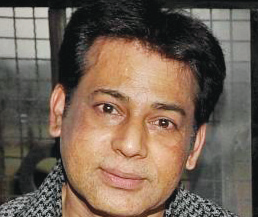
    NEW DELHI (TIP): Extradited gangster Abu Salem was on Thursday sentenced to life imprisonment by a Terrorist and Disruptive Activities (TADA) court in Mumbai in the 1993 Mumbai serial blasts case.

    Special Judge G A Sanap pronounced the death verdicts on convicts Mohammed Taher Merchant and Feroze Khan for their role in the blasts, said Special Public Prosecutor Deepak Salve.

    Besides Salem, the special court awarded life sentence to Karimullah Khan and 10 years rigorous imprisonment to Riyaz Siddiqui.

    The Special Judge also slapped varying amounts of fines on the convicts after finding them guilty on various charges, including murder, conspiracy to hatch the blasts, supplying arms and ammunition, and other serious offences, Salve told media-persons after the ruling.

    A special TADA court had in June convicted six persons, including mastermind Mustafa Dossa and Salem, in the blasts case, 24 years after the attacks left 257 people dead in the country’s financial capital.

    It, however, let off accused Abdul Quayyum for want of evidence. Arguments over the degree of sentences continued after the conviction in June and concluded on August 10.

    All the accused were facing multiple charges of criminal conspiracy, waging war against the government, and murder of people.

    This was the second leg of the trial. In the first leg that concluded in 2007, the TADA court had convicted 100 accused in the case, while 23 people were acquitted.

    The court had earlier held that the prosecution had proved that Salem was one of the main conspirators and that he delivered three AK-56 rifles, ammunition, and hand grenades to actor Sanjay Dutt (convicted in the earlier phase of the trial under the Arms Act).

    Salem, who was close to (Dawood’s brother) Anees Ibrahim and Dossa, took it upon himself to bring a part of the arms and ammunition from Dighi to Mumbai, the court earlier said.

    This was “vital towards achievement of the conspiracy so that the weapons could be used to terrorise and torment innocent citizens of India,” the court had said.

    The trial of Salem, Mustafa Dossa, Karimullah Khan, Feroze Abdul Rashid Khan, Riyaz Siddiqui, Tahir Merchant, and Abdul Quayyum was separated from the main case as they were arrested subsequently.

    Dossa died of cardiac arrest at J J Hospital in Mumbai shortly after being convicted on June 28. The Mumbai blast of March 12, 1993, resulted in 257 fatalities and over 700 were injured. The attacks were planned by Dawood Ibrahim, India’s ‘most wanted’ fugitive, who also has his name prominently figuring on the ‘most wanted’ lists of the US and the Interpol.

  • Hardeep S Puri-Just Minted Minister of State for Housing & Urban Development

    Hardeep S Puri-Just Minted Minister of State for Housing & Urban Development

    By Ravi Batra

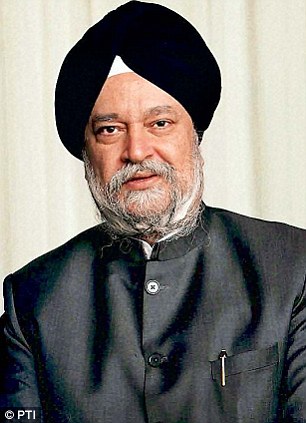
    Ambassador Hardeep S Puri, now Minister of State with Independent Charge of Housing and Urban Affairs in the rejigged Cabinet of Prime Minister Narendra Modi, was India’s Permanent Representative to the United Nations from 4 May 2009 – 27 February 2013. His four years at the United Nations were eventful for Indian diplomacy when India pushed for a permanent seat on Security Council, and contributed hugely to furtherance of UN agenda. Outside the UN, Ambassador Puri was an admired and much-loved person for his qualities of head and heart, and an affable and winsome nature.

    The news of Mr. Puri’s induction in Modi cabinet immensely pleased his friends and admirers in New York. One of his closest friends, attorney Ravi Batra, sent in his comment to The Indian Panorama which we are hugely pleased to publish here. Mr. Puri assumed office on September 3.

    The Indian Panorama has had a long association with Mr. Puri who the newspaper featured a couple of times while he was stationed in New York. We are glad to see him in the select group guiding the destiny of a great democratic nation of 1.3 billion people. We wish him all success and happiness. We also congratulate his wife Ambassador Lakshmi Puri.  –EDITOR.

    PM Narendra Modi has tapped H. E. Hardeep Singh Puri as the Minister of State for Housing and Urban Development – directly answerable to him.  It’s a deeply happy and proud moment for all of us who know and love Hardeep, and who wish India well always (especially, to be America’s indispensable ally). This most difficult of assignments has been given to a man who was born to serve and has much to contribute to humanity – now, at least to 1.3 billion Indians who are impatient to realize their version of the American Dream.

    Like Ian Flemings’ 007 James Bond, Hardeep is India’s, to achieve the difficult goal and do it beyond expectations. My wife, Ranju and I were with him and Lakshmi in 2010 in the UNGA hall for the Security Council vote and witnessed that even as the Ballots were being given out, as India’s Permanent Representative, Hardeep (and DPR Manjeev Puri) was walking up and down the aisle to give that last “warm touch” of friendship to each nation’s PR. The result was that India won on the first ballot – with a near-unanimous support of 189 countries entrusting India with global peace and security – because of Hardeep Singh Puri. Our joy and love was palpable and overflowing. We saw nation after nation coming over to greet and celebrate him. The SC seat he won, he worked hard and earned a reputation for uncommon maturity in policymaking and a healthy distaste for regime change – even if it came camouflaged as Responsibility to Protect.

    Everybody knows of Hardeep’s service to India – from Sri Lanka, to Ambassador in London and Brasilia, and as Permanent Representative to the United Nations in Geneva and New York.  Now, India has entrusted an intractable portfolio to a man who, like Bond, always rise to the challenge to succeed handsomely. His innate ability to first harness the challenges, develop an action plan, and then effectuate it with sufficient perseverance, and sometimes with needed flexibility, to reach the goal beyond expectations. Knowing Hardeep, from friend to family, and more, PM Modi just harnessed the personal and professional relationships of a global superlative fiduciary of India to provide affordable housing and develop urban centers that comport to the Paris Accord and latest technology.

    Unlike the telephone sector success, when India escaped the landline telephone shortage and misery to 21st century digital mobile phones, in Housing & Urban Development there is no way to succeed by going 100% digital – as land will remain analogue, even if we embed it with digital upgrades.

    Yet, every Indian has the right to a roof over their head, clean water to drink, clean air to breathe and a waste management system worthy of a nation on a hasty march to enjoy her destiny with youthful vigor of an educated citizenry.

    To all who have played the game of obstruction of this Portfolio, beware as Hardeep-the-diplomat will overcome you – in his unique authoritative style. Perhaps, India noticed that the very evening of his Oath-taking, he held his first meeting with his top subordinates to harness the landscape and obstacles. The rest, as they say, will soon enough be history-making success for India – as entrusted to Hardeep by PM Modi.

    (Ravi Batra is a Lawyer; Chairman, National Advisory Council South Asian Affairs, and Greenstar Global Energy Corp.; and Pro Bono Advisor to the Ukraine Mission to the UN in New York. He can be reached at ravibatralaw@aol.com)


  • Gauri Lankesh’s killers must be found; or it’ll embolden those who stifle dissent

    Gauri Lankesh’s killers must be found; or it’ll embolden those who stifle dissent

    The murder of journalist-activist Gauri Lankesh in Bengaluru has set off a wave of protests across the country; the chill that has set in is difficult to miss. It is a fool’s game right now to hazard guesses about the identity of the killers, but the manner in which she was brutally murdered raises extremely worrying questions. Her killers caught her outside her home, alone and with her guard down as she got out of her car — they fired at point-blank range, hitting her on the chest and the temple. They appear to have fled without even once getting off their motorbike, leaving no finger or shoe prints, as ‘clean’ a murder as can be. This has the hallmark of a professional hit-job, a pre-meditated assassination. It is the police’s remit to identify and nab the killers, but Lankesh’s killing cannot but draw attention to the various constituencies that she kept on notice. Lankesh, the publisher and editor of the Kannada weekly Gauri Lankesh Patrike, wore her activism on her sleeve. She came up against the establishment in multiple ways, as she sought to bring Naxalites to the mainstream, take up the cause of Dalits and farmers, raise consciousness on the creeping influence of Hindutva groups, give moral support to progressive campaigns, and basically bear scrutiny on those in power.

    Her murder has taken place in a year that India dropped three places in the World Press Freedom Index compiled by Reporters Without Borders, from an already bleak 133 to 136. It demands words and also acts of reassurance from the Karnataka and Central governments.

    (The Hindu)

  • Murder of Gauri Lankesh is an ominous sign for India’s flailing democracy

    Murder of Gauri Lankesh is an ominous sign for India’s flailing democracy

    By George Abraham

    Gauri Lankesh, a prominent Kannada journalist and a vehement critic of communal politics of the BJP government, was gunned down at her doorstep in Rajarajeswari Nagar in Bengaluru by some unknown assailants.  She worked as an editor in Lankesh Patrike, a Kannada weekly started by her father P. Lankesh and ran her own weekly called Gauri Lankesh Patrike.

    She was known as a fearless journalist and activist who opposed communalization of politics, casteism, and marginalization of minorities in the society. Her forceful advocacy on behalf of Rohingya people is a true manifestation of her deeply held convictions. Death threats or intimidation from any quarters never stopped her from confronting the ever increasing challenges to the freedom of expression by the media, the fourth estate.

    Undoubtedly, journalists, opinion makers, and reporters are being increasingly targeted by Hindu nationalists who are on a crusade to promote their hateful agenda. In the last few years, journalists who appear to be critical of Hindu nationalists have been threatened, berated on the social media, while many women journalists have been threatened with rape and assault.

    India has just celebrated its 70th anniversary of its independence. The Democratic Institutions that were created under the Nehruvian vision are increasingly under threat from right-wing forces that are closely aligned with BJP. The fundamental right to express one’s opinion is under assault as either sedition charges are filed against the individuals or the institution that exercise those rights or the law enforcement mechanism is being manipulated to intimidate and silence those voices.

    Gauri Lankesh’s death appears to be a meticulously planned and executed to silence a powerful voice. The opposing forces could not match her rationale pointing up the dangers of right-wing politics and its possibly disastrous effect on the secular fabric of the nation. Her harsh criticism of prevailing casteism in the society was often directed at Institutions that still harbor those sentiments and made her more of a passionate activist who had little patience for the status-quo.

    This is not the first murder of a rationalist and thinker after the ascension of BJP to the power at the Center. A rationalist professor and thinker M M Kalburgi was murdered in the quaint town of Dharwad. In the neighboring state of Maharashtra, rationalists Govind Pansare and Narendra Dabholkar were also shot, and the one thing that united them all was their strident voices against intolerance and hatred of the right wing ideology.

    It is no more an exaggeration to say that India is governed under a ‘simulated emergency’ without truly declaring it. Shani Prabhakaran, a television reporter from Kerala, spoke candidly about the treatment of the media by the BJP government at a recent seminar in Chicago sponsored by the India Press Club. According to her, as soon as she finished a television segment analyzing the last three years of the governance by the Modi regime, a questionnaire from Delhi had arrived with a number of questions asking her to substantiate each criticism! Commenting on the recent raids, NDTV’s Prannoy said the following ‘our fight is not against the CBI, I-T or the ED but against politicians who were using these Institutions and ruining and destroying our country.’

    The basic responsibility of a journalist is to inform the public free of hype and bias. The fourth estate, as the media is often dubbed, acts as a mirror and a watchdog for the good of the public. However, most of the media in India today are controlled by big corporations whose professional responsibilities of the news outlets they own are intertwined with their business interests. The result is an abject failure in reporting the news with fairness and balance that could prove to be detrimental to a vibrant democratic society.

    Never in the history of India, a governing party had made such blatant attempt to eliminate an opposition party (Congress Mukta Bharat), intimidated and scared Media houses from reporting factual news, invoked colonial-era sedition laws to silence student activists from speaking out or created a hostile environment where these killings go unabated.

    Through her sacrifice, Gauri Lankesh has woken up our conscience once again. She had recognized the fact that our hard fought freedom and liberty, once again is in danger. In her death, our flailing democracy will be missing one of its strongest defenders. May I salute this brave soul for her true grit and passion for justice!

    ‘The power to question is the basis of all human progress’ – Indira Gandhi

    (The author is a former Chief Technology Officer of the United Nations and Chairman of the Indian National Overseas Congress, USA)


  • Poetry Corner – The Journey

    Poetry Corner – The Journey

    The journey acquaints the traveler,

    With roads narrow and wide.

    As they bend and curve; swivel and swirl,

    They take him places near and far.

    At times they teach him,

    The lessons of walking;

    Rugged they maybe- giving him a furious fight,

    Smooth they may turn out to be- proving it’s not so difficult all the while.

    As smooth seas never made skilled sailors,

    All the bumps, bends and brakes;

    Make him balance his staid.

    Fast ways never meant the destination was any nearer.

    He sees the sun strike a silent slumber;

    Worried, if he’ll never make it;

    But the road roars,

    Of the drawing destination.

    So he beats on, mindfully marching to make the future his present;

    Milestones moving by his side, painting pictures of proximity.

    (Mannat Arora, based in Ludhiana, India,  is a penultimate year student of Bachelors of Law at Panjab University. Winner of a national-level poetry competition, she strongly considers literature to be a food for the soul. She is a university topper.  She spends most of her time in her library or in the backyard playing with her dog)

  • Equifax Says Cyberattack May Have Affected 143 Million Customers

    Equifax Says Cyberattack May Have Affected 143 Million Customers

    NEW YORK (TIP): Various news outlets including New York Times, Washington Post and CNN have reported that Equifax, one of the three major consumer credit reporting agencies, has been hacked. Equifax is reported to have said on Thursday, September 7 that a data breach left Social Security numbers, driver’s license numbers and other sensitive information for 143 million United States consumers vulnerable to hackers.

    Criminals gained access to certain files in the company’s system from mid-May to July by exploiting a weak point in a website application, according to an investigation by Equifax. The company said that it discovered the intrusion on July 29 and has since found no evidence of unauthorized activity on its main consumer or commercial credit reporting databases.

    Hackers were able to retrieve birth dates and addresses, as well as credit card numbers for 209,000 consumers. Documents with personal information used in disputes for 182,000 consumers was also taken.

    Equifax said that some personal information for British and Canadian residents was also hacked.

    The data breach at Equifax is not the largest. Yahoo disclosed in September 2016 that 500 million user accounts had been hacked in 2014, followed by a second disclosure three months later that a different attack in 2013 compromised more than one billion accounts.

    Equifax said that, in addition to reporting the breach to law enforcement, it had hired a cybersecurity firm to conduct a review to determine the scale of the invasion. The investigation is expected to wrap up within the next few weeks.

    The company handles data on more than 820 million consumers and more than 91 million businesses worldwide and manages a database with employee information from more than 7,100 employers, according to its website.

    “This is clearly a disappointing event for our company, and one that strikes at the heart of who we are and what we do,” Richard F. Smith, chairman and chief executive of Equifax, said in a statement. “Confronting cybersecurity risks is a daily fight.”

    The company created a website, www.equifaxsecurity2017.com, to help consumers determine whether their data was at risk.

    “While we’ve made significant investments in data security, we recognize we must do more,” Mr. Smith said.

  • Comptroller Maragos: Living Wage Audits Recover $1.1M for Underpaid Employees since 2007

    Comptroller Maragos: Living Wage Audits Recover $1.1M for Underpaid Employees since 2007

    Living Wage Law May Need Revisions to Restrict Waivers

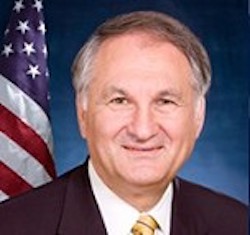
    MINEOLA, NY (TIP): Nassau County Comptroller George Maragos issued the 2016 Living Wage Law Annual Report highlighting the recovery of over $11K for underpaid employees and the frequent use of waivers that seek to sidestep compliance with the Living Wage Law.  Cumulatively, the Comptroller’s efforts have recovered $1,089,259 of unpaid wages and uncredited compensated time off for employees since the law was enacted in 2007. During 2016 the County granted ten waivers to County vendors compared with eleven the prior year. The County’s Living Wage increased on August 1, 2017 to $13.98 per hour for employees receiving health benefits and $16.07 per hour for those not receiving benefits.

    “It is gratifying the County’s Living Wage Law and Comptroller’s Office enforcement through audits recovered significant money for underpaid employees,” said Comptroller George Maragos. “However, we are concerned that too many annual waivers to the law are being granted, especially to the same vendors. I have requested the auditors begin a review of the waiver process to close loop holes.”

    The Comptroller’s Office performed a living wage review of Armor Correctional Health Services Inc.  Twenty-three employees were owed $11,287 for underpaid wages and compensated time.  Armor failed to pay the required hourly rate and their policies did not provide compensated time off for employees working between 20 and 23 hours per week, or classified as per diem, as required by the law.  The Comptroller’s Office currently has six Living Wage reviews in process.

    The Nassau County Living Wage Law was enacted to raise the minimum wage of employees working for a majority of the County’s contractors.  The Comptroller’s Office is responsible for monitoring compliance with the Law. To date, $1,089,259 of unpaid wages and uncredited compensated time off owed to 1,405 employees have been identified by the Living Wage audits completed by the Comptroller’s Office. The Comptroller’s Office has released 37 Living wage audit reports for 30 different contractors.

    Information regarding the Living Wage Law can be found at http://www.nassaucountyny.gov/1597/Living-Wage

  • Consulate General of India, New York – Special Consular Services

    Consulate General of India, New York – Special Consular Services

    New York (TIP): In recognition of special needs and in order to facilitate access of members of the Indian Diaspora, Consulate General of India, New York will be open on Saturday the 16th of September 2017 from 0930 to 1330 hrs. to provide special Consular Services.

    Indian Passport holders/US Passport holders of Indian origin who have applied for or are in the process of applying for Indian Passports/Visa/OCI Cards may come to the Consulate and get their applications/supporting documents pre-approved before submitting to CKGS. Applications with all supporting documents would be examined in the Consulate and approved for submission to CKGS.

    Applicants who plan to attend are requested to pre-register with the Consulate by means of a mail addressed to “passports@indiacgny.org” listing the details of their application. Services would be rendered only to such applicants whose details reach the Consulate by 10th September.


  • Rahul Gandhi has the thought process of Nehru

    Rahul Gandhi has the thought process of Nehru

    By Rajender Dichpally

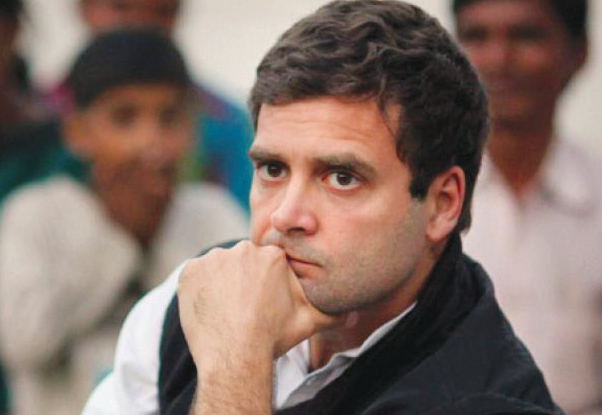
    New York (TIP): The true democratization is not simply the right to vote, but it is all about the devolution of power, that is how first Prime Minister Nehru dreamt how India should be. Interestingly, this founding fundamental principle of democratization is also executed by India’s beloved young leader Rahul Gandhi within world’s largest political organization, Indian National Congress. The tireless efforts of Rahul Gandhi to democratize the congress from top to bottom has undoubtedly made Rahul Gandhi, the most Nehruvian congress leader since Jawaharlal Nehru. He strongly believes in Nehru’s idea of India, where a billion people choose their destiny and live in harmony together and the idea of India where there is unity in its vast diversity. He has embarked on bringing the democratic process first within the Party, starting with holding elections for Youth Congress and has been slowly building a democratic Congress Party where popular leader are elected and not chosen by the leadership. He has also toured the entire country to understand and feel the country and listen to the voices of its people, especially the weak and to get an idea of the India that they would like and the issues that they face so that he can build policies for a platform for these people to succeed.

    Young people in India and abroad find a lot of qualities of India’s first Prime Minister Pandit Nehru in Rahul Gandhi as both Rahul and Nehru are men of ideas, but never an ideologue. Nehru understood deeply that everyone is entitled to their viewpoints and gave space to every view. Because he thought, every perspective is unique in its own way. Nehru’s leadership was one of inclusion and compassion as he strongly believed that legitimacy can only come from compassion, conversation, from listening to and understanding the views, including the opposing views. Today, Indian National congress is at crossroads because it has lost the last general elections very dismally in 2014 and also for the first time in over 130 years of its history, the Party is in power in less than 5 states in India. In this context, Rahul Gandhi brings a very challenging thought process that will hopefully rejuvenate the Grand Old Party and revive it with his ideas of democracy, inclusion, compassion and batting for keeping secular spirit of the country in true sense.

    Rahul like Nehru, is a charismatic leader and a great orator. He is also one of the very few leaders with pan-India popularity and his personal integrity is beyond reproach. He is also a dedicated party-man with profound influence over his party’s cadre, like Nehru of 40’s and 50s. Rahul Gandhi’s messages are wrapped in fervent nationalism and convey a sense of building a great nation, much like the ideas of India’s first Prime Minister. He also believes in socialism as a tool to uplift the huge section of people in India who are still living in poverty. Some of the policies in UPA Government like Employment Guarantee, Housing to Poor and Food Security are tools aimed at providing the poor people with Government assistance to fight poverty.

    One can also see the reflection of the idea of Nehru in these policies where Mr. Gandhi played a key role in bringing people’s idea into country’s governance structure. The Food Act, RTI, MGNREGA, Right to education, Aadhaar are all such radical innovations, that created the platform for those whose voice is not heard. He is a beacon of hope to millions of Indians, because, he firmly believes in secularism, rule of law, freedom of speech and providing an equal platform for every Indian to achieve success.

    Rahul Gandhi once said “We have a tendency to worship great men. When we do that we cast them in stone. We freeze them in time”. There is no doubt that Nehru was a great man. But more than that, Nehru had a dynamic way of thinking, constantly evolving, forever compassionate. This is what one can see in Rahul today, a dynamic leader, constantly evolving and actively campaigning for a tolerant society, for peace and equal opportunity to all.

    Rahul Gandhi also believes that law makers are not above the law and refused to allow the bill that protected law makers from being impeached and jailed to be put to vote by his Party in the parliament when it was in power.

    He is the symbol of secularism and is the hope for many people who live in poverty and need an opportunity and level playing field to success. While Nehru’s vision built a strong base for modern Indian and established basic infrastructure for the Country post-Independence, Rahul idea of India of inclusion, opportunity for all to succeed, democratic process in the true sense and a sense of belonging in every person towards the country will propel India to be a super power in the near future.

    Last, but not the least, Nehru had shared his vision of Independent India as Indian Prime Minister when he visited USA for the first time in 1949 and addressed the students, guests and faculty at Berkeley University and delivered a historic speech at the University and Rahul Gandhi will soon offer his reflection on contemporary India and road ahead at the same University on September 11th, 2017 in his maiden tour to USA as a Congress Leader.

    The Diaspora in USA, the Congress Cadre in India and millions of people in India, especially the underprivileged and minorities look forward to the evolving of Rahul Gandhi as a leader post his visit to USA and also to hear his vision of India @ 70 and the road ahead, which is the theme of his visit and address to the major universities in the USA, starting from Berkeley, Harvard and Princeton University.

    (The author is the National General Secretary of Indian    National   Overseas Congress (I), USA)


  • Fierce Hurricane Irma bears down on Florida

    Fierce Hurricane Irma bears down on Florida

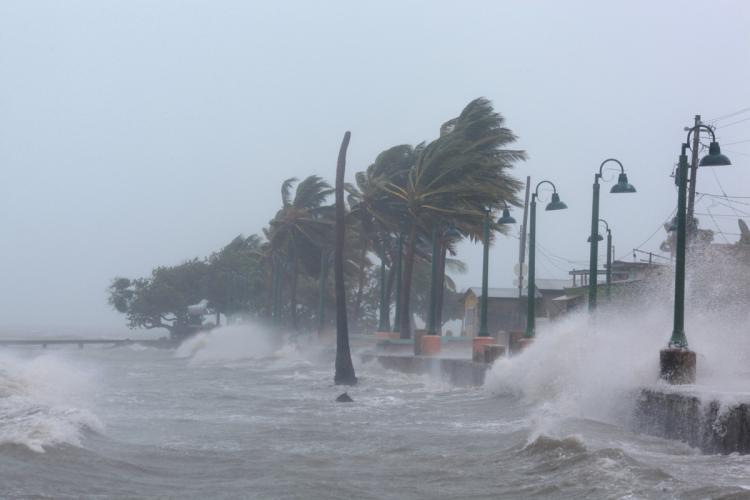
    TAMPA, FL (TIP): Fast and furious large-scale Hurricane Irma is sweeping towards Florida. If the storm reaches its full potential, it could be one of the worst hurricanes in the state’s history.

    It’s not clear exactly where the storm will make landfall, but winds well in excess of 100 mph could batter numerous population centers along Florida’s west coast. And coastal waters could rise 10 to 15 feet above normally dry land, completely inundating homes, businesses, and roads.

    Hurricane warnings cover much the Florida peninsula’s coastal areas. Hurricanes watches extended farther north into coastal Georgia and South Carolina. 5 million have been told to flee.

  • Juster Nominated as US Envoy to India

    Juster Nominated as US Envoy to India

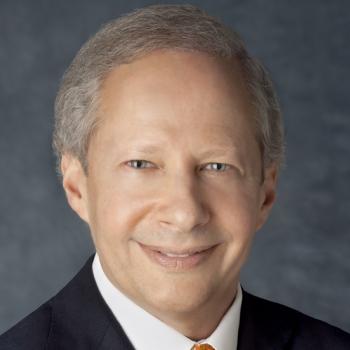
    WASHINGTON (TIP): The White House on Friday, Sept 1 announced Kenneth I. Juster, one of the foremost experts on India-US trade relations as the next ambassador to India. He succeeds Richard Verma who relinquished charge in November 2016 after Trump’s election as President.

    Preferred by New Delhi and vetted by the Trump Administration, Ken Juster is credited with playing a crucial role in the US-India nuclear pact. Till recently Juster served as the deputy assistant to the president for International Economic Affairs, coordinating international economic policy with national security and foreign policy for the Trump Administration.  Juster will succeed Richard Verma, President Obama’s nominee, who left New Delhi after Trump won the Presidency in November 2016, leaving the post unfilled for almost a year.

     Juster an alumnus of Harvard College received his master’s degree in Public policy from the Harvard Kennedy School of Government and his law degree from the Harvard Law School. Juster’s stint in public service, saw him serving as Under Secretary of Commerce from 2001-2005, Counselor (acting) of the State Department from 1992-1993, and deputy and senior adviser to the Deputy Secretary of State from 1989-1992. In the private sector, he has been a partner at the investment firm Warburg Pincus LLC, Executive Vice President at Salesforce.com, and senior partner at the law firm Arnold & Porter.

     His foreign policy expertise was garnered while serving as Chairman of Harvard University’s Weatherhead Center for International Affairs, and as Vice Chairman of The Asia Foundation. Juster also founded and served as the US Chair of the US-India High Technology Cooperation Group, and was one of the key architects of the Next Steps in Strategic Partnership initiative between US and India, which laid the foundation for the historic civil nuclear agreement.

     Juster’s long service in Public office and expertise in US-India relations, may indicate a smooth sailing through the Senate confirmation hearing. India’s Modi government has also expressed approval on Juster’s nomination.

  • US tech giants vow to defend ‘Dreamers’

    US tech giants vow to defend ‘Dreamers’

    NEW YORK  (TIP): US tech giants, including Apple, Google and Microsoft, have pledged to stand by their employees after the Trump administration scrapped an amnesty program that granted work permits to immigrants who arrived in the country illegally as children.

    US President Donald Trump, on September 5, scrapped an Obama-era program known as Deferred Action for Children Arrival (DACA), a move likely to impact 8,00,000 undocumented workers including more than 7,000 Indian-Americans.

    Microsoft and Apple are offering the most full-throated defense of “Dreamers” — undocumented individuals who have been in the US since they were young and registered with the federal government to get work permits.

    Apple CEO Tim Cook condemned the Trump administration’s decision and pledged in a note to employees to offer any employees affected by the change the “support they need, including the advice of immigration experts.” Apple will “fight” for its Dreamers, Cook tweeted. “#Dreamers contribute to our companies and our communities just as much as you and I. Apple will fight for them to be treated as equals,” he tweeted.

    “You’re going to have to go through us to deport Dreamers who work here,” Microsoft said, adding it will stick by its employees affected by any change to DACA, even in court. — PTI

    New York to file lawsuit protecting beneficiaries

     US President Donald Trump’s decision to end benefits for children brought into the US illegally faces a legal challenge from New York and other states. New York Attorney General Eric T Schneiderman will announce a multi-state lawsuit to protect beneficiaries of DACA program.

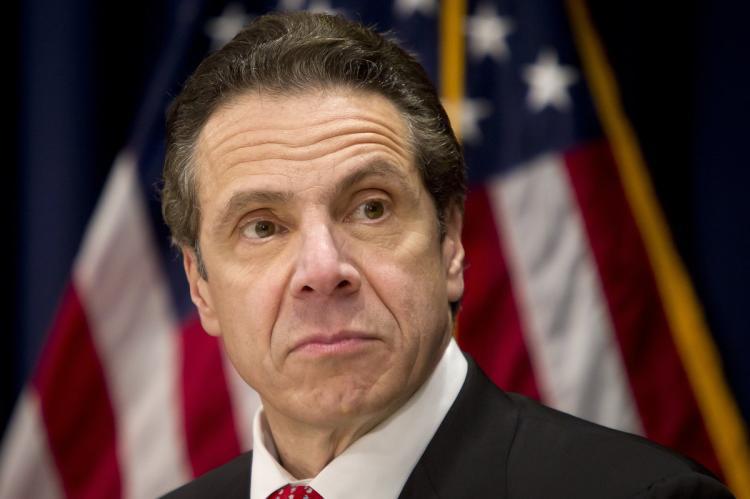
    Schneiderman and New York Governor Andrew Cuomo have promised to challenge any decision by Trump to end DACA. Cuomo said the move would affect roughly 42,000 New Yorkers, upending their lives and ripping families apart.


  • After DACA Repeal Trump says he has ‘great love for young immigrants’

    After DACA Repeal Trump says he has ‘great love for young immigrants’

    Widespread condemnation of DACA Repeal

    WASHINGTON (TIP): US President Donald Trump has said that he has “great love” for young immigrants who came to America as children and hoped that the Congress would bring in a legislation to help them, hours after he scrapped an amnesty program for 8,00,000 undocumented workers.

    US Attorney-General Jeff Sessions on September 5 announced the rescinding of the Deferred Action for Children Arrival (DACA), an Obama-era amnesty program that granted work permits to immigrants who arrived in the country illegally as children.

    The move likely to impact 800,000 undocumented workers including more than 7,000 Indian-Americans.

    “I have a great heart for the folks we’re talking about—a great love for them. And people think in terms of children, but they’re really young adults. I have a love for these people, and hopefully now the Congress will be able to help them and do it properly,” Trump told reporters at the White House, September 5.

    The decision has evoked widespread criticism with former President Barack Obama calling it calling it “wrong,” “self- defeating” and “cruel.”

    The announcement, which was anticipated for the past few days, was greeted with protests from across the country. The move is likely to impact 8,00,000 undocumented workers including more than 7,000 Indian-Americans.

    Hundreds of protesters gathered outside the White House yesterday demonstrating against Trump.

    The White House has defended the decision to rescind DACA.

    “There is a misconception that DACA primarily serves as a shield from deportation. This is misleading. DACA grants work authorization to nearly 800,000 individuals who are not legally authorized to work. DACA recipients, whose average age is in their 20s, were not an enforcement priority before, and they certainly won’t become a priority now,” White House Press Secretary Sarah Sanders said yesterday.

    “The priorities remain the same—criminals, security threats, and those who repeatedly violate our immigration laws,” she said.

    Sanders said the main effect of the announcement is that work permits and other government benefits are being gradually phased out.

    “No permits will be expiring for another six months, and permits will remain active for up to two full years. The president was elected partly on his promise to deliver meaningful immigration reform that puts the jobs, wages, and security of the American people first.

    “He is delivering on that promise every day, and he has put forward serious proposals to Congress that would responsibly end illegal immigration, prevent visa overstays, remove dangerous criminals, protect American jobs and wages,” she said.

    Responding to questions, Sanders exuded confidence that that the Congress is going to step up and do their job.

    “This is something that needs to be fixed legislatively, and we have confidence that they (Congress) are going to do that. And we stand ready and willing to work with them in order to accomplish responsible immigration reform, and DACA is certainly part of that process,” she said.

    Senator Bob Corker, chairman of the Senate Foreign Relations Committee said the president is right to want this issue to be resolved legislatively.

    “Hopefully, while addressing it, we also will deal with a myriad of other issues that need to be corrected with our broken immigration system, including enhancing enforcement and security measures,” he said.

    Senator Chuck Schumer said most Americans know how heartless this DACA decision is, ripping apart families and telling people who worked so hard to become Americans for years that they now have to leave the country.

    “These are folks who were brought here as children, through no fault of their own. They may have known no other country but ours and have voluntarily registered themselves with the government in order to live, work and give back to our great country,” he said.

    Schumer said 91 percent of DACA recipients are employed, paying taxes and paying into Social Security.

    A study by the Center for American Progress earlier this year found that ending DACA would drain $433 billion from national GDP over 10 years, he said.

    “The human and economic toll of rescinding DACA will be far reaching. The Trump administration’s action to end DACA is senseless and cruel. California has its eyes on Congress to do what it should have done years ago, but we cannot bank on that.

    “So, the Governor stands with Attorney-General Becerra as he takes our fight to court to defend the Dreamers,” California Governor Edmund G Brown said.

    House Democratic Whip Steny H. Hoyer has written a letter to Speaker Paul Ryan today urging him to allow consideration of amendments to the omnibus appropriations bill on the Floor this week that would prohibit the use of taxpayer funding by the Administration for certain purposes. (Source: PTI)


  • Ambassador Hardeep S Puri is appointed a Minister in Modi’s Rejigged Cabinet

    Ambassador Hardeep S Puri is appointed a Minister in Modi’s Rejigged Cabinet

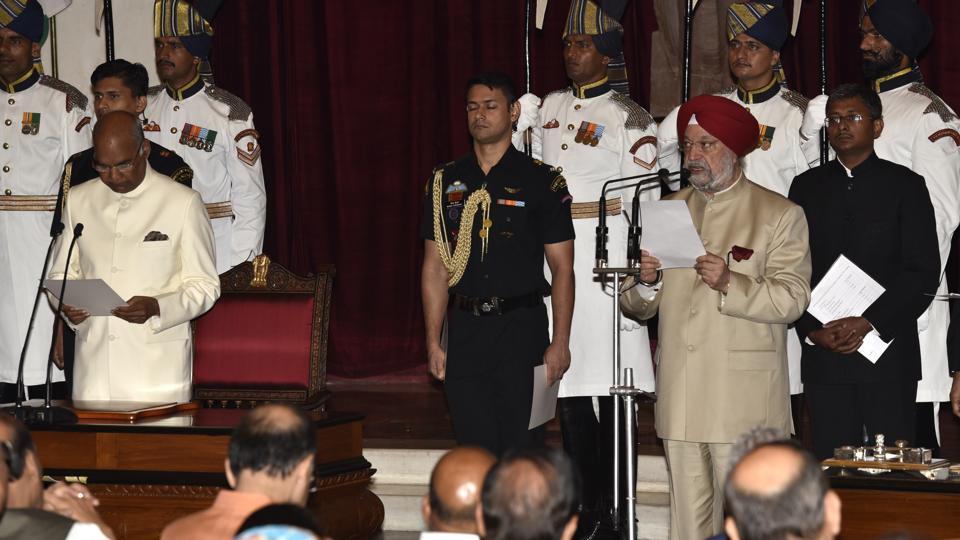
    PM Narendra Modi reshuffled his cabinet September 3 and brought in nine new faces.

    NEW DELHI (TIP): Prime Minister Narendra Modi elevated four senior ministers to the cabinet rank as he roped in nine new faces to the Union council of ministers on September 3  morning.

    The ministers promoted were Mukhtar Abbas Naqvi, Dharmendra Pradhan, Piyush Goyal and Nirmala Sitharaman.

    Nirmala Sitharaman is the First Woman Defence Minister After Indira Gandhi

    Here are the revised portfolios of the ministers:

    CABINET MINISTERS

    1. Rajnath Singh: Minister of Home Affairs.
    2. Sushma Swaraj: Minister of External Affairs.
    3. Arun Jaitley: Minister of Finance; Minister of Corporate Affairs.
    4. Nitin Jairam Gadkari: Minister of Road Transport and Highways; Minister of Shipping; Minister of Water Resources, River Development and Ganga Rejuvenation.
    5. Suresh Prabhu: Minister of Commerce and Industry.
    6. DV Sadananda Gowda: Minister of Statistics and Programme Implementation.
    7. Uma Bharati: Minister of Drinking Water and Sanitation.
    8. Ramvilas Paswan: Minister of Consumer Affairs, Food and Public Distribution.
    9. Maneka Sanjay: Gandhi Minister of Women and Child Development.
    10. Ananthkumar: Minister of Chemicals and Fertilizers; Minister of Parliamentary Affairs.
    11. Ravi Shankar Prasad: Minister of Law and Justice; Minister of Electronics and Information Technology.
    12. Jagat Prakash Nadda: Minister of Health and Family Welfare.
    13. Ashok Gajapathi Raju Pusapati: Minister of Civil Aviation.
    14. Anant Geete: Minister of Heavy Industries and Public Enterprises.
    15. Harsimrat Kaur Badal: Minister of Food Processing Industries.
    16. Narendra Singh Tomar: Minister of Rural Development; Minister of Panchayati Raj; Minister of Mines.
    17. Chaudhary Birender Singh: Minister of Steel.
    18. Jual Oram: Minister of Tribal Affairs.
    19. Radha Mohan Singh: Minister of Agriculture and Farmers Welfare.
    20. Thaawar Chand Gehlot: Minister of Social Justice and Empowerment.
    21. Smriti Zubin Irani: Minister of Textiles; Minister of Information and Broadcasting.
    22. Harsh Vardhan: Minister of Science and Technology; Minister of Earth Sciences; Minister of Environment, Forest and Climate Change.
    23. Prakash Javadekar: Minister of Human Resource Development.
    24. Dharmendra Pradhan: Minister of Petroleum and Natural Gas; Minister of Skill Development and Entrepreneurship.
    25. Piyush Goyal: Minister of Railways; Minister of Coal
    26. Nirmala Sitharaman: Minister of Defence.
    27. Mukhtar Abbas Naqvi: Minister of Minority Affairs.

    MINISTERS OF STATE (INDEPENDENT CHARGE)

    1. Rao Inderjit Singh Minister of State (Independent Charge) of the Ministry of Planning; Minister of State in the Ministry of Chemicals and Fertilizers.
    2. Santosh Kumar Gangwar: Minister of State (Independent Charge) of the Ministry of Labour and Employment.
    3. Shripad Yesso Naik: Minister of State (Independent Charge) of the Ministry of Ayurveda, Yoga and Naturopathy, Unani, Siddha and Homoeopathy (AYUSH).
    4. Jitendra Singh: Minister of State (Independent Charge) of the Ministry of Development of North Eastern Region; Minister of State in the Prime Minister’s Office; Minister of State in the Ministry of Personnel, Public Grievances and Pensions; Minister of State in the Department of Atomic Energy; Minister of State in the Department of Space.
    5. Mahesh Sharma: Minister of State (Independent Charge) of the Ministry of Culture; Minister of State in the Ministry of Environment, Forest and Climate Change.
    6. Giriraj Singh: Minister of State (Independent Charge) of the Ministry of Micro, Small and Medium Enterprises.
    7. Manoj Sinha: Minister of State (Independent Charge) of the Ministry of Communications; Minister of State in the Ministry of Railways.
    8. Rajyavardhan Singh Rathore: Minister of State (Independent Charge) of the Ministry of Youth Affairs and Sports; Minister of State in the Ministry of Information and Broadcasting.
    9. Raj Kumar Singh: Minister of State (Independent Charge) of the Ministry of Power; Minister of State (Independent Charge) of the Ministry of New and Renewable Energy.
    10. Hardeep Singh Puri: Minister of State (Independent Charge) of the Ministry of Housing and Urban Affairs.
    11. Alphons Kannanthanam: Minister of State (Independent Charge) of the Ministry of Tourism; Minister of State in the Ministry of Electronics and Information Technology.

    MINISTERS OF STATE

    1. Vijay Goel: Minister of State in the Ministry of Parliamentary Affairs; Minister of State in the Ministry of Statistics and Programme Implementation.
    2. Radhakrishnan P: Minister of State in the Ministry of Finance; Minister of State in the Ministry of Shipping.
    3. SS Ahluwalia: Minister of State in the Ministry of Drinking Water and Sanitation.
    4. Ramesh Chandappa Jigajinagi: Minister of State in the Ministry of Drinking Water and Sanitation.
    5. Ramdas Athawale: Minister of State in the Ministry of Social Justice and Empowerment.
    6. Vishnu Deo Sai: Minister of State in the Ministry of Steel.
    7. Ram Kripal Yadav: Minister of State in the Ministry of Rural Development.
    8. Hansraj Gangaram Ahir: Minister of State in the Ministry of Home Affairs.
    9. Haribhai Parthibhai Chaudhary: Minister of State in the Ministry of Mines; Minister of State in the Ministry of Coal.
    10. Rajen Gohain: Minister of State in the Ministry of Railways.
    11. VK Singh Minister of State in the Ministry of External Affairs.
    12. Parshottam Rupala: Minister of State in the Ministry of Agriculture and Farmers Welfare; Minister of State in the Ministry of Panchayati Raj.
    13. Krishan Pal: Minister of State in the Ministry of Social Justice and Empowerment.
    14. Jaswantsinh Sumanbhai Bhabhor: Minister of State in the Ministry of Tribal Affairs.
    15. Shiv Pratap Shukla: Minister of State in the Ministry of Finance.
    16. Ashwini Kumar Choubey: Minister of State in the Ministry of Health and Family Welfare.
    17. Sudarshan Bhagat: Minister of State in the Ministry of Tribal Affairs.
    18. Upendra Kushwaha: Minister of State in the Ministry of Human Resource Development.
    19. Kiren Rijiju: Minister of State in the Ministry of Home Affairs
    20. Virendra Kumar: Minister of State in the Ministry of Women and Child Development; Minister of State in the Ministry of Minority Affairs.
    21. Anantkumar Hegde: Minister of State in the Ministry of Skill Development and Entrepreneurship.
    22. MJ Akbar: Minister of State in the Ministry of External Affairs.
    23. Niranjan Jyoti: Minister of State in the Ministry of Food Processing Industries.
    24. YS Chowdary: Minister of State in the Ministry of Science and Technology; Minister of State in the Ministry of Earth Sciences.
    25. Jayant Sinha: Minister of State in the Ministry of Civil Aviation.
    26. Babul Supriyo: Minister of State in the Ministry of Heavy Industries and Public Enterprises.
    27. Vijay Sampla: Minister of State in the Ministry of Social Justice and Empowerment.
    28. Arjun Ram Meghwal: Minister of State in the Ministry of Parliamentary Affairs; Minister of State in the Ministry of Water Resources, River Development and Ganga Rejuvenation.
    29. Ajay Tamta: Minister of State in the Ministry of Textiles.
    30. Krishna Raj: Minister of State in the Ministry of Agriculture and Farmers Welfare.
    31. 31. Mansukh L Mandaviya: Minister of State in the Ministry of Road Transport and Highways; Minister of State in the Ministry of Shipping; Minister of State in the Ministry of Chemicals and Fertilizers.
    32. Anupriya Patel: Minister of State in the Ministry of Health and Family Welfare.
    33. CR Chaudhary: Minister of State in the Ministry of Consumer Affairs, Food and Public Distribution; Minister of State in the Ministry of Commerce and Industry.
    34. PP Chaudhary: Minister of State in the Ministry of Law and Justice; Minister of State in the Ministry of Corporate Affairs.
    35. Subhash Ramrao Bhamre: Minister of State in the Ministry of Defence.
    36. Gajendra Singh Shekhawat: Minister of State in the Ministry of Agriculture and Farmers Welfare.
    37. Satya Pal Singh: Minister of State in the Ministry of Human Resource Development; Minister of State in the Ministry of Water Resources, River Development and Ganga Rejuvenation.