Month: November 2017

  • UK Plans to Double Visas to Non-EU Professionals Post Brexit

    UK Plans to Double Visas to Non-EU Professionals Post Brexit

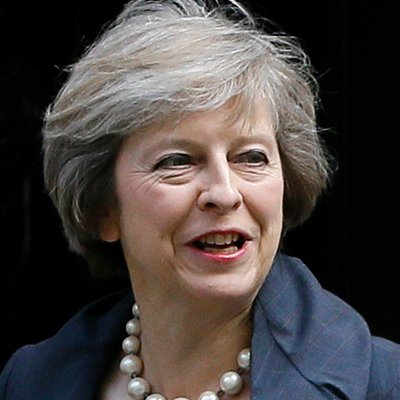
    LONDON (TIP): The UK will double the number of visas offered to non-EU nationals who show promise in the field of technology, art and creative industries, Prime Minister Theresa May has announced, as part of her post-Brexit strategy to present Britain as open to global talent.

    The number of visas available through the Tier-1 (Exceptional Talent) route will increase from the current 1,000 to 2,000 a year to attract the “brightest and best” talent from around the world, including in digital technology.

    May, who hosted digital entrepreneurs and innovators from across the country at Downing Street last evening here, said that the visa hike was part of a slew of measures directed at the digital tech sector.

    “As we prepare to leave the European Union (EU), I am clear that Britain will remain open for business. That means government doing all it can to secure a strong future for our thriving tech sector and ensure people in all corners of our nation share in the benefits of its success,” she said.

    “Our digital tech sector is one of the UK’s fastest- growing industries, and is supporting talent, boosting productivity, and creating hundreds of thousands of good, high-skilled jobs up and down the country. It is absolutely right that this dynamic sector…has the full backing of government,” she added.

    The government said that the UK Home Office will look at how it can work with organizations across Britain to ensure wider take up of the additional visas outside London.

    Alongside this, UK Home Secretary Amber Rudd is set to meet with technology experts to seek their input on making visa processes more efficient.

    “Increasing the number of visas for these sectors will make sure that we continue to be at the heart of world culture and forefront of digital and scientific advances,” Rudd said

    The 2,000 visas will be made available to individuals who are recognized as existing global leaders or promising future leaders in the digital technology, science, arts and creative sectors by one of five UK endorsing organizations Tech City UK; Arts Council England; The British Academy; The Royal Society; and The Royal Academy of Engineering.

    The current allocation of the 1,000 visas which are already split between the five endorsing organizations will remain in place and the additional visas will be made available across all of the endorsing bodies based on their requirements.

    “Britain is a world leader in digital innovation with some of the ‘brightest and best’ tech firms operating in this country. Working with us, they can provide technological fixes to public sector problems, boost productivity, and get the nation working smarter as we create an economy fit for the future,” UK Chancellor Philip Hammond said.

    Among the other measures unveiled for the digital industry include a 21-million-pound investment towards the expansion of Tech City UK into a nationwide network called Tech Nation and another 20-million-pound fund to help public services take advantage of UK expertise in innovative technologies like Artificial Intelligence (AI).

    Tech Nation will see the organization expand its successful hub model to more cities around the UK, including Belfast, Cardiff, Edinburgh and Birmingham.

    “Under the Tech Nation banner, this country that has brought so much innovation to the world and leads in sub- sectors such as fintech, cybersecurity, artificial intelligence, robotics and life sciences, will build a national network of digital excellence so that the UK will continue to be recognized as one of the best places in the world to start or grow a digital tech business,” said Eileen Burbidge, chair of Tech City UK.

    The government also announced the launch of a 20-million- pound training program which will challenge thousands of young people, aged between 14 and 18, to test their skills against simulated online cyber threats.

    (Source: PTI)


  • Ambanis beat Lees of Samsung to become Asia’s richest family

    Ambanis beat Lees of Samsung to become Asia’s richest family

    NEW DELHI (TIP): India’s Mukesh Ambani family is the richest in Asia as its net worth rose $19 billion to $44.8 billion, toppling the Lees of the Samsung empire, to claim the numero uno position, Forbes said.

    Despite dropping to the second spot, Korea’s Lee family still saw its wealth soar by $11.2 billion to $40.8 billion this year as shares of Samsung Electronics moved up 75 per cent over the past year.

    According to Asia’s 50 Richest Families compiled by Forbes, Hong Kong’s Kwok family, Asia’s richest real estate household that controls Sun Hung Kai Properties, ranked third this year with a net wealth of $40.4 billion. Thailand’s Chearavanont family of the Charoen Pokphand Group took the fourth spot on the list, with a net worth of $36.6 billion.

    The Ambanis are the only Indian family on the top 10 richest families list in Asia.

    “No family highlights this surge better than the Ambanis of India, this year’s biggest gainer in dollar and percentage terms,” Forbes said.

    It noted that shares in Mukesh Ambani’s conglomerate Reliance Industries soared on the back of improved refining margins and the demand produced by its telecom arm, Reliance Jio, which notched up 140 million subscribers since it was launched in 2016.

    On the list of Asia’s Richest Families 2017, compiled by Forbes, India enjoys the biggest presence in the ranking for the third time with as many as 18 families.

    Other richest Indian families on the list feature the Premjis (rank 11, $19.2 billion net worth), the Hindujas (12th, $18.8 billion), the Mittals (14th, $17.2 billion), the Mistrys (16th, $16.1 billion) and the Birlas (19th, $14.1 billion). Motherson Sumi Systems Sehgal family (41st, $6.2 billion), the Wadia family (42nd, $6.14 billion), DLF’s Kushal Pal Singh (44th, $6.1 billion), the Patel family which controls Cadila (45th, $6 billion), the Piramals (47th, $5.38 billion) and the Munjals (48th, $5.37 billion) also made the cut.

    Collectively, the 50 families in the club are worth a record $699 billion, up by nearly $200 billion from last year, according to Forbes.

    The list of Asia’s 50 Richest Families is a snapshot of wealth using stock prices and currency exchange rates from the close of markets on November 3. Private companies were valued by using financial ratios and other comparisons with similar publicly traded firms.

    The ticket to entry for this year’s list was $5 billion, $1.6 billion more than in 2016.

    (Source: PTI)


  • Congressional Committee Votes to Increase Minimum Salary of H1B Visa Holders

    Congressional Committee Votes to Increase Minimum Salary of H1B Visa Holders

    NASSCOM Strongly Disagrees with US Lawmakers

    WASHINGTON (TIP): A key Congressional committee has voted to pass a legislation that proposes to increase the minimum salary of H-1B visa holders from $60,0000 to $90,000 and imposes a number of restrictions on the work visa, popular among IT professionals from India.

    The Protect and Grow American Jobs Act (HR 170) – introduced by Courts, Intellectual Property and the Internet Subcommittee Chairman Darrell Issa – was passed by the House Judiciary Committee during a markup hearing today morning.

    The bill now heads to the full House for necessary action.

    A similar version of the bill needs to be passed by the Senate before it can be sent to the White House for the US President Donald Trump to be signed into law.

    Given the sharp differences that the Democratic and Republican lawmakers and the White House has on various aspects of immigration reform including H-1B, the Congressional passage of the bill and its becoming a law as of now appears to be a tall order.

    The bill prohibits H-1B dependent employers from replacing American workers with H-1B employees, there are no longer any exceptions.

    It also lengthens the no-layoff policy for H-1B dependent employers and their client companies for as long an H-1B employee works at the company, which means they cannot lay off equivalent US workers.

    For H-1B dependent employers to be exempted from the requirement that US workers be recruited first, the Protect and Grow American Jobs Act dramatically increases the salary requirements for H-1B workers.

    “They must pay the lower of $135,000–which is indexed for inflation–or the average wage for the occupation in the area of employment, but with a floor of $90,000,” said a media release issued by the House Judiciary Committee.

    NASSCOM president R Chandrashekhar in a statement said that HR 170, as adopted by House Judiciary Committee, would harm US businesses and impose an extraordinary amount of bureaucratic red tape on a program that contributes greatly to US prosperity.

    “It also could disrupt the marketplace, threaten thousands of US jobs, and stifle US innovation by unfairly and arbitrarily targeting a handful of companies who used just 16 per cent of the new H-1B visas in FY 2016 while imposing no new requirements on the vast majority of companies that use the visas to do the same exact same things,” Chandrashekhar said.

    Defending the passage of the bill, Congressman Issa said lawmakers have a responsibility to ensure that H-1B is not abused by those misusing it to outsource jobs and undercut American workers.

    “Unfortunately, the loopholes left open in H-1B have allowed a small handful of companies to game the system and crowd out employers who need the limited slots available to bring in the best and brightest individuals from around the world,” he said.

    “The Protect and Grow American Jobs Act is a common-sense update that will go a long way to protecting American workers while helping companies have better access to the talent they need to grow their businesses and create new jobs here in America,” Issa said.

    Congressman Bon Goodlatte, Chairman of the House Judiciary Committee, said the immigration programs must put American workers and nation’s interests first, and “unfortunately” that is not the case currently with the H-1B visa program.

    “The Protect and Grow American Jobs Act makes much-needed reforms to the H-1B program to curtail abuse of the system and protect American workers,” he said.

    NASSCOM strongly disagrees with the US lawmakers.

    “Unfortunately, this legislation is being driven by myths, not reality. US government data show very significant shortages of high skill talent around the country. The data show that the high skill visa programs are not a major cause of US unemployment, and IT specialists working on temporary visas are not cheap labor,” said Chandrashekhar.

    According to the US Bureau of Labor Statistics, across the US economy, approximately 20 million people per year lose their jobs due to reasons not linked to hiring H-1B employees.

    Compared to that, the annual number of H-1Bs granted to the top 10 India-centric IT service companies in 2016 was only a tiny fraction of the US workforce, he said.

    According to a study by the Pew Research Center, based on fiscal 2016 data from US Citizenship and Immigration Services (USCIS) data, for eight of the top 10 India-centric IT companies, the average salary for workers on H-1B visas was higher than the median salary for US citizens in computer and mathematical jobs, Chandrashekhar argued.

    “Employers who use the H-1B program are highly regulated and scrutinized already, and NASSCOM member companies abide by all applicable laws and regulations.

    “According to the US government, the rate of compliance problems is very low, and the overwhelming majority of problems occur at American companies with fewer than 50 employees,” he said.

    Chandrashekhar said NASSCOM continues to support efforts to root out any fraud or abuse in the H-1B system.

    “Quite simply, our members do not deserve to be treated differently from their American or European counterparts,” he said.

    (Source: PTI)

  • “Padmavati” Sets India on Fire: Deepika Threatened, Provided Security Cover

    “Padmavati” Sets India on Fire: Deepika Threatened, Provided Security Cover

    Protests Force government assurance that Censor Board will weigh in Public Sentiment

    NEW DELHI (TIP): The controversy over Bollywood film “Padmavati” has set India on fire. The situation took an ugly turn on November 16 when a leader of the Rajput Karni Sena cited Ramayana’s Surpanakha nose-chopping incident and warned Deepika Padukone against “inciting” sentiments.

    Reacting to the development, the Mumbai police have stepped up the actor’s security.

    Meanwhile, protests were held in several parts of the country, including Rajasthan, Uttar Pradesh and Bihar, against the movie, which is slated to be released on December 1.

    Amid raging row over Bollywood movie ‘Padmavati’ and Rajput Karni Sena’s open threat to actress Deepika Padukone, Union minister Uma Bharti said, November 16 she had been assured that the Censor Board would take care of the issues being raised by the Rajput community.

    Her Cabinet colleague Nitin Gadkari also reacted on the issue. “Filmmakers must also keep cultural sensitivities in mind,” he said.

    “I have been assured that the Censor Board will take care of all issues. I am confident that they are already informed about the concerns being raised by the people… The director and his associate are responsible for the film story. They should have taken care of the sentiments and historical facts,” she added

    Just like disrespect to Padmavati was “immoral”, so was that to the film’s artistes (read Padukone), she said. “If we are talking about respect of Padmavati, it is our moral obligation that we respect every woman… Disrespect of any actress or actor of ‘Padmavati’ is uncalled for and immoral,” Bharti said, an obvious reference to the threat of physical harm to Deepika.

    President of the Rajasthan unit of Karni Sena Mahipal Singh Makrana has been quoted as saying that they would not hesitate to chop off Deepika’s nose like Shurpanakha. “Rajputs never raise hand on women, but if the need be, we will do to Deepika what Lakshman did to Shurpanakha,” he said. Padukone had recently termed as “appalling” the violent protests over the film.

    Meanwhile, Ajmer dargah deewan Sayed Zainul on Thursday, November 16, compared filmmaker Sanjay Leela Bhansali with Salman Rushdie, Tasleema Nasreen and Tareq Fateh

    He urged Prime Minister Narendra Modi to ban the movie that hurt “religious sentiments” of every citizen, including Rajput community at large

     “Bhansali’s character is like that of Rushdie, Tasleema and Tareq who always twists or distorts historical facts and hurts religious feelings of people, hence every Muslim should support the cause of Rajput community,” Deewan said in a statement in Jaipur.

    ‘Defending the film maker and the film artist Padukone, Congress leader Shashi Tharoor took a dig at those criticizing Padukone by questioning their silence during British era’.

    “Every single one of these so-called valorous maharajas, who today are after a Mumbai filmmaker, were less concerned about their honor when the British were trampling all over it. They scurried to accommodate themselves. So, let’s face it, there is no question, that we were complicit”, said Shashi Tharoor.

    The uproar against Padmavati has once again revived the question of freedom of expression. We may see the debate getting louder over the next few days.


  • House Passes Tax Bill in Major Step Toward Reform

    House Passes Tax Bill in Major Step Toward Reform

    Bill Signals G.O.P. Prioritizes Corporate Tax Cuts

    WASHINGTON (TIP): In what appears to be the first major step in the direction of implementation of Trump’s agenda, the House passed a sweeping rewrite of the tax code on Thursday, November 16, by 227-205. The Bill seeks to enact $1.5 trillion in tax cuts for businesses and individuals and deliver the first major legislative achievement of President Trump’s tenure.

    The House tax bill, which passed in the Ways and Means Committee last week, would cut taxes more than $1.4 trillion over 10 years. It cuts the corporate tax rate to 20 percent from 35 percent, collapses the number of tax brackets to four from seven, switches the United States to an international tax system that is more in line with the rest of the world, and eliminates or scales back many popular deductions, including one for state and local taxes paid.

    The House easily passed its tax bill, with lawmakers voting shortly after Mr. Trump came to Capitol Hill to address House Republicans. Representatives voted along party lines, except for 13 Republicans, many of whom fought to keep the deduction for state and local taxes. The Republicans who voted no were from New York, New Jersey, California and North Carolina. Zero Democrats voted for it.

    Attention now turns to the Senate, which was grappling on Thursday with another setback after a congressional analysis found that their revised tax bill would actually raise taxes on lower-income Americans within a few years.

    The Joint Committee on Taxation projected that Americans earning $30,000 or less would see their taxes increase beginning in 2021, if the Senate bill becomes law. The committee also projected that Americans earning $75,000 or less would face large tax increases in 2027, after the individual tax cuts expire. The updated analysis stems from the Senate’s last-minute inclusion of a provision that would repeal the Affordable Care Act’s requirement that most people buy health insurance. The repeal would lead many lower-income Americans to choose not to buy insurance, and thus not claim tax subsidies that currently help them defray the costs of health coverage.

    The tax overhaul still faces significant obstacles, as Republicans must align the House legislation with the bill that is working its way through the Senate Finance Committee this week and contains big differences that will have to be bridged.

    Republicans are under pressure to get legislation to Mr. Trump’s desk by Christmas, especially after failing in their attempt to dismantle the Affordable Care Act this year, even though their party has full control of government. Lawmakers also want to push the legislation through quickly to avoid giving lobbyists and Democrats time to mobilize.

    Republicans do not wish to witness a replay of their health care catastrophe, during which the House managed to pass a repeal bill in May, but the narrowly divided Senate could never do so.

    “For the first time in 31 years we are wiping the tax code clean and replacing it with one that is fairer and simpler for everyone,” said Representative Devin Nunes, Republican of California and a member of the Ways and Means Committee.

    House Republican leaders were unable to win over a number of Republicans from high-tax states like New York and New Jersey, who have fought to preserve the deduction for state and local taxes. The House bill allows the deduction of up to $10,000 in property taxes, but that provision was not enough of a concession for them.

    At least five Republicans from New York and three from New Jersey had come out against the bill before Thursday’s vote.

    “I just have too many constituents who are going to see their taxes go up,” said Representative Lee Zeldin, who represents a district on Long Island and was one of several New York Republicans who spoke out against the tax bill on Thursday morning. “You’re taking more money from a place like New York in order to pay for deeper tax cuts elsewhere,” Mr. Zeldin said.

    Congresswoman Lucille Roybal-Allard (CA-40) said: “The fact is, this bill is so skewed to benefit the wealthiest 1% in America that it could more accurately be named ‘H.R. 1%.”

    Congressman’s statement further said, “On behalf of America’s future generations who will be saddled with an unsurmountable debt created by H.R. 1, the Republican tax plan, I strongly opposed this bill.  This rushed piece of legislation will not only add more than $1.7 trillion to the national debt over the next 10 years, but it will also shift the burden of paying for that debt to our hardworking families.

    “Despite our Republican colleagues’ assertions that this tax plan will benefit the majority of Americans, numerous economists disagree.  They note that nearly 45% of all households with children will see a tax increase, while 80% of our wealthiest citizens will receive a tax cut by 2027.

    “Even more egregious, this tax bill seeks to eliminate the long-standing state and local tax deduction, subjecting every wage earner’s income to double taxation.  This defeats the original framers’ intent to avoid a system of double taxation.  The original tax code, drafted in 1913, consisted of three pages in its entirety and included the state and local tax deduction at the core of its responsible tax policy to ensure state and local governments could raise revenues for public schools, police, fire, and emergency services.

    “Plain and simple, this tax plan is a tremendous windfall for our wealthiest 1% and large corporations.  It favors large businesses over small businesses, it favors sending jobs overseas rather than creating jobs at home, it favors the wealthy over hourly wage earners, and it pays for these tax cuts for the wealthy by raising taxes on our middle class families to the detriment of Medicare, Medicaid, education, and other vital public services.

    “The fact is, this bill is so skewed to benefit the wealthiest 1% in America that it could more accurately be named ‘H.R. 1%.’  In the name of the other 99% of Americans, I voted against H.R. 1.”


  • FUNERAL

    FUNERAL

    Taranjit Parmar, 18, daughter of Ranjit Singh Parmar and Kulvinder Kaur, and granddaughter of Joginder Singh Parmar, resident of Levittown, Long Island, New York, died in a tragic road accident, Thursday, November 9, 2017 in Levittown, a short distance away from home.  She was a second year student at Adelphi University.

    Taranjit’s funeral will be held at 132 Ronkonkoma Ave, Lake Ronkonkoma NY 11779 on Monday, November 13 at 11:30 to 1.00 pm.

    For more information:       

    Ranjit Singh Parmar CPA: 516-512-2242

    Prof. Indrajit S Saluja : 646-247-9458

  • Smog effect: Odd-even in Delhi for 5 days, Central panel to list solutions

    Smog effect: Odd-even in Delhi for 5 days, Central panel to list solutions

    NEW DELHI (TIP): With air quality dipping further on November 9 to its worst level this year, the Delhi government announced that the odd even car rationing scheme will be rolled out in the city for five days from November 13 to November 17.

    Announcing this, Transport Minister Kailash Gahlot said that the scheme, a part of the emergency measure in the Graded Response Action Plan (GRAP), created and enforced by the Supreme Court-appointed EPCA, will be in place from 8 am to 8 pm like last year and will allow odd-numbered cars to run on odd dates while even-numbered cars will only run on even dates.

    Earlier, the odd-even scheme had been implemented, initially for a fortnight beginning from January 1, 2016 and then four months later from April 15 to 30.

    The move came after an “emergency” prevailed in the capital for the third day, with the Air Quality Index, worsening to 486, on a scale of 500 – and predicted to get worse over the next 48 hours. As per norms, a satisfactory AQI level is 100 and Delhi routinely is between 300 and 400.

    After the Central Pollution Control Board task force told EPCA on Wednesday that prevailing conditions called for an “emergency” response, Delhi Lieutenant Governor Anil Baijal and Chief Minister Arvind Kejriwal met and announced that they were “preparing” for the implementation of the scheme.

    Gahlot asked citizens and agencies to cooperate and promised that radio-cab services would not be allowed to use surge-pricing. He added that the DTC would hire 500 buses from private contractors to deal with the increased number of commuters. He said, “”Delhi Metro has also promised to provide 100 small buses during the period. Schools will be free to provide their buses voluntarily. However, there will be no compulsion.”

    He also urged Prime Minister Narendra Modi to call a meeting of Chief Ministers of Delhi and its surrounding states to find a solution to the crisis.

    The exemptions, Gahlot said, would include CNG vehicles, electric vehicles, hybrid vehicles, women-only vehicles and those carrying children up to 12 years of age, as well as children in school uniform.

    He added, “IGL (Indraprastha Gas Limited) will issue stickers which will be available at 22 CNG stations in Delhi. Extra buses are also being arranged. But we will not requisition them for schoo buses.”

  • Together we can eradicate blindness in children: Dr VK Raju

    Together we can eradicate blindness in children: Dr VK Raju

    Prakash M Swamy

    VIJAYWADA, INDIA (TIP): There are 1.2 Million physicians of Indian-origin providing healthcare in nearly 100 countries of the world and together they can eliminate preventable blindness in children from the globe, said Dr VK Raju, Clinical Professor, Department of Ophthalmology at West Virginia University and Founder-President of The Eye Foundation of America in Morgantown, West Virginia.

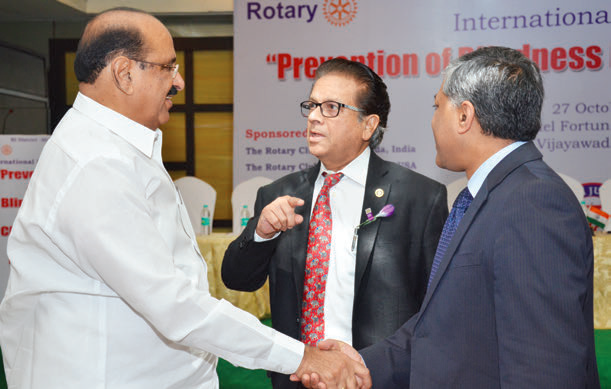
    He was addressing an international seminar – “Preventing blindness in childhood and beyond” organized by the Rotary Club of Vijayawada, Rotary Club of Morgantown, Eye  Foundation of America and Goutami Eye Institute of Rajahmundry last week at Hotel Fortune Murali Park in Vijayawada in the State of Andhra Pradesh.

    Dr. Leela Raju, world renowned cornea specialist, chief of
    ophthalmology, Bellevue Hospital, NY University Langone, New York, giving a presentation

    Dr. Raju, an internationally-renowned ophthalmic surgeon, said there are about 700,000 physicians in India, 100,000 in the US, 60,000 in the UK and 25,000 in Australia and serving the patients even in small countries. Preventing blindness in children is crucial to nation’s progress as 80 percent of the blindness can be cured if detected early.

    Combating childhood blindness is the most cost effective health intervention according to the World Bank. In times like these, headlines are grabbed by crises and scientific breakthroughs and prevention of disease is being totally neglected.

    In 1900, the top three leading causes of death were- Influenza, tuberculosis and gastro-intestinal diseases. Thanks to public health programs such as sanitation, water supply and vaccines and preventive medicine, the rates of these diseases have plummeted over the last 100 years.

    An ounce of prevention is better than a pound of cure.Though preventive medicine had been a specialty for many decades in the US, it comprises only 0.8% of the physician work force. Most of the countries try to imitate US in many ways, he said.

    ” By eradicating blindness among infants and children, we are building a strong and healthy India and the world, and the future generation is protected,” he says.

    The Eye Foundation of America plans to touch the lives of 100,000 people in India as a part of its ongoing efforts to eliminate avoidable blindness. The campaign is focused on those in rural India who suffers from diabetes and is at risk for, or may already be suffering from, diabetic retinopathy – a condition that often leads to blindness if left untreated.

    The Eye Foundation of America plans to touch the lives of 100,000 people in India as a part of its ongoing efforts to eliminate avoidable blindness. The campaign is focused on those in rural India who suffers from diabetes and is at risk for, or may already be suffering from, diabetic retinopathy – a condition that often leads to blindness if left untreated, he said.

    Eye Foundation of America with the motto world without childhood blindness is poised to take up with Rotary International as an international partner in eradication of childhood blindness.

    Dr Raju was felicitated for his lifelong dedicated service in eradicating blindness among children at the one day conference by Andhra Pradesh Health Minister Dr. K. Srinivas, Past President of Rotary International K.R. Ravindran, District Governor of Rotary Clubs GV Rama Rao and former Mayor of Vijayawada Dr. Jandhayala Sankar.

    Srinu Maddula, owner of Banks Apothecary Pharmacy in Philadelphia and a Roving Ambassador of Eye Research Foundation, who was felicitated for spearheading the Foundation’s relentless campaign to eradicate childhood blindness, said he was given a new lease of life by Dr Raju who successfully performed corneal transplant on him when he was 18 months old in West Virginia.

    As an infant, Maddula was referred to Dr Raju during one of his eye camps in Vijayawada who found that was suffering from a disease where his brain cells will die leading to permanent blindness if not treated immediately. Dr Raju arranged for the American visa for the baby along with his parents and brought them to the US and performed cadaver transplant of cornea on both the eyes within a span of six months.

    Maddula, 32, married last month enjoys a perfect vision now and owns a multi-million dollar specialized pharmaceutical company in Philadelphia. He is now the biggest supporter and an ambassador of goodwill for the foundation across the globe.

    He refers Dr Raju as living god who gave him a new lease of life.

    A galaxy of physicians, policymakers and Rotarians from the US were invited to address the seminar from the US and they include Dr. Rahul Gupta, Commissioner and State Health Officer, West Virginia Department of Health and Human Services, Ranjt K Majumdar, Past District Governor of District 7530, Morgantown, WV, Dr. Indira Majumdar, President of Rotary Club of Morgantown, WV and Dr. Leela Raju, world renowned cornea specialist, chief of ophthalmology, Bellevue Hospital, NY University Langone, New York.

    Dr Rahul Gupta is partnering with the Eye Foundation of America to advance the preventive aspects of the childhood blindness and beyond.

  • th Professionals Volunteer at Annual BAPS Charities Health Fair in Dallas, TX

    th Professionals Volunteer at Annual BAPS Charities Health Fair in Dallas, TX

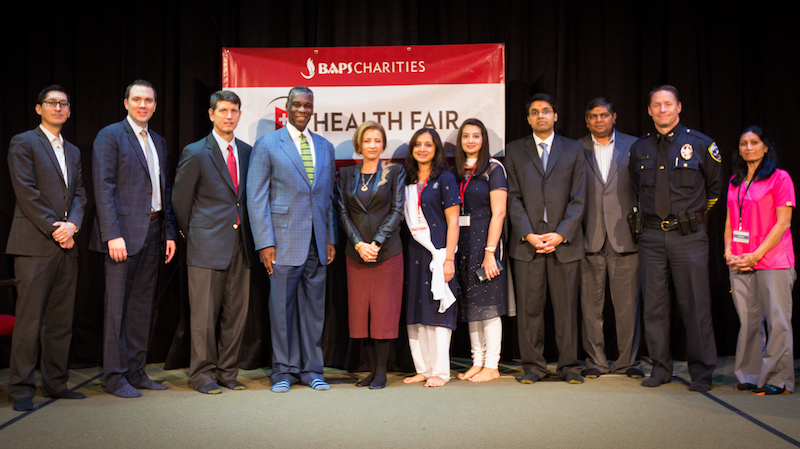
    DALLAS (TIP): Over 50 medical professionals were on hand as BAPS Charities hosted its 16th annual Health Fair on Saturday, November 4, 2017 in Dallas, TX. Professionals volunteered their services and came from varying backgrounds including dentists, nurses, physicians, pharmacists and specialists in the fields of cardiology, ophthalmology, pediatrics, gynecology, pain management, and psychiatry. With a long history of providing free and subsidized health services to the community, the health fair continued the tradition by offering a variety of screenings to community participants. Screenings included heart diseases, obesity, diabetes, lipid profile, eye, skin and dental issues, and osteoporosis. With the increasing cost of health care in this economy, health professionals educated over 380 attendees on various health topics and provided their expert advice on regular health checkups and other health related issues.

    “It was an excellent opportunity to learn more about maintaining my health and well-being,” said Krishna Teja, an attendee at the health fair, “it is important to be aware of the various risk factors that can affect my health; these doctors and specialists here today provided me with great advice on how to best improve my overall health.”

    The volunteers aiding in this charitable event expressed their gratitude in serving others. Priya Patel, a volunteer at BAPS Charities said, “I’m glad to be able to participate in BAPS Charities Health Fair because I think it is important to offer this opportunity for preventative screenings and lab diagnostics to those patients who don’t normally have access to these services. I’m grateful for the opportunity to participate in something that helps expand access to healthcare for those in the community”.

    Held at over 51 locations across North America, this Health Fair is an example of one of the many efforts made by BAPS Charities to give back to the community. Through these annual Health Fairs and other events such as Health Awareness Lectures, Food Drives and Walkathons, BAPS Charities constantly exemplifies the spirit of volunteerism and strives to serve the community, by improving the quality of life of individuals and families.

    For additional information on BAPS Charities and its international and local philanthropic activities, please visit www.bapscharities.org.

    About BAPS Charities

    BAPS Charities is a 501(c)(3) registered nonprofit international charity organization committed to sincerely serving the world by caring for individuals, families, and communities. It is affiliated with BAPS as an independent charity and social services arm. The 55,000 BAPS volunteers networked in over 3,300 centers around the world provide over 12 million volunteer-hours of service annually.

    Among social service charities, BAPS Charities is a well-respected and trusted name. It has amassed over 50 years of firsthand experience in initiating, managing, and sustaining 160 humanitarian operations throughout the world in such diverse fields as: medical services, environmental services, community services, tribal services, and disaster relief services.

    For additional information on BAPS Charities and its international and local philanthropic activities, please visit www.bapscharities.org.

    Contact:

    Media Coordinator Name: Viral Purohit Phone: 205-508-0847

    Email: dfw.media.dept@gmail.com BAPS North American Headquarters Phone: 732-777-1414 ex 140

    Email: media@na.baps.org

  • Festival of Lights celebrated with gusto at DFW Diwali Mela

    Festival of Lights celebrated with gusto at DFW Diwali Mela

    DALLAS (TIP): A mammoth gathering of enthusiastic Indian Americans to celebrate the festival of India– Diwali- must have hugely pleased the organizers- the DFW Indian Cultural Society who have been working hard to put in place an event which has made history. In the last 14 years, since Satish Gupta, the present President of DFW Indian Cultural Society moved the Diwali Mela out of his house where for years he has been celebrating the event with community, the mela has been growing in proportions. With every passing mela, the organizers learnt from their experience and over the years have perfected the art of organizing well such a massive event.

    The festivities began with lighting of the lamp by Acharya Sarveshananda and a brief speech by him. It was followed by Ram Leela.

    Satish Gupta, President of DFWICS thanked Board members, volunteers and the sponsors of the event.

    A nonstop l20 minute laser show and great fireworks sent waves of joy among the 30000 visitors to the mela.

    67 various dances were performed.  There was a car Raffle draw. The lucky winner was a lady who won a Toyota car in the raffle.

    The customary Ravana dahan (burning the effigy of Ravana) symbolizing victory of good over evil , then took place which was  followed by exquisite fireworks. A Bollywood entertainment segment is the sine qua non of any successful event in the US. The organizers made sure that the craze was well satisfied. The star entertainer was Rich Sharma, the charming singer from Bollywood. Richa Sharma ‘s musical troupe regaled the audience for the next three hours.

  • NHL sparks more controversy after rumors of scrapping the all-star game loom

    NHL sparks more controversy after rumors of scrapping the all-star game loom

    By Marvi Sajid

    The National Hockey League is looking to get rid of  the All-Star Game held annually which celebrates a full weekend of star athletes, the game, and it`s fans. The All-star game is an event used to showcase exciting skills players are unable to use in conventional play, and brings league superstars who don’t normally play together center stage for one night. The NHL is rumored to endeavor toward international growth opportunities rather than just a “celebration” which doesn’t bring growth to the game. The idea came into play  after the league decision to not attend the 2018 Pyeongchang Winter Olympics and just a month after the Vancouver Canucks and Los Angeles Kings played pre-season exhibition games in China. The news was released by Sportsnet`s Chris Johnston during Hockey Night in Canada, where he made mention of the news and added that the NHL has appointed Jaka Lednik, a European businessman to assist in the NHL`s European development. There is no word, as of right now if the change will be put into effect in the oncoming seasons, or if it is just another unfulfilled initiative, as the league is still in its discussion phase. The 2018 NHL All-Star festivities are set to kick off in Tampa Bay, at AMALIE Arena on Saturday, January 27th through the 28th.


  • “Ekal Vidyalaya Foundation” Raises 2 Million at a  Glittering Gala

    “Ekal Vidyalaya Foundation” Raises 2 Million at a Glittering Gala

    Prakash Waghmare

    NEW YORK CITY (TIP): Ekal Vidyalaya Foundation’s (‘EVF’) glittering ‘Gala’ on Saturday, Nov. 4 at the majestic ‘Cipriani’ on Wall Street in New York City was a grand success. The response for this highly anticipated event was simply overwhelming, not only in terms of capacity-attendance, but also donor’s enthusiasm to support EVF’s worthy cause. The evening raised more than $2 Million. ‘Ekal’ as ‘EVF’ is popularly known, had been raising funds in USA through series of concerts mainly directed at grass-root level, until now. This gala  was an added innovative effort to reach out to the Corporate world and high net-worth individuals and bring mainstream America into its fold. This impeccably organized spectacular evening’s main architect was Mohan Wanchoo (Chairman, Founder of EC Infosystems). He was ably supported in this affair by Chirag Patel (CO-CEO & Chairman of ‘Amneal Pharmaceuticals’), Soner Kanlier (CEO Jasmine Universe) and Rajesh Gooty (Founder, Pres.-CEO of M Corp). Since its inception 29 years ago, Ekal had been setting new records, year after year in fund-raising. Last year, even without any high-end gala event, this largest NGO, with chapters in ten different countries including in Middle-eastern countries, raised $7.2 Million in USA alone.

    Some Entertainment

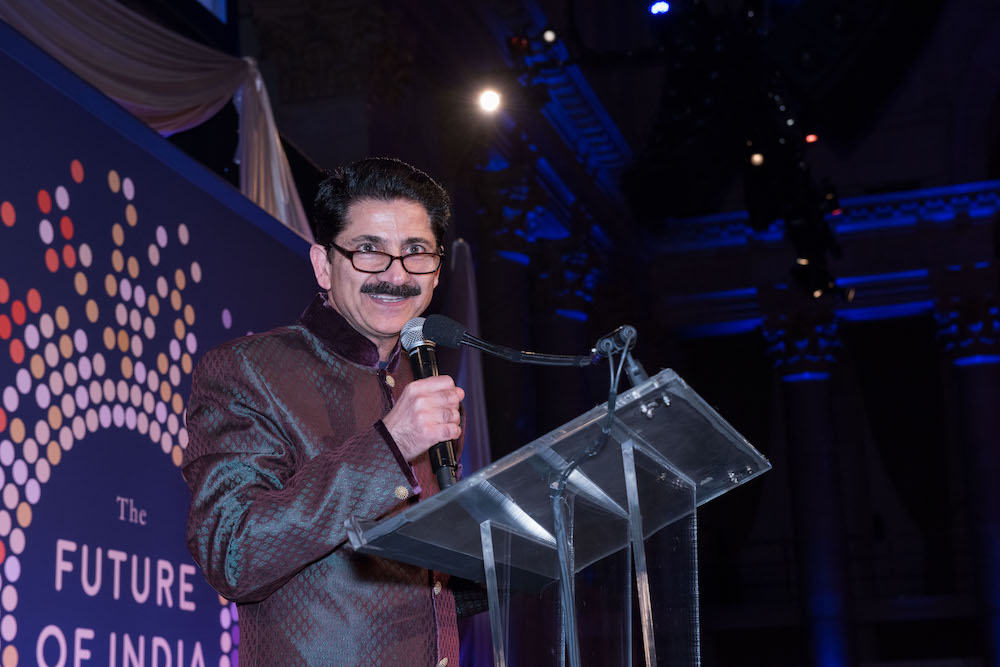
    The evening started with the salutation to American and Indian flags with national anthems on the big screen. Welcoming the guests, Mohan Wanchoo, briefed the gathering about Ekal’s multi-dimensional approach to uplift rural and tribal areas of India through emphasis on literacy, healthcare, integrated village development and empowerment of village folks. He informed the gathering that Ekal currently has 58,000 schools, spread all over India supporting 1.56 Million children – more than half of which were girls. He further stressed that the project cost, including administration and monitoring was only $1-a-day or $365 per year per school. Chirag Patel thanked all the teachers working at grass-root level in India and imparting life-sustaining education to the children facing various hurdles. Vinod Jhunjhunwala, the President of Ekal-USA paid tribute to Ekal leadership in USA as well Ekal-India team, which had flown in specially for this occasion. Under Ekal-USA leadership Ashok Danda, Subhash Gupta, Ranjani Saigal and Ramesh Shah were acknowledged while for Ekal-India Dr Subhash Chandra, Bajrang Bagra, Laxmi Goel, and Naresh Jain were recognized. Ranjani Saigal, the Executive Director touched on the whole range of Ekal mission in remote areas through couple of brief ‘reality videos’ that also depicted use of digital technology, organic farming, and skill-training centers which are empowering rural life.

    Mitzi Perdue delivers keynote speech

    Ms. Mitzi Perdue, the heiress to ‘Sheraton Hotel chain’ and ‘Perdue Poultry Farms’, was one of the keynote speakers of the evening along with Dr. Subhash Chandra, Chairman of ZEE-TV and Chairman of Ekal-Global. Ms. Perdue, regaled the audience with three heartwarming stories about Ekal, that also reflected the importance of education for better achievements in life. Her speech enthused so many people that live mission-based auction for raising funds had a jump start with pledging process reaching one million mark within first 15 minutes. Three generous donors – Chirag Patel, Ajay/Ranjini Poddar, Sant Singh Chatwal – each donated $250,000 each. There was amazing synergy and excitement during the pledging process – so much so that it was hard to keep the tab on all auction ’paddle-cards’.

    The frenzy to give donations was simply astonishing. Dr. Subhash Chandra, praised Mohan Wanchoo and Chirag Patel for putting up the magnificent fund-raising show and challenged economically blessed group of people to shoulder responsibility of those in need. Lauding the generosity of big donors, he further elaborated that numerous small donors were equally important as they had larger stake in building any Nation by their sheer number. The evening was interspersed with fabulous Indian dances.

    A view of the gathering

    With this awesome success, Ekal plans to make such ‘Galas’ an annual affair going forward and host them at various Metropolitan places like LA, Chicago, Houston etc.

  • AAPI Launches Veterans Obesity Awareness Campaign in New York

    AAPI Launches Veterans Obesity Awareness Campaign in New York

    NEW YORK (TIP):  Over 3/4th of Veterans receiving care in VA facilities are considered to be overweight or obese and struggling with weight related issues. The epidemic of obesity across our country has adverse effects on morbidity, mortality, and healthcare expenditures. American Association of Physicians of Indian Origin (AAPI), the most dynamic and ethnic organization representing more than 100,000 physicians of Indian origin, officially launched Veterans Obesity Awareness Campaign (VOAC) at a solemn ceremony at the Indian Consulate in New York on Thursday, November 2nd, 2017.

    Dr. Gautam Samadder, President of AAPI, addressing the audience
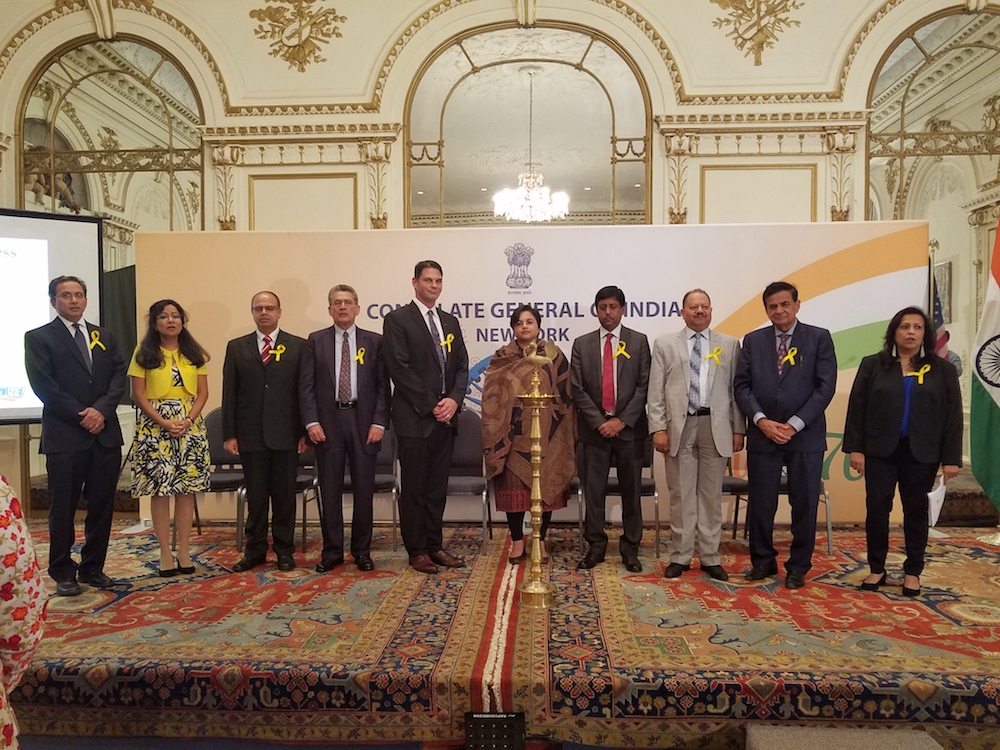
    : Leaders representing AAPI, WHEELS Global Foundation (WGF), Global Association of Physicians of Indian Origin (GAPIO), VETERANS OF FOREIGN WARS (VFW), and MOVE! Weight Management Program, after signing the official document pledging to work together in the campaign supporting in one hundred VA facilities throughout the continental United States

    Dr. Gautam Samadder, President of AAPI, in his presidential address, said, AAPI has joined a team from VA in its mission to improve the Health and Healthcare of Overweight and Obese Veterans along with other organizations including WHEELS Global Foundation (WGF), Global Association of Physicians of Indian Origin (GAPIO) and VETERANS OF FOREIGN WARS (VFW) and MOVE! Weight Management Program in developing the “Veteran Obesity Awareness Campaign”. Leaders representing each of these groups signed the official document, pledging to work together in the campaign supporting in at least one hundred VA facilities throughout the continental United States.

    “The goal of the campaign is to support in one hundred VA facilities throughout the continental United States,” he said. Towards this end, AAPI has formed an adhoc committee to oversee its functions, consisting of  Dr. Samadder, President of AAPI, Dr. Vikas Kuarna, Chir; Dr. Uma Koduri and Dr. Satheesh Kathula, Co-Chairs.

    “Coming from a nation that has given much to the world, today physicians of Indian origin have become a powerful influence in medicine across the world. Nowhere is their authority more keenly felt than in the United States, where Indians make up the largest non-Caucasian segment of the American medical community,” Dr. Samadder said.  “The overrepresentation of Indians in the field of medicine is striking – in practical terms, one out of seven doctors in the United States is of Indian Heritage. We provide medical care to over 40 million of US population, caring for one in every seven patients in the nation. There are 150 AAPI Chapters across the nation and it has an ever growing membership of Indian American Physicians,” he reported.

    Providing a brief back ground to the launch and initiative of the Obesity awareness program for the Veterans, Dr. Sammadder said, a few years back, AAPI organized a highly successful “Childhood Obesity Awareness Campaign (COAC)” with a goal to help fight the childhood obesity problem by providing education to the students & their parents. Starting with the Pilot program in 2013, AAPI adopted close to 80 schools across the United States where they are promoting “Wear Yellow” for Obesity & Childhood Obesity Awareness, 5-2-1-0 and Choose My Plate concept with the tag line of “Be Fit. Be Cool.” This success story has inspired AAPI to take on this major challenge among Veterans today, he declared.

    Deputy Consul General of India in New York, who had inaugurated event with the lighting of the traditional lamp, said, “We are proud to host AAPI as it launches this significant event for Veterans.” While praising the contributions of Veterans, she said, the United States stands among the top nations of the world due the sacrifices made by Veterans. Describing Physicians of Indian Origin as a flourishing and highly influential community, the Indian official said, “This noble initiative is a great way of giving back to their adopted land.”

    Joshua Starks, a retired Commander in the US Army, shared with the audience, his own personal experiences in his own family and among his colleagues in the Army, about the many challenges faced in tackling obesity among Veterans.  Describing obesity as a “symptom of the many major problems” faced by Veterans, Starks told the audience about the ways in which the Veterans are affected physically, mentally and emotionally after they return from deployment around the world, while defending freedom and liberty. According to him, the efforts at the VA in Tulsa has helped hundreds of Veterans by the older Veterans becoming mentors of the younger ones, and in the process finding meaning and purpose in life.

    Dr. Vikas Khurana, in his address said, “The collaborative launch of the Veteran Obesity Awareness Campaign (VOAC) is a way of seeking to acknowledge and to create awareness about obesity among veterans as a national problem.

    Dr. Uma Koduri provided the audience with a brief description of her efforts in Tulsi, Oklahoma in successfully launching Childhood Obesity awareness campaign, which was later on adopted by AAPI at the national level and now the initiative to help Veterans has become a national movement with the larger AAPI taking it across the nation.

    Dr. Satish Kathula told the audience of the enormous cost, $200 Billion a year, spent in addressing the obesity problem in the country. This new initiative by AAPI and its partners is a way to educate AAPI members of the problems and create awareness among them and enable them to work towards preventing obesity among veterans and the larger population, he said.

    Dr. Raj Bhayani, Coordinator of the event, in his introductory remarks, called obesity a form of “terror” from within us. “If we do not run, obesity will run behind us,” he said.

    Rajat Gupta, an Indian American businessman and philanthropist, in his address, said, “With a vision to use technology to enable philanthropy, WHEELS Global Foundation (WGF) is a non-profit organization, that is a pioneer in applying technology to provide solutions to issues related with water, health, education, energy, livelihood, and sustainability.” Founded by the alumni of Indian Institutes of Technology (IIT), the foundation partners with non-profits based in the U.S. and India to raise awareness and implement solutions for issues related to their six focus areas.

    A section of the audience at the official launch of the Veterans Obesity Awareness Campaign

    Dr. Sudhir Parikh, representing Global Association of Physicians of Indian Origin (GAPIO), which is partnering with AAPI, in this initiative, said, GAPIO is a nonprofit organization and its vision is “Improving Health Worldwide”. GAPIO stands to empower physicians of Indian origin to achieve highest professional standards, to provide affordable good quality healthcare, to contribute to local and regional community development and thereby help to reduce health inequalities and alleviate suffering globally. While lauding AAPI’s efforts, Dr. Parikh offered whole-hearted support to AAPI in achieving the goals of the campaign.

    MOVE! Weight Management Program, is another program, supported by VA’s National Center for Health Promotion and Disease Prevention (NCP), that is part of this larger initiative by AAPI to spread awareness about obesity among Veterans. MOVE! is a weight management health promotion program designed to improve the lives of Veterans. Their goals are to annually screen every Veteran who receives care at VA facilities for obesity, refer individuals to weight management services, and make available different treatment options that fit the needs and preferences of our Veterans.

    Veterans of Foreign Wars (VFW), the nation’s oldest major veterans’ organization, is another partner with AAPI to work towards creating awareness of this major issue. VFW has an impeccable and longstanding record of service and stewardship. Their mission is to foster camaraderie among United States veterans of overseas conflicts, to serve our veterans, the military and our communities & to advocate on behalf of all veterans.

    AAPI is an umbrella organization representing dozens of local chapters, specialty societies and alumni organizations. Headquartered in Oak Brook, Illinois, AAPI represents the interests of over nearly 100,000 physicians, medical students and residents of Indian heritage in the United States. It is the largest ethnic medical organization in the nation. For more, please visit:  www.aapiusa.org

  • Health Special Report : Tele-ophthalmology prevents blindness in infants

    Health Special Report : Tele-ophthalmology prevents blindness in infants

    By Prakash M Swamy in Rajahmundry

    Siva, a technician working at Goutami Eye Institute checks the eyes of the newborns at the neonatal intensive care unit in Government General Hospital in Kakinada, some 60 kilometers from Rajahmundry in the state of Andhra Pradesh.

    He gently and carefully captures image of each eye of the prematurely-born babies with the help of portable Retinopathy of Prematurity (ROP) Retcam machine to check the blood vessels.

    Dr. Y. Srinivasulu Reddy, an internationally acknowledged vitreo-retina surgeon at the Institute in Rajahmundry is waiting for the beep sound of his Whats App messages and on hearing the melodious tone; he enlarges the photos on the screen and checks minutely the images of the eyes, one after the other.

    He enlarges the images of the doubtful eyes sent on his laptop screen and then calls Krishna and identifies the infants that require laser correction or other forms of intervention to save their precious sight. The images taken by Siva are instantaneously transmitted from the field to one of India’s acknowledged retinal surgeons Dr Reddy in real time so that no time is lost. Welcome to digital India.

    Dr. V.K. Raju (center) guides his assistants in conducting an eye check up on a child at Goutami Eye Institute in Rajahmundry

    Goutami Eye Institute, founded by ​the visionary ​Dr VK Raju Regional Eye Associates/ Clinical Professor, Department of Ophthalmology; West Virginia University and Founder, President; The Eye Foundation of America, is a shining example how tele- Ophthalmology helps save the nearly lost eyesight of thousands of new born babies in India.

    The retina surgeon and his team await the arrival of the infants with weak blood vessels at the hospital and perform the necessary laser correction to restore the eye sight – all free of cost. The 50-bed eye institute that imparts world class treatment at no cost to the hapless poor has been hailed as a lamp that lights the houses of the underprivileged and saves them from darkness.

    The pre-mature babies checked are below 35 weeks and weighing less than two kilos and the new born in premature delivery are prone to weak blood vessels as they are formed towards the end of pregnancy and are hard to detect.

    The ROP Ret cam brought to India first time by Dr Raju costing close to Rs one crore provides an invaluable tool to detect retinopathy in premature babies whose parents have neither resources nor adequate knowledge to understand the seriousness of the problem leading to permanent blindness if not treated early.

    The technicians visit all the neo natal intensive care units of government general hospitals in East and West Godavari districts and carry out the screening with the help of the Ret cam. Plans are on to expand the screening in Srikakulam, Vijayanagaram and Visakhapatnam districts in the future.

    The trained technicians are sent to neo natal intensive care units to take retinal images of the pre-mature babies and identify those at risk. Laser surgeries are performed free of cost to the poor and those who can afford pay a very nominal amount of Rs 2,000. Of the 1500 premature babies screened, 112 required laser surgery or other interventions to prevent childhood blindness, said V S Prakash, Chief Administrative Officer of the Institute.

    The Institute is world class in the real sense as its one of the few centers in India to offer treatment to a disease where the eyeballs of the children keeps rolling or revolving. This results in the impairment of the vision permanently. Also known as Nystagmus or involuntary movement of eyeballs, the disease affects the new born. There are only 30 or so ophthalmic surgeons all over the world to correct the malfunctioning of the eyes with just a few in India, said VV Kumar, Secretary and Chief Operating Officer of the Institute.

    Dr. Richard Hertle of Akron Children’s Hospital in the US and one of the celebrated surgeons in the field to perform surgeries on the infants is the visiting faculty for the last five years.

    The Institute has invited Dr. Richard Hertle of Akron Children’s Hospital in the US and one of the celebrated surgeons in the field to perform surgeries on the infants in Rajahmundry. Dr. Hertle is a regular visiting faculty for the last 5 years. He will not only perform the specialized corrective eye surgery free of cost between December 4 and 9 this year but will provide hands on experience to young Indian pediatric ophthalmic surgeons.

    About two dozen young surgeons from across the nation will be invited to join the American specialist who will take them two per surgery he is doing on the infant by turns. The rest of them will interact with Dr Hertle in theater through video conference during all the surgeries. Using a sterilized microphone, he will clarify doubts and explains the procedure for correction while simultaneously performing the surgeries – all thanks to the vision of Dr Raju to make blindness free India.

    The entire surgical corrections will be videotaped in high definition and shown to medical students. Dr. Hertle is expected to perform 150 to 200 surgeries during his stay in Rajahmundry. This will be first of its kind in India.

    Dr. Leela Raju, world renowned cornea specialist, Leela Raju, chief of ophthalmology, Bellevue hospital, NY university Langone, New York and daughter of Dr Raju accompanied by Dr. Will Young and Dr Duncan Katherine also from the US, will be conducting free oculoplasty surgery on poor babies with corneal problems.

    The team will be in Rajahmundry between December 4 and 7. The experts will operate on kids with unique disorders whereby the eyelids close involuntarily. These kids require a specialized surgery – a kind of plastic surgery- to correct the defects.

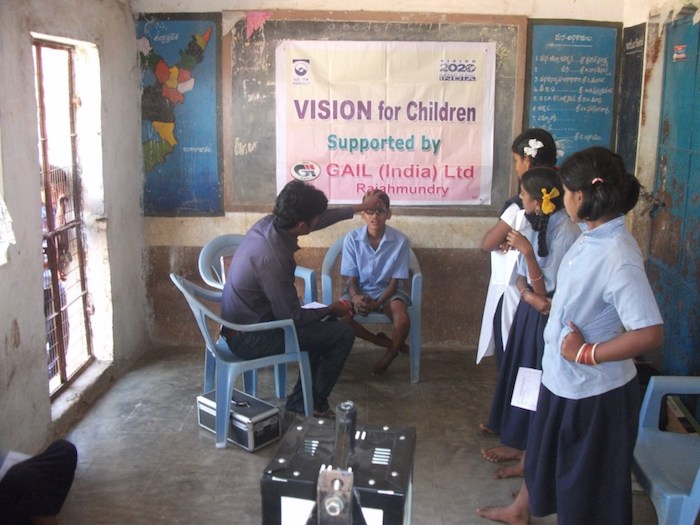
    The Institute that focuses on preventable blindness among children will be doing massive eye screening camps in all government and municipal schools. Over 5 lakhs screened, and many thousands of children provided spectacles in the project supported by Government of India’s Oil and Natural Gas Commission (ONGC) and Gail India Limited till 2013.

    The Institute has trained the primary school teachers how to check the vision of the children who have difficulty in reading from the black board (astigmatism) or those suffering from chronic head ache and refer them to the Institute for correction of refractive errors. The Institute has plans to revive the screening in East and West Godavari districts.

    The Institute founded by Dr Raju in 2005 is working on 75 percent free treatment to be compensated partially by 25 percent of paying patients. On an average over 200 patients are seen every day and thousands are seen every year in outreach programs. in the outpatient department. Of which 25 to 30 patients undergo surgeries such as cataract, retinal surgery, pedantic cataract, squint correction for babies and adults. There are five full-time surgeons assisted by 75 para medical and other staff.

    The Institute conducts rural eye camps in villages, identifies those require correction, brings them to the Institute for surgery. The patients are not only operated free but their three-day inpatient stay, food and medicines for three months are provided at no cost. One attender of the patients is also provided free stay and food.

    For each patient fitted with Intraocular Lens (IOL) the government gives Rs 1000 as against the expenses of Rs 4,000 and the balance is absorbed by the Institute. The same cataract surgery is performed at a cost of Rs 6,000 in private hospitals.

    The Institute also screens the current and retired employees of the State Government at every city and villages in Krishna, Guntur, East and West Godavari and Visakhapatnam districts under the state health insurance scheme. For each patient fitted with Intraocular lens (IOL), the government gives Rs 1000 as against the expenses of Rs 4,000 and the balance is absorbed by the Institute. The same cataract surgery is performed at a cost of Rs 6000 in private hospitals.

    Termed as baby of Dr Raju, the Institute has gained from his expertise and international connection immensely. Visiting at least four to five times a year, he never carries any personal items as baggage but two suitcases full of medicines from the US for free distribution among poor patients. Such expensive medicines are never sold. The Eye Foundation of America started in 1979 is now working in 25 countries including India with the goal World without childhood blindness.


  • Guest Comment : A failed experiment: Anniversary of an unnecessary disaster

    Guest Comment : A failed experiment: Anniversary of an unnecessary disaster

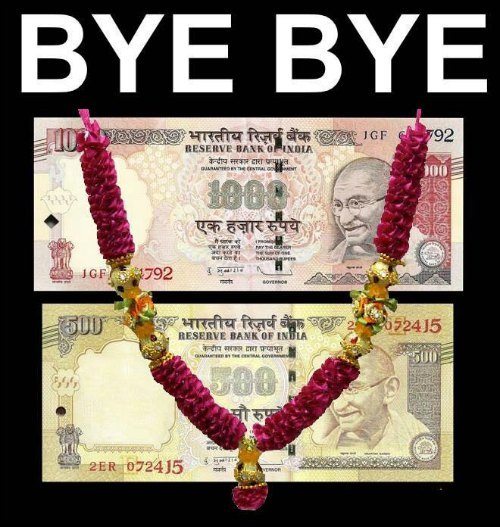
    Even after a year of painful demonetization, the government is struggling to smoke out black money. Contrary to its expectation, almost the entire black money stash found demonetization an easy way to blend in the banking system and thereby earn interest. Even the attempt to curb counterfeit notes through the move failed. The other two principal promises — choking terror funding and ushering in the era of digital economy — did not exactly take-off. FM Jaitley’s assertion that demonetization has reduced stone pelting in J&K is, at best, an oversimplification of a complex issue. Admittedly, the removal of old currencies from the system did accelerate digital payment transactions. The tempo, however, quickly went down soon after re-monetization. Later, the GST encouraged small businessmen to dump digitation and resort to cash to escape the tax net.

    Demonetization, however, did nudge people towards greater compliance. But, this would be more out of the coercive pressure of the tax inspector, which is not an easy sentiment. This fear has already robbed “household savings” of millions of families by forcing women to disclose their small reserves, and thereby, killed the Indian culture of micro-savings. Thus, demonetization destroyed the informal financial cushion that often came in handy at times of a family crisis. Lifetime savings of Gurkha regiment retirees in Nepal became worthless. Similarly, Indian currencies kept as valued forex by millions of citizens in neighboring Bhutan, Bangladesh, Sri Lanka and Myanmar became worthless paper, thereby eroding trust in the Indian rupee. Imagine, if the US were to do the same with the dollar.

    Undoubtedly, PM Modi’s stated intent behind demonetization had initially been well-received by the people, who patiently endured it for more than 50 days. Its socio-economic costs, however, have been enormous. Most of those who lost jobs or shut their small business units due to the currency squeeze were from extremely vulnerable background. Many people also lost their lives due to this futile experiment. Whatever be the government’s self-congratulatory sales pitch, for many Indians it has been a jolt from which they will take a long time to recover.

    (Tribune India)

  • As I See It :Two Summits & an Agenda: Scene set for a Global Tug and Pull

    As I See It :Two Summits & an Agenda: Scene set for a Global Tug and Pull

    By KC Singh

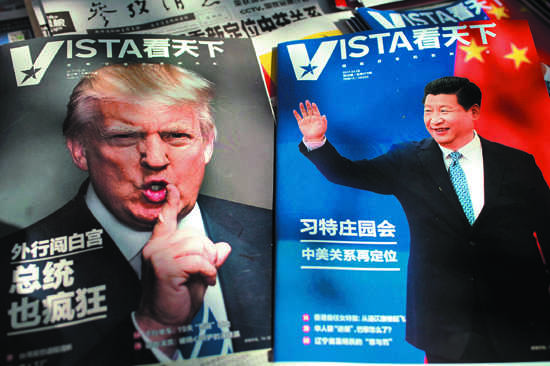
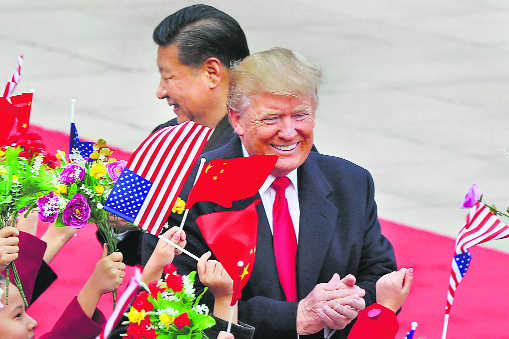
    China seeking “great power relationship” is nothing but a desire for the US to accept them as the only “other” in a bipolar engagement. Trump has frequently praised Xi in the past, even calling him “King of China”, perhaps in line with his penchant for authoritarian rulers, assuming he can flatter them for a shortcut to strategic compromise. Trump would seek China to compel DPRK to accept nuclear restraint, if not disarmament; balance bilateral trade; and end Chinese predatory trading practices and poaching of intellectual property. Xi will tactically yield some ground but is unlikely to kowtow fully, says the author.

    This week focus returns to Asia as two major summits — Asia Pacific Economic Cooperation (APEC) and East Asia Summit (EAS) — are held in Vietnam and the Philippines, respectively. India is not a member of the first, though desirous of joining it. PM Narendra Modi shall interrupt relentless campaigning in Gujarat to attend the latter on November 12. US President Donald Trump, combining bilateral visits to Japan, the Republic of Korea (ROK), China, Vietnam and the Philippines with attending both summits, heightens interest, particularly as earlier he was skipping the EAS. Chinese President Xi Jinping, newly endorsed for a second five-year term by the 19th Party Congress, attending the APEC Summit completes the Asian drama.

    The US State Department announced that Trump’s focus would be on neutralizing nuclear threat from the Democratic Republic of Korea (DPRK), promoting a free and open Indo-Pacific (euphemism for contesting Chinese corralling of two- thirds of South China Sea, via artificial island building) and reciprocal trade, i.e., balancing the huge US trade imbalances with China, Japan and ROK. Trump is also expected to reassure allies and partners concerned over perceived US retreat from the region. Essentially, the summits this year are a power play between the US and China and a contest between two alternative visions of growth and governance. The Western liberal, democratic and free trade model is posited against the Chinese model, fine-tuned by President Xi, of economic success through centralized and authoritarian management underpinned by nationalism minus civil liberties and elective government.

    The 19th Chinese Party Congress has allowed Xi to consolidate power and perhaps become the most powerful leader since Mao Zedong, with allies and followers controlling important institutions. Significantly, no clear successor is visible, thus breaching injunction by Deng Xiaoping, father of the Chinese economic miracle that his successors would only hold two five-year terms. Among the seven-member standing committee of the politburo, the de facto Chinese cabinet, is Wang Huning — professor, ideologue and adviser to all post-Deng presidents. He devised the “Three Represents” of President Jiang Zemin, recommending party reach out to private business and professionals and is now behind “Xi Jinping Thought” embedded in the constitution. He has, over decades, provided intellectual ballast to Chinese rulers’ view that social and economic change can only be accomplished by centralized and authoritarian rule, while freezing political evolution. The Tiananmen Square uprising by students in 1989 was taken by them as confirming its validity. Xi has added an anti-graft edge, thus enhancing his own “legitimacy”, which in Chinese tradition is called the “Mandate of Heaven”. Ensuing public support has enabled him to purge potential rivals or dissenters.

    At the 19th Congress, President Xi reiterated his “China Dream” to make the nation a “basically modernized nation” by 2035 and a “rich and powerful socialist nation” by 2050. The 21st century continental and maritime Silk Route, called the Belt and Road Initiative (BRI), is the next step to achieve this. It is imagined as a Sino-centric network for trade and investments to rival, if not supplant, existing post-World War II architecture created by the West under US leadership.

    The Xi-Trump summit thus assumes importance. China seeking “great power relationship” is nothing but a desire for the US to accept them as the only “other” in a bipolar engagement. Trump has frequently praised Xi in the past, even calling him “King of China”, perhaps in line with his penchant for authoritarian rulers, assuming he can flatter them for a shortcut to strategic compromise. Trump would seek China to compel DPRK to accept nuclear restraint, if not disarmament; balance bilateral trade; and end Chinese predatory trading practices and poaching of intellectual property. Xi will tactically yield some ground but is unlikely to kowtow fully.

    Asian neighbors of China, concerned over Trump’s erratic and vacillating policy making, must devise alternative strategies, assuming Trump will, at best, henceforth, be an off-shore balancer. In a Pew Research Centre poll, only 24 per cent Japanese trust Trump compared to 78 per cent giving thumbs up to former President Barack Obama. PM Shinzo Abe is hewing a path by not allowing the Trans-Pacific Partnership (TPP) to collapse, inviting 11 members, minus the US which quit, to a meeting before Trump’s visit. He has also resurrected and elevated to political level the 2007 meeting of Australia, India, Japan and the US, dubbed the Quad — a gathering of major regional democracies, expandable to include others later. As a swing power, India must use these emerging China-containing mechanisms as, indeed, alternative groupings, where China and India share space, for instance BRICS, etc.

    Meanwhile, authoritarianism is spreading globally like a pandemic. Polls in India indicate a vast majority preferring a “strong” ruler. The play book is almost identical, despite differences in political and historical contexts. Crown Prince Mohammad bin Salman in Saudi Arabia or President Xi in China or PM Modi in India use anti-corruption crusades to purge rivals, isolate opponents and bolster public image. Trump himself operates beyond the confines of own party and the Congress, sustained by social media. Nationalism becomes the handmaiden to suppress dissent and demoralize, or even silence media. Differences of power use or abuse are obliterated between authoritarian rulers straddling different political systems.

    An Atlantic Council study predicts Indo-Pacific as globally the most economically dynamic region by 2050. With a fundamental power shift underway, the study concludes a “Trans-Pacific century” has already begun. China’s BRI, advances in Artificial Intelligence, Asian Infrastructure and Investment Bank, renewal energy advances and rededication to futuristic industries is its path to growth and rapid power accrual. The BJP-led Modi government, meanwhile, expends energy on eliminating opposition and constant electioneering, implementing ambitious, but poorly conceived schemes like demonetization and now GST, corralling media, exulting in selective positive economic news and soaring stock market.

    The bubble may be more than in share prices and reality has been known to prick it inopportunely. PM Modi has a narrowing window to close ranks domestically and realize his challenge is without, not within. Unless he self-corrects soon, like Rajiv Gandhi in 1984 when China under Deng Xiaoping had only a four-year head-start over India, his would be a wasted mandate.

    (The author is a former Secretary, Ministry of External Affairs)

  • Perspective: Straws in the Gujarat breeze

    Perspective: Straws in the Gujarat breeze

    By Zoya Hasan

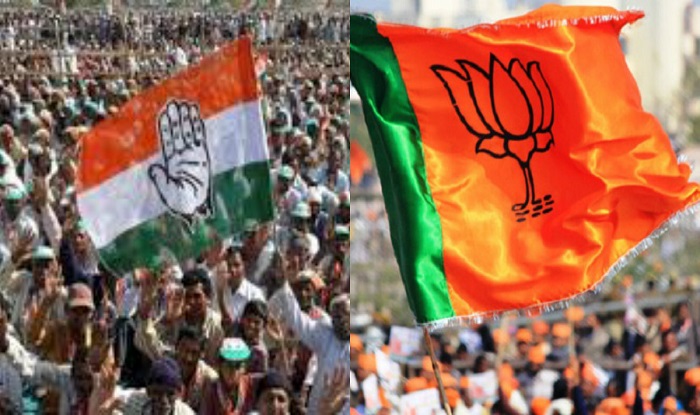
    For the past several years, the BJP has constantly harped on the Gujarat model of development claiming that it was a perfect formula for growth, and it could be extended to the rest of the country. But in the meantime, Rahul Gandhi and his party upped their game in Gujarat, seeking to puncture the mythology built around the Gujarat model with pointed attacks on the government’s economic policies and the inadequate development in the Prime Minister’s home State, says the author.

    More than three years after the Bhartiya Janata Party (BJP) stormed to power at the Centre with an unprecedented victory, it finds itself on the defensive, especially on the economic front. This defensiveness extends to the political front as well, evident in the Gujarat election campaign where after 19 years of unbroken rule, the party is facing a serious challenge.

    Tell-tale signs

    Three developments signal that political equations in the country may well be in a state of flux. First, the rejection of the Akhil Bharatiya Vidyarthi Parishad (ABVP) in recent university elections indicates a strong sense of discomfort with the BJP’s politics among the youth who gave the party solid support in the 2014 Lok Sabha election. Second, the Election Commission’s decision to de-hyphenate the Himachal Pradesh and Gujarat Assembly election notification which allowed the Central and State governments more time to frantically announce sops, including slashing rates of the goods and services tax (GST) on select items, loan waivers for farmers, and benefits for government employees. Third, Prime Minister Narendra Modi’s attempt to pass the blame for the disruptive introduction of the GST and its shambolic implementation on the Congress implies that something is really changing on the ground.

    For the first time, he argued in favor of collective ownership of the GST after taking sole credit for its introduction in a midnight session of Parliament, saying that all State governments, including of the Congress, are responsible for the GST.

    This has created opportune conditions for the Congress Party to come out of its self-imposed hibernation since 2014. It suddenly appears to be eager, even aggressive, in taking on the BJP on its home turf. This coincides with a rising discontent across the country over the economic slowdown and growing job losses. The double blunder of demonetization and GST seems to have infused new life into Congress vice-president Rahul Gandhi’s floundering political career just weeks before his likely elevation as the party president.

    The Gujarat election, which was expected to be an easy win for the BJP, has unexpectedly developed into a possibly close and certainly engrossing contest.

    For the past several years, the BJP has constantly harped on the Gujarat model of development claiming that it was a perfect formula for growth, and it could be extended to the rest of the country. But in the meantime, Rahul Gandhi and his party upped their game in Gujarat, seeking to puncture the mythology built around the Gujarat model with pointed attacks on the government’s economic policies and the inadequate development in the Prime Minister’s home State.

    Against this backdrop, the Congress put the BJP on the back foot with its Gujarat campaign highlighting joblessness, decelerating economic growth and poor social infrastructure through the hashtag “Vikas Gando Thayo Chhe” (development has gone crazy).

    Where is Vikas?

    It has gone all out since then to broadcast and publicize the social media campaign captured by the image of an upturned state transport bus with its wheels off. While the Gujarat model proved extremely persuasive in 2014, three years later people seem to have a more skeptical take on it and what lies beneath it. Despite three decades of high growth rates, Gujarat’s performance on social indicators has not improved significantly; this has damaged its credibility.

    For the first time in more than two decades, people are freely criticizing the ruling dispensation, mocking the Gujarat model through jokes, caricatures, and parody. One witty message posted on Twitter sums up the popular take on the model: “In a conversation, on seeing the railway tracks submerged in water, a person asks why Vikas is not visible. He gets the reply that as Vikas is sitting in the bullet train, he is invisible.”

    The growing number of humorists poking fun at official policies has struck a chord among people. It forced BJP president Amit Shah to urge the State’s youth not to fall prey to the Congress’s anti-BJP propaganda on social media. Thanks to this campaign, the ruling party is facing its toughest fight in State, in sharp contrast to the 2012 Assembly elections, for instance, when Mr. Modi had made powerful use of social media in his campaign against the Congress.

    Aside from the advantages of political humor, the Gujarat campaign underlines the effectiveness of a State-specific approach. Ensuring that the Gujarat election remains a State battle, the Congress has fashioned its campaign around governance, law and order and failed promises of the Gujarat model, and questioning the leadership of incumbent Chief Minister Vijay Rupani and his predecessor Anandiben Patel while targeting specific social constituencies. Finding itself on the defensive on issues like nationalism, terrorism and corruption, the Congress has shifted the discourse to development failures to preempt Hindu consolidation; it is cornering the government on the economic front and at the same time shunning cultural and emotional issues. The Congress is keen to shed its pro-minority image and deflect attention from Hindu-Muslim tension in order to prevent the BJP from diverting the simmering discontent towards the familiar territory of minority appeasement and the projection of Congress as a Muslim-centric party.

    However, while drawing attention to the government’s economic failures, the Congress has not offered any alternative model of growth. In his speech at the University of California, Berkeley in September, Mr. Gandhi said the Congress can steer a new development model in the future and that “creating jobs in a democratic environment” is vital for inclusive growth. But what this new model is has not been spelt out so far. A critique of economic failures is not enough; a party must shape it with a social and economic agenda of its own. Also, the weakness in the Congress’s organization remains glaring: it has no strong State leader and no organization. The party has been rendered organizationally quite weak in Gujarat over the past two decades; it needs a dedicated cadre of grassroots workers and an organization to fight the formidable RSS/BJP election machine, which it does not have, leave alone the capacity to micro-manage elections as this political machine can.

    Map of disaffection

    To harvest the collective discontent in the State, the Congress has reached out to disaffected groups, including the Patidars, by attempting to build a social coalition with like-minded civil society leaders in Gujarat against the BJP.

    The new coalition is pivoted on socio-economic issues, and not identity politics. That’s the new strategic dimension of the campaign. Hampered by the lack of a strong local face, it revolves around bolstering the anti-BJP sentiment whipped up by the troika of young leaders: Alpesh Thakor, Jignesh Mewani and Hardik Patel. In theory, the support of OBCs, Dalits and Patels, represented by these three leaders, along with that of Adivasis, can give the Congress an edge over the BJP; in any event, their support has helped to create a public mood against the BJP.

    It is too early to say what electoral dividends this fascinating campaign will pay, but one thing is clear. It has unsettled and disrupted the official narrative about the much-hyped Gujarat model of development that paid rich dividends for Narendra Modi in the 2014 elections.

    (The author is Professor Emerita, Centre for Political Studies, Jawaharlal Nehru University)

  • Feature:Shakespeare Wallah, the movie

    Feature:Shakespeare Wallah, the movie

    By Mabel Pais

    “Shakespeare Wallah,” the restored version of the 1965 movie is being released in New York on November 10

    Watching the restored-version recent screening of 1965’s “Shakespeare Wallah,” brought back fond memories of the real life story of the Kendal family: Geoffrey Kendal, wife Laura Liddell, daughters Jennifer and Felicity staging scenes from Shakespeare works in the school auditoriums of India.  In the late 1960s mine was one such school in Bangalore, India at the performances of which we were prompted to learn and sing in unison, Shakespeare’s songs, as “The Wind And The Rain” from “Twelfth Night.”

    Shashi Kapoor with Madhur Jaffrey in a scene from Shakespeare Wallah

    Accompanied by his wife Laura and, in later years, by his daughters Jennifer and Felicity, Kendal’s troupe toured India performing not only Shakespearean plays but also those of Sheridan, Shaw and Wilde from shabby village halls to opulent maharajas’ palaces, often joined by a variety of young local actors who later earned international cinematic acclaim, according to the British newspaper Independent.

    Shakespeare Wallah, the 1965 Merchant-Ivory Productions film story and screenplay are by Ruth Prawer Jhabwala about a traveling family theatre troupe of English actors in India, who perform Shakespeare plays in towns across India, amidst a dwindling demand for their work and the rise of Bollywood.  Madhur Jaffrey won the Silver Bear for Best Actress at the 15th Berlin International Film Festival for her performance. The music was composed by Satyajit Ray. The film was shot in black and white, and the Kendal family play their own fictionalized counterparts, “the Buckinghams”.

    Shakespeare Wallah, James Ivory’s second feature film following 1963’s The Householder, is directly inspired by the diaries kept by actor Geoffrey Kendal of the experiences of the Shakespeareana Theater Company, a traveling troupe of actors in India founded and led by both British born Kendal and his wife, Laura Liddell, during 1947, the year India achieved independence.

    Ivory had met the Kendal family when he was making The Householder and he was very interested in making a film with them. After he read Geoffrey’s diaries, Ivory knew he had found the right project, casting Geoffrey Kendal as troupe leader and director Tony Buckingham and Laura Liddell as his wife, actress and partner Carla Buckingham. The pair are, of course, portraying fictionalized versions of themselves: British stage performers who have made a life for themselves and their family in India, which they thought of as home. In this case the Buckingham’s daughter, Lizzie (Geoffrey and Laura’s real-life daughter Felicity Kendal, in her film debut), who was born in India and grew up in the company. Over the years, Lizzie graduated from stage assistant to supporting actress and occasional leading role in the troupe’s repertoire of Shakespeare plays that they would stage anywhere from village parks and school auditoriums to private manors and palaces.

    Loosely based on the real-life actor-manager Geoffrey Kendal family and his “Shakespeareana Company” of travelling theatre, which earned him the Indian sobriquet, “Shakespearewallah,” the film follows the story of nomadic British actors as they perform Shakespeare plays in towns in post-colonial India.  In this story, Tony Buckingham (Geoffrey Kendal) and his wife Carla (Laura Liddell) oversee the troupe. Their daughter, Lizzie Buckingham (Felicity Kendal), falls in love with Sanju (Shashi Kapoor), who is also romancing Manjula (Madhur Jaffrey), a Bollywood film star.

    In real life, Shashi Kapoor fell in love with Felicity’s elder sister Jennifer Kendal. Their marriage would provide an important contribution to the Indian film industry until Kendal’s death in 1984.

    In the 1960s post-colonial India, Tony Buckingham (Geoffrey Kendal) and his wife, Carla (Laura Liddell), are the British actor-managers of a troupe of English, Irish and Indian actors who travel about the country mounting stage performances of Shakespeare’s works.

    One night, after visiting a maharajah for a “command performance,” the troupe heads off in two crowded vehicles for their next engagement. Along the way, one of the cars breaks down, and the company is stranded for some time before being rescued by a wealthy passerby, Sanju (Shashi Kapoor). He takes the troupe to his estate, where they all camp out in their tents on his lawn. While there, Sanju finds himself immediately attracted to Lizzie Buckingham (Felicity Kendal), Tony and Carla’s daughter, and he promises to attend Lizzie’s next stage performance. But instead, Sanju goes to watch a Bollywood film shoot in the countryside, where he observes the glamorous but self-centered actress Manjula (Madhur Jaffrey), with whom he has a relationship.

    As Tony deals with the ongoing financial struggles of keeping his company afloat, Sanju woos Lizzie, though he remains involved with Manjula. He soon becomes enthusiastic about the seriousness of Lizzie’s theater work, particularly when he contrasts it with what he sees as the shallow nature of Manjula’s Bollywood films.

    (Left) Laura Liddell with Felicity Kendal in a scene from Shakespeare Wallah
    Photos / Courtesy Cohen Media Group

    Manjula’s mute servant reports to her in sign language that she has seen Sanju and Lizzie embracing, prompting Manjula to angrily inform Lizzie that Sanju belongs to her and that although he flirts with other girls, he always comes back to her.

    Later, Sanju takes Manjula to see the Buckingham’s company perform Shakespeare’s Othello. While there, the vain Manjula intentionally disrupts the performance by making a scene with the usual Bollywood-obsessed autograph hounds. Sanju angrily tells Manjula to leave without him, and though Sanju’s relationship with Lizzie appears to be ruptured, he sincerely apologizes to her for what happened at the performance and she forgives him.

    Noting the intensifying relationship between Lizzie and the Indian playboy, Tony and Clara grow concerned about their daughter’s future—along with the diminishing demand for their craft as the English theatre in India is being supplanted by Bollywood entertainments. The couple makes a life-changing decision and urges Lizzie to go back to England with them.

    Meanwhile, Sanju notes how Lizzie is growing in popularity, attracting autograph hounds and leering comments from the audience and even inciting a fistfight at a performance. In the aftermath of the fight, Sanju tells Lizzie he doesn’t like her public lifestyle and that his izzat (an Indian sense of male pride) has been offended. He declares that if she is to be his love, she must be “his property” and be kept in line with his izzat.  Lizzie tells Sanju that she would give up anything for him, including her way of life, if he asks her to. When Sanju does not respond, Lizzie senses that his love is not unconditional…and that another life in England is still beckoning.

    Shakespeare Wallah’s popularity grew in the USA and across the world after that, and the film later became regarded as the feature that put Merchant Ivory Productions on the international movie map.

    Director:                      James IVORY;
    Producer:                     Ismail MERCHANT
    Screenwriters:             James IVORY, Ruth PRAWER JHABWALA
    Actors:                         Felicity KENDAL, Geoffrey KENDAL, Laura LIDELL,
                                       Madhur JAFFREY, Shashi KAPOOR, Partap SHARMA,
                                       Utpal DUTT, Praveen PAUL, Prayag RAAJ, Pincho
                                       KAPOOR, Jim TYTLER
    Music Composer:       Satyajit RAY
    Editor:                         Amit BOSE
    Cinematographer:       Subrata MITRA
    Costume Designer:     Jennifer KAPOOR
    Makeup Designer:       Nate GROVER
    Production Managers:  N. KABIR, Mohamed SHAFI
    Release:                       November 10, 2017, NY City
    Runtime:                      122 minutes


    This advance screening at the QUAD cinema, NY city was hosted by the IAAC (Indo-American Arts Council), NY and was followed by a Q&A with the Silver Bear award winning actor Madhur Jaffrey moderated by IAAC Founder-CEO Aroon Shivdasani.


    The movie opens on November 10 at the QUAD Cinema at 34 West 13th Street, NY city.

    (Mabel Pais is a freelance writer.  She writes on The Arts and Entertainment, Social Issues, Health and Wellness, and Spirituality)

  • USICOC DFW Annual Gala Organized

    USICOC DFW Annual Gala Organized

    CARL ICE, PRESIDENT & CEO, BNSF made the keynote Speech. Ambassadors Sarna and Verma engaged in conversation

    DALLAS (TIP):  US India Chamber of Commerce DFW 18th Annual Awards Banquet was held on Thursday, November 2, 2017 at The Westin Dallas Park Central.

    The USICOC Annual Award Banquet celebrates excellence and accomplishments of individuals in the areas of entrepreneurship, industry leadership, education, community, and public service.

    The US India Chamber of Commerce DFW Annual Awards Banquet is a signature business event in Dallas featuring prominent keynote speakers such as Texas Governors, US Senators and Congressman, Government Officials from the US and India, as well as other prominent business leaders. Since the Chamber was inaugurated in 1999, this event has been hosted each year. Over the years, the Annual Awards Banquet has served as an opportunity to honor the achievements of prominent business leaders, industry leaders and community servants while also offering Chamber members and members of the business community an opportunity for fantastic networking. Today, the Chamber hosts over 500 people for this event annually.

    CARL ICE, PRESIDENT & CEO, BNSF made the keynote Speech.

    Navtej Sarna, India’s Ambassador to the US and Richard Verma, Former US Ambassador to India participated in a conversation.

    The gala was attended by a large number of members.

  • Canada plans 3 lakh new settlers next year

    Canada plans 3 lakh new settlers next year

    TORONTO (TIP): In what may bring cheer to thousands of Indians, especially from Punjab, looking for greener pastures abroad, the Canadian Government is set to open its “floodgates” for immigrants, allowing up to 3,10,000 newcomers in 2018.

    The total annual allowance of influx of new immigrants is planned to rise to 3,40,000 by the end of 2020, sources in the government have said.

    The ambitious plan suiting the political agenda of Justin Trudeau-led Liberal government — supported by a large section of minorities like Punjabis, both Hindus and Sikhs — will be implemented with better preparation and integration than ever before.

    The move is aimed at bringing in more workers, particularly in the skilled category, and professionals who can propel Canada’s economy amid burgeoning skilled manpower shortage and to meet the shortfall of workers in the labor market.

    Canadian Immigration Minister Ahmed Hussein has already cleared the air on the country’s manpower requirements and its plans to bring in more people from around the world by opening up doors to lakhs of applicants.

    The maximum number of new settlers in the country comes from South Asia, particularly from Punjab (India) and China.

    With 36.29 million people living in Canada in 2016, the proposed influx will almost be 1 per cent of the country’s overall population — the largest number of settlers allowed into the country since 1913, when nearly four lakh people had immigrated.

    This year, the government plans to bring in around 3 lakh new immigrants or permanent residents. Of these, 58 per cent are will be professionals, skilled laborer’s and caregivers or nannies, while 28 per cent will be parents, children and grandparents. Refugees and other humanitarian cases will constitute 14 per cent of the total immigrants in 2017.

    The proposed annual 3,00,000 arrivals will “normalize” the situation in respect to dwindling birth rate and ageing workforce of the country.

  • In Beijing, Trump inks $250 Billion deals, but gains little on N Korea

    In Beijing, Trump inks $250 Billion deals, but gains little on N Korea

    BEIJING (TIP): Despite his heavy criticism of China during last year’s campaign, the president toned down his rhetoric dramatically during a visit to Beijing, continuing a pattern of extreme shifts between insults and praise. Tone aside, the summit may not result in much more cooperation on North Korea policy, as the U.S. and Chinese views of the situation are fundamentally different.

    President Donald Trump, on November 9, wrapped up two days of intense talks with his Chinese counterpart Xi Jinping as both sides inked deals worth over $250 billion but doubts lingered about any headway over his efforts to push Beijing to take strong action to rein in nuclear-armed North Korea.

    On the second day of his visit, which was marked by lavish red-carpet welcome with an impressive guard of honor by the Chinese military troops, Trump continued his overnight talks with Xi at the Great Hall of People here.

    “Just now, the President and I witnessed the signing of some major cooperation agreements by our businesses. During this visit, the two sides signed over $250 billion of commercial deals and two-way investment agreements,” Xi said summing up his talks with Trump, who has been accusing China of not doing enough to address the massive $370 billion bilateral trade deficit. China’s Commerce Minister Zhong Shan said the two sides signed deals worth some $253.4 billion over the past two days.

    On pressuring North Korean dictator Kim Jong-un to halt his nuclear and missile programs, which was Trump’s main agenda of the maiden visit, Xi reiterated China’s stand that Beijing is faithfully implementing the UNSC resolutions.

    China is North Korea’s close ally and top trading partner. “On the Korean Peninsula nuclear issue, we reiterated the firm commitment to achieving denuclearization of the Peninsula and upholding international non-proliferation regime,” Xi said. The two sides will continue to fully and strictly implement the UN Security Council resolutions. At the same time, the two sides commit to working toward a solution through dialogue and negotiation, he said.

    Summing up on the outcome of talks on North Korea, US Secretary of State Rex Tillerson said: “The key topic of discussion was our continued joint effort to increase pressure on North Korea, to convince them to abandon their nuclear and missile program”. “Both leaders affirmed their commitment to achieve a complete, verifiable, and permanent denuclearization of the Korean Peninsula,” Tillerson added, according to a PTI report.

    Trump, Xi one on curbing terror in South Asia

    China said President Xi Jinping and his US counterpart Donald Trump have reached a consensus on fighting terrorism and upholding peace and stability in South Asia, amid America ramping up pressure on Pakistan to dismantle terror safe havens

    During their talks, Xi and the US President discussed Afghanistan and committed to working toward a peaceful future for the terrorist haven

    Importantly for the South Asian region, Xi said Afghanistan, where US is increasing its presence and pressuring China’s close ally Pakistan to rein in the Taliban, also figured in their talks

    On Afghanistan, Trump said: “In order to create a more secure future for all and to protect our citizens from extremism and terrorism, President Xi and I also committed to working toward a peaceful future for Afghanistan”


  • Modi to attend Asean Summit in Philippines

    Modi to attend Asean Summit in Philippines

    NEW DELHI (TIP): Prime Minister Narendra Modi, on November 12, will leave on a three-day visit to the Philippines where he will attend the Asean and East Asia Summits and hold a bilateral meeting with President Rodrigo Duterte, it was announced on November 9.

    This will be Modi’s first official visit to the Philippines. “He will be going there to attend the 15th Asean-India Summit and the 12th East Asia Summit,” Priti Saran, Secretary (East) in the External Affairs Ministry, told the media.

    With this, India would have undertaken high-level visits — President, Vice-President and Prime Minister — to all 10 Association of Southeast Asian Nations (Asean) members — Brunei, Cambodia, Indonesia, Laos, Malaysia, Myanmar, the Philippines, Singapore, Thailand and Vietnam — in the past three years.

    “This shows the importance India attaches to its relations with the Asean,” Saran said. “It symbolizes India’s commitment to deepening relations with Asean member states, and with the Indo-Pacific region in general within the framework of our Act East Policy.”

    While Modi will meet Duterte, also this year’s Asean Chairman, on November 13, the two leaders will participate in the two Summits the next day.

    Modi will also attend the special celebrations to mark 50th anniversary of the Asean’s formation, a meeting of the leaders of the countries of the proposed Regional Comprehensive Economic Partnership (RCEP) and an Asean Business and Investment Summit.

    The RCEP is a proposed free trade agreement between the Asean member states and the six states with which the grouping has free trade pacts — Australia, China, India, Japan, South Korea and New Zealand.

    Asean accounts for over 10 per cent of India’s external trade. Asean and India together comprise a population of 1.85 billion, one-fourth of the global population, and a combined GDP of $3.8 trillion.

    Saran said investments in India from Asean countries in the last 17 years had been over $70 billion, accounting for 17 per cent of FDI. Indian investments in Asean stand at over $40 billion.

    Modi’s visit assumes significance as this year marks the 25th anniversary of the India-Asean dialogue partnership.

    “Asean is central to India’s Act East Policy. Therefore, our Prime Minister’s participation in the Asean-India Summit and the East Asia Summit provides a very important opportunity to reiterate our commitment to the partnership,” Saran said.

    India also has 30 sectoral dialogue mechanisms and seven ministerial-level interactions with Asean.

    Saran said India supported Asean’s centrality in the regional security architecture, and enhancing physical, digital, economic, cultural and people-to-people ties was a key focus in the relationship.

    New Delhi attached the greatest importance to the East Asia Summit, of which India is a founding member, she said.

    The East Asia Summit is held annually by leaders of Asean countries and those of Australia, China, India, Japan, New Zealand, Russia, South Korea and the US.

    On the margins of the summits, Modi will hold bilateral meetings with some other leaders as well.

    Modi and Duterte were expected “to set up the stage for a quantitative change in our bilateral relations with the Philippines”, Saran said.

    She said there was immense potential to enhance bilateral economic ties.

    In the Philippines, Modi will meet members of the Indian community, visit the International Rice Research Institute and the Mahavir Philippines Foundation, an associate center of the Bhagwan Mahavir Bikalang Sahayta Samiti of the Jaipur Foot fame.

     (Source:  IANS)

  • Resurgence of Democrats shocks Republicans

    Resurgence of Democrats shocks Republicans

    Women and Minorities give Groundbreaking Wins

    I.S. Saluja

    NEW YORK (TIP): What accounts for the wave of Democratic successes in Tuesday’s elections? Health care was a key issue in Virginia, as well as in Maine, where voters chose to expand Medicaid under Obamacare. Some voters may have been motivated by the sense that their values were threatened by President Trump’s authoritarian rhetoric. And Republicans in Congress face some obstacles to their next big goal, tax reform: The House bill undercuts some key party positions, and the Senate just unveiled a competing plan.

    In short, Trump policies have not gone down well with voters. His lowest approval rating at 38% is an evidence of voter disenchantment with Trump.

    Elsewhere, like in Nassau County, involvement of County officials in corruption was a big issue which resulted in a serious knock out of Republican contenders.

    By and large, it has been a tremendous gain for Democrats.

    Victory of Phil Murphy as Governor of the Republican held New Jersey and victory of a host of democrats in that State must cause Republican establishment some anxiety. Similarly, victory of Democrat Dr. Ralph Northam as Governor of Virginia has rattled the Republicans no less.

    Curran ran a fierce campaign to regain for Democrats the position of Executive of Nassau County held by a Republican Ed Mangano for two terms.

    Certain other victories were almost taken for granted. Mayor de Blasio was never in danger of losing. Queens Borough President Melinda Katz was quite comfortable. And so were many more.

    A number of Indian Americans have won the elections. They include Ravinder Bhalla, the first Sikh Mayor in New Jersey State. He was elected Mayor of Hoboken. Others include Raj Mukherji (NJ State Assembly); Vin Gopal (NJ State Senate); Santi Narra (Freeholder, Middlesex County, NJ); Viru Patel (Councilman, Woodridge, NJ); Samip Joshi (Councilman, Edison, NJ); Hemant Marathe (Mayor, West Windsor, NJ); Balvir Singh (Freeholder, Burlington County, NJ). Besides, a large number of Indian Americans have been elected to board of education seats as well.

    The Indian Panorama will publish in the next issue detailed results and analysis by experts. However, we are giving here some comments.

    New York Times editorial comment said, “President Trump’s critics and admirers have both often wondered whether most of the normal rules of politics apply to him. Trump, in his own graphic way, may have summarized the view best: “I could stand in the middle of Fifth Avenue and shoot somebody, and I wouldn’t lose any voters, O.K.?”

    But it turns out that the normal rules of politics do indeed apply to Trump.

    With his approval rating at a paltry 38 percent, Trump’s Republican Party took a whupping. It’s not just that the Democrats easily won the highest-profile race — the Virginia governorship. Democrats enjoyed a stunningly good night across the country. Consider:

    • Defying virtually all expectations, Democrats flipped more than a dozen of the 100 seats in Virginia’s house of delegates and, pending final vote counts, may have won control of it.
    • They won full control — legislature and governorship — in both New Jersey and Washington State.
    • Maine’s Republican governor has repeatedly vetoed Medicaid expansion. Maine’s voters effectively overrode his veto, by referendum, in a landslide.
    • Democrats won two traditionally Republican legislature seats in special elections in Georgia.
    • Last night’s results continue a trend. Democrats have done startlingly well in special elections this year, often in conservative districts.

    As significant as all these wins are, they will also help shape the political future. Already, multiple House Republicans have announced their retirement, including two more yesterday. Idaho and Utah may now follow Maine and hold referendums on expanding Medicaid. Progressives will be energized to find candidates to run in traditionally Republican areas.

    Donald Trump remains the most powerful person in the country, if not the world. But the election results show that he also remains the weakest first-year president in modern history.”

    Elsewhere. “Enthusiasm matters,” writes The Atlantic’s Ronald Brownstein, noting that Ralph Northam, Virginia’s governor-elect, earned about 330,000 more votes than his predecessor had in 2013.

    It wasn’t just that Democrats won up and down the ticket, but which Democrats won, notes Time’s Charlotte Alter. “A trans woman beat the guy who introduced the bathroom bill. A gun victim’s boyfriend beat a delegate with an ‘A’ grade from the NRA. A civil rights lawyer who sued the police department just became the top prosecutor in Philadelphia,” she tweeted.

    White, rural areas of Virginia largely backed Ed Gillespie, the Republican, but were swamped by suburban and urban turnout for Northam. “The data out of SW VA suggest maybe you can turn your campaign into a McTrump franchise,” noted the pollster Kristen Anderson, “but that’s of limited value in a state Trump lost.”

    “With all the evidence in front of us, Democrats are slight favorites to retake the U.S. House in 2018,” argues FiveThirtyEight’s Dave Wasserman.

  • November 10 New York & Dallas Print Editions

    November 10 New York & Dallas Print Editions

    [vc_row][vc_column][vc_column_text]

    Print Replica ~ Digitally

    E-Editions

    [/vc_column_text][/vc_column][/vc_row][vc_row][vc_column width=”1/3″][vc_custom_heading text=”New York Edition” font_container=”tag:h2|text_align:center” google_fonts=”font_family:Istok%20Web%3Aregular%2Citalic%2C700%2C700italic|font_style:700%20bold%20regular%3A700%3Anormal” link=”url:https%3A%2F%2Fwww.theindianpanorama.news%2Fwp-content%2Fuploads%2F2017%2F11%2FTIP-November-10-NYC.pdf|||”][vc_single_image image=”88891″ img_size=”full” add_caption=”yes” alignment=”center” onclick=”custom_link” link=” https://www.theindianpanorama.news/wp-content/uploads/2017/11/TIP-November-10-NYC.pdf”][/vc_column][vc_column width=”1/3″][vc_custom_heading text=”Dallas, Texas Edition” font_container=”tag:h2|text_align:center” google_fonts=”font_family:Istok%20Web%3Aregular%2Citalic%2C700%2C700italic|font_style:700%20bold%20regular%3A700%3Anormal” link=”url:https%3A%2F%2Fwww.theindianpanorama.news%2Fwp-content%2Fuploads%2F2017%2F11%2FTIP-November-10-Dallas-TX.pdf|||”][vc_single_image image=”88890″ img_size=”full” add_caption=”yes” alignment=”center” onclick=”custom_link” link=”https://www.theindianpanorama.news/wp-content/uploads/2017/11/TIP-November-10-Dallas-TX.pdf”][/vc_column][vc_column width=”1/3″][vc_single_image image=”82828″ img_size=”medium” alignment=”center” onclick=”custom_link” link=”https://www.theindianpanorama.news/advertising-media-kit-portal-indian-panorama/”][vc_single_image image=”82829″ img_size=”medium” alignment=”center” onclick=”custom_link” link=”https://www.theindianpanorama.news/advertising-media-kit-portal-indian-panorama/”][/vc_column][/vc_row][vc_row][vc_column][td_block_ad_box spot_id=”custom_ad_3″][/vc_column][/vc_row][vc_row][vc_column width=”2/3″][vc_custom_heading text=”Lead Stories This Week” font_container=”tag:h2|text_align:center” google_fonts=”font_family:Istok%20Web%3Aregular%2Citalic%2C700%2C700italic|font_style:700%20bold%20regular%3A700%3Anormal” link=”url:https%3A%2F%2Fwww.theindianpanorama.news%2F%20_blank|||”][td_block_5 limit=”8″][/vc_column][vc_column width=”1/3″][vc_widget_sidebar sidebar_id=”td-default”][/vc_column][/vc_row]

  • GWYNETH PALTROW REPRISES HER ROLE FROM ‘SE7EN’ FOR HALLOWEEN

    GWYNETH PALTROW REPRISES HER ROLE FROM ‘SE7EN’ FOR HALLOWEEN

    Paying homage to the wild twist at the end of the movie ‘Se7en,’ Gwyneth Paltrow reprised her role from the 1995 thriller for Halloween. In the flick, the 45-year-old actress plays the wife of Brad Pitt’s detective character, who’s investigating a serial killer. Later, she gets murdered and beheaded by ‘John Doe,’ played by Kevin Spacey.

    Taking to her Instagram page, the ‘Iron-Man’ star posted a photo of herself with her head in a box, sitting in a decorated bathtub with beau Brad Falchuk dressed as Spacey’s character from the movie.

    The cardboard box on her head is in reference to the film’s ending, where Pitt’s character finds her decapitated head. She captioned it with a festive pumpkin emoji.