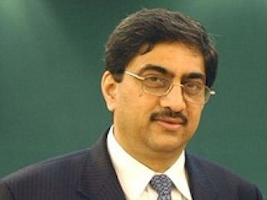
NEW DELHI (TIP): Seasoned diplomat Gautam Bambawale, India’s high commissioner to Pakistan, was on Thursday appointed as the country’s next envoy to China.
This was announced tonight by the external affairs ministry. A 1984 India Foreign Service (IFS) officer,
Bambawale is expected to take up the assignment shortly, the ministry said. He will replace Vijay Gokhale.
A deft hand in Sino-India relations, Bambawale opted to learn Mandarin Chinese as his foreign language and served in Hong Kong and Beijing between 1985 and 1991.
He was first the desk officer for China in the Ministry of External Affairs and served as director in the Americas Division of the ministry, responsible for relations with the US and Canada (1993-94).
NEW DELHI (TIP): Grappling with a “serious” hunger problem, India has been ranked 100th among 119 developing countries on the Global Hunger Index (GHI), behind North Korea, Bangladesh and even the besieged Iraq, but ahead of Pakistan, according to a report.
India was ranked 97th last year. The country’s hunger problem is driven by high child malnutrition, and underlines the need for stronger commitment to the social sector, the International Food Policy Research Institute (IFPRI) said in its report.
“India… has the third highest score in all of Asia — only Afghanistan and Pakistan are ranked worse,” IFPRI said in a statement.
An increase in GHI indicates the worsening of a country’s hunger situation.
“At 31.4, India’s 2017 GHI score is at the high end of the ‘serious’ category, and one of the main factors pushing South Asia to the category of worst performing region this year, followed closely by Africa South of the Sahara,” it added. Among India’s neighbouring countries, China ranks the highest at 29; Nepal has been ranked 72, Myanmar 77, Sri Lanka 84, Bangladesh 88, Pakistan 106 and Afghanistan 107. North Korea ranks 93rd, and Iraq 78th. Now in its 12th year, the GHI ranks countries based on four indicators — undernourishment, child mortality, child wasting and child stunting.
IFPRI said more than a fifth of Indian children aged below five weighed too little for their height and over a third were too short for their age. “As of 2015-16, more than a fifth (21%) of children… suffer from wasting (low-weight-for- height) — up from 20% in 2005-2006,” IFPRI said. Only three other nations — Djibouti, SL and South Sudan — show child wasting above 20%this year.
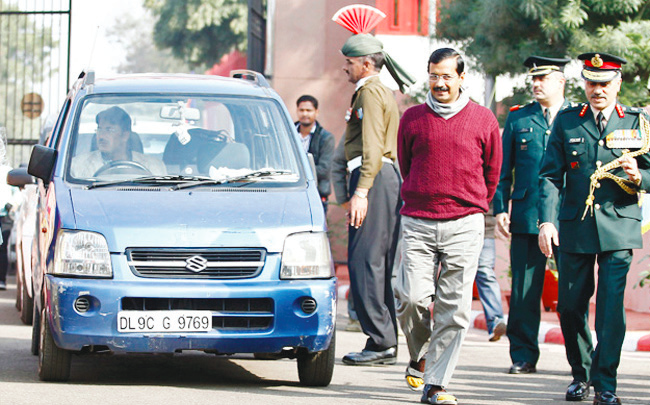
NEW DELHI (TIP): A creaky Wagon R, used by Delhi Chief Minister Arvind Kejriwal till the 2015 assembly election and which helped cement his position as the “aam aadmi”, was on Thursday stolen from outside the Delhi Secretariat, police said.
A senior police officer said the incident happened just before noon and was reported to the police around 1 pm. The car was parked on the roadside outside the Delhi Secretariat.
The incident has outraged AAP workers, many of whom posted videos of Kejriwal using the car, especially during the 2014 Republic Day, after he became the chief minister of Delhi for the first time.
AAP’s Haryana convener Naveen Jaihind has announced an undisclosed amount as reward for whoever finds the vehicle.
Jaihind had sought the “lucky car” for his campaigning when he contested the 2014 Lok Sabha poll from Rohtak.
“I want this car back. There are a lot of emotions, memories attached to it. Whoever returns the car, I will give him a suitable reward, which will be much more than what he will get from selling the car,” Jaihind said.
Like Jaihind, many AAP volunteers recollect the “iconic” car for it witnessed the ups and downs of the Aam Aadmi Party.
The car was witness to two assembly election wins in 2013 and 2015 and also to the party’s poor performance in the Lok Sabha polls.
It was “donated” to Kejriwal by Kundan Sharma, a software engineer, in January 2013. However, when Kejriwal parted ways with his then party colleagues Prashant Bhushan and Yogendra Yadav, Sharma demanded that the vehicle be returned.
Even after Kejriwal became the chief minister in December 2013, he refused to use an official car and preferred his old Wagon-R.
AAP volunteers recall the blue car which had rust and dents on it, giving refuge to a sick Kejriwal, suffering from severe cough and cold on a nippy January night in 2014, when he staged a ‘dharna’ outside the Rail Bhawan against the Delhi Police.
The humble hatchback was used by an AAP functionary before it was stolen this afternoon.
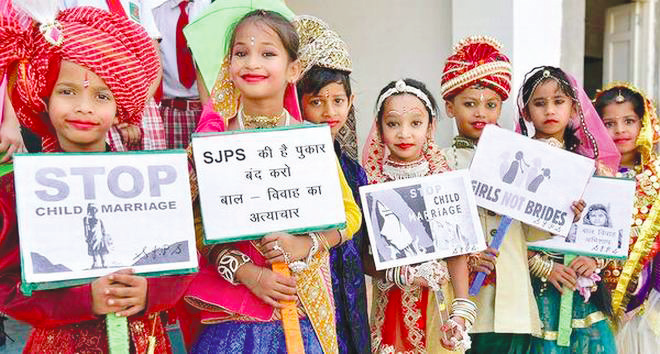
NEW DELHI (TIP): The Supreme Court on Oct 11 held that sexual intercourse by a man with his wife, who is below 18 years of age, is rape.
A girl child below the age of 18 cannot be treated as a commodity having no say over her body or someone who has no right to deny sexual intercourse to her husband, the Supreme Court held.
“Human rights of a girl child are very much alive and kicking whether she is married or not and deserve recognition and acceptance,” a Bench of Justices Madan B. Lokur and Deepak Gupta observed.
The two judges wrote separate judgments totalling 127 pages. The court read down Exception 2 to Section 375 (rape) of the Indian Penal Code (IPC), which allowed the husband of a girl child — between 15 and 18 years of age — blanket liberty and freedom to have non-consensual sexual intercourse with her. Her willingness or consent was of no concern. The husband in such cases was not punished for rape.
The exception had remained an anomaly because Section 375 itself mandated that sex with a girl below 18 years of age, with or without her consent, was statutory rape. An unmarried girl child can prosecute her rapist, but a married girl child aged between 15 and 18 could not even do that, Justice Lokur said, pointing out the injustice.
“A child remains a child whether she is described as a street child or a surrendered child or an abandoned child or an adopted child. Similarly, a child remains a child whether she is a married child or an unmarried child or a divorced child or a separated or widowed child. At this stage we are reminded of Shakespeare’s eternal view that a rose by any other name would smell as sweet — so also with the status of a child, despite any prefix,” Justice Lokur wrote.
The court, however, refrained from dealing with the issue of marital rape of a woman aged above 18.
With this judgment, considered by experts as trigger to declaring child marriage void ab initio, the court ended the decades-old disparity between Exception 2 to Section 375 IPC and other child protection laws.
These include the Prohibition of Child Marriage Act of 2006, Protection of Children from Sexual Offences Act and Juvenile Justice Act, all which define a “child” as someone who is below 18 years of age.
The court held that the exception clause to rape, carved out in the IPC, created an unnecessary and artificial distinction between a married girl child and an unmarried girl child. The clause took away the right of a girl child to bodily integrity and reproductive choice. It had even the effect of turning a blind eye to trafficking of the minor girl children in the guise of marriage.
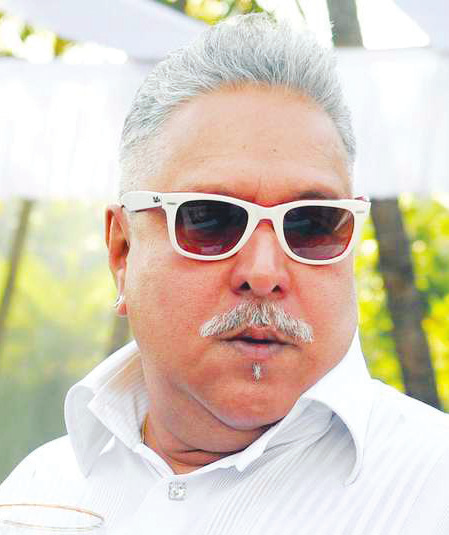
NEW DELHI (TIP): India has to reply to the defence evidence before November 3 in the Vijay Mallya extradition case, the hearing for which is scheduled to begin in a UK court on December 4.
MEA spokesperson, Raveesh Kumar, said it has been tentatively decided to hold the extradition hearing in December at the case management review meeting between Indian and UK officials on July 6.
“The extradition request in respect of Vijay Mallya was handed over to UK high commission in New Delhi on February 9, 2017. Mallya was arrested and produced before the Westminster Magistrates’ Court in London on April 1 8, 2017 for extradition hearing and granted conditional bail.”
India had given in some defence evidence to the UK Crown Prosecution Service at the second review meeting on September 14, the MEA spokesperson said.
Mallya was re-arrested on October 4 after the UK Crown Prosecution Service, on India’s behalf, filed a supplementary affidavit, with additional charges of money laundering against the liquor baron. However, since the bail conditions remained the same, Mallya was out by the end of the day.
Kumar said a “pre-trial case review” will be held on November 20, while the extradition hearing will be on December 4. Extradition processes can go on for years. The December hearing will only be the first.
NEW DELHI (TIP): The poll-bound state of Gujarat on Tuesday saw a high pitched battle as Rahul Gandhi slammed the BJP government in the state and the Centre stating that the saffron party had duped the people of the state by not fulfilling its promises and giving all the money to industrialists.
On a three-day tour of Gujarat, the Congress vice-president stepped up his attack on Prime Minister Narendra Modi over the alleged business dealings of BJP chief Amit Shah’s son Jay, asking him if he was a “partner” in the “theft”.
He said that the BJP had made tall promises at the time of election but scored a zero when it comes to deliverables. The Gandhi scion sought to play up issues like farmers’ crisis, demonetisation, and lack of jobs in the prime minister’s home state.
“How much money did you get in your homes out of the so-called Gujarat model of development?” Gandhi asked a cheering crowd in Vadodara. Gandhi also criticised the state government over the issue of high debt.
“The debt of Gujarat has reached Rs 2 lakh crore. Despite taking so much debt for development works, there has been no improvement in the condition of farmers and the poor,” Gandhi said.
The Congress leader began day two of his ‘Navsarjan Yatra’ in central Gujarat region by addressing students in Vadodara. He made a stop at Padra village in Vadodara after which he interacted with Anganwadi workers and Khadi India showroom workers at Karjan.
Gandhi also visited Dabhoi and then interacted with people displaced due to the Sardar Sarovar Dam in Pansoli.
Gandhi also decided to participate in the traditional Timli dance with the locals in Chota Udaipur, his last stop for the day. The Congress vice-president, who was on the second leg of his campaign tour in the poll-bound home state of Modi, frequently raked up the issue of Jay’s business dealings to target the prime minister as well as Shah at about 10 small and big public meetings that he addressed throughout the day.
He also criticised Union ministers and BJP leaders who defended the BJP chief’s son, saying that they should change the name of the government’s flagship scheme for the girl child —“Beti Bachao, Beti Padhao” — to “Amit Shah ke bete ko bachao (save Amit Shah’s son)”.
“A theft has taken place in front of the eyes of the chowkidar (watchman), but you are silent. The question is are you a watchman or a partner?” Gandhi questioned, attacking Modi over a report published in news portal The Wire where it claimed that a firm owned by Jay saw a huge rise in turnover after the BJP came to power at the Centre in 2014.
Gandhi’s comments were a mockery of Modi’s comments made at his public meetings during the 2014 Lok Sabha campaign. Modi used to say that he did not want to become the prime minister but a ‘chowkidar’ of people’s wealth.
“The company was formed six to seven years ago. Modiji came (to power in 2014) and launched ‘Start up India’, ‘Make in India’. He then introduced demonetisation and GST. This destroyed small businesses and farmers,” Gandhi told the gathering.
NEW DELHI (TIP): The Rashtriya Swayamsevak Sangh (RSS) has categorically dismissed reports that it was considering entry of women in “shakhas”—its daily meetings. In a series of tweets from its official handle, the BJP’s ideological fountainhead termed reports quoting chief spokesperson Manmohan Vaidya “deliberately concocted” and “baseless”.
“Deliberately concocted baseless reports appeared in some media that the RSS will consider entry of women in shakhas.”
“What Dr Vaidya said was that the RSS works with only men in shakhas and through them, we connect with their families. Shakha work among women is being conducted by Rashtra Sevika Samiti.”
“In all programmes and campaigns in society women are also participating. Women create an atmosphere of cooperation in families to support the RSS,” the Hindu organisation said on the issue that became viral after Congress vice-president Rahul Gandhi’s observations on the presence of women in the sangh aiming to target the BJP and the RSS in poll-bound Gujarat, Congress vice-president Rahul Gandhi had told a gathering that the saffron party was not interested in women’s rights. “How many women are in the RSS? Have you ever seen women in shorts working with the RSS? I have never seen. You see women in the Congress all the time. In the RSS, you will never see women. God knows what mistakes women have committed that they cannot be a part of the RSS,” he said.
Rahul’s words, specifically those related to shorts, invited severe condemnation from BJP leaders, who asked him to apologise for “indecent and derogatory” remarks.
Specifically on this point, Vaidya was quoted as saying: “It is like going to a men’s hockey match and trying to look for women players. If you want to see women players, you have to go to a women’s hockey match.”
“The RSS only had camps for men, but this did not mean it did not work with women,” he added. Notably, the Rashtra Sevika Samiti is its parallel organisation, also referred to as its “women wing”.
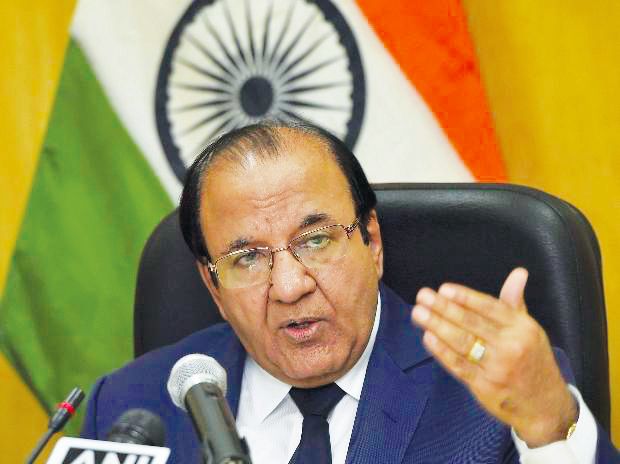
NEW DELHI (TIP): The Himachal Pradesh Assembly elections will be conducted in a single phase on November 9 while the counting of votes will take place on December 18, the Election Commission announced today.
The commission, however, chose to defer the announcement of the poll schedule for Gujarat although the tenure of the state Assembly ends on January 22, just two weeks after that of Himachal.
Chief Election Commissioner AK Joti, though, indicated that Gujarat would go to the polls before December 18.
“This is being done to ensure the voting pattern of one state does not affect the other,” he said. Asked why elections in Gujarat were not announced simultaneously, Joti said, “We have received communication from the state government about ongoing relief and rehabilitation operations following the floods. The administration has sought time before being fully prepared for the elections.”
Joti said elections to the two states were announced separately in the past too. “The model code of conduct comes into force immediately,” said Joti, who was flanked by Election Commissioners OP Rawat and Sunil Arora. As per rules, the code will be applicable for the state government as well as the Centre in matters related to Himachal. The poll notification will be issued on October 16.
For the first time ever, the Election Commission will set up 136 all-woman managed polling booths in Himachal, with each constituency having two of them. Also, Himachal will be the second state after Goa where voting will take place with 100 per cent VVPAT (voter verified paper trail) coverage. The paper trail machines will be deployed along with EVMs at all 7,521 polling stations, including 42 auxiliary polling stations at remote places.
The Chief Election Commissioner said VVPAT machines from one polling booth in each of the 68 Assembly segments will be tallied with EVM results to check the vote count.
Diwali, the festival of lights, is the best known of Hindu festivals in the United States. The legends connected to the festival are different for different religions. According to Ramayana, one of the most important epics of the Hindu religion, Diwali commemorates the return of Lord Rama with his wife Sita and brother Lakshman, from his 14-year exile after killing the demon king Ravana. Thus, it symbolizes the victory of good over evil and is celebrated with great fervor by one and all. The celebration includes visiting temples, performing Lakshmi puja, exchanging greetings, sharing sweets with loved ones, attending cultural and talent shows, musical concerts and social parties, besides lighting candles, earthen lamps and firecrackers where permissible. The annual observance demonstrates the rich history and traditions of the Hindu faith and provides an occasion for the followers to remember their many blessings and celebrate their hope for a brighter future.
Diwali Celebration by Sikhs and Jains
Shri Harmandir Sahib (Golden Temple), Amritsar is lit on Diwali. Sikhs celebrate Diwali to welcome the return of their Sixth Master, Shri Hargobind to Amritsar after securing freedom from Gwalior prison of 52 Princes of Hill States
Sikhs celebrate Diwali as it marks the return of the sixth Guru, Hargobind Rai to Amritsar after he was freed from the fort of Gwalior by Emperor Jahangir in October 1619, where he was imprisoned along with 52 Hindu Kings who were incarcerated as political prisoners. When the emperor decided to release the Guru, the latter managed to get all the Hindu kings freed at the same time. Guru Hargobind became known as the “Bandi Chhor” (Deliverer from prison) and the event is celebrated as the Bandi Chhor Divas. The Guru arrived at Amritsar on the Diwali day and the Harmandir (Golden Temple) was lit with hundreds of lamps to celebrate his return. Every year, the Golden Temple is illuminated in a spectacular display and fireworks are displayed to commemorate the memory of Guru’s return. Sikh temples across America hold religious gatherings to remember the legacy of their Guru who fought for social justice and got freedom for people who belonged to a different faith.
In Jainism, Diwali is the occasion to celebrate the attainment of Nirvana by Lord Mahavir
In Jainism, the occasion celebrates the attainment of Nirvana by Lord Mahavir, the last of the Jain Tirthankaras, on this day at Pavapuri on Oct. 15, 527 BC, on Chaturdashi of Kartika.
According to a Swetambara legend Mahavira took his seat on a diamond throne in the center of a magnificent hall on the seventh day of his stay. The seat was specially built for him on the borders of a lake. There were many devotees who came to hear him. According to their rank they arranged themselves into twelve grades. The devotees belonged to different sect, class and order. They ranged from king to beggar. On the dark night of the seventh day of his stay the hall was illumined by the supernatural glow of the Gods who came to listen to him. That day the Lord preached the whole night. He was aware by his sukladhyayana that his end was drawing near. He thus sat with his hands clasped knees crossed. At dawn he attained nirvana on the day of Kartika Krishna. Mahavira is said to have delivered the fifty-five lectures explaining the results of Karma and also recited the thirty-six unasked questions at the night of his nirvana.
In cities with significant Indian American population, Diwali Melas have become very popular and attract large gatherings of young and old. The organizers arrange for many fun-filled activities such as magic and puppet shows, henna painting on palms, stalls of Indian sweets and other eatables, handicrafts and other trinkets besides showcasing the best of Indian culture. If legally allowed, the effigies of Ravana, etc. are burnt to give historical perspective to the event and customary fireworks are displayed to add splendor to the festivities and increase public participation.
Diwali Celebration in New York and Dallas
Music and Masti at AIA South Street Seaport Diwali in New York on October 1, 2017
New York chapter of Association of Indians in America (AIA) organizes probably the largest Diwali Mela outside India with an estimated attendance of over 100,000 people during the daylong event at the South Street Sea Port, Manhattan. The association also arranges extravagant display of live fireworks illuminating the east river and New York city skyline.
Diwali at Times Square, October 7, 2017 drew huge crowds and earned great applause
Times Square, New York is a popular tourist destination. In 2013, Diwali was celebrated there for the first time. Indian Americans from the tri-state area flocked in thousands to see the day-long extravaganza, showcasing Indian culture, cuisine, music and fashion. Last year (2016), for about 8 hours, live performances, fashion shows, dance & music competitions, photography exhibition and other creative programs like rangoli painting provided huge attraction. At night, the skyline dazzled with fireworks. Nita Bhasin, president of ASB Communications, who has been organizing the event, also provided entertainment with live Indian dances and music.
Dallas Indian Cultural Society, in 2007, organized Diwali Mela celebration of epic proportion at Dallas Cowboys Stadium in Texas. The founder, Satish Gupta, prefers to call the celebration, “spirit of India” which attracts 40,000 to 50,000 people who get glimpses of the rich Indian culture at play, including the traditional staging of Ram Lila and burning of Ravana’s effigy. It was a mammoth event, unique with no parallel to it in the United States. The society has been organizing the Mela annually sometimes excelling their prior year performance by attracting more people and adding more attractions.
Dallas Fort Worth Diwali draws around 50, 000 visitors and is the largest Diwali celebration, outside India
Diwali Celebration in American Universities
There are about 100,000 Indian students from India in various universities in America. A large number of Indian American students are also enrolled in American universities. Diwali celebration in Duke, Princeton, Howard, Rutgers, Carnegie Mellon and several other university campuses brings Indian student groups together and helps them stay connected with their culture and tradition.
Diwali at the White House
Michelle and Barack Obama celebrating Diwali at the White House
In 2003, the President George W. Bush agreed to the long-standing demand of the Indian community and celebrated Diwali at the White House in the presence of several invited Indian community leaders. Although the president never participated in the Diwali festivities, yet it became an annual tradition at the White House. The celebration of Diwali at the White House also shows the growing clout of the Indian American community in the United States. In 2009, Barack Obama became the first US president to light a “diya” oil lamp, in the presence of a Hindu priest, in a White House ceremony for the festival of lights. In communicating his warm greetings at the occasion, he remarked that Diwali marked the return of the Lord Ram from exile when small lamps lit his way home. In 2010, the Vice President led the commemoration. In 2011, President Obama again lit the White House Diya while a Hindu priest chanted Slokas, or prayers. In 2016, lighting diya in the Oval Office of the White House, President Obama said, “On behalf of the entire Obama family, I wish you and your loved ones peace and happiness on this Diwali.”
Diwali Celebration by US Congress
US Congresswoman Tulsi Gabbard lights the lamp at the first Diwali on Capitol Hill. Photo courtesy Rediff.com
The US Senate and the House of Representatives in October 2007 unanimously passed Resolutions 299 and 747 respectively, recognizing the “religious and historical significance of the festival of Diwali.” The passage of the resolutions may be symbolic, but it is a testament to the increased awareness of the Indian community in America. The U.S. Congress celebrated Diwali, for the first time, on October 29, 2013, amidst chanting of Vedic mantras by a Hindu priest. Over two dozen influential lawmakers along with eminent Indian-Americans gathered at the Capitol Hill to lit the traditional “diyas”. The event was organized by the two Co-Chairs of the Congressional Caucus on India and Indian Americans, Congressmen Joe Crowley and Peter Roskam in recognition of increasing presence of the Indian-American community.
US Postal Service Issues Diwali Postage Stamp
Diwali Stamp is unveiled at the UN. Seen from left to right: Ravi Batra, Ambassador Syed Akbaruddin, Diwali Stamp Project Chair Ranju Batra, Acting President of UN General Assembly Mwaba Patricia Kasese-Bota, and Ambassador Andrei Dapkiunas of Belarus Photo/ Mohammed Jaffer-SnapsIndia
On October 5, 2016, the US Postal Service fulfilled the long standing demand of Indian Americans, and released Diwali Postage stamp commemorating the festival of Diwali. The dedication ceremony took place at the Consulate General of India, New York, in the presence of Consul General Ambassador Riva Ganguly Das, Representative Carolyn Maloney, Diwali Stamp Project Chair Ranju Batra, US Postal Service Vice President for Mail Entry and Payment Technology Pritha Mehra, India’s former Permanent Representative to the United Nations Ambassador Hardeep Singh Puri, now a minister in Modi cabinet and many members of the local Indian American community.
(The author regularly writes on Indian Diaspora. He is the author of The Gadar Heroics – life sketches of over 50 Gadar heroes. He is Executive Trustee of Global Organization of People of Indian Origin (GOPIO) Foundation. He was chairman of GOPIO from 2009-2016, president from 2004-2009, president of National Federation of Indian American Associations (NFIA) from 1988-92 and chairman from 1992-96. He was founding president of Federation of Indian Associations in Southern California. He can be reached at indersingh-usa@hotmail.com)
QUEENS, NY (TIP): House Democratic Caucus Chairman Joe Crowley (D-NY) issued the following statement after President Trump said he plans to abandon the people of Puerto Rico as the island rebuilds following recent hurricanes:
“President Trump’s threats are a slap in the face to the people of Puerto Rico. We cannot abandon our brothers and sisters who are simply asking for the same aid and assistance to rebuild their homes, economy, and lives that any U.S. citizen would expect from their government following an unprecedented natural disaster and humanitarian crisis.
“When 90 percent of the island still lacks electricity and the majority of people lack access to clean drinking water, the Trump administration must intensify its support of Puerto Rico – not issue baseless threats to abandon these Americans.
“Our commitment to helping Puerto Rico rebuild must be measured in months and years – not days and weeks. President Trump’s threats to abandon Puerto Rico show a deep disregard for the pain and suffering of our fellow Americans. This is simply wrong.”
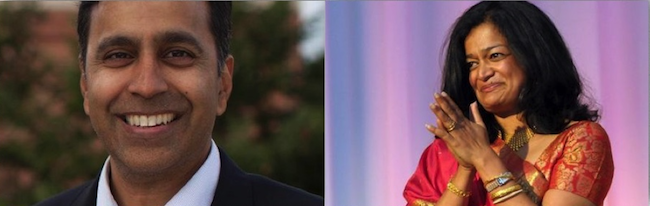
WASHINGTON (TIP): In a letter, led by Indian American Representatives Pramila Jayapal (WA-07), and Raja Krishnamoorthi (IL-08) along with Ruben Kihuen (NV-04) members of Congress are demanding that the Trump administration terminate efforts to surveil and collect social media data on immigrants and American citizens.
A new proposal, set to go in effect on October 18, would impact immigrants, as well as all lawful permanent residents and naturalized American citizens including members of Congress like Jayapal, Kihuen, and Krishnamoorthi who were born outside the United States.
“Simply put, this proposal is un-American. It flies in the face of freedom of speech, due process, and freedom of association, all of which are cherished founding values that are meant to protect personal privacy and encourage discourse and dissent in a free society,” wrote the representatives.
Last month, the Department of Homeland Security published a new rule in the Federal Register that calls for including “social media handles and aliases, associated identifiable information and search results” in the department’s immigration files, also known as the “A-Files.”
In the letter signed by nine members of Congress, the representatives said, “This proposal runs counter to American values. The collection of social media data in a dragnet as proposed is unwise and has not been proven effective, particularly when American citizens become targets. We urge you to retract the Federal Register notice immediately.”
The letter led by Reps. Pramila Jayapal, Ruben Kihuen and Raja Krishnamoorthi is signed by Frank Pallone (NJ-06), Jerrold Nadler (NY-10), Luis Gutiérrez (IL-04), Nydia Velázquez (NY-07), Lloyd Doggett (TX-35), Sheila Jackson Lee (TX-18), Barbara Lee (CA-13), Raul Grijalva (AZ-03), Albio Sires (NJ-08), Steve Cohen (TN-09), Keith Ellison (MN-05), Grace Meng (NY-06), Norma Torres (CA-35), and Nanette Barragán (CA-44).
“I received a letter just before I left office from a man. I don’t know why he chose to write it, but I’m glad he did. He wrote that you can go to live in France, but you can’t become a Frenchman. You can go to live in Germany or Italy, but you can’t become a German, an Italian. He went through Turkey, Greece, Japan and other countries. But he said anyone, from any corner of the world, can come to live in the United States and become an American.”
-President Ronald Reagan
The Trump administration is again using America’s children as pawns, unfairly pushing harsh policies to push his own agenda. Proposals last Sunday threaten to derail efforts to protect the Deferred Action for Childhood Arrivals (DACA) applicants from deportation. 800,000 of young immigrants, many of whom were brought into the U.S. illegally as children, are being exploited in a deadly game of cat and mouse.
It is un-American to link the fate of Dreamers to an unreasonable anti-immigrant wish list. Congress must immediately pass the bipartisan Dream Act independently, and on its own merits. With Democrats threatening gridlock in Congress, it is the American people who suffer most when this impasse happens. Playing the Trump card has taken on a mean-spirited meaning.
The President’s unreasonable demands include overhauling the country’s green-card system, hiring 10,000 more immigration officers and building the quixotic wall along the southern border. Trump administration officials said the president will insist on their passage in exchange for supporting legislation that would extend the DACA program.
The specific list includes limiting family-based green cards to spouses and the minor children of U.S. citizens and lawful permanent residents and creating a point-based system, boosting fees at border crossings, make it easier to deport gang members and unaccompanied children, and overhaul the asylum system.
It also includes new measures to crack down on “sanctuary cities,” which don’t share information with federal immigration authorities, among other proposals-like New York City. The ability of federal, state and local authorities to detain illegal immigrants would be fully enshrined in law. Visitors who come legally but overstay their visas, would now face a misdemeanor penalty.
“These priorities are essential to mitigate the legal and economic consequences of any grants or status to DACA recipients,” White House legislative affairs director Marc Short, unashamedly and inhumanely, told reporters. “We’re asking that these reforms be included in any legislation concerning the status of DACA recipients.”
Initiated under President Barack Obama, DACA protected and helped 800,000 young Americans, helped them to emerge from the shadows, and shielded them from deportation. It allowed them to continue working legally in the U.S. Trump announced a phase-out of the program last month, but he has given Congress six months to come up with a legislative fix, but it is an inhumane proposal that makes these innocent lives unwilling pawns in the vicious game of politics.
In a joint statement, House Democratic leader Nancy Pelosi and Senate Democratic leader Chuck Schumer said the list “goes so far beyond what is reasonable” and “fails to represent any attempt at compromise. The Administration can’t be serious about compromise or helping the Dreamers if they begin with a list that is anathema to the Dreamers, to the immigrant community and to the vast majority of Americans. If the President was serious about protecting the Dreamers, his staff has not made a good faith effort to do so,” they said.
Rep. Joaquin Castro, D-Texas, is justified in accusing the administration of trying to “use Dreamers as bargaining chips to achieve the administration’s deportation and detention goals. Congress should reject this warped, anti-immigrant policy wish list. Immigrants are humans; we should craft policies that treat them as such.”
Mr. President, you can, and must do, better!
Albert Baldeo
New York
(Albert Baldeo is a civil rights activist and community advocate. As President of the Baldeo Foundation and Queens Justice Center, he has continued to fight for equal rights, dignity and inclusion in the decision making process. He can be contacted at the Baldeo Foundation: (718) 529-2300.)
NEW YORK CITY (TIP): Rubin Museum of Art (RMA) in New York is hosting “Ragas Live Festival—24 hours of sacred sound” on October 21-22, where guests with a $280 ticket get handpicked gallery sleeping spot under an artwork and may bring bedding.
Starting 10 am on October 21 and ending at 10 am on October 22, this overnight Indian classical music concert, whose tagline is “Color your mind at Ragas Live Festival”, includes performances by over 50 master musicians and is a first for RMA. Museum will also provide lounge areas in the lobby for naps and spaces where guests can make themselves cozy.
A worldwide audience will share this “immersive 24-hour global listening experience” in real time via a live radio broadcast. Museum Café will serve “mango lassis”, and the event includes meditation and traditional Hindu sunrise puja (prayer).
Musical instruments to be used during the festival include sitar, kanjira, tabla, bansuri, sarod, sarangi, harmonium, mridangam, santoor, etc. It would showcase some hundreds of years old compositions and includes many artists from India.
Welcoming RMA for hosting festival of ragas, which were historically integral to Hinduism with roots going back to ancient Vedas, Hindu statesman Rajan Zed, in a statement in Nevada, said that art had a long and rich tradition in Hinduism and the elements of musical theory were first found in Sama-Veda.
Rajan Zed, who is President of Universal Society of Hinduism, urged major art museums of the world, including Musee du Louvre and Musee d’Orsay of Paris, Metropolitan Museum of Art in New York, Los Angeles Getty Center, Uffizi Gallery of Florence (Italy), Art Institute of Chicago, Tate Modern of London, Prado Museum of Madrid, National Gallery of Art in Washington DC, etc., to frequently organize Hindu art/culture focused exhibitions/shows/concerts, thus sharing the rich Hindu art heritage with the rest of the world.
Ragas are stated to be melodies with highest expression of Indian classical music and envisioned as manifestation of the divine. Some are associated with various Hindu deities like Lord Shiva, Lord Vishnu, etc. Sage Narada is said to have played some ragas. Many ragas produce feeling of reverence, hope, passion, love, joy, devotion, peace, etc. Effects of ragas have been described as bringing dead back to life, curing madness, causing rain, starting fire, etc.
RMA claims to “spark new ways of seeing the world”, hosts “out-of-the-ordinary experiences” and has welcomed over 1.4 million visitors. With five gallery floors, it describes itself as “space to contemplate ideas that extend across history and span human cultures”. Robert M. Baylis and Patrick Sears are Trustees President and Executive Director respectively.
Hinduism, oldest and third largest religion of the world, has about 1.1 billion adherents and moksh (liberation) is its goal. There are about three million Hindus in USA.
NEW YORK (TIP): Doha Bank hosted a knowledge sharing session on “Qatar- US Bilateral Opportunities” at Hotel Metropolitan, New York on Oct.10.The event was well attended by leading Corporates who were keen to hear more about US – Qatar bilateral relationships and to explore further business opportunities with Doha Bank.
Dr. R. Seetharaman, CEO, Doha Bank gave insight on global economies. He said “According to IMF July 2017 Outlook, economic activity in both advanced economies and emerging and developing economies is forecast to accelerate in 2017, to 2 percent and 4.6 percent respectively, with global growth projected to be 3.5 percent. Current global growth prospects are encouraging, though the pace of growth is still weaker than desirable.”
Dr. R. Seetharaman highlighted on US economy and Qatar – US Bilateral relationships. He said “US economy had expanded at an annual rate of 3 percent in the second quarter of the year. U.S. economic growth will take a mild hit in the third quarter from Hurricane Harvey and Irma. The U.S. economy lost 33,000 jobs in September even as the unemployment rate fell to 4.2 percent. Despite this Federal Reserve policymakers have recently signaled they continue to see gradual U.S. interest-rate hikes ahead. Qatar’s trade with US was close to $ 6Bn in 2016.
The US is the sixth largest trading partner of Qatar. US exports to Qatar mainly consisted of Aircraft, Vehicles, Electrical Machinery and Optical Medical Instruments. U.S. imports from Qatar mainly fuel and fertilizers. In Oct 2015 Qatar and the US have signed a memorandum of understanding (MoU) to establish economic and investment dialogue. In August 2016 Qatar’s sovereign wealth fund made a $622-million purchase, a stake in the company that owns New York’s Empire State Building.
In June 2017 the United States and Qatar have signed a deal for the purchase of F-15 fighter jets with an initial cost of $12bn. In August 2017 Qatar’s National Anti-Money Laundering and Terrorism Financing Committee (NAMLC) has engaged the US-based Financial Integrity Network (FIN) as its principal strategic adviser for enhancing the country’s anti-money laundering and counter-terrorist financing (AML/CFT) system.
Building on the nearly $26bn invested in the US since 2015, Qatar Investment Authority has committed to investing another $10bn and expanding the portfolio to include infrastructure projects. Qatar- US Bilateral relationships witness a surge.”
Dr. R. Seetharaman gave insight on the recent developments in Qatar. He said “Qatar will raise LNG production by 30% to 100mtpa within five to seven years after lifting a moratorium on gas development earlier this year. Qatar ranked 18th in ‘the Global Competitiveness Report 2016-17’ and stands second in the region. A new law for Public Private Partnership (PPP) businesses in Qatar should provide an additional level of comfort to the private sector and foreign investors.
Qatar Lending growth till August 2017 was more than 6% YTD and deposit growth was more than 9% YTD in 2017. In Feb 2017, Qatar issued a new law on arbitration inspired by the UNCITRAL Model Law, an international template for law on arbitration. In terms of food security, Qatar now have many local companies that are supporting the country and it can develop these businesses further and boost its food production to provide both locally and internationally.
Qatar Budget 2017 has allocated for key sectors such as health, education and infrastructure QR87.1bn (US$23.9bn) which is made up made up of nearly 44% of the total expenditure in the 2017.Transportation and infrastructure projects, which represented a main pillar of enhancing sustainable development, have been allocated QR42bn. (US$11.51bn). The accomplishment of the New Orbit Highway will facilitate the world cup infrastructure works as per schedule.
Qatar’s landmark residency plan is a welcoming social and economic reform. It will attract skilled expats to have a career in Qatar. It will also encourage investors as they would be able to launch business ventures. It will help migrants to further integrate with Qatar’s society. The landmark residency plan will enhance expatriates’ participation in Qatar’s economy and society in various forms and thereby contribute to sustainable growth of Qatar. Qatar has also waived entry visa requirements for citizens of 80 countries.”
Convening all these global business leaders in New York, was a powerful reminder of the invaluable role that accurate information, communication and reporting plays in the business community. The presentation was inspiring and useful. It restored trust and fertile ground.
The business audience was able to see the opportunities that Qatar is offering. Qatar’s core value and hard work were highlighted as they lead to a peaceful and resilient society.
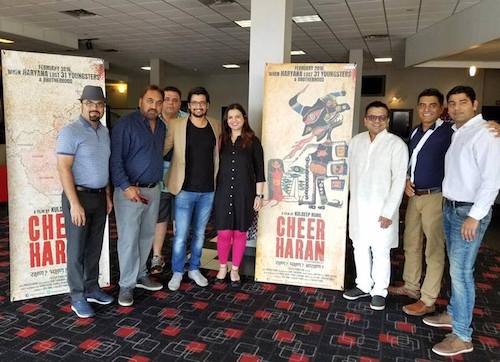
EDISON, NJ (TIP) – Edison hosted the first US premier of Cheer Haran, a 90-minute Hindi documentary based on Jaat reservation agitation that claimed many lives, paralyzed Haryana and shamed India across the globe last year.
The title reminds us of the heinous incident from the Mahabharata as Last year around mid-February, Haryana was in a similar situation, unguarded and abandoned, when all of a sudden, the JAAT agitation for OBC reservation flared up into a devastating inferno of sectarian violence. Women were allegedly gang-raped by mobs. The film tries to decipher why turned things turned violent, whether the brutality could have been averted?’’
Produced by Twister Entertainment and directed by Kuldeep Ruhil, who was born and brought up in Dahakora village near Rohtak. Ruhil, an actor and writer, says, “The tagline of the movie is ‘February 2016: Haryana lost peace, harmony and 31 kids’ and it peeps into the psyche of people, post agitation.”
The documentary has been shot in Haryana, Delhi and Gurgaon, and has two songs dedicated to those killed in police firing. “We interviewed the affected families, Haryana Chief Minister Manohar Lal Khattar and Finance Minister Capt Abhimanyu, and officials. We tried to show both sides of this violence,” says Ruhil, who is now based in Mumbai.
As a film maker it’s my duty to prevent and show the reality of Haryana.” On being asked about the reason behind portraying it as a documentary and not a feature film, the director said, “The reason behind the documentary is that a feature could be a statement with conclusion. But that could not be the idea because there would be no exploration otherwise. The documentary serves the reality.” He also added, “You will see that the real victims and survivors are still positive but these reservations has kept alive the cast discrimination. Cheer Haran depicts a true picture of Jaat reservation agitation that claimed many lives and soon to be released in India on over 100 screens.
It was a dream come true when I finally go to see the great historian. I recalled the comment of Indira Majumder on Romila.
“It was a breath of fresh air! The tall historian Romila Thapar took an editorial pen, a new orientation to observe the events of history! Here is an author who has penned the book “History of India “50 years ago with all the young energy and emotions of the newly emancipated India! The author looked at the data on India with lenses powered with contemporary beliefs and ideals. But the same author forty years later took the courage,
kind of cleared her eyes to look at the historical events, facts, people’s attitude, philosophy,
values, morals and perspectives of life! Here in the revision of “History of India “she talks about -History is not just the kings and queens, dates when they were born and married and won a war! History is about the people of the land, the way of life and culture!
Romila Thapar understood the essence of the history of a nation, pulse of the land, including people, dynasty, means of production, social mores, and religious practices. Romila Thapar added to the knowledge base of world history through her work -The Penguin History of Early India: From the Origins to AD 1300!”
I was overwhelmed with emotion to see this wonderful lady. The time I spent with her was educative and elevating. I long to look her up again and have a share of her sublime thoughts. Hopefully, soon.
Padma Vibhushan Ustad Amjad Ali Khan does not need an introduction. The whole world knows him as “Sarod Samrat” Ustad Amjad Ali Khan. All his life, he spread the message of love, peace and harmony globally through his music. For him ‘Music is God’ that connects people.
In a candid conversation with Bidisha Roy, Ustad Amjad Ali Khan shared his views about unrest in the society. The ‘Global Peace Ambassador’ started the conversation with a clear message to the world.
TIP – You always talk about peace and harmony…?
Ustad Amjad Ali Khan – First of all I would request President Donald Trump to ban the guns and weapons. I am so sad to hear about the Las Vegas incident. Then I realized that having guns is fundamental right of American people but it’s very dangerous for the safety of every human being of America and the way people have been killed in Las Vegas is very sad. Even children here carry guns to schools. I am hoping that Mr Trump would immediately ban these weapons. This is very unhealthy for the whole society. People should have them for their safety but not without license. Arms should not be sold like vegetables.
TIP – Talking about India we say that we belong to a secular country. But in the present situation can we take pride in our secularism?
Amjad Ali Khan – I grew up in India. The people of India made me Amjad Ali Khan. I got love and encouragement from every corner of India. Why only me? Bismillha Khan Saab, Vilayat Khan Saab, Bade Ghulam Ali Khan Saab. The interesting thing of our country is – in spite of so many religions we all depend on each other and that is our strength. Only one religion can’t take India to moon or sun. Amjad Ali Khan plays sarod. But who makes the sarod of Ustad Amjad Ali Khan? Mr Hemendra Chandra Sen – a Bengali gentleman from Rashbehari Avenue Kolkata. He makes beautiful instruments and he made my sarod. Without him by sarod could not have been appealing. This way we depend on each other. In every era – no matter which political party is ruling the country – we have seen good people, bad people. Fortunately, we have more peace loving people. Secularism is the character of our country and because of that the whole world respects India. It’s like a bouquet of flowers. We have to maintain this character of our country. This is the duty of every Indian to maintain the beauty of our country. Every religion in India has contributed to the success of our country. We must nurture the bouquet of India.
TIP – Any form of art – music, can unite people. Do you think all musicians should come together for that?
Amjad Ali Khan – Music connects the world. In our country we say ‘Swar hi Ishwar hai.’ There are two kinds of music – one is pure sound and another is based on language. Language is ruling the world. Because of language the politicians are winning the elections and sometimes loosing for the language as well. So, language creates the barrier. Music is gift of god. Every human being is born with sound and rhythm. The heartbeat is an indication of rhythm. The whole world is going through lot of uncertainty. Every country is going through problems. Then what is the role of education? Education can’t create compassion and kindness. I can’t think a PhD being communal. There is something wrong in our education system right from the very beginning – not only in India but all over the world. My father taught me that all of us have a common god. Sooner we realize this, it would be good for every country.
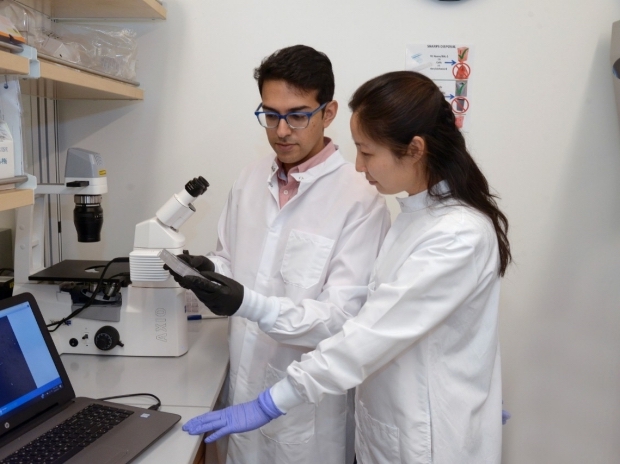
NEW YORK (TIP): The National Institutes of Health (NIH) has selected the laboratory of Indian American Neville Sanjana, an assistant professor in NYU’s Department of Biology and an assistant professor of neuroscience and physiology at NYU School of Medicine, for its “New Innovator” Award. He was granted $2.9 million to use a series of new technologies — including CRISPR genome editing and single-cell RNA sequencing — to better understand transcriptional regulation;
The grant will enable Sanjana, Core Faculty Member at the New York Genome Center, and his team to interrogate the noncoding regions of the genome, which is 98 percent of the human genome. Utilizing advanced genome engineering and high-throughput sequencing, the Sanjana Lab aims to identify the sequences and proteins that govern gene expression.
The award of nearly $2.9 million over five years will support the Sanjana Lab’s work in deciphering the logic of gene regulation through the development of new tools for targeted, precise modifications to the genome. These new genome engineering methods include techniques for denser coverage of noncoding regions, scaling up genetic screens, building multidimensional readouts of noncoding function, and identifying the DNA-binding proteins that are found near functional elements. Using this gene editing toolbox, the Sanjana Lab will test hypotheses that link sequence changes in noncoding regions to relevant biological phenotypes, such as therapeutic resistance in cancer and the development of cortical neurons during early embryogenesis.
In his proposal to the NIH, Sanjana described his long-term goal to construct a catalog of all functional elements in the noncoding genome and to map their interactions in healthy and disease states. His proposal leverages both established and newly-characterized CRISPR enzymes to build a platform for understanding how noncoding DNA and transcription factors come together in gene regulation. According to Sanjana, “Although our research into the noncoding genome is rooted in basic science questions, the aim is to generate clinically relevant and actionable discoveries regarding cancer evolution and treatment, as we have done previously with functional screens in the coding genome.”
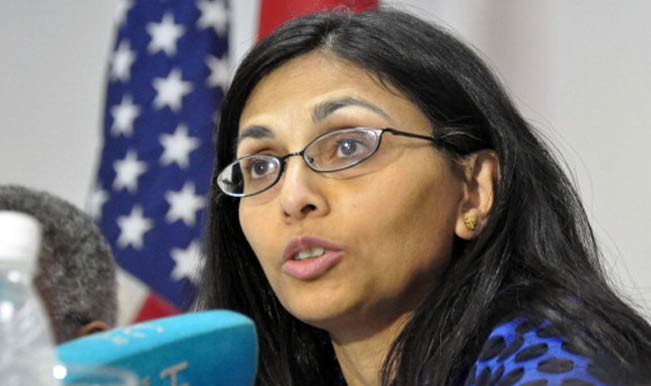
WASHINGTON (TIP): The U.S. Chamber of Commerce announced that Nisha Desai Biswal has been appointed President of the U.S.-India Business Council. “We are thrilled to welcome Nisha Biswal to the U.S.-India Business Council and to the U.S. Chamber team,” said Myron Brilliant, U.S. Chamber executive vice president and head of International Affairs. “She is a driven, visionary leader who has a strong record of advancing United States business across the growth markets of Asia and throughout India. Under her strong leadership, we’re confident the U.S.-India Business Council will play a critical role growing commercial partnership, investment, and innovation across the world’s oldest and largest democracies.” Biswal served as Assistant Secretary for South and Central Asian Affairs in the U.S. Department of State from 2013 to 2017, where she oversaw the U.S.-India strategic partnership during a period of unprecedented cooperation, including launching the U.S.-India Strategic and Commercial Dialogue. In recognition of her efforts, Biswal was awarded the prestigious Samman Award by the President of India in January 2017. She previously served as Assistant Administrator for Asia at the U.S. Agency for International Development (USAID). Biswal also spent over ten years on Capitol Hill, serving as staff director on the State, Foreign Operations Appropriations Subcommittee and the Foreign Affairs Committee in the House of Representatives. Most recently, she was a senior advisor with the Albright Stonebridge Group, where she helped expand the firm’s India and South Asia practice. “I am honored and excited by the opportunity to lead the U.S.-India Business Council and to join the leadership of the U.S. Chamber of Commerce during a period of historic opportunity for both countries,” said Biswal. “As one of the most significant and fastest growing markets, India is an important economic partner for the United States. Likewise, Indian companies are investing in ever greater numbers here in the United States. I am proud to be part of an organization which will play such a critical role shaping U.S.-India relations, and I am thrilled at the chance to help our companies deliver a brighter, more prosperous future for the citizens of the United States and India.” Biswal has served on the board of the U.S. Global Leadership Coalition, and is a current member of the U.S. Institute of Peace International Advisory Council and the Institute for Sustainable Communities Board of Directors. “UPS applauds Nisha being named as the new president of the U.S.-India Business Council,” said Jim Barber, president of UPS International. “At this critical time, she will bring dynamic leadership and well-established economic expertise to the mission of improving the U.S.-India relationship.” Biswal will join the U.S. Chamber beginning October 23, 2017.
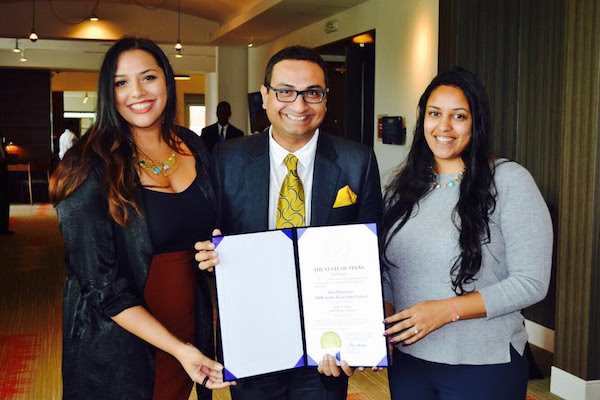
DALLAS (TIP): The Dallas/Fort Worth South Asian Film Festival (DFW SAFF), created by New York and Dallas-based arts and entertainment company JINGO Media, was honored at the Texas Governor’s Small Business Forum with the “Most Innovative Small Business of 2017” Award. Organized and hosted by the US-India Chamber of Commerce (DFW), the Governor’s Small Business Forum also recognized three other North Texas small businesses in different categories: TechStar Group, B12 Consulting and NectarOM. DFW SAFF was created three years ago to promote the perspectives and voices of the South Asian community through cinema. Founder and festival director Jitin Hingorani said: “We are truly honored and humbled to receive this award from Governor Greg Abbott. This is a testament to our strong DFW community, who has embraced our film festival with open arms and fills out theaters to capacity year-after-year. India is known for its Bollywood films, but we want to create an appreciation for the smaller, independent gems that may never see the light of day, if it were not for festivals like ours.” The 4th annual DFW SAFF will take place from February 8 to 11, 2018, at the AMC Village on the Parkway in Addison, Texas, and it will showcase more than 20 shorts, documentaries and feature films from South Asia. In addition to international and Texas premieres, the festival will also host workshops, networking events and a VIP red carpet reception for its invited filmmakers and actors from all over the world. “We had a lot of nominees this year for the ‘Most Innovative Business’ Award,” says NeelGonuguntla, President of the US-India Chamber of Commerce (DFW). “But DFW SAFF has built a truly innovative business model that leads to community integration through the universally-loved art form of cinema.”
CAMBRIDGE CITY (TIP): Hari I. Pillai an Indian Americanannounced his candidacy for the Cambridge City Council’s elections on November 7. The engineer lived in Cambridge for the last 5 years, and currently lives at Alewife.
He was born/raised in the Mississippi Delta to Indian immigrants who migrated here during the ‘60s. After completing his BS in Engineering at Mississippi State University, Hari moved to Troy, New York, for MS in Engineering at Rensselaer Polytechnic Institute (RPI) in ’97. While at RPI, he became a Graduate Student Senator, taught the non-traditional Navy students Differential Equations/Calculus in RPI’s Extension Program in Malta, New York, and volunteered at Zoller Elementary School in Schenectady.
Right after completing his Master’s Degree in Engineering, Hari worked at GE Power Systems as a Process and Quality Engineer, and eventually moved to the Boston Area. Over the years, his career would meander more or less to other areas, including being a tutor, health and wellness coach at the Oak Square YMCA, and in the last few years, he has been an Account Manager in the Technology Sector.
“Outside my career, I’ve involved myself in many campaigns for local, state, and federal elections, and did a lot of volunteer work as a Massachusetts Service Alliance grant reviewer, mentoring young kids, and volunteer at Massachusetts Correctional Institution – Shirley to promote mindfulness and to cultivate spiritual practices using Buddhism as a vehicle. At my work, I’m a member of African American Business Leaders for Excellence (ABLE), Asian American Professional Group, and Pride in addition to mentoring and coaching junior employees”, he wrote on his website.
Hari said his top priorities are:
Maintaining Cambridge’s uniqueness and not selling-out on our values just for more economic growth. I strongly believe that, holistically, we can have strong economic growth and a healthy budget and still be true to our values in a way that preserves our unique characteristics.
The Trump Administration’s vision of hate has no place here. I offer my candidacy to be a counterpoint to the values of this administration.
Lack of shared parking in Alewife and other parts of Cambridge. Shared parking is a more efficient parking schema, can reduce greenhouse emissions, and optimize the traffic flow through the parking lot.
Address our dismal internet services in Cambridge. Why is Cambridge’s estimates for community broadband much more expensive than other cities? My experience as an account manager with Project Management and negotiating experiences would ensure that I could add value to the Broadband Commission that we have set up.
Volpe Redevelopment Project – I’m against MITIMCO’s current proposals of this.
Increased Voter Turnout – For Cambridge’s municipal elections, like the one we’re about to have on November 7th, the turnout is only ~25%. Just a few decades ago, the rate was more than 70% (see chart below). We must do something to increase this. I’d like to see us having municipal elections on even years, and this would increase the number of voters by 40%. Democracy works best when all voices are heard.
“If the PM raised a finger at Vadra’s wealth having increased due to the suspicion that his mother-in-law is Congress President, shouldn’t he question if Jay Shah’s sudden rise in fortune is connected to his father’s position as BJP President?”, says the author.
One of the themes in the Prime Minister’s campaign speeches and rallies during his early years in office that struck an immediate chord with the country was his comments on how the relatives of powerful politicians grow rich after their parents reach high office. This was, of course, something the Indian people knew to be a fact, but Mr Modi was the first senior politician to speak about it, freely, frankly and frequently.
As far back as August 2013, in Bhuj, Mr Modi said: “Bhai-Bhateejavad purane dino ke dharavahikon mien bharastachar ke mool mein hua karta tha. Samay ke saath isme badlav aaya hai. Bharastachar mein ek naya dharavahik mama-bhanja aaya aur ab yeh saas, bahu aur damad ki aur badh gaya hai.”
Twenty five months later, speaking in San Jose in September 2015, he was more explicit: “Hamare desh mein rajnetaon par kuch hi samay mein aarop lag jate hain. Usne 50 crore banaya, usne 100 crore banaya. Bete ne 250 crore banaya. Beti ne 500 crore banaya. Damad ne 1000 crore banaya. Chachere bhai ne contract le liya…ye sunne ko milta hai ki nahi milta hai? Mere deshvasiyon, main aaj aapke beech mein khada hoon, hai koi aarop mujh pe?”
At the time the case that seemed to best illustrate Mr Modi’s rhetoric was that of Robert Vadra. The Hindu and the Business Standard, in a series of reports, alleged his companies’ fortunes had jumped from Rs 50 lakh to over Rs 300 crore in just six years. The issue most referred to was the purchase of 3.5 acres by Vadra’s Skylight Hospitality in Manesar in February in 2007. Reports said that 24 hours after Vadra bought the land, it was mutated in his name. Six weeks later, the Haryana government gave permission for commercial use, thus dramatically increasing its value. Sixty-five days later, the land Vadra bought for Rs 7.5 crore was sold to DLF for Rs 50 crore, a profit of 770 per cent.
Yet at the time Skylight Hospitality bought the land, its total assets were Rs 1 lakh and the payment for the land was shown as a book overdraft. The newspapers suspected that the money was advanced by DLF because they knew Vadra would be able to get the land use changed and then they could buy it from him, with both parties benefiting. In other words, it was a sweetheart deal. This impression was apparently corroborated by the fact that when Ashok Khemka, the Inspector-General of Registration, started an inquiry into Vadra’s land dealings, he was immediately transferred, even though it was 11 at night.
Many people believe that recent reports by NDTV and TheWire.in about Amit Shah’s son Jay Shah’s companies bear an uncanny resemblance to the Vadra saga. The points made by the two media organizations are claimed to be factually correct and haven’t been disputed though, like the Vadra case, the inferences or conclusions are said to be defamatory.
TheWire.in reports that the turnover of one of Jay Shah’s companies “increased 16,000 times over in the year following the election of Narendra Modi as Prime Minister”. NDTV adds that in the same year loans to 2 of Jay Shah’s companies “rose to 53.4 crore, a jump of 4,000 per cent” compared to a total of 1.3 crore up to 2013-14. Going into further detail, the two media houses say one of the companies, Temple Enterprises, received an unsecured loan of 15.76 crore even though it had a 10 year “unimpressive track record”. A second company, Kusum Finserve, incorporated in 2012 and with meagre profits of 1.73 crore after a first year loss, received a line of credit of 25 crore. NDTV even questions if it was entitled to this credit. TheWire adds Kusum Finserve, despite no experience in the energy or infrastructure sectors, received a 10.35 crore loan from a public sector enterprise IREDA to set up “a 2.1 MW wind energy plant”.
All of this leads NDTV to comment: “Whether he (Jay Shah) was deserving, or benefited from a famous surname, can only be established by an inquiry”. Separately, TheWire has reported that Tushar Mehta, Additional Solicitor-General, secured permission to represent Jay Shah in court, even though government law officers can only represent private parties in exceptional circumstances. The website also claims this was granted on the 6th though its story on Shah, which was the first to appear, was only published on the 8th.
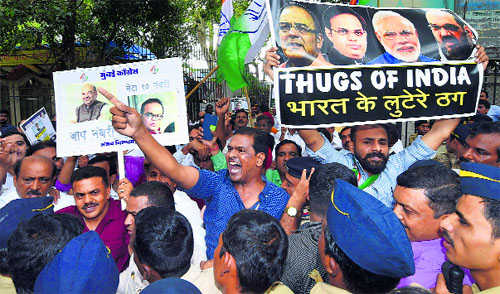
Several questions are now likely to come to the mind of the voter. If the Shah story is reminiscent of the Vadra episode, don’t the PM’s comments in 2013 and 2015 apply as much to the former as they do to the latter? If one was an example of Bhai-Bhateejavad isn’t that also true of the other? If Vadra’s good fortune creates suspicion because his mother-in-law is Congress President, are we not entitled to ask whether Shah’s luck is connected to his father’s position as BJP President? In Vadra’s case, nothing criminal has so far been found — and that’s also true of Jay Shah — but that didn’t stop the Opposition and media raising doubts, so now if the Opposition and media are doing the same to Shah, is it unprecedentedly awful and unwarranted? Indeed, isn’t it the duty of the two to raise questions in the interest of democracy even if, occasionally or more often, they turn out to be misplaced?
Both as a candidate and in office, the PM had a lot to say about Robert Vadra. It was, of course, mainly based on suspicion, but the people applauded him for it. Today, he’s silent. So, don’t we have the right to ask why a man who loves to speak suddenly has nothing to say?
(The author is a senior journalist and TV commentator)
“The Saudis and Emiratis are finally seriously looking to invest in India. The Abu Dhabi Investment Authority is the third-biggest sovereign fund in the world, behind the trillion-dollar Norwegian and $900-billion Chinese funds. It has been wooed for long, but India so far presented investment challenges for sovereign funds”, says the author.
Analyzing the Indian foreign policy from the nation’s Capital has the virtue of local input, but in the end, it has an echo-chamber effect. A three-day visit to the UAE, at the invitation of the Dubai Department of Civil Aviation to deliver a keynote speech at the AVSEC — a biannual aviation security gathering of global actors — gave one a chance to reassess the Gulf, the West Asian region and India’s place in it.
Firstly, the Sunni-Shia divide is now layered with a Sunni-Sunni split, with Turkey aligning with Qatar against Saudi Arabia and the UAE. While Qatari economy is bleeding, the slowing down of the UAE economy is palpable. Property prices have fallen in Dubai after recovery from the 2008 downturn. In Abu Dhabi, despite deeper oil revenue-laden pockets, the excess supply of property is compelling the government to quietly bar display the of ‘to-let’ signs. Yemeni intervention alongside Saudi Arabia is taking its toll on finances and people. Arabic newspaper Al Khaleej, on October 11, had extensive visual coverage of pictures of children of ‘martyrs’ being consoled by the Abu Dhabi Crown Prince, Sheikh Mohammad bin Zayed. UAE military planes apparently have been ferrying the injured Yemeni civilians for treatment to Indian hospitals. An Indian Abu Dhabi-based tycoon has combined sycophancy with profit by directing them to his son-in-law’s recently acquired chain of Delhi hospitals.
Secondly, the newly elevated Saudi Crown Prince, Mohammed bin Salman, is tightly aligned with and advised by his namesake, the Crown Prince of Abu Dhabi. This is a far cry from the old narrative of Sheikh Zayed, the creator of modern UAE, having resisted the Saudi annexation of Al Ain. The bonhomie between the two heirs to thrones is a product of shared concerns about Arab Spring uprooting their autocratic regimes. It was enhanced by resentment over President Obama unshackling Iran, by a nuclear deal with it, to facilitate the fight against the IS in Syria-Iraq. Their collective lobbying with the Trump team, even before Trump assumed office, helped draw him to the Riyadh summit, where he reversed Obama’s Iran doctrine, treating it as a selective partner rather than a permanent antagonist. The consequences of this flip-flop are still playing out negatively.
Thirdly, the UAE has taken badly Pakistani reluctance to send troops to Yemen as it thought Nawaz Sharif owed it a debt for having intervened with President Musharraf in 1999, in combination with Saudi Arabia, to organize his exile rather than incarceration. The Indian Government and PM Modi are using this disenchantment to cement relations with the Saudis and Emiratis. Incidentally, Musharraf divides his time between a fancy house in the elite Dubai neighborhood of Emirates Hills, and London. There are whispers that Modi is headed to the UAE again early next year, to further isolate Pakistan from its erstwhile allies and please Malyalis in Kerala where the BJP is desperately seeking a political toehold.
The Saudis and Emiratis are finally seriously looking to invest in India. The Abu Dhabi Investment Authority is the third-biggest sovereign fund in the world, behind the trillion-dollar Norwegian and $900-billion Chinese funds. It has been wooed for long, but India so far presented investment challenges for sovereign funds. When the UAE did make a significant investment via its telecom giant Etisalat in an Indian partner, the 2G spectrum scam hit the deal. Special purpose vehicles were attempted to channelize incoming funds, but to little avail. Now, it seems an arrangement to the satisfaction of both sides is in the works. Even defense cooperation is possible as India has allowed the private sector to tap technologies, including from the West, narrowing thus the gap between Gulf countries’ desire for cutting-edge defense equipment and India marketing largely antiquated stuff.
Saudi Aramco CEO indicated the new approach, saying that they were looking at ‘mega investments’ as India was now a ‘market of investment priority and not a choice anymore’. India, on its part, is diversifying its procurement base with the arrival of the first cargo of US crude. The Gulf oil industry, seeing the US now as a competitor rather than a hungry consumer, is turning to India and China. Saudi Aramco has just opened an India office. Saudi King Salman has visited Russia. The Saudis are trying to have Russia agree to an extension of an earlier deal on production cuts to help oil price recovery. But the split with Qatar and Iran remains at the heart of any OPEC strategy as, indeed, US shale gas and oil production.
Sheikh Zayed once told a visiting Indian dignitary the story of an Arab shepherd losing a sheep every week to wolves. He was advised to keep dogs. He did, but then discovered he had to slaughter a sheep any way to feed them. The wolf in this case is the US, merrily selling new weapons systems to both sides, while merely rattling its sabre at Iran. India has to realize that excessive bonhomie with the UAE and Saudi Arabia will complicate its ability to engage Iran and Qatar. Euphoria over the allotment of temple land during Modi’s last trip to the UAE is mere theatre as Sheikh Zayed had quietly earmarked a huge site for a cremation ground in 2002, which would have had a temple. Sheikh Mohammad is merely continuing his father’s tolerant and inclusive policies and not making a special gesture for PM Modi, or India.
The Saudi-Emirati alliance will get tested first in how the Yemen war turns out. Using Trump to bait Iran will only exacerbate matters. The succession in Saudi Arabia may yet be contested, despite UAE support for Prince Mohammed bin Salman. The Dubai ruler, Sheikh Mohammad bin Rashid, is quietly watching the impact on his city’s connectivity to the entire region curtailed. He has the maturity and guile of the founders of the UAE — his own father and Sheikh Zayed. The younger power wielders i.e. the two Mohammads in Abu Dhabi and Riyadh have overplayed their hand and the region awaits resolution. The wolf, meanwhile, continues to howl, unconcerned about the uncertainty he causes. PM Modi must study the maze before recommencing his ‘huggy-feely’ journey through it.
(The author is a former Secretary, Ministry of External Affairs)
India is a country of festivals and festivities. Our forefathers made sure that we have occasions to come together and celebrate. I do not think any other country in the world can match India’s number and variety of occasions to celebrate. Go to any part of India and you find a fair sprinkling of these occasions across the whole year.
Deepavali is a festival that is celebrated in some form or the other in almost every part of the country. The nomenclature may differ but the festive spirit remains the same. The food made may be different but the excitement of cooking and sharing it remains the same.
The two communities-the Hindus and the Sikhs both celebrate Deepavali with much gusto. However, they celebrate this occasion for different reasons. While the Hindus celebrate the occasion of Rama’s returning to Ayodhya, after a long period of exile of 14 years during which he experienced terrible struggle and ultimately vanquished evil, the Sikhs celebrate the return to Amritsar of their sixth Master, Guru Hargobind. It is said that Guru Hargobind insisted on Moghul ruler to free the 52 princes of small hill states in Himachal or else he would also stay put with them in the prison at Gwalior. The Moghul emperor who had great regard for the Guru agreed to free them. Thus, Guru Hargobind, too, vanquished evil and came home victorious. See the parallel moral of the two stories.
Here in the US, we see Diwali being celebrated with great enthusiasm in almost every big city. Dallas can boast of the largest Diwali mela where normally 50,000 visitors gather to witness the festivities which include episodes from Ramayana and an entertainment program with the participation of famous singers from India, besides the fireworks.
New York, similarly, has a number of organizations which celebrate Diwali in a big way. We recently witnessed at least two such big events. Both drew large crowds and won applause of visitors. One was the AIA organized Diwali at South Street Seaport. And, the other was Diwali at Times Square organized by Neeta Bhasin of ASB Communications.
The strength of the Indian American community made it possible for a Ranju Batra to have a Diwali Stamp issued by the US postal department. So, let us celebrate our unity and strength.
I would like to congratulate all our readers on this festive occasion and wish the festive spirit is shared. It is by sharing joys that we multiply them. The two words-sharing and caring are magic mantras for happiness, steps ahead of joyousness. These festive occasions provide us an opportunity to show how caring we are. By sharing, we show our care. And in caring for others lies all true happiness. Let us celebrate Deepavali together in a shared manner and enjoy the festive mood that the occasion brings.
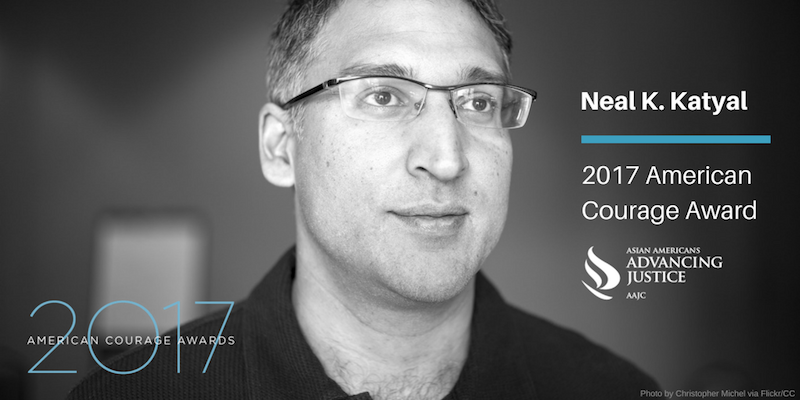
WASHINGTON (TIP): Asian Americans Advancing Justice | AAJC celebrated its 2017 American Courage Awards to recognize and celebrate individuals, groups, and corporations for their commitment and contributions to civil rights, on October 5, 2017. Prominent Supreme Court attorney Neal K. Katyal is among this year’s honorees.
Neal K. Katyal, former Acting Solicitor General of the United States and is the representing attorney for the state of Hawaii in its challenge to the President’s Muslim ban, received the American Courage Award. The honor is for an individual who has shown extraordinary courage or commitment to civil rights. Neal’s prolific body of work includes defending the constitutionality of the Voting Rights Act and defending the rule of law and due process in Hamdan v. Rumsfeld.
At the age of 47, Katyal has already argued more Supreme Court cases than any other minority attorney in U.S. history, except for Thurgood Marshall, with whom he is currently tied. Neal is best known for his work as lead counsel for the Guantanamo Bay detainees in the landmark decision Hamdan v. Rumsfeld, and for successfully defending the constitutionality of the Voting Rights Act of 1965. In 2011, Katyal led efforts to issue a confession of error by the Solicitor General’s office, formally acknowledging and apologizing for its role in Korematsu v. United States. Recently, Katyal served as the lead attorney for the state of Hawaii’s challenge to the President’s travel ban. It is clear from his work that he has a personal as well as professional commitment to the advancement of civil rights.
Katyal was deemed “one of the finest lawyers who has argued before a court,” by Chief Justice John Roberts. In 2011, Neal received the highest award given to a civilian by the U.S. Department of Justice, the Edmund Randolph Award. Neal has also served as a law professor for nearly two decades at Georgetown University Law Center, where he was one of the youngest professors to have received tenure and a chaired professorship in the university’s history. He also fought to overturn the patents held by Myriad Genetics that could help diagnose breast cancer winning a unanimous Supreme Court decision.
Signup to our Newsletter!
Don’t miss out on all the happenings around the world