LUCKNOW (TIP): In signs of fresh strains in the Samajwadi Party (SP) ahead of its state and national convention, its patron Mulayam Singh Yadav on Thursday removed Akhilesh loyalist Ram Gopal Yadav from the post of secretary of the Lohia Trust and appointed his brother Shivpal Yadav in his place.
SP is holding its state convention on September 23 in Lucknow while its national convention is scheduled on October 5 in Agra.
“At a meeting of the trust held here, Ram Gopal was removed from the post of secretary and I was given the responsibility to take forward the ideology of Dr Ram Manohar Lohia,” Shivpal, the warring uncle of Akhilesh, told reporters.
Asked whether he was invited to attend the SP state and national conventions, he said, “I have not received the invitation so far and I am unlikely to attend them.”
On his future course of action after being sidelined in the SP by his nephew, Shivpal said, “Netaji (Mulayam) will hold a press conference on September 25. He will make some announcements.”
He, however, did not elaborate, leaving media persons wondering as to whether the party patriarch will part ways with the SP and announce a front, reports about which were doing the rounds in the political circles.
In a meeting of the trust last month, Mulayam had sacked four Akhilesh loyalists who were its members, but had retained Akhilesh and cousin Ramgopal Yadav.
The Lohia Trust is an affiliate of the Samajwadi Party and Mulayam is its chairperson.
Shivpal, Akhilesh and Ramgopal Yadav, who is also the SP national general secretary, are members of the trust.
Mulayam had terminated the trust membership of Ramgovind Chaudhary, the Leader of Opposition in the Uttar Pradesh Assembly, Ahmed Hasan, Usha Verma and Alok Shakya at its annual meeting last month.
Deepak Mishra, whom Akhilesh had expelled from the SP, was been made a member.
Mishra is a close Shivpal aide and president of the Samajwadi Chintan Sabha. Shivpal’s other confidants Ramsewak and Ramnaresh from Etawah and Rajesh Yadav from Hardoi too were made new members of the Lohia
NEW DELHI (TIP): The Congress-led Opposition feels it has found an ‘inclusive narrative’ against the government in the looming economic slowdown, after highlighting issues such as ‘lynching’ and ‘intolerance’ in the last two years.
As the government works on providing stimulus to boost the economy, the Opposition camp calculates that highlighting against the economic slowdown and its potential social and economic fallout will cut across divisions — poor, jobless youth, distressed farmers, unhappy middle class, traders, small & medium enterprises and industry — and give it a pan-India plank that has minimum ‘polarising’ risk while it questions the Modi government’s development record.
Over the past few days, senior Congress leaders have reached out to leaders of like-minded Opposition parties, informally discussing ways to convert ‘economic distress’ into a new collective plank along with ‘social distress’, that a 16-party national committee is pursuing in various parts of the country by holding ‘save our composite culture’ stirs.
Congress insiders said, the Opposition will hold a joint meeting to announce an agitation to highlight ‘economic mismanagement’, ‘flawed development model’ and demand solutions. Soon after the RBI data on demonetised currency was out, ET had reported Congress president Sonia Gandhi could call a meeting of Opposition parties to work out a strategy to highlight the government’s ‘betrayal’.
The analysis given to the Congress leadership by in-house experts such as Manmohan Singh, P Chidambaram and Anand Sharma predicts further trouble for the economy. These parties think after demonetisation, the heralding economic slowdown along with teething problems can pose the biggest challenge to the regime. “The painful fallouts of economic slowdown have turned off those social segments, the youth, middle-class, traders and industry which had intensely rallied behind the BJP during the 2014 polls,” said an AICC functionary.
WASHINGTON (TIP): The U.S. India Business Council welcomed the U.S. Senate’s inclusion of a provision to advance defense cooperation between the U.S. and India in the 2018 National Defense Authorization Act.
This legislation further institutionalizes the U.S. government’s focus on the U.S.-India security relationship by requiring that the Secretary of Defense, in consultation with the Secretary of State, develop a strategy for advancing defense cooperation, promote defense job creation, further articulate the benefits of Major Defense Partner status, promote the competitiveness of U.S. defense exports to India, and designate a U.S. government official explicitly tasked with meeting these responsibilities.
“Senators Warner, Sullivan, Cornyn and Cruz deserve praise for maintaining Congress’s focus on this essential defense partnership – a relationship with tremendous commercial and strategic imperatives,” said Khush Choksy, acting president of the U.S.-India Business Council.
“This amendment sends an important message to both the executive branch and the Indian government, reaffirming that as a Major Defense Partner, the U.S. government elevates defense trade and technology cooperation to a level commensurate with the closest of allies and partners,” said Ben Schwartz, senior director for Defense and Aerospace for the U.S.-India Business Council.
“American industry understands and appreciates that this facilitates technology sharing between the two countries.” Marc Allen, president of Boeing International said, “The Boeing Company strongly supports this bipartisan amendment to enhance U.S.-India ties with one of our most important strategic relationships around the world.”
“As the world’s largest democracies, the United States and India share many common values and have many overlapping interests, especially in defense,” said Sen. Dan Sullivan (R-AK). “I’m pleased to be able to work with my colleagues on both sides of the aisle to continue highlighting the close defense cooperation between the U.S. and India. I am also happy to see that the National Defense Authorization Act, which just passed the Senate, included language demonstrating support for trilateral cooperation between the U.S., India, and Afghanistan. This collaboration will help strengthen the sovereignty and security of Afghanistan, which is both a regional and global interest.”
“India plays a critical role in our long-term national security interests, not just in the region, but around the globe. Our measure helps define the goals of that strategic partnership and the benefits of deepening U.S.-India defense cooperation,” said Sen. Mark Warner (D-VA). “I’m pleased it was included in the defense authorization bill that passed the Senate. I look forward to our language being included in the final defense authorization bill and being signed into law so that the administration has clear guidance in how to continue to foster this important relationship.”
WASHINGTON (TIP): US India Political Action Committee (USINPAC) hosted a dinner reception for a delegation of youth political leaders from India this week. The upcoming young politicians are here to learn US best practices in political and civic engagements, building political cadres and the role of media in governance. During their visit, the delegation will meet US lawmakers and discuss strategies for developing political organizations, through leadership training, organizing infrastructures, and campaigning methods, examine the role of the media, traditional and social, in political campaigning and governance and discuss challenges and impact of engaging youth in political and civic activism.
Invitees to the reception included Indian youth political leaders; Rizwan Arshad, Member of Legislative Council, Government of Karnataka, Raghav Chadha, National Spokesperson, Aam Aadmi Party, Raunaq Jain, Head, Legislative Assistants to Members of Parliament Fellowship, Vinay Bidre, National General Secretary, Akhil Bharatiya Vidyarthi Parishad, Abhishek Matoria, Member, Legislative Assembly, Rajasthan, Bhushan Penchalwar, National General Secretary, National Students Union of India, Lakshmanan Ramamurthy, Member, Rajya Sabha, All India Anna Dravida Munnetra Kazhagam (AIADMK) Party, Tanvir Sadiq, Political Secretary and Advisor to Former Chief Minister and Working President of National Conference, Omar Abdullah, Sachin Madhavrao Sawant, General Secretary and Chief Spokesperson, Maharashtra Pradesh Congress Committee, Nikhil Vyas, General Secretary, Bharatiya Janata Yuva Morcha, Mumbai, along with some distinguished Indian Americans of the region.
During the reception, USINPAC provided an historic overview of its role in the growth of U.S-India bilateral relations, the strengths and aspirations of the Indian American community and ways to foster investment and engagement with its counterparts in India. The visitors had many questions regarding the American experience in building youth cadres, job creation with skill development and renewable energy initiatives etc. Sachin Sawant and Dr. Lakshmanan spoke about the agrarian crisis involving rising farmer suicides in Tamil Nadu and Maharashtra. Tanvir Sadiq had questions relating to renewable energy, namely hydro-electric power generation in the state of Jammu and Kashmir.
Mr. Sanjay Puri, the host of the reception remarked, “India and Indian Americans should move from the myopic focus on H1B programs, instead tackle the larger forces of globalization and automation that are rapidly changing the global economic climate. We have to look to the future. USINPAC will continue to support and foster exchanges that will maximize benefits for both the US and India.”
SAN DIEGO, CA (TIP): UC San Diego celebrated the dedication of a new building for the divisions of Biological and Physical Sciences on Sept. 12 with a special announcement. The cutting-edge science building will bear the name Tata Hall for the Sciences, or Tata Hall, in recognition of a $70 million gift from the Tata Trusts, which was committed last year to create the binational Tata Institute for Genetics and Society.
The Tata Institute for Genetics and Society, established as a collaborative partnership between the university and research operations in India, will occupy the fifth floor of Tata Hall. The institute’s mission is the advancement of global science and technology through socially conscious means to develop solutions to some of the world’s most pressing challenges, from public health to agriculture.
“It is my privilege to dedicate this building in recognition of the Tata Trusts’ leadership and collaboration with UC San Diego, and the Tata family’s pioneering philanthropy and singular impact to bring about societal change,” said UC San Diego Chancellor Pradeep K. Khosla. “Tata Hall exemplifies UC San Diego’s tradition of non-tradition, inspiring cross-disciplinary collaboration among researchers and the next generation of innovators. This building will embody the spirit of the many shared values of UC San Diego and the Tata Trusts to benefit our global society.”
Trustees of the Tata Trusts were on hand at the dedication of Tata Hall and participated in the ceremonial signing of a beam that will be incorporated into the construction. The building is slated for completion in 2018.
“I am very proud of being associated with this great institution,” said Tata Trusts Chairman Ratan N. Tata, who recounted his thoughts from when he first visited UC San Diego. “I realized that here in San Diego, I had seen a gold mine of intellectual capacity and enthusiasm. I kept feeling that there is something happening at UC San Diego that would make a difference in the years ahead. What we are doing is a big thing for mankind in our part of the world … and I look forward to this involvement as just a first part of what we can do together.”
Further underscoring the growing impact and scope of the Tata Institute for Genetics and Society, UC San Diego also announced the four inaugural chair holders of the Tata Chancellor’s Endowed Professorships. These chairs are the first in a series of 10 endowed faculty chairs that were established by UC San Diego to attract and retain top scientists and faculty focused on research that aligns with the institute’s goals.
NEW YORK CITY, NY (TIP): Fifty-Two Indian Americans have adopted their native villages to turn them into smart villages. The venture was the result of a 15,452-km road journey taken by Jagat Shah, an Ahmedabad-based trade and business consultant, from June to September this year. The aim was to connect entrepreneurs of the two countries with each other in a bid to encourage investments and create jobs.
Shah traveled across 35 cities in 24 states of the U.S. in 78 days as part of his multi-nation mission called Mentor on Road (MoR). The marathon, which had the theme Great America–New India, started on June 4 and ended on Sept. 17.
“Even former Indian Army Chief General Dalbir Singh Suhag, who interacted with us at one of our events in the U.S., has adopted his native village,” Shah was quoted as saying at the concluding ceremony of his journey held at New York on Sept. 19.
“When the foundations of the way and ease of doing business started changing since 2014, it was the call from the nation that change and awareness at grass-root level is a must. With the new vision of “Digital India”, “Stand Up India – Start Up India”, “Skill India”, “Smart Cities” and “Swacch Bharat (Clean India)”, I decided to go to the grassroots of India to realize this audacious dream gifted to us by Hon. Prime Minister of India, Shri Narendra Modi. I have completed the India tour of 35 cities in 25 states driving 9500 KMs and met 10,000+ companies to understand their challenges & offer solutions on a global scale”, he wrote on Mentor on Road website.
The initiative was undertaken with the sponsorship of the US Commercial Service (USCS); Startup India, a mission of the Indian Ministry of Commerce; the US-India Importers’ Council; and Etihad Airways.
During the journey, Shah interacted with nearly 4,400 small and medium entrepreneurs, women entrepreneurs and startups in the United States to make them aware of business opportunities and ease of doing business with India in different sectors.
His presentation included the following topics:
Firsthand information on Indian market dynamics
Best prospect sectors in India for a U.S. exporter
Impact of Demonetization and Goods and Service tax (GST) on the U.S. exporters
Jagat Shah studied MBA (International trade) graduating from Delhi University & is a certified cluster development practitioner, trained & certified by United Nations – UNIDO at Turin, Italy. He has additionally graduated in Diamond technology from Indian Diamond Institute (IDI), Surat. He is a certified management consultant (CMC) from ICMCI, USA.
NEWARK, NJ (TIP): A New York man of Indian origin was sentenced on Sept 19 to 24 months in prison for his role in one of the largest credit card fraud schemes ever charged by the Justice Department, Acting U.S. Attorney William E. Fitzpatrick announced.
Raghbir Singh, 61, of Hicksville, New York, previously pleaded guilty before U.S. Magistrate Judge Madeline Cox Arleo to an information charging him with one count of conspiracy to commit bank fraud. Judge Arleo imposed the sentence in Newark federal court.
According to documents filed in this case and statements made in court:
Singh was originally charged in February 2013 as part of a conspiracy to fabricate more than 7,000 false identities to obtain tens of thousands of credit cards. Members of the conspiracy doctored credit reports to pump up the spending and borrowing power associated with the cards. They then borrowed or spent as much as they could, based on the phony credit history, but did not repay the debts – causing more than $200 million in confirmed losses to businesses and financial institutions.
The scheme involved a three-step process in which the defendants would make up a false identity by creating fraudulent identification documents and a fraudulent credit profile with the major credit bureaus; pump up the credit of the false identity by providing false information about that identity’s creditworthiness to those credit bureaus; finally, run up large loans.
The scope of the criminal fraud enterprise required the defendants and their conspirators to construct an elaborate network of false identities. Across the country, the conspirators maintained more than 1,800 “drop addresses,” including houses, apartments and post office boxes, which they used as the mailing addresses of the false identities.
Singh admitted he helped obtain credit cards in the name of third parties – many of which were fictional – then directed the credit cards to be mailed to addresses controlled by members of the conspiracy. He also admitted he knew the cards would be used fraudulently at businesses.
In addition to the prison terms, Judge Arleo sentenced Singh to three years of supervised release and fined him $1,000.
(Source: DOJ- U.S. Attorney’s Office, District of New Jersey)
STANFORD (TIP): Stanford anesthesiologist Vanila Singh has been named Chief Medical Officer for the office of the Assistant Secretary of Health at the Department of Health and Human Services. Health Secretary Tom Price, who appointed Singh, congratulated the Stanford anesthesiologist on her new role via twitter Aug. 25. Vanila Singh will serve as the primary medical advisor to the Assistant Secretary for Health on the development and implementation of HHS-wide public health policy recommendations. Dr. Singh’s portfolio includes issues related to pain medicine, including opioid use and misuse; medical ethics; and public health. “I feel very honored to go into public service, and feel very fortunate that the president and Secretary Price have chosen such important priorities,” said Dr. Singh.
Singh graduated from the University of California, Berkeley where she double-majored in economics and molecular and cell biology and completed her M.D. in medicine from the George Washington University Medical Center. Dr. Singh has served as a clinical assistant professor at the University of California, Los Angeles (UCLA) Medical Center and as a clinical associate professor at Stanford University Medical School for anesthesiology, perioperative and pain medicine. Dr. Singh received a master’s degree in academic medicine through the University of Southern California’s Keck School of Medicine in 2016.
Dr. Singh has been active in national medical organizations, serving as the Vice Chair of the National Physicians Council on Health Policy; an editorial board member of the Pain Physician Journal for the American Society of Interventional Pain Physicians; and a member of the California Medical Association’s (CMA) House of Delegates. In 2014 with various Republican endorsements, Singh contested against incumbent Democrat Mike Honda as the US Representative in California’s 17th District (Silicon Valley) in 2014.
KANSAS (TIP): Indian American Entrepreneur Anita Malik, a Democrat, announced her candidacy to run against Congressman David Schweikert in Arizona’s 6th Congressional District.
The daughter of immigrants from India, Anita was born in Kansas City, Missouri. When she was 7, her family moved to Arizona. Her father, a mechanical and computer engineer, instilled in her the importance of leading with empathy and listening; her mother, a stay-at-home mom with a passion for the arts, taught her to appreciate the journey. She attended Scottsdale schools, graduating from Chaparral High School in 1994.
Anita went on to graduate summa cum laude with degrees in both computer information systems and finance from Arizona State University. She later earned her master’s in journalism from the University of Southern California in 2002.
Anita started her career in the early days of Arizona tech, working for MicroAge as a business analyst. She went on to work at the The Arizona Republic, and was Deputy Director of ASU’s Donald W. Reynolds National Center for Business Journalism. More recently, Anita was COO of marketing tech startup, ClearVoice. Over the years, she developed a unique blend of content and technology experience that put her at the forefront of digital media.
Anita’s entrepreneurial projects have often struck a chord nationally. In 2004, she founded East West Magazine, a national publication celebrating the pan Asian-American life. She was featured on FOLIO’s “40 Under 40” list for her ability to eloquently promote and support a multicultural America. Anita was also a regular guest on NPR’s “Tell Me More.”
Her more recent projects include BrideRush, an online booking tool for event planning; ListenforHer, resources to help women at work; and process consulting for local startups and government agencies.
Anita’s motivations in business changed when she lost her father to cancer in 2003. No success in business matters, he reminded her, if you don’t have your health. Since then, Anita’s energy has been focused on creating healthy, compassionate and balanced workplaces. She hopes to continue this mission with legislation to support affordable childcare options, wellness programs and equal pay.
CHICAGO, IL(TIP): Suzy’s Place hosted, September 8, its formal Inauguration of its service facility at 6425 N Rockwell Street, Chicago, IL, located in the diverse Rogers Park neighborhood.
The event was attended by esteemed government officials – Congressman Raja Krishnamoorthi, Secretary of State Jesse White, and Alderman Carrie Austin. Also in attendance were our partners- Kate Lawler from Swedish Covenant Hospital, Lillian Cartwright from The Chicago Battered Network, Syed Nizami from US Bank and Eugene Williams from (NOBEL) – National Organization of Black Law Enforcement Executives.
Co-Founders Arshia Hasnain and Shahida Khan welcomed a room full of over 150 attendees and explained to them the importance of working together to help make a positive impact in the lives of women and children who are subjected to domestic violence. Together we can make our Chicago community safer and productive.
Suzy’s Place is a 501c3 nonprofit organization registered in the state of Illinois.
Suzy’s Place provides emergency and transitional housing, emotional support, and a diversified continuum of services focused on safety, empowerment, and self-sufficiency. Through community partnerships, Suzy’s Place raises awareness, provides services, and educates community about domestic violence issues. Now with our service facility almost complete we will be providing weekly classes to not only empower the women in our shelter but to all the women in the neighborhood. The classes we offer will help to strengthen the body, mind and soul. Our yoga, art, dance, music and self-esteem therapy classes will benefit every woman.
Suzy’s Place is a startup and needs all your support. We know how hard it is to run a shelter and we have accepted the challenge. But we really need your help. Please donate generously by going to our website at www.suzysplace.org and press the donate button. You can also visit us on Facebook and follow our activities on social media at https://www.facebook.com/Suzys-Place-232412787223842/ Your donations will help to empower these survivors of Domestic Violence.
CHICAGO, IL (TIP): Dr. Vemuri S. Murthy, a Chicago-based Anesthesiologist and resuscitation expert has become the 169th President of the prestigious Cook County Medical Organization, The Chicago Medical Society (CMS) in a well-attended inauguration ceremony @ Maggiano’s Banquets in Chicago on September 12, 2017. He is an alumnus of Guntur Medical College and All India Institute of Medical Sciences (New Delhi) in India and Rush Medical Center in Chicago.
The Chicago Medical Society is one of the largest county medical societies in the nation, representing approximately 17,000 physicians offering their services to about 5 million people.
Dr. Murthy has served the organization in different capacities since 1983. He is the Founder of the CMS Community CPR project SMILE (Saving More Illinois Lives through Education) in raising awareness of sudden cardiac arrests with CPR education throughout the greater Chicago communities for several years. SMILE is the first community CPR project offered to the public by a Medical Society in USA. The training participants included the US Congressmen, Illinois and Chicago legislators and members of the Chicago Consular Corps including Indian Consulate.
A past Chairman of the Anesthesiology department @ West Suburban Medical Center in Oak Park, Illinois and past President of the Indian American Medical Association, Illinois (IAMAIL), Dr. Murthy has been a veteran volunteer of the American Heart Association for many years and is a member of the International Committee. A pioneer of resuscitation education in Indian Medical Colleges, he is an advisor to the training centers and a visiting University Professor. A “Champion of Global Health” and recipient of several national and international awards for his contributions involving resuscitation and public health education, he is leading a national Hands-only community CPR project in India involving the University of Illinois @Chicago, IAMAIL and Share India.
In his inaugural address, Dr. Murthy stressed the need for more active physician participation in organized medicine through the Medical Societies in this age of rapidly changing healthcare arena affecting physician practices and patient care. He also encouraged the younger physicians including medical students and residents to become members of a medical society even before they start their medical practices. He mentioned the advantages of CMS membership such as advocacy, education, informational exchange and networking. Chicago Medical Society has been serving the interests of physicians in Cook County and promoting quality patient care for several decades and as the incoming President, Dr. Vemuri S. Murthy is committed to this mission!
NEW YORK CITY, NY (TIP): Virendra Pandit has published his second book” Return of the Infidel” which was launched in New York on September 18. The gathering included, besides others, Dr. VK Raju who recently launched his book “Musings on Medicine, Myth, and History: India’s Legacy”, Mentor on the Road Jagat Shah, Mrs. Shah, Harinder Singh Panaser, Sunil Hali, publisher of Indian Express, Prof. Indrajit S Saluja, editor-publisher of The Indian Panorama.
A view of the gathering. Mr. Virendra Pandit is seen second from right
About “Return of the Infidel”
The book deals with the question of rise, decline, fall and revivification of nations and civilizations, which are organic entities like us and our institutions. The author has raked up some interesting questions and essayed to answer them.
*How and why Christianity and Islam are retreating across the world?
*How and why did Gandhi push Pakistan out of India?
*Why is Jinnah Father of the Indian subcontinent?
*And, how have Japan, India and China, in that order, revived like phoenix in the last two centuries?
Virendra Pandit presents a copy of the book to Harinder S Panaser
In author’s own words,” What does a business do to survive when it turns stagnant? It retires debt, sheds flab, invites technological up-gradation, undergoes financial reconstruction and tries to regain its market share. Or, what do we do when our vehicle breaks down midway? We call in the serviceman to repair the dysfunctional automobile and help us resume our journey.
“A similar pattern is observable in the rise, decline, fall and revivification of nations and civilizations, which too are organic entities like us and our institutions. They also follow a similar incremental organic evolutionary process through natural selection and mutation to survive, shed excess baggage of the past, and bounce back as the fittest. There is a difference though: while uncompetitive and ageing humans die, their societies mostly survive through regeneration by inducting disruptive catalysts for mutation.
“How and why do nations, and civilizations, rise and fall with such regularity and clock-wise precision? The answer: when societies and nations turn dysfunctional due to stagnation, they allure alien catalysts to revive themselves.
“Return of the Infidel is about how ancient cultures and civilizations like India, China and Japan did so: Christianity and Islam, the contemporary disruptive catalysts, came to revivify these menopausing societies. Since India, due to its proximity to these catalysts from West Asia (and Europe), had to struggle the hardest until 1947, the book explains this saga in greater detail; but the story of China and Japan, and that of many other breaking-out nations in Asia, Africa and South America, is similar and waiting to be told.
“On the other hand, most Christian nations, after the Crusades, shed surplus population, outgrew Christianity, and embraced Renaissance and modernity. Muslim countries, too, are following the same path: Islamic terrorism is their struggle to remain relevant, eliminate surplus male population within and usher in their own Renaissance.
“The ancient countries used Christianity and Islam only as catalysts to revive their contemporary civilizations, and slowly made these overstaying guests retreat during what we call decolonization. Since our heroes, like our gods, are crystallization of our societies’ collective consciousness and aspirations, these Asian nations incrementally conceived leaders like Gandhi, Mao and Tojo who led their countries to push out the erstwhile catalysts-turned-colonizers. Proselytizing and evangelizing faiths like Christianity and Islam viewed these non-Abrahamic people as ‘Infidels’—and they are Returning now! This return to global reckoning began with Japan in 1905, and is ongoing now with China; interestingly, Japan was the force-multiplier to the bigger and real players, India and China!
“This is the biggest power-shift in the organic world of Homo sapiens in the last 2,000 years!”
Dr. VK Raju presents his book “Musings on Medicine, Myth, and History: India’s Legacy” to Mentor on the Road Jagat Shah
About Virendra Pandit
Virendra Pandit is a professional journalist since 1983. He holds a Bachelor of Science (B.Sc.) degree and a Master of Arts (M.A.) in Economics from the University of Indore. He has contributed articles on diverse subjects to newspapers, magazines and online publications. Since 2006, he has been working with The Hindu Group of Newspapers as a business journalist.
He is a passionate student of biology and the other sciences, philosophy and psychology, religions and technology, history and culture, linguistics and music, international politics and diplomacy, besides mathematics and cosmogony. His first book, The Biology of History: Ascent of Women, published on Amazon and then by Partridge-Penguin, was welcomed with rave reviews.
He lives in Ahmedabad, India, with his wife, Kalpana.
NEW YORK, NY (TIP): With headlines filled with examples of rage, violence and disaster in every news cycle, New Yorkers took a moment on the International Day of Peace to celebrate some of the people and organizations that make communities safe and livable, and remind citizens that everyone has a stake in keeping neighborhoods, cities and countries peaceful.
Two leading peace organizations, the Institute for Economics & Peace (IEP), and Outward Bound Peacebuilding (OBP) brought together eight civic organizations in a colorful ribbon display that brought to life the Positive Peace framework. The Positive Peace framework includes eight pillars derived by IEP using statistical analysis to identify the factors that contribute to peace. The eight pillars include: a well-functioning government, a sound business environment, the equitable distribution of resources, low levels of corruption, high levels of human capital, the acceptance of the rights of others, the free flow of information, and good relations with neighbors.
“Peace is much more than a lack of violence,” said Michelle Breslauer, Program Director from the Institute for Economics and Peace. “Understanding what contributes to building trust and cohesion is key to peaceful societies. While these eight factors sustain peace, they cannot be viewed independently. It is crucial that we understand how they relate to each other and how the entire system can be strengthened. Today we are bringing this system to life,” she continued.
“Sustaining and investing in peace is a shared responsibility,” said Ana Patel, Executive Director of Outward Bound Peacebuilding. “That’s why we are bringing New Yorkers together today to connect to and learn from these eight pillars of peace. This is a call to action for all New Yorkers to become peacebuilders.”
Eight leading civic organizations were selected to represent each of the pillars:
SOUND BUSINESS ENVIRONMENT: Dr. Jasmin Cowen, President, Rotary Club of New York
WELL-FUNCTIONING GOVERNMENT: Jerry Weinstein and Ray Shah, Co-Founders, The Freedom Threat Index
EQUITABLE DISTRIBUTION OF RESOURCES: Matthew Botwin, Board Member, CAMBA
FREE FLOW OF INFORMATION: Daniel Hyslop, Research Director, Institute for Economics and Peace
GOOD RELATIONS WITH NEIGHBORS: Laura Gonzalez-Murphy, Director, New York State Office for New Americans
HIGH LEVELS OF HUMAN CAPITAL: Professor Tom Hill, Director, Initiative for Peacebuilding through Education, Center for Global Affairs, New York University and Elizabeth Bishop, Director of Curriculum and Outcomes, Global Kids
ACCEPTANCE OF THE RIGHT OF OTHERS: Alex Rizio, Supervising Attorney & Co-Coordinator of the Unaccompanied Latin American Minors’ Project, Safe Passage
LOW LEVELS OF CORRUPTION: Zoe Reiter, Representative to the US and Senior Project Leader, Transparency International
The Positive Peace activity builds on a successful collaboration in May 2017 between IEP, OBP, and Rotary International that saw 300 Mexican youth map the eight pillars.
Each year, the International Day of Peace is observed around the world on 21 September. It was established in 1981 by unanimous United Nations resolution, to provide a globally-shared date to commit to building a culture of peace.
About the Institute for Economics and Peace
The Institute for Economics and Peace (IEP) is a global think tank dedicated to shifting the world’s focus to peace as a positive, achievable, and tangible measure of human well-being and progress. IEP has offices in New York City, Sydney, Mexico City, and The Hague. It produces the annual Global Peace Index, the world’s leading measure of global peacefulness.
About Outward Bound Peacebuilding
Outward Bound Peacebuilding (OBP) uses the Outward Bound approach of experiential learning in the outdoors to challenge and inspire leaders in divided societies to build peace. OBP works with partners around the world to design programs that embrace traditional Outward Bound values and approaches to learning by doing, with a special emphasis on compassionate leadership, cooperative learning, and creative action. OBP calls this Experiential Peacebuilding. Since 2009, Outward Bound Peacebuilding has challenged and inspired more than 200 peacebuilding leaders from 25 countries throughout the world.
UN Women and corporate leaders join forces to advance gender equality as an enabler and accelerator to address global challenges
NEW YORK (TIP): In a high-level event organized by UN Women in the context of the 72nd session of the UN General Assembly, Melinda Gates, Co-Chair and Trustee of the Bill & Melinda Gates Foundation; Jack Ma, Executive Chair of the Alibaba Group and Nirvana Chaudhary, President of the Chaudhary Group and Chair of the Foundation and Phumzile Mlambo-Ngcuka, United Nations Under-Secretary-General and Executive Director of UN Women for a strategic conversation on how collective action can scale-up opportunities for women and girls.
The dialogue among a select group of business and foundation leaders focused on the transformative role that companies and foundations can play to support the achievement of Sustainable Development Goals, including Goal 5 on gender equality. It highlighted new initiatives, such as the Unstereotype Alliance convened by UN Women with major advertisers and communications industry leaders to promote a more realistic and aspirational portrayal of women; the “Making Every Woman and Girl Count” initiative to generate, prioritize and use gender data for evidence-based and targeted policies; and the Global Innovation Coalition for Change aiming to make innovation work for women’s empowerment.
Participants at the event agreed that gender equality is a force to enable and accelerate achieving the Sustainable Development Goals (SDGs) and that empowering women is central to addressing the 21st century’s global challenges such as poverty, inequality, and violence. Yet, deep financing gaps for women and girls pose significant barriers and deter progress.
“We are very clear that the private and philanthropic sectors are essential partners for our work as we move forward with implementation of the 2030 Agenda for Sustainable Development. Their support is fundamental to UN Women endeavors, including building the Women’s Empowerment Principles, calling for and leading the investment in gender data analysis, eliminating gender stereotypes in advertising, and boosting ways in which innovation and technology can work better for women and girls,” said Phumzile Mlambo-Ngcuka, UN Women Executive Director. “This is everyone’s business, and I call on both current and potential partners to join this movement to drive the transformative changes needed,” she added.
Financial commitments made at the event will support UN Women’s efforts towards the achievement of the Sustainable Development Goals by expanding women’s economic opportunities, promoting innovation, developing effective gender data metrics, addressing regressive norms and stereotypes and improving safety for women and girls globally.
“We have learned from our partners that if we don’t look at the gender piece of our work, we will never achieve our goals and lift people up,” said Melinda Gates. “We have a lot of anecdotal evidence about women in terms of their lives and livelihoods, and now, we are finally doing the research and gathering data to inform policies and programs. Gender matters. If we are serious about achieving the Sustainable Development Goals, we have to invest in gender data. It is at the heart of what we do.”
“The importance of women and girl child equality and livelihood is ever more important in this world. Chaudhary Foundation has 40 plus initiatives addressing the 17 Sustainable Development Goals with focus on women and children at its center-stage. We are excited about embarking in to gender data work in Nepal in partnership with UN Women,” shared Nirvana Chaudhary, Chair of Chaudhary Group Foundation.
Global business and philanthropy leaders pledging support to deliver on gender equality at today’s event included: Melinda Gates, Co-Chair and Trustee of the Bill & Melinda Gates Foundation; Jack Ma, Executive Chair of the Alibaba Group; Nirvana Chaudhary, Chair President of the Chaudhary Group and Chair of the Foundation; Her Royal Highness Princess Lamia Bint Majed Al Saud, Secretary-General of Alwaleed Philanthropies; Carolyn Tastad, Group President of Procter & Gamble North America; Wang Guangfa, Chairman of the Board and President of Beijing Fazheng Group; Andrea d’Avack, President of Chanel Foundation; Keith Weed, Unilever Chief Marketing and Communications Officer; Deepak Premnarayen, Executive Chairman and founder of ICS Group; José Caetano, People Management Director of Banco Di Brazil; Kofi Appenberg, Chair of the Ford Foundation Board of Trustees; Anka Wittenberg, SAP Diversity & Inclusion Officer; and Elfrun von Koeller, Partner and Managing Director at The Boston Consulting Group; among others.
The Unstereotype Alliance and the Global Innovation Coalition for Change were represented by companies such as Alibaba, ANA, AT&T, Citi, Facebook, General Electric, Google, IPG, Mars, Microsoft, Publicis, P&G, SAP and Unilever.
Follow the hashtag #Planet5050 and @UN_Women on Twitter for updates. Watch the forum on Facebook Live: https://facebook.com/unwomen/videos/10154845898991905.
UN Women is the UN organization dedicated to gender equality and the empowerment of women. A global champion for women and girls, UN Women was established to accelerate progress on meeting their needs worldwide. For more information, visit www.unwomen.org. UN Women, 220 East 42nd Street, New York, NY 10017, New York. Tel: +1 646 781-4400. Fax: +1 646 781-4496.
US President Donald Trump lived up to his reputation as America’s most volatile and impulsive President ever during his maiden address to the UN General Assembly. Even the most clairvoyant analyst would not have predicted that he would not just threaten to totally destroy North Korea and mock its President but also disparage the efforts of those trying to get Kim Jong-un see reason. Trump has shown his disregard for institutions and their processes right from his inauguration by sacking nearly four dozen ambassadors. The result: India does not have a US envoy while the tiny Sri Lanka has one. Having already sent the normal channels of conducting diplomacy in a tailspin, his single sentence damning North Korea, besides Russia and China, may be the biggest blow to US diplomacy yet.
The offensive tone of President Trump’s speech is unlikely to persuade China and Russia to support more sanctions on North Korea and may even persuade them to lend back-handed support to Pyongyang. None of his allies are also going to be on board for a nuclear weapon-led military action that will impose horrendous casualties in the Korean Peninsula as also on Trump’s fellow citizens and the Japanese if Kim opts for preemptory strikes. If Kim was guilty of dangerous overreach by sending missiles over Japan, Trump has joined him in the dunce’s corner.
By making the ultimate threat of use of nuclear weapons, Trump has also inadvertently strengthened Kim domestically. Trump has gifted the North Korean enough domestic political capital to ride over the hardships of the fresh round of sanctions. And if Trump also tries to go back on the Iran nuclear deal, both China and Russia would have enough reasons to suspect that the neo-Con vision of a unipolar world is once again in play. Instead of continuing to assist the US, they would be more inclined to let Trump stew in the embarrassment of the world’s most powerful nation not being able to carry out a threat broadcast no less from the global high table against the world’s economic and political basket case.
It must reopen the discussion on balancing the global intellectual property system with development
By Padmashree Gehl Sampath
Global trade and intellectual property are at a crossroads. In a time when multilateral consensus is languishing on a large number of issues, the Trump administration is considering pulling the U.S. out of most free trade agreements on the ground that it needs a more favorable environment for its companies and its people. Much will be written about the carnage as far as jobs, wages and national sovereignty that the current American onslaught on trade deals brings to the fore. Here, I focus on a critical issue — how trade deals are becoming the new Trojan horse to ensure stronger patent protection and continued profits to global companies.
Problem with trade deals
A bit about the historical trajectory of events. The Agreement on Trade-Related Aspects of Intellectual Property Rights (TRIPS) embodied an international regulatory regime for the first time, in 1995. Although it represented a major compromise for most developing countries, it was only the starting point for many other nations, which have since then promoted excessive protection of private investor interests through bilateral trade agreements, often at the expense of wider public interests. Corporate libertarians, riding high on increased market power, continue to lobby their governments for absolute protection of intellectual property (IP) rights of corporations.
For the U.S., which has never made any qualms about the importance of its domestic corporate interests, trade agreements are a prime vehicle to supplant its strong domestic standards of IP protection in partner countries, in a bid to ensure the same level of privileges for its companies abroad. Over the past 20 years, the American strategy has been a neat one: to pursue bilateral agreements with individual countries one by one to ensure stronger IP protection across markets, by sidestepping the multilateral regime.
Gaming the system
In an inter-connected and highly globalized world, what goes around comes around quite fast and often with drastic consequences for all. In this case, the crux of the matter lies in how these stronger rules are changing the global corporate landscape. For years now, while patent protection is getting stronger in all sectors in a large number of countries, the conditions for its grant are becoming greatly relaxed. Not only do such lax patenting requirements allow companies to claim patents more broadly — or consecutively, with little show of original effort as in the case of evergreening — but also patents can be claimed on all possible inventions (and discoveries) that are of relevance to the present, and even to the future. A large number of countries have already foregone many degrees of policy freedom by signing up to ‘TRIPS-Plus’ standards of protection. This, in conjunction with other trade measures, is disintegrating existing markets and rigging established rules of the game. A superstar firm today is not necessarily one with the greatest technological breakthroughs or the largest research and development labs, but surely is one that has a large IP portfolio, engages in extensive litigation on patent issues, and thrives on licensing revenues. Noting the gravity of the situation, The Economist in 2016 produced two short opinion pieces on how corporate profits and returns on capital are at near record levels in the U.S. and what might be wrong with it. It argued that established companies are “becoming more entrenched” in existing markets worldwide, and made the case that high profits may be a sign of a sickness rather than growth and called for reining in IP rights.
At the global level, these sectors are stratified, with profits neatly split up between large corporations and new kinds of non-innovator firms that simply amass patents speculatively in upcoming, promising technologies for spurious returns. The non-innovator companies are the patriciates of the system: when they hit the technology jackpot, they control the market and have the power to shift wealth and control competition. An example that beautifully captures the situation is Qualcomm Inc., an American company that is the legal patent holder of thousands of patents that are considered critical to build mobile phones with wireless technologies, accounting for a total profit of $5.7 billion through intellectual property licenses in 2016 alone.
Stemming the tide
For India, the fate of its pharmaceutical and software sectors swings in the balance, and guaranteeing fair and unfettered competition will be critical to ensure that we do not lose more ground to global companies abroad and at home. The United Nations Conference on Trade and Development (UNCTAD)’s recent Trade and Development Report calls for stronger measures to protect domestic sectors against the undue domination of large companies, particularly in high-profit sectors such as pharmaceuticals, media and information and communications technology (ICT), where foreign companies still account for most of the transfer of profits across borders. Warning against trade deals that seek to protect the status quo, the report identifies patents as an instrument of unfair market power across markets. The report uses data for U.S. multinational companies (MNCs) and their foreign affiliates in India to show that patent reforms have led to significant increases in the rates of return to affiliates of American companies by enabling monopoly profits when compared to publicly listed and locally headquartered companies, which are increasingly being left behind. In the pharmaceutical sector, for example, the analysis that ranges 20 years (from 1996) shows that profits of domestic companies are in sharp decline since the late 2000s while those for the American MNC affiliates operating in the Indian market are rising steeply. A similar trend is visible in the ICTs sector as well.
It is important to take these findings in the broader perspective of what India’s growth drivers will be in the years to come. Our high-technology sectors are already taking a beating because they operate in a volatile global environment. Supporting IP standards that simply follow a ‘winner takes all’ ideology without emphasis on technological advancement and competitive markets will be a regrettable mistake. What India needs right now is a clear and tough stance on intellectual property both in domestic policy and at the multilateral level. At home, support for innovation has to be accompanied with instruments that guard against the misuse of market power, coercive bargaining and aggressive merger and acquisition strategies if local firms should survive and flourish.
Heated negotiations in the run-up to the upcoming WTO Ministerial Conference in Argentina already show that these issues will be central: there are ongoing attempts by big business to push for new rules in areas such as e-commerce to slice up profit-making opportunities of the future. Other proposals being made will largely limit the ability of governments to constrain corporate behavior in the public interest even if they succeed partially. In such an international context, we need to stop soft-peddling on these issues in the pretense that we aspire to be a major IP player in the same vein as the U.S. What we need is a return to old-fashioned pragmatism that clearly shows the West that India recognizes the fallacy of the current IP system and leads the way to broker a global new deal. This new deal should not only call for a return to business in the WTO by tackling the forgotten issues of the Doha Round but also firmly reopen the discussion on balancing the global IP system with development. That way, even if we don’t win in Argentina, we will have made an ambitious start in redefining the global trade and IP agenda.
(The author is a policy expert at the United Nations Conference on Trade and Development, is one of the authors of the Trade and Development Report 2017)
“Notwithstanding the carefully structured discussions between the two leaders — and while Doklam did not figure in the discussions — relations between India and China are unlikely to show any marked improvement in the near, and perhaps even in the medium, term. For the present, avoidance of a conflict will remain the principal objective on both sides, with China no doubt looking for an expansion of opportunities for trade. The key watchwords would, hence, be peace and tranquility”, says the author.
The Brazil, Russia, India, China and South Africa grouping (BRICS) has since long ceased to be of material significance as multilateral institutions go. The recent BRICS Summit in Xiamen (China) only seemed to confirm this. It suggests that BRICS may be going the way of quite a few other organizations.
Inconsequential declaration
Little of consequence appears to have happened, or to have emerged, from the latest summit. The Xiamen Declaration is proof of this. Considering that this meeting was taking place in the shadow of significant global events, notably North Korea’s nuclear provocations and the U.S. response, other serious developments in Asia, including Afghanistan and West Asia, apart from issues of consequence elsewhere, the absence of any reference to these events in the Summit Declaration suggests that BRICS is clearly out of sync with current realities.
Much has been made by the media about the inclusion of Pakistan-based terrorist groups such as the Lashkar-e-Taiba and the Jaish-e-Mohammed among the many terrorist groups active in the region. It, however, needs to be understood that this was merely a reiteration of something already mentioned in the declaration of the Heart of Asia Conference held in India in December 2016.
The Heart of Asia declaration had highlighted the ‘gravity of the security situation in Afghanistan and in the region, drawing attention to the high levels of violence caused by the Taliban, terrorist groups including the Islamic State, al-Qaeda and its affiliates, the Haqqani network, Islamic Movement of Uzbekistan, East Turkestan Islamic Movement (ETIM), Lashkar-e-Taiba, Jaish-e-Mohammed, Tehreek-e-Taliban Pakistan, Jamaat-ul-Ahrar, Jundullah and other foreign terrorist groups’. To attach special significance to the inclusion of this passage in the Xiamen Declaration, and view it as China administering a resounding slap on its ally, would be a profound mistake.
The BRICS declaration is perhaps more significant for what it did not include. Absence of any mention of China’s Belt and Road Initiative (BRI) — even though Beijing sets such great store by it — is one. At this point, one can only speculate on the reason. It is possible that China may not have wanted to introduce a discordant note into the proceedings — knowing India’s reservations regarding the project — of a conference that it was presiding over. Or perhaps, China does not think that BRICS could make a material contribution to the achievement of its objective.
BRICS’ limited scope
One takeaway from the conference also could be that China sees little use of BRICS to achieve its geopolitical and geo-economic objectives across Asia and beyond. BRICS as a body can hardly help China in dealing with a knotty problem like North Korea. It has no need for BRICS to deal with problems such as the South China Sea and freedom of navigation on the seas. From its point of view, BRICS is an outlier as far as pressing problem in the region and beyond are concerned.
BRICS suffers from other infirmities as well. Brazil and South Africa are increasingly becoming peripheral to BRICS’ aims and objectives. Russia is currently more preoccupied with establishing its supremacy in Eurasia, and its interest in BRICS is not of the same order as in the past. This leaves only India, and limits the scope of BRICS to issues and regions such as Afghanistan that have featured in previous BRICS meetings.
The summit, however, provided an opportunity for leaders to meet and conduct business. For instance, Prime Minister Narendra Modi’s intervention at the BRICS Business Council helped highlight India’s emergence as one of the most open economies on the globe. At the BRICS Emerging Markets and Developing Countries Dialogue, Mr. Modi highlighted India’s long tradition of partnership with fellow developing countries. Among the ten commitments he listed was that of creating a safer world by “organized and coordinated actions on at least three issues: counter-terrorism, cyber security and disaster management”. The Prime Minister also called for a skilled, healthier and equitable world, as also the critical importance of sustainable development goals.
Bilaterals, Beijing détente
Considerable significance attaches to the meetings held between Mr. Modi and the Russian and Chinese leaders on the sidelines of the summit. The emphasis during his meeting with Russian President Vladimir Putin seems to have been on the restoration of ties between the two countries to levels that existed in the past. Discussions also centered on ways to boost bilateral trade and investment, especially in the oil and natural gas sectors.
The meeting with Chinese President Xi Jinping acquired particular significance coming as it did after the over two-month-long stand-off at the Doklam Plateau. The convergence between the two countries on international terrorism at the BRICS Summit seems to have led to a thaw for the time being. Assurances emanating from the meeting, and the adoption of a low-key approach, were aimed at enhancing mutual trust. The intention seemed to be to establish ‘new ways’ to prevent future incidents such as Doklam, and concentrate on essentials needed to establish better relations.
Notwithstanding the carefully structured discussions between the two leaders — and while Doklam did not figure in the discussions — relations between India and China are unlikely to show any marked improvement in the near, and perhaps even in the medium, term. For the present, avoidance of a conflict will remain the principal objective on both sides, with China no doubt looking for an expansion of opportunities for trade. The key watchwords would, hence, be peace and tranquility.
The road after Doklam
It would take much longer for trust to return; as it is, trust between the two countries had begun to be affected as India moved closer to the U.S., strengthened its relations with countries like Japan and Vietnam that were not too well disposed towards China, and participated in multilateral defense exercises which appeared to have an anti-China slant. In the circumstances, restoring trust is not going to be easy.
In Astana in June this year, when the Indian and Chinese leaders met on the sidelines of the Shanghai Cooperation Organization Summit, the emphasis was on not allowing “differences to become disputes”. This was reflected in the so-called Astana Understanding. Doklam effectively put paid to this. While Mr. Modi is possibly willing to put Doklam behind him, the Chinese are unlikely to do so and are more likely to moderate their response keeping the Doklam incident in mind. China may continue to reiterate the obvious and talk of ‘peaceful co-existence and mutually beneficial cooperation to strengthen bilateral relations’, but India needs to be cautious. China is likely to view India’s actions with even greater suspicion than hitherto.
The kind of language employed by the Chinese side in the context of the meeting of the two leaders is an index of this. Mr. Xi observed that China and India are “each other’s opportunities and not threats”; India and China “need to show to the world that peaceful co-existence and win-win cooperation is the only right choice for the two countries”; China would like to work with India to uphold the Five Principles of Peaceful Co-existence (Panchsheel), advance political mutual trust, mutually beneficial cooperation and move forward the development of bilateral relations along the right track. This might sound like accenting the positive in Sino-Indian relations and moving to a more calibrated approach, but it does not necessarily reflect any greater willingness on the part of China to see the other side’s point of view.
Evidently, the China-centric world view will continue to prevail. For the moment, China is anxious to maintain peace on its border with India, as China has lately been sensing opposition to its policies from many other countries, apart from a host of problems in its neighborhood. In totality, these could undermine the Chinese Dream of Mr. Xi. North Korea is perhaps the most vexatious of the problems, one that is happening on China’s doorstep. Smaller countries of Southeast Asia such as Indonesia, and even Singapore and Vietnam, are signaling opposition to China’s restrictions on rites of maritime passage and freedom of navigation in the seas around China.
China also faces an ever-widening arc of threats from terrorists of different categories such as the ETIM, the Islamic Movement of Uzbekistan and Uighur separatists to its West. With the critical 19th Party Congress set to take place soon, peace and tranquility on its periphery has thus become an imperative necessity.
(The author is a former National Security Adviser and a former Governor of West Bengal)
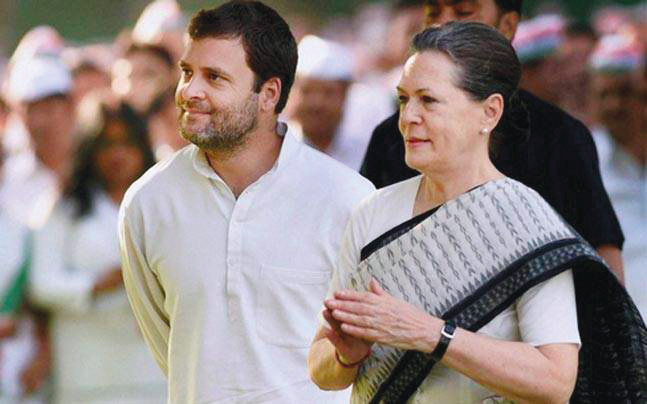
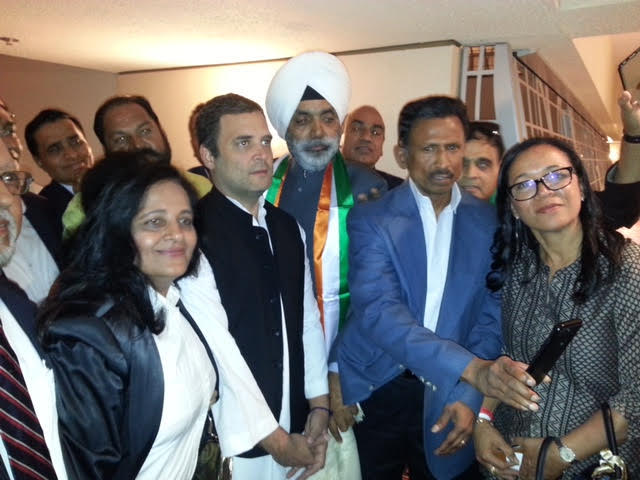
NEW YORK CITY (TIP): Congress vice President Rahul Gandhi stated that NRIS are the backbone of India and “original Congress movement was an NRI movement.”
Addressing a gathering in a hotel in Times Square here on Sept 20 he said Mahatma Gandhi, Jawaharlal Nehru, B. R Ambedkar, Maulana Abul Kalam Azad, and Sardar Vallabhbhai Patel were all NRIs who “went to the outside world, saw the outside world, returned to India and used some of the ideas they had got and transformed India.”
He also urged NRIs to contribute to resolving the economic and social challenges in India. “You need to get involved. You have tremendous knowledge, you have tremendous understanding, you work in different fields. I invite you to come and work with the Congress party and discuss the vision going forward. We want to take your help.”
Congress Vice president Rahul Gandhi addresses the gathering at University of California, Berkeley Photo / courtesy Jay Mandal-on assignment
At one of his last events in two-week long US trip, Rahul Gandhi also criticized Modi government without mentioning any name for their ‘Divisive Politics.’ “Divisive politics is ruining India’s reputation of peace and harmony abroad. There are forces in our country that are dividing India and it is very dangerous, it ruins our reputation abroad. Divisive politics is going on and it has to be fought,” he said.
Rahul Gandhi said he had met leaders from the Democratic and Republican Party over the past few days and was asked about the situation in the country. “Many, many people in the Democratic Party and the Republican Party asked me what is going on in your country. We always believed that your country worked together, we always believed your country was peaceful. What is going on in your country?”
He said many countries in a violent world were looking towards India as the “answer for peaceful coexistence. ”So, we cannot afford to lose our most powerful asset. Our most powerful asset is that 1.3 billion people live happily, non-violently, peacefully… This is something that as Congress people, every single one of us has to defend,” he said.
Rahul Gandhi asserted that he would visit America, whenever he is asked to, and remain in touch with the community. His close aide Sam Pitroda, U.S.-based telecom expert who pioneered the telecom revolution in India and is in charge of the Indian Overseas Congress, said the organization’s footprint was expected to expand to 30 countries from the present 18 and in every state in the US.
Earlier, on arrival in the US, Rahul Gandhi addressed students at the University of California, Berkeley, and, later, at Princeton. One of the striking features of Gandhi’s interaction with students at Berkeley was his frank admission that a “certain amount of arrogance” had crept into the Congress midway through UPA II, and it had stopped having “conversations with people.
Post his lecture on ‘India At 70: Reflections On The Path Forward’, during a question-answer session, Gandhi took a question on dynastic politics, and said, “Most parties in India have that problem (dynastic politics). So, don’t give us the stick… Akhilesh Yadav is a dynast. Stalin (Tamil Nadu) is a dynast. (Prem Kumar) Dhumal’s son is a dynast… Even Abhishek Bachchan is a dynast. That is how India runs…don’t get after me because that is how the entire country is running. By the way, last, I recall, Ambani’s kids were running their business and that was also going on in Infosys. That is what happens in India.”
At Princeton University, the Congress leader said it was imperative for the Indian government to ensure blue-collar jobs for its people as nearly 30,000 youngsters are joining the job market every day and only 450 get the job. Gandhi appreciated one of PM Modi’s flagship projects – ‘Make in India’ but said the scheme should be aimed at small and medium businesses. “Not many small and medium businesses are getting access to finance or to the legal system or the political system. The small companies that should be turning into large is not happening. If Make in India is implemented well, it is a powerful idea,” he remarked.
Had Failed to Pay Minimum Wage and Overtime to over 150 Employees
Grocer Paid nearly $450,000 In Restitution to Workers for Unpaid Wages and Over $160,000 In Unpaid Unemployment Contributions, says New York State Attorney General A.G. Schneiderman
QUEENS (TIP): Attorney General Eric T. Schneiderman, on September 20,, announced the guilty pleas and convictions of S&L Vegetables, Corp. and J&B Vegetables, Inc., two grocers that did business as Apna Bazar Cash & Carry (“Apna Bazar”) and operated two food markets in Floral Park and Hicksville, NY.
Each Apna Bazar market pled guilty to one count of Grand Larceny in the Third Degree, one count of Falsifying Business Records in the First Degree, one count of Failure to Pay Wages, and one count of Willful Failure to Pay Contributions. The plea agreement mandates that Apna Bazar pay a total of $447,832.11 for unpaid wages and $162,445.47 in unpaid unemployment contributions to the New York State Department of Labor (“NYSDOL”)–bringing the total wages recovered by Attorney General Schneiderman since taking office to nearly $30 million for more than 21,000 workers.
The Attorney General said the Queens County Supreme Court, on September 20, sentenced each Apna Bazar market to a three-year conditional discharge with a condition that the stores undergo monitoring for one year. The Court also ordered the defendants to pay restitution for the back wages and unemployment insurance contributions, which the Attorney General’s Office confirmed has been paid in full by the defendants.
“The defendants in this case acted out of greed, cheating over 150 hardworking employees out of hundreds of thousands of dollars in wages they earned,” said Attorney General Schneiderman. “My office will continue to enforce wage and labor laws to make sure that New Yorkers get the pay they rightfully earn and ensure companies are meeting their obligations to the unemployment insurance safety net.”
“Under the leadership of Governor Cuomo, the Department of Labor will continue to vigorously pursue any employer who willingly cheats workers out of what they’re rightfully owed,” said State Labor Commissioner Roberta Reardon. “What’s more, in this case, the employer chose to attempt to skirt their Unemployment Insurance obligations. The Department of Labor takes the responsibility of investigating these crimes very seriously and will continue to refer these cases to law enforcement offices around the state.”
An investigation conducted by the New York State Department of Labor and referred to the Attorney General’s Office revealed that between 2012 and 2015, Apna Bazar repeatedly failed to pay proper minimum wage and overtime to more than 150 employees working at both of these markets. Many of these employees worked over 60 hours per week but were paid a fixed daily amount, which often resulted in paychecks that were well below the state minimum wage for even a typical 40 hour workweek. In addition, the employees did not receive proper overtime compensation of time-and-one half for working over 40 hours in a week. Both Apna Bazar entities also failed to accurately report to the NYSDOL the number of employees working at both locations during this period, falsifying their New York State Quarterly Combined Withholding, Wage Reporting, and Unemployment Insurance Return forms—resulting in significant underpayment of unemployment contributions to the NYSDOL.
Apna Bazar’s Long Island market is located at 217 Bethpage Rd. in Hicksville, NY and its Queens location is located at 260-04 Hillside Ave. in Floral Park, NY. As part of the plea agreements, Apna Bazar agreed to place both locations under supervision by an independent monitor for one year. The monitor will ensure that employees are paid properly, that there is accurate reporting of employees and that all documentation is properly submitted to the NYSDOL, as well as require two bi-annual reports detailing defendants’ compliance with the applicable labor and penal laws.
This case was prosecuted by Assistant Attorneys General Jennifer S. Michael and Matthew Ross, under the direct supervision of Labor Bureau Criminal Section Chief Richard Balletta and Labor Bureau Chief ReNika Moore. The Executive Deputy Attorney General for Social Justice is Alvin Bragg and the Criminal Enforcement and Financial Crimes Bureau Chief is Stephanie Swenton. This case was investigated by Senior Labor Standards Investigator Reyna Moreno of the New York State Department of Labor Division of Labor Standards, and Louis Adinolfi and Peter Dixon, Auditors with the New York State Department of Labor Unemployment Insurance Division, under the supervision of Milan Bhatt, Assistant Deputy Commissioner for Worker Protection, and James Rogers, Deputy Commissioner for Worker Protection. The case was also investigated by New York State Attorney General Investigator Edward Ortiz, under the supervision of Supervising Investigator Sylvia Rivera, Deputy Chief Investigator John McManus and Chief of the Investigations Unit, Dominick Zarrella.
Protesters at the UN call Pakistan “epicenter and exporter of terrorism in the region
I.S. Saluja
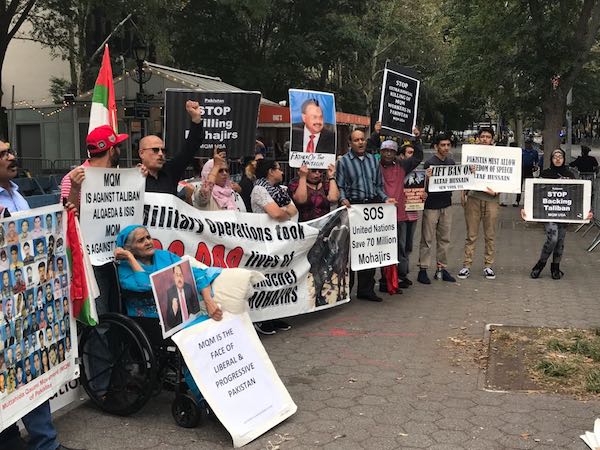
NEW YORK CITY, NY (TIP): On September 21, around 50 MQM members gathered in front of the UN to protest the genocide of Mohajirs by Pakistan Army. The MQM chose to protest during the time when the Pakistan PM was addressing the UNGA.
Carrying placards, big and small, they shouted slogans “Mohajirs demand right of self-determination”; “Pakistan Army is killing Mohajirs”; “Stop genocide of Mohajirs”.
Anjum Arif of New York who is a Member of MQM Central Organizing Committee and Rukunuddin Taj, a Member of Central Co-ordination Committee demanded that United Nations should intervene and stop genocide of Mohajirs and suppression of minorities.
The speakers spoke at length about their grievances and demands.
Calling Pakistan as the “epicenter of Terrorism” the speakers said that Pakistan had provided sanctuary to terrorist outfits and that ISI was supporting extremism and terrorism in the region. They pledged to lend their full support to the US, the UN and the world in eliminating terrorist sanctuaries in Pakistan.
One of their demands was the right to self-determination. They demanded that the United Nations take note of the genocide of Mohajirs in Pakistan and facilitate the process of self-determination.
They said the census conducted earlier this year in Karachi and urban areas of Sind was rigged. They demanded a fresh census under the supervision of the UN.
They demanded that the UN intervene to stop the genocide of Mohajirs in Sind. They alleged Pakistan army had killed 22000 Mohajirs since 1992 and 170 persons were still missing. There are 70 million Mohajirs in Pakistan who all live in fear of being eliminated by Pakistan army.
Another allegation of the speakers was that there was a blanket media ban on their leader Altaf Hussain who was living in self-exile in Britain. They demanded that the illegal and undemocratic ban be lifted.
They announced that a bigger rally will be held on Saturday, September 23 at the same venue to make their grievance and demands once again. They said more MQM leaders will be coming to address the protesters
Mohajirs are Moslems who migrated from India at the time of partition of India in 1947. The majority settled in the port city of Karachi and urban areas of Sind province of Pakistan.
They follow Islam and speak Urdu. They are secular, liberal and progressive. Some of the Mohajirs have been quite famous in various fields. The first Prime Minister of Pakistan, Liaquat Ali Khan was a Mohajir. So was a former Army General and President Parvez Musharraf. There have been many artists, scholars, intellectuals, scientists whose contribution has been immense.
“Mohajirs look to the US, the United Nations and justice and peace-loving nations of the world to deliver them from Pakistan”, said a spokesman of MQM.
UNITED NATIONS (TIP): Pakistan is now “Terroristan”, India said in a formidable rebuttal at the UN to Pakistani Prime Minister Shahid Khaqan Abbasi calling for a UN special envoy on Kashmir, alleging that the “struggle of the people in the region is being brutally suppressed” by India.
Exercising its Right of Reply after Mr Abbasi’s belligerent speech at the UN General Assembly, said it was “extraordinary” that the state that sheltered Osama bin Laden was creating narratives based on deception and deceit.
“In its short history, Pakistan is a geography synonymous with terror. The quest for a land of pure has actually produced ‘the land of pure terror’. Pakistan is now Terroristan with a flourishing industry producing and exporting global terrorism,” Eenam Gambhir, India’s First Secretary to the UN, said on September 21.
India caustically described Pakistan as a country whose counter-terrorism policy was to “mainstream and upstream terrorists” by either providing safe havens to terror leaders in its military town or protecting them with political careers.
“Its current state can be gauged from the fact that Hafiz Mohammad Saeed, a leader of the UN designated terrorist organization Lashkar-e-Taiba, is now sought to be legitimized as a leader of a political party,” Ms Gambhir said.
None of this, she said, can justify Pakistan’s avaricious efforts to covet territories of its neighbors. “In so far as India is concerned, Pakistan must understand that the state of Jammu and Kashmir is and will always remain an integral part of India. However, much it scales up cross-border terrorism, it will never succeed in undermining India’s territorial integrity.”
Ms Gambhir also said Pakistan, after diverting billions of dollars in aid towards creating a dangerous infrastructure of terror, was paying the price.
“Even as terrorists thrive in Pakistan and roam its streets with impunity, we have heard it lecture about human rights in India. The world does not need lessons on democracy and human rights from a country whose own situation is charitably described as a failed state,” she said.
Earlier, the Pakistan Prime Minister, in his first address to the UN General Assembly, had accused India of terror against his country and had warned of a “matching response” if it “ventures across the Line of Control or acts upon its doctrine of limited war against Pakistan”.
Washington , D.C. TIP: On Sept 13, US Senator Kamala D. Harris, U.S. Senator from California, Bernie Sanders, and 15 members of the Democratic caucus introduced legislation to guarantee health care to every American by expanding and improving Medicare.
“Healthcare should not be thought of as a partisan issue – it’s a nonpartisan issue,” Harris said. “Cancer, diabetes, and high blood pressure affects folks around our country regardless of whether they are in a red state or a blue state, regardless of their income, and regardless of their status. We should not differentiate in the way that we do public health policy and we should understand that everyone should receive the healthcare they need regardless of where they live, their income, or their zip code. That is what this bill is about, and I’m proud to co-sponsor the Medicare for All Act. It is about saying that healthcare is a right for all, not a privilege for a few.”
Sixty percent of the American people want to “expand Medicare to provide health insurance to every American,” including 75 percent of Democrats, 58 percent of Independents, and 46 percent of Republicans, according to an April 2017 poll by The Economist/YouGov.
Harris continued, “Taxpayers of the United States deserve a better return on their investment. We know the public health model shows us so well, if you want to deal with an epidemic, the smartest, most effective, and cheapest way to deal with it is prevention first. That means early intervention. If we’re dealing with it in the emergency room, it’s too little, too late and it’s too expensive. Let’s give the taxpayers of the United States a better return on their investment, which means Medicare for All.”
The Medicare for All Act of 2017 establishes a national health insurance program called the Universal Medicare Program. Under this legislation, every resident of the United States will receive health insurance through an expanded Medicare program with improved and comprehensive benefits.
It has been the goal of Democrats since Franklin D. Roosevelt to create a universal health care system guaranteeing health care to all people.
Harris and Sanders introduced the bill in the Senate along with Senators Tammy Baldwin (D-Wis.), Richard Blumenthal (D-Conn.), Cory Booker (D-N.J.), Al Franken (D-Minn.), Kirsten Gillibrand (D-N.Y.), Martin Heinrich (D-N.M.), Mazie Hirono (Hawaii), Patrick Leahy (D-Vt.), Edward Markey (D-Mass.), Jeff Merkley (D-Ore.), Brian Schatz (D-Hawaii), Jeanne Shaheen (D-N.H.), Tom Udall (D-N.M.), Elizabeth Warren (D-Mass.) and Sheldon Whitehouse (D-R.I.).
The Medicare for All Act of 2017 would ensure that Americans will no longer have to delay or avoid going to the doctor because they can’t afford it; that a hospital stay will not bankrupt you or leave you deeply in debt; that you will be able to get the prescription drugs you need at a price you can afford; that middle class families will never have to spend 20 or 30 percent of their incomes on health care; and, that Americans will save billions of dollars a year in medical administrative costs.
Under this bill, Americans will benefit from the freedom and security that comes with finally separating health insurance from employment. As is the case in every other major country, employers would be free to focus on running their businesses rather than spending an enormous amount of time, energy and money trying to provide health insurance to their employees.
The bill has been endorsed by 30 national organizations and unions including: Labor Campaign for Single Payer, Our Revolution, Social Security Works, Progressive Campaign Change Committee, Democracy for America, Working Families Party, MoveOn, All of Us, Demand Progress, Health Care Now, Progressive Democrats of America, CREDO, Public Citizen, Latinos for Healthcare Equality, Americans for Democratic Action, AIDS Healthcare Foundation, DailyKos, Food & Water Watch, Friends of the Earth, 350.org, American Sustainable Business Council, LULAC (League of United Latin American Citizens), National Nurses United, International Association of Machinists and Aerospace Workers, New York Nurses Association, Utility Workers Union of America, International Federation of Professional and Technical Engineers, United Mine Workers of America, Amalgamated Transit Union and Brotherhood of Maintenance of Way Employes Division of the International Brotherhood of Teamsters.
Signup to our Newsletter!
Don’t miss out on all the happenings around the world