Year: 2017

  • Trump speaks loud & clear: Do more or face consequences, Pak warned

    Trump speaks loud & clear: Do more or face consequences, Pak warned

    By G Parthasarathy
    Pakistan gives safe haven to agents of chaos, violence and terror.’ He added: ‘We have been paying Pakistan millions of dollars at the same time that they are housing the very terrorists that we are fighting.’ He pledged his support to strengthen the Afghan government, while praising India’s role in Afghanistan and across the Indo-Pacific Region. He made it clear that he would do what it takes to act against ‘Pakistan’s safe havens for terrorist organizations’, like the Taliban. The Secretaries of State and Defense, and the US Commander in Afghanistan have echoed the President’s comments”, the author says, quoting US President Donald Trump.

    After waiting anxiously for six months to learn how the Trump Administration will deal with Afghanistan, Pakistan was rudely shaken when President Trump virtually read out the ‘Riot Act’ to the generals in Rawalpindi and politicians in Islamabad. Never given to sophistry, Trump made it clear that the Af-Pak region is the epicenter of global terrorism, stating: ‘Pakistan gives safe haven to agents of chaos, violence and terror.’ He added: ‘We have been paying Pakistan millions of dollars at the same time that they are housing the very terrorists that we are fighting.’ He pledged his support to strengthen the Afghan government, while praising India’s role in Afghanistan and across the Indo-Pacific Region. He made it clear that he would do what it takes to act against ‘Pakistan’s safe havens for terrorist organizations’, like the Taliban. The Secretaries of State and Defense, and the US Commander in Afghanistan have echoed the President’s comments.

    Shocked by Trump’s condemnation, Pakistan responded by calling a meeting of its military dominated National Security Council (NSC), chaired by stand-in PM, Shahid Khaqan Abbasi. The NSC avoided responding directly to Trump’s remarks. It called instead for ‘eliminating safe havens inside Afghanistan’, with focus on ‘border management, return of Afghan refugees in Pakistan and reinvigorating the peace process, for a political settlement in Afghanistan’. Rather than responding to the view across the world that Pakistan should end support to terrorism, as demanded by Trump, Pakistan is now a nation in denial, changing the narrative from ending terrorism to its ‘sacrifices’ in the ‘war on terror’. The emphasis is not on terrorism, but on getting a dialogue between the Taliban and the Afghan government, in which the Taliban will talk from a position of military strength. In Pakistan’s perceptions, Afghanistan should be its ‘client state’, ruled by universally reviled terrorists it backs.

    Not surprisingly, Pakistan has received backing for its stand from its ‘all-weather friend’ China. Beijing has asked the US to show ‘understanding’ of Pakistan’s views and concerns. Not to be left behind, President Putin’s loquacious special envoy to Afghanistan, Zamir Kabulov, has spoken like the special envoy of the Taliban. US’ NATO allies have pledged to support and supplement the US decision to expand its military presence in Afghanistan. While the US would support a dialogue between the Afghan government and Taliban, Trump has made it clear that while his aims include ‘preventing the Taliban from taking over Afghanistan’, he would only accept ‘elements of the Taliban’ in any political settlement in Afghanistan. The US and its allies will, therefore, not accept a government dominated by the Taliban, as China and Russia would evidently acquiesce in.It is crucial for India to see that it is involved in and influences the emerging political process within Afghanistan, in consultation with the Afghan government. Rejecting US proposals for early dialogue, Pakistan has indicated that it will enter into such a dialogue only after serious consultations with China, Russia and Turkey. It has also indirectly held out the threat that it could close US supply routes to Afghanistan if it finds US actions unpalatable. It remains to be seen how the US reacts to this. The American public and political opinion, especially in the US Congress, are becoming increasingly impatient and angry at Pakistan’s duplicitous role.

    The Trump Administration is said to have consulted Washington’s former Ambassador to Kabul, Zalmay Khalilzad, who hails from Afghanistan, on shaping its Af-Pak policies. Khalilzad has held that Pakistan would ‘test’ Trump’s resolve to implement what he had stated. Khalizad has urged that the increase in the US military presence should be accompanied by a ‘strong diplomatic push’ to coordinate the actions Trump has proposed. He envisages Pakistan-backed attacks by the Taliban and Haqqani Network on American supply lines and advocates precision drone strikes on the Taliban within Pakistan, like the attack that killed the former Taliban chief Mullah Akhtar Mansour in Balochistan. He also recommends US air strikes on terrorist hideouts in Pakistan and initiating action to put Pakistan on the list of states sponsoring terrorism. Most importantly, he urges: ‘Washington should also suspend all American aid to Pakistan and use its influence with the World Bank and the International Monetary Fund to do the same.’ Moreover, he believes that the ISI and other Pakistani officials, with links to terrorist groups, should face travel bans and other US sanctions.

    India would do well to encourage congressional and political opinion in the US to work in the direction Khalilzad has proposed. The Pakistani bluff about closing US supply routes has to be met by the US and its allies resolutely and frontally. The financial sanctions will be particularly effective at a time when the balance of payments position in Pakistan is far from comfortable and the much-touted Chinese assistance for the CPEC is largely made up of tied loans, with a negligible grant element. This credit squeeze on Pakistan could also be extended to loans from Asian Development Bank. The Trump Administration wields substantial clout with the Gulf Cooperation Council (GCC). Leading members of the GCC like Saudi Arabia and the UAE could be very effective in ‘persuading’ Pakistan see reason!

    India can best contribute to the squeeze on Pakistan by proceeding on its present course of replacing SAARC with BIMSTEC as the primary organization for regional cooperation in South Asia, while stepping up trilateral cooperation with Iran and Afghanistan on issues of trade, transit and aid to Afghanistan, despite Tehran’s recent ‘contacts’ with the Taliban. The obvious collusion between the Supreme Court and the military in Pakistan to oust Nawaz Sharif makes it clear that the Pakistan army is going to fully call the shots on cross-border terrorism in J&K and elsewhere in India. There should be no illusions on this score, while determining policies on our relations with Pakistan. It is important that we now finalize an imaginative five-year plan for economic assistance to Afghanistan and coordinate policies with Kabul to deal with Pakistan-sponsored terrorism internationally more effectively. We should also ask ourselves whether any Indian interest is served by denying more military equipment from our stocks of Soviet-era equipment to Afghanistan, especially when two of the four attack helicopters supplied by us to Afghanistan are not operational for want of spare parts.

    (The author is a career diplomat)


  • At bullet speed: Indo-Japan ties, beyond the optics

    At bullet speed: Indo-Japan ties, beyond the optics

    The Indian-Japanese partnership has been in the making for a decade since Shinzo Abe described it as a confluence of two seas while addressing the Indian Parliament. This confluence became a symbolic convergence with the laying of the foundation stone of the bullet train project in Ahmedabad. Partisans are out in strength, debating the merits and demerits of the project, though it is a bit rich for the Congress to protest since the very same Mumbai-Ahmedabad bullet train project had figured in two UPA railway budgets, presented by Pawan Bansal and Mallikarjun Kharge, respectively. Sceptics, though, have a point when they question the hoopla surrounding a single, stand-alone section, keeping in mind that the most difficult part — land acquisition — is yet to begin. And not for nothing is Abe called Japan’s top salesman — he has sold the bullet train idea to India even though cost considerations had edged the Japanese out in Indonesia and Thailand where China has been the gainer.

    Arguably, the Indo-Japanese partnership story is not just about the bullet train. Japan needs a large market like India to offset the tepid outcome of Abenomics that was supposed to pull it out of chronic low growth. New Delhi, in return, hopes to get its hands on sophisticated technology in cutting-edge areas. However, Japan is yet to make up its mind about technology transfer. On the other hand, Japan’s unequivocal show of solidarity with India in its Doklam standoff with China should suggest that doubts and hesitations in Tokyo are dissolving.

    Partnerships that benefit both sides are a staple of international relationships. But PM Modi and his predecessor, Manmohan Singh, imbued greater dynamism in ties with Japan by extending it to other countries. The two countries plan to venture in tandem in Africa, while the project to connect India with East Asian countries is in full swing. There is need for caution. The Indian taxpayer cannot be allowed to become the guinea pig for expensive Japanese imports. Indeed, in the New India of PM Modi, the private sector should have shouldered the risks and joy of running bullet trains. That would have produced some transformation.

    (Tribune, India)

  • Fairly close to DACA deal but citizenship and amnesty are not part of the deal, says Trump

    Fairly close to DACA deal but citizenship and amnesty are not part of the deal, says Trump

    WASHINGTON (TIP): US President Donald Trump said on Thursday, September 14, that he was looking to allow people to stay here, but not ready for citizenship or amnesty, an announcement that may benefit 8,00,000 young immigrants, including those from India.

    Trump’s statement came a day after top Democratic lawmakers Chuck Schumer and Nancy Pelosi claimed that they had reached a deal with the president to protect about 8,00,000 young immigrants who came to America illegally as children and were given protection by the Obama-era Deferred Action for Childhood Arrivals (DACA) program.

    Trump had scrapped the DACA program earlier this month.

    “We are not looking at citizenship. We are not looking at amnesty. We are looking at allowing people to stay here,” Trump told reporters.

    Trump said he is very close to a deal on DACA.

    “I just spoke with Paul Ryan, everybody’s on board… We are talking about taking care of people, people who were brought here, people who have done a good job. We will only do it if we get extreme security, not only surveillance but everything that goes with surveillance. If there is not a wall, we are doing nothing,” he said.

    In a statement after dinner with Trump at the White House, Schumer and Pelosi said that they have reached a deal with him on DACA.

    “We had a very productive meeting at the White House with the president. The discussion focused on DACA. We agreed to enshrine the protections of DACA into law quickly, and to work out a package of border security, excluding the wall, that is acceptable to both sides,” Schumer and Pelosi said.

    In a tweet early this morning, Trump however said that no deal has been reached.

    “No deal was made last night on DACA. Massive border security would have to be agreed to in exchange for consent.

    “Would be subject to vote,” he said, refuting claims being made by the Democratic leaders.

    Pelosi tended to disagree at a news conference at the Capitol Hill.

    “I do believe that there is an understanding that down the road, there is an eventual path to citizenship in the DREAM Act, and that overwhelmingly, the American people support that,” she said.

    “In a poll today, over 50 per cent, and then, you know, 12 per cent want to send them back, and then others somewhere in the middle. But it came up in the context of the suggestion that there might be other bills to be considered, and that did not last long,” Pelosi said.

    The atmosphere during the White House dinner last night, she said, was very friendly.“We made it clear from the start that there were certain concerns that we had about some of the president’s statements relating to the Muslim ban, Charlottesville, DACA decision and that we needed to establish some trust and confidence as we go forward.

    “One path to building that confidence and trust would be the DREAM Act, DACA. The president likes to call it DACA. I believe that we have had enough conversation with the President with enough reiteration of his commitment to protect the dreamers, in fact, publicly. You saw his statements, today, that it would not be wise to send these young people back,” Pelosi added.

    (Source: PTI)

  • Dr. VK Raju Honored

    Dr. VK Raju Honored

    CONEY ISLAND, NEW YORK (TIP): Internationally renowned ophthalmologist Dr. VK Raju was, on September 14, honored by The Asha Niketan Community at a special event to honor the Founder-President of The Eye Foundation of America. Dr. Raju is a clinical Professor, department of Ophthalmology at West Virginia University. Through his Eye Foundation, he has been working all over the world, in particular in India, for the prevention of avoidable blindness among children. He runs eye hospitals in his native State of Andhra Pradesh.

    A renowned ophthalmologist, he has received a number of prestigious recognitions and honors. He was recently admitted to Toledo University Hall of fame.

  • USIBC Global Summit Aims to Renew US-India Key Linkages

    USIBC Global Summit Aims to Renew US-India Key Linkages

    WASHINGTON (TIP): The U.S. Chamber’s U.S.-India Business Council (USIBC) on Sept 12 hosted the inaugural ‘Road to Global Entrepreneurship’ Summit, part of its Global Entrepreneurship Conclave, in Washington, D.C. The summit brought together key stakeholders, including U.S. government officials, government of India officials, and industry leaders from across sectors to renew the two countries’ key linkages and advance their mutual interests.

    Participants from the U.S. and India discussed the power of innovation and entrepreneurship to accelerate economic growth, create jobs, and encourage groundbreaking ideas in order to serve the citizens of both nations. U.S. Commerce Secretary Wilbur Ross addressed the summit, which is the first in a series, and he discussed the importance of the bilateral ties between the U.S. and India. Secretary Ross said the U.S. administration is encouraged by India’s economic reforms, and he highlighted the important role that the U.S.-India Business Council has played in furthering the commercial partnership over its 42-year existence.

    “The U.S.-India strategic and commercial partnership is unique and complementary in nature,” said Khush Choksy, acting president of the USIBC. “These discussions at the Global Entrepreneurship Summit are timely and necessary because we believe that the next phase of the bilateral relationship will be determined by the necessity to expand job creation, economic growth, and innovation in both countries.”

    The summit included remarks from Ambassador Alice Wells, Acting Assistant Secretary of State for South and Central Asian Affairs and Acting Special Representative for Afghanistan and Pakistan, U.S. Department of State; Ambassador of India to the United States Navtej Sarna; Ambassador of Israel to the United States Ron Dermer; and Rep. Raja Krishnamoorti (D-IL).

    The event also included a panel discussion on building communities through private-sector collaboration, with participation from Monique Meche, vice president of global public policy for Amazon; Angela Baker, director of Qualcomm Wireless Reach; and Reggie Aggarwal, founder and CEO of Cvent. The discussion focused on advancing policy frameworks to grow entrepreneurship, especially in emerging markets, and the role of women in growing jobs and economies.

    “Many women in emerging economies have the ideas and ambitions needed to succeed, but are held back by a lack of access to business skills, education, networks, and capital,” said Baker. “Mobile technology can break down common barriers of skill and access and connect entrepreneurs to information, resources, and consumers. By fostering and investing in programs that use wireless solutions, we are enabling women entrepreneurs to participate in the flourishing mobile economy in India and around the world.”

    “Amazon is pleased to contribute to the Global Entrepreneurship Conclave to discuss innovation, entrepreneurship, and the empowerment of women in India – which are all at the heart of Amazon’s business in India,” said Meche.

    “As an entrepreneurial company, Cvent recognizes that bringing people together and fostering innovation regardless of borders is a key to success,” said Aggarwal. “We are proud to be part of a summit that will encourage entrepreneurship around the world.”

    Formed in 1975 at the request of the U.S. and Indian governments, the U.S.-India Business Council is the premier business advocacy organization, comprised of 350 top-tier U.S. and Indian companies advancing U.S.-India commercial ties. USIBC is the largest bilateral trade association in the United States, with liaison presence in New York, Silicon Valley, and New Delhi.

    The U.S. Chamber of Commerce is the world’s largest business federation representing the interests of more than 3 million businesses of all sizes, sectors, and regions, as well as state and local chambers and industry associations. Its International Affairs division includes more than 70 regional and policy experts and 25 country- and region-specific business councils and initiatives. The U.S. Chamber also works closely with 117 American Chambers of Commerce abroad.

  • Sri Chinmoy singers perform at “Culture of Peace” at the United Nations

    Sri Chinmoy singers perform at “Culture of Peace” at the United Nations

    Ashok Parulekar

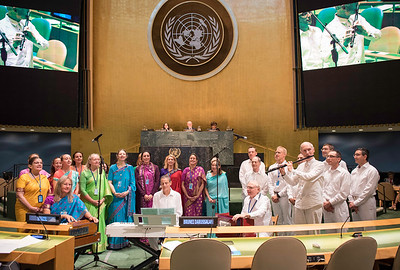
    UNITED NATIONS (TIP): The singers from Sri Chinmoy:  Peace Meditation at the United Nations were invited to perform at the United Nations high level forum on the Culture of Peace held in the General Assembly hall.  They presented meditative peace songs composed by Sri Chinmoy (1931-2007).  The event was organized by the President of UN General Assembly and Bangladesh ambassador.

    The United Nations General Assembly President Peter Thomson said, “On behalf of you all, I’d like to thank Sri Chinmoy: The Peace Meditation at the United Nation for that beautiful performance and the culture of Peace for which they have stood for so long”.

     In response to the issue raised by Pakistan’s permanent representative Maleeha Lodhi, the senior Indian diplomat Srinivas Prasad said, “As one of the oldest civilizations, India has been the home to a continuous stream of great spiritual teachers, thinkers throughout the centuries who have spread the message of a culture of peace”.

    Sri Chinmoy was one such spiritual teacher.  He tirelessly worked for world peace through his meditations, books, music, art, poetry, sports and meetings with world leaders such as Nelson Mandela and President Gorbachev.  In 1970 at the invitation of then UN secretary General U Thant, he started Sri Chinmoy: The Peace Meditation at the United Nations, as this meditation group is now called.  He was very optimistic about the world peace.  He said,” A day will come when our world will be flooded with peace. About UN he said, “The UN is now a small plant, so we underestimate its potential, eventually it will become a big tree and protect the world”.

  • Indian American Scientist Ananda Theertha Suresh honored with Paul Baran Young Scholar Award

    Indian American Scientist Ananda Theertha Suresh honored with Paul Baran Young Scholar Award

    NEW JERSEY (TIP): The Marconi Society, dedicated to furthering scientific achievements in communications and the Internet, will honor Google Research Scientist and UC San Diego PhD Ananda Theertha Suresh with the 2017 Paul Baran Young Scholar Award. The 28-year-old researcher will receive the award at an awards ceremony in Summit, NJ on October 3, 2017.

    Suresh’s research focuses on understanding the most efficient ways to use information, data and communication. As a PhD student at UC San Diego, Suresh showed why Good-Turing frequency estimation works well and developed improvements to the technique, creating an estimator that works across fields ranging from genetics to language modeling. At Google Research, his work helps provide sophisticated communications capabilities and applications to people with low bandwidth Internet connections and low-end devices.

    Suresh’s innovations in distribution estimation, co-authored with Alon Orlitsky and described in “Competitive Distribution Estimation: Why is Good-Turing Good,” won a best paper award at the 2015 Neural Information Processing Systems (NIPS) conference. In addition, the prestigious 2017 Annual ACM Symposium on Theory of Computing (STOC) chose Suresh’s work for presentation at their first-ever “best of theory” session.

    “Ananda applied his philosophy to several important tasks in probability estimation, compression, classification, closeness testing, and outlier detection,” said Alon Orlitsky, Professor of Electrical and Computer Engineering at UC San Diego Jacobs School of Engineering and Suresh’s PhD advisor and nominator for the award. “In all these problems he derived crisp, insightful, and surprising results that often required broad vision, keen intuition, and mastery of diverse technical skills, a highly unusual combination for such a nascent researcher.”

    As a Research Scientist at Google Research, Suresh follows his passion to make communications available to everyone. Access and opportunities for those in developing countries are gated by low-bandwidth Internet services, as well as by low-end devices that have limited storage and intelligence. In most machine learning algorithms used to support capabilities such as autocomplete suggestions when a user is searching, the phone sends all the information about the search to the server and the server sends all the information back to the phone. Suresh’s algorithms reduce the amount of data that needs to be sent to the network on the uplink – the bottleneck in the entire process – thereby reducing data sent and data costs by orders of magnitude.

    According to Dr. Michael D. Riley, Principal Research Scientist and Manager at Google Research, “Ananda’s research has already led to algorithms that give better compression for a given decompression time budget than we have previously used and this work is now used by millions of people within speech and keyboard input applications in Google products.”

    “I am a great admirer of some of the previous Marconi Society Young Scholar winners and I am humbled and honored to be in their company,” said Suresh. “I look forward to interacting with the other Young Scholars and Fellows. I know that talking with them and learning from them will inspire me to tackle the most challenging problems in the world.”

    As the first in his family to attend college, Suresh’s goal is to deeply understand the fundamental limits of what is possible in data science so that he can develop a set of tools that will make an impact on people who have access to only limited resources.

    “Suresh’s work requires very diverse techniques ranging from high-dimensional statistics and approximation theory to information theory, which clearly demonstrates the depth of his understanding,” remarked Yihong Wu, 2011 Marconi Society Young Scholar, Assistant Professor of Statistics and Data Science at Yale University and collaborator at the Simons Institute for the Theory of Computing. “Furthermore, it attests to his vision, intuition and good judgment as a theoretical data scientist. I am thoroughly impressed by his creative and systematic way of thinking and great tenacity when tackling tough research.”

    Young Scholar candidates are nominated by their academic advisors. Winners are selected by an international panel comprised of engineers from leading universities and companies, and receive a $4000 prize plus expenses to attend the annual awards event. Three other Young Scholars were also selected this year.

    Suresh will receive his award at the same event where former Bell Labs chief Arun Netravali, regarded as the “father of digital video,” will be honored with the $100,000 Marconi Prize.


  • Business delegation from India focuses to strengthen bilateral business opportunities

    Business delegation from India focuses to strengthen bilateral business opportunities

    WASHINGTON (TIP): A Business delegation from India recently visited USA, focusing on Defense, Aerospace and Renewable Energy Sectors. The main objective of the delegation was to create business opportunities for Indian and U.S. companies and establish effective partnerships in these sectors. The delegation visited multiple cities including Atlanta (Georgia), Columbia (South Carolina), Huntsville (Alabama), Orlando (Florida) Seattle (Washington) and San Diego (California). They also participated in the South Carolina Aerospace Conference and Expo held in Columbia on August 30.

    “Among the thrust areas, Defense, Aerospace and Renewable energy (power) are the most important sectors in India. The State of Tamil Nadu is the thrust area for the aerospace sector and it recently opened up 300 acres of Aerospace Park at Sriperumbudur in Chennai. As the Indo-U.S. relationship is robust and engaging, it is the time for the Indian industries to look for the investment partners/opportunities, informational exchange, knowledge and technology sharing with the companies in the U.S. in these sectors”, feels The Indo-American Chamber of Commerce (IACC).

    Huntsville was the delegation’s final stop on a multiple-city tour that included Seattle, San Francisco, and Jacksonville. The group was comprised of government leaders and aerospace industry executives who were impressed what they saw in North Alabama. Multiple presentations were made by various members of the Indian delegation regarding aerospace projects, both civil and governmental, and opportunities for Alabama companies to supply parts.

    The delegation was hosted by The North Alabama International Trade Association (NAITA), whose mission is generating international trade in the region. Representing NAITA, Anne Burkett (Director of Planning & Economic Development for Madison County), said they are excited to explore opportunities for increased collaboration with India, including joint ventures, strategic partnerships, and capital investments in North Alabama’s aerospace industry.

    India’s delegation was led by Atulya Misra, Secretary of Industry for the government of Tamil Nadu—India’s sixth most populous state. Accompanying Mr. Misra was India’s Deputy Consul General D. V. Singh and many others who are integral to investments in the U.S. economy.

    According to International Air Transport Association (IATA), India is the fastest growing domestic market globally, handling over 190 million passengers.  Over the next decade, the market is expected to reach 337 million domestic and 84 million international passengers.  This growth will create demand for new aircrafts, air navigation service technologies, airport security equipment, and increased infrastructure.


  • MOVIE REVIEW – LOGAN LUCKY

    MOVIE REVIEW – LOGAN LUCKY

    CAST: Channing Tatum, Adam Driver, Seth MacFarlane, Riley Keough, Katie Holmes, Katherine Waterston, Dwight Yoakam, Sebastian Stan, Hilary Swank, Daniel Craig

    DIRECTION: Steven Soderbergh

    GENRE: Comedy

    DURATION: 2 hours

    STORY

    Steven Soderbergh’s ‘Logan Lucky’ is an American heist comedy film. It focuses on three siblings who plan to rob the Charlotte Motor Speedway in North Carolina.

    REVIEW

    Steven Soderbergh retired from filmmaking in 2013, claiming that he had lost interest in the industry. The director behind the ‘Ocean’s Trilogy’ – the iconic heist series – decided to come out of retirement and make another entry in the same genre, but this time at the other end of the glamor spectrum. If the sophisticated crew of Ocean’s had swag, then this ragtag group has rustic charm, and loads of it. Set in West Virginia, there’s nothing fancy about any of them, or their methods. But Soderbergh’s years of experience with handling an assorted cast hasn’t wasted away over the years. He empowers each actor with enough material to showcase their range of skills and to a large extent, they do not disappoint.

    Tatum & Driver play two siblings carrying some family baggage due to unfortunate events. They both imbibe their characters with a subtle sibling tension under the surface but are undeniably brothers in arms. Their sister Mellie Logan, played by Riley Keough, is a strong presence even with her limited screen time.

    There are a lot of smaller parts featuring a talented set of actors like Hilary Swank and Seth MacFarlane who might make you wonder what they’re doing in this film at certain points, but clearly, everyone’s having a great time playing this assorted bunch of endearing oddities. That’s certainly the case for Daniel Craig, who seems to have taken up this film as a palate cleanser of sorts. Before he wears the bespoke suit again, and gets back all his fancy toys as the spy extraordinaire, he has to make do as a petty criminal with a penchant for crude bombs. Instead, Craig walks a fine line between being a tightly wound manic genius, and an eccentric loose cannon waiting to blow up. It’s a thrill to watch him at work as the wild card.

    Which is also a way to describe ‘Logan Lucky’ as a film. It’s unpredictable, with some unforeseen twists and turns but with its heart intact. While the last act feels a bit drawn out, especially with the rushed introduction of a particular character, the majority of the film plays out smoothly and there’s hardly a lull in the quirky humor and suspense. Even if it doesn’t raise the stakes of the genre, there’s enough potential to turn this funny and smartly written caper into another entertaining Soderbergh franchise.

  • JENNIFER LAWRENCE’S CHARACTER REPRESENTS MOTHER EARTH

    JENNIFER LAWRENCE’S CHARACTER REPRESENTS MOTHER EARTH

    As the release date for Darren Aronofsky’s upcoming horror movie ‘Mother,’ starring Jennifer Lawrence is coming closer, people are getting more and more curious about what the title and JLaw’s character represent in the movie.

    And it seems like we now have an answer to that question. While premiering his new thriller at the Venice Film Festival, director Darren Aronofksy said that Lawrence’s character represents Mother Earth, and her destruction symbolizes how people treat the environment.

    He said, “I think there is absolutely a connection. America is schizophrenic. We go from backing the Paris climate [accord] to eight months later pulling out. It’s tragic, but, in many ways, we’ve revealed who the enemy is and now we can go attack it.”

    He also noted that making Lawrence’s character completely submissive was intentional. “It really has to do with the allegory of the film and what we’re trying to do there. If you think about Day 6 in your history and in your bibles, you’ll kind of figure out where the film starts,” shared Aronofksy.

    The film also stars Domhnall Gleeson, Ed Harris, Kristen Wiig, Michelle Pfeiffer, and Brian Gleeson in pivotal roles. The flick is slated to hit theaters on September 15.

  • I DON’T ENJOY BEING SINGLE: ANGELINA JOLIE

    I DON’T ENJOY BEING SINGLE: ANGELINA JOLIE

    The past year has been hard for Angelina Jolie. The actress is now opening up about her feelings. In an interview with Sunday Telegraph, she said, “Sometimes maybe it appears I am pulling it all together. But really

    I am just trying to get through my days. I don’t enjoy being single. It’s not something I wanted. There’s nothing nice about it. It’s just hard.”

    However, sources from E! News have earlier reported that she is not getting back with Brad Pitt. “Emotionally it’s been a very difficult year. And I have some other health issues,” Jolie said, referring to her hypertension and Bell’s palsy diagnoses, and added, “I feel sometimes that my body has taken a hit, but I try to laugh as much as possible. We tend to get so stressed that our children feel our stress when they need to feel our joy. Even if you are going through chemo, you need to find the ability to love and laugh. It may sound like a postcard, but it’s true.”

  • MOVIE REVIEW – BAADSHAHO

    MOVIE REVIEW – BAADSHAHO

    CAST: Ajay Devgn, Emraan Hashmi, Vidyut Jammwal, Ileana D’Cruz, Esha Gupta, Sanjay Mishra

    DIRECTION: Milan Luthria

    GENRE: Action

    DURATION: 2 hours 16 minutes

    STORY

    Emergency has been declared in India. Maharani Gitanjali(Ileana) from one of Rajasthan’s princely states has already lost her privy purse. Now, she fears that she will lose the last treasure chest of gold which has been forcibly taken away from her. So she asks her trusted lieutenant, Bhawani (Ajay) to step in and plan a heist.

    REVIEW

    On paper, Baadshaho may have had the merit of a Hollywood heist thriller like Ocean’s Eleven. This would seem like why Ajay Devgn agreed to be a part of this multi-starrer– that attempts to make outlaws look like Robin Hood. However good intention is defeated, when the execution offers zero novelty.

    Anyway, mastermind, Bhawani, who is madly in love with Gitanjali promises her that he will win her pot of gold back. So he lovingly handpicks his crew—a lock picker, Tikla(Sanjay), a daredevil all-rounder, Daliya(Emraan), a `I-bite-bullets-forbreakfast’ kinda gal, Sanjana(Esha) who along with him, form the quartet that sets out to outsmart the faujis taking the armoured truck from Rajasthan to Delhi. It’s the haraami v/s army clash.

    The highlight of the film is the chase that ensues soon after Seher(Vidyut), an army officer alights from the train. You so wish that the film had maintained the same breakneck speed all through, but alas!

    For a heist-thriller to work, the moves of the rural bandits should have been more calculated and precise. Instead, here you have buffoonery. Everyone is mouthing signature lines trying to constantly reiterate how “bad-ass” they are. However, if you’re in the mood, indulge them– these are Bollywood’s paisa-pheko, dialogue-suno moments.

    Ajay burns the screen with his searing intensity; Ileana passes muster as the Maharani with hidden facets; Emraan’s takeaway is that he gets to shimmy with Sunny Leone and Vidyut gets an `interesting’ introduction.

    Sunita Radia’s lens captures the expanse of the desert deftly showing scale. Certain shots even stay frozen in your memory.

    The song Mere Rashke Qamar rekindles the magic of the voices of Nusrat Fateh Ali Khan and Rahat Fateh Ali Khan. If you’re an action junkie, this could be your weekend big-ticket ride.

  • PARINEETI CHOPRA CLEARS THE AIR ABOUT HARDIK PANDYA

    PARINEETI CHOPRA CLEARS THE AIR ABOUT HARDIK PANDYA

    While the world knows that cricketer Virat Kohli and actress Anushka Sharma are a couple, Twiteratti thought Parineeti Chopra and Hardik Pandya could be the next ‘Bollywood-cricket’ link after their recent Twitter chat.

    It all started with Parineeti posting a picture of a bicycle few days back, but the captions spoke about the ‘most amazing partner’ and ‘love is in the air.’

    Cricketer Hardik Pandya’s response to the picture set tongues wagging, talking about a ‘second Bollywood-cricket link’, first perhaps being Virat and Anushka.

    The actress, however, later had to post a video, following the link-up rumours, that the ‘partner’ in question was instead her new smartphone.

    At an event on Monday, the actress was asked about the link-up rumours again and this time, she set the record straight. She said, “Whether I am single or not that is not the discussion, but I am not dating Hardik Pandya. Even I heard about it.” Fans expecting a ‘second Bollywood-cricket’ link after Virat and Anushka would surely be a disappointed lot.

  • MADHURI DIXIT TO MAKE INTERNATIONAL MUSICAL DEBUT

    MADHURI DIXIT TO MAKE INTERNATIONAL MUSICAL DEBUT

    Global icon and Bollywood’s eternal It girl Madhuri Dixit is all set to venture into world wide music with – The Film Star.

    Bollywood’s Dhak Dhak Girl Madhuri Dixit, is poised to release her first-ever English language EP, The Film Star. The EP will be launched with the debut single, ‘Tu Hai Mera’.

    ‘Tu Hai Mera’ is a special ode from Madhuri to her fans for all the love and support she’s received from them and continues to. It is a fusion of classical Indian folk music with western pop lyrics and beats, bringing together the East and the West, creating an iconic sound and vibe.

    The idea to create a multilingual soundtrack from one of India’s most iconic performers and entertainers like Madhuri was conceived early last year at a meeting

    in Beverly Hills, CA between Madhuri Dixit, her husband Shriram Nene and Sat Bisla, president & founder of A&R Worldwide. Bisla has been an early supporter for acts such as Sheppard, Coldplay, Muse, Keane, Dido, Adele, The Temper Trap, LMFAO, Jessie J, Katy Perry, Sia, Gavin James and hundreds of others prior to their global successes.

    Talking about embarking on this musical journey Madhuri Dixit stated, “Music has been a part of my being from the very beginning. I was pretty clear that I wanted to kickstart this new chapter with a sense of celebration and gratitude for my fans who have offered their unrelenting support and all their love no matter what. So what better way to embark on this journey than by celebrating their appreciation!”

    Talking further about her debut single Tu Hai Mera, Dixit says, “It was a pleasure to work with a team of talented individuals who understood and appreciated the beauty of the East and West. We were able to create something that really speaks to your soul. Our hope is that the audience will appreciate all the hard work our team has put into the project and that it moves them as much as it has affected us.” Source: DECCAN CHRONICLE

  • RELIVING 9/11

    RELIVING 9/11

    A co-ordinated al-Qaeda attack on America on 11th September 2001 killed almost 3,000 people. Two hijacked planes were flown into New York’s World Trade Center, resulting in the collapse of the Twin Towers, while another crashed into the Pentagon. The fourth crashed in a field in Pennsylvania

    HOW IT HAPPENED?

    The airplanes hijacked on 9/11 begin taking off at 7:59 a.m. The first to depart is American Airlines Flight 11, a Boeing 767 that leaves Boston’s Logan International Airport for Los Angles with 92 people on board.
    At 8:14 a.m., United Airlines Flight 175 — a Boeing 767 with 65 passengers on board — leaves Logan for Los Angeles.
    American Airlines Flight 77 leaves Washington Dulles International Airport at 8:20 a.m. The plane, a Boeing 757 with 64 people on board, is headed for Los Angeles.
    Finally, at 8:42 a.m., United Airlines Flight 93 departs from Newark International Airport. The Boeing 757, which carries 44 passengers, is bound for San Francisco.
    The first crash occurs at 8:46 a.m. when Flight 11 slams into the north tower of New York’s World Trade Center.
    The second crash comes at 9:03 a.m., when Flight 175 flies into the south tower of the World Trade Center.
    9:37 a.m.: Flight 77 crashes into Pentagon.
    9:45 a.m.: Just minutes after Flight 77 crashes into the Pentagon, the White House and U.S. Capitol are evacuated.
    9:59 a.m: After burning for 56 minutes, the south tower of the World Trade Center collapses at 9:59 a.m. The fall, which kills approximately 600 workers and first responders, lasts 10 seconds.
    The fourth hijacked plane crashes at 10:03 in a field in Shanksville, Pa.
    10:28 a.m: After burning for 102 minutes, the north tower of New York’s World Trade Center collapses.
    5:20 p.m: Hours after the attacks that morning, the 47-story 7 World Trade Center building collapses from ancillary damage.

    On September 11, 2001, 19 militants associated with the Islamic extremist group al-Qaeda hijacked four airplanes and carried out suicide attacks against targets in the United States. Two of the planes were flown into the twin towers of the World Trade Center in New York City, a third plane hit the Pentagon just outside Washington, D.C., and the fourth plane crashed in a field in Pennsylvania. Almost 3,000 people were killed during the 9/11 terrorist attacks, which triggered major U.S. initiatives to combat terrorism and defined the presidency of George W. Bush.

    WORLD TRADE CENTER

    On September 11, 2001, at 8:45 a.m. on a clear Tuesday morning, an American Airlines Boeing 767 loaded with 20,000 gallons of jet fuel crashed into the north tower of the World Trade Center in New York City.

    The impact left a gaping, burning hole near the 80th floor of the 110-story skyscraper, instantly killing hundreds of people and trapping hundreds more in higher floors.

    As the evacuation of the tower and its twin got underway, television cameras broadcasted live images of what initially appeared to be a freak accident. Then, 18 minutes after the first plane hit, a second Boeing 767—United Airlines Flight 175—appeared out of the sky, turned sharply toward the World Trade Center and sliced into the south tower near the 60th floor.

    The collision caused a massive explosion that showered burning debris over surrounding buildings and onto the streets below. It immediately became clear that America was under attack.

    The structural steel of the skyscraper, built to withstand winds in excess of 200 miles per hour and a large conventional fire, could not withstand the tremendous heat generated by the burning jet fuel. At 10:30 a.m., the north building of the twin towers collapsed. Only six people in the World Trade Center towers at the time of their collapse survived. Almost 10,000 other were treated for injuries, many severe.

    OSAMA BIN LADEN

    The attackers were Islamic terrorists from Saudi Arabia and several other Arab nations. Reportedly financed by the al-Qaeda terrorist organization of Saudi fugitive Osama bin Laden, they were allegedly acting in retaliation for America’s support of Israel, its involvement in the Persian Gulf War and its continued military presence in the Middle East.

    Some of the terrorists had lived in the United States for more than a year and had taken flying lessons at American commercial flight schools.

    Others had slipped into the country in the months before September 11 and acted as the “muscle” in the operation.

    The 19 terrorists easily smuggled box-cutters and knives through security at three East Coast airports and boarded four early-morning flights bound for California, chosen because the planes were loaded with fuel for the long transcontinental journey. Soon after takeoff, the terrorists commandeered the four planes and took the controls, transforming ordinary passenger jets into guided missiles.

    ATTACK ON PENTAGON

    As millions watched the events unfolding in New York, American Airlines Flight 77 circled over downtown Washington, D.C., before crashing into the west side of the Pentagon military headquarters at 9:45 a.m.

    Jet fuel from the Boeing 757 caused a devastating inferno that led to the structural collapse of a portion of the giant concrete building, which is the headquarters of the U.S. Department of Defense. All told, 125 military personnel and civilians were killed in the Pentagon, along with all 64 people aboard the airliner.

    2,996 PEOPLE DIED

    A total of 2,996 people were killed in the 9/11 attacks, including the 19 terrorist hijackers aboard the four airplanes.

    At the World Trade Center, 2,763 died after the two planes slammed into the twin towers. That figure includes 343 firefighters and paramedics, 23 New York City police officers and 37 Port Authority police officers who were struggling to complete an evacuation of the buildings and save the office workers trapped on higher floors.

    At the Pentagon, 189 people were killed, including 64 on American Airlines Flight 77, the airliner that struck the building. On Flight 93, 44 people died when the plane crash-landed in Pennsylvania.

    New York City’s 9/11 Memorial.
    HOW U.S. IMMIGRATION POLICY HAS CHANGED SINCE 9/11

    Arguably, the most significant difference is that the Department of Homeland Security didn’t exist before 9/11. Formed in November 2002 with the passing of the Homeland Security Act, the agency replaced the Immigration and Naturalization Service and became responsible for enforcing national security and protecting the U.S. from terrorism. The three main bodies created within the DHS consist of Customs and Border Protection (CBP), Immigration and Customs Enforcement (ICE) and U.S. Citizenship and Immigration Services (USCIS).

    The main duties they fulfill in the post-9/11 era include screening and collecting data on international travelers, additional screenings and interviews of people of certain nationalities, and sharing information with other countries.

    Immigration Reform

    While national security became a centerpiece of U.S. immigration policy after 9/11, undocumented immigrants’ entry into the country has remained a constant political issue.

    Refugee Resettlement

    The immigration debate in the U.S. has shifted to some degree in the last several years as the country considers whether it has a moral duty to welcome refugees ? and if so, how to ensure that they don’t pose a national security threat. The U.S. has admitted more than 800,000 refugees since the 9/11 attacks, if this year’s figures are taken into account. Only three have been arrested on terrorism charges, according to MPI. “The threat to the U.S. homeland from refugees has been relatively low,” Seth Jones, director of the International Security and Defense Policy Center at the RAND Corporation, testified to Congress in 2015.

    “Almost none of the major terrorist plots since 9/11 have involved refugees.”


  • DERA HQ SEARCH: BANNED NOTES, LUXURY CAR SEIZED FROM GURMEET RAM RAHIM DEN

    DERA HQ SEARCH: BANNED NOTES, LUXURY CAR SEIZED FROM GURMEET RAM RAHIM DEN

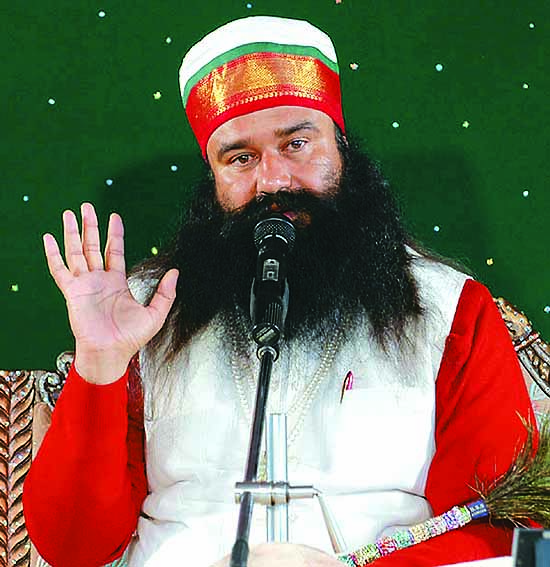
    SIRSA (TIP): The first day of search of the Dera Sacha Sauda headquarters near Haryana’s Sirsa town on Friday ended with a few computers, a luxury SUV and some currency notes being seized, official (old and new currency) being seized, officials said.

    Officials said that five children were found inside the Dera premises in the search.

    The authorities seized a few computers and hard disks, one Toyota Lexus luxury SUV and some currency notes (both old and new) amounting to a few thousand rupees during the search, said Haryana government deputy director Satish Mehra.

    Officials involved in the search remained tight-lipped about the recoveries made inside. Sources said that a couple of rooms in one of the buildings had been sealed and that the search operation could take a long time.

    The search operation began amid tight security and curfew in the area on Friday morning. The media was stopped at some distance from the Dera premises to avoid any controversy.

    JCB machines, locksmiths, forensic experts and dog squads were called in to assist a comprehensive search operation launched by security agencies and district authorities at the Dera premises. Internet services in Sirsa district were suspended by local authorities on Friday.

    EXPLOSIVES SEIZED

    An illegal crackers factory was on Saturday found inside Dera Sacha Sauda headquarters during the second day of search operations.

    Nearly a hundred packs of crackers were also found. The authorities have sealed the factory.

    Also, 1,500 pairs of costly designer shoes of the Dera chief and hundreds of designer dresses were recovered.

    Meanwhile, the Haryana Police have arrested three Dera Sacha Sauda followers for hatching a conspiracy of trying to help Ram Rahim escape from Panchkula during an agitation on August 25.

  • University of North Texas Establishes Professorship in Jain Studies

    University of North Texas Establishes Professorship in Jain Studies

    DALLAS (TIP): The University of North Texas has named George Alfred James, a distinguished faculty member in the department of philosophy and religion, as its first Bhagwan Adinath Professor of Jain Studies. The professorship aims to promote Jainism, an ancient religion of India, in the US. It was created in the university’s College of Liberal Arts and Social Sciences with a USD 500,000 gift from the Jain Education and Research Foundation.

    The professorship was established by the foundation to promote the study of Jainism, an ancient religion of India, in the United States. The central tenet of Jainism is nonviolence and love toward all living beings, with nonviolence, non-absolutism and non-possessiveness as the three main principles. Mahatma Gandhi adopted many Jain principles in his life, although he was born and raised Hindu. The professorship at UNT is named for the first Tirthankara, a spiritual guide in Jain tradition who preaches the dharma, or righteous path.

    On June 27, 2017 Jain Education and Research Foundation signed an MoU to establish the Professorship in Jain Studies at the University of North Texas (UNT). This was the second major initiative after successful establishment of the Bhagwan Mahavir Professorship of Jain Studies at Florida International University (FIU) in Miami in 2010. The professorship at FIU has flourished in the past 6 years exposing thousands of students to Jain values through academic courses and other programs. The program at UNT aims to follow in the footsteps of FIU to create a perpetual center of Jain education and research. UNT is ideally suited for this endeavor with its many scholars of Jainism and other Asian cultures. UNT is also one of the largest Tier-1 US universities with student body of almost 40,000 from diverse religious and ethnic backgrounds.

    James, who joined the UNT faculty in 1983, has included information about Jainism in the courses on South Asian philosophy and world religions that he teaches in the Department of Philosophy and Religion. The department also occasionally offers a course on Jainism, which was created after Pankaj Jain was hired as an assistant professor with a joint appointment in the Department of Philosophy and Religion and the Department of Anthropology. Jain taught a similar course at North Carolina State University.

    James also studies environmental movements in India and has traveled extensively to the nation for his research.

    He said a Jain professorship at UNT “will help to fortify the religion program and provide UNT with distinction.”

    “Not every university includes information about Jainism as part of its courses, but there’s a long legacy of the influence of Jainism throughout history. The religion’s idea of nonviolence was extremely influential on Gandhi and also Martin Luther King, who adopted Gandhi’s actions during the civil rights movement,” he said. “Unfortunately, the idea of nonviolence is now getting less and less attention in the world.”

    Interest from the professorship’s endowment will eventually fund conferences focusing on nonviolence as it pertains to contemporary issues and bring speakers with expertise in Jainism to UNT, James said.

    David Holdeman, dean of the College of Liberal Arts and Social Sciences, said many faculty members and students in the college and at UNT are interested in cultural and social issues pertaining to India.

    “We hope that the Jain professorship will help to foster additional discussion not only of Jainism in particular but also of Indian religion and culture more generally. We are excited and grateful to be able to launch this new professorship,” he said.

  • Indian American Cosmetic Surgeon Reappointed to Nevada State Board of Osteopathic Medicine

    Indian American Cosmetic Surgeon Reappointed to Nevada State Board of Osteopathic Medicine

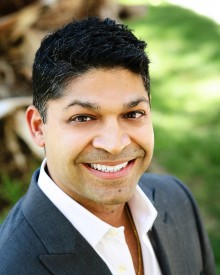
    LAS VEGAS (TIP): Las Vegas based Indian American cosmetic surgeon, Dr. Samir Pancholi has been reappointed to the Nevada State Board of Osteopathic Medicine for a four year second term ending June 2021.

    Earlier, NV Governor announced the appointment of another Indian American Swadeep Nigam to the NV State Board of Osteopathic Medicine as a public member to the Board.

    Dr. Samir Pancholi is fellowship-trained in cosmetic surgery and a diplomat of the American Board of Cosmetic Surgery. After graduating from medical school, he completed a surgical internship at Ohio University and then spent 5 years training at Michigan State University in general surgery and then head, neck and facial plastic surgery training programs. In 2006, he completed an advanced, one year accredited Cosmetic Surgery fellowship training program through the American Academy of Cosmetic Surgery.

    Dr. Pancholi has trained specifically in and exclusively practices cosmetic surgery. With an artistic approach, he has developed a focus in breast augmentation and breast implant revision surgery. As one of the fastest growing cosmetic surgery practices in Las Vegas, Dr. Pancholi is highly respected by his peers and considered a leading expert in cosmetic surgical procedures of the face and body.

    Throughout his career Dr. Pancholi has attained a number of accomplishments including publishing several articles and serving on cosmetic surgery boards and committees. He’s lectured on cosmetic surgery locally, nationally, and internationally; performed live surgery demonstrations of facial, breast, and body cosmetic procedures and taught other surgeons his techniques. In 2009, Dr. Pancholi was selected as a guest editor to review peer articles submitted to The American Journal of Cosmetic Surgery. This journal publishes leading research and advances in the world of cosmetic surgery.

    Dr. Pancholi was selected in 2010 as one of Las Vegas’ Top 40 Under 40, honored for gaining recognition in Las Vegas as a breast implant revision specialist. In 2011, he was recognized as a distinguished speaker by the American Academy of Cosmetic Surgery and also selected as a chairperson to the Annual Scientific Meeting of the American Academy of Cosmetic Surgery. In 2014, Dr. Pancholi was featured as one of Las Vegas’ Top 3 “Best-Dressed Gents” by Luxury Las Vegas Magazine, an honor that speaks to his eye for aesthetic detail, balance and proportion.

  • Indian American Congressman Raja Krishnamoorthi Calls on FEMA to Incorporate Climate Change Impacts into Projecting Flood and Disaster Risks

    Indian American Congressman Raja Krishnamoorthi Calls on FEMA to Incorporate Climate Change Impacts into Projecting Flood and Disaster Risks

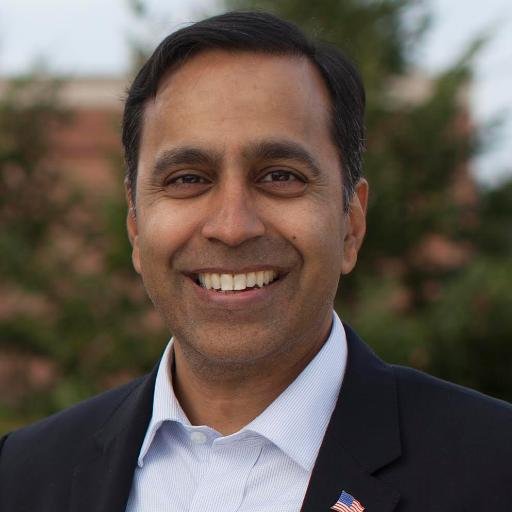
    WASHINGTON (TIP): Indian American Congressman from Illinois Raja Krishnamoorthi called upon the Federal Emergency Management Agency (FEMA) on Sept 11 to issue a report on any steps FEMA is taking to help communities address the increasing likelihood of severe weather through incorporating the impacts of climate change into its risk projections, including flood maps.

    “The scientific evidence of climate change is undeniable and so too is its potential to destabilize weather patterns and increase the likelihood of extreme weather events,” said Congressman Raja Krishnamoorthi. “As our country recovers from the devastating human and material costs of the recent string of one-hundred-year floods and hurricanes, it is vital that government agencies, communities, and businesses have the best available risk assessments for future storms. To guarantee the quality of our weather projections, the impacts of climate change must be taken into account.”

    In his letter to Administrator Brock Long, Krishnamoorthi wrote, “The Federal Emergency Management Agency’s responsibility to protect the United States from natural and man-made disasters is one of the most important functions of the federal government. The increased dangers posed by climate change and the recent devastation caused by Hurricane Harvey along with the incredible ferocity of Hurricane Irma underscore the stakes of adequate preparation. One-hundred year floods and hurricanes are happening too regularly; forest fires are raging with an intensity and frequency not seen until now; and other severe weather events are occurring that outdated weather models and maps are not properly accounting for.  If we do not properly prepare for these events, our citizens and taxpayers will continue to foot the bill for inadequate preparation.

    In July, the House of Representatives recognized the national security implications of failing to address climate change. The FY2018 NDAA acknowledged that climate change is a direct threat to national security and required the Department of Defense to take climate change into account when assessing threats, use of resources, and readiness.

    It is long past time for civilians to have the same level of preparation. When planning for storms, communities need to have the most up-to-date information about the threats and dangers posed by severe weather. Engineers need to know the true likelihood of encountering hurricane-force winds, severe floods, and other extreme weather.

    To this end, I respectfully request that you provide me with all the steps FEMA is taking to help communities address the increasing likelihood of severe weather. Specifically, I would like to know if FEMA is taking the greater odds of severe weather and climate change into account in the Risk MAP program and when drawing flood maps.

    The human and economic cost of climate change is no longer academic, and our failure to take this into account will only increase the toll of future storms.”

  • Harris, Senate Democrats Introduce Students before Profits Act

    Harris, Senate Democrats Introduce Students before Profits Act

    WASHINGTON (TIP): After President Donald Trump and U.S. Secretary of Education Betsy DeVos named a former official of the fraudulent DeVry University to direct the Department of Education unit in charge of combating fraud, U.S. Senator Kamala D. Harris joined Senate Democrats in reintroducing the Students Before Profits Act, a bill to protect students from deceptive practices and bad actors in the for-profit college sector. The bill ensures students have access to important and accurate information, strengthens oversight and regulation, and holds for-profit schools and their executives accountable for violations and poor performance. In 2013, as Attorney General of California, Harris sued Corinthian Colleges for false and predatory advertising, securities fraud and intentional misrepresentations to students, winning a $1.1 billion judgment.

    “For-profit colleges like Corinthian engaged in systemic fraud and preyed on students by falsely promising a meaningful education that would lead to a job. Corinthian’s predatory behavior lined its pockets with profit at the expense of shattered dreams and mountains of bad debt for its students,” said Harris. “That’s why I sued them as Attorney General, and then worked with the Department of Education to forgive the loans for those young adults. It’s clear this Administration believes a quality education is a privilege, not a right, so we must fight to protect our students from deceptive practices.”

    Currently, for-profit colleges enroll 10% of all postsecondary students, but account for 35% of all student loan defaults. Since Corinthian Colleges, the infamous for-profit institution, closed its doors earlier this year after extensive allegations of fraud, the U.S. Department of Education has discharged $247 million in student loan debt held by former students. The Students Before Profits Act provides for new tools to recoup federal dollars from the owners and executives who reap huge profits from failed, fraudulent for-profit institutions.

    The Students Before Profits Act:

    • Authorizes enhanced civil penalties on institutions and their executive officers if it is determined that the institution misrepresented its cost, admission requirements, completion rates, employment prospects or default rates, and uses those penalties to fund a Student Relief Fund to help defrauded students;
    • Improves oversight of default rate manipulation by requiring the Secretary of Education to use corrected data to recalculate student loan cohort default rates for institutions of higher education that have engaged in default manipulation and make determinations on whether an institution should be disqualified from participating in financial aid programs;
    • Makes college executives share the risk, giving the Department of Education broader discretion to require owners and executives to assume personal liability for financial losses associated with Title IV funds and including executives and owners among those against whom the Department can pursue a claim after discharging borrowers’ debts;
    • Prevents “repeat offenders” by prohibiting board members and executive officers of an institution against which the Department has brought an enforcement action from serving in leadership positions at another college.


  • N-energy, defence to set tone of ties with Japan: Jaishankar

    N-energy, defence to set tone of ties with Japan: Jaishankar

    NEW DELHI (TIP): Drawing the emerging contours of its bilateral relations with Japan and latter’s contribution to modernisation of Indian economy, New Delhi today said it will create a multi-polar Asia and highlighted civil nuclear energy and defence as two important fields that would set direction of the ties.

    “Today, the two countries clearly see each other much more strategically. This is expressed through a wide range of contacts and activities, including in areas that are relatively new. Obviously, India’s accelerated economic growth provides new business opportunities for Japanese companies. But the logic of our current cooperation is much deeper,” Foreign Secretary S Jaishankar said in his address to the “India-Japan Colloquium” ahead of Prime Minister Shizo Abe visit next week. “A broader modernisation of the Indian economy and society is very much in Japan’s larger interest. This would help create a more multi-polar Asia that, in turn, enables a more multi-polar world,” he said.

    Stating that cooperation in civil nuclear energy and in defence are two domains that portend the future direction of India-Japan ties, he said Japan could make a substantive difference to the country’s nuclear industry. In 2016, during Prime Minister Narendra Modi’s visit to Japan, both countries signed a civil nuclear deal that allows Japan to export nuclear power plant technology to India.

  • Army plans to induct 800 women in military police

    Army plans to induct 800 women in military police

    NEW DELHI (TIP): A day after Nirmala Sitharaman took over as the country’s first full-time female defence minister, the army on Friday announced that it is giving finishing touches to a proposal for inducting women into the military police.

    The proposal is very significant as women will be inducted in the military’s non-officer cadre for the first time, although they will be in a non-combat role.

    In a presentation made at the army chiefs’ conclave, adjutant general Lieutenant General Ashwani Kumar said, “The proposal is being finalised for induction of 800 women in the military police with a yearly intake of 52.”

    The three-day conclave, hosted by army chief General Bipin Rawat, is being attended by eight former army chiefs. The platform provides an opportunity to the force to draw on the collective experience of its former leaders and seek their inputs on key issues.

    The force expects the plan to move fast under Sitharaman. The proposal is being pushed by General Rawat himself.

    Lieutenant General Kumar said women were required in the Corps of Military Police (CMP) to investigate gender-specific allegations and crime. The women will be inducted as junior commissioned officers and jawans. The armed forces account for around 3,500 women officers, all of whom are in noncombat roles.

    Women were allowed to join the military as officers outside the medical stream for the first time in 1992.

    The move to induct women in the CMP comes at a time when India’s first female pilots are preparing to fly warplanes after they complete the last leg of their training later this month. Source: HT

  • UNRULY PASSENGERS TO BE PUT ON ‘NO FLY LIST’

    UNRULY PASSENGERS TO BE PUT ON ‘NO FLY LIST’

    BAN DURATION

    • Up to 3 months: For unruly physical gestures, verbal harassment, unruly inebriation

    • Up to 6 months: For physically abusive behaviour such as pushing, kicking, hitting,inappropriate touching

    • Minimum 2 years: For lifethreatening behaviour such as assaults, damage to aircraft systems

    NEW DELHI (TIP): The government on Sept 8 unveiled rules to tackle cases of onboard unruly behaviour by passengers. The move would allow airlines to ban such passengers for a period ranging from three months to lifetime.

    The commander of the flight would have the right to file a complaint against such passengers. The revised Civil Aviation Requirement (CAR), effective immediately, defines three categories of unruly behaviour —verbal, physical and life threatening.

    There is a provision for debarring passengers from flying for three months for verbal unruly behaviour, six months for physical and two years or more for life-threatening behaviour.

    The complaint by the pilot-in-command will be probed by an internal committee to be set up by the airline that will decide the quantum of ban. If the panel fails to give a decision in 30 days, the passenger will be free to fly.

    Civil Aviation Minister Ashok Gajapathi Raju said the new rules would allow formation of a national “No Fly List” that would be shared among airlines. The promulgation of the list in India was the first of its kind in the world, he claimed.

    The revised CAR will be applicable to all Indian operators engaged in scheduled and non-scheduled air transport services, both domestic and international carriage of passengers. It would also be applicable to foreign carriers, subject to compliance of Tokyo Convention, 1963. Aggrieved persons will be allowed to appeal within 60 days.

  • Members of WA Delegation Call for Protecting Dreamers

    Members of WA Delegation Call for Protecting Dreamers

    WASHINGTON (TIP): In a letter to President Trump, led by Senator Patty Murray (D-WA) and Indian American Congresswoman Pramila Jayapal (WA-07), members of the Washington congressional delegation, including Senator Maria Cantwell (D-WA) and Representatives Adam Smith (WA-09), Rick Larsen (WA-02), Suzan DelBene (WA-01), Denny Heck (WA-10) and Derek Kilmer (WA-06), urged President Trump to reconsider his decision to repeal DACA and make sure that Dreamers’ application information is not used for immigration enforcement. The members also called on President Trump to work with Congress to pass clean legislation to protect Dreamers.

     “We write to express our profound disappointment in your decision to repeal the DACA program. This repeal will impose severe harm, not only on the 800,000 DACA recipients nationally, but also the broader community,” the letter said. “We urge you to immediately work with Congress to pass clean legislation to protect Dreamers.”

    Earlier, Congresswoman Pramila Jayapal heavily criticized Trump for his decision to terminate the DACA Program.

    “President Trump is destroying the future of nearly 800,000 young men and women who were brought here by their parents and know no other country but this one. After toying with their futures and raising their hopes with talk of his ‘big heart,’ Donald Trump has shown exactly what his priorities are. He has once again sided with hate and xenophobia, putting in place a repeal that is cruel, inhumane and unjust”, she said.

    Termination of the program will impact more than 17,500 Washingtonians who have been granted DACA status in Washington State. Moreover, this move by the Trump administration will cost the state an estimated $1.1 billion in annual gross domestic product (GDP).

  • Indian American professor Receives Fulbright Award to India

    Indian American professor Receives Fulbright Award to India

    WASHINGTON (TIP): S Shankar professor of English at the University of Hawaiʻi at Mānoa, received the prestigious Senior Fulbright-Nehru Academic and Professional Excellence Award (Teaching and Research) for 2017–18. He will soon head to India where he will teach at the Indian Institute of Technology-Madras, in Chennai, India, conduct research, and interact with students and faculty in India for the academic year.

    The Fulbright-Nehru enables the most outstanding students, academics, and professionals in India and the United States to study, research and teach in the host country. The Fulbright-Nehru award poses an exciting opportunity for Shankar both personally and professionally. Originally from India and of Tamil heritage, Shankar is pleased to have the opportunity to share his Tamil and American cultures with others through this academic endeavor. He has experienced India’s emergence as an economic power and the growth of its citizens in many educational fields. In 1987, Shankar came to the United States to pursue graduate studies and received his PhD from the University of Texas at Austin. In 2002, he joined the  Department of English the University of Hawaiʻi at Mānoa.

    1. Shankar is a critic, novelist, and translator. His scholarly areas of interest are postcolonial literature (especially of Africa and South Asia), literature of immigration, film, and translation studies. He is Professor of English and Director of the Creative Writing Program. His most recent book is Flesh and Fish Blood: Postcolonialism, Translation, and the Vernacular (2012; U. of California P.; OrientBlackswan India).  In a citation accompanying the award of Honorable Mention from the American Comparative Literature Association, the 2013 Rene Wellek Prize committee noted, “Over-all, Shankar’s book combines theoretical sophistication, deftness of interpretation and an impressive clarity and cogency of argument. It makes a compelling claim for rethinking postcolonialism within the framework of comparative vernacular literatures and makes a much needed case for a more capacious curriculum.”

    Shankar’s novel No End to the Journey, published by Steerforth Press in 2005, is set in a village in South India and draws on the ancient East Indian epic the Ramayana. It tells the story of Gopalakrishnan and his difficult relationship to his son. In favorable reviews, Booklist compared it to Kazuo Ishiguro’s Remains of the Day and the Indian Express noted that “it packs a punch.” A Spanish translation of the novel appeared in 2009. In 2001, Shankar published his first volume of criticism, entitled Textual Traffic: Colonialism, Modernity, and the Economy of the Text (SUNY Press). The book has been positively reviewed for its explication of the relationship between colonialism and modernity and its innovations of critical methodology.

    A Map of Where I Live (1997), Shankar’s first novel, intertwines a story of love and political intrigue set in Madras with the memoir of an Indian historian who discovers that Lilliput (as in Jonathan Swift’s Gulliver’s Travels) really exists. Shashi Tharoor called the novel “highly original, compelling, and vivid,” and World Literature Today described it as “a minor masterpiece.” Shankar is also co-editor of the anthology Crossing into America: The New Literature of Immigration (New Press, 2003), which brings together poems, excerpts from novels and memoirs, short stories, letters, and essays to present immigrant literature since 1965. This book, San Antonio Express News notes, is “a strong and diverse literary story of multicultural America… likely the most original and best introduction to the new immigration available today for its balanced, informative, moving, and comprehensive offerings.” The paperback edition of the anthology was published in 2005. The book has been used as common text in Freshman Experience programs.

    Shankar is a translator from Tamil, including of the full-length Tamil play Water by Komal Swaminathan, published in 2001 in India by Seagull Press and in the US by Asian Theatre Journal, and of the famous 18th-century Krishna devotional “Alaipaayuthey,” which appears in No End to the Journey as “Restless as the Waves of the Ocean.” Shankar has published shorter pieces in a wide variety of scholarly and general interest periodicals in India and the US. His scholarly articles, poems, reviews, and literary essays have appeared in such academic journals and popular venues as PMLA, Tin House, Massachusetts Review, Outlook, The Hindu, Pioneer, Village Voice, and The Nation. “Midnight’s Orphans, or A Postcolonialism Worth Its Name,” a scholarly article appearing in Cultural Critique 56 (Winter 2004), has been widely read and cited. He has work forthcoming in PMLA and Comparative Literature.

    Aside from being Professor in the Department of English, Shankar was Director of the Center for South Asian Studies at the University of Hawai‘i at Mānoa from 2004-2010. He was appointed Convener of XVIth Annual Convention of the Forum on Contemporary Theory (India) in 2013. He is 2016 Scholar-in-Residence at University of Houston-Downtown.

    While serving as a Senior Fulbright Scholar, Shankar will undertake the research project, “Translation, Comparatism, and the Tamil Cultural Sphere.”