NEW DELHI (TIP): India’s energy muscle was on full display when oil minister Dharmendra Pradhan and power, coal, renewable energy and mines minister Piyush Goyal — who together account for administering nearly a fifth of India’s GDP and are responsible for energising a billion-plus lives — took the stage with International Energy Agency’s executive director Fatih Birol on March 30 (Thursday).
It was a clear signal by the Narendra Modi government that India cannot be ignored any longer and must be heard as the voice of developing economies at the high table of global energy market. A fact duly acknowledged by Birol, when he said, “We can’t talk about the future of the global energy markets without talking with India”.
India has so far been a partner country. The ‘associate’ status will make India part of all meetings and dialogues, allowing an opportunity for it to shape relationships in the global energy market. China, the world’s second-largest oil consumer, has been an associate member since 2015.
The Modi government’s measures to make fuel and electricity accessible and affordable for the vast population, combined with industrialisation through ‘Make in India’ initiative will drive India’s hunger for energy.
“IEA Association will not entail any additional burden or commitment on the government or people of India, but will also help India plan better and serve the needs of its citizens better, ensuring energy security for days and years to come,” Goyal said.
“IEA has helped in promoting understanding of India’s interests and concerns as the third-largest consumer of energy,” Pradhan said urging IEA to anchor dialogue between oil sellers and buyers for evolving a balanced market.
It is for this reason that fielding Pradhan and Goyal becomes significant. Pradhan, besides trying to raise India’s oil security through various policy initiatives, is spearheading ‘Ujjwala’ – a scheme to provide LPG connection free of cost to poor households. This scheme alone has helped increase LPG penetration to 71% households and turned India into the second-largest LPG consumer in domestic sector.
Goyal is tasked with an array of responsibilities — from electrifying every home in the country, ensuring 24X7 quality supply and greening India’s power sector, not to mention bringing in efficiency and transparency.
NEW DELHI (TIP): India and South Korea today agreed to deepen cooperation among their small and medium enterprises through technology transfer, joint ventures, business alliances and facilitation of mutual market access.
Both countries also emphasised on providing support to each other’s startups in accordance with their schemes and programmes.
The Korean side proposed to initiate cooperation for startup companies in India and the Republic of Korea. It proposed to hold a contest to identify startups would be interested to establish themselves in each other’s country.
The decisions were taken at the first Korea-India SME bilateral working group meeting, wherein the Korean delegation led by SME Minister of Small and Medium Business Administration Young-sup Joo met the Indian delegation, led by Union MSME Minister Kalraj Mishra.
The representatives of both the sides briefed about their respective policies for promotion and development of SMEs to have a better understanding of each others policies and identify areas of cooperation.
The parties agreed to implement technology transfers and business match-making through establishment of a technology exchange centre. They also agreed to consider and plan policies aimed at providing support for research and development.
Both sides agreed to form a joint task force to prepare the action plan on this proposal discussed and timelines by the end of 2017. The two leaders agreed for NSIC from Indian side and Small Business Corporation from Korea to Collaborate in SME Cooperation.
It was agreed to hold biannual bilateral working Group meetings headed at appropriate level to discuss and develop cooperation agenda. The outcome of these meetings can be discussed at Ministerial level (once in two years) in India and South Korea alternatively.
CHENNAI (TIP): Planning to buy a two-wheeler? The next two days before the weekend may be the best time to do so. Two-wheeler dealers stuck with BS-III stock have been offering discounts ranging from 10-15% since mid-March but those are expected to go up sharply in the next two days as dealers and companies rush to liquidate BS-III stock.
Although most companies remained tight-lipped about their BS-III stock strategy, dealers and officials spoke about ‘customer benefits’ going up to 20-25% particularly on slow moving models. “In the commuter segment alone the discounts for the past two weeks have been in the range of Rs 4,000-5,000 in some models, brands and geographies,” said a senior official with a two-wheeler financing firm.
“The discounts will be higher in higher priced models but even mopeds are fetching around Rs 1,000-2,000 discount in some geographies.”
Sources say in some higher-priced models in the Rs 1 lakh and above range, discounts are in the range of Rs 15,000-20,000. For example the Honda CBR 250R and CBR 150R are fetching cash discount of Rs 15,000 in some dealerships and geographies while the rest of the range, including scooters, get Rs 7,500 off in those sectors.
HONK KONG/MUMBAI (TIP): Indian online retailer Snapdeal is seeking investment to shore up its finances after unsuccessful talks with Chinese funds and Alibaba Group Holding Ltd as it battles to remain competitive, sources with direct knowledge of the matter said.
Faced with the prospect of falling cash reserves and little interest from existing investors such as Japan’s Softbank and U.S. hedge funds, Snapdeal is now increasingly being seen as an acquisition target, they said.
“Snapdeal has been desperately looking to raise money in China for the last few months,” said a source with direct knowledge of Snapdeal’s plans.
“It had multiple rounds of talks with some Chinese funds and was also hoping to get some fresh money from Alibaba. But those talks were not going anywhere and Alibaba made it clear to them they would not write a new cheque for them given the dim outlook for making money any time soon.”
Both Alibaba, which already has a small stake in Snapdeal, and Softbank declined to comment.
Goddess Shakti is worshipped and offered prayers during the nine days
CHAITRA NAVRATRI IS MORE POPULAR IN NORTHERN INDIA. IN MAHARASHTRA CHAITRA NAVRATRI BEGINS WITH GUDI PADWA AND IN ANDHRA PRADESH IT BEGINS WITH #UGADI
Chaitra Navratri is nine days festivity which starts on the first day of Hindu Luni-Solar calendar and falls in the month of March or April. Chaitra is the first month of Hindu lunar calendar and because of it this Navratri is known as Chaitra Navratri. Chaitra Navratri is also known as Vasanta Navratri. Rama Navami, the birthday of Lord Rama usually falls on the ninth day during Navratri festivity. Hence Chaitra Navratri is also known as Rama Navratri.
All nine days during Navratri are dedicated to nine forms of Goddess Shakti. Most customs and rituals followed during Shardiya Navratri, which falls in the month of September or October, are also followed during Chaitra Navratri. Ghatasthapana Puja Vidhi for Shardiya Navratri and Chaitra Navratri is same.
Chaitra Navratri is more popular in northern India. In Maharashtra Chaitra Navratri begins with Gudi Padwa and in Andhra Pradesh it begins with Ugadi.
Ghatsthapana, Shailputri Puja
The first day of Chaitra Navaratri festival will fall on March 28, Tuesday. Goddess Shailputri is worshipped on the first day of Navratri. Just like the Shardiya Navratri, most of rituals and traditions remain similar during the spring festival celebrations. Ghatasthapana Muhurta is the most important ritual which is to be followed dedicatedly as it marks the beginning of Chaitra Navaratri festivity. Ghatasthapana is an invocation of Goddess Shakti and to be done only in shubh muhurat time. Ghatasthapana is also known as Kalash Sthapana or Kalashsthapana.
Chandra Darshan, Brahmacharini Puja
The second day of Chaitra Navaratri festival will fall on March 29, Wednesday. Goddess Brahmacharini is worshipped on the second day of Navratri. Dwitya also marks the 2017 Chandra Darshan, the first day of moon sighting after no moon day also known as Amavasya. Goddess Brahmacharini is believed to be controlling Lord Mangal, the provider of all fortunes according to Hindu legends and hence worshipping the goddess brings happiness and prosperity.
Gauri Teej, Chandraghanta Puja
The third day of Chaitra Navaratri festival will be on March 30, Thursday. Goddess Chandraghanta is worshipped on the third day of Navratri. She is believed to govern the shukra (Venus) planet. According to ages old mythology, she drives away the spirits troubling her devotees with the sound of the moon-bell present on her forehead. The day is observed as Gangaur also known as Gauri Tritiya. Gangaur festival is widely celebrated in Rajasthan and some parts of Uttar Pradesh, Madhya Pradesh, Haryana and Gujarat.
Varad Vinayaka Chauth, Kushmanda Puja
The fourth day of Chaitra Navaratri festival will be on March 31, Friday. Goddess Kushmanda is worshipped on the fourth day of Navratri. She governs the God Sun and is the source of energy and direction of Sun. Kushmanda Puja and Varad Vinayaka Chauth is celebrated on Chaturthi. Varad means “asking God to fulfill any desire one has”. Goddess Kushmanda is worshipped with her favourite red coloured flowers.
Lakshmi Panchami, Skandamata Puja
The fifth day of Chaitra Navaratri festival will be on April 1, Saturday. Goddess Skandamata is worshipped on the fifth day of Navratri. This form of Goddess Parvati, Goddess Skandamata governs Planet Budha (Mercury), and red coloured flowers are also used to worship her. Devotees worship Skandamata also gets the benefit of worshipping Lord Kartikeya. Panchami is also widely celebrated as Kalpadi Tithi. Chaitra Shukla Panchami is also known as Lakshmi Panchami, dedicated to Goddess Lakshmi, the Goddess of wealth and prosperity. Among Tamil Hindus, this day is celebrated as Skanda Sashti or Kanda Sashti Vratam 2017 as Skanda, son of Lord Shiva and Goddess Parvati is a favorite deity.
Yamuna Chhath, Katyayani Puja
The sixth day of Chaitra Navaratri festival will be on April 2, Sunday. Goddess Katyayani is worshipped on the sixth day of Navratri. She governs the planet B?haspati (Jupiter). Roses are the favourite flowers to worship Goddess Katyayani. The day also marks the birth anniversary of Goddess Yamuna and celebrated as Yamuna Jayanti. Yamuna Chhath is a popular festival celebrated in Indian city Mathura.
Maha Saptami, Kalaratri Puja
The seventh day of Chaitra Navaratri festival will be on April 3, Monday. Goddess Kalaratri is worshipped on the seventh day of Navratri. Goddess Kalaratri is also known as Goddess Shubhankari and worshipped with night-blooming Jasmine flowers. She is believed to govern planet Shani (Saturn). She is one of the most powerful and ferocious forms of Goddess Parvati and said to remove the darkness from the lives of her pure-hearted devotees and wrath hell on the evil-doers.
Durga Maha Ashtami, Mahagauri Puja
The eighth day of Chaitra Navaratri festival will be on April 4, Tuesday. Goddess Mahagauri is worshipped on the eighth day of Navratri. This form of Goddess Parvati governs the planet Rahu (Neptune). Masik Durgashtami 2017 also falls on the day with devotees fasting during Ashtami Tithi of Shukla Paksha. The day also marks the Sandhi Puja, which has a special significance during Navratri festival puja. Sandhi Puja is done at the juncture when Ashtami Tithi ends, and Navami Tithi starts.
Rama Navami, Siddhidatri Puja
The ninth and final day of Chaitra Navaratri festival will be on April 5, Wednesday. Goddess Siddhidatri is worshipped on the ninth day of Navratri. Siddhidatri is believed to provide energy and direction to planet Ketu (Uranus). She can award ultimate power and fulfill every wish of her devotee. 2017 Chaitra Navratri Parana is done with the end of Navami Tithi ends, and Dashami Tithi begins. The day also marks the birth of Lord Rama, the human incarnation of Lord Vishnu. Rama was born on Navami Tithi during Shukla Paksha of Chaitra month and the day is celebrated as Ram Navmi festival across India.
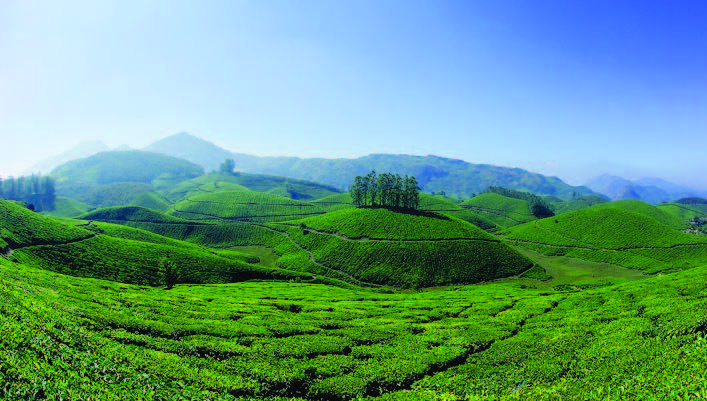
There are plenty of interesting places to visit in and around Munnar. While nature lovers must visit places like Echo Point, Eravikulam National Park and Kundala Lake, there is a lot for culture buffs as well. The dolmens and rock paintings at Marayur near Munnar, and the Tea Museum that is one of the biggest tea estates in town, are great for some cultural and historical insight. Other than these, the lush green tea estates that line the roadside in Munnar are a no less attraction for those who can marvel at picture perfect scenic beauty.
MARAYUR DOLMENS
Marayur Dolmens (burial chambers) are one of the secret places to visit around Munnar. These lie at some 42 km from Munnar on SH 17 and date back to Stone Age, somewhere around 10,000 BC. There are dozens of dolmens peppered around Thenkasinathan Temple near River Pambar. Some of the dolmens, supposedly, date back to Iron Age as well. Other than these intricate burial chambers, the ancient rock paintings in the region are worth a dekko as well. Some of the most interesting paintings can be seen at Kovilkadavu that lies at a distance of around 5 km from Marayur. It is one of the most important sites famous for rock art in Kerala.
ERAVIKULAM NATIONAL PARK
The Eravikulam National Park is located along the crest of western ghats in Idukki. It extends along 97 sq.kms of land and has the largest population of endangered (IUCN) Nilgiri Tahr (Hemitragus hylocrius). The Eravikulam National Park has an elevated plateau which is 2000 metres above sea level. The highest peak of the region, Anamudi (2690 m) is situated in the Eravikulam National Park.
The Eravikulam National Park is covered with grassland, shrubs and forest. Twenty six species of mammals have been recorded in this national park with an estimated population of 750 Nilgiri Tahr. Gaur, Indian Muntjac, Sambar Deer, Nilgiri langur, Indian Porcupine, Nilgiri Marten, small clawed otter and elephants are among other species spotted here. Eravikulam National Park has a tropical montane climate and the peaks experience heavy rainfall from June to August. The only road within the tourism zone of Eravikulam National Park passes through the southern extent towards Rajamallay tea estate. The national park is governed by the Department of Forest and Wildlife Government of Kerala.
KUNDALA LAKE
Kundala Lake lies, at some 20 km from town centre, on the road to Top Station. A scenic place that looks more like a picture postcard, Kundala Lake is a major attraction. You can go boating at the lake in one of the many colourful shikaras available here. The lakeside is quite famous for the neelakurinji flowers that bloom in the region every 12 years. With some luck, you can even see hordes of wild elephants loitering on the banks here. A perfect place for nature and photography lovers, Kundala Lake is a great option for a quick family picnic.
TEA MUSEUM
Other than its world famous tea estates, Munnar also has a tea museum to its name. This interesting museum is set inside the Nallathanni Estate and is a must-visit for tea aficionados. It houses Rotorvane, a 1905 tea roller, a second century burial urn that was found in one of the tea estates around and fascinating information and photographs that date back to the colonial era in India. The museum traces the history and growth of Munnar’s tea estates, taking you back to the time when Munnar was a simple hill town and pioneers of tea industry started the revolution that placed it on every tea lover’s bucket list.
ECHO POINT
Echo Point, at a distance of around 13 km from town centre, is one of the most famous attractions of Munnar. It is a lakeside famous for its natural echo phenomenon, where whatever you speak loudly comes ringing back at you! The lush green lakeside is a sight to behold and sees a steady trickle of tourists.
Why not we do any festival parties, as Christians do Christmas parties, Muslims do Iftar parties and Hindus do Diwali & Holi parties.
All these are religious festivals but people celebrate with food, dance and parties. Gujrati people celebrate Garba with dance and food.
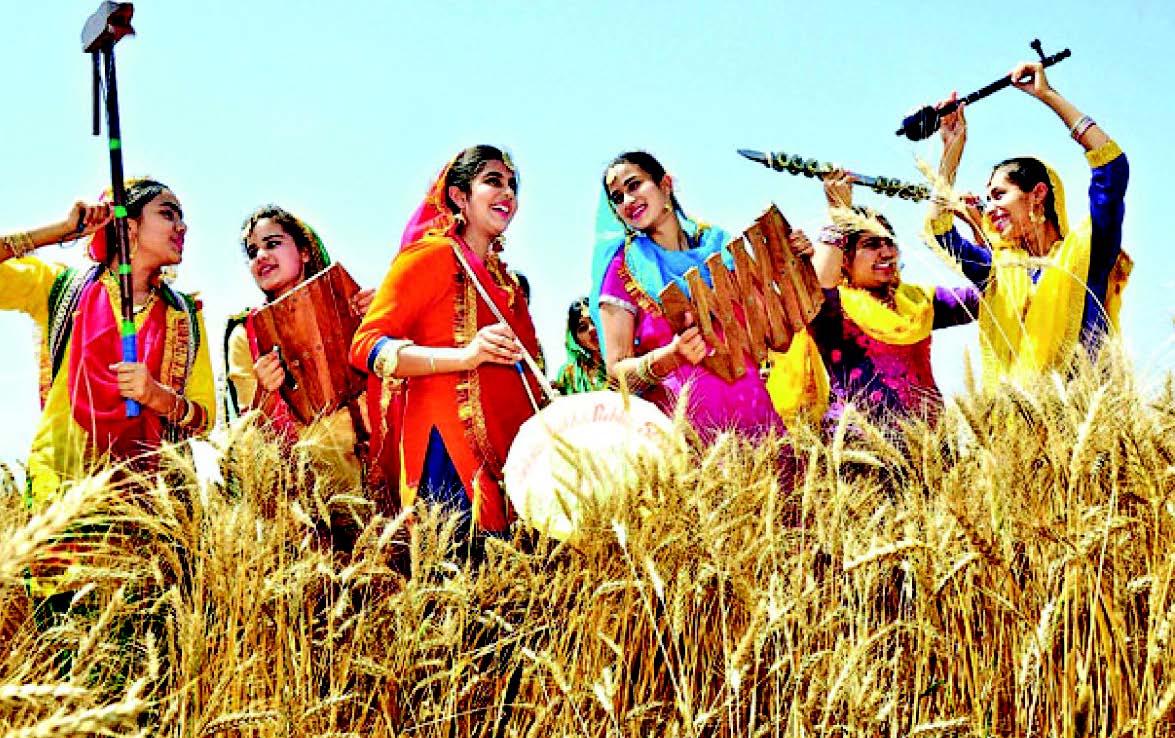
I think that Vaisakhi is the best festival to do parties because it is religious and cultural festival. We can have family get together parties at home or in party halls with bhangra and giddha. We can invite other religion and country people to these parties to tell them about our religion and culture.
It doesn’t matter that parties are done at home or party hall. We can make variety of vegetarian Punjabi dishes for them.
Our young generation will also like and take part in this type of celebrations.
I always think that there should be a festival when we can cook or make a variety of dishes at home.
NEW JERSEY (TIP): PNG Jewelers a 185-year-old legacy, further fortified its presence in the United States of America by launching its third store in New Jersey on 17th March, 2017.
The store was inaugurated by Bollywood diva Raveena Tandon in presence of Mr. Saurabh Gadgil – Chairman & Managing Director and other renowned dignitaries.
This 4000 sq. ft. spacious and elegant showroom located in the heart of the city, it is a treat for the eyes of every jewelry aficionado. The showroom showcases exquisite pieces of Minakari, Jadau, Kundan, and the classic understated patent yellow gold, diamond, contemporary and silver jewelry for the Indian expatriate customers. They even have products that will cater to the international audience. PNG Jewelers has two store in US, located in Sunnyvale and Fremont.
US is one of the most prosperous international economies, it has a great deal of Indian and South East Asian expatriate population. It has always been a favorable place for tourists entailing high purchasing power. Hence there is a need of a strong Indian structured retail jeweler.
Furthermore, PNG Jewelers has received tremendous response and support from customers for the existing two stores, which led to the cornerstone of their third store in New Jersey.
Speaking on this occasion Mr. Saurabh Gadgil – CMD, PNG Jewelers stated, “Our success in US from our stores in Sunnyvale and Fremont is evident with the positive response we have received from our customers, and we will take this opportunity to repeat the same by inaugurating our third store in New Jersey. There is strong presence of Indian community in New Jersey hence, we are committed to offer them the best Indian retail jewelry shopping experience. Our wide range of designer jewelry pieces will add value to this experience. It is our 25th store.
Ms. Raveena Tandon shares, “It gives me immense pleasure to inaugurate the 25th PNG Jewelers showroom here, in New Jersey. I have always been passionate about jewelry and great craftsmanship; hence I take great pride to be associated with this glorious 185-year-old brand. I would like to congratulate them on achieving this milestone and would like to wish them the very best for their future endeavors”.
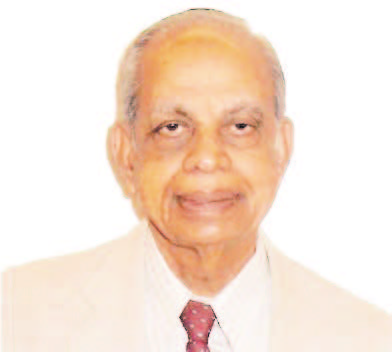
FANWOOD, NJ (TIP): One the most preeminent scientist of Indian origin, Dr Yashwant Karkhanis, peacefully passed away on March 23, 2017 at his home in Fanwood, N.J. after a brief hospitalization. He was 86. He is survived by his wife of 56 yrs, Nalinee, children Nitin & Anita, nephew Sanjay and four grandchildren. He was world renowned for his ground-breaking work in the field of Immunology and Protein Chemistry. After his graduate studies in Mumbai, he came to USA in 1956 to pursue Doctorate studies in Biochemistry at ‘Florida State University’. His research and intellect not only took him to prestigious ‘Brookhaven National Laboratory’ in Long Island, N.Y. and ‘Albert Einstein Medical Center’ in Philadelphia, but also, established him as a post-Doctoral Fellow at ‘Harvard’. For major part of his career, he worked at ‘Merck Pharmaceutical’ in New Jersey, where he retired at the age of 70, as ‘Research Director’. There are several ‘Patents’ and hundreds of research papers to his credit. He was once referred in ‘Time’ magazine, too. After retirement, he devoted his life to writing scientific articles in Marathi thatcould be of help to people, in everyday life.
He was a founder member and trusty of ‘Marathi Vishwa’, the largest and most prestigious social-cultural organization of Marathi community in USA. Highly respected, he was the toast of Marathi community in USA with his disarming down-to-earth disposition and childlike innocence. He believed that one owes to the community one lives in. Accordingly, his home was open to anyone seeking any kind of help. When the Iconic Marathi singer-composure, Sudlhir Phadke wanted to make a movie on the life of “Veer Savarkar”, he devoted almost a decade of his life raising funds for it.Being a part of the earlier retinue of Indian immigrants in U.S., he always had interesting stories to share about his life in 1950’s U.S.He was very proud of his Indian heritage and truly admired American social environment. With his passing, scientific world has lost a great ‘thinker’.
JERSEY CITY, NJ (TIP): Two Indian American owners of a New Jersey jewelry store who used the business to further one of the largest credit card fraud schemes ever charged by the Justice Department were both sentenced on March 27 for their respective roles in the scheme, Acting U.S. Attorney William E. Fitzpatrick announced.
Vijay Verma, 49, and Tarsem Lal, 78, both of Iselin, New Jersey, were sentenced to 14 months in prison and 12 months of home confinement, respectively. Both previously pleaded guilty before U.S. District Judge Anne E. Thompson in Trenton federal court to information charging them with one count of access device fraud.
In addition to the prison terms, Judge Thompson sentenced Verma to three years of supervised release and Lal to three years of probation. Each defendant was fined $5,000 and ordered to pay forfeiture of $451,259.
Washington: US universities have registered a hefty drop in the number of applications from Indian students amid a spate of hate crimes and fear about potential changes to visa policies by the Trump administration, found a survey. According to the preliminary results of the survey of more than 250 American colleges and universities conducted by six top American higher education groups, students from India this fall registered a 26 per cent decline in undergraduate applications and 15 per cent decline has been reported in graduate applications.
The full version of the ‘Open Doors 2016’ report is slated to be released later this week. These higher educational institutions reported a drop of an average of 40 per cent application from international students.
The report said that India and China currently make up 47 per cent of US international student enrollment, with almost half a million Indian and Chinese students studying in the US.
China reported a drop of 25 per cent application in undergraduate studies and 32 per cent from graduate studies, said the survey report.
The survey was conducted jointly by American Association of Collegiate Registrars and Admissions Officers, the Institute of International Education, Association of International Educators, the National Association for College Admission Counseling (NACAC) and its focus subgroup International Association for College Admission Counseling (ACAC).
The most frequently noted concerns of international students and their families, as reported by institution-based professionals, include perception of a rise in student visa denials at US embassies and consulates in China, India and Nepal and perception that the climate in the US is now less welcoming to individuals from other countries.
It also includes concerns that benefits and restrictions around visas could change, especially around the ability to travel, re-entry after travel, and employment opportunities and concerns that the Executive Order travel ban might expand to include additional countries.
“I’d say the rhetoric and actual executive orders are definitely having a chilling effect on decisions by current applicants/admitted students, and by extension are likely to affect future applicants as well,” Wim Wiewel, Portland State’s president, who was recently in India told Inside Higher Education.
“India’s demonetisation policy and the weakness of the value of the rupee against the dollar,” are other factors according to Wiewel, the news report said.
The Portland University has registered 27 per cent drop in the number of Indian students this fall.
“However, we were struck by how much US higher education is still considered the holy grail, and that especially in the southern half of India almost every middle class family seems to have a relative in the US… Thus, if nothing too bad happens in the future we will recover from this, but people are watching,” he noted.
A lot of universities are concerned about declines in master’s students from India, John J Wood, the senior associate vice provost for international education, at the State University of New York at Buffalo, was quoted as saying by Inside Higher Education.
“A lot of the master’s students coming from India are ultimately hoping to get on the job market here through OPT (Optional Practical Training) and eventually H-1B,” Wood said.
The optional practical training programme allows international students to work for one to three years on their student visas after graduation.
“There’s a lot of fear and anxiety about potential changes to H-1B and/or OPT that would limit their opportunities. Making the decision to invest in a master’s program when the uncertainty on the other end is there is an issue for a lot of students in India,” he was quoted as saying by the report.
Recent killing of an Indian engineer in Kansas and other hate crime is another factor that would have an impact on application of students from India, Woo said.
“Those events affect us, whether we like it or not. The impact is not just going to be on Indian nationals. It could impact other students from other countries who may now be concerned about coming,” Ahmad Ezzeddine, associate vice president for educational outreach and international programs, at Wayne State University, told a media outlet that focuses on higher education.
Washington: Indian firms, which account for the bulk of H-1B visas, have “gamed” the system, an influential American lawmaker today alleged and insisted his legislation introduced in the Congress will help fix the existing flaws.
Congressman Darrell Issa, who recently introduced the legislation which calls for an increase in the salary of H-1B workers, insisted that his move would bring the best talents to the US and help fix the flaws in the existing H-1B system.
“The president supports (the bill). I think we will have strong support in the Senate,” he told a Washington audience at an event hosted by Atlantic Council at the Capitol Visitor Center.
He alleged that Indian companies have “gamed the system” and made the “best use of this flawed immigration system”.
“You can’t have 75 per cent of a programme going to an Indian-owner, Indian operated, Indian employee visas and not say that this is distortion,” Mr Issa said, adding it’s common sense to hire the best and not the other way around.
“It would be interesting that India would be concerned that a relatively simple change (in H-1B visas) that does not target India, somehow happens to be accommodation for India,” he said.
“Today 75 per cent of all H-1Bs are coming in about $60-65,000, which is pretty absurd considering these are high-skilled visas… If they were told to write $ 1,00,000 and you will get your H-1B, they will write that check,” he said.
The lawmaker from California called for fixing the system and removing the country-based caps. He also said increasing the salary would raise the quality of people coming to the US.
“An auction system is not a bad way to go,” he said. “A graduate with a STEM degree from a US university is not going to take a job with $ 60,000 salary. And that’s the reality,” said the Congressman.
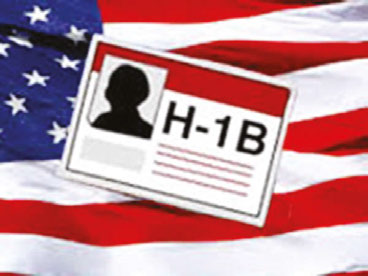
The H-1B visa is a non-immigrant visa that allows American firms to employ foreign workers in occupations that require theoretical or technical expertise. The technology companies depend on it to hire tens of thousands of employees each year.
Two Indian-Americans from New Jersey have been sentenced to over a year of imprisonment for a massive international credit card fraud involving more than 200 million US dollars.
Vijay Verma, 49, and Tarsem Lal, 78, both of whom are owner of a jewellery store in New Jersey, have been sentenced to 14 months in prison and 12 months of home confinement, respectively, the Acting US Attorney William E Fitzpatrick said.
Both had earlier pleaded guilty to the charges.
Verma and Lal were indicted in October 2013 as part of a scheme to fabricate more than 7,000 false identities to obtain tens of thousands of credit cards.
According to court documents, participants in the scheme doctored credit reports to pump up the spending and borrowing power associated with the cards.
They then borrowed or spend as much as they could, based on the phony credit history, but did not repay the debts – causing more than USD 200 million in confirmed losses to businesses and financial institutions, federal prosecutors alleged.
These debts were incurred at Verma’s jewelry store, among many other locations, where Verma would allow fraudulently obtain credit cards to be swiped in phony transactions, court papers said.
Federal prosecutors alleged that Verma and Lal each admitted allowing others who came to their Jersey City, New Jersey, store to swipe cards they knew did not legitimately belong to them.
Verma and Lal would then split the proceeds of the phony transactions with these other conspirators.
In addition to the prison terms, Judge Thompson sentenced Verma to three years of supervised release and Lal to three years of probation.
Each of them have been fined USD 5,000 and ordered to pay forfeiture of USD 451,259.
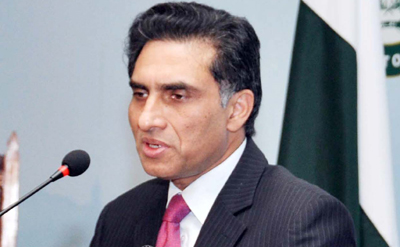
Washington: Pakistan is not “friends” with the Haqqani Network, the country’s ambassador to the US, Aizaz Ahmed Chaudhry, has said.
“Those playing with human lives, we are against such elements or activities,” Dawn online quoted Chaudhry as saying.
Chaudhry also reiterated that Pakistan wanted peaceful relations with India and these should be based on mutual respect.
“This is our message for India to promote relations with peaceful environment” in the region, he said.
According to him, whenever Pakistan and India wanted to boost relations, some terrorist activity halted the process.
He said terrorists get encouraged when India stops the process.
Afghanistan has long blamed Pakistan for not taking action against Haqqani Network sanctuaries on its soil, alleging that this has allowed insurgency there to sustain, Dawn said.
However, earlier in March, General Joseph Votel, Commander of the US Central Command, informed a congressional panel that Pakistan had “done things” against the Haqqani Network that have been helpful to the war against terror.
“They have done some things that have been helpful to us,” he said. “Most recently, they’ve supported General Joseph Nicholson in some places on the border, making sure they were well coordinated and doing the activities on their side of the border.”
“That’s a very positive sign and a move in [the] right direction. And they have done things against the principal concerns we have — the Haqqani Network and Taliban,” Votel said.
“But we need that to be more persistent and continue to focus in that particular area. And so, we will continue to engage with partner Pakistan throughout this.”
“So long as these groups maintain safe haven inside of Pakistan, they will threaten long-term stability in Afghanistan,” he said.
He added that the US was particularly concerned about the Haqqani Network, which posed the greatest threat to coalition forces operating in Afghanistan.
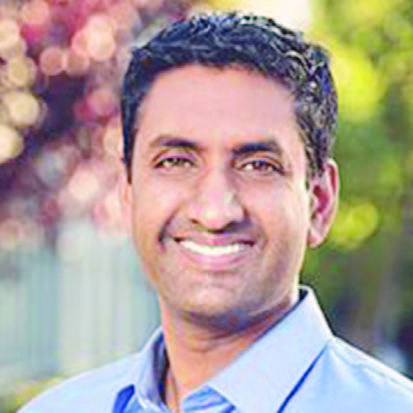
Washington: Indian-American Congressman Ro Khanna has termed as “dumb” some of the budget proposals of US President Donald Trump and described the move to cut foreign aid as “inhumane”.
Khanna, the first-time Democratic lawmaker elected to the House of Representatives from a Congressional District in California, hoped that the ruling Republican party, which has majority in both the House and the Senate, would work against passage of the budgetary proposals of Trump.
“I am really concerned about the community block grants, the USD three billion cut. It is shocking to me given someone campaigned on America first, building American cities. Here USD three billion that goes to building American cities, transportation, infrastructure, job training.
“I cannot think of a more a dumb proposal than frankly than cutting that. Hopefully the Republicans will push back on that,” he told TYT Politics news YouTube channel yesterday.
Khanna said he is concerned that the Republicans may not push back on foreign aid, given that the White House has proposed a massive budgetary cut in it.
“Gorge Bush, I disagreed with about everything Bush/Cheney did. The one thing he did that we should all give him credit for is he helped save people in Africa with HIV. We put billions of dollars in foreign aid to help people with the antiviral drugs and we are going to cut that. That is so inhumane. So I think defending the foreign aid budget, which is less than one per cent, which is going to humanitarian causes,” Khanna said.
“One of the things that annoyed me so much about Trump’s speech was when he said, ‘Well, it is America’s national interest and America first, and all nations follow their self- interest’. I thought the whole idea about American exceptionalism is we are not all nations. Yeah, other nations just follow their national interest, we care about morality.
We care about humanity. That is what makes America exceptional, so we should care about the moral case, about what we are going to do for other countries,” he said.
Alleging that the Republicans want to dismantle the New Deal Coalition, Khanna said this is the reason why they are “so much allowance” to Trump.
“You talk to members of Congress and they do not agree with everything he says even Republicans. They are as embarrassed. But why do they give him such a pass? Why are not they speaking out? It is because he is helping achieve their vision, which is the dismantling of the administrative state.
The dismantling of the New Deal in a way that even Ronald Reagan did and so they are saying, ‘Okay, we are going to make the bargain with the devil’. He is giving us what we want. Let us ignore everything else,” he said.
Commenting on the Democratic party’s defeat, he said the party leadership have to come out with an economic platform that would appeal to people in states like Michigan, Ohio, Arkansas, Kentucky and places that they lost.
“We have got to be willing to take a risk on something bold. I think that is really where the frustration with the base is, is they see the same type of incrementalism. It is not just a messaging problem. It is not just okay with we use some different word, or George Lakoff, we have the wrong frame. It is a vision problem. It is a substance problem. They are hurting,” Khanna said.
He said globalization has eviscerated in part the middle class, and the money has gone to corporate interest.
“The money has gone to CEOs. They feel that their wages have stagnated since 1979 to today for most middle-class families. The cost of healthcare has gone up. The cost education has gone up. Why would not you be upset? Why would not you be angry? They do not see the Democratic Party having done anything for them,” he said.
Khanna said there is a stagnation of ideas in the Democratic party and there is need for a new vision.
“We need people who are going to put out the bold ideas for the Democrats, just like Paul Ryan and Newt Gingrich and others did for the Republicans. Barry Goldwater, Reagan, they moved the Republican Party. We need that same energy. I had said somewhat facetiously but I believe it, let us fire all the Democratic consultants. Put Robert Reich, Stephanie Kelton and Paul Krugman in a room and they do a hell of a better job coming up with their agenda,” he said.
Responding to a question, Khanna said American democracy is extraordinary.
“I think that American democracy is still extraordinary. My own story: I am of Hindu faith, parents immigrated, was born in Philadelphia, I am 40 years old, I represent a district which is the most economically successful district in the world with Apple and Google,” he said.
“There is an openness to the American political system that is extraordinary for all its flaws. That is what I hope people will understand that they do not feel disenfranchised.
If the Democratic Party is the vehicle, great. If that is not the vehicle, go protest, go run as a third-party, but be engaged,” Khanna added.
OLD BETHPAGE, NY (TIP): Family Residences and Essential Enterprises, Inc. (FREE) announced the appointment of Anita Dowd-Neufeld to Chief Administrative Officer for the Family of FREE Network. Anita has been a valued team member and an instrumental part of the evolution of FREE for the past 25 years. She began her employment with FREE in 1992 and has held numerous senior management roles during her illustrious tenure. Prior to her appointment, Anita Dowd-Neufeld served as Senior Vice President of Strategic Partnerships and Business Development. She has an exemplary track of proven performance and has a well-established and stellar reputation in the field of health and human services.
“Anita embodies the spirit of collaboration we look for in all members of our team,” said Robert Budd, CEO FREE. “She possesses an unremitting entrepreneurial spirit, passion for the community, compassion for the people we are honored to support, and the courage to empower people to rally for a purpose,” he continued.
Through her steadfast leadership FREE has harnessed grants totaling over 16 million in the past five years, countless new partnerships and a myriad of new services for the people we are privileged to support. Anita is the champion of FREE’s advocacy and legislative action-this is a herculean task that requires an astute, competent, loyal and informed leader that has a true appreciation for the transforming world the provider community has and continues to experience. Anita works collaboratively to ensure that laws and government policies at both the state and federal level provide the resources necessary to allow people with disabilities equal opportunities to live fulfilling and productive lives. She spearheads efforts to raise awareness of critical issues among the general population, educates legislators about the effects of cuts in funding to supports and services, and illustrates the effects of government actions that have reversed many of the gains made by people with disabilities and their families.
About Family Residences and Essential Enterprises, Inc. (FREE)
Family Residences and Essential Enterprises, Inc. (FREE), founded in 1977, benefits and proudly supports more than 4,000 individuals with intellectual/developmental disabilities, mental illness and traumatic brain injury. It is the mission of FREE to assist individuals of all abilities realize their full potential. FREE provides a diverse array of supports and services including: housing; recovery services; transition to work; employment; day, community and family services; respite; crisis services; education and after school support; specialty health services; and advocacy.
FREE also collaborates with a variety of diverse 501(c)(3) nonprofit partners on educational, vocational, rehabilitative and a myriad of other creative initiatives to enhance the local communities and the lives of more than 25,000 people that reside within them. Each of the valued partners of the Family of FREE Network have a unique mission, vision and strategic goals that are aligned in purpose, and embody the spirit of the meaningful work we do every day. For more information, please call 516-870-7000 or visit www.familyres.org.
Too many of our public school students and their families are living in fear. They don’t know how new immigration policies coming from Washington might affect them. They worry about what might happen if Immigration and Customs Enforcement agents visited their school.
@NYCMayor
As your Mayor, I want to send a clear message: No matter where you come from or when you got here, the City of New York stands with you. I stand with you. This is your city.
We want every principal and school safety agent to know how to respond if federal immigration officers come knocking. We want every student and every family to know their rights. That’s why we are sending out an updated policy to all of our schools and offering workshops to families.
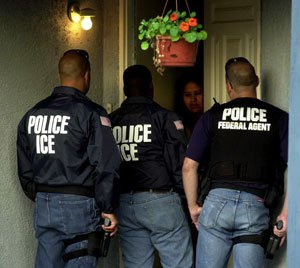
Our policy is clear. If ICE agents come to a school, they will be kept out of the building until the school staff can assess the situation with our lawyers and with support from the NYPD. ICE officers will not be given any information or allowed to enter any school unless absolutely required by law.
Parents should remember that our schools do not collect information about students’ immigration status. For decades now it has been our policy not to ask for that info or keep records.
For as long as we need to, the City will be offering workshops to inform parents about their rights and how they can get help in a crisis. We have more than 100 workshops slated to hit every borough with more to come.
Wednesday, March 22, 6:30-8:00 pm
NYC Health + Hospitals/Kings County
689 New York Ave., Brooklyn (T-Building Auditorium, Enter on Clarkson)
o Translation available in Haitian Creole
Tuesday, March 28, 6:30-8:00 pm
NYC Health + Hospitals/Harlem
506 Lenox Ave, Manhattan, Room 3101
o Translation available in French
Wednesday, March 29, 6:30-8:00 pm
NYC Health + Hospitals/Elmhurst
79-01 Broadway, Elmhurst
o Translation available in Hindi, Urdu, Bengali
Any New Yorker who would like to speak with a lawyer about their immigration status can get high-quality, confidential and free services. For more information on workshops or legal services, please dial 311.
If you want to see what is possible in this world, if you want to see human beings of all backgrounds and faiths living, learning and growing together, just visit our public schools. This ultimate city of immigrants educates more than 1.1 million students who speak more than 170 languages.
We will do everything in our power to keep every single child in every single school safe, nurtured and free of fear.
DALLAS (TIP): Immigration and Customs Enforcement has been targeting so-called “sanctuary cities” with increased enforcement operations in an effort to pressure those jurisdictions to cooperate with federal immigration agents, a senior US immigration official with direct knowledge of ongoing ICE actions told CNN.
A sanctuary city is a broad term applied to states, cities and/or counties that have policies in place designed to limit cooperation or involvement in the enforcement of federal immigration operations. More than 100 US jurisdictions — among them New York, Los Angeles and Chicago — identify as such.
High-ranking ICE officials have discussed in internal meetings carrying out more raids on those locations, said the source. This week, a federal judge in Texas seems to have confirmed that tactic. US Magistrate Judge Andrew Austin revealed during an immigration hearing Monday that a mid-February raid in the Austin metro area was done in retaliation for a local sheriff’s recent decision to limit her department’s cooperation with ICE.
“There’s been questions about whether Austin is being targeted. We had a briefing…. that we could expect a big operation, agents coming in from out of town. There was going to be a specific operation, and it was at least related to us in that meeting that it was a result of the sheriff’s new policy that this was going to happen,” Austin says in audio of the proceedings provided by the court.
The judge’s comments came as he questioned an ICE agent about a recent unrelated arrest.
Austin said that in a late January meeting, local ICE officials told him and another federal judge that an upcoming enforcement operation was being done in direct response to Sheriff Sally Hernandez’s adoption of a sanctuary policy in Travis County.
Earlier this year, Hernandez announced that beginning in February, her department would no longer honor ICE detainers unless the individual was arrested for murder, sexual assault or human trafficking, or a warrant had been issued. A detainer is a 48-hour hold request placed on suspected undocumented immigrants in local jails until federal agents can come in and take over the case.
A showdown in Travis County, Texas: It is a significant shift in the county’s immigration enforcement policy that has put the newly elected Democratic sheriff at odds with pro-enforcement local and state officials, including the Texas Senate, which recently passed a bill that withholds state dollars from sanctuary cities and Gov. Greg Abbott, who cut $1.5 million in funding to the county.
Days after Hernandez enacted the new measure, a series of immigration raids in Austin netted 51 arrests, fueling speculation that the city was being intentionally targeted. The judge’s comments in open court have further fanned those flames.
“My understanding, what was told to us, is that one of the reasons that happened was because the meetings that had occurred between the (ICE) field office director and the sheriff didn’t go very well,” said Judge Austin during the hearing. CNN reached out to the judge, but he declined to comment further.
Hernandez refused to comment because she was not present at the meeting between the judges and immigration agents.
ICE categorically denied any suggestion that planned operations were specifically aimed at the sheriff’s county.
“Rumors and reports that recent ICE operations are specifically targeting Travis County, Texas, apart from normal operations, are inaccurate,” read a statement from ICE, although it did go on to say that “more ICE operational activity is required to conduct at-large arrests in any law enforcement jurisdiction that fails to honor ICE immigration detainers.”
Officials in several sanctuary cities began complaining that they may be getting intentionally targeted after a series of raids around the country in February resulted in almost 700 arrests, but ICE described these operations as routine and said they were planned during the previous administration.
The senior immigration official pointed out that the raids overwhelmingly took place in sanctuary jurisdictions.
Two Princeton economists elaborate on their work exploring rising mortality rates among certain demographics
Two years ago, the Princeton economists Anne Case and Angus Deaton published an alarming revelation: Middle-aged white Americans without a college degree were dying in greater numbers, even as people in other developed countries were living longer. The husband-and-wife team argued, in a study in the Proceedings of the National Academy of Sciences, that these white Americans are facing “deaths of despair”-suicide, overdoses from alcohol and drug, and alcohol-related liver disease.
The paper caused a stir in academic circles and in the media, and has remained in the public discourse following Donald Trump’s win partly on the strength of his support from these same middle-aged white Americans (the alive ones, to be clear). The paper, however, couldn’t answer the question everyone had: Why was this demographic in particular struggling? It couldn’t be purely the economic pain they faced in the wake of globalization; after all, European countries are also affected by globalization, and their residents are getting healthier and living longer. And non-whites in the U.S. are living longer than they used to as well, and they are subject to the same economic forces as middle-age whites and are struggling, at least in economic terms, even more.
As I wrote yesterday, the poor health of middle-aged white Americans is having an impact on the labor force. Men aren’t working or looking for jobs because they’re sick, on pain pills, or abusing alcohol or drugs, research suggests. Just why they’re so sick was not something that Case and Deaton elaborated on in their 2015 paper.
Now, in a new paper, the economists explore why this demographic is so unhealthy. They conclude it has something to do with a lifetime of eroding economic opportunities. This may seem like a circular argument, when put together with previous work: Middle-aged Americans aren’t working because they’re sick, and middle-aged Americans are sick because they’re not working. But Case and Deaton argue that it’s not just poor job opportunities that are affecting this demographic, but rather, that these economic misfortunes build up and bleed into other segments of people’s lives, like marriage and mental health. This drives them to alcoholism, drug abuse, and even suicide, they say, in a new paper released Thursday in advance of a conference, the Brookings Panel on Economic Activity.
“As the labor market turns against them, and the kinds of jobs they find get worse and worse for people without a college degree, that affects them in other ways too,” Deaton told me.
What differentiates Case and Deaton’s paper is this idea that as people get older and their fates deviate more and more from those of their parents, they struggle to keep their lives together. The very act of doing worse than their parents’ generation-what Case and Deaton call “cumulative disadvantage”-is killing them.
As my colleague Olga Khazan has written, there are other convincing theories about why this demographic may not be doing well health-wise. A study from the Commonwealth Fund released last year suggested that while suicide and substance abuse contributed to deaths of middle-aged white people, factors such as heart disease, diabetes, and respiratory disease also played a big role. These factors may themselves have causes, such as diet and lifestyle, that are independent of macro-economic changes.
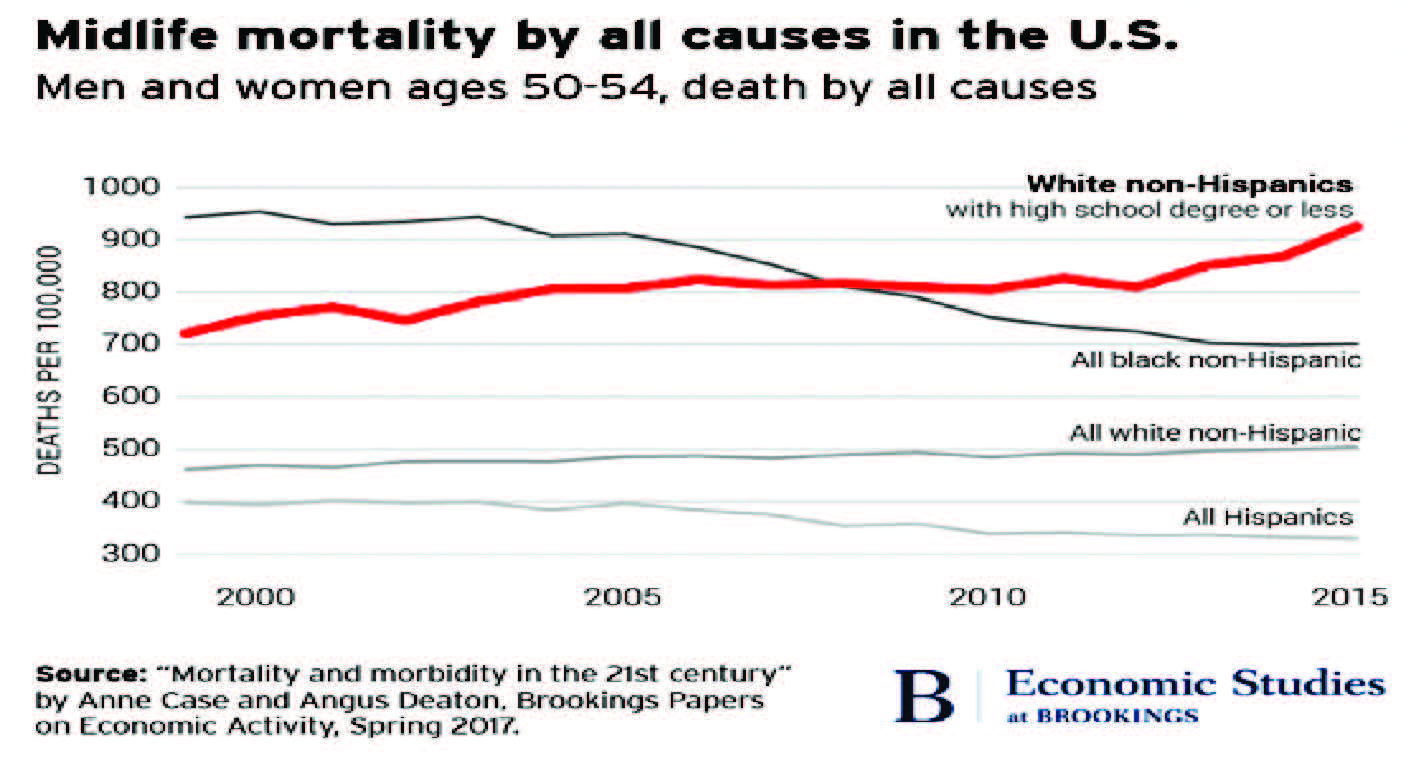
Case and Deaton agree that deaths from those factors are important, but emphasize that they see a large uptick in deaths from suicides, poisonings, and alcoholic liver disease among whites with lowest levels of educational attainment. This is in contrast to Europe, where people of all educational backgrounds are living longer, which suggests that there’s something unique among middle-aged Americans without a college education that’s making them sicker. It’s also in contrast to other Americans. For instance, whites aged 50-54 with a high-school degree or less had been dying at a rate 30 percent lower than that of that of all blacks in the same age group in 1999, but by 2015, their mortality rate was 30 percent higher than that of all blacks in that age group. Between 1998 and 2013, death rates for Hispanics fell as well.
What makes this group unique? It’s not just that they don’t have the guarantee of good jobs that they once did, Deaton said. Life doesn’t turn out as this age group hopes it would, creating a sense of hopelessness, and as a result, they turn to risky behaviors such as overeating, alcohol abuse, or drug use, the economists say. They divorce or have trouble finding a marriage partner because of their poor economic prospects. They no longer turn to social organizations like churches, which can provide important social support, the economists write. They don’t have structure in their lives, which in some cases makes them turn to suicide, the authors say.
“We are trying to say that low income and low job opportunities, after a long period of time, tears at the social fabric,” Deaton told me. “It’s the social fabric that keeps you from killing yourself.”
There is other evidence that people who might have been on the brink of an unhealthy lifestyle are becoming less healthy. There has been an increase of emergency-room visits for alcohol consumption, between 2006 and 2010, suggesting that people who are binge drinking are going to greater extremes than they once did, according to Aaron White, senior scientific advisor to the director at the National Institute on Alcohol Abuse and Alcoholism. Per capita consumption of alcohol has increased about 10 percent since 2000.
Over-prescription of opioids “pours fuel on the flames,” Deaton said, leading to more people addicted to drugs and more people dying because of lethal combinations of drugs and alcohol.
Case and Deaton theorize that this trend is not happening in Europe because of the social safety net there. While middle-aged whites in the United States are left adrift once economic opportunities go away, those in Europe are provided with financial support and health care that make it easier to be satisfied with life, Deaton believes. What’s more, Europeans enter into more stable cohabiting relationships than Americans do, providing a stronger support network than Americans have. This may also be linked to the safety net: Single parents in Britain don’t need to seek additional partners for financial stability because they receive child allowances, for example.
This is a “very pessimistic” paper, Deaton told me, in part because there are few policy prescriptions that could help slow the rising death rate of middle-aged white Americans. A European-style welfare state could help stabilize some people, but it’s an unlikely occurrence in the U.S.-indeed, the trend in the GOP-controlled Congress seems to be currently to roll back the welfare state. Reducing over-prescription of opioids could be helpful, but would just address a small part of the problem.
Donald Trump promised, on the campaign trail, a return to the heady days of manufacturing, in which middle-aged whites without a college education could make a good living, and this return to the past would seem to be one solution. It is, after all, the divergence between the past and today that is causing people such anguish. But it’s going to be difficult to bring back good manufacturing jobs, especially in the face of widespread automation. Few other solutions have been put forward, as I’ve written before. This new paper emphasizes a growing problem: For middle-aged whites without a college degree, the future continues to look bleak.
(Source: Alana Semuels in The Atlantic. The author is a journalist for The Atlantic in New York)
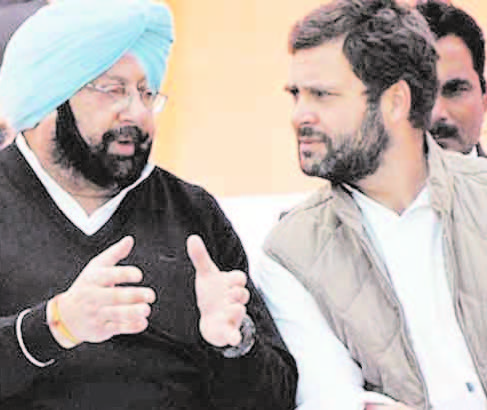
Captain Amarinder Singh is often referred to as ‘Raja’ for his authoritarian style and imposing mannerism dealing with complex issues involving people. However, he has proved once again that a strong and charismatic leadership can inspire confidence in the cadre and motivate them to work hard for the success of the party. That is the basic essence of political leadership, Gandhiji has taught us- the sheer ability to motivate and mobilize the masses,” says the author – George Abraham.
Amid the talk of the Modi Tsunami in Uttar Pradesh, the election victory by Congress Party in Punjab hasn’t received the needed attention it deserved. Captain Amarinder Singh, the leader of the Congress Party in Punjab scored a very impressive win surprising even the most ardent supporters while embarrassing many pundits in the media who predicted that AAP would form the next Government.
What is significant about this decisive victory in Punjab is that Captain Amarinder Singh is credited for his charisma, inspiring leadership and simply plain hard work in motivating the party cadre to make this victory possible. Therefore, in the midst of a sea of failures during the 2017 election, Punjab stands out not only as a bright spot for the Congress Party but as a case study in planning for the future.
There is indeed a rush to judgment when the party loses, often laying the entire blame at the foot of the Gandhi family. Ultimately, the leadership at the top bears a greater responsibility for success or failure of any entity. However, the collective failures of many in the senior leadership who concentrated on self-development while they were in power and marginalization and decimation of the party cadre during the UPA I and UPA II regimes have much more to do with the falling fortune of the party now than anything else.
However, that does not absolve the tactical errors or strategic failures at the top in dealing with elections and more importantly running the daily operations in a diverse and complex environment. At present, there is too much power concentrated at the top and its inability to communicate in a timely fashion, and failure to address recurring conflicts at the local level, appear to have done some damage to the credibility and standing of the party apparatus. Many in the top leadership, who are decision makers, are said to be living in their own bubble totally detached from real people never having to see them or even ask for their votes.
If the party has strong leadership at the top – a perception of the public that is critical for influencing events and changing mindsets – similar to the days of Nehru and Indira Gandhi, there would be discipline within the cadre and strict adherence to party directives across the board. However, the current dispensation calls for a rethinking of the status quo with the goal of decentralizing control and ceding more of the decision-making powers to the local level.
History teaches us that when the party had stronger regional leadership, it has performed better in those States. K. Karunakaran (Kerala), Sharad Pawar (Maharashtra), Kamaraj Nadar (Tamil Nadu) and YSR (Andhra Pradesh) are among some of the notable regional leaders who have managed the party and governed their states with the great success of their own.
There has been a strong suspicion among the pundits that many in the High Command were not thrilled about strong personalities at the local level. Consequently, ‘groupism’ was allowed to flourish in every State thereby weakening the local leadership and leaving all the decision making powers at the top. Therefore, those local leaders were forced to travel to Delhi for even minor decisions and wait for days to get resolutions to some of their pressing issues and often the same wait merely to get an appointment to air their grievances. Stories have been abounding of people returning home without an appointment, and some have simply left the party in disgust and joined the opposition simply to vent their frustrations. It is common knowledge that many in the top leadership wouldn’t even acknowledge a letter or an email from the grass roots willing to share their ideas to improve the party’s sagging fortune!
The ‘Introspection’ by the Congress Party after every election is turning into a butt of jokes in many circles simply because little or no action has been accompanied by that process. However, here is an opportunity to look at the Punjab election and re-learn some of the lessons from the past. Captain Amarinder Singh is often referred to as ‘Raja’ for his authoritarian style and imposing mannerism dealing with complex issues involving people. However, he has proved once again that a strong and charismatic leadership can inspire confidence in the cadre and motivate them to work hard for the success of the party. That is the basic essence of political leadership, Gandhiji has taught us- the sheer ability to motivate and mobilize the masses.
If the party can cultivate a new generation of influential leaders at the local level, it is bound to bounce back.
Narendra Modi could only keep up with his polarizing and misleading rhetoric for so long, and a day of the reckoning appears to be not too far away. However, Congress needs a new awakening, and it can only happen with some decisive restructuring at the top which will allow a new dynamism to flourish and spread across every facet of the party’s life. Only a reinvigorated Congress Party could defend the vision of an inclusive India envisaged by Nehru and Ambedkar, the founding architects of the modern India.
Those who have written off the 2019 election already for another Modi sweep may be making a grave error of judgment. History has taught us that in a democracy two years is a long period to sustain any momentum. A lot could happen in these uncertain times between now and April 2019. For example, in a lesson learned for ages, in 2004, the BJP was so sure of its ‘India Shining’ campaign and confident of a big victory yet they fell short of their goals. Therefore, this moment of disappointment is a time to find new resolve and to fight, not to surrender.
Along with empowering local leadership, Congress party needs go to work urgently with like-minded parties to create a grand coalition, similar to the one that was cobbled up during the election in Bihar. In 2014, BJP was able to collect only 31 percent of the votes cast, and in the just concluded UP election, their vote share zoomed to 42 percent in total. It proves that the plurality of the votes was still cast for secular-minded parties and the Congress Party should do everything in its power to make alliances with regional parties towards a higher index of opposition unity for the ultimate purpose of defeating BJP in 2019.
Undoubtedly, BJP has won UP on a platform of polarization of religious communities, and if they continue to succeed along those lines while splintering the non-BJP vote, the future of a plural India will be at stake. A gain of a 2/3 majority in both houses would even embolden them to transform the nation from a democratic one to a majoritarian one, and hence, history would never forgive the grand old party for its colossal failure in preserving the very idea of India for which their founding fathers have fought and died. If it takes the ‘Captain model’ of change that we have just witnessed in Punjab to reverse the current tide, go for it!
(The author is a former Chief Technology Officer of the United Nations and the Chairman of the Indian National Overseas Congress, USA. He is a regular contributor to The Indian Panorama. He can be reached at inocusa@gmail.com)
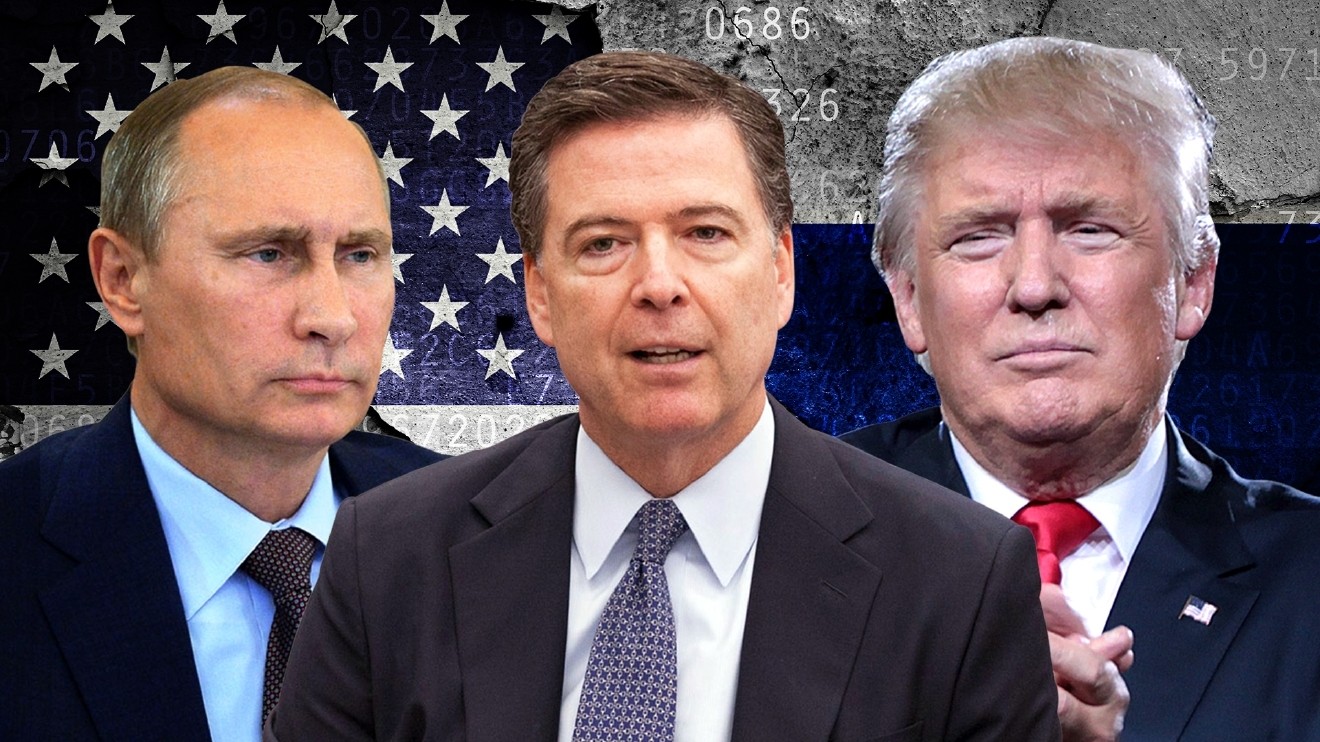
The first open hearing into the alleged links between the campaign of Donald Trump and unnamed parties associated with the Russian government kicked off this week, even as the President put out a series of social media posts that seemed to mischaracterize statements coming out of that hearing.
Ground-shaking revelations have come from the grilling of FBI Director James Comey and NSA Director Michael Rogers by the House of Representatives’ Intelligence Committee. The first was from Mr. Comey, who confirmed that the FBI was investigating Russia’s efforts to interfere in the presidential election, including links between specific individuals associated with the Trump campaign and the Russian government. Last month Mr. Trump’s nominee for National Security Adviser, Michael Flynn, resigned from his post after it emerged that he had withheld information about being in contact with Russia’s Ambassador in Washington prior to Mr. Trump’s inauguration. This month, Attorney General Jeff Sessions recused himself from the probe into alleged Russian meddling when it came to light that he had met the Ambassador prior to the election. Yet he continues to head the institution charged with the inquiry. Mr. Comey revealed that the FBI investigation began in July 2016, when evidence emerged that the Democratic National Committee had been hacked by Russia-related entities and emails handed over to WikiLeaks.
Even as the U.S. intelligence community scrambles to put together the pieces of the Trump-Moscow puzzle, it has, ironically, found itself in the crosshairs of exposure. Earlier this month WikiLeaks released a trove of confidential CIA documents, a series labelled “Vault 7”, which showed the Agency’s penetration of the security systems of household electronic devices that could then be used for covert surveillance. While such timed “leaks” are meant to target his political opponents, Mr. Trump’s own tweets are at odds with revelations in the House hearing. In early March, he accused former President Barack Obama of ordering wiretaps on Trump Tower – yet Mr. Comey said neither the FBI nor the Department of Justice had any information to support that allegation. Mr. Rogers dismissed the White House suggestion that Mr. Obama had asked British intelligence to spy on Mr. Trump, a claim the U.K. has denied. The last straw came when the U.S. President’s account tweeted, as the hearing proceeded, “The NSA and FBI tell Congress that Russia did not influence electoral process,” only to have this statement debunked by Mr. Comey at the hearing, live on TV. Mr. Trump’s tendency to resort to unsubstantiated, even misleading, claims to stall a probe into alleged collaboration with a foreign power is not helping his credibility, which is already low in the eyes of so many Americans.
WASHINGTON (TIP): In 2015, the household median income in the US was half as compared to that of an Indian American household. According to a report by the US Census Bureau, the median household income of Indian Americans was $103,821 in 2015. In comparison, the median household income in the US, overall, was $53,889.
The US Census Bureau report, titled Asian-American and Pacific Islander Heritage Month: May 2017, was released on March 17, on the occasion of the Asian Pacific American Heritage Month (APAHM) in May. The overall median income data for the year 2015 came from a separate report that is available on the Census Bureau’s website. The APAHM report concluded that the median income of households headed by the Asians alone or in combination population in 2015 was $76,260. But, within Asian households, too, an Indian American household’s median income was much higher. “Median household income differed greatly by Asian group. For Asian Indian alone, for example, the median income in 2015 was $103,821; for Bangladeshi alone, it was $49,515,” the report said.
The report estimates the Indian American population was four million in 2015, which makes it the second largest Asian group. “The Chinese (except Taiwanese) population was the largest Asian group, followed by Asian Indian (4.0 million), Filipino (3.9 million), Vietnamese (2.0 million), Korean (1.8 million) and Japanese (1.4 million),” the report read. The steady increase in the number of Indian American-owned firms complements the aloft trend in income and population. In 2012, the number of Asian-owned firms in the US was 1.9 million. Impressively, the Asian American ownership has spiked up nearly 24 percent from 2007 till 2012. With similar intensity, the Indian American-owned firms showed a steady growth of 20 percent during 2007-2012. In 2012, Indian Americans owned 377,486 firms in the US, compared to 308,491 in 2007.
The data indicates that the percentage of Indian American-owned firms to that of Asian-owned firms in the US did not change during 2007-2012. During this period, the Indian Americans owned nearly 20 percent of the total Asian-owned firms. Interestingly, from 2007 to 2012 while the number of Indian American firms grew by 22 percent, the White American firms witnessed a decline of five percent.
Overall, the report indicates positive trends for Indian Americans n terms of income, population and entrepreneurial initiatives.
HOUSTON (TIP): Two Indian American scholars from Rice University have been named CAREER Award recipients by the National Science Foundation.
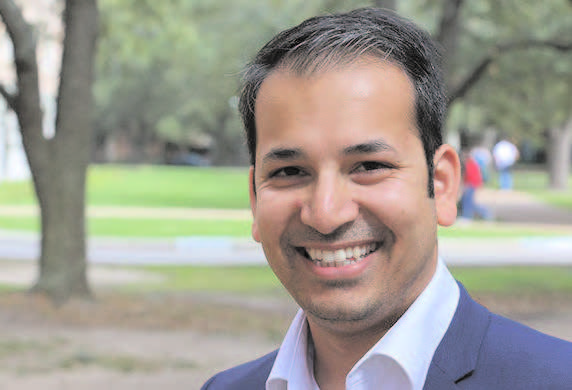
Anshumali Shrivastava, Assistant Professor of Computer Science, Electrical and Computer Engineering and Statistics and Ashok Veeraraghavan, assistant professor of electrical and computer engineering earned prestigious National Science Foundation (NSF) CAREER Award.
The NSF awards CAREER grants to young scientists who show the potential for leadership in their fields. The five-year grant to Veeraraghavan is for $549,000.
While Shrivastava’s research interests lie in machine learning and big data, Veeraraghavan specializes in the use of computer technology, statistics and sophisticated algorithms to see both farther and deeper, and at increasingly sharper resolution.
“My research leverages the existing algorithmic advances for pushing machine learning to the extreme scale,” said Shrivastava, who became a member of the Rice University faculty in 2015, in a statement. “I design ‘hashing and sketching algorithms,’ a class of randomized algorithms that can process humongous datasets in seconds.”
Veeraraghavan, who joined Rice in 2010 said, “Apart from the theoretical and algorithmic improvements, we’re looking at applications like obtaining high-resolution images from long distance. In particular, we’re building applications to answer questions like, can you do face recognition from a kilometer distance?”
CAREER awards support the research and educational development of young scholars likely to become leaders in their fields. The five-year grants, which are among the most competitive awarded by the NSF, are given to some 400 scholars each year across all disciplines.
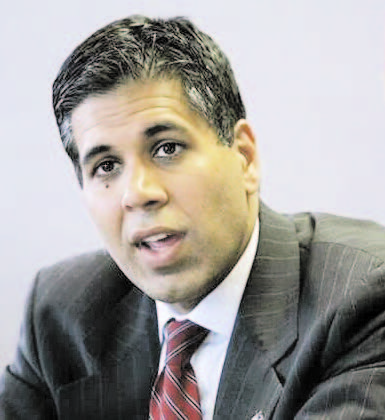
WASHINGTON (TIP): On March 20, President Donald J. Trump nominated Indian American Amul R. Thapar of Kentucky for the U.S. Court of Appeals for the Sixth Circuit.
If confirmed, Amul R. Thapar of Kentucky will serve as a Circuit Judge, U.S. Court of Appeals for the Sixth Circuit. The son of Indian-American immigrants, Judge Thapar serves on the District Court for the Eastern District of Kentucky. With his 2008 nomination by President George W. Bush and subsequent confirmation and appointment, Judge Thapar became the Nation’s first Article III judge of South Asian descent.
Before his service on the bench, he was the U.S. Attorney for the Eastern District of Kentucky. Before that, he served as an Assistant U.S. Attorney in the Southern District of Ohio and the District of Columbia. He began his legal career in private practice, after clerkships with Judge S. Arthur Spiegel on the District Court for the Southern District of Ohio and then with Judge Nathaniel R. Jones of the Court of Appeals for the Sixth Circuit. Judge Thapar received his BS from Boston College in 1991 and his JD from the University of California, Berkeley.
Welcoming Trump’s decision, U.S. Senate Majority Leader Mitch McConnell (R-KY) said, “I applaud the President for announcing his intent to nominate my friend, Judge Amul Thapar, to serve on the Sixth Circuit Court of Appeals. Throughout his already impressive career of public service, Amul has shown an incredible intellect and an unshakable dedication to the law. He has earned the respect of his colleagues, and I know that he will bring to the Sixth Circuit the same wisdom, fairness, and ability that he has shown on the District Court. President Trump made an outstanding choice and I look forward to the Senate’s confirmation of Judge Thapar.”
Signup to our Newsletter!
Don’t miss out on all the happenings around the world