Year: 2018

  • President Trump is destabilizing the economy, says Krishnamoorthi

    President Trump is destabilizing the economy, says Krishnamoorthi

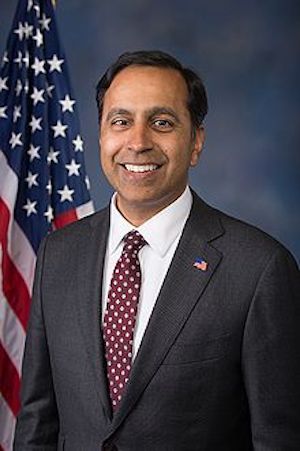
    WASHINGTON(TIP): Indian American Congressman Raja Krishnamoorthi, representing Illinois’ 8th District, heavily criticized President Donald Trump in response to new developments threatening the nation’s and Illinois’ economies as a result of the government shutdown predicated on President Trump’s demand for a border wall that was supposed to be paid for by Mexico in the first place:

    “President Trump is destabilizing and hobbling an already wobbly economy to fulfil only half of a campaign pledge he has made since 2015. After abandoning a bipartisan budget compromise the Senate passed last week unanimously, the President has shut down the federal government to appeal to a shrinking minority of Americans and right-wing talk show personalities. Instead of having Mexico pay for the border wall as the President has promised since 2015, he is asking for as much as $5 billion from taxpayers for a wall that will not accomplish its stated goal and which most Americans do not want.  The President stubbornly keeps pushing for a wall to protect himself from the far right’s criticism. America needs enhanced border security using smart technology and border agents treated with respect by not being forced to work without pay during the Christmas holidays”, he said.

    Krishnamoorthi pledged President Trump to end the shutdown for the health and stability of nation’s economy. “The stock market is in a record freefall, he is attacking the independence of the Federal Reserve, and Treasury Secretary Mnuchin called leading banks in an unsuccessful effort to stabilize the markets, all at a time when working families across the country are relying on a strong economy to start 2019. The Trump shutdown is a self-inflicted wound that puts our economy and these families in jeopardy and that damage will only grow worse if the President drags this shutdown out to January 3rd and into the new Congress.”

    He also feels that theshutdown will lead to thousands of Illinois workers being furloughed.

    “Some 6,200 federal workers in Illinois are being furloughed or forced to work without pay over the Christmas holidays, and tours of the Lincoln Home in Springfield have stopped during the 200th birthday of the State of Illinois. The President needs to stop playing the role of the Grinch and start showing the American people he can fulfil his responsibilities as the Commander-in-Chief.”


  • The US-India Chamber of Commerce organizes Seminar on Economic Reforms and Fresh Strides in US India Relations

    The US-India Chamber of Commerce organizes Seminar on Economic Reforms and Fresh Strides in US India Relations

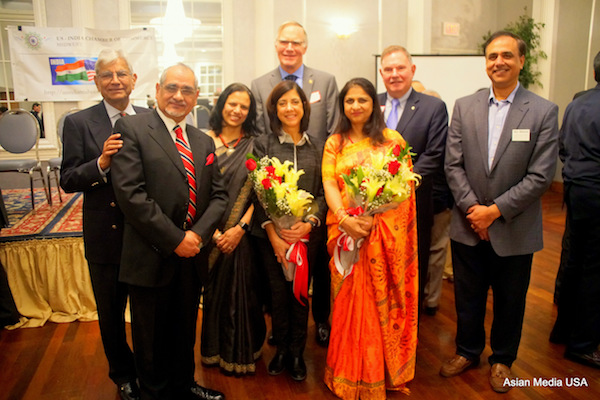
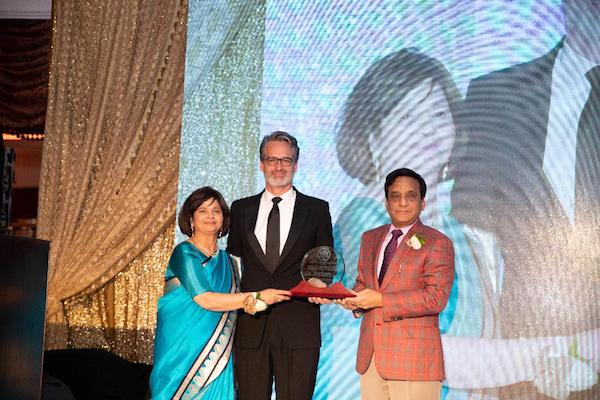
    CHICAGO, IL  (TIP): The US India Chamber of Commerce, Midwest organized its “2018 Annual Gala Dinner” on December 07, 2018 at Ashyana Banquets, Downers Grove, Illinois. The theme of the event was “The New India-Recent Economic Reforms and Fresh Strides in US India Relations”.

    The event was graced by Ms. Neeta Bhushan, Consul General of India, Ms. Nicki Anderson, President/CEO, Naperville Area Chamber of Commerce, Mr. Amit Jhingran, CEO, State Bank of India, Chicago, Commissioner Frank Avila, Commissioner, MWRD. The event was also attended by distinguished guests Pastor Larry Bullock, CEO,US Minority Contractors Association, Ms. Malini Vaidyanathan, Manager Midwest, Air India and Dr. Bharat Barai a prominent Physician and Indian Community Leader from Indiana and many other industry leaders, entrepreneurs, business owners and professionals

    Mr Porus Dadabhoy made the initial welcome and invited the gathering to take their seats and invited Dr. Ajit Pant, President of the Chamber to address the gathering.

    In his address Dr. Ajit Pant gave a brief description of the activities of the Chamber and explained the “Future Vision of the Chamber”. He also discussed the chosen theme and mentioned that the recent far reaching economic changes made in India as well as the latest progress in US India relations needed to be discussed so as to create positive awareness among the Indo American Community.

    Consul General of India Ms Neeta Bhushan spoke on the topic Transforming India. She mentioned that over the last 4 and half years the Government of Prime Minister Modi had accelerated the reform process and brought a number of changes which had resulted in world class infrastructure, introduction of bullet trains, up gradation of urban as well as rural connectivity, ports, airports etc. The make in India policy had led to increased jobs for the youth. The policies of startup India, Mudra scheme had spurred greater entrepreneurial spirit as well as economic activity in the country. IMF had described India as an Elephant that has started to run. The growth rate of 7.2 percent was amongst the highest in the world.

    The rating agency Moody has enhanced its rating from Stable to positive. In terms of Ease of doing business India  ranked 77 and could soon be in the top 50. Reforms such as Goods and services tax, Bankruptcy and Insolvency code had been welcomed by the companies in a big way. It was easier for companies to get construction permits pay taxes and trade across borders. Access to sanitation has increased to over 90 percent.

    Ayushmann Bharat or the Pradhan Mantri arogya yojna launched in sept 2018 has already seen a large number of beneficiaries. Atal pension Yojana. Which is directed at the unorganized sector has seen substantial benefit for 10 million people in the unorganized sector.

    Ms. Nicki Anderson President and CEO of the Naperville Area Chamber of Commerce shared her ideas about the value of partnership between our Chambers and the Business Community and mentioned how working together would be a big positive for both Chambers.

    Mr. Amit Jhingran CEO of SBI Chicago gave an overview of the Indian Banking System and role of State Bank of India, Chicago Branch in US.

    Commissioner Frank Avila and Dr Prakasam Tata briefed about the Water and Waste Reclamation Training Conference that is being organized in Hyderabad, India with their expertise and technical knowhow.

    The talks were followed by an interesting Question Answer Session which was taken by Dr. Pant

    Dr. Prakasam Tata, thanked all the attendees with his own personal and philosophical touch.

    The event was attended by Chamber Board members Dr.Ajit Pant (President), Dr. Prakasam Tata, Kanapathy M, Harsh Muthal, Porus Dadabhoy and Rajeev Jain.

    The event was partly sponsored by SBI Chicago and ended with more networking, cocktails and a gala dinner

    (Photograph and Press release / Asian Media USA)

  • Queens Indian American community extends a reception to Melinda Katz

    Queens Indian American community extends a reception to Melinda Katz

    RICHMOND HILL, NY(TIP): The Queens Indian American community organized a reception to Melinda Katz, the Queens Borough President who is completing two terms this year.

    Melinda is now eying the post of District Attorney of Queens. It was a public relations exercise for Melinda who is admired for her work, in particular by the Punjabi community.

    Jarnail Singh Gilzian and Melinda Katz

    A Punjabi community leader Jarnail Singh Gilzian who owns the famous banquet and Restaurant Richie Rich in Richmond Hill hosted the reception which was attended by a large number of community leaders from Queens and Long Island.

    The more prominent amongst them who also spoke on the occasion included Mohinder Singh Gilzian, President of Indian Overseas Congress, Harbans Singh Dhillon, former Election Commissioner, Gurdwara Sikh Cultural Society, Harpreet Singh Toor, former Chairman, Gurdwara Sikh Cultural Society, Satnam Singh Parhar, Former President, India Association of Long Island, and Bhinda Begowalia, President of Begowal Society. Each speaker spoke highly of Melinda and pledged support in her bid for District Attorney of Queens.

    Melinda Katz addresses the gathering. Seen to her right is Jarnail Singh Gilzian

    Speaking on the occasion, Melinda spoke of her work as Queens Borough President. She pledged her support to the community which had always supported her. She thanked Jarnail Singh Gilzian for organizing a reception to enable her to reach out to a large number of her supporters and voters.

    Sections of the gathering
    Sections of the gathering
    Sections of the gathering
    Sections of the gathering

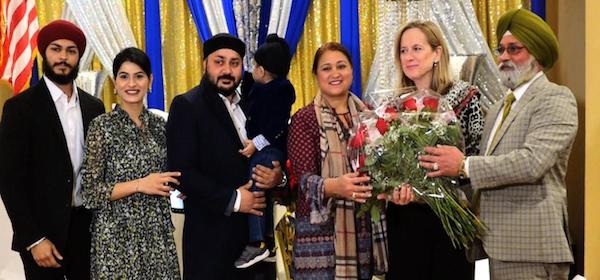
    Earlier, on her arrival, Melinda was welcomed with a bouquet presented to her by Jarnail Singh Gilzian’s family.

    During her more than an hour- stay, Melinda went around meeting everyone individually and obliging them with photographs.

    Melinda Katz poses for a photograph with community leaders
    Gilzian family with Melinda

    Prof. Indrajit Saluja emceed the event.


  • Indian-Origin Police Officer shot dead in California

    Indian-Origin Police Officer shot dead in California

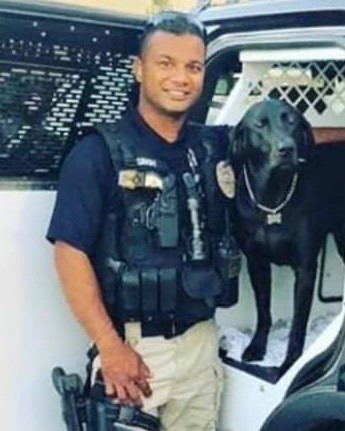
    NEWMAN, CA(TIP): An Indian-origin police officer in California has been killed after being shot by an “armed” unidentified gunman. Corporal Ronil Singh was shot and killed while conducting a vehicle stop at the intersection of Merced Street and Eucalyptus Avenue shortly before 1:00 am on December 26.

    Approximately three minutes after initiating the stop he radioed dispatch that shots had been fired. Responding officers found Corporal Singh at the scene suffering from multiple gunshot wounds. He was transported to a local hospital where he succumbed to his wounds.

    The subject he stopped fled the scene and remains at large. Police have launched a manhunt to find the suspected gunman. They also shared images on Facebook in the hopes that someone will spot the suspect. The suspect’s vehicle has been recovered. The Stanislaus County Sheriff’s Department says police agencies throughout California and out of state have been alerted.

    33-year-old Singh had served with the Newman Police Department for seven years. Newman is located in Stanislaus County in central California, east of San Jose. He had previously served with the Merced County Sheriff’s Office and the Turlock Police Department.

    The Stanislaus Sworn Deputies Association has established a Corporal Ronil Singh, Newman PD Memorial Fund.

  • Indian-Origin Man gets reduced sentence for drunken drive killing

    Indian-Origin Man gets reduced sentence for drunken drive killing

    LONDON(TIP): An Indian-origin man who was jailed for 13 years for killing three teenage boys in an accident in January has been given relief of  two-and-a-half years on his sentence.

    Jaynesh Chudasama, 29, admitted to driving at more than two-and-a-half times over the alcohol limit on January 26 evening, when the fatal collision occurred near a bus stop at Hayes in west London.

    Traces of cannabis were also found in the car hire worker’s system following his arrest.

    At the latest hearing, the Court of Appeal concluded that there had been an error in sentencing him to 13 years behind bars for the crime and cut his sentence down to 10 and-a-half years instead to take his guilty pleas into account.

    “Prior to consideration of his guilty pleas, this was a case for the maximum sentence of 14 years. The appropriate discount for the pleas, however, was not one third but one quarter,” said Judge Brian Leveson at a judgment hand-down hearing, during which the victims’ families shouted slogans opposing the ruling.

    “The death of each of the victims in this case is a disaster and tragedy of almost unimaginable proportions for them, their families and their friends. We have read many statements about the catastrophic impact each has had on so many lives. No sentence of the court can assuage that loss,” the judge noted.

    The trial had heard how Harry Rice, 17, George Wilkinson and Josh McGuinness, both 16, were instantly killed as they were hit by Chudasama’s speeding car while on their way to a friend’s birthday party.

    Family members of the boys were among around 30 members of the public who attended the Royal Courts of Justice in London for the decision and chanted “disgrace” as the judgment was handed down.

    The judge had to move the hearing to a different court room due to the disruption.

    Besides his jail sentence, Chudasama will also be disqualified from driving for 12 years and three months and have to pass an extended driving test.

    He had been described as a “coward” in court for trying to escape the scene, leaving his victims to die on the road, but was chased down and caught by the boys’ friends.

    Despite the efforts of paramedics, all three boys were pronounced dead at the scene. Photographs from the scene showed the smashed wreckage of a car, including a caved-in fence.

    Some of the victims’ relatives believe the crash was deliberate and want Chudasama charged with murder.


  • Indian Teen Siblings die in US Home fire

    Indian Teen Siblings die in US Home fire

    NEW YORK(TIP): Three young siblings from Telangana died in a fire on Sunday, December 23 night at the home of an American family they were staying with. The three, all missionary students, were guests for the holidays with the family in a suburb of Memphis, Tennessee.

    Aaron Naik, 17, Sharron Naik, 14 and Joy Naik, 15, were killed along with 46-year-old Kari Coudriet, the owner of the two-storey home. The fire broke out around 11 pm and left much of the building charred. Only Kari’s husband Daniel Coudriet and their son Cole, 13, survived the fire, according to a statement by the Collierville Bible Church.

    The three deceased teenagers attended French Camp Academy in Choctaw County. “Friends and family, please be in prayer for Pastor Naik and his wife. They sent their three precious children to America from India to complete their education and during the break a fire took their lives. They have been a blessing to the French Camp community and are loved by our whole town. I cannot fathom the grief of their parents as I know how much our town is grieving”, Town of French Camp wrote in a Facebook post.

  • Indian American philanthropist Dr. Kiran C. Patel offers tuition-free education in Florida

    Indian American philanthropist Dr. Kiran C. Patel offers tuition-free education in Florida

    TEMPLE TERRACE, FL(TIP): Indian American entrepreneur and philanthropist Dr. Kiran Patel in this northern Tampa suburb will provide free quality education to students from the area and beyond through a new state-of-the-art charter school.

    The construction of Dr. Kiran C. Patel High School will be completed in the summer of 2019 and classes will begin in August. Ground for the more than 60,000-square-foot school, which will include a 11,000-square-foot gymnasium, was broken on December 13. The $20 million high school building, located on a 32-acre plot near the University of South Florida, will be funded fully by the Tampa-based philanthropist.

    The groundbreaking in the waning days of the year marks the end of a hectic 15-month period for Patel and his wife, Dr. Pallavi Patel, during which they committed approximately a quarter-billion dollar for various philanthropic causes and made their second billion-dollar-plus exit from health insurance business in a decade and a half.

    In this file photo, Dr. Kiran C. Patel and his wife, Dr. Pallavi Patel are seen with NSU President Dr. George Hanbury (extreme left) when the couple announced $200 million donation to Nova Southeastern University (NSU)

    In September 2017, the Patels had committed a whopping $200 million — the single largest donation by an Indian American to date — to Nova Southeastern University (NSU) in Fort Lauderdale. The gift, the largest in the university’s history, will impact healthcare delivery in the United States, India and globally.

    Like the NSU donation, the latest philanthropic commitment also focuses on an area that’s close to the Zambia-born Patel’s heart, education. In fact, a vast majority of Drs. Kiran & Pallavi Patel Family Foundations’ works globally — including in the United States, India, Africa and the Caribbean — have been in healthcare and education.

    Noted Indian American entrepreneur and philanthropist from Tampa, Dr. Kiran Patel is the Chairman and President of Freedom Health, Inc. and Optimum Health, Inc. in Florida. He sees philanthropy as his responsibility and passion. Dr. Patel built the WellCare Management Group which he sold in 2002 to a private equity group. The Patel’s have used these proceeds to continue their generous philanthropic work in the Tampa Bay community. Recently, Dr. Patel purchased the former Clearwater Christian College property and has plans to create a college of osteopathic medicine to attract more doctors to this area. Their non-profit organization, the Kiran and Pallavi Patel Foundation for Global Understanding, funds a number of initiatives in health, education and culture. It even offers an annual scholarship to the underprivileged youth in the United States.

    As longtime residents of the Carrollwood community, the Patels have been giving back to the Tampa Bay area for decades. In addition to their previous accomplishments, Dr. Patel served as an accomplished Cardiologist and his wife, Dr. Pallavi Patel specialized in Pediatrics.

  • Robert Mueller is the most unknowable man in Washington

    Robert Mueller is the most unknowable man in Washington

    By Roxanne Roberts
    Bob Mueller is doing exactly the right thing by simply focusing on this investigation and trying to determine the truth,” says Panetta. “I don’t know what the final result is going to be, but I have a sense that whatever that final report shows that people are going to thank Bob Mueller for the way he handled this.

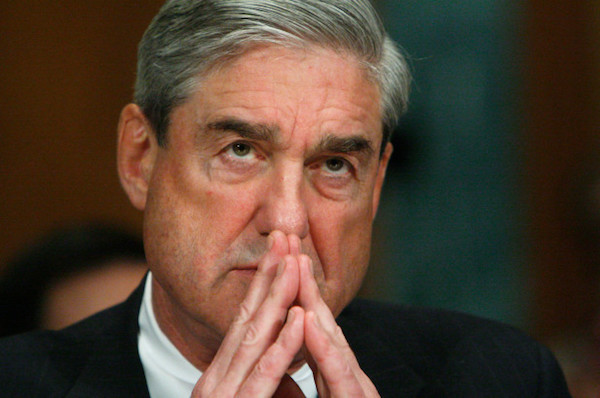
    Special counsel Robert Swan Mueller III is the second-most famous man in Washington. Time Magazine just ranked him No. 3 on their Person of the Year list, after crusading journalists and President Trump. It is impossible to spend a day in this town without hearing or reading Mueller’s name. He will go down in history, for better or worse, as one of the pivotal figures of the Trump era.

    All this for a man who seldom speaks and is rarely seen. He is omnipresent and absent, inescapable but elusive, the invisible yang to Trump’s gold-plated yin.

    “Mueller’s silence has invited noisy speculation from partisans,” writes Time. “To critics on the right, he is an overzealous prosecutor drunk on power and roaming beyond his mandate in a bid to drum Trump out of office. To liberals, he is a crusading hero who won’t quit until he brings the President to justice. The public narrative of Mueller’s investigation this year has often described its central character more as myth than man.”

    Such is the peculiar nature of Washington that a powerful man who shuns the spotlight should become an object of fascination, and the specific character of Mueller — an old-school WASP indifferent to entreaties for speeches, interviews and photo-ops. More people have seen Robert De Niro playing Mueller on “Saturday Night Live” than have seen the special counsel himself.

    “I always joke that Bob Mueller has turned down more interview requests in his career than most people in Washington ever get in the first place,” says Garrett Graff, author of “The Threat Matrix: Inside Robert Mueller’s FBI and the War on Global Terror” and Mueller’s de facto biographer. “Contrary to every single thing that the president tweets today, Mueller is and always has been probably the most apolitical nonpartisan person in the city. He does everything that he can to avoid the public spotlight and anything even slightly resembling politicking.”

    Mueller is content to be known and respected within a very small circle of close friends and colleagues. That’s rare in a town filled with former high school class presidents with enough egos to “float battleships,” as former senator Alan Simpson put it. Politicians love cameras — and Twitter feeds, Instagram and more — but Mueller’s only public statement as special counsel came on May 17, 2017, the day he was appointed: “I accept this responsibility and will discharge it to the best of my ability.”

    More than anything, silence has come to define Mueller. He’s become a meme, a cartoon superhero or supervillain, more powerful with every word he does not say.

    “Like all the FBI directors I have known, including myself, Bob is not about to try his case or run his evidence by the court of public opinion,” says William Webster, the only man to head both the FBI and the CIA. “That’s not how our FBI works. It’s not how Bob Mueller works. It might make for good tv ratings, but it leaves too much open for misunderstanding and, in my opinion, creates a circus atmosphere around critically important cases.”

    Kenneth W. Starr, the independent counsel investigating President Bill Clinton, had a different approach: He spoke to reporters during his five years in that job in hopes it would help Americans better understand the reasons for the investigation.

    “Relationships between prosecutors and the press are inherently difficult and sensitive,” he says. “A federal prosecutor wields important powers and thus should always be held accountable by the American people. That accountability carries with it, in my view, a role for providing public information . . . without transgressing important limitations — especially the protection of grand jury secrecy.”

    Mueller, says Starr, may have been chastened by former FBI director James B. Comey’s “inappropriate public relations approach” and wants the charging documents to speak for themselves. “All things considered, I think he has followed a wise strategy, albeit at the expense of a more complete public understanding of his important work.”

    Leon Panetta, former White House chief of staff and head of the CIA, says there’s another reason for Mueller’s silence: He doesn’t want to give President Trump any ammunition that could compromise the case. “He really feels that the integrity of the investigation has to be protected and not allow the president to undermine it.”

    Mueller is not instinctively somebody who plays the political game, says Panetta, who has known the prosecutor for years. “He didn’t even particularly like to testify before Congress, but he knew that he had to do it. He really thought that those who were out there in the press were only undercutting their position rather than strengthening it.”

    More than anything, silence has come to define Mueller. He’s become a meme, a cartoon superhero or supervillain, more powerful with every word he does not say.

    In fact, Mueller — by temperament and professional experience — has always preferred to be judged by his deeds, not his words. He grew up in Princeton, a childhood of privilege and private boarding schools, where self-aggrandizement and promotion were considered poor form. His stints as a Marine platoon leader during the Vietnam War and as a federal prosecutor emphasized teamwork rather than any individual effort. During his 12-year tenure as head of the FBI, he rarely appeared at public events and turned down virtually all the A-list invitations that came with that title.

    During his trip to the Capitol to brief Congress in June 2017 — one month after becoming special counsel — Mueller and his team navigated back hallways and stairwells to avoid the media. There have been only three widely circulated sightings in the wild since then: One photo of Mueller standing on a street corner in March, one in July with Mueller and Donald Trump Jr. both waiting to catch a flight at Gate 35X at Reagan National Airport and one of Mueller and his wife in September at the Genius Bar in Georgetown’s Apple store, where they were getting help with a laptop.

    The dearth of images led to this plea by Slate staff writer Heather Schwedel earlier this year: “Why are we clamoring for new Mueller pics like paparazzi stalking Jennifer Aniston? Because every time his investigation into Russia’s interference in the 2016 presidential election makes news — which is a lot these days — sites like Slate must use the same photos of Mueller we’ve been using since this past summer . . . . Our nation’s poor photo editors are stuck with a cache of boring, already-used shots of one of the most newsworthy figures of our political moment.”

     Who is Robert Mueller?

    By now, it goes without saying that Mueller and his prosecutors run the tightest ship in Washington. No interviews, no leaks, no whispers, no jokes, no nuthin’. In August, members of his team were spotted by the press waiting for a Shake Shack delivery at an Alexandria hotel during Paul Manafort’s trial. Shake Shack, huh? joked a reporter. Peter Carr, Mueller’s spokesman, would not even confirm the order.

    Mueller rarely ventures outside his temporary office in a nondescript federal building. Even in his most public role before this, as head of the FBI, Mueller only appeared in public when it was important to the bureau. Most photos of him are from testimony to the Senate several years ago. His last speaking appearance (announced before he was named special counsel) was in May 2017 at the graduation of his granddaughter from a small boarding school in Massachusetts.

    “One of the things that I think is important in understanding him is understanding the perspective that he brings to this job,” says Graff. “If you got him in a moment of candor, he would say that this is no more than the third-hardest job that he has ever had after the Marines in Vietnam and after being FBI director in the wake of 9/11. In that sense, the photo of him at the Apple Store is indicative of a lot: He’s just continuing to lead his life. His life has always been under the radar and non-showy, and that’s exactly how he has comported himself as special counsel.”

    Mueller’s private life is even more circumspect. It is possible, after following the bread crumbs of his biography, to determine his comings and goings. He lives in a gated community in Georgetown with his wife of 52 years, Ann. They have two daughters, Melissa and Cynthia, seen only when they attended his 2001 confirmation hearing as head of the FBI. The couple regularly attends services at an Episcopal church in downtown Washington. They both play golf, although Ann’s the better golfer of the two.

    And they have a weekly dinner date, usually at their favorite Italian restaurant a few miles from their home. The Muellers have been regulars for years, typically sitting unnoticed behind the bar in the back of the room. How, in this age of smartphones and cameras, does Mueller pull that off? Slip in a side door? The owner, as did everyone contacted for this article, declined to comment.

    In fact, virtually everyone within Mueller’s orbit refused to talk about him. “I’ll pass along your request, but she never returns calls about Mueller,” explained the assistant of a lawyer who worked for him many years ago.

    “The people that he has surrounded himself with throughout his career are temperamentally very like him,” explains Graff. “And he has a good set of longtime friends in D.C. that he primarily socializes with. He’s someone who draws a pretty firm line between work and home in terms of socializing. Part of the answer is just that the people around him don’t share the things that they do with him. And he has developed a series of places that he likes to go where I think that privacy is respected — and they’re also not the trendiest restaurants on 14th Street where he would be recognized.”

    Even the press has been unwilling to cross Mueller’s invisible line. Salt Lake Tribune reporter Thomas Burr tweeted that he saw Mueller in June: “Gotta love DC. Walk into restaurant, run into the special counsel.” But Burr declined to say which restaurant, despite a flurry of responses to the tweet.

    Some of this is respect for Mueller. Some of this is the fear of unintentionally providing a piece of information that could compromise the Russia investigation. And some of this is just fear for Mueller himself. Given the heated rhetoric surrounding President Trump — and a gunman who shot up Comet Ping Pong over the Pizzagate conspiracy theory — friends and colleagues are reluctant to say anything that could harm him in any way.

    “Bob Mueller is doing exactly the right thing by simply focusing on this investigation and trying to determine the truth,” says Panetta. “I don’t know what the final result is going to be, but I have a sense that whatever that final report shows that people are going to thank Bob Mueller for the way he handled this.”

    We asked Mueller’s spokesman if he had a response to . . . well, anything.

    “We appreciate your reaching out,” replied Carr. “But we’ll decline comment at this time.”

    (Source: Washington Post)

  • Being a good neighbor

    Being a good neighbor

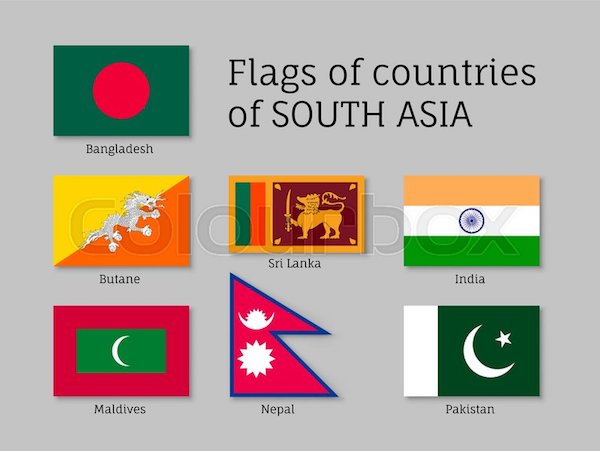
    India must shed its zero-sum style foreign policy-making, and work towards South Asian integration

    By Happymon Jacob
    The Narendra Modi government’s neighbourhood policy began exceptionally well with Mr. Modi reaching out to the regional capitals and making grand foreign policy commitments. But almost immediately, it seemed to lose a sense of diplomatic balance, for instance, when it tried to interfere with the Constitution-making process in Nepal and was accused of trying to influence electoral outcomes in Sri Lanka. While India’s refugee policy went against its own traditional practices, it was found severely wanting on the Rohingya question, and seemed clueless on how to deal with the political crisis in the Maldives. Despite their characteristic bravado and grandstanding, the BJP government’s foreign policy mandarins looked out of their depth, says the author.

    Whichever way one looks at it, India’s neighbourhood policy is at a critical juncture: while its past policies have ensured a steady decline in its influence and goodwill in the region, the persistent absence of a coherent and well-planned regional policy will most definitely ensure that it eventually slips out of India’s sphere of influence. India’s foreign policy planners therefore need to reimagine the country’s neighbourhood policy before it is too late.

    If South Asia is one of the world’s least integrated regions, India is one of the world’s least regionally-integrated major powers. While there indeed are structural impediments (posed by both India and its neighbours) in fostering regional integration, the most significant handicap is New Delhi’s ideational disinclination towards its neighbourhood. Successive regimes have considered the neighbourhood as an irritant and challenge, not an opportunity. Seldom have India’s policies displayed a sense of belonging to the region or a desire to work with the neighbourhood for greater integration and cooperation. Today, we have become even more transactional, impatient and small-minded towards our neighbourhood which has, as a result, restricted our space for maneuver in the regional geopolitical scheme of things.

    At a critical juncture

    Whichever way one looks at it, India’s neighbourhood policy is at a critical juncture: while its past policies have ensured a steady decline in its influence and goodwill in the region, the persistent absence of a coherent and well-planned regional policy will most definitely ensure that it eventually slips out of India’s sphere of influence. India’s foreign policy planners therefore need to reimagine the country’s neighbourhood policy before it is too late.

    The Narendra Modi government’s neighbourhood policy began exceptionally well with Mr. Modi reaching out to the regional capitals and making grand foreign policy commitments. But almost immediately, it seemed to lose a sense of diplomatic balance, for instance, when it tried to interfere with the Constitution-making process in Nepal and was accused of trying to influence electoral outcomes in Sri Lanka. While India’s refugee policy went against its own traditional practices, it was found severely wanting on the Rohingya question, and seemed clueless on how to deal with the political crisis in the Maldives. Despite their characteristic bravado and grandstanding, the BJP government’s foreign policy mandarins looked out of their depth.

    While it is true that 2018 seems to have brought some good news from the regional capitals, it has less to do with our diplomatic finesse than the natural course of events there. The arrival of an India-friendly Ibrahim Mohamed Solih regime in Male has brought much cheer, and the return of Ranil Wickremesinghe as Sri Lankan Prime Minister is to India’s advantage too. Nepal has reached out to India to put an end to the acrimony that persisted through 2015 to 2017. Bhutan, Myanmar and Bangladesh are also positively disposed towards India, though the relationship with Pakistan continues to be testy and directionless. What this then means is that New Delhi has a real opportunity today to recalibrate its neighbourhood relations.

    Lessons from the past

    First, let’s briefly examine what should not be done in dealing with a sensitive neighbourhood. For one, India must shed its aggression and deal with tricky situations with far more diplomatic subtlety and finesse. The manner in which it weighed down on Nepal in 2015 during the Constitution-making process is an example of how not to influence outcomes. The ability of diplomacy lies in subtly persuading the smaller neighbor to accept an argument rather than forcing it to, which is bound to backfire.

    Second, it must be kept in mind that meddling in the domestic politics of neighbor countries is a recipe for disaster, even when invited to do so by one political faction or another. Preferring one faction or regime over another is unwise in the longer term. Take the example of incumbent Sri Lankan President Maithripala Sirisena. There was a great deal of cheer in New Delhi when he took office in January 2015 (with some saying India helped him cobble together a winnable coalition) after defeating Mahinda Rajapaksa, considered less well disposed toward India. However, Mr. Sirisena’s political transformation was quick, as were India’s fortunes in Colombo, at least temporarily.

    Third, New Delhi must not fail to follow up on its promises to its neighbours. It has a terrible track record in this regard.

    Fourth, there is no point in competing with China where China is at an advantage vis-à-vis India. This is especially true of regional infrastructure projects. India simply does not have the political, material or financial wherewithal to outdo China in building infrastructure. Hence India must invest where China falls short, especially at the level of institution-building and the use of soft power. However, even in those areas China seems to be forging ahead. India must therefore invest a great deal more in soft power promotion (and not the Hindutva kind of outreach). To begin with, India could expand the scope and work of the South Asian University (SAU), including by providing a proper campus (instead of allowing it to function out of a hotel building) and ensuring that its students get research visas to India without much hassle. If properly utilized, the SAU can become a point for regional integration.

    Looking for convergence

    Finally, while reimagining its neighbourhood policy, New Delhi must also look for convergence of interests with China in the Southern Asian region spanning from Afghanistan to Nepal to Sri Lanka. There are several possible areas of convergence, including counter terrorism, regional trade and infrastructure development. China and India’s engagement of the South Asian region needn’t be based on zero-sum calculations. For example, any non-military infrastructure constructed by China in the region can also be beneficial to India while it trades with those countries. A road or a rail line built by China in Bangladesh or Nepal can be used by India in trading with those countries.

    Going forward, New Delhi must invest in three major policy areas. There needs to be better regional trading arrangements. The reason why South Asia is the least integrated region in the world is because the economic linkages are shockingly weak among the countries of the region. The lead to correct this must be taken by India even if this means offering better terms of trade for the smaller neighbours. While it is true that long ‘sensitive lists’ maintained by South Asian countries are a major impediment in the implementation of SAFTA, or the South Asian Free Trade Area, India could do a lot more to persuade them to reduce the items on such lists. Second, several of India’s border States have the capacity to engage in trading arrangements with neighboring counties. This should be made easier by the government by way of constructing border infrastructure and easing restrictions on such border trade.

    Resurrect SAARC

    Second, India prefers bilateral engagements in the region rather than deal with neighbours on multilateral forums. However, there is only so much that can be gained from bilateral arrangements, and there should be more attempts at forging multilateral arrangements, including by resurrecting the South Asian Association for Regional Cooperation (SAARC).

    Third, India must have a coherent and long-term vision for the neighbourhood devoid of empty rhetoric and spectacular visits without follow up. We must ask ourselves, as the biggest country in the South Asian neighbourhood, what kind of a region do we want to be situated in, and work towards enabling that.

    (The author is  an associate professor at the Jawaharlal Nehru University and the author of ‘The Line of Control: Travelling with the Indian and Pakistani Armies’)

  • Body of seven-year-old girl who died at US border completes final journey home to Guatemala

    Body of seven-year-old girl who died at US border completes final journey home to Guatemala

    Guatemalan Foreign Ministry sent a diplomatic note to the US State Department asking to monitor the case and determine cause of death.

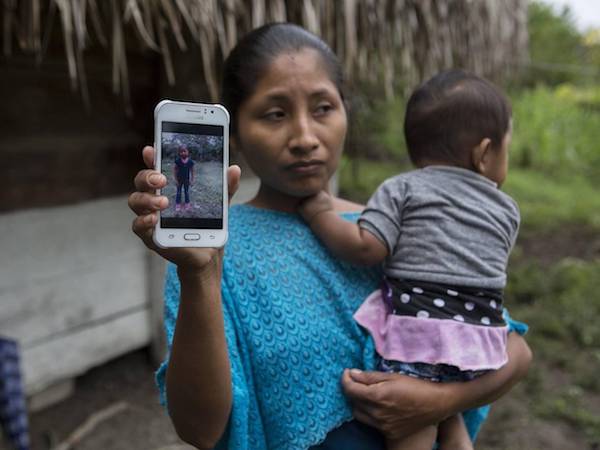
    RAXRUHA, GUATEMALA(TIP): The body of a seven-year-old girl who died while in custody of the US Border Patrol arrived in her native Guatemala on Sunday, December 23 and was being driven hours into the countryside to be handed over to family members for a last goodbye.

    A white coffin containing Jakelin Caal was received in the afternoon at Guatemala City’s international airport by representatives of the country’s Foreign Ministry and then loaded into the back of a black hearse by workers in orange vests.

    No family members were on hand. Domingo Caal, the girl’s grandfather, told The Associated Press that the family didn’t have enough money to travel from their poor hamlet to Guatemala’s capital.

    At Domingo Caal’s home in the village of San Antonio Secortez, in the department of Alta Verapaz, relatives set up a small wooden altar flanked by vases overflowing with flowers, with photographs of Jakelin and the hand-lettered message, “We miss you.” Behind the house, dozens of women prepared tamales and beans to feed mourners.

    Relatives expected the body to arrive in the pre-dawn hours Monday in the hamlet of about 420 people who mostly live off growing corn and beans. The village has no paved streets, running water or electricity, and residents say declining crop yields and a lack of work have pushed many in the community to emigrate in recent years.

    (Source: The Independent)


  • Over 90% electoral bonds sold are of Rs 10 lakh, Rs 1 cr

    Over 90% electoral bonds sold are of Rs 10 lakh, Rs 1 cr

    BJP gets Rs 210 cr of Rs 222-cr bonds sold in FY18; donors remain anonymous

    NEW DELHI(TIP): Notwithstanding the aim to bring in transparency in funding to political parties by giving an alternative to cash donations, the latest data reveals that after six rounds of sale of electoral bonds, donors continue to be anonymous, as the norms allow them to remain secretive.

    Sources reveal that as per the data, despite being available in five denominations — Rs1,000, Rs10,000, Rs1 lakh, Rs10 lakh and Rs1 crore — more than 90 per cent of electoral bonds were sold in the top two units, which apparently were purchased by big business houses.

    It is also learnt that the total number of bonds sold in six phases were 2,134 of which 2,007 went for higher denominations of Rs10 lakh and Rs1 crore, as they were mostly bought in metros like Mumbai, Hyderabad, Kolkata and the national capital.

    Incidentally, for financial year 2017-18, the ruling BJP in its declaration to the Election Commission said it received an income of Rs210 crore from contribution through electoral bonds. Sources said during this period (2017-18) electoral bonds worth Rs 222 crore were sold. Therefore, it is clear from the figures that almost 95 per cent of the total bonds went to the BJP account.

    On several occasions, experts and even the poll panel raised the issue of secrecy norm in the electoral bond, saying it will only cement the nexus between political parties and corporate donors.

    As the government, while notifying the electoral bond scheme, had claimed it envisaged total clean money and substantial transparency coming into the system of political funding, the Election Commission had raised concerns and had written to the Law Commission in May 2017 over amendments in the Finance Act, 2017, which brought about changes in the Income Tax Act, the Companies Act, 2013, and the Representation of People Act, 1951, to enable the launch of the electoral bonds scheme.

    Former Chief Election Commissioner OP Rawat is also reported to have talked about grey areas with respect to electoral bonds. “Earlier, we had expressed concern regarding transparency and the possibility of shell companies, which can buy electoral bonds,” he had said.

    Donation process

    Electoral bonds are available in five denominations: Rs 1,000, Rs 10,000, Rs 1 lakh, Rs 10 lakh and Rs 1 crore

    Bonds will not carry the name of the payee and will be valid for 15 days

    Can be used to donate funds to registered parties only

    Can be encashed only through that party’s bank account

    Denomination Bonds sold

    Rs1 crore 950

    Rs10 lakh 1,057

    Rs1 lakh 25

    Rs10,000 0

    Rs1,000 2

    (Source: Tribune)

  • Lok Sabha passes Triple Talaq Bill

    Lok Sabha passes Triple Talaq Bill

    Congress, AIADMK call for deliberation by select committee, walk out before voting

    NEW DELHI(TIP): The Lok Sabha on Thursday, December 27 passed The Muslim Women (Protection of Rights on Marriage) Bill, 2018, after a heated debate. The opposition Congress and All India Anna Dravida Munnetra Kazhagam (AIADMK) staged a walkout before the voting.

    The two parties through their floor leaders, Mallikarjuna Kharge and P. Venugopal of the AIADMK had earlier opposed the Bill during the debate and asked that it be referred to a Joint Select Committee for consideration rather than be debated and passed. However, Law Minister Ravi Shankar Prasad asked members to pass the Bill citing humanitarian considerations with regard to Muslim women suffering under triple talaq.

    The Bill to make the practice of triple talaq among Muslims a penal offence was introduced in the Lok Sabha on December 17 to replace an ordinance issued in September. Under the proposed law, giving instant triple talaq will be illegal and void, and will attract a jail term of three years for the husband. The fresh bill is proposed to supersede an earlier bill passed in the Lok Sabha and pending in the Rajya Sabha.

    In the face of strong objections by the opposition, led by leader of the Congress legislative party in the Lok Sabha, Mallikarjuna Kharge, Mr. Prasad in his reply said as many as 477 cases of triple talaq have been reported since January 2017 with over 200 coming after the Supreme Court verdict declaring Talaq-e-Bidat as void. He explained the penal provision in the Bill as a deterrent, stating, “deterrent is also important while combating a crime.”

    “I am surprised that this House says that triple talaq is wrong but that it wants to keep silent on combating it. When penal provisions were introduced for the Anti-Dowry Act, this House passed such a Bill, penal provisions are there in the Domestic Violence Act as well and this House passed it. So why that objection with regard to this Bill?” asked Mr Prasad.

    He said he had incorporated several suggestions made by the opposition during the debate last year on the Bill, including removal of the clause that neighbors of the victim could file a case. “Conditions for bail and mediation have also been added to the Bill as suggested by members,” he said.

    The Congress’ attack during the debate was led by president of its women’s wing Sushmita Dev who said the Bill would do nothing to ameliorate the condition of Muslim women other than saddling them with a criminal case.

    “This law is not about empowering Muslim women; it is about criminalizing a Muslim man,” Ms. Dev said.

    N.K. Premachandran of the Revolutionary Socialist Party (RSP) who also moved several amendments said his “strong objection was to the fact that the Bill criminalizes a civil wrong when it is not so among statutes regarding Hindu personal law or even [for] Christians.”

    Anwhar Raajhaa of the AIADMK demanded to know why Muslim men were being singled out for punishment under penal provisions. He also said educational and social backwardness was responsible for the condition of Muslim women far more than triple talaq. “Who will provide maintenance to the wife if the husband is in jail?” he asked.

    ‘Targeting minorities’

    All India Majlis-e-Ittehadul Muslimeen (AIMIM) chief Asaduddin Owaisi in an impassioned speech, accused the government of wanting to “go after” Muslim men. “Why have you decriminalized homosexuality and criminalizing triple talaq? Because it would be used against us. Sexual minority got choice in Section 377, then why not religious minorities,” Mr Owaisi said.

    “If your faith is your faith, then my faith should also be my faith. Your (Government) intentions are not clean. You can bring your own law, but we will not forfeit our religion,” Mr. Owaisi said.

    The government also saw ministerial interjections by Minister for Minority Affairs Mukhtar Abbas Naqvi and Textile Minister Smriti Irani. “There should be fear in the hearts of those who commit this crime, and the tendency to sell fatwas (religious interpretations) on the streets like vegetables should stop. This country runs on the Constitution and not Sharia law,” Mr. Naqvi said.

    The Bill was passed after the Congress and AIADMK walked out and will now be tabled in the Rajya Sabha.

    (Agencies)

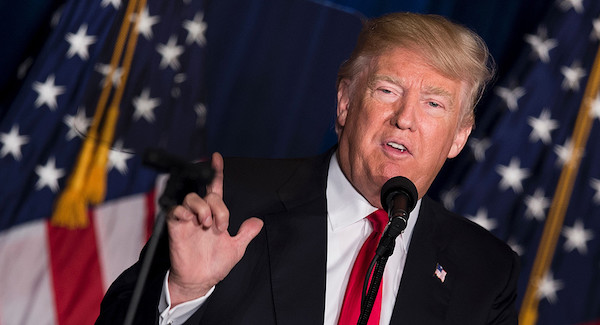
  • President Trump says US can’t be world’s policeman

    President Trump says US can’t be world’s policeman

    WASHINGTON(TIP):Defending his decision to withdraw troops  from the war-torn Syria, US President Donald has Trump said  America cannot be the world’s policeman.

    President Trump and First Lady Melania secretly left Washington on Christmas night and visited Iraq on Wednesday, December 26 to deliver holiday greetings to US combat troops.

    “President Trump and the First Lady travelled to Iraq late on Christmas night to visit with our troops and Senior Military leadership to thank them for their service, their success, and their sacrifice and to wish them a Merry Christmas,” White House press secretary Sarah Sanders said in a tweet.

    Trump delivered a speech to around 100 uniformed service members at an air base west of Baghdad where he defended his decision to pull American troops out of Syria.

    “The US cannot continue to be the policeman of the world,” Trump said after he addressed American soldiers. He said the US could use Iraq as a regional launching pad to carry out operations against the IS and Syria.

  • Adieu 2018

    Adieu 2018

    By Prof I.S.Saluja

    As I sit down to pen the last editorial comment of the year for The Indian Panorama, a few days before the end of the year, on December 27 evening, to be exact, my thoughts go to millions across the world who suffered on account of Nature’s fury, or were subjected to man’s inhumanity, in 2018.

    I think of the wild fires in California which, besides causing colossal damage to property and displacement of people, caused hundreds of deaths. The earthquake and Tsunamis which struck Indonesia  on two occasions in 2018 , mowed down  hundreds of lives and caused huge damage to property. The volcanic eruptions in some parts of the world were responsible for much loss of life and property. Then,  all the storms and hurricanes in US and elsewhere, mudslides and floods in Japan, dust storm in India, and many other natural calamities in various parts of the world played havoc with human life.

    I am also reminded of the destruction and misery caused by man which is much greater in proportion than Nature’s wrath could cause. In the armed conflicts across the world hundreds and thousands of lives have been lost .Wars in Afghanistan, Iraq, Syria, Yemen have killed thousands. In 2018 alone, some 40,000 have lost life in Afghanistan; 5000 in Iraq; 30000 in Syrian Civil war; 25000 in Yemen. Then there are many countries having internal conflicts which caused a heavy loss of human life, besides bringing misery to many more.

    Mass shootings in USA in 2018  which included shootings in schools and public places, numbered more than 300 and claimed lives of thousands who ranged from school going small kids of 5 to old people.

    On this day, I remember all those who fell to Nature’s fury or man’s madness and pray for their souls. For all the sufferings of the people affected by the unfortunate incidents of 2018, I have deep regret and great sympathy. For all their sufferings, I have prayers to make  that it does not happen again with God’s own people.

    I have also to make an appeal to rulers  all over the world to always keep in mind that their first obligation is to people and their wellbeing. Let them not sow the seeds of conflicts to satisfy their ego and please themselves. Let them work to ensure that peace alone prevails.

    However, let me add,  2018 has not only been a year of terrible suffering for many; there have been considerable achievements and accomplishments to be proud of. Scientists and technologists made new discoveries, including that there is mineable ice on Mars, and  there is  a way to grow vegetables without earth or daylight. Many more. And many more in various other spheres.

    We will follow up with details of what 2018 meant to the world, in our New Year special edition next week.

    For now, it is adieu 2018 .


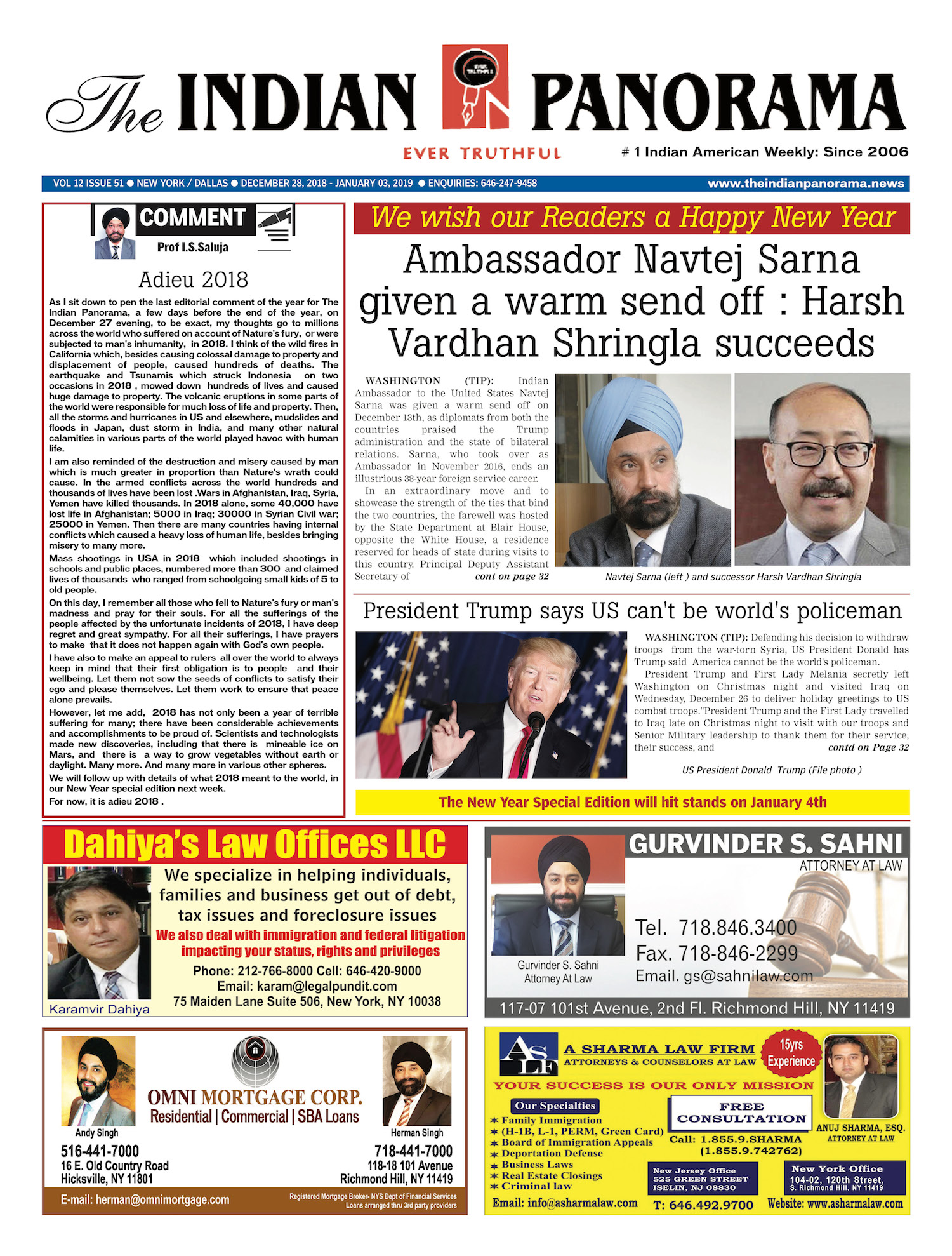
  • Ambassador Navtej Sarna given a warm send off : Harsh Vardhan Shringla succeeds

    Ambassador Navtej Sarna given a warm send off : Harsh Vardhan Shringla succeeds

    WASHINGTON(TIP): Indian Ambassador to the United States Navtej Sarna was given a warm send off on December 13th, as diplomats from both the countries praised the Trump administration and the state of bilateral relations. Sarna, who took over as Ambassador in November 2016, ends an illustrious 38-year foreign service career.

    In an extraordinary move and to showcase the strength of the ties that bind the two countries, the farewell was hosted by the State Department at Blair House, opposite the White House, a residence reserved for heads of state during visits to this country.

    Principal Deputy Assistant Secretary of State for South and Central Asia, Alice Wells told the gathering that President Trump calls India a “true friend,” and pointed to the two years during which the “Indo-Pacific” region was renamed, And Secretary of State Mike Pompeo “has characterized the U.S.-India bilateral relationship as one deeply bound by our shared values,” Wells is quoted saying in news reports, at the event attended by top White House and State Department officials.

    Both Wells and Sarna dwelt on the accomplishments of the past two years, the highlight of which was the state visit of Prime Minister Narendra Modi; as well as the inauguration of the new 2+2 Dialogue on security and strategic priorities

    “Under your leadership, our countries have negotiated and finalized a landmark communications compatibility and security agreement, which makes our military cooperation more profound and advanced. We have also taken significant steps to build on India’s status as a US major defense partner, including elevating India to strategic trade authorization, tier one status,” Wells is quoted saying in a Financial Express news report. She also praised Sarna for engaging the 3-million strong Indian-American community in the U.S., to strengthen relations.

    Sarna noted that the “personal chemistry” between Modi and President Donald Trump “were so strong” and “so, so evident,” resulting in the joint statement which would set the chart for bilateral relations in coming months

    “We have found a huge amount of understanding for our political space, for our strategic autonomy, for the needs of our economy, for our role, for our taking into account our art history and our regional position vis a vis several other countries,” Sarna is quoted saying, adding that the two countries had found ways to serve their own national interests and still grow the relationship.

    Seasoned diplomat Harsh Vardhan Shringla, a 1984-batch Indian Foreign Service diplomat will succeed Navtej Sarna.

    “He is expected to take up the assignment shortly,” the Ministry of External Affairs said in its statement today.

    At present, Mr Shringla is serving as the Indian High Commissioner to Bangladesh.

    Incidentally, his place in Dhaka  is being taken by a senior diplomat Riva Ganguly Das, who was Consul General in New York only 2 years ago . She is presently Director General of Indian Council for Cultural Relations.


  • December 28 New York & Dallas Print Editions

    December 28 New York & Dallas Print Editions

    [vc_row][vc_column][vc_column_text]

    Print Replica ~ Digitally

    E-Editions

    [/vc_column_text][/vc_column][/vc_row][vc_row][vc_column width=”1/3″][vc_custom_heading text=”New York Edition” font_container=”tag:h2|text_align:center” google_fonts=”font_family:Istok%20Web%3Aregular%2Citalic%2C700%2C700italic|font_style:700%20bold%20regular%3A700%3Anormal” link=”url:https%3A%2F%2Fwww.theindianpanorama.news%2Fwp-content%2Fuploads%2F2018%2F12%2FTIP-December-28-NYC.pdf|||”][vc_single_image image=”95751″ img_size=”full” add_caption=”yes” alignment=”center” onclick=”custom_link” link=”https://www.theindianpanorama.news/wp-content/uploads/2018/12/TIP-December-28-NYC.pdf”][/vc_column][vc_column width=”1/3″][vc_custom_heading text=”Dallas, Texas Edition” font_container=”tag:h2|text_align:center” google_fonts=”font_family:Istok%20Web%3Aregular%2Citalic%2C700%2C700italic|font_style:700%20bold%20regular%3A700%3Anormal” link=”url:https%3A%2F%2Fwww.theindianpanorama.news%2Fwp-content%2Fuploads%2F2018%2F12%2FTIP-December-28-Dallas-TX.pdf|||”][vc_single_image image=”95752″ img_size=”full” add_caption=”yes” alignment=”center” onclick=”custom_link” link=”https://www.theindianpanorama.news/wp-content/uploads/2018/12/TIP-December-28-Dallas-TX.pdf”][/vc_column][vc_column width=”1/3″][vc_single_image image=”82828″ img_size=”medium” alignment=”center” onclick=”custom_link” link=”https://www.theindianpanorama.news/advertising-media-kit-portal-indian-panorama/”][vc_single_image image=”82829″ img_size=”medium” alignment=”center” onclick=”custom_link” link=”https://www.theindianpanorama.news/advertising-media-kit-portal-indian-panorama/”][/vc_column][/vc_row][vc_row][vc_column][td_block_ad_box spot_id=”custom_ad_3″ tdc_css=””][/vc_column][/vc_row][vc_row][vc_column width=”2/3″][vc_custom_heading text=”Lead Stories This Week” font_container=”tag:h2|text_align:center” google_fonts=”font_family:Istok%20Web%3Aregular%2Citalic%2C700%2C700italic|font_style:700%20bold%20regular%3A700%3Anormal” link=”url:https%3A%2F%2Fwww.theindianpanorama.news%2F|||”][td_block_5 separator=”” limit=”12″ tdc_css=””][/vc_column][vc_column width=”1/3″][vc_widget_sidebar sidebar_id=”td-default”][/vc_column][/vc_row]

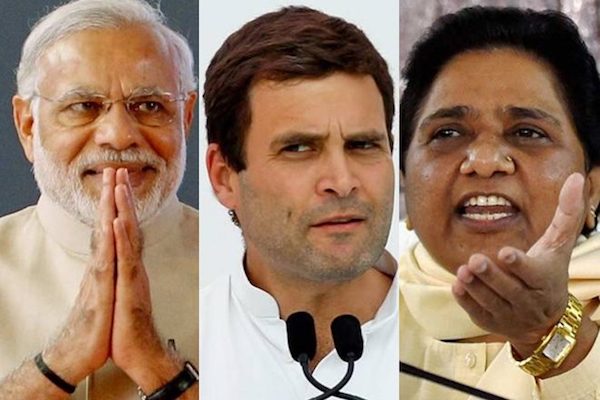
  • 2019 General Elections in India Likely to Result in a Hung Parliament

    2019 General Elections in India Likely to Result in a Hung Parliament

    Modi, Mayawati, Rahul likely in Prime Ministerial race

    By Ven Parmeswaran
    It’s too early to write off Modi’s prospects. He remains a popular figure and powerful orator, and his party is India’s best funded and best organized. Yet it is clear Modi’s tax-and-spend  model of development is failing to enthuse voters.  Tuesday’s results suggest discontent in the Hindi heartland, a region that in 2014 gave the BJP two-thirds of its parliamentary seats.  Simply put, Modinomics is not working.  When Modi was elected, he promised to invigorate the economy by providing “maximum governance” with “minimum government” and replacing red tape that would have allowed market forces to play a larger role in India’s inefficient economy.

    It could be anybody’s guess. But what appears for now,  the 2019 general elections are more likely to throw up  a hung parliament. Modi as Prime Minister for another term may not be a certainty. A dark horse like Mayawati could be the Prime Minister. Rahul Gandhi may also not be ruled out.

    In the recent elections held in Madhya Pradesh, Rajasthan and Chhattisgarh, Modi’s BJP crashed to unexpected electoral defeats.  The Congress has won in Rajasthan and Chhattisgarh and fell just short of an outright majority in Madhya Pradesh.

    Madhya Pradesh and Chhattisgarh are widely regarded as BJP strongholds.  To put the results in context, India’s main opposition party has been consistently losing  elections since it was routed in the seismic 2014 elections that brought Modi to power, winning less than 20% of the popular vote and securing only 44 of the 543 seats. Prior to its latest victories ,the Congress was  in power in only two large states.

    The BJP won 62 of the 65 parliamentary seats in these three key states in the last general  elections. Rajasthan, Madhya Pradesh and Chhattisgarh are also part of a bellwether region – the Northern Hindi speaking heartland of India – that gave the BJP and its allies 203 of the 225 seats that they won in 2014.  So the Congress’s robust performance – it gained 163 assembly seats here since 2013 state polls – is a shot in the arm for the party.  It will bolster the morale of party workers, make it more acceptable to skeptical regional allies, and boost the image of its leader Rahul Gandhi. It will also send out the significant message that Modi’s BJP is not invincible and can be defeated.  All this will help Congress gain some much-needed momentum in the run-up to next year’s crucial elections.   However, these state polls may be an unreliable barometer for next year’s big elections.

    Modi won the general elections in 2014 with only 31% of votes.  Today, his opposition is ruling Punjab, Delhi, West Bengal, Tamil Nadu, Kerala, Andhra, Telangana, Karnataka, Madhya Pradesh, Rajasthan, Chhattisgarh,  representing majority of 535 parliamentary seats.  Even in his home state of Gujarat, Modi’s party won only marginally.   For ambitious political leaders of these States Mayawati-Samajwadi coalition could be very attractive to defeat Modi.  Such an outcome could create power in the center for Modi’s opposition, even excluding the Congress.

    There was considerable anti-incumbency against the BJP in these states – the party was trying for a record fourth term in both Madhya Pradesh and Chhattisgarh.  People in Rajasthan have a consistent record of voting out the incumbent after one term.  The BJP workers can take solace from the fact that the party still put up a spirited fight in two of the three states, despite the formidable odds of anti-incumbency.    Secondly, the majority of seats in three states witnessed bipolar contests between the BJP and the Congress.  In general elections, regional parties will hold the key.  Next year much will depend on the kind of strategic regional alliances the Congress is able to stitch up and sustain in different states.  Thirdly, one of the BJP’s greatest strengths is having capable leaders in several  states, many of whom who have completed more than one term.  Hobbled by dynastic politics, the Congress has failed to groom young local leaders, depending mainly on the charisma of the Nehru dynasty.  Also, the Congress appears to lack political imagination and has been unable to produce a powerful  alternative to the BJP.

    “It seems to be courting on anti-incumbency to do the work, a complacent attitude that has made the BJP competitive in areas where it has gathered genuine discontent, against the lack of development outcome, unemployment and rural distress,” says political scientist Gilles Verniers of Ashoka University.

    In their new book, Ideology and Identity, political scientists Pradeep K Chhibber and Rahul Verma from the University of California, argue that India “is no longer led by a Western oriented elite,  and citizens have voted into power politicians closer to their roots, politicians who represent small town socially conservative values, in the BJP or regional parties”.  This is a shift of power to a “more conservative and vernacular elite” which seems to have escaped the Congress.

    WHAT REMAINS ABUNDANTLY CLEAR IS THAT THE 2019 GENERAL ELECTION WILL BE A REFERENDUM ON MODI, AND,  WHO CAN LEAD IN WINNING COALITIONS AND FORM THE GOVERNMENT?

    Modi’s grandiose promises – specially to create more jobs and increase incomes of farmers – have begun to bite.  Lack of jobs and declining farm incomes will be the deciding issues next year, although whether the farmers will vote as an “angry bloc” against what is now being perceived as an “arrogant” government will become clear closer to the Summer polls.

    But the failure to offer an alternative narrative of hope to the people will make it difficult for the Congress and its often fractious allies to mount a credible challenge to Modi, who still remains the BJP’s star vote-catcher.

    MAYAWATI  COULD EMERGE AS THE HERO OF THE OPPOSITION TO MODI

    Mayawati is central to opposition plans to take government because rising sectarian tensions have led to increased Dalit support.   A woman who represents millions of India’s poorest citizens (India has 300 million poor) is now India’s most sought after politician.  Mayawati, an icon of the country’s traditionally oppressed Dalits who were once known as “untouchables,” is central to opposition efforts to prevent Prime Minister Modi’s reelection in 2019.  With rising sectarian tensions leading to stronger political unity among Dalits – a swing force that consists of about 16.6 percent or 200 million of India’s population – many parties are turning to Mayawati to forge an alliance ahead of general election.

    Mayawati, who was the former Chief Minister of Uttar Pradesh may be a front runner for Prime Minister if there is a hung parliament and neither Modi’s BJP nor Rahul Gandhi’s main opposition Congress Party can form government, said Ajoy Bose, a Delhi based political analyst who wrote a biography of the 62-year-old.

    “Almost from a position of political oblivion, there are signs of the resurrection of Mayawati,” said Bose.  “She has definitely regained ground dramatically.  There is a possibility that she could even be a Prime Ministerial candidate – the whole idea of having such a prominent Dalit leader as Prime Minister will be tempting for a  lot of other parties as it will give them some edge.”

    In Uttar Pradesh, which holds the key to forming the national government, Modi’s ruling National Democratic Alliance would lose 35 seats compared to the 2014 elections if Mayawati’s Bahujan Samaj Party and the Samajwadi Party joined forces, according to one poll.  Similarly, Congress could make sizeable gains in the State if it joins hands with those parties.  Another survey, from India Today, predicted an alliance of opposition parties would come out neck and neck with Modi’s ruling coalition.

    Modi won in the general elections  in 2014 with only 31% of votes.  Today,  his opposition is ruling Punjab, Delhi, West Bengal, Tamil Nadu, Kerala, Andhra, Telangana, Karnataka, Madhya Pradesh, Rajasthan, Chhattisgarh representing majority of 535 parliamentary seats.  Even in his home state, Modi’s party won only marginally.    For ambitious political leaders of these States Mayawati-Samajwadi coalition could be very attractive to defeat Modi.  Such an outcome could create power in the center for Modi’s opposition even excluding the Congress.

    Sadanand Dhume of the WSJ wrote: “It’s too early to write off Modi’s prospects.  He remains a popular figure and powerful orator, and his party is India’s best funded and best organized.  Yet it is clear Modi’s tax-and-spend   model of development is failing to enthuse voters.  Tuesday’s results suggest discontent in the Hindi heartland, a region that in 2014 gave the BJP two-thirds of its parliamentary seats. Simply put, Modinomics is not working. When Modi was elected, he promised to invigorate the economy by providing “maximum governance” with “minimum government” and replacing red tape that would have allowed market forces to play a larger role in India’s inefficient economy.”

    (Ven Parameswaran of Scarsdale, N.Y. is a Senior Adviser to the Imagindia Institute, a think tank in New Delhi)


  • The slow, tortuous path to justice: Sajjan Kumar’s conviction

    The slow, tortuous path to justice: Sajjan Kumar’s conviction

    By Sanjay Hegde

    The Delhi High Court judgment convicting Sajjan Kumar reminds the country that it must not forget mass killings

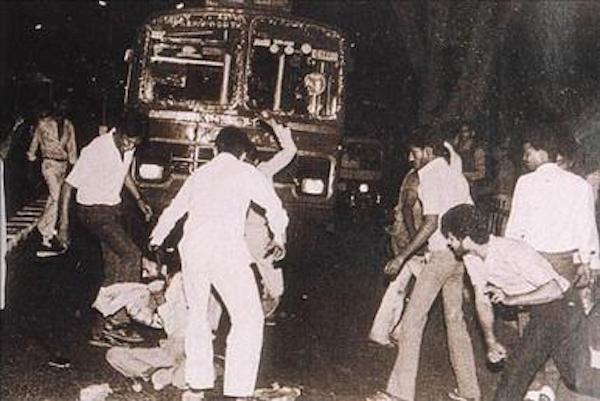
    Thirty-four years after the assassination of Prime Minister Indira Gandhi and the killings of Sikhs that followed, a political leader who may have electorally benefitted from communal violence has been sentenced to imprisonment for life. The wheel of history has turned ever so slowly, as some believe, but its arc may have yet turned towards justice. The assassination of Indira Gandhi, on October 31, 1984, was a national tragedy. The anti-Sikh pogrom that followed in north India, with the worst violence taking place in Delhi, was a greater tragedy. But the greatest tragedy of all was the stonewalling of investigation by the law enforcement agencies, and the seeming deafness of the justice delivery system. The judgment reconstructs the scene of violence and all the waiting that followed.

    Maze of inquiries

    It took years of commissions of inquiry and other inquiries before six accused, including Sajjan Kumar, a formidable Congress leader in Delhi, who was a member of Parliament at the time, were sent up for trial sometime in 2010. Three years later, the trial court convicted five of the accused: three of them for the offences of armed rioting and murder, and two of them for the offence of armed rioting. Kumar stood acquitted by the trial court of all offences. Those convicted as well as the Central Bureau of Investigation appealed to the Delhi High Court. Now, the Bench of Justices S. Muralidhar and Vinod Goel has overturned the April 2013 judgment of the trial court and sent Kumar to prison for life. Their judgment carries the echo of the crimes committed in the days after Mrs. Gandhi’s assassination and failure to hold the guilty to account for so long.

    The judgment finds: “The accused in this case have been brought to justice primarily on account of the courage and perseverance of three eyewitnesses. Jagdish Kaur whose husband, son and three cousins were the five killed; Jagsher Singh, another cousin of Jagdish Kaur, and Nirpreet Kaur who saw the Gurudwara being burnt down and her father being burnt alive by the raging mobs. It is only after the CBI entered the scene, that they were able to be assured and they spoke up. Admirably, they stuck firm to their truth at the trial.”

    Staying the course

    As a result of their testimony, Sajjan Kumar now stands convicted for conspiracy to murder and for the abetment of murder, in the deaths of Kehar Singh and his 18-year-old son Gurpreet Singh, and the killings of Raghuvinder Singh, Narender Pal Singh, and Kuldeep Singh — all members of the same family. I mention the names of the dead because the dead in communal violence should not lose their vestigial humanity by being simply reduced to a score of unnamed victims.

    Kehar Singh’s wife, Jagdish Kaur, was one of the principal witnesses against Sajjan Kumar. The other principal witness is her cousin Jagsher Singh, whose brothers Raghuvinder and Narender Pal Singh were also killed on November 1, 1984. The high court judgment notes Jagdish Kaur’s recollection: “At around 9 am on 2nd November 1984, when she went to lodge a report at the PP, she saw that a public meeting was taking place which was attended by A-1 who was the local Member of Parliament (MP). She heard him declare, “Sikh sala ek nahin bachna chahiye, jo Hindu bhai unko sharan deta hai, uska ghar bhi jala do aur unko bhi maro.”

    The judgment records Jagsher Singh’s recollection that “around 10 p.m., he saw an Ambassador car which stopped at the turning onto Shiv Mandir Marg. He stated that 30-40 persons gathered around the car from which emerged A-1 who enquired as to whether ‘they have done the work’. Thereafter, it is stated, A-1 approached the house of PW-6 (Jagsher Singh) to inspect it and came back and told the assembled mob that they had ‘only broken the gate of the thekedars’ house’. One of the members of the mob then allegedly informed him that ‘the thekedars are being saved by the Hindus only’. Upon hearing this, A-1 is stated to have instructed the mob to burn the houses of the Hindus who were sheltering the Sikhs. He then left in his car.”

    The court rules: “To this Court, PW-1 [Jagdish Kaur] comes across as a fearless and truthful witness. Till she was absolutely certain that her making statements will serve a purpose, she did not come forward to do so. This is understandable given the fact that all previous attempts at securing justice for the victims had failed. The large number of acquittals in the cases demonstrated how the investigation was completely botched-up. It also demonstrated the power and influence of the accused and how witnesses could easily be won over. The atmosphere of distrust created as a result of these developments would have dissuaded the victims from coming forward to speak about what they knew. In the context of these cases, the factum of delay cannot be used to the advantage of the accused but would, in fact, explain the minor contradictions and inconsistencies in the statements of the key eye-witnesses in the present case. Nothing in the deposition of PW-1 points to either untruthfulness or unreliability. Her evidence deserves acceptance.”

    A moment of reflection

    Sajjan Kumar is not very different from many other politicians of this era, who use mob emotions to ride to power. However, he is probably the first to be held guilty of conspiring with the mob to cause the deaths of his constituents. It is for us as a country to ensure that mob violence yields no political dividends. If we as voters decide to electorally punish those who incite mobs, yield to them, or fail to stop their violence, the resort to politics of mass murders will simply stop. The judgment notes that “there has been a familiar pattern of mass killings in Mumbai in 1993, in Gujarat in 2002, in Kandhamal, Odisha in 2008, in Muzaffarnagar in U.P. in 2013 to name a few. Common to these mass crimes were the targeting of minorities and the attacks spearheaded by the dominant political actors being facilitated by the law enforcement agencies. The criminals responsible for the mass crimes have enjoyed political patronage and managed to evade prosecution and punishment.”

    It also says: “While it is undeniable that it has taken over three decades to bring the accused in this case to justice, and that our criminal justice system stands severely tested in that process, it is essential, in a democracy governed by the rule of law to be able to call out those responsible for such mass crimes. It is important to assure those countless victims waiting patiently that despite the challenges, truth will prevail and justice will be done.”

    While the 1984, 1993, 2002, 2008 and 2013 riots are painful episodes in our history, the judgments of the Delhi High Court of 2018 in the Sajjan Kumar and Hashimpura cases shine like good deeds in a naughty world. Milan Kundera wrote that “the struggle of man against power is the struggle of memory against forgetting”. The judgment tells Kehar Singh, Gurpreet Singh, Raghuvinder Singh, Narender Pal Singh and Kuldeep Singh, that neither Jagdish Kaur nor India have as yet forgotten them.

    (The author  is a senior advocate of the Supreme Court)

    (Source: The Hindu)

  • India and Pakistan can be Friends: Give Peace a Chance

    India and Pakistan can be Friends: Give Peace a Chance

    It was the dark period of militancy in Punjab in the 80’s. I happened to be in a meeting of Senior Citizens of Ludhiana District with the then Governor Siddhartha Shankar Ray, I recall having made a suggestion which I sincerely feel I should share with our readers.

    On being asked what India can do to improve relations with the neighboring Pakistan which was often accused of encouraging militancy in Punjab, I pointed out that one way will be to promote people to people contact. People in both Pakistani and Indian Punjab have much in common in respect of language, culture, cuisine , customs. It will be easier for them to strike a chord.

    As a confidence building exercise, I suggested government of India could take initiative in facilitating visits by people from both sides between Amritsar and Lahore. A dawn to dusk visa may be issued to visitors. This beginning may result in promoting amity between people of both sides. And, as the scale of contacts went up, the quantum of goodwill and amity will also grow. But an angry Ray shot down the suggestion.

    Even today, I firmly believe that the only way to promote peace in the region is to promote  people to people contact. Instead of accusing each other of promoting terror or interference in the internal affairs, the leaders of both India and Pakistan will do well  to focus on promoting people to people contact and lifting restrictions on travel between the two countries.

  • Dow falls below 23,000 for first time in 14 months

    Dow falls below 23,000 for first time in 14 months

    NEW YORK(TIP): Stocks tumbled Wednesday, December19, as investors fretted over a growing list of concerns, including slowing economic growth, trade policy and the threat of a U.S. government shutdown.

    The Dow lost 464 points, or 2 percent, to close at 22,860, the first time the blue-chip index has closed below 23,000 points since October of 2017. The Dow has lost nearly 1,700 points, or 7 percent, over the last six trading sessions.

    The selling in the last two days came after the Federal Reserve raised interest rates for the fourth time this year and signaled it was likely to continue raising rates next year, although at a slower rate than it previously forecast.

    Markets are also concerned about the ongoing trade dispute between the U.S. and China, which has lasted most of this year and shows few signs of easing, and forecasts for a dip in economic activity next year.

    The broader S&P 500 closed at a 15-month low, while Nasdaq also lost ground – the tech-heavy index is now down 20 percent from its peak in August.

  • Obama honored with RFK Human Rights Award

    Obama honored with RFK Human Rights Award

    NEW YORK  (TIP): President Barack Obama was honored Wednesday, December 12 night with the Robert F. Kennedy Human Rights  “Ripple of Hope” award at a gala in New York.

    “I’m very humbled by this honor. I’m not sure if you’ve heard but I’ve been on this hope kick for a while now,” Obama said in his speech Wednesday to laughs from the audience. “I gave a big speech on hope. I ran a couple of campaigns. Hope. It’s my kind of thing. … So I’d like to thank all of you for officially validating my hope credentials.”

    Later in his remarks, Obama said, “It can be tempting to succumb to the cynicism, the belief that hope is a fool’s  game for suckers.”

    “And worse, at a time when the media is splintered and our leaders seem content to make up whatever facts they consider expedient, a lot of people have come to doubt even the very notion of a common ground, insisting the best we can do is to retreat into our respective corners, circle the wagons and then do battle with anybody who is not like ourselves,” Obama said. “Bobby Kennedy’s life reminds us to reject such cynicism.”

    Discovery CEO David Zaslav, Humana CEO Bruce Broussard and New Jersey Gov. Phil Murphy were also honored with this year’s Ripple of Hope award.

    “As Bobby Kennedy taught us, the thing about hope is that it travels through space *and* time, first splashing against the rocks, but eventually breaking down the walls of cruelty and injustice,” Obama wrote on Twitter Wednesday night echoing his speech. “And if we do our best with the time we’re given, others will take hope in our example.”

    RFK Human Rights president, Kerry Kennedy, speaking at the of the 50th Anniversary of “Ripple of Hope”
    Photo /Mohammed Jaffer-SnapsIndia

    Kerry Kennedy, the organization’s president and daughter of Robert Kennedy, presented the 44th president with the award for those who have “demonstrated a commitment to social change.”

    “Bobby Kennedy was one of my heroes,” Obama said in a statement back in August when it was first announced he’d be receiving the award. “He was someone who showed us the power of acting on our ideals, the idea that any of us can be one of the ‘million different centers of energy and daring’ that ultimately combine to change the world for the better.”

    Seen in the picture are New Jersey Governor Phil Murphy with wife Tammy Snyder Murphy, Dr. Navin Mehta , Mrs. Mehta, Kenny Desai, Mrs. Desai, and H.R.Shah
    Photo / Mohammed Jaffer-SnapsIndia

    This year marks the 50th anniversary of the organization RFK Human Rights’ founding and Kennedy’s historic campaign for the White House.

    Past recipients of the Ripple of Hope award include Hillary Clinton, Bill Clinton, Joe Biden, Al Gore, John Lewis, Robert De Niro, Taylor Swift and George Clooney.

    (Source: CNN)

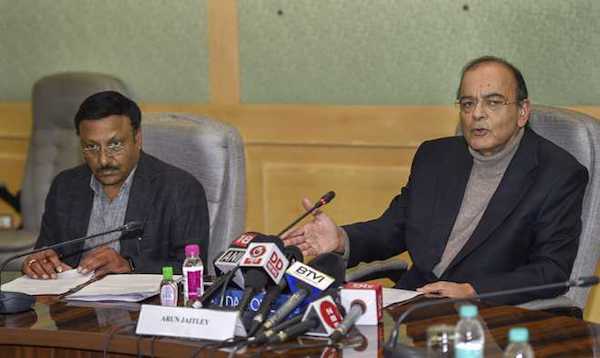
  • Government of India to infuse Rs 83,000 cr in Public Sector Banks  in next few months: Finance Minister Jaitley

    Government of India to infuse Rs 83,000 cr in Public Sector Banks in next few months: Finance Minister Jaitley

    SBI, Bank of Baroda, Indian Bank and Vijaya Bank may not need capital.

    NEW DELHI(TIP): The government on Thursday, December 20,  said it will enhance the capital infusion in public sector banks to Rs 83,000 crore, taking the total to Rs 1.06 lakh crore for the fiscal.

    The capital will be pumped in over the next few months, Finance Minister Arun Jaitley said, adding that the move will increase the lending capacity of public sector banks (PSBs) as well as help some of them come out of RBI’s watchlist.

    The government had earlier announced infusion of Rs 65,000 crore in PSBs in 2018-19, of which Rs 23,000 crore has already been disbursed, while Rs 42,000 crore is remaining.

    The government Thursday sought Parliament’s approval for infusion of an additional Rs 41,000 crore.

    This amount, sought to be infused in the banks through issue of government securities (recapitalization bonds), is over and above the Rs 2.11 lakh crore recapitalization plan announced in October 2017.

    The recapitalization, the finance minister said, will enhance the lending capacity of state-owned banks and help them come out of RBI’s Prompt Corrective Action (PCA) framework.

    “Now this Rs 1.06 lakh crore this year and Rs 83,000 crore which is remaining is going to be utilized under four different heads. The first of course is to ensure that banks meet their regulatory capital norms.

    “The second will be that the better performing banks under PCA are given capital to achieve a 9 per cent Capital to Risk Weighted Assets Ratio (CRAR) and required capital conservation buffer and the 6 per cent net NPA requirements so that some of them are able to come out of the PCA itself,” he said.

    The third category will be the non-PCA banks which are very close to the PCA red-line will be provided capital so that they do not come under the framework, he said.

    Some capital will also be provided to banks which are going to be amalgamated to meet regulatory norms and growth capital, Jaitley added.

    Earlier this year, the government had announced merger of Dena Bank and Vijaya Bank with Bank of Baroda.

    Jaitley also said the non-performing assets (NPAs) recognition, started in 2015, is almost complete, and the September quarter has shown decline in bad loans.

    Gross NPAs of PSBs started declining after peaking in March 2018, registering a reduction of Rs 23,860 crore in the first half of the fiscal.

    Speaking to reporters, Financial Services Secretary Rajiv Kumar said three banks were on the verge of being included in the PCA, but with this infusion, they will be safe.

    A total of 11 out of the 21 PSBs are under RBI’s PCA framework, which imposes lending restrictions on weak banks.

    “India’s PCA framework for weaker banks has more onerous thresholds, that is higher capital thresholds and a net NPA threshold that further embeds capital requirement on account of provisioning of NPAs.

    “Today’s proposal is an expression of government’s commitment that each PSB is an article of faith and aims at securing compliance even for the higher regulatory norms,” Kumar said.

    Asked if the Nirav Modi scam-hit Punjab National Bank (PNB) will get capital support, he said it could be a candidate for fund infusion.

    Kumar said PSBs have recovered Rs 60,726 crore of bad loans in the first half of the current fiscal year, which is more than double the amount recovered in the corresponding period last year.

    In October 2017, the government decided to infuse Rs 2.11 lakh crore in PSBs over the next two years-through budgetary provisions of Rs 18,139 crore, recapitalization bonds of Rs 1.35 lakh crore, and the balance through raising of capital by banks from the market.

    The government envisaged that PSBs would raise Rs 58,000 crore from the stock markets by March 2019 to meet Basel III norms.

    Kumar said out of this, Rs 24,400 crore has been raised by banks so far.

    The secretary also said four banks-SBI, Bank of Baroda, Indian Bank and Vijaya Bank-may not need capital.

    (Source:PTI)


  • Defense Secretary James Mattis Submits Resignation, citing differences in viewpoints with the President

    Defense Secretary James Mattis Submits Resignation, citing differences in viewpoints with the President

    WASHINGTON(TIP): Defense Secretary James Mattis will resign at the end of February, he informed President Trump in a letter Thursday, December20. The defense secretary said he is stepping down because of the differences in viewpoints with Mr. Trump.

    News of Mattis’ impending departure comes the day after Mr. Trump’s sudden announcement about Syria, a decision he made without consulting security officials in his administration.

    “Because you have the right to have a Secretary of Defense whose views are better aligned with yours on these and other subjects, I believe it is right for me to step down from my position,” Mattis wrote.

    Mr. Trump announced the news in a tweet and praised Mattis’ tenure as secretary.

    “During Jim’s tenure, tremendous progress has been made, especially with respect to the purchase of new fighting equipment,” Mr. Trump wrote on Twitter. “General Mattis was a great help to me in getting allies and other countries to pay their share of military obligations. A new Secretary of Defense will be named shortly. I greatly thank Jim for his service!”

    A senior White House official said that Mattis came to the White House for a meeting, not previously scheduled, around 3:30 p.m. Thursday, and informed the president he would be leaving. The president hopes to announce a replacement by the end of the year.

    Text of Defense Secretary’s resignation letter.

    “Dear Mr. President:

    I have been privileged to serve as our country’s 26th Secretary of Defense which has allowed me to serve alongside our men and women of the Department in defense of our citizens and our ideals.

    I am proud of the progress that has been made over the past two years on some of the key goals articulated in our National Defense Strategy: putting the Department on a more sound budgetary footing, improving readiness and lethality in our forces, and reforming the Department’s business practices for greater performance. Our troops continue to provide the capabilities needed to prevail in conflict and sustain strong U.S. global influence.

    One core belief I have always held is that our strength as a nation is inextricably linked to the strength of our unique and comprehensive system of alliances and partnerships. While the US remains the indispensable nation in the free world, we cannot protect our interests or serve that role effectively without maintaining strong alliances and showing respect to those allies. Like you, I have said from the beginning that the armed forces of the United States should not be the policeman of the world. Instead, we must use all tools of American power to provide for the common defense, including providing effective leadership to our alliances. NATO’s 29 democracies demonstrated that strength in their commitment to fighting alongside us following the 9-11 attack on America. The Defeat-ISIS coalition of 74 nations is further proof.

    Similarly, I believe we must be resolute and unambiguous in our approach to those countries whose strategic interests are increasingly in tension with ours. It is clear that China and Russia, for example, want to shape a world consistent with their authoritarian model – gaining veto authority over other nations’ economic, diplomatic, and security decisions – to promote their own interests at the expense of their neighbors, America and our allies. That is why we must use all the tools of American power to provide for the common defense.

    My views on treating allies with respect and also being clear-eyed about both malign actors and strategic competitors are strongly held and informed by over four decades of immersion in these issues. We must do everything possible to advance an international order that is most conducive to our security, prosperity and values, and we are strengthened in this effort by the solidarity of our alliances.

    Because you have the right to have a Secretary of Defense whose views are better aligned with yours on these and other subjects, I believe it is right for me to step down from my position. The end date for my tenure is February 28, 2019, a date that should allow sufficient time for a successor to be nominated and confirmed as well as to make sure the Department’s interests are properly articulated and protected at upcoming events to include Congressional posture hearings and the NATO Defense Ministerial meeting in February. Further, that a full transition to a new Secretary of Defense occurs well in advance of the transition of Chairman of the Joint Chiefs of Staff in September in order to ensure stability Within the Department.

     I pledge my full effort to a smooth transition that ensures the needs and interests of the 2.15 million Service Members and 732,079 DoD civilians receive undistracted attention of the Department at all times so that they can fulfill their critical, round-the-clock mission to protect the American people.

    I very much appreciate this opportunity to serve the nation and our men and women in uniform.”

    Both Republican and Democratic lawmakers expressed regret that Mattis was leaving the administration. House Democratic Leader Nancy Pelosi said she was “shaken” by Mattis’ resignation and expressed admiration for the letter he wrote to the president. “I think that everybody in the country should read his letter of resignation,” she told reporters. “It’s a letter of great patriotism, respect for the President, but also a statement of his values.”

  • December 21 New York & Dallas Print Editions

    December 21 New York & Dallas Print Editions

    [vc_row][vc_column][vc_column_text]

    Print Replica ~ Digitally

    E-Editions

    [/vc_column_text][/vc_column][/vc_row][vc_row][vc_column width=”1/3″][vc_custom_heading text=”New York Edition” font_container=”tag:h2|text_align:center” google_fonts=”font_family:Istok%20Web%3Aregular%2Citalic%2C700%2C700italic|font_style:700%20bold%20regular%3A700%3Anormal” link=”url:https%3A%2F%2Fwww.theindianpanorama.news%2Fwp-content%2Fuploads%2F2018%2F12%2FTIP-December-21-NYC.pdf|||”][vc_single_image image=”95717″ img_size=”full” add_caption=”yes” alignment=”center” onclick=”custom_link” link=”https://www.theindianpanorama.news/wp-content/uploads/2018/12/TIP-December-21-NYC.pdf”][/vc_column][vc_column width=”1/3″][vc_custom_heading text=”Dallas, Texas Edition” font_container=”tag:h2|text_align:center” google_fonts=”font_family:Istok%20Web%3Aregular%2Citalic%2C700%2C700italic|font_style:700%20bold%20regular%3A700%3Anormal” link=”url:https%3A%2F%2Fwww.theindianpanorama.news%2Fwp-content%2Fuploads%2F2018%2F12%2FTIP-December-21-Dallas-TX.pdf|||”][vc_single_image image=”95716″ img_size=”full” add_caption=”yes” alignment=”center” onclick=”custom_link” link=”https://www.theindianpanorama.news/wp-content/uploads/2018/12/TIP-December-21-Dallas-TX.pdf”][/vc_column][vc_column width=”1/3″][vc_single_image image=”82828″ img_size=”medium” alignment=”center” onclick=”custom_link” link=”https://www.theindianpanorama.news/advertising-media-kit-portal-indian-panorama/”][vc_single_image image=”82829″ img_size=”medium” alignment=”center” onclick=”custom_link” link=”https://www.theindianpanorama.news/advertising-media-kit-portal-indian-panorama/”][/vc_column][/vc_row][vc_row][vc_column][td_block_ad_box spot_id=”custom_ad_3″ tdc_css=””][/vc_column][/vc_row][vc_row][vc_column width=”2/3″][vc_custom_heading text=”Lead Stories This Week” font_container=”tag:h2|text_align:center” google_fonts=”font_family:Istok%20Web%3Aregular%2Citalic%2C700%2C700italic|font_style:700%20bold%20regular%3A700%3Anormal” link=”url:https%3A%2F%2Fwww.theindianpanorama.news%2F|||”][td_block_5 separator=”” limit=”12″ tdc_css=””][/vc_column][vc_column width=”1/3″][vc_widget_sidebar sidebar_id=”td-default”][/vc_column][/vc_row]

  • Association of Indians in America (AIA) celebrates 50th Anniversary

    Association of Indians in America (AIA) celebrates 50th Anniversary

    GARDEN CITY, NY(TIP): The Association of Indians in America, the grassroot  national organization   had  a fabulous  Celebration  to mark its   50th  Anniversary  on Dec 1st  at Garden City Hotel,  Long Island NY.

    About 400 people attended the event. The event was graced by Congress man Tom Suozzi, Congressman Raja Krishnamoorthi , Consul General Sandeep Chakravorty  and Padma  Bhushan Anupam Kher

    Congressman Raja Krishnamoorthy,
    Congressman Tom Suozzi
    Dr. Urmilesh Arya President national AIA
    Consul General of India Sandeep Chakravorty,

    The event  started with Invocation by   Mrs.  Geeta Setia, followed by  American Anthem by  Riti Sunshine Bhalla and Indian Anthem by a group of Indian ladies

    Chairperson and MC Ravi Bhooplapur  was introduced  by Dr. Budhadev Manvar. He described  the achievements of the gala chair. 

    Prime Minister Narendra Modi congratulated AIA in  a special message of greetings on the occasion. He praised the Association for its pioneer work for Indian community in America and its projects for India

    President of the Association Dr. Urmilesh Arya was introduced by  Past Board of Trustees and past president  Animesh Goenka who said  Dr. Mrs. Arya has passion for philanthropy, charity and community services. 

     President  Urmilesh Arya said in her address that  AIA represents the hopes and aspirations of those  immigrants who are united by their common bond of Indian heritage and American commitment.   She said this celebration is a special occasion of remembrance and reflection,  a time to revisit the vision of founders. 

    Immediately after founding the Association, the primary goal was to develop a vision and a mission to provide a unique service impacting life of each and every member of the  Indian immigrant community. She  said, “We are proud of our past accomplishment   and are aware of the future challenges”. 

    She said our community has been very successful, because of highly educated, motivated and talented individuals.

    India has placed highest premium on scholarship. Bhagvat  Gita says Na hi Jnanena sadarsham pavitraihe vidyate, means nothing purifies like knowledge  

    (L to R): Mr Ravi Bhooplapur, Dr Urmilesh Arya, Mr Anupam Kher, Dr Budhadev Manvar, Mr Surinder Rametra, Dr Yashpal Arya

    AIAhas played crucial role in getting minority status and reclassification for Indian immigrants 

     She further explained how AIA has been a pioneer in serving causes of Indians in America, addressing their issues related to professional licensing, immigration, racial and professional discrimination, civil rights and many more.

    The association  has raised a substantial funds for natural calamities in India  and USA and sent medical equipment to various needy hospitals  in  India. Its PROJECT  INDIA   has been actively involved in HIV prevention and treatment in India. 

    She emphasized and encouraged the youth to get involved with the association so that the AIA  torch can be transferred to them. 

    She explained her future plan for prevention and treatment of Blindness in children in India especially those who are underprivileged and women empowerment in remote villages of India further enhancing children’s   wellbeing.

     Consul General of India in New York, Sandeep Chakravorty highlighted the  improvement in the economy of India and the strong relationship between  India and America. He applauded  the achievements of  Indians in America in all walks of life , praised the good work the  AIA  is doing  and  sais  his office is open for any help the consulate can give .

    Congressman Tom Suozzi explained about the hardships and discrimination faced by most of the first immigrants from various countries like Italy , Greece,  etc., in America. But their  hard work made their dreams come true.

    Congressman Raja Krishnamoorthy was the keynote speaker. He advised and stressed upon participation in the political process. He said at present there are 4 Indian in the US Congress. He hoped s that he will see more Indian origin faces in the Congress in coming years.

    Assembly member Andrew Raia from District 12, and Town Supervisor of Huntington   NY   Chad Lupincci  also joined , and appreciated the work of  Indian community in America . They said America is a melting pot  where people from different countries  and different cultures come and become part of   American life.

     Dr. Arthur A . Klein was honored in absentia. He  was held back because of a family emergency. His award was received by  Vice president of Mount Sinai Health Network  Mr. Sean Healy

    Past Trustee of the Board and past president Dr. Narendra  Kukar awarded  for his dedicated services to AIA . In his address, he gave the history of AIA. 

    Guest of honor Padma  Bhushan Anupam Kher  entertained the audience with his childhood stories and advised not to get depressed in the face of  failure,  but make it an incentive. He said, “Success then will be yours”.  

    A Video projection  on history of  AIA  and an instrumental performance of Rudra Band were greatly appreciated. 

    The  Herculean task of fundraising was done by Dr. Yash Pal Arya. Chairperson of the Media Committee Smiti  Khanna and Co-Chair Indu Jaiswal  coordinated  well with  media. The event was well organized  and coordinated  by Chairperson Ravi Bhooplapur , Co-chair  Dr.Buddhadev  Manvar and   Surinder  Rametra 

    The Association of Indians in America is extremely thankful to the Sponsors –  Mt. Sinai  Hospital and Wyckoff Heights  Hospital.  

    (Based on a Press Release)