Month: May 2018

  • Pakistan’s former Prime Minister Nawaz Sharif faces probe for laundering $4.9 bn to India: Reports

    Pakistan’s former Prime Minister Nawaz Sharif faces probe for laundering $4.9 bn to India: Reports

    World Bank denies reports Sharif laundered US$ 4.9 billion to India

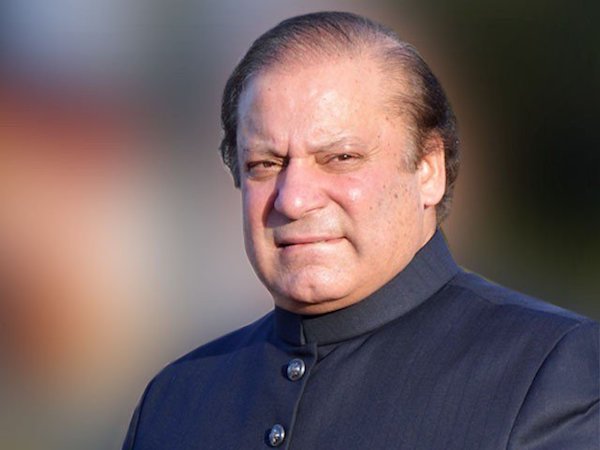
    ISLAMABAD(TIP): In further trouble to Nawaz Sharif, Pakistan’s top anti-corruption body on Tuesday, May 8, ordered a probe against the embattled former Prime Minister and others for allegedly laundering USD 4.9 billion to India, media reports said.

    The National Accountability Bureau (NAB) in a press release said its Chairman Justice (retd) Javed Iqbal took notice of reports making rounds on news channels claiming that Sharif allegedly laundered USD 4.9 billion to India, the Express Tribune reported.

    According to the media report, this incident is mentioned in the World Bank’s Migration and Remittance Book 2016, the release said.

    However, details of the media report in question have not been mentioned in the brief statement issued in Urdu, Geo TV reported.

    The statement claims that the amount was laundered to the Indian Finance Ministry after which Indian foreign exchange reserves witnessed an increase and Pakistan suffered as a result.

    Sharif is facing three corruption cases at the accountability court following the Supreme Court’s verdict in the Panama Papers case. An NAB inquiry is also under way against him for alleged illegal expansion of a road leading to his estate in Lahore’s Jati Umra locality.

    Once formulated, this will be the fifth case against the ousted premier by the NAB.

    Earlier today, the accountability court sought more time from the top court to end the trial on references filed by the NAB against members of the Sharif family.

    Accountability court judge Muhammad Bashir, who presides over the hearings, has written a letter to the top court requesting for a second extension in the trial.

    Earlier in March, the Supreme Court had granted a two-month extension to the accountability court to wrap the proceedings.

    However, as the two-month deadline expires, the case is nowhere near its end, with the Al-Azizia Steel Mills and Flagship Investments still untouched, the country’s top anti-graft body is running out of time.

    The Supreme Court of Pakistan had disqualified Sharif last year, forcing the three-time prime minister to resign. Sharif has dismissed the corruption charges as politically motivated.

    The political future of Sharif, who leads the country’s most powerful political family and his party, has been hanging in the balance since then. If convicted, he can be jailed.

    World Bank denies reports Sharif laundered US$ 4.9 billion to India

    Meanwhile, the World Bank has denied as “incorrect” the media reports in Pakistan that cited its report to allege that former prime minister Nawaz Sharif laundered US$ 4.9 billion to India.

    Pakistan’s top anti-corruption body, National Accountability Bureau, on Tuesday ordered a probe against the embattled former prime minister and others after reports of his involvement in the money laundering emerged in the media.

    The World Bank in a statement said, “In the past day, there have been media reports citing the World Bank’s Remittances and Migration Report of 2016. These media reports were incorrect.

    The World Bank’s Remittances and Migration Report is an effort by the World Bank to estimate migration and remittances numbers across the world, it said.

    “The report does not include any mention of money laundering nor does it name any individuals,” said the World Bank, which was issued after media reports cited its annual report for allegations that Sharif laundered US$ 4.9 billion from Pakistan to India.

    In its annual report, the statement said that the World Bank estimates bilateral remittances between countries using the methodology summarized in the World Bank Working Paper 102 South-South migration and remittances by the authors of the report.

    The World Bank also referred to a statement by the State Bank of Pakistan which rejects estimates of US$ 4.9 billion in remittances from Pakistan to India on September 21, 2016, and provides an explanation of the methodology used in the World Bank report and the official remittances numbers.

    (Source: PTI)


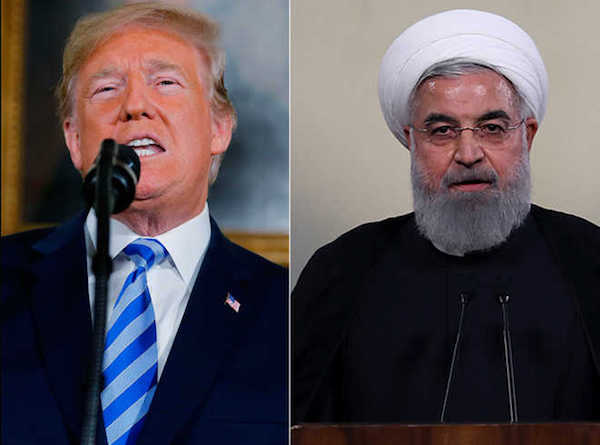
  • Trump scraps the Iran nuclear deal, calling it ’embarrassment’

    Trump scraps the Iran nuclear deal, calling it ’embarrassment’

    Iran will remain in N-deal, says Rouhani

    European leaders call on Washington to let them carry on with pact

    WASHINGTON(TIP): US President Donald Trump on Tuesday, May 8, pulled out of the landmark nuclear deal with Iran, an Obama-era accord which he has repeatedly criticized.

    “It is clear to me that we cannot prevent Iran’s nuclear bomb. The Iran deal is defective at its core. Therefore, I am announcing today that the United States would withdraw from the Iran nuclear deal,” Trump said.

    Moments later he signed a fresh set of sanctions against Iran and warned countries against any cooperation with Iran on its nuclear weapons program.

    Ever since his election campaign, Trump has frequently criticized the Obama-era Iran nuclear deal, also known as the Joint Comprehensive Plan of Action or JCPOA.

    France, Germany, and the UK regret the U.S. decision to leave the JCPOA. The nuclear non-proliferation regime is at stake.

        — Emmanuel Macron (@EmmanuelMacron) May 8, 2018

    He had described the agreement, which was negotiated by then US secretary of state John Kerry, as a bad deal.

    I am deeply concerned by today’s announcement that the US will be withdrawing from the JCPOA & will begin reinstating US sanctions, says @antonioguterres. Full text here: https://t.co/LqC2WFJfAC

        — UN Spokesperson (@UN_Spokesperson) May 8, 2018

    The Iran nuclear deal was reached in Vienna in July 2015 between Iran and the P5 (the five permanent members of the UN Security Council) plus Germany and the European Union.

    Trump’s decision would have global ramifications, straining Iranian economy and heightening tensions in the Middle East.

    Iran will remain in N-deal, says Rouhani

    Meanwhile, Iranian President Hassan Rouhani said on Tuesday, May 8, that Iran would remain committed to a multinational nuclear deal despite US President Donald Trump’s decision to withdraw from the 2015 agreement designed to deny Tehran the ability to build nuclear weapons.

    “If we achieve the deal’s goals in cooperation with other members of the deal, it will remain in place… By exiting the deal, America has officially undermined its commitment to an international treaty,” Rouhani said in a televised speech.

    “I have ordered the foreign ministry to negotiate with the European countries, China and Russia in coming weeks. If at the end of this short period we conclude that we can fully benefit from the JCPOA with the cooperation of all countries, the deal would remain,” he added.

    The Joint Comprehensive Plan of Action (JCPOA) is the full name for the nuclear deal, struck in 2015 between Iran, the five permanent members of the U.N. Security Council — the United States, Russia, China, Britain and France — and Germany.

    Rouhani added that Iran was ready to resume its nuclear activities after consultations with the other world powers which are part of the agreement.

    Trump’s announcement was hailed by Washington’s principal allies in the Middle East, Israel and Saudi Arabia, both sworn foes of Iran.

    Under the deal, Iran curbed its nuclear activities in return for the lifting of most sanctions imposed on the country.

    Trump said he would reimpose economic sanctions on Tehran immediately. His decision puts pressure on his European allies, who are key backers of the deal and reluctant to join the United States in reimposing sanctions on Iran.

    Banking turmoil

    Some Iranians had been cashing in their savings even before Trump’s announcement he would pull out from the international deal with Iran, straining a banking system weighed down by bad loans and years of isolation.

    An official with Iran’s biggest state-owned Melli Bank told Reuters savings had declined by an unspecified amount, although he said this was a temporary phenomenon and that they would recover once the uncertainty over Trump’s decision passed.

    “When there is political uncertainty, its psychological impact on people causes a drop in savings. But it will pass after Trump’s deadline,” the official said before the announcement, declining to be named. A senior Iranian central bank official said conditions within the banking system had deteriorated in the past year, and “we have still not passed the danger zone” but added that the central bank had “all the measures ready to prevent any crisis”.

    EU will stand by Iran

    Europe will stand by the international nuclear accord with Iran, EU Foreign Policy chief Federica Mogherini said in a live press statement in Rome on Tuesday. “The EU is determined to preserve it,” she said. “We expect the rest of the international community to continue to preserve it, for the sake of collective security.” “The nuclear accord belongs to the whole of the international community,” Mogherini added. “To the Iranian people I say: do not let anyone dismantle this deal, one of the greatest achievements of the international community.”  “I am particularly worried about tonight’s announcement of further sanctions,” she said, adding that the deal with Iran “is the culmination of 12 years of diplomacy.”

    Most Americans reject move

    Less than one in three Americans agrees with President Donald Trump’s decision to pull the US out of an agreement to limit Iran’s nuclear program, according to a Reuters/Ipsos national opinion poll released on Tuesday, May 8.

    The poll, conducted on May 4-8, ahead of the President’s announcement to end the deal, found that 29 per cent of adults wanted to end the deal with Iran and five other world powers to ease sanctions and limit Iran’s nuclear program. Another 42 per cent said the US should remain in the deal, and the remaining 28 per cent said they “don’t know”. Even among those who are registered as Republicans, less than half — 44 per cent — advocated ending the US involvement in the deal. Another 28 per cent wanted to remain, and the remaining 28 percent said they did not know. — Agencies

    ‘US undermined commitment to treaty’

    If we achieve the deal’s goals in cooperation with other members of the deal, it will remain in place… By exiting the deal, America has officially undermined its commitment to an international treaty. Hassan Rouhani, Iranian President

    ‘Will work collectively’

    We will work collectively on a broader framework, covering (Iran’s) nuclear activity, the post-2025 period, ballistic activity, and stability in the Middle-East, notably Syria, Yemen, and Iraq. Emmanuel Macron, French President

    ‘It’s a historic move’

    Israel thinks that Trump made a historic move, and this is why Israel thanks him for his commitment to confront the terrorist regime in Tehran, and his commitment to ensure that Iran never gets nuclear weapons. Benjamin Netanyahu, Israeli Prime Minister

    ‘Decision misguided’

    Donald Trump’s decision to withdraw from the deal is misguided. I believe that the decision to put the JCPOA at risk without any Iranian violation of the deal is a serious mistake. Barack Obama, former US President.

    (Source: PTI and agencies)


  • Hawaii’s Kilauea volcano throws up “Fountains of lava”, evacuations ordered

    Hawaii’s Kilauea volcano throws up “Fountains of lava”, evacuations ordered

    HONOLULU(TIP): A CBS report, Thursday, May 3 said that Hawaii’s Kilauea volcano is releasing red lava into a residential subdivision, prompting the county to order mandatory evacuations. A resident described “fountains of lava” in the community near the volcano.

    The TV Channel quoted Hawaii County spokeswoman Janet Snyder who said Thursday red lava emerged on Mohala Street in the Leilani Estates subdivision. The county is ordering evacuations for homes from Luana Street to Pohohiki Road.

    Residents and social media posts show lava spewing from cracks in roadways. Resident Ikaika Marzo said he could see “fountains” of lava in the community.

    The eruption comes after days of earthquakes rocked the Puna district of the Big Island. Overnight into Wednesday, quakes continued to shake Puna as seismic activity appeared to be moving eastward toward Kapoho, KGMB reports.

    From midnight to 10 a.m. Wednesday, there were more than 45 earthquakes at Kilauea, most of which measured about magnitude 2.0. Altogether in recent days, more than 250 small temblors have been recorded, including a magnitude 4.0 tremor just offshore of Puu Oo early Tuesday.

    Earlier in the week, the crater floor of the Puu Oo vent collapsed. That caused magma to push more than 10 miles downslope toward the populated southeast coastline of the island.

    On Wednesday, cracks were also reported on the road in Leilani Estates, but officials reported they did not pose a lava threat.

    Still, the cracks added to residents’ anxieties as the quakes didn’t let up.

    “Last night, we started having them … about five a minute. It was like that just about all night long,” said Chris Burmeister, who lives in Leilani Estates. “It’ll rumble for a little bit. Rumble for a little bit. And then every now and then, you’ll get just a heavy jolt.”

    Officials have said it’s impossible to predict where an eruption might happen, but areas that could be affected include Nanawele Estates, Leilani Estates and the coastal area of Kapoho, KGMB reports.

    Most of Kilauea’s activity has been nonexplosive, but a 1924 eruption spewed ash and 10-ton rocks into the sky, leaving one man dead.

    Puu Oo’s 1983 eruption resulted in lava fountains soaring over 1,500 feet high. In the decades since, the lava flow has buried dozens of square miles of land and destroyed many homes.

  • BAPS Women’s Conference in Dallas, TX focuses on the power of unity

    BAPS Women’s Conference in Dallas, TX focuses on the power of unity

    DALLAS(TIP): Unity is strength. This was the simple yet powerful subject of conversation at this year’s annual BAPS Women’s Conference held at the BAPS Shri Swaminarayan Mandir in Dallas, TX, on April 21, 2018. With the thought of unity currently on the minds of many in society, the conference focused on the individual’s role in creating a unified nation and global community. The speakers delved into the qualities of humility and positivity and their roles in initiating a more unified mind-frame.

    Hosted in fourteen cities across North America, the conference aimed to inspire its attendees to bring about change through dialogue and reflection. Shahla Pillai, Manager of Guest Relations at DFW Airport, was the keynote speaker at the conference in Dallas. Reflecting on the importance of the conference, she opined that “Growing up I didn’t have such support…so having women that have paved the way, that can guide us to avoid some of the same pitfalls and give us a better opportunity to better our futures…that alone is a reason to have such events”.

    The conference began with attendees standing up for both the American and Indian national anthems. The presentations then began with Pooja Solanki emphasizing what unity truly means and why it is essential to achieve it. While there are more apparent benefits one can claim from integration, the speaker focused on how the small and incremental actions of individuals can lead to a more unified family, which can in turn influence a community and even society at large.

    The other two speakers for the conference concentrated on two instrumental traits that can be further developed to create unity within our relationships – that of humility and positivity. Affirming that humility is not a fixed trait, but one that should be practiced and developed, Dr. Jyoti Patel discussed the small, everyday steps that can be taken to practice humility. Using her personal experiences and quoting those she gained inspiration from, Rina Rao explained how humility strengthens through service and tolerance. Finally, Gopi Patel closed out the conference with a compelling talk on the power of positivity.

    The speakers, just like the audience, were from various professional and personal diasporas and yet were able to come together to bring about an environment for dialogue for self-reflection and growth. Attendee Julie Mitchell reflected on her experience “it is a beautiful celebration of women and unity and love”.

    The BAPS Women’s Conference was inspired by His Holiness Pramukh Swami Maharaj and encouraged by His Holiness Mahant Swami Maharaj. The conference highlights the influential role of women in today’s society and also empowers the younger generations by promoting a healthy dialogue around current topics. Before and after the conference, attendees had the opportunity to network with others from the greater community and share their perspective on the talks of the day. Many in attendance felt inspired by the conference and conveyed their motivation to share the word with their family and friends.  The audience left with the message that while unity may seem like a global concept, the power of change, and the power of creating a more unified world lies within everyone.

    About BAPS

    The BAPS Swaminarayan Sanstha (BAPS) is a worldwide spiritual and humanitarian organization that is dedicated to community service, peace, and harmony. Motivated by Hindu principles, BAPS strives to care for the world by caring for societies, families, and individuals. Through various spiritual and humanitarian activities, BAPS endeavors to develop better citizens of tomorrow with high esteem for their roots and culture. Its 3,300 international centers support these character-building activities. Under the guidance and leadership of His Holiness Mahant Swami Maharaj, BAPS aspires to build a community that is free of addictions as well as morally, ethically and spiritually pure. For more details, please visit www.baps.org.

    About Mahant Swami Maharaj

    His Holiness Mahant Swami Maharaj is the sixth and current spiritual successor of Bhagwan Swaminarayan. He was ordained a swami by Yogiji Maharaj in 1961 and named Sadhu Keshavjivandas. As he was appointed the head (Mahant) of the Mandir in Mumbai, he became known as Mahant Swami. His devout, humble and service-focused life earned him the innermost blessings of Yogiji Maharaj and Pramukh Swami Maharaj. Mahant Swami Maharaj travels throughout the world inspiring people through his insightful spiritual discourses and disciplined conduct. His virtuous lifestyle and profound devotion to Bhagwan Swaminarayan and gurus are ideals toward which devotees strive. Mahant Swami Maharaj became the guru and President of BAPS upon Pramukh Swami Maharaj’s passing in 2016.

    About Pramukh Swami Maharaj

    Pramukh Swami Maharaj was the fifth spiritual successor of Bhagwan Swaminarayan. Under his leadership, BAPS grew into an international spiritual and humanitarian organization with over 3,300 centers worldwide. He dedicated his life to the well-being of others, traveling throughout the world to foster love, peace, harmony, righteousness, faith in God, and service to humanity. With genuine care and compassion, he reached out to all members of society irrespective of class, color, or age. Recognized and respected as one of India’s greatest spiritual teachers, he lived by and promoted the principle: “In the joy of others, lies our own.”

    CONTACT: BAPS North American Headquarters

    Phone: 732-777-1414

    Email: media@na.baps.org

    (SOURCE: BAPS)

  • Indian American Teen Wins $100,000 In College Quiz Championship

    Indian American Teen Wins $100,000 In College Quiz Championship

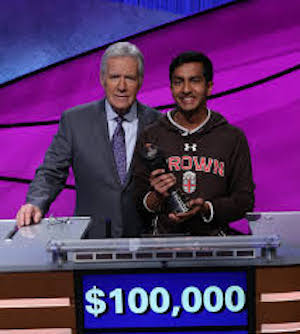
    NEW YORK(TIP):  Indian American teenager Dhruv Gaur has won the $100,000 Jeopardy college quiz championship.

    The first-year student at Ivy League Brown University emerged the champion on April 20thin the two-day final round of the college edition of America’s most popular quiz show televised nationwide.

    He faced another Indian American, Rishab Jain, in the semi-final round on April 25th before getting to the finals.

    Mr. Gaur had scored a perfect score of 1,600 in the national-wide college entrance exam, Scholastic Aptitude Test.

    About his plans for the winnings, a Jeopardy news release quoted him as saying, “I’m just going to save it until I need it for grad school or to pursue an opportunity I might really want in the future.”

    “My little brother is really interested in investing, so I’ll give him some, so he can give the stock market a go,” he added.


  • Indian Origin Drug Dealer Jailed in UK for Conspiring to Supply Cocaine

    Indian Origin Drug Dealer Jailed in UK for Conspiring to Supply Cocaine

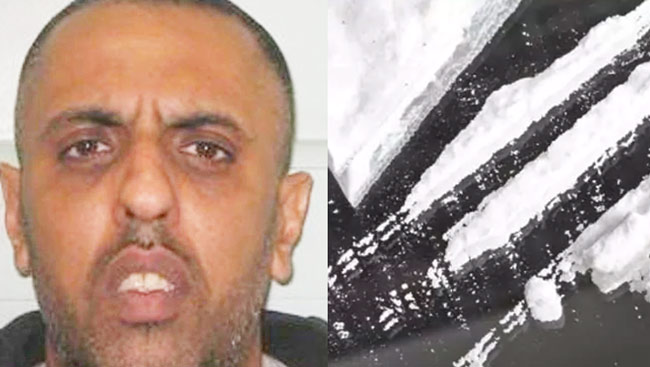
    LONDON(TIP):  An Indian origin drug dealer and partner has been jailed for nearly eight years by a UK court for conspiring to supply 10 kg of cocaine in London.

    Gurdip Samra, 44, was arrested in November last year as part of a joint operation by the UK’s National Crime Agency or NCA and Scotland Yard’s Organised Crime Partnerships or OCP.

    The officers first arrested Samra’s accomplice, Mark Lammin, after accosting him as he carried 10 kg of cocaine in a large hold all in Surrey, south-east England.

    A short time later, officers stopped a black Range Rover, which was parked in the vicinity of his planned drugs handover and arrested Samra.

    The duo was sentenced at Kingston Crown Court earlier this week, with Samra jailed for seven years and eight months and Lammin sentenced to six years and six months behind bars.

    “The supply and trafficking of drugs is a business which relies on cash flow the loss of an expensive commodity will stall transactions on both sides, creating a lack of trust between crime groups, Matt McMillan from the Organised Crime Partnership said in a statement.

    During a search of 44-year-old Lammin’s home address in London, officers found a stun gun and also charged him with possessing a prohibited weapon. He and Samra were both charged with conspiracy to supply Class A drugs.


  • Indian American dentist Amishi Patel sentenced for unnecessary treatment and identity theft

    Indian American dentist Amishi Patel sentenced for unnecessary treatment and identity theft

    SACRAMENTO (TIP):  An Indian American dentist, Amishi Patel, from Daly City, California, has been sentenced to 20 months’ imprisonment after she was found guilty of performing unnecessary dental works on several of her patients.

    According to the court document, Amishi Patel has been serving as a part-time dentist at Campus Heights Dental Care in the area. During April 2014 and May 2014, she was found doing unnecessary medical treatment to eight of her patients.

    In one instance, the San Mateo County District Attorney Steve Wagstaffe said, a 16-year-old patient was asked to undergo 16 filling. After she went through eight painful fillings, her parents became suspicious about the treatment given to their daughter.

    On seeking a second opinion from another dentist, the parents were shocked to learn that their daughter needed no filings at all as she had zero cavity. They were also made aware about how poorly Patel performed the filling, which required replacement.

    More cases of unnecessary dental surgeries came to light after the girl’s family filed a complaint with Dental Board of California. The Department of Insurance contacted the Dental Board, and after an investigation, it was found that Patel was engaged in insurance fraud.

    She was charged in February 2017 and a judge ordered her not to practice dentistry as a condition of her release on bail.

    But she altered the order to make it look like it has been cancelled and applied for jobs and even got one in Fremont. During this period, she treated four patients, which is a gross violation of the court order.

    According to the Attorney’s office, Patel used the license number of a dentist who had a similar name and applied for several dentist jobs in Fremont. Just before getting caught the second time, she used a fake identity at an interview with an undercover officer, prosecutors said.

    San Mateo County Superior Court Judge Donald Ayoob sentenced her on May 1stmorning to the 20-month jail sentence and eight years of probation. A restitution hearing in the case has been set for June 22, Wagstaffe said.


  • Indian American founder of technology firm fined for underpaying H-1B workers

    Indian American founder of technology firm fined for underpaying H-1B workers

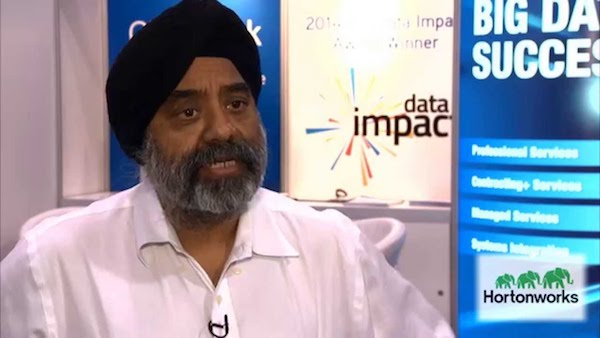
    SACRAMENTO(TIP): Indian American Mani Chhabra, founder of a technology firm in East Bay, California, has been asked by the US Department of Labor to pay $175,000 to 12 Indian H-1B employees after the federal agency found that they were hugely underpaid.

    According to an official release from the department, Cloudwick Technologies, founded by Mani Chhabra, hired Indian workers on H-1B visas, offering guaranteed salaries of up to $8,300 per month. The department alleged that the company paid them just $800 per month, which is a violation of the work visa program.

    “Investigators found that the company paid impacted employees well below the wage levels required under the H-1B program based on job skill level, and also made illegal deductions from workers’ salaries,” the department said. “As a result, some of the H-1B employees that Cloudwick brought from India with promised salaries of up to $8,300 per month instead received as little as $800 net per month.”

     “Cloudwick has never brought resources from India,” he said. “All the resources are master’s students that have educated in U.S. and then we hired and trained them,” Chhabra said.

    Chhabra added that the issue came under the radar of the department only because there was changes in visa categories that it imposed. He said that $800 was paid to employees during their training period. He also acknowledged that Cloudwick Technologies had deducted money for four of its H-1B employees for advanced training, which is illegal.

    “This is not allowed for H-1B and we paid them back wages,” Chhabra said.

    The Department of Labor is yet to reveal how the H-1B abuse came to it notice, nor has it provided details about how long the Indian H-1B workers have been employed with Cloudwick Technologies.

    According to the official website of Cloudwick, it is a provider of bimodal digital business services and provides solutions to the Global 1000 companies.


  • Indian American youths receive Prudential Spirit of Community Awards

    Indian American youths receive Prudential Spirit of Community Awards

    WASHINGTON D. C. (TIP): Six Indian American teenagers were among winners of the 23rd annual Prudential Spirit of Community Awards in Washington, DC, on April 30th.

    The Indian Americans honored were Aditya Sidapara, who is a resident of Phoenix, AZ; Sivani Arvapalli, of South Windsor, CT; Vani Sharma, Fishers, IN; Anjali Chadha, Louisville, KY; Praneeth Alla, Exton, PA; and Shrey Pothini, 14, of Savage, MN.

    In all, 100 top youth volunteers from across the country were honored at the event.

    Each recipient received $1,000 in cash prize and personal congratulations from Olympic gold medalist and World Cup champion Lindsey Vonn.

    The award ceremony and gala dinner reception was held the Smithsonian’s National Museum of Natural History.

    Sidapara, 18, a senior at BASIS Scottsdale, co-founded an educational initiative that is teaching computer coding to students living in four refugee camps in East Africa, aiming to lift them out of poverty and help meet the worldwide demand for skilled software engineers.

    Arvapalli, 13, an eighth-grader at Timothy Edwards Middle School, was nominated by the Indian Valley Family YMCA. He volunteers with a group that has raised nearly $94,000 for child-focused charities by conducting talent shows and organizing benefit dinners and entertainment events.

    Sharma, 11, a sixth-grader at Sand Creek Intermediate School, has been visiting the Ronald McDonald House at Riley’s Children’s Hospital in Indianapolis regularly for several years to prepare meals and entertain the families of hospitalized children. She also conducted a collection drive to provide books and toys to the kids at the facility.

    Chadha, 15, a junior at duPont Manual High School, founded a nonprofit organization to educate and empower minority high school girls in the world of technology, and began her mission last summer by offering 10 girls a seven-week program of classroom training and real-world experience.

    Praneeth Alla, 16, a junior at The Episcopal Academy, spent more than 1,500 hours creating a product for a nonprofit benefiting rural villages in India, improving its ability to collect and manage donations, publicize projects and track income and expenditures. He also founded a network of youth clubs to raise money to improve the education of children in India.

    Pothini is an eighth-grader at Eagle Ridge Middle School. A community organizer, he has hosted a city-wide “day of service” for three years in a row.

    The Prudential Spirit of Community Awards program is sponsored by Prudential Financial in partnership with the National Association of Secondary School Principals (NASSP).

    Youth volunteers in grades 5-12 were invited to apply for 2018 Prudential Spirit of Community Awards last fall through schools, Girl Scout councils, county 4-H organizations, American Red Cross chapters, YMCAs and affiliates of Points of Light’s HandsOn Network. More than 29,000 middle level and high school students nationwide participated in this year’s program.


  • Three Indian Americans die in Queens, NY, house fire

    Three Indian Americans die in Queens, NY, house fire

    QUEENS VILLAGE, NY(TIP): Indian American mom and grandparents died in Queens Village, NY, as a house was gutted by a fast-spreading fire. Two children were rescued by firefighters.

    The New York City Fire Department Deputy Chief Michael Gala identified the deceased as Harleen “Manni” Maggo and her paternal grandparents Ragvir Kaur-Kainth, 82, and Pyara Kainth, 87.

    He said that Maggo’s 8-year-old girl and a 6-year-old boy were trapped in the building but were rescued.

    The girl remains in critical condition, while the boy’s condition is stable. Both are currently receiving medical treatment at Nassau University Medical Center, said fire officials.

    According to media reports, the fire broke just before midnight on Saturday. There were seven other relatives of the family inside the home, who were there to celebrate an upcoming wedding in the family.

    Further the media report stated that the second floor of the house was completely engulfed in flames as people ran out of the building. Voices of people who were still trapped could be heard from outside.

    One of the eyewitnesses told the media that he saw one occupant jumping out from the second floor of the burning building.

    The other relatives who were inside the building are reportedly out of danger, though some of them suffered serious injuries.

    Maggo, who lived with her husband in their newly bought house in Hollis, was visiting her grandparents as the family was celebrating an upcoming marriage of one of their relatives.

    According to Param Singh, brother of Maggo, she came out of the burning house but decided to make a re-entry after knowing that her grandparents are still trapped inside.

    He also added that her children were doing better with one still breathing with assistance on April 29thafternoon.


  • Indian American Cancer Scientist Put on Leave after Harassment Allegations

    Indian American Cancer Scientist Put on Leave after Harassment Allegations

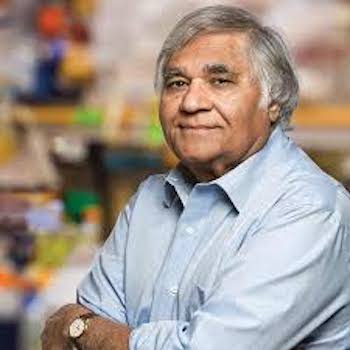
    WASHINGTON (TIP):  Top Indian American scientist Inder Verma, considered as one of the world’s leading authorities on gene therapy and cancer, has been placed on administrative leave following allegations of “inappropriate conduct” against him.

    Mr. Verma, 70, a scientist at the prestigious Salk Institute for Biological Studies in California, has been placed on administrative leave, pending the outcome of the investigation into the allegations against him.

    The institute did not give any reason for suspending Mr. Verma.

    The institute has hired The Rose Group, a San Diego-based international employment law and consulting firm, to investigate allegations, not yet made public, that were reported to the institute in February.

    Mr. Verma, who is also on the boards of several Indian scientific institutes, has denied the allegations.

    “Recently, the institute became aware of allegations concerning Inder Verma. Consistent with Salk’s policies governing workplace conduct, the institute has undertaken a formal investigation that is being led by an independent outside party,” Dan Lewis, chairman of the Salk Institute for Biological Studies said in a statement.

    Mr Verma has been placed on administrative leave, pending the outcome of the investigation. He will not be performing scientific or administrative roles on behalf of the institute during this period,” he said, without referring to the nature of the investigation.

    The action against Mr Verma comes nearly four months after he was placed on temporary leave as editor of the Proceedings of the National Academy of Sciences, a prestigious scientific journal.

    Mr Verma, who has denied the allegations, told that the leave had stemmed from the lawsuits that Salk professors filed against the Institute in July.

    “I have never used my position at the Salk Institute to take advantage of others. I have also never engaged in any sort of intimate relationship with anyone affiliated with the Salk Institute, he said in a statement to Science through his attorney.

    “I have never inappropriately touched, nor have I made any sexually charged comments, to anyone affiliated with the Salk Institute. I have never allowed any offensive or sexually charged conversations, jokes, material, etc. to occur at the Salk Institute, said Mr Verma who earned his MSc in Biochemistry from the Lucknow University.

    Denying misconduct allegations Mr Verma said, “I believe that it is inappropriate for an individual in a position of authority to engage in any intimate relationship with a direct report or to use that position of authority to take advantage of others.”

    In 2005, he was appointed as foreign fellow by the Indian national Science Academy.

  • 35th Annual Frederick Law Olmsted Awards Luncheon Raises Funds for Central Park Conservancy

    35th Annual Frederick Law Olmsted Awards Luncheon Raises Funds for Central Park Conservancy

    Former Mayor Michael Bloomberg donates $4 million

    NEW YORK CITY(TIP): The Women’s Committee, founded in 1983, held their 35th annual Frederick Law Olmsted Awards Luncheon yesterday, which is also appropriately known as the hat luncheon. The Committee’s purpose is to raise money and awareness for the Central Park Conservancy.

    The Indian Panorama was informed of the plans of the Committee for this year. The Committee is planning to raise at least $5 million for a $10 million project to restore the Conservatory Garden, located at 5th Avenue and 105th Street. It was last restored in 1983, the same year the Committee was founded. The upcoming renovation is set to update the paths and plazas throughout the garden, in addition to infrastructural changes.

    Prior projects made possible by the Women’s Committee include the recreation of the urns at Bow Bridge, the reconstruction of the Charles A. Dana Discovery Center and the renovation of Safari Playground. The Women’s Committee is responsible for raising 15 percent of the Central Park Conservancy’s $67 million budget.

    Former New York City Mayor Michael Bloomberg donated $4 million.

  • Miani Welfare Society is Expanded: Larger Participation Mooted for Greater Good

    Miani Welfare Society is Expanded: Larger Participation Mooted for Greater Good

    RICHMOND HILL, NY(TIP): On April 29, a meeting of Miani Welfare Society was held at Liberty Palace here to welcome new members. The meeting was attended by a number of members who welcomed the idea of expanding the Society with a view to doing good to the community through a larger participation.

  • America’s Smartest Family Attracts Big Audiences

    America’s Smartest Family Attracts Big Audiences

    NEW YORK(TIP): Zee TV’s original production – Americas’ Smartest Family, has been attracting large audience numbers all season. Now in its 8th episode, and heading towards the semi-finals, the show, which pits families against families in a unique quiz format, is poised to become the number 1 show in its time slot and category.

    Hosted by 23-year-old YouTube sensation Zaid Ali, “America’s Smartest Family” is a unique mashup of the American household favorites “Family Feud” and “Jeopardy,” but with that special ZEE TV twist that celebrates its South Asian heritage. Complete with a diverse set of categories and a buzzer, each episode will feature five challenging in-studio question rounds, testing pre-screened contestants on their ability to answer quickly and more importantly – their ability to work as a team. Only the fastest, most well-rounded family will get to take home the crown.

    Round one consists of four questions, with a dice roll deciding which family goes first. Participants can choose from one of five topics – including science, math, arts, history and geography. Once a category is chosen, it may not be selected for the remainder of the round. During the first round, 100 points will be awarded for every correct answer. There are no deductions for wrong answers until round three and four, where a mistake can cost a team 100 points for every incorrect answer.

    As the game progresses, questions become increasingly difficult. By rounds three and four – each correct answer is worth 200 points. During the fifth and final round, the game takes a turn and host Zaid Ali spices things up by offering clues. If the team answers correctly without a clue, a maximum of 1000 points is awarded. If the family choses to get clues, each clue costs them 200 points. At the end of five rounds, scores may vary from -2400 to 5500. In the event of a tie, an extra tie-breaker round will identify the winner.

    Produced by leading firm, Touchdown Productions, the show was conceptualized as a Zee Originals property and produced by Touchdown Productions. The production was done over a one-month period in a custom-built studio accommodating the set. A crew of over 35 apart from the post production team and knowledge partners worked for almost 6 months to bring the show to life.

    “We are very happy with the result of this first ever endeavor and look forward to producing multiple seasons of the show,” said, Rahul Walia, Executive Producer and CEO of Touchdown Productions. “the effort of the crew, Director and channel team was a winning combination,” he added.

     “I’m very happy with the outcome of the show whether it is on the production end, or the sponsorship end. With this we can easily allude to Zee TV’s initiative of being the first movers in the market. I am looking forward to learning who the winning family turns out to be,” said Sameer Targe, Head of Americas for Zee TV.

     “America’s Smartest Family” is broadcast every Saturday at 9:00 p.m. EST; 9:30 p.m. PST; and 9:00 p.m. AST on ZEE TV.

    To learn more about “America’s Smartest Family,” visit https://www.zeeoriginals.com/americas-smartest-family/

    About Zee Network

    Zee Entertainment Enterprises Limited is one of India’s leading television media and entertainment companies. It is amongst the largest producers and aggregators of Hindi programming in the world, with an extensive library housing over 222,000 hours of television content. With rights to more than 3,818 movie titles from foremost studios and of iconic film stars, ZEE houses the world’s largest Hindi film library. Through its strong presence worldwide, ZEE entertains over 1 billion viewers across 172 countries.

    About Zee TV USA

    Zee TV USA was the first ever Hindi General Entertainment channel to be launched in the US way back in 1998. Since the start of the journey more than 2 decades ago, Zee now has 43 networks and full time dedicated work force across 5 different locations all across the North America and Caribbean. Zee TV USA was the first Asian channel to launch in HD. Zee TV was the first Hindi network to be measured by Nielsen in the US, Zee TV is also the most widely available Hindi General Entertainment network on all major DTH, Cable, Telco and IPTV platforms with availability over 86 million US households.


  • “Our revered institutions are under severe threat; It is time to wake up”! George Abraham at the AICC Plenary session

    “Our revered institutions are under severe threat; It is time to wake up”! George Abraham at the AICC Plenary session

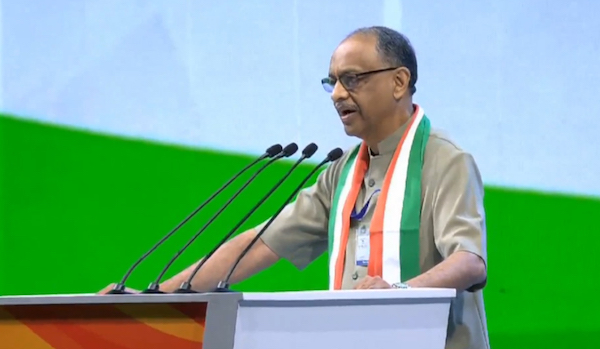
    NEW YORK (TIP): “Many of the Colonial Nations that gained independence from their Colonial masters faltered because they failed to build Institutions. However, India under the leadership Nehru, built institutions that provided security, safety, and justice for all its citizens”, said New Yorker George Abraham, Vice-Chairman of the Indian Overseas Congress. He was addressing the All India Congress Committee Plenary session which was held in New Delhi in March 2018. “Today, these revered Institutions are under growing threat, and it is time for us to wake up and deal with it. Freedom of Conscience is fundamental to all freedoms. It is innate and God-given; nobody has any right to trample it” he was alluding to the growing attacks on people of faith and other minorities in the country. “The NRI community is indeed concerned about these and other issues plaguing the country, and we will work together with AICC to coordinate our actions while working as goodwill ambassadors in the U.S. to help to forge stronger ties” added Mr. Abraham.

    George Abraham speaking at the AICC Plenary session.

    Mr. Abraham also thanked Sonia Gandhi for inaugurating the Overseas Congress in 2001 and applauded the appointment of Mr. Sam Pitroda as the Chairman of the newly created ‘Overseas Congress Department’ under AICC.


  • IDC Conference Session on “Indo-Caribbeans in the USA” at St. John’s University

    IDC Conference Session on “Indo-Caribbeans in the USA” at St. John’s University

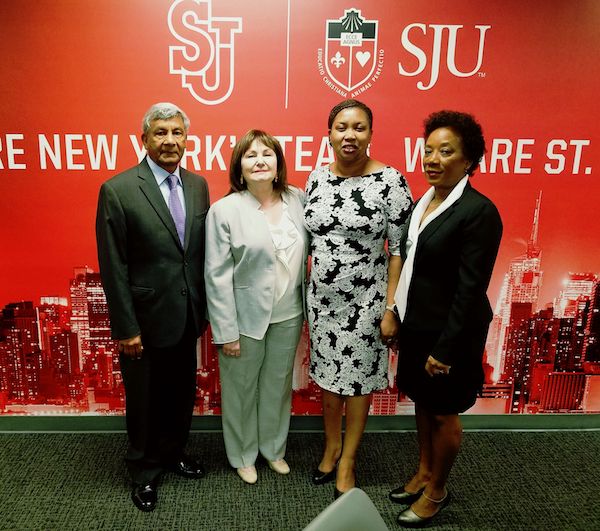
    QUEENS, NY(TIP): The Indian Diaspora Council International(IDC) organized and coordinated the May 3, 2018 conference session on “Indo-Caribbeans in USA: Achievements, Opportunities & Challenges”whichwas part of 9thAnnual CLACS Multidisciplinary Symposium on Immigration with the theme “The Rise of Transnational Populism: A Multidisciplinary Approach”.

    The symposium was held on May 2-3, 2018 at St. John’s University at the Queens Campus and sponsored by St. John’s University Center for Latin American and Caribbean Studies (CLACS) and by the Office of the Provost; the Diversity, Equity, and Inclusivity Lecture Series; Office of Student Affairs; Office of Global Studies; Department of Languages and Literatures; and the Graduate School of Health Sciences at Touro College.

    The session on “Indo-Caribbeans in USA: Achievements, Opportunities & Challenges” was chaired by Ashook Ramsaran, president of IDC, who made a presentation on historical background, migration to the USA, achievements, opportunities, challenges, issues of interest and concerns, trends and the future. Dr. Ashford Maharaj, Accounting and Finance professor at Berkeley College, New York, spoke on compliance with the Foreign Account Tax Compliance Act (FATCA), an important development in U.S. efforts to combat tax evasion by U.S. persons holding accounts and other financial assets offshore. Mr. Vishnu Mahadeo, longtime community advocate spoke about community needs, voter registration, and becoming more proactive to address people’s needs and wellbeing.

    In an earlier session on May 3, Dr.Sharla Madho-Khargi, a clinical psychologist; director at a New York state mental health facility, adjunct professor at the City University of New York, andDirector, Community Based Rehabilitation, Indian Diaspora Council International, made a presentation on “Mental Health Challenges in the Caribbean Community (Guyana, Trinidad, Jamaica etc)”. This was part of the session on “Serving Increasing Minority Adult Populations in Healthcare Contexts”.

     On May 2, Hon. Kiva Clarke (Consul General, Trinidad & Tobago), spoke at inaugural session “Distinguished Diplomats’ Roundtable Discussion”. Otherdiplomats participating included: Hon. Roseann St. Hill-Billouin (Dep. Consul General, Trinidad & Tobago); Hon. Álvaro Rodrigo Pinilla Romero (Consul General of Bolivia in New York); Hon. Maria Nieto (Consul General of Colombia in New York); Hon. Carlos Castillo (Consul General of Dominican Republic in New York); Hon. Diego Gomez Pickering (Consul General of Mexico in New York); Hon. María Teresa Merino de Hart

    (Consul General of Peru in New York)

    For more information contact: Ashook Ramsaran at AshookRamsaran@gmail.com  Mobile (USA) +1 917 519 5783

     Indian Diaspora Council International (IDC), established in 1997, is an international non-profit organization with global affiliates and membership in 21 countries with the objective to embrace, engage, and enhance the shared heritage, aspirations, and interests of persons of Indian origin with optimum inclusivity.


  • Irada, produced by New York based Falguni & Chintu Patel, wins 2 National Film Awards

    Irada, produced by New York based Falguni & Chintu Patel, wins 2 National Film Awards

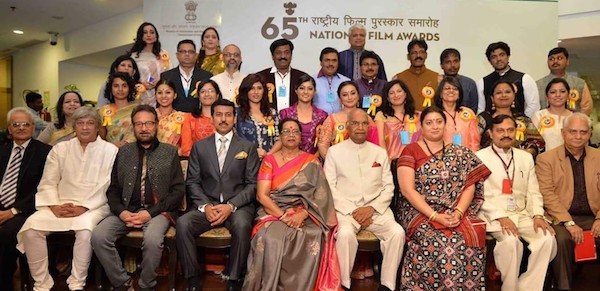
    NEW DELHI(TIP): ‘Irada’, produced by New York-based Falguni and Chintu Patel, was presented the Best Film on Environment award at The National Film Awards 2018 ceremony at Vigyan Bhavan in New Delhi on May 3.

    ‘Irada’ (meaning ‘Resolve’) also won the Best Supporting Actress award for Divya Dutta.

    The prestigious annual awards were presented by India’s President Ram Nath Kovind and Information & Broadcasting Minister Smriti Irani.

    President Kovind said on the occasion, “This is a special moment for all of you.” He added that cinema is “an expression of Indian soft power and has a transcontinental footprint.”

    The Best Film on Environment Conservation/Preservation award for ‘Irada’ was received by Irada Entertainment founder and partner Falguni Patel from the I& B minister, cheered by Chintu Patel, in the august hall of Vigyan Bhavan.

    ‘Irada’, that also stars Naseeruddin Shah, Arshad Warsi and New York-born actor Prashantt Guptha, raises the contemporary ecological issues of uranium poisoning, reverse boring, and fertilizer poisoning due to the green revolution and their adverse impact on the people who live in India’s Malwa region, which extends to parts of Madhya Pradesh and Rajasthan.

    Chintu and his brother Chirag Patel are co-chairmen of Amneal Pharmaceuticals, the fifth largest generics drugs firm in America.

    Chintu and Chirag were The South Asian Times Person of the Year 2017 and were felicitated by the newspaper at a gala function in January this year on Long Island, NY.

    Pleased with the award for ‘Irada’, the first film from Irada Entertainment, Chintu Patel said: “We will be making more content-based films, making more web series and growing it into certain other media outlets over a period of time.”


  • Air India’s Pragmatism before Sale

    Air India’s Pragmatism before Sale

    By Harjap Singh Aujla

    Perhaps the most exploited airline in the world is our Air India. The powerful politicians and influential bureaucrats of our country have been overburdening this commercial venture with unqualified people of their choice far over and above the needs of the airline. Their emoluments were also on the higher end. This resulted in overstaffing of the venture. In addition, all the bigwigs in politics and bureaucracy were getting free rides in premium class at the expense of this national flag carrier. The cumulative losses kept mounting and at one point the government started toying with the idea of its privatization. But the lobby of the exploiters was so powerful, that every time, the government floated this idea, it was shot down by those very folks, who floated the idea. Such developments gave birth to indiscipline. The pilots frequently went on strike and so did the air crew and the ground staff. Accountability was a casualty. No one ever cared for the elusive profitability. Every exploiter posed as a God father. The previous prime minister was an economist, he thought the emancipation was in its disinvestment. But most within the corridors of power thought otherwise. This has been happening for half a century. Some of the redundant staff has retired long ago. Some are still on the payrolls and adding to the losses.

    The routes of operation were not as a result of legitimate research and analysis. The government made politically correct, but most of the time financially ruinous decisions and Air India was made to tamely implement and face the music. Due to the political decisions, some of the most profitable routes were discontinued in favor of populous loss-making routes. The justification invariably was that all routes were losing money. Even the routes with 90% passenger load were dubbed unprofitable. No one went into the reasons of such losses. The primary reason was terrible overstaffing and an army of free travelers. Some minor decisions with cumulative effect included expensive food from well-known places rather than cheaper, but more delicious food from lesser known places. It takes two hours between New Delhi and Mumbai, many times a full meal was served on this route too. Food from expensive cities was served even to passengers from cities known for their food. Most airlines run special cargo flights to business-friendly cities, which are profitable. Air India never explored such innovative ventures. On some of the important flights the routes were longer than required. As an example, the Bombay-Frankfurt-Los Angeles flight completed one way in 22 hours. Due to customary late flying by Air India the 24-hour cycle was always exceeded, this resulted in cancellation of a good profitable flight.  Air India was on the route of self destruction. In the most expensive cities like New York, there was excessive staff. The government too has finally realized the writing on the wall.

    When reality dawned on Air India that its sale price may not be enough to stay afloat. A long overdue course correction has started. But the all-powerful government was still in populous mode. Finally, it appears that Air India is putting its foot down and making decisions conducive to profitability. Some routes are being altered to touch load centers. Some routes on which profitable business was witnessed for six days a week, but there was scope for more flights, those routes are seeing augmentation of frequency. The hub and spoke system is not suitable for countries like India, there is scope for a change. Several flights have more passengers from specific spoke stations than hubs, they may get justice now. Such stations were so far ignored, and the hub system was brutally enforced. Now there is a scope for change. There is a possibility of Air India turning the corner during the period leading up to the fall of hammer. Such a scenario can potentially fetch a good price. There is plenty of real estate owned by Air India in the most expensive areas of India. That will help too. Let us keep our fingers crossed. Best of luck to Air India.

    (The author is a regular contributor to The Indian Panorama. He writes on diverse issues with equal felicity. He can be reached at harjapaujla@gmail.com)

  • North Texas student arrested for planning ‘ISIS-inspired’ mass shooting at mall

    North Texas student arrested for planning ‘ISIS-inspired’ mass shooting at mall

    FRISCO, TX(TIP): A North Texas student has been arrested for planning an “ISIS-inspired” mass shooting at a shopping mall, Collin County officials said in a news release.

    Plano resident Matin Azizi-Yarand, 17, was arrested for criminal solicitation of capital murder and making a terroristic threat when officials say he planned a mass shooting at Stonebriar Centre in Frisco and solicited others to assist him in the attack, which was planned for mid-May.

    Collin County officials said Azizi-Yarand was inspired by ISIS.

    In Dec. Azizi-Yarand began communicating online with an FBI Confidential Human Source about his desire to either “make hijah [travel]” or to conduct a terrorist attack within the United States, an arrest affidavit said.

    In January, he began communicating with an undercover FBI agent, to whom he joked about getting a knock on his door and getting big smiles from men in suits.

    When discussing potential places for the attack, he mentioned school as the “perfect place for an attack,” the affidavit said. Azizi-Yarand wrote a speech with his “message for America,” in which he described his plan to attack the shopping mall.

    Azizi-Yarand sent more than $1,400 to other individuals to buy weapons and tactical gear, the news release said.

    “We are fortunate that the brave men and women of local and federal law enforcement work around the clock to prevent acts of terrorism and mass shootings,” said Collin County District Attorney Greg Willis. “I’d like to thank the FBI’s North Texas Joint Terrorism Task Force and the Frisco and Plano Police Departments for their efforts in this case and their vigilance in protecting the citizens of Collin County.”

    This case will be prosecuted by the Collin County District Attorney’s Office. If convicted, the 17-year-old could face life in prison.

    Azizi-Yarand is in custody with bonds totaling at $3 million.

  • May 04 New York & Dallas Print Editions

    May 04 New York & Dallas Print Editions

    [vc_row][vc_column][vc_column_text]

    Print Replica ~ Digitally

    E-Editions

    [/vc_column_text][/vc_column][/vc_row][vc_row][vc_column width=”1/3″][vc_custom_heading text=”New York Edition” font_container=”tag:h2|text_align:center” google_fonts=”font_family:Istok%20Web%3Aregular%2Citalic%2C700%2C700italic|font_style:700%20bold%20regular%3A700%3Anormal” link=”url:https%3A%2F%2Fwww.theindianpanorama.news%2Fwp-content%2Fuploads%2F2018%2F05%2FTIP-May-4-NYC.pdf|||”][vc_single_image image=”92593″ img_size=”full” add_caption=”yes” alignment=”center” onclick=”custom_link” link=”https://www.theindianpanorama.news/wp-content/uploads/2018/05/TIP-May-4-NYC.pdf”][/vc_column][vc_column width=”1/3″][vc_custom_heading text=”Dallas, Texas Edition” font_container=”tag:h2|text_align:center” google_fonts=”font_family:Istok%20Web%3Aregular%2Citalic%2C700%2C700italic|font_style:700%20bold%20regular%3A700%3Anormal” link=”url:https%3A%2F%2Fwww.theindianpanorama.news%2Fwp-content%2Fuploads%2F2018%2F05%2FTIP-May-4-Dallas-TX.pdf|||”][vc_single_image image=”92592″ img_size=”full” add_caption=”yes” onclick=”custom_link” link=”https://www.theindianpanorama.news/wp-content/uploads/2018/05/TIP-May-4-Dallas-TX.pdf”][/vc_column][vc_column width=”1/3″][vc_single_image image=”82828″ img_size=”medium” alignment=”center” onclick=”custom_link” link=”https://www.theindianpanorama.news/advertising-media-kit-portal-indian-panorama/”][vc_single_image image=”82829″ img_size=”medium” alignment=”center” onclick=”custom_link” link=”https://www.theindianpanorama.news/advertising-media-kit-portal-indian-panorama/”][/vc_column][/vc_row][vc_row][vc_column][td_block_ad_box spot_id=”custom_ad_3″ tdc_css=””][/vc_column][/vc_row][vc_row][vc_column width=”2/3″][vc_custom_heading text=”Lead Stories This Week” font_container=”tag:h2|text_align:center” google_fonts=”font_family:Istok%20Web%3Aregular%2Citalic%2C700%2C700italic|font_style:700%20bold%20regular%3A700%3Anormal” link=”url:https%3A%2F%2Fwww.theindianpanorama.news%2F|||”][td_block_5 separator=”” limit=”8″ tdc_css=””][/vc_column][vc_column width=”1/3″][vc_widget_sidebar sidebar_id=”td-default”][/vc_column][/vc_row]

  • Karnataka election: voters to choose between tainted leadership and clean governance

    Karnataka election: voters to choose between tainted leadership and clean governance

    By George Abraham

    “In contrast to the BJP rule, the Congress Party under the leadership of Siddaramaiah has fulfilled many of the promises that were made to the people of Karnataka. Key among them is the government’s social welfare policy”, says the author.

    Interacting with media during a tour of Lingayat and Dalit mutts in central Karnataka, Amit Shah, the national President of BJP began making allegations against the current Siddaramaiah government.

    “Recently, a Supreme Court judge said if ever there was a competition for the most corrupt government, then Yeddyurappa government will get number one,” shocking Yeddyurappa who was seated near him. It may have been a faux pas by Mr. Shah who immediately tried to control the damage. Congress Party wasted no time in seizing the original quote and expressing their total agreement.

    A few weeks later, Karnataka has witnessed the tainted Reddy brothers sharing a dais with Yeddyurappa and Madhya Pradesh Chief Minister Shivraj Chouhan at a rally in Molakalmur. It appears that Mr. Janardhana Reddy who came out of jail on bail from the noxious mining scam is back along with the Bellary gang asking people to vote for BJP. The party has also given tickets to his two brothers Somashekhara Reddy and Karunakara Reddy despite the statement by Mr. Shah that BJP has no links with Reddy brothers.

    In 2012, India’s Supreme Court ordered the CBI to probe charges of corruption against B S Yeddyurappa. That order followed a court-appointed committee’s suggestion that Mr. Yeddyurappa be investigated for alleged abuse of power. The anti-corruption report had indicted him in a mining scandal that cost the exchequer more than 3 Billion dollars. He also holds the distinction of being the first sitting Chief Minister of a State to spend time in jail.

    All the BJP talk about corruption in the opposition camps seem to fly in the face of what has happened under BJP rule in Karnataka. With openly courting the Bellary gang, Yeddyurappa is once again signaling to the Karnataka voters that nothing has been changed regarding their attitude towards corruption or abuse of power. Mr. Shivraj Chouhan, whose administration was embroiled in the VYPAM scandal in Madhya Pradesh, sharing the dais with Yeddyurappa and Janardhana Reddy may only reinforce the notion that corruption is endemic in the system and across the country and BJP pays merely lip service in countering it.

    Rahul Gandhi, President of the All India Congress Committee, tweeted the following in response to the latest developments: “When in power, Yeddyurappa and Reddy Brothers looted Karnataka. Our government brought them to justice. Now Modi is trying to take 8 of them from jail, into the Vidhan Sabha. This is an insult to every honest citizen, to Karnataka and to the spirit of Basavanna.”

    Congress High Command appears to be following a ‘Captain Model,’ strategy in Karnataka giving Chief Minister Siddaramaiah, enormous latitude in decision making as in regards the running of the election campaign. The decision may be based on the premise that strong regional and local leadership is critical in winning elections as in Punjab where Captain Amarinder Singh wrested away the power from Akali Dal in the last election where his charisma, leadership and independent decision making were all at full display.

    In contrast to the BJP rule, the Congress Party under the leadership of Siddaramaiah has fulfilled many of the promises that were made to the people of Karnataka. Key among them is the government’s social welfare policy.Within an hour of oath-taking as Chief Minister, he has implemented the food subsidy scheme to give 30kg rice per month at Re 1 per kg to 10.2 million families below poverty line across the State with a plan outlay of Rs.4300 crore. The State later on added Wheat, Ragi, and Jowar to the scheme. The State also started distributing 150ml milk thrice a week to 6.5 million children studying in state-run and aided schools across the state to check malnutrition and prevent dropouts.

    Under the Bhagyalakshmi and Kuteer Jyoti schemes, the state government waived off Rs.268 crore arrears due from two million energy consumers in the rural areas. It also waived off Rs. 1340 crore loans with interest borrowed by a million SCs, STs and OBCs and minorities for various economic activities and increased the housing subsidized loan to economically weaker sections to Rs. 120,000 per unit from Rs. 75,000 under the Rajiv Gandhi Housing Corporation.

    Programs and projects like the opening of the Indira Canteens, the introduction of the new economic policy that focused on Industries, construction of Medakettu Dam, Introduction of Bike Ambulance and the Scheme for Organ Donation etc. have shown the people of Karnataka that a government committed to the service of its people could still deliver results. Most importantly, there have been no significant financial scandals during its tenure that stands in stark contrast to the Yeddyurappa rule.

    Siddaramaiah in his tweet recently challenged Prime Minister Modi to walk the talk when it comes to dealing with corruption. He called on Modi to “appoint Lok Pal, investigate Judge Loya’s death, investigate the astronomical rise of Jay Shah, and appoint an untainted person as your CM candidate.”

    The fate of Karnataka is said to be hanging on the swing voters who are actively weighing in on the promises made on the campaign trail. Janata Dal (S), the third party in the puzzle may yet to play a critical role if there is a hung Assembly. For the Congress Party, stakes are very high in Karnataka. A win by the party in Karnataka will provide a huge momentum towards the upcoming elections in Madhya Pradesh, Rajasthan, and Chhattisgarh and eventually towards the 2019 general election. However, the party may require a better post-election strategy to prevent a repeat of what has been transpired in Goa, Manipur, and Meghalaya!

    (The author is a former Chief Technology Officer at the United Nations and Vice-Chairman of the Indian Overseas Congress, USA)


  • The Rocky Road to 2019

    The Rocky Road to 2019

    Concrete steps are needed to defuse crises that could disrupt India’s political and social equilibrium

    By M.K. Narayanan
    The authorities also need to be aware that as various State elections draw near, newer threats are likely to emerge. Among them are cyber threats. India is possibly the third most vulnerable country today from the point of view of cyberattacks. Many experts are of the view that as the digital economy expands, India will confront the specter of cyberattacks.

    As 2019 and the general election beckon, the situation within the country appears far from reassuring. Several events over the past few months seem to presage that there is worse to follow. Protests and agitations have a life of their own and underestimating their potential could be cause for grief. Hence, it might be worthwhile for the nation’s leaders to pay heed to the ancient Chinese proverb, “the wind sweeping through the tower heralds a storm rising in the mountain” and take anticipatory steps.

    Lowdown on internal security

    The authorities need to analyze why simultaneous upheavals are taking place on different planes across the country. Each day, a concatenation of events and situations are contributing to feelings of deep unease. Take internal security, for instance. The authorities may claim that the situation is stable, but the daily litany of violence tells a different story. Jammu and Kashmir is a good example where the situation has been steadily deteriorating. The past year has witnessed an increase in casualties, of civilians and security personnel, an upsurge in terrorist violence, a rise in cross-border terrorism and increased infiltration from Pakistan. Despite the surgical strikes by India, a palpable fear syndrome prevails in the areas bordering Pakistan.

    Likewise, claims made latterly of the eclipse of the Maoist menace — there are reports of scores of Maoists having been killed in Maharashtra’s Gadchiroli district in end-April — are clearly unconvincing. Maoist violence is not so prevalent in areas where it was once rampant; while the kill-ratio of Maoists to security force personnel appears to have gone in favor of the security forces, the capacity of Maoists in carrying out selective violence has not been significantly blunted, especially in their strongholds in Chhattisgarh, Odisha, Andhra Pradesh, Telangana and Maharashtra. As an ideology-based militant movement, Maoism needs to be countered by a sustained ideological campaign in rural and urban areas, but this is nowhere in evidence.

    Next is the growing specter of agrarian unrest. Over the past year, a series of protest movements by farmers have rocked the country. While the causes are varied, the basic issue remains the same, viz. the neglect of farmers and the agrarian community by those in authority. Large-scale protest marches by farmers such as the one in Maharashtra in March, evoke both concern and fear. More protests are in the offing. With cohesive leadership, the current peaceful agrarian protests could attain a dangerous dimension.

    Dalit identity and concerns

    An even bigger challenge confronts the nation today — on how to deal with the issue of Dalit “self-assertion”. This aspect was clearly manifest during the April 2 Bharat Bandh which was sponsored by different Dalit groups; its pan-India imprint was unprecedented. The bandh was to protest the judgment of the Supreme Court, amending the Scheduled Castes and Schedules Tribes (Prevention of Atrocities) Act. The outburst of violence, which resulted in some casualties and the destruction of property worth crores, went far beyond this aspect. There was and is no mistaking the pent-up resentment or the degree of mistrust.

    Anger and resentment have been building up within the Dalit community for quite some time. Growing numbers of atrocities against Dalits in recent years, which thanks to modern communications systems and social media have gained critical publicity, are undoubtedly the root cause of the pent-up anger. Instances in 2016, such as Rohith Vemula’s death at Hyderabad University, and, separately, in Una, have been triggers for the explosion of anger and violence.

    However, the recent outburst points to a new brand of Dalit “rejectionist politics” which should be a matter of utmost concern. Appeasement is no longer acceptable. Moderating or repealing cow protection laws will hardly matter or make a difference. More reservation in jobs is unlikely to assuage Dalit concerns. A group of alumni from the Indian Institutes of Technology have given up their jobs to form a political party to fight for the rights of the Scheduled Castes, the Scheduled Tribes and Other Backward Classes.

    Violence against children

     If the authorities have been found wanting or are being accused of their inept handling of the April 2 agitation, they are now being hauled over the coals for their inability to check the spate of incidents of rape across the country. The brutal assaults on young children have touched a raw nerve. Demands are being made to ensure that crimes of this nature end and that the administration sheds its helplessness and starts taking stringent action.

    Today, the place names, Kathua (Jammu) and Unnao (Uttar Pradesh), have become synonymous with the “epidemic” of rapes. But sexual violence still continues despite public outrage and the administration is seen to be helpless in preventing it, which is beginning to create a crisis of confidence in the ability of the administration and the government to deal with the situation. Questions are being asked as the administration is unable to fulfil one of its most basic responsibilities — to protect the honor and the dignity of women and children. Mere condemnation of rape by those in authority will not do.

    Cracks in the two pillars

     Distinct from these issues, but equally worrisome, is the extent of disruption seen in the functioning of Parliament. A disruption of parliamentary proceedings is not new, but the near total washout of the Budget session has shaken the faith of the nation.

    The view from the Treasury Benches that the Opposition is to blame for this has gained little traction. Most people believe that the responsibility to ensure the smooth functioning of Parliament rests equally, if not more, with the ruling dispensation, apart from the Presiding Officers of the two Houses. What the nation is demanding is a resolution of the impasse, and not the assigning of blame. A lack of demonstrable action is only adding to the sense of dismay.

    The prevailing dissonance in the higher judiciary, the display of divisions within the highest court of the land, and the charges levelled against the Chief Justice of India by Opposition parties which are seeking his impeachment, are again highly disturbing. There has been no precedent for such a situation. The persistence of such trends is giving rise to serious concerns as to where the nation is headed.

    Cyber concerns

    The authorities also need to be aware that as various State elections draw near, newer threats are likely to emerge. Among them are cyber threats. India is possibly the third most vulnerable country today from the point of view of cyberattacks. Many experts are of the view that as the digital economy expands, India will confront the specter of cyberattacks. Given that it is already struggling to deal with threats such as ransomware and cryptojacking, India will need to tone up its strategic mindset and increase its homegrown capabilities expeditiously; a devastating cyberattack could undermine public confidence in an election year.

    Finally, given the current resurgence in communal and caste aspirations, India cannot afford to overlook the danger of a rise in regional subnationalism, of which there are already some incipient signs. Such tendencies could gain a fillip, if as anticipated, the coming elections witness bitter electoral campaigns based on a variety of considerations that include caste and community.

    It is not that solutions for all these problems fall within the purview of the authorities or the government. However, it is in the nature of things that the responsibility for situations tends to devolve on the government. Hence, it is important that the road to 2019 is paved with not only professed good intentions but also concrete steps to mitigate and “defuse” a succession of crises that have the potential to disturb the political and social equilibrium in an election year.

    (The author is a former National Security Adviser and a former Governor of West Bengal)

  • When India and China Meet

    When India and China Meet

    By Nirupama Rao

    The message from Wuhan is: let us give each other space and rationalize our differences in a grown-up way.

    By Nirupama Rao
    The outcome statement from the Indian foreign office and from the Prime Minister’s social media network speaks about Mr. Modi and Mr. Xi having forged a common understanding in Wuhan on the future direction of India-China relations “built upon mutual respect for each other’s developmental aspirations and prudent management of differences with mutual sensitivity

    The path of India-China relations is strewn with the ghosts of summits past. The leaders of the two countries have met, expressed the loftiest of sentiments, gone their separate ways. No doubt, summits are good, nobody has a quarrel with them, the media at least loves them. The relationship has often benefited from such meetings.

    A note of hope was therefore sounded when Prime Minister Narendra Modi flew into the Chinese city of Wuhan to meet with President Xi Jinping for an “informal” summit last week. The aim, as announced, was to build strategic communication and provide a long-term perspective for what is a complex and adversarial bilateral relationship.

    Cautious optimism

    For the duration of a day and a half, the leaders of the world’s two most populous countries held talks against a classic Chinese landscape of gardens and lakes, with and without aides. The optics were reassuring and optimism about the outcome of these conversations was implied. Only a year ago, on the high Himalayan plateau of Doklam on the borders of Bhutan, India and China, overlooking the vital Siliguri Corridor connecting ‘mainland’ India to the Northeastern States, Indian and Chinese troops engaged in a tense stand-off lasting 73 days. The visit of the Dalai Lama, exiled in India for nearly six decades, to Tawang in Arunachal Pradesh engendered deep Chinese resentment. The voluble Indian opposition to China’s flagship Belt and Road Initiative (BRI), especially the China-Pakistan Economic Corridor (CPEC) being developed in Pakistan-occupied Kashmir, was also a source of serious friction. China’s growing inroads in the form of high-profile projects and support for anti-Indian political interests in India’s South Asian neighborhood fueled Indian distrust. Hawkish and hyper nationalist voices in both countries raised tensions further, and the specter of armed conflict on a shared but disputed frontier lurked in the shadows.

    Last year was an annus horribilis for the India-China relationship. The Wuhan summit signaled that the two countries are working on restoring a much-needed equilibrium in a deeply disturbed relationship. This is a relationship in therapy. For Mr. Modi, whose scorecard on neighborhood policy has been underwhelming, a detoxifying policy facelift with China is certainly advantageous both in terms of his domestic political image, with the 2019 parliamentary elections drawing near, as well as in improving his global profile.

    The outcome statement from the Indian foreign office and from the Prime Minister’s social media network speaks about Mr. Modi and Mr. Xi having forged a common understanding in Wuhan on the future direction of India-China relations “built upon mutual respect for each other’s developmental aspirations and prudent management of differences with mutual sensitivity”. These are words that can be variously interpreted. Their distilled essence is: let us give each other space and let us rationalize our opposition to each other and our differences in a grown-up way. The takeaway buzzword from Wuhan appears to be “strategic communication” by both leaderships in order to provide a more cogent sense of purpose and direction that helps heal the relationship.

    Two statements

    The Indian statement (the separate statement from the Chinese foreign ministry is not so full-bodied) also makes it known that the two leaders have “issued strategic guidance” to their militaries to strengthen communication in order to especially “enhance predictability and effectiveness in the management of border affairs”. The intention is to prevent incidents in border regions of the Doklam variety, it is presumed. The situation bears watching. There are many pockets along the 3,500 km border between the two countries where the Line of Actual Control is disputed. Transgressions from both sides occur regularly and military establishments, Indian and Chinese, are trained not to yield an inch. Efforts to establish a clearly delineated Line of Actual Control have not succeeded, mainly due to Chinese reluctance. The summit at Wuhan coincided with news that India will build 96 more border outposts along the frontier with China.

    The summit has apparently not yielded (and neither was it expected to) any significant reduction of differences on the CPEC. The Indian government can ill-afford to give the impression of any concession on this question to China given the Pakistan factor — a perennial trigger for public hysteria. The announcement that China and India will jointly work on a project (details yet to be announced) in war-torn Afghanistan is a first and unlikely to give Pakistan comfort, although China will no doubt provide undercover assurances to the former that its interests will not be harmed.

    A sober prognosis for the future of India-China relations is warranted despite the euphoria of Mr. Modi’s visit to Wuhan. The potential for tension on the Himalayan piedmont is aggravated by the clash of Chinese and Indian ambition in the maritime environment of the Indo-Pacific. The growing alignment of interest among three democracies — India, the U.S. (now termed an “indispensable” partner) and Japan — is a source for Chinese insecurity, just as China-Pakistan strategic cooperation and China’s inroads in South Asia make India uneasy. Twenty-first century Asia is not a pacific place. It is multi-polar and multi-aligned and a testing ground for the security architectures of the future.

    Securing the Asian century

    Decades ago, India’s first Prime Minister, Jawaharlal Nehru, famously said that the challenge between India and China “runs along the spine of Asia”. As India and China re-emerge from the shadows of history, hopes for the so far elusive dream of an Asia united will be center on the progress and development of these two nations. At the same time, tension or conflict between the two takes away from the prospects of the Asian century that their leaders speak of. Perhaps it is this realization that prompted the rendezvous in Wuhan. The world should have no quarrel with India and China beating swords into ploughshares. We need a regular pattern of more informal summits between the leaders of the two countries. The challenge across the spine of Asia does no one good.

    (The author is a former Foreign Secretary of India and Ambassador to the United States and to China. Twitter: @NMenonRao)

  • Caught in the visa vice, Indian spouses face more restrictions in the US

    Caught in the visa vice, Indian spouses face more restrictions in the US

    The US Citizens and Immigration Services agency has been taking positions that make it more and more difficult for individuals to migrate. Indian professionals have long benefited from the H-1B visas that allow them to work in the US. Persons who get H-1B visas are highly skilled workers. So are most of their spouses, who are given H-4 visas. President Barak Obama had liberally allowed such visa holders to work in the US too, and as a result, many of the highly skilled spouses of H-1B visa holders are now working and contributing to the US economy. The USCIS is actively considering revoking the permission to work for such individuals, an overwhelming majority of them women. An estimated 80,000-1,00,000 persons would thus be affected; so would the companies and communities that were benefiting from their expertise, and the taxes that they paid.

    This year, the truncated H-1B visa quota was filled up in just four days, even as the total number of applications has decreased significantly. The USCIS has imposed stringent conditions, increased the paperwork and also for the first time announced that the initial visa would not be for three years. In some cases, it could be granted for less time too. The initial hope that President Donald Trump would tone down from the electioneering rhetoric has been belied. The USCIS has quoted the President’s “Buy American, Hire American” Executive Order in its letter on the H-4 visas. Protectionism and anti-immigrant positions have been central to the Trump arrangement, but they are both inimical to the principles that shaped the most powerful democracy in the world.

    Congresswoman Tulsi Gabbard has rightly pointed out that H1-B visa holders drive innovation and help build and strengthen the US economy. The bond between the largely Indian H-1B visa holders and the US tech companies is strong and one that is mutually beneficial. The decrease in the number of applications and anecdotal evidence indicate a drop in interest from fresh Indian visa seekers. As for those who are already there, as a general principle, it is neither wise nor fair to revoke permissions once granted. The spouses of H-1B visa holders are there to stay in the US for the designated period, allowing them to contribute both to their individual well-being and the society they serve.

    (Tribune, India)

  • Harendra Singh files for Chapter 13 Bankruptcy

    Harendra Singh files for Chapter 13 Bankruptcy

    CENTRAL ISLIP, NY(TIP): Harendra Singh, the key witness in the federal corruption trial of Nassau County’s former executive and Oyster Bay’s former town supervisor, has filed for Chapter 13 bankruptcy in U.S. Eastern District Court in Central Islip.

    Court records show that Singh, also a former Town of Oyster Bay concessionaire, filed for bankruptcy protection on April 20.

    Singh, 59, of Laurel Hollow, asked in the voluntary bankruptcy filing to make installment payments on the filing fees. The fee for filing a Chapter 13 bankruptcy is $310, according to the website for the U.S. Bankruptcy Court for the Eastern District.

    Singh’s bankruptcy petition, filed without an attorney, listed two creditors, CIT Bank, N.A. of Kalamazoo, Michigan, and LoanCare LLC, a mortgage servicer based in Virginia Beach, Virginia.

    CIT Bank sued Singh in August 2016 in New York State Supreme Court in Mineola alleging he had stopped making mortgage payments on his Laurel Hollow home beginning Oct. 1, 2014 and owed $2.5 million plus interest. On July 20, 2017, New York State Judge Thomas Adams granted summary judgment in favor of the bank. On Jan. 9, Adams ordered the property foreclosed and to be put up for sale and awarded CIT Bank $2.9 million plus interest and fees.

    Under a Chapter 13 bankruptcy, the debtor seeks a payment plan to repay his or her debts.

    In October 2016, Singh pleaded guilty to bribing former Nassau County Executive Edward Mangano and former Oyster Bay Town Supervisor John Venditto. Mangano, his wife, Linda, and Venditto are currently on trial in federal court in Central Islip. They have pleaded not guilty.

    (Source: Newsday)