Year: 2018

  • Appeals court declares Trump travel ban unconstitutional

    Appeals court declares Trump travel ban unconstitutional

    4th U.S. Circuit Court of Appeals in Richmond concluded that it ‘second-guesses our nation’s dedication to religious freedom and tolerance’

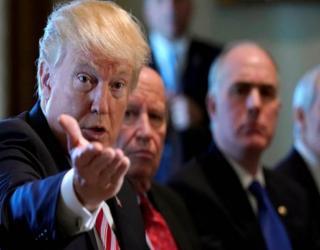
    RICHMOND (TIP): President Donald Trump’s latest travel ban on travelers from six largely Muslim countries is “unconstitutionally tainted with animus toward Islam,” a federal appeals court ruled on Thursday, Feb 15, delivering another blow to the policy.

    In a 9-4 vote, the 4th U.S. Circuit Court of Appeals in Richmond said it examined statements made by Mr. Trump and other administration officials, as well as the presidential proclamation imposing the ban, and concluded that it “second-guesses our nation’s dedication to religious freedom and tolerance”.

    The 4th Circuit is the second federal appeals court to rule against the ban. In December, the 9th U.S. Circuit Court of Appeals found that Mr. Trump exceeded the scope of his authority with the latest ban.

    The 4th Circuit court upheld a ruling by a federal judge in Maryland who issued an injunction barring enforcement of the ban against people from Chad, Iran, Libya, Somalia, Syria and Yemen who have bona fide relationships with people in the U.S.

    The U.S. Supreme Court has already agreed to hear the travel ban case in April. In December, the high court said the ban could be fully enforced while appeals made their way through the courts.

    In its ruling, the 4th Circuit said the ban has a “much broader deleterious effect” than banning certain foreign nationals. The ban, the court said, “denies the possibility of a complete, intact family to tens of thousands of Americans”.

    “On a fundamental level, the Proclamation second-guesses our nation’s dedication to religious freedom and tolerance,” Chief Justice Roger Gregory wrote for the court in the majority opinion.

    American Civil Liberties Union Deputy Legal Director Cecillia Wang, who argued the case before the court, said she was not surprised by the ruling.

    “The Constitution prohibits government actions hostile to a religion,” Ms. Wang said.

    The International Refugee Assistance Project, one of the groups challenging the ban, said the policy has had a “devastating impact” on U.S. families waiting to reunite with their family members and foreign students seeking educational opportunities in the U.S.

    “Today’s ruling affirms that they are being unjustly targeted by this ban,” said Mariko Hirose, the group’s litigation director.

    The administration has said the ban is a legitimate measure to protect national security.

    During a hearing before the 4th Circuit in December, Deputy U.S. Assistant Attorney General Hashim Mooppan told the judges that the President has broad authority to bar foreign nationals he believes would be detrimental to the interests of the United States. He said the latest restrictions were the product of a global, multiagency review that found the specified countries do not share enough security-related information with the U.S. He said the ban is designed to protect the nation from terrorism and other threats.

    In a dissenting opinion, Judge Paul Niemeyer said the 4th Circuit’s ruling was an attempt to “second-guess U.S. foreign policy, in particular, the president’s discretionary decisions on immigration, implicating matters of national security”.

    Mr. Niemeyer said the majority should have based its decision on the text of the presidential proclamation alone and not considered statements Trump made on the campaign trial and after he became president.

    “At bottom, the danger of this new rule is that it will enable a court to justify its decision to strike down any executive action with which it disagrees. It need only find one statement that contradicts the official reasons given for a subsequent executive action and thereby pronounce that the official reasons were a pretext,” Mr. Niemeyer wrote.

    The ruling was the second time the 4th Circuit has rejected a travel ban. In May, the court cited Mr. Trump’s remarks on Muslim travelers while rejecting an earlier version of the ban, finding it “drips with religious intolerance, animus and discrimination”.

    Mr. Trump announced his initial travel ban on citizens of certain Muslim-majority nations shortly after taking office in January, bringing havoc and protests to airports around the United States. A federal judge in Seattle soon blocked it, and courts since then have wrestled with the restrictions as the administration has rewritten them.

    The latest version blocks travelers from the listed countries to varying degrees, allowing for students from some, while blocking other business travelers and tourists, and allowing for admissions on a case-by-case basis.

    (Source: AP)

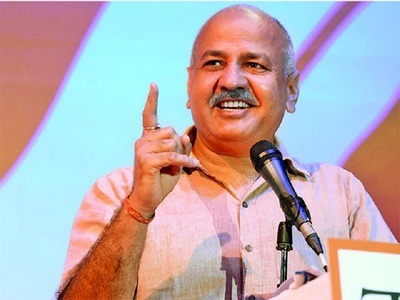
  • Harvard University India Conference : People need “Health Assurance”, not insurance says Indian political leader Manish Sisodia

    Harvard University India Conference : People need “Health Assurance”, not insurance says Indian political leader Manish Sisodia

    ‘Our Government’s vision is to provide 100% coverage of high quality education and healthcare at very low, affordable cost”, added the Deputy Chief Minister of Delhi

    BOSTON (TIP): The annual India Conference organized by Harvard Business School is a confluence of some of India’s brightest minds focusing on various issues concerning the country. This year’s conference last weekend again saw an impressive array of speakers from prominent politicians to movie stars and, journalists to economists. One of the keynote speeches was given by Manish Sisodia, Deputy Chief Minister and Education Minister of the city-state of Delhi, capital of India.

    During his speech titled: “Healthcare and Education Model of Delhi”, he highlighted how his government has brought special focus to the Education Department which for last several decades saw stagnant budget allocations and declining standards of infrastructure in public schools run by the government. After his government came to power in 2015, the very first budget saw huge increase in education budget, rupee equivalent of a little over $1.5 Billion, which is 106% over the previous government’s allocation. Over the next two years, the allocation to education has been maintained at around a quarter of the total budget of the Delhi government, which has shown major improvements in both quality of school infrastructure and students’ performance. For instance, with the increased budget, 8000 new classrooms have been added to the government-run schools with 10,000 more are under construction, reduced the learning gap among children, invested in brining well-trained teachers, and taken efforts to make schools accountable to students and parents.

    He then highlighted the issues that are plaguing the Indian health sector. Treatment in government hospitals is availed only when a person cannot access a privately-run facility. With a huge section of India’s population under poverty, quality healthcare and life-saving surgical procedures remain inaccessible to millions of people. He said it will be unfair to expect people to buy health insurance with a high premium. Hence his government’s model is a “health assurance” regime that guarantees quality and affordable healthcare government facilities.

    Building a three-tier model to offer better care and reduce load on hospitals

    India’s current hospital-centric model of healthcare delivery is neither sustainable nor convenient. Current Delhi Government focused both on reducing the load on existing hospitals by creating two additional tiers of care while simultaneously increasing the capacity of Delhi’s larger government hospitals.

    The second tier, called ‘Polyclinics’, will serve as extended arms of government hospitals, to treat out-patients through Specialists. The third tier would be the low-cost primary health care facilities called ‘Mohalla Clinics’ or ‘neighborhood clinics’. Mohalla Clinic is an innovation in primary care that has been commended by the Stanford Social Innovation Review and by The Lancet journal among others.

    “An average primary care unit costs close to one million dollars to build. Instead of continuing to build such expensive dispensaries, Delhi government decided to build temporary air-conditioned structures within the community that they are to serve at a cost of about thirty thousand dollars instead. We are now building 25 Mohalla clinics at the cost of one erstwhile dispensary. With more than 160 such clinics functioning throughout the city, the patients who were crowding the large hospitals for primary care have been diverted to local clinics” added Mr. Sisodia.

    “Within three years of this model, we have been able to rebuild the lost confidence in public healthcare to a large extent. The number of patient visits have increased from 30 to 45 million, a phenomenal growth of 50%”, he claimed.

    Finally, on why his model is a disruptive idea, Sisodia said: “Our government has provided ‘health assurance’ to all citizens, which is if the waiting time for any major surgery is more than a month, then the patient can get the procedure done at a private hospital and the government will pay for it. Economies of scale have ensured that the cost paid by the government is much lower than what the patient would have paid as an individual. At a fraction of the cost of surgeries at private hospitals, any patient who needs urgent procedures is entitled to free treatment at any of the empaneled private hospitals. This is as close to single-payer system that any state in India has attempted to introduce. “

  • Flying on wits alone, Modi’s biases can involve India in Islamic world’s quarrels

    Flying on wits alone, Modi’s biases can involve India in Islamic world’s quarrels

    By KC Singh

    This paradox in Modi foreign policy of selectively engaging Islamic nations, even ostentatiously hugging their leaders, while allowing the fringe at home to bait Muslims can only work fitfully or in the short run, says the author.

    Prime Minister Narendra Modi is three months shy of entering the last year of his term. Post-Rajasthan wipe-out of his party in two Lok Sabha and one legislative byelection — of which even the Congress was confident of winning one — murmurs within the BJP are louder about state of the party and the nation. All leaders use foreign visits to bolster domestic standing as the pageant and protocol, carefully calibrated in advance, rarely goes off-script. But the exercise has diminishing returns once the electorate at home begins to wonder where the promised achhe din are. The recent foray of Modi into West Asia and the Gulf falls into that category.

    A Palestine visit was expected after Modi’s stand-alone visit to Israel and Israeli PM Benjamin Netanyahu’s Indian sojourn last year, with fanfare, including the shutting down of Ahmedabad for street extravaganza. President Mahmoud Abbas of Palestine Authority (PA) has been in power since the death of charismatic Yasser Arafat in 2004. There has, however, been no presidential election since 2005 nor parliamentary polls since 2006. His moral and political authority had dropped perceptively, particularly after his inability to implement the Cairo deal for gaining administrative control of Gaza, run by rivals Hamas. The continued siege of Gaza and sanctions have caused human misery and an explosive situation. Israel has been able to exploit the Palestinian disunity and civil war in Syria to stall any international push for West Asian settlement.

    President Donald Trump opened his presidency by nominating his Jewish son-in-law Jared Kushner to obtain an Israel-Palestine peace deal. But his December 6 decision to recognize Jerusalem as Israeli capital ruffled Arab feathers. Abbas has employed it to reassert control over rival factions by espousing the popular argument that US sponsorship of peace process had now ended. India by sensibly voting for a UN resolution condemning US move kept its door open to the PA. Thus, Modi’s visit was timed well as President Abbas was regaining lost authority. The $50 million developmental aid should keep India’s traditional relations with Palestinians on track. Hamas has, meanwhile, revived links with Iran, overcoming misunderstanding over Iran supporting the embattled Assad regime in Syria. Future course would depend on Abbas holding long-delayed elections to Palestinian parliament and his own office, acquiring control over Gaza and ameliorating the humanitarian crisis and the political fortunes of Netanyahu on way to being indicted for corruption. By its untimely step, the US handed the reward before obtaining Israeli compliance with UN Security Council resolutions, including stopping construction of new settlements in occupied West Bank.

    But by altering standard Indian formulations on the Palestinian issue, especially omitting mention of East Jerusalem as capital of Palestine, Modi succumbed to pro-Israel views in the RSS, which sees Israeli control over ancient lands of Judea and Samaria as analogous to their perception of Akhand Bharat as encompassing South Asia. They ignore that Theodor Herzl, the founding father of Zionism, conceived Der Judenstaat or Jewish Homeland at the beginning of the 20th century as any place on earth to colonize with people of Jewish faith. Even Uganda was considered for resettlement to escape anti-Semitism in Russia and Europe. The World War I and Ottoman Turkey aligning with Germany opened the possibility of Britain allowing European Jews to return to Palestine, post-liberation from Ottoman control.

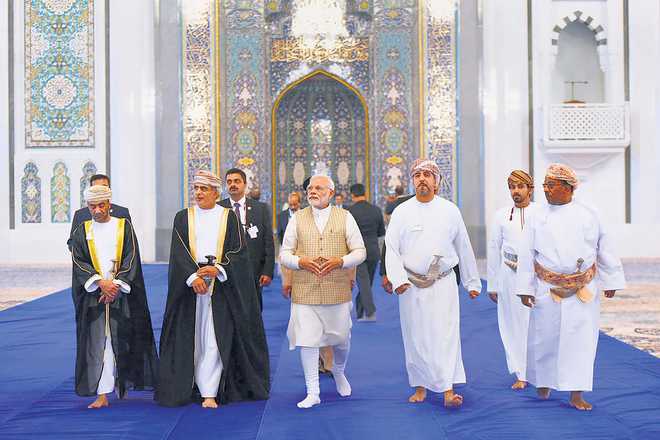
    This paradox in Modi foreign policy of selectively engaging Islamic nations, even ostentatiously hugging their leaders, while allowing the fringe at home to bait Muslims can only work fitfully or in the short run. His second visit to the UAE was really pegged on laying the foundation stone of a temple in Abu Dhabi and a global summit at Dubai on governance. Hardly any world leaders were visible in the first row, other than local sheikhs. It was vintage Dubai marketing itself as a focal point for global commerce.

    The UAE has had temples for decades, although not in the capital Abu Dhabi. The late president, Sheikh Zayeed, father of Modi’s host Sheikh Mohammed bin Zayed, had in 2001, when I was ambassador to the UAE, allotted land in the capital for a cremation ground, which was to have a small temple. When the then Home Minister LK Advani called on him and thanked him for this gesture, he replied that his family accepted religious pluralism. Thus, the current gesture is a next step in an old tradition rather than some strategic leap in bilateral engagement. In fact, two English television channels, devoted even more vigorously than Doordarshan to spin BJP’s accomplishments, broadcast a clip wrongly showing Sheikh Mohammed chanting ‘Jai Sri Ram’ at a function. As the adage goes with friends like these who needs enemies? The UAE embassy in Delhi and newspapers in the UAE reacted with indignation.

    The Indian purchase of a share in an oilfield and ADNOC, Abu Dhabi’s oil major, participating in Indian oil reserve are old decisions announced during Sheikh Mohammed’s India trip. The UAE and Saudi Arabia are aligned against Iran, exacerbating the Shia-Sunni confrontation, thus splitting the six-member Gulf Coordination Council as, indeed, the Sunni world. Modi laying a wreath at the military memorial in Abu Dhabi, largely honoring the UAE’s dead in their intervention in Yemen and thus in a war against Iranian allies Houthis, would be read by Iran’s Revolutionary Guards as India taking sides. The forthcoming visit of Iran President Hassan Rouhani cannot alter that reality.

    Leaders who preceded Modi, whether of the Congress or BJP, operated from a shared vision to retain strategic independence vis-a-vis great powers and not get embroiled in Islamic world’s quarrels. Modi tends to play by ideological biases and hope that sequential and tactical moves will paper over strategic weakness in his approach. The UAE would like to create a fissure between India and Iran. Iran would like the reverse. Modi’s last stop was Oman to meet Sultan Qaboos, the last surviving titan of Gulf politics. He has kept Oman neutral in the Gulf nations’ quarrels created by gen-next leaders of the UAE, Saudi Arabia and Qatar. Hopefully, he would have passed that wisdom to his Indian guest.

    (The author is a former Secretary, Ministry of External Affairs, Government of India)

  • Congress Fails to Pass Immigration Bill, Leaving Dreamers in the Lurch

    Congress Fails to Pass Immigration Bill, Leaving Dreamers in the Lurch

    Schumer accuses President of “torpedoing bipartisan efforts”

    WASHINGTON (TIP): The rejection of four proposals in the Senate, coupled with a lack of consensus in the House, underscored the immense political pressures on Republicans and Democrats alike.

    Weeks of intense negotiations for a bipartisan deal on immigration collapsed in Congress on Thursday, February 15, leaving thousands of young undocumented immigrants facing possible deportation after March 5 when DACA is set to end.

    Immigration has proved intractable for years, vexing lawmakers and presidents of both parties. Breaking the stalemate in an election year seemed even more unlikely.

    In a sharp rebuke, the Republican-led Senate blocked an immigration plan backed by President Trump, with the bill mustering just 39 votes. It highlighted the divisions even within GOP ranks, with some wary that granting legal status to undocumented immigrants would amount to amnesty.

    The House offered no answers, with conservatives threatening Speaker Paul D. Ryan (R-Wis.) unless he pushes a bill that provides only temporary work permits for dreamers, while also imposing ­border-security measures and restrictions on legal immigration that go beyond what Trump has proposed.

    “I don’t think the president helped very much, but the bottom line is the demagogues won again on the left and the right,” said Sen. Lindsey O. Graham (R-S.C.).

    How the Trump administration and Congress will resolve the fate of dreamers — undocumented immigrants who were brought into the country as children — remained unclear Thursday, but several senators said they hoped a solution could be included in a sweeping spending plan that must be passed by March 23.

    Proposals have been floated by senators in both parties to temporarily extend the Deferred Action for Childhood Arrivals (DACA) program — which is set to end on March 5 — and provide some ­funding to begin border-security construction projects. Courts in California and New York have issued temporary injunctions requiring the administration to extend DACA.

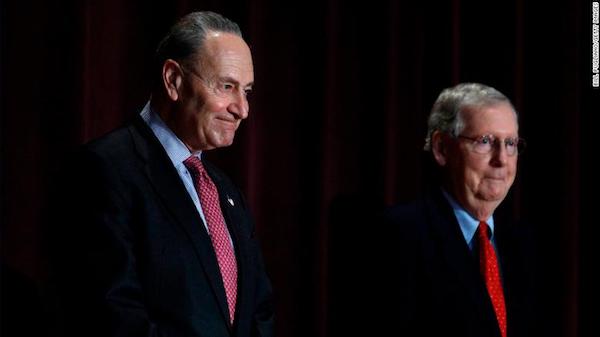
    Senate Minority Leader Charles E. Schumer (D-N.Y.) blamed Trump, who had tweeted moments before the votes that the bipartisan plan was a “total catastrophe” that faced the threat of a veto.

    “If he would stop torpedoing bipartisan efforts, a good bill would pass,” Schumer said.

    McConnell has told others that any bill he could pass in the Senate would be unlikely to earn Trump’s support.

    Senators rejected a watered-down bipartisan plan by Sens. John McCain (R-Ariz.) and Christopher A. Coons (D-Del.) to grant legal status to dreamers and provide billions of dollars to boost border security — but not immediately as Trump requested. The plan failed 52 to 47, short of the 60 votes needed.

    Senators also rejected a bill by Sen. Patrick J. Toomey (R-Pa.) to punish “sanctuary” municipalities that refuse to help enforce immigration laws. That bill failed 54 to 45.

    Much of the Senate’s attention was on the third option, a bipartisan plan to legalize the same ­number of undocumented immigrants and appropriate $25 billion for southern-border-security construction projects over the next decade — not immediately as Trump wants. That bill also would curb family-based immigration programs but not to the extent Trump is seeking, and it said nothing about the diversity visa lottery program.

    The bipartisan proposal laid bare how difficult it can be for members of both parties to try striking a deal. United We Dream — a dreamer advocacy group that works closely with Democrats — and the White House had aggressively lobbied against the measure.

    The frustration of bipartisan negotiators was evident. Before the vote, Sen. Susan Collins (R-Maine), who had helped broker the deal, was heard in the well of the chamber chastising Laura Dove, the top Republican parliamentary expert, over the names of senators listed as being involved in the legislation.

    The Democratic leader had not been part of writing the bill, but his name was included in official notices because of the complex rules regarding how amendments are considered.

    As the two clashed, Collins brandished her cellphone to show Dove the messages proving that copies of the legislation did not include Schumer’s name.

    “You’re supposed to be a fair broker,” Collins said as she walked away from Dove. “It was wrong. It was really wrong.”

    The bipartisan plan failed 54 to 45.

    Finally, senators rejected the Trump plan, which would have granted legal status to 1.8 million young immigrants, spent at least $25 billion to bolster security along the U.S.-Mexico border, revamped family-based legal migration programs and ended a diversity lottery system used by immigrants from countries with low rates of immigration to the United States.

    The vote was 39 to 60, well short of the 60 yes votes needed to move ahead. Three moderate Democrats voted for the proposal, but 14 GOP senators voted against it, including Sen. Ted Cruz (Tex.), who had blasted the proposal as being “to the left from President Obama’s position.”

    Ahead of the votes, the White House mobilized a full-fledged effort to scuttle the bipartisan immigration plan that was emerging as the best hope for a legislative deal.

    On Capitol Hill, attention is likely to shift to the House, which could take up the issue after next week’s Presidents’ Day recess.

    A bill sponsored by Judiciary Committee Chairman Bob Goodlatte (R-Va.) and Homeland Security Committee Chairman Michael McCaul (R-Tex.) has the backing of the hard-right House Freedom Caucus and other conservatives who want to stake out a position further to the right of the White House proposal to guard against future concessions.

    The bill includes new resources for immigration enforcement away from the border; a crackdown on “sanctuary cities” — ­jurisdictions that do not cooperate with federal immigration enforcement authorities; and a requirement that employers use ­ “E-Verify,” a federal database, to check whether their employees are authorized to work in the United States.

    “We have the bill that’s consistent with what the American people elected us to do,” said Rep. Jim Jordan (R-Ohio), a co-founder of the Freedom Caucus.

    But it is not at all clear that the bill, which has no Democratic support, can win enough Republican votes to pass the House.

    (Source: Reports)

  • Trump’s lawyer paid $130,000 of own money to porn star

    Trump’s lawyer paid $130,000 of own money to porn star

    WASHINGTON (TIP): People are both baffled and amused to hear President Donald Trump’s personal lawyer claim, February 13 that he paid $130,000 of his own money to a porn star who allegedly had a sexual encounter with the President before his time in the White House.

    Michael Cohen, personal lawyer of Trump said, in a statement: “In a private transaction in 2016, I used my own personal funds to facilitate a payment of $130,000 to Ms. Stephanie Clifford. Neither the Trump Organization nor the Trump campaign was a party to the transaction with Ms. Clifford, and neither reimbursed me for the payment, either directly or indirectly.”

    Just weeks before the 2016 election, Cohen reportedly created a private LLC to pay Clifford, otherwise known as Stormy Daniels, following an alleged July 2006 encounter with Trump, The Wall Street Journal reported in January.

    The New York Times first reported that Cohen had said he made the payment himself.

    Following initial reports last month that Cohen had made the payment, he said in a statement that Trump “vehemently denies” any encounter between the two.

    In January, the organization Common Cause filed complaints with the Federal Election Commission and the Justice Department, alleging that the reported payment to Clifford constituted a campaign finance violation. But on Tuesday, Cohen’s statement denied that accusation and said the monetary exchange was “lawful” and “not a campaign contribution.”

    “The payment to Ms. Clifford was lawful and was not a campaign contribution or a campaign expenditure by anyone,” Cohen said.

    Cohen also said he filed a reply with the FEC, but that filing will not be public until the agency has resolved the matter.

    When asked why he made the payment, Cohen told CNN: “Just because something isn’t true doesn’t mean that it can’t cause you harm or damage. I will always protect Mr. Trump.”

    (Source: CNN)

  • LET’S CONTROL OUR THOUGHTS BEFORE THEY CONTROL OUR LIVES

    LET’S CONTROL OUR THOUGHTS BEFORE THEY CONTROL OUR LIVES

    By Dr. Manjeet Kaur

    I think, act and behave based on MY perceptions

    The author of Positive Thinking & Happiness prescribes a recipe to enjoy a harmonious life, day after days.

    In order to face the stresses of life and emerge a winner in challenging situations, it becomes important for us to feed our minds with loving positive thoughts and nourish the body and soul with meditation.  Wisdom lies in opening the heart and mind and embracing all that comes with life.  But where does this wisdom come from?  Our brains!  How do we feed that wisdom into our brains?  For me, the answer has been by practicing positive thinking.  Having positive thoughts and being optimistic leads to relaxation and happiness in life.

    The old proverb – Practice makes perfect – applies very aptly to our health and wellness, which is governed by our brains.  If we learn to control our minds, we can guide our brains to perceive positive in everything, including the positive and negative situations.  Negative emotions create havoc in our body.  In order to be disease-free, we need to send positive messages to our bodies so that our brain-body connection can create a path of relaxation and let the flow of energy within our bodies run smoothly without any bumps.  To move forward, we need to concentrate on positive thoughts and emotions, and break away from the thoughts that tax our nervous system.

    To think positive, the mind has to be under an individual’s control, rather than controlling the individual.  We control our minds.  In any kind of situation, our thoughts are flooded with positive and negative emotions.  Concentrating on the positive emotions leads to more self-control.  When we are more in control of our emotions we are more stable emotionally, our senses are more alert, and we can look at things more positively.  The mind can be trained through meditation to have faith in the positive energy and spiritual power within each one of us; it can be trained to look at the positive side of situations and individuals alike.  What comes out of this training is a HAPPY and RELAXED person.  When we are in a positive and happy state of mind, the positive energy itself guides all our life decisions and paves the way to success.  The power lies within us.  We use only one percent of the powerful energy we are bestowed with; the rest remains unused.  The more we use this positive energy, the more power we get to control our thoughts and guide them towards positive outcomes.  If we connect to positive energy by practicing relaxation techniques and meditation, we can attract good fortune.

    Life is a journey filled with joys and sorrows.  Throughout life we come across different and difficult situations which we cannot simply ignore.  We have to look at what makes us happy and adopt ways of life that will lead to a satisfying and fulfilling journey.  Would one lay more emphasis on that which leads to negative emotions and makes life miserable, or would one search for how to deal with the situation in a way that will solve our problems and help us avoid these in the future?  Once we tackle a stressful situation, it will no more be a challenge for us. The secret lies in accepting the challenging situation and gearing our thoughts towards positivism so that we are more in control of ourselves.  Only then we can enhance problem solving skills to make rewarding decisions.

    Advantages of Thinking Positive

    1. Individuals who think positive are able to deal better with stress since they approach every situation with an optimistic attitude.
    2. By thinking positive, we gain insight into optimal living, which optimizes our ability to deal with challenging situations and enhance positivism in all spheres of life.
    3. Positive thoughts help us understand our emotions and psychological concepts at a deeper level.
    4. Increase in positive emotions leads to well-being and helps us to live life to the fullest by always being happy.
    5. Positive thinking leads to mental, physical, spiritual, and financial wellness and helps in acquiring a better understanding of individual and cultural differences.

    We keep learning throughout our life; with learning we acquire new traits and characteristics that further nourish our consciousness and soul.  Be it joy or sorrow, every human being experiences the emotions involved.  When challenging life situations arise, we have to make choices to deal with those situations.  If we give in, we have already failed the test.  If we accept the challenging situation, look at the positive and move forward to tackle it, we have half won the battle.

    Acceptance

    Accepting situations and people is the first step towards problem solving.  If we learn to accept both the joys, and sorrows of life, we will be in a better position to maintain a balance in our lives.  When distressed, we should gather our thoughts and devise strategies which will lead to positive outcomes.

    Why fret when it will negatively affect our health and only lead to regret?

    It helps to surrender to life itself by accepting and being compassionate in healing the wounds it gives us.  If we treat the wounds with love, the healing will be faster.

    We build our own personalities based on past experiences.  What and how we think, feel and act become lasting traits and build our unique personalities.  If our love is stronger than our negative feelings, we will develop a loving personality.

    Being happy doesn’t mean that everything is perfect.  It means that you have decided to look beyond the imperfections.
    – Gerard Way

    Forgiveness

    Forgiving others and ourselves is the next step to take after acceptance.  Almost all our emotional experiences involve others.  Many times, knowingly or unknowingly, we hurt our loved ones and also get hurt ourselves by others.  In instances like this, learning to forgive heals the emotional wounds faster.  Forgiveness takes us closer to achieving fulfillment and connecting further to the positive flow of energy inside us.

    To err is human; to forgive, divine

                                                      – Alexander Pope

    When we ourselves make mistakes, we should not hold grudges against others.  I believe, by forgiving others, we forgive ourselves.

    Optimism

    The best way to keep ourselves going and deal with the stresses before they overcome us, is to look at the positive in every situation.  See the good in every situation and be hopeful of the best results.  Sometimes, it becomes very difficult to look at something positive in a very stressful situation.  In cases like that, we need to remember that dwelling on the negatives and worrying too much about the outcomes will only weaken us and lead to illness and disease.  If we think and look for the positive in this kind of stressful situation, we are sending a positive message throughout our body as well.

    For myself I am an optimist – it does not seem to be much use being anything else.

                                                    – Sir Winston Churchill

    Train the Brain

    One of the greatest treasures humans have is the power of thinking.  We have no control over what life throws at us, but we do have control over how we receive and respond to it.  What guides us in that?  Our BRAIN!  The brain has to be trained to form positive habits by regular practice.  To form a new habit, we need to break the old ones.  In order to break the old habits, we have to practice the new habit for at least a month or so, to bring about a permanent change in our behavior and make the new habits a part of our lifestyle.

    We can shape our lives to a great extent if we train our brains to practice positive thinking techniques regularly.  Practice mindfulness, meditation and relaxation; the more we practice, the more relaxed and accepting we will become.  It should become a way of life.  The practice should be regular; if we stop, our mind might start wandering again.  Just as we eat, drink and sleep regularly, we need to meditate as well so that we can control our minds and relax our brains, which in turn will relax our bodies and pave the way to mental, physical, and spiritual well-being.

    Sometimes, even with regular practice, our minds might wander.  Being human, we go through emotions all the time.  The success of meditation lies in not becoming desperate and vulnerable, but instead continuously practicing relaxation techniques to calm and control the negative emotions, and enhance positive emotions.  When faced with challenges, we need to accept them, control our emotions and work towards achieving positive outcomes.

    Creativity

    Being creative is the ability to be innovative by conceiving an idea from our imagination.  Humans are gifted with the power of thinking.  By using the ability to invent ideas with our fertile brains, we can use our imagination and knowledge to come up with unique concepts.  For example, if you like to cook, create innovative delicacies by trying new cooking techniques.

    Making Dreams and Thoughts Come True

    We all dream about achieving success in different spheres of life, but how many of us actually put these dreams and thoughts into action?  Success comes to those who believe in fulfilling their dreams and working towards achieving their goals.  Achieving fulfillment of dreams is easier than we think.  In my experience, it is a simple process:

    1. The first step is action. First and foremost, in order to tread the path of dream fulfillment, put thoughts into action.  Get out of bed every morning with the thought: In order to achieve my goals, I need to first wake up and start working towards putting my dreams into action.
    2. The second step is patience and persistence; keep working diligently till success is achieved, and even after you have reached your goals.

    Motivation and Leadership

    Leadership is a quality and process where an individual comes up with an idea, leads the way to action, convincing other people to follow.  The leader, the person who starts the process takes the lead and influences others to follow, working together towards the attainment of a common goal or objective.

    Most of us have come across situations in life where while in a group, someone poses a question to the group.  Initially, people in the group might be reluctant to answer, but as soon as one person answers, others follow.  The leader is this person who put his thinking into action and led the way to the discussion.  We all have ideas, however, the leader is the person who puts that idea into action and leads the path, making way for others to tread.

    Self Esteem

    Abraham Maslow, a famous psychologist, came up with a pyramid where he placed needs according to hierarchy: physiological, safety and security, love and belongingness, self-esteem and self-actualization (Myers). The fourth need in this pyramid, self-esteem is the feeling of regard, approval, and respect for the self which may depend a lot on an individual’s environment.  When we are surrounded by people who love and admire us, a feeling of love and belongingness is generated, which further raises our morale.  When our self-esteem is high, awareness of self brings joy and freedom into our lives.  Our focus and concentration increase, and we become more involved in what we do, thus achieving success in academic, home, social and occupational fields.

    About the author

    Dr. Manjeet Kaur PhD (Psychology) is an author of the book “Positive Thinking and Happiness” which is available at Amazon. She is a career consultant, speaker, trainer, professor, wellness consultant and an internationally known speaker on optimal wellness, happiness, laughter/humor, stress management, weight management, and positive thinking. She has spent the last 15 years researching, reading, learning, mastering and applying stress management, happiness, and positive thinking techniques to understand human wellness and helped clients to achieve their fullest potential by practicing these techniques. Dr. Kaur teaches Psychology at various colleges and universities in USA and is well versed in developing specific need-based programs for individual client requirements. Dr. Manjeet is a frequent speaker on a wide array of health issues, and is frequently featured in print, radio, and television interviews in India and the United States.

  • Association of Indians in America, New York Chapter holds Seminar on Tax Reform

    Association of Indians in America, New York Chapter holds Seminar on Tax Reform

    GARDEN CITY, NY (TIP): Association of Indians in America, NY Chapter (AIA-NY) held a Free Seminar on Tax Reform on February 6, 2018. The Seminar was attended by over 175 individuals, past presidents of AIA, Community Leaders and dignitaries including members of the Media. Consul General of India Ambassador Sandeep Chakravorty graced the occasion as Chief Guest.

    Since US tax Reform was recently passed and it left everybody wondering about its implications on Individuals, Corporations and International Taxation. This being the biggest Tax Reform in 31 years after Reagan Tax Reform of 1986, AIA NY Chapter wanted to bring to the Indian Community such type of informational, educational and awareness seminars of public interest. Therefore to provide some clarity on that, AIA NY Chapter arranged a high profile seminar on Tax Reform including Estate & Gift Tax on Tuesday Feb 6th 2018 at Mint Restaurant, said Mr. Gobind Munjal, President of AIA NY Chapter. We brought renowned and eminent speakers to address this topic. CECIL NAZARETH ACA, CPA, MBA, who is expert on National and International Taxation and have addressed many seminars all over the world, including appearing on ITV, gave the talk on Major US tax Reform For Individuals, Corporations and International Taxation. Whereas renowned Attorney MICHAEL MARKHOFF. Esq. from Connecticut addressed the audience on Estate and Gift taxes.

    Ambassador Chakravorty described it as “A wonderful event and it was truly rewarding”.

    Explaining tax reform- CECIL NAZARETH, MICHAEL MARKHOFF, and Gobind Munjal (in the center)

    Gobind Munjal told the press about AIA NY Chapter upcoming programs, which are as follows:

    • Fundraiser Event for their Project India Charity Program on June 9, 2018 in Manhattan.
    • Benefit Gala on Sept 15, 2018 for the 31st Deepavali Festival.
    • 31st Deepavali Festival Celebrations on Oct 7, 2018 at the Iconic South Street Seaport in Manhattan, culminating with a spectacular display of Fireworks.
    • Children Deepavali in Libraries around end of October 2018.
    • Desi Next event for the younger generation somewhere in November 2018.

    The Association of Indians in America (AIA) is the oldest not-for-profit organization of Asian Indians in America founded on August 20, 1967. It is the grassroots national organization of Asian immigrants in the United States. With chapters and membership spread across the United States of America, AIA represents the hopes and aspirations of those immigrants who are united by their common bond of Indian Heritage and American Commitment.

    For more info, please find us on Facebook and visit our website at www.theaiany.org.

  • Move over, Steve Harvey – there’s a new family game show in town: Family Quiz show to premiere on Zee TV this month

    Move over, Steve Harvey – there’s a new family game show in town: Family Quiz show to premiere on Zee TV this month

    NEW YORK (TIP): On Saturday, February 24, media and entertainment mega-giant ZEE Entertainment will debut “America’s Smartest Family” – a brand new television game show where 16 families will compete for a $10,000 cash prize. Airing exclusively on ZEE TV, the highly-anticipated series is the first-ever English-language quiz show of its kind, placing some of the globe’s brightest South Asian families on stage for a chance at the title of “America’s Smartest Family.”

    Hosted by 23-year-old YouTube sensation Zaid Ali, “America’s Smartest Family” is a unique mashup of the American household favorites “Family Feud” and “Jeopardy,” but with that special ZEE TV twist that celebrates its South Asian heritage. Complete with a diverse set of categories and a buzzer, each episode will feature five challenging in-studio question rounds, testing pre-screened contestants on their ability to answer quickly and more importantly – their ability to work as a team. Only the fastest, most well-rounded family will get to take home the crown.

    Round one consists of four questions, with a toss deciding which family goes first. Participants can choose from one of five topics – including science, math, arts, history and geography. Once a category is chosen, it may not be selected for the remainder of the round. During the first round, 100 points will be awarded for every correct answer. There are no deductions for wrong answers until round three and four, when a mistake can cost a team 100 points for every incorrect answer.

    As the game progresses, questions become increasingly difficult. By rounds three and four – each correct answer is worth 200 points. During the fifth and final round, the game takes a turn and host Zaid Ali spices things up by offering clues. If the team answers correctly without a clue, a maximum of 1000 points is awarded. If the family choses to get clues, each clue costs them 200 points. At the end of five rounds, scores may vary from -2400 to 5500. In the event of a tie, an extra tie-breaker round will identify the winner.

    In the first four episodes of the season, four families will compete against one another, accumulating points for every correct answer. The eight winning teams from those early contents will move onto the semi-finals until just two families remain. The winners of the semi-finals will make it to finals, for the ultimate face-off, where one family will be named “America’s Smartest Family.”

    The show is part of the Zee Originals initiative and joins a stellar line up of upcoming shows that have been created for the evolving South Asian audience.

    “In its 20th year of network broadcast in North America, it’s time to produce relevant content for the audience which is locally sourced and features the local community. This is yet another commitment from Zee which prides itself as being the innovative leader for the market,” said Sameer Targe, Head of Americas for Asia TV.

    Tune in and watch the world premiere of “America’s Smartest Family” on ZEE TV at 9:00 p.m. EST; 9:30 p.m. PST; and 9:00 p.m. AST

    To learn more about “America’s Smartest Family,” visit https://www.zeeoriginals.com/americas-smartest-family/

     About Zee Network

    Zee Entertainment Enterprises Limited is one of India’s leading television media and entertainment companies. It is amongst the largest producers and aggregators of Hindi programming in the world, with an extensive library housing over 222,000 hours of television content. With rights to more than 3,818 movie titles from foremost studios and of iconic film stars, ZEE houses the world’s largest Hindi film library. Through its strong presence worldwide, ZEE entertains over 1 billion viewers across 172 countries.

    About Zee TV USA

    Zee TV USA was the first ever Hindi General Entertainment channel to be launched in the US way back in 1998. Since the start of the journey more than 2 decades ago, Zee now has 43 networks and full time dedicated work force across 5 different locations all across the North America and Caribbean. Zee TV USA was the first Asian channel to launch in HD. Zee TV was the first Hindi network to be measured by Nielsen in the US, Zee TV is also the most widely available Hindi General Entertainment network on all major DTH, Cable, Telco and IPTV platforms with availability over 86 million US households.

  • Movies 2018

    Movies 2018

    By Mabel Pais

    The Insult

    “Compelling ….Rich with feelings that transcend the sprawling national backdrop.” Eric Kohn, IndieWire
    Adel Karam and Kamel El Basha in The Insult.

    The Insult by Lebanese director Ziad (“The Attack”) Doueiri’s gripping political drama, is short-listed for the 2018 Academy Award® for Best Foreign Language Film.

    The movie is inspired by an incident in the director’s own experience, several years ago in Beirut.  In today’s Beirut, a civilian dispute blown out of proportion finds Tony (Adel Karam), a Lebanese Christian, and Yasser (Venice Film Festival Best Actor winner Kamel El Basha), a Palestinian refugee, facing off in court. As the media circus surrounding the case threatens a social explosion in divided Lebanon, Tony and Yasser reconsider their values and beliefs as revelations of trauma complicate their understanding of one another.

    After leaving Lebanon during its Civil War, Ziad Doueiri moved to the US to study film at San Diego State University.  He went on to work as a camera operator on Quentin Tarantino’s Reservoir Dogs, Pulp Fiction and Jackie Brown.

    His directorial debut, the critically acclaimed Cannes Film Festival Directors Fortnight selection West Beirut, put him on the map as one of the most promising directors from the Middle East. His third film The Attack, a controversial drama about an Arab Israeli surgeon whose life is shattered after discovering his wife was a suicide bomber, was a critical and box office hit. The Insult is Mr. Doueiri’s fourth film.

    Directed by: Ziad Doueiri.  Written by: Ziad Doueiri & Joëlle Touma. Starring: Adel Karam, Kamel El Basha, Camille Salaamed, Diamand Bou Abboud, Rita Hayek.  Rating: R.  Running time: 1h 52 m.  Genre: Drama.

    The Insult opened in New York on Friday, January 12 (Lincoln Plaza Cinema and The Quad), and Los Angeles on Friday, January 19 followed by a national roll out.  It is running at several theatres in New York City.

     Double Lover

    Marine Vacth and Jérémie Renier in Double Lover.

    Double Lover, Francois Ozon’s twisted erotic thriller loosely based on the Joyce Carol Oates novel Lives of the Twins. Starring Marine Vacth and Jérémie Renier.

    Chloé, (Young and Beautiful’s Marine Vacth) is a fragile young woman who falls in love with her psychoanalyst, Paul (Jérémie Renier,) soon after starting therapy to try and uncover the roots of her mysterious symptoms. Several months later the couple moves in together, but Chloé discovers that her lover is keeping part of his identity a secret. Visually striking, often outrageous, and chock full of mischievous cinematic references, Double Lover is a guilty pleasure that keeps the audience guessing.

    A master at playfully exploring sexual repression and the inner lives of women, François Ozon returns with Double Lover to several of the themes and genres he has delved into throughout his prolific career.

    His films include Water Drops on Burning Rocks, Criminal Lovers, Under the Sand, 8 Women, Swimming Pool, In The House, Young & Beautiful, The New Girlfriend and Frantz.

    Written and directed by Francois Ozon.  Loosely based on the Novel “Lives of the Twins” by Joyce Carol Oates. Produced by Eric & Nicolas Altmeyer.

    Cinematography by Manu Dacosse. Starring Marine Vacth, Jérémie Renier, Jacquline Bisset, Myriam Boyer, Dominique Reymond.  Rating: NR. Running time: 1 h 47 m.  Genre: Drama, Romance, Thriller.

    Double Lover is scheduled to open in New York (AMC Empire, The Quad) Los Angeles, San Francisco and Philadelphia on Wednesday, February 14 followed by a national roll out.

     Animal House 40th Anniversary (The Film) at NJPAC

    New Jersey Performing Arts Center (NJPAC), located in downtown Newark, N.J., has the most diverse programming and audience of any performing arts center in the country, and is the artistic, cultural, educational and civic center of New Jersey – where great performances and events enhance and transform lives every day. NJPAC brings diverse communities together, providing access to all and showcasing the state’s and the world’s best artists while acting as a leading catalyst in the revitalization of its home city. Through its extensive Arts Education programs, NJPAC is shaping the next generation of artists and arts enthusiasts. NJPAC has attracted more than 8 million visitors (including over 1.6 million children) since opening its doors in 1997, and nurtures meaningful and lasting relationships with each of its constituents.

     “One of the most successful American film comedies of all time”
                                                                                           The Oregon Encyclopedia (OE)

    The New Jersey Performing Arts Center presents Animal House 40th Anniversary. Whether you’re a Delta or an Omega, everyone can share the hilarity of 1978’s groundbreaking campus comedy Animal House, shown on the wide screen with a live appearance by Tim (“Otter”) Matheson. Wear a toga (a loose flowing outer garment worn by the citizens of ancient Rome)!

    An evening that’ll make you wanna shout! Hosted by film critic Peter Travers of Rolling Stone magazine, this movie about the antics of a pack of riotous frat boys features classic performances by some of the best comedians of the Seventies, including (the late) John Belushi and Stephen Furst.

    Tim Matheson – the smooth-talking Eric “Otter” Stratton – will appear on stage following the screening with one of his cast mates, Peter Riegert, as special guest.

    An actor, director and producer over the past 50 years, Tim Matheson received two Emmy nominations for his role in television’s The West Wing and recently starred in Killing Reagan on National Geographic. Some of his other popular feature films include 1941, To Be or Not To Be, Fletch and Van Wilder. He began his career at the age of 13 in Robert Young’s comedy series Window on Main Street and in 1964 provided the voice of the title character in the animated cartoon Jonny Quest.

    Faber College has one frat house so disreputable it will take anyone. It has a second one full of white, Anglo-Saxon, rich young men who are so sanctimonious no one can stand them except Dean Wormer. The dean enlists the help of the second frat to get the boys of Delta House off campus. The dean’s plan comes into play just before the homecoming parade to end all parades for all time.

    The film is directed by John Landis and written by Harold Ramis, Douglas Kenney and Chris Miller. It stars John Belushi, Tim Matheson, John Vernon, Verna Bloom, Thomas Hulce, Stephen Furst, and Donald Sutherland.  It is produced by Matty Simmons of National Lampoon (the original American humor magazine from 1970 to 1998) and Ivan Reitman for Universal Pictures. It was inspired by stories written by Chris Miller and published in National Lampoon. Its genre is Romance/Comedy.  Its running time is 1h 49m.

    For more information and tickets, visit www.NJPAC.org or the NJPAC Box Office, or call 888.GO.NJPAC (888.466.5722).

    (The author writes on The Arts and Entertainment, Social Issues, Health and Wellness, and Spirituality)

  • India’s Jeweler to Hollywood stars accused of massive bank fraud

    India’s Jeweler to Hollywood stars accused of massive bank fraud

    Nirav Modi accused of swindling $1.8 billion, was with Narendra Modi at Davos on Jan 13, 2018

    NEW DELHI / MUMBAI (TIP): Nirav Modi, accused of pulling off possibly India’s biggest bank fraud, was posing for pictures with prime minister Narendra Modi just a few weeks ago. The billionaire diamond merchant was part of the delegation of Indian businessmen and corporate leaders at the World Economic Forum in Davos last month.

    On Wednesday, Feb 14, Punjab National Bank (PNB), India’s second-largest state-owned lender, informed stock exchanges that it had detected a massive $1.77 billion fraud at one of its branches in Mumbai. The Central Bureau of Investigation, India’s main investigative agency, first filed a case in this regard on Jan. 31. On Thursday, Feb. 15, the enforcement directorate, a specialized financial crime investigation agency, reportedly raided at least 10 properties owned by Nirav Modi.

    In the picture above, Nirav Modi is seen standing next to Rajnish Kumar, chairman of India’s largest state-owned lender, State Bank of India (SBI), which also gave a loan to the diamond merchant based on PNB’s guarantee

    This is the second case of a massive alleged fraud to explode during the tenure of the Modi government. In February 2016, another billionaire Vijay Mallya, who was also a member of parliament, was accused of laundering money away from Indian state-owned banks, leaving them with unpaid dues of about Rs 9,000 crore.

    Mallya managed to escape to the UK before Indian law enforcement agencies could nab him. If Nirav Modi has indeed fled India as news reports suggest, there will be a lot for the Modi government to explain, again.

    If this person had fled India before the FIR on Jan 31, then he is here, photographed at Davos with PM, a week before the FIR, after having escaped from India? Modi govt must clarify. #NiravModi #PublicMoneyLoot pic.twitter.com/gQQnKQNjDo

        — Sitaram Yechury (@SitaramYechury) February 15, 2018

    Meanwhile, Hari Prasad SV, the man who Congress says informed the Prime Minister’s Office about the alleged fraud perpetrated by billionaire jewelry designer Nirav Modi in July 2016, said, Feb 15, that he approached the Enforcement Directorate, Central Bureau of Investigation and several other bodies against the accused but to no avail, reported ANI.

    “Wrote to PMO in 2016 requesting them to undertake detailed investigation in the matter after we did not get any response from ED, CBI, SEBI, and Ministry of Corporate Affairs. Later, I got a mail from RoC that my case is closed,” ANI quoted the Bengaluru jeweler as saying.

    He claimed that he had opened a franchise store with Mehul Choksi, the MD of Gitanjali Group, with an investment of Rs 10 crore.

    “As per the agreement, he was supposed to give us gold worth Rs 10 crore, but he gave us gold worth Rs 5 crore only. We finally filed two FIRs against him,” Prasad said.

    The Congress, on Feb 15, criticized the PM for failing to take timely action against Nirav Modi.

    “Prime Minister, Shri Narendra Modi, was made aware of this entire fraud by one Shri Hari Prasad by way of a written complaint filed on 26th July 2016 and acknowledged by PMO,” said party spokesperson Randeep Surjewala, adding that “no action was taken” and the “bank lost the money and the accused escaped.”

    Nirav Modi, his wife, brother, and business partner Mehul Choksi were booked by the CBI on January 31, for allegedly cheating state-run Punjab National Bank of Rs 280 crore.

    The bank later sent two more complaints to the CBI, saying the scam was worth more than Rs 11,400 crore.

    Modi grew up in Antwerp, Belgium, in a diamond-dealing family. In 1990, at the age of 19, he moved to Mumbai.

    Nine years later, Modi started his own company, Firestar Diamond Ltd., selling loose stones. He employed fewer than a dozen people at the time. By last year, the number was more than 2,000.

    He said he came to realize the margins were better in retail.

    Firestar Group, the parent company Modi controls as a majority shareholder, saw its revenue grow over three years from 103 billion rupees (about $1.6 billion at current rates) to some 147 billion rupees ($2.3 billion) by the 2016-17 fiscal year, according to figures previously provided by the company.

    In 2010, Modi launched an eponymous jewelry business branded NIRAV MODI, in capitals, with the tagline “Haut Diamantaire”. New boutiques in Las Vegas and Hawaii have since been added to a stable that stretches from New York to London to Beijing.

    He became a man whose diamond necklaces were sold, with his name attached, by Sotheby‘s. “Pure feminine elegance,” says a Hong Kong auction catalogue note of one 85.33 carat diamond necklace.

    The auction house posted an online slideshow of jewelry-on-stars at the 2017 Oscars and highlighted supermodel Karlie Kloss having “a major Nirav Modi moment with her diamond ‘Mughal’ choker.”

    But the celebrity links could be starting to break.

    A spokesperson for Chopra, the film star, said in a statement: “She is currently seeking legal opinion with respect to terminating her contract with the brand in light of allegations of financial fraud against Nirav Modi.”

    (With inputs from agency reports)

  • Florida School Shooting: 17 gunned down, 14 wounded

    Florida School Shooting: 17 gunned down, 14 wounded

    White Supremacy Group Claims Nikolas Cruz as Member

    Indrajit S Saluja

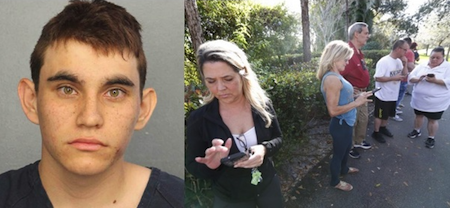
    PARKLAND, FLA (TIP): It was a horrific sight at Marjory Stoneman Douglas High School here on February 14, the day of love, with 17 young students shot dead and another fourteen wounded, five with life-threatening injuries, according to hospital officials, in the worst shooting in a school in 2018. The shooting suspect-Nikolas Cruz- is said to be an expelled student of the school. Cruz used a semiautomatic AR-15 rifle which, according to officials, he had bought legally to snuff out precious lives of students from the school he had been to. A pall of gloom descended on Parkland which once was described as the most peaceful place with a small community.

    The authorities said the AR-15 rifle that Cruz used in the attack was purchased legally, at Sunrise Tactical Supply in Florida, according to a federal law enforcement official. “No laws were violated in the procurement of this weapon,” said Peter J. Forcelli, the special agent in charge for the Bureau of Alcohol, Tobacco, Firearms and Explosives in Miami. In Florida, an AR-15 is easier to buy than a handgun.

    The 19-year-old former student Nikolas Cruz, set off a fire alarm to draw students out of classrooms shortly before the day ended. The suspect was taken into custody without incident about a mile away from the school. He was charged with 17 counts of premeditated murder Thursday, February 15. He appeared before a judge in Broward County via video conference, clad in an orange jumpsuit and shackled around his hands, feet and waist.

    After Sandy Hook Elementary School shootings in 2012 in which 20 first graders and six adults were killed, more than 400 people have been shot in over 200 school shootings. Since then, there have been at least 239 school shootings nationwide. In those incidents, 438 people were shot, 138 of whom were killed.

    The data used here is from the Gun Violence Archive, a nonprofit that began tracking school shootings in 2014, about a year after Sandy Hook.

    A white nationalist group claims the suspected gunman as a member.

    According to The Associated Press, Jordan Jereb, the leader of Republic of Florida, said that his group wants Florida to become its own white ethno-state. He said his group holds “spontaneous random demonstrations” and tries not to participate in the modern world.

     Jereb also said Cruz had “trouble with a girl” and he believed the timing of the attack, carried out on Valentine’s Day, wasn’t a coincidence.

    The latest tragedy has made many demand stricter gun control laws. They are convinced that President Trump’s argument that a good man with gun can tackle a bad man with gun is not a solution to the problem. It remains to be seen how the movement to have some kind of gun control gets the support of lawmakers, many of whom depend heavily on National Rifle association (NRA) money.

    Here are some Republican politicians sorrowing the shootings, who took money from NRA.

    Marco Rubio: ‘Today is that terrible day you pray never comes’ – $3,303,355 reportedly accepted from NRA

    Cory Gardner: ‘I am heartbroken for the students… in this tragedy’ – $3,879,064

    Rob Portman: ‘Heartbreaking news out of Florida. Jane and I send our prayers’ – $3,061,941

    Bill Cassidy: ‘Praying for the students, teachers and first responders’ – $2,861,047

    Thom Tillis: ‘Tragic news out of Florida. Please keep the victims… in your thoughts and prayers’ – $4,418,012

    Ken Buck: ‘Praying today for the students and all those impacted’ – $800,544

    With lawmakers in the pocket of NRA, how do we expect a legislation which hurts NRA?

    Over to Americans and the lawmakers.

  • IALI celebrates Valentine Day sending message of Love, Friendship, Peace and Harmony

    IALI celebrates Valentine Day sending message of Love, Friendship, Peace and Harmony

    HYDE PARK, NY (TIP): India Association of Long Island (IALI) celebrated Valentine Day on Saturday Feb 10 at The Inn At New Hyde Park.  This elegant event was attended by more than 200 very distinguished guests. They represented who is who of Indian community including many past and current presidents of various organizations like AAPI, AIA, Vegetarian Vision, RANA, Vaisakhi 5K, Nargis Dutt Foundation and IALI.

    The Master of ceremony for the event was cultural chair Mrs. Amita Karwal who conducted the program very smoothly. The well-organized program started with Latin Salsa dance to captivate the attention of the audience. IALI President Mrs. Gunjan Rastogi delivered a message of love, friendship, peace and harmony – which she said is very much needed in today’s world. In her speech she also expressed her desire to start a Scholarship fund for Students based on Merit. She welcomed the guests and introduced her executive team to the audience. The names of the executive committee members, including their titles were displayed on two large screens. All members of the team received thunderous applause from the audience.

    Traditional cake-cutting ceremony by Presidents and Founders

    President Mrs. Gunjan Rastogi invited the IALI past presidents, Dr. Avtar Singh Josen, Dr. Narendra Hadpawat, Dr. Jagdish Gupta, Mr. Gobind Munjal, Dr. Sukhvinder Ranu and Mr. Satnam Singh Parhar, along with the founders of IALI, Dr. Prabhakar Kale and Mr. Naveen Shah for traditional cake cutting ceremony.

    After the introduction, the couples in the audience were invited to play a Valentine theme game, the winner was Dr. B. Gilja and his wife. IALI Committee contributed to dozens of door prizes which were won by Lucky guests in the raffle. There was photo booth to take pictures and create memories of this memorable day. The audience was served delicious food from both The Inn and Mint Restaurant. There was a lot of dancing to DJ Parminder’s music who played very good selection of Western and Indian dance numbers. Guests thoroughly enjoyed the venue, the ambience and the program. Overall, there was lot of love and appreciation in the air, in the true spirit of Valentine day. Vote of thanks was given by the Secretary Mrs. Shashi Malik.

    IALI officers, executive council, committee chairs and co-chairs, with President Gunjan Rastogi
    IALI officers, executive council, committee chairs and co-chairs, with President Gunjan Rastogi

    The credit for the success of this event goes to IALI President Mrs. Gunjan Rastogi, IALI officers Mr. Lalit Aery, Vice President, Mrs. Shashi Malik, Secretary and Mr. Hargovind Gupta, Treasurer and all other executive committee members who worked tirelessly to make this event roaring success.

    The President Mrs. Gunjan Rastogi announced IALI signature program “IndiaFest” is planned for Sunday, September 30, 2018, at Bar Beach Long Island and urged all to mark their calendars.


  • India’s Tech Firms Must Re-invent or Perish

    India’s Tech Firms Must Re-invent or Perish

    By Vivek Wadhwa

    “The complacency that caused Japan and South Korea to lose their edge at the end of the last millennium is about to afflict India. This is not to denigrate the talent base in the Subcontinent – Indian digital expertise remains world-class. It is a question of attitude, an unwillingness to face the reality of the industrial shift that is coming.

    There are literally $100bn opportunities elsewhere in the digital space that India has the expertise and capacity to exploit – yet it shows no evidence that it is likely to take them. When I talk to Indian CEOs, they acknowledge the threats of digital transformation, and can see the opportunities for diversification. Yet they turn away from our conversations to focus on closing another legacy outsourcing deal – fiddling while Bangalore burns. (MINT)

    You can see it in their faces, hear it in their voices. The Japanese and Koreans – on top of the world in the 1980s and 1990s – want the good old days back. When I meet Japanese and Korean companies these days I find their executives among the most attentive and determined of any in the world. Years of economic stagnation does that to you. Who doesn’t want to escape from a malaise? Willing alone won’t bring back the boom times – and I’m not yet ready to forecast a Northeast Asian renaissance. What I am ready to do is predict South Asian retrogression.

    The complacency that caused Japan and South Korea to lose their edge at the end of the last millennium is about to afflict India. This is not to denigrate the talent base in the Subcontinent – Indian digital expertise remains world-class. It is a question of attitude, an unwillingness to face the reality of the industrial shift that is coming.

    Much of India’s IT wealth comes from western outsourcing of IT services – managing new and old world corporate IT systems and mainframes upon which they run. Yet about a decade ago, the balance of computing power started to change to favor individual users.

    With the advent of tablets, apps and cloud computing, users have direct access to better technology than their IT departments can provide them. They can download cheap, elegant, and powerful apps on their smartphones that make their corporate systems look primitive. These modern-day apps do not require internal teams of people doing software development and maintenance—they are user-customizable and can be built by anyone with basic programming skills. And with secure cloud computing, companies are doing away with servers, so corporate data centers are shrinking while Amazon, Google, and Microsoft’s data centers expand.

    Gone are the multi-billion dollar outsourcing deals that the Indian outsourcers celebrated every month.

    You can see the signs of stagnation in the layoffs that IT companies are making and in the slowdown in their hiring. You can see the agony in the faces of engineering graduates who are not getting job offers. Fortunately, the western contracts that are keeping the Indian IT sector alive will not disappear overnight. Company IT infrastructure takes decades to deconstruct and corporate IT strategy moves at the rate of molasses. There will be business for Indian IT for a few years more. But the eventual outcome is set, no matter how much they would like to wish it away: today’s IT industry will suffer a steep decline.

    The same technology advances that have decimated the Indian advantage, however, offer a new opportunity that could allow the Indian information technology sector to reinvent itself, even gain the support of Americans who have been rallying against it: to help America modernize its aging infrastructure and enable it to bring manufacturing back from China. Technologies such as robotics, artificial intelligence and inexpensive and powerful sensors enable development of smart cities and automated factories and a wholesale upgrading of national infrastructure. Artificial Intelligence technologies can help analyses massive amounts data and improve decision making in every industry sector.

    There are literally $100bn opportunities elsewhere in the digital space that India has the expertise and capacity to exploit, yet it shows no evidence that it is likely to take them. Instead, many Indian executives seem happy to plough on with more of the same, listening to the warnings without changing course. They claim to be using artificial intelligence tools and entering new markets—but these are just press releases, for marketing purposes. There is a fundamental lack of understanding of the new technologies and appreciation of the emerging market opportunities.

    The dramatic changes to strategy needed to take advantage of the new opportunities and the large-scale retraining of the workforce are not happening. What really worries me is that India IT companies face becoming the Kodaks of tomorrow – anchored to an outdated business model that is destroyed by disruption.

    What I have been teaching executives of companies in Japan and Korea as well as the US and Europe is that to survive the disruptions that advancing technologies are about to cause, and to take advantage of the new trillion-dollar opportunities, companies need to disrupt themselves. They need to do to themselves what startups from other industries are about to do to them: take the offensive with new technologies and business models and enter new markets. They need to challenge the status quo and question the past; behave like startups rather than lumbering giants.

    When I talk to Indian CEOs, they acknowledge the threats of digital transformation, and can see the opportunities for diversification. Yet they turn away from our conversations to focus on closing another legacy outsourcing deal – fiddling while Bangalore burns.

     (The author is a Distinguished Fellow at Carnegie Mellon University at Silicon Valley and author of The Driver in the Driverless Car: How Our Technology Choices Will Create the Future)

  • Co-Located Schools Transformed into Campus Communities

    Co-Located Schools Transformed into Campus Communities

    By Carmen Fariña

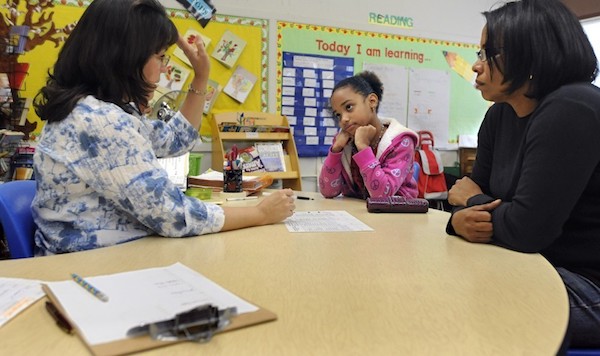
    Through the Co-located Campus Initiative, we work to improve the overall culture and climate across schools on campuses, and make sure resources are shared so teachers and kids can have access to more programs and opportunities. By coming together, individual schools are sharing best practices and strengthening campus culture – and the entire community is benefiting.

    Students learn best when there is collaboration between teachers, school staff and families. That’s why I have always promoted collaboration over competition throughout my 52 years as a New York City educator. Collaboration looks different across classrooms and schools – it can be two teachers sharing best practices to strengthen lesson plans, or two principals in the same building finding ways for their students to share an advisory council or the lunchroom. Our classrooms are stronger when we collaborate, share resources and cultivate successful teaching practices.

    Over the last four years, collaboration has played a critical role in improving instruction at schools across the City. Through the Showcase Program and the Learning Partners Program, educators from different schools come together to develop and strengthen approaches to teaching, identify ways to improve culture and climate, and hone ways to better serve English Language Learners.

    And while collaboration across schools, districts and specialties is something I have championed, I noticed early on in my tenure as Chancellor that collaboration was lacking in some of the places where it made the most sense – our co-located campuses. There was one high school campus, Lehman, that was facing challenges. We heard from surrounding business owners and local elected officials got involved – something had to immediately change to improve the school climate on campus and in the surrounding area.

    We brought the principals together and put a plan into action: Mark Rampersant, the DOE’s Deputy CEO for Safety and Security, worked with the principals in the building to form partnerships between all of the schools, create a single bell schedule, form a campus-wide student advisory, combine professional development, and open advanced placement classes to all students on the campus. We saw results, including an increase in students participating in advanced placement courses and taking advantage of afterschool programs as well as a decrease in suspensions. The campus celebrated their successes by hosting the first ever campus-wide prom. Based on this progress, we expanded our work to five additional campuses in the 2016-2017 school year.

    Through the Co-located Campus Initiative, we work to improve the overall culture and climate across schools on campuses, and make sure resources are shared so teachers and kids can have access to more programs and opportunities. By coming together, individual schools are sharing best practices and strengthening campus culture – and the entire community is benefiting.

    Campuses in the program are strengthening their communities and increasing their capacity to effectively operate campus-wide programs that give students the additional support they need. This includes College Access Centers that provide students with hands-on guidance through the college-application process, CTE courses, mental health clinics and even food pantries. For example, the Grand Street Campus in Brooklyn has a campus-wide band class that practices and performs together and is recognized citywide. Grand Street serves as a model for schools in the Co-located Campus Initiative that are looking to leverage their campuses to strengthen arts programming.

    Today, our Co-located Campus Initiative serves 138 schools and programs on 24 campuses across the City. I recently had the pleasure of visiting 10 showcase campuses, including George Washington in Manhattan, Evander Childs in the Bronx, Springfield in Queens, and Erasmus Hall in Brooklyn, and was thrilled to hear principals talk with a single voice, referring to “us,” “we,” and “our campus.”

    Our high school campuses and communities are stronger because students, educators and families are working together.

    (The author is New York City Schools Chancellor)

  • ICE’s Top Lawyer in Seattle Charged with Stealing Immigrants’ Identities

    ICE’s Top Lawyer in Seattle Charged with Stealing Immigrants’ Identities

    Raphael A. Sanchez is accused of stealing the information of seven immigrants while their cases were under review by US Immigration and Customs Enforcement

    SEATTLE (TIP): The chief counsel for US Immigration and Customs Enforcement in Seattle has been charged with stealing the identities of multiple immigrants for financial gain, says a Buzz Feed report Feb 14.

    According to an indictment filed this week, ICE’s top attorney in its Seattle office allegedly devised a plan to steal the identities of seven immigrants over a four-year period while their cases were being processed by the federal immigration agency.

    The lawyer, Raphael A. Sanchez, faces one count of wire fraud and aggravated identity theft.

    A Justice Department official told BuzzFeed News Sanchez resigned from the agency effective Monday, Feb 12,  the same day the indictment against him was filed.

    Sanchez used the identifying information of the seven immigrants to “defraud financial institutions” including American Express, Bank of America, Capital One, Citibank, Discover, and JPMorgan Chase, according to the charging document. He also allegedly used his official ICE email address to forward personal information of one of the victims, including an energy bill, a US residence card, and copy of a Chinese passport.

    A spokeswoman with ICE’s Seattle office referred all questions about the indictment and Sanchez’s employment with the agency to the Department of Justice. According to the complaint, the case was spearheaded by the DOJ’s Public Integrity Section in Washington, DC, which oversees corruption cases involving public officials.

     (Source: BuzzFeed/ DOJ))


  • Indian American Artists to Perform along With Pt Jasraj, Mishra Brothers  AT 25th MIT’S Heritage Of Arts of South Asia Festival

    Indian American Artists to Perform along With Pt Jasraj, Mishra Brothers AT 25th MIT’S Heritage Of Arts of South Asia Festival

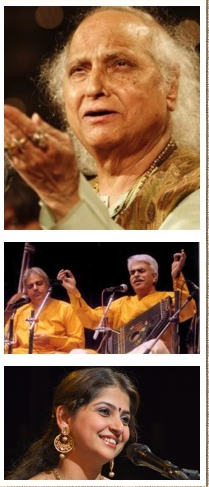
    New York (TIP): Renowned ‘khayal’ vocalist Pandit Jasraj and Mishra Brothers are among the musicians who are scheduled to perform at the 25th MIT’s Heritage of the Arts of South Asia festival.

    Pt Jasraj’s performance is the highlight of the coming spring season, which begins from March 30. The Classical vocalist will take to the mic on May 19 at MIT’s Kresge Auditorium.

    Delhi-based brother duo Rajan and Sajan Mishra and Kolkata-based Kaushiki Chakraborty are also expected to perform at the music festival, known as MITHAS.

    The line-up of the South Indian artistes is equally promising.

    Senior vocalist and Padmabhushan T V Sankaranarayanan, in collaboration with the Learnquest Festival at Regis College, will give the open the festival, the same evening Chakraborty is scheduled to perform, MITHAS said in a statement.

    Chaired by Anuradha Palakurthi, the festival allows students from elementary school through graduate school to attend all programes for free.

    “We are so far away from our homeland and we have a responsibility to carry this musical tradition forward,” said Palakurthi, a widely acclaimed Boston-based singer who has performed and recorded with Bollywood giants such as Suresh Wadkar, Kumar Sanu, Hariharan and Bappi Lahiri.

    “Growing up in India we benefitted from free entry to classical shows at colleges because of organisations like Spic-MACAY, and I want to do the same for students music-lovers in Boston,” said Palakurthi, who has also recorded an album with Ustad Nishad Khan of Imdadkhani Etawah gharana.

    Artistes such as Ali Akbar Khan, Zakir Hussain, Hariprasad Chaurasia, M Balamuralikrishna, TN Krishnan, T Viswanathan, V V Subrahmanyam, Sanjay Subrahmanyan, TM Krishna and Chitraveena Ravikiran have performed at MITHAS in the past.

    “When I look back at the work of MITHAS, I am amazed at how many people have come together to present so many of South Asia’s finest artists in concerts and lectures,” said George Ruckert, one of the founders of MITHAS, who came to MIT to teach music in 1991.

  • Indian American Started Her Own Turmeric Business to Help Indian Farmers

    Indian American Started Her Own Turmeric Business to Help Indian Farmers

    “If white women are going to consume turmeric, how do I make sure brown farmers make as much money off of it as possible?”

    Indian American Sana Javeri Kadri has had a turmeric latte twice in her life. Both times were at wellness cafes, the first in Seattle and the second in Oakland. She was unable to finish either one. The drink was aggressively unpleasant.

    Finding herself in a cultural terrain so far from what she knew in India, she had a mounting sense of frustration with turmeric’s newfound status as a luxury product, race- and class-coded in a way that was at odds with the realities of the Indian farmers who harvested it so tirelessly.

    For her, the battle began with turmeric.

    The example she likes to give is, “if you think about coffee and cacao ten years ago, [they were] commodity crops—something that had a very low price that was produced in the global South and then consumed here in the West. “

    “With direct trade and working with farmers, the quality of coffee brought into the West has changed completely. The national prices in several coffee- and cacao-growing countries has gone up. So overall, this idea of direct trade and sustainable tracing of your product has been wonderful for these two crops. I’m trying to do the same thing for spices.” Says Kadri

    She further told Munchies,”If white women are going to consume turmeric, how do I make sure brown farmers make as much money off of it as possible? That was honestly the driving force for the first many months of Diaspora Co.: Let’s just make this as profitable for India as possible.”

    The driving force behind her business is to put money into the hands of Indian farmers. But then it’s also, in the marketing of it. Kadri re iterates , “I’m not your Ayurvedic healer selling you turmeric. I’m a queer woman of color selling you turmeric.”

    Kadri, 24, grew up in Mumbai, but moved to California to attend Pomona College six years ago.

    So she founded Diaspora Co. last August. You could consider it her way of addressing the injustice at the heart of turmeric’s sudden stateside popularity. Diaspora Co. sells turmeric sourced directly from Vijayawada, a city in the southern Indian state of Andhra Pradesh.

    The turmeric is harvested by a fourth-generation turmeric farmer named Mr. Prabhu. Prabhu’s turmeric is a curcumin-rich heirloom pragati strain that Javeri Kadri offers in tins and jars . Farmers like Prabhu often get the short end of the stick in the global spice trade, where supply chains can be so convoluted, with markups so excessive that these farmers often see very little profit. One kilogram of of turmeric in India is about US $0.35; in the States, Javeri Kadri explained to me, it can cost roughly $35.

  • National Congress of American Indians surprised by Elizabeth Warren

    National Congress of American Indians surprised by Elizabeth Warren

    WASHINGTON (TIP) :  Sen. Elizabeth Warren on February 14th said that President Donald Trump is disrespecting Native Americans by referring to her as ‘‘Pocahontas,’’ and that while she does not claim membership in any tribe, she has never used her ancestry ‘‘to get a break’’ or advance her career.

    In a surprise appearance before the National Congress of American Indians, the Massachusetts Democrat said her mother’s family was part Native American and her father’s parents ‘‘were bitterly opposed to their relationship.’’ Her mother was born in Oklahoma in 1912 and married her father in 1932, Warren said.

    ‘‘The story they lived will always be a part of me. And no one — not even the president of the United States — will ever take that part of me away,’’ she said.

    Warren, 68, is running for re-election to the Senate and is widely considered a possible 2020 presidential contender. She frequently has sparred with Trump, who derisively refers to Warren as ‘‘Pocahontas’’ to mock her claim about being part Native American.

    Pocahontas was a native woman who lived in present-day Virginia in the 1600s and agreed to marry an English colonist to help ensure peace and protect her people.

    Warren said she understands why Trump and other political opponents ‘‘think there’s hay to be made here.’’ She added: ‘‘The joke, I guess, is supposed to be on me.’’

    In her most expansive public remarks on her ancestry, Warren told the Native American group that she respects the distinction between Native American heritage and membership in a tribe.

    ‘‘I understand that tribal membership is determined by tribes — and only by tribes,’’ she said.

    But contrary to claims by opponents, ‘‘I never used my family tree to get a break or get ahead,’’ Warren said. ‘‘I never used it to advance my career.’’

    Questions about Warren’s ancestry first surfaced during her 2012 Senate run, when she ousted Republican Sen. Scott Brown to claim the seat once held by the late Democratic Sen. Edward Kennedy.

    During the campaign, law school directories from the Association of American Law Schools from 1986 to 1995 surfaced that put Warren on the association’s list of ‘‘minority law teachers’’ when she was teaching at the University of Texas and the University of Pennsylvania. Warren said she listed herself with Native American heritage because she hoped to meet people with similar roots.

    Jefferson Keel, president of the tribal congress, said his group was ‘‘deeply honored by the courage’’ Warren showed in addressing a topic that has vexed her for nearly six years.

    ‘‘We appreciate her candor, humility and honesty and look forward to working with her as a champion for Indian Country,’’ Keel said.

    But Mike Reed, a spokesman for the Republican National Committee, said Warren ‘‘failed to apologize to the actual Native Americans in the audience and continued to insist that she really is a Native American, despite the long list of evidence that indicates otherwise.’’

    If Warren believed she deserved Native American status when she started checking the minority box in 1986, ‘‘why did she stop claiming minority status once she made it to the Ivy League in the 1990s?’’ Reed asked.

    In a 2012 interview with The Associated Press, Warren, then a Harvard Law School professor, said she and her brothers were told of the family’s heritage by their parents.

    Warren, who was raised in Oklahoma, said her father’s parents objected to her parents’ marriage because her mother ‘‘was part Cherokee and part Delaware.’’

    The family dispute was ‘‘something my brothers and I grew up with. We always understood the difference, between our father’s family and our mother’s family,’’ she told the AP.

    Warren repeated much of that family history on Wednesday, although she did not mention any specific tribes in referring to her mother.

    Warren told the Native American group that Trump’s taunts had led her to a decision: ‘‘Every time someone brings up my family’s story, I’m going to use it to lift up the story of your families and your communities.’’

    She said the story of Pocahontas has long ‘‘been taken away by powerful people who twisted it to serve their own purposes.’’

    While Pocahontas played a key role in mediating relations between the tribes ruled by her father and early white settlers, she later was abducted, imprisoned and held captive and died at about age 21, Warren said.

    Warren called it ‘‘deeply offensive’’ that Trump keeps a portrait of President Andrew Jackson hanging in the Oval Office, ‘‘honoring a man who did his best to wipe out Native people.’’

    The type of violence Jackson and his allies perpetrated on Indian tribes ‘‘remains part of life today’’ for Native Americans on and off Indian reservations, Warren said, noting that more than half of Native American women have experienced sexual violence.


  • Indian American student injured during Florida High School shooting in US

    Indian American student injured during Florida High School shooting in US

    Florida (TIP) : 17 An Indian-American student has sustained injuries ,17 persons, including students , were killed at a Florida high school in the United States by a gun-toting former student, report says.

    Meanwhile, the perpetrator has been identified as Nicolas Cruz. He has been arrested and taken into custody. The incident took place at Marjory Stoneman Douglas High School in Parkland, Florida.

    US President Donald Trump has expressed condolences. It has been learnt that he spoke with the Florida Governor and was in touch with other top officials. Trump was tracking the tragic incident. First lady Melania Trump has also expressed grief over the incident. The mass shooting is reportedly 18th school shooting of the year and said to be one of the deadliest ones. The incident has once again raised the debate on the much-talked about gun control legislation in the US.

    Reports so far:

    • Broward County Sheriff Scott Israel has said, “Nicolas Cruz was the killer. He is in custody. We already began to dissect his websites and social media that he was on … some of the things that come to mind are very, very disturbing,”
    • 19-year-old Cruz is a former student of Marjory Stoneman Douglas High School in Parkland, Florida. Cruz got expelled from the school for disciplinary reasons, the Broward County Sheriff said. The suspect had countless magazines, he added.
    • Police said that apparently the former student was carrying one AR-15 rifle. However, they were trying ascertain whether he had other arms or not.
    • According to reports, of the 17 dead, 12 were inside the building, two were shot dead just outside the building, one was on a street outside the school, and two people lost their lives at a hospital. Israel, however, could not confirm the number of victim students.
    • It has been learnt that the school has quite a number of Indian American students. It is believed that at least one student from the community was injured in the incident, according to reports. The ninth grade student had sustained minor injures as he was hit by splinters. He was being treated at a hospital.
    • “This is a sad day for the country and the community. We all Indian Americans are praying for the victims,” Shekar Reddy, whose friend’s son was among those injured in the mass shooting, told PTI.
    • President Donald Trump in a tweet expressed condolences, “My prayers and condolences to the families of the victims of the terrible Florida shooting. No child, teacher or anyone else should ever feel unsafe in an American school.” He also said that he has spoken to Governor Rick Scott. “We are working closely with law enforcement on the terrible Florida school shooting,” Trump said.
    • First lady Melania Trump said, “My heart is heavy over the school shooting in Florida. Keeping all affected in my thoughts & prayers.”

    Developing Story……..


  • Indian American pleads guilty to passport fraud

    Indian American pleads guilty to passport fraud

    Shivam Patel of Williamsburg, VA, did not disclose his foreign trips when he applied to join the army.

     An Indian American man, who was arrested last year for making false statements in his application to join the US Army and Air Force, has pleaded guilty to passport fraud and to making false statements.

    According to a press release issued by the US Justice Department, Shivam Patel from Williamsburg, Virginia, did not disclose his foreign trips when he applied to join the army and fraudulently applied for a new passport for concealing such foreign trips.

    According to court documents, Shivam Patel, 28, was working in China in the summer of 2016, when he flew to the Kingdom of Jordan, from where he was arrested, detained, and then returned to the United States. Patel is alleged to have told an undercover agent and a confidential source that he wanted to join a “Muslim army” and commit jihad.

    After returning to the United States, he applied to join the US Army and Air Force. When asked about his prior foreign travel as part of his applications, Patel did not disclose his trips to China or Jordan.

    After he was asked to show an Army recruiter his passport, which would have revealed his prior travel, he applied for a new passport, falsely claiming that he had accidentally thrown his old passport away. Special agents from the FBI recovered that passport, which documented his undisclosed travel, when they arrested him in July 2017.

    “Patel pleaded guilty to false statements and passport application fraud. He faces a maximum penalty of 15 years in prison. He will be sentenced on June 4. Actual sentences for federal crimes are typically less than the maximum penalties.

    A federal district court judge will determine any sentence after taking into account the US Sentencing Guidelines and other statutory factors,” said the Justice Department.

    Tracy Doherty-McCormick, Acting U.S. Attorney for the Eastern District of Virginia, Edward C. O’Callaghan, Acting Assistant Attorney General for National Security, and Martin Culbreth, Special Agent in Charge of the FBI’s Norfolk Field Office, made the announcement after US Magistrate Judge Lawrence Leonard accepted the plea.

    Assistant U.S. Attorney Andrew C. Bosse and Trial Attorney Justin Sher of the National Security Division’s Counterterrorism Section are prosecuting the case.

    Source : AB Wire


  • Indian Origin Man On Death Row For Drug Charges Wins Acquittal By Singapore’s Top Court

    Indian Origin Man On Death Row For Drug Charges Wins Acquittal By Singapore’s Top Court

    According to the judgement on February 12th , Gopu Jaya Raman successfully proved that he did not know that controlled drugs were hidden in the motorcycle he was riding.

    Singapore (TIP):An Indian origin Malaysian on death row in Singapore for possessing drugs has been acquitted by the country’ top court.

    According to the judgement on February 12th , Gopu Jaya Raman successfully proved that he did not know that controlled drugs were hidden in the motorcycle he was riding into Singapore.

    On March 24, 2014, Gopu was arrested after he entered Singapore through Woodlands Checkpoint on the north with three black bundles of diamorphine hidden in his motorcycle’s fender.

    Diamorphine, also known as Heroin, is an opioid most commonly used as a recreational drug for its euphoric effects.

    When immigration officers stopped him and found the drugs, he said he did not know the drugs were hidden in the motorcycle.

    Gopu also claimed the motorcycle was not his.

    Tay Yong Kwang, the sole dissenting judge in Monday’s judgement, noted that Gopu had trafficked drugs into Singapore on two other occasions before he was caught on March 24, 2014.

    He had been trying to repay a 4,000 Malaysian Ringgit loan.

    He was not convinced by Gopu’s reasons for entering Singapore or how he came to possess the motorcycle.

    He said Gopu’s admission to trafficking drugs into Singapore on the same motorcycle on two other occasions did not bolster his credibility.

    After the authorities found the drugs, they got Gopu’s help to try to nab others in the ring who might turn up to collect the drugs, the judgement stated. The operation, however, was called off when no one turned up.

    Authorities monitored his conversation with the man who had helped to get him the motorcycle.

    After listening to a number of exchanges, officers told Gopu to send a message, indicating that he had no knowledge of the drugs.

    In the judgement, Chief Justice Sundaresh Menon and Judge of Appeal Judith Prakash found that Gopu would have missed the drugs when he was checking for them, given the bundles’ “size and dark colour”.


  • Indian Origin Man Jailed For Threatening To Kill His Wife

    Indian Origin Man Jailed For Threatening To Kill His Wife

    Saying that Mr. Ramachandran was “totally incorrigible”, Community Court Judge Eddy Tham said it was really disturbing that the moment he came out from prison, he started terrorizing his family members.

    SINGAPORE (TIP):  An Indian origin man, who had threatened to kill his wife irrespective of the consequences, was  jailed on February 14th for over an year.

    Ramachandran Maniam, 48, will be spending more than one year and two months behind bars, after admitting to criminal intimidation by threatening to harm his estranged wife, reported The Straits Times.
    As he had committed the offence in breach of his remission order for an earlier conviction, he was sentenced today to an enhanced punishment of 372 days in jail on top of two months’ jail for criminal intimidation.

    Mr. Ramachandran was placed on the mandatory aftercare scheme from October 16-27 last year.

    He was housed at halfway house under the scheme for inmates released under the conditional remission system and deemed to be at higher risk of recidivism.

    The court heard that on October 19, Mr. Ramachandran went to look for his wife. He called out to his son, 21, in a garden near a public housing estate apartment block, and said he wanted to speak to his wife.

    When told that she was at work, he insisted on speaking to her and uttered, “I am going to beat your mother one good one and if I will go prison, I don’t mind”.

    In a separate incident on October 28, Mr Ramachandran was given time off to go out of the halfway house but had to return by 10pm. But he stayed away for more than 24 hours and returned only at 1.25am on October 30.

    Deputy Public Prosecutor Selene Yap said that by failing to remain indoors as required for an accumulative period of more than 24 hours, he had committed a serious breach of his mandatory aftercare conditions.

    Saying that Mr. Ramachandran was “totally incorrigible”, Community Court Judge Eddy Tham said it was really disturbing that the moment he came out from prison, he started terrorizing his family members.

    Mr. Ramachandran added that his divorce is ongoing and he wanted to spend time with his ailing 75-year-old father.


  • Indian Americans become Fellows of the American Academy of Microbiology

    Indian Americans become Fellows of the American Academy of Microbiology

    NEW YORK (TIP) : On Jan. 16, The American Academy of Microbiology announced it’s 2018 Fellows amongst which four are Indian Americansout of 96 , according to a press release.

    The Indian American Fellows are Ashok Chopra, Atin Datta, Rajeev Misra and Reeta Rao.

    Ashok Chopra is a professor at the University of Texas Medical Branch in the microbiology and immunology department.

    Atin Datta is a supervisory research microbiologist and branch chief for the Department of Health and Human Services since November 2006.

    Rajeev Misra is a microbial geneticist who studies how proteins, synthesized in the cytoplasm, are targeted to the bacterial outer membrane and is a professor at Arizona State University’s School of Life Sciences.

    Reeta Rao is an associate professor in biology and biotechnology at Worcester

    According to a press release, AAM Fellows are elected annually through a highly-selective, peer review process, based on their records of scientific achievement and original contributions that have advanced microbiology.

    There are over 2,400 Fellows representing all subspecialties of the microbial sciences and involved in basic and applied research, teaching, public health, industry and government service, according to a press release.


  • Thirty-Six Defendants Indicted For Alleged Roles In Transnational Criminal Organization Responsible For More Than $530 Million In Losses From Cybercrimes

    Thirty-Six Defendants Indicted For Alleged Roles In Transnational Criminal Organization Responsible For More Than $530 Million In Losses From Cybercrimes

    Law Enforcement Dismantles Forum Used to Victimize Millions in all 50 States and Worldwide in One of the Largest Cyberfraud Enterprises Ever Prosecuted by the Department of Justice

    LAS VEGAS, Nev. (TIP) – A federal indictment was unsealed on February 7th charging 36 individuals for their alleged roles in the Infraud Organization, an Internet-based cybercriminal enterprise engaged in the large-scale acquisition, sale, and dissemination of stolen identities, compromised debit and credit cards, personally identifiable information, financial and banking information, computer malware, and other contraband.

    Following the return of a nine-count superseding indictment by a Las Vegas, Nevada, grand jury alleging racketeering conspiracy and other crimes, federal, state, local, and international law enforcement authorities arrested 13 defendants from the United States and six countries: Australia, the United Kingdom, France, Italy, Kosovo and Serbia.

    Acting Assistant Attorney General John P. Cronan of the Justice Department’s Criminal Division, U.S. Attorney Dayle Elieson of the District of Nevada, and Acting Executive Associate Director Derek N. Benner of U.S. Immigration and Customs Enforcement’s Homeland Security Investigations (HSI) made the announcement.

    “Today’s indictment and arrests mark one of the largest cyberfraud enterprise prosecutions ever undertaken by the Department of Justice,” said Acting Assistant Attorney General Cronan.  “As alleged in the indictment, Infraud operated like a business to facilitate cyberfraud on a global scale.  Its members allegedly caused more than $530 million in actual losses to consumers, businesses, and financial institutions alike—and it is alleged that the losses they intended to cause amounted to more than $2.2 billion.  The Department of Justice refuses to allow these cybercriminals to use the perceived anonymity of the Internet as a shield for their crimes.  We are committed to working closely with our international counterparts to identify, investigate, and bring to justice the perpetrators of these crimes, wherever in the world they operate.”

    “The U.S. Attorney’s Office is steadfastly committed to protecting America’s national and economic security,” said U.S. Attorney Elieson. “Criminals cannot hide behind their computer screens. We are working vigilantly with American and international law enforcement partners to identify and disrupt transnational cybercrime organizations, such as the Infraud Organization.”

    “Criminal cyber organizations like Infraud threaten not just U.S. citizens but people in every corner of the globe,” said HSI Acting Executive Associate Director Benner. “The actions of computer hackers and identity thieves not only harm countless innocent Americans, but the threat they pose to our financial system and global commerce cannot be overstated.  The criminals involved in such schemes may think they can escape detection by hiding behind their computer screens here and overseas, but as this case shows, cyberspace is not a refuge from justice.  HSI will continue working with our law enforcement partners in this country and around the world to aggressively target cyber thieves to ensure the perpetrators face the full weight of the law.”

    According to the indictment, the Infraud Organization was created in October 2010 by Svyatoslav Bondarenko aka “Obnon,” aka “Rector,” aka “Helkern,” 34, of Ukraine, to promote and grow interest in the Infraud Organization as the premier destination for carding—purchasing retail items with counterfeit or stolen credit card information—on the Internet.  Under the slogan, “In Fraud We Trust,” the organization directed traffic and potential purchasers to the automated vending sites of its members, which served as online conduits to traffic in stolen means of identification, stolen financial and banking information, malware, and other illicit goods.  It also provided an escrow service to facilitate illicit digital currency transactions among its members and employed screening protocols that purported to ensure only high quality vendors of stolen cards, personally identifiable information, and other contraband were permitted to advertise to members.

    According to the indictment, Infraud members held defined roles within the organization’s hierarchy.  “Administrators” managed day-to-day operation of and strategic planning for the organization, approved and monitored membership, and meted out punishments and rewards to members.  “Super Moderators” oversaw and administered specific subject-matter areas within their expertise.  “Moderators” moderated one or two specific sub-forums within their areas of subject-matter expertise.  “Vendors” sold illicit products and services to Infraud members.  Finally, “VIP Members” and “Members” used the Infraud forum to gather information and to facilitate their criminal activities.  As of March 2017, there were 10,901 registered members of the Infraud Organization.

    During the course of its seven-year history, the Infraud Organization inflicted approximately $2.2 billion in intended losses, and more than $530 million in actual losses, on a wide swath of financial institutions, merchants, and private individuals, and would have continued to do so for the foreseeable future if left unchecked.

    The defendants indicted for their alleged roles in the Infraud Organization’s transnational racketeering conspiracy include:

    • Svyatoslav Bondarkeno of Ukraine;
    • Amjad Ali aka “Amjad Ali Chaudary,” aka “RedruMZ,” aka “Amjad Chaudary,” 35, of Pakistan;
    • Roland Patrick N’Djimbi Tchikaya aka “Darker,” aka “dark3r.cvv,” 37, of France;
    • Miroslav Kovacevic aka “Goldjunge,” 32, of Serbia;
    • Frederick Thomas aka “Mosto,” aka “1stunna,” aka “Bestssn,” 37, of Alabama;
    • Osama Abdelhamed aka “MrShrnofr,” aka “DrOsama,” aka “DrOsama1,” 27, of Egypt;
    • Besart Hoxha aka “Pizza,” 25, of Kosovo;
    • Raihan Ahmed aka “Chan,” aka “Cyber Hacker,” aka “Mae Tony,” aka “Tony,” 26, of Bangladesh;
    • Andrey Sergeevich Novak aka “Unicc,” aka “Faaxxx,” aka “Faxtrod” of the Russian Federation;
    • Valerian Chiochiu aka “Onassis,” aka “Flagler,” aka “Socrate,” aka “Eclessiastes,” 28, of Moldova;
    • John Doe #8 aka “Aimless88;”
    • Gennaro Fioretti aka “DannyLogort,” aka “Genny Fioretti,” 56, of Italy;
    • Edgar Rojas aka “Edgar Andres Viloria Rojas,” aka “Guapo,” aka “Guapo1988,” aka “Onlyshop,” 27, of Australia;
    • John Telusma aka “John Westley Telusma,” aka “Peterelliot,” aka “Pete,” aka “Pette,” 33, of Brooklyn, New York;
    • Rami Fawaz aka “Rami Imad Fawaz,” aka “Validshop,” aka “Th3d,” aka “Zatcher,” aka “Darkeyes,” 26, of Ivory Coast;
    • Muhammad Shiraz aka “Moviestar,” aka “Leslie” of Pakistan;
    • Jose Gamboa aka “Jose Gamboa-Soto,” aka “Rafael Garcia,” aka “Rafael101,” aka “Memberplex2006” aka “Knowledge,” 29, of Los Angeles, California;
    • Alexey Klimenko aka “Grandhost,” 34, of Ukraine;
    • Edward Lavoile aka “Eddie Lavoie,” aka “Skizo,” aka “Eddy Lavoile,” 29, of Canada;
    • Anthony Nnamdi Okeakpu aka “Aslike1,” aka “Aslike,” aka “Moneymafia,” aka “Shilonng,” 29, of the United Kingdom;
    • Pius Sushil Wilson aka “FDIC,” aka “TheRealGuru,” aka “TheRealGuruNYC,” aka “RealGuru,” aka “Po1son,” aka “1nfection,” aka “1nfected,” 31, of Flushing, New York;
    • Muhammad Khan aka “CoolJ2,” aka “CoolJ,” aka “Secureroot,” aka “Secureroot1,” aka “Secureroot2,” aka “Mohammed Khan,” 41, of Pakistan;
    • John Doe #7 aka “Muad’Dib;”
    • John Doe #1 aka “Carlitos,” aka “TonyMontana;”
    • David Jonathan Vargas aka “Cashmoneyinc,” aka “Avb,” aka “Poony,” aka “Renegade11,” aka “DvdSVrgs,” 33, of San Diego, California;
    • John Doe #2;
    • Marko Leopard aka “Leopardmk,” 28, of Macedonia;
    • John Doe #4 aka “Best4Best,” aka “Wazo,” aka “Modmod,” aka “Alone1,” aka“Shadow,” aka “Banderas,” aka “Banadoura;”
    • Liridon Musliu aka “Ccstore,” aka “Bowl,” aka “Hulk,” 26, of Kosovo;
    • John Doe #5 aka “Deputat,” aka “Zo0mer;”
    • Mena Mouries Abd El-Malak aka “Mina Morris,” aka “Source,” aka “Mena2341,” aka “MenaSex,” 34, of Egypt; and
    • John Doe #6 aka “Goldenshop,”aka “Malov.”

    In addition, Novak and “Goldenshop” are charged with three counts each and “Deputat” and Musliu one count each of possession of 15 or more counterfeit and unauthorized access devices.

    The superseding indictment is the result of an investigation conducted by the Las Vegas Office of Homeland Security Investigations; the Henderson, Nevada, Police Department; the Criminal Division’s Organized Crime and Gang Section; and the U.S. Attorney’s Office for the District of Nevada.

    The international operation to dismantle the Infraud Organization would have been impossible without the significant efforts and timely cooperation of the Justice Department’s Office of International Affairs and International Organized Crime Intelligence and Operations Center; Interpol Rome; Interpol Tirana; the Italian National Police (Postal and Communications Police); the Australian Federal Police  and the International Crime Cooperation Central Authority, Australian Government Attorney-General’s Department; the U.S. Diplomatic Security Service, Regional Security Office at U.S. Embassy Tirana, Albania; the City of London Police, DCPCU; the French Ministry of Justice, the Paris Prosecutor, L’Office Central de Lutte contre la Criminalité liée aux Technologies de l’Information et de la Communication; the judicial and police authorities of the Grand Duchy of Luxembourg; the Directorate for Organized Crime Investigation, Sector for Cyber Crime Investigation; the Basic Prosecution Office Pristina, Kosovo; and the Ministry of Justice of the Republic of Kosova, Department for International Legal Cooperation and the Special Prosecution Office for High-Tech Crime of the Republic of Serbia.

    The charges in the indictment are merely allegations, and the defendants are presumed innocent until proven guilty beyond a reasonable doubt in a court of law.

    Trial Attorneys Kelly Pearson and Chimaobim Nwachukwu of the Criminal Division’s Organized Crime and Gang Section and Assistant U.S. Attorney Chad W. McHenry of the District of Nevada are prosecuting the case.

    Press Release: DOJ


  • Russian passenger plane crashes outside Moscow

    Russian passenger plane crashes outside Moscow

    Saratov Airlines flight carrying 71 people crashes after take off from Domodedovo airport

    Moscow (TIP): More than 70 people died when a Russian passenger plane crashed shortly after take-off from Moscow’s Domodedovo airport on Sunday, the 11th of Feb, officials say.

    Saratov Airlines flight 6W703 was heading to Orsk, a city near Russia’s border with Kazakhstan, when it went down near the town of Argunovo, about 50 miles south-east of Moscow. Witnesses said the plane, an Antonov An-148 aircraft, was in flames as it fell from the sky.

    The plane was carrying 71 people – 65 passengers and six crew members. Emergency services officials told the Tass news agency there were no survivors. Wreckage from the plane was reported to be spread over a large area. It was unclear if there were any casualties among people on the ground at the crash site.

    Russia’s gazeta.ru website cited unnamed investigators as saying the pilot had reported a technical malfunction on board the plane and asked for clearance for an emergency landing at the nearby Zhukovsky International Airport. Officials have not confirmed the report. Other reports said one of the plane’s engines may have exploded before the crash.

    The flight-tracking site Flightradar24 tweeted that the seven-year-old passenger jet had gone into a steep descent of 1,000 metres (3,300ft) a minute five minutes after take-off, after which it had vanished from radars.

    The Russian president, Vladimir Putin, expressed his condolences to the families and friends of those who had died in the crash and tasked the government with setting up a special commission to investigate.

    A source from Russia’s emergency services told Interfax the 71 people on board had no chance of survival.

    Russian state television aired a video of the crash site, showing parts of the wreckage in the snow. Russia has experienced record snowfalls in recent days and visibility was reportedly poor.

    The Russian-made plane had been bought by Saratov from another Russian airline a year ago.

    Russian media reported that the emergency services had been unable to reach the crash site by road and rescue workers had walked to the scene on foot. Emergency services said in a statement that more than 150 rescue workers had been deployed.

    The Russian transport minister was on his way to the crash site, agencies reported. The transport ministry said several causes for the crash were being considered, including weather conditions and human error.

    The governor of the Orenburg region, which the plane was flying to, told Russian media more than 60 people on the plane were from the region.

    Local media website Ural56.ru in the Orenburg region showed footage of distressed relatives at Orsk airport, where the plane was due to land. Andrei Odintsov, the mayor of the city of Orsk, near Russia’s border with Kazakhstan, told Russian state television that six psychologists and four ambulances with medics are working with the relatives in the small airport.