Month: July 2019

  • Send Jadhav home; It could trigger a fresh start for Indo-Pak talks

    Send Jadhav home; It could trigger a fresh start for Indo-Pak talks

    Every new path in Indo-Pak relations ends in a treacherous cul-de-sac. Yet, after every ambush the twins born of colonial cunning go back to start it all over again. Even Ajmal Kasab walking up and down the South Mumbai streets with an automatic rifle in hand did not change the pattern; nor did four wars and the splitting of Pakistan into two. Indira’s generosity after victory, Vajpayee’s peace bus, Manmohan Singh’s Sharm el-Sheikh blunder and Modi’s surprise birthday gift for Nawaz Sharif, nothing ever changed the Pakistan deep state’s attempts to bleed India with a thousand cuts and a million mutinies. But the Pulwama bomb attack and the retaliatory Balakot airstrikes have broken the cycle of Pak attacks and Indian negotiations.

    It is in this context we need to look at the recent events: the verdict of the International Court of Justice (ICJ) asking Pakistan to review its decision to execute Kulbhushan Jadhav, the arrest of Hafiz Saeed the very same day and the just-concluded Kartarpur corridor talks. The Government of India, with great reverence to the Guru, upholding the Sikh sentiments, has rightly kept the Kartarpur corridor out of the ambit of Indo-Pak negotiations. Apart from Sikhs, only Hindus worship at gurdwaras and revere the Guru, yet Pakistan tried its best to ban Hindus to turn the corridor communal. Despite all these provocations and the legitimate fear of Pakistan fanning 2020 secessionist fires, New Delhi has honored the wishes of its Sikh and Hindu believers by building the corridor.

    Now, if Pakistan really wants to break out of its vicious cycle of terror and talks, it should let Jadhav go home. The ICJ verdict does not acquit Jadhav, as it did not have the jurisdiction to examine the evidence for and against the accused. But the spirit of the ICJ decision is in favor of Jadhav’s return. Beyond the breach of Article 36, 1 (b) of the Vienna Convention, what have been exposed are the mock trial and the use of a former Indian Naval officer as a tool to settle diplomatic scores. Pakistan cannot achieve anything more by keeping Jadhav in its custody. Jadhav’s release can lure India back to the talks table.

    (Tribune, India)

  • India-US ties and the Soviet baggage

    India-US ties and the Soviet baggage

    By KP Nayar

    Till about a decade ago, India and the US were talking to each other on 38 platforms. Now they are talking at one another. Such difficulties have been compounded by a tendency in India to run down Trump and view him as a bull in the global diplomatic China shop. But there is hope as the new External Affairs Minister, S Jaishankar, does not believe in demonizing Trump.

    At the root of most of the gripe in recent weeks about the state of relations between New Delhi and Washington is a long-standing popular expectation since the demise of the Soviet Union that as India and the US got closer, the latter would become a substitute for Russia.

    It is an expectation that is shared in India not merely at the popular level, but in the media, sections of which plug this line as their wishful thinking. Because of the heavy American influence on the think tank community and non-governmental organisations (NGOs), the public discourse on Indo-US relations has also fostered such an expectation.

    Policymakers within successive Indian governments since then Prime Minister PV Narasimha Rao — during whose tenure the Soviet Union collapsed — have mostly had serious reservations about such a perception. Unfortunately, their American counterparts have both publicly and privately encouraged the policy line that with the fall of the Berlin Wall and with the East bloc gone, all that was needed was for India and America to consummate their marriage that was made in heaven and ordained by their horoscopes matched by the constellations of democracy, English language, the rule of law and so on.

    Additionally, after the George W Bush-Manmohan Singh nuclear deal, which ended India’s long nuclear winter, Americans at every level of strategic thought, both within their administrations and outside, nursed a sense of entitlement about India. When Sanjaya Baru, then PM’s Media Adviser, handed over the first consignment of Alphonso mangoes to then US Secretary of State Condoleezza Rice in June 2007 at the annual meeting of the US-India Business Council, a senior State Department official standing next to this writer loudly exclaimed: “We give India the nuclear bomb and all we get in return is a basket of mangoes.”

    This official’s reaction was patently an exaggeration, but it reflected the strong feelings within the Washington establishment then — as also now. His reference was to the historic nuclear deal which ended a three decade-old ban on India’s trade in nuclear material and technology, initially with the US and eventually with the rest of the world. Till 2007, mangoes — like many other Indian agricultural products — could not be exported to the US despite New Delhi’s strenuous efforts because of stringent US regulations.

    In May 2006, Boeing invited Indian journalists based in Washington to visit the company’s highly secure and heavily restricted Integrated Defense Systems headquarters in St Louis, Missouri, where its modern military aircraft were being designed and developed. Word had been out then that India was about to order 126 medium multi-role combat aircraft (MMRCA), the biggest military aviation deal in history. The invitation was meant to familiarize the Indian public with US defense capabilities. Indo-US defense trade had not picked up in 2006 to anywhere near what it is today.

    Pin-stripe-suited Boeing senior executives, who flew down to St Louis to smoke exquisite cigars and sip premium cognac with the journalists at the Ritz Carlton’s Cigar Club, were smug in their belief that the MMRCA deal would go to US companies which were preparing to bid as soon as the tendering process was set in motion by the Congress-led government. When this writer told an executive that a deal as big as the one for 126 planes would take at least five years to be negotiated, he dismissed that view with contempt. “We have been told that in six months everything would be completed once the process begins,” he said confidently.

    In the end, it took a decade to sign an agreement for partial purchase of the original 126 planes and the deal did not go to American companies. This anecdote is worth narrating because it is just one of the many examples of how companies in the US have little idea of how to do business in India and are ill-equipped to cope with the peculiarities of decision-making in the Indian government.

    Just as US administrations want to send Indian-Americans as Ambassadors to India in the belief that they can swing things for them in New Delhi, US companies and lobbying groups hire retired bureaucrats from Lutyens’ Delhi whose contacts are from a bygone era. Sadly for economic and trade relations between the two countries, there are many instances where these men and women have given wrong advice to their principals back in America. But when things go wrong, the blame is on India, as many Americans in the Donald Trump administration and outside are doing now.

    After the thick ice between Washington and New Delhi caused by the 1998 nuclear tests melted through the most comprehensive dialogue in their history between then PM Atal Bihari Vajpayee’s confidant Jaswant Singh and then President Bill Clinton’s troubleshooter Strobe Talbott and bilateral relations eventually took off, 38 working groups came into being to catalyze Indo-US relations across the board.

    But six months after Hillary Clinton became Secretary of State, she found these 38 groups to be mere talking shops. During a visit to New Delhi in July 2009, she persuaded her Indian counterpart SM Krishna to scrap these working groups. In their place, Clinton and Krishna created the lofty sounding ‘five principal pillars’ of their relationship: strategic cooperation; energy and climate change; education and development; economics, trade and agriculture; science, technology, health and innovation.

    In retrospect, this was a mistake. When there were 38 working groups, there was constant toing and froing between the two sides and they were in constant and unbroken dialogue offering numerous windows to understand differences and disputes. India and the US were talking to each other then on 38 platforms. Now they are talking at one another.

    Such difficulties have been compounded by a tendency in India to run down Trump and view him as a bull in the global diplomatic China shop. But there is hope because the new External Affairs Minister, S Jaishankar, does not believe in demonizing Trump. When he was Foreign Secretary, within a month of Trump’s inauguration as President, Jaishankar began advising those in India who practice diplomacy and engage in strategic thought. “Do not demonize Trump, analyses Trump. He represents a thought process. It is not a momentary expression” what Trump is saying, has been Jaishankar’s approach. If Trump is re-elected President next year, India will have to follow this advice in letter and spirit or give up on India’s most important foreign policy priority.

    (The author is a Strategic Analyst)

  • PICNEWS

    PICNEWS

    NEW YORK(TIP):  NITI Aayog Vice Chairman  Rajiv Kumar and India’s Ambassador to the US Harsh V Shringla were in town recently. While Mr. Kumar spoke at the United Nations  and at the Indian Consulate here on several aspects of Budget and Investment , Ambassador Shringla inaugurated an initiative to manage queues  at the Consulate and met with community and political leaders.

    Here are some of the events captured in pictures by Jay Mandal / on assignment.


    Ambassador Harsh V Shringla during a meeting with NITI Aayog VC, Rajiv Kumar in NYC. Also in the Photo, Consul General Sandeep Chakravorty, July 15, 2019

    From Left, Sanyukta Samaddar, Joint Secretary, NITI Aayog; Ambassador Syed Akbaruddin, PR, Indian Mission to the UN; Rajiv Kumar, Vice Chair, NITI Aayog; Achim Steiner, Director UNDP; and Renata Dessallien, UN Country Head, India release the report on “Localising SDG’s Early Lessons from India, 2019” during a special meeting at the United Nations, July 15.

    Rajiv Kumar, Vice Chairman, NITI Aayog meets with Annika Strandhäll, Minister for Social Security of Sweden on the sideline of HLPF, 2019, July 16, 2019

    Ambassador Harsh V Shringla at an informal dinner reception, hosted in his honor by the New Jersey Governor, Phil Murphy  and his wife Tammy Murphy at his private residence in NJ. From L to R: Ambassador Harsh V Shringla, Governor Phil Murphy and  Ambassador Sandeep Chakravorty

    Ambassador Harsh V Shringla during a photo session with the Hosts, Governor Phil Murphy (right) and his wife Tammy Murphy at their private residence in NJ.


    Photos / Jay Mandal-on assignment

  • WHO’S LOOKING OUT FOR IMMIGRANTS? ASKS COMMUNITY LEADER ALBERT BALDEO

    WHO’S LOOKING OUT FOR IMMIGRANTS? ASKS COMMUNITY LEADER ALBERT BALDEO

    Thriving communities built on the backs of immigrants, and with their blood, sweat and tears, have become ghost towns, retreating in fear and panic as the U.S. Immigration and Customs Enforcement service (ICE) launched macabre raids, presumably to rid the USA of “these terrible people,” although America itself is a “nation of immigrants.”

    It is as draconian, as it is un-American, and will only divide the nation further. It is evil. Some people conveniently ignore our history that we are a great nation because of immigration, to score cheap political mileage. Some even feign amnesia that their closest families are immigrants themselves. What hypocrisy!

    In these communities, which receive little city, state and/or federal funding, immigrants are treated like orphans and step children. They deserve better! Yes, immigrants have paid their dues in political, economic and historical ways, but continue to be exploited, marginalized and ignored. Most politicians see their communities as milking cows for campaign cash, and then slither away when issues confront these communities. They cannot be found. So when you see these so-called leaders, ask them, “What have you done for me lately? Where were you when ICE struck?”

    Rev. Martin Luther King Jr. advised, “We have to demand our check!” This great civil rights leader meant that immigrant communities, like everyone else, have to demand what the USA has promised. Their check is good, and their track record is irrefutable. In 2008, the Richmond Hill- Ozone Park community made the gut wrenching sacrifice to help Democrats re-capture the NY State Senate since 1965, a watershed moment in our political history, when I assisted State senator Joe Addabbo defeat Serf Maltese after 20 years in office. “The road to the Senate majority passed through Baldeo’s people in Richmond Hill, Democratic leaders gleefully gloated then.” Where are they now?

    Immigrants have developed flourishing communities from decaying neighborhoods to the thriving economic engines that now contribute massively to the national and local economies.

    So where are these people when we need their help and their voice? Sadly, they are missing in action. The holy scriptures caution us that ingratitude is a major sin. We therefore demand that all of our elected officials, from Governor Cuomo and Mayor DeBlasio to our Senate and Congressional Representatives, State Senators, Assembly members, City Council members and others, Community Boards, NGOs, political, religious, cultural, social and economic organizations-indeed everyone, come out and denounce this barbaric initiative to make immigrants the whipping boys of American politics.

    You know who you are. You need to say in unison loudly to ICE that NYC is a sanctuary city, and that you condemn and demand an immediate halt to the despotic and mean measures that have disrupted the local economies, businesses, fellow Americans and visitors-indeed, everyone, living and working in this nation that belongs to so many.

    (Albert Baldeo is a civil rights activist and community advocate. As the President of the Baldeo Foundation and Liberty Justice Center, he has continued the fight for justice, equal rights, dignity and inclusion for all. He can be contacted at the Baldeo Foundation: AlBaldeo@aol.com or (718) 529-2300.)

  • Ambassador Shringla Inaugurates Queue Management System at New York Consulate

    Ambassador Shringla Inaugurates Queue Management System at New York Consulate

    NEW YORK CITY(TIP): The Consulate General of India, New York has launched ‘Queue Management System’ to manage queues of applicants who come to the Consulate for various services and also to improve the overall quality and delivery of services rendered at the Consulate. The new Queue Management System (QMS) considerably reduces the waiting time in availing the consular services.

    Ambassador of India to the United States Mr. Harsh Vardhan Shringla on July 15 inaugurated the Queue Management System at Consulate General of India, New York. Ambassador was also apprised of various initiatives taken by Consulate General of India, New York for the welfare of the applicants availing consular services at the Consulate, such as free coffee and free photocopying machine and Internet facilities. The Consulate provides about 150000 persons with various services annually.

    Ambassador Shringla also interacted with applicants present at the Consulate. Applicants lauded various initiatives taken by CGI, New York to improve the overall quality and effective delivery of services. Queue Management System considerably reduces the waiting time and will make delivery of Consular services a hassle free and comfortable experience.

  • QUEENS BOROUGH PRESIDENT KATZ ANNOUNCES LINEUP FOR 2019 “KATZ CONCERT SERIES”

    QUEENS BOROUGH PRESIDENT KATZ ANNOUNCES LINEUP FOR 2019 “KATZ CONCERT SERIES”

    Free Outdoor Summer Concerts Throughout Queens

    QUEENS, NY(TIP): Queens Borough President Melinda Katz, in partnership with the Kupferberg Center for the Arts at Queens College and NYC Parks, announced the full schedule of the fifth annual “Katz Concert Series,” a slate of free outdoor concerts taking place this summer in various locations throughout Queens.

    “Summers are all about free concerts in the parks,” said Borough President KATZ. “We’re delighted to continue the partnership and bring this concert series back for the families of Queens.”

    “Queens College is delighted once again to partner with Borough President Melinda Katz and NYC Parks in presenting the Katz Concert Series, which showcases wonderful musicians in outdoor venues throughout our borough,” said WILLIAM TRAMONTANO, Interim President of Queens College. “This vital series fulfills the goals of the Kupferberg Center for the Arts at Queens College, making top cultural programming readily accessible to our students, their families and the Queens community.”

    “There’s nothing sweeter than free summer concerts in NYC Parks,” said NYC Parks Commissioner MITCHELL J. SILVER, FAICP. “Borough President Katz’s Concert Series brings communities together to celebrate music and gives everyone a great reason to enjoy all that our parks have to offer.”

    The 2019 Katz Concert Series began on June 18 with a Celebrate Jerusalem concert in MacDonald Park in Forest Hills featuring Yoel Sharabi and his band. It resumes Sunday, July 21 in Springfield Gardens and runs through August 25 at other parks in Rockaway Beach, Long Island City, Bayside, Cambria Heights and Far Rockaway, and on the campus of Borough President Katz’s alma mater, St. John’s University.

    The full upcoming schedule for the Katz Concert Series can be found below, along with brief descriptions of the scheduled talent. All performances are free admission and will last approximately 90 minutes. Attendees are encouraged to bring lawn chairs and/or blankets to these outdoor events.

    ***PLEASE INCLUDE IN YOUR COMMUNITY CALENDAR***

    http://www.queensbp.org/katzconcerts/

    SUN JULY 21 AT 5:00PM – SPRINGFIELD PARK – MR. CHEEKS (Hip Hop artist)

    @ Springfield Park, Springfield Boulevard between 146th and 147th Avenues in Springfield Gardens

    Terrance Kelly, known professionally as Mr. Cheeks, is a Grammy-winning rapper who was born in South Jamaica in Queens in 1971. Before establishing himself as a solo artist in the early 2000s, Mr. Cheeks made a name for himself as a member of the Lost Boyz in the mid- to late ’90s. Mr. Cheeks and the other members of the Lost Boyz practiced a sincere, literate, non-sensational style of New York Hip Hop that garnered substantial critical acclaim.

    TUE JULY 23 AT 7:00PM – THE GREAT LAWN AT ST. JOHN’S UNIVERSITY – QUEENS SYMPHONY ORCHESTRA

    @ St John’s University (Great Lawn), 8000 Utopia Parkway in Jamaica

    Queens Symphony Orchestra (QSO) was founded in 1953 by Borough President Katz’s father, David Katz, and is comprised of professional musicians who also perform on Broadway and with the New York City Ballet and other freelance regional orchestras. QSO’s mission is to serve the culturally diverse members of the Queens community.

    During this concert on the Great Lawn at St. John’s University, the Queens Symphony Orchestra will explore how various cultures celebrate their fellowship through music. From the classical staples such as Strauss’s waltzes and Dvořák’s Slavonic dances, to the tangos and sambas of South America and popular Chinese tunes, the unending joy of dance music from around the world will be experienced during a concert entitled “Dances that Move the World.”

    SUN JULY 28 AT 6:00PM – ROCKAWAY BEACH – YESTERDAY & TODAY (Beatles tribute band)

    @ Rockaway Beach, Beach 94th Street and Shore Front Parkway in the Rockaways

    Yesterday & Today is an established, professional, fun and entertaining Beatles cover band with a large and loyal following. With its superb harmonies and expert musicianship, Yesterday & Today is able to beautifully recreate all those magical Beatles songs we know and love.

    SUN AUGUST 4 AT 5:00PM – HUNTERS POINT SOUTH PARK – DANCE PARTY WITH DJ REKHA (Bhangra music)

    @ Hunters Point South Park, Center Boulevard between 50th Avenue and 2nd Street in Long Island City

    Rekha Malhotra, known professionally as DJ Rekha, is a London-born musician, DJ, producer, curator, and activist who specializes in Bhangra music, a type of upbeat popular music associated with the Punjab region in the northern part of the Indian subcontinent and with the Punjabi diaspora in Europe and North America. DJ Rekha has gained popularity by fusing Bhangra music with international Hip Hop and drumbeats. Her show will also include a live percussionist and a free Bhangra dance lesson.

    SUN AUGUST 11 AT 5:00PM – FORT TOTTEN PARK – ALIVE N’ KICKIN’ (cover band from the ‘60s to today)

    @ Fort Totten Park, Totten Avenue at Cross Island Parkway in Bayside

    Led by co-founder and lead singer Pepe Cardona, Alive N’ Kickin’ has been a mainstay of the tri-state music scene for decades. Their number one hit single –“Tighter, Tighter”–was written and produced by Tommy James of Tommy James and the Shondells, who also wrote and recorded such hits as “Mony, Mony,” “I Think We’re Alone Now,” and “Crimson and Clover.” Tighter, Tighter” sold over a million copies and earned Alive N’ Kickin’ a gold record.

    SUN AUGUST 18 AT 5:00PM – CAMBRIA HEIGHTS PLAYGROUND – BARTLETT CONTEMPORARIES (dance band playing R&B, Pop, Hip Hop and Jazz)

    @ Cambria Heights Playground, Francis Lewis Boulevard and 121st Avenue between 219th Street and 222nd Street in Cambria Heights

    The Bartlett brothers, Charles and Carl, grew up in Queens in the early 1960s. While attending the former Andrew Jackson High School in Cambria Heights, Charles and Carl started their dynamic dance band known as the Bartlett Contemporaries and had the distinct honor of performing at the 1964-1965 World’s Fair and at the home of legendary big bandleader Count Basie. With the inclusion of a new generation of members, the band maintains a fresh and current approach to today’s trends in music while covering classic R&B with a next generation sound.

    SUN AUGUST 25 AT 5:00PM – O’DONOHUE PARK – DR. K’S MOTOWN REVUE (Motown cover band)

    @ O’Donohue Park Bandshell, Seagirt Boulevard between Beach 17th Street and Beach 19th Street in Far Rockaway

    This outstanding band of musicians and singers takes you on a realistic journey of the Motown sound that makes you want to sing along. They have kept true to Motown’s roots, and each and every performance of the group transports listeners back to another era. Their audiences, both young and not so young, can’t help dancing to that Motown beat.

    Follow Borough President Katz via @QueensBPKatz on Twitter and Facebook.

  • Rotary Foundation approved a grant for 25 Shelter Homes for Kerala Flood Victims

    Rotary Foundation approved a grant for 25 Shelter Homes for Kerala Flood Victims

    Ravi Bhooplapur raises $194,750  through Rotary for housing for flood victims in Kerala

    NEW YORK (TIP):  Long Island based eminent Rotarian & Philanthropist Ravishankar Bhooplapur has managed to raise $194,750  for funding to provide 25 low cost housing in the Kottayam and Pathanamthitta districts of Kerala, India for the people affected by the floods there last year. In the second phase of this initiative, another 25 houses will be provided for.

    The Rotary Foundation has confirmed through a letter dated July 15 to Rotary District 3211 (located in Kerala) and District 7255 (Long Island and parts of NYC) about the approval of the Rotary Global Grant of $94,750 to match the $100,000 raised locally. Bhooplapur is thankful of the role of Dr Thomas Mathew (President of AKMG – Association of Kerala Medical Graduates) and Mr Biju Chacko (ECHO charity) for the Kerala flood relief fundraiser held last year at Cotillion in Jericho, New York.

    Bhooplapur, past Rotary District Governor, informed  proudly: “This is one of the biggest grants in recent years I got approved and raised full funds for.”

    He is known for his penchant to rise to the occasion and take leadership roles to help when disasters strike like the Gujarat Earthquake and Tsunami in south India in the past.

    Commented Kamlesh Mehta, also a past Rotary District Governor, “It is an excellent humanitarian service arranged by Ravi as he took the lead in securing such a big Rotary Grant. Everyone on Long Island should take inspiration from him.”

    Ravi Bhooplapur,  President of Xavier University School of Medicine, Aruba since 2008,

    has been a very active member of Rotary International and has donated generously  to Rotary and raised funds for its various projects. The Rotary Foundation has honored him  with its highest award “Service Above Self”for his commitment to humanitarian work worldwide.

     He is a board member of numerous charities, hospitals and businesses. He is the founder of the “Gift of Life India” that has been instrumental in saving over 6,000 children’s lives to date by providing  free heart surgery to children under the age of 15.

    He is also a recipient of the “Ellis Island Medal of Honor”.


  • Indian-origin dad serving life term seeks new trial

    Indian-origin dad serving life term seeks new trial

    DALLAS (TIP): Three weeks after he was sentenced to life imprisonment for  the death of his adopted three-year-old child, an Indian-origin man in Dallas, Texas, has requested a new trial.

    Wesley Mathews (39) was sentenced to life imprisonment on June 26 for  the death of his daughter, Sherin Mathews, in Richardson near Dallas in October 2017. Sherin was adopted from an orphanage in Bihar in 2016.

    The Dallas Morning News reported that the lawyers for Wesley had moved a court motion earlier this week, requesting a new trial, “arguing that evidence presented against him was prejudicial”.

    According to The Dallas Morning News, the lawyers for Wesley Mathews argued that the prosecutors had shown the jury, which sentenced Wesley to life imprisonment, images of the decomposed body of Sherin. Brook A. Busbee, one of the lawyers for Wesley, claimed jurors “expressed visible emotion when shown the exhibits” of the body of Sherin. Busbee also argued the prosecution lacked evidence to prove Wesley was responsible for causing broken bones that Sherin had suffered when alive.

    Wesley had reported Sherin missing on October 7, 2017. Wesley claimed he had left Sherin outside their house after midnight as punishment as she did not drink her milk. The decomposed body of Sherin was found in a culvert near their home on October 22 that year. After her body was found, Wesley changed his version of events to claim that Sherin had choked to death while drinking milk late at night.

    Wesley had avoided a full-fledged trial in June by pleading guilty to the lesser charge of causing a felony injury to a child. Ironically, Wesley had claimed during the trial that he would be “more than happy” to take a life sentence if the jury decided so.

  • July 19 New York & Dallas Print Editions

    July 19 New York & Dallas Print Editions

    [vc_row][vc_column][vc_column_text]

    Print Replica- Digitally

    E-Editions

    [/vc_column_text][/vc_column][/vc_row][vc_row][vc_column width=”1/3″][vc_custom_heading text=”New York Edition” font_container=”tag:h2|text_align:center” google_fonts=”font_family:Istok%20Web%3Aregular%2Citalic%2C700%2C700italic|font_style:700%20bold%20regular%3A700%3Anormal” link=”url:https%3A%2F%2Fwww.theindianpanorama.news%2Fwp-content%2Fuploads%2F2019%2F07%2FTIP-July-19-NYC.pdf|||”][vc_single_image image=”97008″ img_size=”full” add_caption=”yes” alignment=”center” onclick=”custom_link” link=”https://www.theindianpanorama.news/wp-content/uploads/2019/07/TIP-July-19-NYC.pdf”][/vc_column][vc_column width=”1/3″][vc_custom_heading text=”Dallas, Texas Edition” font_container=”tag:h2|text_align:center” google_fonts=”font_family:Istok%20Web%3Aregular%2Citalic%2C700%2C700italic|font_style:700%20bold%20regular%3A700%3Anormal” link=”url:https%3A%2F%2Fwww.theindianpanorama.news%2Fwp-content%2Fuploads%2F2019%2F07%2FTIP-July-19-Dallas-TX.pdf|||”][vc_single_image image=”97007″ img_size=”full” add_caption=”yes” alignment=”center” onclick=”custom_link” link=”https://www.theindianpanorama.news/wp-content/uploads/2019/07/TIP-July-19-Dallas-TX.pdf”][/vc_column][vc_column width=”1/3″][vc_single_image image=”82828″ img_size=”medium” alignment=”center” onclick=”custom_link” link=”https://www.theindianpanorama.news/advertising-media-kit-portal-indian-panorama/”][vc_single_image image=”82829″ img_size=”medium” alignment=”center” onclick=”custom_link” link=”https://www.theindianpanorama.news/advertising-media-kit-portal-indian-panorama/”][/vc_column][/vc_row][vc_row][vc_column width=”1/2″][vc_custom_heading text=”Lead Stories This Week” font_container=”tag:h2|text_align:center” google_fonts=”font_family:Istok%20Web%3Aregular%2Citalic%2C700%2C700italic|font_style:700%20bold%20regular%3A700%3Anormal” link=”url:https%3A%2F%2Fwww.theindianpanorama.news%2F|||”][/vc_column][vc_column width=”1/2″][vc_widget_sidebar sidebar_id=”mh-sidebar”][/vc_column][/vc_row]

  • July 12 New York & Dallas Print Editions

    July 12 New York & Dallas Print Editions

    [vc_row][vc_column][vc_column_text]

    Print Replica- Digitally

    E-Editions

    [/vc_column_text][/vc_column][/vc_row][vc_row][vc_column width=”1/3″][vc_custom_heading text=”New York Edition” font_container=”tag:h2|text_align:center” google_fonts=”font_family:Istok%20Web%3Aregular%2Citalic%2C700%2C700italic|font_style:700%20bold%20regular%3A700%3Anormal” link=”url:https%3A%2F%2Fwww.theindianpanorama.news%2Fwp-content%2Fuploads%2F2019%2F07%2FTIP-July-12-NYC.pdf|||”][vc_single_image image=”96998″ img_size=”full” add_caption=”yes” alignment=”center” onclick=”custom_link” link=”https://www.theindianpanorama.news/wp-content/uploads/2019/07/TIP-July-12-NYC.pdf”][/vc_column][vc_column width=”1/3″][vc_custom_heading text=”Dallas, Texas Edition” font_container=”tag:h2|text_align:center” google_fonts=”font_family:Istok%20Web%3Aregular%2Citalic%2C700%2C700italic|font_style:700%20bold%20regular%3A700%3Anormal” link=”url:https%3A%2F%2Fwww.theindianpanorama.news%2Fwp-content%2Fuploads%2F2019%2F07%2FTIP-July-12-Dallas-TX.pdf|||”][vc_single_image image=”96996″ img_size=”full” add_caption=”yes” alignment=”center” onclick=”custom_link” link=”https://www.theindianpanorama.news/wp-content/uploads/2019/07/TIP-July-12-Dallas-TX.pdf”][/vc_column][vc_column width=”1/3″][vc_single_image image=”82828″ img_size=”medium” alignment=”center” onclick=”custom_link” link=”https://www.theindianpanorama.news/advertising-media-kit-portal-indian-panorama/”][vc_single_image image=”82829″ img_size=”medium” alignment=”center” onclick=”custom_link” link=”https://www.theindianpanorama.news/advertising-media-kit-portal-indian-panorama/”][/vc_column][/vc_row][vc_row][vc_column width=”2/3″][vc_custom_heading text=”Lead Stories This Week” font_container=”tag:h2|text_align:center” google_fonts=”font_family:Istok%20Web%3Aregular%2Citalic%2C700%2C700italic|font_style:700%20bold%20regular%3A700%3Anormal” link=”url:https%3A%2F%2Fwww.theindianpanorama.news%2F|||”][/vc_column][vc_column width=”1/3″][vc_widget_sidebar sidebar_id=”mh-sidebar”][/vc_column][/vc_row]

  • America Perfected  the March from Magna Carta to Declaration of Independence to the Gettysburg Address

    America Perfected the March from Magna Carta to Declaration of Independence to the Gettysburg Address

    By Ravi Batra

    Happy Birthday America!

    Four score and seven years ago our fathers brought forth on this continent, a new nation, conceived in Liberty, and dedicated to the proposition that all men are created equal.

    Now we are engaged in a great civil war, testing whether that nation, or any nation so conceived and so dedicated, can long endure. We are met on a great battlefield of that war. We have come to dedicate a portion of that field, as a final resting place for those who here gave their lives that that nation might live. It is altogether fitting and proper that we should do this.

    But, in a larger sense, we cannot dedicate — we cannot consecrate — we cannot hallow — this ground. The brave men, living and dead, who struggled here, have consecrated it, far above our poor power to add or detract. The world will little note, nor long remember what we say here, but it can never forget what they did here. It is for us the living, rather, to be dedicated here to the unfinished work which they who fought here have thus far so nobly advanced. It is rather for us to be here dedicated to the great task remaining before us — that from these honored dead we take increased devotion to that cause for which they gave the last full measure of devotion — that we here highly resolve that these dead shall not have died in vain — that this nation, under God, shall have a new birth of freedom — and that government of the people, by the people, for the people, shall not perish from the earth.—     Abraham Lincoln, November 19, 1863

    To truly celebrate America, one has to know who we are, where we came from, where we are now, where we are going, and that well-intentioned Communism and its light-weight sibling, Socialism, are wholly inconsistent with American Exceptionalism. And then there is the many “I”s coming together to be “We”: E Pluribus Unum.

    Time has come for all of us to better comprehend who and what we are, after all “the voice” of the “Silent Majority, albeit, pretty loud on its own, has its loudspeaker in our POTUS – President Trump –  who is incessantly causing – by Tweet and act –  an “American Spring” cleaning (with results akin to “Arab Spring” a la conservatism) – and our institutions are waking up to be lawful & robust – as if anew. I fear that some Americans don’t really understand America, ignore as they do history’s nuanced journey and impossibly impose present-day mores on yesteryears, and many well-meaning folks who took “compassion” to heart, are violating laws in a nation of laws. So, a look back is wise, as it’s timely.

    Celebrating the Declaration of Independence on July 4 is an American tradition, but it took a while for that tradition to develop.

    “We the People” are the beginning “words” of American Exceptionalism’s second of two  founding documents – our hallowed Constitution. Of course, the Declaration Of Independence, written by my hero Thomas Jefferson, created the “right” to do so. The Constitution has it’s embedded Separated Powers regime – structural separation, to force an ad hoc joinder – thereby squeezing more public good from power by discord. America is at her best when we are divided on policy, but united as a nation. America First, then, is a predicate to legitimate argument.

    One-half of us love Donald J. Trump and one-half of us can’t get rid of him fast enough. That’s our America since 2016 – even without foreign meddling – especially President Putin’s return “gift” to Hillary for her meddling in his prior re-election; and Putin won despite her. Hillary lost by cheating Bernie Sanders of a “fair fight,” and got the wrath of his ardent supporters and Trump’s supporters voting in lockstep to elect “The Donald,” to be president of these United States of America.

    Magna Carta. While “Richard the Lionhearted” was off in the Middle East fighting the Crusades, the Barons got King John to limit the King’s unlimited sovereign rights, thereby sharing some of the King’s sovereign powers with the hordes of landed gentry. This was a seismic event diluting the power of Kings. Independently of the Normans, a prior Saxon, Thomas Becket, as Archbishop of Canterbury, succeeded in imposing, with his death, “Separation of Church & State.” This is embodied in our Bill of Rights.

    American Exceptionalism

    Fast forward several centuries to 1776 – 3 years after the American Revolution started in Boston with the Indian Tea “bopping” in its harbor during the “Boston Tea Party.” Well, “We the People” were all landed gentry, and excluded ordinary everyday people, such as indentured servants. Of course, it excluded slaves – our Original Sin – our fellow Americans were “3/5″ of a person.

    Gettysburg Address: Recipe of honest governance – “for the people.”

    Fast forward once again – and it took the Civil War and a Republican Yankee President Abraham Lincoln to remove the Constitutional soulful damnation of the 3/5th of a person, aka our Original Sin, and “We the people” was now “wholesome”: 1 for 1, for each and every one of us, landed gentry or not, counted! Gettysburg Address is the everlasting test of legitimacy of our government and our leaders, as only if it helps “the people,” are they legitimate.

    But what ails us is that we – and almost all of us grew up after WWII – and saw the great American Middle class as a permanent feature, rather than the unintended consequence of the GI Bill: free education for the returning victorious GIs. Well, the GI Bill ran out, and with it the Great American Middle Class. Congress, are you listening?

    During Reagan’s time we were the greatest creditor nation in the comity of nations. Sadly, today, the world’s greatest debtor nation. Every president between Reagan and Obama is responsible for this debacle. Enter Donald Trump – an errant candidate for president running to run, not win. That’s why he had as much fun as he did. But he connected to lots of people who wanted to say “Merry Christmas,” or “I want White Power in a White-majority country” or “when I order coffee or a burger, I want to hear English, not Spanish or some other language, like Hindi. Remember Charlottesville. All those who came to America, was because we loved what America was and wanted to live and blossom here. We did not come to change her, even as we have the duty of citizenship to protect her from enemies foreign and domestic. Immigrants come to embroider America, not conquer her.

    “MAGA” became a battle-cry – that I embraced as a Democrat, who honors Senator John McCain as an American Hero – because I had been issuing a warning since Bill Clinton days in the 1990’s,  as I saw the American Dream in the Intensive Care Unit, and objected to Indian Call Centers – as they took away jobs from single or divorced American mothers whose main skill was speaking and connecting well to their neighbors.  Well, my warnings were ignored on the altar of profit, until Trump harnessed the anger, and unexpectedly mined it all the way to the presidency.

    No Conspiracy; Obstruction; and Senate Refusing to Convict

    Watching the events in real time, I was repeatedly struck by most of Trump’s lawyers being carnival-worthy – leaving aside criminal-fixer Michael Cohen. Had candidate-Trump and POTUS had real lawyers, he would not need “loyalty oath” from then-FBI Director Jim Comey. He would know he can’t be guilty of “conspiracy” without an express or a tacit in-line-Of-sight “nod & a wink”; which were not present, even if fantasied.  No need to bash Jeff Sessions’ proper Recusal, no need to dangle pardons, and surely no need to fire Mueller. Indeed, cooperating with Mueller was the path to disinfectant sunshine and proven patriotism. Same cooperation was good for Russia – indeed, I so requested publicly. Instead, obstruction of justice – interfering in legal process is obstruction – now haunts. Given our almost evenly divided nation, the Senate will not convict. Wacky result of legal malpractice of the highest order, damning a presidency that otherwise has disrupted the world to get more for America. Yes – improve our balance sheet – even as Trump engages with our “enemies” head-on. DPRK’s Chairman Kim is an example. Europe paying more for NATO, another. Pacific Fleet  renamed Indo-Pacific, China finally challenged to be “fair” – as they have been unfairly ripping us off since 1971, and engaging with Russia’s Vladimir Putin – not like Barack’s secretive “hot mike” – “I will have greater flexibility after the election,” but in broad daylight being friendly and jovial, while in private tough and sanctioning.

    The state of our union is very strong, and reflected in many facets. Of singular importance is our military’s condition – and it is awash in cash, being rebuilt and expanded, including a Space Force. One can almost see “Star Trek” as NASA’s next project; I hope they find Captain Kirk and Spock. As for our “Ballot Box,” the core keeper of our sovereignty, we need to make it hack-proof, and social media Meddling-Free. Congress are you listening?

    Our 2020 presidential sweepstakes are on, and socialism or communism – like in the 1920’s and 1930’s – is trying to make a comeback – even as the USSR, and now Russia have abandoned both! Let me state, what to me is obvious: No Democrat running can win and become POTUS – even after Bob Mueller’s Testimony – if s/he embraces socialism or communism. Oh, to my 2016-favorite Joe Biden, knock it off with the dead-on-arrival “apology tour.” If it had been me, as then chair of Senate Judiciary, I’d be proud of giving Anita Hill the witness seat – as that was the maximum power of Judiciary Chairman. Biden was not her lawyer, not her judge, and the Senate wasn’t a trial. Meekness is not deliberative; appeasement is not a policy; and Americans can’t stand a wuss! Even Congresswoman Alexandria Ocasio-Cortez, now a legal force to reckon with in New York, no one can ever accuse of being a “wuss.” Worth remembering for all candidates: President Trump is a New Yorker, and a As Frank Sinatra said: If you can make it in New York, you can make it anywhere.

    At the heart of the American Dream is the Declaration’s merit-based  “pursuit of happiness” – not guaranteed being happy like everyone else – as in communism or it’s lighter sibling, socialism. The “pursuit of happiness” was intended as an eternal journey for each future generation to undertake, not as a “dead-end” destination as Communism and Socialism cause. Dead ends are inconsistent with American Exceptionalism.

    Dreamers protest

    We have the greatest nation in human history – we call “home.” We need to make our friends and family love and honor America. We need to treat America as our home: windows open, and door closed. Only those we want to come in, are allowed in. Compassion is a “safety valve” that ought to be used sparingly when the “law” becomes “an ass”. DACA is an example.  Congress, are you listening?

    Happy Birthday America!  We love you…

    (The author is an eminent attorney based in New York. He can be reached at ravi@ravibatralaw.com)

  • KAMALA HARRIS COULD WIN THE DEMOCRATIC PARTY’S NOMINATION FOR PRESIDENT IN JULY 2020

    KAMALA HARRIS COULD WIN THE DEMOCRATIC PARTY’S NOMINATION FOR PRESIDENT IN JULY 2020

    By Ven Parmeswaran

    WHO INFLUENCES WHOM, WHEN, WHERE AND HOW IS THE ESSENCE OF ALL POLITICS

    “Based on Kamala Harris’ performance and her competitiveness, there is no doubt in my mind that she will be able to convince the delegates at the nominating convention that she is second to none.  Patrick Buchanan, political pundit and the former Speaker, Newt Gingrich have also said that Kamala Harris is likely to be the candidate”, says the author.

    Before the debate Kamala Harris had the name recognition problem.  Vice President Biden was well known and was enjoying a commanding lead in the polls.  Kamala Harris had to formulate strategy to become most competitive.  She knew the power and influence of the national TV audience could make a difference.  Therefore, she came to the debate very well prepared.

    Born to her mother from Chennai, India and father from Jamaica, both Ph.D.’s, Kamala Harris is a smart student and had accumulated political skills by serving as San Francisco’s District Attorney and California’s Attorney General, before she was elected U.S. Senator, first for Indian American.

    Kamala Harris knew that unless she is most competitive with Biden and Sanders, she had no chance to emerge out of 20 candidates.  Thus, she applied the principle: WHO INFUENCES WHOM WHEN WHERE AND HOW IS THE ESSENCE OF POLITICS.

    She was well aware that the national debate would draw a large audience and if she makes a difference she could break out.  She turned out to be right.  The second debate drew an audience of 18 million people against 24 million for first Trump debate.

    She knew that once she impresses such a large audience, political equilibrium and polls would change.  She was right.  How did she do it? What was her strategy?

    NBC had several anchors, who were not well organized.  The debate was not well programmed.  Different anchors were asking questions after questions giving very little time for the candidate to answer.  As a result, the competition to be heard was stiff.  It was not easy to break in especially when several were attempting to speak.  There was total confusion and no order.  This is where Kamala Harris emerged as a big winner.  Her tactics and strategy succeeded.

    Kamala Harris was bent upon taking the big elephant Biden blocking her march to the convention.

    Gentlemen, you can’t fight here, this is the debate stage!  Senator Kamala Harris’s first attempt at a breakout moment in this debate was a painfully rehearsed line designed to be dropped the minute there was some crosstalk she could break into:

    “Hey guys, America does not want to witness a food fight.  They want us to know how we are going to put food on their table.”

    It won immediate applause, sustained applause, undermining their party’s political well-being. This is a debate.  Everyone on stage is supposed to be making a case for why they should be president, which when facing other candidates in an election, is traditionally done by drawing distinctions between yourself and your opponents.

    More broadly, the line speaks to the self-defeating tendency of Democrats to imagine that their own affinity for compromise reflects the median voter’s preference for conciliatory politics.  People say they have partisan conflict, yes—but they vote for people who draw sharp distinctions between themselves and their (negatively defined)opponents.   It was a good line for Harris in the moment, but it was a cynical line masquerading as a plea for unity.

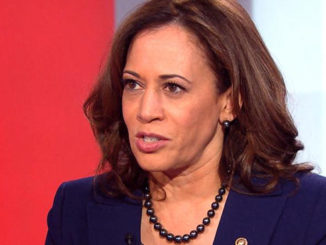
    Kamala Harris ( extreme right) gives Joe Biden (extreme left) the punch in the debate. Seen in the center is Bernie Sanders.
    CNN Screenshot

    “I believe you are not a racist.  It was hurtful to hear you talk about the reputations of two U.S. Senators who built their reputations and career on segregation of race in this country.  And it was not only that, but you also worked with them to oppose bussing.  And you know, there was a little girl in California who was part of the Second Class to integrate her public schools and she was bussed to school every day and that little girl was me.”

    Almost immediately after she punched Biden, a video of Kamala Harris as a child dressed for school was circulated in the social media.

    Biden was flustered, caught off-guard by this unexpected expression of lived experience. Biden was not just criticized for his nostalgia play.  He was confronted with the fact that his efforts as a young senator would have ended one of the country’s few attempts to make equal treatment a reality, to give black students the kind of education that white students took for granted . And while it is tempting to portray this as ancient history, it is not.  Harris was born in 1964, just three months after President Johnson signed the Civil Rights Bill.  Biden joined the Senate in 1973.  It was 1977 when Biden introduced Bill that would, in his words, “strike at the injustice of court-ordered busing.”

    Astring of recent polls suggest that Kamala Harris’s performance in the debate last week has propelled her campaign for the Democratic presidential nomination in July 2020.    A Quinnipiac University poll of Democrats and Democratic leaning voters nationally showed Kamala Harris, whose criticism of Biden’s record on race was one of the most discussed moments of the second debate last week, gaining significant momentum in the campaign.

    KAMALA HARRIS POLLS AT 20% IN THE QUINNIPIAC POLL, TRAILING FRONT RUNNING BIDEN BY JUST 2 POINTS.

    Other polls also show strong support for the California Democrat.  A Suffolk University/USA Today poll of likely Iowa Democratic caucus goers also showed her in second place to Biden.  The former Vice President led that poll with 24% of respondents saying they support him, and 15.6% reported favoring Harris.

    In a poll of Democrats and Democratic leaning independents conducted by CNN and SSRS in the days after the debate, 17% of respondents said they supported Harris, again placing her in second place to Biden.  That represented a jump from 8% from the month before.

    After the second debate, it is clear that both Biden and Sanders have lost their momentum to the women candidates, Kamala Harris and Elizabeth Warren.   56% of the primary voters are women.  If so, it is possible that the voters may prefer to elect a woman.

    ROADMAP TO NOMINATION

    I list below the number of delegates from early States till March 3, 2020:  Iowa 49; New Hampshire 33; Nevada 48; S.C. 63 – total of 193.   CA 495; Texas 262; NY 270, MA 114, IL 184, FL 248, MI 147.  Before March 3, we would have elected 193. By the end of March, two thirds of all delegates would have been elected.

    Therefore, if Kamala Harris does reasonably well in Iowa, NH, S.C. and Nevada, she would become the front runner on March 3 after the primaries because CA has 495 delegates. Right now, the wind in California is blowing in her favor.  Biden has lost his territory big.

    Kamala Harris has already tested the national waters thru her first debate.  It is easier for her to challenge her competitors Biden, Sanders, and Elizabeth Warren in the second and future debates.  Kamala Harris is continuing to receive wide media coverage.

    STRATEGIC SKILLS AND ABILITY TO CHALLENGE THE OPPONENT IN THE GENERAL ELECTION WILL BE THE DECIDING FACTOR FOR SELECTING THE NOMINEE.   Based on Kamala Harris’ performance and her competitiveness, there is no doubt in my mind that she will be able to convince the delegates at the nominating convention that she is second to none.  Patrick Buchanan, political pundit and the former Speaker, Newt Gingrich have also said that Kamala Harris is likely to be the candidate.

    Winning the nomination is one thing.  Can Kamala Harris challenge President Trump in the General Election in November 2020? Will she able to draw working class white votes from the rust belt states of PA, WI, OH, MI?  Will the moderate and conservative White women vote for her?  Will she compromise too much with the extreme left to get the nomination but only to lose in the general election?   Can she suggest a workable bipartisan solution to the Immigration problem? These questions cannot be answered now until the political process takes place.

    If Kamala Harris clinches the nomination for the President from the Democratic Party, it would be a great achievement for her,  and the Indian Americans will be proud.

    (The author is MBA, Columbia School of Business and Chairman, Asian American Republican Committee. He can be reached at vpwaren@gmail.com)


  • India could yet lead the world on water conservation

    India could yet lead the world on water conservation

    By Sandeep Chakravorty
    Photo:-Jay Mandal/On Assignment

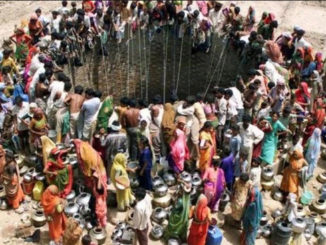
    “Water is essential to life, yet 844 million people in the world – 1 in 9 – lack access to it. According to a report by the World Economic Forum, the water crisis is the #4 global risk in terms of impact to society.

    Access to safe water can protect and save lives, just because it’s there. Access to safe water has the power to turn time spent into time saved, when it’s close and not hours away. Access to safe water can turn problems into potential: unlocking education, economic prosperity, and improved health.

    In India, “Six times the population of the United States lives without a household water connection. These people, in particular women and children, must spend time to get water, instead of working or going to school or caring for their families”.  (Water.org)


    The author is sanguine that the creation of ministry of Jal Shakti by Prime Minister Narendra Modi will address the problem of inadequate access to safe water, removing the “extreme water stress felt by 600 million people in India”.- Editor

    The  biggest disruptor in the new government of Prime Minister Narendra Modi for India is by far the creation of a ministry of Jal Shakti. The merger of the ministries of water resources, river development, Ganga rejuvenation, and drinking water and sanitation brings about a much-needed integrated approach for India’s water issues. Water will be the limiting factor to India’s growth. According to a 2018 NITI Aayog report, 600 million Indians face high to extreme water stress and about 200,000 people die every year because of inadequate access to safe water. By 2030, the country’s water demand is projected to be twice the available supply, implying severe water scarcity for millions and an eventual 6% loss in the country’s gross domestic product (GDP). However, if the Jal Shakti ministry, the one ministry on which the future depends, achieves its objectives, all that will change.

    Addressing an election rally before the 2019 Lok Sabha polls, Prime Minister Modi said, “After constructing toilets and giving dignity to women, I will focus my next term on ensuring clean drinking water.” The creation of the Jal Shakti ministry and the adoption of an integrated approach to water issues formed part of the Bharatiya Janata Party’s vision. Gajendra Singh Shekhawat, the minister of Jal Shakti, has hit the ground running, adopting an inclusive approach by spelling out his vision of partnership with states. In his interview with India Today on 8 June, Shekhawat saw India’s water challenge as an opportunity to involve stakeholders. He is keen on the use of India’s traditional water conservation knowledge whose neglect has brought us to the precipice of a water disaster. He also promised “nirmal” or clean Ganga in two years.

    “Nal se Jal” (tap water) for everyone by 2024 is a delayed yet essential goal for India to break into the middle-income league and become a global economic power. It is not difficult to imagine how much economic activity this goal-setting will engender, potentially contributing billions to India’s GDP through the construction/rehabilitation of reservoirs, their linking, the laying of pipes and construction of tanks, among other civil works. Its impact on the nation’s health will also be transcendental, as most diseases in India are water-borne. Nal se Jal is also a natural companion of Swachh Bharat and the National Toilet Mission, which cannot be sustained without water availability in every household. The National Democratic Alliance government has achieved ambitious goals before, be it the 72 million Ujjwala connections, taking electricity to every village and 20 million households, constructing 92 million toilets in less than five years, and the opening of more than 300 million Jan Dhan accounts. Making piped water reach every household is daunting, but the ability to achieve it is there. It is absolutely “Mumkin hai” (possible). If not now, when?

    Only 4% of the available water in India is used for drinking, whereas 80% is used for irrigation with rampant inefficiencies. About 4,000 liters of water is used in Punjab to produce 1 kg of rice, though 300 liters is sufficient. The first charge of India’s water must go to drinking water, followed by crop and then industrial production. Furthermore, placing water on top of the conservation pyramid automatically leads to conservation of soil and forests, and forests make water. The mantra of water conservation is age-old and simple: hold it where it falls, in pits, wells, trenches, reservoirs or ponds. This prevents run-off and soil erosion, recharges aquifers and replenishes sub-soil moisture, critical for plant growth and survival. I speak from my experience in the early 1990s when I spent five years of my youth in rural India espousing soil and water conservation.

    Living in New York, I marvel at the city’s water supply system, which provides the world’s best potable water. Even restaurants serve tap water. The city has a network of conservation watersheds, reservoirs and aqueducts with almost 95% water supplied by gravity, conserving energy. Institutional frameworks exist for every aspect, be it conservation of the watershed, reservoirs, distribution and pricing. Watershed conservation is the central principle for providing drinking water. Even corporate water bottlers such as Poland advertise the watersheds they protect to promote their products. It is not a pipedream to expect such a reality in India.

    Many states have already undertaken path-breaking work. Telangana’s Bhagiratha project is worth emulating across India. Maharashtra’s Jalyukt Shivar Abhiyan has undertaken water conservation work in 16,522 villages. Unfortunately, rainfall has been poor this year, so the impact of the work is not felt. However, this is bound to change in the coming years when real water harvesting kicks in.

    There is also a great synergy between bringing water to all households and the socio-cultural-spiritual movements gaining ground in India around saving the rivers, spearheaded by people such as waterman Rajinder Singh and Jaggi Vasudev. As Vasudev recently said, “Jal Shakti is a landmark step for revitalization and conservation of our rivers and water bodies.” They are opinion makers and have far reaching influence on people. The merger of their objectives with national priorities augurs well for India. On the lines of the International Solar Alliance that India pioneered, we may lead the world on water conservation from Jal Shakti to Bharat Shakti to Vishwa Shakti.

    (The author is an Indian  career diplomat, presently posted as Consul General of India in New York. He can be reached at cg.newyork@mea.gov.in)

    This article originally appeared in Live Mint and has been  reprinted, with some additions,  with the permission of the author.

  • KAMALA HARRIS COULD WIN THE DEMOCRATIC PARTY’S NOMINATION FOR PRESIDENT IN JULY 2020

    KAMALA HARRIS COULD WIN THE DEMOCRATIC PARTY’S NOMINATION FOR PRESIDENT IN JULY 2020

    By   Ven Parameswaran

    Before the debate Kamala Harris had the name recognition problem.  Vice President Biden was well known and was enjoying a commanding lead in the polls.  Kamala Harris had to formulate strategy to become most competitive.  She knew the power and influence of the national TV audience could make a difference.  Therefore, she came to the debate very well prepared.

    Born to her mother from Chennai, India and father from Jamaica, both Ph.D.’s, Kamala Harris is a smart student and had accumulated political skills by serving as San Francisco’s District Attorney and California’s Attorney General, before she was elected U.S. Senator, first for Indian American.

    Kamala Harris knew that unless she is most competitive with Biden and Sanders, she had no chance to emerge out of 20 candidates.  Thus, she applied the principle: WHO INFUENCES WHOM WHEN WHERE AND HOW IS THE ESSENCE OF POLITICS.

    She was well aware that the national debate would draw a large audience and if she makes a difference she could break out.  She turned out to be right.  The second debate drew an audience of 18 million people against 24 million for first Trump debate.

    She knew that once she impresses such a large audience, political equilibrium and polls would change.  She was right.  How did she do it? What was her strategy?

    NBC had several anchors, who were not well organized.  The debate was not well programmed.  Different anchors were asking questions after questions giving very little time for the candidate to answer.  As a result, the competition to be heard was stiff.  It was not easy to break in especially when several were attempting to speak.  There was total confusion and no order.  This is where Kamala Harris emerged as a big winner.  Her tactics and strategy succeeded.

    Kamala Harris was bent upon taking the big elephant Biden blocking her march to the convention.

    Gentlemen, you can’t fight here, this is the debate stage!  Senator Kamala Harris’s first attempt at a breakout moment in this debate was a painfully rehearsed line designed to be dropped the minute there was some crosstalk she could break into:

    “Hey guys, America does not want to witness a food fight.  They want us to know how we are going to put food on their table.”

    It won immediate applause, sustained applause, undermining their party’s political well-being.  This is a debate.  Everyone on stage is supposed to be making a case for why they should be president, which when facing other candidates in an election, is traditionally done by drawing distinctions between yourself and your opponents.

    More broadly, the line speaks to the self-defeating tendency of Democrats to imagine that their own affinity for compromise reflects the median voter’s preference for conciliatory politics.  People say they have partisan conflict, yes—but they vote for people who draw sharp distinctions between themselves and their (negatively defined)opponents.   It was a good line for Harris in the moment, but it was a cynical line masquerading as a plea for unity. 

    Kamala Harris ( extreme right) gives Joe Biden (extreme left) the punch in the debate. Seen in the center is Bernie Sanders.
    CNN Screenshot

    “I believe you are not a racist.  It was hurtful to hear you talk about the reputations of two U.S. Senators who built their reputations and career on segregation of race in this country.  And it was not only that, but you also worked with them to oppose bussing.  And you know, there was a little girl in California who was part of the Second Class to integrate her public schools and she was bussed to school every day and that little girl was me.”

    Almost immediately after she punched Biden, a video of Kamala Harris as a child dressed for school was circulated in the social media.

    Biden was flustered, caught off-guard by this unexpected expression of lived experience.  Biden was not just criticized for his nostalgia play.  He was confronted with the fact that his efforts as a young senator would have ended one of the country’s few attempts to make equal treatment a reality, to give black students the kind of education that white students took for granted .  And while it is tempting to portray this as ancient history, it is not.  Harris was born in 1964, just three months after President Johnson signed the Civil Rights Bill.  Biden joined the Senate in 1973.  It was 1977 when Biden introduced Bill that would, in his words, “strike at the injustice of court-ordered busing.”

    A string of recent polls suggest that Kamala Harris’s performance in the debate last week has propelled her campaign for the Democratic presidential nomination in July 2020.    A Quinnipiac University poll of Democrats and Democratic leaning voters nationally showed Kamala Harris, whose criticism of Biden’s record on race was one of the most discussed moments of the second debate last week, gaining significant momentum in the campaign.

    KAMALA HARRIS POLLS AT 20% IN THE QUINNIPIAC POLL, TRAILING FRONT RUNNING BIDEN BY JUST 2 POINTS.

    Other polls also show strong support for the California Democrat.  A Suffolk University/USA Today poll of likely Iowa Democratic caucus goers also showed her in second place to Biden.  The former Vice President led that poll with 24% of respondents saying they support him, and 15.6% reported favoring Harris.

    In a poll of Democrats and Democratic leaning independents conducted by CNN and SSRS in the days after the debate, 17% of respondents said they supported Harris, again placing her in second place to Biden.  That represented a jump from 8% from the month before.

    After the second debate, it is clear that both Biden and Sanders have lost their momentum to the women candidates, Kamala Harris and Elizabeth Warren.   56% of the primary voters are women.  If so, it is possible that the voters may prefer to elect a woman.

    ROADMAP TO NOMINATION

    I list below the number of delegates from early States till March 3, 2020:  Iowa 49; New Hampshire 33; Nevada 48; S.C. 63 – total of 193.   CA 495; Texas 262; NY 270, MA 114, IL 184, FL 248, MI 147.  Before March 3, we would have elected 193. By the end of March, two thirds of all delegates would have been elected.

    Therefore, if Kamala Harris does reasonably well in Iowa, NH, S.C. and Nevada, she would become the front runner on March 3 after the primaries because CA has 495 delegates.  Right now, the wind in California is blowing in her favor.  Biden has lost his territory big.

    Kamala Harris has already tested the national waters thru her first debate.  It is easier for her to challenge her competitors Biden, Sanders, and Elizabeth Warren in the second and future debates.  Kamala Harris is continuing to receive wide media coverage.

    STRATEGIC SKILLS AND ABILITY TO CHALLENGE THE OPPONENT IN THE GENERAL ELECTION WILL BE THE DECIDING FACTOR FOR SELECTING THE NOMINEE.    Based on Kamala Harris’ performance and her competitiveness, there is no doubt in my mind that she will be able to convince the delegates at the nominating convention that she is second to none.  Patrick Buchanan, political pundit and the former Speaker, Newt Gingrich have also said that Kamala Harris is likely to be the candidate.

    Winning the nomination is one thing.  Can Kamala Harris challenge President Trump in the General Election in November 2020?  Will she able to draw working class white votes from the rust belt states of PA, WI, OH, MI?  Will the moderate and conservative White women vote for her?  Will she compromise too much with the extreme left to get the nomination but only to lose in the general election?   Can she suggest a workable bipartisan solution to the Immigration problem?  These questions cannot be answered now until the political process takes place.

    If Kamala Harris clinches the nomination for the President from the Democratic Party, it would be a great achievement for her,  and the Indian Americans will be proud.

    (The author is MBA, Columbia School of Business and Chairman, Asian American Republican Committee. He can be reached at vpwaren@gmail.com)

  • Time to Recommit to American Values

    Indrajit S Saluja

    While 4th of July reminds me of the glorious history of American nation, of the heroic struggle for Independence, of the great sacrifices made by many for upholding the values for which America stands, which all make every American proud of the great American heritage, it also tells me in 2019 that the great American nation is faced today, 243 years after Independence in 1776, with a host of issues which seem to be tearing apart the fine fabric of the great nation.

    Greatness comes to a nation when its leaders are loving and caring and treat all as equals, respecting their dignity. Sadly, this great nation’s leaders today are dividing people, instead of uniting them. Let them keep in mind History will judge them by their deeds. Those dreaming of making history by resorting to hate and disrespect for people will find them severely punished in the history of the nation and the world.

    Let us all , proud citizens of the greatest nation on the earth,  pledge this 4th of July our total commitment to values which our forefathers so assiduously and lovingly nourished  and  protected , making the greatest sacrifices, the parallel of which are difficult to find in the annals of the world history, and which this  great American nation has always held sacred and dear.

    Heartiest Congratulations on America’s Independence Day!

    God bless America!

  • India could yet lead the world on water conservation

    India could yet lead the world on water conservation

    Sandeep Chakravorty
    Photo:-Jay Mandal/On Assignment


    The author is sanguine that the creation of ministry of Jal Shakti by Prime Minister Narendra Modi will address the problem of inadequate access to safe water, removing the “extreme water stress felt by 600 million people in India”.- Editor

    By Sandeep Chakravorty

    The  biggest disruptor in the new government of Prime Minister Narendra Modi for India is by far the creation of a ministry of Jal Shakti. The merger of the ministries of water resources, river development, Ganga rejuvenation, and drinking water and sanitation brings about a much-needed integrated approach for India’s water issues. Water will be the limiting factor to India’s growth. According to a 2018 NITI Aayog report, 600 million Indians face high to extreme water stress and about 200,000 people die every year because of inadequate access to safe water. By 2030, the country’s water demand is projected to be twice the available supply, implying severe water scarcity for millions and an eventual 6% loss in the country’s gross domestic product (GDP). However, if the Jal Shakti ministry, the one ministry on which the future depends, achieves its objectives, all that will change.

    Addressing an election rally before the 2019 Lok Sabha polls, Prime Minister Modi said, “After constructing toilets and giving dignity to women, I will focus my next term on ensuring clean drinking water.” The creation of the Jal Shakti ministry and the adoption of an integrated approach to water issues formed part of the Bharatiya Janata Party’s vision. Gajendra Singh Shekhawat, the minister of Jal Shakti, has hit the ground running, adopting an inclusive approach by spelling out his vision of partnership with states. In his interview with India Today on 8 June, Shekhawat saw India’s water challenge as an opportunity to involve stakeholders. He is keen on the use of India’s traditional water conservation knowledge whose neglect has brought us to the precipice of a water disaster. He also promised “nirmal” or clean Ganga in two years.

    “Nal se Jal” (tap water) for everyone by 2024 is a delayed yet essential goal for India to break into the middle-income league and become a global economic power. It is not difficult to imagine how much economic activity this goal-setting will engender, potentially contributing billions to India’s GDP through the construction/rehabilitation of reservoirs, their linking, the laying of pipes and construction of tanks, among other civil works. Its impact on the nation’s health will also be transcendental, as most diseases in India are water-borne. Nal se Jal is also a natural companion of Swachh Bharat and the National Toilet Mission, which cannot be sustained without water availability in every household. The National Democratic Alliance government has achieved ambitious goals before, be it the 72 million Ujjwala connections, taking electricity to every village and 20 million households, constructing 92 million toilets in less than five years, and the opening of more than 300 million Jan Dhan accounts. Making piped water reach every household is daunting, but the ability to achieve it is there. It is absolutely “Mumkin hai” (possible). If not now, when?

    Only 4% of the available water in India is used for drinking, whereas 80% is used for irrigation with rampant inefficiencies. About 4,000 liters of water is used in Punjab to produce 1 kg of rice, though 300 liters is sufficient. The first charge of India’s water must go to drinking water, followed by crop and then industrial production. Furthermore, placing water on top of the conservation pyramid automatically leads to conservation of soil and forests, and forests make water. The mantra of water conservation is age-old and simple: hold it where it falls, in pits, wells, trenches, reservoirs or ponds. This prevents run-off and soil erosion, recharges aquifers and replenishes sub-soil moisture, critical for plant growth and survival. I speak from my experience in the early 1990s when I spent five years of my youth in rural India espousing soil and water conservation.

    Living in New York, I marvel at the city’s water supply system, which provides the world’s best potable water. Even restaurants serve tap water. The city has a network of conservation watersheds, reservoirs and aqueducts with almost 95% water supplied by gravity, conserving energy. Institutional frameworks exist for every aspect, be it conservation of the watershed, reservoirs, distribution and pricing. Watershed conservation is the central principle for providing drinking water. Even corporate water bottlers such as Poland advertise the watersheds they protect to promote their products. It is not a pipedream to expect such a reality in India.

    Many states have already undertaken path-breaking work. Telangana’s Bhagiratha project is worth emulating across India. Maharashtra’s Jalyukt Shivar Abhiyan has undertaken water conservation work in 16,522 villages. Unfortunately, rainfall has been poor this year, so the impact of the work is not felt. However, this is bound to change in the coming years when real water harvesting kicks in.

    There is also a great synergy between bringing water to all households and the socio-cultural-spiritual movements gaining ground in India around saving the rivers, spearheaded by people such as waterman Rajinder Singh and Jaggi Vasudev. As Vasudev recently said, “Jal Shakti is a landmark step for revitalization and conservation of our rivers and water bodies.” They are opinion makers and have far reaching influence on people. The merger of their objectives with national priorities augurs well for India. On the lines of the International Solar Alliance that India pioneered, we may lead the world on water conservation from Jal Shakti to Bharat Shakti to Vishwa Shakti.

    (The author is an Indian  career diplomat, presently posted as Consul General of India in New York. He can be reached at cg.newyork@mea.gov.in)

    This  article originally appeared in Live Mint and has been  reprinted, with some additions,  with the permission of the author.

  • IALI Annual Fundraising event a Grand Success

    IALI Annual Fundraising event a Grand Success

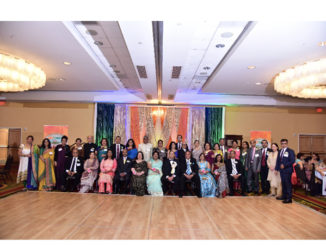
    UNIONDALE, NY (TIP): India Association of Long Island celebrated Annual Fundraising Gala Dinner on June 30th, 2019 at Marriott, Long Island. The function was attended by about 270 guests.  India Association of Long Island is a 41-year-old Non-Profit organization.

    With  more than 2300 members and still growing, IALI aims at  preserving and promoting Indian Culture.  IALI has a Women’s Forum, a Seniors Forum, a Kids Forum and a Youth Forum. Besides there are a  Meditation forum.& a Sangeet Forum.

    Khushi and Jigna Oza performed  Ganesh Vandana.  IALI President Lalit Aery in his address, extended a warm welcome to guests and association members, and  appreciated his team for the great work they did to organize the fundraiser.

    A Number of dignitaries graced the occasion which included Anna Kaplan and Kevin Thomas NYS senators. They presented citations to all five Honorees -Mrs. Indu Chhabra, Dr Vijay Rasquinha, Dr Gopal Kishore , Mr. Jasbir Jay Singh and Mrs. Anupam Goenka.

    Also present were Human Rights Commission Chairman Mr. Bobby Kalotee and Mr. Zahid Syed, member of the commission.

    IALI on the occasion introduced membership cards for IALI members. The project \h was sponsored by Mr. Gary Sikka (Mint Restaurant), Mr. Bansal (India Visa Center), Mr. Batra (Batra Travels) and Mr. Sumit Verma (Hicksville Optical). Mr. Naveen Shah and Madhu Pareek from Navika Group and all the Past Presidents of IALI were called  on the stage  to  present cards to all  officers of IALI.  MC Indu Gajwani announced that all IALI members will get their  cards at a  later time.

    Bollywood celebrity star Ms. Jinal Pandya was a special guest at Gala Dinner and she performed two dances and asked the audience to join on the dance floor.  Vote of Thanks was given by the Secretary Mr. Govind Gupta

    Association collected funds to have India Fest which is scheduled for September 22, 2019 at Hyatt in Long Island.  For more information, visit www.ialinewyork.org

    (Based on a Press Release)

  • India should open up its markets to US, says Noted Economist Panagariya

    India should open up its markets to US, says Noted Economist Panagariya

    NEW YORK CITY (TIP): As the Trump administration is repeatedly asking India to open up its market, India should do it for its own benefit, feels noted economist Arvind Panagariya, who served as the first Vice-Chairman of the NITI Aayog from January 2015 to August 2017.

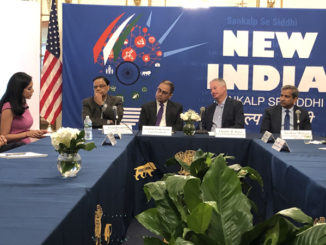
    Consulate General of India in New York hosted a Panel Discussion on ‘Economic Priorities for the New Government’ on Monday, June 24, where Arvind Panagariya, Professor of Indian Political Economy, Columbia University delivered the Keynote Address. The panel discussion was organised in partnership with the Deepak and Neera Raj Centre for Indian Economic Policies and the US-India Strategic Partnership Forum (USISPF). The other panellists were – Chip Kaye, Co-CEO, Warburg Pincus, and Krishna Memani, Vice Chairman, Investments Invesco.

    Consul General Ambassador Sandeep Chakravorty in his welcome note set the ground for the discussion – what should be the priorities of Narendra Modi after his return to power for the second time with an absolute mandate.

    Speaking on that, Dr Panagariya said that taking the advantage of trade war between the US and China, India should do whatever they can to attract multinationals looking for alternative destination. “This is also a great time for India to begin attracting the large multinationals that are now looking for alternative locations. It is an opportune time for India to do whatever it will take to bring these multinationals to Indian shores”.

    He also strongly feels that India must slash tariffs on imported motorcycles and automobiles and open up its markets to the US. “It is a good thing for India. I would open it unilaterally, but here is an opportunity to actually negotiate with the US. Give them something and get something in return. Go zero tariffs on Harley Davidson. What is the problem? How long are you going to punish your own customers?” he suggested.

    Speaking from the investor’s point of view, Kaye and Memani stressed that substantial set of initiatives should be taken to open the door for more investments.

    Seema Mody from CNBC moderated the event.

  • Indian Overseas Congress, USA Opens New Chapter representing Michigan State

    Indian Overseas Congress, USA Opens New Chapter representing Michigan State

    MICHIGAN (TIP):  In its continuing efforts to expand  IOC, USA offices throughout USA, IOC, USA opened a New Chapter in Michigan on Sat. June 22, 2019 and installed Mr. Rajwinder Singh Grewal as the Chapter President.  The installation ceremony took place in the Grand Plaza Hotel, Grand Rapids, where over two hundred member participants gathered to witness the installation ceremony of the President. Mr. Mohinder Singh Gilzian, President of IOC, USA   in New York came down to Michigan to install the Chapter president.

    Mr. George Abraham, Vice Chairman and Mr. Harbachan Singh, Secretary-General of IOC, USA , who were unable to attend, welcomed Mr. Gerewal  and sent their congratulations and best wishes to Mr. Raj winder Singh Grewal and his team and looked forward for an active participation and interaction with the newly created Michigan Chapter going forward.

    Mr. Mohinder Singh Gilzian also conveyed the greetings and blessings of Mr. Sam Pitroda, Chairman of the Indian Overseas Congress Department of All India Congress Committee in New Delhi to Mr. Rajwinder Singh Grewal  and stated that although Mr. Pitroda had  earlier indicated his intention to attend the function but  was, however,  now precluded from doing so due to a last minute schedule change.

    Many of the Congress party officials, distinguished leaders, members, families and friends who not only came from the neighboring cities and states to grace the occasion, but also spoke at the function and praised the newly constituted team.  There was considerable enthusiasm noted from the new team and it was inevitable that the Chapter will be up to an active start.

    In expressing great satisfaction and confidence in these appointments, Mr. Mohinder Singh Gilzian emphasized the need to work diligently, the NRIs to work on the phones with their families and friends to explain why it was necessary at this time to re strategize wisely and work even harder.    The failings, especially the lynchings  now prevailing in India was a cause of great concern to everyone  and shortcomings of the Modi government were well known.

    Over a dozen prominent speakers took turn to pay tribute and compliment Mr. Grewal  and all the new appointees.  Mr. Grewal thanked Mr. Mohinder Singh Gilzian and everyone who had attended the ceremony and made a firm commitment to work hard and support the Party with all his might and capabilities.  Mr. Gerewal said that even though the Congress Party had not succeeded this time, he was highly optimistic that things will be totally different the next time around.

    (Press Release)

  • Engage South Asian Community in Run up to 2020 Census: Congresswoman Grace Meng Urges Census Bureau

    Engage South Asian Community in Run up to 2020 Census: Congresswoman Grace Meng Urges Census Bureau

    NEW YORK (TIP): U.S. Rep. Grace Meng (D-NY) announced that she sent a letter to U.S. Census Bureau Director Steven Dillingham urging him to include the South Asian community in the Census Bureau’s outreach leading up to the 2020 Decennial Census.

    The Census Bureau—through its 2020 Census Paid Media Campaign—is presently conducting outreach in English and numerous other languages including: Spanish, Chinese (Mandarin and Cantonese), Vietnamese, Korean, Russian, Arabic, Tagalog, Polish, French, Haitian Creole, Portuguese, and Japanese. But the South Asian population is not included despite growing in size from 3.5 million in 2010 to approximately 5.4 million today.

    “I’m shocked that the Census Bureau failed to include the South Asian community in its outreach leading up to the 2020 Decennial Census,” said Congresswoman Meng. “There are approximately 5.4 million South Asians currently residing in the United States, including many in my Congressional district in Queens, and I cannot emphasize enough how imperative it is that we have an accurate count of all living individuals. Director Dillingham must correct this error and immediately include the South Asian population. We have less than a year before the census begins on April 1, 2020.”

    “Communities and neighborhoods across the nation have a lot to lose if we fail to engage the South Asian community in our census outreach,” said Jo-Ann Yoo, Executive Director of the Asian American Federation. “Our census media efforts must reflect the future we want for our country which requires us to go beyond the bare minimum to achieving full inclusion in our outreach. We must make every effort to ensure that everyone counts!”

  • Sadhguru, Shankar Mahadevan, Kapil Dev, Preity Zinta at AAPI Convention

    Sadhguru, Shankar Mahadevan, Kapil Dev, Preity Zinta at AAPI Convention

    ATLANTA (TIP): Over 2,000 delegates from across the nation are attending the 37th annual convention organized by The American Association of Physicians of Indian Origin (AAPI) from July 3rd to July 7th, 2019 at the fabulous and world-famous Omni Atlanta at CNN Center and Georgia World Congress Center, Atlanta, Georgia.

    Dr. Naresh Parikh, President of AAPI, says, “The 37th Annual AAPI Convention & Scientific Assembly  offers an intimate setting that  facilitate our ability to convey cutting-edge research and CME, promote personal, professional and business relationships, and display ethnic items. The convention is filled with cutting-edge CMEs, product theaters, women’s forum, great entertainment from Bollywood and local talent and lot more.”

    It’s a well-known fact that physicians of Indian origin excel in their respective areas of work and continue to play key roles in patient care, administration, academics and medical research. In order to cater to its diversity of medical specialties, AAPI continues to use a multi-disciplinary conference format.

    Sadhguru, recognized around the world for his pioneering efforts to nurture global harmony, will lead an Isha Foundation Spiritual Forum during the Convention. some of the major themes as part of the CME sessions include: Pursuit of Happiness In Medicine; Burnout Prevention and Wellness in Physicians; Easy Life of a Hospitalist: An Illusion; and, Meditation and Mindfulness.

    Shankar Mahadevan, the popular award-winning Bollywood playback singer is all set to take the delegates by storm during the Convention. Shankar Mahadevan and his troupe will perform live at the much anticipated AAPI’s annual convention enthralling over 2,000 delegates from across the nation, who are expected to attend the Convention.

    Golf With Cricket Star Kapil Dev is another major attraction. Kapil Dev, the popular cricket star who won India the World Cup will be the keynote speaker at the convention. In addition, he will play Gold with AAPI members and will sign a coffee table book on Sikhism – ‘WE THE SIKHS’, by the legendary cricket star.

    Preity Zinta, the famous Bollywood actor will be the keynote speaker at the much-anticipated Women’s Forum, which has come to be a popular agenda item at every convention.

    In addition, there will be, for the first time a Youth Public Speaking Competition and the much anticipated and appreciated “AAPI Has Got Talent” where the AAPI members showcase their talents before their colleagues.

    The Organizing committeeContinuing Medical Education and non-CME seminars by experts in their fields will provide comprehensive and current reviews and guidelines for the diagnosis and treatment of various disease states to reduce morbidity and mortality and achieve cost effective quality care outcomes. At the end of the activity, it is expected that attendees will gain an understanding of the causation, diagnosis and the best clinical practices for the management of the diverse group of diseases discussed during this program.

    Dr. Hemant Yagnick, Academic Chair for the Convention, says, “Medical specialty representation includes pediatrics, psychiatry, anesthesiology/pain management, cardiology, family medicine, obstetrics and gynecology, oncology, gastroenterology pathology, endocrinology, nephrology, rheumatology along with many other fields.”

    The annual convention this year is being organized by AAPI’s Atlanta Chapter, headed by Dr. Sreeni Gangasani. “The convention team is working incredibly hard to provide a delightful 4 days of events packed with educational CME credits, world-class entertainment, leadership seminars, networking opportunities, exhibits, and more,” Dr. Gangasani added. “This meeting offers a rich educational program featuring the latest scientific research and advances in clinical practice. In addition, physicians and healthcare professionals from across the country will convene to develop health policy agendas and encourage legislative priorities for the upcoming year.”

    As though responding to the growing need: “Physician, heal thyself,” especially when there are growing signs of burn out among physicians, AAPI is focusing on themes such as how to take care of self and find satisfaction and happiness in the challenging situations they are in, while serving hundreds of patients everyday of their dedicated and noble profession.

    Accordingly, some of the major themes as part of the CME sessions include: Pursuit of Happiness In Medicine; Burnout Prevention and Wellness in Physicians; Easy Life of a Hospitalist: An Illusion; and, Meditation and Mindfulness. Other themes at the CME include: Combining Ancient Sciences and Modern Medicine in the Prevention of Cardiovascular Diseases; Mysteries of Type 2 Diabetes in South Asians – the Unresolved Questions; and, Cardio-oncology: Clinical Practice and Echocardiography.

    “Many of the physicians who will attend this convention have excelled in different specialties and subspecialties and occupy high positions as faculty members of medical schools, heads of departments, and executives of hospital staff. The AAPI Convention offers an opportunity to meet directly with these physicians who are leaders in their fields and play an integral part in the decision-making process regarding new products and services,” Dr. Suresh Reddy, President-Elect of AAPI, added.

    Dr. Raghu Lolabhattu, Co-Chair Convention and Convention Alumni Chair, said, “AAPI Convention is just around the corner, almost less than a month. As a Co-chair of the Convention, on behalf of our President Dr. Naresh Parikh, Convention Chair Dr. Sreeni Gangasani and our hard-working Convention team I would like to invite each and every one to the great gala. Our team is working relentlessly with a great enthusiasm to make this event a most successful one and I assure that you will have great time and would go home with wonderful memories.

    The 37th annual AAPI Convention, while providing physicians of Indian origin an opportunity to come together in an atmosphere of collegiality, it will enable them to retrace and appreciate their common roots, culture and the bond that unites them as members of this large professional community.  Giving them a platform to celebrate their accomplishments, the annual convention to be attended by nearly 2,000 physicians of Indian origin, it will also provide a forum to renew their professional commitment through continuing medical educations activities.

    The annual convention this year is being organized by AAPI’s Atlanta Chapter. In addition to offering over 12 hours of cutting-edge CMEs to the physicians, CEOs Forum, fabulous entertainment, and women’s leadership forum. The convention will be addressed by senior world leaders, including US Senators, Presidential candidates, Nobel Laureates, Governors, Congressmen, and celebrities from the Hollywood and Bollywood world.

    “Having Sadhguru at the Convention with his unique ability to make the ancient yogic sciences relevant to contemporary minds, and act as a bridge to the deeper dimensions of life, will make the convention and the delegates from across the nation richer, in so many ways,” said Dr. Anupama Gorimukala, Secretary of AAPI. “His approach does not ascribe to any belief system but offers methods for self-transformation that are both proven and powerful,” Dr. Anupama Gorimukala, Secretary of AAPI,  added.

    The convention venue is one of the best ever one has seen with tons of local attractions. Several sightseeing places like CNN tower, Coca-Cola museum, Mercedes Benz sports Arena and many other attractions are within five minutes’ walk.

    “The 2019 AAPI Annual Convention & Scientific Assembly offers an exciting venue to interact with leading physicians, health professionals, academicians, and scientists of Indian origin,” says Dr. Sudhakar Jonnalagadda, Vice President of AAPI. “Physicians and healthcare professionals from across the country will convene and participate in the scholarly exchange of medical advances, to develop health policy agendas, and to encourage legislative priorities in the coming year.”

    Dr. Manoj Shah, Convention Treasurer says, Guests will be treated to true Southern hospitality in one of the country’s fastest growing cities—bustling with restaurants, night life, shopping and more. We look forward to welcoming you and your family and thank you for your support in making this convention a great success.”

    AAPI organization is a dynamic body, spearheading legislative agendas and influencing the advancement of medical care not only in the US, but internationally. AAPI’s impact is seen in areas such as advocating for the increasing physician work force, participating in national health initiatives such as obesity prevention, and investing in global health education. Whether practicing in medically underserved areas such as inner cities and rural communities or participating in cutting edge research & academics, Indian physicians form an impressive group.

    Almost 10%-12% of medical students entering US schools are of Indian origin. Headquartered in Oak Brook, Illinois, AAPI represents the interests of over nearly 100,000 physicians, medical students and residents of Indian heritage in the United States. It is the largest ethnic medical organization in the nation.

    “The 2019 AAPI Annual Convention & Scientific Assembly offers an exciting venue to interact with leading physicians, health professionals, academicians, and scientists of Indian origin. Physicians and healthcare professionals from across the country will convene and participate in the scholarly exchange of medical advances, to develop health policy agendas, and to encourage legislative priorities in the coming year. We look forward to seeing you in Atlanta, GA!” says Dr. Naresh Parekh. For more details and registration for the convention, please visit:  www.aapiconvention.org and www.aapiusa.org

  • Meet Narinder Singh Kapany- The Father of ‘Fiber Optics’

    Meet Narinder Singh Kapany- The Father of ‘Fiber Optics’

    NEW YORK (TIP): If we are getting access to ‘high-speed internet connection’, then it’s all because of Narinder Singh Kapany. Had it not been for Narinder’s exuberance, we wouldn’t have been surfing the blazing fast internet. Not only about the internet, Narinder was even able to stamp his authority on laser surgeries and high-speed communications. He is popularly known as the father of ‘Fiber Optics’. Narinder Singh Kapany was the first person in the world who introduced the term ‘Fiber Optics’.

    Hailing from Moga, Punjab, Narinder Singh announced his arrival to the world when he was born in 1927. He successfully graduated from Agra University and then went on to do PhD at Imperial College, London. He carried out an intense research not only in high-speed communications but also medical imaging from OFC networks to endoscopic to laser surgery. This goes to show that if there is no Narinder Singh, then there is no internet, no laser surgery and no high-speed communication.

    Narinder Singh, the Indian-born American physicist hogged the limelight for becoming the first person in the world to depict that light can travel in bent glass fibers. His research paper captioned “A Flexible Fiberscope, using Static Scanning” appeared in the scientific journal Nature in its January 2, 1954 issue and opened the door for instruments such as endoscopes and laser probes.

    Kapany then spiced it up by publishing his first paper in Optica Acta in February 1955 named ‘Transparent Fibers for the Transmission of Optical Images’. Kapany kept on continuing his good work. As an author, he published over 100 scientific papers and four books on optoelectronics. He has lectured to several national and international scientific societies. His famous article on Fiber optics in Scientific American in 1960 coined the new term (Fiber optics). The article adds up as the reference point for the subject even today.

    In November 1999, Fortune magazine had published profiles of 7 people who completely changed the life in the twentieth century. Kapany was one of the unsung heroes. We need to promote this hero who gave us the fastest internet connection which is in demand in the contemporary world. It has been a trend set that without internet, life on Earth would be boring.

  • Heartwarming story of Hindu Muslim unity

    Heartwarming story of Hindu Muslim unity

    Manu Shah

    HOUSTON (TIP): There are plenty of heartwarming stories of Hindu-Muslim unity, but it’ll be hard to top the one that took place in Houston recently.

    The Indian Muslims Association of Greater Houston (IMAGH) invited Ramesh Bhutada, Advisor to the Hindus of Greater Houston (HGH) and Vice President of the Hindu Swayamsevak Sangh, USA (HSS) as the Chief Guest for their annual Eid Milan celebrations. In what turned out to be the evening’s epic moment, Bhutada’s simple yet powerful speech on Hindu-Muslim unity was met with a long-standing ovation from every seat in the room including the Consul General of India Dr. Anupam Ray who was among the first to rise and applaud.

    Bhutada, a Houston based industrialist, began his address by wishing the members of the Association Eid Mubarak and commended IMAGH on their mission of fostering amity across cultures, communities and religions.  The organization was formed 10 years ago to foster harmony, strengthen relationships between religions and cultures, and enrich the community as a whole through various Outreach programs. It is a non-profit, non-political and non-religious organization.

    Bhutada deliberately reiterated his introduction as a leader of the HSS and the Rashtriya Swayamsevak Sangh (RSS), an organization that inspires him, because he explained, he “wanted to have an open dialogue.” The RSS and HSS, he emphasized, are primarily involved in character building of the youth so that its members can become proud citizens of the country they live in.

    Bhutada expressed his concerns about the false propaganda in sections of the media and certain politicians who have sought to separate both communities for their vested interests. He assured the gathering that “the RSS and the HSS would like communal harmony and unity amongst all religions.”

    Elaborating on this point, he recalled an interview 10 years ago when RSS Chief Mohan Bhagwat, then General Secretary of the RSS, was staying at his house.  During the course of the interview, the journalist Haider Kazim asked Mohan Bhagwat, “Sir, what do you think of minorities’ development and progress.” Without missing a beat, Mohan Bhagwat replied, “India’s development cannot be complete without the development and progress of the minorities.” As Bhutada framed it, this statement came “straight from the horse’s mouth.” He also recalled spending several hours in discussions with Mohan Bhagwat on matters of India’s national interest.

    Coming to the core of his message, he continued, “We all have historical baggage – let’s acknowledge that, but we cannot look backwards. We have to look forward and that is the only way we can lead a peaceful life in this world.”

    How powerful is looking forward? To explain this, Bhutada alluded to Speaker Richard McKinney’s keynote. McKinney had served in the Marines for 25 years and harbored a deep hatred for Muslims. But a chance meeting with some members of the Muslim congregation changed his life dramatically and he became a Muslim. Bhutada noted that when McKinney was looking backwards, he was stuck in the mire of hate but the day the Marine began looking forward, his anger faded and was replaced by love. Bhutada observed, “This is the same person but look as the transformation.”

    Weaving one more example in his message, Bhutada spoke of another member in the audience – Consul General Dr. Anupam Ray. In 1947, Dr. Ray’s father had to flee East Pakistan, now Bangladesh and in 1971, religious violence forced his maternal grandparents to leave Bangladesh too. But Dr. Ray chose not to let these incidents dictate his life. A few weeks ago, the Consul General had “the heart and the courage” to hold an Iftar dinner at the Consulate, not because he had to as Consul General but because he wanted to. The only way, Bhutada said, we can win the hearts of people is by love and peace, cooperation and unity. That’s the only way the world can progress.

    Bhutada briefly touched on his support of the Kalam Center – an NGO started by a young Muslim youth Arshad Sheikh, in the old city of Charminar, Hyderabad. Bhutada did this on a friend’s recommendation and he has been funding their programs for the past four years. Today, the Center provides vocational training to 500 young Muslim boys and girls for ages 8 and up and 70% of the beneficiaries are girls. During the day, the children attend the Madrasas and from 5-7 in the evening come to one of the 20 centers spread across the old city to acquire vocational training in subjects taught in Urdu. Bhutada urged the gathering to support these poor children and give them a chance in “becoming proud citizens of India.”

    Lauding this much needed message of harmony and unity, IMAGH’s Past President Latafath Hussain, in a statement said “While we had no doubt that his presence and speech will add charchand to our Eid Milan, even we were overwhelmed when 500+ guests gave a standing ovation to his speech. He delivered it from the heart and the message of not looking back but forward was appreciated by all.”

    According to Vijay Pallod, an Advisor on the Board of IMAGH, the Kalam Center Project is just one of Bhutada’s many philanthropic endeavors but Bhutada himself is extremely reticent in talking about them.

  • America Celebrates Independence Day with a Bang

    America Celebrates Independence Day with a Bang

    Bidisha Roy

    WASHINGTON (TIP): Each year Washington, DC celebrates the Fourth of July with a bang. The 2019 extravaganza became very special, as President Donald Trump wanted to add a military flavor to this year’s Independence Day celebrations with Troops, tanks and a fly past. The President has re-branded the day as a “Salute to America” and the nation watched the biggest July 4 display of military pageantry since 1850.

    In America’s earliest decades, the Fourth of July saw plenty of military pageantry in Washington. The Smithsonian’s research found Presidents Jefferson, Madison, Van Buren and Polk presided over military parades on Independence Day. But the tradition died under Zachary Taylor in 1850.

    Trump has voiced his desire to show off with the American military ever since he attended a Bastille Day celebration with troops and tanks as a guest of French President Emmanuel Macron in 2017. And it happened.

    Under White House direction, the army moved tanks and other armoured vehicles into the nation’s capital on Wednesday night. The Pentagon arranged for an Air Force B-2 stealth bomber and other warplanes to conduct flyovers of the celebration on the National Mall. There were Navy F-35 and F-18 fighter jets, the Navy-Blue Angels aerial acrobatics team, Army and Coast Guard helicopters and Marine V-22 Ospreys.

    “Military Leaders are thrilled to be doing this & showing to the American people, among other things, the strongest and most advanced Military anywhere in the World,” Trump tweeted. “Incredible Flyovers & biggest ever Fireworks!”

    Two Bradley fighting vehicles were in place near the Lincoln Memorial, where Trump delivered a patriotic speech during an event that he has billed as honouring the U.S. armed forces. Thousands of people gathered albeit under low cloud cover following heavy rains earlier Thursday. Air Force One flew over the Mall as Trump approached the podium protected by rain-streaked bulletproof glass. It was the first time in decades that a President has addressed a crowd.

    “Today, we come together as one nation with this very special salute to America. We celebrate our history, our people, and the heroes who proudly defend our flag — the brave men and women of the United States military,” Trump said. “As long as we stay true to our cause; as long as we remember our great history; and as long as we never stop fighting for a better future; then there will be nothing that America cannot do.”

    The President highlighted the accomplishments of each branch of the military and added that “very soon” the U.S. will have a sixth branch – the “Space Force.”

    Aircraft representing each branch, such as a B-2 stealth bomber for the Air Force and F-35 Lightnings for the Navy, flew over the National Mall in time with Trump’s speech.

    Attendees also enjoyed live music from the Old Guard Fife and Drum Corps, the U.S. Army Band (“Pershing’s Own”), the Armed Forces Chorus and the United States Marine Corps Silent Drill Team.

    Along with viewing the dynamic fireworks show on the National Mall and attending the free Capitol Fourth concert, visitors celebrated America’s birthday in dozens of other venues in the capital.