Month: November 2019

  • Maharashtra Mahabharat :  Devendra Phadnavis Announces his Resignation as Chief Minister

    Maharashtra Mahabharat : Devendra Phadnavis Announces his Resignation as Chief Minister

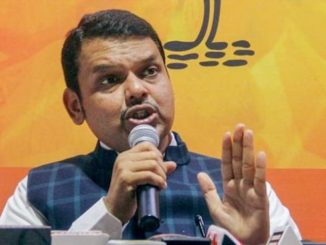
    MUMBAI(TIP):  The beleaguered Devendra Fadnavis announced at a press conference here on November 26 that he will submit his resignation to the Governor.

    Fadnavis in his statement said that the people of Maharashtra had given a clear mandate to BJP- Shiv Sena combine to form a government. But Shiv Sena claimed chief minister’s position with BJP on a rotational basis, something BJP had never agreed to. BJP made all efforts to have its old alliance partner to drop the demand but was stonewalled. Shiv Sena chose the parties it had always opposed.

    NCP offered BJP support to form a government and a claim of majority was submitted to the governor who invited Fadnavis to form the government.

    However, situation has changed.  “We do not have majority. We will sit in the opposition”, said Fadnavis.

    All eyes are now on Maharashtra Governor who is expected to accept the resignation of Fadnavis and invite the leader of the legislature party of Shiv Sena-NCP-Congress alliance to form a government.

    (It is a developing story)

  • Renowned cartoonist Sudhir Dar dies at 87 following cardiac arrest

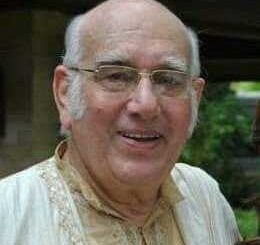
    Renowned cartoonist Sudhir Dar dies at 87 following cardiac arrest

    NEW DELHI(TIP): Renowned cartoonist Sudhir Dar, whose works graced several newspapers in a career spanning 58 years, died on Tuesday, November 26 morning after suffering a cardiac arrest, his family said.

    He was 87.

    Sudhir Dar was an award-winning Indian cartoonist, one of the ‘second generation’ of editorial cartoonists, active mainly from the 1960s to the year 2000, which included R. K. Laxman, Abu Abraham, O. V. Vijayan and Rajinder Puri.

    Starting with The Statesman in 1961, he went on to work as the political cartoonist with Hindustan Times, one of the largest-selling newspapers in India, from 1967 for over two decades. Subsequently, he joined ‘The Pioneer’, then edited by the legendary Vinod Mehta, and finally in 2000 called it a day to work independently as a freelancer.

    His originals are in possession of the Queen of England, Richard Attenborough, Yehudi Menuhin and many other world celebrities. Among other assignments, he illustrated diaries for the Ministries of Tourism, External Affairs, Jammu & Kashmir and draw calendars for the World Bank for 20 years.

    His cartoons have also appeared in The Independent, The Pioneer, Delhi Times, New York Times, Washington Post and Saturday Review, among others.

    (Source: PTI)

  • Maharashtra Mahabharat:  Supreme Court Orders Floor Test on November 27

    Maharashtra Mahabharat: Supreme Court Orders Floor Test on November 27

    Sena, NCP, Congress hail apex court order; BJP says will prove majority

    Ajit Pawar resigns as deputy chief minister

    Ajit Pawar has resigned as deputy chief minister

    Developing story

    I.S. Saluja

    NEW DELHI / MUMBAI(TIP): The high drama over government formation in Maharashtra is full of surprises and interesting twists.  The efforts for a ghar vapasi of Ajit Pawar seem to be succeeding with Ajit Pawar resigning as deputy chief minister, November 26 afternoon.

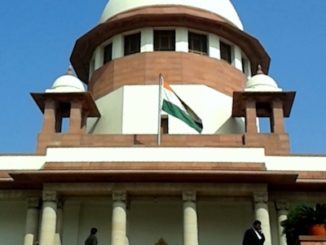
    Earlier in the morning, Supreme Court of India delivered its verdict on petitions filed by Shiv Sena, NCP and Congress challenging Maharashtra Governor’s “arbitrary and unconstitutional” action in inviting Fadnavis to form a government and swearing him in as chief minister who does not command majority. The petitioners claimed that they had the numbers and demanded immediate floor test.

    The Supreme Court directed that the floor test for Chief Minister Devendra Fadnavis to prove his majority in the Maharashtra Assembly be conducted on Wednesday, November 27.

    It directed Governor Bhagat Singh Koshyari to ensure that all elected members of the House were sworn in on Wednesday itself.

    The apex court said the entire proceedings had to be telecast live. Voting in the Assembly would not be on the basis of secret ballot, it said.

    Fadnavis was sworn in as chief minister and NCP’s Ajit Pawar as his deputy by the governor at a hush-hush ceremony in Raj Bhavan on Saturday morning.

    In the 288-member House, the BJP will have to prove support of 145 MLAs to remain in power.

    The BJP and the Sena, which fought the last month’s Assembly polls in an alliance, secured a comfortable majority by winning 105 and 56 seats, respectively.

    The Sena, however, broke its three-decade-long ties with the BJP after the latter declined to share the chief minister’s post.

    The NCP and Congress won 54 and 44 seats, respectively.

    Welcoming the Supreme Court’s order calling for a floor test in the Maharashtra Assembly on Wednesday, the Shiv Sena, NCP and Congress on Tuesday said truth would win and asserted that the BJP would be defeated.

    On its part, the BJP said it respected the verdict and expressed confidence that it would prove majority on the floor of the House.

    NCP chief Sharad Pawar, whose nephew Ajit Pawar rebelled against the party last week and supported the BJP to form government in the state, hailed the apex court for upholding the constitutional principles.

    “I am grateful to Hon’ble SC for upholding democratic values and constitutional principles. It’s heartening that the Maharashtra Verdict came on the #ConstitutionDay, a Tribute to Bharatratna Dr Babasaheb Ambedkar!” Pawar tweeted after the ruling.

    Shiv Sena’s Rajya Sabha MP Sanjay Raut said truth could not be defeated.

    “Satyamev jayate” (truth shall prevail), Raut tweeted.

    “Satya pareshan ho sakta hai…parajit nahi ho sakta…Jai Hind!!” (Truth can get frustrated, but cannot get defeated), he said in another tweet.

    Sena leader Eknath Shinde said Chief Minister Devendra Fadnavis should resign as the Uddhav Thackeray’s party-led coalition had the support of “162 MLAs” to prove majority in the Maharashtra Assembly.

    He claimed that during the floor test, the ‘Maha Vikas Aghadi’ of the Sena, NCP and Congress would have the support of “170 legislators”.

    NCP chief spokesperson Nawab Malik also hailed the Supreme Court order.

    “Satyamev Jayate BJP ka khel khatm (Truth alone shall win, end of the BJP’s game),” Malik said on the micro-blogging site.

    Welcoming the ruling, the Congress said the Constitution is supreme in a democracy, “which is more powerful than money and muscle power”.

    Maharashtra BJP president Chandrakant Patil exuded confidence that his party would be able to prove majority on the floor of the House.

    “We respect the court order. We are ready to prove majority and we will show it,” Patil told reporters here.

    The BJP would hold a meeting of its senior leaders on Tuesday to work out a strategy ahead of the floor test, he said.

    (With inputs from agencies)

  • IOC USA Remembers Jawaharlal Nehru on his 129th Birth Anniversary

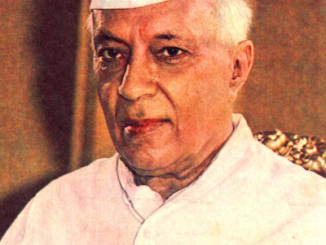
    IOC USA Remembers Jawaharlal Nehru on his 129th Birth Anniversary

    ‘My Gods are Hindu; hatred has no place in my religion’: Sunita Viswanath

    Sunita Viswanath delivering the keynote speaker

    NEW YORK (TIP): “I was born in India, lived in India as a child, and again as an adult. I am 51 years old. I have grown up largely abroad, but my heart is Indian, and my Gods are Hindu, and that means that both are open, giving, inclusive, expansive, full of love. My Indian heart sings Eshwar Allah Tero Naam, and my Hindu Gods teach me, “aano bhadra krtavo yantu vishwatah.” This is from the Rig Veda and means: “Let Noble Thoughts come to me from all directions.” Said Ms. Sunita Viswanath, co-founder of ‘Hindus for Human Rights’ addressing a gathering organized in coordination with Indian overseas Congress, USA, and Indo-US Democracy Foundation celebrating the Nehru Jayanthi on November 14, in Queens, New York.

    “The India that was envisioned by Nehruji, Gandhiji, Ambedkarji and so many other visionaries and revolutionaries, the India that is a “sovereign, socialist, secular and democratic republic” which ensures “justice, liberty, equality to all citizens and promotes fraternity to maintain unity and integrity of the nation,” is in crisis. This carnage of lives, rights, and Democracy is happening in the name of our faith. There must be a Hindu response to Hindutva. After all, since Hindus are the majority, no change is possible without changing the hearts and minds of Hindus. Who will annihilate caste if not Hindus?”

    Prof. Indrajit Saluja presenting IUDF plaque to Paul Vallone, NYC Councilman. George Abraham, Vice-Chairman of IOC, USA (extreme right)

    Nehruji’s greatest influence and inspiration, Gandhiji, was a progressive Hindu if there ever was one. Gandhiji wrote, “Hinduism tells everyone to worship God according to his own faith or dharma, and so it lives at peace with all the religions.” And Nehruji said, on Gandhiji’s birthday in 1952, “If any person raises his hand to strike down another on the ground of religion, I shall fight him till the last breath of my life, both at the head of government and from outside,” Ms. Viswanath added.

    In opening the meeting, Dr. Leno Thomas, the Emcee of the event, stated that Nehru understood that greatness lay in the service of our fellow human beings. “The only alternative to coexistence is co-destruction,” he said. “Without peace, all other dreams vanish and are reduced to ashes.” He saw Democracy as a means to an end, not the end itself. He saw freedom as a tool to uplift a lot of people. “The world of today has achieved much, but for all its declared love for humanity,” he said, “it has based itself far more on hatred and violence than on the virtues that make one human. War is the negation of truth and humanity. War may be unavoidable sometimes, but its progeny is terrible to contemplate. Not mere killing, for man, must die, but the deliberate and persistent propagation of hatred and falsehood, which gradually become the normal habits of the people”.

    “He succeeded to a large extent in maintaining the edifice of Indian unity using Democracy, socialism, and secularism. He believed and lived the fundamental truth that all human beings had a right to life, liberty, and the pursuit of happiness, the very principles, and words of the founding fathers of the United States of America. Wherever we are, in whatever small way we can, let follow his example and think and live and do likewise,” Dr. Thomas added.

    A view of the Audience. Front row (R to L): George Abraham, Malini Shah, Indrajit Saluja, Paul Vallone, Sunita Viswanath, Somanath Ghimire.

    Welcoming the distinguished guests that included Mr. Paul Vallone, the NYC councilman, George Abraham, Vice-Chairman of the IOC, USA recollected a bit of history where India was at the time of Independence. “Congress started with zero. Electricity was available only in 20 villages across India, Telephone facilities were available only for 20 rulers (Kings) in the country, no drinking water supply, no hospitals, no educational institutions, no fertilizers, no jobs, rampant starvation in the country, four planes, 20 tankers and fully open borders, minimum roads and bridges, empty exchequer and that is what Nehru inherited”.

    “Today India has the largest army, thousands of warplanes, lakhs of Industrial Institutions, electricity in almost all villages, hundreds of electrical power stations, several thousands of highways and bridges, new railway projects, stadiums, super-specialty hospitals, most of the Indian households with Television, telephone services across the country, Banks, Universities, AIMS, IITs IIMs, Nuclear weapons, Submarines, ISRO…all these were achieved under the vision of our first Prime Minister Jawaharlal Nehru. Some would talk as if this all has happened in the last five years, and it is nothing but an outright distortion of history. The attempt by the current regime to marginalize the legacy of Nehru is shameful and will not succeed,” Mr. Abraham added.

    The meeting also played Nehru’s “Tryst with Destiny” speech and Mr. Paul Vallone,  who received a Humanitarian Award from the Indo-US Democracy Foundation for his support for promoting Democracy and freedom lauded Nehru for his inclusive policies that united India and appealed to the gathering to emulate the same values for their transplanted lives here in the USA. Mr. Indrajit Saluja, Chief Editor of Indian Panorama, presented him with a plaque, and Ms. Mariamma Varkey, Chairperson for Kerala Chapter’s Women’s forum felicitated him with a Shawl.

    IOC Leaders

    Mr. Rajender Dichpally, General Secretary, reminded everyone to read Nehru’s ‘Discovery of India’ to gain a better perspective on history. Ms. Malini Shah was applauded specially by Mr. Paul Vallone for her support and her outstanding contributions to the Asian Indian Community. Senior IOC leaders Ravi Chopra, Leela Maret, Shalu Chopra, U.A. Naseer, and Oommen Koshy also spoke on occasion. Ms. Sophia Sharma spoke on the need to get more involved in mainstream politics to support the same Nehruvian values. Other IOC leaders who were present also included Mr. Pradeep Samala, John Joseph, Satish Sharma and Rajesh Alladad, K C Chaithanya, S. Lal Malick and community leaders such as Mohammed Hack, Dilip Chauhan, Jennifer Rajkumari, Somanath Ghimire and Koshy George.

    Mr. Amir Rashid expressed the vote of Thanks.


  • NJPAC SPARKLES WITH  MUSICAL HOLIDAY CELEBRATION

    NJPAC SPARKLES WITH MUSICAL HOLIDAY CELEBRATION

    By Mabel Pais

    The Boston Pops (BSO)

    The Boston Pops
    Photo Courtesy / NJPAC

    The iconic Boston Pops (BSO),under the masterful direction of Keith Lockhart, arrives at NJPAC’s Prudential Hall with a sparkling holiday celebration.

     The New Jersey Performing Arts Center (NJPAC) presents The Boston Pops on Tour, Sunday, December 15, 2019 at 4:00 p.m.

    The iconic Boston Pops, under the masterful direction of Keith Lockhart, arrives at NJPAC’s Prudential Hall with a sparkling holiday celebration.

    Since its founding in 1885, the Boston Pops has become one of America’s most beloved musical institutions, known for a rousing repertoire of light classical, Broadway show tunes, film score classics, American standards, and patriotic songs. The ensemble is featured regularly on the PBS series “Evening at Pops,which attracts a cumulative audience of nearly 40 million viewers each season. The Boston Popsalso reaches listeners via a GRAMMY-nominated discography of more than 100 acclaimed recordings.

    Currently in his 24th season with the Boston Pops, conductor Keith Lockhart has led over 1,900 Boston Pops concerts (including performances at Carnegie Hall and Radio City Music Hall) as well as 79 television performances, including dozens of new programs for “Evening at Pops,” and the annual July Fourth spectacular, broadcast nationally for many years.

    For their welcome return to NJPAC, Lockhart and company arrive with a high-spirited holiday program of best-loved songs of the season, drawing from a repertoire that includes their peerless renditions of “The Twelve Days of Christmas,” “Jingle Bells,” “‘Twas the Night Before Christmas,” “Sleigh Ride,” and many more.

    Tickets to see The Boston Pops on Tour are available at NJPAC.orgor at the NJPAC Box Office or by calling 888.GO.NJPAC (888.466.5722).

    About The Boston Pops

    Now in its 139thseason, the Boston Symphony Orchestra gave its inaugural concert in 1881, realizing the dream of its founder, the Civil War veteran/businessman/philanthropist Henry Lee Higginson, who envisioned a great and permanent orchestra in his hometown of Boston.

    Today the BSO reaches millions of listeners, not only through its concert performances in Boston and at Tanglewood, but also via the internet, radio, television, educational programs, recordings, and tours. It commissions works from today’s most important composers; its summer season at Tanglewood is among the world’s most important music festivals; it helps develop future audiences through BSO Youth Concerts and educational outreach programs involving the entire Boston community; and, during the Tanglewood season, it operates the Tanglewood Music Center, one of the world’s most important training grounds for young professional-caliber musicians. The Boston Symphony Chamber Players, made up of BSO principals, are known worldwide, and the Boston Pops Orchestra sets an international standard for performances of lighter music.

    Today the Boston Symphony Orchestra continues to fulfill and expand upon the vision of its founder Henry Lee Higginson, not only through its concert performances, educational offerings, and internet presence, but also through its expanding use of virtual and electronic media in a manner reflecting the BSO’s continuing awareness of today’s modern, ever-changing, 21st-century world.

    To learn more about The Boston Pops, visit bso.org.

    THE UKRAINE SYMPHONY (NSOU)

    “Rich with energy and unusually adventurous… Its strings can conjure up a vibrant songfulness; the woodwinds have a fruity, penetrating ripeness; the brass could endanger the walls of Jericho; the percussion might wake the dead.”  – The Sydney Morning Herald

    For the first time ever, NJPACwelcomes

    The National SymphonyOrchestra of Ukraine!

    The Ukraine Symphony
    Photo / Courtesy NJPAC

    The New Jersey Performing Arts Center (NJPAC) presents the National SymphonyOrchestra of Ukraine(NSOU) on Sunday, November 24, 2019 at 3:00 p.m.

    Joined by the Van Cliburngold medalist, Olga Kernon piano, this thrilling ensemble garners standing ovations around the world. Classical music fans shouldn’t miss this opportunity to hear the Kiev-based orchestra perform works by the Russian masters, conducted by Volodymyr Sirenko.

    Prepare yourself for a true once-in-a-lifetime experience. Known for “a program rich with energy and unusually adventurous,” the National SymphonyOrchestra of Ukraineis considered one of the finest in Eastern Europe.

    NSOU will be joined by Russian-American pianist Olga Kern, widely considered one of her generation’s greatest pianists. With vivid stage presence, passionate musicianship, and extraordinary technique, she continues to captivate fans and critics alike.

    Olga Kern
    Photo / Courtesy olgakern.com

    Berezovsky: Symphonyin C
    Rachmaninoff: Piano Concerto No. 2
    Tchaikovsky: Polonaise (Eugene Onegin)
    Tchaikovsky:SymphonyNo. 5

    “Rich with energy and unusually adventurous… Its strings can conjure up a vibrant songfulness; the woodwinds have a fruity, penetrating ripeness; the brass could endanger the walls of Jericho; the percussion might wake the dead.”  – The Sydney Morning Herald

    Classical Overtures

    Join NJPAC for the “Classical Overtures,” held an hour prior to each classical concert. These interactive presentations are hosted by Maestro George Marriner Maull of New Jersey’s Discovery Orchestra and are free to ticket holders.

    TICKETS

    Tickets to see the National SymphonyOrchestra of Ukraine are available

    at www.NJPAC.org or visiting the NJPACBox Office or calling 888.GO.NJPAC(888.466.5722).

     VAN CLIBURN AND THE CLIBURN

    Harvey Lavan “Van” Cliburn Jr.(July 12, 1934 – February 27, 2013) was an American pianist who, at the age of 23, achieved worldwide recognition when he won the inaugural International Tchaikovsky Competition in Moscow in 1958 (during the Cold War). Cliburn’s contributions to society were many and one of his greatest contributions was the Van Cliburn International Piano Competition. In 1961, the pieces were falling into place, and the Van Cliburn Foundation was officially chartered. First held in 1962, the quadrennial Van Cliburn International Piano Competition quickly established itself as an event that inspires and engages the local community, while gracing the international stage.

    To learn more about the Van Cliburn Foundation and The Cliburn (International Piano Competition) visit thecliburn.org

    Russian-American pianist Olga Kern is recognized as one of her generation’s great artists.  With her vivid stage presence, passionately confident musicianship and extraordinary technique, the striking pianist continues to captivate fans and critics alike.  Olga Kern was born into a family of musicians with direct links to Tchaikovsky and Rachmaninoff and began studying piano at the age of five. She jumpstarted her U.S. career with her historic Gold Medal at the Van Cliburn International Piano Competition in Fort Worth, Texas as the first woman to do so in more than thirty years.To learn more, visit olgakern.com

    About NJPAC
    New Jersey Performing Arts Center (NJPAC), located in downtown Newark, N.J., has the most diverse programming and audience of any performing arts center in the country, and is the artistic, cultural, educational and civic center of New Jersey – where great performances and events enhance and transform lives every day. NJPACbrings diverse communities together, providing access to all and showcasing the state’s and the world’s best artists while acting as a leading catalyst in the revitalization of its home city. Through its extensive Arts Education programs,NJPACis shaping the next generation of artists and arts enthusiasts. NJPAChas attracted more than 9 million visitors (including over 1.7 million children and families) since opening its doors in 1997, and nurtures meaningful and lasting relationships with each of its constituents.

    Get Social! Follow NJPACOnline:
    Website:      http://www.njpac.org/
    Twitter:       @NJPAC
    Hashtag:      #NJPAC
    Facebook:     facebook.com/NJPAC
    YouTube:      NJPACtv

    (Mabel Paiswrites on the Arts and Entertainment, Social Issues, Spirituality and Health & Wellness)


  • Former New York City Mayor Mike Bloomberg Announces Run for President

    Former New York City Mayor Mike Bloomberg Announces Run for President

    NEW YORK(TIP): Former New York City Mayor and media mogul Michael Bloomberg officially announced today, November 24, 2019 that he was running as a Democrat in the 2020 presidential election.

    In a statement and a video released today Bloomberg took aim at President Donald Trump, a fellow wealthy New York-made businessman.

    In a widely released statement, Bloomberg took aim at President Donald Trump and urged voters to embark on “rebuilding America.”

    “I’m running for president to defeat Donald Trump and rebuild America,” the statement read. “We cannot afford four more years of President Trump’s reckless and unethical actions. He represents an existential threat to our country and our values. If he wins another term in office, we may never recover from the damage. The stakes could not be higher. We must win this election. And we must begin rebuilding America. I believe my unique set of experiences in business, government, and philanthropy will enable me to win and lead.

    In his first ad for his campaign, Bloomberg is painted as a champion of working Americans and the middle class, and despite his $52 billion net worth, he emphasizes how different he is from Trump, a fellow New York-made business magnate.

    The ad highlights 77-year-old Bloomberg’s middle-class upbringing in Medford, Massachusetts, before the narrator said he “had to work his way through college” and built Bloomberg LP from “a single room to a global entity” before going on to lead job creation and development across New York City in the wake of September 11 in three terms as mayor.

    Bloomberg has had a closely watched few weeks since it was reported he was contemplating a run and raised eyebrows across the Democratic field when it was reported he was planning to launch a $100 million TV ad campaign.

    The billionaire has already had a turbulent few weeks since news broke that he was contemplating entering the race.

    Last week, he appeared to take a campaign-trail style approach to publicly admitting fault and apologizing for the controversial “stop and frisk” policy practiced by his police force that a federal judge later ruled in 2013 violated the constitutional rights of racial minorities, though the former mayor had often defended the practice even after he left office.

    Previous reports that Bloomberg was launching a $100 million TV ad campaign in several key primary states raised eyebrows as it marks the single biggest ad buy in American campaign history. Fellow 2020 contenders Sen. Bernie Sanders and Sen. Elizabeth Warren publicly admonished the news.

    Bloomberg’s statements that he will not accept donations and will self-fund his campaign stands in stark contrast to most of the crowded Democratic field’s donor-driven funding.

    The news had been anticipated since Bloomberg filed paperwork be in the Democratic primary in Arkansas and Alabama earlier this month.

    Unlike Trump, Bloomberg appears to be poised to release his tax returns, as he routinely did while serving as mayor after initially refusing.

    (Source: Agencies)

  • Maharashtra Government Formation: Sena approaches SC, calls Maharashtra Governor’s action arbitrary, malafide

    Maharashtra Government Formation: Sena approaches SC, calls Maharashtra Governor’s action arbitrary, malafide

    Dilip Patil replaces rebel Ajit Pawar as leader of NCP legislature party

    I.S. Saluja

    MUMBAI/NEW DELHI (TIP): Maharashtra government formation is presenting swift and interesting scenes. After the Maharashtra Governor Bhagat Singh Koshyari swore in Devendra Fadnavis as the chief minister on November 23 morning, the ShivSena challenged the Governor’s “arbitrary and malafide actions and decisions” in the Supreme Court.

    The party has filed a writ petition in the apex court against the state governor, a Sena functionary said here.

    Meanwhile, NCP leader Sharad Pawar held a meeting of NCP legislators in Mumbai. At the meeting, Dilip Patil was elected leader of the legislature party in place of the rebel Ajit Pawar who claimed support of 22 MLAs and was sworn in as Deputy Chief Minister in Phadnavis government.

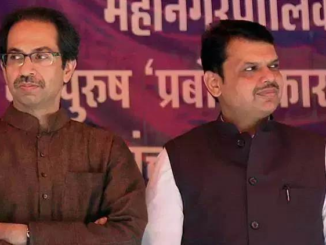
    Addressing a press conference, Sharad Pawar, who was accompanied by Shiv Sena chief Uddhav Thackeray, said Chief Minister Devendra Fadnavis did not have the numbers to win the vote of confidence in the Maharashtra Assembly.

    Pawar also produced three MLAs of the NCP, who accused Ajit of luring them to the Raj Bhavan where they were paraded before Maharashtra Governor Bhagat Singh Koshiyari.

    “Ten to 11 MLAs had gone with Ajit Pawar to the Raj Bhavan this morning. Of them three are with me here and the others will soon follow,” Sharad Pawar said.

    He added that the MLAs who were still with Ajit Pawar knew that they stood to lose their membership of the state Assembly under the anti-defection law. “All the MLAs who went with Ajit Pawar are in touch with us,” Sharad Pawar said.

    The Maratha chieftain pointed out that as leader of the NCP legislature party, Ajit Pawar had a list of signatures of all the party MLAs. “I assume he has submitted the same list to the Governor. I will have to speak to the Governor and find out,” Pawar said.

    Three MLAs, who were taken to the Raj Bhavan by Ajit Pawar, showed up at Sharad Pawar’s press conference where they alleged that they were duped by the younger leader. “Ajit Pawar had called me to discuss something where I found some other MLAs. We were all suddenly taken to Raj Bhavan and before we could understand what was happening, the oath-taking ceremony was completed,” NCP MLA Rajendra Shingane told reporters. His testimony was backed by two other NCP MLAs, Sandip Kshirsagar and Sunil Bhusara, who said they were unwittingly taken to the Raj Bhavan for the oath-taking ceremony.

    The three leaders said they immediately came to Sharad Pawar as soon as they got out of Raj Bhavan.

    Addressing the media, Uddhav Thackeray said the BJP is practicing horse-trading. “Let them try luring any Shiv Sena MLA and they know what awaits them,” Thackeray said.

    Hitting out at Fadnavis, Thackeray said the CM did not respect democratic values. “…..from now on there is no need for election. Instead of saying ‘I will return’ some people should simply apply Fevicol to their chair and sit on it,” Thackeray said.

    Later in the day, senior BJP leader Sudhir Mungantiwar said Ajit Pawar gave the letter of support on behalf of all 54 NCP MLAs. “There is no need for a separate letter from each legislator. The letter from the leader of the Legislature Party is sufficient,” Mungantiwar told reporters.

    The month-long political impasse, after the October 24election results, ended dramatically with Devendra Fadnavis returning as the chief minister, backed by the Sharad Pawar-led NCP.

    NCP leader Ajit Pawar was sworn in as Deputy Chief Minister.

    Governor Bhagat Singh Koshyari administered the oath to the two in the morning ceremony, where only official media was present.

    “People had given us a clear mandate, but Shiv Sena tried to ally with other parties after results, after which President’s rule was imposed. Maharashtra needed a stable government, not a ‘khichadi’ govt,” Fadnavis said.

    Ajit Pawar, after taking oath as Deputy Chief Minister, said: “From result day on October 24, no party was able to form the government. Maharashtra was facing many problems, including farmer issues. So, we decided to form a stable government.”

    Sharad Pawar on Thursday, November 21 night had said there was a consensus among the NCP, Congress and Shiv Sena that Uddhav Thackeray should lead the new government.

    The political situation in Maharashtra is fluid and nobody can possibly predict the next scenario. However, one thing appears to be certain that given the fact that BJP is determined to have control of Maharashtra, it will go to any extent to remain in power now that Phadnavis is sworn in as chief minister. It may well be the repeat of Karnataka. Thanks to availability of huge funds and no accountability on sources of funding and spending, political parties will freely go in for horse trading, something which is an integral part of the political culture of India, as widespread corruption from top to bottom is. Reports are that each political party is securing its MLAs, keeping them in hiding, to prevent crossovers.

    (With inputs from PTI)

  • Halloween, Diwali celebrated at Lincoln Hospital

    Halloween, Diwali celebrated at Lincoln Hospital

    NEW YORK(TIP): Lincoln Hospital held recently celebrations for Diwali and Halloween. The Halloween celebration took place, fittingly, on Thursday October 31 and was attended by Lincoln patients, nurses and doctors, who all dressed in their Halloween costumes. The Diwali celebration, also known as the South Asian Festival of Lights, was held the following day on Friday, November 1.

    Lincoln Hospital’s pediatric clinic patients with nurses and doctors in Halloween costumes.
    Photo courtesy / NYC Health & Hospitals


  • NPAs continue to bite: Banks have lost Rs 1.76 lakh crore in the last three years

    NPAs continue to bite: Banks have lost Rs 1.76 lakh crore in the last three years

    The RTI replies demonstrate a constant surge in the amount written off by the scheduled commercial banks, which include public sector banks and private banks in the country, since 2014-15.

    While banks claim that the recovery measures continue even after write-offs, sources say not more than 15-20 per cent is recovered.

    In the last three years, Indian banking system has lost Rs 1.76 lakh crore on account of writing off  non-performing loans of 416 defaulters — each owing Rs 100 crore or more.

    On an average, the amount declared as bad loans turns out to be around Rs 424 crore per borrower.

    This the first time data relating to big loans and biggest defaulters –owing at least Rs 100 crore – has come to light.

    The statistics showed that 109 unique borrowers had their loans to the tune of Rs 40,798 crore written off.

    Following a norm issued by the RBI to all the scheduled commercial banks to come clear on the amount to be prudentially written off and set the accounts right, the data has been exclusively accessed by the CNN-News18 by filing a series of RTI applications.

    The RTI replies demonstrate a constant surge in the amount written off by the scheduled commercial banks, which include public sector banks and private banks in the country, since 2014-15.

    Between 2015 and 2018, a total of Rs 2.17 lakh crore were written off as bad debts by the scheduled commercial banks.

    The statistics showed that 109 unique borrowers had their loans to the tune of Rs 40,798 crore written off.

    This number grew to 199 unique borrowers as on March 31, 2016 with a total of Rs 69,976 crore as amount written off.

    The next two years – post demonetization, however, witnessed the sharpest increase in the amount being written off for the borrowers.

    The RBI collects credit information of large borrowers with exposure of Rs 5 crore and above, which contain data on borrowers with amount technically/prudentially written off.

    The number of unique borrowers grew to 343 – an addition of 144 more, i.e. a 72 percent rise in number of such loanees.

    For this period, the amount written off also jumped from Rs 69,926 to Rs 1, 27, 797 crore.

    This amounted to a rise by Rs 57,821 crore as compared to Rs 29,178 of the preceding financial year. It also meant a whopping hike by almost 83 percent in the total amount written off by the scheduled commercial banks in the year immediately following the demonetization.

    The story remained the same for the next financial year.

    As on March 31, 2018, there happened to be 525 unique borrowers – this was an addition of 182 borrowers whose big loans were written off.

    The total amount written off as bad debts shot up from 1.27 lakh crore to Rs 2.17 lakh crore – an increase of Rs 89,324 crore – another huge jump by almost 70 percent.

    The RTI reply pointed out that the data prior to September 2014 for number of write-offs to the tune of at least Rs 100 crore is not available.

    The constant spurt in bad loans has prodded the government into stepping in time and again to bail out banks by recapitalizing them.

    While banks claim that the recovery measures continue even after write-offs, sources say not more than 15-20 per cent is recovered.

    The RBI collects credit information of large borrowers with exposure of Rs 5 crore and above, which contain data on borrowers with amount technically/prudentially written off.

    The information accessed by the CNN-News18 is a first in getting the exact number of unique borrowers in respect of which an amount of Rs 100 crore and above were written off.

    The information also uniquely depicts the pattern between 2014 and 2018 when such numbers grew, especially post demonetization.

    SBI writes off Rs 76,600 crore of 220 defaulters, RTI query reveals

    Similarly, Central Bank of India and Indian Overseas Bank had 4 defaulters each, owing more than Rs 500 crore when their loans were written off.

    The data has been accessed by the CNN-News18 through a series of RTI applications, following the Supreme Court judgments that directed the RBI to disclose relevant information on the NPAs and bad debts under the RTI Act.

     India’s largest bank, State Bank of India (SBI) has written off bad loans worth Rs 76,600 crore of 220 defaulters, who owed more than Rs 100 crore each.

    As on March 31, 2019, the SBI has declared as unrecoverable outstanding worth Rs 37,700 crore that 33 borrowers, with loans of Rs 500 crore and more, owed to it.

    In a first, the latest information, furnished by the RBI to CNN-News18 under the Right To Information Act, has disclosed the bank-wise break up where loans more than Rs 100 crore and Rs 500 crore were written off by the banks as on March 31, 2019.

    A total of Rs 2.75 lakh crore has been written off for entities that borrowed Rs 100 crore or more from scheduled commercial banks. The latest statistics divulge that Rs 67,600 crore were declared as bad debts for those given loans of Rs 500 crore and more.

     As on March 31, 2019, the SBI has declared as unrecoverable outstanding worth Rs 37,700 crore that 33 borrowers, with loans of Rs 500 crore and more, owed to it.

    As many as 980 borrowers have been enlisted by the RBI whose debts of more than Rs 100 crore each had to be written off by the banks. Out of these, 220 accounts – more than one-fifth of the total number – belonged to SBI. An average of Rs 348 crore was waived off in respect of each such account.

    Out of 71 total accounts reported as having defaulted in loans of over and above Rs 500 crore each, SBI’s share turned out to be 33 to 46 per cent of the total.

    Similarly, as on March 31, Punjab National Bank (PNB) had waived off debts of at least Rs 100 crore each in respect of 94 borrowers. The gross amount came out to be Rs 27,024 crore, with an average of Rs 287 crore per account.

    PNB also wrote off loans of Rs 500 crore or more for 12 biggest defaulters, totaling Rs 9,037 crore.

    While SBI and PNB topped the list among the public sector banks, IDBI stood at the top among the private banks. IDBI also came third among all the scheduled commercial banks in declaring bad debts of Rs 100 crore or more.

    IDBI had 71 borrowers of Rs 100 crore and more, with a total outstanding of Rs 26,219 crore written off.

    Canara Bank too had 63 accounts with outstanding of Rs 100 crore and more, and another 7 accounts with borrowings of Rs 500 crore and more, in respect of which loans worth Rs 27,382 crore.

    The list of borrowers with Rs 100 crore and more as outstanding having been declared as bad loans is followed by Bank of India with 56 accounts, Corporation Bank with 50 accounts, Bank of Baroda with 46 accounts and Central Bank of India with 45 accounts.

    Among the private banks, Axis Bank had 43 such borrowers, followed by ICICI Bank having 37 such accounts.

    Similarly, Central Bank of India and Indian Overseas Bank had 4 defaulters each, owing more than Rs 500 crore when their loans were written off.

    The data has been accessed by the CNN-News18 through a series of RTI applications, following the Supreme Court judgments that directed the RBI to disclose relevant information on the NPAs and bad debts under the RTI Act.

    (Source; CNN -News 18)

  • Little hope for these banks

    Little hope for these banks

    By Subir Roy

    What the public sector needs is ‘space’ to overhaul functioning

    A banking system is an act of faith. It survives only for as long as people believe it will. — Michael Lewis

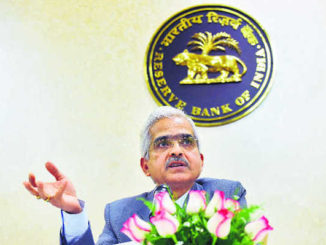
    Whatever be the shortcomings of Shaktikanta Das, RBI Governor, it is not the inability to call a spade a spade when it comes to describing what ails India’s public sector banks which account for 60 per cent of the banking sector. In a recent detailed address outlining the highlights of half a century of nationalized banking, he has said of all the ‘internal challenges’ facing them, their ‘governance’ is a central concern. It is the ‘elephant in the room’.

    This is because some of them have not been led by independent boards whose job it is to ‘foster a compliance culture’ through ‘proper systems of control, audit and distinct reporting of business and risk management’. This, in turn, is because there is an inability to understand risks from a business perspective as there is a ‘skills’ and ‘competency’ gap in the bank boards.

    What the banks need is a ‘strong corporate governance culture’ focused on ‘transparency and accountability’ which has to ‘percolate from a strong board which sets the example by leading’, says the RBI Governor. Through this act of self-indictment (if there is lawlessness then that is ultimately the fault of the policeman and the RBI is the regulator for the banking sector), the RBI is also implicitly telling the government that it has tied its hands when it comes to policing public sector banks. The RBI has limited supervisory and legal powers to structure the management of these banks. For privately owned banks, the RBI’s writ in this regard runs deeper.

    But in this Das is on a somewhat weak wicket. Is he the sort who can stand up to the government in a battle to get the regulatory turf the RBI needs? He has come in after two governors with international reputation and academic experience left because of their inability to see eye to eye with the government.

    Raghuram Rajan, an internationally recognized economist with a record of predicting the global financial crisis which began in 2008, first initiated the process of getting state-owned banks to recognize a non-performing asset by declaring it so, and not carrying on evergreening it through restructuring (grant a fresh loan to pay the interest due and technically repay the loan with the borrower not bringing in any fresh funds). This was followed by the ‘prompt corrective action’ regime under which banks that did not meet certain criteria were barred from further lending. At one time as many as 11 public sector banks were under this straitjacket which converted them into virtual deposit takers.

    Rajan was replaced by Urjit Patel who was a less flamboyant personality and more of an academic, but he also failed to get along with the government. There were two specific points of friction. Growing fiscal tightness prompted the government to seek a hefty dividend payout from the RBI which would deplete its reserves, needed to work proactively to quell instability in either the domestic or the external sector (for example, the need to ease pressure on the rupee).

    The other was the government’s feeling that the RBI should ease monetary policy in order to address the emerging slowdown in economic activity and gradual fall in the growth rate. Patel failed to deliver on both these issues, and so had to exit.

    Temperamentally, Das is the opposite of both his predecessors. A career civil servant, he is clear that at the end of the day it is the government that lays down policy not just for itself, but for the RBI, too, in terms of the statute under which it functions. Das has obliged the government on both counts. The RBI under him has paid a hefty dividend and monetary policy has been eased, with the policy rate being systematically lowered over time. The strict controls on the functioning of several banks have also been eased, though it can be argued that this is because their numbers have improved over the last year.

    Now let us come to the issue of governance of public sector banks. The government was well aware of this problem which it had inherited from the previous government, and so fairly early in its first term it set up the Banks Board Bureau to both improve the quality of banks’ top managements by overhauling their selection process, and also creating a buffer to protect managements which sought to do a professional job from political interference.

    To show that it meant business the government put at the head of the bureau a high-profile personality, former CAG Vinod Rai whose penetrating reports had exposed the crony capitalism that has prevailed earlier in areas like allocation of airwave spectrum and mining leases. But most unfortunately, the many thoughtful recommendations that the bureau made to the government under the leadership of Rai were ignored and he made a quiet exit at the end of his term. The bureau thereafter became one more faceless cog in the huge government machinery.

    Das is dead right in pointing out that it is lack of proper governance that lies at the root of all the ills of public sector banks. But he is not the sort of person who will fight with the government for the space to properly regulate the banks and overhaul their governance. The culture that defines India’s political class, across party lines, makes it inevitable for politicians and senior civil servants to interfere in the running of state-owned banks. And the present political class has shown no signs that it is changing that culture.

    (The author is a senior economic analyst)

  • US concerned about status of minorities in Pak: Ambassador

    US concerned about status of minorities in Pak: Ambassador

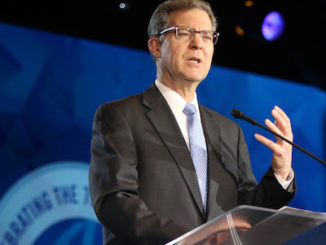
    WASHINGTON(TIP): The United States is concerned about the status of minorities in Pakistan, particularly the harshness of its persecution atmosphere and the number of people getting killed, US Ambassador at Large for International Religious Freedom Samuel Brownback said on Thursday.

    “We are concerned about Pakistan because of the harshness of the persecution atmosphere and the number of people getting killed or the inability of the Ahmadi Muslims to function in the country because they – the Pakistanis – won’t let them register as Muslims,” Brownback told a news conference here.

    “So, we’re looking at what we can do in that space,” he added.

    Responding to a question, Brownback said the administration had been working with a number of development organizations to ask them to consider if they could help religious minorities in countries, particularly where they are persecuted.

    “We do help certain groups, like we’ll have particular programs targeted towards women in some countries or the handicapped. I’ve asked a number of them to see if there is a chance” to help and support religious minorities, he said.

    (Source: PTI)

  • Israeli PM Netanyahu charged in corruption cases

    Israeli PM Netanyahu charged in corruption cases

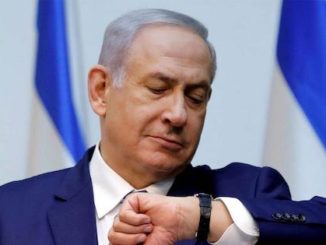
    JERUSALEM(TIP): Israel’s attorney general, on November 21, formally charged Prime Minister Benjamin Netanyahu in a series of corruption cases, throwing the country’s paralyzed political system into further disarray and threatening the long-time leader’s grip on power.

    Attorney General Avichai Mandelblit charged Netanyahu with fraud, breach of trust and accepting bribes in three different scandals. It is the first time a sitting Israeli prime minister has been charged with a crime. Mandelblit was set to issue a formal statement later Thursday.

    Allegations against Netanyahu include suspicions he accepted hundreds of thousands of dollars of champagne and cigars from billionaire friends, offered to trade favors with a newspaper publisher and used his influence to help a wealthy telecom magnate in exchange for favorable coverage on a popular news site.

    The indictment does not require Netanyahu to resign but is expected to raise pressure on him to step down.

    Netanyahu has called the allegations part of a witch-hunt, lashing out at the media, police, prosecutors and the judicial system. Netanyahu was scheduled to issue a statement later.

    Netanyahu has been Prime Minister of Israel since 2009, having previously held the position from 1996 to 1999. Netanyahu is also the Chairman of the Likud – National Liberal Movement. He is the longest-serving Prime Minister in Israeli history, and the first to be born in Israel after the establishment of the state.

    (With inputs from agencies)


  • Open, all the same: On CJI office and RTI Act

    Open, all the same: On CJI office and RTI Act

    With the CJI under the RTI Act, there will be greater transparency by public authorities

    The adage, “sunlight is the best disinfectant” is often used to delineate the need for disclosure of matters related to public interest through the Right to Information mechanism. The declaration of assets by ministers and legislators, besides electoral candidates, has gone a long way in shedding light on public authorities and provided the citizenry more relevant information about their representatives. Yet, judges of the Supreme Court had hitherto refused to share information on their personal assets, citing the express lack of public interest. The welcome ruling by a five-member Constitution Bench of the Supreme Court that the office of the Chief Justice of India is a “public authority” under the RTI Act, as much as the apex court itself, now enables the disclosure of information such as the judges’ personal assets. The judgment’s majority opinion, written by Justice Sanjiv Khanna, emphasized the need for transparency and accountability and that “disclosure is a facet of public interest”. In concurring opinions, Justice D.Y. Chandrachud asserted that judicial independence was not secured by secrecy while Justice N.V. Ramana argued for the need of a proper calibration of transparency in light of the importance of judicial independence. The Bench unanimously argued that the right to know under the RTI Act was not absolute and this had to be balanced with the right of privacy of judges. But the key takeaway from the judgment is that disclosure of details of serving judges’ personal assets was not a violation of their right to privacy.

    The main opinion also argued that information related to issues such as judicial appointments will also be subject to the test of public interest and procedures mandated in the RTI Act that specify that views of third parties (in this case, judges) must be sought. While laying out the importance of the assessment of public interest in any RTI query besides bringing the office of the CJI under the purview of the Act, the decision has gone on to uphold the Delhi High Court verdict in 2010. The RTI Act is a strong weapon that enhances accountability, citizen activism and, consequently, participative democracy, even if its implementation has come under strain in recent years due mainly to the Central government’s apathy and disregard for the nuts and bolts of the Act. Yet, despite this, the Supreme Court judgment paves the way for greater transparency and could now impinge upon issues such as disclosure, under the RTI Act, by other institutions such as registered political parties. This is vital as political party financing is a murky area today, marked by opacity and exacerbated by the issue of electoral bonds, precluding citizens from being fully informed on sources of party incomes.

    (The Hindu)

  • Nehruvian consensus under siege

    Nehruvian consensus under siege

    By Bhupesh Baghel

    Jawaharlal Nehru’s stature and moral authority, now under attack, were the guarantors for modern India’s social contract

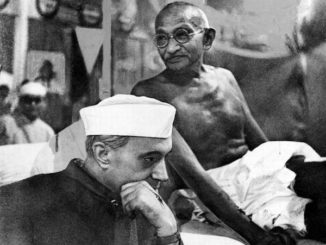
    The mention of Jawaharlal Nehru evokes strange reactions these days, but for Congressmen such as me it is a matter of faith and symbolic of all that we hold dear to our hearts. He was the closest we could imagine of reaching our leader Gandhiji and, therefore, was the manifestation of the unmanifested. As his heir Nehru taught us, the post-Independence generation, both the ideas and their praxis, of the values of the national movement. Summable as the constitutional values, we know of them as Nehruvian values, which he called Indian or Gandhian philosophy.

    A frame under strain

    We have grown up under a huge pantheon (both religious and historical) which has inculcated in us a tolerance and receptivity of/for a multitude of perspectives, and an anticipation of newer ones. Today as we live through an intolerant regime and discourse, I realize what its absence leads to. The frantic attempt to appropriate some and deride others from ours is resultant of their inner emptiness.

    Today the values of our national movement, duly canonized as the Constitution, are being threatened not only by a spiteful government but also through a majoritarian discourse and its progeny; a mob emboldened to declare itself the nation and law. Our institutions are under severe stress mainly because there is an apprehension that the Constitution may not be able to protect them from this onslaught. Yet we need to look back and see how in far more difficult times our leadership had held on to their values; yes, we miss them today.

    Continuing the fight

    I recall how Panditji and Sardar Patel missed Gandhiji in those difficult times. In a letter in 1950 to K.G. Mashruwala talking of the problems emanating from East Pakistan and West Bengal, Panditji says that “ merely to preach goodwill irritates people when they are excited. Bapu might have done it, but we are too small for this kind of thing.” But his faith in the people of this country and their values helped him tide over such tragedies. He proudly declared that the revered ‘Bharat Mata’ was none other than the teeming millions populating this land. It was the same belief that Gandhiji had in the poor and illiterate masses in this country, who held on to their civilizational values of truth, non-violence and tolerance. This is what led Gandhiji to pronounce him his inheritor, and at a session where he had passed a resolution questioning ‘doctrinaire nonviolence’; Gandhiji declared, “When I am gone, he will do what I am doing now.”

    Yes, Gandhiji died fighting the communal mania and Panditji continued the fight constitutionally when on April 13, 1948, the Constituent Assembly adopted a resolution that “for the proper functioning of democracy, and the growth of national unity and solidarity… no communal organization should be permitted to engage in any of the activities other than those essential for the bonafide religious, cultural, social and educational needs of the community.”

    Seen together with the conditions Sardar Patel had before lifting the ban on the Rashtriya Swayamsevak Sangh, we can say that he was just implementing the mandate of the Constituent Assembly and that what we are witnessing today is a betrayal of the Constitution. He had said in 1933 that the communalism of the majority resembles nationalism. But the test of its true nature is its relation to the national struggle, and also that laying stress on communal problems instead of national ones is obviously anti-national. These are the two litmus tests we need to always remember and they remove any iota of doubt about the nature of nationalism being put forth by the current regime.

    This came from a person deeply rooted and secure in the knowledge and practice of his culture and traditions. His writings, especially The Discovery of India, is a reflection of his efforts at forging a relation of both transcendence and immanence with his nation and culture. His conviction in the enlightened middle path of the Buddha was reflected in both Non-alignment and the Panchsheel, as well as his faith in a mixed economy. Not to forget were his reaffirmation of the Buddha’s and Gandhiji’s non-violence.

    In his last will (June 1954), Nehru invokes the Ganga, calling her the ‘river of India’. He further writes, “Smiling and dancing in the morning sunlight, and dark and gloomy and full of mystery as evening shadows fall; a narrow, slow and graceful stream in winter, and a vast roaring thing during monsoon, broad-bosomed almost as the sea, and with something of the sea’s power to destroy, the Ganga has been to me a symbol and a memory of the past of India, running into the present, and flowing on to the great ocean of the future.”

    The power of science

    The firmly secure culturalist was also a radical progressive and the greatest champion of science and scientific temper. Ever since setting up the National Planning Committee in 1938 along with Netaji Subhas Chandra Bose, he had developed a deep longing for science and its use to solve national problems. He started attending almost all the annual sessions of the Indian Science Congress. He believed that inculcating a scientific temper was the greatest challenge faced by man, individually and collectively. We still see Prime Ministers addressing the sessions of the Indian Science Congress, but talking of plastic surgery of lord Ganesha. Not surprisingly Nehru is still the most vilified leader in the country because his name is synonymous with what is called the ‘Idea of India’, for his stature and moral authority were the guarantors for modern India’s social contract. It has since been rightly called the ‘Nehruvian Consensus’. Till this legitimizing presence of Nehru’s legacy pervades, the reactionary and revisionist discourse can never gain any foothold in the country. Therefore, the worst of the propaganda machinery is deployed on a leader who has been dead for 55 years.

    The internationalist ‘Messenger of Peace’, who was often the last hope of the world when all machinations had failed and peace looked fragile, was both a recognition of India as well as the heir of Gandhi. This was evident in U.S. President Dwight D. Eisenhower’s letter to Panditji (April 30, 1958) telling him not to retire as the world needed him. He knew that great fame awaited him but was ready for its travails. In 1937, he reminded himself through his article “We want no Caesars”. But how prophetic his words prove today when he said, “He might still use the language and slogans of democracy and socialism, but we all know how fascism has fattened on this language and then cast it away as useless lumber.”

    (The author  is the Chief Minister of Chhattisgarh)

  • The way around China

    The way around China

    By G Parthasarathy
    We have ignored the spiritual strength of shared beliefs in Buddhism, to welcome Buddhist pilgrims and visitors from our eastern neighborhood. There are 460 million Buddhists across and beyond our eastern land and maritime frontiers. The Buddhist population of China alone is estimated at around 244 million. Japan, Thailand, Myanmar, Vietnam, Myanmar, Sri Lanka and others also have millions of Buddhists. Nepal should be given special place in this effort by including Lord Buddha’s birthplace Lumbini as an important destination.

    India is moving ahead more successfully to balance power but must focus on economy

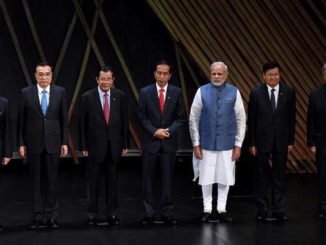
    The ASEAN Summit in Bangkok posed new economic and strategic challenges for India. The challenges posed by China, from the days India sought ASEAN membership, continue. Chinese opposition to India’s admission, and then to ensure that India remained marginalized in ASEAN, failed. India soon secured membership as a full-dialogue partner of the then fast-growing economies of ASEAN. Virtually all members have found Indian participation constructive. Within a few years, an assertive China resorted to coercion to enforce its untenable maritime border claims. Beijing often militarily seized, or threatened to seize, small islands within the maritime frontiers of neighboring countries, including ASEAN members.

    China has resorted to such aggressive behavior with South Korea, Japan, Taiwan, Vietnam, the Philippines, Malaysia, Brunei and Indonesia. It has ignored the provisions of international law by disregarding the adverse verdict of the International Tribunal on the Law of the Sea, after it seized an island belonging to the Philippines. It is presently deploying warships on the southern shores of Vietnam. China has successfully coerced, or brought around, virtually all ASEAN members with whom it shares maritime borders, except Vietnam and Indonesia. Even Malaysia’s PM, Mahathir, who loudly echoes Pakistan’s views on J&K, acknowledges that China is too powerful to be challenged by his country.

    India rightly backs the collective views of ASEAN on regional issues. But given their fears of China, many members remain silent on its aggression. India is, however, quite clear about its views on international maritime issues, stating categorically that the UN Convention on Law of the Seas determines boundaries. As an example, India cites the case of its maritime borders with Bangladesh, where it respected the ruling of an international tribunal to hand over a disputed island to Bangladesh. Japan and India are on the same page on the issue.

    These differences between a hegemonic China and India are bound to continue. China has become unusually aggressive with India on a number of issues after the scrapping of Article 370. China had taken the position that the J&K issue has to be resolved bilaterally between India and Pakistan, ever since the visit of then Chinese President Jiang Zemin to Pakistan and India in 1996. The Chinese position changed drastically when Beijing went out of its way to back Pakistan’s stand in international forums. India has retaliated by publicly referring to the disputed border area of Aksai Chin as a part of the UT of Ladakh. Interestingly, this claim, which was supported by the Buddhist majority of Ladakh, caused consternation there.

    There are sound economic reasons for India’s reservations to join the proposed Regional Asian Free Trade Agreement during the Bangkok summit without credible safeguards. India’s trade deficit with China is around $59 billion. The deficit with South Korea grew from $5 billion to $12 billion last year. Likewise, over the past decade, India’s trade deficit with ASEAN has increased from virtually nil to $14 billion. We are justified in finding fault with China’s mercantilist practices. We cannot, however, deny the reality that the growth of our exports has been dismal, and we are losing our competitive edge all across our eastern neighborhood. Our textile industry is unable to compete with textile exports of Bangladesh and Vietnam. The government has still to enunciate any clear export promotion strategy to deal with this malady.

    We are now moving ahead more successfully to balance Chinese power across our Indo-Pacific neighborhood. Maritime cooperation is being increased with the US, Japan, Australia, France and a number of ASEAN countries, notably Vietnam and Indonesia. During the Bangkok summit, a number of ASEAN members were keen on finding ways to ensure that India remained actively involved in the region diplomatically, economically and militarily. New Delhi will now have to more actively take measures to ensure that the country becomes more competitive economically in the region and globally too.

    India has used conventional measures like trade, investment and cultural exchanges for promoting friendship in its Act East policies. It has, however, ignored using the most significant asset it has, to promote its ties not just with ASEAN, but with others like Japan and South Korea. We have overlooked our immense tourism potential. India is not perceived as ‘tourism friendly’. We have ignored the spiritual strength of shared beliefs in Buddhism, to welcome Buddhist pilgrims and visitors from our eastern neighborhood. There are 460 million Buddhists across and beyond our eastern land and maritime frontiers. The Buddhist population of China alone is estimated at around 244 million. Japan, Thailand, Myanmar, Vietnam, Myanmar, Sri Lanka and others also have millions of Buddhists. Nepal should be given special place in this effort by including Lord Buddha’s birthplace Lumbini as an important destination.

    We need to formulate a master plan on how to improve connectivity to a vast Buddhist tourism circuit across states like Bihar, UP, MP, Maharashtra, Gujarat, Ladakh, Odisha and Andhra Pradesh. This effort can best be taken forward if we give China, Japan and Thailand, apart from immediate neighbors like Myanmar and Sri Lanka, a role in promoting the effort. Japan, China and Thailand could be invited to invest in and develop this project. Spiritual ties and tourism should become an integral and important part of our Act East policies.

    (The author is Chancellor, Jammu central university, & former high commissioner to Pakistan)

  • Prince Charles hails contribution of Sikhs in United Kingdom

    Prince Charles hails contribution of Sikhs in United Kingdom

    NEW DELHI(TIP): Britain’s Prince Charles, who arrived on Wednesday, November 13 on a two-day official visit to India, has hailed the “inspiring” principles of Sikhism and the contribution of the Sikh community in the UK.

    The Prince of Wales, who  visited  Gurdwara  Bangla Sahib in New Delhi to mark the 550th birth anniversary of Guru Nanak Dev, the founder of Sikhism, posted a personal message on the Clarence House Instagram page before he left  for India.

    “As I depart for India, on my tenth official visit, I just want to convey my warmest best wishes to all of you in the Sikh Community in the UK, and across the Commonwealth, on the 550th Birth Anniversary of Guru Nanak Dev Ji,” he said.

    “The principles on which Guru Nanak founded the Sikh religion, and which guide your lives to this day, are the ones which can inspire us all — hard work, fairness, respect, and selfless service to others. In embodying these values, Sikhs have made the most profound contribution to the life of this country, and continue to do so, in every imaginable field, just as you do in so many other places around the world.”

    “This week, as Sikhs everywhere honor the founder of your faith, my wife and I wanted you to know just how much your community is valued and admired by us all, and that our thoughts are with you at this very special time,” Prince Charles added, signing the note, “HRH The Prince of Wales.”

     (Source: IANS)

  • Guru Nanak’s principles more relevant today, say US lawmakers

    Guru Nanak’s principles more relevant today, say US lawmakers

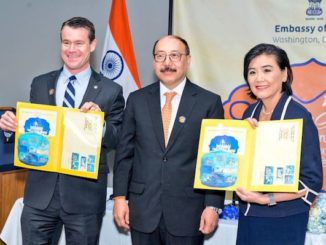
    The event was also marked by an exhibition on the life and teachings of the founder of Sikhism along with two panel discussions.

    WASHINGTON(TIP): The philosophy and teachings of Guru Nanak echoed the corridors of the US Capitol, November 12,  as powerful American lawmakers and eminent Indian Americans celebrated the 550th birth anniversary of the founder of Sikhism and underscored that his principles were more relevant today than ever before.

    Republican Senator from Indiana Todd Young, who has introduced a resolution in the Senate on the occasion, said the Sikh-Americans had succeeded in making a profound impact across the US because they followed the teachings of the first Sikh guru.

    “While radical for his day some 500 years ago, the teachings of the first Sikh guru who we celebrate today were consistent with our nation’s founding principles and teaching that everyone, regardless of gender, regardless of class, regardless of creed, everyone has been created equal,” Young said.

    In his address to a Capitol Hill event organized by the Indian embassy to celebrate the anniversary, Senator Young said his neighborhood is full of Sikh-American families.

    “I’m also glad that your commitment to equality and inclusion has led to the historic agreement which allowed the border corridor between India and Pakistan to be thrown open for Sikhs to visit Guru Nanak’s shrine just in time for the 550th birthday,” Young said.

    Ambassador Shringla (third from left) felicitated Panelists on the first discussion Dr Paul Taylor, Head of the Asian Cultural History Program at the Smithsonian, Sonia Dhami, Executive Director, The Sikh Foundation International, Palo Alto, California and Dr. Nikky-Guninder Kaur Singh, Chair of the Department & Crawford Family Professor Religious Studies, Colby College, Maine

    Congresswoman Judy Chu, founding member of the Congressional Sikh Caucus and chair of Congressional Asian Pacific American Caucus, said the life of Guru Nanak “was a true example to all of us and one whose lessons we would do well to heed today”.

    Noting that Guru Nanak was a true humanitarian champion in the face of entrenched discrimination, she said he preached against prejudices based on race, cast and status.

    He called for the equality of all individuals no matter what religion they practiced or caste they belonged to.

    “He promoted the equality of all women during a time when women had low status and little respect in society. There is so much as a country that we should take away from the teachings of Guru Nanak. His legacy is a legacy of peace and equality,” Chu said.

    Republican Congressman Greg Pence from Indiana referred to his speech on the House floor earlier in the day.

    “Mr Speaker, I rise today to recognize a very special day for the Hoosier Sikh community and the 550th birthday of Guru Nanak, the founder of Sikhism,” he said.

    This occasion is being celebrated by more than 25 million Sikhs worldwide on November 12, 2019, he said.

    Indiana is proud to be home of over 10,000 Sikhs that enrich our communities, embody the meaning of Hoosier values. Hoosier Sikhs are one of the fastest growing business communities in Indiana and there are contributions to our economy and cultural value,” he said.

    “On this day, I am proud to stand with our friends in the Sikh community by offering legislation to celebrate this momentous occasion and honor their contributions to Indiana and to our great nation,” Pence said.

    A view of the gathering

    New Jersey Attorney General Gurbir Singh Grewal said there was a need to raise awareness about the Sikh faith more today than ever before and highlight the Sikhs’ contributions to society.

    “We also need to address how our teachings remain relevant in the modern era,” said the first-ever Sikh Attorney General of any US State.

    Indian Ambassador to the US Harsh Vardhan Shringla said the opening of the Kartarpur corridor between India and Pakistan was a historic day.

    The Indian government had taken several actions to commemorate the 550th birth anniversary of Guru Nanak, he said.

    “We are very happy, of course, that on this particular day we have at the Capitol Hill such an important event that involves not only discourse on Sikh religion and history, but also the contribution of Sikh-American community to your country of citizenship,” he said.

    The event was also marked by an exhibition on the life and teachings of the founder of Sikhism along with two panel discussions.

    (Source: PTI)

  • Terrorism results in $1-trillion loss to world economy: PM Modi

    Terrorism results in $1-trillion loss to world economy: PM Modi

    BRASILIA(TIP): Terrorism has caused USD 1 trillion loss to the world economy, Prime Minister Narendra Modi said here on Thursday , November 14 , as he addressed the 11th BRICS Summit, terming the scourge as the “biggest threat” to development, peace and prosperity.

    Addressing the BRICS Plenary Session at the iconic Itamaraty Palace in the presence of the Presidents of Brazil, China, Russia and South Africa, Prime Minister Modi said terrorism has emerged as the biggest threat to the development, peace and prosperity.

    “According to some estimates, the economic growth of developing nations has decreased by 1.5 per cent due to terrorism,” he said, adding that the scourge has caused USD 1 trillion loss to the world economy.

    In 10 years, terrorism has claimed the lives of about 2.25 lakh people and destroyed societies, Modi said.

    “The atmosphere of doubt created by terrorism, terror financing, drug trafficking and organized crime indirectly and deeply harms trade and business. I am happy that the first seminar on BRICS Strategies for Countering Terrorism was organized.

    “We hope that such efforts and activities of the five working groups will increase strong BRICS Security Cooperation against terrorism and other organized crimes,” the Prime Minister said.

    According to the BRICS joint statement, the five countries condemned terrorism in all its forms and manifestations, which should not be associated with any religion, nationality or civilization, and recognize terrorist acts as criminal and unjustifiable.

    “We urge for concerted efforts to fight against terrorism under UN auspices in accordance with international law, recognize the primary role of states and their competent authorities in preventing and countering terrorism and express our conviction that a comprehensive approach is necessary to ensure effective results in combating terrorism.

    “We recall the responsibility of all states to prevent financing of terrorist networks and terrorist actions, including those from their territories,” the statement said without referring to any country.

    Modi said sustainable water management and sanitation are important challenges in urban areas.

    “I propose to hold the first meeting of BRICS water ministers in India,” Modi said.

    “Recently, we started ‘Fit India Movement’. I want to increase contacts and exchanges between us in the field of fitness and health,” he said.

    Modi also emphasized on paying special attention to mutual trade and investment, saying intra-BRICS trade accounts for just 15 per cent of the world trade, while its combined population is over 40 per cent of the world’s population.

    “Now we need to discuss the direction of BRICS, and how to mutually cooperate more effective in the next 10 years. Despite success in many areas, there is considerable scope to increase efforts in some areas.

    “The theme of this summit – ‘Economic growth for an innovative future’, is very apt. Innovation has become the basis of our development. Therefore, it is necessary that we strengthen cooperation for innovation under BRICS,” the Prime Minister said.

    Modi said with the mutual recognition of visas, social security agreement and qualifications, “we will give people of five countries a more conducive environment for mutual travel and work”.

    Leaders of Brazil, Russia, India, China and South Africa on Thursday opened the 11th BRICS Summit where deliberations are taking place on key areas such as trade, investment and counterterrorism.

    Ahead of the summit, BRICS leaders—Brazilian President Jair Bolsonaro, Prime Minister Modi, Chinese President Xi Jinping, Russian President Vladimir Putin and South African President Cyril Ramaphosa—posed for a group photo.

    Brazil is the current chair of the grouping which represents over 3.6 billion people, or half of the world population and they have a combined nominal GDP of USD 16.6 trillion. — PTI

  • 5 wounded in shooting at California high school

    5 wounded in shooting at California high school

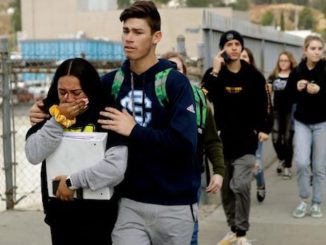
    LOS ANGELES / NEW YORK(TIP): At least five people were wounded after a shooter opened fire at a high school in Santa Clarita, California, a city north of Los Angeles, officials said.

    A suspect described as a male Asian in black clothing was still at large, the Santa Clarita Valley sheriff said on Twitter.

    “This is still a very active situation. Reports of approximately 5 victims being treated. Parents, deputies are on scene everywhere protecting your children,” the Santa Clarita Valley branch of the Los Angeles County Sheriff’s Office tweeted.

    Saugus High School and all schools in the William S. Hart district were placed on lockdown while authorities flooded the area.

    Video from local NBC television showed a line of students walking away from the school and a row of police and fire department vehicles parked out front.

    KTLA video, broadcast on CNN, showed one woman being loaded into an ambulance.

    “Several injured. LASD resources on site and searching for suspect,” Los Angeles Sheriff’s Department Undersheriff Tim Murakami said in a post on Twitter. “Will be locking down area schools. Advise residents to shelter in place and report any suspicious activity.”

    (Source: Reuters)

  • Assembly elections in J&K soon, says  L-G Girish Chandra Murmu

    Assembly elections in J&K soon, says L-G Girish Chandra Murmu

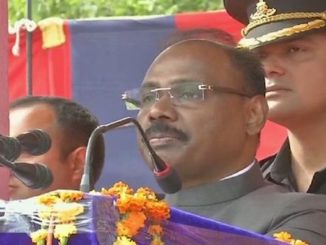
    JAMMU(TIP): Lieutenant Governor of the newly formed Union Territory of Jammu & Kashmir, Girish Chandra Murmu, announced on Thursday, November 14  that the legislative polls in the UT will be held at the earliest. The Centre does not intend to govern J&K without an elected legislature, he said, adding that the electorate would soon be voting to elect their representatives.

    “There will be elections in this Union Territory (UT) soon, as it is a UT with legislature,” Murmu said, falling short of specifying when the polls will  be scheduled. The electoral process, however, is expected to take time to initiate as new constituencies are likely to be drawn.

    Lt. Governor was speaking at the passing-out parade of the 14th BRTC batch of constables at the Subsidiary Training Centre, Talwara, Reasi district.

    The legislative assembly of the erstwhile state of Jammu & Kashmir (which included Kargil and Ladakh) was suspended by the Governor in August, citing attempts of horse-trading being made by the regional parties to come to power. The last elected government was headed by PDP chief Mehbooba Mufti — who had to resign as the Chief Minister after the BJP had withdrawn support from the coalition government in June 2018.

    On August 5 this year, the Centre announced the unprecedented measure of abrogating Article 370 – which granted J&K semi-autonomy – and converted the state into a Union Territory. The UT-status of J&K came into effect from October 31.

    Attempts to re-initiate the electoral process gained an impetus after the Centre recorded an unprecedented 98 percent turnout in the J&K Block Development Council elections held on October 24.

  • USCIS Proposes Increased Filing Fees

    USCIS Proposes Increased Filing Fees

    The Department of Homeland Security (DHS) proposes to adjust certain immigration and naturalization benefit request fees charged by U.S. Citizenship and Immigration Services (USCIS). USCIS conducted a comprehensive biennial fee review and determined that current fees do not recover the full costs of providing adjudication and naturalization services.

    DHS proposes to adjust USCIS fees by a weighted average increase of 21 percent, add new fees for certain benefit requests, establish multiple fees for petitions for nonimmigrant workers, and limit the number of beneficiaries on certain forms to ensure that USCIS has the resources it needs to provide adequate service to applicants and petitioners.

    Adjustments to the fee schedule are necessary to recover the full operating costs associated with administering the nation’s immigration benefits system, safeguarding its integrity, and efficiently and fairly adjudicating immigration benefit requests, while protecting Americans, securing the homeland, and honoring our country’s values.

    USCIS also is proposing changes to certain other immigration benefit request requirements.

      Benefit Request                                                                          Current fee                    Proposed fee

    I-90 Application to Replace Permanent Resident Card                           $455                          $415

    I-102 Application for Replacement/Initial Nonimmigrant

    Arrival-Departure Document                                                                   $445                            $ 490

    I-129 Petition for a Nonimmigrant worker                                           $460                             N/A

    I-129H1 I-129 H-1B—Named Beneficiaries                                         $460                            $560

    I-129H2A I-129 H-2A—Named Beneficiaries                                      $460                           $860

    I-129H2B I-129 H-2B—Named Beneficiaries                                      $460                            $725

    I-129L Petition for L Nonimmigrant Worker                                     $460                            $815

    I-129O Petition for O Nonimmigrant Worker                                     $460                           $715

    I-129CW, I-129E&TN, and I-129MISCV Petition for a

    CNMI-Only Nonimmigrant Transitional Worker;

    Application for Nonimmigrant Worker: E and TN Classification;

     and Petition for Nonimmigrant Worker:

    H-3, P, Q, or R Classification.                                                                $460                             $705

    I-129H2A I-129 H-2A—Unnamed Beneficiaries                                 $460                              $425

    I-129H2B I-129 H-2B—Unnamed Beneficiaries                                $460                               $395

    I-129F Petition for Alien Fiancé(e)                                                     $535                              $520

    I-130 Petition for Alien Relative                                                         $535                              $555

    I-131 Application for Travel Document                                             $575                              $585

    I-131 Travel Document for an individual age 16 or older              $135                               $145

    I-131 I-131 Refugee Travel Document for

    a child under the age of 16                                                                $105                              $115

    I-131A Application for Carrier Documentation                              $575                                $1010

    I-140 Immigrant Petition for Alien Worker                                    $700                               $545

    I-191 Application for Relief Under Former

    Section 212(c) of the Immigration

    and Nationality Act (INA)                                                                 $930                               $800

    I-192 Application for Advance Permission

    to Enter as Nonimmigrant                                                            $930                                 $1415

    I-193 Application for Waiver of Passport and/or Visa              $585                                  $2790

    I-212 Application for Permission to Reapply for Admission

     into the U.S. After Deportation or Removal                             $930                                  $1040

    I-290B Notice of Appeal or Motion                                           $675                                 $705

    I-360 Petition for Amerasian Widow(er)

    or Special Immigrant                                                                  $435                                    $455

    I-485 Application to Register Permanent

     Residence or Adjust Status                                                     $750                                     $1120

    I-526 Immigrant Petition by Alien Entrepreneur                  $3675                                 $4015

    I-539 Application to Extend/

    Change Nonimmigrant Status                                                 $370                                    $400

    I-589 Application for Asylum and

    for Withholding of Removal                                                    $0                                       $50

    I-600/600A Petition to Classify Orphan

    as an Immediate Relative/

    Application for Advance Processing of

     an Orphan Petition                                                                $775                                       $810

    I-600A/I-600 Supp. 3 Request for Action

    on Approved Form I-600A/I-600                                        N/A                                           $405

    I-601 Application for Waiver of Ground

    of Excludability                                                                   $930                                           $985

    I-601A Application for Provisional Unlawful

    Presence Waiver                                                               $630                                           $960

    I-612 Application for Waiver of the Foreign

    Residence Requirement

    (Under Section 212(e) of the INA, as Amended)      $930                                            $525

    I-687 Application for Status as a Temporary

    Resident under Section 245A of

     the Immigration and Nationality Act                          $1130                                            $1130

    I-690 Application for Waiver of

    Grounds of Inadmissibility                                             $715                                            $770

    I-694 Notice of Appeal of Decision                               $890                                           $725

    I-698 Application to Adjust Status From Temporary

     to Permanent Resident (

    Under Section 245A of the INA)                                     $1670                                       $1615

    I-751 Petition to Remove Conditions on Residence  $595                                       $760

    I-765 Application for Employment Authorization      $410                                      $490

    I-800/800A Petition to Classify Convention

    Adoptee as an Immediate Relative/Application

     for Determination  of Suitability to Adopt

    a Child from a Convention Country                                 $775                                      $810

    I-800A Supp. 3 Request for Action

    on Approved Form I-800A                                               $385                                     $405

    I-817 Application for Family Unity Benefits                  $600                                      $590

    I-821D Consideration of Deferred Action

    for Childhood Arrivals (Renewal)                                    $0                                          $275

    I-824 Application for Action on an Approved

     Application or Petition                                                  $465                                    $500

    I-829 Petition by Entrepreneur to Remove

    Conditions on Permanent Resident Status                     $3750                                     $3900

    I-881 Application for Suspension of Deportation

    or Special Rule Cancellation of Removal                    $570                                        $1800

    I-910 Application for Civil Surgeon Designation       $785                                        $650

    I-924 Application for Regional Center Designation

    Under the Immigrant Investor Program                       $17,795                                 $17,795

    I-924A Annual Certification of Regional Center        $3035                                    $4470

    I-929 Petition for Qualifying Family Member

    of a U-1 Nonimmigrant                                             $230                                         $1515

    I-941 Application for Entrepreneur Parole               $1200                                       $1200

    N-300 Application to File Declaration

     of Intention                                                               $270                                         $1320

    N-336 Request for a Hearing on a

    Decision in Naturalization Proceedings                      $700                                        $1755

    N-400 Application for Naturalization                       $640                                         $1170

    N-470 Application to Preserve Residence

     for Naturalization Purposes                                           $355                                       $1600

    N-565 Application for Replacement

    Naturalization/Citizenship Document                            $555                                       $545

    N-600 Application for Certificate

    of Citizenship                                                              $1170                                      $1015

    N-600K Application for Citizenship and

     Issuance of Certificate Under Section 322                  $1170                                       $960

    USCIS Immigrant Fee                                                  $220                                         $200

    G-1041 Genealogy Index Search Request                    $65                                         $240

    G-1041A Genealogy Records Request                         $65                                       $385

    Biometric Services                                                         $85                                       $30

  • November 15 New York & Dallas Print Editions

    November 15 New York & Dallas Print Editions

    [vc_row][vc_column][vc_column_text]

    Print Replica- Digitally

    E-Editions

    [/vc_column_text][/vc_column][/vc_row][vc_row][vc_column width=”1/3″][vc_custom_heading text=”New York Edition” font_container=”tag:h2|text_align:center” google_fonts=”font_family:Istok%20Web%3Aregular%2Citalic%2C700%2C700italic|font_style:700%20bold%20regular%3A700%3Anormal” link=”url:https%3A%2F%2Fwww.theindianpanorama.news%2Fwp-content%2Fuploads%2F2019%2F11%2FTIP-November-15-NYC.pdf|||”][vc_single_image image=”97901″ img_size=”full” add_caption=”yes” alignment=”center” onclick=”custom_link” link=”https://www.theindianpanorama.news/wp-content/uploads/2019/11/TIP-November-15-NYC.pdf”][/vc_column][vc_column width=”1/3″][vc_custom_heading text=”Dallas, Texas Edition” font_container=”tag:h2|text_align:center” google_fonts=”font_family:Istok%20Web%3Aregular%2Citalic%2C700%2C700italic|font_style:700%20bold%20regular%3A700%3Anormal” link=”url:https%3A%2F%2Fwww.theindianpanorama.news%2Fwp-content%2Fuploads%2F2019%2F11%2FTIP-November-15-Dallas-TX.pdf|||”][vc_single_image image=”97902″ img_size=”full” add_caption=”yes” alignment=”center” onclick=”custom_link” link=”https://www.theindianpanorama.news/wp-content/uploads/2019/11/TIP-November-15-Dallas-TX.pdf”][/vc_column][vc_column width=”1/3″][vc_single_image image=”82828″ img_size=”medium” alignment=”center” onclick=”custom_link” link=”https://www.theindianpanorama.news/advertising-media-kit-portal-indian-panorama/”][vc_single_image image=”82829″ img_size=”medium” alignment=”center” onclick=”custom_link” link=”https://www.theindianpanorama.news/advertising-media-kit-portal-indian-panorama/”][/vc_column][/vc_row][vc_row][vc_column width=”2/3″][vc_custom_heading text=”Lead Stories This Week” font_container=”tag:h2|text_align:center” google_fonts=”font_family:Istok%20Web%3Aregular%2Citalic%2C700%2C700italic|font_style:700%20bold%20regular%3A700%3Anormal” link=”url:https%3A%2F%2Fwww.theindianpanorama.news%2F|||”][/vc_column][vc_column width=”1/3″][vc_widget_sidebar sidebar_id=”mh-sidebar”][/vc_column][/vc_row]

  • November 8 New York & Dallas Print Editions

    November 8 New York & Dallas Print Editions

    [vc_row][vc_column][vc_column_text]

    Print Replica- Digitally

    E-Editions

    [/vc_column_text][/vc_column][/vc_row][vc_row][vc_column width=”1/3″][vc_custom_heading text=”New York Edition” font_container=”tag:h2|text_align:center” google_fonts=”font_family:Istok%20Web%3Aregular%2Citalic%2C700%2C700italic|font_style:700%20bold%20regular%3A700%3Anormal” link=”url:https%3A%2F%2Fwww.theindianpanorama.news%2Fwp-content%2Fuploads%2F2019%2F11%2FTIP-November-8-NYC.pdf|||”][vc_single_image image=”97883″ img_size=”full” add_caption=”yes” alignment=”center” onclick=”custom_link” link=”https://www.theindianpanorama.news/wp-content/uploads/2019/11/TIP-November-8-NYC.pdf”][/vc_column][vc_column width=”1/3″][vc_custom_heading text=”Dallas, Texas Edition” font_container=”tag:h2|text_align:center” google_fonts=”font_family:Istok%20Web%3Aregular%2Citalic%2C700%2C700italic|font_style:700%20bold%20regular%3A700%3Anormal” link=”url:https%3A%2F%2Fwww.theindianpanorama.news%2Fwp-content%2Fuploads%2F2019%2F11%2FTIP-November-8-Dallas-TX.pdf|||”][vc_single_image image=”97885″ img_size=”full” add_caption=”yes” alignment=”center” onclick=”custom_link” link=”https://www.theindianpanorama.news/wp-content/uploads/2019/11/TIP-November-8-Dallas-TX.pdf”][/vc_column][vc_column width=”1/3″][vc_single_image image=”82828″ img_size=”medium” alignment=”center” onclick=”custom_link” link=”https://www.theindianpanorama.news/advertising-media-kit-portal-indian-panorama/”][vc_single_image image=”82829″ img_size=”medium” alignment=”center” onclick=”custom_link” link=”https://www.theindianpanorama.news/advertising-media-kit-portal-indian-panorama/”][/vc_column][/vc_row][vc_row][vc_column width=”2/3″][vc_custom_heading text=”Lead Stories This Week” font_container=”tag:h2|text_align:center” google_fonts=”font_family:Istok%20Web%3Aregular%2Citalic%2C700%2C700italic|font_style:700%20bold%20regular%3A700%3Anormal” link=”url:https%3A%2F%2Fwww.theindianpanorama.news%2F|||”][/vc_column][vc_column width=”1/3″][vc_widget_sidebar sidebar_id=”mh-sidebar”][/vc_column][/vc_row]

  • November 1 New York & Dallas Print Editions

    November 1 New York & Dallas Print Editions

    [vc_row][vc_column][vc_column_text]

    Print Replica- Digitally

    E-Editions

    [/vc_column_text][/vc_column][/vc_row][vc_row][vc_column width=”1/3″][vc_custom_heading text=”New York Edition” font_container=”tag:h2|text_align:center” google_fonts=”font_family:Istok%20Web%3Aregular%2Citalic%2C700%2C700italic|font_style:700%20bold%20regular%3A700%3Anormal” link=”url:https%3A%2F%2Fwww.theindianpanorama.news%2Fwp-content%2Fuploads%2F2019%2F11%2FTIP-November-1-NYC.pdf|||”][vc_single_image image=”97871″ img_size=”full” add_caption=”yes” alignment=”center” onclick=”custom_link” link=”https://www.theindianpanorama.news/wp-content/uploads/2019/11/TIP-November-1-NYC.pdf”][/vc_column][vc_column width=”1/3″][vc_custom_heading text=”Dallas, Texas Edition” font_container=”tag:h2|text_align:center” google_fonts=”font_family:Istok%20Web%3Aregular%2Citalic%2C700%2C700italic|font_style:700%20bold%20regular%3A700%3Anormal” link=”url:https%3A%2F%2Fwww.theindianpanorama.news%2Fwp-content%2Fuploads%2F2019%2F11%2FTIP-November-1-Dallas-TX.pdf|||”][vc_single_image image=”97870″ img_size=”full” add_caption=”yes” alignment=”center” onclick=”custom_link” link=”https://www.theindianpanorama.news/wp-content/uploads/2019/11/TIP-November-1-Dallas-TX.pdf”][/vc_column][vc_column width=”1/3″][vc_single_image image=”82828″ img_size=”medium” alignment=”center” onclick=”custom_link” link=”https://www.theindianpanorama.news/advertising-media-kit-portal-indian-panorama/”][vc_single_image image=”82829″ img_size=”medium” alignment=”center” onclick=”custom_link” link=”https://www.theindianpanorama.news/advertising-media-kit-portal-indian-panorama/”][/vc_column][/vc_row][vc_row][vc_column width=”2/3″][vc_custom_heading text=”Lead Stories This Week” font_container=”tag:h2|text_align:center” google_fonts=”font_family:Istok%20Web%3Aregular%2Citalic%2C700%2C700italic|font_style:700%20bold%20regular%3A700%3Anormal” link=”url:https%3A%2F%2Ftheindianpanorama.news%2Feditions%2F|||”][/vc_column][vc_column width=”1/3″][vc_widget_sidebar sidebar_id=”mh-sidebar”][/vc_column][/vc_row]