Month: July 2020

  • Indian Origin Founder of South African Hindu political party dies of Covid

    Indian Origin Founder of South African Hindu political party dies of Covid

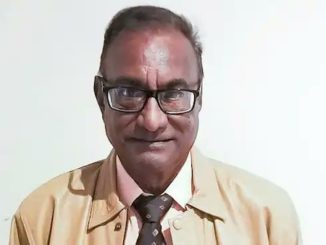
    JOHANNESBURG (TIP): Jayraj Bachu, a founding member and national leader of South Africa’s only Hindu political party, has succumbed to Covid-19. He was 75.

    The Durban resident Bachu was cremated on Saturday, July 4.

    Bachu’s  son Umesh told the weekly Sunday Tribune that his father passed away less than a week after he was admitted to hospital after an antibiotics course failed to address an influenza infection.

    “Unfortunately, on Friday evening I received a call from the hospital to say he had taken a turn for the worse. They said two family members could go to the hospital, but by the time I got to the hospital my dad had passed on,” Umesh told the weekly.

    “He was not at the stage where he was on a ventilator. Reality of the virus hits you when it happens close to home. It was devastating for my mom, me and my siblings that we could not see him one last time,” he said.

    Bachu had served in community and political organizations for over five decades. Last year, he joined others to register the Hindu Unity Movement (HUM) with the Independent Electoral Commission.

    He explained at the time that HUM was established because there had not been a voice in provincial, national or local governments catering to the needs of the Hindu community.

    “Existing Hindu religious and cultural organizations are working from outside government to address the issues facing the community, but we need someone on the inside to get these issues addressed effectively,” Bachu said.

    Bachu’s lifelong friend Ram Maharaj, who is the national chairman of HUM and also the president of the South African Hindu Dharma Sabha, said Bachu had endeared himself to the community because of his positivity and diplomatic approach to everything he did.

    Maharaj said Bachu had led the fight since the 1980s to allow fireworks during Diwali when there were plans by government to ban its use at private homes.

    Bachu is survived by wife, Renuka, children Vinod, Umesh, Reshma Harinarain, Rinku Singh and a number of grandchildren.

    (Source: PTI)

  • Indian American Houston-Area Cardiologist Settles Allegations

    Indian American Houston-Area Cardiologist Settles Allegations

    HOUSTON (TIP): Advanced Cardiovascular Care Center P.A. and its owner and administrator have agreed to pay $400,000 to resolve allegations they violated the False Claims Act (FCA), announced U.S. Attorney Ryan K. Patrick.

    Owner Dr. Annie T. Varughese, 57, and administrator Babu Varughese, 64, both of Spring, conducted business in three clinics located in Houston, Conroe and The Woodlands.

    From June 4, 2013, through June 4, 2016, the company submitted claims to Medicare for cardiology services. These included cardiac external counterpulsation treatments, transthoracic echocardiography studies and duplex scans that were not reasonable and medically necessary. Therefore, they failed to meet the Medicare coverage and documentation requirements.

    Further, patient files lacked documentation that Varughese directly supervised the cardiology services as Medicare requires. The company billed Medicare for services under Varughese’s provider number when she was not in the office and, at times, not even in the United States.

    “Putting financial gain ahead of medical necessity undermines the integrity of the Medicare program,” said Special Agent in Charge Miranda Bennett of the Department of Health and Human Services – Office of Inspector General (DHHS-OIG).  “We will continue investigate and hold accountable those who submit false claims to federal health care programs.”

    “The largest area of fraud committed against the federal government today is by unethical healthcare providers who inflate or fabricate Medicare or Medicaid bills,” said Special Agent in Charge Perrye K. Turner of the FBI. “Billing Medicare for services that are not necessary and/or not provided constitutes fraud. American taxpayers are the ones who ultimately bear the financial burden created by this, as healthcare fraud translates into higher premiums and out-of-pocket expenses for consumers. We ask for the public’s help in reporting and exposing dishonest healthcare providers.”

  • Indian American Congressman lashes out at Trump for withdrawing from WHO

    Indian American Congressman lashes out at Trump for withdrawing from WHO

    Parminder Aujla

    SACRAMENTO (TIP): Indian origin Rep. Ami Bera, M.D. (D-CA) Chairman of the House Foreign Affairs Subcommittee on Asia, the Pacific, and Nonproliferation heavily criticized President Trump after he formally withdrew the United States from the World Health Organization (WHO).

    “Communities around the United States are grappling with increasing cases of coronavirus and instead of funding a national testing strategy and ramping up testing and contact tracing, the President has chosen to cut testing and to shift the blame by withdrawing the United States from the WHO. No response has been perfect, including the WHO’s. But the WHO is playing a critical role by coordinating the global response and providing important guidance and information about the virus. It is this information and guidance that has helped countries in Europe and Asia tackle and contain the virus. They bent the curve. Our cases are increasing. If the WHO is to blame: why has the U.S. been left behind while many countries from South Korea to New Zealand to Vietnam to Germany return to normal?” he questioned.

    That answer starts at the White House. Time and time again, even before COVID-19, the President has downplayed the danger of pandemics. They proposed cuts to the CDC and DoD pandemic preparedness programs, which I helped reverse. They disbanded the National Security Council office responsible for preparing for these outbreaks, which I opposed. They tried to cut funds to defeat Ebola during an actual Ebola outbreak, which Congress rolled back. Is it any surprise that when a pandemic came, this President was not prepared? Historically, the United States and the World Health Organization have worked hand in hand. We helped defeat smallpox and nearly eliminated polio. We used to lead the world in combatting infectious disease. Those efforts aligned and supported WHO’s efforts. Not this time.  America lost its best chance to defeat this virus once the President began to minimize the pandemic and shift blame onto others, instead of assuming responsibility and actually leading our country through this crisis. Today’s decision comes as no surprise”, he further added

    Rep. Bera has been a leader in Congress on global health security. He chaired the first congressional hearing on the coronavirus on Feb. 5th, sounded the alarm after the Trump Administration disbanded the global health security office in the National Security Council in 2018, and is a member on the CSIS Commission on Strengthening America’s Health Security, which in November 2019 made a series of recommendations to prevent pandemics.

  • July 10 New York & Dallas E – Edition

    [vc_row][vc_column][vc_column_text]

    E-Edition

    [/vc_column_text][/vc_column][/vc_row][vc_row][vc_column width=”2/3″][vc_custom_heading text=”” font_container=”tag:h2|text_align:center” google_fonts=”font_family:Istok%20Web%3Aregular%2Citalic%2C700%2C700italic|font_style:700%20bold%20regular%3A700%3Anormal” link=”url:https%3A%2F%2Fwww.theindianpanorama.news%2Fwp-content%2Fuploads%2F2020%2F07%2FTIP-July-10-Dual-Edition.pdf|||”][vc_single_image image=”100141″ img_size=”full” add_caption=”yes” alignment=”center” onclick=”custom_link” link=”https://www.theindianpanorama.news/wp-content/uploads/2020/07/TIP-July-10-Dual-Edition.pdf”][/vc_column][vc_column width=”1/3″][vc_single_image image=”82828″ img_size=”medium” alignment=”center” onclick=”custom_link” link=”https://www.theindianpanorama.news/advertising-media-kit-portal-indian-panorama/”][vc_single_image image=”82829″ img_size=”medium” alignment=”center” onclick=”custom_link” link=”https://www.theindianpanorama.news/advertising-media-kit-portal-indian-panorama/”][/vc_column][/vc_row][vc_row][vc_column width=”2/3″][vc_custom_heading text=”Lead Stories This Week” font_container=”tag:h2|text_align:center” google_fonts=”font_family:Istok%20Web%3Aregular%2Citalic%2C700%2C700italic|font_style:700%20bold%20regular%3A700%3Anormal” link=”url:https%3A%2F%2Fwww.theindianpanorama.news%2F%20|||”][/vc_column][vc_column width=”1/3″][vc_widget_sidebar sidebar_id=”mh-sidebar”][/vc_column][/vc_row]

  • Celebrating 4th of July

    Celebrating 4th of July

    Comment By Prof. Indrajit Singh Saluja

    4th of July is so different this year. COVID-19 has struck down all traditional ceremonies, leaving Americans  to celebrate the event in a shorter edition, with limited ceremonial celebration. The pomp, pageantry, parades, shows, games, sports, guns, bells, bonfires, and illuminations, from one end of America to another do not appear to be a possibility now. COVID-19 not only deprived Americans of  grand celebrations on 4th of July; it has also snatched  from them  family members and friends, and left them devastated. Not a favorable time to celebrate  an event in the face of grim tragedies and terrible grief.

    The administration at various levels, from towns and cities to federal level,  may be ruing  the hit to economy and having to face budget shortages. They may be upset that  the battered economy is likely to take years to recover health. They may be worried  about a possible  public outcry at not being provided the  amenities and facilities that they have been so used to for decades. They may be worried about their political careers which may be ruined  for no fault of theirs.

    But, let us have a look at another scenario which is not exactly the gift of COVID-19 but a result of violation of rights of citizens at the hands of law enforcement. In the wake of a black George Floyd’s death allegedly at the hands of a white police officer in Minneapolis (  it was not the first of its kind; many blacks have been killed at the hands of white police officers) ,  a whole lot of people- black, white, brown, yellow came out in the open to protest the killing. The issue of racism came to fore. We have witnessed protests, some violent, but most mainly peaceful. “Black Lives Matter” movement picked up  steam and  soon we found protesters gunning for removing  Confederate symbols, including statues of Confederate soldiers and generals and all those who history tells were racists.  It is altogether a new dimension  to the civil movement. America, on this 4th of July, must understand the popular sentiment which is all against the racists and those who deprive people of color of their rights.

    This 4th of July is witnessing  a new energy which is bound to add  a new chapter to  American history. We celebrate the new energy.

     God bless America!


  • Two Indian- Origin agricultural experts named by UN chief to scientific group for 2021 food summit

    Two Indian- Origin agricultural experts named by UN chief to scientific group for 2021 food summit

    UNITED NATIONS  (TIP): Two eminent Indian – origin agricultural experts have been named members of an international scientific group, aimed to offer foremost scientific evidence for sustainable food systems, established by UN chief Antonio Guterres ahead of a global food summit next year.

    Prof. Rattan Lal of Ohio State University and Dr. Uma Lele of the International Association of Agricultural Economists (IAAE) are among the Scientific Group Members named by Guterres, a statement issued by the UN spokesperson said.

    Lal, a preeminent Indian-American soil scientist, was named last month as the 2020 World Food Prize Laureate for developing and mainstreaming a soil-centric approach to increasing food production that conserves natural resources and mitigates climate change.

    Lal serves as distinguished university professor of Soil Science and founding Director of the Carbon Management & Sequestration Center at The Ohio State University.

    A native of India and citizen of the United States, Lal has in his career of over 50 years and across four continents promoted innovative soil-saving techniques that benefited the livelihoods of more than 500 million smallholder farmers, improved the food and nutritional security of more than two billion people and saved hundreds of millions of hectares of natural tropical ecosystems.

    Lele, the first woman to be awarded a Ph. D. in agricultural economics by Cornell University, was elected President Elect of the International Association of Agricultural Economists in July 2018.

    According to Lele’s profile on her website, she has five decades of experience in research, operations, policy analysis, and evaluation in the World Bank, universities and international organizations.

    Guterres, in collaboration with the United Nations (UN) Rome-based Agencies, will convene the Food Systems Summit in 2021, as a critical contribution to the Decade of Action to deliver the 2030 Agenda and the Sustainable Development Goals (SDGs).

    The summit aims to raise global awareness to understand the food systems challenges that nations must solve, build a global conversation on the way in which nations produce, process, and consume food, and galvanize global actions and commitments to change food systems to provide safe, nutritious food for all within the planetary boundaries.

    As noted by the Secretary-General in the recent policy brief on the Impact of COVID-19 on food security and nutrition, investment both during and after the coronavirus crisis can accelerate movement toward food systems that are more inclusive and resilient to future pandemics and that offer better protections for all, the UN statement said.

    With a view to facilitate this process and its success, Guterres formed a number of support structures. A multi-stakeholder Advisory Committee will provide strategic guidance and feedback on the Summit’s overall development and implementation.

    An independent Scientific Group will bring to bear the foremost scientific evidence, and help expand the base of shared knowledge about experiences, approaches, and tools for driving sustainable food systems.

    UN Deputy Secretary-General Amina Mohammed will Chair the Advisory Committee, which will comprise Member State representatives as well as senior officials of relevant UN agencies, other international organizations, and individual experts across different sectors, including farmers, indigenous peoples, civil society, researchers, academics, young people, and business leaders.

    The Scientific Group will be Chaired by Dr. Joachim von Braun of Bonn University Germany.


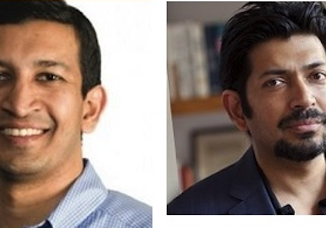
  • Two Indian Americans Siddhartha Mukherjee, Raj Chetty honored as ‘Great Immigrants’

    Two Indian Americans Siddhartha Mukherjee, Raj Chetty honored as ‘Great Immigrants’

    NEW YORK (TIP): Indian American Pulitzer Prize–winning physician author Siddhartha Mukherjee and Harvard economist Raj Chetty figure among 38 naturalized US citizens on Carnegie Corporation of New York’s 2020 list of ‘Great Immigrants’ for their role in combating covid-19 pandemic.

    New Delhi born Mukherjee has been honored for using “his communication skills to educate the public and build awareness about covid-19 through forums and his widely read essays.”

    Raj Chetty, also New Delhi born, makes the list for launching “a real-time data tracker to measure the economic impact of the pandemic and assisted decision-makers as they implemented new public policies.”

    The philanthropic foundation which since 2006 has celebrated “Great Immigrants, Great Americans” on America’s July 4 Independence Day has this year highlighted the work of millions of immigrants “playing an essential role in the covid global health crisis.”

    A noted oncologist, Mukherjee has since 2009 served on the faculty of Columbia University, where he is associate professor of medicine and a practicing physician at New York-Presbyterian Hospital.

    Mukherjee’s “The Emperor of All Maladies: A Biography of Cancer” was awarded the 2011 Pulitzer Prize for General Non-Fiction. It figures among one of the 100 most influential books written in English since 1923. In 2015, Ken Burns turned it into a documentary titled “Cancer: The Emperor of All Maladies.”

    In 2014, he was awarded the Padma Shri, one of India’s highest civilian honors.

    In May this year, Mukherjee was selected by New York Governor Andrew Cuomo to serve on a 15-member Blue-Ribbon Commission focusing on improving tele-health and broadband access in response to the Covid-19 health crisis.

    Chetty received his PhD from Harvard in 2003 at the age of 23 and is one of the youngest tenured professors in the university’s history.

    He has been named one of the top economists in the world by the New York Times and the Economist magazine. He was awarded a MacArthur “Genius” Fellowship in 2012.

    Chetty also directs Opportunity Insights, a research lab that aims to identify barriers to economic and social mobility and develop scalable policy solutions to overcome them, the Corporation said.

    “Chetty is optimistic about the potential of big data to inform policy and revive the American dream for the next generation, including immigrants — like his own family — who have long pinned their hopes on its promise,” it said.

    “For us and many immigrants, that’s what America’s all about. If you work hard, you can move up, you can do whatever you want. The sky’s the limit,” he was quoted as telling the Harvard Gazette.

    A third of the 2020 honorees are helping the recovery from covid pandemic by serving as nurses and doctors, as well as scientists who are striving to find effective treatments and a vaccine, the foundation said.

    Overall, the 2020 Great Immigrants represent 35 countries of origin and a wide range of contributions to American life, from human rights and computer science to art, business, education, health care, journalism, music, politics, religion, research, and sports.

    Joining 600 previous outstanding immigrants, the 2020 honorees, who mark the 15th class of Great Immigrants, will be recognized with a full-page public service announcement in the New York Times on July 4 and through a social media tribute.

    “Millions of brave Americans responded with selflessness and urgency to covid-19, including immigrants, who represent one out of six nurses and one out of four physicians,” said Carnegie President Vartan Gregorian.

    “Their contributions to health care, biomedicine, the nation’s food system, and many other critically important sectors are immeasurable,” he said saluting them.

    Gregorian noted that earlier Great Immigrants are also addressing the pandemic, including José Andrés, a chef whose nonprofit has helped feed millions of needy people and subsidized the reopening of hundreds of restaurants.

    Noubar Afeyan, a biotechnology entrepreneur cofounded Moderna, an early front-runner in the race to develop a covid-19 vaccine and David Ho, a renowned AIDS researcher is now working to limit the spread of the virus that causes covid-19.

  • Indian-origin Jayant Krishna appointed as new CEO for UKIBC

    Indian-origin Jayant Krishna appointed as new CEO for UKIBC

    LONDON, UK (TIP): The UK India Business Council has announced that Jayant Krishna has accepted the invitation of the Board to become its new Group Chief Executive Officer. He will take charge from August 3.

    “Jayant brings a wealth of senior-level corporate and governmental experience from India and the UK to UKIBC, having previously led key initiatives of the Prime Minister’s Skill India mission as CEO, and Executive Director & Chief Operating Officer of the National Skill Development Corporation (NSDC),” the council said in a statement.

    Krishna, who will be the first UKIBC Group CEO to be based in India, will be replacing the current Group CEO, Richard Heald, OBE after a term of 10 years. Richard will step up to the role of Chair from September 1, 2020, succeeding the current Chair, Lord Davies of Abersoch, CBE who will retain a close association with the UKIBC by assuming the position of President of a new UKIBC Senior Leadership Council.

    “I’m pleased to accept this extraordinary opportunity to work towards further strengthening UKIBC’s support to UK and Indian industry, encouraging bilateral investment, and helping businesses succeed. UKIBC will continue to bolster two-way trade and investment flows between UK and Indian businesses,” Krishna said.

    Prior to this, Jayant was with the Tata group for over two decades. A British Chevening Scholar, he held various leadership roles at Tata Consultancy Services (TCS), including Director, Life Sciences & Healthcare (UK & Europe), Regional Director (UK & Ireland), Regional Manager in London, Global Delivery Centre Head in India, and Global Relationship Manager for one of TCS’s top five accounts worldwide, while based in London.

    Earlier, Krishna was a management consultant at a division of Tata Sons. More recently, he has been Senior Fellow at the Center for Strategic and International Studies (CSIS) in Washington, DC and Executive Director, Public Policy at the Wadhwani Foundation, focusing on Indian economic reforms and US-India bilateral business ties. He has chaired and served on multiple committees of the Government of India, chaired several taskforces of the Confederation of Indian Industry (CII), and is an Independent Director on the Boards of various companies.

    Over the past years, UKIBC has grown in size, scope, impact, and sustainability, expanding its presence in both the UK and India through the development of a range of advisory, support and consultancy services supporting both Indian and UK companies operating in the UK-India economic corridor.

    Group CEO & Chair (Designate), Richard Heald, OBE said, “The combination of Jayant’s insights of India, his extensive networks within government in India as well as his knowledge of UK and Indian corporates are unique. The appointment of our Group CEO in India underscores our ambition to make the UKIBC more bilateral in nature.”


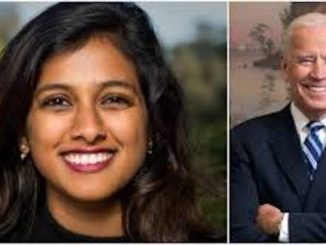
  • Indian American Medha Raj to lead Biden’s digital campaign

    Indian American Medha Raj to lead Biden’s digital campaign

    MILWAUKEE (TIP): Presumptive Democratic presidential nominee Joe Biden has tapped  Medha Raj’s  talent for his digital campaign.

    “Excited to share that I’ve joined Joe Biden’s campaign as the Digital Chief of Staff,” said Raj in a LinkedIn Post. “One hundred and thirty days to the election and we’re not going to waste a minute!”

    It was earlier reported that as the Digital Chief of Staff, Raj will “work across all facets of the digital department to streamline and coordinate how to maximize the impact of its digital outputs”.

    With the coronavirus pandemic sweeping America shifting the battle for the White House to online platforms, Raj is expected to play a key role in the Biden campaign.

    According to latest polls, former Vice President Biden is leading Republican incumbent President Donald Trump by eight points. Trump rules the Twitter world, but loves campaign rallies.

    Raj, a graduate in international politics from Georgetown University, and an MBA from Stanford University, was once part of the former South Bend Mayor Pete Buttigieg’s presidential campaign. He dropped out of the race on March 1 and has endorsed Biden.

    According to media reports, as part of its efforts to ramp up its digital operations, Biden campaign has also appointed Clarke Humphrey to act as deputy digital director for grassroots fundraising.

    Humphrey previously worked on Hillary Clinton’s 2016 campaign.  Christian Tom was named as the new director of digital partnerships.

    They will be joined as the new digital organizing director by Jose Nunez, who comes from the presidential campaign of Indian-American senator Kamala Harris, who too has dropped out of the presidential race.

    Biden, 77, secured the Democratic presidential nomination on June 5 by securing a majority of delegates to challenge Trump in the Nov 3 election.

    He would formally accept his Democratic presidential nomination at the party’s scaled back convention in Milwaukee, Wisconsin on Aug 20 due to corona pandemic.

    The convention will be broadcast live from Milwaukee, the Democratic National Convention Committee (DNCC) has announced.

  • Indian American Celebrity chef Vikas Khanna’s ‘sense of hunger’ came from New York

    Indian American Celebrity chef Vikas Khanna’s ‘sense of hunger’ came from New York

    NEW YORK (TIP): Indian American Michelin-star celebrity chef Vikas Khanna, who has won all round praise for distributing over 17 million meals to coronavirus hit in 135 Indian cities, has set the twitter ablaze with a classy repartee to a TV anchor.

    “My sense of hunger came from New York!” the Amritsar, Punjab-born celebrity chef who has cooked for the Obamas among others told an uppity BBC anchor, referring to his struggling days in the Big Apple.

    ‘Well done, chef!’ responded twitteratti to his epic reply to a BBC TV anchor who had patronizingly suggested that “Khanna would understand hunger as he does not come from a rich family.”

    “In India, you were not from a rich family. So your sense of hunger must have come from there,” asked the anchor.

    “NO, I am from Amritsar, everyone gets fed there in the langars (community kitchens). My sense of hunger came from New York!” responded Khanna.

    In a 79- second video clip shared by Twitter user Harpreet, the anchor asks Khanna, “You’ve cooked for the Obamas, you’ve been on the TV show with Gordon Ramsay. But it wasn’t always that way, was it? You’re not from a rich family. So, I dare say, you understand how precarious it can be in India.”

    “No,” responded Khanna, “I understand, but my sense of hunger didn’t come from India so much because I was born and raised in Amritsar.”

    “We have a huge community kitchen where everyone gets fed. The entire city can feed there,” he said. ‘But my sense of hunger came from New York when I was struggling here from the very bottom.”

    The video has gone viral  with over 520,000 views and hundreds of comments on Instagram and over 38,000 likes and nearly 15,000 retweets on Twitter.

    “@TheVikasKhanna does it again, slaying so gently and with such ease n humility,” tweeted Vinita Nigam. “The best swords do not leave a mark or spill a drop even as they do their work !!”

    “Absolute gold from Chef Vikas. These Britishers are still in colonial hungover. Well done Chef, very well done,” wrote another tweeter.

    “Well done Vikas Khanna !! It takes a very large heart to be as generous as a Sikh and Amritsar is beloved for all,” tweeted Venkatesh Iyengar.

    “I’m a South Indian by janm (birth), a Maharashtrian by karm (work), a Sikh by aatma (soul) and above all an Indian who’s proud of all the above!

    That’s the befitting reply to @BBCWorld for their biased reporting and peddling anti India agenda across the globe,” wrote Krishan Kumar. “Thanks to @The VikasKhanna for upholding Indian Values.”

    Khanna was in the news last week for providing meals and other essential supplies  to over 5,000 families of Mumbai’s legendary Dabbawalas and television support staff through a distribution drive called “Utsav”.

    The Mumbai event on Friday marked Khanna’s FeedIndia movement launched in April crossing the 17 million meals mark.

    “Life – Who knew that the BIGGEST event of my life (2.25 Million Meals) will be organized from 7,000+ Miles away,” tweeted Khanna before the event.

    “The story of DabbaWallas is very emotional to me and I feel honored to support their families during these times,” he wrote. “TV Support Staff is the reason that I connected through this medium to Billions Worldwide. I feel their families are my lifelines.”

  • Indian -Origin Lawyer in UAE Helps Over 2,000 Fellow Citizens amid the Pandemic

    Indian -Origin Lawyer in UAE Helps Over 2,000 Fellow Citizens amid the Pandemic

    DUBAI  (TIP): An Indian -origin lawyer in the UAE has helped over 2,000 stranded and jobless blue-collar compatriots with free legal paperwork to facilitate their return back home, according to a media report on Saturday.

    Sheela Thomas, 41, has opened 2,200 files of distressed Indians hailing from states of Telangana, Andhra Pradesh, Uttar Pradesh, and Bihar, who have lost their jobs due to the COVID-19 pandemic, to help them for their return to India, according to reports.

    “Their paper-work needs to be sorted. Many of their visas have expired, passports still stuck with employers who are not releasing them for some reason or the other. I am taking care of all this work,” she was quoted as saying in the report.

    Sheela Thomas, who has been residing in the UAE for the last 25 years, is doing all this work on a pro bono basis, it said.

    Though originally from Kerala, she was born and brought up in Hyderabad.

    “My mobile has turned viral. I am continuously receiving calls for help from stranded Indians and I don’t have the heart to say no,” she said.

    Explaining her work, Sheela Thomas said she tries to understand the workers’ situation, talks to their employers to release their documents and passports so they can travel home, gets the paper-work in place and keeps it ready for their travel when enough flights are available.

    “This land has given me so much. It is time to give back to the UAE and its people. These men are the people of UAE and they need help now,” Sheela Thomas said in the report.

    She also feeds 300 people from her kitchen at home, the report said.

  • The best way to respond to our history of racism:  A Truth and Reconciliation Commission

    The best way to respond to our history of racism: A Truth and Reconciliation Commission

    To create lasting change in the United States, we must do more than reform the police. We must reconcile with our history — with race and with racism. And to do that, there is no better model to guide us than South Africa’s

    By Olúfẹ́mi Táíwò

    The killings of George Floyd, Ahmaud Arbery, Breonna Taylor and Rayshard Brooks are the latest in a continuing pattern of violence inflicted by state agents and citizens, mostly white, against Americans of African descent. Their deaths have stoked strong denunciations and calls for justice and change, to do something, anything, to put an end to such incidents

    But to date, there has been very little interest in real change from the highest levels of political leadership. Through executive order, the president has issued modest police reforms, and congressional legislation has already stalled. To create lasting change in the United States, we must do more than reform the police. We must reconcile with our history — with race and with racism. And to do that, there is no better model to guide us than South Africa’s.

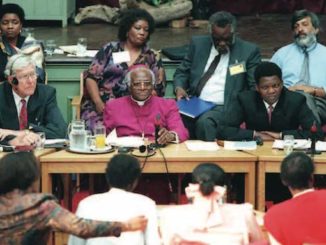
    We are at a fork in the road of the kind that made South Africa, during the last days of apartheid, opt for the Truth and Reconciliation Commission model as the preferred path to a new society. South Africa chose to enter into the record the ugly history of deprivation, violence and denial of humanity of black people perpetrated by the white-dominated state and other groups within it, so that no one could reasonably disavow what happened or claim ignorance of what was done in their name and to their benefit.

    Every state agent who sought forgiveness from the commission had to give a full account of the crimes they committed as state agents in granular detail and identify their victims’ names, educating the population about how low their society had sunk while apartheid lasted. That is how the truth played out; South Africa now has a full record of this history, for not only South Africans but all who desire access.

    This same process is what the United States needs in order to confront the truth about what it did to black people throughout its history.

    The United States has faced many past forks in the road. At its inception, the country could have gone full steam ahead in building the utopia promised by its founding fathers. Instead, it chose slavery. It had another turning point at the conclusion of the Civil War when it chose white reconciliation at the expense of full citizenship for black compatriots. There was yet another opportunity at the conclusion of the Jim Crow era; again, the United States elided full citizenship for black Americans by taking the easy path of trying to institute progress through litigation that is constantly being challenged and reversed.

    At every step, the United States refused to acknowledge the wrong inflicted on its black citizens. But the nation is once again at a decision point.

    We are dealing with a mind-set — including among nonwhite immigrants — that was constructed in a time of slavery and used to justify the dehumanization of black Americans. Black Americans and we, their immigrant cousins, are never routinely considered to have a place in America’s space. Our citizenship has never been full nor taken for granted: it is always asterisked. This mind-set must be the subject of a national conversation.

    We needed an amendment to the Constitution to secure our citizenship even when we were born on U.S. soil and nonblack immigrants were routinely admitted. We had to have our equality with others litigated in courts. We had to have our right to live anywhere we want and can afford restated and guaranteed by additional legislation and court judgments. We have had our right to vote unimpeded periodically subject to renewal by Congress. And we must continue to suffer the indignities of having our fellow citizens act as if only we have problems.

    Over the past century, other societies realized they had wronged segments of their populace either through racial discrimination, genocide or military misrule. They accepted that they had fallen short of what kind of society they desired to be, and that they had to reconcile with the undeserving victims of their deeds. Reconciliation required acknowledging and atoning for the wrong done — asking for their victims’ forgiveness while resolving never to repeat the wrongs and working to restore their victims to full humanity as fellow citizens.

    The United States and South Africa share similar histories of denying the humanity of black people. In South Africa, there is collective sharing of the burden of what the country did to its black citizens and understanding that black South Africans deserve to be made whole if South Africa is to become the nation of its modern founders’ dreams. South Africa is a long way from realizing this dream, and the reluctance of white South Africa to reciprocate the generosity of the black majority is scandalous. But the foundation laid by the truth remains an indispensable starting point.

    To become the perfect union its founders intended, the United States must make its black citizens whole, without legal equivocations or constitutional hair-splitting. That is the ultimate argument for a Truth and Reconciliation Commission in our land. It is the precondition for a different future.

    (Olúfẹ́mi Táíwò is professor and chair of the Africana Studies and Research Center at Cornell University)

    (Source: The Washington Post)

  • The Neoliberal Looting of America

    The Neoliberal Looting of America

    The private equity industry, which has led to more than 1.3 million job losses in the last decade, reveals the truth about free markets.

    By Mehrsa Baradaran

    An examination of the recent history of private equity disproves the neoliberal myth that profit incentives produce the best outcomes for society. The passage of time has debunked another such myth: that deregulating industries would generate more vibrant competition and benefit consumers. Unregulated market competition actually led to market consolidation instead. Would-be monopolies squeezed competitors, accrued political power, lobbied for even more deregulation and ultimately drove out any rivals, leading inexorably to entrenched political power. Instead of a thriving market of small-firm competition, free market ideology led to a few big winners dominating the rest.


    And we can move beyond the myths of neoliberalism that have led us here. We can have competitive and prosperous markets, but our focus should be on ensuring human dignity, thriving families and healthy communities. When those are in conflict, we should choose flourishing communities over profits.

    “It’s hard to separate what’s good for the United States and what’s good for Bank of America,” said its former chief executive, Ken Lewis, in 2009. That was hardly true at the time, but the current crisis has revealed that the health of the finance industry and stock market are completely disconnected from the actual financial health of the American people. As inequality, unemployment and evictions climb, the Dow Jones surges right alongside them — one line compounding suffering, the other compounding returns for investors.

    One reason is that an ideological coup quietly transformed our society over the last 50 years, raising the fortunes of the financial economy — and its agents like private equity firms — at the expense of the real economy experienced by most Americans.

    The roots of this intellectual takeover can be traced to a backlash against socialism in Cold War Europe. Austrian School economist Friedrich A. Hayek was perhaps the most influential leader of that movement, decrying governments who chased “the mirage of social justice.” Only free markets can allocate resources fairly and reward individuals based on what they deserve, reasoned Hayek. The ideology — known as neoliberalism — was especially potent because it disguised itself as a neutral statement of economics rather than just another theory. Only unfettered markets, the theory argued, could ensure justice and freedom because only the profit motive could dispassionately pick winners and losers based on their contribution to the economy.

    Neoliberalism leapt from economics departments into American politics in the 1960s, where it fused with conservative anti-communist ideas and then quickly spread throughout universities, law schools, legislatures and courts. By the 1980s, neoliberalism was triumphant in policy, leading to tax cuts, deregulation and privatization of public functions including schools, pensions and infrastructure. The governing logic held that corporations could do just about everything better than the government could. The result, as President Ronald Reagan said, was to unleash “the magic of the marketplace.”

    The magic of the market did in fact turn everything into gold — for wealthy investors. Neoliberalism led to deregulation in every sector, a winner-take-all, debt-fueled market and a growing cultural acceptance of purely profit-driven corporate managers. These conditions were a perfect breeding ground for the private equity industry, then known as “leveraged buyout”  firms. Such firms took advantage of the new market for high-yield debt (better known as junk bonds) to buy and break up American conglomerates, capturing unprecedented wealth in fewer hands. The private equity industry embodies the neoliberal movement’s values, while exposing its inherent logic.

    Private equity firms use money provided by institutional investors like pension funds and university endowments to take over and restructure companies or industries. Private equity touches practically every sector, from housing to health care to retail. In pursuit of maximum returns, such firms have squeezed businesses for every last drop of profit, cutting jobs, pensions and salaries where possible. The debt-laden buyouts privatize gains when they work, and socialize losses when they don’t, driving previously healthy firms to bankruptcy and leaving many others permanently hobbled. The list of private equity’s victims has grown even longer in the past year, adding J.Crew, Toys ‘R’ Us, Hertz and more.

    In the last decade, private equity management has led to approximately 1.3 million job losses due to retail bankruptcies and liquidation. Beyond the companies directly controlled by private equity, the threat of being the next takeover target has most likely led other companies to pre-emptively cut wages and jobs to avoid being the weakest prey. Amid the outbreak of street protests in June, a satirical headline in The Onion put it best: “Protesters Criticized For Looting Businesses Without Forming Private Equity Firm First.” Yet the private equity takeover is not technically looting because it has been made perfectly legal, and even encouraged, by policymakers.

    According to industry experts, 2019 was one of the most successful years for private equity to date, with $919 billion in funds raised. The private equity executives themselves can also garner tremendous riches. Their standard fee structure involves collecting around 2 percent of the investor money they manage annually, and then 20 percent of any profits above an agreed-upon level. This lucrative arrangement also lets them tap into the very favorable “carried interest” tax loophole, allowing them to pay much lower capital gains tax rates on their earnings, rather than normal income taxes like most people.

    An examination of the recent history of private equity disproves the neoliberal myth that profit incentives produce the best outcomes for society. The passage of time has debunked another such myth: that deregulating industries would generate more vibrant competition and benefit consumers. Unregulated market competition actually led to market consolidation instead. Would-be monopolies squeezed competitors, accrued political power, lobbied for even more deregulation and ultimately drove out any rivals, leading inexorably to entrenched political power. Instead of a thriving market of small-firm competition, free market ideology led to a few big winners dominating the rest.

    Take the banking sector. For most of American history, banks were considered a public privilege with duties to promote the “best interest of the community.” If a bank wanted to merge or grow or offer new services, the regulators often denied the request either because a community could lose a bank branch or because the new product was too risky. During the neoliberal revolution of the 1980s and ’90s, Congress and bank regulators loosened the rules, allowing a handful of megabanks to swallow up thousands of small banks.

    Today, five banks control nearly half of all bank assets. Fees paid by low-income Americans have increased, services have been curtailed and many low-income communities have lost their only bank. When federally subsidized banks left low-income communities, vulture-like fringe lenders — payday, title, tax-refund lenders — filled the void. As it turns out, private equity firms are invested in some of the largest payday lenders in the country.

    Faith in market magic was so entrenched that even the 2008 financial crisis did not fully expose the myth: We witnessed the federal government pick up all the risks that markets could not manage and Congress and the Federal Reserve save the banking sector ostensibly on behalf of the people. Neoliberal deregulation was premised on the theory that the invisible hand of the market would discipline risky banks without the need for government oversight. Even a former Fed chairman, Alan Greenspan, the most committed free market fundamentalist of the era, admitted in the understatement of the century, that “I made a mistake.”

    We can start fixing the big flaws propagated over the last half century by taxing the largest fortunes, breaking up large banks and imposing market rules that prohibit the predatory behaviors of private equity firms.

    Public markets can take over the places that private markets have failed to adequately serve. Federal or state agencies can provide essential services like banking, health care, internet access, transportation and housing at cost through a public option. Historically, road maintenance, mail delivery, police and other services are not left to the market but provided directly by the government. Private markets can still compete, but basic services are guaranteed to everyone.

    And we can move beyond the myths of neoliberalism that have led us here. We can have competitive and prosperous markets, but our focus should be on ensuring human dignity, thriving families and healthy communities. When those are in conflict, we should choose flourishing communities over profits.

    (Mehrsa Baradaran (@MehrsaBaradaran) is a professor of law at the University of California, Irvine, and author of “The Color of Money: Black Banks and the Racial Wealth Gap.”)

    (Courtesy New York Times)

  • Anupam Kher should be kicked out of BJP for using Guru Gobind Singh’s words to describe Sambit Patra: Bittu

    Anupam Kher should be kicked out of BJP for using Guru Gobind Singh’s words to describe Sambit Patra: Bittu

    NEW DELHI (TIP): Congress MP Ravneet Singh Bittu on Thursday, July 2.  strongly rebuked actor Anupam Kher for using the “sacred words of Guru Gobind Singh” to describe Bharatiya Janata Party spokesperson Sambit Patra.

    On Wednesday, Kher tweeted: “सवा लाख से एक भिडा दूँ !:) @sambitswaraj.”

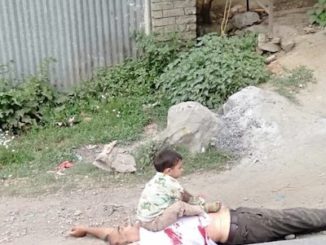
    Kher’s tweet seemed to reference the fact that Patra was heavily criticized on social media after he posted a picture of a child sitting on his grandfather— who was shot dead in Kashmir on Wednesday, July 1—with the caption: “PULITZER LOVERS ??”

    Bittu called Kher’s tweet an attempt by RSS to dilute the “strong tenets of Sikhism.”

    He tweeted: “How dare @AnupamPKher use sacred words of Guru Gobind Singh ji to describe the spokesperson of BJP. It spoils the martial image of Sikhs. It is a bid of RSS to dilute strong tenets of Sikhism. PM Modi should tender immediate apology and kick out Kher and his wife from bjp.”

  • A heat wave forecast for the U.S. has scientists alarmed

    A heat wave forecast for the U.S. has scientists alarmed

    The coming heat is projected to affect huge stretches of the U.S., from eastern New Mexico and Colorado across the Central Plains and into the Northeast.

    NEW YORK (TIP): A sustained blast of heat is expected to bake much of the United States with hotter-than-usual temperatures this holiday weekend, and forecasts suggest that the heat and the humidity could linger for several weeks.

    The extreme weather — the first major heat wave of the season — comes as many states are scrambling to contain the rampant spread of the coronavirus and resources are already strained. And while the pandemic presents some unique challenges this summer, experts say these extreme events will continue to pose public health risks because climate change is making heat waves around the world more frequent and more intense.

    The coming heat is projected to affect huge parts of the U.S., from eastern New Mexico and Colorado across the central Plains and into the Northeast.

    “The first half of July looks to have well-above-normal temperatures, at pretty high probabilities, beginning around the Fourth of July or slightly before,” said Jon Gottschalck, chief of the Operational Prediction Branch at the National Weather Service’s Climate Prediction Center.

    Some places are already sweltering under record conditions. Miami recently had its hottest week on record and posted its 11th consecutive day with a heat index over 103 degrees, Brian McNoldy, a senior research associate at the University of Miami’s Rosenstiel School of Marine and Atmospheric Science, tweeted Thursday.

    Gottschalck said it’s likely that several regions may be under heat advisories and excessive heat watches, and he said warm conditions may persist into the evenings, with little relief from the humidity.

    The heat is being driven by the northward shift of the jet stream, which creates a “ridging effect” — a pocket of high pressure that allows for warm, dry conditions at the surface, Gottschalck said. The impending blast of heat could also create a “ring of fire” weather pattern, in which storms ride along the periphery of the heat dome and trigger severe thunderstorms across the northern Plains, he said.

    Current forecasts show that this dome of heat could stick around well into the month.

    “Our models indicate that this is going to be somewhat persistent through the first two weeks of July, and potentially longer,” Gottschalck said.

    He said the Climate Prediction Center has been working closely with the Federal Emergency Management Agency and local agencies on how to manage heat waves and other extreme weather events during the pandemic.

    Some cities, for instance, may not be able to provide relief for vulnerable people because of social distancing guidelines.

    “We’re dealing with such a unique situation, where even if some areas can open up cooling centers and things like that, they’re likely to have limited capacity,” said Julie Caron, a climate scientist at the National Center for Atmospheric Research in Boulder, Colorado. “So now, you could have a vulnerable population that has to make a choice to either stay home and risk the heat or go to a cooling center and risk exposure to the virus.”

    But even without the pandemic, she said, these events are troubling in the context of global warming.

    “There’s a long-term warming trend, but we’re also seeing an increasing rate of change that’s notable since 2015,” Caron said. “What that means is we’re getting hotter and more frequent heat waves on top of each other.”

    The changes are magnified in the summer, particularly because July is typically when most parts of the contiguous U.S. have their hottest days of the year.

    “You’re exacerbating heat extremes in an already hot season,” Caron said. “That’s why it’s not just about heat waves, necessarily. It’s that we’re seeing hotter-than-normal seasons.”

    (Source: NBC)

  • Ambani’s JioMeet takes on Zoom

    Ambani’s JioMeet takes on Zoom

    MUMBAI (TIP): India’s Reliance Jio  Platforms, which recently concluded a $15.2 billion fundraise run, is ready to enter a new business: Video conferencing.

    On Thursday, July 2  evening, the firm — backed by Mukesh Ambani, India’s richest man — formally launched JioMeet, its video-conference service that looks uncannily like Zoom.

    Like Zoom  and Google Meet, JioMeet offers unlimited number of free calls in high definition (720p) to users and supports as many as 100 participants on a call. But interestingly, it appears to not impose a short time limit on a call’s duration. Jio Platforms says a free call can be uninterrupted for “up to 24 hours” long. The service currently has no paid plans and it’s unclear if Jio Platforms, which has a reputation of giving away services for free for years, plans to change that.

    Jio Platforms, which began beta testing JioMeet in May this year, said the video conferencing service offers “enterprise-grade” host controls. These include password protection on each call, multi-device login support (up to five devices), and ability to share screen and collaborate.

    Other features include the ability to switch “seemingly” from one device to another, and a ‘Safe Driving Mode’ for when a participant is in commute. Hosts can also enable a ‘waiting room’ to ensure participants have to ask for permission to enter a call.

    The company did not provide any more details, including whether people outside of India could use the service. On its website, JioMeet claims all the meetings are “encrypted” but does not elaborate whether these calls are end-to-end encrypted.

    The launch of JioMeet today comes as tens of millions of people in India are working from home and using video conferencing services for work and to stay in touch with friends.

    Zoom, currently the most popular video conference service in India, on Android had about 35 million monthly active users in the third week of June, up from about 4 million users during the same period in March, according to mobile insights firm App Annie, data of which an industry executive shared with TechCrunch. (Android powers nearly 99% of smartphones in India.)

    In a call with analysts earlier this year, Jio executives had described JioMeet as a platform that they think would someday have features to enable doctors to consult their patients, prescribe them medicine, and have a system in place to let them buy medicines online and get test results digitally. Similarly, they said JioMeet will allow teachers to host virtual classrooms for their students, with the ability to record sessions, assign and accept homework, and conduct tests digitally.

    JioPlatforms, which is India’s top telecom operator with about 400 million customers, operates a number of digital services including JioMusic, a music streaming service; JioCinema, which offers thousands of TV shows and movies; and JioTV, which allows users to watch more than 500 TV channels. All of these services are available at no additional charge to Jio Platforms subscribers. It costs less than $2 a month to be a Jio subscriber.

    The launch of JioMeet — available for use through Chrome and Firefox browsers on desktop, as well as via standalone apps for macOS, Windows, iOS, and Android, and an Outlook plugin — coincides with a nationwide ban on 59 Chinese services including TikTok, ShareIt, Alibaba Group’s UC Browser and Tencent’s WeChat. New Delhi banned these services on Monday evening citing security concerns.

    Updated on July 3

    Intel said on Friday, July 3,  it will invest $253.5 million in Jio Platforms, joining a roster of high-profile investors including Facebook and Silver Lake that have backed India’s top telecom operator in recent months.

    (Source: Agencies)

  • “Era of expansionism has ended; it is time for development”: Modi warns China

    “Era of expansionism has ended; it is time for development”: Modi warns China

    Prime Minister Narendra Modi on Friday, July 3  paid a surprise visit to Ladakh to assess the border situation.

    I.S.Saluja

    LEH / NEW YORK (TIP): :Modi, who reached Leh in the morning of July 3, had  a major strategic session with the army commanders, where the 14 Corps Commander gave a detailed view of the situation since May, how the standoff started and also how it looks like as of today in terms of the estimated strength of the soldiers and their machinery on both the sides.

    The PM was greeted with slogans of ‘Bharat Mata ki Jai’ and ‘Vande Mataram’ by the soldiers, who also raised their arms.

    Modi was also briefed about the evolving situation since May at Galwan Valley, Pangong Tso, Demchok and Hot Springs in the eastern Ladakh by Lt Gen Harinder Singh, who had led the Indian delegation in the three rounds of talks with his Chinese counterpart Major General Liu Lin.

    According to the latest situation, the soldiers on the two sides are to disengage as part of  de-escalation, that is, both sides have to scale down the aggressive posturing, though the standoff position would remain till the two sides sort out all the issues.

    The PM was accompanied by Chief of Defense Services Gen Bipin Rawat and Chief of Army Staff Gen MM Naravane.

    In an obvious warning to China, Modi said : “Era of expansionism has ended; it is time for development”.

     Here are some excerpts from Modi’s address to soldiers posted at India – China border.

    “I am again paying respect to brave soldiers who sacrificed their lives in Galwan Valley”.:

    “Bravery you have shown recently has sent a message to the whole world about India’s strength”.

    “Our resolve for ‘Atmanirbhar Bharat’ becomes stronger because of you and your strong resolve”.

    “Your willpower is as strong and firm as the Himalayas; the whole country is proud of you”..

    “Era of expansionism has ended; it is time for development”.

    “We are putting adequate focus on requirement of armed forces”.

    “Bravery is a prerequisite for peace”.

    “You have shown exemplary dedication in Galwan Valley; the country is proud of all of you”.

    Background to the conflicts:

    India and China, two nuclear-armed Asian neighbors, are in a tense diplomatic and military standoff following their first deadly border clash in more than 40 years.

    The June 15 incident in the disputed Galwan Valley, an arid Himalayan area along the Line of Actual Control (LAC), the de facto border between the two nations, left 20 Indian soldiers dead. China has yet to officially declare its casualties.

    Indian and Chinese troops have been engaged in the standoff since early May at several points along the 3,500km (2,200-mile) LAC, most of which remains undemarcated.

    The fighting on June 15 was triggered by a disagreement over two Chinese tents and observation towers that Indian officials said had been built on its side of the LAC.

    Chinese troops breached the Line to set up temporary “structures” in the Galwan Valley even after military officials had reached an agreement on June 6 to de-escalate, Indian Foreign Minister Subrahmanyam Jaishankar told China’s senior diplomat, Wang Yi, in a phone call.

    The problem arose when an Indian patrol visited the area near a ridge to verify a Chinese assertion that its troops had moved back from the LAC, two government sources told Reuters news agency.

    The Chinese troops had thinned out, leaving behind two tents and small observation posts, which the Indian party demolished, the sources said.

    A large group of Chinese soldiers arrived and confronted the Indian troops. It was not clear what happened next, but the two sides soon clashed, the Chinese soldiers reportedly using iron rods and batons with spikes, killing 20 Indian soldiers and wounding dozens of others.

    China has not said anything about any losses in the hand-to-hand combat.

    Experts mainly cite two reasons for the deadliest clash since 1975.

    A major reason, according to some experts, is linked to India’s unilateral move last year to repeal Article 370 of the Indian constitution, which had guaranteed a measure of autonomy to the former Jammu and Kashmir state, which also included the disputed areas in Ladakh region.

    China, which, like Pakistan, saw India’s move as unilaterally affecting its territory, strongly denounced the move at the UN Security Council last year.

    Analysts also believe the current standoff is also a result of China’s pushback against India’s recent construction of infrastructure in border areas.

    India inaugurated the 255km (158-mile) Darbuk-Shyok-Daulat Beg Oldie (DSDBO) road, built along the LAC, last year. China objected, seeing the move as a threat to its interests in the region.

    The heightened tensions between the world’s two most populous countries have drawn international concerns, with the United Nations urging both sides “to exercise maximum restraint”.

    China’s economic corridor to Pakistan and Central Asia passes through Karakoram, which is close to Galwan Valley, the site of the June 15 clash. Galwan Valley is close to Aksai Chin Plateau, which is under Chinese control but claimed by India.

    According to Happymon Jacob, professor of international relations at New Delhi-based Jawaharlal Nehru University, China considers the Ladakh region crucial for its “access to Central Asia and CPEC project with Pakistan in which they [China] have invested billions of dollars [about $60bn].”

    Chinese foreign ministry spokesman Zhao Lijian said he was unaware of the specifics but that the Indian army had crossed into Chinese territory in several places in recent days – violating the agreement reached on June 6 – and that they should withdraw.

    Calling it a “deliberate provocation” on New Delhi’s part, Zhao said: “The rights and wrongs… are very clear and the responsibility rests entirely with the Indian side.”

    In response, India’s foreign ministry spokesman Anurag Srivastava cautioned China against making “exaggerated and untenable claims” on the sovereignty of the Galwan Valley area.

    India says China occupies 38,000 sq. km (15,000 square miles) of its territory in the Aksai Chin Plateau in the Himalayas, with 12,000 Chinese soldiers reportedly pushing across the border.

    Modi’s denial of a Chinese incursion triggered a controversy, with opposition leaders accusing the government of intelligence failures and asking why the clash happened in the first place.

    Ashley Tellis, senior fellow at the Carnegie Endowment for International Peace, believes the latest Chinese advances in the Ladakh region leaves India with “painful” choices.

    “Beijing has moved into disputed territories that did not host a continual Chinese presence as recently as January 2020,” Tellis wrote on June 4, days before the brawl.

    Satellite pictures taken by Earth-imaging company, Planet Labs, in the days leading up to the clash, also suggest increased Chinese activity at the Galwan Valley.

    “Looking at it in Planet, it looks like China is constructing roads in the valley and possibly damming the river,” Jeffrey Lewis, director of the East Asia Nonproliferation Program at California’s Middlebury Institute of International Studies, told Reuters.

    “There are a ton of vehicles on both sides [of the LAC] – although there appear to be vastly more on the Chinese side. I count 30-40 Indian vehicles and well over 100 vehicles on the Chinese side.”

    In addition to its dispute with China, India has found itself at loggerheads with two other neighbors – long-standing rival Pakistan, and Nepal.

    Nepal and India have historically enjoyed good ties, but now find themselves engaged in what experts have called a cartographic war over border regions.

    Last week, Nepal’s Parliament approved a new map for the country, which includes land controlled by India.

    “On the one hand, the major power in the region, China, is against India and on the other hand, smaller neighbors, which have been traditionally very friendly to India, are also negatively disposed to India. I think that is a major policy failure,” Jacob told Al Jazeera.

    India-China Face off in Ladakh

    The Reaction in India

    The reaction in India to Chinese advances has been one of outrage, with citizens and trade associations calling for the Modi-led government to boycott Chinese goods.

    Protesters across the country were seen burning Chinese flags and products, while videos on social media showed teenagers destroying their Chinese-made mobile phones.

    The Reaction abroad

    Some Indian American groups in  US, owing allegiance to the ruling BJP , have called for boycott of Chinese goods. These groups, at places , like New York, have called for protests against China.

    Beijing is India’s biggest trading partner, with annual bilateral trade worth $92bn. The trade imbalance between the two is significant and favors China heavily.

    In an interview to The Economic Times, Shyam Saran, former Indian foreign secretary, said India should avoid any “knee-jerk reactions” against China, claiming that it would be impossible for New Delhi to find alternative suppliers in the near future.

    Jacob believes India should reach out to Quadrilateral Security Dialogue, also known as Quad – an informal strategic forum that includes India, Japan, Australia and the United States – to take on China.

    “If the USA makes noises in favor of India and strengthens the Quad, it will send a message to China that we will take aggressive steps and will defend our interest,” he said.

    Meanwhile, India has bolstered  defense amid tensions along China border.

    India on Thursday, July 2,  approved the purchase of 33 Russian fighter jets and upgrades to 59 war planes at a cost of ₹18,148 crore amid rising tensions with China and about two weeks after the deadliest border clash in more than four decades between the two Asian nations.

    The order includes 21 MiG-29s that would be purchased directly from Russia and a dozen Sukhoi Su-30MKIs that would be produced under license by state-run Hindustan Aeronautics Ltd (HAL). In addition, 59 MiG-29 jets would be upgraded in Russia, the defense ministry said in a statement.

    The approval by the ministry’s defense acquisition council came on a day Prime Minister Narendra Modi spoke to Russian President Vladimir Putin. The Russian President reiterated his commitment to “further strengthen the special and privileged strategic partnership between the two countries in all spheres”, an Indian foreign ministry statement said. The statement did not say whether the two leaders discussed India’s border tensions with China .

    India’s foreign ministry spokesman Anurag Srivastava said on Thursday, July 2,  that New Delhi and Beijing will “continue their meetings both at the military and diplomatic levels… in the future to resolve the issue (current boundary tensions) to mutual satisfaction.”

    That Russia seemed to respond to India’s list for defense purchases at a time of tensions with China—seen a strong partner of Russia—together with support for New Delhi from countries like the US and France shows what “the global mood is like” on the issue of India-China tensions, said Harsh Pant, professor of international relations at London-based King’s College. “The support for India remains broad. It would be a smart strategy on the part of China to take this into account,” he said.

    The orders for the fighter jets as well as 248 indigenously developed beyond-visual-range ASTRA air-to-air missiles, with the capacity to engage and destroy highly maneuvering supersonic aircraft during night or day—besides long-range land attack missile systems having a firing range of 1,000km are expected to come as a shot in the arm for India’s military, especially the Indian Air Force whose squadron strength is now down to 30 from the sanctioned 42.

    An IAF helicopter flies in the sky, in Leh on Thursday, July 2.

    “While the MiG-29 procurement and upgradation from Russia is estimated to cost ₹7,418 crore, the Su-30 MKI will be procured from HAL at an estimated cost of ₹10,730 crore,” the statement said.

    In total, the defense acquisition council approved contracts worth ₹38,900 crore, of which ₹31,130 would be purchased locally including ammunition for Pinaka multiple rocket launcher, long-range land attack cruise missile and the Astra missiles for navy and air force.

    The tensions with China had prompted defense minister Rajnath Singh to visit Russia last month and meet senior members of government in Moscow to ensure supplies of spares and weapons systems. Despite India diversifying the sources from where it buys its military hardware in recent decades, an estimated 60% of its arsenal contains Russian origin systems making Delhi depend on Moscow for critical spares .

    India’s defense equipment purchases from Russia may irk US which has always expressed displeasure with India buying defense equipment from Russia.

    (With inputs from PTI, ALJAZEERA)

  • July 3 New York & Dallas E – Edition

    [vc_row][vc_column][vc_column_text]

    E-Edition

    [/vc_column_text][/vc_column][/vc_row][vc_row][vc_column width=”2/3″][vc_custom_heading text=”” font_container=”tag:h2|text_align:center” google_fonts=”font_family:Istok%20Web%3Aregular%2Citalic%2C700%2C700italic|font_style:700%20bold%20regular%3A700%3Anormal” link=”url:https%3A%2F%2Fwww.theindianpanorama.news%2Fwp-content%2Fuploads%2F2020%2F07%2FTIP-July-3-Dual-Edition.pdf|||”][vc_single_image image=”100032″ img_size=”full” add_caption=”yes” alignment=”center” onclick=”custom_link” link=”https://www.theindianpanorama.news/wp-content/uploads/2020/07/TIP-July-3-Dual-Edition.pdf”][/vc_column][vc_column width=”1/3″][vc_single_image image=”82828″ img_size=”medium” alignment=”center” onclick=”custom_link” link=”https://www.theindianpanorama.news/advertising-media-kit-portal-indian-panorama/”][vc_single_image image=”82829″ img_size=”medium” alignment=”center” onclick=”custom_link” link=”https://www.theindianpanorama.news/advertising-media-kit-portal-indian-panorama/”][/vc_column][/vc_row][vc_row][vc_column width=”2/3″][vc_custom_heading text=”Lead Stories This Week” font_container=”tag:h2|text_align:center” google_fonts=”font_family:Istok%20Web%3Aregular%2Citalic%2C700%2C700italic|font_style:700%20bold%20regular%3A700%3Anormal” link=”url:https%3A%2F%2Fwww.theindianpanorama.news%2F%20|||”][/vc_column][vc_column width=”1/3″][vc_widget_sidebar sidebar_id=”mh-sidebar”][/vc_column][/vc_row]