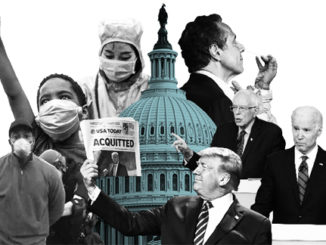
Month: December 2020

  • Covid-19 wasn’t the only medical story this year

    Covid-19 wasn’t the only medical story this year

    One health story dominated headlines for virtually all of 2020: the coronavirus pandemic. But while Covid-19 did slow down medical research in other areas, the science didn’t stop. Researchers rolled out new ways to cope with common diseases, and even a treatment for another feared virus.

    Here are the accomplishments that may have flown under the public’s radar in 2020.

    A treatment for Ebola

    Six years ago, the world had its eyes on a different virus: Ebola, in West Africa. In October, the Food and Drug Administration approved Inmazeb, the first treatment for the deadly disease. Inmazeb is a monoclonal antibody cocktail made by the drugmaker Regeneron. A study that began in 2018 during an Ebola outbreak in the Democratic Republic of Congo showed that the drug improved survival rates; researchers found that nearly 34 percent of patients who received Inmazeb died, compared with 51 percent of patients who received a control.

    Monoclonal antibodies are made in the lab to mimic the body’s natural immune response. This year, Regeneron also developed a monoclonal antibody cocktail for Covid-19, which President Donald Trump received when he was hospitalized with the illness.

    In December, the FDA approved a second treatment for Ebola, another monoclonal antibody drug called Ebanga, made by Ridgeback Biotherapeutics.

    Weekly insulin shot

    People with Type 2 diabetes may find reprieve from daily shots with an experimental form of insulin. In September, researchers at the Dallas Diabetes Research Center found that a once-weekly insulin shot was able to lower blood sugar just as well as a daily insulin shot in those with Type 2 diabetes.

    The research, while relatively small with just 247 participants, was published in the New England Journal of Medicine.

    The hope is that patients with Type 2 diabetes will be more likely to adhere to a once-a-week injection than a daily shot.

    One pill to cut the risk of heart problems

    A single pill that combines four medications meant to lower blood pressure and cholesterol plus an aspirin was found in November to cut the risk of heart disease, the nation’s No. 1 killer.

    A large study of 5,713 participants published in November found that the so-called polypill cut the risk for heart attack and stroke in at-risk patients by nearly a third.

    The polypill used in the study was a combination of a statin called simvastatin, a beta blocker called atenolol, a diuretic called hydrochlorothiazide and an ACE inhibitor called ramipril. All are sold as generics, which means this could be a low-cost method of treating patients at risk for heart events.

    What’s more, patients may be more likely to comply with their doctor’s orders if they need to fill and take only one pill, instead of four.

    A blood test to look for Alzheimer’s disease

    Also in November, the first blood test to help diagnose Alzheimer’s disease became available in the U.S.

    Toward a cure for sickle cell disease

    Early December brought early but promising results from the first studies on gene editing for excruciatingly painful and inherited blood disorders most likely to occur among those of African descent.

    The technology, called CRISPR, involves permanently altering DNA in a person’s blood cells. The approach could possibly cure sickle cell disease, in which crescent-shaped red blood cells clump together to the point that they’re unable to flow easily throughout the body, starving organs and tissue of the oxygen they need.

    Using CRISPR, doctors are essentially able to switch off a faulty gene that creates the problem. In studies, 10 patients were able to remain without pain episodes for at least several months, and were able to be free of regular blood transfusions previously necessary to treat their disorders.

    The only other potential cure for sickle cell disease involves a complicated bone marrow transplant from a closely matched donor who does not have the disease.

    Pediatric heart hope

    One of the last advances of 2020 was the Food and Drug Administration’s approval of a heart pump to be used in children in need of a heart transplant.

    Abbott’s HeartMate 3 heart pump is meant for children with a specific condition called advanced refractory left ventricular heart failure that requires a full heart transplant. Without intervention, the condition is deadly, as the heart is too weak to pump on its own.

    Two years after the implant — which is permanent — Abbott said patients who received the pump had a 79 percent survival rate, comparable to those who received a heart transplant. But patients who receive heart transplants must be put on medications to suppress their body’s natural immune response to attack the new heart for the rest of their lives. A device like Abbott’s does not require such medication.

    The technology, called CRISPR, involves permanently altering DNA in a person’s blood cells. The approach could possibly cure sickle cell disease, in which crescent-shaped red blood cells clump together to the point that they’re unable to flow easily throughout the body, starving organs and tissue of the oxygen they need. 
  • Women who changed the world

    Women who changed the world

    Over the past year, the world has been battered by multiple crises, including a global pandemic that has infected tens of millions, cost more than 1.5 million lives, and devastated almost every nation’s economy. But according to a study by the Centre for Economic Policy Research (CEPR) and the World Economic Forum (WEF), countries led by women had “systematically and significantly better” outcomes related to COVID-19, which were the result of “proactive and coordinated policy responses” such as earlier lockdowns.

    That got us thinking: in this year of challenge, which women have offered models of creative, thoughtful and decisive leadership? Whether guiding a nation with a steady hand or rising up against injustice, these leaders offer glimpses of how to make progress in the most difficult of circumstances.

    Jacinda Ardern

    Widely lauded for leading one of the world’s most successful coronavirus responses, Jacinda Ardern and her Labour party won a landslide victory in October’s election. She wasted no time in selecting the most diverse cabinet in New Zealand’s history. Out of 20 members, eight are women, five are Maori, three are Pasifika and three are LGBTQ+. It is a cabinet that, for the first time, fully represents all New Zealanders.

    Ardern’s choices are more than a box-ticking exercise. While the new cabinet has shifted the popular understanding of what leadership can look like, it is also a reminder that people from different backgrounds bring with them unique perspectives, skills and life experiences, all of which are essential in tackling our greatest challenges.

    Angela Merkel

    In September, a fire devastated the overcrowded Moria refugee camp on the Greek island of Lesbos, leaving thousands of people homeless. Angela Merkel quickly agreed to accept approximately 2,750 people, including unaccompanied minors. The move pressured other EU countries to do their part and open their arms, too.

    Merkel’s decision echoed her 2015 statement that Germany would find a way to handle the massive influx of refugees who had fled their home countries. Despite domestic political backlash and a continent splintered over the refugee crisis, Merkel has approached the issue in the signature manner of a scientist-turned-stateswoman—with pragmatic empathy, a drive to experiment, and a belief in the need for collective action.

    Damilola Odufuwa and Odunayo Eweniyi

    For years, women activists across Nigeria have used online tools to organise social change, whether it was to free the Chibok girls kidnapped by the terrorist group Boko Haram or to raise awareness about gender-based violence. In July, Damilola Odufuwa and Odunayo Eweniyi formed a group with 11 other women called the Feminist Coalition with the aim of improving the rights of Nigerian women. When anger about the unchecked police brutality by the Special Anti-Robbery Squad (SARS) reached fever pitch in autumn, they launched into action with their first project— and the #EndSARS movement became a rallying cry around the world.

    Stacey Abrams

    When Georgia Democrat Stacey Abrams lost her bid for governor in 2018, some commentators thought she should run for the senate—some thought she should run for president. Instead, Abrams stayed committed to her longtime project of turning her home state from red to blue. Five years earlier, Abrams had launched The New Georgia Project, which empowered low-income Georgians to help get more people signed up for healthcare. Over time, that initiative became a voter-registration effort. In the process, Abrams built a broad coalition of people and organisations across the state, registered huge numbers of Georgians to vote, and changed people’s understanding of southern politics. Her painstaking organising paid off this year when Joe Biden won Georgia, helping to seal his victory.

    Sarah Gilbert

    Professor Sarah Gilbert may be as close to a real-life superhero as one gets. The veteran Oxford scientist developed a coronavirus vaccine that could help save the world from COVID-19. Early data suggests that the Oxford/AstraZeneca vaccine that her team worked on affords up to 90 per cent protection against the virus, and is cheaper and easier to store than promising vaccines announced by Pfizer and BioNTech, and Moderna. Gilbert’s version could therefore benefit more people across the world.

    Klementyna Suchanow

    When Poland’s Constitutional Court imposed a near-total ban on abortions in October 2020, the country’s Conservative government could not have predicted the backlash. Hundreds of thousands of people took to the streets, including in demonstrations organised by The All-Poland Women’s Strike, led by activist Klementyna Suchanow. Suchanow says that in protesting the draconian abortion laws, people are rising up against the Catholic Church’s tight grip over the country’s political decisions. Poles, especially women and young people, are frustrated by the Church’s power to intrude into their lives and furious at the concurrent hypocrisy revealed by the child sex-abuse scandal. Whether the protesters succeed in overturning the law remains to be seen. But one thing is clear: the movement has energised a new generation of women, unbounded by the past—and they aren’t going anywhere.

    Maria Ressa

    This summer, in the middle of the pandemic, Philippine journalist Maria Ressa stood in a courtroom and was convicted of cyber libel. Ressa and her news site, Rappler, had long been targeted by Philippine president Rodrigo Duterte for its critical coverage of his regime, including his response to COVID-19. But it was her arrest in 2019 that shifted Ressa’s thinking about her role as a journalist and persuaded her to speak openly about Duterte’s abuse of power against the press and the resulting threat to democracy his behaviour poses. Citing Duterte’s use of misinformation through social media to demonise the press and spread conspiracy theories, she warns that other countries face similar threats. Though Ressa still faces the prospect of prison and threats of violence, she refuses to be silenced. As she says, “Journalism is activism.”

    Bilkis Dadi

    At the end of 2019, India’s ruling party enacted the Citizenship Amendment Act, which introduced religion as a criterion for citizenship. But people wouldn’t let this happen without a fight—least of all an 82-year-old woman named Bilkis Dadi (birth name Bilkis Bano, dadi means grandmother), who joined thousands of others in a Muslim neighbourhood in Delhi to protest. Every day, Bilkis sat at the protest site from morning until night. Throughout the winter chill, she was undeterred.

    Although Bilkis and her fellow protesters were shut down, she was widely celebrated and even included on Time magazine’s list of the 100 most influential people of 2020. In the face of powerful opposition, this woman has become an equally powerful reminder of what is worth fighting for.

    Sanna Marin

    Despite its reputation for being a progressive oasis, Finland has an oppressive law on the books— the Trans Act—which requires trans individuals to undergo mental health screenings and sterilisation if they want to obtain legal gender recognition. The country’s prime minister, Sanna Marin, intends to change that. She has spoken in favour of people’s right to self-identify, saying, “It’s not my job to identify people. It’s everyone’s job to identify themselves.”

    This is the latest feminist act by Marin, whose coalition government is led by all women. Her support for ending the Trans Act is an assertion of feminism, which seeks to dismantle outdated notions of gender norms and ensure that everybody can define who they are and live as they choose.

  • Nobel Prize winners 2020

    Nobel Prize winners 2020

    Adjusting to a world where travel is hampered by the pandemic, this year’s Nobel laureates received their prizes at home  following the cancellation of the traditional Stockholm and Oslo ceremonies.

    The awards in the six categories were announced in nearly typical fashion in October, albeit with fewer reporters in physical attendance.

    However, none of the winners travelled  to Stockholm or Oslo to receive their diplomas and medals due to the Covid-19 pandemic.

    The ceremonies are traditionally held on December 10, the anniversary of the 1896 death of the prize’s founder, Swedish entrepreneur and inventor of dynamite Alfred Nobel.

    The lavish Stockholm ceremony hasn’t been cancelled since World War II, and the last time the Oslo ceremony was scrapped was in 1976 when the peace prize was “reserved” until the following year owing to a lack of suitable nominations.

    Twelve laureates were awarded a Nobel Prize in 2020, for achievements that have conferred the greatest benefit to humankind.

    Their work and discoveries range from the formation of black holes and genetic scissors to efforts to combat hunger and develop new auction formats.

    Nobel Prize in Physics

    The Nobel Prize in Physics 2020 was divided, one half awarded to Roger Penrose “for the discovery that black hole formation is a robust prediction of the general theory of relativity”, the other half jointly to Reinhard Genzel and Andrea Ghez “for the discovery of a supermassive compact object at the centre of our galaxy.”

    Nobel Prize in Chemistry

    The Nobel Prize in Chemistry 2020 was awarded jointly to Emmanuelle Charpentier and Jennifer A. Doudna “for the development of a method for genome editing.”

    Nobel Prize in Physiology or Medicine

    The Nobel Prize in Physiology or Medicine 2020 was awarded jointly to Harvey J. Alter, Michael Houghton and Charles M. Rice “for the discovery of Hepatitis C virus.”

    Nobel Prize in Literature

    The Nobel Prize in Literature 2020 was awarded to Louise Glück “for her unmistakable poetic voice that with austere beauty makes individual existence universal.”

    Nobel Peace Prize

    The Nobel Peace Prize 2020 was awarded to World Food Programme (WFP) “for its efforts to combat hunger, for its contribution to bettering conditions for peace in conflict-affected areas and for acting as a driving force in efforts to prevent the use of hunger as a weapon of war and conflict.”

    The Sveriges Riksbank Prize in Economic Sciences in Memory of Alfred Nobel 2020

    The Sveriges Riksbank Prize in Economic Sciences in Memory of Alfred Nobel 2020 was awarded jointly to Paul R. Milgrom and Robert B. Wilson “for improvements to auction theory and inventions of new auction formats.”

  • Protests around the world

    Protests around the world

    Black Friday Amazon protests

    In anticipation of Black Friday, the day-after-Thanksgiving shopping event that was largely moved online this year, a coalition of Amazon warehouse workers and climate activists organized a day of action called #MakeAmazonPay.

    At the crux of the protest actions were Amazon’s working conditions and climate impact, both of which, depending on who you ask, range from notably subpar to dismal.

    Protest actions were organized in Brazil, Germany, India, Mexico, the U.S., France, and other countries. Actual actions varied: In Germany, thousands of warehouse workers went on strike, while some locales staged protests outside of Amazon’s headquarters.

    Election results protests

    Spontaneous celebrations for the Biden and Harris win weren’t the only gatherings spurred by the election results. Throughout the election and afterward, Trump routinely claimed that the election was seeped with fraud, despite election officials finding no evidence to back his claims.

    Emboldened by the soon-to-be former president’s inflammatory remarks and baseless fraud accusations, hundreds of right-wing activists, including members of the hate group Proud Boys, took to Washington, D.C., a week after the election was called for Biden. The protests eventually escalated to violence as counterprotesters got involved, with 20 people arrested, according to the mayor’s office in D.C.

    End SARS protests

    In Nigeria, a police unit called the Special Anti-Robbery Squad (SARS) was formed in 1984 to fight crimes like robberies and carjacking. Since its formation, the unit developed a deep track record of violent abuses, including at least 82 instances of torture, ill treatment, and extra-judicial execution reported by human rights watchdog Amnesty International.

    Despite the unit’s well-established pattern of violence and abuse, SARS officers received virtually no accountability. End SARS protests started back in 2016, but it was October of 2020 when the movement gained full momentum, after a video of a man’s unprovoked killing by SARS officers was shared widely on social media.

    Demonstrations in opposition to SARS in October were held in Lagos and throughout the country. In response to the protests, President Muhammadu Buhari agreed to disband SARS. Yet protests continued on, and reports of people being shot at protests led to curfews enacted throughout Nigeria.

    Outside of Nigeria, the hashtag #EndSARS, which protest organizers used in Nigeria, spread as well. Prominent celebrities and politicians, including Beyoncé and John Boyega, voiced support for protesters on social media.

    September climate strikes

    Back in 2019, youth-led climate strikes staged around the world in September of that year marked the ushering in of a new era of climate activism.

    Those September strikes vaulted climate activist Greta Thunberg, who was 16 at the time, to an even larger stage, inspiring countless other young people to get involved in protesting for climate action. Though much of the youth-led climate movement moved online in response to the coronavirus pandemic (more on that in a bit), on the one-year anniversary of the September strikes, at least 3,500 strikes were scheduled around the world.

    Unlike the massive crowds that gathered in September 2019, 2020’s strikes met social distancing requirements to curb the spread of the virus. Thunberg’s strike in Sweden, for instance, was adapted to meet the country’s limitation of gatherings of over 50 people.

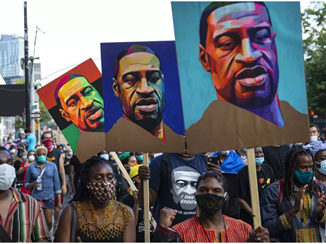
    Minneapolis protests for George Floyd

    Though underpinned by years of organizing, the momentous wave of Black Lives Matter protests seen in 2020 started in Minneapolis.

    On May 25, a Minneapolis police officer named Derek Chauvin kneeled on George Floyd’s neck for nearly nine minutes, killing Floyd while he cried out for help and said he couldn’t breathe. The four officers involved in Floyd’s death were not charged until days later, after video of the killing was released and the protests began. Chauvin was eventually charged with second-degree murder, despite the Floyd family’s demand for a first-degree murder charge.

    The horrific killing led to waves of protest against racial injustice, with many in Minneapolis taking to the streets to demand justice for Floyd and to call for defunding the Minneapolis Police Department to expand investment in community-led safety strategies.

    On June 26, the Minneapolis City Council voted unanimously to dismantle the police department, a first step in a complicated, bureaucratic process. Additionally, the Minneapolis Board of Education voted unanimously to end its contract with the police department in the city.

    Cities across the country were staging similar protests soon after Floyd’s death. These rallies also brought attention to the recent police killings of other Black Americans, like Breonna Taylor, Rayshard Brooks, Elijah McClain, and Tony McDade. In just a few weeks, it seemed, a civil rights movement had been reignited for a new generation.

    Black Trans lives matter protests

    The rate at which Black trans women are killed in the U.S. has been dubbed an “epidemic” by the Human Rights Campaign Foundation. HRC’s 2019 report found that all but one of the 22 trans or gender non-conforming people killed in the U.S. that year were Black. As protests spread across the country, organizers worked to center the stories of Black women, specifically Black trans women.

    In response to killings of Black trans women like Dominique “Rem’mie” Fells and Riah Milton, a visually striking protest arose in Brooklyn, New York, as a sea of protesters dressed in white converged on the Brooklyn Museum on June 14.

    Global protests for racial justice

    Protests in support of the U.S. Black Lives Matter movement spread swiftly around the world, with people taking to the streets in Sydney, Rio de Janeiro, London, and Seoul, among other cities. Many incorporated their country’s specific needs for progress, particularly in the context of colonial legacies.

    In Brussels, Belgium, for instance, protesters defaced and set fire to a statue of King Leopold II, who oversaw the violent colonization of the Congo. Similarly, protesters in Bristol, England, toppled a statue of Edward Colston, a 17th-century slave trader, and threw it in the harbor.

    Juneteenth protests

    Juneteenth, an annual holiday marking the day in 1865 when news that slavery had been abolished finally reached enslaved people in Galveston, Texas, has been marked with celebrations for over a century. This year, though, awareness of the holiday was especially high, as people across the country participated in protests and rallies on Juneteenth in support of the Black Lives Matter movement.

    There were Juneteenth protests in major cities like New York, D.C., Los Angeles, and Atlanta. In Washington, D.C., protesters gathered at iconic American landmarks like the Lincoln Memorial, Freedom Plaza, and the White House. Later that day, protesters in D.C. toppled a statue of Albert Pike, a Confederate general, ultimately setting it on fire.

    #IRunWithMaud

    On May 8, runners organized a unique demonstration to honor the life of Ahmaud Arbery. Protesters around the country ran 2.23 miles, marking the date of Arbery’s killing. On Feb. 23, Arbery, who was Black, was stalked and fatally shot by white men in a truck while on a run in Georgia. Those who participated used the hashtag #IRunWithMaud to raise awareness of Arbery’s case, while also calling attention to a petition demanding justice for Arbery, which currently calls for charges to be brought against Glynn County Police Officer Robert Rash, as new evidence about his communications related to one of Arbery’s killers came to light.

    In Georgia, where Arbery lived, protests were staged at courthouses on May 8, which would have been his 26th birthday. Hundreds gathered outside the Glynn County Courthouse to protest inaction in Arbery’s case. His killers were not indicted until June 25, nearly four months after Arbery’s death, after recorded video was released and sparked outrage.

    Anti-lockdown protests

    In late April and early May, after cities across the U.S. adopted social distancing measures, small protests emerged in Wisconsin, Minnesota, Virginia, and Michigan. Groups of conservative activists gathered at their respective state capitols to protest stay-at-home orders, and called for businesses to re-open. The protesters eschewed guidance from medical experts recommending social distancing and face coverings, and demanded businesses be allowed to open despite the public health emergency and experts’ recommendations.

    The small gatherings were notable, though, for the lack of police response. In Madison, Wisconsin, for instance, some of the (primarily white) protesters were armed as they stormed Wisconsin’s capitol building. Yet Wisconsin Capitol Police said no arrests or citations were issued. This stood in stark contrast to the Black Lives Matter protests sparked by Floyd’s killing, in which police aggression and violence gravely endangered (and in some cases permanently harmed) many unarmed protesters. At Black Lives Matter protests in Los Angeles and Atlanta in late May and early June, for instance, police fired tear gas and rubber bullets at protesters, using extreme force on protests which were primarily peaceful.

    Virtual Day of Silence

    With schools closed due to the coronavirus, the Day of Silence, an annual student-led demonstration for LGBTQ representation, had to move online. Typically, LGBTQ students and allies vow not to speak for the entirety of a school day to demonstrate the erasure of LGBTQ students in school curricula. (Some states, such as Texas and Alabama, restrict or prohibit the discussion of LGBTQ issues in the classroom.) Though difficult to replicate online, GLSEN, the LGBTQ advocacy organization that has organized the demonstration since the 1990s, encouraged supporters to post on social media using graphics and templates that outline statistics about LGBTQ erasure in schools, in order to continue to raise awareness even while socially distant.

    Virtual climate strikes

    Youth climate activists like Greta Thunberg called for school climate strikes, which have gained momentum and widespread exposure in the last few years, to be moved online amid the pandemic starting in early March.

    Typically, students participating in the strikes skip school on Fridays in their respective cities. These strikes have continued regularly throughout the period of social distancing, however, with youth around the world posting pictures of their protest signs on social media on designated days. The virtual protests are an effort to keep their longstanding demands in the spotlight.

  • 2020 felt like a decade for world markets due to COVID

    2020 felt like a decade for world markets due to COVID

    While lockdown life has kept time standing still for nearly everyone through 2020, Wall Street has been locked in at super fast-forward. The stock market tumbled through years’ worth of losses in just over a month this spring, only to turn around and pack an entire bull market’s worth of gains into less than nine months.

    Even within the span of a few hours, the market in 2020 would sometimes careen to a loss that would have been remarkable for a full year. Consider one day in March, when the S&P 500 plunged 12% after President Donald Trump acknowledged a recession may be on the way because of the pandemic.

    That was a worse loss than the index has suffered in 45 of the last 50 full years.

    The good news is that the crazy action for markets in 2020 was likely a singular response to COVID-19, not a preview of a new normal.

    Market watchers say investors can expect movements closer to what they’re used to next year, as the economy is nursed back to health following the rollout of one or more COVID-19 vaccines.

    If anything, analysts say the whiplash provides another lesson that holding steady is often the best response for investors to crashing prices, rather than trying to time the market.

    The fast-forward movements of this year just mean sticking to that strategy paid off much more quickly this time around. “It’s almost universally the case that you do not want to sell into a panic,” said Yung-Yu Ma, chief investment strategist at BMO Wealth Management.

    “That is something that investors still have a hard time realizing in a moment where it seems like there’s every reason to sell. But that principle is definitely a lesson to be taken away.”

    Of course, the temptation to sell was tough to ignore when so much confusion was crashing through the market this year and prices were zooming at what seemed 10 or 100 times normal speed.

    Consider: – Between Feb. 19 and March 23, the S&P 500 plunged nearly 34% as panic over the economic damage the pandemic could cause swept through markets .

    That’s close to the average drop of 39.4% for the 14 bear markets that have struck since 1929.

    But the average bear market lasted nearly 20 months. This one ran its course in a little more than 20 trading days and was the fastest on record, according to S&P Dow Jones Indices.

    – Almost as quickly as it plunged, the stock market zoomed higher again.

    It regained all its losses in less than five months, and the surge was so lightning-quick that many professional investors at first doubted it could last.

    The S&P 500 has climbed 63.9% in eight-plus months, as of Thursday.

    That rivals the 64.8% it rose in the entire bull market that lasted 31 months following the 1987 Black Monday crash.

    – Through all the tumult, the S&P 500 had 10 days this year where it swung up or down by more than 5%.

    Over the last decade, outside of 2020, that happened just once.

    Since the Great Depression, only 2008 had as many big daily moves, and back then investors were bracing for the collapse of the entire financial system.

    In retrospect, analysts say all the market’s moves make sense.

    Early in the sell-off, investors were flying blind regarding how infectious and deadly this new coronavirus was and how long widespread lockdowns would last.

    Wall Street’s instinctive reaction to any kind of uncertainty is to flee, and stocks sold off.

    But the Federal Reserve and Congress both stepped in forcefully during March, promising unprecedented amounts of aid for markets and the economy.

    Interest rates went back to nearly zero, dollars flooded into far-ranging corners of the bond market and Washington sent out cash payments to most Americans to help fill the economic cavern created by the corona virus.

    “They learned a lot of lessons during the financial crisis, and they applied them,” said Margie Patel, senior portfolio manager at Wells Fargo Asset Management.

    That quick action – and commitment to keeping markets afloat – is one of the biggest takeaways of the year for her.

    “You had the government explicitly telling you we have a floor for the markets below which values will not go.”

    With the Federal Reserve promising to keep interest rates low even if inflation rises back above its 2% target, many professional investors say they expect the market to be much calmer in 2021.

    And beyond the efforts of the Fed, encouraging data on potential COVID-19 vaccines means much of Wall Street expects life to begin returning to normal in 2021, which should broaden the economic recovery, restore corporate profits and also help smooth out Wall Street’s ride.

    “There seem to be a lot of things to worry about,” Patel acknowledges.

    “But when you look at the big picture, it’s surprising how good things are.”

                    Source: AP

  • Lockdown dhamaal: Most entertaining web series and movies

    Lockdown dhamaal: Most entertaining web series and movies

    As cinema halls were shut down during the Coronavirus-induced lockdown, people turned to OTT platforms for entertainment. Some of the movies and web series on streaming platforms created a buzz. Here is a look at the most entertaining films and web series in 2020.

    Money Heist (La Casa De Papel)

    The Spanish drama series made ‘Bella Ciao’ the anthem of 2020 lockdown. The show’s fifth season became one of the most viral shows in 2020. Money Heist had a gripping storyline that would keep you on the edge of your seats. Enough to make people go bonkers. The many cliff-hangers after each episode were noteworthy and people were intrigued to know what happens next and the end was as overwhelming as the entire journey. Ursula Corbero, Alvaro Morte, Itziar Ituno and others won many hearts with their performances.

    Paatal Lok

    Released on Amazon Prime Video, the series featuring Jaideep Ahlawat in the lead role was quick to impress the audience with its engaging storyline and stellar cast. The story of ‘Paatal Lok’ revolves around a cop who has to swim against all odds to get to the bottom of a murder attempt.

    The Crown: Season 4

    Olivia Colman as the Queen, Gillian Anderson’s as Margaret Thatcher, and Elizabeth Debicki as Princess Diana made The Crown a show worth watching! In the past we all have seen many documentaries and shows about the monarchy. They get stale and boring but The Crown managed to pick up popularly. People were hooked to see what happens next and they sure unwrapped Season 4 the royal way.

    Tiger King: Murder, Madness and Mayhem

    Tiger King starred John Reinke, Kelci Saffery, John Finlay in key roles. It is the tale of Joseph Maldonado-Passage (better known as Joe Exotic), Carole Baskin, and Doc Antle and their life as cat owners. The seven-episode docu-series took the audience into the strange world of big cat owners and by the end of it you have seen a murder, an alligator explosion, a three-way marriage and a lot of suspense.

    ‘Bulbbul’

    ‘Bulbbul’ stars Tripti Dimri in the lead role. Other actors are Avinash Tiwary, Paoli Dam, Rahul Bose and Parambrata Chattopadhyay. Tripti Dimri was praised in many reviews. The Netflix film which is set in a backdrop of 1880’s Bengal presidency, revolves around a child-bride and her journey from innocence to strength.

    Special Ops

    The show Special Ops starring Kay Kay Menon, Karan Tacker, Vinay Pathak, Divya Dutta, Meher Vij among others was instantly loved by the audience. It follows Menon as Himmat Singh who is a ‘RAW’ agent who believes that there is a single entity behind all the major terrorist attacks.

    During the lockdown, several new web series created a wave and movies that were scheduled for theatrical release were launched on OTT platforms. Here’s a list of some of the movies that ruled the waves:

    Tanhaji: The Unsung Warrior

    ‘Tanhaji: The Unsung Warrior’ essays the life of the fierce Maratha warrior, Tanhaji Malusare essayed by Ajay Devgn, who was one of Chhatrapati Shivaji Maharaj’s closest aides and a military leader. It focuses on the famous Battle of Sinhagad, which saw Tanhaji take on Udaybhan, a Rajput who fought for Aurangzeb against the Marathas.

    Gulabo Sitabo

    Set in Lucknow, the Amitabh Bachchan and Ayushmann Khurrana starrer film is a light-hearted comedy-drama that captures impeccable camaraderie with a tenant and was loved by the audience.

    Gunjan Saxena: The Kargil Girl

    A biographical drama film based on the life and journey of Indian Air Force pilot Gunjan Saxena. It starred Janhvi Kapoor as one of the first Indian female air-force pilots in combat. The movie also featured Pankaj Tripathi and Angad Bedi in supporting roles.

    Dil Bechara

    The remake of 2014 romantic-drama ‘The fault in our stars’, ‘Dil Bechara’ is the last movie of late actor Sushant Singh Rajput. As the tragic death of Rajput left people in shock, the film was made accessible without subscription in India and a selected few countries on Hotstar. The critics praised the running time, the performances of Rajput and Sanjana Sanghi, story, characterisations, and soundtrack.

    Angrezi Medium

    The last film of Irrfan Khan, ‘Angrezi medium’ is the story of a hardworking Rajasthani businessman (Irrfan), whose daughter (Radhika Madaan) decides to pursue further studies in London, and despite having insufficient resources, he does everything in his power to make her dream come true. Irrfan and Kareena Kapoor Khan paired up for the spin-off to the 2017 comedy ‘Hindi Medium’

    Panga

    Featuring Kangana Ranaut and Punjabi singer Jassie Gill in the lead role, the movie depicted the life of kabaddi player Jaya Nigam (essayed by Kangana) and the hardships she went through during her journey.

  • When the Trump Card didn’t work in US

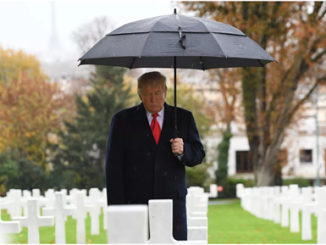
    When the Trump Card didn’t work in US

    Here is how 2020 — a year that would see Donald Trump not becoming the commander-in-chief for a second term in a row – unfolded:

    January 3: The US carried out a strike near Baghdad’s international airport killing Soleimani, a US-designated terrorist, along with six others on the direction of President Trump.

    January 8: Trump said that he would never allow Iran to have a nuclear weapon. In his address to the nation after Iran’s strike on US military installations in Iraq, Trump said, “As long as I am the President, Iran will never be allowed to have the nuclear weapon.”

    January 9: The US House of Representative on Thursday (local times) adopted a war powers resolution that limits President Donald Trump’s ability to carry out military actions against Iran without the prior approval of Congress.

    January 15: The US House of Representatives voted to send the articles of impeachment against President Donald Trump to the Senate and approved seven Democrats to serve as prosecutors in the trial of a third United States president.

    January 22: Trump complained that his country has not been “treated fairly” by the World Trade Organisation (WTO), stating that the United States is not considered a “developing nation” while China and India are, by the global trade body.

    February 5: Trump was acquitted of all charges by the US Senate in the impeachment trial. First, in a 52-48 vote, the US president was found not guilty of the charge of abuse of power. Then again, he was acquitted of the second impeachment article: obstruction of Congress with 53-47 vote.

    February 28: Trump accused the Democratic Party of politicising COVID-19 and said that the virus is their ‘new hoax’.

    March 1: Trump confirmed the first death from coronavirus in the United States, saying a woman, who has other medical issues besides the virus, passed away overnight in Washington.

    March 17: Six days after the World Health Organization declared COVID-19 a pandemic, Trump called COVID-19 the ‘Chinese Virus’. The president tweeted, “The United States will be powerfully supporting those industries, like Airlines and others, that are particularly affected by the Chinese Virus. We will be stronger than ever before!”

    March 19: Taking a direct aim at China for the spread of coronavirus, Trump said that the lethal virus which has claimed the lives of over 10,000 people globally could have been stopped at Wuhan, the place of its origin.

    March 21: Trump has called for an anti-malaria drug to be used to treat the coronavirus, despite being cautioned by his health expert Dr. Anthony S. Fauci saying that evidence for its effectiveness was so far “anecdotal”.

    April 7: Dubbing the World Health Organisation (WHO) as being “very China-centric,” the US President Donald Trump has accused the global agency of giving “faulty” advice during the early-stage of coronavirus outbreak.

    April 19: Trump, using social media platform to send ‘liberation’ messages over the COVID-19 lockdown, seems to have encouraged thousands of protestors who hit the streets of state capitols across the country last week to express their frustrations with the stay-at-home orders that are meant to stem the coronavirus spread.

    April 23: Citing a US Department of Homeland Security (DHS) report, President Donald Trump on Thursday (local time) said that coronavirus has a less chance of surviving in a warm and humid environment as opposed to cold and dry weather where it stays put.

    June 1: Trump termed the ongoing violent protests on America’s streets as unacceptable and said that any form of anarchy and lawlessness will not be tolerated, according to White House Press Secretary Kayleigh McEnany.

    Demonstrators across the United States have been protesting since May 25, when George Floyd, a 46-years-old African American man, died under the police custody in the city of Minneapolis.

    July 12: In a first since the coronavirus pandemic began, US President Donald Trump, who had for months declined to wear a face mask in public.

    July 30: In the backdrop of announcement of the withdrawal of over 11,000 US soldiers from Germany, President Donald Trump  wondered as to why the US should protect the European country from Russia.

    August 10: Trump asserted that no other country comes close to the United States with regard to COVID-19 testing while stating that India stands second.

    August 11: After Joe Biden picked Kamala Harris to be his vice-presidential running mate, President Donald Trump on Tuesday said he was surprised by the announcement as she was “nasty” and “disrespectful” to Biden during the primary.

    August 27: Trump accepted the Presidential candidate nomination by the Republican Party for the presidential elections in November.

    September 9/10: With few days prior to Bob Woodward’s release of his book ‘Rage’ that includes the handling of trump’s handling of the pandemic, Trump on the record admitted that he liked ‘playing it down’ to COVID-19.

    September 16: Trump presided over the signing ceremony at the White House to establish the foundation of the peace agreements between Israel, Bahrain and the United Arab Emirates.

    September 17: Despite Robert Redfield, the director of the US Centers for Disease Control and Prevention, saying that wearing a mask would be more effective than a vaccine against the coronavirus, President Donald Trump said that the mask is “not more effective” than the vaccine “by any means”.

    September 22: Trump, at the United Nations General Assembly, renewed his attack on China accusing it of spreading Covid-19 in the world. He urged the United Nations to hold Beijing accountable for “unleashing this plague onto the world.”

    October 2: Trump and First Lady Melania Trump tested positive for corona virus.

    October 8: Trump said that he will ensure that Americans soon receive the same experimental medication from Regeneron which he received as a part of the COVID-19 treatment at Walter Reed National Military Medical Center and that too free of cost.

    October 13: Trump tested negative for COVID-19.

    October 16: Terming the COVID-19 outbreak as a ‘horrible situation’, President Trump hit out at China for allowing COVID-19 to spread outside Beijing while preventing the spread in its own country. He also said that the lockdowns imposed by various states across the country to curb the coronavirus cases were “unconstitutional”.

    October 23: Trump during the third and final presidential debate called China and India’s air as filthy. “Look at China, how filthy it is. Look at Russia, look at India — it’s filthy. The air is filthy,” he said.

    November 4: Claiming ‘false’ victory in the 2020 presidential elections, the president thanked the American people for their tremendous support and said the results of polls have been “phenomenal”.

    November 8: Moments after Democratic candidate Joe Biden was projected to be the winner of the US presidential elections, President Donald Trump stated that the election was “far from over”, and promised legal challenges by his re-election campaign.

    November 15: Trump appeared to acknowledge in public for the first time that President-elect Joe Biden had “won” the election but kept up his assertion that the election was “rigged.”

    November 18: The President fired Christopher Krebs, the cyber chief of the Department of Homeland Security, who has publicly rejected Trump’s claims of widespread election fraud.

    November 22: Trump said that the Paris Accord was made to “kill the economy” of the US. Speaking at the G-20 Summit held via video conference, Trump said that his decision to withdraw from the Paris Climate Agreement was “to protect American workers”

    November 26: Trump on Thursday said that he would leave the White House if the Electoral College declares President-elect Joe Biden the winner of the election.

    December 8: The US Supreme Court rejected a bid by the Pennsylvania Republicans to nullify President-elect Joe Biden’s victory in the state.

    December 11: US Supreme Court rejected a bid by Texas’ attorney general to block the ballot of voters in battleground states that favoured President-elect Joe Biden.

    December 15: President-elect Joe Biden has bagged 302 votes, clinching the Electoral College victory. President Donald Trump has secured 232 votes.

    December 22: Thousands of President Donald Trump supporters are planning a virtual “second inauguration” for the outgoing US President, the same day as President-elect Joe Biden’s inauguration.

    Biden is set to take office starting January 20 after the US Congress would certify the votes by the Electoral College on January 6. Trump is, however, yet to concede the election to the former Vice President. (Source: ANI)

  • Major armed conflicts between countries in 2020

    Major armed conflicts between countries in 2020

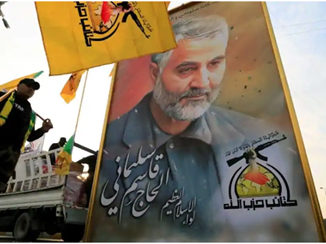
    Iranian commander’s killing & US-Iran tension

    The beginning of the year 2020 saw a dramatic escalation in hostilities between the US and Iran, after a US drone strike killed Iran’s Revolutionary Guards Corps commander Qassem Soleimani.  Soleimani was killed on January 3 in a US drone strike near Baghdad International Airport. Irani media outlets described Soleimani’s killing as an ‘’assassination’’.

    Soleimani had disembarked from a plane at Baghdad airport when he was killed in a US drone airstrike. The killing of Iranian commander resulted in Iran’s military “unintentionally” shooting down the Ukrainian jetliner that crashed killing all 176 aboard. The plane was shot down hours after Iran launched a ballistic missile attack on two military bases housing US troops in Iraq in retaliation for the killing of Soleimani. Iranian President Hassan Rouhani, while regretting the mistake committed by Irani’s military, offered his condolences and promised investigations to identify and prosecute this “great tragedy & unforgivable mistake.”

    India-China border tension, Galwan Valley clashes

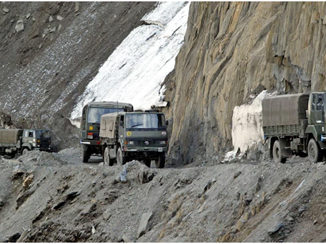
    The ties between India and China reached its lowest level due to border dispute in the Himalayan region. The tension between the two world powers aggravated following skirmishes between the two militaries at the border near Pangong Lake in Galwan Valley in eastern Ladakh in May this year. Later, on the intervening night of June 15-16, around 20 Indian soldiers (including an officer) and an undisclosed number of Chinese soldiers died in overnight clashes.

    The Galwan Valley clashes – fought with sticks and clubs, not guns – was the first fatal confrontation between the two sides since 1975. In August, India accused China of provoking military tensions at the border twice within a week. Both charges were denied by China, which said the stand-off was “entirely” India’s fault. In early September, China accused India of firing shots at its troops. India accused China of firing into the air. The military tension at the border is mirrored by growing political tension, which has strained ties between Prime Minister Narendra Modi and Chinese President Xi Jinping. As a result of the economic fallout of growing tension, India banned more than 200 Chinese mobile applications, including the hugely popular TikTok, citing security concerns.

    Saudi Arabia-Yemen conflict

    The unceremonious ouster of pro-Saudi president Abdrabbuh Mansur Hadi had triggered a bitter war between Saudi Arabia and the Houthi rebels in Yemen in 2015. The brutal civil war going on in Yemen has so far claimed more than 16,000 lives and left millions of people on the brink of starvation. The conflict has been dubbed as a “proxy war” among major powers for control in the Middle East as a Saudi-led coalition forces fight rebels backed by Iran.

    In a bid to end the conflict, the United Nations intervened in April 2020 and urged both sides to pursue peace talks amid the COVID-19 pandemic. The Saudi-led coalition called a unilateral ceasefire in April, but it carried out dozens of airstrikes within a week. On July 2, the coalition fighter jets launched scores of airstrikes on several Yemeni provinces. The operation was a response to ballistic missile and drone attacks by the Houthi rebels against Saudi Arabia. Both sides have attacked each other since September. The UN had verified the deaths of at least 7,500 civilians by September 2019, with most caused by Saudi-led coalition airstrikes. However, monitoring groups believe the death toll is far higher.

    Kurdish forces’ battle Against ISIS

    Despite the terror organisation’s defeat in Iraq and Syria, ISIS fighters continue to carry out attacks in border areas. The UN recently said that over 10,000 fighters of the terror outfit are active in both countries and they had stepped up attacks amid the coronavirus pandemic. The US-led coalition’s military assistance to Kurdish forces against the Islamic State (IS) has inadvertently accelerated intra-Kurdish fragmentation.

    The present situation requires the US-led coalition must coordinate its aid better, build upon Iraqi Kurdistan’s past efforts in transforming its peshmergas into a professional military, and encourage Kurdish coordination with Iraq’s central government in the fight against IS.

    Syrian civil war

    The internal fight in Syria began in March 2011 when President Bashar al-Assad faced an unprecedented challenge to his authority after pro-democracy protests erupted throughout the country. The protesters demanded the ouster of the authoritarian Assad regime, which has been in place since Assad’s father, afiz al-Assad, became president in 1971. The Syrian government used violence to suppress demonstrations, making extensive use of police, military, and paramilitary forces. Opposition militias began to form in 2011, and by 2012 the conflict expanded into a full-fledged civil war.

    The Syrian civil war that has decimated the country for over nine years, provoking a regional humanitarian crisis, appears to be drawing inexorably to a conclusion. President Bashar al-Assad, with the backing of Iran and Russia, seems to have emerged militarily victorious from the conflict. However, fighting in the country decreased in 2020 following a ceasefire in northwest Syria and the coronavirus pandemic.

    The israeli-Palestinian conflict

    Despite numerous attempts to resolve the five-decade-old tension between Israel and Palestine, the armed conflict between the two sides continues. According to Human Rights Watch 2020 report, the Israeli government continues to enforce severe and discriminatory restrictions on Palestinians’ human rights, restricting the movement of people and goods in and out of the Gaza Strip. It also facilitates the transfer of Israeli citizens to settlements in occupied West Bank – a practice considered illegal under international humanitarian laws.

    Israel’s twelve-year closure of Gaza, exacerbated by Egyptian restrictions on its border with Gaza, limits access to educational, economic and other opportunities, medical care, clean water and electricity for the nearly 2 million Palestinians who live there. Eighty percent of Gaza’s population depend on humanitarian aid.

    Armenia-Azerbaijan clashes

    In July 2020, armed forces of Armenian and Azerbaijani clashed near Movses in Tavush Province of Armenia, and Agdam in Tovuz District of Azerbaijan at the Armenian-Azerbaijani state border. Both sides accused each other of reigniting the conflict, which erupted at the Ganja gap, which is a strategic route transport corridor for Azerbaijan.

    The major reason for the war between Armenia and Azerbaijan is the Nagorno-Karabakh region. Azerbaijan claims this mountainous region as its own, while Armenia has occupied it. The area has been under Armenia’s occupation since the fighting ended in 1994. In 2016 too, there was a bloody war between the two countries over this area, in which 200 people were killed. Now once again both countries are face to face. Both countries were part of the USSR. Both sides have suffered huge casualties and losses due to the ongoing war.

    Ukraine crisis

    According to Global Conflict Tracker, the crisis in Ukraine began with protests in the capital city of Kiev in November 2013 against Ukrainian President Viktor Yanukovych’s decision to reject a deal for greater economic integration with the European Union. After a violent crackdown by state security forces unintentionally drew an even greater number of protesters and escalated the conflict, President Yanukovych fled the country in February 2014.

    In March 2014, Russian troops took control of Ukraine’s Crimean region, before formally annexing the peninsula after residents of Crimea voted to join the Russian Federation in a disputed local referendum. Russian President Vladimir Putin cited the need to protect the rights of Russian citizens and Russian speakers in Crimea and southeast Ukraine. The crisis heightened ethnic divisions, and two months later pro-Russian separatists in the Donetsk and Luhansk regions of eastern Ukraine held a referendum to declare independence from Ukraine.

     Violence in eastern Ukraine between Russian-backed separatist forces and the Ukrainian military has by conservative estimates killed more than 10,300 people and injured nearly 24,000 since April 2014. Although Moscow has denied its involvement, Ukraine and NATO have reported the build-up of Russian troops and military equipment near Donetsk and Russian cross-border shelling.

    Conflict in Ethiopia’s Tigray

    The ongoing armed conflict in Ethiopia’s Tigray began in November 2020. The tensions between Prime Minister Abiy Ahmed’s government in Addis Ababa and leaders from the country’s northern Tigray region came out in the open after the Tigrayan forces clashed with the national military. In early November, Abiy said that Tigrayans had attacked a national military base. He responded by sending troops to the region, which is governed by the Tigray People’s Liberation Front (TPLF) — a political party that once held major influence across the country.

    In a televised address days later, Abiy announced that the Ethiopian military had bombed Tigray, destroying weaponry near the regional capital of Mekele. Several days later, hundreds of people were reportedly killed in a knife-and-machete attack in the town of Mai-Kadra, according to Amnesty International. The United Nations human rights office has warned that “there is a risk this situation will spiral totally out of control.

  • 10 mind-bending space discoveries and observations from 2020

    10 mind-bending space discoveries and observations from 2020

    A new ‘atlas’’

    The experts at the Commonwealth Scientific and Industrial Research Organisation (CSIRO), Australia’s national science agency, have created a new atlas of the universe.

    Experts at the agency have mapped three million galaxies with more details and in a record time of 300 hours, in comparison to previous mappings which have taken years.

    Water on moon!

    NASA has confirmed the presence of water on the sunlit surface of the Moon. This discovery indicates that water may be distributed across the lunar surface.

    NASA’s Stratospheric Observatory for Infrared Astronomy (SOFIA) has detected water molecules (H2O) in Clavius Crater, one of the largest craters visible from Earth, located in the Moon’s southern hemisphere.

    Do black holes have hair?

    Black holes can grow hair-like structures if they spin fast enough, a team of researchers has discovered.

    In a new study, researchers used numerical simulations which indicated that black holes can spontaneously erupt what has been described as a hair, once they reach a certain spin speed. This hair is otherwise known as a scalar field.

    The Milky Way – mapped!

    British astrologists have made another guide of the Milky Way comprised of almost two billion stars utilising information assembled by the European Space Agency (ESA) Gaia space observatory.

    College of Cambridge specialists drove the production of the infinite chartbook of two billion stars, that they accept could reveal insight into how our system appeared and what may befall it in the inaccessible future.

    The return of the capsule!

    After a long wait of six years, samples of an asteroid from a far off territory in space arrived in Japan recently. Greeted with smiles and claps, the sample was fetched from an asteroid 300 million kilometres away from Earth, and was sought as part of a space probe attempting to understand the source of life.

    In December 2014, Hayabusa2 left for the asteroid called Ryugu. Soon after reaching the destination, it suffered a rough landing but was able to overcome it to collect the samples of asteroid dust in a capsule.

    Lakes on Mars

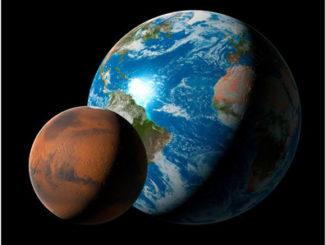
    Looks like we might be getting closer to discovering life on Mars. Two years ago, scientists discovered a large reservoir under Mars icy surface. Now, they have found three such more lakes! A paper in Nature Astronomy claimed that researchers have found three lakes burrowed under the red planet’s surface, in addition to the saltwater lake discovered earlier. Radar data from the European Space Agency (ESA) was used to discover the water bodies.

    Earth’s closest black hole no more

    Black holes are perhaps the most famous celestial bodies in popular culture. There are theories like black holes being portals of time travel, a passage to another universe etc. It’s not surprising that the mysterious black holes hold great importance inpopular perception. Everyone knows that there is a supermassive black hole at the centre of our galaxy. But that’s too far away. There ‘was’ a black hole closer to home, about 1120 light-years away. Now, a study has said that there may not be a black hole here at all.

    The star that went kaput

    A giant star which was under the observation of astronomers for over ten years has suddenly vanished. The star in question was located in a dwarf galaxy 75 million light-years away, and was one of the largest stars in the known universe. The star, which was 2.5 times brighter than the Sun, left no trace behind.

    Aliens have been watching us

    A new study has identified more than 1,000 nearby stars that are favourably positioned for spotting life on Earth. The team has identified 1,004 stars with Earth in their line of sight, which could contain habitable, Earth-like planets. These stars are all within 326 light-years of Earth.

    Moon’s long lost sibling

    Scientists have reason to believe that the Earth’s Moon has a sibling. Its official name is (101429) 1998 VF31, and it could be our Moon’s sibling. The celestial body is probably 4.5 billion years old, with a lunar appearance, and is twinned with the moon. Until now, scientists didn’t know our natural satellite even had a sibling. Turns out, it was too small to be noticed by astronomers. Considering how old it is, we are rather discovering it late.

  • Scams and frauds bleed India in 2020

    Scams and frauds bleed India in 2020

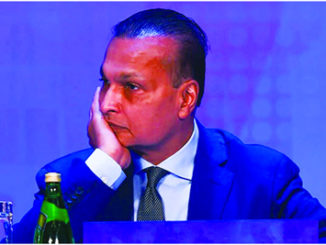
    India’s infamous fallen billionaire, Anil Ambani, may have claimed that his ‘net worth is zero’ but Indian banks aren’t buying it.In the midst of Reliance Communications’ bankruptcy resolution process, three Indian banks — the State Bank of India (SBI), Union Bank of India (UBI) and the Indian Overseas Bank (IOB) — are classifying the company’s accounts and the accounts of its units as fraudulent.

    Sources told the Economic Times that the three banks, which includes India’s largest lender, are looking to launch a deeper probe into the transactions from the account of three Anil Ambani-led Reliance Group entities — Reliance Communications, Reliance Infratel and Reliance Telecom.

    However, the Delhi High Court has directed Union Bank of India and Indian Overseas Bank to maintain the status quo in a matter pertaining to the classification of accounts as fraudulent until the next hearing on January 13.

    SBI and the Reliance Anil Dhirubhai Ambani Group declined to comment on the issue. The accusation of fraud puts Reliance Communications’ resolution plan at risk. According to the company’s official website, it owes Rs 49,193 crore in dues. In addition to that, Reliance Telecom owes Rs24,306.27 crore and Reliance Infratel owes Rs 12,687.65 crore.

    Cumulatively, this adds up to Rs 86,188 crore — while still excluding the Rs 28,837 that’s owed in spectrum dues.

    This is ten times more than what another fallen billionaire, Vijay Mallya, owed Indian banks, with debt amounting to Rs 9,000 crore. Compared to Nirav Modi, who owes at Rs 7,409.07 crore, Reliance Communications’ debt is even more than a ten-fold hike.

    Bankruptcy resolution hangs in the balance

    These allegations come nearly a year after a forensic audit unearthed questionable transactions worth Rs 5,500 crore in the three Anil Ambani-led Reliance Group entities.

    At the time, the probe found three suspicious large entries buried between hundreds of thousands of other transactions between May 2017 and March 2018, which indicated fund diversion.

    However, the reclassification of Reliance Communication and affiliated companies’ accounts comes at a time when the bankruptcy resolution was finally moving along. The National Company Law Tribunal (NCLT) gave its approval to the resolution plan on December 5 after at least 11 months of negotiations.

    This opens up the path for Anil Ambani’s brother, Mukesh Ambani, to pick the company’s tower and fibre assets for his own telecom enterprise, Reliance Jio. The total consideration is pegged at around Rs 20,000 to Rs 23,000 crore to be paid over the next seven years. Meanwhile, Reliance Communications and Reliance Telecom Infrastructure will go to the UV Asset Reconstruction Company.

    Other scams that rocked India

    TRP scam

    Television Rating Points (TRPs) are the basis on which television channels rake in the moolah. Advertisers put their campaigns on a channel with high TRPs, programmes are shut or extended while weighing in these ratings.

    The Broadcast  Audience Research Council (BARC) has installed “Bar-O-meters” in over 45,000 empanelled households. While watching a show, members of the household register their presence by pressing their viewer ID button — every person in household has a separate ID — thus capturing the duration for which the channel was watched and by whom, and providing data on viewership habits across age and socio-economic groups.

    In October, the Mumbai Police said they unearthed a “major racket” of gaming TRPs, by at least three channels, including Republic TV, and arrested four people, contending that the manipulated audience numbers were crucial because they directly translated into advertising revenue. The police filed a 1,400 page chargesheet in the fake TRP case. The crime branch has so far arrested 14 accused, including distribution head of Republic TV Ghanshayam Singh, in the case.

    Kerala gold smuggling case

    On July 5, 2020, 30 kg of gold worth around Rs 15 crore was seized by the customs department at Thiruvananthapuram airport in Kerala. The gold was found in a diplomatic luggage meant for delivery to the United Arab Emirates (UAE) consulate at Kerala’s capital.

    A former PRO of the consulate, Sarith Kumar, had come to claim the bag. When the consulate was asked, they said they had not authorized Kumar to make any claims on their behalf. Kumar was arrested and he pointed fingers at Swapna Prabha aka Swapna Mohammed, a former consulate employee who was fired in 2019.

    The can of worms opened, Swapna was recommended for the job by M Sivasankar, the principal secretary for the Chief Minister Pinarayi Vijayan. Sivasankar was suspended. The BJP and the Congress trained its guns towards Vijayan and demanded his resignation and questioning by the Enforcement Directorate. The CM dismissed the charge saying, “The Opposition is trying to foist the doings of officials on the government.”Uttar Pradesh Chief Minister Yogi Adityanath

    J&K’S ROSHNI LAND SCAM

    Before the year ended, a major scam broke out in Jammu and Kashmir. It related to a decision by the Jammu and Kashmir government in 2001 to regularise the unauthorised occupation of the government land. The ownership of the land was to be transferred for payment of a fee.

    The money collected from this scheme was to be used for the power project in Jammu and Kashmir. Hence, the enabling law was called the Roshni Act. The government set a target of Rs 25,000 crore to earn from the fees against title ownership to the beneficiaries.

    In 2014, the CAG found that the Roshni Act proved to be a tool for land grab by several powerful people in Jammu and Kashmir. In November this year, the CBI registered a case in the Roshni land scam.

  • India’s stock market in 2020

    India’s stock market in 2020

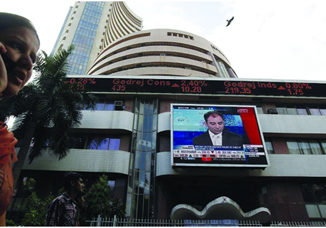
    2020 was indeed one of the most unpredictable years in the history of mankind. Coronavirus pandemic, floods, cyclones and several other man-made or natural disaster kept coming one after the other in 2020, making lives difficult for humanity. The year impacted nearly everything, including the stock market. From historic lows to eye-popping gains, the Indian stock market witnessed gut-churning fluctuations in 2020 as Sensex and Nifty kept fluctuating throughout the year.

    The year had started on a bad note for the market due to the coronavirus pandemic, tensions between the US and Iran and falling crude oil prices. In March, it plunged to a historic low after the Centre imposed a nationwide lockdown. However, the Sensex and Nifty made a remarkable recovery immediately and soar to all-time highs by the end of the year.

    However, the Reserve Bank of India’s (RBI) emergency liquidity support helped Sensex recover. April saw a quick recovery of the market as Sensex zoomed 2,476.26 points as investors wagered on more stimulus measures from the government to battle the economic fallout of the pandemic.

    By November, the Sensex erased its 2020 losses due to various measures announced by the government and the RBI. From November 9 to December 18, the Sensex hit fresh record highs in 22 out of the 29 sessions.

    For the calendar year (till December 24), the Sensex has gained 13.86 per cent, while the Nifty has delivered returns of 12.99 per cent.

    Compared to the March lows, both the indices are up by a hefty 80 per cent.

    Benchmarks had another engine propelling them higher this year Reliance Industries (RIL), which became the first Indian company to reach a market capitalisation of Rs 15 lakh crore (USD 200 billion) in September.

    Beginning April, the Mukesh Ambani-led conglomerate announced a slew of deals to sell minority stakes in its telecom and retail arms to marquee investors like Facebook, Google, Silver Lake, KKR, Mubadala, and Public Investment Fund of Saudi Arabia.

    The company has raised around USD 25 billion so far this year as it seeks to ramp up its consumer-facing businesses. For a good part of the year, RIL almost single-handedly drove the domestic benchmarks higher in the absence of any buying triggers.

    The COVID-19 crisis also forced investors to take a relook at their sectoral allocations.

    “From the lows, markets started stabilising and pandemic sectors like FMCG, IT, pharma and chemicals benefitted. As the economy further opened up, growth and cyclical sectors reversed positively,” said Vinod Nair, Head of Research at Geojit Financial Services.

    However, while stocks seem to have found their animal spirits back, there are also some murmurs of discontent.

    Analysts say world stock markets have developed a dangerous addiction to endless money printing by central banks, and show withdrawal symptoms of a junkie at the slightest indication of a moderation in monetary stimulus.

    Back home too, around half of the government’s Rs 20.97 lakh crore economic stimulus package comprised RBI’s liquidity measures.

    This glut of global liquidity has pushed markets so far ahead of economic fundamentals that some are beginning to question whether the real economy matters in equity investing at all.

    For example, no one would be able to tell looking at the Sensex chart that the Indian economy shrank 23.9 per cent in the first three months of FY21, and 7.5 per cent the next quarter.

    Globally too, markets have been on a manic upswing even as millions have lost their jobs, small businesses are battling for survival and entire industries have been decimated.

    While the real economy has been ravaged by the pandemic, most financial market indicators are ruling at stratospheric levels.

    The BSE Sensex is currently trading at a price-to-earnings (PE) ratio of 32.89, the highest on record.

    To put it differently, investors are paying Rs 32.89 for every rupee of future earnings of the 30 Sensex firms, compared to the previous 20-year average of around Rs 19.

    Global market capitalisation — the value of all the listed stocks in the world topped USD 100 trillion for the first time ever in December.

    And in a classic sign of market mania, there’s a rush of first-time investors eager to make a quick buck.

    A record 68 lakh new dematerialised (or Demat) accounts were opened in India between April and October 2020, compared to nearly 49 lakh in the entire FY20, which was the highest in a decade.

    Experts attribute this trend to factors like increased time at home due to the lockdown, efforts to make up for lost jobs or incomes, and also FOMO, or the fear of missing out on this rally.

    This is also reflected in the growing popularity of discount broking apps like Zerodha and Upstox, which have dislodged traditional broking houses in terms of active clients.

    Like the Robinhood app in the US, such platforms have attracted the tech-savvy crowd with their slick interface and mobile-first approach which has ‘gamified’ the once-stodgy field of stock market investing.

    With Fed and FOMO playing in tandem, many questioned technicalities like PE and PB ratios. But, some analysts also maintain that 2020 was an outlier in terms of corporate earnings and hence valuation metrics like PE ratios this year are not strictly comparable to historical averages.

    However, even they agree that every segment of the economy would have to stage a synchronous and sensational comeback to catch up with the market projections.

    And if that comes to pass, 2021 would be an even more incredible year for the bourses.

  • Challenges for India’s external engagements in 2021

    Challenges for India’s external engagements in 2021

    The dynamics of India’s economic and strategic engagements with the outside world have changed significantly in the last few years, particularly in 2020. This has resulted from the health and economic implications of COVID-19 pandemic as well as the military standoff between India and China. The combination of economic stress and strategic choices as a result of the India-China tensions will be felt on Indian economic and foreign policies in 2021.  This in turn, will shape India’s integration with the evolving Asian economic architecture and sharpen its strategic engagements within the broader Indo-Pacific region. Although the Indian economy has been performing well in recent years, some slowdown was clearly evident even before COVID-19 badly hit the country. If the sudden economic decline in 2020 is not followed by quick recovery in 2021, it will have serious strategic consequences. India was always a big country and the largest democracy. The world started looking at India as an opportunity only when it showed close to 7 per cent average growth year after year. This has been the period when India signed about 35 strategic partnerships and more than a dozen trade agreements. The growth and outward orientation helped New Delhi forge closer ties with all major players such as the US, the European Union, Russia, Japan as well as key countries within the ASEAN, GCC, Africa and Latin America.

    The growing tensions and trade war between the US and China in 2020 coincided with New Delhi’s own difficulties in managing its ties with Beijing. The Indo-US relationship has been one of the main beneficiaries of this situation. Despite Brexit uncertainties and little movement on bilateral FTAs, ties with the EU strengthened with the adoption of a new roadmap to 2025. Russia also remained a valuable partner.

    Due to difficult India-Pakistan relations, ties with Afghanistan and Iran have always been crucial. Chabahar port and related investments could have helped India in improving its role in the wider region. The US obsession with Iran and sanctions, however, made things complicated. Pragmatically, New Delhi forged closer ties with other key countries in the region such as Saudi Arabia, UAE and Israel.

    To connect with a resurgent Africa, evolving Indian strategy followed commitments made at the India-Africa Forum Summits and the ten guiding principles of Modi’s Africa policy. The Indian footprint in Africa has increased through trade, investment and development activities; in addition to new diplomatic missions.

    In external economic engagements, the Modi government has been cautious about trade deals. It has not signed any major FTA in the last few years. Asian partners were disappointed when India walked out of the RCEP. The centrality of India in the Indo-Pacific narrative without being part of the RCEP raises concerns about India’s economic vulnerabilities. With increasing Chinese assertiveness, major economic players including the US, Japan and the EU are looking for diversifying global value chains. But mixed messages of Aatmanirbhar Bharat have further raised some concerns about India’s commitment towards liberalisation.

    In the midst of the economic decline and cautious approach towards liberalisation, India has started positioning itself as a crucial geopolitical player in the context of a rising China. This was welcomed by the Trump administration and increasingly ‘geopolitical’ European Union. The circumstances may become more complicated in 2021 under a Biden administration.

    There are already signs that anti-China sentiment is losing some momentum in the Indo-Pacific narrative. More and more players will talk about a more inclusive Indo-Pacific rather than a subtle coalition against rising China.

    Once the US re-joins the Paris climate accord on the first day of the Biden presidency, Washington would focus on claiming leadership in climate action. Since climate is a big concern in Europe, this will further strengthen the transatlantic alliance. As climate change issue will be gathering pace in 2021, India can raise its ambition and may set a course for a carbon neutrality timeline. Most major economies have pledged carbon neutrality by 2050. Even China has pledged it by 2060. India has done well in climate change performance index. But a large part of increased renewables are additional capacities rather than replacements.  A slowdown in economic growth could be additional factor for better performance.

    Traditionally, South Asia was considered to be an Indian area of influence. China has tried to balance it through close strategic ties with Pakistan. Reconciliation talks with Taliban and the US exit from Afghanistan will further strengthen this nexus. With expanding Chinese profile including the BRI projects in South Asia, more attention is needed on the neighbours in 2021.

    Geopolitically, India’s relevance in the Indo-Pacific area has been established in 2020. New Delhi needs to focus on bold external economic engagements and a climate neutrality timeline in 2021. With defensive Indian approach on these matters, China may regain some of its lost prestige.        (Source: Moneycontrol)

  • Major natural disasters of 2020

    Major natural disasters of 2020

    Cyclone Amphan

    Cyclone Amphan, considered to be the second major cyclone in the Bay of Bengal after the super cyclone of 1999, devastated West Bengal in May 2020. The death toll in West Bengal due to the cyclone stands at 86. The cyclone also left a trail of massive destruction of property in the state before moving to Bangladesh. The cyclone left many homeless, snapped electricity, internet connection and other communication tools in large parts of the state. Large-scale damage to infrastructure, public and private property was reported from North and South 24 Parganas, East and West Midnapore, Kolkata, Howrah and Hooghly districts. Nearly 45 lakh people in Odisha are affected by the extremely severe cyclonic storm.

    Turkey earthquake

    An earthquake hit the Aegean Sea near the Turkish city of Izmir in which 116 people were killed and 1,035 injured.  The deaths were recorded in Izmir, Turkey’s third-largest city as well as on the Greek island of Samos, which lies to the south of the epicentre of the earthquake. The US Geological Survey registered the quake’s magnitude at 7.0, though other agencies recorded it as less severe. The tremors were felt across western Turkey, including in Istanbul, as well as in the Greek capital of Athens. Some 1,700 aftershocks followed, according to AFAD, 45 of which were greater than 4.0 magnitude. In Izmir, the quake reduced buildings to rubble or saw floors pancake in on themselves.

    California Wildfires

    Wildfires in California have burned more than 4 million acres (1.6 million hectares) in 2020, over twice the previous record for any year and an area larger than Connecticut, reported the state`s fire agency. The most populous US state has suffered five of its six largest wildfires in history this year as heat waves and dry-lightning sieges coincided with drier conditions that climate scientists blame on global warming. At least 31 people have died in this year`s fires and over 8,454 homes and other structures have been destroyed, Cal Fire said in a statement.

    Assam floods

    The Assam floods in July affected 1,981,801 people and killed 105. A total of 42,275 affected people were evacuated and shifted to 236 relief camps across the state, according to the Assam State Disaster Management Authority (ASDMA). In the Kaziranga National Park, over 137 animals including 14 one-horned rhinos have died during floods this season while 163 of them were rescued. There were damages to the infrastructure including embankment damage, roads, and bridges. In September, fresh floods in four Assam districts affected 34,000 people besides killing one person.

    Australia fires

    In January 2020 Australia experienced widespread and severe fires causing extensive damage to the local ecosystem and communities and blanketing the surrounding regions in smoke. The last season was dubbed “Black Summer” by Prime Minister Scott Morrison due to unusually prolonged and intense bushfires that burned nearly 12 million hectares (30 million acres), killed 33 people and an estimated 1 billion animals. The fire, on January 9, was the second major blaze to ravage Kangaroo Island in South Australia in less than a week. On January, 4th 2020, astronauts flying 17,500 miles per hour onboard the International Space Station (ISS), captured several photographs of smoke plumes from fires in New South Wales and Victoria, spreading off the east coast of Australia into the Tasman Sea.

    Typhoon Vamco

    The death toll from the deadliest cyclone to hit the Philippines in November 2020 stood at 67 and many areas were submerged in the northern region hit by the worst flooding in more than four decades. Cagayan Valley region was heavily flooded after Typhoon Vamco dumped rain over swathes of the main Luzon island, including the capital, metropolitan Manila.

    Locusts

    India in June-July witnessed the invasion of desert locusts that spread to nine heartland states of the world’s second-biggest producer of rice and wheat. India battled its worst desert locust outbreak for decades and crop losses were reported in Rajasthan. A helicopter and a dozen drones were deployed for spraying insecticide to stop the locusts. The government had also placed an order for five new helicopter-mounted spray systems from Britain to install in Indian Air Force helicopters, Agriculture & Farmers’ Welfare Minister Narendra Singh Tomar had said.

    Amazon rainforest fires

    Fires in Brazil’s Amazon rainforest worsened in the first week of September and increasingly spread into areas of the untouched forest after the number of fires likely reached a 10-year high in August. Brazil reported 8,373 fires in its portion of the Amazon rainforest for the first seven days of September, more than double the number of fires in the same period a year ago, according to data from Brazil’s national space research agency Inpe. A pressing concern is that 27% of the major fires till September 9 were in virgin forest, rather than in the deforested areas or farmland where blazes are more contained. The fires in the Amazon increased by 13% in the first nine months of the year compared with a year ago. In September, satellites recorded 32,017 hotspots in the world’s largest rainforest.

    Mexico earthquake

    On June 23, 2020, a magnitude 7.4 earthquake occurred near Oaxaca, Mexico, damaging buildings and prompting evacuations in the region. The earthquake also triggered a tsunami warning, with waves of 0.68 meters (2.2 ft) observed in Acapulco and 0.71 meters (2.3 ft) in Salina Cruz. The death toll stands at 10 people. The area surrounding the popular Huatulco beach resort in the southern state of Oaxaca was hardest hit by the 7.4 magnitude quake, but the shaking could be felt as far away as Mexico City, where tall buildings swayed and thousands of people raced into the streets. Roughly 30 buildings in the capital were damaged, and in a northern neighbourhood that was hard hit by a 2017 earthquake, some residents had to evacuate their homes.

    Japan floods

    Torrential rain hit Japan’s southwestern island of Kyushu, with at least one more river bursting its banks, as the death toll from three days of floods and mudslides rose to 44, including 14 at an old people’s home. Evacuation orders were issued for more than half a million island residents, as well as evacuation advisories for tens of thousands more in western Japan, broadcaster NHK said.   (Source: Zee News)

  • India’s major foreign policy overdrive in 2020

    India’s major foreign policy overdrive in 2020

    India embarked on a major foreign policy overdrive in 2020, bringing its vision for a rules-based Indo-Pacific as a cornerstone of its diplomacy and displaying a steely resolve to fashion a regional environment conducive to its strategic interests in the face of China’s transgression attempts in eastern Ladakh that caused the most serious damage to the bilateral relations in over four decades.

    As the bitter border standoff with China forced it to recalibrate its external engagements, India mounted a diplomatic push, focusing on boosting ties with major global players like the US, Japan, the UK and France with a larger goal to increase its geo-political heft and position itself as a credible force wedded to peace, stability and international law in contrast to Beijing’s expansionist behaviour.

    The ties between the two Asian powers nosedived significantly following a fierce clash in the Galwan Valley that left 20 Indian soldiers dead in mid-June. The Chinese side also suffered casualties but it is yet to give out the details. According to an American intelligence report, the number of casualties on the Chinese side was 35. External Affairs Minister S Jaishankar bluntly told his Chinese counterpart that the “unprecedented development will have a serious impact on the bilateral relationship”.

    Drawing a firm and clear line on its China policy, India held the neighbouring country accountable for triggering the Ladakh standoff by violating rules of engagement on border management and conveyed that peace and tranquillity along the Line of Actual Control (LAC) are the basis for progress of the rest of the relationship and they cannot be separated.

    In the midst of the standoff that erupted in early May, Jaishankar and Chinese Foreign Minister Wang Yi agreed on a five-point pact to resolve the row at a meeting in Moscow on September 10. However, a concrete breakthrough is yet to be found to end the faceoff at the friction points.

    “India’s rise will evoke its own reactions and responses. There will be attempts to dilute our influence and limit our interests. Some of this contestation can be directly in the security domain; others could be reflected in economics, connectivity and even in societal contacts,” Jaishankar said at a think-tank recently.

    Outlining the broad contours of an assertive foreign policy, Jaishankar held that India’s “relationship with the world” cannot be the same as when its ranking was much lower, adding the country now matters more on key issues and its global view must process that in all its aspects.

    With the region witnessing new geopolitical alignments, India too redoubled efforts to boost strategic cooperation with countries in India’s immediate neighbourhood, Gulf region, Central Asia and member nations of the ASEAN (Association of Southeast Asian Nations) grouping.

    Ties with Pak

    However, India’s relations with Pakistan remained unchanged as Islamabad continued with its support to cross border terrorism to create instability in Jammu and Kashmir while New Delhi maintained a policy of hot pursuit to deal with the menace. India also continued its diplomatic offensive against Pakistan on the issue of terrorism and remained firm on not having any talks with Islamabad until it stops cross border terrorism.

    One of the key takeaways of India’s diplomatic engagement in 2020 was major expansion of strategic partnership with the US including on key regional and global issues like resolve to work jointly for a free and stable Indo-Pacific. The two countries elevated their ties to a “comprehensive global strategic partnership” during a two-day visit to India in February by President Donald Trump, accompanied by First Lady Melania, daughter Ivanka and son-in-law Jared Kushner and a host of top officials of his administration.

    “This relationship is the most important partnership of the 21st century,” Prime Minister Narendra Modi said in his media statement after talks with Trump on February 25, reflecting growing congruence in ties between the two leading democracies. In October, India and the US sealed the long-pending BECA (Basic Exchange and Cooperation Agreement) agreement to further boost bilateral defence ties. The pact provides for sharing of high-end military technology, logistics and geospatial maps between the two countries. India expects the relations to grow further under Joe Biden’s presidency as he is known to be a strong proponent of closer India-US ties since his days as a senator in the 1970s.

    In many ways, New Delhi’s efforts to further improve relations with Russia, Australia, Germany, South Korea, Vietnam, Indonesia and the African continent resulted in rich dividends.

    In the neighbourhood, India’s relations with Nepal came under some strain after Defence Minister Rajnath Singh inaugurated an 80-km-long strategically crucial road connecting the Lipulekh pass with Dharchula in Uttarakhand in May. Nepal claimed the road passed through its territory.

    The relations appeared to be back on track to a significant extent following visits to Kathmandu by Foreign Secretary Harsh Vardhan Shringla and Army Chief Gen MM Naravane in November.

    In the last eight months of 2020, India played a key role in calibrating a comprehensive approach in dealing with the coronavirus pandemic globally. It also supplied medical assistance to over 150 countries to help them deal with the pandemic that infected over 79 million people and killed 1.7 million.

    In May India launched a mega evacuation mission under which commercial jets, military transport aircraft and naval warships were deployed to bring back hundreds of thousands of Indians stranded across the world in view of the coronavirus lockdown. Nearly, 39 lakh Indians have been brought back home under the mission, billed as the biggest repatriation exercise in India’s history.

    As Chinese actions in key maritime channels fueled greater concerns, foreign ministers of India, the US, Australia and Japan held extensive in-person talks under the framework of the Quadrilateral coalition or Quad in Tokyo on October 6, signalling serious resolve to work vigorously towards a collective vision for a free, open and inclusive Indo-Pacific.

    In the overall policy framework, concerns relating to Indo-Pacific and the way forward found greater salience in India’s diplomatic engagements with majority of the countries as well as leading blocs.

    India also focused on improving regional connectivity with countries in its neighbourhood as well as well with several central Asian nations as China’s opaqueness in rolling out projects under its ambitious Belt and Road Initiative (BRI) continues to draw suspicion.

    In another important development, India scored a major diplomatic victory in June to become a non-permanent member of the UN Security Council for the 2021-22 term. India won 184 votes out of 192 valid votes in the elections held for the vacant non-permanent seats.

    With the pandemic bringing to fore the prospect of a new global power-play, India also focused policy initiatives to deal with the complexity and pace of change. In 2020, India also carefully focused on consequences of Brexit, the Abraham Accords, fast evolving scenario in the Gulf region and overall relations with the African continent.

    The Abraham Accords are agreements that Israel signed with the United Arab Emirates and Bahrain marking the normalisation of diplomatic relations between the two Gulf nations and the Jewish state.

  • Politicians lost to India in 2020

    Politicians lost to India in 2020

    With a stretch of so many unfortunate events kicking off, the year 2020 wasn’t really kind to the majority. This year, the country also suffered the loss of some of the great leaders, who were known for their contribution in the political world. Here’s a look at some of the noted politicians we’ve lost in 2020 and whose influence will be felt for many years to come.

    Pranab Mukherjee

    Pranab Mukherjee, a senior Congress leader, served as the 13th President of India from 2012-2017. During the COVID-19 pandemic, on August 10, 2020, Pranab Mukherjee announced on Twitter that he had tested positive for COVID-19 prior to a surgery to remove a blood clot in his brain. He was admitted to the hospital after accidentally slipping and falling in his bathroom. He was on ventilator support and in critical condition at the Army’s Research and Referral (R&R) hospital in Delhi.

    Two days later, on August 13, the hospital announced that Mukherjee was in a a deep coma after he underwent brain surgery; however, his vital parameters remained stable. On August, 19, the hospital said in a statement his health condition had declined as he had developed a lung infection. Mukherjee died on 31 August 2020, aged 84, which was confirmed by his son Abhijit Mukherjee via Twitter. His death came after the attending hospital confirmed that his health had deteriorated early that day, stating that he had been in septic shock since a day earlier, which was caused by his lung infection.

    Ram Vilas Paswan

    The famous politician from Bihar and a Cabinet minister in Prime Minister Narendra Modi government, Ram Vilas Paswan passed away on October 8, 2020 at the age of 74. His demise was confirmed by his son Chirag Paswan. Paswan had undergone heart surgery and was hospitalized for a few weeks prior to his death. He was cremated in Patna on October 10, 2020. His body was brought to Janardan Ghat in the Digha locality from his residence in Shri Krishna Puri, about 3 km away, for the last rites.

    Ahmed Patel

    Ahmed Patel was a Congress leader, MP and political secretary to Congress President Sonia Gandhi. He passed away on November 25, 2020 at the age of 71. He died due to multiple organ failure stemming from COVID-19. He had been admitted to the Medanta Hospital and was in the ICU upon being diagnosed with COVID-19. His son Faisal confirmed about his said through a tweet

    During the UPA government regime between 2004 and 2014, Patel was one of the chief troubleshooters, coordinators and translators between the government and party.

    In 2005, he had got Bharuch included as one of the first five districts to be covered under the then-launched Rajiv Gandhi Grameen Vidyutikaran Yojana, to boost electrification in the district. The Sardar Patel bridge to de-congest traffic between the twin cities of Bharuch and Ankleshwar has also been one of his contributions to the region.

    Tarun Gogoi

    Former Assam Chief Minister and Congress leader Tarun Gogoi, who had been battling for his life with COVID-19 complications, breathed his last on November 23, 2020. Gogoi was hospitalized on August 26, 2020, with COVID-19 symptoms and had been given a blood plasma transplant. He had recovered from COVID-19 and was discharged from the hospital after two months.

    He had had multiple heart surgeries during the latter part of his second term as chief minister, including Bypass surgery, Aortic valve replacement, and a procedure to artificially enlarge the aorta at Mumbai’s Asian Heart Institute. He had additional surgery just before the election for his third term in 2011, to replace his Artificial cardiac pacemaker.

    He went on to lead his party to a third term victory, recovering from these health issues.

    Amar Singh

    Former Samajwadi Party leader and Rajya Sabha MP Amar Singh died on August 1, 2020 due to kidney failure at the age of 64 in Singapore. Born in 1956 in Azamgarh, Singh was one of tho politicians who was known for having close links with noted Bollywood personalities. His prominence in Delhi surged when the UPA government was reduced to a minority after the Communist Party of India withdrew its support over the proposed Nuclear Accord with the United States. His Samajwadi Party pledged support to the UPA government with the support of its 39 members.

    However, in 2010, he, along with close associate Jaya Prada, was expelled from the Samajwadi Party for anti-party activities. He floated his own party Rashtriya Lok Manch in 2011 and fielded candidates in 360 of the 403 seats in Uttar Pradesh in the 2012 assembly polls. However his party did not win a single seat in these elections. He joined the Rashtriya Lok Dal party in March 2014, contested the general elections that year from Fatehpur Sikri, Uttar Pradesh in 2014 Indian general election and lost.

    In 2016, he was elected to Rajya Sabha with support from Samajwadi Party even after facing a stiff opposition from a section of the party including the then Chief Minister of Uttar Pradesh Akhilesh Yadav. He was also reinstated as one of the general secretaries of the party in October 2016.

    Lalji Tandon

    Madhya Pradesh Governor Lalji Tandon passed away on July 21, 2020 at Lucknow’s Medanta Hospital following a long illness. He was 85.

    In May 2009, he was elected to the 15th Lok Sabha from Lucknow by a margin of over 40,000 votes over Rita Bahuguna Joshi of Indian National Congress. The seat was earlier held by former BJP President Atal Bihari Vajpayee since 1991 for four consecutive terms. Despite enormous electoral spending, Akhilesh Das of the Bahujan Samaj Party (BSP) polled third, trailing by 70,000 votes.

    As a Governor of Bihar, he was praised for streamlining academic activities of the state universities. He was appointed as as the 22nd Governor of Madhya Pradesh in July 201, replacing Anandiben Patel.

    He was considered close to former prime minister Atal Bihari Vajpayee. Prime Minister Modi said Tandon would be remembered for his untiring efforts to serve society, whereas Defence Minister Rajnath Singh described him as one of the tallest leaders of Uttar Pradesh.

    Apart from these leaders, Veteran Congress leader Ramkrishna Dwivedi, former parliamentarian Gopinath Gajapati Narayan Deo, former Karnataka Governor TN Chaturvedi, Ajit Jogi, Bhanwar Lal Sharma, Shivajirao Patil Nilangekar, are among the names whose demise left a void in the political circuit.

    Motilal Vora

    Veteran Congress leader passed away on December 21, a day after celebrating his 93rd birthday. The former Madhya Pradesh Chief Minister breathed his last at the Fortis hospital, where he had been admitted since December 19 with complaints of dyspnea or shortness of breath with altered sensorium and hypotension (low blood pressure). Vora had tested Covid-19 positive in October but recovered and was discharged from hospital on October 16.

    Jaswant Singh

    Bharatiya Janata Party (BJP) stalwart and former Union Minister Jaswant Singh passed away in Delhi on September 27 this year following a cardiac arrest at the age of 82 years. One of the founder members of BJP, Singh held Defence, External Affairs and Finance portfolios in Atal Bihari Vajpayee’s government.

  • Key verdicts of  Supreme Court of India

    Key verdicts of  Supreme Court of India

    The year 2020 was a roller-coaster for the world in many ways. From the raging coronavirus pandemic to India-China border standoff along the Line of Actual Control (LAC) in eastern Ladakh to death of former President Pranab Mukherjee, several key things happened throughout 2020 that impacted the world in many ways. The year 2020 was also an important one from the perspective of the Indian judiciary as the Supreme Court of the country gave several key verdicts, changing the way the nation used to work. So as the year comes to an end, here’s a look at some of the landmark verdicts that were delivered by the Supreme Court in 2020:

    ‘Freedom of speech constitutionally protected’

    In a landmark verdict, the Supreme Court in January this year ruled out that expressing views via the internet is an integral part of the fundamental right to speech and expression under Article 19 of the Constitution.

    While hearing a plea on internet shutdown in Jammu and Kashmir, the apex court internet stands as the most utilized and accessible medium for the exchange of information in the world and the right of trade and commerce through it is also constitutionally protected.

    “We declare that the freedom of speech and expression and the freedom to practice any profession or carry on any trade, business or occupation over the medium of internet enjoys constitutional protection under Article 19(1)(a) (freedom of speech and expression) and Article 19(1)(g) (right to practise any profession, or to carry on any occupation, trade or business),” the court said.

    ‘Land acquisition won’t lapse if compensation is deposited’

    In another major development, the apex court this year said that disputes over land acquisition and payment of fair compensation to owners cannot be re-opened under the 2013 Act if the legal processes have been completed before January 1, 2014.

    The court said that Section 24(2) of the Act of 2013 does not give rise to a new cause of action to question the legality of concluded proceedings of land acquisition and it applies to a proceeding pending on the date of enforcement of the Act of 2013.

    “It does not revive stale and time-barred claims and does not reopen concluded proceedings nor allow landowners to question the legality of mode of taking possession to reopen proceedings or mode of deposit of compensation in the treasury instead of court to invalidate acquisition,” it noted.

    ‘Quota policy not meant to deny merit’

    In 2020, the Supreme Court also said that “quota policy is not meant to deny merit”. A bench headed by Justice UU Lalit ruled against the idea of “a communal reservation” and said that general category in employment is open to all including reserved category candidates.

    “But the converse can never be true and will be opposed to the very basic principles which have all the while been accepted by this Court. Any view or process of interpretation which will lead to incongruity as highlighted earlier, must be rejected,” the three-judge bench of the apex court said this year.

    Women officers in Army to be granted permanent commission

    The Supreme Court this year also directed the central government to grant permanent commission to women officers in the Indian Army, saying “there will not be any absolute bar on giving them command postings”.

    Rejecting government’s argument of “physiological limitations”, the top court said that women have the equal right to get permanent commission and command postings in the Armed Forces and there is a need to change the “mindset” to end gender bias in security forces.

    RTI requests for pleadings

    In March this year, a three-judge bench of the Supreme Court, which was headed by Justice Banumathi, said that people cannot file right to information (RTI) requests to obtain pleadings. Restricting the application of the RTI Act, 2005, the apex court said that people “must resort to using the procedure established by the Gujarat High Court rules”.

  • India in throes of protests, riots in 2020

    India in throes of protests, riots in 2020

    The Covid-19 pandemic severely restricted public activities throughout the year in India as elsewhere in the world. India has been the second-worst affected country by the Covid-19 pandemic and it implemented the strictest lockdown reducing public activities further. Still, India saw big protests, two major communal riots, and a few scams and scandals in 2020.

    PROTEST OVER CITIZENSHIP AMENDMENT ACT

    The Citizenship Amendment Act came into being in December 2019. Protests against it erupted thereafter with Assam being the focus where protesters linked it with the National Register of Citizens (NRC). The protesters opposed the CAA for allowing citizenship to immigrants, who came in after 1971. By January, the focus of the anti-CAA protests had shifted to Delhi, particularly at Shaheen Bagh. Here, the protesters led the agitation against a provision that made Muslims from Afghanistan, Bangladesh, and Pakistan ineligible to acquire citizenship under the CAA. They were required to go through normal routes of acquiring citizenship of India. The protest made international headlines with the Time magazine featuring an 82-year-old Bilkis Bano – popularly called Dadi – as one of the most influential people. The protest broke off in the view of the spreading Covid-19 pandemic and the consequent lockdown.

    Shaheen Bagh protest

    The Shaheen Bagh protest was a sit-in peaceful protest, led by women, that began in response to the passage of the Citizenship (Amendment) Act (CAA) in both houses of the Parliament of India on 11 December 2019 and the ensuing police intervention against students at Jamia Millia Islamia who were opposing the Amendment.

    Protesters agitated not only against the citizenship issues of the CAA, National Register of Citizens (NRC) and National Population Register (NPR), but also against police brutality, unemployment, poverty and for women’s safety. Mainly consisting of Muslim women, the protesters at Shaheen Bagh, since 14 December 2019, blocked a road in New Delhi using non-violent resistance for 101 days until 24 March 2020. As a precautionary measure Delhi Police barricaded the neighbouring major highways around the area. Following the North East Delhi riots, police barricading and presence in the area increased with over ten companies, 1000 personnel, being assigned to Shaheen Bagh. The protests ended on 24 March 2020 as Delhi Police vacated the site following the COVID-19 pandemic outbreak.

    FARMERS’ PROTEST OVER, NEW FARM LAWS

    At the other end of the Covid-19-impacted year, Delhi became the theatre of yet another public protest – this time by farmers, mainly from Punjab and Haryana but also from Kerala, over the three farm laws brought out first as Ordinance by the government and later enacted by Parliament.

    The three laws are The Farmers’ Produce Trade and Commerce (Promotion and Facilitation) Act, The Farmers (Empowerment and Protection) Agreement of Price Assurance and Farm Services Act, and The Essential Commodities (Amendment) Act.

    Of these, the third is an amendment to existing law. Together, they provide for setting up a mechanism parallel to the MSP system allowing farmers to sell their produce outside the APMC mandis and traders buy directly from them outside these government-controlled markets.

    Farmers’ unions leading the agitation say these laws will ultimately dismantle the MSP system and make the farmers vulnerable to exploitative corporate market forces. The government dismissed their claims but has failed to convince them that the new farm laws are beneficial reforms. As a result, thousands of farmers continue to stay put at Delhi border points for two weeks.

    DELHI SEES RIOTS

    What seemed as intense protests against and in support of the CAA by opposing groups in Delhi, turned into communal violence in Northeast Delhi in February. The clashes between the supporters of the citizenship law and protesters began on February 24. It spiralled out of control, leaving at least 53 people dead and around 200 injured.

    Multiple cases in connection with the Delhi riots are being probed by the Delhi Police, which in its charge sheet said it was a conspiracy by persons who committed a crime against humanity. It named former JNU students union leader Umar Khalid and another JNU student Sharjeel Imam as accused.

    The Opposition and several activists hit out at the Delhi Police and the government saying that the role of Kapil Mishra, a BJP leader in Delhi, was not being probed in connection with Delhi riots. They alleged that the riots happened after Kapil Mishra threatened to take matters into his hands if the anti-CAA protesters did not clear the road blockade in the area.

    BENGALURU RIOTS OF AUGUST

    Riots broke out in Bengaluru on the night of August 11 over a purported inflammatory social media post about Prophet Muhammad by a Congress MLA’s relative. Mobs of hundreds of agitators attacked police stations in DJ Halli and Kadugondanahalli areas of Bengaluru. The residences of Congress MLA R AKhanda Srivinivasa Murthy and his sister were among the targets of the rioters. Large scale arson and violence took place in the city. Four people including three in police firing died during the riots. The riots had triggered fear and panic in the neighbouring areas. The case is now being probed by the National Investigation Agency (NIA) which usually probes the cases related to terrorism. Before the case was handed over to the NIA, local police had arrested more than 300 members including those belonging to the SDPI, the political wing of the Popular Front of India. The NIA has conducted several searches in connection with the Bengaluru riots and arrested more than 100 persons.

  • The Breakup of the Year: EU, UK unveil vast trade pact set to enter force on January 1

    The Breakup of the Year: EU, UK unveil vast trade pact set to enter force on January 1

    In this Dec 25, 2020, photo, a colleague wears a Christmas hat as European Union chief negotiator Michel Barnier, center, carries a binder of the Brexit trade deal during a special meeting of Coreper, at the European Council building in Brussels. The European Union and the United Kingdom made public on Saturday, Dec 26, the vast agreement that is likely to govern future trade and cooperation between them from Jan. 1, setting the 27-nation bloc’s relations with its former member country and neighbor on a new but far more distant footing.

    The European Union and the United Kingdom made public on December 26  the vast agreement that is likely to govern future trade and cooperation between them from Jan. 1, setting the 27-nation bloc’s relations with its former member country and neighbor on a new but far more distant footing.

    EU ambassadors and lawmakers on both sides of the English Channel will now pore over the “EU-UK Trade and Cooperation Agreement,” which contains over 1,240 pages of text. EU envoys are expected to meet on Monday to discuss the document, drawn up over nine intense months of talks.

    Businesses, so long left in the dark about what is in store for them, will also be trying to understand its implications.

    Most importantly, the deal as it stands ensures that Britain can continue to trade in goods with the world’s biggest trading bloc without tariffs or quotas after the U.K. breaks fully free of the EU. It ceased to be an official member on Jan. 31 this year and is days away from the end of an exit transition period.

    But other barriers will be raised, as the U.K. loses the kind of access to a huge market that only membership can guarantee. They range from access to fishing waters to energy markets, and include everyday ties so important to citizens like travel arrangements and education exchanges.

    EU member countries are expected to endorse the agreement over the course of next week. British legislators could vote on it on Wednesday. But even if they do approve it, the text would only enter force provisionally on New Year’s Day as the European Parliament must also have its say.

    EU lawmakers said last weekend that there simply wasn’t enough time to properly scrutinize the text before the deadline, and they will debate and vote on the document in January and February, if the approval process runs smoothly.

    Despite the deal, unanswered questions linger in many areas, including security cooperation — with the U.K. set to lose access to real-time information in some EU law enforcement databases — and access to the EU market for Britain’s huge financial services sector.

    Brexit: What do we

    know about the deal?

    The deal contains new rules for how the UK and EU will live, work and trade together. But we don’t know a lot of the detail yet because the full document – expected to be well over 1,000 pages long – has not been released.

    What we do know is that it means:

    –              No taxes on each other’s goods when they cross borders (known as tariffs)

    –              No limits on the amount of things which can be traded (known as quotas)

    –              European Commission president Ursula Von der Leyen said competition rules – designed to prevent one side gaining an unfair advantage – “will be fair and remain so”.

    She said the UK and EU will “continue co-operating in all areas of mutual interest, including things like climate change, energy, security and transport”.

    We also know the UK will not be taking part in the Erasmus exchange programme for students.

    Why did the deal take so long?

    Because so much was at stake.

    The EU is the UK’s nearest and biggest trading partner, The UK government says the deal covers trade that was worth £668bn in 2019.

    While the UK was in the EU, companies could buy and sell goods across EU borders without paying tariffs. Without the deal, businesses would have had to start paying these taxes, which would have added to their costs.

    No deal would have also meant even more border checks, which could have caused delays for lorries transporting products.

    What happens next?

    Even though the deal has been agreed, it still needs to be made law.

    For that to happen it must be looked at and approved by both the UK and European parliaments.

    As it’s been left so late, the European Parliament won’t have time to sign it off before the end of the year. That shouldn’t stop the deal coming into force on 1 January, but it will take longer before it’s officially rubber-stamped.

    The UK government says it will summon MPs back on 30 December to vote on the deal. However, there wouldn’t be time to debate and look at the details closely.

    What are the EU and Brexit?

    The EU is made up of 27 European countries.

    EU citizens are free to live and work in other EU countries, and firms in those countries can buy and sell each other’s goods without checks or extra taxes at borders.

    The UK was the first country to leave the EU and this was known as Brexit – British exit.

    Brexit happened because a public vote – or referendum – was held in June 2016, to decide whether the UK should be in the EU.

    What Brexit words mean?

    The last few years have seen many words and phrases enter our lives. We haven’t used them here, but politicians do use them. Here’s what some of them mean:

    Transition period: The 11-month period following the UK’s exit from the EU (finishing at the end of 2020), during which time the UK has followed EU rules, to allow leaders to make a deal

    Free trade agreement: This is what the EU and the UK have now agreed – a deal between countries that encourages trade by getting rid of barriers like taxes on goods

    WTO rules: If countries don’t have free trade agreements, they must trade according to rules set by a global body called the World Trade Organization (WTO), which can mean taxes on goods.

  • How world leaders handled the pandemic crisis

    How world leaders handled the pandemic crisis

    2020 was, arguably, one of the toughest years in the history of mankind, and even as it comes to a close, uncertainly over a new coronavirus strain, vaccine distribution and reopening continues to loom over the horizon. Some critics would argue that while living through a pandemic was hard, it was made tougher by the response from leaders of countries across the world. Others, however, would claim that it was precisely because of these leaders that the unprecedented crisis became easier to sail through. Whatever one’s personal opinion, the crisis brought out the best and the worst in world leaders. Here’s how they reacted to one of the gravest crisis humanity has had to face.

    Donald Trump

    U.S. President Donald Trump’s response to the coronavirus has been the most divisive, at least in the United States. In fact, according to reports, his response, or the lack of it for some, might have been one of the significant reasons for his defeat in the November Presidential elections, which saw President-elect Joe Biden win the Presidency. In January, Trump had said that the US administration has the pandemic “totally under control” and that “it’s going to be just fine”. From that statement about a year ago to now, as US reels through increasing virus cases and is the worst-affected country in the world, things have changed rapidly. Trump’s critics blame the pandemic’s effects solely on him, while his supporters insist that he did all that he could.

    Xi Jinping

    Considering the fact that coronavirus originated in China, Xi Jinping, the Chinese President, has been under considerable pressure to answer uncomfortable questions about the pandemic. But in China itself, reports suggest that the administration has been able to bring the spread of the virus under control using strict and authoritarian measures, which critics have said are anti-democratic in nature. Through this all, the Japan Center for Economic Research has said that China’s economy is on its way to maintaining a positive year-on-year GDP growth rate.

    Narendra Modi

    Prime Minister Narendra Modi has arguably been one of the more successful leaders to have responded in a timely manner to the pandemic. In March, he declared a ‘Janata Curfew’, which was followed by a nationwide lockdown. Throughout the extensions of the lockdown, and the subsequent reopening process, PM Modi continued to address the nation and meet Chief Ministers of states virtually. His critics have, however, slammed the sudden lockdown announcement and the government’s handling of the migrant crisis, as also the unchecked effects of the government’s moves during the pandemic on economy.

    Jacinda Ardern

    New Zealand Prime Minister Jacinda Ardern has been highly praised for her handling of the pandemic in her nation. Ardern had announced Level 4 restrictions in March, when New Zealand had 102 cases. “But so did Italy once,” she had reasoned. The restrictions were unprecedented in the country’s history, with police forces and military personnel being deployed to ensure that they are followed. While cases were reported in August after months of the nation going virus-free, the pandemic has been under control in New Zealand, and for her efforts, Ardern was named as one of the world’s 100 most powerful women in 2020 by Forbes.

    Boris Johnson

    The new strain of coronavirus and the fresh set of crises brought forth by it for the United Kingdom apart, UK Prime Minister Boris Johnson hasn’t been viewed too positively for his handling of the pandemic, if reports are to be believed. In March he had said that he is shaking hands “continuously” and that he did, in fact, shook hands “with everybody” at a hospital with coronavirus patients. By the end of that month, he had tested positive for the virus, and was hospitalised in April. Ever since, 2020 has been a year of intermittent lockdowns for the UK, with the latest lockdown being imposed after a fast-spreading variant of coronavirus was detected.

    Jair Bolsonaro

    Brazilian President Jair Bolsonaro has been perhaps the most criticised leader on this list for his handling of the pandemic. He has called coronavirus “little flu” and “fantasy” among other adjectives, which doesn’t make his response to it hard to imagine. Moreover, even as the death numbers soared, he had said, “… You can’t stop a factory because of traffic deaths”. Brazil now has the third highest number of coronavirus cases in the world, and it remains one of the few countries to have never imposed a nationwide lockdown since according to Bolsonaro it ends up affecting the economy. Now he has said that he won’t be taking the vaccine since that’s his “right”.

    Tsai Ing-wen

    Taiwanese President Tsai Ing-wen has been credited with controlling the pandemic in Taiwan successfully without actually imposing any lockdown. According to reports, this was due to a quick response which was assisted by effective monitoring and tracing of contacts. Travelling to Taiwan now requires a negative COVID-19 test result taken three days before boarding a flight to the country, not to mention 14 days of quarantine. Forbes called Tsai one of the 100 most powerful women in 2020.

    Vladimir Putin

    The Russian President has claimed that Russia’s handling of the pandemic has been better than the US’, and while that is up for debate, some critics have said that the top Russian leadership is unaware about the pandemic’s scale on the ground. Although cases have been rising, Putin had in October said that the country won’t be going into a lockdown again (Russia had imposed a nationwide lockdown from March to May), though certain restrictions will continue to be in place.                (Source: Moneycontrol)

  • How Covid-19 changed the world

    How Covid-19 changed the world

    In the last 12 months, the novel coronavirus has paralyzed economies, devastated communities and confined nearly four billion people to their homes. It has been a year that changed the world like no other for at least a generation, possibly since World War II.

    When the world celebrated the dawn of a new decade with a blaze of firework parties and revelry on January 1, few could have imagined what 2020 had in store.

    In the last 12 months, the novel coronavirus has paralysed economies, devastated communities and confined nearly four billion people to their homes. It has been a year that changed the world like no other for at least a generation, possibly since World War II.

    More than 1.6 million people died. At least 72 million people are known to have contracted the virus, though the actual number is likely much higher. Children became orphans, grandparents were lost and partners bereaved as loved ones died alone in hospital, bedside visits considered too dangerous to risk.

    “This is a pandemic experience that’s unique in the lifetime of every single person on Earth,” says Sten Vermund, infectious disease epidemiologist and dean of Yale School of Public Health. “Hardly any of us haven’t been touched by it.”

    Covid-19 is far from the deadliest pandemic in history. Bubonic plague in the 14th Century wiped out a quarter of the population. At least 50 million succumbed to Spanish Influenza in 1918-19. Thirty-three million people died of AIDS.

    But contracting coronavirus is as simple as breathing in the wrong place at the wrong time.

    “I went to the gate of hell and came back,” said Wan Chunhui, a 44-year-old Chinese survivor who spent 17 days in hospital. “I saw with my own eyes that others failed to recover and died, which has had a big impact on me.”

    The scale of the global disaster was scarcely imaginable when on December 31, Chinese authorities announced 27 cases of “viral pneumonia of unknown origin” that was baffling doctors in the city of Wuhan.

    The next day, authorities quietly shut the Wuhan animal market initially linked to the outbreak. On January 7, Chinese officials announced they had identified the new virus, calling it 2019-nCoV. On January 11, China announced the first death in Wuhan. Within days, cases flared across Asia, in France and the United States.

    By the end of the month, countries were airlifting foreigners out of China. Borders around the world started to close and more than 50 million people living in Wuhan’s province of Hubei were in quarantine.

    New disease, lockdown

    AFP images of a man lying dead on his back outside a Wuhan furniture shop, wearing a face mask and holding a plastic bag, came to encapsulate the fear pervading the city. AFP could not confirm the cause of his death at the time. Emblematic of the horror and claustrophobia also was the Diamond Princess cruise ship on which more than 700 people ultimately contracted the virus and 13 died.

    As the horror went global, the race for a vaccine had already begun. A small German biotech company called BioNTech quietly put their cancer work aside and launched another project. Its name? “Speed of Light”.

    On February 11, the World Health Organization named the new disease as Covid-19. Four days later, France reported the first confirmed death outside Asia. Europe watched in horror as northern Italy turned into an epicentre.

    “It’s worse than the war,” said Orlando Gualdi, mayor of the Lombardy village of Vertova in March, where 36 people died in 25 days. “It’s absurd to think that there could be such a pandemic in 2020.”

    First Italy, then Spain, France and Britain went into lockdown. WHO declared Covid-19 a pandemic. US borders, already closed to China, shut to much of Europe. For the first time in peacetime, the summer Olympics were delayed.

    By mid-April, 3.9 billion people or half of humanity were living under some form of lockdown. From Paris to New York, from Delhi to Lagos, and from London to Buenos Aires, streets fell eerily silent, the all too frequent wail of ambulance sirens, a reminder that death loomed close.

    Scientists had warned for decades of a global pandemic, but few listened. Some of the richest countries in the world, let alone the poorest floundered in the face of an invisible enemy. In a globalised economy, supply chains ground to a halt. Supermarket shelves were stripped bare by panic buyers.

    Chronic underinvestment in healthcare was brutally exposed, as hospitals struggled to cope and intensive care units were rapidly overwhelmed. Underpaid and overworked medics battled without personal protective equipment.

    “I graduated in 1994 and government hospitals were utterly neglected then,” said Nilima Vaidya-Bhamare, a doctor in Mumbai, India, one of the worst-hit countries. “Why does it take a pandemic to wake people up?” she asked in May.

    In New York, the city with more billionaires than any other, medics were photographed having to wear bin liners. A field hospital was erected in Central Park. Mass graves were dug on Hart Island.

    ‘Absolute calamity’

    “It is a scene out of a horror movie,” said Virgilio Neto, mayor of Manaus in Brazil. “We are no longer in a state of emergency but rather of absolute calamity.” Bodies were piling up in refrigerated trucks and bulldozers were digging mass graves.

    Businesses closed. Schools and colleges shut. Live sport was cancelled. Commercial airline travel saw its most violent contraction in history. Shops, clubs, bars and restaurants closed. Spain’s lockdown was so severe that children couldn’t leave home. People were suddenly trapped, cheek by jowl in tiny apartments for weeks on end.

    Those who could, worked from home. Zoom calls replaced meetings, business travel and parties. Those whose jobs were not transferrable were often sacked or forced to risk their health and work regardless.

    In May, the pandemic had wiped out 20 million American jobs. The pandemic and global recession could push to 150 million the number of people living in extreme poverty by 2021, the World Bank has warned.

    Social inequities, which for years had been growing, were exposed like never before. Hugs, handshakes and kisses fell by the wayside. Human interaction took place behind plexiglass, face masks and hand sanitizer.

    Instances of domestic violence soared, so did mental health problems. As city dwellers with means congratulated themselves on riding out the pandemic at palatial second homes in the countryside and governments floundered, tempers boiled among those trapped in cities and rage spilled onto the streets.

    The United States, the world’s biggest economy and a country without universal healthcare, rapidly became the single worst-hit nation. More than 300,000 people have died while President Donald Trump pooh-poohed the threat and touted questionable treatments such as hydroxychloroquine and floated the idea of injecting disinfectant.

    By May, he launched Operation Warp Speed, with the US government spending $11 billion on developing a Covid-19 vaccine by the end of the year. Trump touted it as the biggest US endeavour since creating the atom bomb in World War II. Not even the rich and powerful could buy immunity. In October, Trump contacted Covid-19 as had Brazilian leader Jair Bolsonaro in July. Trump’s response to the pandemic likely helped cost him the election to Joe Biden. British Prime Minister Boris Johnson spent three days in the ICU with coronavirus in April.

    A-list movie star Tom Hanks and his wife fell sick. Cristiano Ronaldo, one of the greatest footballers of his generation, tennis champion Novak Djokovic, Madonna, Prince Charles and Prince Albert II all tested positive.

    2021 vaccine drive

    As the year draws to a close, governments are on the cusp of innoculating millions, starting with the elderly, medics and the most vulnerable before moving into mass campaigns presented as the only ticket back to a normal life.

    In December, Britain became the first Western country to approve a vaccine for general use and then roll out the innoculation developed in the BioNTech lab in cooperation with US pharmaceutical giant Pfizer. The United States quickly followed suit and regulatory approval is expected in Europe by the end of the month.

    “If I can have it at 90 then you can have it too,” said Margaret Keenan, the British grandmother who became the first person to receive the approved Pfizer/BioNTech vaccine.

    As wealthy nations rush to buy up stocks, 2021 will likely see China and Russia vie for influence by expanding beyond their borders their own, cheaper vaccines.

    The extent to which the Covid-19 pandemic will leave a lasting legacy is far from clear. Some experts warn it could yet take years to build up herd immunity through mass vaccination, especially in the face of entrenched anti-vax beliefs in some countries. Others predict lives could snap back to normal by the middle of next year.

    Many expect a more flexible approach to working from home, increased reliance on technology and supply chains that become more local. Travel is likely to resume, but how quickly is uncertain. The disease can leave otherwise healthy young people debilitated for months.

    If home-working for white-collar workers remains common place, what will happen to commercial real-estate in downtown cities? Could urban centres start to de-populate as people, no longer bound by the commute, move away in search of greener or quieter lifestyles?

    There are also concerns about the impact on civil liberties. Think tank Freedom House says democracy and human rights have deteriorated in 80 countries as governments abuse power in their response to the virus.

    Others predict that fear of large crowds could have profound consequences, at least for public transport, cultural, sporting and entertainment venues, and the cruise ship industry.

    “I think there are going to be some profound shifts in our society,” warned Yale School of Public Health’s Vermund.

    The world economy is also in for a rough ride. IMF has warned of a recession worse than that which followed the 2008 financial crisis. But for many, the pandemic is just a spot on the long-term horizon of a far deadlier, far more challenging and far more life-changing calamity.”Covid-19 has been something of a big wave that’s been hitting us, and behind that is the tsunami of climate change and global warming,” says astrobiologist Lewis Dartnell whose 2014 book “The Knowledge” advises how the world can rebuild following a global catastrophe.            (Source: AFP)

  • Celebrities from entertainment world who departed in 2020

    Celebrities from entertainment world who departed in 2020

    This year will remain as one of the most unforgettable one for multiple reasons. During the lockdown, celebrities shared pictures and videos and gave fans an insight into their quarantine period. From doing house chores to learning a new skill and staying in touch with their loved ones through video calls, this year was eventful in many ways. While several celebrities tied the knot and began their new journey, there are some actors who stepped their foot into parenthood. Some even announced that they are all set to become parents. On the other side, this year, Bollywood, as well as, Hollywood lost many great and talented celebrities. The news of every celebrity death left everyone in shock. From Kobe Bryant, Rishi Kapoor, Irrfan Khan, Saroj Khan, Sean Connery and Chadwick Boseman, many celebrities left the world and left us heartbroken. As this year comes to an end, take a look at this list of celebrities who bid us goodbye.

    Rishi Kapoor

    The news of Rishi Kapoor’s death broke many hearts. The late actor passed away on April 30 after battling leukemia for two years.

    Irrfan

    The Angrezi Medium actor, who not only achieved success in Bollywood but also in the West, passed away at the age of 53 after battling for months with cancer.

    Sushant Singh Rajput

    The news of Sushant Singh Rajput’s death left many in shock. The Dil Bechara actor died by suicide at his residence on June 14th.

    Wendell Rodricks

    Famous fashion designer Wendell Rodricks passed away at his home in Goa.

    Asif Basra

    Asif Basra, who is known for his performances in movies like Jab We Met, Kai Po Che and more, died by suicide in his apartment in Dharmshala, Himachal Pradesh.

    Samir Sharma

    This year, we also lost Yeh Rishtey Hai Pyaar Ke actor Samir Sharma, who died by suicide at his house in Malad.

    Divya Bhatnagar

    TV’s popular actress Divya Bhatnagar was diagnosed with COVID-19 and was battling with it. Unfortunately, she left for her heavenly abode after having succumbed to Coronavirus.S. P. Balasubrahmanyam

    Legendary singer S. P. Balasubrahmanyam left for his heavenly abode on September 25.

    Saroj Khan

    Legendary Bollywood choreographer Saroj Khan passed away on July 3. Several celebrities paid tribute by recalling their happy moments with her.

    Nishikant Kamat

    This year, we also lost popular filmmaker Nishikant Kamat.

    Wajid Khan

    Wajid Khan of Sajid-Wajid fame had tested positive for COVID-19, and died of cardiac arrest.

    Chadwick Boseman

    Chadwick Boseman, best known for his film Black Panther, lost his battle to cancer, at the age of 43. The news of his death left everyone heartbroken.

    Sean Connery

    Sean Connery, who played the iconic James Bond character passed away the age of 90 due to pneumonia and heart failure.

    Caroline Flack

    Harry Styles’ ex-girlfriend Caroline Flack died by suicide at the age of 40, in her east London home.

    Naya Rivera

    Naya Rivera was found dead on July 13, after the actress went missing while boating with her son.          (Source: Pinkvilla)

  • Memorable sports moments of 2020 Nadal’s 20th, Dhoni’s lyrical farewell, Osaka’s statement triumph

    Memorable sports moments of 2020 Nadal’s 20th, Dhoni’s lyrical farewell, Osaka’s statement triumph

    The year 2020, perhaps, saw the least amount of competitive sport being played globally due to the unprecedented circumstances created by the coronavirus pandemic. The Olympics were cancelled and most major sporting events were rescheduled, curtailed or played in empty arenas. But even in an interrupted season, the theatre of sport continued to provide respite and drama, controversy and upliftment.

    Records were broken, new heights reached and fresh voices emerged in a year when the role of an athlete transcended the sport they played. At the same time, there was comfort of familiar champions and tales of resurgence. There was much to remember for sports fans, both on and off the court. Here’s a throwback to some of the most memorable sporting moments of 2020.

    Lucky 13 takes Nadal to record 20th Major

    Rafael Nadal skipped the US Open but there was no way the Spaniard was going to miss his signature event, the French Open which took place at a blustery Roland Garros in a rearranged late September/early October slot.Inevitably, and without dropping a set on the way, Nadal bulldozed his way to the final where he met Djokovic who was keen to atone for his mishap at Flushing Meadows. It was barely a contest with Nadal winning 6-0, 6-2, 7-5 to claim a 13th French Open title and match Federer’s record of 20 major wins.

    India slump to new low – 36 all out

    Any cricket team can have a bad day at the office but few have suffered a batting meltdown to compare with India, captained by the great Virat Kohli, when they were bowled out for just 36 by Australia in the first Test in Adelaide in December. India had been in a decent position after the first innings but Josh Hazlewood (5/8) and Pat Cummins (4/21) ripped through them. It was the fifth-lowest score in Test history and India’s lowest ever.

    Osaka speaks out with her masks

    Naomi Osaka led the way for athlete activism in tennis in 2020 with her stand for the Black Lives Matter movement.

    She attended a peaceful protest in Minneapolis in the wake of George Floyd’s death, wrote an op-ed about racism and Black Lives Matter and later joined the US Sports boycott. Memorably, she wore facemasks with different names of black victims of police brutality at the US Open. After her first match, she said she had prepared seven masks with the aim to reach the final; and got the chance to sport them all as she banished her demons to win a thrilling US Open final for her third Grand Slam title.

    Dhoni announces a lyrical farewell

    Not having played for over a year and cricket competitions at a standstill, the speculation over 39-year-old MS Dhoni’s future occupied a large chunk of news during the lockdown. This intensified when the T20 World Cup was pushed back by a year due to the pandemic. But the former India cricket captain answered all questions in his characteristic unconventional manner, retiring by positing a homemade-style video posted on social media to the tune of a philosophical Bollywood song. The announcement seemed so ambiguous and out-of-the-box, it was talked about for a long time.

    Bayern sweep to Champions League title

    When the pandemic forced Uefa to transform the final stages of the Champions League into a mini-tournament in Lisbon, Bayern looked the best team from the start. An 8-2 annihilation of Barcelona only added to the momentum and powered by goal-machine Robert Lewandowski, they were unstoppable.

    Hansi Flick’s accomplished side won their sixth European crown thanks to Kingsley Coman’s header against Paris Saint-Germain in the final.

    Lyon win fifth straight Champions League title

    Lyon continued their reign as Europe’s dominant women’s team as they won the Champions League trophy for the fifth year, beating Wolfsburg 3-1 in the final.

    Five titles in a row saw them equal the feat achieved by the Real Madrid men’s team between 1956 and 1960, in the early days of the European Cup. This completed an incredible treble as they had also pipped PSG to claim a 14th successive French title and defeated the same team on penalties in the French Cup final.

    Hamilton matches Schumacher’s record

    When Michael Schumacher bowed out of Formula One, few thought his record of 91 Grand Prix wins and seven world championships would ever be matched. In 2020, Lewis Hamilton did just that, winning 11 of the 17 races to take his tally beyond Schumacher’s record to 95, and equalling the German’s seven titles.

    The 35-year-old Briton certainly benefitted from the outstanding Mercedes car at his disposal but there is little doubt he has etched his name firmly among the greatest of his sport.

    Djokovic’s sensational disqualification

    World No 1 Novak Djokovic went into the US Open looking for an 18th Major triumph in the knowledge that Roger Federer and Rafael Nadal were absent. Going into his fourth-round match against 20th seed Pablo Carreno Busta, the Serb had not lost a singles match in 2020.

    It all went wrong though when the 33-year-old vented his frustration after dropping his service by hitting a ball behind him, striking a female line judge in the throat. Djokovic immediately apologised but after a lengthy discussion, he was disqualified, leaving the field open for Dominic Thiem.

    Liverpool end 30-year

    Premier League wait

    Under Jurgen Klopp, the Reds had threatened for two years to finally land their first domestic title since 1990.

    Strengthened by the addition of goalkeeper Alisson and centre-back Virgil van Dijk, in 2019-’20 they galloped to an almost unassailable lead, only for the pandemic to halt football. When the season resumed, they didn’t miss a Mersey beat and lifted the trophy on an empty Kop as their supporters defied coronavirus warnings to gather in a haze of red flares outside.

    A Messi Saga

    Off-field, Lionel Messi and Barcelona were at the centre of the biggest drama in football. A La Masia product and seen as life-long Blaugrana, Messi shocked the football world when he said he wants to leave the Catalan club. Bitter losses and the evident lack of planning and team building had finally got to the captain.A lengthy drama followed with legal causes invoked and the Argentine decided to stay because he didn’t want to battle ‘the club of his life’, giving an explosive interview against the team management However, a new coach in Ronal Koeman and a new season hasn’t brought much cheer to Camp Nou as the same old problems persist.

    Athletics finds a new star

    When pole vaulter Armand Duplantis set a new world record of 6.18m in an indoor meet in Glasgow in February a week after clearing 6.17m, the sport of track and field had a new star. The US-based Swede with the teen movie looks then produced the highest outdoor vault of all time (6.15m) and finished the year undefeated in 16 competitions.

                    Source: Scroll.in

  • Greatest sports personalities the world lost

    Greatest sports personalities the world lost

    The sports fraternity grieved the loss of some of its greatest stars in 2020, including football legend Diego Maradona and American basketball player Kobe Bryant. The news of their untimely demise sent shockwaves across their fanbases and brought outpour of condolences from all quarters.

    As a tumultuous year — marked by a pandemic, social unrest, and economic crisis — draws to a close, let’s remember some of the greatest sports personalities we lost in 2020.

    Kobe Bryant

    American Basketball legend Kobe Bryant and his 13-year-old daughter died on January 26, 2020 in a helicopter crash in Calabasas, about 48 kilometres northwest of downtown Los Angeles. The cause of the crash still remains unknown as the helicopter was not equipped with a black box. Bryant is a five-time NBA champion and two-time Olympic gold medalist and is widely regarded as one of the greatest basketball players in history. He is also a two-time Olympic gold medalist and had helped the US won gold medals in the 2008 Beijing Olympics and the 2012 London Olympics.

    Diego Maradona

    Maradona passed away on November 25, 2020 at the age of 60 after suffering a heart attack at his home in the outskirts of Buenos Aires. He had undergone brain surgery days before his death, and was being treated by doctors at his home. Maradona was renowned for his ability to control the ball and create scoring opportunities for his team. He had lead his team to the 1986 World Cup title on the back of an impressive performance that won him the Golden Ball.

    Chetan Chauhan

    Chauhan, a former Indian cricketer and a BJP minister, died on August 16 from COVID-19-related complications. Known for his grit and calm demeanour, Chauhan proved to be an able administrator in his various roles in the sport, as manager of the team as well as an administrator with the DDCA.

    Dean Jones

    Former Australian cricketer Dean Jones passed away on September 24 at the age of 59 after suffering a massive cardiac arrest in Mumbai. Through 1980s and early 1990s, Jones was regarded among the best One Day International batsmen in the world and had been inducted into the Australian Cricket Hall of Fame last year. His batting was characterised by his nimble footwork and his willingness to take risks made him a trendsetter in the limited overs cricket.

    Paolo Rossi

    Rossi is a national hero in Italy for firing the Azzurri to a World Cup triumph in 1982.

    He finished the tournament as top scorer after netting six goals, including a hat-trick in a 3-2 win over flamboyant Brazil, both goals against Poland in the semifinals and the opener in the final victory over West Germany.

    At club level, ‘Pablito’ enjoyed success with Juventus, despite being banned for two years over a betting scandal.

    Chuni Goswami

    Goswami died on April 30, 2020 at the age of 82 in Kolkata after battling underlying ailments with diabetes, prostrate infection and neurological problems. Goswami represented Indian national team at the 1960 Summer Olympics and led the lead the team to achieve a gold medal at the 1962 Asian Games.

  • Meet the richest in 2020

    Meet the richest in 2020

    The richest people on Earth are not immune to the coronavirus. As the pandemic tightened its grip on Europe and America, global equity markets imploded, tanking many fortunes. When we finalized this list, Forbes counted 2,095 billionaires, 58 fewer than a year ago and 226 fewer than just 12 days earlier, when we initially calculated these net worths. Of the billionaires who remain, 51% are poorer than they were last year. In raw terms, the world’s billionaires are worth $8 trillion, down $700 billion from 2019.

    METHODOLOGY

    The Forbes World’s Billionaires list is a snapshot of wealth using stock prices and exchange rates from March 18, 2020. Some people become richer or poorer within days of publication. We list individuals rather than multigenerational families who share fortunes, though we include wealth belonging to a billionaire’s spouse and children if that person is the founder of the fortune. In some cases we list siblings or couples together if the ownership breakdown among them isn’t clear, but here an estimated net worth of $1 billion per person is needed to make the cut. We value a variety of assets, including private companies, real estate, art and more. We don’t pretend to know each billionaire’s private balance sheet (though some provide it). When documentation isn’t supplied or available, we discount fortunes.

    #1 Jeff Bezos

    Net Worth: $113 B

    Age: 56

    Country/Territory: United States

    Source: Amazon

    Industries: Technology

    Jeff Bezos founded e-commerce colossus Amazon in 1994 out of his garage in Seattle. He remains CEO and owns a nearly 11.2% stake. He divorced his wife MacKenzie in July 2019 after 25 years of marriage and transferred a quarter of his Amazon stake to her. MacKenzie Bezos’s 4% slice of Amazon makes her one of the world’s richest women. In 2018, Amazon had $230 billion in revenues and a record $10 billion in net profit, up from $3 billion the prior year. In March 2020, Amazon announced it would hire 100,000 workers to meet increased demand during the coronavirus pandemic. Bezos owns The Washington Post and Blue Origin, an aerospace company that is developing a rocket for commercial use.

    #2 Bill Gates

    Net Worth: $98 B

    Age: 64

    Country/Territory: United States

    Source: Microsoft

    Industries: Technology

    With his wife Melinda, Bill Gates chairs the Bill & Melinda Gates Foundation, the world’s largest private charitable foundation. In February 2020, the Gates Foundation said it would spend up to $100 million to improve detection and treatment of the novel coronavirus. Gates has sold or given away much of his stake in Microsoft — he owns just over 1% of shares — and invested in a mix of stocks and other assets. In mid-March, Gates said he’s stepping down as a board member of Microsoft, the software firm he founded with Paul Allen (d. 2018) in 1975. The foundation works to improve global health and to create equal opportunity for people around the globe. To date, Gates has donated $35.8 billion worth of Microsoft stock to the Gates Foundation.

    #3 Bernard Arnault & family

    Net Worth: $76 B

    Age: 71

    Country/Territory: France

    Source: LVMH

    Industries: Fashion & Retail

    One of the world’s ultimate taste-makers, Bernard Arnault oversees an empire of 70 brands including Louis Vuitton and Sephora. In November 2019, LVMH struck a deal to buy American jeweler Tiffany & Co for $16.2 billion, believed to be the biggest luxury brand acquisition ever. LVMH spent $3.2 billion in 2019 for luxury hospitality group, Belmond, which owns or manages 46 hotels, trains and river cruises. His father made a small fortune in construction; Arnault got his start by putting up $15 million from that business to buy Christian Dior in 1985. Four of Arnault’s five children work in corners of the LVMH empire: Frédéric, Delphine, Antoine and Alexandre.

    #4 Warren Buffett

    Net Worth: $67.5 B

    Age: 89

    Country/Territory: United States

    Source: Berkshire Hathaway

    Industries: Finance & Investments

    Known as the “Oracle of Omaha,” Warren Buffett is one of the most successful investors of all time. Buffett runs Berkshire Hathaway, which owns more than 60 companies, including insurer Geico, battery maker Duracell and restaurant chain Dairy Queen. The son of a U.S. congressman, he first bought stock at age 11 and first filed taxes at age 13. He’s promised to give away over 99% of his fortune. In 2019 he donated $3.6 billion, much of it to the foundation of friends Bill and Melinda Gates. In 2010, he and Gates launched the Giving Pledge, asking billionaires to commit to donating half their wealth to charitable causes.

    #5 Larry Ellison

    Net Worth: $59 B

    Age: 75

    Country/Territory: United States

    Source: Software

    Industries: Technology

    Larry Ellison cofounded software firm Oracle in 1977 to tap into the growing need for customer relationship management databases. He gave up the Oracle CEO role in 2014 but still serves as chairman of the board and chief technology officer. Oracle has grown in part through steady acquisitions of software companies, the biggest of which was $9.3 billion for Netsuite in 2016. In May 2016, Ellison pledged $200 million to the University of Southern California for a cancer treatment center. In 2012, Ellison spent $300 million to buy nearly all of Hawaiian island Lanai; so far, he has built a hydroponic farm and a luxury spa there. Ellison joined Tesla’s board in December 2018, after purchasing 3 million Tesla shares earlier that year.

    #6 Amancio Ortega

    Net Worth: $55.1 B

    Age: 84

    Country/Territory: Spain

    Source: Zara

    Industries: Fashion & Retail

    Amancio Ortega is one of the richest men in Europe, and the wealthiest clothing retailer in the world. A pioneer in fast fashion, he cofounded Inditex, known for its Zara fashion chain, with his ex-wife Rosalia Mera (d. 2013) in 1975. He owns about 60% of Madrid-listed Inditex, which has 8 brands, including Massimo Dutti and Pull & Bear, and 7,500 stores around the world. Ortega typically earns more than $400 million in dividends a year. He has invested his dividends primarily into real estate in Madrid, Barcelona, London, Chicago, Miami and New York.


    #7 Mark Zuckerberg

    Net Worth: $54.7 B

    Age: 35

    Country/Territory: United States

    Source: Facebook

    Industries: Technology

    Facebook. the social network Zuckerberg runs, has become a go-to communications tool during the coronavirus pandemic lockdown. The Chan Zuckerberg Initiative, his philanthropic and advocacy arm, announced it would help quadruple the Bay Area’s COVID-19 testing capacity. Zuckerberg started Facebook at Harvard in 2004 at the age of 19 for students to match names with photos of classmates. He took Facebook public in May 2012 and still owns about 15% of the stock. In December 2015, Zuckerberg and his wife, Priscilla Chan, pledged to give away 99% of their Facebook stake over their lifetimes.

    #8 Jim Walton

    Net Worth: $54.6 B

    Age: 71

    Country/Territory: United States

    Source: Walmart

    Industries: Fashion & Retail

    Jim Walton is the youngest son of Walmart founder Sam Walton. He gave away $1.2 billion in Walmart stock in June 2019, but remains the richest Walton in part thanks to an estimated 44% stake in Arvest Bank. Jim sat on Walmart’s board for more than a decade before yielding the seat to his son, Steuart, in June 2016. Collectively, he and other heirs of Sam Walton own about half of Walmart’s stock. Jim and sister Alice are spearheading a program that will issue $300 million in bonds to help charter schools invest in facilities.

    #9 Alice Walton

    Net Worth: $54.4 B

    Age: 70

    Country/Territory: United States

    Source: Walmart

    Industries: Fashion & Retail

    Alice Walton is the only daughter of Walmart founder Sam Walton. She has focused on curating art, rather than working for Walmart like her siblings, Rob and Jim. In 2011 she opened the Crystal Bridges Museum of American Art in her hometown, Bentonville, Arkansas. Crystal Bridges features works from the likes of Andy Warhol, Norman Rockwell and Mark Rothko. She and brother Jim are spearheading a program that will issue $300 million in bonds to help charter schools invest in facilities.

    #10 Rob Walton

    Net Worth: $54.1 B

    Age: 75

    Country/Territory: United States

    Source: Walmart

    Industries: Fashion & Retail

    Rob Walton is the eldest son of Walmart founder Sam Walton. He took over as Walmart’s chairman upon his father’s death in 1992. Walton retired as chairman in June 2015 and was replaced by his son-in-law, Greg Penner. He still sits on Walmart’s board. He and other heirs of Sam Walton collectively own about half of Walmart’s stock. After a deadly mass shooting at one of its stores, Walmart said in September 2019 it would limit ammunition sales and discourage ‘open carry’ of guns.

    #11 Steve Ballmer

    Net Worth: $52.7 B

    Age: 64

    Country/Territory: United States

    Source: Microsoft

    Industries: Technology

    Steve Ballmer is the high-wattage former CEO of Microsoft, who led the company from 2000 to 2014. He joined Microsoft in 1980 as employee No. 30 after dropping out of Stanford’s MBA program. Ballmer oversaw Microsoft at a difficult time, after the first dot-com crash and through efforts to catch Google in search and Apple in mobile phones. The same year he retired from Microsoft he bought the NBA’s Los Angeles Clippers for $2 billion. He has ramped up his philanthropy since 2014, putting over $2 billion into a donor-advised fund, with a focus on lifting Americans out of poverty. In 2018, he invested $59 million in Social Solutions, which makes software for nonprofits and government agencies.

    #12 Carlos Slim Helu & family

    Net Worth: $52.1 B

    Age: 64

    Country/Territory: Mexico

    Source: Telecom

    Industries: Telecom

    Mexico’s richest man, Carlos Slim Helu and his family control America Movil, Latin America’s biggest mobile telecom firm. With foreign telecom partners, Slim bought a stake in Telmex, Mexico’s only phone company, in 1990. Telmex is now part of America Movil. He also owns stakes in Mexican construction, consumer goods, mining and real estate companies and 17% of The New York Times. His son-in-law Fernando Romero designed the Soumaya Museum in Mexico City, home to Slim’s extensive, eclectic art collection.

    #13 Larry Page

    Net Worth: $50.9 B

    Age: 47

    Country/Territory: United States

    Source: Google

    Industries: Technology

    Larry Page stepped down as CEO of Alphabet, the parent of Google, in December 2019 but remains a board member and a controlling shareholder. He cofounded Google in 1998 with fellow Stanford Ph.D. student Sergey Brin. With Brin, Page invented Google’s PageRank algorithm, which powers the search engine. Page was CEO until 2001, when Eric Schmidt took over, and then from 2011 until 2015, when he became CEO of Google’s new parent company Alphabet. He is a founding investor in space exploration company Planetary Resources and is also funding “flying car” startups Kitty Hawk and Opener.

    #14 Sergey Brin

    Net Worth: $49.1 B

    Age: 46

    Country/Territory: United States

    Source: Google

    Industries: Technology

    Sergey Brin stepped down as president of Alphabet, parent company of Google, in December 2019 but remains a controller shareholder and a board member. He cofounded Google with Larry Page in 1998 after the two met at Stanford University while studying for advanced degrees in computer science. Google went public in 2004 and changed its name to Alphabet in 2015. Brin has been absent from public Alphabet events for much of 2019; he spends his time on Alphabet’s moonshot research lab X. Brin is reportedly funding a high-tech airship project.

    #15 Francoise Bettencourt Meyers & family

    Net Worth: $48.9 B

    Age: 66

    Country/Territory: France

    Source: L’Oreal

    Industries: Fashion & Retail

    Francoise Bettencourt Meyers is the richest woman in the world and the granddaughter of L’Oreal’s founder. Bettencourt Meyers and her family own 33% of L’Oreal stock, which recorded its best sales growth in more than a decade in 2019. She has served on L’Oreal’s board since 1997 and is chairwoman of the family holding company. She became France’s reigning L’Oreal Heiress in 2017 when her mother Liliane Bettencourt, then the world’s richest woman, died at age 94. Bettencourt Meyers serves as the president of her family’s philanthropic foundation, which encourages French progress in the sciences and arts. Together, L’Oreal and the Bettencourt Meyers family agreed to donate $226 million to repair Notre Dame cathedral following the April 2019 fire.

  • 2020’s biggest headlines

    2020’s biggest headlines

    The year 2020 will go down in history as the year that saw more misery than cheer. Lives were lost, disrupted and brought to a standstill as the world grappled with a deadly pandemic. Millions lost their jobs, countries shut down their borders and restricted citizens to their homes, billions were pushed into poverty, businesses were hit and millions died. As we wrap up a rather grim year, here’s a look at the  biggest headlines of 2020:

    Kamala Harris: US’ first female Vice President

    In a historic mandate, Kamala Harris became America’s first female vice president. Democratic candidate Joe Biden won the US Presidential election with Kamala Harris as his deputy. Kamala Harris is also the first black person and the first person of South Asian descent to hold the post.

    Joe Biden creates history

    US President-elect Joe Biden became the first person in America’s history to surpass 80 million votes in a US presidential election. With this, Biden has also shattered a previous record for the most votes cast for a president set by Democrat Barack Obama in 2008. Notably, Obama had received 69,498,516 votes when he beat John McCain, the late Republican senator.

    Killing Of George Floyd

    George Floyd, 46-year-old African-American man, died as a white policeman pressed his knee on his neck for over nine minutes. His death triggered global anti-race protests that spanned across over 60 countries. Political leaders, actors, sportsmen and activists “took the knee” as the cries of Black Lives Matter echoed the world over. Companies like Hindustan Unilever renamed their skin lightening creams while JP Morgan dropped the terms “master” and “slave” from internal tech code following the anti-race protests.


    Coronavirus, Lockdown And Migrants Exodus

    As the coronavirus pandemic infected billions worldwide, countries struggled to keep their citizens safe. Borders were closed down, curfews were imposed and nations were put under lockdown. As millions lost their lives and livelihoods to the deadly pandemic, efforts to stop its spread in India saw the biggest migrant movement in decades. Labourers across the country began their journey home even as buses, trains and flights were grounded. While some walked, some cycled and some hitch-hiked their way home, the less fortunate ones died on their arduous journey back home.

    Namaste Trump

    India hosted outgoing US President Donald Trump, who was accompanied by his wife Melania, daughter Ivanka and her husband Jared Kushner, during his two-day visit even as the country erupted in bloody violence over the controversial Citizenship Amendment Act. Greeted by PM Modi with a hug as he landed in Ahmedabad, Donald Trump and his family were welcomed by a waving crowd. The outgoing US President and PM Modi addressed a packed stadium, teeming with millions who had shown up for the event, amid growing coronavirus scare.

    India-China Galwan Face-Off

    20 Indian soldiers were killed in a “violent face-off” with Chinese troops in Ladakh in June that led to months of border escalation between the two countries. In the months following the border violence, China and India have held multiple talks at all levels to resolve the conflict but with very little success. China has also carried out massive constructions along the Line of Actual Control in eastern Ladakh. India has since banned 59 Chinese Apps, including TikTok.

    Delhi Anti-CAA Protests

    Supporters and protesters of the controversial Citizenship Amendment Act clashed in Delhi killing 53 people and injuring over 200. Homes were set on fire, schools were vandalised and public property was destroyed in the communal violence that jolted the national capital. Protesters resorted to throwing stones at the security personnel who responded with lathicharge and tear gas shelling.

    Prince Harry, Wife Meghan Step Down As Royals

    The Duke and Duchess of Sussex announced this year they will step back as “senior” royals and work to become financially independent. Prince Harry and his wife Meghan Markle officially transitioned out of their roles as “senior members” of Britain’s royal family on March 31.

    Ram Mandir Bhoomipujan

    PM Modi, UP Chief Minister Yogi Adityanath and senior BJP leaders attended the groundbreaking ceremony of the Ram Temple in Ayodhya on August 5 – exactly a year after the abrogation of Article 370 in Jammu and Kashmir. The ceremony was held with all Covid protocols in place – barring relaxation of the restrictions on gathering of more than 50 people – as 175 people attended the groundbreaking ceremony amid the pandemic.

    Hong Kong Security Law Passed

    China passed a sweeping national security law for Hong Kong in June – a historic move that critics and many western governments fear will smother the finance hub’s freedoms and hollow out its autonomy. Beijing and Hong Kong’s government said the laws will only target a minority of people, will not harm political freedoms in the city and will restore business confidence after a year of historic pro-democracy protests. Millions had taken to the streets in 2019 while a smaller hardcore of protesters frequently battled police in often violent confrontations that saw more than 9,000 arrests.

    Farmers’ Protest

    For nearly three weeks, lakhs of farmers are camping at the entry points to Delhi, protesting the three new farm laws. Farmers, braving the cold Delhi winters, lathicharge and tear gas shelling by the security forces, have refused to budge until the laws are repealed. Talks have been held between the Centre and farmers but with no success.

    Tania Shergill: 1st woman Republic Day parade adjutant

    On January 26, 2020, Captain Tania Shergill became first Indian woman parade adjutant for the Republic Day parade. She led an all-man contingent during the ceremonial Republic Day parade at Rajpath, New Delhi. An officer with Army’s Corps of Signals, she was the first woman parade adjutant for the Republic Day parade. A parade adjutant is responsible for the parade. Shergill is the first woman army officer to become parade adjutant for Republic Day.

    Parasite wins best picture

    Parasite became the first non-English language film to win best picture in the 92-year history of the Academy Awards. Bong Joon Ho’s masterfully devious class satire also won best director, best international film and best screenplay.

    Bong Joon Ho’s masterfully devious class satire took Hollywood’s top prize at the Oscars on Sunday night, along with awards for best director, best international film and best screenplay. In a year dominated by period epics — “1917,” “Once Upon a Time … In Hollywood,” “The Irishman” — the film academy instead went overseas, to South Korea, to reward a contemporary and unsettling portrait of social inequality in “Parasite.”

    True to its name, “Parasite” simply got under the skin of Oscar voters, attaching itself to the American awards season and, ultimately, to history. The win was a watershed moment for the Academy Awards, which has long been content to relegate international films to their own category.

    UN Security Council

    The UN Security Council on March 24 met for the first time in its history via videoconference due to the coronavirus crisis — but diplomats said the meeting was not without technical difficulties. On March 31, the UN Security Council unanimously adopted four resolutions, voting for the first time remotely as diplomats and United Nations staff work from home due to the coronavirus outbreak in New York. For the first time, it adopted resolutions without the UNSC members being present in the Council chamber at the UN headquarters and voting or casting a veto by raising their hands.

    Katerina Sakellaropoulou: Germany’s 1st female prez

    Greece elected its first-ever female president, Katerina Sakellaropoulou. The swearing-in ceremony for Sakellaropoulou, a former high court judge, took place in a nearly empty parliament as a preventative measure to try to stop the spread of the coronvirus. Prior to her election as President of Greece, she served as President of the Council of State, the highest administrative court of Greece. Sakellaropoulou is the first female president of Greece.

    Emmanuelle Charpentier and Jennifer A Doudna

    Emmanuelle Charpentier and Jennifer A. Doudna became the first two women to ever jointly win the Nobel Prize in Chemistry. Charpentier, who is French, and Doudna, an American, were awarded the prize for developing the CRISPR-cas9 genetic scissors.

    Gitanjali Rao: Kid of the year

    Inventor and scientist Gitanjali Rao was named Time magazine’s first-ever “Kid of the Year”. Time Magazine in its cover of December 14, 2020 issue, featured a 15-year-old Colorado high school student and young scientist who has been named the magazine’s first-ever “Kid of the Year.” Gitanjali Rao has used artificial intelligence and created apps.

    Selected from more than 5,000 nominees as Time’s first-ever ‘Kid of the Year’, 15-year-old Gitanjali Rao was chosen for her “astonishing work” and using technology to tackle issues from contaminated drinking water to opioid addiction and cyberbullying. Time said Rao, a sophomore at STEM School Highlands Ranch in Colorado’s Denver, stood out for creating a global community of young innovators and inspiring them to pursue their goals. Rao told The Associated Press in a Zoom interview from her home that the prize is “nothing that I could have ever imagined. And I’m so grateful and just so excited that we’re really taking a look at the upcoming generation and our generation since the future is in our hands.”

    Margaret Keenan

    Margaret Keenan became the first person to receive a COVID-19 vaccine approved for the general public. The grandmother who was 90 when she got the shot, received it at University Hospital Coventry in the U.K. on December 8.