Month: December 2020

  • Indian American Ro Khanna named Democratic vice chair of Congressional India Caucus

    Indian American Ro Khanna named Democratic vice chair of Congressional India Caucus

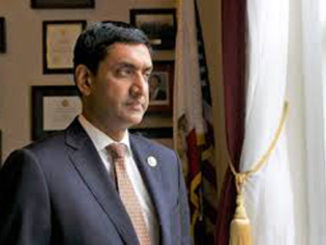
    WASHINGTON (TIP):Indian American Congressman Ro Khanna, who represents the Silicon Valley in the US House of Representatives, has been named as Democratic Vice Chair of the Congressional India Caucus. The seat has been created for the first time since its formation in 1994. Khanna, who was recently elected for a third consecutive term from the congressional district representing Silicon Valley, is being considered as a potential contender to fill the US Senate seat from California that will fall vacant in January after Kamala Harris is sworn in as the country’s vice president.

    “I believe Ro Khanna would be an outstanding Democratic Vice Chair,” Congressman Brad Sherman, Democratic Co-Chair of the Caucus, said in an email to his Congressional colleagues on Wednesday.

    Born in Philadelphia in 1976, Khanna is the youngest of the four Indian-American lawmakers in US House of Representatives. The other three being Dr Ami Bera, 55, who is the senior-most member of the so called ‘Samosa Caucus’, Raja Krishnamoorthi, 47, and Pramila Jayapal, 55.

    Khanna’s father is a chemical engineer who graduated from the Indian Institute of Technology (IIT) and the University of Michigan, and his mother is a former substitute school teacher.

    Considered to be “dynamic” by his Congressional colleagues, Khanna is a strong supporter of India-US relationship. He previously served in the Obama Administration, as Deputy Assistant Secretary in the Department of Commerce under from August 8, 2009, to August 2011.

    First elected to the US Congress in 2016 by defeating incumbent Mike Honda, he has made a mark for himself within the Democratic Party, but also at the national stage on key issues ranging from foreign policy, national security, environment, commerce and manufacturing jobs. He identifies himself as a progressive capitalist and was a national co-chair of Bernie Sanders’s 2020 presidential campaign.

  • Indian American Rahul Dubey among Time ‘Heroes of 2020’

    Indian American Rahul Dubey among Time ‘Heroes of 2020’

    WASHINGTON (TIP): Rahul Dubey, an Indian American healthcare worker, who opened the doors of his Washington DC home to demonstrators protesting the killing of George Floyd, has been hailed as one of “Heroes of 2020” by the TIME magazine. “From citizens providing food and shelter to those in need to volunteers who protected their neighbors from natural disasters, these heroes went above and beyond the call of duty in 2020,” the magazine.

    Calling Dubey as “The Man Who Gave Shelter to Those in Need,” Time recalled that Dubey was at his home, not far from the White House as demonstrators filled the streets of the capital on June 1.

    After a 7 p.m. curfew, he noticed crowds in the street outside: police had set up barricades seemingly to trap protesters, and were pepper-spraying those who remained. Dubey decided to take action.

    “I open my door, and I start yelling, ‘Get in!’” Dubey, who works in health care, was quoted as saying.

    “All these people were swarming in.” Dubey estimates he gave 70 protesters refuge, housing them overnight to avoid curfew breaches.

    “People were coughing, crying, strangers pouring milk into strangers’ eyes,” Dubey said as cited by Time. “They were sharing information, writing down numbers for bail bondsmen. It was this real camaraderie.”

    Dubey claims police officers made several attempts to breach his sanctuary that evening: posing as protesters trying to get inside, and attempting to intercept the pizza delivery he had ordered for his houseguests.

    The move to open his door was driven by instinct, Dubey told Time nearly six months later. “It’s what was needed.”

    Dubey was hailed as a hero and savior by those he sheltered too. “Rahul saved lives last night,” tweeted one Black Lives Matter activist. “He ended this with an inspirational speech about not giving up and keeping up the peaceful fight. What a guy. Thank you, Rahul.”

    Dubey told BuzzFeed News that it wasn’t a choice to open his door and provide refuge to the mostly young protesters.“If you had seen what was going on in front of my eyes, there was no choice. People were getting pepper-sprayed and beaten and slammed to the ground,” he said.

    “I hope that my 13-year-old son grows up to be just as amazing as they are,” Dubey was quoted as saying by WJLA news.

    Floyd, 46, died in Minneapolis on May 25 after a white police officer pinned him with a knee on his neck as he gasped for breath for nearly nine minutes, sparking the nationwide protests.

  • Indian American Lawmakers Seek Immigration Overhaul

    Indian American Lawmakers Seek Immigration Overhaul

    WASHINGTON(TIP): Influential American lawmakers, including IndianAmerican Congresswoman Pramila Jayapal, have urged President-elect Joe Biden to reverse the immigration policies of Donald Trump, as they introduced a resolution, seeking reform of the immigration system that is just, empathetic and fair.

    Jayapal and several of her Congressional colleagues on Friday in a resolution urged Congress to create humane, community-based alternatives to detention, and revamp the current deportation system to include, among other things, guaranteed access to legal representation.
    Jayapal along with congressmen Jesús “Chuy” García, Veronica Escobar, Alexandria Ocasio-Cortez, Judy Chu and Yvette Clarke unveiled a Roadmap to Freedom Resolution as a progressive vision to transform the immigration system to one that is focused on dignity and rooted in the needs and lives of impacted people.
    The Roadmap to Freedom Resolution will be introduced at the beginning of the 117th Congress.

    This immigration reform proposal develops and implements a Roadmap to Freedom by promoting citizenship, protecting and strengthening a fair process centered on family unity, promoting and preserving diversity and establishing a just, humane immigration system.

    Additionally, it ensures federal immigration agencies are fair and accountable, establishes a humane and effective border policy, recognizes the value of all work and promotes healthy communities.
    The resolution also promotes social, civil and economic integration while modernizing and strengthening humanitarian pathways to the US. The resolution addresses root causes of migration as well.

    “As a lifelong immigrant rights organizer and one of only 14 naturalized citizens serving in Congress, I know that we must do far more than simply reverse the harmful, xenophobic policies of the Trump Administration that inflicted maximum cruelty on immigrants and families,” Jayapal said.
    “Our immigration system has been broken for decades, and we must finally reform it in a humane way that focuses on respect, dignity, family unity and real opportunity for all immigrants,” she said as she described the resolution as a bold, progressive vision for immigration reform that is fair, equitable, centers family unity and humanitarian protections, combats systemic injustices and works for everyone.
    This comprehensive proposal was developed in close consultation with grassroots groups, immigration organizers, labor advocates, civil rights leaders and racial justice activists.

    The members of Congress, who are co-leading the resolution, represent the Congressional Hispanic Caucus, Congressional Black Caucus, and the Congressional Asian Pacific American Caucus as the Roadmap works to address the diverse needs of every community while reflecting the diversity of America’s immigrant community. “Our immigration system is broken. Dreamers who have known no other home are at risk of deportation. Hundreds of migrant children are now permanently separated from their parents. Asylum seekers are being revictimized in refugee camps at the border,” said Congresswoman Alexandria Ocasio-Cortez.
    “The Roadmap to Freedom outlines a set of principles for creating an immigration system that is just, empathetic, effective and fair,” she said.
    The Trump administration hardened the immigration rules on those allowed to seek asylum in the US and advocated a merit-based immigration system to protect US workers.

    His administration also tried ending the Deferred Action for Childhood Arrivals (DACA) in 2017, but the US Supreme Court blocked its attempt in June.
    A federal court early this month reversed the decision of the outgoing Trump administration and ordered full reinstatement of the Obama-era program that protects undocumented immigrants brought to the US as minors from deportation.

  • Weekly Predictions (December 21 to December 27, 2020)

    Weekly Predictions (December 21 to December 27, 2020)

    Aries

    Ganesha says Moon will bring you positivity today. This week will bring you revival of loses incurred recently. You’d savings will be improved. You will be able to make some rigid decisions of some complicated business mess with the help of right guidance. Your cooperation and convincing skills will be appreciated. You will make some investments in share market which will bring you good gains later. You will not be able to spend more time with your family due to burden of work. You are likely to feel dull by the end of the week as your competitors will poke you and try to ruin your efforts and on the other hand you will have to deal with domestic dispute too. Strictly prohibit yourself from funding into a very large venture and lending on the last day of the week.

    In the middle of the week, you will be able to execute your plans and gain effective results. Your health won’t be a matter of concern this week but meditation will help you deal with your stressful times this week. People in love should avoid talking about close friends and family, spare this week for your personal time and make the best out of it. Week has a lot in store, unveil it with good hopes.

    Taurus

    Your week will be filled with surprises! You will get involved in activities you never thought you would participate in. The first three days will bring you opportunities you were waiting for but in the last two days you will feel uneasy and derailed from your schedule. Avoid gambling on Wednesday this week. This week you should be very selective avoid people you invest your emotions in as their possessive nature may harm your later. There will be dull moment due to transition of moon. Your aggressive behaviour will harm the people you love the most and you will regret overspending therefore control your emotional hype this week. Last week’s messy situations will come grounded this week and help from your siblings will push you towards progress in career. Avoid being involved in any kind of litigation this week. Love will bloom in unexpected directions at unexpected timings, wait and watch!

    You may have a little sleeplessness and feel tired due to hectic schedule. Your kid’s and spouse’s health may concern you a bit but controlling their eating habits and exercise regime will help you maintain certain things.

    Gemini

    This week you will feel imbalanced and divided between your love life and work life. Your relationship will demand undivided attention and on the other hand, your work will be hectic. Your subordinates will let you work independently and you will find different approaches to meet your work demands. Your creative insight will gain you extra appreciation. You will feel confident and figure out a new way to earn money. You will bring good deals to your family business. The responsibilities of your current job will also increase and issues related to property will also be resolved. This week is fortunate for enhancing your business overseas.

    On domestic fronts, your children’s education and spouse’s mental health would be a little issue but this will also give you enough time to connect to your nuclear family. People in love will take their relationship to another level and deal with hardship conveying their intentions to family. You will also be inclined towards charity and spirituality. Don’t stress too much, time has a big basket of happiness ahead.

    Cancer

    There’s good news for jobseekers as this is the week you will land on a good job. You will bring luxuries home and also manage to save for your comforts. In the middle of the week, a family function will occupy your time. You are likely to travel for business this week and Jupiter will bring you good deals from this travelling. Your communications skills will help in finding solutions to the issues your institution is facing. Along with that, you are likely to find a right guide who will help you stabilise your profits. On the negative side, you may harm some of the closest people in your life just by your harsh opinions so measure your words before you spill them. Negative thoughts will make you nervous but you are known to be someone who fight their fears. You will also feel urge to be detached from your responsibilities but gradually you will find your way back.

    Your soulmate will find a way to change your habits and turn you into the better version of yourself. Also, this is a lucky week for students. Wait and watch what plans does God have for you!

    Leo

    Your week is going to be filled with energy and enthusiasm as a blessing from Lord Sun. Disputes regarding assets and property with your siblings will be resolved. You will become more focused and attentive as the transition of Moon suggests. Your business network will expand bringing you enormous amount of guidance and resources. Your subordinates will appreciate your dedication towards your duties. But, the last three days of week will make you feel little dull and unfocused. During this period of time, try to stay inclined towards creativity and those activities will help you revive your thoughts. Your social status will also improve this week. Investments you mad in past few months will pay you today. On domestic fronts, there might be some issues related to marriage of your siblings but do not worry as peace is on its way to knock your door.

    Following your intuition will be your mantra this week.  Looking at the health perspective, you will face some minor issues like headache and back pain but you will be fit and fine real soon.

    Virgo

    Your week will start with dissatisfaction and unhappiness as a result of transition of moon. You are likely to make lots of mistakes and feel burden on your shoulders. Your work productivity will also decrease. You will be delaying your submissions and might have other issues on your professional fronts but your love life will bloom. You will confess your feelings to your partner and they will accept your proposal. You may have some issues in your married life due to difference of opinion with your spouse but things will be totally alright. It’s a good week to channelize your funds in construction business and share market. Students pursuing higher degree are likely to receive good news from the Universities they have applied. On health fronts, you will face some minor issues in dealing with mental peace and you may also feel nausea at the end of the week. Apart from everything, this week may not go as good as you expected but next week will bring you better opportunities.

    Libra

    This week you will meet like-minded people and create company which will act as light in your darkness. Overbearing people could threaten to overwhelm you with conflicting plans and unreasonable demands, and the best thing you can do is take a patient, helpful attitude. This week some influential people will think of you as trustworthy and their belief in you will bring you great opportunities. Try to stay away from fire and water in excessive amount. Your peers will plan a surprise long distance trip but you should avoid it as Rahu is not in your favour.

    When it comes to romantic relationships, your partner and you will be able to find solutions of your personal concerns. You will try things of each other’s interest and will enjoy it. Marriage is not on the list yet but it will be soon.

    Try to spend some time with your in-laws and family as they need some healing after how pandemic has affected you.

    Scorpio

    This week is bringing you a lot of better things. As you foresee the upcoming seven days, the losses incurred in last few weeks will be revived. You will earn trust of your partner and colleagues. The monotonous nature of your job will make you feel dull but this feeling is temporary. The last three days of the week will be a little bit challenging but this adventure of hardship will bring you growth. Income is going to increase and your family will support you in whatever you do.

    Your love life is expecting some challenges as there will be some misunderstandings between your partner and you. Married life will be alright as you will take this week to reconnect with your partner.

    Health is a matter of concern as you will feel nausea and your joints will ache. Your lack of seriousness towards mental peace will harm your physical health too. Join a group nearby and take guidance to stay calm. You will also break few of your bad habits and that would the most significant thing of the week.

    Sagittarius

    In the beginning of the week moon is going to knock your door. You are going to create a positive atmosphere around Which will help you in many ways. You will be able to work hard. You will be able to connect more people around you to build new connections. Your positive attitude will boost you for a new start-up of business.

    You even can start a partnership business with your siblings. You will receive many unneeded helps from the people you don’t know by which you will get more closer to achieve your goals.

    Singles can get ready to get a partner as loneliness is going to hell from your life.

    People with serious relationships are blessed by god and they will be able to create stronger bond with the one they love. Good time has started its engine so just enjoy your life.

    Capricorn

    In the start of a week, you will feel uncomfortable the level of happiness will slowly go down. And because of that you can get aggressive. So, you are advised to control your mind and your speech. Your good speech can convert into harsh words and because of that you can end up with creating problems with your family. You are advised to be calm or else your aggressiveness can drag you down words.

    You will need to face financial problems and you even need to book some loses. People in love should really take care and should avoid arguments or else it will lead you tolose each other. In mid of the week Jupiter and moon will be at your doorstep. Things will slowly get under control. You will again be able to control your mind properly which will help you to come out of the bad phase of life.You will work hard and hard work will reward you with very satisfied returns just don’t presume situations in your head.

    Aquarius

    Last week’s trouble will get over now. Things will start going in a positive way. You will get the reward of your hard work you did. You will give your best at work and it will give you a very handsome number of rewards in form of appraisals or promotions. On the other hand, you will end up taking decisions in haste which you will regret later. Your partner will ask for some personal space and time to grow individually and you must give it. Your spouse and you will make some big decisions about your kids and you must listen to your kid’s opinions also. Your health will not be a major concern this week but the elderly people in your home will demand some attention. You are also likely to overspend on health products. Rather than doing over expenditure on health, develop good eating habits and follow workout regime.

    Pisces

    This week is going to be too buzzy for you; as a result, it is going to be positive week. Your destiny has a very great plans for your future. You will be bound to take many decisions and accordingly you will achieve great success. Sooner you are going to increase your sources of income and that will allow you to gain good standard of living. By your great leadership qualities your team will give you a very positive response. Your past issues with your life are going to get under control. As good times come you will get a little more occupied with work and for that you will not be able to give proper time to your family but don’t worry, they will understand you and will support you for that.

    By the end of week Moon and Jupiter will bewithyou. It will help you to be calm and to be patient. And you will generate good income from your past investments. As you will earn more it seems like you will be able to change yourself. You will also donate some amount to charity. And for couples, you may get the best news in terms of a baby.

  • Birthday Horoscope (December 21– December 27, 2020)

    Birthday Horoscope (December 21– December 27, 2020)

    Dec 21: Despite being misunderstood and reviled, make excellent headway, receive sudden and probably secret help, get funds, have love, and are on your way to happiness.

    Dec 22:Ganesha says, this formation leads to expenses and a danger of being cheated or at least misled. It would be best not to take the easy way out but to get at the truth. Journey and ceremony make you happy.


    Dec 23: It favors very particularly lawyers, musicians, architects, pharmacists, film stars and directors and producers, copywriters and visualizers, wholesale merchants, agriculturists and scientists. It means childbirth, financial augmentation and the luck of the draw.


    Dec 24: Excellent for money, journey, ceremony, publicity, marriage, long-distance connections and collaborations. In short, your efforts will bear fruit (pun intended).


    Dec 25: This moon helps you to grow, evolve, be tenacious and have the drive to succeed. Many of you will be marking new beginnings, following the policy of “run till done” or getting it done completely. You will set high standards and love will claim you.


    Dec 26:There is nothing you cannot achieve. Be imaginative, old and take chances, at least that’s what this solar-scopical reading does say. Financially it is a sizzling year. Romantically, it is an ecstatic year. Be happy.


    Dec 27:Ganesha says wishes will be fulfilled. Friendship, money and love, children and hobbies all come together for you. Give of yourself to others also is the astro-message. Thunderously happy birth year.

  • HOLIDAY CHEER (By Mabel Pais)

    HOLIDAY CHEER (By Mabel Pais)

    PATTERN OF LOVE 

    By Jack Smith

    I didn’t question Timmy, age nine, or his seven-year-old brother Billy, about the brown wrapping paper they passed back and forth between them as we visited each store. Every year at Christmas time, our Service Club takes the children from poor families in our town on a personally conducted shopping tour. I was assigned Timmy and Billy, whose father was out of work. After giving them the allotted $4 each, we began our trip. At different stores I made suggestions, but always their answer was a solemn shake of the head, no. Finally I asked, “Where would you suggest we look?”

    “Could we go to a shoe store, Sir?” answered Timmy. “We’d like a pair of shoes for our Daddy so he can go to work.”

    In the shoe store the clerk asked what the boys wanted. Out came the brown paper. “We want a pair of work shoes to fit this foot,” they said.

    Billy explained that it was a pattern of their Daddy’s foot. They had drawn it while he was asleep in a chair.

    The clerk held the paper against a measuring stick, then walked away. Soon he returned with an open box. “Will these do?” he asked.

    Timmy and Billy handled the shoes with great eagerness. “How much do they cost?” asked Billy. Then Timmy saw the price on the box. “They’re $16.95,” he said in dismay. “We only have $8.”

    I looked at the clerk and he cleared his throat. “That’s the regular price,” he said, “but they’re on sale – $3.98 – today only.”

    Then, with shoes happily in hand, the boys bought gifts for their mother and two little sisters. Not once did they think of themselves.

    The day after Christmas the boy’s father stopped me on the street. The new shoes were on his feet and gratitude was in his eyes. “I just thank God for people who care,” he said.

    “And I thank God for your two sons.” I replied. “They taught me more about Christmas in one evening than I had learned in a lifetime.” May love fill your heart and your home during this blessed holiday season!

    ————————————————-

    Joshua Bell with Pianist Jeremy Denk

    Saturday, December 19, 2020 at 3PM EST

    Joshua Bell is “a thoroughly serious, intelligent musician” (Financial Times, London … Jeremy Denk) “played with tremendous verve and contagious brilliance” (The Los Angeles Times)

    The New Jersey Performing Arts Center (NJPAC) presents internationally acclaimed violinist Joshua Bell with Pianist Jeremy Denk on Saturday, December 19, 2021 at 3:00 p.m.

    These friends, who teamed on the recording “For the Love of Brahms” (Sony Classical) to critical acclaim in 2016, plan an emotionally engaging program for the NJPAC audience. The afternoon concert will showcase Mendelssohn’s Piano Trio No. 1, an immediate success for its composer and featuring a passionate finale; Shostakovich’s elegiac Piano Trio No. 2 in E minor, a World War II-era lamentation; the expressive Trio élégiaque No. 1, written by Rachmaninoff at the age of 19, and the poetically seductive Piano Trio in A minor by Ravel.

    Tickets

    For tickets, follow the link:  njpac.org/event/joshua-bell-with-pianist-jeremy-denk

    ———————————–

    LEDISI

    Friday, December 18, 2020 at 9 p.m. EST

    Join NJPAC for a soulful live-stream concert with ‘Ledisi: Live at the Troubadour.’ The 13-time GRAMMY-nominated R&B powerhouse will perform songs from her new album, “The Wild Card,” and favorites that span her career.

    Ledisi is a chart-topping singer-songwriter known for infusing her signature R&B vocals with a distinctly jazzy touch. Ledisi also lent her talent to the acclaimed 2014 film Selma, in which she portrayed American music icon, Mahalia Jackson. Ledisi is not only a singer and actress, but she’s also an author, playwright, film producer, and now CEO of her record label ‘Listen Back Entertainment/BMG.’

    For Tickets, follow the link boxoffice.mandolin.com/collections/ledisi-live-at-the-troubadour?oid=5&affid=16

    —————————————

    CHEVY CHASE & BEVERLY D’ANGELO

    Saturday, December 19, 2020 Live on Zoom @ 8PM

    Switch on the Christmas lights and join Chevy Chase (Clark Griswold) and Beverly D’Angelo (Ellen Griswold) for this online salute to the holiday classic, ‘National Lampoon’s Christmas Vacation.’ Expect the unexpected as these legends share a no-holds-barred trip down memory lane and unveil the behind-the-scenes secrets of the ‘Vacation’ film franchise.

    They’ll also answer questions from the virtual audience during the live Q&A. So gather the family and cozy up on the couch as NJPAC streams the Griswolds directly to your living room for a virtual holiday celebration. Chestnuts and eggnog recommended!

    Upgrade to VIP

    TREAT yourself to an upgraded experience when you add on the VIP option. VIP ticket holders will have the opportunity to engage in a one-minute one-one video chat with Chevy and Beverly. The capacity for this experience is extremely limited and must be purchased in advance.

     Tickets

    For Tickets, visit passportshows.com/checkout2/cv-checkout-1219208

    ————————————————-

    KEEPING SAFE DURING THE HOLIDAYS

    Message from John Screiber, President & CEO of NJPAC

    “Thank you so much for joining us (Friday, December 11, 2020) for our virtual NJPAC Business Partners Roundtable @ Home with Governor Phil Murphy.

     I hope that you were as engaged as I was by the Governor’s frank and detailed assessment of how the state has managed the current health crisis so far, the precautions we all still need to take and, happily, the very good news about vaccines and other assistance that should arrive in our state in a matter of weeks.

    I was particularly moved by the Governor’s commitment to “never let this get impersonal” and his practice of reaching out to speak to teachers, business owners and especially the families of those who have lost loved ones to COVID-19 to guide him as he makes the incredibly difficult and complex decisions involved in managing the pandemic.

    His compassion, and his insistence on “checking partisan bias at the door” to work with leaders across the country to establish best practices for handling this unprecedented challenge, were both truly inspirational.Until then, everyone here at NJPAC joins me in wishing you a happy and healthy holiday season!

    May the New Year bring better days for us all.”

    (Mabel Pais writes on The Arts and Entertainment, Social Issues, Spirituality, and Health & Wellness)


  • In agri-reforms, go back to the drawing board

    In agri-reforms, go back to the drawing board

    By Arun Maira
    • The intended beneficiaries often understand the realities of the systems better; policymakers need to build trust

    “The 1991 reforms changed industrial licensing and trade policies — both subjects of the Union government. ‘Factor market’ reforms, in land, agriculture, and labor regulations, which are necessary to realize the full benefits of the 1991 reforms are State subjects in which States have jurisdiction too, and with good reason. They affect the lives of people on the ground, and differently, around the country. Therefore, the central government, no matter how strong it is, must not force these reforms onto the States.”

    The purpose of agriculture reforms is to increase farmers’ incomes. Farmers want the laws (the Farm Bills) repealed. The Supreme Court of India has called for discussions between the government and farmers around the country. It is time to go back to the drawing board about the purpose and the process of agriculture reforms.

    Economists say fewer people must work on farms for farm productivity and incomes to be improved. Which begs the question how the millions displaced from farms will earn incomes. Indian industry is not growing much. There too, according to economists, humans should be replaced by technology for improving productivity.

    Flip side of productivity

    Landholdings are too small for mechanization to improve farm productivity, economists complain. Their solution is to ‘scale up’ farms. Since mechanization requires standardization of work, mechanized farming on scale requires monocropping. Large-scale specialization upsets the ecological balance. Reduced diversity of flora enables pests to spread more easily; soil quality is reduced; water resources get depleted. Solutions to these new problems require more industrial inputs, with more costs for farmers. The deleterious side-effects of this approach to improve agriculture productivity are very visible in Punjab now. Farm incomes have grown there while water resources have depleted and soils have been damaged.

    In Seeing Like A State: How Certain Schemes to Improve the Human Condition Have Failed, political scientist James C. Scott documents the history of ‘scientific forestry’ in Germany. The clearing out of other vegetation to plant a single variety of commercially useful tree in neatly spaced rows enabled mechanization of timber production. However, the ecological imbalance made the trees more vulnerable to pests, and over time, the quality of the timber also reduced. Nature is a complex ‘self-adaptive’ system. It knows how to take care of itself. When Man tries to overpower Nature with his science and industry, without understanding how Nature functions, he harms Nature — and ultimately himself.

    Twenty-first century challenges of environmental degradation and increasing inequalities require that the economic calculus shifts from ‘economies of scale with standardization’ to ‘economies of scope for sustainability’. This will make large-scale mechanization more difficult. However, it will require the use of more ‘flexible’ human labor. In the long run, not only will this be good for the ecology, it will also increase employment and incomes for people in the lower half of the economic pyramid.

    Market access

    Farm incomes can increase with access to wider markets for farm produce, which is an objective of the agricultural reforms. The fear of Indian farmers is that they will not have adequate pricing power when pushed into large supply systems and less regulated markets. Connections into global supply chains can increase volumes of sales. However, the terms of trade will always favor the larger players in the supply chains who have easier access to capital. In her book, The Travels of a T-Shirt in the Global Economy: An Economist Examines the Markets, Power, and Politics of World Trade, economist Pietra Rivoli reveals how small cotton farmers in Texas, unlike farmers in developing countries, became progressively richer as well as politically powerful in setting the rules of global trade. Texan farmers formed collectives to own upstream processing and marketing linkages when they joined global supply chains. Thus, they could obtain larger margins in trade. And their collective voice swayed national politicians.

    Strengthen cooperatives

    Institutions for cooperative ownership and collective bargaining must be strengthened to give power to small farmers before opening markets to large corporations. The Indian dairy sector is a good example. Its ‘per person productivity is much lower than New Zealand and Australian dairy producers’. However, it provides millions of tiny producers with reasonable incomes which large-scale industrial dairy producers do not. Moreover, with its cooperative aggregation, the Indian dairy sector has also acquired political clout. It has compelled the Indian government to withstand pressure from trade economists who are urging it to join the Regional Comprehensive Economic Partnership (of which New Zealand and Australia are members) to connect the Indian economy with larger supply chains.

    The problem of low incomes in India’s agriculture sector is a complex systems problem which cannot be solved by agriculture experts alone. Experts from many disciplines must collaborate to find systemic solutions. Also, the intended beneficiaries of the new policies must be included in the designing of the new policies right at the beginning. Often they understand the realities of systems better than experts do with their abstractions in mathematical equations of inputs, outputs, and productivity. When policymakers say ‘the people don’t get it’ after the policy is announced and the intended beneficiaries protest, it is an indication that the experts didn’t get it.

    The reforms of the 1990s

    The stand-off in agriculture reforms, with farmers besieging the national capital demanding they be heard, has caused a flurry of discussions about democracy, consultation, and processes for economic reforms. Economists point, wistfully, to the firmness with which bold reforms were brought about in 1991, and how the government stood up to the ‘Bombay Club’ of industrialists who opposed them. They also complain that politics (and even democracy) comes in the way of good economics. This reveals an inadequate understanding of processes by which complex economic reforms are evolved.

    The immediate beneficiaries of the 1991 reforms were all Indian consumers, rich and poor, who would benefit from access to better quality products from around the world. The principal opponents of the reforms were a few large industrialists whose products citizens were not satisfied with. Governments have more power over a few industrialists than they have over the masses.

    With a stroke of the pen, policies could be changed in the early 1990s, the immediate benefits of which were clear to the masses. Hundreds of millions of citizens who hope to be beneficiaries of the ‘big ticket’ reforms, in agriculture, and in industry too, now want to earn better incomes, to earn enough to buy all the good stuff they have begun to aspire for, and even to make both ends meet. They cannot see how the bold reforms being pushed through will result in improvement of their incomes. A trickle down is promised. When will that ever happen, they ask?

    The 1991 reforms changed industrial licensing and trade policies — both subjects of the Union government. ‘Factor market’ reforms, in land, agriculture, and labor regulations, which are necessary to realize the full benefits of the 1991 reforms are State subjects in which States have jurisdiction too, and with good reason. They affect the lives of people on the ground, and differently, around the country. Therefore, the central government, no matter how strong it is, must not force these reforms onto the States.

    Silo experts cannot help

    India’s policymakers must improve their expertise in solving complex, multi-disciplinary problems. They must apply the discipline of systems thinking, and not rely on siloed domain experts. Moreover, citizens around the country must be listened to at the very beginning, and throughout the evolution of policies; not communicated to at the end by experts who then complain that citizens are being misled by political forces.

    Prof. Mark H. Moore says, in Creating Public Value: Strategic Management in Government, “We might think of (the process of making policy) as helping to define rather than create public value. But this activity also creates value since it satisfies the desire of citizens for a well-ordered society, in which fair, efficient, and accountable public institutions exist.” Trust is essential for a well-governed society. The lesson for India’s leaders is: good processes for making public policies build trust between citizens and their governments.

    (The author  is a former Member, Planning Commission and the author of ‘Transforming Systems: Why the World Needs a New Ethical Toolkit’)

    (Source:  The Hindu)

  • Liberation of Bangladesh: How Pakistan lost the plot

    Liberation of Bangladesh: How Pakistan lost the plot

    By Abhijit Bhattacharyya

    It was December 16, 1971 when  Indian Army  vanquished Pakistan army in Bangladesh and made it surrender. The day in India is observed as “Vijay Divas”.

    Abhijit Bhattacharyya writes on the historic war and why Pakistan lost. -EDITOR

     When the former chief of Pakistan’s Eastern Command, Lt Gen AAK Niazi, wrote in his 1998 book that “Bengalis had little chance of standing against my well-disciplined and experienced troops”, it showed the undiminished and ingrained arrogance and ignorance of the vanquished General. A military junta’s lack of knowledge led to an unprecedented disaster.

    Was the birth of the linguistic state of Bangladesh in 1971 a rare accident of history? Or was it owing to invisible and inexorable forces of history? It’s the ‘geography of the demography’ that played a pivotal role, which, more often than not, has been ignored.

    India rightly claims credit for her ‘politico-military midwife’ role in the creation of an independent Bengali-speaking state in 1971, despite apprehension and concern in some quarters as India’s border areas are vulnerable to turbulence caused by China-aided and Pakistan-backed actors. Hence, the completion of 49 years of sovereign Bangladesh is all the more creditable if one assesses the overlapping physical contours of geographical Bengal as a whole.

    The stark geography of the east was succinctly described by Dr Sudhindra Nath Bhattacharyya, an eminent historian of Dacca University, in The History of Bengal. How the Mughals faced problems in suppressing Bengal: “The task of conquest and consolidation was rendered more complicated owing to insuperable difficulties arising out of the nature of the country (side) and its peculiar geography. Bengal, with its numerous rivers, streams, nalahs, creeks, swamps, its damps and moist air, and its prolonged rains half the year, peculiar vegetation, absence of barley and wheat, it’s no less peculiar language, foreign to Urdu and Hindi alike — all these made Mughal grandees intensely dislike service in Bengal.” Did the Pakistani army repeat the Mughal history in 1971? Notwithstanding the brute force and savagery perpetrated on ‘blacks of the east’, as infamously referred to by its army brass?

    ‘Blacks of the east’, nevertheless were not the sole obstacle to Pakistan’s forces. There existed something more deep-rooted. The geomorphology and terrain being the biggest mismatch of demographic civility and civilizational chemistry between the eastern geography of Bengal and the non-eastern topography of South Asia, as gleaned from the monumental research work of Dr Nihar Ranjan Ray in his path-breaking History of the Bengali people (1950).

    Thus described Yuan-ch’uang: “People of Pundravardhana (south of Brahmaputra) were straightforward, virtuous and had great respect for culture and learning… Tamralipti (coastal town Tamluk) people were brave, industrious, fond of learning but rough in their manner. People of Samatata (coastal area) were hard-working, while those of Karnasuvarna (central Bengal) were gentle, of fine character, and gave much support to scholarship.”

    On the linguistic front, however, things didn’t appear optimistic. Bodhayana Dharmasutra didn’t have good things to suggest on Bengali. “On return from Vanga (Bengal) to central lands, or Aryavarta, it was necessary to perform expiation” owing to ‘Vanga being barbarian territory and their people of low origin” (does it have an uncanny similarity with the views of the army of undivided Pakistan?) The contrary view, too, speaks for itself. The in-built contradiction and confrontation between Bengal and Aryavarta: “Aryan language and culture had neither understanding of, nor respect for, the language, customs and culture of non-Aryan or pre-Aryan people of Gauda (Central Bengal), Pundravardhana and Vanga.” The uniqueness of Bengal’s geography, therefore, constitutes an oft-forgotten reality. That a country’s political boundaries and natural geographical boundaries may not always be the same even if there exists a common linguistic or homogenous ethnic group. Hence, the fertile land of Bengal invariably attracted those who hailed from a comparatively barren and less fertile land — for a better livelihood.

    Another important scenario of the east pertained to language, literature and learning, traditionally the strongest features of the demography of Bengal. It’s true that ancient India’s learning is well known to have begun with Vedas, Brahmanas and Upanishads. “However, the learning and scholarship embodied in Vedas, Brahmanas and Upanishads, even in the Dharmashastras and Dharmashutras, had no effect on Bengal for quite a long time,” according to Dr Nihar Ranjan Ray.

    That said, there also existed a notable characteristic of the Bengali language: the flexibility to take/accept words, and usage, from the likes of Mon-Khmer and the Kola-Munda group of languages. The latter brought about by a stream of the Dravidian family of languages. Further came the language of the Tibetan-Burmese people. This introduction, acceptance and induction of diverse languages in Bengal, which began centuries before the birth of Christ, ultimately led to what one sees today as the rich and easy-to-learn and understand lingua franca of 32 crore people of the world. Thus, those known as Bengali today are not all from one, but diverse ethnic groups, their commonality and strongest bond being the Bengali language. Regrettably, however, the historical challenge of geography, coupled with the depth of sensitivity and conviction of Bengali-speaking people, conspicuously remained incomprehensible to the gun-toting army rulers of Pakistan. Thus, when the former chief of Pakistan’s Eastern Command, Lt Gen AAK Niazi, wrote in his book, The Betrayal of East Pakistan (1998) that “Bengalis had little chance of standing against my well-disciplined and experienced troops”, it showed the undiminished and ingrained arrogance and ignorance of the vanquished General. Essentially, a military junta’s lack of knowledge led to an unprecedented battlefield disaster. Little wonder the history of the Bengali-speaking demography stands tall, dwarfing the army of Pakistan before its former eastern wing. Sovereign Bangladesh has truly added a rich chapter to the history of South Asia. The change from the Karachi-Dhaka axis in the 1950s to the Delhi-Dhaka friendship of the 2020s appears impressive. At least for now.

    (The author is Commentator and Author)

  • 10 economists write to Tomar, seek repeal of farm laws

    10 economists write to Tomar, seek repeal of farm laws

    • -Laws ‘Not in best interests of small and marginal farmers’

    CHANDIGARH (TIP): As the stand-off between the agitating farmers and the BJP-led central government continued for the third week, top economists from some of the most reputed research institutions in the country, have raised serious concerns about the farm laws, and demanded their repeal.

    Putting their weight firmly behind the agitating farmers, the economists — DNarsimha Reddy, Kamal Nayan Kabra, K N Harilal, Ranjit Singh Ghuman, Surinder Kumar, Arun Kumar, Rajinder Chaudhary, R Ramakumar, Vikas Rawal and Himanshu, have said these laws are not in the best interests of small and marginal farmers, and demanded their revocation.

    In a letter to the Agriculture Minister N S Tomar, these 10 economists have said while they believe that improvements and changes are required in the agricultural marketing system for the benefit of millions of small farmers, but the reforms brought by these Acts do not serve that purpose. “They are based on wrong assumptions and claims about why farmers are unable to get remunerative prices, about farmers not having freedom to sell wherever they like under the previously existing laws, and about regulated markets not being in the farmers’ interests,” the economists said. They have come up five reasons on why these three Acts, brought in as a package by the government, are fundamentally harmful in their implications for the small farmers of India. “These undermine the role of the state government in regulating agriculture markets, when more than 20 states have already amended their APMC Acts to allow private mandis, e trading, e NAM etc. Secondly, two different markets — existing mandis and the private (unregulated) mandis that are proposed under the new laws — will have two different sets of rules. If collusion and market manipulation are concerns inside the APMC markets, the same collusion and market manipulation are likely to continue in the unregulated market space. Within the regulated APMC markets, there exist mechanisms to address and prevent such market manipulation, whereas in the unregulated ‘trade areas’, the central Act contemplates no such mechanisms,” they have said.

    They have warned that even before these Acts came, a large percentage of the sale of agricultural commodities happened outside the APMC regulated market yards. However, the APMC market yards still set the benchmark prices through the daily auctions and offered some reliable price signals to the farmers. Without these price signals, the fragmented markets could pave the way for local monopsonies. The experience in Bihar since the removal of its APMC Act in 2006 shows that farmers have less choice of buyers and less bargaining power, resulting in significantly lower prices compared to other states. The 10 economists have also raised the issue of the huge asymmetry between the two parties, small farmers and companies, in the Contract Farming law, which is not addressed to provide adequate protection to the interests of the farmers. Besides, concern about domination by big agri-businesses is also worrisome, they have said.

    (Source: The Tribune, India)

  • Failure to convene sitting of Parliament diminishes democracy

    Citing a surge in Covid-19 cases, the Union government has decided not to hold the Winter Session of Parliament. A session, even a curtailed one, would have provided the lawmakers a much-needed platform to discuss pressing issues: the contentious farm laws and the prolonged agitation by the farmers who are demanding their repeal; the seven-month-old border standoff with China that is nowhere near resolution; and the action plan for the rollout of the Covid vaccine.

    The argument for doing away with the session does not hold water as the daily coronavirus caseload of the country in general and Delhi in particular has come down significantly. It’s not that the government has no experience of conducting parliamentary proceedings during a raging pandemic.

    The Monsoon Session was held in September, a devastating month which alone witnessed over 26 lakh infections nationwide, accounting for one-fourth of the total cases so far, and more than 33,000 deaths. Amid the challenging conditions, Covid protocols had been strictly enforced and the session was hailed as one of the most productive ever. The government needs to explain why similar measures can’t be implemented in December, when the overall situation is far better.

    The irony is not lost on anyone: during the foundation stone-laying ceremony of the new Parliament building last week, PM Narendra Modi had underlined the importance of dialogue and hailed Indian democracy for its vibrancy. Holding the House sitting at this time would have affirmed the government’s intent to encourage deliberations on thorny matters and look for solutions through consensus. However, it now seems that the ruling party is shying away from a debate with the Opposition. Such evasiveness does not augur well for a democratic set-up.

    The grim portents were visible during the Monsoon Session, when the government had rammed legislations through both Houses amid walkouts and boycotts by Opposition parties. The reluctance to take everybody on board is again evident now. And it doesn’t really matter whether Parliament operates from an old building or a new one, or whether it is circular or triangular in shape. What matters is to create space for a healthy dialogue in the ‘temple of democracy’.

    (Tribune, India)

  • FOMAA Leadership ensures endorsement toImmigration Bill HR1044  from NY State  Senator Kevin Thomas, and  support fromSenator Chuck Schumer

    FOMAA Leadership ensures endorsement toImmigration Bill HR1044  from NY State  Senator Kevin Thomas, and  support fromSenator Chuck Schumer

                                 By Anil Augustine, Atlanta GA

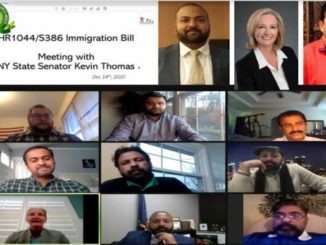
    NEW YORK (TIP): On this historic era of immigration momentum in American contemporary times, the congressional bill HR.1044/S.386 being at the verge of success as well the probable uncertainties there in; FOMAA L.i.F.e -the advocacy initiative of Malayalee diaspora, invoked and earned promises of support from NY State Senator Hon. Kevin Thomas. Sen. Kevin, heartily appreciated the audacity and vision of Malayalee diaspora, patriotically coming forward assisting and reaching out to brethren suffering the agony of systemic abuse -GC backlog. It is noteworthy that FOMAA is the only diaspora Federal Association to have an advocacy initiative favoring this worthy a cause affirmatively impacting future Americans as well the Citizens mutually. Sen. Kevin assertively noted that we all are American immigrants; the only difference might be the time we or our forefathers are blessed in reaching the shores of this blessed land!

    FOMAA leadership apprised Hon. Senator about the challenges faced by legitimate immigrants under the existing legacy law with Nationality based quota system aka Country Quota in Employment Based immigration. This law yields extremely length wait-time in obtaining Green Cards (GC), the permanent residency pathway to USA resulting indescribable agony and inequality among licit immigrants from large populous nations in both Family Based and Employment Based immigration to USA.  It’s worthwhile noting that there is no Country Quota while issuing work visas – the only legitimate pathway for any merited skilled professional to immigrate USA.

    For Indians, the USCIS statistics denotes a grueling wait-time of 50 to 170 years, for anyone applying for GC as of this day; depending upon the Employment Category Employer applies the GC application. India being the largest credentialed talent-pool for American knowledge, Health, Education and Technology industry workforce and proven entrepreneurial success. Unduly advantaged with the Country Quota rule, folks from other countries (ROW) possess GC swiftly (6 months). In this era where Merit, Skill & credentials matters, no-one should be accounted based on country of birth. The GC delays results impacts dependent children aging-out at 21years; primary applicants unable change jobs during the GC process time and inability to visit friends & family back in India.

    Honorable Congresswomen Zoe Lofgren, (D) of CA introduced the Bill HR.1044 “Fairness for the High-Skilled Immigrants act of 2019”. This bipartisan bill had 116 original cosponsors, further yielded to a total 311 Hon. Congressmen sponsoring it and the bill passed the US House with a historic 365 ‘yea’ to a 65 “Nay” vote obtaining a historic mandate of success in July 2019.

    The bill is sponsored in the Senate by Honorable Senator Mike Lee, (R) of UT, earned 14 original cosponsors to a total of 36. (Vice President Elect Hon. Sen. Kamala Harris is one of the original cosponsors of S.386). This bill was passed the Senate with unanimous consent on this December 2nd, however, will have to go back to the House for reconciliation on the amendments incorporated by Hon. Senators Durbin, IL and Scott, FL, that the bill gets approval signed by President Trump, for it to becoming the law.

    The current congressional term ends by January 3rd, 2021; however, December 18th being the last day for Congress to be in session, essentially the US House and Senate should approve the bill by this week. Towards accomplishing and avoiding uncomfortable circumstances Hon. Sen. Lee, and Hon. Rep. Lofgren, the sponsors of the bill in the respective chambers are said to be efforting to attach the bill to the Omnibus spending Bill by reconciling the stipulations.

  • Guru Nanak Digital World Peace Conclave kicks off on December 20

    Guru Nanak Digital World Peace Conclave kicks off on December 20

    NEW YORK (TIP): Delhi based The ImagIndia Institute is organizing Guru Nanak Digital World Peace Conclave 2020, and Young Leaders Award.  The inaugural edition of the Conclave  will be held on December 20, 2020, the 3rd Sunday after Gurupurab, via a livestream digital platform. The theme of the conclave is to discuss and take heed from Guru Nanak teachings on:

    1. How to meet challenges (social, political, public health) of a post-Covid world?
    2. How to meet challenges (professional, business, innovation) of a VUCA world? and,
    3. How to meet challenge of happiness20/20, and peace of mind, peoples, and nations?

    The conclave shall also finalize the setting up of a “Young Leaders Award” to recognize 551 youngSikh leaders from across the world, at the 2nd edition of the annual conclave in December 2021.

    With objective to generate meaningful outcomes from the conclave, the discussion format laysspecial emphasis on co-thinking among the speakers in order to co-create solutions that are simplebut effective, and that could have sustainable impact across cultures.

    The Institute invites all  to the Guru Nanak Digital World Conclave 2020. The duration of the session will be 90 minutes, with total of five Speakers, and one moderator. Those who wish to speak on the occasion may please contact at  info@imagindia.org .

    The conclave is organized by the Imagindia Institute and the global “Live and Let Live” campaign thatis propagating the philosophy and culture of “live and let live” and co-existence, among humankind,with Nature, and the cosmos beyond. The co-organizer is Korea Peace Movement, Seoul. The conclave is powered by Renaissance sf, a global community that imagines, accelerates, andencourages smart and sustainable happy futures, across cultures.

    The conclave is supported by theZerOrigindia Foundation, The Hague, the International Institute of Cultural Diplomacy, Dubai, andlanguage support is provided by Indian Language Services, California.

    The conclave shall have speakers and audiences from the United States, Europe, the Gulf, and Korea,among other countries, and shall be Livestream broadcast per following timings – PST= 8am–9.30am;EST= 11am-12.30pm; GMT=4pm-5.30pm; IST=9.30pm–11pm; KST=1am–2.30am.

    To know more, please contact info@imagindia.org

  • India ranks 110 out of 162 countries on personal freedom index

    India ranks 110 out of 162 countries on personal freedom index

    NEW YORK (TIP): A global ranking of personal, civil and economic freedom released on Thursday, December 17,  placed India at 111 out of 162 countries. The Human Freedom Index 2020, which uses data from 2008 to 2018, by the Cato Institute in the United States and Fraser Institute in Canada, noted a decrease in personal freedoms since 2008 globally. The index covered 76 indicators of personal, civic and economic freedom, a statement issued by the Cato Institute said. India was ranked 110 in terms of personal freedom and 105 on economic freedom, with an overall score of 6.43 out of 10. New Zealand was ranked one in the index, followed by Switzerland and Hong Kong. “Given the Chinese Communist Party’s unprecedented intervention in Hong Kong in 2019 and 2020, the authors expect the territory’s freedom score to decline notably in future editions of the index. The three least-free countries in descending order are Venezuela, Sudan, and Syria,” the statement said. The index put China at 129 rank, Bangladesh at 139 and Pakistan at 140.

  • IndianAmerican Time’s Kid of the Year Gitanjali focuses on effective Covid-19 vaccine distribution

    IndianAmerican Time’s Kid of the Year Gitanjali focuses on effective Covid-19 vaccine distribution

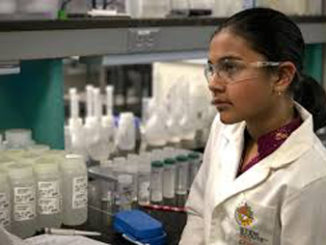
    NEW YORK (TIP):Young IndianAmerican scientist Gitanjali Rao, TIME magazine’s first-ever ‘Kid of the Year’, has said she is brainstorming about solutions for the effective vaccine distribution to address a pressing challenge posed by the coronavirus, and has set her sights on preventing future pandemics.

    In an interview with PTI, the 15-year-old inventor said she was focused on using technological tools to offer solutions for vaccine distribution, a challenge that confronts the world grappling with the deadly COVID-19 pandemic.

    Rao was named by TIME magazine this month as the first-ever ‘Kid of the Year’ for her “astonishing work using technology to tackle issues ranging from contaminated drinking water to opioid addiction and cyberbullying”. She was selected among over 5,000 nominees for the honor.

    “I definitely do want to look at the pandemic. The next biggest problem we’re going to face is vaccine distribution and prioritization. So I’m looking at my potential data and analytics approach towards that,” Rao said.

    “But I think the next biggest problem that I’ll probably look towards solving is preventing future pandemics from happening because I think it’s safe to assume that this isn’t the last one and we probably will have another one before 100 years,” she said.

    Rao says she is still at a “brainstorming and observing” phase but is looking at the whole idea of vaccine distribution and how widespread it needs to be.

    “Also, how important it is because everybody needs to receive this vaccine. So, I’m looking at how we can use predictive analytics and data models in order to create a plan of how vaccine distribution will roll out,” she said.

    TIME had said in its profile that “exceptional leadership” is what made the “brilliant” Rao stand out for the honor.

    “Rao not only researches scientific tools such as artificial intelligence and carbon nanotube sensor technology and applies them to problems she sees in everyday life, like cyberbullying and water contamination. She also shows other kids how to tap into their curiosity, aspiring to create a generation of innovators,” it said.

    Rao said it was very “exciting” to be named Kid of the Year “but more than that it’s honoring and humbling to be that face of Generation Z as well as have the opportunity to be featured on the cover of TIME among so many other fantastic people. I’m so beyond humbled and I’m just excited to see where this keeps going”. The youngster, who through her work is an inspiration for many, counted her parents – Bharathi and Ram Rao – and the family as her “biggest inspirations”.

    Rao said she had always received an incredible amount of support from her parents. “If I wanted to play a certain sport, learn something new, I had all the resources in front of me,” she said.

    Rao recalled how her mother brought nearly a dozen books for her in third grade on clouds when she wanted to learn about the subject. “Experiences like that are what changed my life forever, having that support and being able to do what I love without any backlash,” she said. Rao said she was also “truly inspired” by scientists and inventors who go beyond themselves and innovate for positive change, particularly Jonas Salk, who invented the polio vaccine and never patented it.

    “He never claimed it as his own because he wanted it to be something that everyone could use, and I really aspire to be that selfless and put others before me,” Rao said.

    The young scientist, who has been featured in Forbes list of 30 Under 30 achievers, was named America’s Top Young Scientist and is a STEM (Science, Technology, Engineering, and Mathematics) promoter, wants to see more young girls being given opportunities to study and work in the field.

    “I think another thing is just showing them role models in the field and I honestly aspire to be one of them,” she said, adding that when she was in second grade, she did not know females could be scientists. “I didn’t know it was possible because everybody I had seen in the media and learned about was a male. I was excited personally to learn that a girl could be a scientist which is almost problematic because I was able to learn about that but what if people didn’t have that inspiration, didn’t have that opportunity for growth. We just need to involve more girls in STEM by showing them that they can do it,” she said.

    Rao has also been working tirelessly on creating a community of innovators and has so far mentored thousands of students. She runs workshops for students from across the globe who want to become innovators and solve global problems. “Everyone comes out of that workshop with one solution and a process that they can take to implement it in the real world. If I can do it, you can do it and anyone can do it,” she says.

    Rao says she is interested in working on several things in the future and wants to look at genetic research with product design involved.

    “Hopefully, whatever I’m doing, I’m changing the world for the better,” she said. For Rao, her own passion right now is working on solutions for the contamination of natural resources.

    “I’m looking at water contamination specifically and water parasitic contamination is the biggest problem that I’m seeing out there today. I really want to find a way to prevent that from happening,” she said, adding that she is using genetically engineered microbes to detect parasites in water. “I’m using living things to find living things which I think is a very interesting concept,” she said. PTI

  • Open Enrollment Extended for Health Plans

    NEW YORK (TIP): The deadline to sign up for a health plan through NY State of Health has been extended. New Yorkers have two more weeks (until December 31) to enroll in a health plan that begins on January 1. “As the pandemic continues, it is especially important for New Yorkers to have access to high-quality, affordable health insurance,” said Donna Frescatore, NY State of Health Executive Director. Visit their website or call 1-855-355-5777 to enroll.

  • India’s Supreme Court says farmers have a constitutional right to protest, but urges talks

    India’s Supreme Court says farmers have a constitutional right to protest, but urges talks

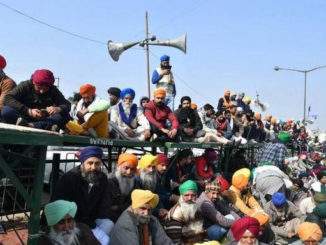
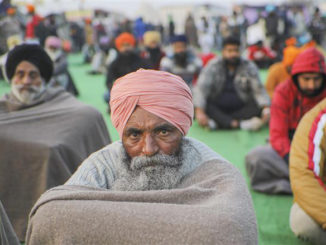
    NEW DELHI (TIP): The Supreme Court on Thursday, December 17,  said farmers have a constitutional right to continue with their “absolutely perfect” protest as long as their dissent against the three controversial agricultural laws does not slip into violence.

    “We recognize the right to protest. There is no question of curtailing it. But it should not damage anybody’s lives,” a Bench led by Chief Justice of India (CJI) Sharad A. Bobde observed. The court, however, said the purpose of the protesting farmers would not be served if they continued to sit without engaging in talks.

    “Yes, there is a protest that is going on… Yes, the protest is constitutional as long as it does not damage property and lives. It is an absolutely perfect protest. But their [farmers’] purpose cannot be realized if they continue to sit without talking,” the CJI observed.

    The court reiterated its suggestion of forming an “impartial and independent committee” of experts in agriculture to hear both farmers and the Union government on the laws.

    “If their [farmers] protest has a purpose other than just to sit in protest, we are thinking of an independent committee before whom both sides can state their case while the protest goes on… The committee can give its opinion after hearing them. We expect parties [farmers and government] to follow the committee’s opinion. Meanwhile, the protest will continue without causing violence or damage on both sides,” Chief Justice Bobde suggested.

    Senior advocate P. Chidambaram, for Punjab, from where most of the protesting farmers hail, said the farmers actually wanted the Parliament to discuss amendments to the three laws.

    Most farm leaders are not in favor of impleading themselves in the case, they said.

    “After a meeting of the committee plus the Punjab leaders this afternoon, the Samyukt Kisan Morcha has decided to consult with four senior Supreme Court lawyers — Dushyant Dave, Prashant Bhushan, Colin Gonsalves, and HS Phoolka — before taking any position on the case,” said K.V. Biju, national coordinator of the Rashtriya Kisan Mahasangh. Farm leaders are worried about the legal precedent set during the protests against the Citizenship Amendment Act (CAA) earlier this year. “When a PIL was filed on the anti-CAA protests, the court gave the order to vacate them. If the same thing happens, that will damage our movement,” said one leader, who did not wish to be named.

    They also argued that this issue is the domain of the executive, not the judiciary. “The grammar of democratic governance must be articulated by the Government. Constitutional institutions like courts exist for checks and balances, not as replacement of the obligations to be performed by the political executive,” said a statement from the All India Kisan Sangharsh Coordination Committee.

  • Republican Senate Majority Leader Acknowledges Biden’s Win

    Republican Senate Majority Leader Acknowledges Biden’s Win

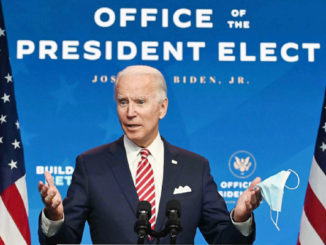
    WASHINGTON (TIP): More than a month after the election, top Republicans finally acknowledged Joe Biden as the next U.S. President, a collapse in GOP resistance to the millions of voters who decisively chose the Democrat. Foreign leaders joined the parade, too, including Russia’s Vladimir Putin.

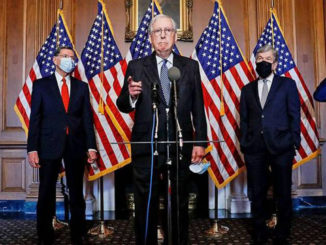
    Speaking on Tuesday, December 15,  from the floor of the U.S. Senate where Mr. Biden spent 36 years of his career, Majority Leader Mitch McConnell congratulated his former colleague as President-elect. The two men spoke later in the day. A similar shift unfolded in capitals across the world, where leaders including Mr. Putin and Mexico’s Andrés Manuel López Obrador acknowledged Mr. Biden’s win.

    The moves came a day after electors nationwide formally cast votes affirming Mr. Biden’s victory in last month’s presidential election. And while that clears a more stable path for Mr. Biden to assume the presidency, it does little to stop Mr. Trump from continuing to try to undermine confidence in the results with baseless allegations that have been rejected by judges across the political spectrum.

    As Republicans began discussing a Biden presidency more openly on Tuesday, Mr. Trump still pledged to press forward with almost nonexistent legal options.

    “Tremendous evidence pouring in on voter fraud. There has never been anything like this in our Country!” Mr. Trump said in a tweet, just as members of his party were publicly recognizing Mr. Biden’s victory. The growing acknowledgement of reality in Washington was triggered by the Electoral College formally voting on Monday to seal Mr. Biden’s win with 306 votes to Mr. Trump’s 232, the same margin that Mr. Trump pulled together four years ago. The normally humdrum political ceremony didn’t change the facts of the election but was nonetheless used as political cover by leading Republicans.

    “Many of us had hoped the presidential election would yield a different result,” Mr. McConnell said. “But our system of government has the processes to determine who will be sworn in on January 20. The Electoral College has spoken.” (Source: PTI)

  • Hope to improve ties under Biden government: Putin

    Hope to improve ties under Biden government: Putin

    MOSCOW/ NEW YORK  (TIP) Russian President Vladimir Putin on Thursday, December 17,  said that he hopes the administration of the incoming U.S. President Joe Biden will work with Russia to resolve disagreements between their countries.

    Mr. Putin told reporters at his annual end-of-year press conference that the two countries’ relations had become “hostage” to U.S. domestic politics and said he hoped that some existing problems “will be resolved under the new administration”.

    “We believe the U.S. President-elect will sort things out because he has both domestic and foreign policy experience,” the Russian leader said. However, Mr. Putin was one of the last leaders of major world countries to congratulate Mr. Biden on winning the U.S. presidential elections, saying earlier this week that he was ready for “collaboration”. Mr. Biden is expected to take a tougher stand against Russia than outgoing U.S. President Donald Trump, who he slammed during the campaign for having “embraced so many autocrats around the world, starting with Vladimir Putin”.

    The Russian leader said he believes Mr. Trump is unlikely to leave U.S. political life after his term in office ends, saying the outgoing President has “a large base” of support. Mr. Putin has already won four presidential elections and recently changed the constitution to allow him to remain President until 2036. Mr. Biden will be the fourth U.S. president since Mr. Putin came to power in 2000.

  • Biden selects Native American Deb Haaland as interior secretary

    Biden selects Native American Deb Haaland as interior secretary

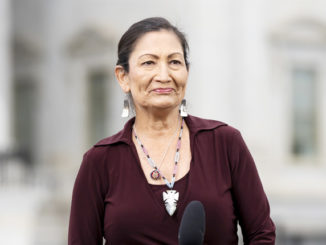
    WASHINGTON (TIP): In yet another first, President-elect Joe Biden   nominated a Native American  to be  the Interior Secretary.

    If confirmed, Haaland, 60, would become the first Native American to serve as a Cabinet secretary. The pick is being cheered by progressives and would add to what Biden calls his “barrier-breaking” Cabinet.

    Haaland, a member of the Laguna Pueblo people, has represented New Mexico’s 1st Congressional District, which comprises Albuquerque and many of its suburbs, since 2019. She is the chair of the House Natural Resources Subcommittee on National Parks, Forests and Public Lands. She and Rep. Sharice Davids of Kansas are the first Native American women to serve in Congress.

    As interior secretary, Haaland would oversee an agency tasked with managing and conserving much of the country’s federal lands and natural resources, including national parks and tribal lands, which have had a fraught history with the federal government. Harland has long been popular among progressive Democrats. In 2016, when she was the chair of the New Mexico Democratic Party, she traveled to the protests against the Dakota Access pipeline near the Standing Rock Indian Reservation in North Dakota to show solidarity with the demonstrators. She also led an effort as her state’s party chair to divest the party from investments in Wells Fargo, over the bank’s ties to the pipeline.

    Long thought to be a top contender for the post, Haaland received sterling praise as a potential Cabinet member earlier this week from House Speaker Nancy Pelosi, D-Calif., who lauded the congresswoman as an “excellent choice” who “knows the territory” after rumors emerged that Democratic House leaders were concerned about losing a member of their caucus because of the thin majority they hold in the chamber. Haaland had received the strong backing of many Native American groups and progressive organizations, and many lauded her expected selection Thursday. “With the historic appointment of Deb Haaland as Interior Secretary, Joe Biden chose the most qualified person and put a true movement progressive in his Cabinet,” Stephanie Taylor, the co-founder of the Progressive Change Campaign Committee, said. “Deb’s selection was a top priority for the progressive movement. Thousands of PCCC members and many Native American, climate, women, and other progressive activists worked hard for this victory.”

    If Haaland is confirmed, it would create a third House vacancy as Democrats will begin the new Congress with an already-slimmed majority.


  • FDA advisory panel endorses Moderna’s Covid-19 vaccine, clearing way for authorization

    FDA advisory panel endorses Moderna’s Covid-19 vaccine, clearing way for authorization

    WASHINGTON (TIP): An advisory panel on Thursday, December 17,  recommended that the Food and Drug Administration issue an emergency use authorization for a Covid-19 vaccine developed by Moderna, all but guaranteeing the agency will do so.

    The authorization, expected on Friday, will mark the second Covid-19 vaccine cleared by the agency — and amount to one more step toward curbing a pandemic that has infected an estimated 17 million people and killed more than 300,000 in the United States.

    Both Moderna’s vaccine and the one developed by Pfizer and its partner BioNTech, which was granted an EUA last week, use messenger RNA to instruct the body’s cells to produce copies of the spike protein found on the exterior of the SARS-CoV-2, the virus that causes Covid-19. Those vaccine-induced proteins teach the immune system to recognize the coronavirus as an invader and attack it when an immunized person is exposed to the virus. Clinical trials showed both vaccines were highly effective, about 94% or 95% in fact, though both trigger side effects in a portion of people vaccinated.

  • Cyber attack on government still going on, say U.S. agencies

    Cyber attack on government still going on, say U.S. agencies

    WASHINGTON (TIP): U.S. intelligence agencies have warned that a “significant” cyberattack on several federal departments uncovered over the weekend remains ongoing as the government rushes to assess the extent of the breach.

    “This is a developing situation, and while we continue to work to understand the full extent of this campaign, we know this compromise has affected networks within the federal government,” the FBI, the director of national intelligence and the Cybersecurity and Infrastructure Security Agency (CISA) said in a joint statement late Wednesday, December16.

    The March attack on software created by Texas-based IT company SolarWinds — in which hackers installed malware — continued for months until it was discovered by cybersecurity company FireEye.

    Both companies have pointed the finger at hackers linked to the Russian government. Hackers reportedly breached software used by the U.S. Treasury Department and the Commerce Department, allowing them to view internal email traffic.

    The agencies did not confirm the targets of the cyberattack. U.S. Secretary of State Mike Pompeo also pointed to Moscow on Monday, saying the Russian government had made repeated attempts to breach U.S. government networks.

    ‘Up to 18,000 customers’

    SolarWinds said up to 18,000 customers, which included government agencies and Fortune 500 companies, had downloaded the compromised software updates, allowing hackers to spy on email exchanges.

    The content the hackers sought to steal — and how successful they were — remains unknown at this time.

    The FBI said it has opened an investigation to identify and pursue those responsible for the hack.

    After the attack was detected, CISA ordered federal agencies to power down the breached software.

    The agencies have created a coordination unit and emergency talks are being held at the White House on a daily basis to discuss the government’s response.

    U.S. National Security Adviser Robert O’Brien cut short a trip to the Middle East and Europe this week to deal with the fallout from the hack.

    (Agencies)

  • WHO investigators to head to China to study COVID-19 origins

    WHO investigators to head to China to study COVID-19 origins

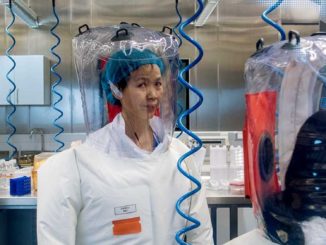
    NEW YORK (TIP): A team of international investigators led by the World Health Organization (WHO) is likely to go to China in early January to study the origins of the COVID-19 outbreak, which first began in Wuhan, in southwestern Hubei province, late last year.

    WHO officials said on Thursday, December 17,  the composition of the team and where they would visit was being discussed with China. Babatunde Olowokure, the WHO’s regional emergencies director in the Western Pacific, said at a press conference that China was “welcoming” the team and the visit was likely to happen in early January. How much access the team will have, and whether the visit comes too late, has become a point of contention. China has resisted calls for an independent international inquiry into the origins but has said it would be open to a WHO-led investigation even as the organization has come under fire, particularly from the U.S., over its handling of the outbreak in the initial stages.

    A team of 12-15 experts will likely go to Wuhan “to examine evidence, including human and animal samples collected by Chinese researchers, and to build on their initial studies”, Reuters reported. Thea Fischer, a Danish member, was quoted as saying the team would leave “just after New Year’s” for a six-week mission, which would include two weeks of quarantine on arrival. Initial attention into the origins of COVID-19 had focused on the Huanan seafood market in Wuhan, where an outbreak was first reported in December, although some Chinese health officials have since said the market may have not been the origin, but where the virus first spread.

    Focus on market

    The WHO investigation will likely focus on the market in an effort to reconstruct the outbreak, the South China Morning Post reported this week, noting that China had “released sparse details” about its studies into the market. Most scientists believe the SARS-CoV-2 virus, similar to the first SARS outbreak, likely came from a bat and passed to humans via an intermediary host. Whether that was one of the live animals sold at the market is among the issues the investigation will look into. The WHO investigation, although at an early stage, has already become politicized, with China resisting what it sees as any outside interference, seeking to remain in control over how much access international scientists will have, and officials and State media there increasingly backing a narrative suggesting the virus came to China from elsewhere. The U.S. and several other countries, meanwhile, have criticized the WHO’s handling and called for more transparency and independence into the investigations.

    The report from the first WHO-China Joint Mission on COVID-19, which followed a visit by 25 Chinese and international experts to several Chinese cities between February 16 and 24, praised China’s initial handling of the outbreak and the lockdown of Hubei province for controlling the spread of the virus. The WHO mission report was widely cited by the Chinese media as underlining the success of the country’s response.

    The mission to China followed a visit by the WHO Director-General Tedros Adhanom Ghebreyesus to Beijing, who in a January 28 meeting with President Xi Jinping “praised the seriousness with which China is taking this outbreak, especially the commitment from top leadership, and the transparency they have demonstrated”.

    Initial cover-up

    Neither mentioned the initial cover-up by Wuhan authorities until mid-January, which resulted in the Communist Party leadership in February sacking the Party chiefs of both Hubei and Wuhan, as well as two senior provincial health officials. That detail has, however, now become a footnote, with State media, ahead of the WHO team’s visit, increasingly emphasizing China’s subsequent recovery, showcasing its effective response to stem the outbreak, and questioning the origins of COVID-19.

    On Thursday, the Party-run Global Times published an article questioning whether the virus came to Wuhan from overseas, citing recent local cases in China related to imported seafood and meat products. “As the mounting sporadic outbreaks in China were found to be related to imported cold-chain products, with other parts of the world, including Europe and the American continent, reportedly discovering signs of the coronavirus earlier than Wuhan, it begs a new hypothesis: did the early outbreak in Wuhan originate from imported frozen food?” the newspaper asked. China has in recent weeks stopped certain food imports, which it has blamed for new cases that have been reported even after local transmission had broadly been curbed by the end of the summer.

    Chinese scientists have also put forward studies suggesting the virus was circulating in other countries, such as Italy, before it came to China. One recent pre-print even suggested the first human transmission took place on the Indian subcontinent, but it was subsequently withdrawn.

    That is not, however, the view of most international experts. Last month, Michael Ryan, the Executive Director of the WHO’s Health Emergencies Programme, said it would be “highly speculative” for the WHO “to say that the disease did not emerge in China”. “It is clear from a public health perspective that you start your investigations where the human cases first emerged,” he said, adding that evidence may lead them elsewhere.

    These remarks from the WHO did not, however, find wide mention in the Chinese media.

    (Agencies)

  • ‘Turn the page’, President-Elect Joe Biden says

    ‘Turn the page’, President-Elect Joe Biden says

    WASHINGTON (TIP): The bureaucratic transition from Mr. Trump’s government to Mr. Biden’s actually began weeks ago, despite the President’s legal challenges. Still, the suddenly conciliatory stance from many Republicans could thaw the political deep freeze that has gripped Washington lately.

    Mr. Biden has been trying to build momentum as he prepares to assume the presidency while facing the historic challenge of vaccinating hundreds of millions of Americans against the coronavirus. In some of his most forceful remarks since the election, Mr. Biden is calling for unity but also calling Mr. Trump’s attacks on the voting process “unconscionable” and insisting it is time to “turn the page.’ “We need to work together, give each other a chance, and lower the temperature,” Mr. Biden said in a speech on Monday., December 14.

    Still, the shift coming so late in the tone from Republicans has left the President-elect with barely a month to finish building out key parts his new government. Some say the GOP about-face won’t mean much at this point.

    “Even them doing this now, the damage has been done because they’ve blocked, they’ve interrupted,” said Anthony Robinson, a former Obama administration appointee who served several national security policy roles, including during the transition to the Trump administration in 2016.

    “I don’t want to say, ‘Who cares?,’ but it definitely doesn’t symbolize a smooth transition,” said Mr. Robinson, who is now political director of the National Democratic Training Committee, which trains candidates and campaign staffers all over the country.

    Mr. Biden’s first priority will be the fair and efficient distribution of vaccines against the virus. The President-elect said on Tuesday that he would follow the advice of Dr. Anthony Fauci, the nation’s top infectious disease expert, who says that getting the President-elect himself vaccinated as soon as possible is a matter of national security.

    Trust in the vaccine

    “Dr. Fauci recommends I get the vaccine sooner than later. I want to make sure we do it by the numbers,” Mr. Biden said, adding that he’d be immunized publicly, which could help build public trust in the vaccine.

    Mr. Trump’s continued opposition to Mr. Biden, meanwhile, may still present roadblocks, especially in the U.S. House where Republicans as recently as last week were introducing legislation to punish members of their party who might be seen as urging Mr. Trump to “concede prematurely.” Other top Trump administration Cabinet officials haven’t yet followed the lead of Mr. Pompeo, who plans to meet on Thursday with Mr. Blinken, Mr. Biden’s Secretary of State nominee.

    “The President is still involved in ongoing litigation related to the election,” said White House press secretary Kayleigh McEnany, calling the Electoral College vote “one step in the constitutional process.”

  • White House condemns desecration of Mahatma Gandhi’s statue in Washington

    White House condemns desecration of Mahatma Gandhi’s statue in Washington

    WASHINGTON (TIP): A violent group of Khalistani separatists on Saturday, December 12,  desecrated Mahatma Gandhi’s statue outside the Indian embassy during a demonstration by Sikh-American youths in support of farmers protesting against the Indian farm laws. White House Press Secretary Kayleigh McEnany has described as “appalling” the desecration of Mahatma Gandhi’s statue outside the Indian embassy here and said his reputation should be respected, especially in the US capital.

    A violent group of Khalistani separatists on Saturday desecrated Mahatma Gandhi’s statue outside the Indian embassy in Washington during a demonstration by Sikh-American youths in support of farmers protesting against the recently enacted agriculture laws in India. Responding to a question about the incident during a press conference, McEnany said, “It’s terrible. No statue or memorial should be desecrated and certainly not one like that of Gandhi who really fought for the values that America represents of peace, justice, and freedom.” “It is appalling that it has happened more than once and we believe the reputation of Mahatma Gandhi should be respected, especially here in America’s capital,” she said.

    A State Department spokesperson said on Tuesday that they were aware of recent protests in front of the Indian Embassy in Washington DC.

    “We take our responsibility to provide for the safety and security of foreign missions in the US very seriously and are discussing the recent incident with the Indian Embassy,” the spokesperson said.

    Hundreds of Sikhs from in and around Greater Washington DC area, Maryland and Virginia, along with many from other states like New York, New Jersey, Pennsylvania, Indiana, Ohio and North Carolina, on Saturday undertook a car rally to the Indian embassy in downtown Washington DC, where they gathered to express solidarity with the protesting Indian farmers.

    Peaceful protest hijacked?

    However, the peaceful protest was soon hijacked by the separatist Sikhs who were carrying Khalistani flags with anti-India posters and banners.

    During the protest, many of the pro-Khalistan Sikh youths flashing kirpans jumped on the statue of Mahatma Gandhi and pasted a poster over it. The group raised anti-India and pro-Khalistan slogans.The Indian embassy condemned the “mischievous act” by hooligans masquerading as protesters.

    “The statue of Mahatma Gandhi at the Mahatma Gandhi Memorial Plaza in front of the embassy was defaced by Khalistani elements on 12 December 2020. The Embassy strongly condemns this mischievous act by hooligans masquerading as protesters against the universally respected icon of peace and justice,” it said in a statement.

    The Embassy said it has lodged a strong protest with the US law enforcement agencies and also taken up the matter with the Department of State for an early investigation and action against the culprits under the applicable law.

    The statue of Mahatma Gandhi was unveiled by then prime minister Atal Bihari Vajpayee in the presence of then US president Bill Clinton on September 16, 2000, after the US Congress passed a law in 1998.

    This is for the second time that Gandhi’s statue has been desecrated by miscreants this year. The first such incident was reported on the intervening night of June 2 and 3 when unknown miscreants vandalized his statue outside the Indian embassy in the US with graffiti and spray painting, prompting the mission to register a complaint with the local law enforcement agencies.

    Vandalism of the statue of the apostle of peace happened during the week of nationwide protests against the custodial killing of African-American George Floyd in Minneapolis on May 25.

    (Source: PTI)

  • U.S. imposes CAATSA sanctions on Turkey for S-400 Purchase

    U.S. imposes CAATSA sanctions on Turkey for S-400 Purchase

    WASHINGTON (TIP): The issue of sanctions by the U.S. for purchase of Russian arms is of particular interest to New Delhi, which is also in the process of buying the S-400 from Moscow.

    The U.S. has imposed sanctions on NATO-ally Turkey for its purchase of Russia’s S-400 missile defense system, U.S. Secretary of State Mike Pompeo announced on Monday, December 14. The issue of sanctions under Section 231 of the Countering America’s Adversaries Through Sanctions Act (CAATSA) for purchase of Russian arms is of particular interest to New Delhi, which is also in the process of buying the S-400 from Moscow.

    “Today’s action sends a clear signal that the United States will fully implement CAATSA Section 231 and will not tolerate significant transactions with Russia’s defense and intelligence sectors,” Mr Pompeo said on Monday.

    Sanctions were imposed on Turkey’s main defense procurement agency the Presidency of Defense Industries (SSB) for “knowingly engaging in a significant transaction with Rosoboronexport (ROE), Russia’s main arms export entity” the office of the US State Department spokesperson said in a statement.

    These SSB sanctions comprise of a ban on granting specific U.S. export licenses and authorizations for any goods or technology, a ban on loans or credits by U.S. financial institutions totaling more than $10 million in any 12-month period, a ban on U.S. Export-Import Bank assistance for exports and mandated U.S. opposition to loans by international financial organizations to SSB.

    Additionally, sanctions will include full blocking sanctions and visa restrictions on SSB president Ismail Demir and other officials.

    “We very much regret that this has been necessary, and we very much hope that Turkey will work with us to resolve the S-400 problem as quickly as possible,” said the State Department’s Christopher Ford, who is in charge of security and non-proliferation.

    “The United States made clear to Turkey at the highest levels and on numerous occasions that its purchase of the S-400 system would endanger the security of U.S. military technology and personnel and provide substantial funds to Russia’s defense sector, as well as Russian access to the Turkish armed forces and defense industry,” Mr. Pompeo said.

    “Turkey nevertheless decided to move ahead with the procurement and testing of the S-400, despite the availability of alternative, NATO-interoperable systems to meet its defense requirements. This decision resulted in Turkey’s suspension and pending removal from the global F-35 Joint Strike Fighter partnership,” he said.

    Last year the U.S. had removed Turkey from its F-35 jet program over concerns that sensitive information could be accessed by Russia if Turkey used Russian systems along with U.S. jets. U.S. President Donald Trump and Turkish President Recep Tayyip Erdoğan have an apparently close relationship and Mr. Trump has pushed back on Congressional demands for sanctions against Turkey. The administration has now had to face a $740 million National Defense Authorization Bill (NDAA) 2021 from the U.S. Congress, which mandates sanctions against Turkey within 30 days of the bill’s passage (December 11). Mr. Trump has threatened to veto the bill.

    “The biggest winner of our new defense bill is China! I will veto!” Trump had tweeted days ago.