Month: October 2021

  • Nassau County Early Voting Locations, Time Announced

    Nassau County Early Voting Locations, Time Announced

    Early voting starting on Oct. 23

    MINEOLA, NY (TIP): Ahead of Election Day on Nov. 2, Nassau County residents will have nine additional days to head to the polls.

    Starting on Oct. 23, voters can choose from 17 locations to cast their ballots during early voting.

    The dates and times are as under: –

    Oct. 23: 9 a.m. to 6 p.m.

    Oct. 24: 10 a.m. to 3 p.m.

    Oct. 25: 6 a.m. to 7 p.m.

    Oct. 26-28: 10 a.m. to 7 p.m.

    Oct. 29: 6 a.m. to 6 p.m.

    Oct. 30: 9 a.m. to 6 p.m.

    Oct. 31: 10 a.m. to 3 p.m.

    The locations for early voting are as under:

    Elmont Public Library

    Freeport Recreation Center

    Gayle Community Center (Roslyn Heights)

    St. Paul’s Recreation Center (Garden City)

    Glen Cove City Hall

    Great Neck Village Hall

    Hempstead Recreation Center/Kennedy Park

    Levittown Hall

    Lawrence Country Club

    Long Beach City Hall

    Massapequa Town Hall South

    Plainview Mid-Island Y JCC

    Rockville Centre Recreation Center

    Valley Stream Presbyterian Church

    West Hempstead Public Library

    St. Frances de Chantal Church (Wantagh)

    Nassau County Board of Elections (Mineola)

    Nassau County residents who are eligible to vote can use any of the early voting sites except on Nov. 2, when they must vote at their assigned polling location.

  • ERIC ADAMS UNVEILS RESILIENCY PLAN FOR NEW YORK CITY

    ERIC ADAMS UNVEILS RESILIENCY PLAN FOR NEW YORK CITY

    CONEY ISLAND, NY (TIP):  Democratic mayoral nominee Eric Adams, on September 24, unveiled his resiliency plan for New York City to address the rising threat of climate change to New Yorkers’ safety, underlined by the destruction and loss of life caused by the remnants of Hurricane Ida earlier this month. He was joined by local elected officials and resiliency advocates outside Haber Houses, a NYCHA senior development in Coney Island that is one of more than two dozen public housing sites citywide still rebuilding from Hurricane Sandy.

    Adams’s plan, developed in consultation with leading resiliency advocates and experts, focuses on keeping New Yorkers physically and financially safe from climate events — in the short-term and in the future — as well as shoring up the city’s ability to thrive and grow long-term through the adverse effects of climate change.

    You can view the full plan at https://www.scribd.com/document/527292110/The-Adams-Resiliency-Plan-for-NYC

    “Coney Island and other marginalized communities in New York knew the hard truth before many in this city: Climate change is here. Making New York City more resilient and protecting our people from extreme weather is not some far-off consequence of the things we do today—it is an urgent public safety issue, right now. As the flooding from Ida underlined with devastating effect, our focus can no longer solely be on climate change prevention; it must also be on the interventions we need right now to warn, educate, and insulate New Yorkers from damage and death,” Brooklyn Borough President Adams said. “We must be bold and ambitious. We need a City government that protects future generations while taking care of those most in need right now–especially those lower-income communities and communities of color who are most impacted by climate change, and who will benefit the most from investments in resiliency that create green jobs. With preparedness and protection, we can create the New York City we want to live in — and we want our grandchildren to live in — while becoming an example for the world. That is the mission powering my resiliency plan.”

  • GOPIO-CT HOSTS NEW STUDENTS FROM INDIA ENROLLED AT UCONN BUSINESS SCHOOL

    GOPIO-CT HOSTS NEW STUDENTS FROM INDIA ENROLLED AT UCONN BUSINESS SCHOOL

    STAMFORD, CT (TIP): Global Organization of People of Indian Origin Connecticut Chapter (GOPIO-CT) organized a program of welcoming new students from India at the Univ. of Connecticut, School of Business from its Stamford and Hartford campuses with a networking dinner on Friday, Sept. 24th at the Hampton Inn and Suites in Stamford. While it was networking event for the students and the Indian American community, it also served as an interactive session with a high-profile panel of Indian American Corporate Achievers and entrepreneurs.

    The program started with a welcome by GOPIO-CT President Ashok Nichani who told the students to consider GOPIO-CT as their big family and that they could seek help from the chapter. GOPIO International Chairman and GOPIO-CT Trustee Dr. Thomas Abraham moderated the interactive panel session.

    The panelists included Anand Chavan, founder and CEO, GuardX, Inc. (New York, NY); Ramya Subramanian, Co-Founder and COO of Docty Inc. (Stamford, CT); Pradeep Govil, Program Manager, ASML (Wilton, CT); Sunita Menon, Global Data Advisor & Adjunct Prof. at U. of Florida  and formerly with IBM Data-Driven Business (Stamford, CT); Prasad Chintalapudi, Vice President, Panzer Solutions (Norwalk, CT); Siddharth (Sid) Jain, President, AAAUM (OM)/Co-Founder, HVB 88 Angels LLC (Pelham, NY) and Prof. Rajasekhar Vangapaty, Registrar, Fashion Institute of Technology (FIT), SUNY (New York, NY).

     Extending a warm welcome to the new students, most of them joining only in  early September, Dr. Abraham said, “America is the greatest country which provides opportunity to open up your mind and you can be whatever you want to become, whether a professional in a large corporation, or help to manage a hedge fund or as a scientist or professor or as an entrepreneur, so, go and grab the opportunities awaiting you.” Dr. Abrahm also added that although, he is a nanotechnologist, his passion was building community institutions since he came in 1973 as a student at Columbia University.

    Each of the panelists were asked to comment on two sets of questions on their journey to where they reached today and how earlier career choices lead them to where they are now as well as their first “win” that made them confident and the biggest challenge to achieving that success. The panelists provided personal experience to their success. The panelists also provided guidance and inputs on educational preparation, necessary prior experience, what skills are the most important and transferable skills to acquire so as to market oneself to the American job market.

     GuardX CEO Chavan, who had over 18 years of industry experience in multiple software development, technology leadership and as strategist role with Amaranth, UBS, Citi, Credit Suisse, JP Morgan and Bear Stearns, told the students on what skill set he would look for in hiring and the hot sectors which are hiring in the next few years.

    Former IBM executive and global data advisor Sunita Menon said, “Be curious about finding the WHY! That brings the creativity, challenge and innovation into your work, no matter what field you are in. It will build new paths for you and also inspire others around you.”.

    Docty Co-Founder Subramanian who was trained as an Electrical and Electronics Engineer, and started her remarkable journey as a businesswoman from home in 2008, when she founded her IT Solutions & Services company, Arka Informations advised the students to “Find YOUR strength and surround yourself with people with what you work on and be open to learning, Find YOUR passion so work does not seem like work and Find YOUR niche in whatever you choose.”

    Semiconductor giant ASML’s project manager Pradeep Govil emphasized importance of skills needed to be successful in gaining fruitful employment & in life, specifically, employers looking for evidence of skills gained like problem solving, critical thinking, communication, presentation, innovation, listening ability, community involvement & outreach, and lifelong learning. He suggested to use Bragg Book like tool to show evidence of proficiency in skills learned through course work, project work, term papers, novel solutions to problems, participation in seminars, internships and presentations to gain acceptance to one’s ideas and proposals.

    Panzer Solutions, an IT and recruiting company Vice President Prasad Chintalapudi said, “Being able to communicate effectively in is perhaps the most important of all life skills and as well managerial skill. It is what enables us to pass information to other people in spoken and writing and also listening skill will improve to understand what is said to us.”

    AAAUM (OM) President Sid Jain said, “Enjoy the student life exploring the culture and camaraderie with those around you.  One skill to perfect is communication in all forms: – verbal, non-verbal, written and reading.”

    FIT Registrar Prof. Rajasekhar Vangapaty told the students that America is the land of opportunity, aim high! “Your education should not be limited to learning facts, rather you should train yourself to think unconventionally and to look at the world through an inquisitive and investigative lens pushing you out of your comfort zone!”

    “Be hungry and committed to your goals. It is not your fault if you do not know the path to your goal, but it is your fault if you do not enquire and learn of the path to your goal,” Prof. Vangapaty added.

    Sid Jain further added that since quotas for H1-B to Green Cards via EB-2 (Master’s Degree) | EB-3 ( Bachelor’s Degree) are not expected to advance within the current administration, Masters Students should contemplate getting their advanced Degrees such as Ph. D and get published in reputed journals to get a chance to getting qualified as EB-1 category and faster track to Green Card then EB-2 or EB-3 as of date.

     All the students at the event were introduced and some of them asked questions to the panelists. “It was a highly successful program with a larger participation of the students this year,” said Dr. Abraham.

    The event was sponsored by Foreseer.AI, an AI enabled platform for information extraction from unstructured data which was built by GuardX.

    Over the last 15 years, GOPIO-CT, a chapter of GOPIO International has become an active and dynamic organization hosting interactive sessions with policy makers and academicians, community events, youth mentoring and networking workshops, and working with other area organizations to help create a better future. GOPIO-CT – Global Organization of People of Indian Origin – serves as a non-partisan, secular, civic and community service organization – promoting awareness of Indian culture, customs and contributions of PIOs through community programs, forums, events and youth activities. It seeks to strengthen partnerships and create an ongoing dialogue with local communities.

  • Indian Overseas Congress USA stages protest against Modi policies at the United Nations

    Indian Overseas Congress USA stages protest against Modi policies at the United Nations

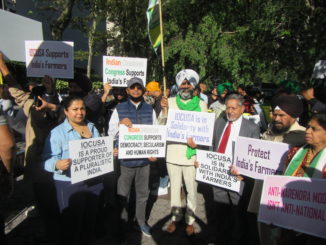
    NEW YORK (TIP): The Indian Overseas Congress, USA, an advocacy organization that promotes democracy, human rights, and equal justice together with its supporters and friends, held a protest rally in front of the United Nations on Saturday, September 25, 2021, as Prime Minister Narendra Modi was delivering his address to the General Assembly.

     “Although we have no issues with a Prime Minister of India visiting the U.S. or the U.N. and promoting better bi-lateral relations or promoting world peace, it is imperative to let him know at the same time that we do not approve of his misgovernance in dealing with COVID epidemic or undermining the democratic institutions,” said George Abraham, Vice-Chairman of the IOCUSA. “If there is to be genuine economic progress and social development in India, political tranquility and social harmony is a pre-requisite without which there would be very little hope for the future. Let us, at the minimum, raise our voices, no matter how feeble it may be, because one day our next generation might ask where you have been when India took a turn towards authoritarianism and fascism,” Abraham added.

    “I am glad to state that IOCUSA stands firmly behind India’s farmers who have been denied their rightful voice and concerns to be heard by the Modi government which has pushed a set of bills through the parliament for the benefit of the crony capitalists and to the detriment of our farmers” Mr. Mohinder Singh Gilzian, President of the IOCUSA said.  “We want Modi to know that the NRI voice will continue to be raised in support of their protest unless and until he resolves these issues,” Mr. Gilzian added.

    The protesters carried slogans and chanted examples to point out the failures of the Modi government, e.g., “Anti-Narendra Modi isn’t anti-national,” “We are all Indians. Stop discrimination based on religion, caste and language”, “Protect India’s constitution”, “IOCUSA supports democracy, freedom, and human rights”,” IOCUSA supports India’s farmers”, “IOCUSA -proud supporter of pluralistic India” and so forth.

    Mr. Mohinder Singh Gilzian, President of the IOCUSA, Mr. Harbachen Singh, Secretary-General, Mr. George Abraham, Vice-Chairman, Mr. John Thomas, Ms. Sophia Sharma, General Secretary, Vice-President, Ms. Leela Maret, President, Kerala Chapter, Mr. Amar Singh Gulshan and President, Haryana Chapter were among those who took part in the protest.

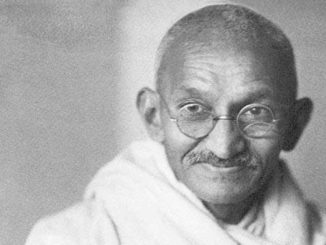
  • Mahatma Gandhi and the Indian Freedom Movement

    Mahatma Gandhi and the Indian Freedom Movement

    Remembering the Father of the Indian Nation on his 152nd birthday anniversary

    “It has been my experience, living and working with Gandhiji that what he achieved by his Satyagraha appeared at the time to be small but the rest was subsequently accomplished through the combination of various circumstances. It is also true that if the first small step had not been taken by Gandhiji the other forces that brought about the final result might have remained dormant for a long time”. – Acharya Kriplani

    Billions of Indians identified themselves with the scantily covered Mahatma Gandhi

    The British Empire’s most talented and Powerful pro-consul in India, Lord Curzon has said, “India is the pivot of our British empire. If the Empire loses any other part of its, we can survive, but if we lose India, the sun of our Empire will set.” Even Churchill said, “the loss of India would mark and consummate the downfall of the British empire from such a catastrophe there should be no recovery.” One can understand how difficult it was to secure Independence from dominion of Britishers.

     Gandhi’s advent and Rise:

    1919 was a twilight year in the history of Indo-British relations. The harsh Rowlett act met with Universal opposition in the Imperial legislative council and outside. Gandhi was challenged with such a situation. There was the Jallianwala Bag massacre. An armed rebellion was out of question in a country forcibly disarmed and deliberately emasculated for about a century. Gandhi changed this situation into an opportunity.

    The unique weapon

    1. The strategy of Satyagraha i.e., non-violent direct action was preferred by Gandhi.
    2. This strategy of Satygraha is no oriental mystic doctrine baffling the oriental mind but a hardheaded mass pressure technique to ensure social, political and economic change. Satyagraha demands public spirit, self-sacrifice, organization, endurance and discipline for its successful operation.

    Three pillars of Satyagraha

    1. Sat implies openness, honesty and fairness.
    2. Ahimsa- non –injury is refusal to inflict injury to others. Ahimsa is an expression of our concern that our own and other’s humanity be manifested and respected; and we must learn to genuinely love our opponents in order to practice Ahimsa.
    3. Tapasya – willingness for self-sacrifice:

    A Satyagrahi (one who practices Satyagraha) must be willing to shoulder any sacrifice which is occasioned by the struggle which they have initiated, rather than pushing such sacrifice or suffering onto their opponent. The goal is to discover a wider vista of truth and justice, not to achieve victory over the opponent.

    NON-COOPERATION- 1920-22

     The weapon of Non-cooperation was designed and developed in order to further the inter-related aims of inculcating Satyagraha among as many Indian social groups as possible.  The reaction of the British to this unusual non-violent struggle was best summed up by the then Governor of Bombay, George Llyod: “Gandhi gave us a scare. Gandhi’s was the most colossal experiment in world history, and it came within an inch of succeeding. “The first experiment with non-violent direct action on a national scale suffered an abortive end. Although it failed to obtain its immediate objective, it was immensely successful in awakening India to the consciousness of her own potential power. Moreover, the experience gathered during the non-cooperation movement paved the way for India’s next great movement of 1930.

    CIVIL DISOBEDIENCE MOVEMENT – 1930-1934

    The radical youth groups and the labor organizations were not convinced of the compelling power of non-violent direct action. However, the ideology of Satyagraha aroused widespread academic interest and discussion. The conspicuous success of the Bardoli Satyagraha of 1928 had already infused new hope in the people and revived a general confidence in Gandhi’s method. The absence of any Indian representative on the Simon commission drew the Liberal and the Moderate elements to the Congress fold. It clearly appeared that the nation was again full of all energy and enthusiasm.

    Gandhi decided to initiate Civil Disobedience movement by a dramatic breach of the salt law. This was a law which affected all and for many years, Gandhi had considered taxation on one of the vital needs like salt to be an immoral law. The incidence of tax was a symbol of human oppression and through this little gesture Gandhi transcended the limitation of human condition.

    After a full year of struggle, the Government gave in and began negotiations with the Congress high command. Gandhi and the members of the working committee of the Congress were released and Gandhi was invited to Delhi.

    For the first time in history on March 5, 1931, the representative of His Majesty signed a treaty with Gandhi. The main demands of the people were granted in the treaty, thereafter, known as the “Gandhi-Irwin Pact act” and the stage was set for further negotiations with a view to evolving of Free India.

    But then he found his pact with Irwin violated by the Government. He also discovered that the bureaucracy was in a belligerent mood and did not mean to carry out the terms of the Pact. Thereupon Gandhi was forced to revive Satyagraha.

    THE QUIT INDIA MOVEMENT

    The Second World War was real life and death struggle for the British people. In the year 1940-41 they made their last heroic stand as a world power. Gandhi’s revulsion from the great slaughter and desire for the universal peace and his hostility to the raj further soured his relations with the British rulers.

    Then Gandhi initiated the Individual Civil Disobedience movement, which was undertaken for the vindication of Freedom of Speech. Individuals carefully chosen by Gandhi himself were instructed to move from place to place on foot, explain to the people the implications of the formula. Sir Stafford Cripps with an offer of political settlement met the political leaders. The terms were however found unacceptable by all parties with the result that Cripps returned to England, disappointed. Soon after this event, Gandhi received a cable from England, in reply to which he gave expression, for the first time, to the demand for British withdrawal as an immediate necessity.

    Gandhi was a charismatic leader who was loved and respected. A sea of humanity poured in to catch a glimpse of him and listen to his words.

    The city of Bombay, after experiencing an unusual wave of jubilation and fighting fervor, lay in the quiet of the exhausted in the early hours of August 9, 1942. On the previous day, Gandhi had electrified the masses attending the momentous August 8th meeting of the AICC by unequivocally demanding that the British should Quit India. His slogan was “Do or Die”. Gandhi however, cautioned his followers that it would be weeks before a civil disobedience could be launched.

    Although more than 60,000 people were arrested, 18,000 kept in prison while 940 were shot dead and about 1630 injured by firing, the people’s violence was limited to objects which were considered to belong to Government, and it did not extend any further. There might have been defeat, but the people’s forces had succeeded in recovering and preserving their morale and this was no small gain. “The British Empire is a Satanic System and I have dedicated my life to destroy it” Gandhiji declared.

    CONCLUSION

    To conclude in the memorable words of Acharya Kriplani, the lifelong colleague of Gandhi, as a fitting tribute to the efficacy of Gandhi’s unique weapon of Satyagraha: “It has been my experience, living and working with Gandhiji that what he achieved by his Satyagraha appeared at the time to be small but the rest was subsequently accomplished through the combination of various circumstances. It is also true that if the first small step had not been taken by Gandhiji the other forces that brought about the final result might have remained dormant for a long time.”

     (Compiled by Rajendar Dichpally and his colleagues. Mr. Dichpally is a General Secretary of Indian Overseas Congress USA. He can be reached at dichpally@aol.com)

  • Will Pakistan’s nuclear stockpile be the region’s Achilles heel?

    “Some non-nuclear States have historically opposed the resolution in response to India testing nuclear weapons and becoming a nuclear-armed State in 1998. India can and needs to do more to get countries to reconsider their opposition, especially in light of Taliban’s takeover of Afghanistan that has already led to rise in India-Pakistan tensions.

    “While there are enough pundits predicting that Taliban and Pakistan will make for the most volatile bedfellows, there is no denying that the region’s power dynamics have been dramatically and drastically altered. A change that has taken everyone by surprise only goes to show that nothing can be ruled out. So, speaking of Pakistan’s nuclear stockpile falling in the hands of Taliban is not as far-fetched as one would imagine.”

     By Priyanka Khanna

    The predictable India-Pakistan rhetoric during the United Nations General Assembly (UNGA) in New York and accusations flying right and left at the ongoing 48th session of the Human Rights Council (UNHRC) in Geneva are shadowing the simmering worry as to what will happen to Pakistan’s growing nuclear arsenal.

    Indian Prime Minister Narendra Modi has repeatedly raised doubts about Pakistan’s intentions
    (Photograph / Jay Mandal- on assignment)
    Pakistan Prime Minister Imran Khan is unmoved (Photograph / Jay Mandal- on assignment)

    The 140-150 nuclear warheads that are currently stockpiled in Pakistan’s central storage facilities in its southern parts remain outside both the Treaty on the Non-Proliferation of nuclear weapons (NPT) and the Comprehensive Nuclear Test Ban Treaty (CTBT).

    With the Afghanistan takeover by Taliban and given their bon homie with Pakistan, especially its intelligence, it is singularly worrying that Pakistan is the sole country that is blocking negotiations of the Fissile Material Cut-Off Treaty (FMCT).

    While there are enough pundits predicting that Taliban and Pakistan will make for the most volatile bedfellows, there is no denying that the region’s power dynamics have been dramatically and drastically altered. A change that has taken everyone by surprise only goes to show that nothing can be ruled out. So, speaking of Pakistan’s nuclear stockpile falling in the hands of Taliban is not as far-fetched as one would imagine.

    The UN is not doing enough to push Pakistan to undertake disarmament. (Photograph / Jay Mandal- on assignment)

    Which brings us to the question of why the UN is not doing enough to push Pakistan to undertake disarmament. In fact, according to the advocacy group – Unfold Zero – the UNGA was not even able to come together on nuclear disarmament resolutions. In the last nuclear disarmament UN meeting, nuclear risk-reduction was perhaps the only measure countries could come together for.

    A resolution reducing nuclear danger submitted by India received 127 votes in favor (mostly non-aligned countries). It failed to get support of nuclear-armed or European countries, primarily because it only calls for nuclear risk reduction measures by China, France, Russia, UK and USA – leaving out the other nuclear armed States – India, Pakistan, DPRK and Israel, according to unfoldzero.org.

    A resolution on decreasing the operational readiness of nuclear weapons systems submitted by a group of non-nuclear countries, was much more successful receiving 173 votes in favor, including from most of the NATO countries and from four nuclear armed States (China, DPRK, India, Pakistan).

    A resolution on the Treaty on the Prohibition nuclear weapons (TPNW) was supported by 122 countries. This is more than the number who have signed the Treaty, which is 68 (with 19 of these countries having now ratified). The vote indicates that more signatures are likely. However, the resolution was not supported by any of the nuclear-armed countries, nor any of the countries under nuclear deterrence relationships, i.e., NATO, Australia, Japan, South Korea. The opposition of nuclear-armed and allied States to the resolution is another indication that they do not intend to join the new treaty. In general, this means that they will not be bound by the treaty’s obligations. However, the customary law against the use of nuclear weapons which is re-affirmed by the treaty will apply to all States regardless of whether or not they join.

    India’s External Affairs Minister has voiced India’s concern about Pakistan’s stockpile of nuclear weapons to the world, including the Secretary General of the United Nations, António Guterres. (Photograph / Jay Mandal- on assignment)

    A resolution on the prohibition of the use of nuclear weapons submitted by India received 120 votes in favor, including from themselves and another three nuclear-armed States (China, DPRK and Pakistan). Some non-nuclear States have historically opposed the resolution in response to India testing nuclear weapons and becoming a nuclear-armed State in 1998. India can and needs to do more to get countries to reconsider their opposition, especially in light ofTaliban’s takeover of Afghanistan that has already led to rise in India-Pakistan tensions.

  • The Quad could end up running out of steam

    The Quad could end up running out of steam

    By Happymon Jacob

    Coming on the eve of the first in-person Quadrilateral Security Dialogue (Quad) summit in Washington DC, the new Australia-U.K.-U.S. (AUKUS) trilateral security partnership appears to be sending a subtle message to the Quad: shape up or become irrelevant. The announcement of the AUKUS and the recent outcome of the Quad summit indicates that AUKUS will go on to form a key security arrangement of the Indo-Pacific region, thereby potentially forcing the Quad to recede to the background in a struggle for attention, political will, and resources. But before we get to the implications of AUKUS on the Quad, let us briefly examine how AUKUS is also useful to the Quad.

    A reassurance to allies

    Still reeling under intense international criticism in the way the United States withdrew its forces from Afghanistan resulting in a humanitarian disaster, AUKUS seeks to unambiguously signal U.S. President Joe Biden’s commitment to U.S. allies especially in the Indo-Pacific.

    In some ways, AUKUS helps reassure its allies of the U.S.’s security commitments and underlines Washington’s pivot to the Indo-Pacific. Second, the deal and particularly the sharing of American nuclear submarine technology with Australia will help Canberra overcome past hesitations about taking on China with more conviction. Third, notwithstanding the point that AUKUS may set alarm bells ringing for the Quad, AUKUS is still a shot in the arm for the larger Indo-Pacific agenda of which India, the U.S., Japan, Australia, among others, are key partners. In other words, AUKUS will help the Quad’s declared aim of keeping the Indo-Pacific region free, open and inclusive thereby contributing to its core agenda.

    No replacement, but…

    AUKUS may not replace the Quad and yet it appears that AUKUS has ventured where the Quad has been reluctant to make forays into — the military domain. More so, AUKUS also exposes the inherent, also self-imposed, limits of the Quad, i.e., its inability and lack of desire to give itself any military role. The focus of the recently held Washington summit, on challenges ranging from COVID-19 to climate shows that the Quad is unlikely to take a security-dominated turn; that is precisely the vacuum AUKUS seeks to fill.

    The larger question then is whether the Quad is losing its steam. For sure, the Quad seems to offer no clear purpose which, as a result, leads to too many items crowding the agenda. It neither has a secretariat or a charter, like the Shanghai Cooperation Organisation (SCO), nor a clear set of activities such as AUKUS. The ever-growing list of focal areas of the Quad will eventually make it a less than useful deliberative forum.

    Put differently, with too many items on its agenda, the Quad faces the danger of becoming a talk shop with very little actual work. What is ironic is that all the Quad members have security/military considerations in mind vis-à-vis China while engaging the Quad platform, but no one seems to be keen on framing it in such a manner, as is evidenced by the summit’s joint statement (North Korea and Myanmar find mention in the statement though, not China). There is little interest in properly institutionalizing the Quad nor has the objective for ‘Quad Plus’ been purposefully pursued. Let me put this somewhat differently: Indo-Pacific remains a grand strategic vision, AUKUS has the potential to become a major military/security arrangement in the Indo-Pacific, and the Quad/Quad Plus could end up becoming a talk shop within the Indo-Pacific.

    New Delhi’s hesitations

    New Delhi has taken the stand that “there is no link between the AUKUS and the Quad” just as it had argued earlier that there is no link between the Malabar naval exercises and the Quad even though the Quad membership is replicated in the Malabar exercises and two-thirds of the AUKUS form 50% of the Quad.

    Technically, New Delhi’s stand is accurate — just because there is a striking similarity in the membership of these forums, they are not the same institutional architecture. And yet, if one were to go beyond such technicalities, it is evident that these groupings share a larger vision about the Indo-Pacific, i.e., addressing the challenge from China, and the desire for an open and free Indo-Pacific. Be it AUKUS, which enables Australia to stand up to Chinese bullying or provides the United Kingdom — its aircraft carrier, HMS Queen Elizabeth, the flagship of the U.K.’s Carrier Strike Group, is in the region — with a more prominent, and desirable, role in the Indo-Pacific or the annual Malabar exercises which focus on the Indo-Pacific or the Quad, their common geopolitical theatre is the Indo-Pacific. So, while they are not technically related to each other, there is a broader reality that unites them all. There is no point in refusing to accept that self-evident reality.

    There is also little doubt today that the Indo-Pacific is of great importance to India for a number of reasons. For one, given the continental challenges it faces including from the new developments in Afghanistan, New Delhi would do well to shift some attention to the maritime sphere. Second, at a time when India is continentally pressed against a rock and a hard place, an opportunity has presented itself for India — in the form of growing global interest in the Indo-Pacific — to be at the center of a new geopolitical churning which it must make use of for its own security and prosperity. Third, it is also a major way of bringing together like-minded states to check Chinese hegemony in the region.

    Given this context, if AUKUS potentially overshadows the enthusiasm around the Quad, it would be disadvantageous to India’s interests in the Indo-Pacific region. Other Quad counties are either on the AUKUS or are alliance partners; India is neither. Eventually, therefore, the Quad faces the potential challenge of becoming a talking shop without an actionable mandate. More so, bereft of any defense arrangement, the material returns from the Quad over time would also be minimal.

    Indo-Pacific engagement

    This situation is made worse by India’s hesitation about joining major regional economic frameworks. India, for instance, is neither a member of the Regional Comprehensive Economic Partnership nor can its trade relations with the Indo-Pacific countries rival those of China. So, given our rather weak economic influence and performance in the Indo-Pacific region, what might help the country is being part of a security arrangement which can take care of its regional defense/security concerns. Even before AUKUS, India’s current engagement of the Indo-Pacific was neither capable of contributing to its national security nor promoting its economic influence in the region. And now, AUKUS may have further shrunk the potential space available for the Quad, and India, to play a serious role in the region’s security architecture.

    Sources of India’s hesitations

    Even though it is not just New Delhi which is hesitant about the Quad venturing into the security/military domain, India has been hesitant about the Quad moving beyond the non-military issues. So, what are the sources of New Delhi’s hesitation regarding a robust role for the Quad in the security/military domain? One could advance two hypotheses in this regard. One, India’s traditional reluctance about military alliances and the desire to maintain strategic autonomy. New Delhi fears that militarizing the Quad could undo this jealously guarded tradition. It is, however, possible to explore military utility for the Quad without making it a formal military alliance. More so, exploring mutually beneficial military and security cooperation within the Quad framework need not contradict the principles of strategic autonomy. The operative part of ‘strategic autonomy’ is autonomy, not strategic.

    The second hypothesis has to do with domestic political considerations: The Narendra Modi government is keen to avoid any military overtones for the Quad due to potential Chinese reactions to it. Recall how India and Australia had for many years soft peddled the forum for fear of provoking China. Australia seems to have overcome its hesitation, but has India done so? For the Bharatiya Janata Party-led government, any heat on the Line of Actual Control with China in the run-up to crucial State elections next year and then the 2024 parliamentary election would be unwelcome. This seems, therefore, to be a case of domestic political considerations trumping the pursuit of strategic necessities.

    (The author teaches at the Jawaharlal Nehru University, New Delhi and is the founder of the Council for Strategic and Defense Research)

  • Tunisia has the first woman Prime Minister

    Tunisia has the first woman Prime Minister

    TUNIS (TIP): Tunisia’s President on Wednesday, September 29, named Raoudha Boudent Ramadhane as nation’s first woman Prime Minister, appointing her to lead a transitional government after her predecessor was sacked. President Kais Saied named Ramadhane, a 63-year-old professor at a prestigious engineering school, to the PM’s post in a surprise decision.

    (Agencies)

  • PM Modi had a very successful visit to US, says Ambassador Sandhu

    PM Modi had a very successful visit to US, says Ambassador Sandhu

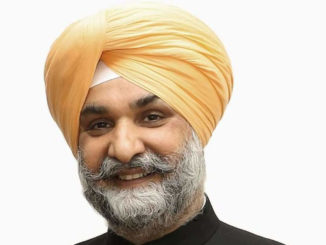
    Remarks by India’s Ambassador to the US, Taranjit Singh Sandhu, come at a dinner event hosted by Indiaspora

    WASHINGTON, DC (TIP): Prime Minister Narendra Modi had a very successful visit to the US during which he held his maiden bilateral meeting with President Joe Biden and had a good candid and substantial exchange with like-minded Quad leaders at their first in-person summit, India’s envoy here has said.

    Remarks by India’s Ambassador to the US, Taranjit Singh Sandhu, came at a dinner event hosted by Indiaspora on Wednesday, September 29. “We just had a very successful visit here,” Sandhu said. Eminent members of the Indian-American community had gathered for the first time in the national capital after the Covid pandemic hit the country. During the visit, there was an important bilateral meeting between President Biden and Prime Minister Modi, the first one since the Biden-Harris administration was inaugurated in January this year. The two leaders had earlier met in 2014 and 2016 when Biden was the vice president of the country. “So, it was not the first time they were meeting, but the bilateral meeting was very good,” Sandhu said in his first public appearance after last week’s visit of PM Modi.

    The interaction with Vice President Kamala Harris went very well, he said. The Quad summit hosted by Biden at the White House and attended by Modi along with their counterparts from Japan and Australia “really went off very well”, he said.

    “There was a good candid and substantial exchange between all the four leaders,” he said, adding that there are practical areas in which the corporation is moving quite ahead. “In fact, in vaccines, all the four countries are bringing their respective strengths together and we are on our way to producing one billion vaccines in 2022 which will be distributed over the Indo-Pacific particularly in Southeast Asia,” Sandhu said. During his stay in Washington DC, Prime Minister Modi had two other bilaterals with Prime Minister Scott Morrison from Australia and Prime Minister Yoshihide Suga of Japan.

    During his trips, the US handed over 150 historic antiquities to India, which the prime minister took with him on his return to India. From Washington DC, the Prime Minister went to New York where he addressed the UN General Assembly.

    Quickly running through some of the important areas during the trip in addition to the strategic ones, Sandhu said the prime minister had a good exchange on regional issues as well as other international challenges.

    (Source: PTI)